EP0144826A2 - Thixotrope härtbare Beschichtungszusammensetzung - Google Patents
Thixotrope härtbare Beschichtungszusammensetzung Download PDFInfo
- Publication number
- EP0144826A2 EP0144826A2 EP84113744A EP84113744A EP0144826A2 EP 0144826 A2 EP0144826 A2 EP 0144826A2 EP 84113744 A EP84113744 A EP 84113744A EP 84113744 A EP84113744 A EP 84113744A EP 0144826 A2 EP0144826 A2 EP 0144826A2
- Authority
- EP
- European Patent Office
- Prior art keywords
- epoxide
- reactant
- composition
- compositions
- organosilicon
- Prior art date
- Legal status (The legal status is an assumption and is not a legal conclusion. Google has not performed a legal analysis and makes no representation as to the accuracy of the status listed.)
- Granted
Links
Images
Classifications
-
- H—ELECTRICITY
- H01—ELECTRIC ELEMENTS
- H01B—CABLES; CONDUCTORS; INSULATORS; SELECTION OF MATERIALS FOR THEIR CONDUCTIVE, INSULATING OR DIELECTRIC PROPERTIES
- H01B3/00—Insulators or insulating bodies characterised by the insulating materials; Selection of materials for their insulating or dielectric properties
- H01B3/18—Insulators or insulating bodies characterised by the insulating materials; Selection of materials for their insulating or dielectric properties mainly consisting of organic substances
- H01B3/30—Insulators or insulating bodies characterised by the insulating materials; Selection of materials for their insulating or dielectric properties mainly consisting of organic substances plastics; resins; waxes
- H01B3/46—Insulators or insulating bodies characterised by the insulating materials; Selection of materials for their insulating or dielectric properties mainly consisting of organic substances plastics; resins; waxes silicones
-
- C—CHEMISTRY; METALLURGY
- C08—ORGANIC MACROMOLECULAR COMPOUNDS; THEIR PREPARATION OR CHEMICAL WORKING-UP; COMPOSITIONS BASED THEREON
- C08G—MACROMOLECULAR COMPOUNDS OBTAINED OTHERWISE THAN BY REACTIONS ONLY INVOLVING UNSATURATED CARBON-TO-CARBON BONDS
- C08G59/00—Polycondensates containing more than one epoxy group per molecule; Macromolecules obtained by polymerising compounds containing more than one epoxy group per molecule using curing agents or catalysts which react with the epoxy groups
- C08G59/18—Macromolecules obtained by polymerising compounds containing more than one epoxy group per molecule using curing agents or catalysts which react with the epoxy groups ; e.g. general methods of curing
- C08G59/40—Macromolecules obtained by polymerising compounds containing more than one epoxy group per molecule using curing agents or catalysts which react with the epoxy groups ; e.g. general methods of curing characterised by the curing agents used
- C08G59/4007—Curing agents not provided for by the groups C08G59/42 - C08G59/66
- C08G59/4085—Curing agents not provided for by the groups C08G59/42 - C08G59/66 silicon containing compounds
-
- C—CHEMISTRY; METALLURGY
- C08—ORGANIC MACROMOLECULAR COMPOUNDS; THEIR PREPARATION OR CHEMICAL WORKING-UP; COMPOSITIONS BASED THEREON
- C08L—COMPOSITIONS OF MACROMOLECULAR COMPOUNDS
- C08L83/00—Compositions of macromolecular compounds obtained by reactions forming in the main chain of the macromolecule a linkage containing silicon with or without sulfur, nitrogen, oxygen or carbon only; Compositions of derivatives of such polymers
- C08L83/04—Polysiloxanes
-
- C—CHEMISTRY; METALLURGY
- C09—DYES; PAINTS; POLISHES; NATURAL RESINS; ADHESIVES; COMPOSITIONS NOT OTHERWISE PROVIDED FOR; APPLICATIONS OF MATERIALS NOT OTHERWISE PROVIDED FOR
- C09D—COATING COMPOSITIONS, e.g. PAINTS, VARNISHES OR LACQUERS; FILLING PASTES; CHEMICAL PAINT OR INK REMOVERS; INKS; CORRECTING FLUIDS; WOODSTAINS; PASTES OR SOLIDS FOR COLOURING OR PRINTING; USE OF MATERIALS THEREFOR
- C09D5/00—Coating compositions, e.g. paints, varnishes or lacquers, characterised by their physical nature or the effects produced; Filling pastes
- C09D5/04—Thixotropic paints
-
- H—ELECTRICITY
- H01—ELECTRIC ELEMENTS
- H01B—CABLES; CONDUCTORS; INSULATORS; SELECTION OF MATERIALS FOR THEIR CONDUCTIVE, INSULATING OR DIELECTRIC PROPERTIES
- H01B3/00—Insulators or insulating bodies characterised by the insulating materials; Selection of materials for their insulating or dielectric properties
- H01B3/18—Insulators or insulating bodies characterised by the insulating materials; Selection of materials for their insulating or dielectric properties mainly consisting of organic substances
- H01B3/30—Insulators or insulating bodies characterised by the insulating materials; Selection of materials for their insulating or dielectric properties mainly consisting of organic substances plastics; resins; waxes
- H01B3/40—Insulators or insulating bodies characterised by the insulating materials; Selection of materials for their insulating or dielectric properties mainly consisting of organic substances plastics; resins; waxes epoxy resins
-
- C—CHEMISTRY; METALLURGY
- C08—ORGANIC MACROMOLECULAR COMPOUNDS; THEIR PREPARATION OR CHEMICAL WORKING-UP; COMPOSITIONS BASED THEREON
- C08G—MACROMOLECULAR COMPOUNDS OBTAINED OTHERWISE THAN BY REACTIONS ONLY INVOLVING UNSATURATED CARBON-TO-CARBON BONDS
- C08G77/00—Macromolecular compounds obtained by reactions forming a linkage containing silicon with or without sulfur, nitrogen, oxygen or carbon in the main chain of the macromolecule
- C08G77/04—Polysiloxanes
- C08G77/14—Polysiloxanes containing silicon bound to oxygen-containing groups
- C08G77/16—Polysiloxanes containing silicon bound to oxygen-containing groups to hydroxy groups
-
- C—CHEMISTRY; METALLURGY
- C08—ORGANIC MACROMOLECULAR COMPOUNDS; THEIR PREPARATION OR CHEMICAL WORKING-UP; COMPOSITIONS BASED THEREON
- C08G—MACROMOLECULAR COMPOUNDS OBTAINED OTHERWISE THAN BY REACTIONS ONLY INVOLVING UNSATURATED CARBON-TO-CARBON BONDS
- C08G77/00—Macromolecular compounds obtained by reactions forming a linkage containing silicon with or without sulfur, nitrogen, oxygen or carbon in the main chain of the macromolecule
- C08G77/04—Polysiloxanes
- C08G77/14—Polysiloxanes containing silicon bound to oxygen-containing groups
- C08G77/18—Polysiloxanes containing silicon bound to oxygen-containing groups to alkoxy or aryloxy groups
-
- C—CHEMISTRY; METALLURGY
- C08—ORGANIC MACROMOLECULAR COMPOUNDS; THEIR PREPARATION OR CHEMICAL WORKING-UP; COMPOSITIONS BASED THEREON
- C08G—MACROMOLECULAR COMPOUNDS OBTAINED OTHERWISE THAN BY REACTIONS ONLY INVOLVING UNSATURATED CARBON-TO-CARBON BONDS
- C08G77/00—Macromolecular compounds obtained by reactions forming a linkage containing silicon with or without sulfur, nitrogen, oxygen or carbon in the main chain of the macromolecule
- C08G77/04—Polysiloxanes
- C08G77/20—Polysiloxanes containing silicon bound to unsaturated aliphatic groups
-
- C—CHEMISTRY; METALLURGY
- C08—ORGANIC MACROMOLECULAR COMPOUNDS; THEIR PREPARATION OR CHEMICAL WORKING-UP; COMPOSITIONS BASED THEREON
- C08G—MACROMOLECULAR COMPOUNDS OBTAINED OTHERWISE THAN BY REACTIONS ONLY INVOLVING UNSATURATED CARBON-TO-CARBON BONDS
- C08G77/00—Macromolecular compounds obtained by reactions forming a linkage containing silicon with or without sulfur, nitrogen, oxygen or carbon in the main chain of the macromolecule
- C08G77/04—Polysiloxanes
- C08G77/22—Polysiloxanes containing silicon bound to organic groups containing atoms other than carbon, hydrogen and oxygen
- C08G77/24—Polysiloxanes containing silicon bound to organic groups containing atoms other than carbon, hydrogen and oxygen halogen-containing groups
-
- C—CHEMISTRY; METALLURGY
- C08—ORGANIC MACROMOLECULAR COMPOUNDS; THEIR PREPARATION OR CHEMICAL WORKING-UP; COMPOSITIONS BASED THEREON
- C08G—MACROMOLECULAR COMPOUNDS OBTAINED OTHERWISE THAN BY REACTIONS ONLY INVOLVING UNSATURATED CARBON-TO-CARBON BONDS
- C08G77/00—Macromolecular compounds obtained by reactions forming a linkage containing silicon with or without sulfur, nitrogen, oxygen or carbon in the main chain of the macromolecule
- C08G77/70—Siloxanes defined by use of the MDTQ nomenclature
-
- H—ELECTRICITY
- H10—SEMICONDUCTOR DEVICES; ELECTRIC SOLID-STATE DEVICES NOT OTHERWISE PROVIDED FOR
- H10W—GENERIC PACKAGES, INTERCONNECTIONS, CONNECTORS OR OTHER CONSTRUCTIONAL DETAILS OF DEVICES COVERED BY CLASS H10
- H10W72/00—Interconnections or connectors in packages
- H10W72/01—Manufacture or treatment
- H10W72/015—Manufacture or treatment of bond wires
- H10W72/01515—Forming coatings
-
- H—ELECTRICITY
- H10—SEMICONDUCTOR DEVICES; ELECTRIC SOLID-STATE DEVICES NOT OTHERWISE PROVIDED FOR
- H10W—GENERIC PACKAGES, INTERCONNECTIONS, CONNECTORS OR OTHER CONSTRUCTIONAL DETAILS OF DEVICES COVERED BY CLASS H10
- H10W72/00—Interconnections or connectors in packages
- H10W72/071—Connecting or disconnecting
- H10W72/075—Connecting or disconnecting of bond wires
-
- H—ELECTRICITY
- H10—SEMICONDUCTOR DEVICES; ELECTRIC SOLID-STATE DEVICES NOT OTHERWISE PROVIDED FOR
- H10W—GENERIC PACKAGES, INTERCONNECTIONS, CONNECTORS OR OTHER CONSTRUCTIONAL DETAILS OF DEVICES COVERED BY CLASS H10
- H10W74/00—Encapsulations, e.g. protective coatings
Definitions
- This invention relates to a class of thixotropic coating compositions containing at least one.polyfunctional epoxide reactant and at least one organosilicon reactant.
- the amount of thixotropic character exhibited by the compositions i.e. the extent to which they flow under zero shear, is controllable when the weight ratio of the two types of reactants is within specified limits.
- the compositions are particularly useful as extrudable coating compositions for solid state electronic devices.
- Solid state electronic devices such as transistors and integrated circuits are typically very delicate and must be protected against physical damage and atmospheric moisture. Such protection is often achieved by encapsulating the device in a hard, chemically resistant material such as an epoxy resin or a copolymer of an epoxy resin and an organosilicon reactant.
- a hard, chemically resistant material such as an epoxy resin or a copolymer of an epoxy resin and an organosilicon reactant.
- One method for encapsulating electronic devices employs a technique known as transfer molding.
- the device is placed in a mold and a quantity of molten resin sufficient to fill the mold cavity is injected and allowed to solidify around the device, leaving the electrical connections or leads to the device exposed.
- Transfer molding has a number of disadvantages, including the cost of encapsulating a number of different devices individually, prior to mounting them on a circuit board. In addition, it is sometimes difficult to achieve an adequate moisture proof seal around the leads which project through the encapsulating material and serve to connect the device to the circuit board.
- a more economically advantageous alternative to transfer molding is to mount a number of solid state devices on a circuit board and encapsulate the devices in a single operation. Because it is usually not practical to fabricate a mold to accommodate an entire circuit board, the composition used to encapsulate the devices should be sufficiently thixotropic that a coating can be applied by extruding the composition on to the device under relatively low pressure. Once in place the coating should flow only to the extent that it will form a smooth surface without otherwise altering its original contour. This property must be exhibited both at ambient temperature and the temperature at which the coating is cured, which can be up to 200°C.
- copolymers derived from polyfunctional epoxide and organosilicon reactants for encapsulating electronic devices is disclosed in the prior art.
- United States Patent No. 3,971,747 which issued to Bank and Michael on July 27, 1976, teaches that molding compositions suitable for encapsulating integrated circuits by transfer molding contain copolymers derived from a "phenylmethylsiloxane resin" and commercially available epoxy resins. The copolymers are prepared in the presence of specified aluminum-containing catalysts.
- U.S. Patent No. 3,842,141 which issued on October 15, 1974 to Fetscher and Sparapany discloses molding compositions prepared from a specified class of epoxy-organosilicon copolymers.
- the compositions exhibit desirable properties such as high volume resistivity, low water absorption and good hot strength, and are used to encapsulate integrated circuits by conventional molding techniques.
- any modification of the type or proportions of the ingredients, including reactants and filler, will usually require a change in the amount and/or type of thixotropic agent to achieve acceptable performance as a protective coating composition, i.e., a smooth surface with retention of initial coating configuration.
- One objective of this invention is to provide thixotropic coating compositions containing epoxide and organosilicon reactants.
- Another objective of this invention is to provide means for varying the degree of thixotropy exhibited by coating compositions containing epoxide and organosilicon reactants without the addition of conventional thixotropic agents or other modifiers.
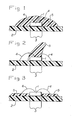
- the accompanying drawings depict one acceptable and two unacceptable cured coatings obtained when curable liquid coating compositions exhibiting varying amounts of thixotropic character are.extruded over a semiconductor device mounted on a printed circuit board.
- the semiconductor device (1) represented by a rectangular block, is adhered to a printed circuit board (2) in an area conventionally referred to as a "bonding pad.”
- (3) Electrical connections between selected areas of the semiconductor device and conductors on the printed circuit board are made by means of fine connecting wires (4).
- the device is enclosed in a coating (5), which is shown in cross section.
- Figure 1 depicts an acceptable coating, which completely covers the device and connecting wires, has a smooth surface and does not extend substantially beyond the area of the bonding pad and connecting wires.
- the coating illustrated in Figure 2 did not flow sufficiently to completely enclose the semiconductor device and the connecting wires or to form a smooth surface on the coating.
- Figure 3 illustrates a coating formed using a nonthixotropic liquid composition. The composition flowed well beyond the area of the bonding pad and connecting wires, leaving areas of the semiconductor device exposed.
- This invention provides curable coating compositions comprising a homogeneous mixture of (A) a polyfunctional liquid or solubilized epoxide reactant selected from the group consisting of cycloaliphatic epoxide compounds, glycidyl ethers of polyhydric phenols and epoxidized novolak resins; (B) a polyfunctional liquid or solubilized organosilicon reactant selected from the group consisting of silanes and polyorganosiloxanes, wherein each molecule of said organosilicon reactant contains at least two silicon-bonded groups selected from the group consisting of hydroxyl and alkoxy containing from 1 to 4 carbon atoms; (C) an amount of filler sufficient to impart a viscosity of from 50 to 1000-Pa's, measured at 25°C, to said composition; and (D) a curing catalyst in an amount sufficient to promote curing of said composition.
- A a polyfunctional liquid or solubilized epoxide reactant selected from the group
- the degree of thixotropic character exhibited by said composition is a function of the weight ratio of said epoxide reactant to said organosilicon reactant, and exhibits a gradual variation from a maximum degree of thixotropic character at weight ratio value r l to a minimum degree of thixotropic character at weight ratio value r 2 , the values represented by r l and r 2 being within the range from 1:1 to 8:1, inclusive.
- This invention also provides a method for varying the amount of thixotropic character, i.e., the amount which the aforementioned coating compositions flow under zero shear, by varying the weight ratio of epoxide reactant to organosilicon reactant within the aforementioned range of from r 1 to r 2' inclusive.
- the rheology, or flow properties, of the present compositions can be varied by changing the relative amounts of epoxide reactant and organosilicon reactant present in the composition.
- r-r range of weight ratios
- the composition exhibits maximum thixotropic character.
- the degree of "flow-out" exhibited by the composition will gradually increase, with a corresponding increase in the difference between the initial and final height of a shaped article until, at a weight ratio value referred to herein as r 2' the thixotropic character of the composition decreases to the extent that the composition becomes completely self-leveling and forms a thin film unless confined in a mold or similar device.
- the breadth and location of the aforementioned r l -r 2 range of weight ratios within the present broad range of 1:1 to 8:1 and the direction in which the weight ratio should be varied from the aforementioned r 1 value to obtain a more flowable composition will depend upon the constituents of the particular composition.
- the r l -r 2 range for a particular composition can be readily determined by one skilled in the art with a minimum of experimentation using the examples contained in this specification as guidelines.
- Polyfunctional epoxide reactants that can be combined with a filler, a curing catalyst, and from 0.125 to 1 times their weight of an organosilicon reactant to yield the curable, thixotropic compositions of this invention include glycidyl ethers of polyhydric phenols, epoxidized novolak resins (an art-accepted nomenclature for glycidyl ethers of phenol-aldehyde condensation products), and cycloaliphatic epoxides wherein both carbon atoms of at least one of the epoxide groups are part of a cycloaliphatic ring structure.
- epoxidized novolak resins an art-accepted nomenclature for glycidyl ethers of phenol-aldehyde condensation products
- cycloaliphatic epoxides wherein both carbon atoms of at least one of the epoxide groups are part of a cycloaliphatic
- compositions containing the less reactive epoxide reactants have been shown to have substantially greater storage stability, i.e. the viscosity of these compositions increases less rapidly during storage relative to compositions containing cycloaliphatic epoxide reactants.
- the storage stability of coating compositions containing cycloaliphatic epoxide compounds can be increased by the addition of relatively small amounts of alkaline earth metal fatty acid salts such as calcium stearate. These stabilizers are typically present in amounts up to about 1%, based on the weight of the coating composition. These stabilizers and other optional ingredients are discussed in greater detail in a subsequent portion of this specification.
- the diglycidyl ethers of dihydric, dinuclear phenols such as bis phenol A, i.e., 2,2-bis(4-hydroxyphenyl)propane
- the diglycidyl ethers of dihydric, dinuclear phenols such as bis phenol A, i.e., 2,2-bis(4-hydroxyphenyl)propane
- all reactants be liquids at ambient temperature. Even though they may be liquids initially, the moisture in the atmosphere may be sufficient to cause diglycidyl ethers of bis-phenols to gradually solidify, particularly in the presence of trace amounts of acidic or basic materials. It may therefore be preferable to employ one of the commercially available glycidyl ether type epoxide reactants that have been modified to inhibit spontaneous polymerization.
- modified glycidyl ethers of bisphenol A are Araldite ( R ) 6004, a product of Ciba-Geigy Corporation, Epi-Rez( R ) 507, and Epi-Rez (R) 50834, products of Celanese Corporation.
- Solid epoxide reactants can be used to prepare the compositions of this invention if they are present in solubilized form in the curable composition. Those solid epoxides reactants which are not soluble in the organosilicon reactant (B) should be present in combination with a liquid polyfunctional epoxide reactant that is a solvent for the solid reactant. Alternatively, a small amount of a liquid monofunctional epoxide compound, such as phenyl glycidyl ether, in which the solid reactant is soluble can be employed as a reactive diluent. Reactive diluents can constitute up to 20% by weight of the present coating compositions.
- a nonreactive solvent to solubilize one or more solid reactants, achieve compatability among the various reactants or decrease the viscosity of a curable composition.
- a nonreactive solvent up to 20%, based on the weight of the curable composition, of a nonreactive solvent can be incorporated into the present compositions.
- Useful solvents of this type include liquid hydrocarbons such as hexane, cyclohexane, benzene, and toluene, and ketones such as acetone and methylethyl ketone.
- Organosilanes and organosiloxanes containing at least two silicon-bonded hydroxyl or alkoxy groups per molecule can be employed singly or as mixtures to react with the epoxide reactant (A).
- Organosilanes can be represented bv the general formula R m Si(OR') 4-m' where R represents a hydrocarbyl or halohydrocarbyl radical, R' represents hydrogen or an alkyl radical, and m represents the integer 1 or 2.
- Organosiloxanes are characterized by chains containing alternating silicon and oxygen atoms. Organosiloxanes can be cyclic or linear, contain from two up to several hundred silicon atoms per molecule, and are typically prepared by hydrolyzing organosilanes containing two or more hydrolyzable groups bonded to a silicon atom. Methods for preparing polyorganosiloxanes are well known and do not form part of this invention.
- organosilicon reactant (B) is a polyorganosiloxane, it contains one or more types of repeating units of the general formula where R" is a hydrocarbyl or halohydrocarbyl radical and n has an average value of from 1 to 2, inclusive.'
- the hydrocarbyl or halohydrocarbyl radicals represented by R and R" typically contain from 1 to 20 carbon atoms.
- the individual radicals represented by R and R" can be identical or different.
- organosilanes and organosiloxanes wherein R and R" are methyl, phenyl, vinyl, 3,3,3-trifluoropropyl or combinations thereof are readily available and impart properties which make them desirable for use in the present compositions, organosilicon reactants of these types are preferred.
- R' is preferably hydrogen or methyl.
- the epoxide reactant and organosilicon reactant be mutually compatible, at least 50% of the R or R" radicals should be phenyl. Compatibility of the reactants is desirable because it will improve both the reactivity of the composition during curing and the adhesion of the cured coating to the substrate.
- Preferred polyorganosiloxanes include liquid polydiorganosiloxanes, such as polydimethylsiloxanes, and polymethylphenylsiloxanes containing terminal hydroxyl or alkoxy groups.
- Polymethylphenylsiloxanes containing an average of from 2 to 5 repeating units per molecule are particularly preferred because they are compatible with the other ingredients of the curable compositions and impart greater adhesion and hardness to the cured coating when compared to other organosilicon reactants.
- the characterizing feature of the present compositions is the ability to change the degree of thixotropy by.varying the weight ratio of epoxide reactant (A) to organosilicon reactant (B) when this weight ratio is within the range of from 1:1 to 8:1. Within this range, the thixotropy exhibited by the present compositions can be varied to obtain a rheology appropriate for a particular application.
- the optimum level of thixotropy is one which allows the composition to be extruded under relatively low pressure onto a substantially horizontal surface to form a three-dimensional structure, such as a dome-shaped mound, that will retain its initial dimensions until fully cured.
- the degree of flow should be limited to that required to form a smooth exterior surface that is substantially free of irregularities such as peaks and craters.
- the degree of thixotropy gradually increases or decreases.
- an unconfined composition flows out to form a thin film rather than the desired three-dimensional structure.
- the surface of the three dimensional structure will not flow sufficiently to smooth out surface irregularities as described hereinabove for preferred embodiments.
- any of the fillers conventionally employed to reduce thermal expansion, and impart hardness, strength, and other desirable properties to cured coatings can be present in the coating composition of this invention.
- the fillers can be of the reinforcing or extending type.
- Reinforcing fillers are preferably treated or untreated silica in a finely divided form and include fume silica in addition to aerogels, xerogels, and precipitated silicas.
- Reinforcing fillers can optionally be treated with any of the conventional organosilicon treating agents that are well known in the art.
- Typical treating agents include organosilanes, organosiloxanes, and organosilazanes.
- Examples of extending fillers include ground silica, aluminum oxide, aluminum silicate, zirconium silicate, magnesium oxide, zinc oxide, talc, diatomaceous earth, iron oxide, calcium carbonate, clays, titanium dioxide, zirconia, mica, glass, sand, carbon black, graphite, barium sulfate, zinc sulfate, wood, flour, cork and finely divided fluorocarbon polymers, among others.
- Ground fused silica is a preferred extending filler for use in the compositions of this invention.
- a particularly preferred.type of fused silica exhibits a maximum particle size of 44 microns.
- the amount of filler should be sufficient to impart a viscosity of from 50 to 1000 Pa's to the composition.
- the filler typically constitutes from 30 to 75% by weight, preferably from 50 to 70% by weight, of the present curable compositions.
- the viscosities of coating compositions are often measured in terms of the torque required to rotate a disc or spindle at a given rate of speed in the composition at a given temperature. Because the present compositions exhibit varying degrees of thixotropic character, the viscosity measurements used to determine filler content are performed using relatively low rates of shear, such as those produced by rotating a viscometer spindle at a rate of from one to about five revolutions per minute at a temperature of 25°C. Under these conditions, preferred compositions exhibit viscosities of from about 300 to about 1,000 Pa's.
- the present compositions can be cured using any of the catalysts taught in the art for curing epoxy-silicone copolymers.
- a preferred class of catalysts are the aluminum compounds disclosed in the aforementioned United States Patent No. 3,971,747 to Bank and Michael. This patent is a teaching of preferred curing catalysts.
- the catalysts of Bank et al. include aluminum alkoxides, aluminum carboxylates and reaction products of (1) these alkoxides or carboxylates with (2) organosilicon compounds containing silicon-bonded hydroxyl groups or silicon-bonded hydrolyzable groups such.as halogen and alkoxy.
- Aluminum carboxylates including aluminum benzoate, are particularly preferred as curing catalysts because they are relatively active compared to other aluminum catalysts and are compatible with the ingredients of the curable composition.
- the preferred aluminum catalysts are effective at levels from 0.05 to 5% based on the combined weight of all reactants. Amounts greater than about 5% by weight will usually not appreciably increase the reaction rate above what is achieved at lower catalyst concentrations, and serve no useful purpose.
- the optimum catalyst concentration is a function of a number of variables including types of reactants and curing temperature.
- compositions can contain conventional additives for silicone or epoxide resin coating compositions, including plasticizers, processing aids, additives to modify the curing reaction, fire retardants, and pigments.
- the curable compositions of this invention preferably include a relatively small amount of at least one silane or siloxane containing at least one silicon-bonded hydrogen atom per molecule.
- United States Patent No. 4,082,719 which issued to Liles and Michael on April 4, 1978, teaches that the presence of this type of organosilicon material in a curable silicone-epoxy coating composition applied to an electronic device decreases the tendency of atmospheric moisture to penetrate the cured coating by "wicking" up the conductors which project through the coating and provide electrical connections to the device.
- Reactants containing silicon-bonded hydrogen atoms are typically present at concentrations of from 0.005 to 0.5%, based on the combined weight of all organosilicon reactants and epoxide reactants.
- the epoxide reactant includes a cycloaliphatic type epoxide compound, to inhibit the significant increase in viscosity that often occurs shortly after these epoxides contact other ingredients of the present compositions, including fillers, it may be desirable to include from 0.01 up to about 1%, based on the total weight of the composition, of an alkaline earth metal salt of an aliphatic carboxylic acid containing from about 10 to about 20 carbon atoms as a viscosity stabilizer. Calcium stearate is a preferred viscosity stabilizer because it is readily available and compatible with the present compositions.
- fatty acid salts exhibit lubricating properties which may alter the rheology of polymer compositions. It may, therefore, be necessary to adjust the weight ratio of epoxide reactant to organosilicon reactant to achieve the same thixotropy following addition of calcium stearate or other viscosity stabilizers.
- the curable compositions of this invention can be prepared using any of the known methods and equipment for preparing homogeneous liquid coating compositions. If solid reactants are employed, these are preferably dissolved in a monofunctional or polyfunctional reactive solvent or a nonreactive solvent before being combined with the reactants, filler, catalyst, and any other optional ingredients. As previously disclosed, up to 20%, based on the total weight of the composition of a reactive or nonreactive solvent can be included in the present composition.
- the epoxide reactant and organosilicon reactant should be . ? ackaged separately.
- the catalyst is typically included together with the organosilicon reactant, particularly if the epoxide reactant is of the cycloaliphatic type. Distribution of the filler and any optional ingredients between the epoxide and organosilicon reactants is usually not critical. It has been found that if an organosilicon reactant containing silicon-bonded hydrogen atoms is present, the relative concentration of this reactant is sufficiently low that it can be included with the epoxide reactant without adversely affecting the storage stability of this reactant.
- controllable thixotropy exhibited by the present compositions make them particularly suitable for use as protective coatings which are applied by extrusion or other means onto selected areas of printed circuit boards containing integrated circuits, transistors or other delicate solid state electronic devices. These devices are typically formed by etching wafers of silicon or other semiconductive material and subsequently mounting the wafer.or "chip" on a printed circuit board in an area referred to as a "bonding pad.” Fine wires provide the electrical connections between conductors on the printed circuit board and selected areas on the chip.
- compositions of this invention When the compositions of this invention have been formulated and placed in position, they are cured. Depending upon the type of reactants, curing time and catalyst concentration, the curing temperature can be from ambient up to 200°C. Preferred compositions cure in from several minutes to two hours at temperatures of from 100 to 200°C.
- This example demonstrates the variation in thixotropy that can be achieved using a composition wherein the epoxide reactant is a diglycidyl ether of bis-phenol A.
- the thixotropy indeces of compositions described in this and the following examples were determined using a rotating spindle type viscometer (Brookfield Model HA P ) equipped with a number 6 or 7 spindle.
- the thixotropy index was obtained by dividing the viscosity reading obtained at a spindle speed of 1 r.p.m. by the value obtained using the same spindle rotating at a speed of 10 r.p.m.
- the second portion (II) of the two-part composition was prepared by combining 8 parts of a hydroxyl endblocked polymethylphenylsiloxane containing an average of from 2 to 3 siloxane units per molecule with 12 parts of the aforementioned wet ground silica. The resultant mixture was stirred for about 5 minutes, at which time 0.06 part of aluminum benzoate was added and stirring continued for 10 minutes. An additional 4.9 parts of ground silica were then added and the mixture stirred for 20 minutes. The final composition exhibited a viscosity of 272 Pa's at 25°C using a number 6 spindle rotating at 1 r.p.m.
- Both of the aforementioned- portions (I and II) of the coating composition were stored for about 2 months under ambient conditions. At this time, neither composition was thixotropic.
- the compositions were combined to obtain weight ratios of I/II equal to 1/1, 2/1 and 3/1. This is equivalent to weight ratios of epoxide reactant to organosilicon reactant of 1.29, 2.55 and 3.76 respectively.
- About 1/2 gram of each of the resultant compositions was extruded to form a mound that at least initially covered a bonding pad area of a printed circuit board. The board was exposed to ambient conditions for between 20 and 30 minutes and then placed in a circulating air oven for 30 minutes to cure the coating. The oven temperature was 175°C.
- the amounts of thixotropic character exhibited by the three coating compositions were rated subjectively by observing the contour of the cured coating and the surface area of the board covered by the coating. Acceptable coatings formed a smooth-surfaced mound of from 0.13 to 0.25 inch (33 to 64 mm) in height and resembled the coating depicted in Figure 1 of the accompanying drawings.
- compositions which flowed to the extent that the cured coating was less than 0.13 inch (33 mm) thick formed coatings resembling the one depicted in Figure 3 of the accompanying drawings and were rated "non-thixotropic.” This type of coating is undesirable because it flowed well beyond the area of the bonding pad and associated connecting wires and would have exposed at least a portion of the semiconductor device and its connecting wires, which the coating was intended to protect.
- the mound of uncured material covered the bonding pad area, but was lower in height than the 1/1 ratio composition.
- the 3/1 ratio composition was rated "nonthixotropic.” All of the aforementioned compositions could be cured by heating them for several minutes at 175°C.
- This example demonstrates the variation in thixotropy that can be achieved with compositions containing a cycloaliphatic epoxide reactant.
- the samples evaluated contained an epoxide reactant of the formula and the hydroxyl endblocked polymethylphenylsiloxane of Example 1 as the organosilicon reactant.
- the weight ratio of epoxide reactant to organosilicon reactant was 1/1 in Sample A, 2.6/1 in Sample B and 4.5/1 in Sample C.
- the samples were prepared by combining two mixtures (III and IV) in a weight ratio of 10:1, respectively. The ingredients of these mixtures are listed in Table 1.
- Compositions B and C were prepared by combining mixtures III and IV on the same day the mixtures were prepared. Mixture IV of Sample A was prepared 17 days before mixture III was prepared and combined with it to form Sample A.
- Each mixture III contained 3-glycidoxypropyltrimethoxysilane (referred to as "silane”) as an adhesion promoter.
- silane 3-glycidoxypropyltrimethoxysilane
- the use of functionally substituted trialkoxy- silanes for this purpose is known in the art.
- siloxane 1 is the hydroxyl-endblocked polymethylphenylsiloxane referred to hereinabove
- siloxane 2 is the trimethylsiloxy endblocked polymethylhydrogensiloxane of Example 1
- the fused silica and catalyst are the same materials described in Example 1.
- Sample A was excessively thixotropic and did not flow sufficiently to form an acceptable cured coating.
- Sample B formed a smooth-surfaced mound of sufficient height to have adequately protected a semiconductor device adhered to the bonding pad and the associated connecting wires.
- Sample C was rated nonthixotropic because it flowed beyond the area of the bonding pad and would, in all likelihood, have exposed at least a portion of a semiconductor device adhered to the bonding pad.
- the coating resembled the one depicted in Figure 3 of the accompanying drawings.
- mixture III of Sample B was stored under ambient conditions for 44 days prior to being combined with 10% by weight of a mixture IV containing 36 parts of the epoxide, 64 parts of ground silica and 0.3 part of aluminum benzoate.
- This sample (D) had an epoxide/organosilicon weight ratio of 2.64 and was nonthixotropic.
- Sample B which had an epoxide/organosilicon weight ratio of 2.65 and was prepared on the same day as mixtures III and IV of sample B, was found to have an acceptable degree of thixotropy for a coating material.
- This example demonstrates the efficacy of calcium stearate as a viscosity stabilizer for compositions containing a cycloaliphatic epoxide reactant.
- the compositions were prepared by combining 2 mixtures (V and VI) containing the same epoxide, siloxanes 1 and 2, fused silica and catalyst described in the preceding Example 2.
- Mixture V contained 31 parts of epoxide, 68.2 parts of fused silica, 0.5 part of siloxane 2 and 0.3 part of calcium stearate.
- Mixture VI contained 32 parts of the siloxane 1, 67.9 parts of fused silica and 0.1 part of catalyst.
- the two mixtures were combined in weight ratios (V/VI) of 1/1, 2/1 and 3/1.
- Part V was prepared 29 days before it was combined with part VI to form the 2/1 composition and part VI was prepared 52 days prior to formation of the 2/1 composition. Part V was stored for 41 days and part VI for 64 days before being combined to form the 1/1 and 3/1 weight ratio compositions.
- the 1/1 weight ratio mixture was sufficiently thixotropic both at ambient temperature and at 175'C to form an acceptable cured coating over the bonding pad area of the board.
- the 2/1 weight ratio composition was thixotropic at ambient temperature, exhibited some flow at the curing temperature of 150°C, but still covered the bonding pad area in an acceptable manner.
- the 3/1 weight ratio composition flowed sufficiently beyond the bonding pad area at room temperature to be rated nonthixotropic.
- the coatings were evaluated using the procedure described in
- a composition was prepared using a 2/1 weight ratio mixture of the aforementioned part VI and a mixture (VII) which was substantially identical in composition to the foregoing part V, except that it did not contain any calcium stearate.
- Parts VI and VII were each stored for 22 days before being combined to form a coating composition that flowed at room temperature after being applied to a printed circuit board. This composition was rated nonthixotropic at room temperature.
- the initial viscosities of mixtures A and B were 204 and 265 Pa's, respectively. After being stored for 40 days under ambient conditions, the viscosity of mixture A had not changed significantly and the viscosity of mixture B decreased to 170 Pa's. After 20 weeks, the viscosity of mixture A had increased to 450 Pa's and the viscosity of mixture B had returned to its initial value. The addition of calcium stearate inhibited the nearly two-fold increase in viscosity exhibited by the control (mixture A).
- This example demonstrates the variation in thixotropy that can be achieved in compositions containing a polyorganosiloxane resin as the organosilicon reactant in combination with a cycloaliphatic epoxide reactant.
- the epoxide reactant was identical to the one employed in the preceding Examples 2 and 3.
- the organosilicon resin was a cohydrolysis product containing 45 mol % CH 3 SiO 3/2 units, 40 mol % ⁇ SiO 3/2 units, 5 mol % ⁇ CH 3 SiO units, 10 mol % 0,,SiO units, where 0 represents phenyl, and from 5 to 6% by weight of silicon-bonded hydroxyl groups.
- Two coating compositions were prepared by combining ten parts of a first mixture (VIII) with one part of a second mixture (IX).
- the compositions of these mixtures and the weight ratio of epoxide to organosilicon reactants are listed in the following Table 2.
- the coatings formed using these compositions were evaluated as described in Example 1.
- siloxane listed in Table 2 was the same polymethylhydrogensiloxane used in Example 2.
- the fused, ground silica, silane, fume silica and catalyst are identical to the materials employed in Example 2. Both samples cured after being exposed to a temperature of 150°C for half an hour.
- Sample C which is within the scope of the present invention, was thixotropic and formed an acceptable mound when extruded onto a printed circuit board.
- Sample D contained a weight ratio of epoxide to organosilicon reactant that is above the limit of the present invention, was too high in viscosity and did not flow sufficiently to cover the entire bonding pad area of the printed circuit board.
- the cured coating resembled the one depicted in Figure 2 of the accompanying drawings.
- This example discloses coating compositions containing a combination of a bisphenol A diglycidyl ether and an epoxidized cresol novolak resin as the epoxide reactant.
- the coating compositions were prepared by combining two mixtures (X and XI) to achieve weight ratios of total epoxide reactant to organosilicon reactant of 1.4, 2.8 and 4.2, respectively.
- Mixture X contained 12.6 parts of an epoxidized cresol novolak resin (ECN-1280 from Ciba-Geigy Corporation), 29.4 parts of a modified diglycidyl ether of bisphenol A (Epi-Rez (R) 50834 from Celanese Corporation), 57.5 parts of the same ground, fused silica and 0.5 part of the same polyorganohydrogensiloxane employed in Example 2.
- Mixture XI contained 30 parts of a hydroxyl endblocked polymethylphenylsiloxane, 69.3 parts of ground, fused silica and 0.8 part of aluminum benzoate as a catalyst. The polymethylphenylsiloxane and ground, fused silica were the same as described in the preceding Example 1.
- the thixotropy of the coating composition was determined by extruding equal weights of coating compositions onto a glass microscope slide, curing the resultant mound at a temperature of 125°C for one hour and measuring the height of the cured mound of material.
- the results of this evaluation were as follows:
- compositions containing a diglycidyl ether of bisphenol A and a cycloaliphatic epoxide in combination with a polyorganosiloxane resin exhibit thixotropy.
- compositions evaluated were prepared'by combining two mixtures (XII and XIII) in weight ratios of 1:1 and 3:1.
- the ingredients present in each of the mixtures, expressed as parts by weight, were as follows:
- Epoxide 1 is a diglycidyl ether of bisphenol A available as DER-332 from the Dow Chemical Company.
- Epoxide 2 is the cycloaliphatic epoxide compound described in the preceding Example 2, and the silane, ground, fused silica, fume silica, and polymethylhydrogensiloxane are the same ingredients employed in Example 2.
- compositions were sufficiently thixotropic to form acceptable coatings when extruded on to a bonding pad area of a printed circuit board.
- the weight ratio of epoxide to organosilicon reactants in the 1:1 weight ratio mixture of XI and XIII was 7.58.
- the epoxide to organosilicon weight ratio in the 3:1 weight ratio mixture of X and XIII was 5.19:1.
- Both compositions had epoxide/organosilicon values within the scope of the present invention and cured in 30 minutes at ambient temperature to form acceptable coatings on the bonding pad area.
- the contour of the cured coating resembled that depicted in Figure 1 of the accompanying drawings.
Landscapes
- Chemical & Material Sciences (AREA)
- Organic Chemistry (AREA)
- Physics & Mathematics (AREA)
- Spectroscopy & Molecular Physics (AREA)
- Health & Medical Sciences (AREA)
- Chemical Kinetics & Catalysis (AREA)
- Medicinal Chemistry (AREA)
- Polymers & Plastics (AREA)
- Life Sciences & Earth Sciences (AREA)
- Engineering & Computer Science (AREA)
- Materials Engineering (AREA)
- Wood Science & Technology (AREA)
- Paints Or Removers (AREA)
- Compositions Of Macromolecular Compounds (AREA)
- Epoxy Resins (AREA)
- Structures Or Materials For Encapsulating Or Coating Semiconductor Devices Or Solid State Devices (AREA)
Applications Claiming Priority (2)
| Application Number | Priority Date | Filing Date | Title |
|---|---|---|---|
| US06/551,232 US4518631A (en) | 1983-11-14 | 1983-11-14 | Thixotropic curable coating compositions |
| US551232 | 1983-11-14 |
Publications (3)
| Publication Number | Publication Date |
|---|---|
| EP0144826A2 true EP0144826A2 (de) | 1985-06-19 |
| EP0144826A3 EP0144826A3 (en) | 1985-07-10 |
| EP0144826B1 EP0144826B1 (de) | 1987-11-11 |
Family
ID=24200404
Family Applications (1)
| Application Number | Title | Priority Date | Filing Date |
|---|---|---|---|
| EP84113744A Expired EP0144826B1 (de) | 1983-11-14 | 1984-11-14 | Thixotrope härtbare Beschichtungszusammensetzung |
Country Status (4)
| Country | Link |
|---|---|
| US (1) | US4518631A (de) |
| EP (1) | EP0144826B1 (de) |
| JP (1) | JPS60168767A (de) |
| DE (1) | DE3467368D1 (de) |
Cited By (2)
| Publication number | Priority date | Publication date | Assignee | Title |
|---|---|---|---|---|
| EP4104922A1 (de) | 2021-06-14 | 2022-12-21 | Covestro Deutschland AG | Reaktor und verfahren zur herstellung von isocyanaten |
| WO2022263320A1 (en) | 2021-06-14 | 2022-12-22 | Covestro Deutschland Ag | Reactor and process for preparing isocyanates |
Families Citing this family (19)
| Publication number | Priority date | Publication date | Assignee | Title |
|---|---|---|---|---|
| US4830922A (en) * | 1986-02-28 | 1989-05-16 | Sparrowhawk Bryan L | Removable controlled thickness conformal coating |
| JP2543686B2 (ja) * | 1986-11-14 | 1996-10-16 | 株式会社日立製作所 | 樹脂封止型半導体装置 |
| US5232960A (en) * | 1987-09-25 | 1993-08-03 | Ciba-Geigy Corporation | Process and plant for manufacturing heat-hardenable meltable mixtures such as reactive hot melt adhesives |
| US4785041A (en) * | 1987-12-31 | 1988-11-15 | Dow Corning Corporation | Screen printable organosiloxane resin coating compositions |
| US4832996A (en) * | 1988-02-24 | 1989-05-23 | Motorola, Inc. | Semiconductor die for plastic encapsulation having an adhesion promoter |
| JPH02210905A (ja) * | 1989-02-09 | 1990-08-22 | Ngk Spark Plug Co Ltd | 電気濾波器の封止方法 |
| EP0540467A1 (de) * | 1991-10-29 | 1993-05-05 | Ciba-Geigy Ag | Stabilisierte Epoxidharz-Zusammensetzungen |
| DE4138411C2 (de) * | 1991-11-22 | 1995-01-26 | Bosch Gmbh Robert | Härtende Vergußmassen |
| US6465743B1 (en) * | 1994-12-05 | 2002-10-15 | Motorola, Inc. | Multi-strand substrate for ball-grid array assemblies and method |
| US5776798A (en) * | 1996-09-04 | 1998-07-07 | Motorola, Inc. | Semiconductor package and method thereof |
| DE19638630B4 (de) * | 1996-09-20 | 2004-11-18 | Siemens Ag | UV- und thermisch härtbare Gießharzformulierung und ihre Verwendung zum Unterfüllprozeß bei elektrischen und elektronischen Bauelementen |
| US7410606B2 (en) | 2001-06-05 | 2008-08-12 | Appleby Michael P | Methods for manufacturing three-dimensional devices and devices created thereby |
| US20040204515A1 (en) * | 2003-01-17 | 2004-10-14 | Edita Rojasova | Chemical resistant epoxy composition |
| EP2559534B1 (de) * | 2008-09-26 | 2023-10-25 | Raytheon Technologies Corporation | Zusammensetzung und Verfahren zur Giessverarbeitung |
| PT2997099T (pt) | 2013-05-31 | 2021-01-11 | Elantas Pdg Inc | Composições de resina de poliuretano formuladas para revestimento de superfície de unidades de circuito eletrónico |
| US9832902B2 (en) | 2013-05-31 | 2017-11-28 | Elantas Pdg, Inc. | Formulated resin compositions for flood coating electronic circuit assemblies |
| US9808765B2 (en) | 2014-03-12 | 2017-11-07 | Elantas Pdg, Inc. | Polyurethane adhesives for reverse osmosis modules |
| CA2968849C (en) | 2014-11-26 | 2023-02-28 | Cytec Industries Inc. | Multi-part polyurethane compositions, articles thereof, and method of making |
| DK3280516T3 (da) | 2015-04-09 | 2020-03-23 | Elantas Pdg Inc | Polyurethan-klæbemidler til omvendt osmosemoduler |
Family Cites Families (13)
| Publication number | Priority date | Publication date | Assignee | Title |
|---|---|---|---|---|
| US3374169A (en) * | 1966-02-07 | 1968-03-19 | Monsanto Co | Organic liquids thickened with treated silica materials |
| US3758423A (en) * | 1971-08-16 | 1973-09-11 | Owens Illinois Inc | Licon containing coreactant polymer and process for producing same from an epoxy monomer and a si |
| US3842141A (en) * | 1972-02-22 | 1974-10-15 | Dexter Corp | Silicone-epoxy copolymers and molding powders obtained therefrom |
| JPS5126364A (de) * | 1974-08-29 | 1976-03-04 | Japan Exlan Co Ltd | |
| JPS5813591B2 (ja) * | 1974-10-31 | 1983-03-14 | ニツポンペイント カブシキガイシヤ | ネツコウカセイヒフクソセイブツ |
| US3971747A (en) * | 1975-04-11 | 1976-07-27 | Dow Corning Corporation | Curable compositions |
| US4082719A (en) * | 1976-02-23 | 1978-04-04 | Dow Corning Corporation | Silicone epoxy curable compositions |
| JPS53147798A (en) * | 1977-05-30 | 1978-12-22 | Shin Etsu Chem Co Ltd | Curable composition |
| US4202811A (en) * | 1978-06-21 | 1980-05-13 | Dow Corning Corporation | Siloxane-epoxy molding compound with improved crack resistance |
| JPS5817537B2 (ja) * | 1979-06-25 | 1983-04-07 | 株式会社東芝 | エポキシ樹脂系組成物 |
| JPS6056171B2 (ja) * | 1980-03-17 | 1985-12-09 | 信越化学工業株式会社 | エポキシ樹脂組成物 |
| JPS56136816A (en) * | 1980-03-31 | 1981-10-26 | Shin Etsu Chem Co Ltd | Epoxy resin composition |
| US4431756A (en) * | 1981-11-13 | 1984-02-14 | Ciba-Geigy Corporation | Method of increasing the viscosity of epoxide resin compositions |
-
1983
- 1983-11-14 US US06/551,232 patent/US4518631A/en not_active Expired - Fee Related
-
1984
- 1984-11-13 JP JP59239307A patent/JPS60168767A/ja active Pending
- 1984-11-14 DE DE8484113744T patent/DE3467368D1/de not_active Expired
- 1984-11-14 EP EP84113744A patent/EP0144826B1/de not_active Expired
Cited By (2)
| Publication number | Priority date | Publication date | Assignee | Title |
|---|---|---|---|---|
| EP4104922A1 (de) | 2021-06-14 | 2022-12-21 | Covestro Deutschland AG | Reaktor und verfahren zur herstellung von isocyanaten |
| WO2022263320A1 (en) | 2021-06-14 | 2022-12-22 | Covestro Deutschland Ag | Reactor and process for preparing isocyanates |
Also Published As
| Publication number | Publication date |
|---|---|
| US4518631A (en) | 1985-05-21 |
| EP0144826B1 (de) | 1987-11-11 |
| DE3467368D1 (en) | 1987-12-17 |
| EP0144826A3 (en) | 1985-07-10 |
| JPS60168767A (ja) | 1985-09-02 |
Similar Documents
| Publication | Publication Date | Title |
|---|---|---|
| EP0144826B1 (de) | Thixotrope härtbare Beschichtungszusammensetzung | |
| CA1051586A (en) | Silicone epoxy curable compositions | |
| US4902732A (en) | Epoxy resin-based curable compositions | |
| EP2061839B1 (de) | Härtbare silikonzusammensetzung und elektronikbauteil | |
| US5102960A (en) | Silicon-epoxy resin composition | |
| US3457214A (en) | Low temperature vulcanizing composition and article made therefrom | |
| EP2097483B1 (de) | Härtbare silikonzusammensetzung | |
| US8309652B2 (en) | Curable silicone composition and cured product therefrom | |
| JPH04351630A (ja) | フリップチップ用封止材及び半導体装置 | |
| EP0247492B1 (de) | In Siloxanen eingekapseltes Gerät | |
| JPH0536462B2 (de) | ||
| CN101679751B (zh) | 可固化的环氧树脂组合物及其固化体 | |
| US5082891A (en) | Curable resin composition containing dispersed particles of a cured silicone rubber | |
| JPS6148544B2 (de) | ||
| JPS635430B2 (de) | ||
| US5306797A (en) | Organopolysiloxane composition and its gel cured product | |
| EP1874870B1 (de) | Härtbare silikonzusammensetzung und elektronische komponenten | |
| JP2753662B2 (ja) | 接着剤組成物 | |
| US3205283A (en) | Solventless liquid organopolysiloxane encapsulating compositions | |
| JP3024432B2 (ja) | シリコーンゴム組成物及びその硬化方法 | |
| US3694427A (en) | Curable silox anol-silacyclobutane composition | |
| JPS62236821A (ja) | エポキシ樹脂組成物 | |
| JPH0211659A (ja) | シーリング用組成物 | |
| JP2705493B2 (ja) | 液状エポキシ樹脂組成物及び半導体装置 | |
| JPH03192151A (ja) | 半導体封止用エポキシ樹脂組成物 |
Legal Events
| Date | Code | Title | Description |
|---|---|---|---|
| PUAI | Public reference made under article 153(3) epc to a published international application that has entered the european phase |
Free format text: ORIGINAL CODE: 0009012 |
|
| PUAL | Search report despatched |
Free format text: ORIGINAL CODE: 0009013 |
|
| AK | Designated contracting states |
Designated state(s): DE FR GB |
|
| AK | Designated contracting states |
Designated state(s): DE FR GB |
|
| 17P | Request for examination filed |
Effective date: 19851218 |
|
| 17Q | First examination report despatched |
Effective date: 19860812 |
|
| GRAA | (expected) grant |
Free format text: ORIGINAL CODE: 0009210 |
|
| AK | Designated contracting states |
Kind code of ref document: B1 Designated state(s): DE FR GB |
|
| REF | Corresponds to: |
Ref document number: 3467368 Country of ref document: DE Date of ref document: 19871217 |
|
| ET | Fr: translation filed | ||
| PLBE | No opposition filed within time limit |
Free format text: ORIGINAL CODE: 0009261 |
|
| STAA | Information on the status of an ep patent application or granted ep patent |
Free format text: STATUS: NO OPPOSITION FILED WITHIN TIME LIMIT |
|
| 26N | No opposition filed | ||
| PGFP | Annual fee paid to national office [announced via postgrant information from national office to epo] |
Ref country code: GB Payment date: 19990927 Year of fee payment: 16 |
|
| PGFP | Annual fee paid to national office [announced via postgrant information from national office to epo] |
Ref country code: FR Payment date: 19990929 Year of fee payment: 16 Ref country code: DE Payment date: 19990929 Year of fee payment: 16 |
|
| PG25 | Lapsed in a contracting state [announced via postgrant information from national office to epo] |
Ref country code: GB Free format text: LAPSE BECAUSE OF NON-PAYMENT OF DUE FEES Effective date: 20001114 |
|
| GBPC | Gb: european patent ceased through non-payment of renewal fee |
Effective date: 20001114 |
|
| PG25 | Lapsed in a contracting state [announced via postgrant information from national office to epo] |
Ref country code: FR Free format text: LAPSE BECAUSE OF NON-PAYMENT OF DUE FEES Effective date: 20010731 |
|
| PG25 | Lapsed in a contracting state [announced via postgrant information from national office to epo] |
Ref country code: DE Free format text: LAPSE BECAUSE OF NON-PAYMENT OF DUE FEES Effective date: 20010801 |
|
| REG | Reference to a national code |
Ref country code: FR Ref legal event code: ST |