EP0150034A2 - 2-Aminothiophenderivate - Google Patents
2-Aminothiophenderivate Download PDFInfo
- Publication number
- EP0150034A2 EP0150034A2 EP85100349A EP85100349A EP0150034A2 EP 0150034 A2 EP0150034 A2 EP 0150034A2 EP 85100349 A EP85100349 A EP 85100349A EP 85100349 A EP85100349 A EP 85100349A EP 0150034 A2 EP0150034 A2 EP 0150034A2
- Authority
- EP
- European Patent Office
- Prior art keywords
- alkoxy
- formula
- parts
- cyano
- nitro
- Prior art date
- Legal status (The legal status is an assumption and is not a legal conclusion. Google has not performed a legal analysis and makes no representation as to the accuracy of the status listed.)
- Granted
Links
- PEYXMFOBIOYHEJ-UHFFFAOYSA-N BN(C(C)=O)C(C)=O Chemical compound BN(C(C)=O)C(C)=O PEYXMFOBIOYHEJ-UHFFFAOYSA-N 0.000 description 1
- DTDMOFLHHZZNFB-UHFFFAOYSA-N Cc1c(C)[s]c(N)c1C#N Chemical compound Cc1c(C)[s]c(N)c1C#N DTDMOFLHHZZNFB-UHFFFAOYSA-N 0.000 description 1
Classifications
-
- C—CHEMISTRY; METALLURGY
- C07—ORGANIC CHEMISTRY
- C07D—HETEROCYCLIC COMPOUNDS
- C07D495/00—Heterocyclic compounds containing in the condensed system at least one hetero ring having sulfur atoms as the only ring hetero atoms
- C07D495/02—Heterocyclic compounds containing in the condensed system at least one hetero ring having sulfur atoms as the only ring hetero atoms in which the condensed system contains two hetero rings
- C07D495/04—Ortho-condensed systems
-
- C—CHEMISTRY; METALLURGY
- C07—ORGANIC CHEMISTRY
- C07D—HETEROCYCLIC COMPOUNDS
- C07D333/00—Heterocyclic compounds containing five-membered rings having one sulfur atom as the only ring hetero atom
- C07D333/02—Heterocyclic compounds containing five-membered rings having one sulfur atom as the only ring hetero atom not condensed with other rings
- C07D333/04—Heterocyclic compounds containing five-membered rings having one sulfur atom as the only ring hetero atom not condensed with other rings not substituted on the ring sulphur atom
- C07D333/26—Heterocyclic compounds containing five-membered rings having one sulfur atom as the only ring hetero atom not condensed with other rings not substituted on the ring sulphur atom with hetero atoms or with carbon atoms having three bonds to hetero atoms with at the most one bond to halogen, e.g. ester or nitrile radicals, directly attached to ring carbon atoms
- C07D333/38—Carbon atoms having three bonds to hetero atoms with at the most one bond to halogen, e.g. ester or nitrile radicals
Definitions
- the compounds of formula I are diazotizable and are therefore suitable, for. B. as diazo components.
- Example 8 C 11 H 12 N 2 O 4 S (268.29) The connection of Example 8 is prepared analogously r
- Ethyl 2-amino-3,4-dicyanothiophene-5-carboxylate is prepared analogously to the process described for Example 13.
Landscapes
- Chemical & Material Sciences (AREA)
- Organic Chemistry (AREA)
- Heterocyclic Carbon Compounds Containing A Hetero Ring Having Oxygen Or Sulfur (AREA)
- Heterocyclic Compounds Containing Sulfur Atoms (AREA)
- Organic Low-Molecular-Weight Compounds And Preparation Thereof (AREA)
- Detergent Compositions (AREA)
- Cosmetics (AREA)
- Pharmaceuticals Containing Other Organic And Inorganic Compounds (AREA)
Abstract

- X und Y unabhängig voneinander Carboxyl, Carbonester oder gegebenenfalls substituiertes Carbamoyl
- X und Y zusammen ein Rest der Formel
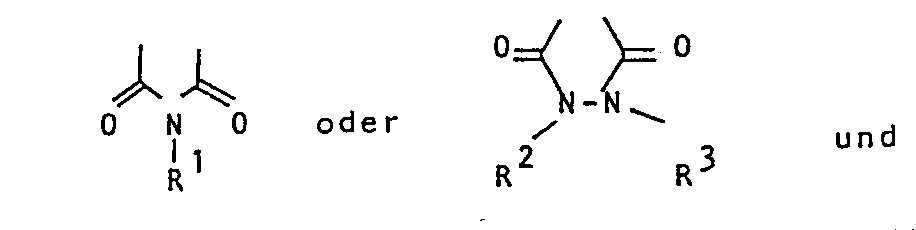
- Z Cyan, Carboxyl, Carbonester oder gegebenenfalls substituiertes Carbamoyl sind, wobei
- R' Wasserstoff oder der Rest eines primären Amins und
- R2 und R3 Wasserstoff oder gegebenenfalls substituiertes Alkyl, Cycloalkyl oder Aryl sind.
Description
- Die Erfindung betrifft Verbindungen der allgemeinen Formel I

- X und Y unabhängig voneinander Carboxyl, Carbonester oder gegebenenfalls substituiertes Carbamoyl,
- X und Y zusammen ein Rest der Formel

- Z Cyan, Carboxyl, Carbonester oder gegebenenfalls substituiertes Carbamoyl sind, wobei
- R Wasserstoff oder der Rest eines primären Amins und
- R2 und R3 Wasserstoff oder gegebenenfalls substituiertes Alkyl, Cycloalkyl oder Aryl sind.
- Carbonestergruppen für X, Y und Z sind z.B.:
- C1 - bis C12 -Alkoxycarbonyl, Cyclohexyloxycarbonyl, Allyloxy- carbonyl, 2-(C - bis C -Alkoxy)-ethoxycarbonyl, 3-(C - bis C4 -Alkoxy) -propyloxycarbonyl, 2-Phenoxyethoxycarbonyl, 3-Phenoxypropyloxycarbonyl, Phenylmethoxycarbonyl, 2-Phenylethoxycarbonyl, Phenoxycarbonyl, gegebenenfalls durch Chlor, Brom, Nitro oder Cyan substituiertes Phenoxycarbonyl, C - bis C4 -Alkylphenoxycarbonyl, Dimethylphenoxycarbonyl oder Trimethylphenoxycarbonyl.
- Carbamoylreste für X, Y und Z sind z.B.:
- C1- bis C -Alkylcarbamoyl, Cyclohexylcarbamoyl, Allylcarbamoyl, 2-(C - bis C -Alkoxy)-ethylcarbamoyl, 3-(C - bis C - Alkoxy)-propylcarbamoyl, 2-Phenoxyethylcarbamoyl, 3-Phenoxy- propylcarbamoyl, Phenylmethylcarbamoyl, 2-Phenylethylcarbamoyl, Phenylcarbamoyl, gegebenenfalls durch Chlor, Brom, Nitro oder Cyan substituiertes Phenylcarbamoyl, C - bis C12-Alkylphenylcarbamoyl, Dimethylphenylcarbamoyl, Trimethylphenylcarbamoyl, C - bis C4-Dialkylcarbamoyl, Methyl-cyclo- hexylcarbamoyl, Dicyclohexylcarbamoyl oder Reste der Formel


- Gleiches gilt entsprechend für die Ester und Säureverbindungen.
- Reste R1 sind beispielsweise:
- Wasserstoff, C - bis C12-Alkyl,-Cyclohexyl, Allyl, 2-(C1- bis C4-Alkoxy)-ethyl, 3-(C - bis C -Alkoxy)-propyl, 2-Phenoxy- ethyl, 3-Phenoxypropyl, Phenylmethyl, Phenylethyl oder gegebenenfalls durch Chlor, Brom, Cyan oder Nitro substituiertes Phenyl, C1- bis C12-Alkylphenyl, Dimethylphenyl oder Trimethylphenyl.
- 2 3 Reste R und R sind beispielsweise:
- Wasserstoff oder C - bis C -Alkyl, einer der Reste kann auch gegebenenfalls durch Chlor, Brom, Cyan oder Nitro substituiertes Phenyl sein.
- Zur Herstellung der Verbindungen der Formel I kann man Verbindungen der Formel II


- Verbindungen der Formel II sind z. B. in J. Prakt. Chem. 321, 787 (1979) von M. Augustin, G. Fischer, B. Schneider und M. Köhler, in J. Am. Chem. Soc. 75, 4338 (1953) von N. R. Eldred und D. M. Young und in Zh. Obshch. Khim 24, 1216 (1954) von Yu. A. Baskakov und N. N. Melnikov beschrieben.
- Repräsentative Einzelheiten der Herstellung können den Beispielen entnommen werden, in denen sich Angaben über Teile und Prozente, sofern nicht anders vermerkt, auf das Gewicht beziehen.
- Die Verbindungen der Formel I sind diazotierbar und eignen sich daher z. B. als Diazokomponenten.
- Von besonderer Bedeutung sind Verbindungen der Formel I a

- X1 und Y1 unabhängig voneinander Carboxyl oder Carbonestergruppen oder X und Y zusammen ein Rest der Formel

- Bevorzugte Carbonestergruppen sind z. B.:
- C1- bis C12-Alkoxycarbonyl, Cyclohexylcarbonyl, Phenylmethoxycarbonyl, Phenylethoxycarbonyl oder Phenoxycarbonyl.
- Bevorzugte Reste B1 sind z. B.:
- Wasserstoff, C1- bis C12-Alkyl, Cyclohexyl, Phenylmethyl, Phenylethyl, Phenyl, C1- bis C12-Alkylphenyl, Dimethylphenyl, Trimethylphenyl oder durch Chlor, Brom, Cyan oder Nitro substituiertes Phenyl.
- Weiter von besonderer Bedeutung sind Verbindungen der Formel I a, bei denen X1 und Y1 unabhängig voneinander CONHB1 sind wobei B1 die angegebene Bedeutung hat.
- Weiter sind Verbindungen der Formel

- X2 CONHB1 und
- Y2 Di-(C1 - bis C12- Alkyl)-carbamoyl, Carboxyl, C1- bis C12-Alkoxycarbonyl, Phenoxycarbonyl oder ein Rest der Formel

- 1 B die angegebene Bedeutung hat.
- Weiterhin sind Verbindungen der Formel

- X3 eine Carbonestergruppe und
- Y3 Carboxyl, Cyan, gegebenenfalls substituiertes Carbamoyl oder eine Carbonestergruppe sind.
-

- Schmp.: 295 °C (Eisessig), IR (KBr): 3380, 3311, 3204 (NH2), 2225 (C=N), 1767, 1708, 1654, 1644 cm (C=O)
- C13H7N3O2S (269,28)

-

-

-

-

-

-

- Schmp.: 66 °C (Toluol), IR (KBr): 3400, 3325, 3213 (NH2), 2219 (C=N), 1731 1709, 1694 cm-1 (C=0)
- C11H12N2O4S (268,29)

-

-

- Schmp.: 294 °C (n-Butanol), IR (KBr): 3396, 3365, 3250 3172 (NH2), 1744, 1703, 1683 cm-1 (C=O)
- C13 H9 N3 O3 S (287,30)

-

- Schmp.: 273 °C (Methylglykol), IR (KBr): 3380, 3300, 3195 (NH, NH ), 2215 (C=N), 1694, 1633, 1616, 1608, 1596 cm (C=O)
- C14 H11 N3 O3 S (301,32)
-

-

- Die Mischung wird über Nacht gerührt, dann in 3000 Teile Wasser gegeben und unter Eiszugabe mit verd. Salzsäure angesäuert. Der entstandene Niederschlag wird abgesaugt, mit Wasser gewaschen und getrocknet. Man erhält 60,5 Teile (54 % der Theorie) 2-Amino-3-cyan-5-methoxycarbonyl- thiophen-4-carbonsäure.
- Schmp.: 256 °C (Eisessig), IR (KBr): 3314, 3164 (NH2), 2220 (C≡N), 1710, 1655, cm-1 (C≡O)
- C8H6N2O4S (226,21)

-

- Schmp.: >300 °C, IR (KBr): 3431, 3324, 3184 (NH2), 3600-2300 (OH), 2220 (C≡N) C7H4N2O4S (212,19)
-


- Schmp.: 224 °C (Eisessig), IR (KBr): 3430, 3325 (NH2), 2220 (C≡N), 1688, 1673, 1627 cm-1 (C=0, C=N-)
- C11H12N4O3S (280,31)


- C11H10N4O2S (262,29)

- Schmp.: 282 °C (Eisessig), IR (KBr): 3427, 3292, 3191 (NHz), 2232, 2222 (C≡N), 1708 cm-1 (C=0)
- C8H5N3O2S (207,21)

-

- Schmp.: 249 °C (Eisessig), IR (KBr): 3321, 3190 (NH2), 2219 (C≡N), 1685 (C=0)
- C9H7N3O2S (221,24)

Claims (6)


Applications Claiming Priority (2)
| Application Number | Priority Date | Filing Date | Title |
|---|---|---|---|
| DE3402026 | 1984-01-21 | ||
| DE19843402026 DE3402026A1 (de) | 1984-01-21 | 1984-01-21 | Neue 2-aminothiophenderivate |
Publications (3)
| Publication Number | Publication Date |
|---|---|
| EP0150034A2 true EP0150034A2 (de) | 1985-07-31 |
| EP0150034A3 EP0150034A3 (en) | 1985-10-30 |
| EP0150034B1 EP0150034B1 (de) | 1989-08-02 |
Family
ID=6225538
Family Applications (1)
| Application Number | Title | Priority Date | Filing Date |
|---|---|---|---|
| EP85100349A Expired EP0150034B1 (de) | 1984-01-21 | 1985-01-15 | 2-Aminothiophenderivate |
Country Status (3)
| Country | Link |
|---|---|
| EP (1) | EP0150034B1 (de) |
| JP (1) | JPH0631218B2 (de) |
| DE (2) | DE3402026A1 (de) |
Cited By (5)
| Publication number | Priority date | Publication date | Assignee | Title |
|---|---|---|---|---|
| EP0193885A1 (de) * | 1985-03-02 | 1986-09-10 | BASF Aktiengesellschaft | Thiophenderivate |
| EP0384314A3 (de) * | 1989-02-23 | 1991-10-16 | BASF Aktiengesellschaft | Diaminothiophene |
| US5216139A (en) * | 1988-10-01 | 1993-06-01 | Basf Aktiengesellschaft | Thiopheneazo dye based on a coupling component of the thiazole series |
| US5532240A (en) * | 1991-12-26 | 1996-07-02 | Yoshitomi Pharmaceutical Industries, Ltd. | Condensed thiophene compound and pharmaceutical use thereof |
| EP2283898A1 (de) | 2002-12-23 | 2011-02-16 | 4Sc Ag | Cycloalkyl-Verbindungen als ANTI-INFLAMMATORISCHEN, IMMUNOMODULATORISCHEN und antiproliferativen Mittel |
Families Citing this family (3)
| Publication number | Priority date | Publication date | Assignee | Title |
|---|---|---|---|---|
| DE3639942A1 (de) * | 1986-11-22 | 1988-06-01 | Basf Ag | Thiophenazofarbstoffe |
| DE4023048A1 (de) * | 1990-07-20 | 1992-01-23 | Basf Ag | Dicarbonsaeureimide, verfahren zu ihrer herstellung und ihre verwendung als herbizide |
| WO1993013105A1 (en) * | 1991-12-26 | 1993-07-08 | Yoshitomi Pharmaceutical Industries, Ltd. | Condensed thiophene compound and pharmaceutical use thereof |
Family Cites Families (5)
| Publication number | Priority date | Publication date | Assignee | Title |
|---|---|---|---|---|
| GB1394365A (en) * | 1972-01-28 | 1975-05-14 | Impperial Chemical Ind Ltd | Disperse azo dyestuffs |
| GB1389266A (en) * | 1972-05-18 | 1975-04-03 | Ici Ltd | Basic monoazo dyestuffs |
| US3941883A (en) * | 1974-03-11 | 1976-03-02 | Ciba-Geigy Corporation | Aromatic dicarboxamides as anticonvulsants |
| GB1480923A (en) * | 1974-12-05 | 1977-07-27 | Ici Ltd | Process for the manufacture of 2-amino-3-cyanothiophenes |
| DE2513337C3 (de) * | 1975-03-26 | 1980-11-13 | Basf Ag, 6700 Ludwigshafen | 3-substituierte 4-Cyan-5-amino-thienyl (2) - carbonsäureester |
-
1984
- 1984-01-21 DE DE19843402026 patent/DE3402026A1/de not_active Withdrawn
-
1985
- 1985-01-15 EP EP85100349A patent/EP0150034B1/de not_active Expired
- 1985-01-15 DE DE8585100349T patent/DE3571986D1/de not_active Expired
- 1985-01-21 JP JP60007646A patent/JPH0631218B2/ja not_active Expired - Lifetime
Non-Patent Citations (3)
| Title |
|---|
| J. PRAKT. CHEM., vol. 321, 1979, pages 787 |
| M. AUGUSTIN; G. FISCHER; B. SCHNEIDER; M. KÖHLER, J. AM. CHEM. SOC., vol. 75, 1953, pages 4338 |
| N. R. ELDRED; D. M. YOUNG, ZH. OBSHCH. KHIM, vol. 24, 1954, pages 1216 |
Cited By (6)
| Publication number | Priority date | Publication date | Assignee | Title |
|---|---|---|---|---|
| EP0193885A1 (de) * | 1985-03-02 | 1986-09-10 | BASF Aktiengesellschaft | Thiophenderivate |
| US5216139A (en) * | 1988-10-01 | 1993-06-01 | Basf Aktiengesellschaft | Thiopheneazo dye based on a coupling component of the thiazole series |
| EP0384314A3 (de) * | 1989-02-23 | 1991-10-16 | BASF Aktiengesellschaft | Diaminothiophene |
| US5532240A (en) * | 1991-12-26 | 1996-07-02 | Yoshitomi Pharmaceutical Industries, Ltd. | Condensed thiophene compound and pharmaceutical use thereof |
| US5691330A (en) * | 1991-12-26 | 1997-11-25 | Yoshitomi Pharmaceutical Industries, Ltd. | Condensed thiophene compound and pharmaceutical use thereof |
| EP2283898A1 (de) | 2002-12-23 | 2011-02-16 | 4Sc Ag | Cycloalkyl-Verbindungen als ANTI-INFLAMMATORISCHEN, IMMUNOMODULATORISCHEN und antiproliferativen Mittel |
Also Published As
| Publication number | Publication date |
|---|---|
| JPH0631218B2 (ja) | 1994-04-27 |
| DE3571986D1 (en) | 1989-09-07 |
| EP0150034B1 (de) | 1989-08-02 |
| DE3402026A1 (de) | 1985-07-25 |
| EP0150034A3 (en) | 1985-10-30 |
| JPS60161979A (ja) | 1985-08-23 |
Similar Documents
| Publication | Publication Date | Title |
|---|---|---|
| DE2451480C2 (de) | ||
| EP0150034A2 (de) | 2-Aminothiophenderivate | |
| DE2623226C2 (de) | N-Benzyl-2,2-dimethoxy-acetamide, Verfahren zu ihrer Herstellung und ihre Verwendung | |
| EP0063767B1 (de) | 2-Ketosulfonamide und Verfahren zu ihrer Herstellung | |
| EP0782991B1 (de) | Verfahren zur Herstellung von 2-substituierten 5-Chlorimidazol-4-carbaldehyden | |
| DE1935404C3 (de) | Verfahren zur Herstellung von Chinazoline nen | |
| EP0152759B1 (de) | Aminoisothiazolverbindungen | |
| DE2710382A1 (de) | Verfahren zur herstellung von 2,1,3-thiadiazin-4-on-2,2-dioxid-derivaten | |
| CH673279A5 (de) | ||
| EP0267467B1 (de) | Verfahren zur Herstellung von Thiophenverbindungen | |
| DE10353205A1 (de) | Ortho-substituierte Pentafluorsulfuranyl-Benzole, Verfahren zu ihrer Herstellung sowie ihre Verwendung als wertvolle Synthese-Zwischenstufen | |
| EP0345464B1 (de) | Verfahren zur Herstellung von substituierten 3-Amino-2(benzoyl)-acrylsäureestern sowie ein Verfahren zur Herstellung von Zwischenprodukten für antibakterielle Wirkstoffe aus diesen Verbindungen | |
| DE1795209A1 (de) | Neues Verfahren zur Herstellung von Aminoverbindungen | |
| DE1545842C3 (de) | Verfahren zur Herstellung von N-substituierten 3-Halogen-benzisothiazoliumhalogeniden | |
| EP0088252B1 (de) | Verfahren zur Herstellung von 1-(4-Chlorbenzoyl)-5-methoxy-2-methyl-3-indolacetoxyessigsäure | |
| DE3314167C2 (de) | ||
| DE3526023C2 (de) | ||
| SU626694A3 (ru) | Способ получени производных бензимидазола или их солей | |
| EP1167459B1 (de) | Verfahren zur Herstellung von trans-Thiazinindigo-Pigmenten | |
| DD258985A1 (de) | Verfahren zur herstellung neuer benzoyl-triazolyl-essigsaeure oder -thioessigsaeurederivate | |
| CH597149A5 (en) | 2-Carboxy- and 2-tri:fluoromethyl 4-amino-benzaldehyde derivs. | |
| DE1174797B (de) | Verfahren zur Herstellung von Sulfamylanthranilsaeuren | |
| DE1670203C3 (de) | Verfahren zur Herstellung von 4,6-Pyrimidyldiäthern oder -dithioäthern | |
| DE1213846B (de) | Verfahren zur Herstellung von Sulfamylanthranilsaeuren | |
| AT274802B (de) | Verfahren zur Herstellung von Indolderivaten |
Legal Events
| Date | Code | Title | Description |
|---|---|---|---|
| PUAI | Public reference made under article 153(3) epc to a published international application that has entered the european phase |
Free format text: ORIGINAL CODE: 0009012 |
|
| AK | Designated contracting states |
Designated state(s): CH DE FR GB IT LI |
|
| PUAL | Search report despatched |
Free format text: ORIGINAL CODE: 0009013 |
|
| AK | Designated contracting states |
Designated state(s): CH DE FR GB IT LI |
|
| 17P | Request for examination filed |
Effective date: 19860314 |
|
| 17Q | First examination report despatched |
Effective date: 19880304 |
|
| GRAA | (expected) grant |
Free format text: ORIGINAL CODE: 0009210 |
|
| AK | Designated contracting states |
Kind code of ref document: B1 Designated state(s): CH DE FR GB IT LI |
|
| ITF | It: translation for a ep patent filed | ||
| REF | Corresponds to: |
Ref document number: 3571986 Country of ref document: DE Date of ref document: 19890907 |
|
| GBT | Gb: translation of ep patent filed (gb section 77(6)(a)/1977) | ||
| ET | Fr: translation filed | ||
| PLBE | No opposition filed within time limit |
Free format text: ORIGINAL CODE: 0009261 |
|
| STAA | Information on the status of an ep patent application or granted ep patent |
Free format text: STATUS: NO OPPOSITION FILED WITHIN TIME LIMIT |
|
| 26N | No opposition filed | ||
| ITTA | It: last paid annual fee | ||
| PGFP | Annual fee paid to national office [announced via postgrant information from national office to epo] |
Ref country code: FR Payment date: 20001215 Year of fee payment: 17 |
|
| PGFP | Annual fee paid to national office [announced via postgrant information from national office to epo] |
Ref country code: CH Payment date: 20001228 Year of fee payment: 17 |
|
| PGFP | Annual fee paid to national office [announced via postgrant information from national office to epo] |
Ref country code: GB Payment date: 20010105 Year of fee payment: 17 |
|
| PGFP | Annual fee paid to national office [announced via postgrant information from national office to epo] |
Ref country code: DE Payment date: 20010117 Year of fee payment: 17 |
|
| REG | Reference to a national code |
Ref country code: GB Ref legal event code: IF02 |
|
| PG25 | Lapsed in a contracting state [announced via postgrant information from national office to epo] |
Ref country code: GB Free format text: LAPSE BECAUSE OF NON-PAYMENT OF DUE FEES Effective date: 20020115 |
|
| PG25 | Lapsed in a contracting state [announced via postgrant information from national office to epo] |
Ref country code: LI Free format text: LAPSE BECAUSE OF NON-PAYMENT OF DUE FEES Effective date: 20020131 Ref country code: CH Free format text: LAPSE BECAUSE OF NON-PAYMENT OF DUE FEES Effective date: 20020131 |
|
| PG25 | Lapsed in a contracting state [announced via postgrant information from national office to epo] |
Ref country code: DE Free format text: LAPSE BECAUSE OF NON-PAYMENT OF DUE FEES Effective date: 20020801 |
|
| GBPC | Gb: european patent ceased through non-payment of renewal fee |
Effective date: 20020115 |
|
| REG | Reference to a national code |
Ref country code: CH Ref legal event code: PL |
|
| PG25 | Lapsed in a contracting state [announced via postgrant information from national office to epo] |
Ref country code: FR Free format text: LAPSE BECAUSE OF NON-PAYMENT OF DUE FEES Effective date: 20020930 |
|
| REG | Reference to a national code |
Ref country code: FR Ref legal event code: ST |