EP0152613A2 - Promoteur - Google Patents
Promoteur Download PDFInfo
- Publication number
- EP0152613A2 EP0152613A2 EP84116038A EP84116038A EP0152613A2 EP 0152613 A2 EP0152613 A2 EP 0152613A2 EP 84116038 A EP84116038 A EP 84116038A EP 84116038 A EP84116038 A EP 84116038A EP 0152613 A2 EP0152613 A2 EP 0152613A2
- Authority
- EP
- European Patent Office
- Prior art keywords
- promoter
- dna
- region
- plasmid
- escherichia coli
- Prior art date
- Legal status (The legal status is an assumption and is not a legal conclusion. Google has not performed a legal analysis and makes no representation as to the accuracy of the status listed.)
- Granted
Links
Images




Classifications
-
- C—CHEMISTRY; METALLURGY
- C07—ORGANIC CHEMISTRY
- C07K—PEPTIDES
- C07K14/00—Peptides having more than 20 amino acids; Gastrins; Somatostatins; Melanotropins; Derivatives thereof
- C07K14/435—Peptides having more than 20 amino acids; Gastrins; Somatostatins; Melanotropins; Derivatives thereof from animals; from humans
- C07K14/52—Cytokines; Lymphokines; Interferons
- C07K14/555—Interferons [IFN]
- C07K14/57—IFN-gamma
-
- C—CHEMISTRY; METALLURGY
- C12—BIOCHEMISTRY; BEER; SPIRITS; WINE; VINEGAR; MICROBIOLOGY; ENZYMOLOGY; MUTATION OR GENETIC ENGINEERING
- C12N—MICROORGANISMS OR ENZYMES; COMPOSITIONS THEREOF; PROPAGATING, PRESERVING, OR MAINTAINING MICROORGANISMS; MUTATION OR GENETIC ENGINEERING; CULTURE MEDIA
- C12N15/00—Mutation or genetic engineering; DNA or RNA concerning genetic engineering, vectors, e.g. plasmids, or their isolation, preparation or purification; Use of hosts therefor
- C12N15/09—Recombinant DNA-technology
- C12N15/63—Introduction of foreign genetic material using vectors; Vectors; Use of hosts therefor; Regulation of expression
- C12N15/70—Vectors or expression systems specially adapted for E. coli
-
- Y—GENERAL TAGGING OF NEW TECHNOLOGICAL DEVELOPMENTS; GENERAL TAGGING OF CROSS-SECTIONAL TECHNOLOGIES SPANNING OVER SEVERAL SECTIONS OF THE IPC; TECHNICAL SUBJECTS COVERED BY FORMER USPC CROSS-REFERENCE ART COLLECTIONS [XRACs] AND DIGESTS
- Y10—TECHNICAL SUBJECTS COVERED BY FORMER USPC
- Y10S—TECHNICAL SUBJECTS COVERED BY FORMER USPC CROSS-REFERENCE ART COLLECTIONS [XRACs] AND DIGESTS
- Y10S930/00—Peptide or protein sequence
- Y10S930/01—Peptide or protein sequence
- Y10S930/14—Lymphokine; related peptides
- Y10S930/142—Interferon
Definitions
- lactose (lac) promoter referred to as lac promoter hereinafter
- tryptophan (trp) promoter referred to as trp promoter hereinafter
- tac promoter a hybrid promoter of trp promoter and lac promoter. These promoters are used for the expression of heterogeneous genes (K. Itakura et al. Science 198, 1056-1063 (1977), D.V. Goeddel et al., Nature 287, 411-416 (1980), H.A. deBoer et al., Proc. Natl. Acad. Sci. USA 80, 21-25 (1983).
- the promoter of Escherichia coli comprises the region around "-35", which is usually called “-35” region, the region around "-10", which is called “-10” region or Pribnow box, and the region of "+1", i.e. transcription initiation site which is a purine base such as adenine and guanine in most promoters.
- the "-35" region is defined as a recognition site of the RNA polymerase.
- the consensus sequence is TGTTGACANTTT, wherein A is adenine, T is thymine, G is guanine, C is cytosine and N is any of A,T, G and C.
- the most frequently appearing part of the consensus sequence is TTGACA.
- the "-10" region is a RNA polymerase binding site and the consensus sequence thereof is TATAATG (M. Rosenberg & D. Court, Ann. Rev. Genet. 13, 319 (1979) ).
- the lac UV5 promoter F. Fuller, Gene 19, 43 (1982)
- the trp promoter can be used (G.N. Bennet et al., J. Mol. Biol. 121, 113 (1978), D.V. Goeddel et al., Nature 287, 411 (1980)).
- the "-10" region TATAATG
- the "-35" region GCTTTACACTTT
- the "-35" region is almost identical with the consensus sequence but the "-10" region (TTAACTA) is not identical with the consensus sequence.
- H.A. deBoer et al. of Genentech Inc. constructed a hybrid promoter by ligating a DNA fragment containing the "-35" region of the trp promoter and the 5' flanking region thereof to a DNA fragment containing the "-10" region of the lac promoter and the lac operator.
- the hybrid promoter was designated as tac promoter and was employed to express a gene coding for the human growth hormone.
- the tac promoter is characterized in that the "-35" region derived from the trp promoter and the "-10" region derived from the lac promoter are combined to operate as a single promoter. Both regions are almost identical with the consensus sequences (H.A. deBoer et al., Proc. Natl. Acad. Sci. USA 80, 21 (1983) ).
- the tac promoter has a trans- criptionactivity which is about 3.5 times higher than that of the trp promoter and 2-3 times higher than that of the lac promoter.
- H.A. deBoer et al. constructed a rac promoter which is a hybrid promoter of the promoter of the ribosomal RNA operon (known as an extremely strong promoter) and the lac promoter for use in expression of a gene coding for the human growth hormone (Japanese Published Unexamined Patent Application No. 194790/82).
- H.A. deBoer et al. provided a method for the construction of novel hybrid promoters by ligating selectively and functionally the DNA fragment containing the 5' flanking region and the "-35" region to the DNA fragment containing the "-10" region.
- the intention of this method is to combine the advantageous properties of both of the promoters.
- the method may be useful for the construction of hybrid promoters which have a high transcription activity and the ability of expression control.
- this method is not suitable for the construction of promoters which make best use of the transcription ability of Escherichia coli.
- the transcription activity of the trp promoter and the tac promoter is elevated.
- H.A. deBoer et al. demonstrated that the following factors affect the strength of a promoter (H.A. deBoer et al. "Promoters: structure and function", R.L. Rodriguez et al., M.J. Chamberlin ed. (Praeger Co.) 462-481 (1982) ):
- Factors (1), (2) and (3) are known to have an important effect on the strength of a promoter.
- the present inventors presumed that the factor (4) would have an important effect on the strength of a promoter.
- Some strong Escherichia coli promoters are known to be abundant with adenine (A) and thymine (T) in the 5' flanking region and to contain a part (AT) wherein A and T are linked successively (Z. Humayun et al., J. Mol. Biol. 112, 265 (1977), Horn et al., J. Biol. Chem. 256, 1998 (1981), G.N. Bennet et al., J. Mol. Biol. 121, 113 (1978), K. Nakamura et al., Cell 18, 1109 (1979) ).
- the 5' flanking region of the P L promoter has the following features (see also Table 1). First of all, two regions abundant with AT are contained in the 5' flanking region. According to the conventional numbering wherein the transcription initiation site of P L promoter is indicated by +1 the two regions abundant with AT are -186 to -155 and -101 to -75 .
- G.T. Horn et al. reported that the deletion of both AT-abundant regions resulted in reduction of the strength of the P L promoter but did not change the function of the P L promoter (G.T. Horn et al. J. Biol. Chem. 256, 2003 (1981) ).
- a "-35"-like nucleotide sequence present in the region from -60 to -49 may also have an effect on the strength of the promoter.
- the sequences of the "-35" region and the "-10" region are very similar to but not identical with the respective consensus sequences. The similarity of the sequences to the consensus sequences is in the same range as in the case of the trp promoter.
- the P L promoter has a stronger transcription activity than the trp promoter. This may be correlated with the difference of the nucleotide sequences in the 5' flanking regions. Therefore, the strength of a promoter wherein the 5' flanking region is replaced with that of the P L promoter may be elevated.
- the method is used to derive a stronger promoter from the very excellent tac promoter by replacing the 5' flanking region with another one, the 5' flanking region and the "-35" region are liable to be simultaneously replaced with other DNA fragments, whereby the "-35" region inherent in the tac promoter is lost.
- the present inventors have found a process for replacing only the 5' flanking region as described hereinafter, that is, a process for replacing only the 5' flanking region utilizing a restriction site which is present around or upstream from the "-35" region.
- the present invention relates to a novel promoter which is strengthened in transcription activity. More specifically, this invention relates to a novel promoter which is constructed by replacing a region existing upstream from the "-35" region of an Escherichia coli promoter or an artificially constructed promoter (both referred to as promoter A hereinafter) with the "-35" region of another promoter (referred to as promoter B hereinafter) or a chemically synthesized DNA fragment.
- the present invention provides a novel promoter wherein the 5' flanking region of a promoter (referred to as promoter A hereinafter) is replaced with the 5' flanking region of another promoter (referred to as promoter B hereinafter) or a chemically synthesized DNA fragment.
- promoter A the 5' flanking region of a promoter
- promoter B the 5' flanking region of another promoter
- promoter A Escherichia coli - derived promoters such as the promoter of the tryptophan (trp) operon (trp promoter) and the promoter of the lactose (lac) operon (lac promoter), the tac promoter which is a hybrid promoter of the trp promoter and the lac promoter or artificially constructed promoters.
- promoter B a promoter which has a stronger transcription activity than promoter A is preferably used.
- a promoter which has a transcription activity equivalent to or weaker than promoter A is also applicable since the transcription activity may be enhanced by such a replacement.
- promoter B examples include Escherichia coli- derived promoters such as the P L promoter of ⁇ phage, the P R promoter of ⁇ phage, the ribosomal RNA promoter (rrn) or the lipoprotein gene promoter.
- the replacement of the 5' flanking region of promoter A with the 5' flanking region of promoter B or a chemically synthesized DNA fragment is carried out using a restriction site around or upstream from the "-35" region of promoter A or an appropriate restriction site in the "-35” region or the 5' flanking region. If a restriction site in the "-35" region is used it should be selected so as not to convert the nucleotide sequence of the "-35" region by replacement. Further, it is possible to insert the 5' flanking region of promoter B or a chemically synthesized DNA fragment after removing the 5' flanking region of promo - ter A using a nuclease such as BAL31.
- restriction enzymes are suitable to cut out regions from the 5' flanking region of promoter A:
- regions and DNA fragments abundant with AT are preferably used.
- the present invention is explained in more detail by replacing the 5' flanking region of the very strong P L promoter by that of the trp promoter or the tac promoter.
- the P L upromoter contains a HincII site in the "-35" region.
- the trp promoter and the tac promoter contain a HincII site in their "-35" region at the same position as the HincII site in the P L promoter.
- a novel promoter can be constructed wherein a region upstream from the HincII site of the P L promoter is replaced by a region down- stream from the HincII site of the trp or the tac promoter (see Tables 4 and 5).
- let (leftward promoter + trp promoter) promoter and lec (leftward promoter + tac promoter) promoter respectively.
- Let and lec promoters are constructed using the HincII site in the "-35" region without any change of the nucleotide sequences in the region. Therefore, it is possible to enhance the transcription activity without impairing the function of the original trp and tac promoters.
- the let promoter has a transcription activity which is about 10 times stronger than that of the trp promoter and the lec promoter has a transcription activity which is about twice as strong as that of the tac promoter.
- Both trp promoter and tac promoter contain a part abundant with AT in the 5' flanking region (see Tables 2 and 3). Nevertheless, the transcription activity of the trp and the tac promoter is increased by replacing their 5' flanking regions with that of the P L promoter. This suggests that a specific nucleotide sequence, in addition to the AT content in the 5' flanking region of the P L promoter, contributes to the increase of the transcription activity.
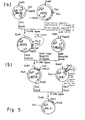
- the desired promoter like the lec promoter can be constructed by removing the 5' flanking region by digestion with an exonuclease such as BAL31 starting at an appropriate restriction site upstream from the tac promoter, for example, the EcoRI site of pTAC10 as illustrated in Fig. 5, and by subsequently inserting a DNA fragment containing the 5' flanking region of the P L promoter.
- an exonuclease such as BAL31 starting at an appropriate restriction site upstream from the tac promoter, for example, the EcoRI site of pTAC10 as illustrated in Fig. 5
- it is possible to construct a promoter strengthened in transcription activity by inserting the 5' flanking region of another promoter or a chemically synthesized DNA fragment abundant with AT into a restriction site upstream from the "-35" region.
- Reaction conditions required for preparing the recombinant plasmid carrying the promoters described above are as follows.
- the digestion of the DNA with restriction enzymes is usually carried out by reacting 0.1 to 20 ⁇ g of DNA with 0.1 - 100 units, preferably 1 - 3 units of restriction enzyme per 1 ⁇ g of DNA in a mixture of 2 - 200mM, preferably 10 - 40 mM Tris-HCl (pH 6.0 - 9.5, preferably pH 7.0 - 8.0), 0 - 200 mM NaCl and 2 - 20 mM, preferably 5 - 10 mM MgCl 2 at 20 - 70°C (optimal temperature depends on restriction enzymes used) for 15 minutes to 24 hours.
- 2 - 200mM preferably 10 - 40 mM Tris-HCl (pH 6.0 - 9.5, preferably pH 7.0 - 8.0), 0 - 200 mM NaCl and 2 - 20 mM, preferably 5 - 10 mM MgCl 2 at 20 - 70°C (optimal temperature depends on restriction enzymes used) for 15 minutes to 24
- the reaction is usually stopped by heating to 55 - 75°C for 5 - 30 minutes, or alternatively by inactivating the restriction enzyme with a reagent such as phenol or diethylpyrocarbonate.
- a reagent such as phenol or diethylpyrocarbonate.
- the ligation of the DNA fragments is carried out with 0.3 - 10 units of T4DNA ligase in a mixture of 2 - 200mM, preferably 10 - 40 mM Tris-HCl (pH 6.0 - 9.5, preferably 7.0 - 8.0), 2 - 20 mM, preferably 5 - 10 mM MgCl 2 , O.1 - 10 mM, preferably 0.5 - 2.0 mM ATP and 1 - 50 mM, preferably 5 - 10 mM dithiothreitol at 1 - 37°C, preferably 3 - 20°C for 15 minutes to 72 hours, preferably 2 - 20 hours.
- the plasmid DNA can be introduced by the transformation method of Cohen et al. (Proc. Natl. Acad. Sci. USA 69, 2110 (1972)). If the recombinant plasmid DNA shall be isolated from Escherichia coli carrying this DNA, the method described in Example 1 or the method of Birnboim et al. (Nucleic Acids Res. 7, 1513 (1979)) may be employed. The structure of the isolated DNA is analyzed as follows.
- Plasmid DNA is digested with 1 - 10 types of restriction endonucleases and the resulting fragments are examined by agarose gel electrophoresis or polyacrylamide gel electrophoresis. Further, if necessary, the base sequence of the DNA is determined according to the method of Maxam and Gilbert (Proc. Natl. Acad. Sci. USA 74, 560 (1977)).
- Recombinant plasmid DNAs can be produced by the method described above.
- pP L T 4 plasmid DNA about 4.7 kilo base pairs: referred to as Kb hereinafter
- Kb 4.7 kilo base pairs
- Y-50 buffer solution 10 mM Tris-HCl
- PstI product of Takara Shuzo Co., the restriction enzymes hereinafter are all products of Takara Shuzo Co., unless otherwise specified
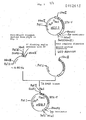
- pGKA2 plasmid (about 5.2 Kb, refer to Reference Example 3) expressing human IFN- ⁇ gene under the control of trp promoter were digested with 20 units of FstI in 50 ⁇ l of Y-50 buffer solution at 37°C for 1 hour. Then, 4 units of HincII were added and the reaction was continued for 1 hour. In this reaction, the DNA was digested completely with PstI and partially with HincII.
- T4 DNA ligase buffer solution consisting of 20 mM Tris-ECl (pH 7.6), 10 mM MgCl 2 , 10 mM dithiothreitol and 0.5 mM ATP (referred to as "T4 DNA ligase buffer solution" hereinafter).
- Escherichia coli HB101 F hsdR hsdM pro leu thi rpsL recA, Bolivar et al., Gene 2, 75 (1977)
- Escherichia coli HB101 F hsdR hsdM pro leu thi rpsL recA, Bolivar et al., Gene 2, 75 (1977)
- Cohen et al. Proc. Natl. Acad. Sci. USA 69, 2110 (1972)
- transformation of Escherichia coli is carried out by this method hereinafter to obtain an Ap resistant strain.
- Plasmid DNA was isolated from the transformant by the following method.
- the transformant was inoculated in 8 ml of LG medium (1.0% Bacto-trypton, 0.5% yeast extract, 0.5% NaCl, 0.1% glucose, pH 7.2) containing 50 ⁇ g/ml ampicillin and culturing was carried out at 30°C for 15 - 18 hours.
- the culture liquor was centrifuged at 10,000 rpm for 5 minutes to harvest cells.
- the cells were suspended in 400 ⁇ l of a buffer solution containing 50 mM Tris-HCl (pH 7.5) and 10 mM EDTA and frozen in dry ice-ethanol.
- the human IFN- ⁇ gene is ligated upstream from the let promoter constructed by replacing the 5' flanking region of trp promoter with that region of P L promoter.
- the nucleotide sequence between the Shine-Dalgarno sequence (referred to as SD sequence hereinafter) derived from trpL gene and the ATG initiation codon of IFN- ⁇ gene is the same as that of pGKA2 (AAGGGTATCGATAAGCTTATG).
- the nucleotide sequence of the newly constructed let promoter is illustrated in Table 4. As illustrated in Table 4, the let promoter has the form of the portable promoter which is cut out with EcoRI (or XhoI, or BglII) and ClaI (or HindIII).
- Escherichia coli HB101 carrying recombinant plasmid pGKA2 (IGKA2) and Escherichia coli HB101 carrying pGHA2 (IGHA2) were tested for interferon production by the following method.
- a loopful of the above strains was inoculated in 10 ml of MCG medium. (0.6% Na 2 HPO 4 , 0.3% KH 2 PO 4 , 0.5% NaCl, 0.1% NH 4 Cl, 0.5% glucose, 0.5% casamino acid, 1 mM MgSO 4 , 4 ⁇ g/ml thiamine hydrochloride, pH 7.2) and culturing was carried out at 30°C for 17 hours.
- the culture broth was centrifuged at 8,000 rpm for 10 minutes to collect cells.
- the cells were washed with a buffer solution consisting of 30 mM NaCl and 30 mM Tris-HCl (pH 7.5).
- the washed cells were suspended in 575 ⁇ l of PBS buffer solution (0.8 % NaCl, 0.02% KCl, 0.11 5% Na 2 HPO 4 , 0.02% KH 2 PO 4 (pH 7.4)). 25 ⁇ l of 0.25 M EDTA and 100 ⁇ l of 100 mg/ml lysozyme solution in distilled water were added and the mixture was allowed to stand at 0°C for 30 minutes. Then, 200 ⁇ l of 5 M NaCl-5% polyethyleneglycol #1000 were added. Freezing and thawing were repeated three times to disrupt cells. The disrupted cells were centrifuged at 15,000 rpm for 30 minutes to recover a supernatant fluid.
- PBS buffer solution 0.8 % NaCl, 0.02% KCl, 0.11 5% Na 2 HPO 4 , 0.02% KH 2 PO 4 (pH 7.4)
- the amount of interferon in the supernatant was determined by the method of Armstrong (Appl. Microbiol. 21, 723-725 (1971) ) wherein Sindvis virus was used as a virus and FL cells derived from human amnion cells were used as animal cells.
- Escherichia coli strains carrying pGKA2 and pGHA2 have been deposited with the Fermentation Research Institute, Agency of Industrial Science and Technology (FERN) as Escherichia coli IGKA2 (FERM P-6798) and IGHA2 (PERM BP-400), respectively.
- pTAC10 plasmid carrying the tacI promoter (about 2.6 Kb, refer to Reference Example 2) were digested with 10 units of PstI and 10 units of HincII in 50 ⁇ l of Y-50 buffer solution at 37°C for 2 hours. After heat treatment at 65°C for 10 minutes, purification was carried out by low-gelling-temperature agarose gel electrophoresis to obtain a HincII-PstI fragment of about 1.6 Kb containing the most part of the tacI promoter and a part of the Ap resistance gene.
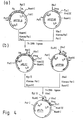
- Escherichia coli JA221 (F - hsdR - hsdM + trpE5 leu lacY recAl/F' lac I q lac + pro + ) (FERM BP-405) was transformed with the thus obtained recombinant plasmid DNA to obtain an Ap resistant strain. Plasmid DNA was isolated from the transformant and the structure thereof was analyzed to determine if the plasmid pLECI in ILECI has the desired structure.
- the lecI promoter in pLEC1 is a promoter wherein the 5' flanking region of the tacI promoter was replaced by that region of the P L promoter.
- the DNA sequence of the lecI promoter is illustrated in Table 5.
- the lecI promoter has a PvuII site five base pairs (referred to as bp hereinafter) downstream from the SD sequence derived from the lacZ gene, insertion of a foreign gene and adjustment of the distance between the SD sequence and ATG initiation codon can readily be made.
- Escherichia coli strain carrying PLEC1 has been deposited with the PERM as Escherichia coli ILEC1 (PERM BP-401).
- pGTC3 plasmid (about 5.15 Kb, see Reference Example 4) which expresses human IFN- ⁇ gene under the control of the tacI promoter were digested at 37°C for 1 hour with 20 units of PstI in 50 ⁇ l of Y-50 buffer solution. Then, 4 units of HincII were added and reaction was continued for 1 hour. In this reaction, the DNA was digested completely with PstI and partially with HincII.
- Escherichia coli JA221 was transformed with the thus obtained recombinant plasmid DNA to obtain an Ap resistant strain. Plasmid DNA was isolated from the transformant and the structure thereof was analyzed to determine if the plasmid pGHB3 in IGHB3 has the desired structure.
- the human IFN- ⁇ gene is inserted downstream from the lecI promoter constructed by replacing the 5' flanking region of the tacI promoter with that region of the P L promoter.
- the nucleotide sequence between the SD sequence derived from lacZ gene and the ATG initiation codon of IFN- ⁇ gene is the same as that of pGIC3 (AGGAAACAGAGCTTATG).
- Escherichia coli JA221 carrying recombinant plasmid pGTC3 (IGTC3) and Escherichia coli JA221 carrying PGHB3 (IGHB3) were tested for interferon production by the following method.
- the strains were inoculated in 5 ml of LG medium (1% Bacto-trypton, 0.5% yeast extract, 0.5% NaCl, 0.1% glucose, pH 7.2) and culturing was carried out overnight.
- 0.5 ml of the culture broth were inoculated in 10 ml of MOG medium containing 50 ⁇ g/ml tryptophan and culturing was carried out at 30°C.
- OD 550 was about 1.0
- 1 mM isopropyl ⁇ -D-thiogalactoside (referred to as IPTG herein - after) was added and culturing was continued for about 4 hours.
- IPTG isopropyl ⁇ -D-thiogalactoside
- Escherichia coli strains carrying pGTC3 and pGHB3 have been deposited with the FERM as Escherichia coli IGTC3 (FERM BP-402) and IGRB3 (FERM BP-403), respectively.
- pMY12-6 plasmid DNA About 4 ⁇ g of pMY12-6 plasmid DNA (about 4.6 Kb) were dissolved in 40 ⁇ l of a buffer solution consisting of 10 mM Tris-HCl (pH 7.5), 100 mM NaCl, 7 mM MgCl 2 and 6 mM 2-mercaptoethanol (referred to as "Y-100 buffer solution” hereinafter) and 8 units of BamHI were added. Digestion reaction was carr.ied out at 37°C for 2 hours.
- DNA polymerase I buffer solution 6 units of Escherichia coli DNA polymerase I Klenow fragment (product of Bethesda Research Laboratories, the same shall apply hereinafter) were added.
- the reaction was carried out at 15°C for 2 hours to change the 5' -protruding end formed by BamHI digestion to a blunt end.
- the reaction was stopped by phenol extraction, and after chloroform extraction and ethanol precipitation, the DNA fragment was dissolved in 40 ⁇ l (total volume) of Y-50 buffer solution and 8 units of PstI were added.
- the digestion reaction was carried out at 37°C for 2 hours. After heat treatment at 65°C for 10 minutes
- pKYP100 plasmid DNA (T. Nishi et al., DNA 2, 265-273 (1983) carrying the trp portable promoter were digested at 37°C for 2 hours with 10 units of XhoI in 40 ⁇ l of Y-100 buffer solution. After phenol and chloroform extraction and ethanol precipitation, the DNA fragment was dissolved in 40 ⁇ l (total volume) of DN A polymerase I buffer solution and 6 units of Escherichia coli DNA polymerase I, Klenow fragment were added. Reaction was carried out at 15°C for 2 hours to change the 5'-protruding end formed by X hoI digestion to a blunt end.
- the reaction was stopped by phenol extraction, and after chloroform extraction and ethanol precipitation, the DNA fragment was dissolved in 40 ⁇ l (total volume) of Y-50 buffer solution. 10 units of PstI were added and the reaction was carried out at 37°C for 2 hours. After heat treatment at 65°C for 10 minutes, the larger DNA fragment containing the trp promoter (about 3.7 Kb) was purified by low-gelling-temperature agarose gel electrophoresis.
- Escherichia coli MP347 F - lacZamY14 trpam8 gal strA ( ⁇ bio252 cI857 ⁇ HI) (FERM BP-408) was transformed with the thus obtained recombinant plasmid DNA by the method of ' Cohen et al. to obtain a tetracycline (Tc) resistant strain. Plasmid DNA was isolated from the transformant and its structure was analyzed to determine if the plasmid pP L T2 in IP L T2 has the desired structure.
- Escherichia coli strains carrying pMY12-6 and pP L T2 have been deposited with the FERM as Escherichia coli IMY12-6 (FERM BP-409) and Escherichia coli IP L T2 (FERM BP-407), respectively.
- the reaction was stopped by phenol extraction, and after chloroform extraction and phenol extraction, and after chloroform extraction ethanol precipitation, the DNA fragment was dissolved in 40 ⁇ l (total volume) of Y-100 buffer solution. 10 units of BamHI were added and the digestion reaction was carried out at 37°C for 2 hours. After heat treatmetnt at 65°C for 10 minutes, a plamid DNA fragment of about 0.7 Kb containing P L -P trp tandem promoter was purified by low-gelling-temperature agarose gel electrophoresis. Then, about 5 ⁇ g of pKYP100 plasmid DNA were digested at 37°C for 2 hours with 10 units of XhoI in 50 ⁇ l of buffer solution.
- the DNA fragment was dissolved in 40 ⁇ l (total volume) of DNA polymerase I buffer solution. 6 units of Escherichia coli DNA polymerase I. Klenow fragment were added and the reaction was carried out at 15°C for 2 hours to change the 5'- protruding end formed by XhoI digestion to a blunt end. The reaction was stopped by phenol extraction, and after chloroform extraction and ethanol precipitation, the DNA fragment was dissolved in 40 ⁇ l (total volume) of Y-100 buffer solution. 10 units of BamHI were added and the digestion reaction was carried out at 37°C for 2 hours.
- the larger plasmid DNA fragment of about 4.0 Kb was purified by low-gelling-temperature agarose gel electrophoresis.
- About 0.05 ⁇ g of the DNA fragment of about 0.7 Kb derived from pP L T2 and obtained above and 0.1 ⁇ g of the DNA fragment of about 4.0 Kb derived from pKYP100 and obtained above were ligated at 4°C for 18 hours with 2 units of T4 DNA ligase in 20 ⁇ l of T4 DNA ligase buffer solution.
- Escherichia coli MP347 was transformed with the recombinant plasmid DNA thus obtained to obtain Ap resistant strains.
- a Tc resistant strain was selected from the A p resistant strains and a plasmid DNA was isolated. Its structure was analyzed to determine if the plasmid pP L T 4 in IP L T4 has the desired structure.
- Escherichia coli strain containing pP L T4 has been deposited with the FERM as Escherichia coli IP L T 4 (FERM BP- 4C6).
- pKYP6 plasmid DNA were digested at 37°C for 2 hours with 20 units of PvuII and 20 units of HindIII in 50 ⁇ l of Y-50 buffer solution. After heat treatment at 65°C for 10 minutes, a DNA fragment (about 240 b p ) containing the "-35" region of the trp promoter was purified by low-gelling-temperature agarose gel electrophoresis.
- pBR322 plasmid DNA were dissolved in 50 ⁇ l of Y-100 buffer solution. 10 units of EcoRI were added and the digestion reaction was carried out at 37°C for 2 hours. Then, after phenol and chloroform extraction and ethanol precipitation, the DNA fragment was dissolved in 40 ⁇ l (total volume) of DNA polymerase I buffer solution. 6 units of Escherichia coli polymerase I . Klenow fragment were added and the reaction was carried out at 15°C for 2 hours to change tne 5' -protruding end formed by EcoRI digestion to a blunt end.
- the reaction was stopped by phenol extraction, and after chloroform extraction and ethanol precipitation, the DNA fragment was dissolved in 50 of Y-50 buffer solution. 10 units of HindIII were added and the digestion reaction was carried out at 37°C for 2 hours. digestion After heat treatment at 65°C for 10 minutes, the larger plasmid DNA fragment (about 4.3 Kb) was purified by low-gelling-temperature agarose gel electrophoresis.
- Escherichia coli K294 (F - hsdR - hsdM + endoI - thi) (ATCC31446, K. Backman et al., Proc. Natl. Acad. Sci. USA 73, 4174 (1976)) was transformed with the thus obtained recombinant plasmid DNA to obtain an Ap resistant strain. Plasmid DNA was isolated from the transformant and its structure was analyzed to determine if the plasmid pEYP30 in strain IKYF30 has the desired structure (see Fig. 5).
- pLACl plasmid DNA About 10 ⁇ g of pLACl plasmid DNA were dissolved in 50 ⁇ l of a buffer solution consisting of 10 mM Tris-HCl (pH 7.5), 10 mM NaCl, 7 mM MgCl 2 and 6 mM 2-mercaptoethanol (referred to as "Y-10 buffer solution” hereinafter). 20 units of HpaII and 20 units of FvuII were added and the digestion reaction was carried out at 37°C for 2 hours.
- Escherichia coli JA221 was transformed with the recombinant plasmid DNA thus obtained to obtain an Ap resistant strain. Plasmid DNA was isolated from the transformant and its structure was analyzed to determine if the plasmid pTAC10 .in ITAC10 has the desired structure (see Fig.5).
- the Escherichia coli strain containing the recombinant plasmid pTAC10 has been deposited with the FERM as Escherichia coli ITAC10 (FERM BP-404).
- Fig. 6 illustrates the following process of construction of plasmids.
- plasmid pIFN ⁇ -G4 isolated from ATCC39123 by the isolation method of plasmids described above was dissolved in 50 ⁇ l (total volume) of a solution containing 20 mM Tris-HCl (pH 7.5), 10 mM MgCl 2 , 10 mM dithiothreitol and 50 mM NaCl. Then, 12 units each of restriction enzymes PvuII and HindIII were added and the digestion reaction was carried-out at 37°C for 4 hours.
- the reaction solution was heated at 65°C for 7 minutes to inactivate the enzymes and subjected to purification by low-gelling temperature agarose gel electrophoresis to obtain 1.2 ⁇ g of a DNA fragment containing human IFN- ⁇ DNA of 1.3 Kb.
- pKYP11 4. ⁇ g of pKYP11 were dissolved in 40 ⁇ l (total volume) of a solution containing 20 mM Tris-ECl (pH 7.5), 10 mM NgCl 2 , 10 mM dithiothreitol and 50 mM NaCl. 3 units of BamHI were added and the digestion reaction was carried out at 37°C for 3 hours. The reaction solution was heated at 65°C for 5 minutes to inactivate the enzyme. Thereafter, 30 ⁇ M each of dATP, dCTP, dGTP and dTTP were added and 8 units of Escherichia coli DNA polymerase I (Klenow fragment, product of New England Biolabs, 1 ⁇ l) were added.
- the libation reaction was carried out at 4°C for 18 hours, and Escherichia coli HB101 was transformed with the obtained recombinant plasmid mixture by conventional techniques to obtain an Ap R colony.
- a plasmid, pGC7 (illustrated in Fig. 6 ) was separated from the culture broth of the colony. The structure of pGC7 was confirmed by digestion with HindIII, BamHI, HpaI, SalI, EcoRI and ClaI and agarose gel electrophoresis.
- Escherichia coli strain containing pGC7 has been deposited with the FERM as Escherichia coli IGC7 (FERM P-6814, FERM BP-497).
- the reaction solution was again heated at 65°C for 5 minutes to inactivate SalI and subjected to purification by low-gelling-temperature agarose gel electrophoresis to obtain about 0.8 ⁇ g of a DNA fragment of about 1,125 bp containing the most part of the human IFN- ⁇ DNA.
- pEYP10 3 ⁇ g of pEYP10 were dissolved in 40 ⁇ l (total volume) of a solution containing 20 mM Tris-HCl (pH 7.5), 10 mM MgCl 2 , 10 mM dithiothreitol and 100 mM NaCl. 6 units each of HindIII and SalI were added and the digestion reaction was carried out at 37°C for 3 hours. The reaction solution was heated at 65°C for 5 minutes to inactivate HindIII and SalI and subjected to purification by low-gelling-temperature agarose gel electrophoresis to obtain about 1.8 ⁇ g of a DNA fragment of about 4.1 Kb containing P trp .
- the N-terminal amino acid of the mature human IFN- ⁇ polypeptide is cystein (Cys).
- Cys The N-terminal amino acid of the mature human IFN- ⁇ polypeptide is cystein (Cys).
- AGT initiation codon
- TGT 5'-terminal codon
- Escherichia coli HB101 was transformed using the obtained recombinant plasmid mixture by conventional technique to obtain an Ap R colony.
- a plasmid, pGKA2 (illustrated in Fig. 6), was isolated from the culture broth of the colony.
- the structure of pGKA2 was confirmed by digestion with EcoRI, ClaI, HindIII, BstNI and SalI and agarose gel electrophoresis. It was confirmed by the method of Maxam and Gilbert (Proc. Natl. Acad. Sci. USA 74, 560 (1977) ) that the base sequence from the SD- sequence (AAGG) to the initiation codon (ATG) in the plasmid pGKA2 is "AAGGGTATCGATAAGCTTATG".
- the human IFN- ⁇ DNA in pGKA2 is different from known DNAs in that the DNA has an RsaI site and the ninth amino acid of the human IFN- ⁇ polypeptide encoded by the DNA is glutamine (Gln).
- synthesized DNA used above is different from the one used by P.W. Gray et al. having the following structure:
- the Escherichia coli strain containing pGKA2 has been deposited with the FERM as Escherichia coli IGKA2 (FERM P-6798, FERM BP-496).
- plasmid pIFN ⁇ -G4 (about 3.6 Kb) were dissolved in 20 ⁇ l of Y-50 buffer solution and 6 units of PvuII were added.
- the digestion reaction was carried out at 37°C for 2 hours and stopped by heat treatment at 65°C for 10 minutes.
- 0.1 ⁇ g of the digest were subjected to a ligation reaction in the presence of 5 pmoles of 5' - phosphorylated Bam HI linker (5'-pCCGGATCCGG-3', product of Collaborative Research, Inc.) at 4°C for 18 hours with 2 units of T4 DNA ligase in 20 ⁇ l of T4 DNA ligase buffer solution.
- Escherichia coli HB101 was transformed using the recombinant plasmid DNA thus obtained to obtain an Ap resistant colony. Plasmid DNA was isolated from the transformant. The DNA was digested with restriction enzymes such as BamHI and its structure was analyzed to determine if the recombinant plasmid pGBD1 wherein BamHI linker was inserted at PvuII site of pIFN ⁇ -G4 was obtained.
- Escherichia coli HB101 was transformed using the thus obtained recombinant plasmid DNA and plasmid DNA was isolated from the transformant. Its structure was analyzed to determine if the 1pp terminator is inserted downstream from plasmid pKYP14 in IKYP14.
- plasmid pGBD1 5 ⁇ g of plasmid pGBD1 (about 3.6 Kb) were dissolved in 30 ⁇ l of a buffer solution consisting of 10 mM Tris-HCl (pH 7.5), 7 mM. MgCl 2 and 6 mM 2-mercaptoethanol (referred to as "Y-O buffer solution” hereinafter).
- 10 units of ClaI were added and the digestion reaction was carried out at 37°C for 2 hours. After heat treatment at 65°C for 10 minutes and cooling in ice, 2 ⁇ l of 10-fold concentrated Y-O buffer solution, 5 ⁇ l of 1 M NaCl, 12 ⁇ l of distilled water and unit of BamHI were added. The digestion reaction was carried out at 37°C for 2 hours.
- the plasmid DNA was partially digested with BamHI.
- the thus formed ClaI-BamHI DNA fragment (about 1.3 Kb) containing IFN- ⁇ DNA was purified.
- 5 ⁇ g of plasmid pKYP14 (about 5.8 Kb) containing the 1pp terminator were digested with 10 units of ClaI and 20 units of BamHI in 50 ⁇ l of Y-50 buffer solution for 2 hours and the larger plasmid DNA fragment of about 5.0 Kb containing the 1 pp terminator was purified.
- Escherichia coli HB101 was transformed using the thus obtained recombinant plasmid. Plasmid DNA was isolated from the transformant and its structure was analyzed to determine if in the plasmid pGBJ2 in strain IGBJ2 the 1pp terminator is inserted downstream from IFN- ⁇ DNA.
- the recombinant plasmid pGBJ2 obtained in (c) and the IFN- ⁇ expressing plasmid pGKA2 (see Reference Example 3) were recombined by the following method to construct plasmid pGBK3 in which the 1pp terminator is inserted downstream from IFN- ⁇ DNA.
- plasmid pGKA2 About 5 ⁇ g of plasmid pGKA2 (about 5.2 Kb) were dissolved in 30 ⁇ l of Y-50 buffer solution. 10 units or more of PstI were added and the digestion reaction was carried out at 37°C for 2 hours. After heat treatment at 65°C for 10 minutes and cooling in ice, 2 ⁇ l of 10-fold concentrated Y-150 buffer solution (100 mM Tris-HCl (pH 7.5), 1.5 M NaCl, 70 mM MgCl 2 and 60 mM 2-mercaptoethanol), 3 ⁇ l of 1 M NaCl, 14 ⁇ l of distilled water and 10 units of NcoI (product of New England Biolabs, the same shall apply hereinafter) were added and the digestion reaction was carried out at 37°C for 2 hours.
- Y-50 buffer solution 100 mM Tris-HCl (pH 7.5), 1.5 M NaCl, 70 mM MgCl 2 and 60 mM 2-mercaptoethanol
- a plasmid DNA of about 1.85 Kb containing IFN- ⁇ DNA was purified.
- About 5 ⁇ g of recombinant plasmid pGBJ2 (about 6.4 Kb) obtained as described above were treated by the same method as in the case of pGKA2 and the thus formed PstI-NcoI plasmid DNA fragment of about 4.7 Kb was purified.
- About 0.1 ⁇ g of the thus obtained DNA fragment derived from pGKA2 and about 0.1 ⁇ g of the thus obtained DNA fragment derived from pGBJ2 were ligated at 4°C for 18 hours with 1 unit of T4 DNA ligase in 20 ⁇ l of T4 DNA ligase buffer solution.
- Escherichia coli HB101 was transformed with the thus obtained recombinant plasmid and plasmid DNA was isolated and purified. Its structure was analyzed to determine if the plasmid p GBK3 in IGBK3 has the desired structure.
- the plasmid pGED13 wherein a region downstream from the 1pp terminator of pGBK3 was removed and constructed as described below.
- the resulting recombinant plasmid pGTC3 expresses human IFN- ⁇ under the control of the tacI promoter from pGBK3 obtained in (d) (see Fig. 8).
- ⁇ g of pGBK3 plasmid DNA were dissolved in 50 ⁇ l of Y-150 buffer solution. 10 units of MluI and 15 units of SalI were added and the digestion reaction was carried out at 37°C for 2 hours. Then, after phenol and chloroform extraction and ethanol precipitation, the DNA fragment was dissolved in 40 ⁇ l (total volume) of DNA polymerase I buffer solution. 6 units of Escherichia coli DNA polymerase I ⁇ Klenow fragment were added and reaction was carried out at 15°C for 2 hours. After heat treatment at 65°C for 10 minutes, the larger plasmid DNA fragment (about 5.1 Kb) was purified by low-gelling-temperature agarose gel electrophoresis.
- the thus obtained DNA fragment of about 5.1 Kb derived from pGBK3 was subjected to ligation reaction at 4°C for 18 hours with 1 unit of T4 ligase in 20 ⁇ l of T4 DNA ligase buffer solution.
- Escherichia coli K294 was transformed with the thus obtained recombinant plasmid DNA to obtain an Ap resistant strain.
- Plasmid DNA was isolated from the transformant and its structure was analyzed to determine if the plasmid pGED13 in IGED13 has the desired structure, i.e. if a region of about 650 bp (between MluI site and SalI site) downstream from the 1pp terminator of pGBK3 was removed and since MluI site and SalI site were repaired with DNA polymerase and religated, if the religated region can be cleaved with MluI and SalI as illustrated by the following base sequence:
- Klenow fragment were added and the reaction was carried out at 15°C for 2 hours. After phenol and chloroform extraction and ethanol precipitation, the DNA was dissolved in 50 ⁇ l (total volume) of Y-50 buffer solution. 10 units of PstI were added and the reaction was carried out at 37°C for 2 hours. After heat treatment at 65°C for 10 minutes, the larger plasmid DNA fragment (about 4.0 Kb) was purified by low-gelling-temperature agarose gel electrophoresis.
- pTAC10 carrying the tacI promoter and constructed according to Reference Example 2 were dissolved in 50 ⁇ l of Y-50 buffer solution. 10 units of PvuII and 10 units of PstI were added and the digestion reaction was carried out at 37°C for 2 hours. After heat treatment at 65°C for 10 minutes, a DNA fragment of about 1.05 Kb containing the tacI promoter was purified using low-gelling-temperature agarose gel electrophoresis.
- Escherichia coli JA 221 was transformed with the thus obtained recombinant plasmid DNA to obtain an Ap resistant strain. Plasmid DNA was isolated from the transformant and its structure was analyzed to determine if in the plasmid pGTC3 in strain IGTC3 the IFN- ⁇ gene is inserted downstream from the tacI promoter.
- the Escherichia coli strain containing the recombinant plasmid pGTC3 has been deposited with the FERM as Escherichia coli IGTC3 (FERM BP-402).
Landscapes
- Health & Medical Sciences (AREA)
- Genetics & Genomics (AREA)
- Life Sciences & Earth Sciences (AREA)
- Chemical & Material Sciences (AREA)
- Organic Chemistry (AREA)
- Zoology (AREA)
- Engineering & Computer Science (AREA)
- Biophysics (AREA)
- Biochemistry (AREA)
- Molecular Biology (AREA)
- General Health & Medical Sciences (AREA)
- Bioinformatics & Cheminformatics (AREA)
- General Engineering & Computer Science (AREA)
- Wood Science & Technology (AREA)
- Biotechnology (AREA)
- Biomedical Technology (AREA)
- Microbiology (AREA)
- Plant Pathology (AREA)
- Physics & Mathematics (AREA)
- Toxicology (AREA)
- Gastroenterology & Hepatology (AREA)
- Medicinal Chemistry (AREA)
- Proteomics, Peptides & Aminoacids (AREA)
- Preparation Of Compounds By Using Micro-Organisms (AREA)
- Micro-Organisms Or Cultivation Processes Thereof (AREA)
- Saccharide Compounds (AREA)
Applications Claiming Priority (2)
| Application Number | Priority Date | Filing Date | Title |
|---|---|---|---|
| JP241134/83 | 1983-12-21 | ||
| JP58241134A JPS60221091A (ja) | 1983-12-21 | 1983-12-21 | 新規プロモ−タ− |
Publications (3)
| Publication Number | Publication Date |
|---|---|
| EP0152613A2 true EP0152613A2 (fr) | 1985-08-28 |
| EP0152613A3 EP0152613A3 (en) | 1987-05-20 |
| EP0152613B1 EP0152613B1 (fr) | 1991-03-20 |
Family
ID=17069782
Family Applications (1)
| Application Number | Title | Priority Date | Filing Date |
|---|---|---|---|
| EP84116038A Expired - Lifetime EP0152613B1 (fr) | 1983-12-21 | 1984-12-21 | Promoteur |
Country Status (5)
| Country | Link |
|---|---|
| US (1) | US4868125A (fr) |
| EP (1) | EP0152613B1 (fr) |
| JP (1) | JPS60221091A (fr) |
| CA (1) | CA1268721A (fr) |
| DE (2) | DE152613T1 (fr) |
Cited By (8)
| Publication number | Priority date | Publication date | Assignee | Title |
|---|---|---|---|---|
| EP0195303A1 (fr) * | 1985-03-19 | 1986-09-24 | ENIRICERCHE S.p.A. | Vecteurs de plasmide pour l'expression dans l'Escherichia coli et/ou Bacillus subtilis |
| WO1989002466A1 (fr) * | 1987-09-16 | 1989-03-23 | Richter Gedeon Vegyészeti Gyár RT | Vecteurs d'expression et leur procede de construction |
| EP0278706A3 (en) * | 1987-02-06 | 1989-04-26 | Mitsui Toatsu Chemicals, Incorporated | Recombinant plasmid for the expression of l-phenylalanine ammonia-lyase and transformed strain carrying same |
| EP0279665A3 (en) * | 1987-02-19 | 1989-06-14 | Mitsui Toatsu Chemicals Inc. | A method of regulating expression of a foreign gene by controlling culture temperature and a process of producing a foreign gene product thereby |
| EP0279664A3 (en) * | 1987-02-19 | 1989-06-14 | Mitsui Toatsu Chemicals Inc. | A method of regulating expression of a foreign gene by controlling the sugar concentration in a medium and a process of producing a foreign gene product thereby |
| EP0267851A3 (en) * | 1986-11-11 | 1989-07-26 | Mitsubishi Kasei Corporation | Hybrid promoter, expression controlling dna sequence and expression vector |
| EP0451452A1 (fr) * | 1990-03-07 | 1991-10-16 | Chisso Corporation | Plasmide recombinante pour l'expression de lipase et procédé de production de lipase |
| US5139935A (en) * | 1987-02-19 | 1992-08-18 | Mitsui Toatsu Chemicals, Incorporated | Method of regulating expression of a foreign gene by controlling the sugar concentration in a medium and a process of producing a foreign product thereby |
Families Citing this family (38)
| Publication number | Priority date | Publication date | Assignee | Title |
|---|---|---|---|---|
| FR2597114B1 (fr) * | 1986-04-10 | 1994-02-25 | Sanofi | Procede microbiologique pour l'obtention d'une proteine par culture d'une souche bacterienne mutante |
| US5173562A (en) * | 1990-10-29 | 1992-12-22 | Chisso America Inc. | Liquid crystal polymer composition containing bisphenol A in combination with 4,4'-thiodiphenol |
| ATE537257T1 (de) | 1998-06-02 | 2011-12-15 | Univ Nihon | Mit iga-nephropathie assoziierte dns |
| US7071160B2 (en) | 2000-06-15 | 2006-07-04 | Kyowa Hakko Kogyo Co., Ltd. | Insulin-like growth factor-binding protein |
| US20050164359A1 (en) | 2002-05-08 | 2005-07-28 | Hashimoto Shin-Ichi | Process for producing cytidine 5'-diphosphate choline |
| WO2007066698A1 (fr) | 2005-12-06 | 2007-06-14 | Kyowa Hakko Kogyo Co., Ltd. | Anticorps anti-perp génétiquement recombiné |
| US8067211B2 (en) | 2005-12-27 | 2011-11-29 | Kyowa Hakko Bio Co., Ltd. | Method for production of L-glutamine |
| WO2007142277A1 (fr) | 2006-06-06 | 2007-12-13 | Kyowa Hakko Kirin Co., Ltd. | Anticorps monoclonal capable de se lier au facteur de croissance de type facteur de croissance épidermique se liant à l'héparine |
| JPWO2008114733A1 (ja) | 2007-03-16 | 2010-07-01 | 協和発酵キリン株式会社 | 抗Claudin−4抗体 |
| JP5532401B2 (ja) | 2007-12-05 | 2014-06-25 | 協和発酵キリン株式会社 | ヘパリン結合上皮細胞増殖因子様増殖因子に結合するモノクローナル抗体 |
| CA2729567C (fr) | 2008-06-30 | 2018-04-24 | Kyowa Hakko Kirin Co., Ltd. | Anticorps anti-cd27 |
| US8268592B2 (en) | 2008-07-17 | 2012-09-18 | Kyowa Hakko Kirin Co., Ltd | Anti-system ASC amino acid transporter 2 (ASCT2) antibody |
| PT2374883T (pt) | 2008-12-26 | 2016-10-20 | Kyowa Hakko Kirin Co Ltd | Anticorpo anti-cd4 |
| ES2829423T3 (es) | 2009-04-20 | 2021-05-31 | Kyowa Kirin Co Ltd | Anticuerpo anti-CD40 que contiene IgG2 que presenta tres mutaciones de aminoácido introducidas en el mismo |
| AU2011262758B8 (en) | 2010-06-11 | 2014-09-04 | Kyowa Kirin Co., Ltd. | Anti-tim-3 antibody |
| JPWO2012176779A1 (ja) | 2011-06-20 | 2015-02-23 | 協和発酵キリン株式会社 | 抗erbB3抗体 |
| CN104411720B (zh) | 2012-07-02 | 2018-05-11 | 协和发酵麒麟株式会社 | 以抗bmp9抗体作为有效成分的、对肾性贫血、癌性贫血等贫血的治疗剂 |
| US9207238B2 (en) | 2012-12-07 | 2015-12-08 | Kyowa Hakko Kirin Co., Ltd. | Anti-FOLR1 antibody |
| JP6842720B2 (ja) | 2016-08-10 | 2021-03-17 | Spiber株式会社 | 不溶性組換えタンパク質凝集体の製造方法 |
| EP3521299A4 (fr) | 2016-10-03 | 2020-06-24 | Spiber Inc. | Procédé de purification de protéine recombinée |
| CN110914430B (zh) | 2017-07-13 | 2023-11-21 | 协和麒麟株式会社 | 抗bril抗体以及使用了该抗体的bril融合蛋白质的稳定化方法 |
| US11912775B2 (en) | 2017-07-18 | 2024-02-27 | Kyowa Kirin Co., Ltd. | Anti-human CCR1 monoclonal antibody |
| WO2019022163A1 (fr) | 2017-07-26 | 2019-01-31 | Spiber株式会社 | Fibroïne modifiée |
| CA3081854A1 (fr) | 2017-11-08 | 2019-05-16 | Kyowa Kirin Co., Ltd. | Anticorps bispecifique qui se lie a cd40 et a epcam |
| WO2019117208A1 (fr) | 2017-12-12 | 2019-06-20 | 協和発酵キリン株式会社 | Anticorps anti-bmp10, et agent thérapeutique contre l'hypertension et les maladies d'hypertension ayant pour principe actif cet anticorps |
| TWI857959B (zh) | 2018-06-26 | 2024-10-11 | 日商協和麒麟股份有限公司 | 與細胞黏著分子3 結合之抗體 |
| JP7397444B2 (ja) | 2018-06-26 | 2023-12-13 | 協和キリン株式会社 | コンドロイチン硫酸プロテオグリカン-5に結合する抗体 |
| WO2020138487A1 (fr) | 2018-12-28 | 2020-07-02 | 協和キリン株式会社 | ANTICORPS BISPÉCIFIQUE LIÉ AU RÉCEPTEUR DE LA TRANSFERRINE (TfR) |
| US12319718B2 (en) | 2019-01-09 | 2025-06-03 | Spiber Inc. | Modified fibroin |
| SG11202107697UA (en) | 2019-01-31 | 2021-08-30 | Spiber Inc | Method for producing recombinant protein |
| WO2020230899A1 (fr) | 2019-05-15 | 2020-11-19 | 協和キリン株式会社 | Anticorps bispécifique se liant à cd40 et fap |
| WO2020230901A1 (fr) | 2019-05-15 | 2020-11-19 | 協和キリン株式会社 | Anticorps bispécifique pouvant se lier à cd40 et gpc3 |
| TWI888487B (zh) | 2020-02-14 | 2025-07-01 | 日商協和麒麟股份有限公司 | 與cd3結合之雙特異性抗體 |
| JPWO2021187502A1 (fr) | 2020-03-16 | 2021-09-23 | ||
| CA3229748A1 (fr) | 2021-08-26 | 2023-03-02 | Akifumi Kato | Anticorps bispecifique se liant a cd116 et cd131 |
| US20250382371A1 (en) | 2022-02-09 | 2025-12-18 | National Institutes Of Biomedical Innovation, Health And Nutrition | Antibody or fragment thereof that binds to fcrl1 |
| KR20250049545A (ko) | 2022-08-10 | 2025-04-11 | 쿄와 기린 가부시키가이샤 | 항fgf23 항체 또는 해당 항체 단편 |
| CN120283054A (zh) | 2022-12-09 | 2025-07-08 | 麒麟控股株式会社 | 具有聚对苯二甲酸乙二醇酯分解活性的蛋白质和分解聚对苯二甲酸乙二醇酯的方法 |
Family Cites Families (3)
| Publication number | Priority date | Publication date | Assignee | Title |
|---|---|---|---|---|
| IL65775A (en) * | 1981-05-18 | 1985-05-31 | Genentech Inc | Microbial hybrid promotors and plasmids and e.coli comprising them |
| US4551433A (en) * | 1981-05-18 | 1985-11-05 | Genentech, Inc. | Microbial hybrid promoters |
| JPS6087792A (ja) * | 1983-09-23 | 1985-05-17 | ジェネックス・コーポレイション | 雑種制御領域 |
-
1983
- 1983-12-21 JP JP58241134A patent/JPS60221091A/ja active Pending
-
1984
- 1984-12-18 CA CA000470406A patent/CA1268721A/fr not_active Expired
- 1984-12-21 DE DE198484116038T patent/DE152613T1/de active Pending
- 1984-12-21 EP EP84116038A patent/EP0152613B1/fr not_active Expired - Lifetime
- 1984-12-21 DE DE8484116038T patent/DE3484307D1/de not_active Expired - Lifetime
-
1987
- 1987-10-28 US US07/113,435 patent/US4868125A/en not_active Expired - Fee Related
Cited By (11)
| Publication number | Priority date | Publication date | Assignee | Title |
|---|---|---|---|---|
| EP0195303A1 (fr) * | 1985-03-19 | 1986-09-24 | ENIRICERCHE S.p.A. | Vecteurs de plasmide pour l'expression dans l'Escherichia coli et/ou Bacillus subtilis |
| EP0267851A3 (en) * | 1986-11-11 | 1989-07-26 | Mitsubishi Kasei Corporation | Hybrid promoter, expression controlling dna sequence and expression vector |
| EP0278706A3 (en) * | 1987-02-06 | 1989-04-26 | Mitsui Toatsu Chemicals, Incorporated | Recombinant plasmid for the expression of l-phenylalanine ammonia-lyase and transformed strain carrying same |
| US4946790A (en) * | 1987-02-06 | 1990-08-07 | Mitsui Toatsu Chemicals, Inc. | Recombinant plasmid for the expression of L-phenylalanine ammonia-lyase and transformed strain carrying same |
| EP0279665A3 (en) * | 1987-02-19 | 1989-06-14 | Mitsui Toatsu Chemicals Inc. | A method of regulating expression of a foreign gene by controlling culture temperature and a process of producing a foreign gene product thereby |
| EP0279664A3 (en) * | 1987-02-19 | 1989-06-14 | Mitsui Toatsu Chemicals Inc. | A method of regulating expression of a foreign gene by controlling the sugar concentration in a medium and a process of producing a foreign gene product thereby |
| US5043277A (en) * | 1987-02-19 | 1991-08-27 | Mitsui Toatsu Chemicals, Incorporated | Method of regulating expression of a foreign gene by controlling culture temperature and a process of producing a foreign gene product thereby |
| US5139935A (en) * | 1987-02-19 | 1992-08-18 | Mitsui Toatsu Chemicals, Incorporated | Method of regulating expression of a foreign gene by controlling the sugar concentration in a medium and a process of producing a foreign product thereby |
| US5322786A (en) * | 1987-02-19 | 1994-06-21 | Mitsui Toatsu Chemicals, Incorporated | Method of regulating expression of a foreign gene by controlling culture temperature and a process of producing a foreign gene product thereby |
| WO1989002466A1 (fr) * | 1987-09-16 | 1989-03-23 | Richter Gedeon Vegyészeti Gyár RT | Vecteurs d'expression et leur procede de construction |
| EP0451452A1 (fr) * | 1990-03-07 | 1991-10-16 | Chisso Corporation | Plasmide recombinante pour l'expression de lipase et procédé de production de lipase |
Also Published As
| Publication number | Publication date |
|---|---|
| CA1268721A (fr) | 1990-05-08 |
| JPS60221091A (ja) | 1985-11-05 |
| EP0152613A3 (en) | 1987-05-20 |
| US4868125A (en) | 1989-09-19 |
| EP0152613B1 (fr) | 1991-03-20 |
| DE3484307D1 (de) | 1991-04-25 |
| DE152613T1 (de) | 1986-02-27 |
Similar Documents
| Publication | Publication Date | Title |
|---|---|---|
| EP0152613B1 (fr) | Promoteur | |
| EP0083069B1 (fr) | Plasmide recombinant contenant le gène humain pour bêta-interféron | |
| US4678751A (en) | Hybrid human leukocyte interferons | |
| EP0041313B1 (fr) | Séquences d'ADN, molécules d'ADN recombinant et procédé pour la production de l'interféron de fibroblaste humain | |
| Paluh et al. | High level production and rapid purification of the E. coli trp repressor | |
| US4582800A (en) | Novel vectors and method for controlling interferon expression | |
| US4456748A (en) | Hybrid human leukocyte interferons | |
| EP0051873B1 (fr) | Interférons hybrides de leucocytes humains, procédés pour leur production microbiologique, intermédiaires pour ceux-ci et compositions les contenant | |
| EP0136829A2 (fr) | Vecteur d'expression et son application | |
| EP0170917B1 (fr) | Dérivé d'interféron-gamma polypeptide humain | |
| HU197349B (en) | Process for producing cloning vectors usable for the expression of growth hormones | |
| Ishino et al. | Nucleotide sequence of the lig gene and primary structure of DNA ligase of Escherichia coli | |
| EP0146944B1 (fr) | Dérivé de polypeptide du gamma interféron humain | |
| US4716112A (en) | Vectors for increased expression of cloned genes | |
| EP0121157B1 (fr) | Polypeptide du gamma-interféron humain | |
| EP0146901B1 (fr) | Promoteur et son utilisation | |
| EP0126338B1 (fr) | Procédé pour l'expression d'un gène étranger | |
| EP0134673B1 (fr) | Vecteur de plasmide et son utilisation | |
| IE53607B1 (en) | Expression vectors | |
| EP0179786B1 (fr) | Vecteurs d'expression a nombre de reproduction eleve | |
| EP0121569B1 (fr) | Nouveau vecteur | |
| CA1197481A (fr) | Recombinant de l'adn | |
| EP0267795A2 (fr) | Mutéines de l'interleukine-2 de la souris | |
| Poteete et al. | Construction of plasmids that produce phage P22 represser | |
| IL71232A (en) | A recombinant plasmid encoding the human itferron-C polypeptide, the process for its preparation, and microorganisms containing it |
Legal Events
| Date | Code | Title | Description |
|---|---|---|---|
| PUAI | Public reference made under article 153(3) epc to a published international application that has entered the european phase |
Free format text: ORIGINAL CODE: 0009012 |
|
| AK | Designated contracting states |
Designated state(s): DE FR GB |
|
| EL | Fr: translation of claims filed | ||
| DET | De: translation of patent claims | ||
| PUAL | Search report despatched |
Free format text: ORIGINAL CODE: 0009013 |
|
| AK | Designated contracting states |
Kind code of ref document: A3 Designated state(s): DE FR GB |
|
| 17P | Request for examination filed |
Effective date: 19871116 |
|
| 17Q | First examination report despatched |
Effective date: 19890608 |
|
| GRAA | (expected) grant |
Free format text: ORIGINAL CODE: 0009210 |
|
| AK | Designated contracting states |
Kind code of ref document: B1 Designated state(s): DE FR GB |
|
| ET | Fr: translation filed | ||
| REF | Corresponds to: |
Ref document number: 3484307 Country of ref document: DE Date of ref document: 19910425 |
|
| PLBE | No opposition filed within time limit |
Free format text: ORIGINAL CODE: 0009261 |
|
| STAA | Information on the status of an ep patent application or granted ep patent |
Free format text: STATUS: NO OPPOSITION FILED WITHIN TIME LIMIT |
|
| 26N | No opposition filed | ||
| PGFP | Annual fee paid to national office [announced via postgrant information from national office to epo] |
Ref country code: GB Payment date: 19921130 Year of fee payment: 9 |
|
| PGFP | Annual fee paid to national office [announced via postgrant information from national office to epo] |
Ref country code: FR Payment date: 19921216 Year of fee payment: 9 |
|
| PGFP | Annual fee paid to national office [announced via postgrant information from national office to epo] |
Ref country code: DE Payment date: 19930226 Year of fee payment: 9 |
|
| PG25 | Lapsed in a contracting state [announced via postgrant information from national office to epo] |
Ref country code: GB Effective date: 19931221 |
|
| GBPC | Gb: european patent ceased through non-payment of renewal fee |
Effective date: 19931221 |
|
| PG25 | Lapsed in a contracting state [announced via postgrant information from national office to epo] |
Ref country code: FR Effective date: 19940831 |
|
| PG25 | Lapsed in a contracting state [announced via postgrant information from national office to epo] |
Ref country code: DE Effective date: 19940901 |
|
| REG | Reference to a national code |
Ref country code: FR Ref legal event code: ST |