EP0154576A1 - Séquences d'acides nucléiques hybrides ayant des gènes disposés en tandem - Google Patents
Séquences d'acides nucléiques hybrides ayant des gènes disposés en tandem Download PDFInfo
- Publication number
- EP0154576A1 EP0154576A1 EP19850400191 EP85400191A EP0154576A1 EP 0154576 A1 EP0154576 A1 EP 0154576A1 EP 19850400191 EP19850400191 EP 19850400191 EP 85400191 A EP85400191 A EP 85400191A EP 0154576 A1 EP0154576 A1 EP 0154576A1
- Authority
- EP
- European Patent Office
- Prior art keywords
- type
- ligatable
- nucleic acid
- sequence
- acid sequences
- Prior art date
- Legal status (The legal status is an assumption and is not a legal conclusion. Google has not performed a legal analysis and makes no representation as to the accuracy of the status listed.)
- Withdrawn
Links
- 150000007523 nucleic acids Chemical group 0.000 title claims abstract description 62
- 108090000623 proteins and genes Proteins 0.000 title description 109
- 238000013518 transcription Methods 0.000 claims abstract description 35
- 230000035897 transcription Effects 0.000 claims abstract description 35
- 229920001184 polypeptide Polymers 0.000 claims abstract description 27
- 102000004196 processed proteins & peptides Human genes 0.000 claims abstract description 27
- 108090000765 processed proteins & peptides Proteins 0.000 claims abstract description 27
- 230000014621 translational initiation Effects 0.000 claims abstract description 25
- 108700007698 Genetic Terminator Regions Proteins 0.000 claims abstract description 20
- 108091028043 Nucleic acid sequence Proteins 0.000 claims abstract description 20
- 238000013519 translation Methods 0.000 claims abstract description 18
- 108091026890 Coding region Proteins 0.000 claims abstract description 17
- 239000012634 fragment Substances 0.000 claims description 62
- 108091008146 restriction endonucleases Proteins 0.000 claims description 48
- 210000004027 cell Anatomy 0.000 claims description 29
- 238000000034 method Methods 0.000 claims description 27
- 238000003776 cleavage reaction Methods 0.000 claims description 23
- 230000007017 scission Effects 0.000 claims description 23
- 238000004519 manufacturing process Methods 0.000 claims description 10
- 108010047761 Interferon-alpha Proteins 0.000 claims description 8
- 102000006992 Interferon-alpha Human genes 0.000 claims description 6
- 230000004071 biological effect Effects 0.000 claims description 5
- 244000005700 microbiome Species 0.000 claims description 5
- 230000001900 immune effect Effects 0.000 claims description 4
- 230000001131 transforming effect Effects 0.000 claims description 3
- 238000012258 culturing Methods 0.000 claims description 2
- 239000002253 acid Substances 0.000 claims 1
- 230000002194 synthesizing effect Effects 0.000 claims 1
- 239000013612 plasmid Substances 0.000 description 69
- 108010050904 Interferons Proteins 0.000 description 16
- 102000014150 Interferons Human genes 0.000 description 14
- 238000010276 construction Methods 0.000 description 11
- 239000000047 product Substances 0.000 description 11
- 102000004895 Lipoproteins Human genes 0.000 description 9
- 108090001030 Lipoproteins Proteins 0.000 description 9
- 230000000694 effects Effects 0.000 description 9
- 229940079322 interferon Drugs 0.000 description 9
- 125000002707 L-tryptophyl group Chemical group [H]C1=C([H])C([H])=C2C(C([C@](N([H])[H])(C(=O)[*])[H])([H])[H])=C([H])N([H])C2=C1[H] 0.000 description 8
- 230000014509 gene expression Effects 0.000 description 8
- 230000002103 transcriptional effect Effects 0.000 description 8
- 230000009466 transformation Effects 0.000 description 8
- 238000011144 upstream manufacturing Methods 0.000 description 8
- 241000588724 Escherichia coli Species 0.000 description 6
- 108700039691 Genetic Promoter Regions Proteins 0.000 description 6
- 108020004414 DNA Proteins 0.000 description 5
- 102000004190 Enzymes Human genes 0.000 description 5
- 108090000790 Enzymes Proteins 0.000 description 5
- 238000010367 cloning Methods 0.000 description 5
- 230000029087 digestion Effects 0.000 description 5
- 230000001965 increasing effect Effects 0.000 description 5
- 230000008569 process Effects 0.000 description 5
- GUBGYTABKSRVRQ-QKKXKWKRSA-N Lactose Natural products OC[C@H]1O[C@@H](O[C@H]2[C@H](O)[C@@H](O)C(O)O[C@@H]2CO)[C@H](O)[C@@H](O)[C@H]1O GUBGYTABKSRVRQ-QKKXKWKRSA-N 0.000 description 4
- 238000004113 cell culture Methods 0.000 description 4
- NOESYZHRGYRDHS-UHFFFAOYSA-N insulin Chemical compound N1C(=O)C(NC(=O)C(CCC(N)=O)NC(=O)C(CCC(O)=O)NC(=O)C(C(C)C)NC(=O)C(NC(=O)CN)C(C)CC)CSSCC(C(NC(CO)C(=O)NC(CC(C)C)C(=O)NC(CC=2C=CC(O)=CC=2)C(=O)NC(CCC(N)=O)C(=O)NC(CC(C)C)C(=O)NC(CCC(O)=O)C(=O)NC(CC(N)=O)C(=O)NC(CC=2C=CC(O)=CC=2)C(=O)NC(CSSCC(NC(=O)C(C(C)C)NC(=O)C(CC(C)C)NC(=O)C(CC=2C=CC(O)=CC=2)NC(=O)C(CC(C)C)NC(=O)C(C)NC(=O)C(CCC(O)=O)NC(=O)C(C(C)C)NC(=O)C(CC(C)C)NC(=O)C(CC=2NC=NC=2)NC(=O)C(CO)NC(=O)CNC2=O)C(=O)NCC(=O)NC(CCC(O)=O)C(=O)NC(CCCNC(N)=N)C(=O)NCC(=O)NC(CC=3C=CC=CC=3)C(=O)NC(CC=3C=CC=CC=3)C(=O)NC(CC=3C=CC(O)=CC=3)C(=O)NC(C(C)O)C(=O)N3C(CCC3)C(=O)NC(CCCCN)C(=O)NC(C)C(O)=O)C(=O)NC(CC(N)=O)C(O)=O)=O)NC(=O)C(C(C)CC)NC(=O)C(CO)NC(=O)C(C(C)O)NC(=O)C1CSSCC2NC(=O)C(CC(C)C)NC(=O)C(NC(=O)C(CCC(N)=O)NC(=O)C(CC(N)=O)NC(=O)C(NC(=O)C(N)CC=1C=CC=CC=1)C(C)C)CC1=CN=CN1 NOESYZHRGYRDHS-UHFFFAOYSA-N 0.000 description 4
- 229940047124 interferons Drugs 0.000 description 4
- 239000008101 lactose Substances 0.000 description 4
- YBYRMVIVWMBXKQ-UHFFFAOYSA-N phenylmethanesulfonyl fluoride Chemical compound FS(=O)(=O)CC1=CC=CC=C1 YBYRMVIVWMBXKQ-UHFFFAOYSA-N 0.000 description 4
- 238000002360 preparation method Methods 0.000 description 4
- 230000005030 transcription termination Effects 0.000 description 4
- 102000003960 Ligases Human genes 0.000 description 3
- 108090000364 Ligases Proteins 0.000 description 3
- 240000004808 Saccharomyces cerevisiae Species 0.000 description 3
- 150000001413 amino acids Chemical class 0.000 description 3
- 238000001502 gel electrophoresis Methods 0.000 description 3
- 230000001939 inductive effect Effects 0.000 description 3
- 238000005457 optimization Methods 0.000 description 3
- 102000004169 proteins and genes Human genes 0.000 description 3
- 239000007858 starting material Substances 0.000 description 3
- 101150013834 B' gene Proteins 0.000 description 2
- 102000004877 Insulin Human genes 0.000 description 2
- 108090001061 Insulin Proteins 0.000 description 2
- FAPWRFPIFSIZLT-UHFFFAOYSA-M Sodium chloride Chemical compound [Na+].[Cl-] FAPWRFPIFSIZLT-UHFFFAOYSA-M 0.000 description 2
- 108091081024 Start codon Proteins 0.000 description 2
- 241000711975 Vesicular stomatitis virus Species 0.000 description 2
- 125000000539 amino acid group Chemical group 0.000 description 2
- AVKUERGKIZMTKX-NJBDSQKTSA-N ampicillin Chemical group C1([C@@H](N)C(=O)N[C@H]2[C@H]3SC([C@@H](N3C2=O)C(O)=O)(C)C)=CC=CC=C1 AVKUERGKIZMTKX-NJBDSQKTSA-N 0.000 description 2
- 229960000723 ampicillin Drugs 0.000 description 2
- 238000010420 art technique Methods 0.000 description 2
- 230000001580 bacterial effect Effects 0.000 description 2
- 102000005936 beta-Galactosidase Human genes 0.000 description 2
- 108010005774 beta-Galactosidase Proteins 0.000 description 2
- 230000000120 cytopathologic effect Effects 0.000 description 2
- 238000001962 electrophoresis Methods 0.000 description 2
- 229930182830 galactose Natural products 0.000 description 2
- 239000000499 gel Substances 0.000 description 2
- 238000010353 genetic engineering Methods 0.000 description 2
- 230000005764 inhibitory process Effects 0.000 description 2
- 229940125396 insulin Drugs 0.000 description 2
- BPHPUYQFMNQIOC-NXRLNHOXSA-N isopropyl beta-D-thiogalactopyranoside Chemical compound CC(C)S[C@@H]1O[C@H](CO)[C@H](O)[C@H](O)[C@H]1O BPHPUYQFMNQIOC-NXRLNHOXSA-N 0.000 description 2
- 238000005304 joining Methods 0.000 description 2
- 239000000203 mixture Substances 0.000 description 2
- 108020004707 nucleic acids Proteins 0.000 description 2
- 102000039446 nucleic acids Human genes 0.000 description 2
- 230000003287 optical effect Effects 0.000 description 2
- 238000012856 packing Methods 0.000 description 2
- 101150079601 recA gene Proteins 0.000 description 2
- 230000009467 reduction Effects 0.000 description 2
- 238000011160 research Methods 0.000 description 2
- 238000002741 site-directed mutagenesis Methods 0.000 description 2
- 230000002195 synergetic effect Effects 0.000 description 2
- 229920000936 Agarose Polymers 0.000 description 1
- 102000002260 Alkaline Phosphatase Human genes 0.000 description 1
- 108020004774 Alkaline Phosphatase Proteins 0.000 description 1
- 102000012410 DNA Ligases Human genes 0.000 description 1
- 108010061982 DNA Ligases Proteins 0.000 description 1
- 102000004594 DNA Polymerase I Human genes 0.000 description 1
- 108010017826 DNA Polymerase I Proteins 0.000 description 1
- KCXVZYZYPLLWCC-UHFFFAOYSA-N EDTA Chemical compound OC(=O)CN(CC(O)=O)CCN(CC(O)=O)CC(O)=O KCXVZYZYPLLWCC-UHFFFAOYSA-N 0.000 description 1
- 241001646716 Escherichia coli K-12 Species 0.000 description 1
- 108060003951 Immunoglobulin Proteins 0.000 description 1
- 101710163270 Nuclease Proteins 0.000 description 1
- 101710149086 Nuclease S1 Proteins 0.000 description 1
- 108700026244 Open Reading Frames Proteins 0.000 description 1
- 108010076504 Protein Sorting Signals Proteins 0.000 description 1
- 108020004511 Recombinant DNA Proteins 0.000 description 1
- 108020005091 Replication Origin Proteins 0.000 description 1
- 238000000246 agarose gel electrophoresis Methods 0.000 description 1
- 238000002832 anti-viral assay Methods 0.000 description 1
- 230000000840 anti-viral effect Effects 0.000 description 1
- 238000013459 approach Methods 0.000 description 1
- 210000004507 artificial chromosome Anatomy 0.000 description 1
- 230000015572 biosynthetic process Effects 0.000 description 1
- 230000003915 cell function Effects 0.000 description 1
- 238000005119 centrifugation Methods 0.000 description 1
- 210000000349 chromosome Anatomy 0.000 description 1
- 239000000470 constituent Substances 0.000 description 1
- 238000011109 contamination Methods 0.000 description 1
- 230000008094 contradictory effect Effects 0.000 description 1
- 230000007423 decrease Effects 0.000 description 1
- 238000012217 deletion Methods 0.000 description 1
- 230000037430 deletion Effects 0.000 description 1
- -1 e.g. Proteins 0.000 description 1
- 230000008030 elimination Effects 0.000 description 1
- 238000003379 elimination reaction Methods 0.000 description 1
- 238000005516 engineering process Methods 0.000 description 1
- 210000003527 eukaryotic cell Anatomy 0.000 description 1
- 239000000284 extract Substances 0.000 description 1
- 239000012467 final product Substances 0.000 description 1
- 230000006870 function Effects 0.000 description 1
- PJJJBBJSCAKJQF-UHFFFAOYSA-N guanidinium chloride Chemical compound [Cl-].NC(N)=[NH2+] PJJJBBJSCAKJQF-UHFFFAOYSA-N 0.000 description 1
- 102000018358 immunoglobulin Human genes 0.000 description 1
- 238000011534 incubation Methods 0.000 description 1
- 239000000411 inducer Substances 0.000 description 1
- 230000000977 initiatory effect Effects 0.000 description 1
- 238000003780 insertion Methods 0.000 description 1
- 230000037431 insertion Effects 0.000 description 1
- 239000006166 lysate Substances 0.000 description 1
- 238000013507 mapping Methods 0.000 description 1
- 239000003550 marker Substances 0.000 description 1
- 239000000463 material Substances 0.000 description 1
- 238000005259 measurement Methods 0.000 description 1
- 239000012528 membrane Substances 0.000 description 1
- 238000012986 modification Methods 0.000 description 1
- 230000004048 modification Effects 0.000 description 1
- 238000010369 molecular cloning Methods 0.000 description 1
- 239000002773 nucleotide Substances 0.000 description 1
- 125000003729 nucleotide group Chemical group 0.000 description 1
- 125000002924 primary amino group Chemical group [H]N([H])* 0.000 description 1
- 210000001236 prokaryotic cell Anatomy 0.000 description 1
- 230000006798 recombination Effects 0.000 description 1
- 238000005215 recombination Methods 0.000 description 1
- 238000011084 recovery Methods 0.000 description 1
- 230000001105 regulatory effect Effects 0.000 description 1
- 238000012216 screening Methods 0.000 description 1
- 238000004904 shortening Methods 0.000 description 1
- 238000005549 size reduction Methods 0.000 description 1
- 239000011780 sodium chloride Substances 0.000 description 1
- 230000001225 therapeutic effect Effects 0.000 description 1
- 230000030787 translation reinitiation Effects 0.000 description 1
- 108700026220 vif Genes Proteins 0.000 description 1
- 238000003260 vortexing Methods 0.000 description 1
Images



Classifications
-
- C—CHEMISTRY; METALLURGY
- C07—ORGANIC CHEMISTRY
- C07K—PEPTIDES
- C07K14/00—Peptides having more than 20 amino acids; Gastrins; Somatostatins; Melanotropins; Derivatives thereof
- C07K14/435—Peptides having more than 20 amino acids; Gastrins; Somatostatins; Melanotropins; Derivatives thereof from animals; from humans
- C07K14/52—Cytokines; Lymphokines; Interferons
- C07K14/555—Interferons [IFN]
- C07K14/56—IFN-alpha
-
- C—CHEMISTRY; METALLURGY
- C12—BIOCHEMISTRY; BEER; SPIRITS; WINE; VINEGAR; MICROBIOLOGY; ENZYMOLOGY; MUTATION OR GENETIC ENGINEERING
- C12N—MICROORGANISMS OR ENZYMES; COMPOSITIONS THEREOF; PROPAGATING, PRESERVING, OR MAINTAINING MICROORGANISMS; MUTATION OR GENETIC ENGINEERING; CULTURE MEDIA
- C12N15/00—Mutation or genetic engineering; DNA or RNA concerning genetic engineering, vectors, e.g. plasmids, or their isolation, preparation or purification; Use of hosts therefor
- C12N15/09—Recombinant DNA-technology
- C12N15/63—Introduction of foreign genetic material using vectors; Vectors; Use of hosts therefor; Regulation of expression
- C12N15/70—Vectors or expression systems specially adapted for E. coli
Definitions
- This invention relates to hybrid nucleic acid sequences for use in genetic engineering and in particular to hybrid sequences having tandemly arranged genes.
- One of the purposes of genetic engineering is to increase the production of desired gene products in a cell. Gene expression can be enhanced at the levels of transcription and translation by gene manipulation. Moreover, for genes located in plasmids, it has been found that the amount of a gene product produced by a cell can also be raised by either increasing the copy number of the plasmid harboring the gene, such as, by using a temperature-regulated runaway plasmid, or by increasing the copy number of the gene-promoter complex in the plasmid. See Uhlin, B., Molin, S., Gustafsson, P. and Nordstrom, K. (1979) Gene, 6:91-106, and Lee, N., Nakamura, K., Inouye, M. (1981) J. Bacterial., 146:861-866.
- hybrid plasmids and other genetically engineered hybrid nucleic acid sequences constructed for production of a particular gene product have contained at least the following regions or sites: a promoter region; a ribosome-binding region; a translation initiation region; a coding region for the gene of interest; a translational termination region; and a transcriptional termination region.
- regions or sites are using interchangeably herein to describe nucleic acid sequences having particular functions, whether those sequences include a few residues, as in the case of a typical translation initiation or termination site, or many residues, as in the case of a typical promoter or ribosome-binding site.
- the gene dosage effect can be enhanced since more copies of selected genes can be packed into host cells without increasing the number or size of the hybrid sequences introduced into the cells.
- genes coding for the constituent proteins making up a biologically active molecule or for related proteins which in combination have a synergistic biological effect improved final products and more efficient production can be obtained without sacrificing the gene dosage effect.
- the invention in accordance with one of its aspects, provides hybrid nucleic acid sequences in which multiple copies of a single gene are tandemly arranged, i.e., arranged one after the other, and placed under the control of a single promoter and a single transcriptional terminator.
- Each gene has associated with it a ribosome-binding site, a translacion initiation site and a translation termination site.
- each gene does not have its own copy of the promoter and transcriptional terminator regions, thus producing the desired reduction in overall size of the hybrid nucleic acid sequence.
- the genes are arranged in the hybrid sequence so that they all have the same reading direction.
- the invention provides hybrid nucleic acid sequences in which a plurality of genes coding for different polypeptides are tandemly arranged and placed under the control of a single promoter and a single transcriptional terminator. Again, the genes are arranged in the same reading direction and each gene has its own ribosome-binding site, translation initiation site, and translation termination site, but does not have its own copy of the promoter and the transcriptional terminator.
- Hybrid nucleic acid sequences prepared in accordance with this embodiment when introduced into a host cell function in a manner similar to that of polycistronic bacterial operons. Such naturally occurring operons include several different genes which are translated as a single message.
- Examples include the lac operon which contains 3 linked genes (lac Z, lac Y, and lac A) and the trp operon which contains 5 linked genes (trp E, trp D, trp C, trp B and trp A). See Miller, J. H. and Reznikoff, W. S. (eds.) (1980) The Operon, 2nd ed. (Cold Spring Harbour Laboratory, New York).
- a method for combining nucleic acid sequences so that their reading directions have the same orientation comprising the steps of:
- tandem gene technology of the present invention is used to produce polypeptides which display immunological and biological activities of human leukocyte interferon.
- hybrid nucleic acid sequence is intended to include all types of genetically engineered nucleic acid sequences which include structural genes coding for one or more selected polypeptide sequences and which can be used to transform a host organism so that the organism will produce the selected polypeptide sequences.
- the term is thus intended to include, without limitation, hybrid nucleic acid sequences in the form of hybrid plasmids, artificial chromosomes, transposable elements which can be introduced into the endogenous chromosomes of a host cell, cosmids, and the like.
- hybrid nucleic acid sequence size is achieved by placing a plurality of tandemly arranging genes under the control of a single promoter and a single transcriptional terminator, each recognized by the host cell.
- Prior art hybrid nucleic acid sequences in particular, hybrid plasmids, included a promoter and a transcriptional terminator for each structural gene carried by the plasmid. As demonstrated by the present invention, this redundant arrangement can be eliminated and substantial savings in overall sequence size thus achieved.
- the promoter region has a length of 0.23 Kb
- the structural gene of interest and its associated translation initiation and termination sites can be obtained by restriction enzyme techniques as a unit having a length of 1.1 Kb
- the transcription termination region has a length of 1.0 Kb.
- a hybrid nucleic acid sequence constructed in accordance with the prior art techniques and containing "n" copies of the structural gene would have a length of n x 2.33 Kb.
- the length of the unit carrying the structural gene can be made smaller, e.g., by using different sets of restriction enzymes, or other enzymes or techniques known to the art to construct the unit, the savings become even greater.
- the ratio for large "n" of the length of the prior art nucleic acid sequence to the length of the nucleic acid sequence of this invention increases from 2.1 to 3.2. This means that for the same number of genes, the hybrid nucleic acid sequences of the present invention will have a length which is less than a third of the length the sequence would have if constructed in accordance with the prior art techniques.
- the present invention can also be used to prepare sequences having a group of structural genes under the control of a single promoter and a single transcription terminator. Such sequences can be used to simultaneously produce selected polypeptides in selected ratios based on the relative number of genes coding for each polypeptide included in the sequence.
- a hybrid sequence can be constructed having structural genes for two or more different interferons, such as, two or more alpha interferons which in combination may produce a synergistic therapeutic effect. Through adjustments in the copy number within the sequence of each of the two genes, the relative amounts of the two interferons produced can be varied as desired.
- Other examples of desirable co-production applications include the simultaneous production of the components of biologically active molecules, such as, the production of insulin A and insulin B, the production of the components of an immunoglobulin, and the like.
- the preparation of the hybrid nucleic acid sequences of the present invention involves the steps of preparing or selecting sub-sequences which, when combined, will produced an overall sequence including inter alia: 1) a promoter region; 2) two or more structural gene coding regions, each of which includes a ribosome-binding site, a translation initiation site and a translation termination site; and 3) a transcription termination region.
- the overall sequence is constructed by preparing or selecting a set of ligatable fragments and then ligating those fragments with a ligation enzyme to produce the desired overall sequence.
- the set of fragments must be chosen so that their combination will, in fact, produce the desired overall sequence.
- the fragments can be obtained in various ways known to persons skilled in the art, including by means of restriction enzymes and various other enzymes used in the art for gene manipulation, and by means of site specific mutagenesis. Once obtained, the fragments can be ligated together in a variety of ways, such as, through the use of various ligases known to the art.
- the simplest set of fragments which can be used to construct the hybrid nucleic acid sequences of the present invention is as follows: a first fragment having a promoter region at one end and a transcription terminator at the other end, the reading direction of the fragment being from the end having the transcription terminator towards the promoter, and a group of second fragments, each fragment having a ribosome-binding site, a translation initiation region, a structural gene coding region and a translation termination region, the reading direction of each fragment being from the ribosome-binding site towards the translation termination region.
- either the first fragment or an additional separate fragment will normally include a replication origin and a selective marker so that the the hybrid nucleic acid sequence will be replicated and so that host cells which have been transformed with the hybrid sequence can be distinguished from host cells which have not been transformed.
- fragments of the following types have been used: a first fragment having, inter alia, a transcription terminator, a promoter, a ribosome-binding site, and a translation initiation site, the reading direction of the fragment being from the transcription terminator towards the translation initiation site, and a group of second fragments having, inter alia, a translation initiation site, a coding region for the desired structural gene, a translation termination site and a ribosome-binding site, the reading direction of these fragments being from the translation initiation site towards the ribosome-binding site.
- the polypeptide produced by the first structural gene will include some extra initial amino acids corresponding to the region after the first translation initiation site and before the coding region of the structural gene. Also, because the fragment for the last structural gene includes a ribosome binding site downstream of its translation termination site, it is possible that polypeptide sequences other than those defined by the selected structural genes will be produced by transformed hosts.
- promoter -- multiple structural genes -- transcription terminator can be achieved by ligating fragments having a variety of configurations other than those described herein above.
- each fragment is given a first type of ligatable end at its upstream end and a second type of ligatable end at its downstream end.
- the first and second types of ligatable ends are chosen so that the combination of a first type with itself can be cleaved by a first restriction enzyme, and the combination of a second type with itself can be cleaved by a second restriction enzyme.
- the ligatable ends are further selected so that the combination of a first and second type is substantially immune from cleavage by either the first or second type of restriction enzyme.
- first and second type ligatable ends can be used with the present invention.
- Particularly preferred choices include the combination of a ligatable end produced by a Xhol restriction enzyme and a ligatable end produced by a SalI restriction enzyme, and the combination of a ligatable end produced by a Bell restriction enzyme and a ligatable end produced by a BamHI restriction enzyme.
- the first and second restriction enzymes used to produce the alignment are XhoI and SalI, while in the latter case, they are Bell and BamHI.
- Either member of the combination can serve as the upstream or downstream ligatable end provided that all fragments have the same upstream and downstream ends.
- Other combinations of ligatable ends which can be used in practicing this aspect of the present invention, both presently known and as may be developed in the future, will be evident to persons skilled in the art.
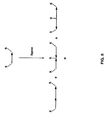
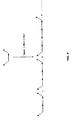
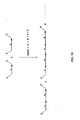
- FIG. 10 An additional embodiment of the self-alignment aspect of the present invention is illustrated in Figure 10.
- two different types of sequences are to be combined, e.g., a first type carrying one structural gene and a second type carrying a second structural gene.
- the ligation procedure should not only control the orientation of the reading directions of the segments, but, preferably, should also control the amount of each type of segment which becomes combined.
- the procedure shown in Figure 10 achieves both of these goals.
- the sequences of the first type are constructed to have a ligatable end U of a first type, e.g., XhoI, at their upstream ends and a ligatable end V of a second type, e.g., Bc1I, at their downstream ends.
- the ligatable ends of the first and second types can ligate with themselves (UU or VV), but not with each other (UV).
- self-ligations are cleavable by appropriate restriction enzymes U and V, e.g., XhoI and Bcll.
- sequences of the second type (b) are constructed to have a ligatable end V' of a third type, e.g., BamHI, at their upstream end and a ligatable end U' of a fourth type, e.g., Sall, at their downstream end.
- a ligatable end V' of a third type e.g., BamHI
- U' of a fourth type e.g., Sall
- the ligatable ends of the first, second, third, and fourth types are related as follows: the ligatable ends of the first type (U) can ligate with the ligatable ends of the fourth type (U'), but not with the ligatable ends of the third type (V'), and the ligation with the ligatable ends of the fourth type (UU') is essentially immune from cleavage by any of the first, second, third, or fourth restriction enzymes; the ligatable ends of the second type (V) can ligate with the ligatable ends of the third type (V'), but not with the ligatable ends of the fourth type (U'), and--the ligation with the ligatable ends of the third type (VV') is essentially immune from cleavage by any of the first, second, third or fourth restriction enzymes.
- ligation with a ligase in combination with treatment with the first, second, third and fourth restriction enzymes, automatically results in reading direction alignment and a hybrid sequence consisting of alternating first and second sequences (ababab%), i.e., controlled relative amounts of each sequence.
- the hybrid sequence will carry essentially equal numbers of each of the genes.
- one of the sequences carries, for example, two copies of its structural gene, while the other sequence only carries one copy, the hybrid sequence will essentially carry twice the number of first genes as second genes.
- a similar gene ratio can be achieved by providing one of the sequences in two forms: a first form with first and second type ligatable ends, and a second form with third and fourth type ligatable ends.
- the hybrid sequence will include adjacent repeats of the sequence provided in two forms and thus will, on average, contain more of the gene or genes carried by that sequence.
- using strategies such as these essentially any gene ratio desired can be achieved.
- the hybrid nucleic acid sequence is ready for use in transforming an appropriate microorganism so as to produce the product or products defined by the structural genes.
- Techniques for such transformation, subsequent culturing of the transformed organism and collection of the desired products are well known in the art. See, for example, Molecular Cloning: A Laboratory Manual, by T. Maniatis et al, Cold Spring Harbor Laboratory, Cold Spring Harbor, N.Y. (1982).
- Suitable hosts for the hybrid sequences include both prokaryotic and eukaryotic cells. In general, the host cell must be one which will recognize the functional elements making up the hybrid nucleic acid sequence, that is, the promoter, the transcription terminator, the ribosome-binding sites, the translation initiation sites, and the translation termination sites.
- hybrid plasmids containing up to four copies of a human interferon gene under the control of a single promoter and a single transcription terminator are constructed.
- hybrid plasmids are also constructed which contain multiple copies of the same gene but with each gene having its own promoter and its own transcription terminator.
- homopolycistronic those plasmids having multiple copies of the same gene under the control of one promoter and one transcription terminator will be referred to as “homopolycistronic”, while those having multiple promoter-gene-terminator sequences will be referred to as “polymonocistronic", where "cistron” has its usual meaning of a structural gene and its associated translation initiation and termination sites.
- E. coli K-12 strains JA221 (hsd M+ hsd R- recA Len Lac Y trp) and JA221 (hsd M+ hsd R- recA Len Lac Y trp/F'1ac I q lac Z+ lac Y+ pro A+ pro B+) were used as transformation hosts.
- the cloning vehicles pIN-II-A3, pIN-I-A3 (pKEN037(A3)), pKEN030 and pCGS261 were used in preparing the novel hybrid nucleic acid sequences of the present invention.
- Construction of the first vehicle is described in Nakamura, K. and Inouye, M. (1982) EMBO J., Vol.1, pages 771-775.
- Construction of the second and third vehicles is described in U.S. patent applications serial numbers 222,010 and 286,070, filed January 2, 1981 and July 23, 1981, respectively, and published on July 28,1982 as UK patent application serial number GB 2,091,269 A.
- Construction of the fourth vehicle is described in U.S. patent application serial number 418,521, filed September 15, 1982. The pertinent portions of these patent applications and literature reference are incorporated herein by reference.
- this plasmid contains a leukocyte interferon gene (LeIFN-B', or, as it is also known, IFNa8') for expression in yeast under the control of a yeast galactose promoter.
- LeIFN-B' leukocyte interferon gene
- IFNa8' leukocyte interferon gene for expression in yeast under the control of a yeast galactose promoter.
- a 69 bases DNA sequence thought to code for the signal sequence of the interferon protein has been removed and replaced by an ATG translation initiation codon.
- the nucleotide sequence of the coding region of the LeIFN-B reported by Goeddel et. al.
- Plasmids were isolated by the method described by Tanaka & Weisblum. Tanaka, T. and Weisblum, B. (1975) J. Bacteriol., 121:354-362.
- E. coli JA221 cells containing the plasmids to be assayed were grown in L-Broth containing 50 ug/ml ampicillin.
- inducible systems at an optical density of 0.4 at 600 nm, isopropyl-B-D-thiogalactoside (IPTG. Sigma) was added to a final concentration of 2mM.
- IPTG isopropyl-B-D-thiogalactoside
- PMSF phenyl- methanesulfonyl fluoride
- Antiviral assays were performed using cytopathic effect inhibition (CPE) of Vesicular Stomatitis Virus on Hep-2 cells. All interferon titers were determined relative to the NIH human leukocyte interferon reference standard.
- CPE cytopathic effect inhibition
- Agarose gel electrophoresis was performed as described by Sharp, et. al. See Sharp, P.A., Snyder, B. and Sambrode, J. (1973) Biochemistry 12:3055-3063. Fragments were isolated from the gel by electroelution onto a Whatman NA-45 paper strip and the fragment was recovered from NET buffer (1M NaCl, 0.1mM EDTA, 20mM Tris-HC1, pH 8). The recovery was found to be greater than 90% and contamination of the final product by agarose was not found.
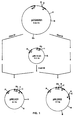
- a 1.1 Kb HindIII fragment containing the IFN-B' gene from pCGS261 was cloned into the HindIII site of the pIN-II-A3 cloning vehicle for subsequent expression in E. coli under the control of an E. coli outer membrane lipoprotein promoter and a lactose promoter-operator.
- the resulting hybrid plasmid contained one copy of the LeIFN-B' gene and was designated pNL001.
- a 2.2 Kb DNA fragment which had two 1.1 Kb HindIII fragments linked in the same orientation, was cloned into the HindIII site of pIN-II-A3.
- This hybrid plasmid was designated pNL002.
- the orientation of the L.eIFN-B' genes in pNL001 and pNL002 was determined to be the same as that of the lipoprotein promoter and lactose promoter-operator.
- Fig. 2 shows the N-terminus of the coding region immediately after the lactose promoter-operator for pNL001 and pNL002.
- the interferon coding region is preceded by 10 amino acid residues which are introduced by pIN-II-A3 and the HindIII and ClaI restriction sites.
- the ribosome-binding site is 7 bases 5' to the first ATG.
- the translation termination site (TGA) of the first LeIFN-B' is separated from the translation initiation site (ATG) of the second LeIFN-B' by 636 bases.
- There is a ribosome-binding site 12 bases 5' to the ATG of the second LeIFN-B'.
- pNL001 and pNL002 are both inducible systems.
- pNL011 was constructed from pIN-I-A3 and pCGS261.
- pIN-I-A3 is exactly the same as pIN-II-A3 except it lacks the lac-promoter- operator.
- pNL011 was formed from pIN-I-A3 and pCGS261 in the same manner as pNL001 was formed from pIN-II-A3 and pCGS261.
- pNL011 contains only a single copy of LeIFN-B'.
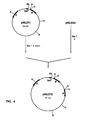
- a 3.1 Kb fragment was obtained from Sail digestion and ClaI partial digestion of pNL002 and ligated to a 4.0 Kb fragment from Sail and ClaI digestion of pNL011.
- the resulting plasmid was designated pNL012. See Fig. 4.
- restriction site mapping the two LeIFN-B' genes were found to be in the same orientation as the 1pp promoter.
- plasmids containing tri-cistronic and tetracistronic LeIFN-B' genes were constructed as shown in Fig. 5. After partial digestion with ClaI, 7.1 Kb DNA fragments which were pNL012 linearized by a single cut at either one of the two possible Clal sites were isolated and ligated with a 1.1 Kb LeIFN-B'-containing ClaI fragment obtained from pNL012. The resulting plasmids can have three possible structures. After transformation in E. coli JA221, the plasmids from each clone were purified and checked with restriction enzymes. The plasmid with all three LeIFN-B' genes in the same direction was designated pNL026. pNL027, with four LeIFN-B' genes in the same direction was similarly obtained. ;
- restriction sites 5' to the promoter and 3' to the transcription termination site were chosen so that they would facilitate the formation of tandem repeats, control the relative orientation of the tandem repeats, and be suitable for checking the size of the tandem formed.
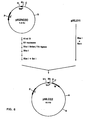
- pNL022 was constructed in accordance with the procedures shown in Fig. 6.
- This plasmid has a XhoI site 5' to the lipoprotein promoter and a Sail site 3' to the transcriptional terminator.
- pKEN030 which has a HindIII site 5' to the lipoprotein promoter was used as the starting material.
- pKEN030 was linearized by a HindIII restriction enzyme, and made blunt ended by Sl nuclease.
- XhoI linkers were then attached by blunt-end ligation, cohesive ends formed by Xhol cleavage, and the DNA was recircularized by ligation.
- pNL022 is exactly the same as pNL011.
- pNL022 was cut by XhoI and Sa1I and the resulting small fragment was ligated to pNLOll linearized by SalI. See Fig. 7.
- the two possible hybrid plasmids with opposite orientation were designated pNL024-1 and pNL024-2. Since the joining of a SalI cohesive end with another SalI cohesive end will re-create a SaIl site, while joining of a SaIl cohesive end and a XhoI cohesive end will result in no restriction site, pNL024-1 was easily distinguished from pNL024-2 by checking sizes of restriction fragments, the Sail sites of the two plasmids being located at different positions.
- polymonocistronic hybrid plasmid pNL024-1 could be compared with an equivalent homopolycistronic hybrid plasmid
- an additional homopolycistronic hybrid plasmid designated pNL023, was constructed in the same way as pNL022 (see Fig.6), except that pNL012 instead of pNL011 was used as starting material.
- pNL022, prepared in accordance with Figure 6 was cleaved by XhoI and Sail and a 2.3 Kb fragment was isolated and self- ligated by T4 ligase and treated with XhoI and SalI.
- the ligation mixture was subjected to gel electrophoresis. Electrophoresis bands corresponding to DNA molecules larger than 6 Kb were eluted and treated with Sail and Xhol restriction enzymes, and the mixture was again subjected to gel electrophoresis. Electrophoresis results showed that SalI and XhoI treatment did not alter the gel pattern. This result indicates that these DNA molecules essentially consist of 2.3 Kb fragments tandemly aligned in the same orientation.
- E. coli cells JA221 strain harboring various plasmids were determined by cytopathic effect inhibition (CPE) of Vesicular Stomatitis Virus on Hep-2 cells.
- CPE cytopathic effect inhibition
- the interferon activities were 2.10 x 10 4 ⁇ 7.82 x 10 3 , 5.03 x 10 4 ⁇ 1.64 x 10 4 , 6.85 x 10 4 ⁇ 2.69 x 10 4 , and 9 .46 x 10 5 ⁇ 3.1 7 x 10 4 units/ml of cell culture/O.D., respectively, that is, in the relative ratio of 1.0:2.4:3.3:4.5.
- the interferon activities were 8.04 x 10 4 ⁇ 4.6 x 10 4 and 1.60 x 10 5 ⁇ 6.7 x 10 4 units/ml of cell cul- ture/O.D., respectively, that is, in the relative ratio of 1:1.99.
- This ratio is similar to that of pNL011 and pNL012, however, the titers of the pNL022 and pNL023 series were found to be consistently higher than the titers of the pNL011 and pNL012 series by a factor of about three. It is believed that this difference is due to the presence of XhoI sites in the pNL022 and pNL023 plasmids.
- Plasmid pNL024-1 which is a polymonocistronic plasmid (di-cistronic), was found to have a level of expression (1.47 x 10 5 ⁇ 6.23 x 10 4 units/ml of cell culture/O.D.) about the same as the comparable homopolycistronic plasmid pNL023 (1.60 x 10 5 ⁇ 6.7 x I0 4 units/ml of cell culture/O.D.).
- interferon titers found for cells harboring the various homopolycistronic and polymonocistronic plasmids were found to compare very favorably with those reported by Yelverton, et. al., for LeIFN-B, although it should be noted that for interferons made by the first structural gene downstream from the promoter there were nine extra amino acids at the amino terminus. See Yelverton, E., Leung, D., Week, P., Gray, P., and Goeddel, D. (1981) Nucleic Acids Research, 9:731-741. Elimination of these extra amino acids may produce even higher titers.
- intercistronic regions typically range from a few to several hundred base pairs. See Christie, G.E. and Platt, T. (1980) J. Mol. Biol., 142:519-530, and Selker, E. and Yanofsky, C. (1979) J. Mol. Biol., 130:135-143. As shown in Fig. 3, for the plasmids of the foregoing examples, there is a 636 base pair intercistronic region. Accordingly, more than 600 base pairs of intercistronic region may be deleted by methods such as Bal 31 digestion or site specific mutagenesis.
- the intercistronic regions can be optimized to maximize translation reinitiation efficiency while still keeping the overall plasmid size small.
- portions of the plasmid other than those carrying the tandemly arranged genes can be optimized to enhance product production. For example, if a par gene is incorporated into a hybrid plasmid, the size of the plasmid can be increased without sacrificing stability, and thus the total number of desired genes which the plasmid can carry can be increased. Optimizations of these and similar types are within the scope of the present invention.
- Microoganisms and recombinant nucleic acid are exemplified by a culture deposited in the culture collection of the American Type Culture Collection, Rockville, Maryland on January 27, 1984, and assigned ATCC accession number 39589. This culture corresponds to plasmid pNL023 transposed into E. coli. strain JA221 and is designated ISE023.
Landscapes
- Health & Medical Sciences (AREA)
- Genetics & Genomics (AREA)
- Life Sciences & Earth Sciences (AREA)
- Chemical & Material Sciences (AREA)
- Organic Chemistry (AREA)
- Engineering & Computer Science (AREA)
- Zoology (AREA)
- General Health & Medical Sciences (AREA)
- Biomedical Technology (AREA)
- Biophysics (AREA)
- General Engineering & Computer Science (AREA)
- Molecular Biology (AREA)
- Biotechnology (AREA)
- Biochemistry (AREA)
- Bioinformatics & Cheminformatics (AREA)
- Wood Science & Technology (AREA)
- Physics & Mathematics (AREA)
- Proteomics, Peptides & Aminoacids (AREA)
- Medicinal Chemistry (AREA)
- Plant Pathology (AREA)
- Gastroenterology & Hepatology (AREA)
- Microbiology (AREA)
- Toxicology (AREA)
- Micro-Organisms Or Cultivation Processes Thereof (AREA)
- Preparation Of Compounds By Using Micro-Organisms (AREA)
- Saccharide Compounds (AREA)
- Medicines That Contain Protein Lipid Enzymes And Other Medicines (AREA)
- Peptides Or Proteins (AREA)
Applications Claiming Priority (2)
| Application Number | Priority Date | Filing Date | Title |
|---|---|---|---|
| US57729184A | 1984-02-06 | 1984-02-06 | |
| US577291 | 1984-02-06 |
Publications (1)
| Publication Number | Publication Date |
|---|---|
| EP0154576A1 true EP0154576A1 (fr) | 1985-09-11 |
Family
ID=24308098
Family Applications (1)
| Application Number | Title | Priority Date | Filing Date |
|---|---|---|---|
| EP19850400191 Withdrawn EP0154576A1 (fr) | 1984-02-06 | 1985-02-05 | Séquences d'acides nucléiques hybrides ayant des gènes disposés en tandem |
Country Status (2)
| Country | Link |
|---|---|
| EP (1) | EP0154576A1 (fr) |
| JP (1) | JPS60199387A (fr) |
Cited By (6)
| Publication number | Priority date | Publication date | Assignee | Title |
|---|---|---|---|---|
| EP0345155A1 (fr) * | 1988-05-31 | 1989-12-06 | Mitsubishi Kasei Corporation | Procédé de préparation des protéines similaires à l'apolipoprotéine-E humaine naturelle |
| WO1990001550A1 (fr) * | 1988-07-29 | 1990-02-22 | Zymogenetics, Inc. | Translation de haut rendement de messages polycistroniques dans des cellules eucariotiques |
| EP0163406B1 (fr) * | 1984-05-01 | 1991-01-09 | National Research Council Of Canada | Méthode pour l'expression de polypeptides |
| US5089406A (en) * | 1987-01-07 | 1992-02-18 | Allied-Signal Inc. | Method of producing a gene cassette coding for polypeptides with repeating amino acid sequences |
| EP0803573A1 (fr) * | 1996-04-25 | 1997-10-29 | Gesellschaft für Biotechnologische Forschung mbH (GBF) | Construction pour l'expression polycistronique contenant des cytokines pour des vaccins multivalents |
| EP0805207A1 (fr) * | 1996-05-02 | 1997-11-05 | Gesellschaft für Biotechnologische Forschung mbH (GBF) | Plasmide d'expression polycistronique pour la réjection de tumeurs |
Families Citing this family (1)
| Publication number | Priority date | Publication date | Assignee | Title |
|---|---|---|---|---|
| EP2848687B1 (fr) | 2012-04-27 | 2017-09-13 | JCR Pharmaceuticals Co., Ltd. | Nouveau vecteur d'expression |
Citations (1)
| Publication number | Priority date | Publication date | Assignee | Title |
|---|---|---|---|---|
| EP0060057A1 (fr) * | 1981-02-25 | 1982-09-15 | Genentech, Inc. | Expression de polypeptides dans des levures |
-
1985
- 1985-02-05 EP EP19850400191 patent/EP0154576A1/fr not_active Withdrawn
- 1985-02-06 JP JP60021608A patent/JPS60199387A/ja active Pending
Patent Citations (1)
| Publication number | Priority date | Publication date | Assignee | Title |
|---|---|---|---|---|
| EP0060057A1 (fr) * | 1981-02-25 | 1982-09-15 | Genentech, Inc. | Expression de polypeptides dans des levures |
Cited By (6)
| Publication number | Priority date | Publication date | Assignee | Title |
|---|---|---|---|---|
| EP0163406B1 (fr) * | 1984-05-01 | 1991-01-09 | National Research Council Of Canada | Méthode pour l'expression de polypeptides |
| US5089406A (en) * | 1987-01-07 | 1992-02-18 | Allied-Signal Inc. | Method of producing a gene cassette coding for polypeptides with repeating amino acid sequences |
| EP0345155A1 (fr) * | 1988-05-31 | 1989-12-06 | Mitsubishi Kasei Corporation | Procédé de préparation des protéines similaires à l'apolipoprotéine-E humaine naturelle |
| WO1990001550A1 (fr) * | 1988-07-29 | 1990-02-22 | Zymogenetics, Inc. | Translation de haut rendement de messages polycistroniques dans des cellules eucariotiques |
| EP0803573A1 (fr) * | 1996-04-25 | 1997-10-29 | Gesellschaft für Biotechnologische Forschung mbH (GBF) | Construction pour l'expression polycistronique contenant des cytokines pour des vaccins multivalents |
| EP0805207A1 (fr) * | 1996-05-02 | 1997-11-05 | Gesellschaft für Biotechnologische Forschung mbH (GBF) | Plasmide d'expression polycistronique pour la réjection de tumeurs |
Also Published As
| Publication number | Publication date |
|---|---|
| JPS60199387A (ja) | 1985-10-08 |
Similar Documents
| Publication | Publication Date | Title |
|---|---|---|
| US4666848A (en) | Polypeptide expression using a portable temperature sensitive control cassette with a positive retroregulatory element | |
| US4792523A (en) | 3'Expression enhancing fragments and method | |
| CA1341569C (fr) | Production microbienne d'interferon associe a des fibroblastes humains | |
| EP0035384B1 (fr) | Segment de désoxyribonucléotides destiné à être rattaché à une séquence codante clonée d'ADN | |
| US4456748A (en) | Hybrid human leukocyte interferons | |
| CA1205026A (fr) | Expression de polypeptides dans des levures | |
| Brosius | Toxicity of an overproduced foreign gene product in Escherichia coli and its use in plasmid vectors for the selection of transcription terminators | |
| Hoekema et al. | Codon replacement in the PGK1 gene of Saccharomyces cerevisiae: experimental approach to study the role of biased codon usage in gene expression | |
| CA1301675C (fr) | Construction d'un vecteur d'expression polycistronique | |
| Barany | Single-stranded hexameric linkers: a system for in-phase insertion mutagenesis and protein engineering | |
| US4510245A (en) | Adenovirus promoter system | |
| EP0198015B2 (fr) | Production de polypeptides analogues a la streptavidine | |
| JPH05268970A (ja) | 部分的合成遺伝子を用いる成長ホルモンの発現 | |
| Tacon et al. | The construction and characterisation of plasmid vectors suitable for the expression of all DNA phases under the control of the E. coli tryptophan promoter | |
| EP0073657A1 (fr) | Préparation d'antigène de surface de l'hépatite B dans une levure | |
| WO1984004330A1 (fr) | Secretion de polypeptides exogenes a partir de levure | |
| EP0561137A1 (fr) | Synthèse à l'aide d'ADN hybride de facteurs de croissance mûrs du type insuline | |
| US5032510A (en) | Method for expression and secretion in bacillus | |
| EP0351585B1 (fr) | Vecteur contenant le promoteur du gène codant pour la beta-actine aviaire pour l'expression du gène désiré | |
| EP0091527A2 (fr) | Séquences d'ADN, molécules d'ADN recombinant et procédé de préparation de polypeptides du genre de sérumalbumine humaine | |
| Drahos et al. | Antitermination and termination functions of the cloned nutL, N and tL1 modules of coliphage lambda | |
| Lee et al. | Cloning with tandem gene systems for high level gene expression | |
| EP0130074B1 (fr) | Système de contrôle transférables et inductibles, vecteurs d'expression les contenants, micro-organismes transformés avec ceux-là, et leur utilisation dans l'expression de la protéine exogène | |
| WO1985002200A1 (fr) | Production d'interleukine-2 en utilisant des genes clones pou r l'interleukine-2 et le facteur alpha de levure | |
| EP0134673B1 (fr) | Vecteur de plasmide et son utilisation |
Legal Events
| Date | Code | Title | Description |
|---|---|---|---|
| PUAI | Public reference made under article 153(3) epc to a published international application that has entered the european phase |
Free format text: ORIGINAL CODE: 0009012 |
|
| AK | Designated contracting states |
Designated state(s): AT BE CH DE FR GB IT LI LU NL SE |
|
| 17P | Request for examination filed |
Effective date: 19860224 |
|
| 17Q | First examination report despatched |
Effective date: 19870918 |
|
| STAA | Information on the status of an ep patent application or granted ep patent |
Free format text: STATUS: THE APPLICATION IS DEEMED TO BE WITHDRAWN |
|
| 18D | Application deemed to be withdrawn |
Effective date: 19910427 |
|
| RIN1 | Information on inventor provided before grant (corrected) |
Inventor name: LEE, NANCY Inventor name: WAINWRIGHT, NORMAN R. |