EP0345155A1 - Procédé de préparation des protéines similaires à l'apolipoprotéine-E humaine naturelle - Google Patents
Procédé de préparation des protéines similaires à l'apolipoprotéine-E humaine naturelle Download PDFInfo
- Publication number
- EP0345155A1 EP0345155A1 EP89401495A EP89401495A EP0345155A1 EP 0345155 A1 EP0345155 A1 EP 0345155A1 EP 89401495 A EP89401495 A EP 89401495A EP 89401495 A EP89401495 A EP 89401495A EP 0345155 A1 EP0345155 A1 EP 0345155A1
- Authority
- EP
- European Patent Office
- Prior art keywords
- expression vector
- signal peptide
- plasmid
- dna
- human apolipoprotein
- Prior art date
- Legal status (The legal status is an assumption and is not a legal conclusion. Google has not performed a legal analysis and makes no representation as to the accuracy of the status listed.)
- Granted
Links
- 108090000623 proteins and genes Proteins 0.000 title claims abstract description 59
- 238000000034 method Methods 0.000 title claims abstract description 49
- 102000004169 proteins and genes Human genes 0.000 title claims abstract description 41
- 102000007592 Apolipoproteins Human genes 0.000 title claims abstract description 29
- 108010071619 Apolipoproteins Proteins 0.000 title claims abstract description 29
- 241000282414 Homo sapiens Species 0.000 title claims abstract description 28
- 230000008569 process Effects 0.000 title claims abstract description 19
- 239000012634 fragment Substances 0.000 claims abstract description 123
- 108010076504 Protein Sorting Signals Proteins 0.000 claims abstract description 41
- 239000013604 expression vector Substances 0.000 claims abstract description 34
- 101000771674 Homo sapiens Apolipoprotein E Proteins 0.000 claims abstract description 27
- 102000053020 human ApoE Human genes 0.000 claims abstract description 27
- 230000003248 secreting effect Effects 0.000 claims abstract description 26
- 244000005700 microbiome Species 0.000 claims abstract description 8
- 230000001766 physiological effect Effects 0.000 claims abstract description 6
- 238000012258 culturing Methods 0.000 claims abstract description 3
- 230000001131 transforming effect Effects 0.000 claims abstract description 3
- 108020004414 DNA Proteins 0.000 claims description 93
- 241000588724 Escherichia coli Species 0.000 claims description 45
- 108700006385 OmpF Proteins 0.000 claims description 18
- 108091028043 Nucleic acid sequence Proteins 0.000 claims description 9
- 102000004895 Lipoproteins Human genes 0.000 claims description 8
- 108090001030 Lipoproteins Proteins 0.000 claims description 8
- 102000002260 Alkaline Phosphatase Human genes 0.000 claims description 7
- 108020004774 Alkaline Phosphatase Proteins 0.000 claims description 7
- 108091081024 Start codon Proteins 0.000 claims description 7
- 108700028353 OmpC Proteins 0.000 claims description 6
- RWQNBRDOKXIBIV-UHFFFAOYSA-N thymine Chemical compound CC1=CNC(=O)NC1=O RWQNBRDOKXIBIV-UHFFFAOYSA-N 0.000 claims description 6
- 229930024421 Adenine Natural products 0.000 claims description 3
- GFFGJBXGBJISGV-UHFFFAOYSA-N Adenine Chemical compound NC1=NC=NC2=C1N=CN2 GFFGJBXGBJISGV-UHFFFAOYSA-N 0.000 claims description 3
- 108010079246 OMPA outer membrane proteins Proteins 0.000 claims description 3
- 229960000643 adenine Drugs 0.000 claims description 3
- 229940113082 thymine Drugs 0.000 claims description 3
- 108090000204 Dipeptidase 1 Proteins 0.000 claims 2
- 102000006635 beta-lactamase Human genes 0.000 claims 2
- 239000013612 plasmid Substances 0.000 description 149
- TWRXJAOTZQYOKJ-UHFFFAOYSA-L Magnesium chloride Chemical compound [Mg+2].[Cl-].[Cl-] TWRXJAOTZQYOKJ-UHFFFAOYSA-L 0.000 description 36
- 239000000203 mixture Substances 0.000 description 33
- 239000011541 reaction mixture Substances 0.000 description 33
- 102000012410 DNA Ligases Human genes 0.000 description 24
- 108010061982 DNA Ligases Proteins 0.000 description 24
- FAPWRFPIFSIZLT-UHFFFAOYSA-M Sodium chloride Chemical compound [Na+].[Cl-] FAPWRFPIFSIZLT-UHFFFAOYSA-M 0.000 description 24
- 210000004027 cell Anatomy 0.000 description 23
- XLYOFNOQVPJJNP-UHFFFAOYSA-N water Substances O XLYOFNOQVPJJNP-UHFFFAOYSA-N 0.000 description 23
- 239000013598 vector Substances 0.000 description 21
- QKNYBSVHEMOAJP-UHFFFAOYSA-N 2-amino-2-(hydroxymethyl)propane-1,3-diol;hydron;chloride Chemical compound Cl.OCC(N)(CO)CO QKNYBSVHEMOAJP-UHFFFAOYSA-N 0.000 description 20
- 102000004190 Enzymes Human genes 0.000 description 20
- 108090000790 Enzymes Proteins 0.000 description 20
- 229940088598 enzyme Drugs 0.000 description 20
- 229910001629 magnesium chloride Inorganic materials 0.000 description 18
- 101150037123 APOE gene Proteins 0.000 description 17
- 101710095339 Apolipoprotein E Proteins 0.000 description 17
- 102100029470 Apolipoprotein E Human genes 0.000 description 17
- 238000010276 construction Methods 0.000 description 16
- LFQSCWFLJHTTHZ-UHFFFAOYSA-N Ethanol Chemical compound CCO LFQSCWFLJHTTHZ-UHFFFAOYSA-N 0.000 description 15
- 239000002299 complementary DNA Substances 0.000 description 14
- 108091008146 restriction endonucleases Proteins 0.000 description 14
- RTZKZFJDLAIYFH-UHFFFAOYSA-N Diethyl ether Chemical compound CCOCC RTZKZFJDLAIYFH-UHFFFAOYSA-N 0.000 description 12
- ISWSIDIOOBJBQZ-UHFFFAOYSA-N Phenol Chemical compound OC1=CC=CC=C1 ISWSIDIOOBJBQZ-UHFFFAOYSA-N 0.000 description 12
- 239000011780 sodium chloride Substances 0.000 description 12
- 230000029087 digestion Effects 0.000 description 11
- 101100216294 Danio rerio apoeb gene Proteins 0.000 description 10
- 101150109249 lacI gene Proteins 0.000 description 10
- 108010014303 DNA-directed DNA polymerase Proteins 0.000 description 9
- 102000016928 DNA-directed DNA polymerase Human genes 0.000 description 9
- 239000007864 aqueous solution Substances 0.000 description 9
- 108020004999 messenger RNA Proteins 0.000 description 9
- 108091027305 Heteroduplex Proteins 0.000 description 8
- VHJLVAABSRFDPM-QWWZWVQMSA-N dithiothreitol Chemical compound SC[C@@H](O)[C@H](O)CS VHJLVAABSRFDPM-QWWZWVQMSA-N 0.000 description 8
- 239000000499 gel Substances 0.000 description 8
- HRPVXLWXLXDGHG-UHFFFAOYSA-N Acrylamide Chemical compound NC(=O)C=C HRPVXLWXLXDGHG-UHFFFAOYSA-N 0.000 description 7
- 238000000246 agarose gel electrophoresis Methods 0.000 description 7
- 239000000463 material Substances 0.000 description 7
- 150000002989 phenols Chemical class 0.000 description 7
- 108091032973 (ribonucleotides)n+m Proteins 0.000 description 6
- 108010060215 Apolipoprotein E3 Proteins 0.000 description 6
- 101100364969 Dictyostelium discoideum scai gene Proteins 0.000 description 6
- 101100364971 Mus musculus Scai gene Proteins 0.000 description 6
- 238000006243 chemical reaction Methods 0.000 description 6
- 238000004519 manufacturing process Methods 0.000 description 6
- 102000008128 Apolipoprotein E3 Human genes 0.000 description 5
- 108091003079 Bovine Serum Albumin Proteins 0.000 description 5
- 108010021757 Polynucleotide 5'-Hydroxyl-Kinase Proteins 0.000 description 5
- 102000008422 Polynucleotide 5'-hydroxyl-kinase Human genes 0.000 description 5
- 229940098773 bovine serum albumin Drugs 0.000 description 5
- 230000000295 complement effect Effects 0.000 description 5
- 238000012869 ethanol precipitation Methods 0.000 description 5
- ZMMJGEGLRURXTF-UHFFFAOYSA-N ethidium bromide Chemical compound [Br-].C12=CC(N)=CC=C2C2=CC=C(N)C=C2[N+](CC)=C1C1=CC=CC=C1 ZMMJGEGLRURXTF-UHFFFAOYSA-N 0.000 description 5
- 229960005542 ethidium bromide Drugs 0.000 description 5
- 238000001502 gel electrophoresis Methods 0.000 description 5
- 239000000243 solution Substances 0.000 description 5
- 102000004163 DNA-directed RNA polymerases Human genes 0.000 description 4
- 108090000626 DNA-directed RNA polymerases Proteins 0.000 description 4
- 108091034117 Oligonucleotide Proteins 0.000 description 4
- WCUXLLCKKVVCTQ-UHFFFAOYSA-M Potassium chloride Chemical compound [Cl-].[K+] WCUXLLCKKVVCTQ-UHFFFAOYSA-M 0.000 description 4
- 229960000723 ampicillin Drugs 0.000 description 4
- AVKUERGKIZMTKX-NJBDSQKTSA-N ampicillin Chemical compound C1([C@@H](N)C(=O)N[C@H]2[C@H]3SC([C@@H](N3C2=O)C(O)=O)(C)C)=CC=CC=C1 AVKUERGKIZMTKX-NJBDSQKTSA-N 0.000 description 4
- 230000001413 cellular effect Effects 0.000 description 4
- HVYWMOMLDIMFJA-DPAQBDIFSA-N cholesterol Chemical compound C1C=C2C[C@@H](O)CC[C@]2(C)[C@@H]2[C@@H]1[C@@H]1CC[C@H]([C@H](C)CCCC(C)C)[C@@]1(C)CC2 HVYWMOMLDIMFJA-DPAQBDIFSA-N 0.000 description 4
- 150000002632 lipids Chemical class 0.000 description 4
- 239000007788 liquid Substances 0.000 description 4
- SCVFZCLFOSHCOH-UHFFFAOYSA-M potassium acetate Chemical compound [K+].CC([O-])=O SCVFZCLFOSHCOH-UHFFFAOYSA-M 0.000 description 4
- 239000000047 product Substances 0.000 description 4
- 108010060219 Apolipoprotein E2 Proteins 0.000 description 3
- 108010060159 Apolipoprotein E4 Proteins 0.000 description 3
- 108010072454 CTGCAG-specific type II deoxyribonucleases Proteins 0.000 description 3
- 101100408682 Caenorhabditis elegans pmt-2 gene Proteins 0.000 description 3
- UXVMQQNJUSDDNG-UHFFFAOYSA-L Calcium chloride Chemical compound [Cl-].[Cl-].[Ca+2] UXVMQQNJUSDDNG-UHFFFAOYSA-L 0.000 description 3
- 108020004705 Codon Proteins 0.000 description 3
- 108010008286 DNA nucleotidylexotransferase Proteins 0.000 description 3
- 102100033215 DNA nucleotidylexotransferase Human genes 0.000 description 3
- 208000031226 Hyperlipidaemia Diseases 0.000 description 3
- 102100034343 Integrase Human genes 0.000 description 3
- 102000003960 Ligases Human genes 0.000 description 3
- 108090000364 Ligases Proteins 0.000 description 3
- 108091036060 Linker DNA Proteins 0.000 description 3
- BAWFJGJZGIEFAR-NNYOXOHSSA-N NAD zwitterion Chemical compound NC(=O)C1=CC=C[N+]([C@H]2[C@@H]([C@H](O)[C@@H](COP([O-])(=O)OP(O)(=O)OC[C@@H]3[C@H]([C@@H](O)[C@@H](O3)N3C4=NC=NC(N)=C4N=C3)O)O2)O)=C1 BAWFJGJZGIEFAR-NNYOXOHSSA-N 0.000 description 3
- 108091034057 RNA (poly(A)) Proteins 0.000 description 3
- 150000001413 amino acids Chemical class 0.000 description 3
- AIYUHDOJVYHVIT-UHFFFAOYSA-M caesium chloride Chemical compound [Cl-].[Cs+] AIYUHDOJVYHVIT-UHFFFAOYSA-M 0.000 description 3
- 239000001913 cellulose Substances 0.000 description 3
- 229920002678 cellulose Polymers 0.000 description 3
- 238000003776 cleavage reaction Methods 0.000 description 3
- HAAZLUGHYHWQIW-KVQBGUIXSA-N dGTP Chemical compound C1=NC=2C(=O)NC(N)=NC=2N1[C@H]1C[C@H](O)[C@@H](COP(O)(=O)OP(O)(=O)OP(O)(O)=O)O1 HAAZLUGHYHWQIW-KVQBGUIXSA-N 0.000 description 3
- NHVNXKFIZYSCEB-XLPZGREQSA-N dTTP Chemical compound O=C1NC(=O)C(C)=CN1[C@@H]1O[C@H](COP(O)(=O)OP(O)(=O)OP(O)(O)=O)[C@@H](O)C1 NHVNXKFIZYSCEB-XLPZGREQSA-N 0.000 description 3
- 125000001360 methionine group Chemical group N[C@@H](CCSC)C(=O)* 0.000 description 3
- 238000012986 modification Methods 0.000 description 3
- 230000004048 modification Effects 0.000 description 3
- 239000008188 pellet Substances 0.000 description 3
- 150000003904 phospholipids Chemical class 0.000 description 3
- 238000002264 polyacrylamide gel electrophoresis Methods 0.000 description 3
- 239000000523 sample Substances 0.000 description 3
- 230000007017 scission Effects 0.000 description 3
- 230000005030 transcription termination Effects 0.000 description 3
- 239000001226 triphosphate Substances 0.000 description 3
- 235000011178 triphosphate Nutrition 0.000 description 3
- UNXRWKVEANCORM-UHFFFAOYSA-N triphosphoric acid Chemical compound OP(O)(=O)OP(O)(=O)OP(O)(O)=O UNXRWKVEANCORM-UHFFFAOYSA-N 0.000 description 3
- DGVVWUTYPXICAM-UHFFFAOYSA-N β‐Mercaptoethanol Chemical compound OCCS DGVVWUTYPXICAM-UHFFFAOYSA-N 0.000 description 3
- 102000013918 Apolipoproteins E Human genes 0.000 description 2
- 108010025628 Apolipoproteins E Proteins 0.000 description 2
- 206010003210 Arteriosclerosis Diseases 0.000 description 2
- IJGRMHOSHXDMSA-UHFFFAOYSA-N Atomic nitrogen Chemical compound N#N IJGRMHOSHXDMSA-UHFFFAOYSA-N 0.000 description 2
- 241000193830 Bacillus <bacterium> Species 0.000 description 2
- 108020004635 Complementary DNA Proteins 0.000 description 2
- 241001131785 Escherichia coli HB101 Species 0.000 description 2
- 108010092799 RNA-directed DNA polymerase Proteins 0.000 description 2
- 108020005091 Replication Origin Proteins 0.000 description 2
- 239000004098 Tetracycline Substances 0.000 description 2
- XSQUKJJJFZCRTK-UHFFFAOYSA-N Urea Chemical compound NC(N)=O XSQUKJJJFZCRTK-UHFFFAOYSA-N 0.000 description 2
- 208000011775 arteriosclerosis disease Diseases 0.000 description 2
- 210000004369 blood Anatomy 0.000 description 2
- 239000008280 blood Substances 0.000 description 2
- 238000005119 centrifugation Methods 0.000 description 2
- 229940107161 cholesterol Drugs 0.000 description 2
- 235000012000 cholesterol Nutrition 0.000 description 2
- 238000004440 column chromatography Methods 0.000 description 2
- 238000007796 conventional method Methods 0.000 description 2
- SUYVUBYJARFZHO-RRKCRQDMSA-N dATP Chemical compound C1=NC=2C(N)=NC=NC=2N1[C@H]1C[C@H](O)[C@@H](COP(O)(=O)OP(O)(=O)OP(O)(O)=O)O1 SUYVUBYJARFZHO-RRKCRQDMSA-N 0.000 description 2
- SUYVUBYJARFZHO-UHFFFAOYSA-N dATP Natural products C1=NC=2C(N)=NC=NC=2N1C1CC(O)C(COP(O)(=O)OP(O)(=O)OP(O)(O)=O)O1 SUYVUBYJARFZHO-UHFFFAOYSA-N 0.000 description 2
- 238000002298 density-gradient ultracentrifugation Methods 0.000 description 2
- 230000000694 effects Effects 0.000 description 2
- 238000005516 engineering process Methods 0.000 description 2
- 238000010438 heat treatment Methods 0.000 description 2
- UEGPKNKPLBYCNK-UHFFFAOYSA-L magnesium acetate Chemical compound [Mg+2].CC([O-])=O.CC([O-])=O UEGPKNKPLBYCNK-UHFFFAOYSA-L 0.000 description 2
- 239000011654 magnesium acetate Substances 0.000 description 2
- 235000011285 magnesium acetate Nutrition 0.000 description 2
- 229940069446 magnesium acetate Drugs 0.000 description 2
- 229930182817 methionine Natural products 0.000 description 2
- 230000007483 microbial process Effects 0.000 description 2
- 210000001322 periplasm Anatomy 0.000 description 2
- 125000002467 phosphate group Chemical group [H]OP(=O)(O[H])O[*] 0.000 description 2
- 210000002381 plasma Anatomy 0.000 description 2
- 235000011056 potassium acetate Nutrition 0.000 description 2
- 239000001103 potassium chloride Substances 0.000 description 2
- 235000011164 potassium chloride Nutrition 0.000 description 2
- 239000006228 supernatant Substances 0.000 description 2
- 229960002180 tetracycline Drugs 0.000 description 2
- 229930101283 tetracycline Natural products 0.000 description 2
- 235000019364 tetracycline Nutrition 0.000 description 2
- 150000003522 tetracyclines Chemical class 0.000 description 2
- 150000003626 triacylglycerols Chemical class 0.000 description 2
- 102000040650 (ribonucleotides)n+m Human genes 0.000 description 1
- 101150031242 AVD gene Proteins 0.000 description 1
- NLXLAEXVIDQMFP-UHFFFAOYSA-N Ammonium chloride Substances [NH4+].[Cl-] NLXLAEXVIDQMFP-UHFFFAOYSA-N 0.000 description 1
- VHUUQVKOLVNVRT-UHFFFAOYSA-N Ammonium hydroxide Chemical compound [NH4+].[OH-] VHUUQVKOLVNVRT-UHFFFAOYSA-N 0.000 description 1
- 108010056874 AmpC beta-lactamases Proteins 0.000 description 1
- 239000004382 Amylase Substances 0.000 description 1
- 102000013142 Amylases Human genes 0.000 description 1
- 108010065511 Amylases Proteins 0.000 description 1
- 101800001890 Atrial natriuretic peptide Proteins 0.000 description 1
- 102400001282 Atrial natriuretic peptide Human genes 0.000 description 1
- 108090000145 Bacillolysin Proteins 0.000 description 1
- VEXZGXHMUGYJMC-UHFFFAOYSA-M Chloride anion Chemical compound [Cl-] VEXZGXHMUGYJMC-UHFFFAOYSA-M 0.000 description 1
- 102000002265 Human Growth Hormone Human genes 0.000 description 1
- 108010000521 Human Growth Hormone Proteins 0.000 description 1
- 239000000854 Human Growth Hormone Substances 0.000 description 1
- 101710203526 Integrase Proteins 0.000 description 1
- 102000014150 Interferons Human genes 0.000 description 1
- 108010050904 Interferons Proteins 0.000 description 1
- FFEARJCKVFRZRR-BYPYZUCNSA-N L-methionine Chemical compound CSCC[C@H](N)C(O)=O FFEARJCKVFRZRR-BYPYZUCNSA-N 0.000 description 1
- 102000000853 LDL receptors Human genes 0.000 description 1
- 108010001831 LDL receptors Proteins 0.000 description 1
- 108010054278 Lac Repressors Proteins 0.000 description 1
- 125000001429 N-terminal alpha-amino-acid group Chemical group 0.000 description 1
- 102000035092 Neutral proteases Human genes 0.000 description 1
- 108091005507 Neutral proteases Proteins 0.000 description 1
- 101710116435 Outer membrane protein Proteins 0.000 description 1
- 229910019142 PO4 Inorganic materials 0.000 description 1
- 108091005804 Peptidases Proteins 0.000 description 1
- 102000035195 Peptidases Human genes 0.000 description 1
- 239000004365 Protease Substances 0.000 description 1
- 108020004511 Recombinant DNA Proteins 0.000 description 1
- 240000004808 Saccharomyces cerevisiae Species 0.000 description 1
- 108090000787 Subtilisin Proteins 0.000 description 1
- 229930006000 Sucrose Natural products 0.000 description 1
- CZMRCDWAGMRECN-UGDNZRGBSA-N Sucrose Chemical compound O[C@H]1[C@H](O)[C@@H](CO)O[C@@]1(CO)O[C@@H]1[C@H](O)[C@@H](O)[C@H](O)[C@@H](CO)O1 CZMRCDWAGMRECN-UGDNZRGBSA-N 0.000 description 1
- 108700009124 Transcription Initiation Site Proteins 0.000 description 1
- VCORFLZFSPUNDN-UAGCYRGNSA-N [(2r,3s,5r)-5-(6-aminopurin-9-yl)-3-[[(2r,3s,5r)-5-(6-aminopurin-9-yl)-3-hydroxyoxolan-2-yl]methoxy-hydroxyphosphoryl]oxyoxolan-2-yl]methyl [(2r,3s,5r)-5-(6-aminopurin-9-yl)-2-(phosphonooxymethyl)oxolan-3-yl] hydrogen phosphate Polymers C1=NC2=C(N)N=CN=C2N1[C@H](O[C@@H]1COP(O)(=O)O[C@@H]2[C@H](O[C@H](C2)N2C3=NC=NC(N)=C3N=C2)COP(O)(O)=O)C[C@@H]1OP(O)(=O)OC[C@@H](O1)[C@@H](O)C[C@@H]1N1C(N=CN=C2N)=C2N=C1 VCORFLZFSPUNDN-UAGCYRGNSA-N 0.000 description 1
- JLCPHMBAVCMARE-UHFFFAOYSA-N [3-[[3-[[3-[[3-[[3-[[3-[[3-[[3-[[3-[[3-[[3-[[5-(2-amino-6-oxo-1H-purin-9-yl)-3-[[3-[[3-[[3-[[3-[[3-[[5-(2-amino-6-oxo-1H-purin-9-yl)-3-[[5-(2-amino-6-oxo-1H-purin-9-yl)-3-hydroxyoxolan-2-yl]methoxy-hydroxyphosphoryl]oxyoxolan-2-yl]methoxy-hydroxyphosphoryl]oxy-5-(5-methyl-2,4-dioxopyrimidin-1-yl)oxolan-2-yl]methoxy-hydroxyphosphoryl]oxy-5-(6-aminopurin-9-yl)oxolan-2-yl]methoxy-hydroxyphosphoryl]oxy-5-(6-aminopurin-9-yl)oxolan-2-yl]methoxy-hydroxyphosphoryl]oxy-5-(6-aminopurin-9-yl)oxolan-2-yl]methoxy-hydroxyphosphoryl]oxy-5-(6-aminopurin-9-yl)oxolan-2-yl]methoxy-hydroxyphosphoryl]oxyoxolan-2-yl]methoxy-hydroxyphosphoryl]oxy-5-(5-methyl-2,4-dioxopyrimidin-1-yl)oxolan-2-yl]methoxy-hydroxyphosphoryl]oxy-5-(4-amino-2-oxopyrimidin-1-yl)oxolan-2-yl]methoxy-hydroxyphosphoryl]oxy-5-(5-methyl-2,4-dioxopyrimidin-1-yl)oxolan-2-yl]methoxy-hydroxyphosphoryl]oxy-5-(5-methyl-2,4-dioxopyrimidin-1-yl)oxolan-2-yl]methoxy-hydroxyphosphoryl]oxy-5-(6-aminopurin-9-yl)oxolan-2-yl]methoxy-hydroxyphosphoryl]oxy-5-(6-aminopurin-9-yl)oxolan-2-yl]methoxy-hydroxyphosphoryl]oxy-5-(4-amino-2-oxopyrimidin-1-yl)oxolan-2-yl]methoxy-hydroxyphosphoryl]oxy-5-(4-amino-2-oxopyrimidin-1-yl)oxolan-2-yl]methoxy-hydroxyphosphoryl]oxy-5-(4-amino-2-oxopyrimidin-1-yl)oxolan-2-yl]methoxy-hydroxyphosphoryl]oxy-5-(6-aminopurin-9-yl)oxolan-2-yl]methoxy-hydroxyphosphoryl]oxy-5-(4-amino-2-oxopyrimidin-1-yl)oxolan-2-yl]methyl [5-(6-aminopurin-9-yl)-2-(hydroxymethyl)oxolan-3-yl] hydrogen phosphate Polymers Cc1cn(C2CC(OP(O)(=O)OCC3OC(CC3OP(O)(=O)OCC3OC(CC3O)n3cnc4c3nc(N)[nH]c4=O)n3cnc4c3nc(N)[nH]c4=O)C(COP(O)(=O)OC3CC(OC3COP(O)(=O)OC3CC(OC3COP(O)(=O)OC3CC(OC3COP(O)(=O)OC3CC(OC3COP(O)(=O)OC3CC(OC3COP(O)(=O)OC3CC(OC3COP(O)(=O)OC3CC(OC3COP(O)(=O)OC3CC(OC3COP(O)(=O)OC3CC(OC3COP(O)(=O)OC3CC(OC3COP(O)(=O)OC3CC(OC3COP(O)(=O)OC3CC(OC3COP(O)(=O)OC3CC(OC3COP(O)(=O)OC3CC(OC3COP(O)(=O)OC3CC(OC3COP(O)(=O)OC3CC(OC3COP(O)(=O)OC3CC(OC3CO)n3cnc4c(N)ncnc34)n3ccc(N)nc3=O)n3cnc4c(N)ncnc34)n3ccc(N)nc3=O)n3ccc(N)nc3=O)n3ccc(N)nc3=O)n3cnc4c(N)ncnc34)n3cnc4c(N)ncnc34)n3cc(C)c(=O)[nH]c3=O)n3cc(C)c(=O)[nH]c3=O)n3ccc(N)nc3=O)n3cc(C)c(=O)[nH]c3=O)n3cnc4c3nc(N)[nH]c4=O)n3cnc4c(N)ncnc34)n3cnc4c(N)ncnc34)n3cnc4c(N)ncnc34)n3cnc4c(N)ncnc34)O2)c(=O)[nH]c1=O JLCPHMBAVCMARE-UHFFFAOYSA-N 0.000 description 1
- 230000002159 abnormal effect Effects 0.000 description 1
- QTBSBXVTEAMEQO-UHFFFAOYSA-N acetic acid Substances CC(O)=O QTBSBXVTEAMEQO-UHFFFAOYSA-N 0.000 description 1
- 230000009471 action Effects 0.000 description 1
- 239000011543 agarose gel Substances 0.000 description 1
- 102000004139 alpha-Amylases Human genes 0.000 description 1
- 108090000637 alpha-Amylases Proteins 0.000 description 1
- 229940024171 alpha-amylase Drugs 0.000 description 1
- QGZKDVFQNNGYKY-UHFFFAOYSA-N ammonia Natural products N QGZKDVFQNNGYKY-UHFFFAOYSA-N 0.000 description 1
- 235000011114 ammonium hydroxide Nutrition 0.000 description 1
- 235000019418 amylase Nutrition 0.000 description 1
- 230000003698 anagen phase Effects 0.000 description 1
- 210000004102 animal cell Anatomy 0.000 description 1
- 239000000427 antigen Substances 0.000 description 1
- 102000036639 antigens Human genes 0.000 description 1
- 108091007433 antigens Proteins 0.000 description 1
- -1 apoA-I Proteins 0.000 description 1
- 239000001110 calcium chloride Substances 0.000 description 1
- 229910001628 calcium chloride Inorganic materials 0.000 description 1
- 239000004202 carbamide Substances 0.000 description 1
- NSQLIUXCMFBZME-MPVJKSABSA-N carperitide Chemical compound C([C@H]1C(=O)NCC(=O)NCC(=O)N[C@@H](CCCNC(N)=N)C(=O)N[C@@H](CCSC)C(=O)N[C@@H](CC(O)=O)C(=O)N[C@@H](CCCNC(N)=N)C(=O)N[C@H](C(NCC(=O)N[C@@H](C)C(=O)N[C@@H](CCC(N)=O)C(=O)N[C@@H](CO)C(=O)NCC(=O)N[C@@H](CC(C)C)C(=O)NCC(=O)N[C@@H](CSSC[C@@H](C(=O)N1)NC(=O)[C@H](CO)NC(=O)[C@H](CO)NC(=O)[C@H](CCCNC(N)=N)NC(=O)[C@H](CCCNC(N)=N)NC(=O)[C@H](CC(C)C)NC(=O)[C@@H](N)CO)C(=O)N[C@@H](CC(N)=O)C(=O)N[C@@H](CO)C(=O)N[C@@H](CC=1C=CC=CC=1)C(=O)N[C@@H](CCCNC(N)=N)C(=O)N[C@@H](CC=1C=CC(O)=CC=1)C(O)=O)=O)[C@@H](C)CC)C1=CC=CC=C1 NSQLIUXCMFBZME-MPVJKSABSA-N 0.000 description 1
- 230000015556 catabolic process Effects 0.000 description 1
- 210000000170 cell membrane Anatomy 0.000 description 1
- 150000001840 cholesterol esters Chemical class 0.000 description 1
- 238000010367 cloning Methods 0.000 description 1
- GVPFVAHMJGGAJG-UHFFFAOYSA-L cobalt dichloride Chemical compound [Cl-].[Cl-].[Co+2] GVPFVAHMJGGAJG-UHFFFAOYSA-L 0.000 description 1
- 239000000470 constituent Substances 0.000 description 1
- 125000004122 cyclic group Chemical group 0.000 description 1
- 125000000086 dCMP group Chemical group 0.000 description 1
- RGWHQCVHVJXOKC-SHYZEUOFSA-J dCTP(4-) Chemical compound O=C1N=C(N)C=CN1[C@@H]1O[C@H](COP([O-])(=O)OP([O-])(=O)OP([O-])([O-])=O)[C@@H](O)C1 RGWHQCVHVJXOKC-SHYZEUOFSA-J 0.000 description 1
- 230000007812 deficiency Effects 0.000 description 1
- 230000002950 deficient Effects 0.000 description 1
- 238000006731 degradation reaction Methods 0.000 description 1
- 210000001339 epidermal cell Anatomy 0.000 description 1
- 235000021588 free fatty acids Nutrition 0.000 description 1
- 239000011521 glass Substances 0.000 description 1
- YQOKLYTXVFAUCW-UHFFFAOYSA-N guanidine;isothiocyanic acid Chemical compound N=C=S.NC(N)=N YQOKLYTXVFAUCW-UHFFFAOYSA-N 0.000 description 1
- ZJYYHGLJYGJLLN-UHFFFAOYSA-N guanidinium thiocyanate Chemical compound SC#N.NC(N)=N ZJYYHGLJYGJLLN-UHFFFAOYSA-N 0.000 description 1
- 239000005457 ice water Substances 0.000 description 1
- 239000000411 inducer Substances 0.000 description 1
- 230000000977 initiatory effect Effects 0.000 description 1
- 229940079322 interferon Drugs 0.000 description 1
- 210000003734 kidney Anatomy 0.000 description 1
- 230000008604 lipoprotein metabolism Effects 0.000 description 1
- 210000004185 liver Anatomy 0.000 description 1
- 210000002540 macrophage Anatomy 0.000 description 1
- 239000003550 marker Substances 0.000 description 1
- 230000000813 microbial effect Effects 0.000 description 1
- 238000010369 molecular cloning Methods 0.000 description 1
- 229950006238 nadide Drugs 0.000 description 1
- 229930027945 nicotinamide-adenine dinucleotide Natural products 0.000 description 1
- 229910052757 nitrogen Inorganic materials 0.000 description 1
- 108020004707 nucleic acids Proteins 0.000 description 1
- 102000039446 nucleic acids Human genes 0.000 description 1
- 150000007523 nucleic acids Chemical class 0.000 description 1
- 230000000144 pharmacologic effect Effects 0.000 description 1
- 239000010452 phosphate Substances 0.000 description 1
- 229920002401 polyacrylamide Polymers 0.000 description 1
- 239000000843 powder Substances 0.000 description 1
- 238000002360 preparation method Methods 0.000 description 1
- 108090000765 processed proteins & peptides Proteins 0.000 description 1
- 230000000644 propagated effect Effects 0.000 description 1
- 102000005962 receptors Human genes 0.000 description 1
- 108020003175 receptors Proteins 0.000 description 1
- 238000011160 research Methods 0.000 description 1
- 108020004418 ribosomal RNA Proteins 0.000 description 1
- 238000002741 site-directed mutagenesis Methods 0.000 description 1
- 210000000813 small intestine Anatomy 0.000 description 1
- 239000005720 sucrose Substances 0.000 description 1
- 239000002344 surface layer Substances 0.000 description 1
- 238000012360 testing method Methods 0.000 description 1
- 230000035897 transcription Effects 0.000 description 1
- 238000013518 transcription Methods 0.000 description 1
- 230000009466 transformation Effects 0.000 description 1
Images





Classifications
-
- C—CHEMISTRY; METALLURGY
- C07—ORGANIC CHEMISTRY
- C07K—PEPTIDES
- C07K14/00—Peptides having more than 20 amino acids; Gastrins; Somatostatins; Melanotropins; Derivatives thereof
- C07K14/195—Peptides having more than 20 amino acids; Gastrins; Somatostatins; Melanotropins; Derivatives thereof from bacteria
- C07K14/24—Peptides having more than 20 amino acids; Gastrins; Somatostatins; Melanotropins; Derivatives thereof from bacteria from Enterobacteriaceae (F), e.g. Citrobacter, Serratia, Proteus, Providencia, Morganella, Yersinia
- C07K14/245—Escherichia (G)
-
- C—CHEMISTRY; METALLURGY
- C07—ORGANIC CHEMISTRY
- C07K—PEPTIDES
- C07K14/00—Peptides having more than 20 amino acids; Gastrins; Somatostatins; Melanotropins; Derivatives thereof
- C07K14/435—Peptides having more than 20 amino acids; Gastrins; Somatostatins; Melanotropins; Derivatives thereof from animals; from humans
- C07K14/775—Apolipopeptides
-
- C—CHEMISTRY; METALLURGY
- C12—BIOCHEMISTRY; BEER; SPIRITS; WINE; VINEGAR; MICROBIOLOGY; ENZYMOLOGY; MUTATION OR GENETIC ENGINEERING
- C12N—MICROORGANISMS OR ENZYMES; COMPOSITIONS THEREOF; PROPAGATING, PRESERVING, OR MAINTAINING MICROORGANISMS; MUTATION OR GENETIC ENGINEERING; CULTURE MEDIA
- C12N15/00—Mutation or genetic engineering; DNA or RNA concerning genetic engineering, vectors, e.g. plasmids, or their isolation, preparation or purification; Use of hosts therefor
- C12N15/09—Recombinant DNA-technology
- C12N15/63—Introduction of foreign genetic material using vectors; Vectors; Use of hosts therefor; Regulation of expression
- C12N15/70—Vectors or expression systems specially adapted for E. coli
-
- C—CHEMISTRY; METALLURGY
- C07—ORGANIC CHEMISTRY
- C07K—PEPTIDES
- C07K2319/00—Fusion polypeptide
- C07K2319/01—Fusion polypeptide containing a localisation/targetting motif
- C07K2319/02—Fusion polypeptide containing a localisation/targetting motif containing a signal sequence
-
- C—CHEMISTRY; METALLURGY
- C07—ORGANIC CHEMISTRY
- C07K—PEPTIDES
- C07K2319/00—Fusion polypeptide
- C07K2319/01—Fusion polypeptide containing a localisation/targetting motif
- C07K2319/034—Fusion polypeptide containing a localisation/targetting motif containing a motif for targeting to the periplasmic space of Gram negative bacteria as a soluble protein, i.e. signal sequence should be cleaved
Definitions
- the present invention relates to a microbial process for producing a natural-type human apolipoprotein E-like protein by recombinant DNA techniques.
- lipids present in blood plasma include cholesterol, phospholipids, triglycerides, and free fatty acids.
- the former three lipids are conjugated with proteins, so that the water-insoluble lipids are solubilized in plasma.
- Such lipid-protein complexes which are called "lipoproteins" have various molecular weights depending on their lipid/protein ratios. Lipoproteins have spherical particulate structures which may be considered to be composed of a core of non-polar triglycerides or cholesterol esters and a surface layer formed from polar phospholipids or free cholesterol in association with proteins.
- apolipoproteins Proteins constituting lipoproteins are called "apolipoproteins". At present, there are known ten or more apolipoproteins. Apolipoproteins are not only essential constituents of lipoproteins but also play an important role in the metabolism of lipoproteins.
- Apolipoprotein E is one of the known apolipoproteins. It is known that apolipoprotein E functions as a recognition marker when cells in a living body incorporate lipoproteins through their receptors. Further, it has also been found that apolipoprotein E has three main subclasses E2, E3 and E4. Apolipoprotein E3 was derived from normal human beings, while the other subclasses, E2 and E4, were found in patients with hyperlipidemia type III and are considered to be of abnormal type: The Journal of Biological Chemistry, Vol. 255, No. 5, 1759-1762 (1980).
- apolipoprotein E3 Those who are deficient in the apolipoprotein E3, or those who have the apolipoprotein E2 or E4, often suffer from hyperlipidemia resulting in arteriosclerosis.
- the normal functions of the apolipoprotein E in such patients can be recovered by administration of the normal apolipoprotein E3.
- the present inventors found the full length cDNA fragment coding for the apolipoprotein E (Japanese Patent Application Laying-open KOKAI No. 118189/1985), and proposed a process for producing the apolipoprotein E in Escherichia coli : refer to Japanese Patent Application Laying-open KOKAI No. 96997/1986.
- the apolipoprotein E produced by said process had an additional amino acid, for example, methionine corresponding to the initiation codon.
- the present inventors have further studied and finally found that human apolipoprotein E having the naturally occurring N-terminal amino acid sequence can microbially be produced and secreted in large amounts by constructing and employing a vector into which a DNA fragment coding for a secretory signal peptide is introduced.
- the present invention has now been attained.
- human apolipoprotein E-like protein used herein may sometimes encompass both the natural human apolipoprotein E and the human apolipoprotein E-like proteins having physiological activities similar to those of the natural human apolipoprotein E.
- the product proteins are not exposed to the action of microbial proteases in a host microorganism and, therefore, human apolipoprotein E-like proteins can be obtained efficiently in larger amounts as much as about 1,000 times or more as compared with conventional processes.
- a process for producing natural human apolipoprotein E or a natural human apolipoprotein E-like protein having physiological activities similar to those of the natural human apolipoprotein E which comprises transforming a host microorganism with an expression vector into which a first DNA fragment coding for a secretory signal peptide and a second DNA fragment coding for the human apolipoprotein E or human apolipoprotein E-like protein are introduced downstream from a promoter; culturing the transformant; and collecting the natural human apolipoprotein E or natural human apolipoprotein E-like protein produced.
- DNA fragments (the second DNA fragments) used in the present invention which contain a DNA sequence coding for a human apolipoprotein E-like protein, including human apolipoprotein E2, E3 and E4, may be prepared in the following manner.
- Human-derived specimens for example, liver sections, small intestine epidermal cells, blood macrophages or kidney sections, are homogenized in the presence of guanidine isothiocyanate and subjected to CsCl equilibrium density gradient ultracentrifugation to separate total RNA: Chirgwin et al ., Biochemistry, 18 , 5294-5299 (1979).
- the total RNA is then purified by conventional oligo(dT) cellulose column chromatography to isolate poly(A)-containing RNAs which are used as mRNA materials in later steps.
- the mRNA materials are treated by the method of Okayama and Berg to prepare a cDNA library: Molecular and Cellular Biology, 2 , 161-170 (1982).
- a vector primer and an oligo(dG)-tailed linker are obtained from a hybrid plasmid of pBR322 and SV40.
- the vector primer and the mRNA materials are used to synthesize cDNAs in the presence of a reverse transcriptase.
- the cDNAs are digested with Hin dIII and then cyclized together with the linker. Subsequently, the mRNA portions are substituted by DNAs to yield cDNA fragment-containing plasmids.
- plasmids are then used to transform a microorganism such as Escherichia coli in conventional manners.
- the resulting ampicillin-resistant transformants are screened using, as a probe, a synthetic oligonucleotide which contains a portion or the whole of the base sequence corresponding to the amino acid sequence 218-222 of apolipoprotein E, Met-Glu-Glu-Met-Gly, or another synthetic oligonucleotide containing at least said base sequence.
- clones containing a base sequence complementary to said base sequence are selected. Plasmids from the selected clones are treated with suitable restriction enzymes to select those clones containing a desired plasmid into which the longest cDNA has been inserted.
- the base sequence of the cDNA fragment obtained from the selected clones is determined by the method of Maxam and Gilbert: Methods in Enzymology, 65 , 499-560 (1980).
- DNA fragments (the first DNA fragments) coding for a secretory signal peptide used herein may include, for example, E. coli -derived ones, such as OmpF, OmpC, OmpA, alkaline phosphatase, lipoprotein, and AmpC-beta-lactamase; Bacillus -derived ones, such as alpha-amylase, subtilisin, and neutral protease; yeast-derived ones, such as amylase; and animal cell-derived ones, such as apoE, apoA-I, interferon and HSA.
- E. coli -derived ones such as OmpF, OmpC, OmpA, alkaline phosphatase, lipoprotein, and AmpC-beta-lactamase
- Bacillus -derived ones such as alpha-amylase, subtilisin, and neutral protease
- yeast-derived ones such as amylase
- animal cell-derived ones such as apoE, apoA-I,
- E. coli -derived DNA fragments coding for a signal peptide are preferred. More preferably, E. coli fragments in which a DNA sequence in the vicinity of the initiation codon for the encoded signal peptide, typically 6 bases in both sides of the codon, is appropriately modified so that the content of adenine (A) and thymine (T) may be increased without changing the amino acids of the signal peptide encoded downstream from the initiation codon. Such modified DNA fragments provide higher expression efficiencies.
- such modified DNA sequences may be 5′-AAGCTTATGATGAAG-3′, 5′-AAATTTATGAAG-3′, 5′-AAGCTTATGATGAAA-3′ or 5′-AAATTTATGAAA-3′ for the OmpF signal peptide; and 5′-AAGCTTATGGTT-3′, 5′-AAATTTATGGTT-3′, 5′-AAGCTTATGGTA-3′ or 5′-AAATTTATGGTA-3′ for the OmpC signal peptide.
- Expression vectors into which the DNA fragments coding for a human apolipoprotein E-like protein and a secretory signal peptide are incorporated have a promoter at such a position as enabling the control of transcription of these genes.
- promoters capable of functioning in host microorganisms may be used herein.
- Preferred promoters include tac promoter, lambda P L P R promoter, and hybrid promoters which comprise the RNA polymerase recognition region of a phage promoter and the RNA polymerase binding region of an E. coli promoter as disclosed in Japanese Patent Application Laying-open KOKAI No. 123383/1988.
- tac promoter or the hybrid promoter (pac promoter) which comprises the RNA polymerase recognition region having the base sequence represented by the following formula (I): TTGCT AACGA (I) and the RNA polymerase binding region having the base sequence represented by the following formula (II) or (III): TATAATG ATATTAC (II) TATAATGTGTGG ATATTACACACC (III)
- Illustrative examples of such expression vectors may include pMTI2 (Fig. 5) as disclosed in Japanese Patent Application Laying-open KOKAI No. 123383/1988.
- DNA fragments coding for the secretory signal peptide and human apolipoprotein E-like protein may be incorporated into the expression vector by any combination of known methods, as illustrated in the examples described hereinafter.
- two or more, particularly two or three genes coding for the secretory signal peptide and human apolipoprotein E-like protein, which are linked in tandem, are incorporated into the expression vector to increase the expression efficiency.
- the expression vectors of the present invention have a ribosome binding region, preferably derived from lac , lpp , trp , or lambda-CII gene.
- the expression vectors of the present invention may preferably have such a DNA sequence that may be substantially complementary to the 3′ terminal base sequence of ribosomal RNA, for example, 5′-AGGAGGTTT-3′, 5′-AGGGTTT-3′, 5′-AGGAAACTGA-3′, 5′-TGGATTATTC-3′- or 5′-AGGAGGTATA-3′.
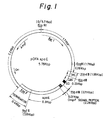
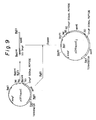
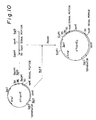
- Illustrative examples of such expression vectors according to the present invention may include the vectors pOFAapoE and pNapoE as shown in Figs. 1 and 2, respectively; and the vectors pOFAapoE2 and pNapoE2 as shown in Figs. 9 and 10, respectively.
- such an expression vector is employed to transform a host microorganism.
- Host microorganisms used herein may include E. coli JM109, HB101, YK537 and YA21, and Bacillus MI112 and NP58.
- Transformation may be effected according to any conventional method, for example, the method described in Molecular Cloning, Cold Spring Harbor, pp. 250 (1982).
- the resulting transformants may then be cultured in M9 minimal, L broth, or other similar media in conventional manners.
- a human apolipoprotein E-like protein may be expressed along with a secretory signal peptide in the transformant.
- the secretory signal peptide portion may be cleaved upon transportation of the fused peptide through the cell membrane.
- the human apolipoprotein E-like protein having the natural N-terminal may be accumulated in the periplasm or out of the cell.
- desired proteins may be produced in larger amounts according to the present invention, since they are secreted from host cells and therefore are not subject to degradation by cellular enzymes.
- human apolipoprotein E or a human apolipoprotein E-like protein can be produced in such a large amount as about 50 mg/l according to the present invention. Further, the proteins will be able to be produced in still larger amounts as much as about 450 mg/l when the transformants incorporating the expression vector of the present invention are subjected to high density cultivation in a jar fermentor or similar equipment.
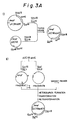
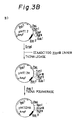
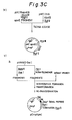
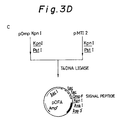
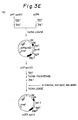
- EXAMPLE 1 Secretory Production in E. coli of Human Apolipoprotein E Using E. coli Outer Membrane Protein OmpF Signal Peptide (Fig. 3)
- Liquids A and B were mixed, dialyzed against water, and evaporated to dryness by a vacuum pump.
- Ten microliters of Buffer L (10 mM Tris-HCl, 6 mM magnesium chloride, 1 mM dithiothreitol and 1 mM ATP) were added to the mixture.
- T4 DNA ligase (1 u) was also added and reaction was effected at 4°C for 16 hours.
- Bgl II cleavage site was introduced into the apoE gene in accordance with the procedures described in BIO/TECHNOLOGY, 636-639 (1984).
- a variant primer (150 pmol) of 36 bases as shown in Fig. 4A was phosphorylated in the presence of T4 polynucleotide kinase (1 u) in Buffer K (50 mM Tris-HCl, pH 8.0, 10 mM magnesium chloride, 5 mM dithiothreitol and 10 mM ATP) at 37°C for one hour.
- Buffer K 50 mM Tris-HCl, pH 8.0, 10 mM magnesium chloride, 5 mM dithiothreitol and 10 mM ATP
- a heteroduplex was formed in the following manner: 12 ⁇ l of 5X conc. polymerase ligase buffer (0.5 M sodium chloride, 32.5 mM Tris-HCl, pH 7.5, 40 mM magnesium chloride and 5 mM beta-mercaptoethanol) was mixed with Fragments I-a and I-b (each in 0.05 pmol), Fragment II (0.05 pmol) and the phosphorylated variant primer (45 pmol). The total volume was 34.5 ⁇ l. The resulting mixture was boiled at 100°C for 3 minutes, immediately after which it was placed in a thermostat at 30°C and allowed to stand for 30 minutes. Then, the mixture was allowed to stand at 4°C for 30 minutes and subsequently on ice for 10 minutes. Thus, the heteroduplex was formed.
- polymerase ligase buffer 0.5 M sodium chloride, 32.5 mM Tris-HCl, pH 7.5, 40 mM magnesium chloride and 5 mM beta-mercaptoethanol
- Plasmids were isolated and purified from the transformants in conventional manners.
- the plasmids were cleaved with Bgl II restriction enzyme and subjected to 0.8% agarose gel electrophoresis to separate the cleaved plasmids (variant plasmids).
- variant plasmids were often found to be contaminated with original wild-type plasmids. These impure variant plasmids were again used to transform E. coli JM109. Thus, purified variant plasmid pUC118apoEB was obtained.
- Dna fragments having the same sequence as the -35 region of T5 P25 promoter (DNA Fragments 1 and 2 as shown below) and DNA fragments having the same sequence as the -10 region of the promoter, the operator region and the transcription initiation site of lac UV5 (DNA Fragments 3 and 4 as shown below) were prepared by a DNA synthesizer Model 308A manufactured by NIKKAKI, Japan.
- Each (100 ⁇ g) of the synthetic DNA fragments was deprotected in 28% aqueous ammonia solution (2 ml) at 55°C for 6 hours and purified on 17% acrylamide/7 M urea gel to yield each fragment (10 ⁇ g).
- Each DNA Fragment (1 ⁇ g) was treated with T4 polynucleotide kinase (1 u) in 10 ⁇ l of a buffer containing 10 mM Tris-HCl (pH 7.6) and 10 mM magnesium chloride at 37°C for one hour to phosphorylate the 5′-terminal.
- DNA Fragment 1 was mixed with DNA Fragment 2 while DNA Fragment 3 was separately mixed with DNA Fragment 4 . After heating at 100°C for 3 minutes, each mixture was gradually cooled to yield a double-stranded 37 bp or 43 bp DNA fragment, each in an amount of 2 ⁇ g.
- pac promoter plasmid pBRpac having promoter activities was obtained.
- the base sequence of the pac promoter was determined by the conventional dideoxy method, which is fully described in Anal. Biochem., 152 , 232 (1986).
- the competent cells used herein were obtained by collecting cells in the logarithmic growth phase by conventional procedures, suspending the cells in 1/3 volume of 0.1 M calcium chloride solution at 0°C, allowing to stand for 30 minutes, collecting again the cells, and suspending them in 1/100 volume of 0.1 M calcium chloride solution.
- One microgram of the plasmid pBRpac (4.4 kbp) was digested with Bam HI (1 u) and Pvu II (1 u) in Buffer H (10 ⁇ l) at 37°C for 2 hours. The product was precipitated with ethanol, evaporated to dryness and stored.
- plasmid pINIIIA1 The EMBO J., Vol. 3, No. 10, 2437 (1984) was digested with Kpn I (5 u) in 50 ⁇ l of a buffer containing 10 mM Tris-HCl and 6 mM magnesium chloride at 37°C for 2 hours.
- the reaction mixture was mixed with 5.5 ⁇ l of a buffer containing 330 mM Tris-HCl (pH 7.9), 660 mM potassium acetate and 100 mM magnesium acetate, treated with T4 DNA polymerase (10 u) at 37°C for 15 minutes to remove the protruding 3′-terminal, and heated at 70°C for 10 minutes to inactivate the enzyme.
- the reaction mixture was mixed with 6.0 ⁇ l of a buffer containing 100 mM Tris-HCl (pH 7.5), 1 M sodium chloride and 60 mM magensium chloride and treated with Bam HI (5 u) at 37°C for 2 hours. After removal of proteins by addition of water-saturated phenol (60 ⁇ l), ethanol precipitation was repeated three times to purify DNA. Thus, there was obtained 0.5 ⁇ g of an about 500 bp fragment of lpp 3′-region containing the transcription termination sequence.
- This DNA fragment and the above digested plasmid pBRpac were treated with T4 DNA ligase (1 u) in 10 ⁇ l of a buffer containing 10 mM Tris-HCl (pH 7.5), 10 mM magnesium chloride, 10 mM ATP and 1 mM dithiothreitol at 4°C for 16 hours.
- T4 DNA ligase (1 u) in 10 ⁇ l of a buffer containing 10 mM Tris-HCl (pH 7.5), 10 mM magnesium chloride, 10 mM ATP and 1 mM dithiothreitol at 4°C for 16 hours.
- This plasmid pPac could be stably maintained in E. coli lac I q strain JM105 or JM109.
- the plasmid pPac (0.1 ⁇ g) was used to transform E. coli strain JM105 according to the method described in (1) above.
- the resulting transformant was propagated in a minimal medium (1 liter) containing 20 mg/ml ampicillin.
- the plasmid was isolated from the transformant and purified by conventional procedures. Thus, the plasmid pPac was obtained in an amount of 1 mg.
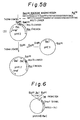
- a multi-linker comprising the SD sequence and the initiation Met codon as shown in Fig. 5B was synthesized in Model 308A synthesizer (NIKKAKI, Japan) and purified according to the method described in (1) above. Thus, 10 ⁇ g of DNA was obtained.
- the plasmid pPac (1 ⁇ g) was cleaved with Bam HI (1 u) in 10 ⁇ l of a buffer containing 10 mM Tri-HCl (pH 7.5), 100 mM sodium chloride and 6 mM magnesium chloride at 37°C for 2 hours, precipitated with ethanol, evaporated to dryness and stored.
- plasmid pPac (1 ⁇ g) and the multi-linker (1 ⁇ g) were treated with T4 DNA polymerase (1 u) in 10 ⁇ l of a buffer containing 10 mM Tris-HCl (pH 7.5), 10 mM magnesium chloride, 10 mM ATP and 1 mM dithiothreitol at 4°C for 16 hours.
- T4 DNA polymerase (1 u) in 10 ⁇ l of a buffer containing 10 mM Tris-HCl (pH 7.5), 10 mM magnesium chloride, 10 mM ATP and 1 mM dithiothreitol at 4°C for 16 hours.
- the plasmid pMT2 (1 ⁇ g) was cleaved with Eco RI (1 u) in 10 ⁇ l of a buffer containing 100 mM Tris-HCl (pH 7.5), 10 mM sodium chloride and 6 mM magnesium chloride at 37°C for 2 hours, precipitated with ethanol, evaporated to dryness and stored.
- This cleaved plasmid pMT2 (1 ⁇ g) and the 1.7 kbp DNA fragment (1 ⁇ g) were ligated by the treatment with T4 DNA ligase (1 ⁇ g) in 20 ⁇ l of a buffer containing 10 mM Tris-HCl (pH 7.5), 10 mM magnesium chloride, 10 mM ATP and 1 mM dithiothreitol to yield plasmid pMTI2.
- One microgram of the plasmid pMTI2 prepared in A above was digested with Sma I (1 u) in 10 ⁇ l of Buffer S (10 mM Tris-HCl, pH 7.5, 6 mM potassium chloride and 6 mM magnesium chloride) at 37°C for 2 hours.
- Buffer S 10 mM Tris-HCl, pH 7.5, 6 mM potassium chloride and 6 mM magnesium chloride
- the reaction mixture was heated at 70°C for 10 minutes to inactivate the enzyme, dialyzed against water, and evaporated to dryness.
- the reaction mixture was mixed with about 50 pmol of a Hin dIII linker phosphorylated at 5′-terminal (5′pCCAAGCTTGG, TAKARA SHUZO, Japan), and treated with T4 DNA ligase (1 u) in Buffer L (10 ⁇ l) at 4°C for 16 hours.
- the resulting reaction mixture was used to transform E. coli JM109 competent cells. DNA was isolated and
- the plasmid pMTI2H (1 ⁇ g) was digested with Ava I (1 u) in Buffer M (10 ⁇ l) at 37°C for 2 hours and heated at 70°C for 10 minutes to inactivate the enzyme.
- the reaction mixture was dialyzed against water and evaporated to dryness.
- the mixture was then treated with T4 DNA polymerase (1 u) in 20 ⁇ l of Buffer P (33 mM Tris-acetic acid, pH 7.9, 66 mM potassium acetate 10 mM magnesium acetate and 2.5 mM 4-deoxynucleotide triphosphate) at 37°C for 15 minutes.
- Buffer P 33 mM Tris-acetic acid, pH 7.9, 66 mM potassium acetate 10 mM magnesium acetate and 2.5 mM 4-deoxynucleotide triphosphate
- the resulting mixture was dialyzed against water and evaporated to dryness.
- the mixture was treated with T4 DNA ligase (1 u) in Buffer L (10 ⁇ l) at 4°C for 16 hours.
- the resulting mixture was used to transform E. coli JM109 competent cells. DNA was isolated and purified from the transformants and digested with Ava I. Thus, there was obtained plasmid pMTI2HA from which the Ava I cleavage site had been deleted.
- pUC118apoEB Ten micrograms of pUC118apoEB were digested with Hin dIII (20 u) and Bgl II (20 u) in Buffer M (100 ⁇ l) at 37°C for 2 hours. Approximately 1 kbp DNA fragment (apoE fragment) containing the gene coding for apoE was separated by 5% acrylamide gel electrophoresis, stained with 0.05% ethidium bromide, excised from the gel, and extracted in conventional manners.
- pMTI2HA (1 ⁇ g) was digested with Hin dIII (1 u) and Bgl II (1 u) in Buffer M (10 ⁇ l) at 37°C for 2 hours, and treated with water-saturated phenol to precipitate proteins. After removing the phenol by addition of ether, the product was dialyzed against water and evaporated to dryness.
- the plasmid DNA was mixed with the apoE fragment (1 pmol) and the resulting mixture was treated with T4 DNA ligase (1 u) in Buffer L (10 ⁇ l) at 4°C for 16 hours.
- the reaction mixture was used to transform E. coli JM109 competent cells. Plasmids were isolated and purified from the transformants and investigated by digestion with Hin dIII and Bgl II. Thus, plasmid pMTapoEO having the apoE fragment inserted thereinto was obtained.
- a vector primer and an oligo(dG)-tailed linker were prepared from a hybrid plasmid of pBR322 and SV40 in accordance with the procedures described by Okayama and Berg in Molecular and Cellular Biology, 2 , 161-170 (1982):
- the hybrid plasmid (400 ⁇ g) of pBR322 and SV40 (0.71-0.86 in map unit) was digested with Kpn I restriction enzyme in a buffer containing bovine serum albumin at 37°C for 4 hours.
- DNA was collected by conventional ethanol precipitation and dissolved in a dTTP-containing buffer. The solution was incubated at 37°C for 30 minutes in the presence of terminal deoxynucleotidyl transferase to add an about 60 dT tail to the cleaved Kpn I site.
- the tailed DNA was collected by ethanol precipitation and then digested with Hpa I restriction enzyme in a buffer containing bovine serum albumin at 37°C for 5 hours.
- the resulting larger DNA fragment was purified by agarose gel electrophoresis and collected by the glass powder procedure: Vogelstein et al ., Proc. Natl. Acad. Sci. U.S.A., 76 , 615-619 (1979).
- the DNA was added to an oligo(dA) cellulose column at 0°C, eluted with water, and collected by ethanol.
- a vector primer having an oligo(dT) tail was obtained.
- a cDNA library was prepared by the procedures described by Okayama and Berg in Molecular and Cellular Biology, 2 , 161-170 (1982):
- mRNA materials (30 ⁇ g) prepared in (1) above and the vector primer (10 ⁇ g) prepared in (2) above were added to an aqueous solution containing Tris-HCl (pH 8.3). magnesium chloride, potassium chloride, dithiothreitol, dATP, dTTP. dGTP and 32P-dCTP. The mixture was incubated at 37°C for 20 minutes in the presence of reverse transcriptase to synthesize plasmid-cDNA:mRNAs. These materials were collected in the form of pellet by ethanol precipitation.
- the collected pellets were dissolved in a buffer containing cobalt chloride, dithiothreitol, poly(A), 32P-dCTP and terminal deoxynucleotidyl transferase and incubated at 37°C for 10 minutes to add 10 to 15 dCMP residues to each end.
- the Hin dIII-digested plasmids were dissolved in a buffer containing the oligo(dG)-tailed linker DNA prepared in (2) above, incubated at 65°C for 2 minutes, allowed to stand at 42°C for 30 minutes, and then cooled to 0°C.
- the reaction mixture was mixed with E. coli DNA ligase and incubated overnight in the presence of beta-NAD (nicotinamide adenine dinucleotide). Then, dATP, dTTP, dGTP, dCTP, beta-NAD, E. coli DNA ligase, E. coli DNA polymerase and E. coli RNase H were added and the resulting mixture was incubated at 12°C for one hour and then at room temperature for one hour. The mixture was then cooled to terminate the reaction. Thus, desired cDNA fragment-containing plasmids were obtained.
- the cDNA library was screened. Twelve (12) clones hybridizing with the probes were selected from 40,000 transformants. From these 12 clones, cDNA fragments were extracted and their restriction enzyme maps were established. Maxam-Gilbert method described in Methods in Enzymology, 65 , 499-560 (1980) was used to determine base sequences of the cDNA fragments. One of them was designated as pHANF48: Nature, 310 , 23, 699 (1985).
- the pHANF48 described in (4) above was digested with Pvu II and Rsa I to isolate a 301 bp fragment comprising AVD DNA.
- This fragment was ligated to a methionine linker by the treatment with T4 DNA ligase at 8°C for 14 hours and digested with Hin dIII restriction enzyme at 37°C for 2 hours to yield a 333 bp fragment.
- This fragment was ligated to a linker containing a ribosome binding sequence by the treatment with T4 DNA ligase at 8°C for 14 hours and digested with Bam HI at 37°C for 2 hours to yield a 365 bp fragment.
- Plasmid pUC8 (TAKAKA SHUZO, Japan) was digested with Bam HI restriction enzyme at 37°C for 2 hours. The 365 pb fragment was inserted into the Bam HI site of pUC8. The resulting plasmid was used to transform E. coli JM105. White colonies on Xgal were selected. Thus, plasmid pUCcd8 was obtained.
- Termination Linker TGA TAG ACT ATC
- This plasmid pUCcd8term was digested with Apa I and Bam HI at 37°C for 2 hours to yield a 260 bp fragment.
- plasmid pDR540 (Gene, 20 , 231 (1982)) having tac promoter was digested with restriction enzymes Eco RI and Bam HI at 37°C for 2 hours to yield an about 370 bp fragment.
- pHANF48 described in (4) above was digested with Apa I and Eco RI to yield a large fragment containing the ampicillin resistance gene.
- plasmid pSP64 available from Boehringer Manheim was digested with Pst I restriction enzyme and treated with alkaline phosphatase. This digested plasmid was then ligated to the 178 bp Pst I fragment. Thus, plasmid pSP64.OmpF was obtained.
- This plasmid pSP64.OmpF was digested with Hin dIII restriction enzyme and treated with Bal31. The resulting plasmid DNA was further treated with T4 DNA polymerase to form blunt ends. Hin dIII linker was ligated to the treated plasmid DNA, digested with Hin dIII and cyclized in the presence of ligase. The resulting plasmid was used to transform E. coli . Plasmid DNA was separated from the transformant.
- This plasmid DNA was digested with Hin dIII and Pst I. A small fragment of less than 150 bp was selected (clone No. 33). The Pst I- Hin dIII fragment was 130 bp. The selected plasmid pSP64.OmpF No. 33 was digested with Pst I and treated with T4 DNA polymerase to form blunt ends. Hpa I linker was ligated to the blunt end, digested with Hpa I and cyclized by ligase. Thus, plasmid pSP64.OmpF.HpaI was obtained.
- the plasmid pSP64.OmpF.HpaI obtained in (6) above was digested with Eco RI and then Hin dIII to yield an about 200 bp fragment. This fragment was further digested with Hha I. Thus, an 85 bp fragment containing the OmpF signal peptide region was obtained.
- the plasmid pUC.OmpF.S+met was digested with Hin dIII and Fnu DII to yield an about 70 bp fragment containing the OmpF signal peptide region.
- the plasmid pHANF48 as described in (4) above was digested with Alu I to yield a 269 bp fragment containing the AVD gene region. This fragment was further digested with Apa I to yield an about 220 bp fragment.
- This plasmid phMAVD.delta.P was digested with Hin dIII and treated with BAP.
- a 104 bp tac promoter obtained by digesting the PhAVD with Hin dIII was inserted into the BAP-treated plasmid.
- plasmid PhMAVD was obtained.
- plasmid PhMAVD was digested with Eco RI and treated with BAP.
- plasmid pMC9 was digested with Eco RI to yield a 1.7 kbp fragment containing the lac I gene. This fragment was ligated to the BAP-treated plasmid.
- plasmid phMAVD.lacI as shown in Fig. 6 was obtained.
- the dried material was treated with T4 DNA polymerase in Buffer P (20 ⁇ l) at 37°C for 15 minutes.
- the reaction mixture was heated at 70°C for 10 minutes to inactivate the enzyme, dialyzed against water, evaporated to dryness, and dissolved in water (10 ⁇ l).
- an aqueous solution of Fragment II was obtained.
- a variant primer (150 pmol) of 36 bases as shown in Fig. 4B was phosphorylated in the presence of T4 polynucleotide kinase (1 u) in Buffer K (10 ⁇ l) at 37°C for one hour.
- a heteroduplex was formed in the following manner: 12 ⁇ l of 5X conc. polymerase-ligase buffer (0.5 M sodium chloride, 32.5 mM Tris-HCl, pH 7.5, 40 mM magnesium chloride and 5 mM beta-mercaptoethanol) was mixed with Fragment I 0.05 pmol), Fragment II (0.05 pmol) and the 5′-phosphorylated primer (45 pmol). The total volume was adjusted to 34.8 ⁇ l. The resulting mixture was boiled at 100°C for 3 minutes, immediately after which it was placed in a thermostat at 30°C and allowed to stand for 30 minutes. Then, the mixture was allowed to stand at 4°C for 30 minutes and subsequently on ice for 10 minutes. Thus, the heteroduplex was formed.
- polymerase-ligase buffer 0.5 M sodium chloride, 32.5 mM Tris-HCl, pH 7.5, 40 mM magnesium chloride and 5 mM beta-mercaptoethanol
- Plasmids were isolated and purified from the transformants in conventional manners.
- the plasmids were cleaved with Kpn I restriction enzyme and subjected to 0.8% agarose gel electrophoresis to separate the cleaved plasmids (variant plasmids).
- variant plasmids were often found to be contaminated with original wild-type plasmids. These impure variant plasmids were again used to transform E. coli JM109. Thus, purified variant plasmid pOmpKpnI was obtained.
- pMTI2 One microgram of pMTI2 was digested with Kpn I (1 u) in Buffer L (10 ⁇ l) at 37°C for 2 hours. The reaction mixture was then heatd at 70°C for 10 minutes to inactivate the enzyme, dialyzed against water and evaporated to dryness.
- the plasmid DNA was digested with Pst I (1 u) in Buffer H (10 ⁇ l) at 37°C for 2 hours. The reaction mixture was then heated at 70°C for 10 minutes to inactivate the enzyme, dialyzed against water and evaporated to dryness.
- pOmpKpni was digested with Kpn I and Pst I by similar procedures.
- the resulting plasmid DNA was evaporated to dryness.
- pMTapoEO pMTapoEO
- Buffer L 10 ⁇ l
- the reaction mixture was then heated at 70°C for 10 minutes to inactivate the enzyme, dialyzed against water and evaporated to dryness.
- the plasmid DNA was then digested with Sca I (1 u) in Buffer H (10 ⁇ l) at 37 C for 2 hours. Proteins were extracted with water-saturated phenol and the phenol was extracted with ether. The resulting mixture was dialyzed against water and evaporated to dryness.
- the plasmid pOFapoEO (1 ⁇ g) was digested with Kpn I (1 u) in Buffer L (10 ⁇ l) at 37°C for 2 hours. The reaction mixture was heated at 70°C for 1.0 minutes to inactivate the enzyme, dialyzed against water and evaporated to dryness. Then, the mixture was treated with T4 DNA polymerase (1 u) in Buffer P (20 ⁇ l) at 37°C for 15 minutes to remove the protruding 3′-terminal produced by the Kpn I digestion. Thus, a blunt end was produced at 3′-terminal of the plasmic DNA. The reaction mixture was then heated at 70°C for 15 minutes to inactivate the enzyme, dialyzed against water and evaporated to dryness.
- the resulting DNA fragment was digested with Ava I (1 u) in Buffer M (10 ⁇ l) at 37°C for 2 hours.
- the reaction mixture was then treated with water-saturated phenol to remove proteins, treated with ether to remove the phenol, dialyzed against water and evaporated to dryness to yield a DNA fragment (Fragment A).
- DNA linker corresponding to the N-terminal of apoE was synthesized by a DNA synthesizer (Applied Biosystem M380 manufactured by NIKKAKI, Japan) and purified in conventional procedures:
- This synthetic DNA linker (150 pmol) was phosphorylated at 5′-terminal by the treatment with T4 DNA polynucleotide kinase (1 u) in Buffer K (10 ⁇ l). The reaction mixture was mixed with 200 mM sodium chloride (10 ⁇ l), boiled at 100°C for 3 minutes, and gradually annealed.
- the 5′-phosphorylated DNA linker (15 pmol) and Fragment A prepared above were mixed together and ligated to each other by the treatment with T4 DNA ligase (1 u) in Buffer L (10 ul) at 4°C for 16 hours.
- the resulting mixture was used to transform E. coli JM109 competent cells. Plasmids were isolated and purified from the transformants.
- the purified plasmid DNA was checked by digestion with Bam HI and Ava I and 5% acrylamide gel electrophoresis. Thus, desired plasmid pOFAapoE was obtained.
- E. coli JM109 containing pOFAapoE was cultivated in L broth (10 g bactotrypton, 5 g bactoyeast extract, 10 g sodium chloride, 20 mg ampicillin, in 1 liter water) at 30°C overnight. The culture was transferred to 50 volumes of new L broth and cultivated at 30°C for 5 hours. Isopropyl-beta-Dthiogalactopyranoside, which is an inducer of the tac promoter on the plasmid, was added in a concentration of 2 mM to induce secretory production of apoE. Cultivation was further conducted for 3 hours.
- the culture was centrifuged at 6,000 r.p.m. for 10 minutes to collect cells.
- the wet cells (1 g) were suspended in 20 ml of a solution containing 33 mM Tris-HCl (pH 8.0) and 20% sucrose and shaked at 25°C for 10 minutes. The cells were collected by centrifugation at 10,000 r.p.m. for 10 minutes. After discarding the supernatant, cool water (20 ml) was added to the cells and the mixture was thoroughly stirred in ice water for 10 minutes. The cells were removed by centrifugation at 8,000 r.p.m. for 10 minutes. The supernatant (periplasmic fraction) was lyophilized and electrophoresed on SDS polyacrylamide gel.
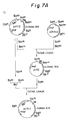
- EXAMPLE 2 Secretory Production in E. coli of Human Apolipoprotein E Using Signal Peptide of Human Apolipoprotein E (Fig. 7)
- the plasmid pMTI2 (1 ⁇ g) as shown in Fig. 5B was digested with Eco RI (1 u) and Bam HI (1 u) in Buffer H (10 ⁇ l) at 37°C for 2 hours. The reaction mixture was heated at 70°C for 10 minutes to inactivate the enzymes.
- pDR540 (1 ⁇ g) purchased from Farmacia was digested with Eco RI and Bam HI by similar procedures.
- reaction mixtures were mixed and treated with T4 DNA ligase (1 u) in 10X Buffer L (2 ⁇ l) at 4°C for 16 hours to ligate the DNA fragments to each other.
- the ligation mixture (10 ⁇ l) was used to transform E. coli JM109 competent cells. Plasmids were isolated and purified from the transformants. The plasmid DNAs were checked by digestion with Eco RV and 0.8% agarose gel electrophoresis. Thus, there was obtained plasmid pUS2 into which the tac promoter fragment of pDR540 was inserted.
- This plasmid pUS2 lacked the lacI-containing Eco RI fragment as a result of the Eco RI digestion.
- the plasmid pMTI2 was digested with Eco RI and the 1.7 kbp lac I-containing Eco RI fragment was isolated and purified by conventional acrylamide gel electrophoresis. The purified fragment was introduced into the Eco RI site of pUS2. The resulting plasmid was designated as pUSI2.
- the plasmid pMTapoEO (1 ⁇ g) as shown in Fig. 3C was digested with Bam HI (1 u) and Sca I (1 u) in Buffer H (10 ⁇ l) at 37°C for 2 hours. The reaction mixture was heated at 70°C for 10 minutes to inactivate the enzymes.
- reaction mixtures were mixed and treated with T4 DNA ligase (1 u) in 10X conc. Buffer L (2 ⁇ l) at 4°C for 16 hours to ligate the DNA fragments to each other.
- the ligation mixture (10 ⁇ l) was used to transform E. coli JM109 competent cells. Plasmids were isolated and purified from the transformants. The plasmid DNAs were checked by digestion with Eco RV and 0.8% agarose gel electrophoresis. Thus, there was obtained plasmid pUSapoEO into which the tac promoter fragment of pUSI2 was inserted.
- the plasmid pUSapoEO (10 ⁇ g) was digested with Bam HI (10 u) and Ava I (10 u) in Buffer H (100 ⁇ l) at 37°C for 2 hours.
- the digestion mixture was electrophoresed on 5% acrylamide gel and stained with 0.05% ethidium bromide.
- the larger DNA fragment (Fragment I) was cut from the gel and extracted.
- a variant primer (50 pmol) of 41 bases as shown in Fig. 8 was phosphorylated at 5′-terminal by the treatment with T4 polynucleotide kinase (1 u) in Buffer K (10 ⁇ l) at 37°C for one hour.
- Fragment I (0.05 pmol), Fragment II (0.05 pmol) and 5′-phosphorylated primer (45 pmol) were mixed with 12 ⁇ l of 5X conc. polymerase-ligase buffer (0.5 M sodium chloride, 32.5 mM Tris-HCl, pH 7.5, 40 mM magnesium chloride and 5 mM beta-mercaptoethanol). The total volume was adjusted to 34.8 ⁇ l. The mixture was boiled at 100°C for 3 minutes, immediately after which it was placed into a thermostat at 30°C and allowed to stand for 30 minutes. The mixture was allowed to stand at 4°C for 30 minutes and then on ice for 10 minutes. Thus, a heteroduplex was formed.
- polymerase-ligase buffer 0.5 M sodium chloride, 32.5 mM Tris-HCl, pH 7.5, 40 mM magnesium chloride and 5 mM beta-mercaptoethanol. The total volume was adjusted to 34.8 ⁇ l. The mixture was boiled at 100°C for 3 minutes, immediately after which
- aqueous solution (2 ⁇ l) containing the cyclized DNA was used to transform E. coli JM109 in conventional manners. Plasmids were isolated and purified from the transformants by conventional procedures. The plasmid DNAs were checked by digesting them with Bgl II and electrophoresing on 0.8% agarose gel. Thus, the cleaved plasmid was isolated as a desired variant plasmid.
- the isolated variant plasmid was often contaminated with the original wild-type plasmid.
- the variant plasmid was again used to transform E. coli JM109 to purify the variant plasmid.
- purified plasmid pUSapoEBH was obtained.
- the plasmid pOFAapoE (10 ⁇ g) was digested with Hin dIII (10 u) in Buffer M (100 ⁇ l) at 37°C for 2 hours.
- the reaction mixture was subjected to 5% acrylamide gel electrophoresis and stained with 0.05% ethidium bromide. About 110 bp Hin dIII tac promoter fragment was excised and extracted from the gel.
- pUSapoEBH (1 ⁇ g) was digested with Hin dIII (1 u) in Buffer M (10 ⁇ l) at 37°C for 2 hours.
- the reaction mixture was mixed with E. coli alkaline phosphatase (1 u) and incubated at 65°C for one hour. Water-saturated phenol was used to inactivate the enzyme and the phenol was removed by ether. The resulting mixture was dialyzed against water and evaporated to dryness.
- the resulting plasmid DNA was mixed with the Hin dIII tac promoter fragment (0.1 pmol) and treated with T4 DNA ligase (1 u) in Buffer L (10 ⁇ l) at 4°C for 16 hours to ligate to each other.
- the ligation mixture (5 ⁇ l) was used to transform E. coli JM109. Plasmids were isolated and purified from transformants. The resulting plasmid DNAs were checked by digestion with Hin dIII and other restriction enzymes. Thus, a desired plasmid pNapoE was obtained (Fig. 7D).
- E. coli strains retaining the plasmid pNapoE was cultivated under the conditions similar to those used in Example 1. It was showed that natural-type human apolipoprotein E was produced and secreted.
- the plasmid pOFAapoE constructed in Example 1 was digested with Bam HI and Bgl II and the fused gene of OmpF signal peptide and apoE gene was isolated and purified by 5% polyacrylamide gel electrophoresis in conventional manners. This fused gene fragment was inserted into the Bgl II-cleaved site of pOFAapoE. Thus, a plasmid pOFAapoE2 was obtained into which two fused gene fragments of OmpF signal peptide and apoE gene were introduced (Fig. 9).
- the plasmid pNapoE constructed in Example 2 was digested with Bam HI and Bgl II and the fused gene of natual apoE signal peptide and apoE gene was isolated and purified by 5% polyacrylamide gel electrophoresis in conventional manners. This fused gene fragment was inserted into the Bgl II-cleaved site of pNapoE. Thus, a plasmid pNapoE2 was obtained into which two fused gene fragments of apoE signal peptide and apoE gene were introduced (Fig. 10).
- EXAMPLE 4 Pharmacological Activities of Apolipoprotein E Produced by E. coli
- the plasmid pOFAapoE2 constructed in Example 3 was used to transform E. coli cells and the transformants were cultured to produce apolipoprotein E.
- the produced apolipoprotein E was isolated and purified in conventional manners.
- natural apolipoprotein E was obtained from blood samples according to the conventional methods: R.E. Stephans, Anal. Biochem., 65 , 369 (1975).
- natural-type human apolipoprotein E-like proteins can be efficiently produced according to the present invention.
- these proteins including apolipoproteins E2, E3 and E4, are used as antigens to prepare anti-sera by conventional procedures, such anti-sera can be employed to detect the deficiency in normal-type apolipoprotein E3 or the presence of abnormal-type apolipoprotein E2 or E4.
- apolipoprotein E3 produced according to the present invention can be utilized as anti-hyperlipidemia and anti-arteriosclerosis agenst.
Landscapes
- Health & Medical Sciences (AREA)
- Chemical & Material Sciences (AREA)
- Life Sciences & Earth Sciences (AREA)
- Organic Chemistry (AREA)
- Genetics & Genomics (AREA)
- Molecular Biology (AREA)
- Engineering & Computer Science (AREA)
- Zoology (AREA)
- Biochemistry (AREA)
- Biophysics (AREA)
- General Health & Medical Sciences (AREA)
- Proteomics, Peptides & Aminoacids (AREA)
- Medicinal Chemistry (AREA)
- Gastroenterology & Hepatology (AREA)
- Biomedical Technology (AREA)
- Biotechnology (AREA)
- General Engineering & Computer Science (AREA)
- Bioinformatics & Cheminformatics (AREA)
- Wood Science & Technology (AREA)
- Physics & Mathematics (AREA)
- Toxicology (AREA)
- Plant Pathology (AREA)
- Microbiology (AREA)
- Preparation Of Compounds By Using Micro-Organisms (AREA)
Applications Claiming Priority (4)
| Application Number | Priority Date | Filing Date | Title |
|---|---|---|---|
| JP13354988 | 1988-05-31 | ||
| JP133549/88 | 1988-05-31 | ||
| JP107027/89 | 1989-04-26 | ||
| JP10702789A JPH0284195A (ja) | 1988-05-31 | 1989-04-26 | 天然型ヒトアポリポプロテインe様蛋白質の産生方法 |
Publications (2)
| Publication Number | Publication Date |
|---|---|
| EP0345155A1 true EP0345155A1 (fr) | 1989-12-06 |
| EP0345155B1 EP0345155B1 (fr) | 1994-08-10 |
Family
ID=26447101
Family Applications (1)
| Application Number | Title | Priority Date | Filing Date |
|---|---|---|---|
| EP89401495A Expired - Lifetime EP0345155B1 (fr) | 1988-05-31 | 1989-05-31 | Procédé de préparation des protéines similaires à l'apolipoprotéine-E humaine naturelle |
Country Status (2)
| Country | Link |
|---|---|
| EP (1) | EP0345155B1 (fr) |
| DE (1) | DE68917379T2 (fr) |
Cited By (6)
| Publication number | Priority date | Publication date | Assignee | Title |
|---|---|---|---|---|
| WO1994013819A1 (fr) * | 1992-12-11 | 1994-06-23 | Pharmacia Ab | Systeme d'expression permettant de produire une apolipoproteine ai-m |
| EP0600875A4 (fr) * | 1991-06-26 | 1995-01-25 | Bio Technology General Corp | Purification d'apolipoproteine e recombinante tiree de bacteries. |
| US5990081A (en) * | 1995-03-03 | 1999-11-23 | Esperion Therapeutics, Inc. | Purified APO A and APO E compounds and methods for using them |
| US6090921A (en) * | 1996-08-23 | 2000-07-18 | Esperion Therapeutics, Inc. | Process for purifying apolipoprotein a or apolipoprotein e |
| US6559284B1 (en) | 1996-09-11 | 2003-05-06 | Esperion Therapeutics, Inc. | Process for purifying a protein |
| US7794972B2 (en) | 2002-07-03 | 2010-09-14 | Pfenex Inc. | Benzoate-and anthranilate-inducible promoters |
Citations (6)
| Publication number | Priority date | Publication date | Assignee | Title |
|---|---|---|---|---|
| EP0111814A2 (fr) * | 1982-12-16 | 1984-06-27 | Mgi Pharma, Inc. | Clonage et expression de séquences de nucléotides codant pour l'hormone de croissance bovine |
| EP0138644A1 (fr) * | 1983-08-23 | 1985-04-24 | Mitsubishi Kasei Corporation | Vecteurs de plasmide |
| EP0152830A1 (fr) * | 1984-02-02 | 1985-08-28 | Green Cross Corporation | Vecteur |
| EP0154576A1 (fr) * | 1984-02-06 | 1985-09-11 | INTERFERON SCIENCES, INC a Delaware Corporation | Séquences d'acides nucléiques hybrides ayant des gènes disposés en tandem |
| EP0205715A1 (fr) * | 1984-10-16 | 1986-12-30 | Mitsubishi Kasei Corporation | Fragments d'ADN, vecteurs d'expression, protéines, hôtes et procédé de production des protéines |
| EP0293357A1 (fr) * | 1987-05-28 | 1988-11-30 | U C B, S.A. | Expression de la proapolipoprotéine A-I humaine |
-
1989
- 1989-05-31 EP EP89401495A patent/EP0345155B1/fr not_active Expired - Lifetime
- 1989-05-31 DE DE1989617379 patent/DE68917379T2/de not_active Expired - Fee Related
Patent Citations (6)
| Publication number | Priority date | Publication date | Assignee | Title |
|---|---|---|---|---|
| EP0111814A2 (fr) * | 1982-12-16 | 1984-06-27 | Mgi Pharma, Inc. | Clonage et expression de séquences de nucléotides codant pour l'hormone de croissance bovine |
| EP0138644A1 (fr) * | 1983-08-23 | 1985-04-24 | Mitsubishi Kasei Corporation | Vecteurs de plasmide |
| EP0152830A1 (fr) * | 1984-02-02 | 1985-08-28 | Green Cross Corporation | Vecteur |
| EP0154576A1 (fr) * | 1984-02-06 | 1985-09-11 | INTERFERON SCIENCES, INC a Delaware Corporation | Séquences d'acides nucléiques hybrides ayant des gènes disposés en tandem |
| EP0205715A1 (fr) * | 1984-10-16 | 1986-12-30 | Mitsubishi Kasei Corporation | Fragments d'ADN, vecteurs d'expression, protéines, hôtes et procédé de production des protéines |
| EP0293357A1 (fr) * | 1987-05-28 | 1988-11-30 | U C B, S.A. | Expression de la proapolipoprotéine A-I humaine |
Non-Patent Citations (1)
| Title |
|---|
| PATENT ABSTRACTS OF JAPAN * |
Cited By (9)
| Publication number | Priority date | Publication date | Assignee | Title |
|---|---|---|---|---|
| EP0600875A4 (fr) * | 1991-06-26 | 1995-01-25 | Bio Technology General Corp | Purification d'apolipoproteine e recombinante tiree de bacteries. |
| WO1994013819A1 (fr) * | 1992-12-11 | 1994-06-23 | Pharmacia Ab | Systeme d'expression permettant de produire une apolipoproteine ai-m |
| US5721114A (en) * | 1992-12-11 | 1998-02-24 | Pharmacia & Upjohn Aktiebolag | Expression system for producing apolipoprotein AI-M |
| US5990081A (en) * | 1995-03-03 | 1999-11-23 | Esperion Therapeutics, Inc. | Purified APO A and APO E compounds and methods for using them |
| US6506879B1 (en) | 1995-03-03 | 2003-01-14 | Esperion Therapeutics, Inc. | Purified Apo A and Apo E compounds and methods for using them |
| US6090921A (en) * | 1996-08-23 | 2000-07-18 | Esperion Therapeutics, Inc. | Process for purifying apolipoprotein a or apolipoprotein e |
| US6423830B1 (en) | 1996-08-23 | 2002-07-23 | Esperion Therapeutics, Inc. | Process for purifying apolipoprotein A or apolipoprotein E |
| US6559284B1 (en) | 1996-09-11 | 2003-05-06 | Esperion Therapeutics, Inc. | Process for purifying a protein |
| US7794972B2 (en) | 2002-07-03 | 2010-09-14 | Pfenex Inc. | Benzoate-and anthranilate-inducible promoters |
Also Published As
| Publication number | Publication date |
|---|---|
| DE68917379D1 (de) | 1994-09-15 |
| EP0345155B1 (fr) | 1994-08-10 |
| DE68917379T2 (de) | 1994-12-01 |
Similar Documents
| Publication | Publication Date | Title |
|---|---|---|
| EP0205715B1 (fr) | Fragments d'ADN, vecteurs d'expression, protéines, hôtes et procédé de production des protéines | |
| EP0301670B2 (fr) | Kluyveromyces comme souche hôte | |
| DK171278B1 (da) | DNA-Sekvens, vektor omfattende en sådan sekvens, værtsorganisme transformeret med en sådan vektor og fremgangmåde til fremstilling af et protein eller peptidprodukt ved hjælp deraf | |
| JP2610783B2 (ja) | ポリクリングルプラスミノーゲン活性化因子をコードする遺伝子およびそれを含有するベクター | |
| KR930002889B1 (ko) | 효모에 의한 조직 플라스미노겐 활성화제의 제조방법 | |
| EP0136829A2 (fr) | Vecteur d'expression et son application | |
| US4879224A (en) | DNA sequences, recombinant DNA molecules and processes for producing human phospholipase inhibitor polypeptides | |
| JPH08242881A (ja) | 部分的合成遺伝子の発現によるペプチドの製法 | |
| JP3189052B2 (ja) | 抗血液凝固活性を有するポリペプチド | |
| JPH07110233B2 (ja) | リプレツシブルイ−ストプロモ−タ− | |
| JPH0759193B2 (ja) | 外来性蛋白質発現用クロ−ニングベクタ− | |
| JP2002504494A (ja) | マウス及びヒトエンドスタチンの生産方法 | |
| EP0345155B1 (fr) | Procédé de préparation des protéines similaires à l'apolipoprotéine-E humaine naturelle | |
| AU601676B2 (en) | Dna sequences recombinant dna molecules and processes for producing human lipocorton-like polypeptides | |
| WO1991017178A1 (fr) | Procede permettant de purifier des proteines produites par recombinaison | |
| PL166199B1 (pl) | Sposób wytwarzania nowych plazmidów dla stosowania ich do otrzymywania aktywatoraplazminogenu PL PL PL PL PL | |
| US4874743A (en) | DNA sequences, recombinant DNA molecules and processes for producing human phospholipase inhibitor-like polypeptides | |
| CA1205764A (fr) | Nouveaux vecteurs de clonage pour l'expression de polypeptides dans les hotes microbiens | |
| US5081019A (en) | DNA sequences, recombinant DNA molecules and processes for producing lipocortin-like polypeptides | |
| US4950646A (en) | DNA sequences, recombinant DNA molecules and processes for producing human lipocortin-like polypeptides | |
| US4849349A (en) | Genes for biologically active proteins | |
| EP0308336B1 (fr) | Méthode de production de protéines analogues de la pro-apolipoprotéine AI humaine | |
| EP0445681A2 (fr) | Préparation d'une substance liante à la thrombine | |
| JPH06311884A (ja) | プラスミド及びそれで形質転換されたエ シェリチア・コリ | |
| de Jong et al. | Synthesis of rat apolipoprotein E by Escherichia coli infected with recombinant bacteriophage |
Legal Events
| Date | Code | Title | Description |
|---|---|---|---|
| PUAI | Public reference made under article 153(3) epc to a published international application that has entered the european phase |
Free format text: ORIGINAL CODE: 0009012 |
|
| AK | Designated contracting states |
Kind code of ref document: A1 Designated state(s): BE CH DE FR GB IT LI NL SE |
|
| 17P | Request for examination filed |
Effective date: 19900601 |
|
| 17Q | First examination report despatched |
Effective date: 19921109 |
|
| GRAA | (expected) grant |
Free format text: ORIGINAL CODE: 0009210 |
|
| AK | Designated contracting states |
Kind code of ref document: B1 Designated state(s): BE CH DE FR GB IT LI NL SE |
|
| PG25 | Lapsed in a contracting state [announced via postgrant information from national office to epo] |
Ref country code: NL Effective date: 19940810 |
|
| REF | Corresponds to: |
Ref document number: 68917379 Country of ref document: DE Date of ref document: 19940915 |
|
| ET | Fr: translation filed | ||
| ITF | It: translation for a ep patent filed | ||
| PG25 | Lapsed in a contracting state [announced via postgrant information from national office to epo] |
Ref country code: SE Effective date: 19941110 |
|
| NLV1 | Nl: lapsed or annulled due to failure to fulfill the requirements of art. 29p and 29m of the patents act | ||
| PG25 | Lapsed in a contracting state [announced via postgrant information from national office to epo] |
Ref country code: LI Effective date: 19950531 Ref country code: GB Effective date: 19950531 Ref country code: CH Effective date: 19950531 Ref country code: BE Effective date: 19950531 |
|
| PLBE | No opposition filed within time limit |
Free format text: ORIGINAL CODE: 0009261 |
|
| STAA | Information on the status of an ep patent application or granted ep patent |
Free format text: STATUS: NO OPPOSITION FILED WITHIN TIME LIMIT |
|
| 26N | No opposition filed | ||
| BERE | Be: lapsed |
Owner name: MITSUBISHI KASEI CORP. Effective date: 19950531 |
|
| GBPC | Gb: european patent ceased through non-payment of renewal fee |
Effective date: 19950531 |
|
| REG | Reference to a national code |
Ref country code: CH Ref legal event code: PL |
|
| PG25 | Lapsed in a contracting state [announced via postgrant information from national office to epo] |
Ref country code: DE Effective date: 19960201 |
|
| PG25 | Lapsed in a contracting state [announced via postgrant information from national office to epo] |
Ref country code: FR Effective date: 19960229 |
|
| REG | Reference to a national code |
Ref country code: FR Ref legal event code: ST |
|
| REG | Reference to a national code |
Ref country code: FR Ref legal event code: ST |
|
| PG25 | Lapsed in a contracting state [announced via postgrant information from national office to epo] |
Ref country code: IT Free format text: LAPSE BECAUSE OF NON-PAYMENT OF DUE FEES;WARNING: LAPSES OF ITALIAN PATENTS WITH EFFECTIVE DATE BEFORE 2007 MAY HAVE OCCURRED AT ANY TIME BEFORE 2007. THE CORRECT EFFECTIVE DATE MAY BE DIFFERENT FROM THE ONE RECORDED. Effective date: 20050531 |