EP0155594A2 - Plasmides clonés de corynebacterium - Google Patents
Plasmides clonés de corynebacterium Download PDFInfo
- Publication number
- EP0155594A2 EP0155594A2 EP85102536A EP85102536A EP0155594A2 EP 0155594 A2 EP0155594 A2 EP 0155594A2 EP 85102536 A EP85102536 A EP 85102536A EP 85102536 A EP85102536 A EP 85102536A EP 0155594 A2 EP0155594 A2 EP 0155594A2
- Authority
- EP
- European Patent Office
- Prior art keywords
- plasmid
- corynebacterium
- host cells
- cells
- dna
- Prior art date
- Legal status (The legal status is an assumption and is not a legal conclusion. Google has not performed a legal analysis and makes no representation as to the accuracy of the status listed.)
- Withdrawn
Links
- 239000013612 plasmid Substances 0.000 title claims abstract description 120
- 241000186216 Corynebacterium Species 0.000 title claims abstract description 29
- DHMQDGOQFOQNFH-UHFFFAOYSA-N Glycine Chemical compound NCC(O)=O DHMQDGOQFOQNFH-UHFFFAOYSA-N 0.000 claims abstract description 32
- 241000894007 species Species 0.000 claims abstract description 31
- 239000004471 Glycine Substances 0.000 claims abstract description 16
- 241000894006 Bacteria Species 0.000 claims abstract description 14
- 239000002738 chelating agent Substances 0.000 claims abstract description 5
- 241000588722 Escherichia Species 0.000 claims abstract description 4
- 241000186226 Corynebacterium glutamicum Species 0.000 claims description 59
- 210000004027 cell Anatomy 0.000 claims description 53
- 241000588724 Escherichia coli Species 0.000 claims description 47
- 238000000034 method Methods 0.000 claims description 35
- 239000012634 fragment Substances 0.000 claims description 24
- 210000001938 protoplast Anatomy 0.000 claims description 23
- 230000008569 process Effects 0.000 claims description 13
- 102000016943 Muramidase Human genes 0.000 claims description 11
- 108010014251 Muramidase Proteins 0.000 claims description 11
- 108010062010 N-Acetylmuramoyl-L-alanine Amidase Proteins 0.000 claims description 11
- 229960000274 lysozyme Drugs 0.000 claims description 11
- 239000004325 lysozyme Substances 0.000 claims description 11
- 235000010335 lysozyme Nutrition 0.000 claims description 11
- 239000000203 mixture Substances 0.000 claims description 11
- 235000014469 Bacillus subtilis Nutrition 0.000 claims description 10
- 241000193830 Bacillus <bacterium> Species 0.000 claims description 7
- 244000005700 microbiome Species 0.000 claims description 7
- 241000186146 Brevibacterium Species 0.000 claims description 6
- 244000063299 Bacillus subtilis Species 0.000 claims description 5
- 241000319304 [Brevibacterium] flavum Species 0.000 claims description 5
- 230000014509 gene expression Effects 0.000 claims description 5
- 238000002156 mixing Methods 0.000 claims description 5
- 230000001580 bacterial effect Effects 0.000 claims description 4
- 230000012010 growth Effects 0.000 claims description 4
- 238000004519 manufacturing process Methods 0.000 claims description 3
- 230000008929 regeneration Effects 0.000 claims description 2
- 238000011069 regeneration method Methods 0.000 claims description 2
- 238000012258 culturing Methods 0.000 claims 2
- 230000001131 transforming effect Effects 0.000 claims 1
- 239000013605 shuttle vector Substances 0.000 abstract description 20
- 108020004414 DNA Proteins 0.000 description 39
- 230000009466 transformation Effects 0.000 description 34
- 108090000623 proteins and genes Proteins 0.000 description 32
- 239000013598 vector Substances 0.000 description 18
- 102000004190 Enzymes Human genes 0.000 description 13
- 108090000790 Enzymes Proteins 0.000 description 13
- 229940088598 enzyme Drugs 0.000 description 13
- 238000010276 construction Methods 0.000 description 12
- 241000186031 Corynebacteriaceae Species 0.000 description 11
- 238000010367 cloning Methods 0.000 description 11
- 239000013611 chromosomal DNA Substances 0.000 description 10
- 229920001223 polyethylene glycol Polymers 0.000 description 10
- FAPWRFPIFSIZLT-UHFFFAOYSA-M Sodium chloride Chemical compound [Na+].[Cl-] FAPWRFPIFSIZLT-UHFFFAOYSA-M 0.000 description 8
- 239000007983 Tris buffer Substances 0.000 description 7
- 150000001413 amino acids Chemical class 0.000 description 7
- 239000000872 buffer Substances 0.000 description 7
- 230000029087 digestion Effects 0.000 description 7
- 238000002474 experimental method Methods 0.000 description 7
- 238000003780 insertion Methods 0.000 description 7
- 230000037431 insertion Effects 0.000 description 7
- 238000012216 screening Methods 0.000 description 7
- LENZDBCJOHFCAS-UHFFFAOYSA-N tris Chemical compound OCC(N)(CO)CO LENZDBCJOHFCAS-UHFFFAOYSA-N 0.000 description 7
- FBPFZTCFMRRESA-FSIIMWSLSA-N D-Glucitol Natural products OC[C@H](O)[C@H](O)[C@@H](O)[C@H](O)CO FBPFZTCFMRRESA-FSIIMWSLSA-N 0.000 description 6
- ISWSIDIOOBJBQZ-UHFFFAOYSA-N Phenol Chemical compound OC1=CC=CC=C1 ISWSIDIOOBJBQZ-UHFFFAOYSA-N 0.000 description 6
- 108020004511 Recombinant DNA Proteins 0.000 description 6
- 239000011543 agarose gel Substances 0.000 description 6
- 230000015572 biosynthetic process Effects 0.000 description 6
- AIYUHDOJVYHVIT-UHFFFAOYSA-M caesium chloride Chemical compound [Cl-].[Cs+] AIYUHDOJVYHVIT-UHFFFAOYSA-M 0.000 description 6
- 238000005119 centrifugation Methods 0.000 description 6
- 230000004927 fusion Effects 0.000 description 6
- 230000002068 genetic effect Effects 0.000 description 6
- 239000006166 lysate Substances 0.000 description 6
- 230000010076 replication Effects 0.000 description 6
- 108091008146 restriction endonucleases Proteins 0.000 description 6
- 239000000600 sorbitol Substances 0.000 description 6
- KCXVZYZYPLLWCC-UHFFFAOYSA-N EDTA Chemical compound OC(=O)CN(CC(O)=O)CCN(CC(O)=O)CC(O)=O KCXVZYZYPLLWCC-UHFFFAOYSA-N 0.000 description 5
- LFQSCWFLJHTTHZ-UHFFFAOYSA-N Ethanol Chemical compound CCO LFQSCWFLJHTTHZ-UHFFFAOYSA-N 0.000 description 5
- 208000034454 F12-related hereditary angioedema with normal C1Inh Diseases 0.000 description 5
- 101150101654 PSR1 gene Proteins 0.000 description 5
- 238000004458 analytical method Methods 0.000 description 5
- 210000002421 cell wall Anatomy 0.000 description 5
- 208000016861 hereditary angioedema type 3 Diseases 0.000 description 5
- 229930027917 kanamycin Natural products 0.000 description 5
- 229960000318 kanamycin Drugs 0.000 description 5
- SBUJHOSQTJFQJX-NOAMYHISSA-N kanamycin Chemical compound O[C@@H]1[C@@H](O)[C@H](O)[C@@H](CN)O[C@@H]1O[C@H]1[C@H](O)[C@@H](O[C@@H]2[C@@H]([C@@H](N)[C@H](O)[C@@H](CO)O2)O)[C@H](N)C[C@@H]1N SBUJHOSQTJFQJX-NOAMYHISSA-N 0.000 description 5
- 229930182823 kanamycin A Natural products 0.000 description 5
- JQXXHWHPUNPDRT-WLSIYKJHSA-N rifampicin Chemical compound O([C@](C1=O)(C)O/C=C/[C@@H]([C@H]([C@@H](OC(C)=O)[C@H](C)[C@H](O)[C@H](C)[C@@H](O)[C@@H](C)\C=C\C=C(C)/C(=O)NC=2C(O)=C3C([O-])=C4C)C)OC)C4=C1C3=C(O)C=2\C=N\N1CC[NH+](C)CC1 JQXXHWHPUNPDRT-WLSIYKJHSA-N 0.000 description 5
- 229960001225 rifampicin Drugs 0.000 description 5
- HEDRZPFGACZZDS-UHFFFAOYSA-N Chloroform Chemical compound ClC(Cl)Cl HEDRZPFGACZZDS-UHFFFAOYSA-N 0.000 description 4
- KFZMGEQAYNKOFK-UHFFFAOYSA-N Isopropanol Chemical compound CC(C)O KFZMGEQAYNKOFK-UHFFFAOYSA-N 0.000 description 4
- 239000006137 Luria-Bertani broth Substances 0.000 description 4
- 241000187747 Streptomyces Species 0.000 description 4
- 230000008901 benefit Effects 0.000 description 4
- 230000001851 biosynthetic effect Effects 0.000 description 4
- 238000011161 development Methods 0.000 description 4
- 230000018109 developmental process Effects 0.000 description 4
- 238000005516 engineering process Methods 0.000 description 4
- 238000000605 extraction Methods 0.000 description 4
- 239000001963 growth medium Substances 0.000 description 4
- 239000003550 marker Substances 0.000 description 4
- 102000004169 proteins and genes Human genes 0.000 description 4
- 239000011780 sodium chloride Substances 0.000 description 4
- 206010059866 Drug resistance Diseases 0.000 description 3
- 241001131785 Escherichia coli HB101 Species 0.000 description 3
- WQZGKKKJIJFFOK-GASJEMHNSA-N Glucose Natural products OC[C@H]1OC(O)[C@H](O)[C@@H](O)[C@@H]1O WQZGKKKJIJFFOK-GASJEMHNSA-N 0.000 description 3
- 229920002594 Polyethylene Glycol 8000 Polymers 0.000 description 3
- 238000013459 approach Methods 0.000 description 3
- 230000003115 biocidal effect Effects 0.000 description 3
- 230000009089 cytolysis Effects 0.000 description 3
- 229960005542 ethidium bromide Drugs 0.000 description 3
- 239000008103 glucose Substances 0.000 description 3
- 230000002779 inactivation Effects 0.000 description 3
- 238000002955 isolation Methods 0.000 description 3
- 238000013507 mapping Methods 0.000 description 3
- 238000010369 molecular cloning Methods 0.000 description 3
- 108091033319 polynucleotide Proteins 0.000 description 3
- 102000040430 polynucleotide Human genes 0.000 description 3
- 239000002157 polynucleotide Substances 0.000 description 3
- 239000002244 precipitate Substances 0.000 description 3
- 238000002360 preparation method Methods 0.000 description 3
- 239000000047 product Substances 0.000 description 3
- 239000000243 solution Substances 0.000 description 3
- 229920001817 Agar Polymers 0.000 description 2
- 241000186063 Arthrobacter Species 0.000 description 2
- JGSARLDLIJGVTE-MBNYWOFBSA-N Penicillin G Chemical compound N([C@H]1[C@H]2SC([C@@H](N2C1=O)C(O)=O)(C)C)C(=O)CC1=CC=CC=C1 JGSARLDLIJGVTE-MBNYWOFBSA-N 0.000 description 2
- 102000005157 Somatostatin Human genes 0.000 description 2
- 108010056088 Somatostatin Proteins 0.000 description 2
- 229930006000 Sucrose Natural products 0.000 description 2
- CZMRCDWAGMRECN-UGDNZRGBSA-N Sucrose Chemical compound O[C@H]1[C@H](O)[C@@H](CO)O[C@@]1(CO)O[C@@H]1[C@H](O)[C@@H](O)[C@H](O)[C@@H](CO)O1 CZMRCDWAGMRECN-UGDNZRGBSA-N 0.000 description 2
- 239000008272 agar Substances 0.000 description 2
- 238000013019 agitation Methods 0.000 description 2
- 239000003242 anti bacterial agent Substances 0.000 description 2
- 239000008346 aqueous phase Substances 0.000 description 2
- 230000010261 cell growth Effects 0.000 description 2
- ZMMJGEGLRURXTF-UHFFFAOYSA-N ethidium bromide Chemical compound [Br-].C12=CC(N)=CC=C2C2=CC=C(N)C=C2[N+](CC)=C1C1=CC=CC=C1 ZMMJGEGLRURXTF-UHFFFAOYSA-N 0.000 description 2
- 238000010353 genetic engineering Methods 0.000 description 2
- 238000003306 harvesting Methods 0.000 description 2
- HNDVDQJCIGZPNO-UHFFFAOYSA-N histidine Natural products OC(=O)C(N)CC1=CN=CN1 HNDVDQJCIGZPNO-UHFFFAOYSA-N 0.000 description 2
- 238000012423 maintenance Methods 0.000 description 2
- 239000002609 medium Substances 0.000 description 2
- 230000000813 microbial effect Effects 0.000 description 2
- 235000015097 nutrients Nutrition 0.000 description 2
- 230000003204 osmotic effect Effects 0.000 description 2
- 229940049954 penicillin Drugs 0.000 description 2
- 238000013492 plasmid preparation Methods 0.000 description 2
- 229920006395 saturated elastomer Polymers 0.000 description 2
- 238000000926 separation method Methods 0.000 description 2
- 229960000553 somatostatin Drugs 0.000 description 2
- NHXLMOGPVYXJNR-ATOGVRKGSA-N somatostatin Chemical compound C([C@H]1C(=O)N[C@H](C(N[C@@H](CO)C(=O)N[C@@H](CSSC[C@@H](C(=O)N[C@@H](CCCCN)C(=O)N[C@@H](CC(N)=O)C(=O)N[C@@H](CC=2C=CC=CC=2)C(=O)N[C@@H](CC=2C=CC=CC=2)C(=O)N[C@@H](CC=2C3=CC=CC=C3NC=2)C(=O)N[C@@H](CCCCN)C(=O)N[C@H](C(=O)N1)[C@@H](C)O)NC(=O)CNC(=O)[C@H](C)N)C(O)=O)=O)[C@H](O)C)C1=CC=CC=C1 NHXLMOGPVYXJNR-ATOGVRKGSA-N 0.000 description 2
- 239000003381 stabilizer Substances 0.000 description 2
- 239000005720 sucrose Substances 0.000 description 2
- 239000006228 supernatant Substances 0.000 description 2
- VLEIUWBSEKKKFX-UHFFFAOYSA-N 2-amino-2-(hydroxymethyl)propane-1,3-diol;2-[2-[bis(carboxymethyl)amino]ethyl-(carboxymethyl)amino]acetic acid Chemical compound OCC(N)(CO)CO.OC(=O)CN(CC(O)=O)CCN(CC(O)=O)CC(O)=O VLEIUWBSEKKKFX-UHFFFAOYSA-N 0.000 description 1
- 241000186000 Bifidobacterium Species 0.000 description 1
- 241000186312 Brevibacterium sp. Species 0.000 description 1
- 241000734428 Bulbophyllum roseum Species 0.000 description 1
- 241000186321 Cellulomonas Species 0.000 description 1
- 241000193403 Clostridium Species 0.000 description 1
- 241001595482 Columbicola bacillus Species 0.000 description 1
- 241000186145 Corynebacterium ammoniagenes Species 0.000 description 1
- 241000203813 Curtobacterium Species 0.000 description 1
- 102000053602 DNA Human genes 0.000 description 1
- 102000012410 DNA Ligases Human genes 0.000 description 1
- 108010061982 DNA Ligases Proteins 0.000 description 1
- 238000007399 DNA isolation Methods 0.000 description 1
- 102000016928 DNA-directed DNA polymerase Human genes 0.000 description 1
- 108010014303 DNA-directed DNA polymerase Proteins 0.000 description 1
- 108010005054 Deoxyribonuclease BamHI Proteins 0.000 description 1
- 108010054576 Deoxyribonuclease EcoRI Proteins 0.000 description 1
- 230000005526 G1 to G0 transition Effects 0.000 description 1
- 108010050904 Interferons Proteins 0.000 description 1
- 102000014150 Interferons Human genes 0.000 description 1
- QIVBCDIJIAJPQS-VIFPVBQESA-N L-tryptophane Chemical compound C1=CC=C2C(C[C@H](N)C(O)=O)=CNC2=C1 QIVBCDIJIAJPQS-VIFPVBQESA-N 0.000 description 1
- OUYCCCASQSFEME-QMMMGPOBSA-N L-tyrosine Chemical compound OC(=O)[C@@H](N)CC1=CC=C(O)C=C1 OUYCCCASQSFEME-QMMMGPOBSA-N 0.000 description 1
- 241000186660 Lactobacillus Species 0.000 description 1
- 102000003960 Ligases Human genes 0.000 description 1
- 108090000364 Ligases Proteins 0.000 description 1
- KDXKERNSBIXSRK-UHFFFAOYSA-N Lysine Natural products NCCCCC(N)C(O)=O KDXKERNSBIXSRK-UHFFFAOYSA-N 0.000 description 1
- 239000004472 Lysine Substances 0.000 description 1
- 241001467578 Microbacterium Species 0.000 description 1
- 241000186359 Mycobacterium Species 0.000 description 1
- 241000187654 Nocardia Species 0.000 description 1
- 108091028043 Nucleic acid sequence Proteins 0.000 description 1
- 229910019142 PO4 Inorganic materials 0.000 description 1
- 229930182555 Penicillin Natural products 0.000 description 1
- 241000364057 Peoria Species 0.000 description 1
- 108091005804 Peptidases Proteins 0.000 description 1
- 102000035195 Peptidases Human genes 0.000 description 1
- 241000191992 Peptostreptococcus Species 0.000 description 1
- 239000002202 Polyethylene glycol Substances 0.000 description 1
- 108010076181 Proinsulin Proteins 0.000 description 1
- 239000004365 Protease Substances 0.000 description 1
- 241000589516 Pseudomonas Species 0.000 description 1
- 108020004682 Single-Stranded DNA Proteins 0.000 description 1
- 241000191940 Staphylococcus Species 0.000 description 1
- 241000194017 Streptococcus Species 0.000 description 1
- 239000007984 Tris EDTA buffer Substances 0.000 description 1
- QIVBCDIJIAJPQS-UHFFFAOYSA-N Tryptophan Natural products C1=CC=C2C(CC(N)C(O)=O)=CNC2=C1 QIVBCDIJIAJPQS-UHFFFAOYSA-N 0.000 description 1
- 230000009471 action Effects 0.000 description 1
- 239000011149 active material Substances 0.000 description 1
- 229940024606 amino acid Drugs 0.000 description 1
- 229940088710 antibiotic agent Drugs 0.000 description 1
- 230000031018 biological processes and functions Effects 0.000 description 1
- 210000004556 brain Anatomy 0.000 description 1
- 244000309466 calf Species 0.000 description 1
- 230000006037 cell lysis Effects 0.000 description 1
- 239000006285 cell suspension Substances 0.000 description 1
- 230000001413 cellular effect Effects 0.000 description 1
- 229960001927 cetylpyridinium chloride Drugs 0.000 description 1
- YMKDRGPMQRFJGP-UHFFFAOYSA-M cetylpyridinium chloride Chemical compound [Cl-].CCCCCCCCCCCCCCCC[N+]1=CC=CC=C1 YMKDRGPMQRFJGP-UHFFFAOYSA-M 0.000 description 1
- 238000012512 characterization method Methods 0.000 description 1
- 238000006243 chemical reaction Methods 0.000 description 1
- 239000003153 chemical reaction reagent Substances 0.000 description 1
- 239000003795 chemical substances by application Substances 0.000 description 1
- 230000002759 chromosomal effect Effects 0.000 description 1
- 238000002485 combustion reaction Methods 0.000 description 1
- 238000004891 communication Methods 0.000 description 1
- 230000000295 complement effect Effects 0.000 description 1
- 239000002131 composite material Substances 0.000 description 1
- 241000186254 coryneform bacterium Species 0.000 description 1
- 238000005520 cutting process Methods 0.000 description 1
- 238000000432 density-gradient centrifugation Methods 0.000 description 1
- 235000014113 dietary fatty acids Nutrition 0.000 description 1
- 239000003814 drug Substances 0.000 description 1
- 229940079593 drug Drugs 0.000 description 1
- -1 e.g. Proteins 0.000 description 1
- 238000001962 electrophoresis Methods 0.000 description 1
- 238000012869 ethanol precipitation Methods 0.000 description 1
- 230000029142 excretion Effects 0.000 description 1
- 239000013604 expression vector Substances 0.000 description 1
- 229930195729 fatty acid Natural products 0.000 description 1
- 239000000194 fatty acid Substances 0.000 description 1
- 150000004665 fatty acids Chemical class 0.000 description 1
- 150000004676 glycans Chemical class 0.000 description 1
- ZWCXYZRRTRDGQE-SORVKSEFSA-N gramicidina Chemical compound C1=CC=C2C(C[C@H](NC(=O)[C@@H](CC(C)C)NC(=O)[C@H](CC=3C4=CC=CC=C4NC=3)NC(=O)[C@@H](CC(C)C)NC(=O)[C@H](CC=3C4=CC=CC=C4NC=3)NC(=O)[C@@H](CC(C)C)NC(=O)[C@H](CC=3C4=CC=CC=C4NC=3)NC(=O)[C@H](C(C)C)NC(=O)[C@H](C(C)C)NC(=O)[C@@H](C(C)C)NC(=O)[C@H](C)NC(=O)[C@H](NC(=O)[C@H](C)NC(=O)CNC(=O)[C@@H](NC=O)C(C)C)CC(C)C)C(=O)NCCO)=CNC2=C1 ZWCXYZRRTRDGQE-SORVKSEFSA-N 0.000 description 1
- 238000011534 incubation Methods 0.000 description 1
- 238000001802 infusion Methods 0.000 description 1
- 239000003112 inhibitor Substances 0.000 description 1
- 230000002401 inhibitory effect Effects 0.000 description 1
- 229940079322 interferon Drugs 0.000 description 1
- 239000000543 intermediate Substances 0.000 description 1
- 210000000936 intestine Anatomy 0.000 description 1
- 229940039696 lactobacillus Drugs 0.000 description 1
- 239000000463 material Substances 0.000 description 1
- 238000005259 measurement Methods 0.000 description 1
- 239000006151 minimal media Substances 0.000 description 1
- 229960000988 nystatin Drugs 0.000 description 1
- VQOXZBDYSJBXMA-NQTDYLQESA-N nystatin A1 Chemical compound O[C@H]1[C@@H](N)[C@H](O)[C@@H](C)O[C@H]1O[C@H]1/C=C/C=C/C=C/C=C/CC/C=C/C=C/[C@H](C)[C@@H](O)[C@@H](C)[C@H](C)OC(=O)C[C@H](O)C[C@H](O)C[C@H](O)CC[C@@H](O)[C@H](O)C[C@](O)(C[C@H](O)[C@H]2C(O)=O)O[C@H]2C1 VQOXZBDYSJBXMA-NQTDYLQESA-N 0.000 description 1
- 230000036961 partial effect Effects 0.000 description 1
- 239000008188 pellet Substances 0.000 description 1
- VOUGEZYPVGAPBB-UHFFFAOYSA-N penicillin acid Natural products OC(=O)C=C(OC)C(=O)C(C)=C VOUGEZYPVGAPBB-UHFFFAOYSA-N 0.000 description 1
- 235000021317 phosphate Nutrition 0.000 description 1
- 150000003013 phosphoric acid derivatives Chemical group 0.000 description 1
- 238000007747 plating Methods 0.000 description 1
- 229920001282 polysaccharide Polymers 0.000 description 1
- 239000005017 polysaccharide Substances 0.000 description 1
- 230000001376 precipitating effect Effects 0.000 description 1
- 238000001556 precipitation Methods 0.000 description 1
- 238000000746 purification Methods 0.000 description 1
- 230000006798 recombination Effects 0.000 description 1
- 230000002829 reductive effect Effects 0.000 description 1
- 238000011160 research Methods 0.000 description 1
- 230000007480 spreading Effects 0.000 description 1
- 238000003892 spreading Methods 0.000 description 1
- 238000010186 staining Methods 0.000 description 1
- 239000000126 substance Substances 0.000 description 1
- 239000004094 surface-active agent Substances 0.000 description 1
- 239000000725 suspension Substances 0.000 description 1
- 230000009897 systematic effect Effects 0.000 description 1
- 238000012360 testing method Methods 0.000 description 1
- 238000012546 transfer Methods 0.000 description 1
- OUYCCCASQSFEME-UHFFFAOYSA-N tyrosine Natural products OC(=O)C(N)CC1=CC=C(O)C=C1 OUYCCCASQSFEME-UHFFFAOYSA-N 0.000 description 1
- 238000005406 washing Methods 0.000 description 1
- 230000003313 weakening effect Effects 0.000 description 1
Images



Classifications
-
- C—CHEMISTRY; METALLURGY
- C12—BIOCHEMISTRY; BEER; SPIRITS; WINE; VINEGAR; MICROBIOLOGY; ENZYMOLOGY; MUTATION OR GENETIC ENGINEERING
- C12N—MICROORGANISMS OR ENZYMES; COMPOSITIONS THEREOF; PROPAGATING, PRESERVING, OR MAINTAINING MICROORGANISMS; MUTATION OR GENETIC ENGINEERING; CULTURE MEDIA
- C12N15/00—Mutation or genetic engineering; DNA or RNA concerning genetic engineering, vectors, e.g. plasmids, or their isolation, preparation or purification; Use of hosts therefor
- C12N15/09—Recombinant DNA-technology
- C12N15/63—Introduction of foreign genetic material using vectors; Vectors; Use of hosts therefor; Regulation of expression
- C12N15/74—Vectors or expression systems specially adapted for prokaryotic hosts other than E. coli, e.g. Lactobacillus, Micromonospora
- C12N15/75—Vectors or expression systems specially adapted for prokaryotic hosts other than E. coli, e.g. Lactobacillus, Micromonospora for Bacillus
-
- C—CHEMISTRY; METALLURGY
- C12—BIOCHEMISTRY; BEER; SPIRITS; WINE; VINEGAR; MICROBIOLOGY; ENZYMOLOGY; MUTATION OR GENETIC ENGINEERING
- C12N—MICROORGANISMS OR ENZYMES; COMPOSITIONS THEREOF; PROPAGATING, PRESERVING, OR MAINTAINING MICROORGANISMS; MUTATION OR GENETIC ENGINEERING; CULTURE MEDIA
- C12N15/00—Mutation or genetic engineering; DNA or RNA concerning genetic engineering, vectors, e.g. plasmids, or their isolation, preparation or purification; Use of hosts therefor
- C12N15/09—Recombinant DNA-technology
- C12N15/63—Introduction of foreign genetic material using vectors; Vectors; Use of hosts therefor; Regulation of expression
-
- C—CHEMISTRY; METALLURGY
- C12—BIOCHEMISTRY; BEER; SPIRITS; WINE; VINEGAR; MICROBIOLOGY; ENZYMOLOGY; MUTATION OR GENETIC ENGINEERING
- C12N—MICROORGANISMS OR ENZYMES; COMPOSITIONS THEREOF; PROPAGATING, PRESERVING, OR MAINTAINING MICROORGANISMS; MUTATION OR GENETIC ENGINEERING; CULTURE MEDIA
- C12N15/00—Mutation or genetic engineering; DNA or RNA concerning genetic engineering, vectors, e.g. plasmids, or their isolation, preparation or purification; Use of hosts therefor
- C12N15/09—Recombinant DNA-technology
- C12N15/63—Introduction of foreign genetic material using vectors; Vectors; Use of hosts therefor; Regulation of expression
- C12N15/74—Vectors or expression systems specially adapted for prokaryotic hosts other than E. coli, e.g. Lactobacillus, Micromonospora
- C12N15/77—Vectors or expression systems specially adapted for prokaryotic hosts other than E. coli, e.g. Lactobacillus, Micromonospora for Corynebacterium; for Brevibacterium
Definitions
- This invention relates to the formation of DNA shuttle vectors capable of being cloned directly in Corynebacterium organisms and capable of beeing expressed in both Corynebacterium organisms and Escherichia organisms.
- Protoplast fusion techniques for obtaining genetic recombination in Brevibacterium flavum are discussed by Kaneko et al. in Agric. Biol. Chem., 43 (5), 1007-1013 (1979).
- Protoplast fusion in Corynebacterium organisms as described by Katsumata et al. involves the use of penicillin and lysozyme.
- Canadian Patent 1,105,859 also describes protoplast fusion as applied to Streptomyces.
- coryneform bacteria belonging to the genera Corynebacteria, Brevibacteria and Arthrobacter have been used to produce amino acids and other products. Despite their great aconomic.importance, perhaps due to uncertainties on their taxonomic position, work on the more fundamental aspects of their genetics has been limited. It is the current lack of basic knowledge that limits the application of recombinant DNA technology to Corynebacterium and related bacteria.
- E. coli Procedures for cloning genes into E. coli are well known and the recombinant vector produced therein are well characterized.
- the E. coli systems have the disadvantage that genese from some Gram-positive organisms, e.g., Bacillus, do not express well in the well characterized Gram-negative E. coli host.
- an improved transformation system has been developed by which isolated or constructed genes can be reintroduced in the intact bacterium capable of expressing its genes, i.e., coryneform bacteria. It has been found that very high transformation efficiencies can be obtained when host cells are grown in glycine, in the absence of a chelating agent and are treated such as by agitation to avoid cell clumping.
- the chimeric plasmids of the invention represent valuable intermediates for the development of improved host-vector systems.
- the process for introducing genetic information of interest into plasmids is well known in the art and such processes can be used to insert genes coding for various proteins, e.g., somatostatin, rat proinsulin, interferon, proteases, amino acid biosynthetic enzymes, antibiotic biosynthetic enzymes and enzymes for surface active materials, immune stimulators and genes for excretion of biological products.
- This invention recognizes the value and utility of genetic systems available with gram-negative bacteria such as Escherichia coli.
- Chimeric plasmids that serve as shuttle vectors between Escherichia coli and coryneform bacteria have been constructed. They can be used for a variety of biological processes including manufacture of many types of proteins. Other chemicals such as amino acids, surface active agents and polysaccharides could also be manufactured using the technology made available by this invention.
- microorganisms containing the chimeric Corynebactenum plasmids can be obtained and the plasmids can be isolated from the cells, e.g., the cells can be lysed and the components of the cell wall can be separated from residual cellular components soluble in the lysate.
- the chimeric plasmid can then be isolated from the lysate.
- the host cells can be lysed by contacting the cells with a suitably hypotonic medium and/or the cells are grown in the presence of glycine followed by exposing the cells to lysozyme and SDS.
- Separation of cell wall components can be accomplished simply by centrifugation at from 10.000 to 15.000 rpm, and the plasmid can be isolated from the lysate in a density gradient centrifugation.
- the plasmid fraction can be separated from the chromosomal DNA and other components by use of a syringe.
- the cells are treated in the absence of a chelating agent such as EDTA and the cells are agitated during the transformation process.
- a chelating agent such as EDTA
- the digested plasmid can be treated by well known techniques to make the ends cohesive with those of the DNA fragment containing the gene to be inserted.
- the plasmid residue is mixed with the DNA fragment carrying the gene of interest, and the plasmid and gene sequences are allowed to anneal, followed by ligation.
- the plasmid modified by insertion of the new polynucleotide sequence can be used to transform either a Corynebacterium species and/or bacteria from a second genus which contributed a plasmid fragment forming part of the chimeric plasmid. Transformation is accomplished by treating the host cells to render them competent including growing the cells in glycine and in the absence of a chelating agent, followed by mixing the plasmid with the host cells and incubating the mixture to allow the plasmid to transform the host cells.
- the glycine in the growth medium is utilized at a level that improves cell growth rate but not at such a high concentration at which growth rate is halted.
- glycine can be used either alone or in admixture with other cell wall biosynthesis inhibiting compositions such as antibiotics such as penicillin or fatty acid biosynthesis inhibitors, such as cerulenium or the like.
- the glycine composition and cells are contacted after the initial growth of cells in an initial growth medium.
- the glycine reduces all growth by weakening the cell wall.
- Agents that do not function as does glycine including gramicidine, nystatin, cetylpyridinium chloride and amino acids such as tryptophan or tyrosine. It has been found that reduced transformation efficiencies are obtained when the cells are grown in amino acids which do not include glycine.
- the host cell is a Corynebacterium organism or a coryneform cell is made competent by forming a protoplast as described above.
- Protoplasts are then transformed by mixing them with the chimeric plasmid carrying the inserted polynucleotide sequence while maintaining an osmotically stable environment.
- the mixture is incubated for a sufficient time to allow for transformation of the protoplast, e.g., from 5 to 90 mins. at 37°C.
- the transformed protoplast is then incubated to allow regeneration of the cell wall. Incubation generally requires from 24 to 48 hours at 30 to 37°C. and is carried out in an osmotically stable environment as described above.
- the invention can also be utilized by constructing the chimeric plasmid from plasmids obtained from coryneform bacteria and from at least one other species of microorganism, e.g., a Bacillus species.
- Coryneform bacteria refers to all bacteria classified in the following genera:
- the chimeric plasmid is constructed by digesting the plasmid from coryneform bacteria with a restriction endonuclease; digesting the plasmid obtained from the non-Corynebacterium organism with a restriction endonuclease; if necessary, treating one or both of the plasmid digests to make the ends of the fragments complementary, mixing the restriction endonuclease digestion products of the two plasmids and incubating in the presence of a ligase.
- the constructed chimeric plasmid can be isolated as described above and further digested with a restriction endonuclease to allow insertion of a foreign polynucleotide sequence coding for a desired protein, e.g., an antibiotic biosynthetic enzyme, amino acid biosynthetic enzyme, somatostatin, etc.
- a desired protein e.g., an antibiotic biosynthetic enzyme, amino acid biosynthetic enzyme, somatostatin, etc.
- the resulting chimeric plasmid carrying the inserted genetic information can then be used to transform a Corynebacterium protoplast or cells of a competent non-Corynebacterium organism from the genera (and preferably species) supplying one of the ligated plasmids.
- Suitable non-coryneform bacteria organisms for the use in the invention include, but are not limited to, the following:
- the invention utilizes the following organisms already deposited with the American Type Culture Collection of Rockville, Maryland, U.S.A.
- the protocol set forth below was successfully used to isolate pure pWS101 DNA from Brevibacterium lactofermentum ATCC No. 13869.
- Several features of this protocol deserve special notice.
- the lysozyme treatment is done in the presence of PEG-8000 instead of sucrose because PEG increases the effectiveness of lysozyme.
- lysozyme-treated cells are spun down and resuspended in a medium without an osmotic stabilizer such as sucrose or PEG prior to SDS lysis. As with C. glutamicum, this step appears to be essential for complete cell lysis.
- pWS101 DNA was digested with a variety of restriction endonucleases, most of which have a six base recognition sequence.
- pWS101 contains no restriction sites for the following enzymes: Eco RI, Pvu II, Sal I, Pst I, Barn HI, Xho I, B gl II, Kpn I, Xma I, and Sst I.Table 2 shows the data for the six enzymes which have been shown to restrict pWS101 thus far.
- Four enzymes, Bcl I, Hpa I, Hind III, and Xba I all cut pWS101 once.
- Bcl I, Hind III, and Xba I produce "sticky" ends while Hpa I produces “blunt” ends.
- BstE II and Acc I produce two and three restriction fragments, respectively.
- the best estimate of the size of pWS101 is 4,4 Kb and is based both on the calculated sizes from Tables 1 and 2 and on the observation that the mobility of linear pWS101 is just less than that of the 4,371 Kb standard fragment from Hind III-digested DNA.
- the restriction map in Figure 1 has been constructed using this 4,4 Kb estimate.
- the relative positions of the Hind III and Acc I 9C) sites and Bc1 I and Acc I (b) sites are not yet known with a high degree of confidence.
- pWS101 is a potentially valuable vector component because it has at least four different single restriction sites, three of which yield "sticky” ends and one which produces “blunt” ends. Another fortuitous aspect of pWS101 is that these four restriction sites are well distributed over the plasmid so that at least some of them are available for cloning purposes without affecting its replication function(s). Using several approaches with pWS101, the construction of coryneform vectors is now described.
- the first cloning step was the insertion of pWS101 into pBR325, an E. coli vector conferring Ap r , Cm r and Tc r .
- pBR325 (5,4Kb) is larger than pBR 322 (4,4 Kb), it was chosen as the E.coli vector because it has three drug resistance genes, all of which contain at least one unique restriction site for insertional inactivation.
- pWS101 was inserted into pBR325 in two different ways:
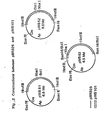
- pWS111 and lpWS112 were produced by linearizing pBD10 DNA with BamHI and ligating it into the single BamHI site of pWS51. Since pWS51 already contained an inactivated Tc gene it was impossible to detect the insertion of pBD10 into pWS51 by insertional inactivation of the Tc gene. However, we were able to distinguish the desired clones from the reclosed vector based on their increased Km r and Cm r . Approximately 10% of all Ap r transformants from this cloning experiment were also Km r and Cm r . Restriction analysis of plasmids from Ap r Km r Cm r transformants revealed the two expected classes of plasmids represented by pWS111 and pWS112 in Figure 3.
- pBD10 was partially digested with HaeIII, a restriction endonuclease with a 4 bp recognition sequence which produces blunt ends.
- the partial digest was performed so that most of the pBD10 molecules were full length or nearly full length in size.
- the pBD10 DNA cut with HaeIII was then ligated to the blunt end molecules of pWS53 and transformed into E. coli HB101.
- E. coli HB101 cells containing pWS5341 exhibit the same limits of Km r and Cm r as E. coli HB101 cells containing pWS201 ( Figure 4) but are less Cm r than cells carrying the E. coli Cm gene present on pBR325.
- E. coli shuttle system offers several advantages over the existing B. subtilis system. They are:
- E. coli The major disadvantage of E. coli is that it is a gram-negative organism and C. glutamicum genes are less likely to be expressed in E. coli without providing a promoter. Nevertheless, there are examples of genes from gram positive organisms being expressed in gram-negative bacteria and the fact that the Cm r gene from B. subtilis does not function in C. glutamicum also indicates that C. glutamicum genes may not necessarily funtion in other gram (+) bacteria.
- pHY416 contains a functional C. glutamicum replicon and a selectable marker (Km r ) which is expressed in C. glutamicum.
- Km r selectable marker
- Two separate cloning strategies were utilized to insert pHY416 into pBR322.
- PBR322 and pHY416 were both cleaved with Hind III, mixed and ligated together, and Ap r transformants were selected.
- the desired clones were easily obtained because insertion of foreign DNA at the HindIII site of pBR322 usually inactivates the Tc gene.
- the Km and Cm genes of pBD10 are expressed in E. coli at sufficient levels to identify clones containing pHY416 by screening transformants for resistance to Km or Cm. Approximately 1% of the Ap r transformants obtained had an A p T s Km r Cm r phenotype.
- pWS201 and PWS202 are simply different orientations of pHY416 inserted into pBR322. It should be noted that a small HindIII fragment (0,3 Kg) derived from pSRl was deleted from pHY416 during the construction of pWS201 and pWS202.
- the second method by which pBR322/pHY416 hybrid plasmids were produced was identical to the first method except the two plasmids were cleaved by BamHI endonuclease instead of HindIII prior to ligation. Selection and screening procedures were the same since insertion of foreign DNA at the BamHI site of pBR322 inactivates the Tc gene.
- the obvious advantage of this procedure is that pHY416 is opened at the BamHI site derived from pBD10 sequences. As a result, it is almost certain that the C.glutamicum replicon is not lost during this construction.
- Table 4 summarizes the results from an experiment in which C. glutamicum strain NRRL No. B-15301 was transformed with several of the E. coli /coryneform shuttle vectors described above.
- the major conclusions and hyptheses suggested by these results are the following:
- C.glutamicum NRRL No. B-15301 is used as the recipient cell in most of the transformation experiments carried out.
- Other strains of Corynebacterium can be used.
- C. glutamicum strain ATCC 13059 can be used.
- Corynebacterium glutamicum NRRL No. B-15301 is a natural rifampicin resistant variant of ATCC 13059 that was isolated by spreading fresh cultures of ATCC 13059 on rifampicin plates containing 1 ⁇ g/ml of the antibiotic.
- Corynebacterium glutamicum NRRL No. B-15301 is routinely grown in LB broth containing 5-10 ⁇ g/ml rifampicin at 30°C. with shaking.
- pHY416 is the chimeric plasmid containing a C. glutamicum origin of replication from plasmid (pSRI) with drug resistant markers from Bacillus subtilis (pBD10). pHY416 was isolated from C. glutamicum by lysozyme-SDS lysis followed by CsCl-EtBr density gradients of the cleared' lysate. The lower density band containing supercoiled plasmid is isolated from the centrifuge tubes by puncturing the side and purified by washing with isopropanol saturated with buffer and precipitating the plasmid DNA with 70% EtOH and finally dialyzing for 24-36 hours against Tris EDTA buffer.
- pSRI C. glutamicum origin of replication from plasmid
- pBD10 Bacillus subtilis
- the final plasmid preparation is stored in Tris-EDTA (10 mM; 1 mM) buffer, pH 7,5 at 1 to 1,5 pg/DNA ⁇ l concentration.
- Reagents used in experiment are prepared as follows: SMMC
- SBK plates - SB plates containing kanamycin at 15 pg/ml concentration SBK plates - SB plates containing kanamycin at 15 pg/ml concentration.
- PEG Solution 50% polyethyleneglycol (M.W. 12.000 M.W. 3.350 or 8.000) dissolved in 0,5 M sorbitol solution.
- Chromosomal DNA was isolated from Corynebacterium glutamicum strain NRRL No. B-15301 and purified on a CsCl gradient. Plasmid pHY82 was isolated by a cleared lysate and purified on CsCl gradients. Twenty ⁇ g of pHY82 was cut with Barn H1 as was chromosomal DNA. Bam H1 restriction was carried out in buffers described in Davis et al. (1980), "Advanced Bacterial Genetics, A Manual for Genetic Engineering,” Cold Spring Harbor Laboratory, New York. Elektrophoresis through a 0,7% agarose gel demonstrated complete cutting of the plasmid and the generation of Barn cut chromosomal DNA fragments with an average size of 4kb.
- Plasmid DNA was isolated from cells grown in 10 mls of LB containing 15 ⁇ g/ml of kanamycin. These plasmids were subjected to Barn Hl restriction and electrophoresed through an 0,7% agarose gel.
- Transformants were checked for complementation of the histidine auxotrophy by replica plating onto minimal media plates containing 15 ⁇ g/ml of kanamycin.
Landscapes
- Genetics & Genomics (AREA)
- Health & Medical Sciences (AREA)
- Engineering & Computer Science (AREA)
- Life Sciences & Earth Sciences (AREA)
- Chemical & Material Sciences (AREA)
- Bioinformatics & Cheminformatics (AREA)
- Organic Chemistry (AREA)
- Biotechnology (AREA)
- General Engineering & Computer Science (AREA)
- Zoology (AREA)
- Wood Science & Technology (AREA)
- Biomedical Technology (AREA)
- Microbiology (AREA)
- Plant Pathology (AREA)
- Molecular Biology (AREA)
- Physics & Mathematics (AREA)
- Biochemistry (AREA)
- General Health & Medical Sciences (AREA)
- Biophysics (AREA)
- Micro-Organisms Or Cultivation Processes Thereof (AREA)
Applications Claiming Priority (1)
| Application Number | Priority Date | Filing Date | Title |
|---|---|---|---|
| US58658784A | 1984-03-06 | 1984-03-06 |
Publications (2)
| Publication Number | Publication Date |
|---|---|
| EP0155594A2 true EP0155594A2 (fr) | 1985-09-25 |
| EP0155594A3 EP0155594A3 (fr) | 1987-10-07 |
Family
ID=24346354
Family Applications (1)
| Application Number | Title | Priority Date | Filing Date |
|---|---|---|---|
| EP85102536A Withdrawn EP0155594A3 (fr) | 1984-03-06 | 1985-03-06 | Plasmides clonés de corynebacterium |
Country Status (1)
| Country | Link |
|---|---|
| EP (1) | EP0155594A3 (fr) |
Cited By (2)
| Publication number | Priority date | Publication date | Assignee | Title |
|---|---|---|---|---|
| WO2004033633A3 (fr) * | 2002-10-04 | 2004-12-23 | Embiosis Pharmaceuticals | Systemes hote/vecteur compatibles conçus pour l'expression de l'adn |
| CN101693901B (zh) * | 2009-10-26 | 2011-10-05 | 江南大学 | 一种大肠杆菌-棒状杆菌穿梭型诱导表达载体pDXW-8及其构建方法 |
Family Cites Families (4)
| Publication number | Priority date | Publication date | Assignee | Title |
|---|---|---|---|---|
| HU184125B (en) * | 1978-11-13 | 1984-07-30 | Gyogyszerkutato Intezet | New genetic process for preparing antibiotic producing micromono spora strains |
| JPS57186492A (en) * | 1981-04-17 | 1982-11-16 | Kyowa Hakko Kogyo Co Ltd | Transformation of bacterium |
| CA1185197A (fr) * | 1981-04-30 | 1985-04-09 | Akira Furuya | Microorganisme sensible au lysozyme |
| DE3372638D1 (en) * | 1982-05-04 | 1987-08-27 | Ajinomoto Kk | Composite plasmid |
-
1985
- 1985-03-06 EP EP85102536A patent/EP0155594A3/fr not_active Withdrawn
Cited By (2)
| Publication number | Priority date | Publication date | Assignee | Title |
|---|---|---|---|---|
| WO2004033633A3 (fr) * | 2002-10-04 | 2004-12-23 | Embiosis Pharmaceuticals | Systemes hote/vecteur compatibles conçus pour l'expression de l'adn |
| CN101693901B (zh) * | 2009-10-26 | 2011-10-05 | 江南大学 | 一种大肠杆菌-棒状杆菌穿梭型诱导表达载体pDXW-8及其构建方法 |
Also Published As
| Publication number | Publication date |
|---|---|
| EP0155594A3 (fr) | 1987-10-07 |
Similar Documents
| Publication | Publication Date | Title |
|---|---|---|
| Simon et al. | A broad host range mobilization system for in vivo genetic engineering: transposon mutagenesis in gram negative bacteria | |
| Olsen et al. | Development of broad-host-range vectors and gene banks: self-cloning of the Pseudomonas aeruginosa PAO chromosome | |
| Yoshihama et al. | Cloning vector system for Corynebacterium glutamicum | |
| CA1188236A (fr) | Plasmides | |
| JP2944094B2 (ja) | 細菌染色体上ヘの目的遺伝子の組み込み方法及び該方法によって得られた細菌 | |
| Matsunaga et al. | Gene transfer in magnetic bacteria: transposon mutagenesis and cloning of genomic DNA fragments required for magnetosome synthesis | |
| Jones et al. | Recombination between short direct repeats in a rec A host | |
| US5380657A (en) | Method for isolation of insertion elements from coryneform bacteria | |
| WO1992014819A1 (fr) | Vecteur de selection positive pour un systeme de clonage de p1 bacteriophage | |
| Selvaraj et al. | Transposon Tn5 specifies streptomycin resistance in Rhizobium spp | |
| US4649119A (en) | Cloning systems for corynebacterium | |
| Cantrell et al. | Identification and characterization of plasmids in hydrogen uptake positive and hydrogen uptake negative strains of Rhizobium japonicum | |
| EP0077196A2 (fr) | Microorganismes produisant des acides aminés aromatiques | |
| US5346818A (en) | Method for the conjugative transfer of mobilizable vectors for E. coli to gram-positive bacteria and vectors suitable for use in such a method | |
| EP0063764A1 (fr) | Procédé pour la transformation d'un microorganisme | |
| US5516669A (en) | Transposon consisting of a fragment of the R plasmid pCxM82B, test vectors containing this transposon, and methods of mutagenesis | |
| CA2083407C (fr) | Microorganismes utilises comme agents de stabilisation des plasmides | |
| EP0213898B1 (fr) | Système hôte-vecteur | |
| EP0187630A2 (fr) | Promoteur de la bêta-galactosidase de streptomyces cloné | |
| Wenko et al. | Isolation and characterization of a gene encoding meso-diaminopimelate dehydrogenase from Glycine max | |
| Julliot et al. | An RP4-prime containing a 285 kb fragment of Rhizobium meliloti pSym megaplasmid: structural characterization and utilization for genetic studies of symbiotic functions controlled by pSym | |
| EP0064680A2 (fr) | Micro-organisme sensible à la lysozyme | |
| JPS62155081A (ja) | 新規微生物およびそれを用いる醗酵法によるビオチンの製造法 | |
| JPH0771500B2 (ja) | グラム陰性細菌の染色体に外来dna物質を挿入する方法 | |
| EP0215388B1 (fr) | Vecteur de plasmide et une méthode de régulation d'expression de gène par utilisation de ce vecteur |
Legal Events
| Date | Code | Title | Description |
|---|---|---|---|
| PUAI | Public reference made under article 153(3) epc to a published international application that has entered the european phase |
Free format text: ORIGINAL CODE: 0009012 |
|
| AK | Designated contracting states |
Designated state(s): DE FR GB IT |
|
| PUAL | Search report despatched |
Free format text: ORIGINAL CODE: 0009013 |
|
| AK | Designated contracting states |
Kind code of ref document: A3 Designated state(s): DE FR GB IT |
|
| STAA | Information on the status of an ep patent application or granted ep patent |
Free format text: STATUS: THE APPLICATION IS DEEMED TO BE WITHDRAWN |
|
| 18D | Application deemed to be withdrawn |
Effective date: 19880408 |
|
| RIN1 | Information on inventor provided before grant (corrected) |
Inventor name: SHANABRUCH, WILLIAM Inventor name: WALKER, GRAHAM Inventor name: YOSHIHAMA, MAKATO Inventor name: AKEDO, MAKATSU Inventor name: RAO, ESWARA Inventor name: SINSKEY, ANTHONY Inventor name: FOLLETTIE, MAXIMILLIAN |