EP0156176A1 - Système de contrôle de la fermentation - Google Patents
Système de contrôle de la fermentation Download PDFInfo
- Publication number
- EP0156176A1 EP0156176A1 EP85102180A EP85102180A EP0156176A1 EP 0156176 A1 EP0156176 A1 EP 0156176A1 EP 85102180 A EP85102180 A EP 85102180A EP 85102180 A EP85102180 A EP 85102180A EP 0156176 A1 EP0156176 A1 EP 0156176A1
- Authority
- EP
- European Patent Office
- Prior art keywords
- control
- digital
- fermentation
- signals
- end effector
- Prior art date
- Legal status (The legal status is an assumption and is not a legal conclusion. Google has not performed a legal analysis and makes no representation as to the accuracy of the status listed.)
- Withdrawn
Links
- 238000000855 fermentation Methods 0.000 title claims abstract description 92
- 230000004151 fermentation Effects 0.000 title claims abstract description 92
- 239000012636 effector Substances 0.000 claims abstract description 57
- 238000000034 method Methods 0.000 claims abstract description 30
- 230000008569 process Effects 0.000 claims abstract description 28
- 244000005700 microbiome Species 0.000 claims abstract description 25
- 230000004044 response Effects 0.000 claims abstract description 24
- 238000006243 chemical reaction Methods 0.000 claims abstract description 14
- 238000013500 data storage Methods 0.000 claims abstract 2
- QVGXLLKOCUKJST-UHFFFAOYSA-N atomic oxygen Chemical compound [O] QVGXLLKOCUKJST-UHFFFAOYSA-N 0.000 claims description 40
- 239000001301 oxygen Substances 0.000 claims description 40
- 229910052760 oxygen Inorganic materials 0.000 claims description 40
- 230000001276 controlling effect Effects 0.000 claims description 14
- 238000013019 agitation Methods 0.000 claims description 13
- 230000001419 dependent effect Effects 0.000 claims description 7
- 239000001963 growth medium Substances 0.000 claims description 5
- 230000001105 regulatory effect Effects 0.000 claims description 5
- 230000003993 interaction Effects 0.000 claims description 3
- 238000005070 sampling Methods 0.000 claims description 2
- 239000002609 medium Substances 0.000 claims 3
- 230000002503 metabolic effect Effects 0.000 claims 2
- 238000004886 process control Methods 0.000 claims 2
- UBAZGMLMVVQSCD-UHFFFAOYSA-N carbon dioxide;molecular oxygen Chemical compound O=O.O=C=O UBAZGMLMVVQSCD-UHFFFAOYSA-N 0.000 claims 1
- 230000003247 decreasing effect Effects 0.000 claims 1
- 230000010399 physical interaction Effects 0.000 claims 1
- 239000007795 chemical reaction product Substances 0.000 abstract description 4
- 238000012544 monitoring process Methods 0.000 abstract description 4
- 239000003570 air Substances 0.000 description 19
- 239000000126 substance Substances 0.000 description 10
- 239000007789 gas Substances 0.000 description 9
- 235000015097 nutrients Nutrition 0.000 description 8
- 238000004891 communication Methods 0.000 description 7
- 238000010586 diagram Methods 0.000 description 7
- 230000015654 memory Effects 0.000 description 7
- 239000000047 product Substances 0.000 description 7
- 239000006260 foam Substances 0.000 description 6
- 230000006870 function Effects 0.000 description 6
- 238000005259 measurement Methods 0.000 description 5
- 239000000523 sample Substances 0.000 description 5
- 239000002253 acid Substances 0.000 description 4
- 239000000498 cooling water Substances 0.000 description 4
- 239000007788 liquid Substances 0.000 description 4
- WQZGKKKJIJFFOK-GASJEMHNSA-N Glucose Natural products OC[C@H]1OC(O)[C@H](O)[C@@H](O)[C@@H]1O WQZGKKKJIJFFOK-GASJEMHNSA-N 0.000 description 3
- 238000004458 analytical method Methods 0.000 description 3
- 239000002518 antifoaming agent Substances 0.000 description 3
- 238000012986 modification Methods 0.000 description 3
- 230000004048 modification Effects 0.000 description 3
- 230000000737 periodic effect Effects 0.000 description 3
- 239000007787 solid Substances 0.000 description 3
- 241000894006 Bacteria Species 0.000 description 2
- CURLTUGMZLYLDI-UHFFFAOYSA-N Carbon dioxide Chemical compound O=C=O CURLTUGMZLYLDI-UHFFFAOYSA-N 0.000 description 2
- 241000195493 Cryptophyta Species 0.000 description 2
- 240000004808 Saccharomyces cerevisiae Species 0.000 description 2
- 230000008859 change Effects 0.000 description 2
- 238000011161 development Methods 0.000 description 2
- 238000004519 manufacturing process Methods 0.000 description 2
- 238000010907 mechanical stirring Methods 0.000 description 2
- 238000003756 stirring Methods 0.000 description 2
- 238000012546 transfer Methods 0.000 description 2
- XLYOFNOQVPJJNP-UHFFFAOYSA-N water Substances O XLYOFNOQVPJJNP-UHFFFAOYSA-N 0.000 description 2
- MYMOFIZGZYHOMD-UHFFFAOYSA-N Dioxygen Chemical compound O=O MYMOFIZGZYHOMD-UHFFFAOYSA-N 0.000 description 1
- 241001467460 Myxogastria Species 0.000 description 1
- 206010028980 Neoplasm Diseases 0.000 description 1
- 241000700605 Viruses Species 0.000 description 1
- 238000003491 array Methods 0.000 description 1
- 230000033228 biological regulation Effects 0.000 description 1
- 238000004364 calculation method Methods 0.000 description 1
- 239000001569 carbon dioxide Substances 0.000 description 1
- 229910002092 carbon dioxide Inorganic materials 0.000 description 1
- 238000001311 chemical methods and process Methods 0.000 description 1
- 239000003795 chemical substances by application Substances 0.000 description 1
- 238000001816 cooling Methods 0.000 description 1
- 238000012937 correction Methods 0.000 description 1
- 230000007423 decrease Effects 0.000 description 1
- 239000008121 dextrose Substances 0.000 description 1
- 229910001882 dioxygen Inorganic materials 0.000 description 1
- 239000006185 dispersion Substances 0.000 description 1
- 238000006073 displacement reaction Methods 0.000 description 1
- 230000000694 effects Effects 0.000 description 1
- 239000008103 glucose Substances 0.000 description 1
- 230000002452 interceptive effect Effects 0.000 description 1
- 238000012423 maintenance Methods 0.000 description 1
- 230000014759 maintenance of location Effects 0.000 description 1
- 239000000463 material Substances 0.000 description 1
- 230000004060 metabolic process Effects 0.000 description 1
- 239000000203 mixture Substances 0.000 description 1
- 238000005457 optimization Methods 0.000 description 1
- 230000008520 organization Effects 0.000 description 1
- 230000010355 oscillation Effects 0.000 description 1
- 238000006213 oxygenation reaction Methods 0.000 description 1
- 238000012827 research and development Methods 0.000 description 1
- 241000894007 species Species 0.000 description 1
- 239000002699 waste material Substances 0.000 description 1
Images



Classifications
-
- C—CHEMISTRY; METALLURGY
- C12—BIOCHEMISTRY; BEER; SPIRITS; WINE; VINEGAR; MICROBIOLOGY; ENZYMOLOGY; MUTATION OR GENETIC ENGINEERING
- C12M—APPARATUS FOR ENZYMOLOGY OR MICROBIOLOGY; APPARATUS FOR CULTURING MICROORGANISMS FOR PRODUCING BIOMASS, FOR GROWING CELLS OR FOR OBTAINING FERMENTATION OR METABOLIC PRODUCTS, i.e. BIOREACTORS OR FERMENTERS
- C12M41/00—Means for regulation, monitoring, measurement or control, e.g. flow regulation
- C12M41/48—Automatic or computerized control
Definitions
- This invention relates to control of fermentation systems. More particularly, it relates to systems for selectively controlling a plurality of fermenters from a master control unit, or controlling each fermenter unit locally to regulate individually and selectively a multiplicity of moduies or tasks for eacn operating variaole of such fermention systems.
- the energy input quantities, both chemical ana physical, to each unit are controlled independently either locally or from a master control unit to achieve optimum fermentation conditions.
- each of the plurality of fermentation systems, operating under widely varying reaction conditions may be operated to produce any selected microorganism under substantially differing, or_ substantially identical process reaction conditions.
- Such a plurality of fermentation processes may also be entirely unrelated to each other, but still are controlled either from the central control unit or at each local control unit.
- the fermentation control system of the present invention is particularly useful in developing fermentation conditions for research and development of recombinant microorganisms, such as DNA or RNA, or the like, to improve and optimize yield in a manufacturing process, or for full commercial proauction of such micro-organic species on a batch basis.
- the rate of addition of energy to the fermentation culture or "broth" includes both chemical and physical inputs.
- Chemical energy is supplied by oxygen or air to maintain dissolved oxygen at a proper level; addition of acid or base optimizes the pH of the fermenting broth; antifoam agents are added to control foam; and where not initially sufficient, nutrients, such as dextrose or sugar, are added.
- Physical energy variables that are controlled in a fermentation process include mechanical stirring or agitation of the mixture to improve oxygen solution and maintain uniformity of growth conditions throughout the culture; temperature of the broth is controlled by heat input or removal.
- Other measured and controlled variables suitable for analysis and control of the progress of the fermentation process include sampling fermentation off-gases, primarily oxygen and carbon dioxide, and chemical or biological examination of the growing microorgansism and their waste or by- prooucts in the growth media.
- loop controllers for each input variable.
- These generally take the form of electrical analog circuits in which an electrical signal either current or voltage is generated by a transducer measuring a variable parameter, or conaition, such as temperature, dissolved oxygen, or the like. Then, in accordance with any departure from such measured variable from a desired value, an end effector, or final control element, such as a valve is selectively driven in an amount and to an extent to return the measure variable to the set value.
- Such loop controllers also require means to generate an electrical feedback signal to indicate the actual amount and extent of the corrective movement of the input device, or effector.
- Two measurements are used to prevent undue oscillation of the measured variable about a selected value, these are, (1) the setpoint which is normally a range of acceptable values (control band) above and below the setpoint, and (2) the effector drive signal, which is derived from the difference between the setpoint and the measured condition of the variable being controlled.
- the derived signal is a proportional, integral and derivative function of such difference.
- loop controllers are regulated independently and operate to maintain the input energy or quantity (heat), so that the measured variable (temperature) is within the control band.
- heat the input energy or quantity
- biological growth processes are substantially unpredictable and seldom linear.
- the demand for physical and chemical inputs to maintain optimum growth conditions vary widely and frequently at differing rates over different periods of time. Further modification of any one input may modify the need for other inputs.
- the control modes for different end effectors are quite dissimilar; for example, the amount of correction applied to one end effector in response to either the absolute change or the rate of change in the measured variable from a setpoint or length of time the measured variable has been away from the setpoint are closely related to interaction of other end effectors.
- Proposals have been made to provide overall central control of a plurality of process variables by analyzing resulting off-gas, by-proaucts or products of the process. Such analyses may include cnromatographic examination of the off-gas, or mass spectrometer systems to detect and measure the concentration of various gases in the off-gas stream being generated by microorganisms being reproduced by fermentation..It has also been proposed to use such measurements to regulate the setpoint and control band of such individual process variables. In accordance with such known loop controllers these controllers typically provided for proportional, rate and reset functions, using proportional - integral - derivatives or on-off control algorithms. Such algorithms permit manual adjustment of the setpoint and control band in each control loop to attempt to achieve desired reaction rates in the fermentation process.
- each measured variable depends upon a plurality of interrelated input quantities.
- dissolved oxygen in the culture is primarily dependent upon the rate oxygen is taken up by the reproducing organisms and the rate of oxygen addition to the culture in the form of dissolved oxygen (DO).
- DO addition is dependent upon the rate of flow of either oxygen gas or air and the rate at which such supplied oxygen goes into solution. The latter is in turn dependent upon agitation of the culture liquid and the temperature of the liquid.
- each of such variables is rate and, reset. dependent and affected by "upset” imposed by abrupt changes in growth rate or by external manipulation of inputs, either manual or automatic.
- a fermentation control system in which a minicomputer or other central computer is capable of direct digital control of the operation of a plurality of fermentation vessels each including an independently operable local direct aigital controller operating a plurality of control modules or tasks to regulate the process variables either singly or jointly in each fermentation vessel.
- Such plurality of fermentation processes under supervision of the master control, or minicomputer, may be similar to, or wholly dissimilar from, each other.
- a plurality of control task modules are established in an Erasable, Programmable Read Only Memory (EPROM) unit and/or a Random Access Memory (RAM) unit to control a local computer in the form of a microprocessor circuit.
- EPROM Erasable, Programmable Read Only Memory
- RAM Random Access Memory
- Such microprocessor circuit selectively controls on a heirarchical basis, each task module measuring circuits to determine separate process variables, including but not limited to nutrient addition, pH, foam level, temperature, agitation, air and oxygen.
- the microprocessor interconnected to each task module operates one or more of a plurality of control effectors, or input control elements to modify the quantity of energy supplied to each system.
- such end effector task modules are controlled by one or more measuring devices to modify the input quantity in an amount and to an extent to maintain singly or jointly each measured process variable within a predetermined set of limits or range of values.
- the measured quantities and control variables are operated ' through a multiplex bus" which on a sequential basis converts each measured signal from analog to digital values and as required converts digital input values to the control units to the required power signals whether continuous or semi- continuous A.C., D.C., or modulated pulses
- a single microcomputer operates on a time-share basis to control all task modules, including recording, data display, alarms, operator controlled keyboard and master control intervention. Further, in controlling the primary tasks of continuously and automatically regulating the multiple end effectors in response to input signals from the respective measuring circuits, the system provides for manual over-ride for the end effectors without introducing discontinuous control signals from a feedback control algorithm. Accordingly, the plurality of energy inputs to the fermentation system, either physical or chemical, are supplied in an amount and to an extent to maintain a setpoint for each measured variable in response to any desired combination of energy inputs, whether generated automatically in a pre-programmed sequence from the ROM and EPROM or manually generated by operator intervention.
- Such intervention may be generated either locally or at a master controller, such as a minicomputer.
- Setting of values for the setpoints and control band, as well as overall interaction of a plurality of variables to control operation of the fermentation system, is preferably through a single central minicomputer which may manually or automatically adjust such setpoints and control bands during any portion of the fermentation process.
- the central computer may regulate the process in response to manual input from an operator keyboard. This acts to provide manual override of the preset values. Such override without process upset is accomplished with direct digital control because there is no feedback signal from movement of the end effector.
- the local, programmable microcomputer then controls each control task module for each process variable during operation of the fermenter vessel.
- the central computer not only may establish initial setpoints and control band values but also generates new values for either or both in response to measured product or output values from the individual fermentation vessels.
- measured product values are used continuously to update inputs for calculation by algorithms to generate new control limits for the end effector signals.
- signals are transmitted by a common bus to regulate the energy inputs for the individual vessel controller.
- the master controller updated information on a demand basis, for each task module under local control at each individual fermentation vessel.
- the individual fermentation units are sequentially and continuously controlled locally on a real-time basis.
- the present invention thereby provides economy of control units, including investment in equipment to measure and control the multiple inputs affecting production of an end product.
- control may be applied through sophisticated programs based on algorithms, either developed on the basis of the end product or selectively developed during progress of the fermentation run.
- Such programs may be selectively used in any of the individual vessel control systems without modification of the control circuits of the microcomputer for each individual fermentation vessel.
- the unitary control system provided by the present invention permits a multiplicity of individual fermentation processes to be monitored and controlled from a single central control unit, or the process may be completely controlled by the local control unit.
- FIG. 1 there is shown an overall schematic representation of the fermentation control system embodying the present invention.
- a plurality of individual or batch fermentation process control systems are indicated generally as 10, 11, 12 and 13.
- Each batch fermentation vessel, such as 15, is operatea under the control of a local direct digital controller such as 10.
- Controller 10 alone provides a plurality of measuring circuits and effector control circuits, each of which locally controls one or more of a multiplicity of interrelated input variables to grow selected microorganisms by fermentation in a culture broth 14 in vessel 15.
- Master control 20 provides central direct digital control allowing intervention in any - selected task for each of such multiplicity of measured input and controlled output variables at each of the individual batch fermentation process controllers 10,11,12,13.
- controller 20 may be a minicomputer arranged to operate through a ⁇ communication link, such as bus 17 or line 16 to a Serial Communications Interface 28 controlled by Serial Communications Task 124 to initially set limits for each control task supervised by local controller 10. This includes each individual variable to be measured and each output controlled to operate an end effector to modulate the energy supplied to the fermenter such as agitation rate, oxygen, air supply, etc. carried out in each fermentation vessel 15.
- off-products of vessel 15 may be sampled by various forms of sophisticated end-product analyzing systems.
- line 18 may introduce off-gas from vessel 15 into a multistream gas chromatograph 25.
- samples of liquid or broth 14 may be analyzed, as by a mass spectrometer or other liquid or solids monitoring : systems.
- the purpose of such product analysis equipment is to provide process alarms or to assist in developing control algorithms to modify control band limits through the master controller in accordance with widely diverse operating conditions in the fementation process as it proceeds.
- Such operating conditions of course range from a highly dilute or dispersed initial state for microorganisms in culture 14 to high density conditions at the end of each run.
- microorganisms is intended to comprise bacteria, protozoa, yeast, viruses and algae, including slime molds and cells including helio cells or neoplasms.
- Fig. 2 represents one of the fermentation vessels 15 and illustrates the essential end effector and sensor tasks operating through control system 10 to control each. individual, energy input to the fermentation vessel and to measure the resultant changes of state of culture 14, as the desired microorganisms grow.
- the energy inputs to promote growth of desired microorganisms in the broth or culture are: nutrient, (e.g. glucose), mechanical stirring or agitation, oxygen, air, chemicals for foam control, pH control chemicals (acid or base), and heat, added or subtracted.
- nutrient e.g. glucose
- mechanical stirring or agitation oxygen
- air air
- chemicals for foam control e.g. pH
- pH control chemicals e.g. base
- heat added or subtracted.
- Each of such energy input control systems includes means for measuring at least one condition affected by such energy input whether applied singly or jointly.
- Fig. 2 the significant control variables including measured values and end effector controls for energy inputs are illustrated in Fig. 2.
- these are indicated as the six control tasks which require hardware implementation to measure and control input quantities; these are air flow, oxygen flow, agitator speed, foam, pH and temperature. Since these quantities are basic to all fermentation processes, they are the most readily measured.
- other values, such as dissolved oxygen, nutrient input and off-gas
- the temperature system includes measuring the temperature of culture 14 by resistive thermodetector (RTD) 33.
- RTD resistive thermodetector
- cooling water from line 34 is supplied through control valve 40 to heat exchanger coil 30 in tank 15.
- the cooling water may also be heated by auxiliary heater, electrical coil 31, to maintain a given temperature.
- Such water is recirculated from heat exchanger 32 to coil 30 by pump 36 through line 27.
- the temperature of cooling water circulated to tank heat exchanger coil 30, is measured by another RTD 35, and current flow through electrical heater 31 in heat exchanger 32 is measured by ammeter 37. Water passing through heat exchanger 32 either flows out through return line 29 or is recirculated by pump 36.
- each detected electrical signal representative of the temperature such as that at RTD 35 is used in an electrical feedback circuit to modify directly the end effector, such as a valve 40 in cooling water line 34 to return the temperature to a set value.
- current to heater 31 and RTD 33 would be arranged in a similar control loop for direct control of heater 31.
- the electrical signals from temperature and current sensing elements 33, 35 and 37, as indicated in Fig. 3 are each continuously and periodically sampled through analog input/multiplex unit (MUX) 39 and transmitted by analog to digital converter (ADC) 38 over input/output (I/O) bus 42 through bus controller 41 to microcomputer 45 over high speed microcomputer bus 44.
- MUX analog input/multiplex unit
- ADC analog to digital converter
- I/O input/output
- Such input values are compared with setpoint and range values stored either in random access memory (RAM) 46 or in the erasable programmable read-only memory (EPROM) 47, both also connected to bus 44.
- RAM random access memory
- EPROM erasable programmable read-only memory
- Such values may, of course, be either fixed, time- varied or pre-programmed.
- Control signals representing the extent of variations of the measured values from the setpoint are processed by microcomputer 45 and correcting signals are in turn transmitted over input/output bus 42 through bus controller 41 to a plurality of end effector controllers, indicated generally as 48.
- chiller valve drive 43 which preferably actuates a step motor drive to open or close valve 40 in line 34 in discrete steps and solid state relay 49 which regulates current input to heater 31.
- Chiller valve drive 43 is actuated through stepper motor control 36 (Fig. 3) to supply electrical pulses.
- Heater 31 is supplied with power through time proportional controller 32 and solid state relay 49. Controller 32 varies the average power applied to resistance heater 31.
- microprocessor bus 44 provides a highspeed (less than 10 microseconds) communication link between the stored data, and programs in EPROM 47, and RAM 46 with local microcomputer 45.
- These three units together embody the Executive Program as indicated in Figs. 5 and 6 for regulating each of the multiple application program tasks to control and monitor each fermenter system.
- the read-only memory RAM 46 stores each variable that is measured and the status of each end effector drive unit. It also stores the operator selectable limit values for the individual measured variables for display and actuation of indicators when the limits of such values are exceeded, including alarms or other indicators.
- the control programs including algorithms for calcuation of restorative signals to each of the end effectors, based upon the displacement of the measured value from the preset value are stored in the programmable memory unit EPROM 47.
- the fermenter control includes a two-level hierarchical system in which a plurality of micro-processer based local controllers, such as 16 embody all control functions that require sequential periodic, high duty cycle, measurements and real-time responses to correct system energy inputs. Each local controller is therefore capable of operating fully independent of the central computer.
- the minicomputer central unit 20 is able to handle less frequent but more sophisticated functions. These may include data logging and periodic off-gas or product measurements for supervisory control of the individual fermentators. Such supervisory control programs may be individually tailored for a given fermentation process. The output data from such programs, executing on minicomputer 20, may control any individual or a selected plurality of local microcomputer, fermenter control systems 10, 11, 12 and 13.
- central station control 20 and local microprocessor control 10 may transfer operational data, control parameters, including range and setpoints, to manually set or adjust values and if desired, to set up on-line optimization routines.
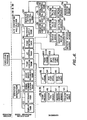
- the rate of growth of microorganisms may be detected by their uptake of oxygen which varies widely from beginning to end of a batch run. In accordance with the present invention such wide variations. are accomodated by close. control of the temperature to within less than 0.1 degree Centrigrade. Temperature control system mooule or task 23, as above described provides such a local control and is essential to maintain a more direct control for growth which is provided by the Dissolved Oxygen (DO) Control System or Task 60. As indicated in Fig. 6, DO Task 60 controls Air Flow Control System or Task 76, Oxygen Flow Control System or Task 66 and Agitator Control System or Task 51 in response to Dissolved Oxygen Probe 78, located in tank 15.
- DO Dissolved Oxygen
- the method of maintaining the dissolved oxygen content of culture 14 is preferably by using each of the control systems in cascade.
- the stir rate first increases to maintain full dispersion of available oxygen throughout tank 14 through Agitator Control System 51.
- agitator or stirrer 50 is driven by motor 52; the energy input is detected by tachometer 54 and ammeter 57, respectively measuring agitator speed and current flow to motor 52.
- tachometer 54 operates through variable frequency motor control 26, and . current flow is detected through. Analog Input MUX 39. Both quantities are used to modulate power to A.C. motor 52, also through control 26.
- Air Flow Control Task 76 Upon agitation reaching a given, or desired maximum rate, the dissolved oxygen control operates through Air Flow Control Task 76 and Air Flow Control Valve 79, to begin or increase the mass flow rate of air through line 65 into broth 14.
- a local control loop in air flow control task 76 measures such flow through anomometer 87.
- the anomometer signal may be compared with flow from the air supply (not shown) through line 77, under control of valve 79. Regulation of the opening of valve 79, also step-motor driven, is in response to digital signals received from control line 84.
- the measured value for air flow is transmitted as an electrical signal over line 82.
- flow detector 87 is in the form of an anomometer, which includes an internal hot wire resistor in a bridge circuit (not shown) to generate the desirea electrical signal.
- the oxygen flow control system is substantially similar to the air flow control system. As indicated, oxygen flows from a source (not shown) through line 67 under control of valve 69 and anemometer 68 to line 65. Oxygen flow through anemometer 68 is measured and the signal is transmitted by line 72 to signal converters 38 and 39. It also provides a feed back signal to 0 2 Valve Drive 73 through control line 125 for valve 69 which also is preferably step motor driven by Step Motor Controller 36 ( Figure 3).
- dissolved oxygen in culture 14 is monitored by DO probe 78 until oxygen flow is increased to a predetermined value or maximum. At that point, the air supply is reduced to common supply line 65 so that oxygen partial pressure of the culture medium may attain a higher value.
- the dissolved oxygen system algorithm operates as microbe metabolism increases first to increase stir rate to maximum, then increases air sparging to a maximum flow, then increases oxygen flow to a maximum and then decreases air flow to increase oxygen partial pressure in tank 15 to maintain a desired DO content as the rate of growth increases.
- the pH Control System, or Task, 86 regulates supply of acid or base from supply lines 91 or 92, respectively, in response to measured values transmitted from pH -detector 93 in culture 14 by line 90 to ADC unit 38 and MUX unit 39.
- Pumps 94, and 95 control acid and base addition, respectively.
- the power: for operating pumps 94 and 95 is supplied through lines 97 and 98, respectively, from Optically Isolated Discrete I/O unit 104.
- Anti-Foam Control System or task 96 includes a foam level probe or sensor 100 at the upper end of vessel 15 connected by line 101 to signal input units 38 and 39. Anti-foam solution is controlled by pump 102 from supply line 99. Power for pump 102 is supplied through line 103 by Optically Isolated Discrete I/O unit 104.
- the Nutrient Supply Task 127 generally provides nutrient to culture 14 in the form of a dextrose solution. It is supplied through line 106 and pump 108 to tank 15. Desirably pump 108 is driven by motor 110 through power line 112 either continuously at variable speeds as through Variable Frequency Motor Control 26 or intermittently through Optically Isolated Discrete I/O unit 104. In general, the nutrient flow setpoint is controlled as a function of both pH and DO.
- each of the energy supply units is controlled by direct digital control by microcomputer unit 45
- the setpoint, and the range of values above and below the setpoint defining the control band, as well as the other control algorithm coefficients may each be selectively fixed over a wide range of values by Keyboard Task and Display Task units, as exemplified by local keyboard unit 123 and alpha-numeric display unit 122. Alternatively they may be fixed by master controller 20 operating through local Serial Communications Task unit 28.
- the DO and pH controls employ feedback algorithms using control bands and proportionality constants so adjusted in setting up each fermentation run.
- Such values are stored in EPROM 47 and are compared by microcomputer 45 with stored digital signals in RAM 46 generated by any form of analog signal converted to digital form or any direct digital signal produced by one of the measuring probes or devices.
- Correspondingly corrective digital signals actuate power bus 42 through controller 41 to transmit needed power signals to operate the end effector units 29, 32, 36 and 104 to operate the valves, pumps, motors, heaters, etc. to produce the required energy inputs by digital or analog movement of any electrical, hydraulic or pneumatic final control elements.
- the present invention provides optimum use of sophisticated and expensive measuring and control devices, particularly ADC unit 38.and analog/MUX unit 39 and the power conversion provided by the actuator units of End Effector Controller 48.
- ADC unit 38.and analog/MUX unit 39 and the power conversion provided by the actuator units of End Effector Controller 48.
- minicomputer 20 By heirarchical control of the microcomputer units 10 in each fermenter system by minicomputer 20, it is possible to use inexpensive computer units, such as an Intel 8080, to operate each local direct digital controller.
- complex signals involving comparison of input and power signals, dependent upon fixed or progressively changing computer algorithms may be generated, programmed and/or stored for operation of any of a multiplicity of system parameters or variables in any of a plurality of local fermenter systems.
- Such algorithms may be applied either jointly or wholly independently of each other to any fermenter.
- the degree of complexity of each individual control system may be altered without interfering with other control parameters in the same fermenter or other fermenters.
- the problem of continuous monitoring and control of the temperature agitation and heat tasks, as well as the intermittent tasks, are sequentially sampled and powered on a continuously repeated basis by microprocessor 45.
- Such information is transmitted to and from microcomputer via input/output bus 42 as above described.
- Bus 42 is a relatively slow bus operating on the order of one signal pulse per 1, to 100 milliseconds. With such pulse intervals the entire set of tasks are monitored in from about one to five seconds and corrective signals generated.
- the detected signals from each task are processed and corrective signals generated only when a programmed or external event occurs or a specific time interval elapses. Upon occurrence of such an event or time interval, the executive program executes the appropriate application task until the next such event or time interval occurs. In this way each task is controlled by the microcomputer with direct digital control.
- a battery back-up with suitable watchdog timer and alarm systems are arranged to supply power to microprocessor control system 10, if conventional power is lost.
- the heirarchic control arrangement for each fermenter system by control computer 20 and local control 10 may be such that regular sequential signals are fed back to unit 20 by local unit 10. Failure of such signals to occur may be used to indicate failure of unit 10 to central unit 20.
- Watch Dog Timer shuts off power to the heaters, agitator and stepper motors if the Executive Program does not generate a reset pulse every 50 milliseconds.
- This unit also provides Power Battery Back-up to insure retention of setpoints, control coefficients and other parameters in the local controller in the event of power failure. It also activates an Industrial Monitor Alarm through line 114 and control unit 104.
- a Strip Chart Recorder Task is through unit 121 which has its input desirably interconnected to Input/Output Bus 42.
- the strip chart is driven through Recorder Drive 126 and line 124.
- intervention by actuation of display and keyboard tasks by units 122 and 123 is accorded priority in the programming of sequential tasks controlled by the Executive Program operating through microcomputer 45.
- the Serial Communications task is given priority by the Executive Program over all other tasks.
- each inserted value must be within preset limits established before each run. Accordingly, each inserted value is first compared with such preset range of values stored in RAM 46 before end effector pulses are generated by microprocessor 45 and transmitted by I/O Bus Controller 41 to power bus 42.
- Fig. 4 indicates the general forms of control that can be exercised with the minicomputer or central control system 20 and the local or microcomputer controlled system 10.
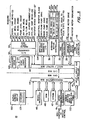
- Fig. 5 is a schematic diagram of the system logic and implementation of such logic, as more fully shown in Fig. 6.
Landscapes
- Chemical & Material Sciences (AREA)
- Engineering & Computer Science (AREA)
- Analytical Chemistry (AREA)
- Organic Chemistry (AREA)
- Health & Medical Sciences (AREA)
- Life Sciences & Earth Sciences (AREA)
- Bioinformatics & Cheminformatics (AREA)
- Zoology (AREA)
- Wood Science & Technology (AREA)
- Sustainable Development (AREA)
- Microbiology (AREA)
- Biotechnology (AREA)
- Biomedical Technology (AREA)
- Biochemistry (AREA)
- General Engineering & Computer Science (AREA)
- General Health & Medical Sciences (AREA)
- Genetics & Genomics (AREA)
- Computer Hardware Design (AREA)
- Apparatus Associated With Microorganisms And Enzymes (AREA)
- Processing Of Solid Wastes (AREA)
Applications Claiming Priority (2)
| Application Number | Priority Date | Filing Date | Title |
|---|---|---|---|
| US58446384A | 1984-02-28 | 1984-02-28 | |
| US584463 | 1990-09-18 |
Publications (1)
| Publication Number | Publication Date |
|---|---|
| EP0156176A1 true EP0156176A1 (fr) | 1985-10-02 |
Family
ID=24337425
Family Applications (1)
| Application Number | Title | Priority Date | Filing Date |
|---|---|---|---|
| EP85102180A Withdrawn EP0156176A1 (fr) | 1984-02-28 | 1985-02-27 | Système de contrôle de la fermentation |
Country Status (5)
| Country | Link |
|---|---|
| EP (1) | EP0156176A1 (fr) |
| JP (1) | JPS60203180A (fr) |
| CA (1) | CA1232050A (fr) |
| DK (1) | DK90985A (fr) |
| NO (1) | NO850204L (fr) |
Cited By (22)
| Publication number | Priority date | Publication date | Assignee | Title |
|---|---|---|---|---|
| DE3834199A1 (de) * | 1987-10-09 | 1989-04-27 | Instron Corp | Schaltung zur interaktiven regelung von mehreren regelelementen |
| GB2217478A (en) * | 1988-04-21 | 1989-10-25 | Hypromat France | Controlling car washing stations |
| FR2635587A1 (fr) * | 1988-08-19 | 1990-02-23 | Mandel William | Appareil et procede pour des mesures de densite optique de biomasses |
| EP0378507A1 (fr) * | 1989-01-12 | 1990-07-18 | Mordechai Zisser | Procédé de préparation d'aliments pour bétail et volaille |
| GB2189050B (en) * | 1986-04-09 | 1990-12-05 | Toshiba Machine Co Ltd | Temperature indicating control apparatus having data storing function |
| DE4037325A1 (de) * | 1990-11-23 | 1992-05-27 | Karl Mueller U Co Kg | Verfahren zur erzeugung von zellmasse und/oder fermentierungsprodukten unter sterilen bedingungen sowie vorrichtung zur durchfuehrung des verfahrens |
| GB2319357A (en) * | 1996-11-08 | 1998-05-20 | Samsung Heavy Ind | Heavy construction machine with distributed control |
| ES2116922A1 (es) * | 1996-07-24 | 1998-07-16 | Principado De Asturias Conseje | Sistema de reactores-fermentadores para llevar a cabo la seleccion de microorganismos. levadura saccharomyces cerevisiae seleccionada. |
| US6402941B1 (en) * | 2000-02-07 | 2002-06-11 | Wastewater Biological Solutions, Corp | Apparatus for biological treatment of environmental contaminants and waste |
| EP1184765A3 (fr) * | 2000-08-09 | 2003-04-16 | Asahi Environmental System Ltd. | Appareil pour effectuer un processus de fermentation |
| WO2004044183A3 (fr) * | 2002-11-12 | 2004-07-29 | Akzo Nobel Nv | Nouveaux procedes d'alimentation pour la fermentation |
| FR2871236A1 (fr) * | 2004-06-02 | 2005-12-09 | Gervais Danone Sa | Procede de controle d'un processus microbiologique a partir des derivees temporelles successives des variables d'etat |
| WO2006086489A1 (fr) * | 2005-02-10 | 2006-08-17 | Broadley-James Corporation | Dispositif de surveillance de bio-reacteur integre et systeme de controle associe |
| US7435581B2 (en) | 2003-11-26 | 2008-10-14 | Broadley-James Corporation | Integrated bio-reactor monitor and control system |
| US8633820B2 (en) | 2007-04-10 | 2014-01-21 | Delaval Holding Ab | System and method for monitoring ensilage of fodder |
| US9745547B2 (en) | 2011-10-10 | 2017-08-29 | Dasgip Information And Technology Gmbh | Method for controlled operation of a biotechnological apparatus and bioreactor system |
| CN108315251A (zh) * | 2018-03-22 | 2018-07-24 | 兰州大学 | 一种菌种发酵控制系统 |
| WO2019210405A1 (fr) * | 2018-05-01 | 2019-11-07 | Centre For Commercialization Of Regenerative Medicine | Prédiction de production de produit de bioréacteur sur la base d'une analyse indépendante ou multivariée de multiples attributs physiques |
| RU2718731C2 (ru) * | 2016-01-22 | 2020-04-14 | Квантури Ой | Устройство для управления ферментацией натурального материала |
| CN114423504A (zh) * | 2019-07-12 | 2022-04-29 | 巴克曼实验室国际公司 | 优化发酵过程的系统和方法 |
| CN116009602A (zh) * | 2022-12-30 | 2023-04-25 | 浙江金仪盛世生物工程有限公司 | 级联式溶氧控制方法、装置及服务器 |
| CN116676182A (zh) * | 2023-07-13 | 2023-09-01 | 安及义实业(上海)有限公司 | 生物反应器或发酵罐的全自动消泡控制装置及方法 |
Families Citing this family (4)
| Publication number | Priority date | Publication date | Assignee | Title |
|---|---|---|---|---|
| KR950010400B1 (ko) * | 1990-08-16 | 1995-09-16 | 삼성전자주식회사 | 김치냉장고의 발효 및 저장제어방법 |
| JP2622024B2 (ja) * | 1990-10-09 | 1997-06-18 | 東洋エンジニアリング株式会社 | 発酵槽の制御方法 |
| CN104003767B (zh) * | 2014-06-11 | 2022-12-23 | 中国科学院城市环境研究所 | 一种具有快速干燥能力的餐厨垃圾好氧发酵设备 |
| JP6554364B2 (ja) * | 2015-08-28 | 2019-07-31 | 株式会社神鋼環境ソリューション | 藻類培養方法及びパラミロン製造設備 |
Citations (3)
| Publication number | Priority date | Publication date | Assignee | Title |
|---|---|---|---|---|
| US3926737A (en) * | 1972-05-10 | 1975-12-16 | New Brunswick Scientific Co | Method and apparatus for control of biochemical processes |
| US4001557A (en) * | 1975-10-14 | 1977-01-04 | The United States Of America As Represented By The United States Energy Research And Development Administration | Stored program digital process controller |
| GB2094024A (en) * | 1981-02-27 | 1982-09-08 | New Brunswick Scientific Co | Modules and apparatuses for monitoring and control of variables in biochemical processes |
-
1985
- 1985-01-03 CA CA000471455A patent/CA1232050A/fr not_active Expired
- 1985-01-17 NO NO850204A patent/NO850204L/no unknown
- 1985-02-27 EP EP85102180A patent/EP0156176A1/fr not_active Withdrawn
- 1985-02-27 DK DK90985A patent/DK90985A/da not_active Application Discontinuation
- 1985-02-28 JP JP3776985A patent/JPS60203180A/ja active Pending
Patent Citations (3)
| Publication number | Priority date | Publication date | Assignee | Title |
|---|---|---|---|---|
| US3926737A (en) * | 1972-05-10 | 1975-12-16 | New Brunswick Scientific Co | Method and apparatus for control of biochemical processes |
| US4001557A (en) * | 1975-10-14 | 1977-01-04 | The United States Of America As Represented By The United States Energy Research And Development Administration | Stored program digital process controller |
| GB2094024A (en) * | 1981-02-27 | 1982-09-08 | New Brunswick Scientific Co | Modules and apparatuses for monitoring and control of variables in biochemical processes |
Non-Patent Citations (1)
| Title |
|---|
| BIOTECH 83, 4th-6th May 1983, pages 295-306, London, GB; TOMOAKI SUMITANI et al.: "Automatic control of fermentor using microcomputer" * |
Cited By (42)
| Publication number | Priority date | Publication date | Assignee | Title |
|---|---|---|---|---|
| GB2189050B (en) * | 1986-04-09 | 1990-12-05 | Toshiba Machine Co Ltd | Temperature indicating control apparatus having data storing function |
| GB2211000A (en) * | 1987-10-09 | 1989-06-21 | Instron Corp | Control circuitry |
| DE3834199A1 (de) * | 1987-10-09 | 1989-04-27 | Instron Corp | Schaltung zur interaktiven regelung von mehreren regelelementen |
| GB2211000B (en) * | 1987-10-09 | 1992-01-15 | Instron Corp | Control circuitry |
| GB2217478B (en) * | 1988-04-21 | 1992-12-23 | Hypromat France | Method and apparatus of managing and controlling a plurality of washing stations |
| GB2217478A (en) * | 1988-04-21 | 1989-10-25 | Hypromat France | Controlling car washing stations |
| FR2635587A1 (fr) * | 1988-08-19 | 1990-02-23 | Mandel William | Appareil et procede pour des mesures de densite optique de biomasses |
| EP0378507A1 (fr) * | 1989-01-12 | 1990-07-18 | Mordechai Zisser | Procédé de préparation d'aliments pour bétail et volaille |
| DE4037325A1 (de) * | 1990-11-23 | 1992-05-27 | Karl Mueller U Co Kg | Verfahren zur erzeugung von zellmasse und/oder fermentierungsprodukten unter sterilen bedingungen sowie vorrichtung zur durchfuehrung des verfahrens |
| US5981260A (en) * | 1990-11-23 | 1999-11-09 | Metz; Michael | Process for the production of cell mass and/or fermentation products under sterile conditions |
| ES2116922A1 (es) * | 1996-07-24 | 1998-07-16 | Principado De Asturias Conseje | Sistema de reactores-fermentadores para llevar a cabo la seleccion de microorganismos. levadura saccharomyces cerevisiae seleccionada. |
| GB2319357A (en) * | 1996-11-08 | 1998-05-20 | Samsung Heavy Ind | Heavy construction machine with distributed control |
| US6402941B1 (en) * | 2000-02-07 | 2002-06-11 | Wastewater Biological Solutions, Corp | Apparatus for biological treatment of environmental contaminants and waste |
| EP1184765A3 (fr) * | 2000-08-09 | 2003-04-16 | Asahi Environmental System Ltd. | Appareil pour effectuer un processus de fermentation |
| WO2004044183A3 (fr) * | 2002-11-12 | 2004-07-29 | Akzo Nobel Nv | Nouveaux procedes d'alimentation pour la fermentation |
| US7521203B2 (en) | 2002-11-12 | 2009-04-21 | N.V. Organon | Feeding processes for fermentation |
| US7635586B2 (en) | 2003-11-26 | 2009-12-22 | Broadley-James Corporation | Integrated bio-reactor monitor and control system |
| US8753871B2 (en) | 2003-11-26 | 2014-06-17 | Broadley-James Corporation | Integrated bio-reactor monitor and control system |
| US7435581B2 (en) | 2003-11-26 | 2008-10-14 | Broadley-James Corporation | Integrated bio-reactor monitor and control system |
| US9405300B2 (en) | 2003-11-26 | 2016-08-02 | Broadley-James Corporation | Integrated bio-reactor monitor and control system |
| US9353347B2 (en) | 2003-11-26 | 2016-05-31 | Broadley-James Corporation | Integrated bio-reactor monitor and control system |
| US7989199B2 (en) | 2003-11-26 | 2011-08-02 | Broadley-James Corporation | Integrated bio-reactor monitor and control system |
| US8021871B2 (en) | 2003-11-26 | 2011-09-20 | Broadley-James Corporation | Integrated bio-reactor monitor and control system |
| US8440452B2 (en) | 2003-11-26 | 2013-05-14 | Broadley-James Corporation | Integrated bio-reactor monitor and control system |
| US8615324B2 (en) | 2003-11-26 | 2013-12-24 | Broadley-James Corporation | Integrated bio-reactor monitor and control system |
| US9982225B2 (en) | 2003-11-26 | 2018-05-29 | Broadley-James Corporation | Integrated bio-reactor monitor and control system |
| FR2871236A1 (fr) * | 2004-06-02 | 2005-12-09 | Gervais Danone Sa | Procede de controle d'un processus microbiologique a partir des derivees temporelles successives des variables d'etat |
| WO2006000675A1 (fr) * | 2004-06-02 | 2006-01-05 | Compagnie Gervais Danone | Procede de controle d'un processus microbiologique à partir des derivees temporelles successives des variables d'etat |
| WO2006086489A1 (fr) * | 2005-02-10 | 2006-08-17 | Broadley-James Corporation | Dispositif de surveillance de bio-reacteur integre et systeme de controle associe |
| US8633820B2 (en) | 2007-04-10 | 2014-01-21 | Delaval Holding Ab | System and method for monitoring ensilage of fodder |
| US9745547B2 (en) | 2011-10-10 | 2017-08-29 | Dasgip Information And Technology Gmbh | Method for controlled operation of a biotechnological apparatus and bioreactor system |
| US10934516B2 (en) | 2011-10-10 | 2021-03-02 | Dasgip Information And Technology Gmbh | Method for controlled operation of a biotechnological apparatus and bioreactor system |
| RU2718731C2 (ru) * | 2016-01-22 | 2020-04-14 | Квантури Ой | Устройство для управления ферментацией натурального материала |
| US11421197B2 (en) | 2016-01-22 | 2022-08-23 | Quanturi Oy | Apparatus for controlling fermentation of natural material |
| CN108315251A (zh) * | 2018-03-22 | 2018-07-24 | 兰州大学 | 一种菌种发酵控制系统 |
| WO2019210405A1 (fr) * | 2018-05-01 | 2019-11-07 | Centre For Commercialization Of Regenerative Medicine | Prédiction de production de produit de bioréacteur sur la base d'une analyse indépendante ou multivariée de multiples attributs physiques |
| CN112041424A (zh) * | 2018-05-01 | 2020-12-04 | 再生医学商业化中心 | 基于多种物理属性的独立或多变量分析来预测生物反应器产物产量 |
| EP3788132A4 (fr) * | 2018-05-01 | 2022-01-05 | Centre for Commercialization of Regenerative Medicine | Prédiction de production de produit de bioréacteur sur la base d'une analyse indépendante ou multivariée de multiples attributs physiques |
| US12221602B2 (en) | 2018-05-01 | 2025-02-11 | Centre For Commercialization Of Regenerative Medicine | Predicting bioreactor product production based on independent or multivariate analysis of multiple physical attributes |
| CN114423504A (zh) * | 2019-07-12 | 2022-04-29 | 巴克曼实验室国际公司 | 优化发酵过程的系统和方法 |
| CN116009602A (zh) * | 2022-12-30 | 2023-04-25 | 浙江金仪盛世生物工程有限公司 | 级联式溶氧控制方法、装置及服务器 |
| CN116676182A (zh) * | 2023-07-13 | 2023-09-01 | 安及义实业(上海)有限公司 | 生物反应器或发酵罐的全自动消泡控制装置及方法 |
Also Published As
| Publication number | Publication date |
|---|---|
| NO850204L (no) | 1985-08-29 |
| JPS60203180A (ja) | 1985-10-14 |
| CA1232050A (fr) | 1988-01-26 |
| DK90985A (da) | 1985-08-29 |
| DK90985D0 (da) | 1985-02-27 |
Similar Documents
| Publication | Publication Date | Title |
|---|---|---|
| CA1232050A (fr) | Systeme regulateur de fermentation | |
| US3926737A (en) | Method and apparatus for control of biochemical processes | |
| US3926738A (en) | Method and apparatus for control of biochemical processes | |
| Williams et al. | On‐line adaptive control of a fed‐batch fermentation of Saccharomyces cerevisiae | |
| EP1851303B1 (fr) | Dispositif de surveillance de bio-reacteur integre et systeme de controle associe | |
| Alford | Bioprocess control: Advances and challenges | |
| JPS61202684A (ja) | 媒体の溶存酸素及びpH制御方法及び装置 | |
| Durand et al. | Solid state fermentation reactors: From lab scale to pilot plant | |
| US6029101A (en) | Process control system user interface | |
| CN117720989A (zh) | 全自动智能微藻养殖系统 | |
| Montague et al. | Fermentation monitoring and control: a perspective | |
| JPH03500847A (ja) | 生物の成長プロセスを調整する方法および装置 | |
| Ryu et al. | Examples of computer‐aided fermentation systems | |
| Reilly et al. | The use of on-line sensors in bioprocess control | |
| SU662579A1 (ru) | Способ автоматического управлени процессом культивировани микроорганизмов | |
| Hatch | Computer applications for analysis and control of fermentation | |
| Dorresteijn et al. | Current good manufacturing practice in plant automation of biological production processes | |
| Sýs et al. | Application of the distributed control system in fermentation experiments | |
| Pons et al. | A micro-mini computer hierarchical control system for a laboratory scale fermentor | |
| Gershater | An Industrial Perspective | |
| Kuprijanov et al. | Toolbox for Automatic Control of the Fermentation Processes for the Production of Recombinant Therapeutic Protein | |
| EP4481031A1 (fr) | Procédé de maximisation de synthèse de produit cible dans des procédés de culture semi-continu d'e.coli recombinant | |
| Hopkins et al. | Bioreactor automation | |
| SU978114A1 (ru) | Способ автоматического управлени процессом культивировани микроорганизмов | |
| Aehle | Advanced monitoring & control in animal cell cultivation processes for recombinant protein production |
Legal Events
| Date | Code | Title | Description |
|---|---|---|---|
| PUAI | Public reference made under article 153(3) epc to a published international application that has entered the european phase |
Free format text: ORIGINAL CODE: 0009012 |
|
| AK | Designated contracting states |
Designated state(s): AT BE CH DE FR GB IT LI LU NL SE |
|
| 17P | Request for examination filed |
Effective date: 19860320 |
|
| 17Q | First examination report despatched |
Effective date: 19861003 |
|
| STAA | Information on the status of an ep patent application or granted ep patent |
Free format text: STATUS: THE APPLICATION IS DEEMED TO BE WITHDRAWN |
|
| 18D | Application deemed to be withdrawn |
Effective date: 19871222 |
|
| RIN1 | Information on inventor provided before grant (corrected) |
Inventor name: MERRILL, ROY DEWITT Inventor name: ZEITLIN, JAMES ANDREW |