EP0156286A2 - Thiatriazin-Derivate - Google Patents
Thiatriazin-Derivate Download PDFInfo
- Publication number
- EP0156286A2 EP0156286A2 EP85103156A EP85103156A EP0156286A2 EP 0156286 A2 EP0156286 A2 EP 0156286A2 EP 85103156 A EP85103156 A EP 85103156A EP 85103156 A EP85103156 A EP 85103156A EP 0156286 A2 EP0156286 A2 EP 0156286A2
- Authority
- EP
- European Patent Office
- Prior art keywords
- salt
- thiatriazine
- methyl
- amino
- thiazolyl
- Prior art date
- Legal status (The legal status is an assumption and is not a legal conclusion. Google has not performed a legal analysis and makes no representation as to the accuracy of the status listed.)
- Withdrawn
Links
- 0 C*(C(C)=C)S(C)NC(N)N*C=C Chemical compound C*(C(C)=C)S(C)NC(N)N*C=C 0.000 description 3
Images


Classifications
-
- C—CHEMISTRY; METALLURGY
- C07—ORGANIC CHEMISTRY
- C07D—HETEROCYCLIC COMPOUNDS
- C07D285/00—Heterocyclic compounds containing rings having nitrogen and sulfur atoms as the only ring hetero atoms, not provided for by groups C07D275/00 - C07D283/00
- C07D285/15—Six-membered rings
-
- C—CHEMISTRY; METALLURGY
- C07—ORGANIC CHEMISTRY
- C07D—HETEROCYCLIC COMPOUNDS
- C07D417/00—Heterocyclic compounds containing two or more hetero rings, at least one ring having nitrogen and sulfur atoms as the only ring hetero atoms, not provided for by group C07D415/00
- C07D417/02—Heterocyclic compounds containing two or more hetero rings, at least one ring having nitrogen and sulfur atoms as the only ring hetero atoms, not provided for by group C07D415/00 containing two hetero rings
- C07D417/12—Heterocyclic compounds containing two or more hetero rings, at least one ring having nitrogen and sulfur atoms as the only ring hetero atoms, not provided for by group C07D415/00 containing two hetero rings linked by a chain containing hetero atoms as chain links
Definitions
- the present invention relates to 3-amino-5-[2-[(2- guanidino-4-thiazolyl)-methylthio]-ethylamino]-4-methyl-1,2,4,6-thiatriazine 1,1-dioxide and derivatives thereof, to processes for their preparation, and to pharmaceutical preparations comprising them.
- 3-Amino-5-[2-[(2-guanidino-4-thiazolyl)-methylthio]-ethylamino]-4-methyl-l,2,4,6-thiatriazine 1,1-dioxide is a potent histamine H-2 antagonist, and may be used to treat those conditions resulting from stimulation by histamine of H-2 receptors, either alone, for example in inhibiting gastric acid secretion and thus treating its sequelae, for example, gastric and peptic ulcers; or together wih H-1 antagonists, for example, in allergic and certain inflammatory conditions.
- the present invention provides salts of 3-amino-5-[2-[(2-guanidino-4-thiazolyl)-methylthio]-ethylamino]-4-methyl-l,2,4,6-thiatriazine 1,1-dioxide with inorganic and organic acids (with the exception of the hydrobromide salt), especially physiologically tolerable salts.
- Particularly useful salts with inorganic acids are those with sulphuric acid and with hydrochloric acid; and with organic acids are those with a dicarboxylic acid, for example, with maleic, fumaric, tartaric, oxalic or succinic acid.
- the salts with hydrochloric acid and succinic acid are particularly preferred.
- the present invention also provides 3-amino-5-[2-[(2-guanidino-4-thiazolyl)methylthio]-ethylamino]-4-methyl-l,2,4,6-thiatriazine 1,1-dioxide or a salt thereof (with the exception of the hydrobromide), in crystalline form.
- Salts of 3-amino-5-[2-[(2-guanidino-4-thiazolyl)-methylthio]ethylamino]-4-methyl-1,2,4,6-thiatriazine 1,1-dioxide are useful in its production, and the physiologically tolerable salts are useful in the formulation of pharmaceutical preparations.
- the free base (3-amino-5-[2-[(2-guanidino-4-thiazolyl)-methylthio]-ethylamino]-4-methyl-l,2,4,6-thiatriazine 1,1-dioxide itself) and salts thereof in a crystalline form, particularly a highly crystalline form, as isolation of the desired substance can be carried out easily, for example, by filtration or centrifugation, and purification can be carried out by recrystallisation.
- 3-amino-5-[2-[(2- guanidino-4-thiazolyl)methylthio]ethylamino]-4-methyl-1,2,4,6-thiatriazine 1,1-dioxide and physiologically tolerable salts thereof must fulfil the exacting standards relating to purity that are laid down by the licensing authorities, and the ability to produce 3-amino-5-[2-[(2-guanidino-4-thiazolyl)-methylthio]-ethylamino]-4-methy1-1,2,4,6-thiatriazine 1,1-dioxide and physiologically tolerable salts thereof in a highly crystalline form assists the achievement of such standards.
- Crystalline forms of 3-amino-5-[2-[(2-guanidino-4-thiazolyl)-methylthio]-ethylamino]-4-methy1-1,2,4,6-thiatriazine 1,1-dioxide and its physiologically tolerable salts are also easier to handle than amorphous forms, particularly in the producion of pharmaceutical preparations, for example, tablets.
- the invention provides 3-amino-5-[2-[(2-guanidino-4-thiazolyl)methylthio]-ethylamino]-4-methyl-l,2,4,6-thiatriazine 1,1-dioxide and the following salts, each in crystalline form.
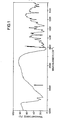
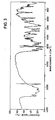
- the substance may be characterised by the details of the infra-red (IR) spectrum given, and/or by its X-ray powder diffraction pattern, if given. (For details of the methods used to determine the IR and X-ray data, see the Examples section.) Al.
- max 3600-2500 (very broad), 1705, 1655 (sh), 1640 (sh), 1620, 1560-1530 (broad), 1490, 1460, 1440, 1405, 1385, 1330, 1240, 1220, 1195, 1150, 1120, 1090, 1060, 985, 855, 805, 715 and 660 cm -1 .
- X-Ray Diffraction Pattern (given as d( ⁇ ), I for each value): 2.39 vw; 3.12 vw; 3.39 vw; 3.46 s; 3.62 m; 4.01 m; 4.11 m; 4.69 m; 5.26 w; 5.97 m; 6.76 m; 7.20 m; 7.99 m.
- 3-Amino-5-[2-[(2-guanidino-4-thiazolyl)methylthio]-ethylamino]-4-methyl-l,2,4,6-thiatriazine 1,1-dioxide and its salts are generally obtained in the form of a solvate, and the nature of the solvate and the degree of solvation depend, for example, on the nature of the solvent or solvent mixture and the reaction conditions used.
- 3-Amino-5-[2-[(2-guanidino-4-thiazolyl)methylthio]-ethylamino]-4-methyl-1,2,4,6-thiatriazine 1,1-dioxide is often obtained initially in the form of the dihydrate, but recrystallisation from water generally yields the monohydrate.
- the different solvated forms may or may not be apparent from IR data, but can generally be distinguished by microanalys.
- the data given above may apply to only one solvated form of a salt, or may apply to more than one form.
- the present invention includes all solvated (including hydrated; forms of 3-amino-5-[2-[(2- guanidino-4-thiazolyl)methylthio]ethylamino]-4-methyl-1,2,4,6-thiatriazine 1,1-dioxide and salts thereof, in particular, 3-amino-5-[2-[(2-guanidino-4-thiazolyl)-methylthio]ethylamino]-4-methyl-1,2,4,6-thiatriazine 1,1-dioxide and salts thereof described in A to I above, in any solvated form described above and also in any other solvated form.
- Solvated forms may comprises more than one type of solvent.
- the present invention also provides a process for the production of a salt of 3-amino-5-(2-[(2-guanidino-4-thiazolyl)methylthio]ethylamino]-4-methyl-1,2,4,6-thiatriazine 1,1-dioxide, which comprises reacting 3-amino-5-[2-[(2-guanidino-4-thiazolyl)methylthio]ethylamino]-4-methyl-1,2,4,6-thiatriazine 1,1-dioxide with an acid.
- Methods for producing salts of free bases are well known. (The term "known” is used herein to mean in actual use in the art or described in the literature of the art.)
- the present invention also provides a process for the production of 3-amino-5-[2-[(2-guanidino-4-thiazolyl)-methylthio]ethylamino]-4-methyl-1,2,4,6-thiatriazine 1,1-dioxide and of salts thereof, in crystalline form, which comprises
- a leaving group may be substituted or unsubstituted, for example, a leaving group may be a lower alkoxy or phenylthio group, or an unsubstituted or substituted, for example, alkyl- or nitro-substituted phenyloxy or phenylthio group, and preferably represents a chlorine atom, or a methylthio, methylsulphinyl, methylsuphonyl, phenyloxy, tolyloxy or dimethylamino group.
- Compounds A and B are generally reacted in a solvent or diluent, preferably an alcohol, acetonitrile, dimethylformamide, or dimethyl sulphoxide, at a temperature within the range of from, for example, 0 to 100°C, generally from 0 to 60°C.
- the compound of formula B should be reacted in the form of the free base, as shown. If it is initially present in the form of an acid addition salt, for example, as the hydrochloride or hydrobromide, this should be converted into the free base during or, preferably, before reaction with compound A. Conversion is carried out with a base, for example, triethylamine, sodium hydroxide, potassium hydroxide, sodium ethoxide or potassium hydroxide.
- a compound of formula D is generally reacted with ammonia in a solvent, preferably a lower alcohol, especially methanol, ethanol or propanol, acetonitrile, or a mixture of two or more such solvents.
- a solvent preferably a lower alcohol, especially methanol, ethanol or propanol, acetonitrile, or a mixture of two or more such solvents.
- the reaction may be carried out at a temperature within the range of from 10 to 50°C, preferably at room temperature.
- lower is used herein to denote a group or molecule having from 1 to 4 carbon atoms.
- Recrystallisation of the product may be carried out in known manner from a suitable solvent, for example, as described below.
- a crystalline salt may be prepared according to process (b) from the free base 3-amino-5-[2-[(2-guanidino-4-thiazolyl)-methylthio]ethylamino]-4-methyl-l,2,4,6-thiatriazine 1,1-dioxide, which is preferably in crystalline form.
- the free base is reacted with the appropriate acid to give the desired salt.
- the conditions for formation of a crystalline salt may be determined empirically, for example, a solution of the free base in a solvent is mixed with the appropriate acid in a solvent or diluent at a temperature within the range of from 20 to 100°C. The resulting mixture is then cooled, if appropriate, and allowed to stand at 0 to 30°C.
- Separation of the crystals from the mixture may be carried out by any of the known methods, for example, by filtration or centrifugation and, if desired, the product may be recrystallised from a suitable solvent, for example as described above.
- the crystalline free base 3-amino-5-[2-[(2-guanidino-4-thiazolyl)-methylthio]ethylamino]-4-methyl-1,2,4,6-thiatriazine 1,1-dioxide may be obtained by treatment of a salt thereof, preferably in crystalline form, with a base, preferably a slight excess thereof. Any salt may be used, and the base may be organic or inorganic, especially sodium or potassium hydrogen carbonate or sodium or potassium carbonate. The reaction may be carried out in a solvent and at room temperature. The free base crystallises readily from the resulting solution, and may be separated by any of the usual techniques, for example, by filtration or centrifugation. The product may be recrystallised, if desired.
- Solvents for dissolution and recrystallisation for all of the processes described above may be selected, for example, from water, alcohols, especially lower alcohols, ketones, especially acetone, and mixtures of any two or more of these solvents. Other solvents may be used. Water and ethanol are particularly preferred.
- the free base and its salts may crystallise in hydrated and/or solvated form, the nature and degree of which depend on the solvent or solvent mixture used, and on the reaction conditions. Accordingly, all hydrated and/or solvated cystalline and non-crystalline forms of 3-amino-5-[2-[(2-guanidino-4-thiazolyl)-methylthio]ethylamino]-4-methyl-1,2,4,6-thiatriazine 1,1-dioxide are part of the present invention.
- 3-amino-5-[2-[(2-guanidino-4-thiazolyl)-methylthio]ethylamino]-4-methyl-l,2,4,6-thiat riazine 1,1-dioxide has histamine H-2 antagonist activity, and accordingly the free base or a salt thereof, especially in crystalline form, may be administered to a mammal at a dose of from 0.1 to 10mg per kg body weight per day, in a single dose or in divided doses, to treat those conditions resulting from stimulation by histamine of histamine H-2 receptors, either alone, for example, in inhibiting gastric acid secretion and thus treating its sequelae, for example, gastric and peptic ulcers; or together with a histamine H-1 antagonist, for example, in treating allergic and certain inflammatory conditions.
- the present invention provides a pharmaceutical preparation which comprises 3-amino-5-[2-[(2-guanidino-4-thiazolyl)-methylthio]ethylamino]-4-methyl-1,2,4,6-thiatriazine 1,1-dioxide or a physiologically tolerable salt thereof, in admixture or conjunction with a pharmaceutically suitable carrier.
- the present invention also provides a pharmaceutical preparation which comprises 3-amino-5-[2-[(2-guanidino-4-thiazolyl)-methylthio]ethylamino]-4-methyl-1,2,4,6-thiatriazine 1,1-dioxide or a physiologically tolerable salt thereof in crystalline form, in admixture or conjunction with a pharmaceutically suitable carrier.
- the salts used, and their crystalline form, are especially those characterised above or in the following Examples.
- a pharmaceutical preparation of the invention may be suitable for use for enteral or parenteral administration, for example, as tablets, capsules, powders, syrups, suspensions, solutions, and preparations suitable for administration by injection or infusion.
- a pharmaceutical preparation of the invention may also comprise one or more further pharmaceutically active substances, especially histamine H-1 antagonists.
- a preparation of the invention may be in unit dosage form.
- the present invention also provides the use of 3-amino-5-[2-[(2-guanidino-4-thiazolyl)-methylthio]-ethylamino]-4-methyl-1,2,4,6-thiatriazine 1,1-dioxide or a physiologically tolerable salt thereof, especially in crystalline form, in the manufacture of a medicament for the treatment of those conditions resulting from stimulation by histamine of histamine H-2 receptors, either alone, for example, in inhibiting gastric acid secretion and thus treating its sequelae, for example, gastric and peptic ulcers; or together with a histamine H-1 antagonist, for example, in treating allergic and certain inflammatory conditions.
- the free base or a salt thereof may be administered at a dose of from 0.1 to 10 mg per kg body weight per day, in a single dose or in divided doses.
- This invention also provides salts of a compound of formula I,. especially physiologically tolerable salts.
- Alkyl, alkenyl, alkynyl, and acyl groups in the present specification may be branched or unbranched and may be unsubstituted or substituted, for example, by one or more groups selected from hydroxyl groups; -OR 7 groups in which R 7 represents a (C 1 -C 6 )alkyl or a phenyl group; (C 3 -C 7 )cycloalkyl groups; -NR R groups in which R 8 and R , which may be the same or different, each represents a hydrogen atom, a lower alkyl group, an aryl group or a lower acyl group, and may together with the nitrogen atom to which they are attached form a 5 or 6 membered ring; -COOR 10 groups in which R 10 represents a hydrogen atom, an alkali metal atom, for example, Na or K, or a lower alkyl group; -CONR 8 R 9 in which R 8 and R 9 are as defined above; lower alkylsulphony
- a phenyl group other than a phenyl group A may be unsubstituted or substituted as defined immediately above for phenyl substituents of aliphatic and acyl groups.
- aryl unless otherwise described, denotes aromatics having 6 to 12 carbon atoms, such as phenyl, naphthyl, bisphenylyl, particularly phenyl; aralkyl means aralkyls having 7 to 13 C atoms, such as benzyl, phenethyl.
- the present invention also provides a process for the production of a compound of the general formula I, which comprises
- R 3 may also act as a protecting group in the above chemical transformations and may subsequently be removed, for example, by hydrogenolysis or by acid or base catalysed hydrolysis to provide a compound of the general formula I in which the thiatriazine ring carries a hydrogen substituent.
- Protecting groups which come within the definition of R 3 given in formula I are t-butyl, lower alkyl carbonate, benzyl and benzoyl groups, for example.
- Oxidation may be carried out by a know method, for example, as described below.
- Interconversions of substitutents may also be carried out by known methods, for example, the hydrolysis of a cyano group to an acid or amide.
- Compounds II and III are generally reacted in a solvent or diluent,-preferably an alcohol, DMF, or DMSO, at a temperature within the range of from, for example, from 0 to 700°C, generally from 0 to 60°C.
- the compound of formula III should be reacted in the form of the free base, as shown. If it is initially present in the form of an acid addition salt, for example, as the hydrochloride or hydrobromide, this should be converted into the free base during or, preferably, after reaction with compound II. Conversion is carried out with a base, for example, triethylamine, sodium hydroxide or potassium hydroxide.
- reaction of compound V with an amino compound HNR 5 a R 6 a is generally carried out in an alcoholic solvent at a temperature from 0 to 60°C.
- a compound of formula I may be converted into its salt form in the usual manner by reaction with an acid.
- physiologically tolerable acid addition salts are those with hydrobromic, hydrochloric, sulphuric, acetic, malonic, maleic, fumaric, succinic, citric, tartaric and isethionic acids.
- a compound of formula I in the form of an acid addition salt may be converted into the free base form by reaction with a base in the usual manner.
- R represents an alkyl, dialkylamino, acylamino, nitro, halogen, aryl, nitrile, alkoxy, aryloxy or acyloxy group, and x represents 1 or 2.
- R 11 is present, ortho or, preferably, para to the -OCN group.
- Sulphamide IX may be reacted with an aryl cyanate of formula X in the presence of a base, for example, Na 2 CO 3 , according to the method described in DE 2,026,625 to give a thiatriazine of formula XI.
- This compound may be alkylated on the nitrogen atom in the 4-position using an alkylating agent, for example, an alkyl halide or alkyl sulphate, for example, methyl iodide, benzyl bromide or dimethyl sulphate.
- the alkylation of the 4-amino group may be carried out in a known manner, for example, in the presence of a base, for example, sodium methoxide or di-isopropylethylamine, in a solvent, for example, methanol or acetonitrile, and generally at a temperature within the range of 20 to 100°C.
- a base for example, sodium methoxide or di-isopropylethylamine
- a solvent for example, methanol or acetonitrile
- Certain thiatriazines of the general formula IV may be prepared as shown in Scheme II or Scheme III.
- a compound XV may be used diretly in a condensation reaction with a compound of formula III to give a compound of formula I, or may first be oxidised to the corresponding 1,1-dioxide XVI, using an oxidising agent, for example, a peracid, for example, m-chloroperbenzoic-acid, hydrogen peroxide, an alkyl hydroperoxide, for example, t-butyl hydroperoxide, or a permanganate, for example potassium permanganate.
- an oxidising agent for example, a peracid, for example, m-chloroperbenzoic-acid, hydrogen peroxide, an alkyl hydroperoxide, for example, t-butyl hydroperoxide, or a permanganate, for example potassium permanganate.
- Sulphonyl di-isocyanate XVII may be reacted with a primary amine of formula XVIII in which R 3 a is as defined above according to DE-OS 2,337,867, to provide the thiatriazine of formula XIX.
- R 3 a , R 4 and L 1 are as defined above, and R 12 represents an alkyl group, for example an alkyl group having up to 4 carbon atoms, especially a methyl group; an aryl group, especially a phenyl group; or an aralkyl group, especially a benzyl group.
- the two groups R 12 may be the same or different.
- R 12 is for example, a methyl group
- compound XXVI for example, one of the two groups R 12 is a methyl group and the other is a phenyl group, or both are methyl groups, or both are phenyl groups.
- N-substituted isothiourea XXI may be reacted with an acylaminosulphon y l chloride XXVII in the presence of a base, for example, triethylamine or diisopropylethylamine, in an aprotic solvent, for.example, dichloromethane, tetrahydrofuran or acetonitrile, generally at a temperature within the range of from -20 to +30 o C, to give the key intermediate of formula XXV (reaction i).
- a base for example, triethylamine or diisopropylethylamine
- an aprotic solvent for.example, dichloromethane, tetrahydrofuran or acetonitrile
- a compound of formula XXV may also be prepared from an isothiourea XXI by another route (reactions ii and iii).
- Compound XXV may be prepared by a third method (reactions iv and v), which comprises reacting a dithioiminocarbonate XXVI with an acylaminosulphonyl chloride XXVII under conditions analogous to those described above for reaction (i) and then displacing an -SR 12 group from the resulting compound XXVIII with primary amine of formula XXIX.
- Heating a compound of formula XXV in an aprotic solvent for example, tetrahydrofuran, dioxane, toluene, xylene or ethylene.glycol dimethyl ether, generally at a temperature within the range of from 80 to 160°C, affords a thiatriazine of formula XXX.
- an aprotic solvent for example, tetrahydrofuran, dioxane, toluene, xylene or ethylene.glycol dimethyl ether
- the group R 12 S- is a suitable leaving group L 1 , ie such compounds fall within the general formula II, but in other compounds of formula XXX it is necessary or preferable to convert a goup R 12 S- into a leaving group L 1 that is more readily displaced by a nucleophile.
- Such a conversion may be carried out by known methods, for example, by oxidising the sulphide group R 12 S- to the corresponding sulphoxide group using, for example, a peracid, for example, m-chloroperbenzoic acid, hydrogen peroxide, or a periodate, perborate or permanganate salt; or by replacing the sulphide group R 12 S- by a halogen atom, for example, by treating compound XXX with excess chlorine in an inert solvent, for example, chloroform, tetrahydrofuran or ethyl acetate, generally at a temperature within the range of from 20 to 100°C, and preferably in the presence of a catalyst, for example, zinc chloride.
- a peracid for example, m-chloroperbenzoic acid, hydrogen peroxide, or a periodate, perborate or permanganate salt
- a halogen atom for example, by treating compound XXX with excess chlorine in an in
- Any reference to a compound of formula I herein includes all possible tautomeric and stereoisomeric forms of that compound. Moreover, all possible tautomeric and stereoisomeric forms of any other compound mentioned in the present specification are similarly included within the general references to that compound" (End of quote from 83.25762).
- the X-ray powder diffraction patterns were determined with a Philips horizontal goniometer PW 1380 driven by a PW 1710 diffracter controller and using a PM 8210 printer/recorder.
- the speed of the goniometer was 1.0 and the lower window level set at 35 and the upper level set at 65. Samples were mounted on double sided adhesive tape and exposed to Ni filtered Cu radiation.
- the X-ray wavelength used for the calculations was 1.54179 ⁇ .
- the melting point of a product will depend on the degree of hydration thereof.
- ⁇ max (KBr disc) 3200-2500 (very broad), 1705, 1660, 1620, 1570, 1530, 1460, 1440, 1410, 1340, 1280, 1230, 1215, 1190, 1130, 1070, 1010, 990, 860, 810 and 715 cm -1.
- X-Ray Diffraction Pattern (given as d(A), I for each value): 2.39 vw; 3.12 vw; 3.39 vw; 3.46 s; 3.62 m; 4.01 m; 4.11 m; 4.69 m; 5.26 w; 5.97 m; 6.76 m; 7.20 m; 7.99 m.
- ⁇ max (Nujol mull) 3400 (broad), 3200 (broad), 1710, 1660, 1620, 1560, 1540, 1420, 1345, 1305, 1270 (broad), 1235, 1215, 1130 (broad), 1070, 1050, 1000, 980, 870, 840, 765, 725 and 71 5 cm- 1 .
- Fine white crystals were obtained on recrystallisation from water, m.p. 161-166°C.
- Fine white crysysals were obtained on recrystallisation from water, m.p. 136-140°C.
Landscapes
- Chemical & Material Sciences (AREA)
- Organic Chemistry (AREA)
- Pharmaceuticals Containing Other Organic And Inorganic Compounds (AREA)
- Farming Of Fish And Shellfish (AREA)
- Nitrogen And Oxygen Or Sulfur-Condensed Heterocyclic Ring Systems (AREA)
Applications Claiming Priority (4)
| Application Number | Priority Date | Filing Date | Title |
|---|---|---|---|
| GB848407896A GB8407896D0 (en) | 1984-03-27 | 1984-03-27 | Thiatriazine derivatives |
| GB8407896 | 1984-03-27 | ||
| GB848408011A GB8408011D0 (en) | 1984-03-28 | 1984-03-28 | Thiatriazine derivatives |
| GB8408011 | 1984-03-28 |
Publications (2)
| Publication Number | Publication Date |
|---|---|
| EP0156286A2 true EP0156286A2 (de) | 1985-10-02 |
| EP0156286A3 EP0156286A3 (de) | 1986-08-20 |
Family
ID=26287519
Family Applications (1)
| Application Number | Title | Priority Date | Filing Date |
|---|---|---|---|
| EP85103156A Withdrawn EP0156286A3 (de) | 1984-03-27 | 1985-03-19 | Thiatriazin-Derivate |
Country Status (12)
| Country | Link |
|---|---|
| EP (1) | EP0156286A3 (de) |
| AU (1) | AU4045485A (de) |
| DK (1) | DK136885A (de) |
| ES (1) | ES8702901A1 (de) |
| FI (1) | FI851179L (de) |
| GB (1) | GB2158063A (de) |
| GR (1) | GR850750B (de) |
| HU (1) | HUT37789A (de) |
| IL (1) | IL74705A0 (de) |
| MA (1) | MA20389A1 (de) |
| NO (1) | NO851220L (de) |
| PT (1) | PT80162B (de) |
Cited By (2)
| Publication number | Priority date | Publication date | Assignee | Title |
|---|---|---|---|---|
| EP0170118A3 (de) * | 1984-07-31 | 1986-12-03 | Hoechst Uk Limited | 4-Substituierte-1,2,4,6-Thiatriazinderivate |
| WO2022034121A1 (en) | 2020-08-11 | 2022-02-17 | Université De Strasbourg | H2 blockers targeting liver macrophages for the prevention and treatment of liver disease and cancer |
Family Cites Families (2)
| Publication number | Priority date | Publication date | Assignee | Title |
|---|---|---|---|---|
| GB2001624B (en) * | 1977-04-20 | 1982-03-03 | Ici Ltd | Guanidine derivatives processes for their manufacture and pharmaceutical compositions containing them |
| EP0104611A3 (de) * | 1982-09-28 | 1985-06-12 | Hoechst Uk Limited | Thiatriazin-Derivate |
-
1985
- 1985-03-19 EP EP85103156A patent/EP0156286A3/de not_active Withdrawn
- 1985-03-22 HU HU851101A patent/HUT37789A/hu unknown
- 1985-03-25 FI FI851179A patent/FI851179L/fi not_active Application Discontinuation
- 1985-03-25 GB GB08507663A patent/GB2158063A/en not_active Withdrawn
- 1985-03-25 ES ES541539A patent/ES8702901A1/es not_active Expired
- 1985-03-25 IL IL74705A patent/IL74705A0/xx unknown
- 1985-03-26 AU AU40454/85A patent/AU4045485A/en not_active Abandoned
- 1985-03-26 NO NO851220A patent/NO851220L/no unknown
- 1985-03-26 DK DK136885A patent/DK136885A/da not_active IP Right Cessation
- 1985-03-26 PT PT80162A patent/PT80162B/pt unknown
- 1985-03-26 GR GR850750A patent/GR850750B/el unknown
- 1985-03-27 MA MA20613A patent/MA20389A1/fr unknown
Cited By (2)
| Publication number | Priority date | Publication date | Assignee | Title |
|---|---|---|---|---|
| EP0170118A3 (de) * | 1984-07-31 | 1986-12-03 | Hoechst Uk Limited | 4-Substituierte-1,2,4,6-Thiatriazinderivate |
| WO2022034121A1 (en) | 2020-08-11 | 2022-02-17 | Université De Strasbourg | H2 blockers targeting liver macrophages for the prevention and treatment of liver disease and cancer |
Also Published As
| Publication number | Publication date |
|---|---|
| DK136885D0 (da) | 1985-03-26 |
| ES8702901A1 (es) | 1987-01-16 |
| AU4045485A (en) | 1985-10-03 |
| GB8507663D0 (en) | 1985-05-01 |
| EP0156286A3 (de) | 1986-08-20 |
| IL74705A0 (en) | 1985-06-30 |
| NO851220L (no) | 1985-09-30 |
| DK136885A (da) | 1985-09-28 |
| MA20389A1 (fr) | 1985-10-01 |
| FI851179A0 (fi) | 1985-03-25 |
| ES541539A0 (es) | 1987-01-16 |
| FI851179A7 (fi) | 1985-09-28 |
| PT80162B (en) | 1987-01-16 |
| GR850750B (de) | 1985-07-22 |
| GB2158063A (en) | 1985-11-06 |
| HUT37789A (en) | 1986-02-28 |
| FI851179L (fi) | 1985-09-28 |
| PT80162A (en) | 1985-04-01 |
Similar Documents
| Publication | Publication Date | Title |
|---|---|---|
| AU2003265585B2 (en) | Calcium receptor modulating compound and use thereof | |
| DE602004007808T2 (de) | Neue gamma-sekretase-inhibitoren | |
| AU593278B2 (en) | Pharmaceutically active 2-thiomethyl-substituted-1,4- dihydropyridines | |
| EP0040696A2 (de) | Aminothiadiazole als gastrische Inhibitoren | |
| HU219950B (hu) | Proteolitikus enzimeket gátló szacharinszármazékok és ezeket tartalmazó gyógyászati készítmények, valamint a szacharinszármazékok előállítása | |
| IL180737A (en) | Arylsulfonylstylbine derivatives for the treatment of insomnia and related conditions | |
| NZ206614A (en) | Dihydropyridine derivatives and pharmaceutical compositions | |
| KR20000022061A (ko) | 신규한 티오펜 유도체 및 이의 의약 조성물 | |
| EP0067436A2 (de) | Diaminothiazol-1-Oxyde und -1,1-Dioxyde zum Inhibieren der Magensekretion | |
| EP0156286A2 (de) | Thiatriazin-Derivate | |
| Kawashima et al. | Structure-activity studies of 4, 6-disubstituted 2-(morpholinocarbonyl) furo [3, 2-b] indole derivatives with analgesic and antiinflammatory activities | |
| EP0104611A2 (de) | Thiatriazin-Derivate | |
| GB2125404A (en) | Thiazole derivatives | |
| EP0150939A1 (de) | Dihydropyridin anti-ischamenisches und antihypertensives Mittel | |
| DE60010855T2 (de) | Phenylsulphonylderivative als 5-ht rezeptorliganden | |
| US3962222A (en) | 3A,4,6,7-Tetrahydro-3-phenyl-7-(phenylalkylene)-thiopyrano[4,3-C]pyrazole-2(3H)-alkanamine, and analogs | |
| US5464852A (en) | Saccharin derivative proteolytic enzyme inhibitors | |
| EP0073971B1 (de) | Thiadiazole Oxyde mit antisekretorischer Wirkung | |
| US4590192A (en) | Benzisothiazoles, their pharmaceutical compositions, and method of use | |
| EP0081955B1 (de) | Benzo-Kondensierte heterocyclische Derivate | |
| GB2165842A (en) | Thiatriazines | |
| US5171860A (en) | Diamino isothiazole-1-oxides and 1,1 dioxides as gastric secretion inhibitors | |
| EP0105732A2 (de) | Histamin-H2-rezeptoren-Antagonisten der Benzisothiazolamino- und Benzothiadiazinamino Reihe | |
| GB2165843A (en) | Complex sulphonamides | |
| HU190669B (en) | Process for preparing 3,4-disubstituted 1,2,5-thiadiazole-1-oxides and -1,1-dioxides |
Legal Events
| Date | Code | Title | Description |
|---|---|---|---|
| PUAI | Public reference made under article 153(3) epc to a published international application that has entered the european phase |
Free format text: ORIGINAL CODE: 0009012 |
|
| AK | Designated contracting states |
Designated state(s): AT BE CH DE FR GB IT LI LU NL SE |
|
| PUAL | Search report despatched |
Free format text: ORIGINAL CODE: 0009013 |
|
| AK | Designated contracting states |
Kind code of ref document: A3 Designated state(s): AT BE CH DE FR GB IT LI LU NL SE |
|
| 17P | Request for examination filed |
Effective date: 19870214 |
|
| STAA | Information on the status of an ep patent application or granted ep patent |
Free format text: STATUS: THE APPLICATION HAS BEEN WITHDRAWN |
|
| 18W | Application withdrawn |
Withdrawal date: 19870703 |
|
| RIN1 | Information on inventor provided before grant (corrected) |
Inventor name: ROSS, BARRY CLIVE, DR. Inventor name: COUSINS, SIMON JOHN Inventor name: ALLEN, ROBERT MANNING |