EP0156299A2 - Vaccins viraux à LTR modifié - Google Patents
Vaccins viraux à LTR modifié Download PDFInfo
- Publication number
- EP0156299A2 EP0156299A2 EP85103245A EP85103245A EP0156299A2 EP 0156299 A2 EP0156299 A2 EP 0156299A2 EP 85103245 A EP85103245 A EP 85103245A EP 85103245 A EP85103245 A EP 85103245A EP 0156299 A2 EP0156299 A2 EP 0156299A2
- Authority
- EP
- European Patent Office
- Prior art keywords
- ltr
- felv
- polynucleotide sequence
- modified
- virus
- Prior art date
- Legal status (The legal status is an assumption and is not a legal conclusion. Google has not performed a legal analysis and makes no representation as to the accuracy of the status listed.)
- Withdrawn
Links
- 229960004854 viral vaccine Drugs 0.000 title 1
- 241000700605 Viruses Species 0.000 claims abstract description 86
- 239000003623 enhancer Substances 0.000 claims abstract description 21
- 208000015181 infectious disease Diseases 0.000 claims abstract description 18
- 108091033319 polynucleotide Proteins 0.000 claims abstract description 14
- 102000040430 polynucleotide Human genes 0.000 claims abstract description 14
- 239000002157 polynucleotide Substances 0.000 claims abstract description 14
- 229960005486 vaccine Drugs 0.000 claims abstract description 11
- 238000002360 preparation method Methods 0.000 claims abstract description 8
- 108090000623 proteins and genes Proteins 0.000 claims description 33
- 230000037430 deletion Effects 0.000 claims description 32
- 238000012217 deletion Methods 0.000 claims description 32
- 241001430294 unidentified retrovirus Species 0.000 claims description 30
- 238000012986 modification Methods 0.000 claims description 15
- 230000004048 modification Effects 0.000 claims description 15
- 230000010076 replication Effects 0.000 claims description 15
- 230000002103 transcriptional effect Effects 0.000 claims description 12
- 230000007918 pathogenicity Effects 0.000 claims description 11
- 108700004025 env Genes Proteins 0.000 claims description 10
- 101150030339 env gene Proteins 0.000 claims description 7
- 230000003292 diminished effect Effects 0.000 claims description 6
- 238000000338 in vitro Methods 0.000 claims description 6
- 230000001105 regulatory effect Effects 0.000 claims description 6
- 230000002238 attenuated effect Effects 0.000 claims description 3
- 230000002950 deficient Effects 0.000 claims description 3
- 230000003053 immunization Effects 0.000 claims description 2
- 239000002773 nucleotide Substances 0.000 claims description 2
- 125000003729 nucleotide group Chemical group 0.000 claims description 2
- 206010038997 Retroviral infections Diseases 0.000 claims 3
- 241000714165 Feline leukemia virus Species 0.000 abstract description 21
- 230000000694 effects Effects 0.000 abstract description 8
- 230000028993 immune response Effects 0.000 abstract description 7
- 230000022532 regulation of transcription, DNA-dependent Effects 0.000 abstract description 6
- 230000002458 infectious effect Effects 0.000 abstract description 5
- 230000009711 regulatory function Effects 0.000 abstract description 4
- 230000003612 virological effect Effects 0.000 abstract description 3
- 241001131785 Escherichia coli HB101 Species 0.000 abstract description 2
- 230000001575 pathological effect Effects 0.000 abstract description 2
- 230000001939 inductive effect Effects 0.000 abstract 1
- 208000024891 symptom Diseases 0.000 abstract 1
- 239000013612 plasmid Substances 0.000 description 61
- 210000004027 cell Anatomy 0.000 description 52
- 108020004414 DNA Proteins 0.000 description 45
- 239000012634 fragment Substances 0.000 description 42
- 241000282326 Felis catus Species 0.000 description 26
- 108020005202 Viral DNA Proteins 0.000 description 22
- 239000000203 mixture Substances 0.000 description 21
- 230000001566 pro-viral effect Effects 0.000 description 19
- LFQSCWFLJHTTHZ-UHFFFAOYSA-N Ethanol Chemical compound CCO LFQSCWFLJHTTHZ-UHFFFAOYSA-N 0.000 description 16
- FAPWRFPIFSIZLT-UHFFFAOYSA-M Sodium chloride Chemical compound [Na+].[Cl-] FAPWRFPIFSIZLT-UHFFFAOYSA-M 0.000 description 15
- 239000002609 medium Substances 0.000 description 15
- 238000000034 method Methods 0.000 description 14
- 108091008146 restriction endonucleases Proteins 0.000 description 12
- 230000036961 partial effect Effects 0.000 description 11
- HEDRZPFGACZZDS-UHFFFAOYSA-N Chloroform Chemical compound ClC(Cl)Cl HEDRZPFGACZZDS-UHFFFAOYSA-N 0.000 description 10
- TWRXJAOTZQYOKJ-UHFFFAOYSA-L Magnesium chloride Chemical compound [Mg+2].[Cl-].[Cl-] TWRXJAOTZQYOKJ-UHFFFAOYSA-L 0.000 description 10
- 241001465754 Metazoa Species 0.000 description 10
- 239000001963 growth medium Substances 0.000 description 10
- 230000029087 digestion Effects 0.000 description 9
- 108700004029 pol Genes Proteins 0.000 description 9
- 241000271566 Aves Species 0.000 description 8
- 230000001413 cellular effect Effects 0.000 description 8
- 239000008188 pellet Substances 0.000 description 8
- 239000011780 sodium chloride Substances 0.000 description 8
- XLYOFNOQVPJJNP-UHFFFAOYSA-N water Chemical compound O XLYOFNOQVPJJNP-UHFFFAOYSA-N 0.000 description 8
- 108091028043 Nucleic acid sequence Proteins 0.000 description 7
- 239000000499 gel Substances 0.000 description 7
- 230000001717 pathogenic effect Effects 0.000 description 7
- 238000005215 recombination Methods 0.000 description 7
- 230000006798 recombination Effects 0.000 description 7
- 239000000243 solution Substances 0.000 description 7
- IAZDPXIOMUYVGZ-UHFFFAOYSA-N Dimethylsulphoxide Chemical compound CS(C)=O IAZDPXIOMUYVGZ-UHFFFAOYSA-N 0.000 description 6
- PEDCQBHIVMGVHV-UHFFFAOYSA-N Glycerine Chemical compound OCC(O)CO PEDCQBHIVMGVHV-UHFFFAOYSA-N 0.000 description 6
- 102100034349 Integrase Human genes 0.000 description 6
- ISWSIDIOOBJBQZ-UHFFFAOYSA-N Phenol Chemical compound OC1=CC=CC=C1 ISWSIDIOOBJBQZ-UHFFFAOYSA-N 0.000 description 6
- 239000007983 Tris buffer Substances 0.000 description 6
- 238000010276 construction Methods 0.000 description 6
- 230000037431 insertion Effects 0.000 description 6
- 238000003780 insertion Methods 0.000 description 6
- 230000002829 reductive effect Effects 0.000 description 6
- 239000000523 sample Substances 0.000 description 6
- LENZDBCJOHFCAS-UHFFFAOYSA-N tris Chemical compound OCC(N)(CO)CO LENZDBCJOHFCAS-UHFFFAOYSA-N 0.000 description 6
- 108010092799 RNA-directed DNA polymerase Proteins 0.000 description 5
- 239000000872 buffer Substances 0.000 description 5
- 230000006870 function Effects 0.000 description 5
- 108700004026 gag Genes Proteins 0.000 description 5
- 238000011081 inoculation Methods 0.000 description 5
- 229910001629 magnesium chloride Inorganic materials 0.000 description 5
- 101150088264 pol gene Proteins 0.000 description 5
- 101150118377 tet gene Proteins 0.000 description 5
- 238000011144 upstream manufacturing Methods 0.000 description 5
- 102000002260 Alkaline Phosphatase Human genes 0.000 description 4
- 108020004774 Alkaline Phosphatase Proteins 0.000 description 4
- 102000004594 DNA Polymerase I Human genes 0.000 description 4
- 108010017826 DNA Polymerase I Proteins 0.000 description 4
- KCXVZYZYPLLWCC-UHFFFAOYSA-N EDTA Chemical compound OC(=O)CN(CC(O)=O)CCN(CC(O)=O)CC(O)=O KCXVZYZYPLLWCC-UHFFFAOYSA-N 0.000 description 4
- WQZGKKKJIJFFOK-GASJEMHNSA-N Glucose Natural products OC[C@H]1OC(O)[C@H](O)[C@@H](O)[C@@H]1O WQZGKKKJIJFFOK-GASJEMHNSA-N 0.000 description 4
- 241000714177 Murine leukemia virus Species 0.000 description 4
- 229960000723 ampicillin Drugs 0.000 description 4
- AVKUERGKIZMTKX-NJBDSQKTSA-N ampicillin Chemical compound C1([C@@H](N)C(=O)N[C@H]2[C@H]3SC([C@@H](N3C2=O)C(O)=O)(C)C)=CC=CC=C1 AVKUERGKIZMTKX-NJBDSQKTSA-N 0.000 description 4
- 230000000840 anti-viral effect Effects 0.000 description 4
- 201000010099 disease Diseases 0.000 description 4
- 208000037265 diseases, disorders, signs and symptoms Diseases 0.000 description 4
- 230000005847 immunogenicity Effects 0.000 description 4
- 208000032839 leukemia Diseases 0.000 description 4
- 244000052769 pathogen Species 0.000 description 4
- 239000002244 precipitate Substances 0.000 description 4
- ATHGHQPFGPMSJY-UHFFFAOYSA-N spermidine Chemical compound NCCCCNCCCN ATHGHQPFGPMSJY-UHFFFAOYSA-N 0.000 description 4
- 108091032973 (ribonucleotides)n+m Proteins 0.000 description 3
- 102000040650 (ribonucleotides)n+m Human genes 0.000 description 3
- 241000713826 Avian leukosis virus Species 0.000 description 3
- 108091003079 Bovine Serum Albumin Proteins 0.000 description 3
- UXVMQQNJUSDDNG-UHFFFAOYSA-L Calcium chloride Chemical compound [Cl-].[Cl-].[Ca+2] UXVMQQNJUSDDNG-UHFFFAOYSA-L 0.000 description 3
- 102000012410 DNA Ligases Human genes 0.000 description 3
- 108010061982 DNA Ligases Proteins 0.000 description 3
- 241000714174 Feline sarcoma virus Species 0.000 description 3
- 241000282324 Felis Species 0.000 description 3
- 241001045988 Neogene Species 0.000 description 3
- 206010028980 Neoplasm Diseases 0.000 description 3
- HEMHJVSKTPXQMS-UHFFFAOYSA-M Sodium hydroxide Chemical compound [OH-].[Na+] HEMHJVSKTPXQMS-UHFFFAOYSA-M 0.000 description 3
- 108700026226 TATA Box Proteins 0.000 description 3
- 102000004142 Trypsin Human genes 0.000 description 3
- 108090000631 Trypsin Proteins 0.000 description 3
- 108010067390 Viral Proteins Proteins 0.000 description 3
- 108020000999 Viral RNA Proteins 0.000 description 3
- 230000003321 amplification Effects 0.000 description 3
- 230000001580 bacterial effect Effects 0.000 description 3
- 239000001110 calcium chloride Substances 0.000 description 3
- 229910001628 calcium chloride Inorganic materials 0.000 description 3
- 201000011510 cancer Diseases 0.000 description 3
- 238000006243 chemical reaction Methods 0.000 description 3
- 230000003467 diminishing effect Effects 0.000 description 3
- 239000012894 fetal calf serum Substances 0.000 description 3
- 239000012737 fresh medium Substances 0.000 description 3
- 238000001502 gel electrophoresis Methods 0.000 description 3
- 239000008103 glucose Substances 0.000 description 3
- 238000002347 injection Methods 0.000 description 3
- 239000007924 injection Substances 0.000 description 3
- 101150091879 neo gene Proteins 0.000 description 3
- 238000003199 nucleic acid amplification method Methods 0.000 description 3
- 238000002205 phenol-chloroform extraction Methods 0.000 description 3
- 230000000717 retained effect Effects 0.000 description 3
- 238000001890 transfection Methods 0.000 description 3
- 239000012588 trypsin Substances 0.000 description 3
- 238000002255 vaccination Methods 0.000 description 3
- 239000013598 vector Substances 0.000 description 3
- JKMHFZQWWAIEOD-UHFFFAOYSA-N 2-[4-(2-hydroxyethyl)piperazin-1-yl]ethanesulfonic acid Chemical compound OCC[NH+]1CCN(CCS([O-])(=O)=O)CC1 JKMHFZQWWAIEOD-UHFFFAOYSA-N 0.000 description 2
- FVFVNNKYKYZTJU-UHFFFAOYSA-N 6-chloro-1,3,5-triazine-2,4-diamine Chemical compound NC1=NC(N)=NC(Cl)=N1 FVFVNNKYKYZTJU-UHFFFAOYSA-N 0.000 description 2
- 241000714266 Bovine leukemia virus Species 0.000 description 2
- 101710094648 Coat protein Proteins 0.000 description 2
- 102000004190 Enzymes Human genes 0.000 description 2
- 108090000790 Enzymes Proteins 0.000 description 2
- 241000713730 Equine infectious anemia virus Species 0.000 description 2
- 241000588724 Escherichia coli Species 0.000 description 2
- KFZMGEQAYNKOFK-UHFFFAOYSA-N Isopropanol Chemical compound CC(C)O KFZMGEQAYNKOFK-UHFFFAOYSA-N 0.000 description 2
- 102000003960 Ligases Human genes 0.000 description 2
- 108090000364 Ligases Proteins 0.000 description 2
- 241000713862 Moloney murine sarcoma virus Species 0.000 description 2
- 239000000020 Nitrocellulose Substances 0.000 description 2
- UIIMBOGNXHQVGW-UHFFFAOYSA-M Sodium bicarbonate Chemical compound [Na+].OC([O-])=O UIIMBOGNXHQVGW-UHFFFAOYSA-M 0.000 description 2
- 238000002105 Southern blotting Methods 0.000 description 2
- 241000714205 Woolly monkey sarcoma virus Species 0.000 description 2
- 239000008346 aqueous phase Substances 0.000 description 2
- 238000003556 assay Methods 0.000 description 2
- 230000015572 biosynthetic process Effects 0.000 description 2
- 210000004369 blood Anatomy 0.000 description 2
- 239000008280 blood Substances 0.000 description 2
- 238000004113 cell culture Methods 0.000 description 2
- 108091092356 cellular DNA Proteins 0.000 description 2
- 238000005119 centrifugation Methods 0.000 description 2
- 238000012512 characterization method Methods 0.000 description 2
- 229960005091 chloramphenicol Drugs 0.000 description 2
- WIIZWVCIJKGZOK-RKDXNWHRSA-N chloramphenicol Chemical compound ClC(Cl)C(=O)N[C@H](CO)[C@H](O)C1=CC=C([N+]([O-])=O)C=C1 WIIZWVCIJKGZOK-RKDXNWHRSA-N 0.000 description 2
- 230000000295 complement effect Effects 0.000 description 2
- 230000001419 dependent effect Effects 0.000 description 2
- 229940079593 drug Drugs 0.000 description 2
- 239000003814 drug Substances 0.000 description 2
- 229940088598 enzyme Drugs 0.000 description 2
- 238000012869 ethanol precipitation Methods 0.000 description 2
- 238000000605 extraction Methods 0.000 description 2
- 101150098622 gag gene Proteins 0.000 description 2
- 238000010353 genetic engineering Methods 0.000 description 2
- 230000012010 growth Effects 0.000 description 2
- 238000003306 harvesting Methods 0.000 description 2
- 230000002163 immunogen Effects 0.000 description 2
- 238000002955 isolation Methods 0.000 description 2
- 230000002122 leukaemogenic effect Effects 0.000 description 2
- 238000004519 manufacturing process Methods 0.000 description 2
- 230000007246 mechanism Effects 0.000 description 2
- 238000010369 molecular cloning Methods 0.000 description 2
- 230000035772 mutation Effects 0.000 description 2
- 229920001220 nitrocellulos Polymers 0.000 description 2
- 231100000590 oncogenic Toxicity 0.000 description 2
- 230000002246 oncogenic effect Effects 0.000 description 2
- SCVFZCLFOSHCOH-UHFFFAOYSA-M potassium acetate Chemical compound [K+].CC([O-])=O SCVFZCLFOSHCOH-UHFFFAOYSA-M 0.000 description 2
- 238000012545 processing Methods 0.000 description 2
- 102000004169 proteins and genes Human genes 0.000 description 2
- 238000011160 research Methods 0.000 description 2
- 238000002976 reverse transcriptase assay Methods 0.000 description 2
- 238000012552 review Methods 0.000 description 2
- 238000012163 sequencing technique Methods 0.000 description 2
- 210000002966 serum Anatomy 0.000 description 2
- 241000894007 species Species 0.000 description 2
- 229940063673 spermidine Drugs 0.000 description 2
- 238000006467 substitution reaction Methods 0.000 description 2
- 238000012360 testing method Methods 0.000 description 2
- 239000003104 tissue culture media Substances 0.000 description 2
- 229920001817 Agar Polymers 0.000 description 1
- 241000972773 Aulopiformes Species 0.000 description 1
- 241000283690 Bos taurus Species 0.000 description 1
- OYPRJOBELJOOCE-UHFFFAOYSA-N Calcium Chemical compound [Ca] OYPRJOBELJOOCE-UHFFFAOYSA-N 0.000 description 1
- 241000282465 Canis Species 0.000 description 1
- 108090000565 Capsid Proteins Proteins 0.000 description 1
- 241000282693 Cercopithecidae Species 0.000 description 1
- 102100023321 Ceruloplasmin Human genes 0.000 description 1
- 239000003298 DNA probe Substances 0.000 description 1
- 206010059866 Drug resistance Diseases 0.000 description 1
- 238000002965 ELISA Methods 0.000 description 1
- 101800001467 Envelope glycoprotein E2 Proteins 0.000 description 1
- 101710091045 Envelope protein Proteins 0.000 description 1
- 241000283073 Equus caballus Species 0.000 description 1
- 108091029865 Exogenous DNA Proteins 0.000 description 1
- 108060002716 Exonuclease Proteins 0.000 description 1
- 241000711475 Feline infectious peritonitis virus Species 0.000 description 1
- 201000008808 Fibrosarcoma Diseases 0.000 description 1
- 241000287828 Gallus gallus Species 0.000 description 1
- 108091036060 Linker DNA Proteins 0.000 description 1
- 108010052285 Membrane Proteins Proteins 0.000 description 1
- 102000016943 Muramidase Human genes 0.000 description 1
- 108010014251 Muramidase Proteins 0.000 description 1
- 241001529936 Murinae Species 0.000 description 1
- 108010062010 N-Acetylmuramoyl-L-alanine Amidase Proteins 0.000 description 1
- 229930193140 Neomycin Natural products 0.000 description 1
- 208000015914 Non-Hodgkin lymphomas Diseases 0.000 description 1
- 241000283973 Oryctolagus cuniculus Species 0.000 description 1
- BELBBZDIHDAJOR-UHFFFAOYSA-N Phenolsulfonephthalein Chemical compound C1=CC(O)=CC=C1C1(C=2C=CC(O)=CC=2)C2=CC=CC=C2S(=O)(=O)O1 BELBBZDIHDAJOR-UHFFFAOYSA-N 0.000 description 1
- 229920002594 Polyethylene Glycol 8000 Polymers 0.000 description 1
- 241000288906 Primates Species 0.000 description 1
- 101710188315 Protein X Proteins 0.000 description 1
- 108091081062 Repeated sequence (DNA) Proteins 0.000 description 1
- 206010051497 Rhinotracheitis Diseases 0.000 description 1
- VMHLLURERBWHNL-UHFFFAOYSA-M Sodium acetate Chemical compound [Na+].CC([O-])=O VMHLLURERBWHNL-UHFFFAOYSA-M 0.000 description 1
- 229910000831 Steel Inorganic materials 0.000 description 1
- 229930006000 Sucrose Natural products 0.000 description 1
- CZMRCDWAGMRECN-UGDNZRGBSA-N Sucrose Chemical compound O[C@H]1[C@H](O)[C@@H](CO)O[C@@]1(CO)O[C@@H]1[C@H](O)[C@@H](O)[C@H](O)[C@@H](CO)O1 CZMRCDWAGMRECN-UGDNZRGBSA-N 0.000 description 1
- 206010042566 Superinfection Diseases 0.000 description 1
- 101800001271 Surface protein Proteins 0.000 description 1
- 208000000389 T-cell leukemia Diseases 0.000 description 1
- 208000028530 T-cell lymphoblastic leukemia/lymphoma Diseases 0.000 description 1
- 239000004098 Tetracycline Substances 0.000 description 1
- 108010003533 Viral Envelope Proteins Proteins 0.000 description 1
- 108700005077 Viral Genes Proteins 0.000 description 1
- 239000008272 agar Substances 0.000 description 1
- 230000001476 alcoholic effect Effects 0.000 description 1
- 238000004458 analytical method Methods 0.000 description 1
- 208000007502 anemia Diseases 0.000 description 1
- 230000010310 bacterial transformation Effects 0.000 description 1
- 230000005587 bubbling Effects 0.000 description 1
- 239000007975 buffered saline Substances 0.000 description 1
- 239000011575 calcium Substances 0.000 description 1
- 229910052791 calcium Inorganic materials 0.000 description 1
- 239000013553 cell monolayer Substances 0.000 description 1
- 230000004663 cell proliferation Effects 0.000 description 1
- 230000008859 change Effects 0.000 description 1
- 235000013330 chicken meat Nutrition 0.000 description 1
- 238000010367 cloning Methods 0.000 description 1
- 239000013599 cloning vector Substances 0.000 description 1
- 238000001816 cooling Methods 0.000 description 1
- 230000009260 cross reactivity Effects 0.000 description 1
- 230000001627 detrimental effect Effects 0.000 description 1
- 239000008121 dextrose Substances 0.000 description 1
- 238000007865 diluting Methods 0.000 description 1
- BNIILDVGGAEEIG-UHFFFAOYSA-L disodium hydrogen phosphate Chemical compound [Na+].[Na+].OP([O-])([O-])=O BNIILDVGGAEEIG-UHFFFAOYSA-L 0.000 description 1
- 229910000397 disodium phosphate Inorganic materials 0.000 description 1
- 239000012154 double-distilled water Substances 0.000 description 1
- 241001493065 dsRNA viruses Species 0.000 description 1
- 102000013165 exonuclease Human genes 0.000 description 1
- 239000013604 expression vector Substances 0.000 description 1
- 239000000945 filler Substances 0.000 description 1
- 230000002068 genetic effect Effects 0.000 description 1
- 238000010438 heat treatment Methods 0.000 description 1
- 230000028996 humoral immune response Effects 0.000 description 1
- 238000009396 hybridization Methods 0.000 description 1
- 230000001900 immune effect Effects 0.000 description 1
- 210000000987 immune system Anatomy 0.000 description 1
- 230000036039 immunity Effects 0.000 description 1
- 238000002649 immunization Methods 0.000 description 1
- 230000009851 immunogenic response Effects 0.000 description 1
- 239000012133 immunoprecipitate Substances 0.000 description 1
- 238000001727 in vivo Methods 0.000 description 1
- 230000000977 initiatory effect Effects 0.000 description 1
- 210000004731 jugular vein Anatomy 0.000 description 1
- 210000003141 lower extremity Anatomy 0.000 description 1
- 239000004325 lysozyme Substances 0.000 description 1
- 229960000274 lysozyme Drugs 0.000 description 1
- 235000010335 lysozyme Nutrition 0.000 description 1
- 238000013507 mapping Methods 0.000 description 1
- 239000003550 marker Substances 0.000 description 1
- 239000000463 material Substances 0.000 description 1
- 238000002156 mixing Methods 0.000 description 1
- 238000002703 mutagenesis Methods 0.000 description 1
- 231100000350 mutagenesis Toxicity 0.000 description 1
- 229960004927 neomycin Drugs 0.000 description 1
- 230000007170 pathology Effects 0.000 description 1
- 229960003531 phenolsulfonphthalein Drugs 0.000 description 1
- 239000002953 phosphate buffered saline Substances 0.000 description 1
- 238000007747 plating Methods 0.000 description 1
- 230000008488 polyadenylation Effects 0.000 description 1
- 229920001184 polypeptide Polymers 0.000 description 1
- 235000011056 potassium acetate Nutrition 0.000 description 1
- 244000144977 poultry Species 0.000 description 1
- 235000013594 poultry meat Nutrition 0.000 description 1
- 238000001556 precipitation Methods 0.000 description 1
- 239000002243 precursor Substances 0.000 description 1
- 108090000765 processed proteins & peptides Proteins 0.000 description 1
- 102000004196 processed proteins & peptides Human genes 0.000 description 1
- 230000000644 propagated effect Effects 0.000 description 1
- 238000000746 purification Methods 0.000 description 1
- 239000011541 reaction mixture Substances 0.000 description 1
- 238000011084 recovery Methods 0.000 description 1
- 230000001172 regenerating effect Effects 0.000 description 1
- 230000008439 repair process Effects 0.000 description 1
- 230000004044 response Effects 0.000 description 1
- 238000010839 reverse transcription Methods 0.000 description 1
- 230000002441 reversible effect Effects 0.000 description 1
- 235000019515 salmon Nutrition 0.000 description 1
- 150000003839 salts Chemical class 0.000 description 1
- 229920006395 saturated elastomer Polymers 0.000 description 1
- 239000002356 single layer Substances 0.000 description 1
- 238000004513 sizing Methods 0.000 description 1
- 239000001632 sodium acetate Substances 0.000 description 1
- 235000017281 sodium acetate Nutrition 0.000 description 1
- 229910000030 sodium bicarbonate Inorganic materials 0.000 description 1
- 238000009987 spinning Methods 0.000 description 1
- 239000010959 steel Substances 0.000 description 1
- 239000008223 sterile water Substances 0.000 description 1
- 239000005720 sucrose Substances 0.000 description 1
- 239000006228 supernatant Substances 0.000 description 1
- 229960002180 tetracycline Drugs 0.000 description 1
- 229930101283 tetracycline Natural products 0.000 description 1
- 235000019364 tetracycline Nutrition 0.000 description 1
- 150000003522 tetracyclines Chemical class 0.000 description 1
- 201000002341 thymus lymphoma Diseases 0.000 description 1
- 238000012546 transfer Methods 0.000 description 1
- 229960001005 tuberculin Drugs 0.000 description 1
- 241001515965 unidentified phage Species 0.000 description 1
- 210000001364 upper extremity Anatomy 0.000 description 1
- 210000003462 vein Anatomy 0.000 description 1
- 230000009385 viral infection Effects 0.000 description 1
- 210000002845 virion Anatomy 0.000 description 1
- 238000011179 visual inspection Methods 0.000 description 1
- 230000003442 weekly effect Effects 0.000 description 1
Images

Classifications
-
- C—CHEMISTRY; METALLURGY
- C07—ORGANIC CHEMISTRY
- C07K—PEPTIDES
- C07K14/00—Peptides having more than 20 amino acids; Gastrins; Somatostatins; Melanotropins; Derivatives thereof
- C07K14/005—Peptides having more than 20 amino acids; Gastrins; Somatostatins; Melanotropins; Derivatives thereof from viruses
-
- C—CHEMISTRY; METALLURGY
- C12—BIOCHEMISTRY; BEER; SPIRITS; WINE; VINEGAR; MICROBIOLOGY; ENZYMOLOGY; MUTATION OR GENETIC ENGINEERING
- C12N—MICROORGANISMS OR ENZYMES; COMPOSITIONS THEREOF; PROPAGATING, PRESERVING, OR MAINTAINING MICROORGANISMS; MUTATION OR GENETIC ENGINEERING; CULTURE MEDIA
- C12N15/00—Mutation or genetic engineering; DNA or RNA concerning genetic engineering, vectors, e.g. plasmids, or their isolation, preparation or purification; Use of hosts therefor
-
- A—HUMAN NECESSITIES
- A61—MEDICAL OR VETERINARY SCIENCE; HYGIENE
- A61K—PREPARATIONS FOR MEDICAL, DENTAL OR TOILETRY PURPOSES
- A61K39/00—Medicinal preparations containing antigens or antibodies
-
- C—CHEMISTRY; METALLURGY
- C07—ORGANIC CHEMISTRY
- C07K—PEPTIDES
- C07K2319/00—Fusion polypeptide
- C07K2319/01—Fusion polypeptide containing a localisation/targetting motif
- C07K2319/02—Fusion polypeptide containing a localisation/targetting motif containing a signal sequence
-
- C—CHEMISTRY; METALLURGY
- C07—ORGANIC CHEMISTRY
- C07K—PEPTIDES
- C07K2319/00—Fusion polypeptide
- C07K2319/40—Fusion polypeptide containing a tag for immunodetection, or an epitope for immunisation
-
- C—CHEMISTRY; METALLURGY
- C12—BIOCHEMISTRY; BEER; SPIRITS; WINE; VINEGAR; MICROBIOLOGY; ENZYMOLOGY; MUTATION OR GENETIC ENGINEERING
- C12N—MICROORGANISMS OR ENZYMES; COMPOSITIONS THEREOF; PROPAGATING, PRESERVING, OR MAINTAINING MICROORGANISMS; MUTATION OR GENETIC ENGINEERING; CULTURE MEDIA
- C12N2740/00—Reverse transcribing RNA viruses
- C12N2740/00011—Details
- C12N2740/10011—Retroviridae
- C12N2740/13011—Gammaretrovirus, e.g. murine leukeamia virus
- C12N2740/13022—New viral proteins or individual genes, new structural or functional aspects of known viral proteins or genes
Definitions
- Retroviruses have been associated with a wide variety of diseases, including lymphosarcomas, leukemias, thymic lymphomas, fibrosarcomas (with helper-dependent feline sarcoma virus) and non-regenerative anemias.
- Feline leukemia virus (FeLV) a retrovirus having three different subgroups, has also been shown to suppress the immune system of the host.
- the retroviruses have been implicated in a large number of diseases among a wide variety of mammalian and avian hosts. Recently, a retrovirus (“HTLV”) has been implicated with human pathology. Because of the widespread occurrence of these viruses, their pathogenicity, their detrimental and frequently fatal effect on their hosts, and the continued lack of truly effective means to combat the diseases caused by retroviruses, there remains a continuing need to develop effective methods for protecting hosts against infection.
- HTLV retrovirus
- Plasmids pKC125 and pSVgtl are described in Mullins et al., J. Virol. (1981), 38:628-703 and Mulligan and Berg, Mol. Cell Biol. (1981) 1:449-459, respectively. See also, U.S. Patent No. 4,405,712.
- Novel methods and compositions are provided for use in vaccination of warm blooded (homoiothermic) animals, e.g. mammalian or avian hosts for protection against a wide variety of viruses having LTRs associated with transcriptional regulatory functions.
- retroviruses including oncogenic retroviruses or oncornaviruses, are modified by diminishing or destroying the transcriptional regulatory capability of at least one transcriptional regulatory function, particularly the enhancer, to produce an infectious virus or viral DNA substantially lacking the serious pathogenic symptomology or potential of the wild type. Either the modified viral DNA or virus derived from it may then be used as a vaccine for vaccinating a host against infection.
- the LTR of leukemia viruses is modified by introducing a deletion into the enhancer region of the LTR which is copied in progeny virus, while removing at least that portion of the other LTR which could restore wild-type activity by recombination.
- compositions are also provided for the construction of hybrid, modified viral DNA or viruses having both reduced transcriptional capability and altered immunological properties.
- the modified LTRs of one retrovirus and at least the envelope gene(s) of another are combined so as to provide for reduced pathogenicity dictated by the components of the first virus but the immunogenicity of the second.
- Such hybrid, modified viral DNA or viruses derived therefrom may be used for vaccination of a host against the second virus.
- Novel polynucleotide sequences are provided of modified viruses, particularly RNA viruses, having long terminal repeats (LTRs), which viruses are of diminished infectivity and have modified LTRs where complementarity of the two LTRs of the modified virus genome is destroyed and thus does not provide for a complete wild-type LTR e.g, by recombination.
- LTRs long terminal repeats
- at least one of the LTRs is modified in a sequence involved in transcriptional regulation of the viral genes, which modification is not compensated for by the other LTR.
- the modified polynucleotide sequences may be cloned and provided as a provirus having two modified LTRs, portions of each of which subsequently serve as a template for the replication of LTR-derived sequences in progeny virus RNA genomes and subsequent formation of both LTRs that occur in cellular viral DNA.
- the modified LTRs may be employed in conjunction with DNA sequences coding for proteins or fragments thereof which are immunogenic and upon expression of such polypeptides will induce an immunogenic response in a mammalian or avian host.
- DNA sequences coding for proteins or fragments thereof which are immunogenic and upon expression of such polypeptides will induce an immunogenic response in a mammalian or avian host.
- capsid proteins, envelope proteins, membrane proteins, or the like which will provide an anamnestic response upon infection of a host with a pathogen.
- Other genes which may be present include the gag and pol genes, in combination with one or more env genes, which genes may encode for one or more proteins.
- modified retroviruses which have single-stranded RNA genomes and are in many instances pathogenic.
- retroviruses are characterized by having left and right LT Rs, where each of the LTRs includes sequences involved in transcriptional regulation.
- the modified provirus e.g. as a cloned viral DNA insert, when transfected into a host, or the modified progeny virus, upon infection, e.g.
- the life cycle of the retrovirus results in a variety of structures.
- the viral RNA genome has different sequences at the 5'- and 3'-termini referred to as U5 and U3, respectively.
- This cellular viral DNA may then become integrated into the host genome to provide the proviral DNA.
- the two LTR's are modified so as to be non-complementary, rather-than directly modifying U 3 and/or U5 which would provide the same result.
- the virus is attenuated or disarmed by providing at each stage of its life cycle a defective transcriptional regulatory system.
- the modification includes removal of a portion of or all of the enhancer region of the LTR.
- at least one base will be involved, more usually at least two bases, preferably at least about 5 bases, and more preferably 20 or more bases, and usually not more than 250 bases, more usually not more than 150 bases.
- the modification results in diminution of the transcriptional activity resulting from the LTR, while substantially diminishing the replication capability of the virus, as well as its pathogenicity. Usually, replication will be diminished under comparable circumstances of growth between the wild-type virus and the modified virus by a factor of at least 2, more usually by a factor of at least about 5.
- the modification to the viral DNA may involve a deletion, substitution, inversion, insertion, or the like.
- the significant factor is that the modification should provide an extremely low, preferably no, possibility of reversion to wild-type and the other LTR must be changed in a manner which inhibits complementarity by such other LTR to restore wild-type transcriptional activity by recombination.
- retroviruses known to be pathogenic to mammalian or avian hosts. Included among these retroviruses are human T cell leukemia virus (HTLV), feline leukemia virus (FeLV), murine leukemia virus (MuLV), bovine leukemia virus (BLV), feline sarcoma virus (FeSV), murine sarcoma virus (MuSV), simian leukemia virus (SLV), simian sarcoma virus (SSV), avian leukosis virus (ALV), equine infectious anemia virus (EIAV), or the like.
- HTLV human T cell leukemia virus
- FeLV feline leukemia virus
- MuLV murine leukemia virus
- BLV bovine leukemia virus
- feline sarcoma virus FeSV
- MuSV murine sarcoma virus
- SLV simian leukemia virus
- SSV simian sarcoma virus
- ACV equ
- the long terminal redundant or repeat sequences of the oncornaviruses or retroviruses will generally range from about 300 to 1200 base pairs (bp). Illustrative of these long terminal repeats is the LTR of feline leukemia viruses which are about 475-500 bases per strand with the provirus LTRs being 484 for subgroup A and 488 for subgroup C, but being 482 for the subgroup B genome.
- the LTRs will normally include within their sequence a number of transcriptional regulatory sequences for initiation, processing etc., such as a promoter, enhancer, TATA box, CAAT box, cap sequence, polyadenylation processing signal, and terminator.
- the enhancer will generally be of about 50 to 100bp and will usually be found about 100 to 150bp upstream from the TATA box.
- the CAAT box will generally be about 50bp upstream from the TATA box.
- the viral RNA genome will usually have two LTR-related regions (U3 and U5), while the cellular viral DNA and integrated provirus will usually repeat the same LTR derived therefrom by reverse transcription (RNA + DNA) and replication.
- the oncornaviruses have numerous species, subspecies, strains and subgroups, which may differ in a variety of ways and may result in different immunogenicity. Therefore, depending upon the particular oncornavirus involved, one or more subgroups of the oncornavirus may be necessary to provide for complete protection in a specific mammalian host. For example, with FeLV which has at least three subgroups, A, B and C, it may be sufficient to provide for immunization with the modified subgroup B or a combination of two or more subgroups may be necessary.
- a DNA sequence which retains the genetic functions of the wild-type virus essential for limited replication and infectivity, while being modified so as to have a substantially reduced pathogenicity and rate of replication in a host.
- This can be achieved by a variety of strategies.
- An exemplary strategy is to diminish or destroy the enhancer function in one LT R , particularly the right LTR, while also destroying the ability of the left LTR to provide complementary sequences to the lost enhancer structure, to prevent restoration of the wild-type enhancer function by recombination.
- Diminution of the enhancer function can be achieved by a mutation, inversion, insertion, deletion, or combinations thereof preferably by at least a deletion.
- Deletions can be conveniently introduced where a restriction endonuclease site is present. This may involve insertion of the viral DNA into a convenient vector for amplification in a suitable host and purification, followed by molecular genetic manipulation of the virus in the LTR region. Desirably, the restriction endonuclease site in the LTR used for genetic manipulation should be unique to the LTR regions, although partial digestions can be employed with lower efficiency.
- a deletion may then be introduced by treatment with a double-strand-specific exonuclease.
- left and right LTRs may be treated the same, they may also be treated differently. To that extent, the left and right LTRs may be separated for modification into different plasmids with appropriate flanking regions of the LTRs, so that the two portions of the virus may be subsequently reassembled to restore the viral DNA structure to provide for the reduced replication and infectious function. To avoid complementarity and thus prevent recombination dependent upon DNA sequence homology, the other LTR may be truncated, conveniently from the same restriction endonuclease site at which the above deletion was introduced in the first LTR.
- LTRs Other mechanisms exist for modifying the LTRs, such as primer repair, which can provide for replication from a particular site in the LTR and loss of the LTR upstream from that site, in vitro mutagenesis, which can provide for deletions, insertions or mutations, use of transposons to provide for deletions, or the like.
- primer repair which can provide for replication from a particular site in the LTR and loss of the LTR upstream from that site
- in vitro mutagenesis which can provide for deletions, insertions or mutations, use of transposons to provide for deletions, or the like.
- the LTRs of one retrovirus can be translated to other retroviruses.
- the three subgroups of feline leukemia virus and several strains of murine leukemia virus have a high degree of homology in the LTR.
- the MCF-MuLV has an enhancer region that is 75bp long, which can be aligned with the enhancer region of FeLV-B, where the 67bp enhancer segment of the FeLV shares 56bp with the MCF-MuLV.
- ThLs a comparison of the regulatory sequences from one retiovirus with those of others can be used for the deternination of analogous regulatory sequences in different retroviruses by nucleotide sequencing and the like.
- the plasmid containing the viral DNA wit 1 a modified LTR may be used as a provirus for either transfection of tissue culture host cells and passaging or introduction into an animal via inoculation. From transfected cells showing virus production, which can be determined by any convenient assay, e.g. an assay for reverse transcriptase activity, the viruses may be recovered by any convenient procedure. Alternatively, the virus may be harvested and used for infection of a host and the host bled to produce additional virus and/or antibody.
- the subject viral DNA compositions and virus derived therefrom find use as vaccines.
- Hosts may be inocuclated by any convenient means with a sufficient amount of either the modified, cloned proviral DNA or the virus to provide an immune response.
- the amount of virus will be from about 10 4 to about 5 x 10 6 , usually 5 x 10 3 , focus-forming units/kg host while the amount of viral DNA will be about 50 to 1000pg DNA/kg host.
- the vital DNA, provirus or virus may be in any convenient physiologically acceptable medium, e.g. sterile water, PBS, growth medium, or the like.
- the dosage volume will be 0.5 to 2ml and administered by injection subcutaneously, intramuscularly, intraperitoneally, intravenously, or the like. These vaccines may be administered to previously primed hosts.
- One or more booster injections may be employed at weekly to 6 week, usually 2-4 week, intervals.
- Hosts of interest include domestic mammalian and avian species such as murine, feline, bovine, equine and canine hosts, chickens and other poultry, as well as primates.
- buffer 10mM Tris, pH 7.5, 10mM MgCl 2 , 2mM ATP, 5mM DTT
- T4 ligase New England Biolabs, approximately 400 units
- a buffer 6mM Tris, pH 7.5, 6mM MgCl 2 , 1mM DTT, 50mM NaCl
- the enzyme is inactivated by heating at 68°C for 5min, followed by the addition of 5x stock buffer (2.5M NaCl, 25mM CaCl 2 , 25mM MgCl 2 , 100mM Tris, pH 7.5) and water to a volume of about 200 ⁇ l (final concentrations: 500mM NaCl, 5mM CaCl 2 , 5mM MgCl 2 , 20 mM Tris, pH 7.5). To the mixture is added one unit of Ba131 and aliquots are taken at different time intervals and the reaction stopped by phenol/chloroform extraction, followed by chloroform extraction and then ethanol precipitation.
- 5x stock buffer 2.5M NaCl, 25mM CaCl 2 , 25mM MgCl 2 , 100mM Tris, pH 7.5
- 5x stock buffer 2.5M NaCl, 25mM CaCl 2 , 25mM MgCl 2 , 100mM Tris, pH 7.5
- water 100mM Tris, pH
- the alcohol-precipitated, resected DNA is centrifuged, the pellet washed one time with ethanol, and then resuspended in 83pl of water and 5 ⁇ l each of 200mM Tris-200mM MgCl 2 , pH 7.5, 40mM ATP, 100mM DTT and 2 ⁇ l 100mM spermidine added.
- the culture is centrifuged in a 250ml plastic bottle (Beckman), 3.5K rpm/20min in a Beckman J-6B, the pellet suspended in 10ml of 0.15M NaCl, 50mM Tris, p H 7.5 and centrifuged as described before.
- the pellet is then resuspended in 1ml G.E.T. (25mM Tris, pH 8, 10mM ED TA, 50mM glucose) and an additional lml of G.E.T. added containing 4mg/ml of lysozyme, and the mixture cooled on ice for 45min.
- To the mixture is then added 4ml of 0.2N NaOH + 1% SDS followed by gentle mixing and standing on ice for 15min.
- RNAse A 10mg/ml in 50mM sodium acetate, pH 4.8; boiled 10min
- plasmids i.e., bacterial host colonies
- appropriate radiolabeled (in vivo or enzymatically in vitro) probe(s) e.g., a gel isolated restriction enzyme fragment derived from FeLV-B DNA, and/or use of minipreps followed by sizing and/or restriction enzyme mapping using gel electrophoresis, e.g., to test for orientation.
- one of the DNA fragments to be enzymatically joined usually the vector, is treated with alkaline phosphatase before ligase to help insure proper ligation, i.e., prevent recircularization of the vector itself without fragment insertion or the occurrence of tandem inserts, etc.
- pKCl25 obtained from Dr. James Casey, Louisiana State University
- r-LTR right-LTR
- 1-LTR truncated left-LTR
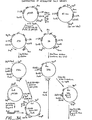
- p25AAcam was totally digested with Sail, the overhang filled in using the Klenow DNA polymerase I fragment, followed by complete digestion with XhoI.
- p3BA was totally digested with XhoI and PvuII to provide a fragment containing an intact r-LTR and the env gene. The two fragments were joined to provide plasmid RFW which was cam R and amp R and included the partial 1-LTR.
- Plasmid RFWdH3 was then completely digested with XhoI and HindIII, and gel purified. The plasmids p3B ⁇ 1, 2 and 3 and the fragments containing the r-LTR with the different deletions were isolated.
- the fragments from p3B ⁇ 1, 2 and 3 were each combined with the fragment from plasmid RFWdH3 to provide plasmids RF1, 2 or 3 , which were cam , amp R and included the partial 1-LTR, the deleted r-LTR and the env gene.
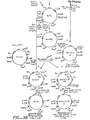
- the bacterial neo gene was excised from pNeo ( B ethesda Research Laboratories, Gaithersburg, MD) as a HindIII/EcoRI fragment and cloned into the HindIII/EcoRI digested, SV40 expression vector plasmid, pSVgtl (available from Dr. Paul Berg, Stanford University) for use as a selectable marker in tissue culture cells (Southern and Berg, J. Mol. Applied Genet. (1982) 1:327-341).
- This plasmid contains convenient BamHI restriction sites flanking the neo gene allowing its excision as a Bam fragment.
- the plasmid pKC125 was completely digested with BamHI and the Bam fragment having the neomycin resistance gene inserted into the Barn site.
- This plasmid KC-neo was completely digested with XhoI and a fragment isolated by gel electrophoresis which included the gag and pol FeLV-B genes and the neo R gene.
- This Xho fragment was then inserted into the Xho site of plasmids RFl, 2 or 3 to provide plasmids RF(1, 2 or 3)XN, where the FeLV-B virus had the neo R gene on a BamHI fragment inserted between the pol and env genes while having the modified LTRs in their proper orientation.
- the subject plasmids were selected on cam/neo plates.
- the neo R gene was then removed by BamHI digestion and selection for cam R neo S to provide plasmids RF(1, 2 or 3)X, which now had the reconstructed virus with a partial 1-LTR and r-LTR containing the previously indicated deletions.
- a plasmid was constructed having FeLV-B virus with a partial 1-LTR and an intact r-LTR.
- This construction was derived from the plasmid RFW by digestion with XhoI and combining and ligating with the XhoI fragment from plasmid KC-neo, which contains the gag and pol genes, as well as the neo gene on a BamHI fragment.
- the resulting (R F WXN) plasmid was selected on cam/neo plates, followed by digestion with BamHI to remove the neo R gene to provide plasmid RFWX, which has an intact FeLV virus except for the partial 1-LTR.
- the following cell lines were employed with their source or reference being indicated Lu-1(cat, AK-D) and Tg (cat, Fc3Tg) (A.T.C.C.); RD-4 (human), D-17 (dog) and Cos-1 (monkey) cell lines (Tissue culture facility at U.C.S.F.). Cells were propagated in Dul- becco's modified Eagles Medium with 10% fetal calf serum (FCS). Cell cultures were incubated at 37°C, in 95% air, 5% C 0 2 .
- STV saline/trypsin/versene
- STV is (per liter of double-distilled water): 8.00g NaCl, 0.4g KC1, 1.00g glucose, 0.58g NaHCO 3 , 2.5g trypsin (Difco 1:250), 0.2g versene (EDTA) (Gibco), 0.0045g phenol red; pH adjusted to 7.0-7.1 and sterile- filtered before use.
- 2x10 6 Cos-1 cells harboring FeLV-A proviruses were mixed with 2x10 6 Lu-1 cat cells and seeded in 100mm tissue culture dishes in growth medium. After reaching confluency in 5 days, the monolayers were resuspended in 0.25% trypsin-STV and 5x10 6 cells were seeded in fresh medium in 100mm plates and allowed to reach confluency. After 5 days the cells were passaged once more, grown for 5 days, and the medium was then harvested. This medium was used to infect fresh Lu-1 cells and growth of virus was determined by the reverse transcriptase assay. If the culture were positive, virus was harvested and frozen at -85°C.
- One ml of medium (virus harvest) to be tested for virus was added to a 60mm dish containing 500,000 cells in 4ml of growth medium. After 6hr at 37°C in an incubator (95% air, 5% C0 2 ) the medium was replaced with fresh growth medium and the dishes returned to the tissue culture incubator. Infected cells were passaged at approximately 5 day-intervals. For each passage, cells were diluted 1:10 and seeded in new dishes with fresh medium.
- Infected cells were grown on tissue culture dishes until they approached about 80% saturation (as judged by visual inspection with a microscope). Fresh growth medium was applied and cells were incubated at 37°C for 12hr. This medium was collected and filtered through a 0.22p filter to remove cells and cell debris. In some cases, a large amount of medium was collected and centrifuged at 5,000rpm for 10min at 4°C to pellet cells and cell debris (clarified virus). The supernate was transferred to a 36ml polyallomer tube and centrifuged in an ultracentrifuge at 25,000rpm for lhr at 4°C in a SW28 rotor. The supernate was decanted and the pellet (containing virus) was resuspended in 1ml of growth medium. Medium from uninfected cells was similarly prepared for mock-infected controls.
- C o-precipitates of DNA and calcium were prepared according to modifications of the method of Graham and Van der Eb, Virology (1973) 52:456.
- the co-precipitates were made in Hepes buffered saline (HBS; 16g NaCl, 0.74g KC1, 0.39g Na 2 HPO 4 ⁇ 7H 2 O, lg dextrose, 5g Hepes, pH adjusted to 7.05).
- HBS Hepes buffered saline
- a total mass of 20 ⁇ g of DNA (composed of 18pg of salmon sperm carrier DNA and 2pg of FeLV-plasmid DNA) was dissolved in 0.5ml of 250mM CaCl 2 .
- To this solution was added dropwise, 0.5ml of HBS and the solution mixed by bubbling a stream of air.
- Cats were inoculated with either proviral DNA, i.e., plasmids containing the modified virus genome, or virus preparations derived therefrom produced by transfection of tissue culture cells.
- cats were inoculated with 1.0ml of virus containing at least 10 5 focus-forming units (either clarified medium or pelleted virus); 0.5ml was given (26-gauge needle on a lml tuberculin syringe) subcutaneously in the shoulder and 0.5ml was given intramuscularly in the hind leg flank.
- Control cats were similarly inoculated with mock-infected medium.
- cats were inoculated with 100 ⁇ g of viral DNA within a plasmid resuspended in 1.0ml of PBS; 0.5ml was injected subcutaneously as above and 0.5ml was also injected intravenously in the right foreleg vein.
- Cats were shaved in the neck area to expose the jugular vein.
- a 22-gauge needle on a 5ml syringe was used to draw 2 to 3ml of blood.
- Whole blood was allowed to stand at room temperature for 4hr to clot and then spun at 5,000rpm for 20min. The supernate (serum) was withdrawn with a pipet and stored at -70°C.
- Cats were bled prior to the first inoculation and at various intervals thereafter.
- the reconstructed plasmids were transfected into several lines of tissue culture cells permissive for FeLV-B. After approximately 4 weeks of serial propagation, each transfected culture was tested for virus production by assaying for reverse transcriptase activity of the tissue culture medium. All cultures transfected with plasmids containing the FeLV-B proviruses, RFWX, RF1X, RF2X and RF3X were positive. A control culture that received pBR328 DNA was negative.
- Virus was harvested by collecting medium, which was used to infect fresh lines of permissive cells. These infected cells were serially passaged for four weeks, ensuring that every cell in each culture was infected.
- high molecular weight DNA was prepared from the infected cell cultures by phenol-chloroform extraction, digested with restriction endonucleases and analyzed by the Southern blotting procedure. For hybridization, radiolabeled DNA probes representative of the FeLV-B provirus were prepared.
- the recovered viruses were used to infect a variety of tissue culture cells and replication was measured by assaying for virion-associated reverse transcriptase in the growth medium.
- the following Table 2 shows that the viruses containing the deletions grow less well than wild-type virus.
- Cats were either inoculated with virus preparations or injected with proviral plasmid DNAs.
- Four cats were inoculated with FeLV-B wild-type virus.
- Two cats were inoculated with ARV3 virus (derived from the RF3X proviral plasmid), and two cats were inoculated with concentrated ARV3 virus.
- Four other cats were mock inoculated with tissue culture medium of uninfected cat cells.
- Two additional groups of four cats each each were each injected with either control proviral plasmid RFWX or proviral plasmid R F3 X modified in both LTRs. Immune responses in these animals were measured by an ELISA test, which detects the presence of antibodies to viral proteins. All cats inoculated with the virus preparations made significant levels of anti-viral antibodies and approximately one half of those injected with viral DNA did so. Over a period of five months, no clinical disease systems have been noticed in any of the animals.
- High molecular weight whole cell DNA from the human RD-4 cell lines infected with FeLV-A and FeLV-C was prepared by phenol-chloroform extraction and a sample of each digested with various restriction endonucleases and analyzed by Southern blotting with a 32 P-radiolabeled probe specific to FeLV sequences: the BssHII fragment of FeLV-B DNA (pRFWX) which comprises almost the entire proviral genome since this enzyme cleaves twice in each LTR only.
- the brief alcohol precipitation selectively recovers large DNA fragments (e.g., phage arms) while the small linker DNA is retained in solution; Sa1I/Sa1I filler fragments are not incorporated into the construct during subsequent ligation.)
- the EMBL-4 phage DNA and EcoRI digest of cellular DNA are mixed and ligated, and the resultant recombinant phage genomes packaged in vitro. After phage infection of A-sensitive E. coli, phage plaques were transferred to nitrocellulose filters, D NA was fixed and the filters were screened with FeLV- specific radiolabeled probe as above. Positive plaques, consisting of phage containing the entire FeLV-A or C proviral DNAs, together with flanking human (RD-4 cell) DNA, were recovered.
- Plasmids pFeCIA and pFeAl2A were then obtained by subcloning the provirus FeLV-C or A, respectively, from EMBL-4 into pBR328.
- provirus A it was inserted into the SstI/EcoRI site of the cam gene, while in the case of C, the provirus was inserted into the EcoRI site of the cam R gene, with the resulting plasmids being cam S , amp and tet R .
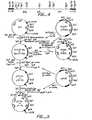
- plasmid RF3 was completely digested with SstI and SstII and treated with alkaline phosphatase.
- pFeC1A and pFeA12A were digested with SstI and SstII to provide fragments (gel isolated) including a portion of the pol gene, and the env gene.
- the fragments were then inserted into the larger SstI/SstII fragment from RF3 having the amp and cam genes, as well as the partial 1-LTR and deleted r-LTR, to provide plasmids RFC ⁇ S1-B3L or RFA ⁇ S1-B3L (selected using an appropriate probe for the insert).
- Plasmids were then digested with SstI, treated with alkaline phosphatase and an SstI fragment (gel isolated) containing the gag gene and a portion of the pol gene from pFeC1A and pFeA12A were each inserted to provide plasmids RFCB3L and RFAB3L (probe-selected), which contain the intact structural genes of FeLV-C and FeLV-A, respectively, with the partial 1-LT R and deletion containing r-LTR from RF3 and as occur in RF3X.
- the plasmids RFC ⁇ S1-B3L and RFA ⁇ S1-B3L obtained above are digested with the restriction enzymes S stI and XhoI and then isolated by gel electrophoresis.
- the resultant larger fragments containing the cam R and am p R genes are then each ligated to an SstI/XhoI fragment (containing a part of the FeLV-B pol gene) obtained by similar SstI and XhoI digestion of pKC125 followed by gel isolation.
- the resultant plasmids (p(C)-BA, p(A)-BA) are then each digested with Sstl, treated with alkaline phosphatase and ligated to a gel isolated Sstl fragment derived from pKC125 and containing the gag gene and a portion of the pol gene of FeLV-B.
- Each hybrid proviral plasmid containing the modified LTRs of FeLV-B and either all the structural genes (method 1) or the env gene only (method 2) of FeLV-A or C, is then utilized to infect susceptible tissue culture cells to produce modified hybrid FeLV viruses and either modified, hybrid, proviral DNA or virus used as a vaccine against FeLV-A or C infection.
- Similar constructions are applicable to both possible, additional FeLV subgroups and other pathological feline viruses, e.g., feline rhinotracheitis virus, feline infectious peritonitis virus etc.
- the subject data show that the LTRs of retroviruses, including oncornaviruses, can be modified to reduce replication capability, while retaining infectivity, so as to provide effective vaccines for mammalian or avian hosts subject to infection by such viruses.
- the enhancer region in the LTR preferably by a deletion of at least about 5 bases and modification of the other LTR to prevent complementarity, i.e., the reversion to wild-type activity by recombination
- the infectivity can be retained and an immune response achieved by infecting (e.g., injection, inoculation) mammalian or avian hosts with either the modified viral DNA (proviral plasmid) or modified virus derived therefrom.
- hybrid viral DNAs or viruses can be constructed containing the modified LTRs of one virus and at least the envelope gene(s) of another virus or other gene from a pathogen to provide an immune response, where reduced pathogenicity is dictated by the components of the first virus, but the immunogenicity is dictated by the exogenous gene.
- modified viral DNA or viruses provide similar vaccines for mammalian or avian hosts susceptible to infection by the foreign pathogen.
- Formation of the provirus can also provide for immunity from infection by the same or similar wild-type viruses, where the presence of an expressing provirus inhibits superinfection by the identical or similar virus.
- any change in cellular properties as a result of transcriptional regulation of a host gene by the transcriptional regulatory function of the LTR can be modified by diminishing or destroying the effect of the transcriptional regulation by the LTR sequence.
- the demonstrated attenuation of replication in tissue culture systems (Table 2) may be reflected in inoculated animals; thus, the inoculated animal may have a greater opportunity to develop an effective immune response.
Landscapes
- Health & Medical Sciences (AREA)
- Life Sciences & Earth Sciences (AREA)
- Chemical & Material Sciences (AREA)
- Genetics & Genomics (AREA)
- Organic Chemistry (AREA)
- Engineering & Computer Science (AREA)
- Biotechnology (AREA)
- Biophysics (AREA)
- Biomedical Technology (AREA)
- Molecular Biology (AREA)
- General Health & Medical Sciences (AREA)
- Bioinformatics & Cheminformatics (AREA)
- Biochemistry (AREA)
- Wood Science & Technology (AREA)
- Zoology (AREA)
- General Engineering & Computer Science (AREA)
- Microbiology (AREA)
- Plant Pathology (AREA)
- Physics & Mathematics (AREA)
- Virology (AREA)
- Gastroenterology & Hepatology (AREA)
- Medicinal Chemistry (AREA)
- Proteomics, Peptides & Aminoacids (AREA)
- Micro-Organisms Or Cultivation Processes Thereof (AREA)
- Medicines Containing Antibodies Or Antigens For Use As Internal Diagnostic Agents (AREA)
Applications Claiming Priority (2)
| Application Number | Priority Date | Filing Date | Title |
|---|---|---|---|
| US59333984A | 1984-03-26 | 1984-03-26 | |
| US593339 | 1984-03-26 |
Publications (2)
| Publication Number | Publication Date |
|---|---|
| EP0156299A2 true EP0156299A2 (fr) | 1985-10-02 |
| EP0156299A3 EP0156299A3 (fr) | 1987-04-01 |
Family
ID=24374338
Family Applications (1)
| Application Number | Title | Priority Date | Filing Date |
|---|---|---|---|
| EP85103245A Withdrawn EP0156299A3 (fr) | 1984-03-26 | 1985-03-20 | Vaccins viraux à LTR modifié |
Country Status (1)
| Country | Link |
|---|---|
| EP (1) | EP0156299A3 (fr) |
Cited By (6)
| Publication number | Priority date | Publication date | Assignee | Title |
|---|---|---|---|---|
| US4701416A (en) * | 1983-12-09 | 1987-10-20 | Cetus Corporation | Feline leukemia virus vaccine plasmids for fusion protein of the gp70 envelope protein of FELV |
| WO1987007301A1 (fr) * | 1986-05-30 | 1987-12-03 | Cambridge Bioscience Corporation | Procede pour preparer et utiliser des antigenes du virus de la leucemie feline |
| US4789702A (en) * | 1984-05-18 | 1988-12-06 | Cetus Corporation | Feline leukemia virus vaccine |
| EP0325768A3 (en) * | 1988-01-11 | 1989-08-30 | American Cyanamid Company | Non-reverting rna viruses |
| US5352449A (en) * | 1986-05-30 | 1994-10-04 | Cambridge Biotech Corporation | Vaccine comprising recombinant feline leukemia antigen and saponin adjuvant |
| US6042835A (en) * | 1988-12-13 | 2000-03-28 | Colorado State University Research Foundation | Prototype FelV isolates for use in disease models and vaccines |
-
1985
- 1985-03-20 EP EP85103245A patent/EP0156299A3/fr not_active Withdrawn
Non-Patent Citations (3)
| Title |
|---|
| JOURNAL OF VIROLOGY, vol. 49, February 1984, pages 629-632, American Society for Microbiology, US; J.H. NUNBERG et al.: "Nucleotide sequences of the envelope genes of two isolates of feline leukemia virus subgroup B" * |
| NATURE, vol. 306, 10th November 1983, pages 155-160, Macmillan Journals Ltd, US; A.T. PANGANIBAN et al.: "The terminal nucleotides of retrovirus DNA are required for integration but not virus production" * |
| THE EMBO JOURNAL, vol. 2, no. 12, 1983, pages 2239-2246, IRL Press Limited, Oxford, GB; M. W]NSCH et al.: "Sequence analysis of Gardner-Arnstein feline leukaemia virus envelope gene reveals common structural properties of mammalian retroviral envelope genes" * |
Cited By (6)
| Publication number | Priority date | Publication date | Assignee | Title |
|---|---|---|---|---|
| US4701416A (en) * | 1983-12-09 | 1987-10-20 | Cetus Corporation | Feline leukemia virus vaccine plasmids for fusion protein of the gp70 envelope protein of FELV |
| US4789702A (en) * | 1984-05-18 | 1988-12-06 | Cetus Corporation | Feline leukemia virus vaccine |
| WO1987007301A1 (fr) * | 1986-05-30 | 1987-12-03 | Cambridge Bioscience Corporation | Procede pour preparer et utiliser des antigenes du virus de la leucemie feline |
| US5352449A (en) * | 1986-05-30 | 1994-10-04 | Cambridge Biotech Corporation | Vaccine comprising recombinant feline leukemia antigen and saponin adjuvant |
| EP0325768A3 (en) * | 1988-01-11 | 1989-08-30 | American Cyanamid Company | Non-reverting rna viruses |
| US6042835A (en) * | 1988-12-13 | 2000-03-28 | Colorado State University Research Foundation | Prototype FelV isolates for use in disease models and vaccines |
Also Published As
| Publication number | Publication date |
|---|---|
| EP0156299A3 (fr) | 1987-04-01 |
Similar Documents
| Publication | Publication Date | Title |
|---|---|---|
| Wang et al. | Conditional infectivity of a human immunodeficiency virus matrix domain deletion mutant | |
| Braun et al. | Molecular cloning of biologically active proviruses of bovine immunodeficiency-like virus | |
| Marthas et al. | Viral determinants of simian immunodeficiency virus (SIV) virulence in rhesus macaques assessed by using attenuated and pathogenic molecular clones of SIVmac | |
| Perry et al. | The surface envelope protein gene region of equine infectious anemia virus is not an important determinant of tropism in vitro | |
| US6004799A (en) | Recombinant live feline immunodeficiency virus and proviral DNA vaccines | |
| WO1988002026A1 (fr) | Vaccins de capsides viraux vides | |
| JPH06508037A (ja) | 免疫不全ウイルス組換えポックスウイルスワクチン | |
| WO1990010078A1 (fr) | Systeme ameliore d'expression de baculovirus capable de produire des proteines de genes etrangers en grande quantite | |
| Desrosiers et al. | Retrovirus D/New England and its relation to Mason-Pfizer monkey virus | |
| Rosen et al. | Activation of enhancer sequences in type II human T-cell leukemia virus and bovine leukemia virus long terminal repeats by virus-associated trans-acting regulatory factors | |
| JPH11507515A (ja) | 遺伝的に改変したネコ免疫不全症ウイルス、およびネコ免疫不全症ウイルス感染症に対する有効なワクチンとしてのその使用 | |
| EP0156299A2 (fr) | Vaccins viraux à LTR modifié | |
| US4957865A (en) | Cloning or expression vectors containing the avian erythroblastosis virus genome and cells transfected by these vectors | |
| US4876089A (en) | Feline leukemia virus protein vaccines | |
| Renshaw et al. | Structure and transcriptional status of bovine syncytial virus in cytopathic infections | |
| EP0576092B1 (fr) | Vaccin recombinant du herpes virus félin | |
| JP3164351B2 (ja) | 疾患モデルおよびワクチンに使用するプロトタイプFeLVの分離体 | |
| Cullen et al. | Effect of intron size on splicing efficiency in retroviral transcripts | |
| Mullins et al. | FeLV-FAIDS-induced immunodeficiency syndrome in cats | |
| Barker et al. | Molecular cloning of the Mason-Pfizer monkey virus genome: characterization and cloning of subgenomic fragments | |
| EP0606452B1 (fr) | Vaccins vecteurs d'herpesvirus felin recombine | |
| EP0173997A1 (fr) | Vaccins protéiniques de virus de leucémie du chat et leur préparation | |
| US5152982A (en) | Compositions and methods for FeLV vaccination | |
| AU766264B2 (en) | Viral chimeras comprised of caev and hiv-1 genetic elements | |
| Hiramatsu et al. | Mode of transmission of human T‐cell leukemia virus type I (HTLV I) in a human promyelocytic leukemia HL60 cell |
Legal Events
| Date | Code | Title | Description |
|---|---|---|---|
| PUAI | Public reference made under article 153(3) epc to a published international application that has entered the european phase |
Free format text: ORIGINAL CODE: 0009012 |
|
| AK | Designated contracting states |
Designated state(s): AT BE CH DE FR GB IT LI LU NL SE |
|
| 17P | Request for examination filed |
Effective date: 19860129 |
|
| PUAL | Search report despatched |
Free format text: ORIGINAL CODE: 0009013 |
|
| AK | Designated contracting states |
Kind code of ref document: A3 Designated state(s): AT BE CH DE FR GB IT LI LU NL SE |
|
| 17Q | First examination report despatched |
Effective date: 19900301 |
|
| STAA | Information on the status of an ep patent application or granted ep patent |
Free format text: STATUS: THE APPLICATION HAS BEEN WITHDRAWN |
|
| 18W | Application withdrawn |
Withdrawal date: 19901221 |
|
| R18W | Application withdrawn (corrected) |
Effective date: 19901221 |
|
| RIN1 | Information on inventor provided before grant (corrected) |
Inventor name: LUCIW, PAUL A. Inventor name: DINA, DINO |