EP0156486A2 - Préparation d'émulsions - Google Patents
Préparation d'émulsions Download PDFInfo
- Publication number
- EP0156486A2 EP0156486A2 EP85300998A EP85300998A EP0156486A2 EP 0156486 A2 EP0156486 A2 EP 0156486A2 EP 85300998 A EP85300998 A EP 85300998A EP 85300998 A EP85300998 A EP 85300998A EP 0156486 A2 EP0156486 A2 EP 0156486A2
- Authority
- EP
- European Patent Office
- Prior art keywords
- oil
- range
- volume
- surfactant
- emulsion
- Prior art date
- Legal status (The legal status is an assumption and is not a legal conclusion. Google has not performed a legal analysis and makes no representation as to the accuracy of the status listed.)
- Granted
Links
Images


Classifications
-
- C—CHEMISTRY; METALLURGY
- C10—PETROLEUM, GAS OR COKE INDUSTRIES; TECHNICAL GASES CONTAINING CARBON MONOXIDE; FUELS; LUBRICANTS; PEAT
- C10L—FUELS NOT OTHERWISE PROVIDED FOR; NATURAL GAS; SYNTHETIC NATURAL GAS OBTAINED BY PROCESSES NOT COVERED BY SUBCLASSES C10G OR C10K; LIQUIFIED PETROLEUM GAS; USE OF ADDITIVES TO FUELS OR FIRES; FIRE-LIGHTERS
- C10L1/00—Liquid carbonaceous fuels
- C10L1/32—Liquid carbonaceous fuels consisting of coal-oil suspensions or aqueous emulsions or oil emulsions
- C10L1/328—Oil emulsions containing water or any other hydrophilic phase
-
- B—PERFORMING OPERATIONS; TRANSPORTING
- B01—PHYSICAL OR CHEMICAL PROCESSES OR APPARATUS IN GENERAL
- B01F—MIXING, e.g. DISSOLVING, EMULSIFYING OR DISPERSING
- B01F23/00—Mixing according to the phases to be mixed, e.g. dispersing or emulsifying
- B01F23/40—Mixing liquids with liquids; Emulsifying
- B01F23/41—Emulsifying
- B01F23/4105—Methods of emulsifying
-
- Y—GENERAL TAGGING OF NEW TECHNOLOGICAL DEVELOPMENTS; GENERAL TAGGING OF CROSS-SECTIONAL TECHNOLOGIES SPANNING OVER SEVERAL SECTIONS OF THE IPC; TECHNICAL SUBJECTS COVERED BY FORMER USPC CROSS-REFERENCE ART COLLECTIONS [XRACs] AND DIGESTS
- Y10—TECHNICAL SUBJECTS COVERED BY FORMER USPC
- Y10T—TECHNICAL SUBJECTS COVERED BY FORMER US CLASSIFICATION
- Y10T137/00—Fluid handling
- Y10T137/0318—Processes
- Y10T137/0391—Affecting flow by the addition of material or energy
Definitions
- This invention relates to a method for the preparation of emulsions of oil in water and more particularly the preparation of high internal phase ratio (HIPR) emulsions of viscous oils in water.
- HIPR high internal phase ratio
- Methods (1)-(4) can be expensive in terms of added components and capital expenditure and Method (5) is technically difficult to achieve.
- Emulsified systems containing 70% internal phase are known as HIPR emulsions.
- HIPR oil-in-water emulsions are normally prepared by dispersing increased amounts of oil into the continuous phase until the internal phase volume exceeds 70%.
- the systems cannot contain discrete spherical oil droplets; rather, they will consist of highly distorted oil droplets, separated by thin interfacial aqueous films.
- British Patent Specification No 1,283,462 discloses a method for producing an oil-in-water emulsion comprising beating up a mixture of the oil and water together with emulsifying agent in a vessel having a bottom exit to disperse the oil in droplets of an average size of not more than 10 microns in diameter throughout the water to form a concentrated emulsion, continuously withdrawing concentrated emulsion from the bottom exit of the vessel while simultaneously introducing components of the mixture into the top of the vessel to form further concentrated emulsion.
- the oils are synthetic polymers or thickened animal or vegetable oils.
- the action of the beater results in particle sizes in the dispersed phase of not more than 10 microns in diameter, usually from about 0.5 to 2 microns in diameter.
- concentration of surfactant used is relatively high, 4-10% by weight of the total composition.
- 1,283,462 discloses that the concentrated emulsions are discharged through a short conduit from the emulsifying vessel to a tank in which they are further diluted, the concentrated emulsions are not suitable, nor are they intended, for transportation over long distances through relatively large diameter pipelines such as those used for the transportation of crude oil.
- HIPR emulsions of viscous oils in water in which emulsions are directly prepared from a feedstock initially containing a high volume ratio of oil to water using low energy mixing.
- Some emulsions are readily pumpable through a pipeline, others are so after dilution.
- the emulsions or diluted emulsions are of high but not excessive stability.
- high but not excessive stability we mean that they are stable following preparation, during transportation and on standing, and can resist various conditions encountered during pipeline flow such as temperature fluctuations and mechanical shearing. However, they can be broken when desired by using an appropriate treatment, for example treatment with an alcohol or a salt.
- a method for the preparation of an HIPR emulsion of oil in water which method comprises directly mixing 70 to 98%, preferably 80 to 90%, by volume of a viscous oil having a viscosity in the range 200 to 250,000 mPa.s at the mixing temperature with 30 to 2%, preferably 20 to 10%, by volume of an aqueous solution of an emulsifying surfactant or an alkali, percentages being expressed as percentages by volume of the total mixture; mixing being effected under low shear conditions in the range 10 to 1,000, preferably 50 to 250 reciprocal seconds in such manner that an emulsion is formed comprising highly distorted oil droplets having mean droplet diameters in the range 2 to 50 micron separated by thin interfacial films.
- Emulsifying surfactants may be non-ionic, ethoxylated ionic anionic or cationic, but are preferably non-ionic.
- Suitable non-ionic surfactants are those whose molecules contain both hydrocarbyl, hydrophobic groups (which may be substituted) having a chain length in the range 8 to 18 carbon atoms, and one or more polyoxyethylene groups containing 9 to 100 ethylene oxide units in total, the hydrophilic group or groups containing 30 or more ethylene oxide units when the hydrophobic group has a chain length of 15 carbon atoms or greater.
- Preferred non-ionic surfactants include ethoxylated alkyl phenols, ethoxylated secondary alcohols, ethoxylated amines and ethoxylated sorbitan esters.
- Non-ionic surfactants are suitably employed in amount 0.5 to 5X by weight, expressed as a percentage by weight of the aqueous solution.
- the salinity of the aqueous phase is not material and fresh water, saline water (e.g. sea water) or highly saline water (e.g. petroleum reservoir connate water) may equally be employed.
- saline water e.g. sea water
- highly saline water e.g. petroleum reservoir connate water
- Suitable cationic surfactants include quaternary ammonium compounds and n-alkyl diamines and triamines in acidic audic form.
- Suitable anionic surfactants include alkyl, aryl and alkyl aryl sulphonates and phosphates.
- Alkali is suitably employed in amount 0.01 to 0.5% by weight, expressed as above.
- Ionic surfactants are more sensitive to the salinity of the aqueous phase, particularly to divalent and trivalent ions found in connate water, and fresh water should be used in connection with these materials.
- hydrophilic polymers may be added in addition to the surfactant or alkali.
- Suitable polymers include polyvinyl alcohol, polyethylene oxide, polyvinyl pyrrolidone and polysaccharide biopolymers.
- these polymers When used with a surfactant these polymers may reduce the quantity of non-ionic surfactant required and/or improve the performance of ionic surfactants.
- the quantity of polymer employed is preferably in the range 0.25 to 5% by weight of the aqueous solution.
- HIPR emulsions of highly viscous oils in water are frequently as much as three to four orders of magnitude less viscous than the oil itself and consequently are much easier to pump through a pipeline and require considerably less energy to do so.
- the droplet size distribution will be in a narrow range, i.e. the emulsions have a high degree of monodispersity.
- the droplet size can be controlled by varying any or all of the three main parameters: mixing intensity, mixing time and surfactant concentration. Increasing any or all of these will decrease the droplet size.
- the oil and water may be mixed under conditions known to be suitable for mixing viscous fluids, see HF Irving and RL Saxton, Mixing Theory and Practice (Eds. VW Uhl and JB Gray), Vol 1, Chap 8, - Academic Press, 1966. Static mixers are also suitable.
- a particularly suitable mixer is a vessel having rotating arms.
- the speed of rotation is in the range 500 to 1,200 rpm. Below 500 rpm mixing is relatively ineffective and/or excessive mixing times are required.
- Suitable mixing times are in the range 5 seconds to 10 minutes. Similar remarks to those made above in respect of the speed range also apply to the time range.
- the HIPR emulsions as prepared are stable and can be diluted with aqueous surfactant solution, fresh water or saline water to produce emulsions of lower oil phase volume showing high degrees of monodispersity.
- the emulsions may be diluted to a required viscosity without adversely affecting stability. Because the narrow size distribution and droplet size are maintained upon dilution the resulting emulsion shows little tendency to creaming. This in turn reduces the risk of phase separation occurring.
- the emulsions are suitable for transportation through a pipeline and represent an elegant solution to the problem of transporting viscous oils.
- a method for the transportation of a viscous oil comprises the steps of (a) preparing an HIPR emulsion of the oil-in-water type by a method as hereinbefore described, (b) optionally diluting the HIPR emulsion with an aqueous phase to a desired viscosity and/or concentration, and (c) pumping the HIPR emulsion or the diluted emulsion through a pipeline.
- the stability of the emulsions reduces the risk of phase separation occurring in the pipeline which would result in a higher pressure drop and a loss in efficiency.
- the emulsion After pipelining, for example from an inland oilfield to a coastal terminal, it may be desirable to tranship the oil further by tanker. In this case, the emulsion, or even more so, the diluted emulsion, may be partially dehydrated before loading.
- Suitable oils for treatment are the viscous, heavy and/or asphaltenic crude oils to be found in Canada, the USA and Venezuela, for example Lake Marguerite crude oil from Alberta, Hewitt crude oil from Oklahoma and Cerro Negro crude oil from the Orinoco oil belt.
- API gravity should be in the range 5° to 20°, although the method can be applied to crude oils outside this API range.
- LMCO Lake Marguerite crude oil
- the surfactants used were either commercially available or were samples received from BP Chemicals International or BP Detergents International. 2.5% (wt/wt) surfactant solutions were made up in simulated formation water, see Table 1, except where distilled water is indicated.
- 90X HIPR emulsions were prepared by adding a 90 g sample of LMCO to a 250 ml beaker containing 10 g of 2.5% aqueous surfactant solution. This was then mixed at room temperature (20 ⁇ 2°C) using a twin-beater hand-held domestic mixer (Moulinex Model No 593) operating for one minute at 1000 rpm (speed setting "1")followed by a further one minute period at 1200 rpm (speed setting "2").
- a twin-beater hand-held domestic mixer (Moulinex Model No 593) operating for one minute at 1000 rpm (speed setting "1")followed by a further one minute period at 1200 rpm (speed setting "2").
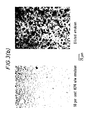
- the morphology of the emulsions resembles well-drained polyhedral foams as shown in the photomicrograph of a typical HIPR (90%) emulsion stabilised by a 2.5% solution of the surfactant used in Example 10, see Figure 1.
- the appearance of the mixture is indicative of whether aqueous surfactant lamellae (dark-brown colour, creamy texture) or aqueous droplets (lustrous black colour, smooth texture) are formed.
- aqueous surfactant lamellae dark-brown colour, creamy texture
- aqueous droplets lustrous black colour, smooth texture
- Emulsions of lower oil coatent can be produced by dilution of the former emulsion with aqueous surfactant solution, fresh water or saline water as previously stated.
- Droplet size distributions of emulsions prepared in this way were measured using Coulter Counter Analysis (Model TA II, Coulter Electronics, Luton, Beds). A typical droplet size distribution curve is shown in Figure 2.
- Table 2 contains a list and generalised structures of the surfactants used, and their effectiveness as 2.5% solutions based on the water phase in producing HIPR o/w emulsions, except where other concentrations are indicated.
Landscapes
- Chemical & Material Sciences (AREA)
- Chemical Kinetics & Catalysis (AREA)
- Oil, Petroleum & Natural Gas (AREA)
- Engineering & Computer Science (AREA)
- General Chemical & Material Sciences (AREA)
- Organic Chemistry (AREA)
- Colloid Chemistry (AREA)
- Liquid Carbonaceous Fuels (AREA)
Applications Claiming Priority (2)
| Application Number | Priority Date | Filing Date | Title |
|---|---|---|---|
| GB8404347 | 1984-02-18 | ||
| GB8404347A GB8404347D0 (en) | 1984-02-18 | 1984-02-18 | Preparation of emulsions |
Publications (3)
| Publication Number | Publication Date |
|---|---|
| EP0156486A2 true EP0156486A2 (fr) | 1985-10-02 |
| EP0156486A3 EP0156486A3 (en) | 1985-11-21 |
| EP0156486B1 EP0156486B1 (fr) | 1990-09-19 |
Family
ID=10556846
Family Applications (1)
| Application Number | Title | Priority Date | Filing Date |
|---|---|---|---|
| EP19850300998 Expired - Lifetime EP0156486B1 (fr) | 1984-02-18 | 1985-02-14 | Préparation d'émulsions |
Country Status (9)
| Country | Link |
|---|---|
| US (1) | US4934398A (fr) |
| EP (1) | EP0156486B1 (fr) |
| BR (1) | BR8505279A (fr) |
| CA (1) | CA1272934A (fr) |
| DE (1) | DE3579719D1 (fr) |
| GB (1) | GB8404347D0 (fr) |
| NO (1) | NO168406C (fr) |
| RU (1) | RU2009708C1 (fr) |
| WO (1) | WO1985003646A1 (fr) |
Cited By (15)
| Publication number | Priority date | Publication date | Assignee | Title |
|---|---|---|---|---|
| EP0184433A3 (en) * | 1984-12-07 | 1987-12-02 | The British Petroleum Company P.L.C. | Preparation of emulsions |
| EP0301766A1 (fr) * | 1987-07-28 | 1989-02-01 | The British Petroleum Company p.l.c. | Production d'émulsions de fuel-oil |
| US4895641A (en) * | 1984-12-07 | 1990-01-23 | Briceno Maria I | Method of desalting crude oil |
| GB2231060A (en) * | 1987-09-11 | 1990-11-07 | Intevep Sa | Hydrocarbon-in-water-emulsions |
| JPH0397788A (ja) * | 1989-09-12 | 1991-04-23 | Kao Corp | 超重質油エマルション燃料 |
| JPH0397786A (ja) * | 1989-09-12 | 1991-04-23 | Kao Corp | 超重質油エマルション燃料 |
| GB2209762B (en) * | 1987-09-11 | 1992-05-20 | Intevep Sa | Viscous hydrocarbon in water emulsions |
| GB2260088A (en) * | 1991-08-19 | 1993-04-07 | Intevep Sa | Viscous hydrocarbon emulsions |
| GB2274254A (en) * | 1993-01-04 | 1994-07-20 | Intevep Sa | Emulsion of viscous hydrocarbon in aqueous buffer solution and method for preparing same |
| US5360458A (en) * | 1989-03-02 | 1994-11-01 | The Lubrizol Corporation | Oil-water emulsions |
| JPH0748582A (ja) * | 1994-07-11 | 1995-02-21 | Kao Corp | 超重質油エマルション燃料 |
| WO1996039461A1 (fr) * | 1995-06-05 | 1996-12-12 | The Dow Chemical Company | Procede de preparation d'emulsions ayant un rapport de phase interne eleve et latex derives de ces emulsions |
| US5688842A (en) * | 1995-06-05 | 1997-11-18 | The Dow Chemical Company | Process for preparing high internal phase ratio emulsions and latexes derived thereof |
| FR2766736A1 (fr) * | 1997-07-29 | 1999-02-05 | Centre Nat Rech Scient | Procede pour preparer des emulsions concentrees en une phase de viscosite elevee dont des emulsions de bitumes |
| US6840290B2 (en) | 2000-12-06 | 2005-01-11 | Bp Oil International Limited | Process and apparatus for fuelling a marine vessel |
Families Citing this family (27)
| Publication number | Priority date | Publication date | Assignee | Title |
|---|---|---|---|---|
| US5641433A (en) * | 1985-01-25 | 1997-06-24 | Intevep, S.A. | Preparation of HIPR emulsions |
| US5670087A (en) * | 1985-04-24 | 1997-09-23 | Intevep, S.A. | Method of preparing HIPR bituminous emulsions |
| GB8521968D0 (en) * | 1985-09-04 | 1985-10-09 | British Petroleum Co Plc | Preparation of emulsions |
| US5419852A (en) * | 1991-12-02 | 1995-05-30 | Intevep, S.A. | Bimodal emulsion and its method of preparation |
| US5411558A (en) * | 1992-09-08 | 1995-05-02 | Kao Corporation | Heavy oil emulsion fuel and process for production thereof |
| JP3069673B2 (ja) * | 1992-09-08 | 2000-07-24 | 花王株式会社 | 重質油エマルジョン燃料 |
| US5399293A (en) * | 1992-11-19 | 1995-03-21 | Intevep, S.A. | Emulsion formation system and mixing device |
| EP0691398A1 (fr) * | 1994-07-08 | 1996-01-10 | Unilever N.V. | Procédé de fabrication de capsules de polymère |
| DK0732144T3 (da) * | 1995-03-17 | 1999-03-22 | Intevep Sa | Emulgeringssystem og blandeanordning |
| CN1067601C (zh) * | 1995-03-20 | 2001-06-27 | 英特卫普有限公司 | 乳液形成方法和混合设备 |
| GB9517646D0 (en) | 1995-08-30 | 1995-11-01 | Quadrise Ltd | Emulsion fuels and their use in gas turbines |
| RU2158437C1 (ru) * | 1999-06-25 | 2000-10-27 | Открытое акционерное общество "Урало-Сибирские магистральные нефтепроводы им. Д.А. Черняева" | Автоматизированная система управления процессом компаундирования нефтей |
| US6783766B2 (en) * | 2002-03-06 | 2004-08-31 | Dow Global Technologies Inc. | Process for preparing a cosmetic formulation |
| RU2248031C2 (ru) * | 2003-01-23 | 2005-03-10 | Открытое акционерное общество "Урало-Сибирские магистральные нефтепроводы им. Д.А. Черняева" | Система управления процессом компаундирования нефтей по нескольким параметрам качества |
| EP1682078A1 (fr) * | 2003-08-07 | 2006-07-26 | The Procter & Gamble Company | Compositions de soin personnel |
| CN100415205C (zh) * | 2003-08-07 | 2008-09-03 | 宝洁公司 | 具有浓缩的内部油相的乳液 |
| CN1832721A (zh) * | 2003-08-07 | 2006-09-13 | 宝洁公司 | 浓缩的水包油乳液 |
| CA2540767C (fr) * | 2003-10-02 | 2014-07-15 | Philip Fletcher | Procede de reduction de la viscosite de fluides visqueux |
| US7144148B2 (en) * | 2004-06-18 | 2006-12-05 | General Electric Company | Continuous manufacture of high internal phase ratio emulsions using relatively low-shear and low-temperature processing steps |
| US20060010004A1 (en) * | 2004-07-09 | 2006-01-12 | Deckner George E | Method for providing customized products |
| GB0506795D0 (en) * | 2005-04-04 | 2005-05-11 | Agt Energy Ltd | Wax-containing materials |
| CN100365104C (zh) * | 2005-05-30 | 2008-01-30 | 周毕华 | 醇型乳化柴油及其制备方法 |
| MX2009013705A (es) * | 2009-12-15 | 2011-06-15 | Mexicano Inst Petrol | Procedimiento de preparacion de emulsiones mejoradas de crudo pesado y extrapesado mediante biotensoactivos en agua y producto resultante. |
| DE102011118500A1 (de) | 2011-11-15 | 2013-05-16 | Planaturo GmbH & Co. KG | Vegane Emulsion |
| RU2580909C2 (ru) * | 2014-07-01 | 2016-04-10 | Федеральное государственное бюджетное образовательное учреждение высшего профессионального образования "Уфимский государственный нефтяной технический университет" | Система компаундирования высокосернистых нефтей по нескольким направлениям перекачки смешанного потока |
| JP6807939B2 (ja) | 2015-11-06 | 2021-01-06 | クアドライズ インターナショナル リミテッド | 水中油型エマルション |
| WO2018206904A2 (fr) * | 2017-05-10 | 2018-11-15 | Quadrise International Ltd | Émulsions huile dans l'eau |
Family Cites Families (13)
| Publication number | Priority date | Publication date | Assignee | Title |
|---|---|---|---|---|
| US2684949A (en) * | 1952-04-12 | 1954-07-27 | Shell Dev | Method of producing dispersions of immiscible liquids or solids in a liquid medium |
| US3067038A (en) * | 1960-03-01 | 1962-12-04 | Keico Company | Edible compositions comprising oil-in-water emulsions |
| GB1191289A (en) * | 1966-08-19 | 1970-05-13 | Shinetsu Chem Ind Co | Method of Emulsifying Highly Viscous Organopolysiloxane Oils in Water |
| US3519006A (en) * | 1966-12-05 | 1970-07-07 | Ralph Simon | Pipelining oil/water mixtures |
| US3425429A (en) * | 1967-01-11 | 1969-02-04 | Chevron Res | Method of moving viscous crude oil through a pipeline |
| US3490471A (en) * | 1967-12-22 | 1970-01-20 | Texaco Inc | Pipeline transportation of viscous hydrocarbons |
| US3565817A (en) * | 1968-08-15 | 1971-02-23 | Petrolite Corp | Continuous process for the preparation of emuisions |
| US3669900A (en) * | 1969-05-02 | 1972-06-13 | Pacific Vegetable Oil Corp | Method and apparatus for continuous production of oil-in-water emulsions |
| US3736288A (en) * | 1971-07-09 | 1973-05-29 | Union Carbide Corp | Drag reducing formulations |
| US4028426A (en) * | 1975-11-18 | 1977-06-07 | Ppg Industries, Inc. | Removal of monochloroacetylene from chlorinated hydrocarbons |
| US4155873A (en) * | 1977-07-15 | 1979-05-22 | The Goodyear Tire & Rubber Company | Dispersing of dry organic solids in a high viscosity emulsion of organic liquid in water, and product |
| CA1132908A (fr) * | 1978-09-25 | 1982-10-05 | Michael P. Aronson | Emulsions tres stables |
| US4293459A (en) * | 1979-06-07 | 1981-10-06 | American Can Company | Asphalt emulsion-conditioner |
-
1984
- 1984-02-18 GB GB8404347A patent/GB8404347D0/en active Pending
-
1985
- 1985-02-14 DE DE8585300998T patent/DE3579719D1/de not_active Expired - Lifetime
- 1985-02-14 BR BR8505279A patent/BR8505279A/pt not_active IP Right Cessation
- 1985-02-14 WO PCT/GB1985/000061 patent/WO1985003646A1/fr not_active Ceased
- 1985-02-14 EP EP19850300998 patent/EP0156486B1/fr not_active Expired - Lifetime
- 1985-02-15 NO NO850597A patent/NO168406C/no not_active IP Right Cessation
- 1985-02-15 CA CA000474479A patent/CA1272934A/fr not_active Expired
- 1985-10-17 RU SU3973845 patent/RU2009708C1/ru active
-
1988
- 1988-06-02 US US07/201,271 patent/US4934398A/en not_active Expired - Lifetime
Cited By (24)
| Publication number | Priority date | Publication date | Assignee | Title |
|---|---|---|---|---|
| US4895641A (en) * | 1984-12-07 | 1990-01-23 | Briceno Maria I | Method of desalting crude oil |
| EP0184433A3 (en) * | 1984-12-07 | 1987-12-02 | The British Petroleum Company P.L.C. | Preparation of emulsions |
| EP0301766A1 (fr) * | 1987-07-28 | 1989-02-01 | The British Petroleum Company p.l.c. | Production d'émulsions de fuel-oil |
| US5000757A (en) * | 1987-07-28 | 1991-03-19 | British Petroleum Company P.L.C. | Preparation and combustion of fuel oil emulsions |
| GB2231060B (en) * | 1987-09-11 | 1992-05-20 | Intevep Sa | Hydrocarbon-in-water emulsions |
| GB2231060A (en) * | 1987-09-11 | 1990-11-07 | Intevep Sa | Hydrocarbon-in-water-emulsions |
| GB2209762B (en) * | 1987-09-11 | 1992-05-20 | Intevep Sa | Viscous hydrocarbon in water emulsions |
| US5360458A (en) * | 1989-03-02 | 1994-11-01 | The Lubrizol Corporation | Oil-water emulsions |
| JPH0397786A (ja) * | 1989-09-12 | 1991-04-23 | Kao Corp | 超重質油エマルション燃料 |
| JPH0397788A (ja) * | 1989-09-12 | 1991-04-23 | Kao Corp | 超重質油エマルション燃料 |
| GB2260088B (en) * | 1991-08-19 | 1995-08-23 | Intevep Sa | Method of preparation of emulsions of viscous hydrocarbon in water which inhibits aging |
| GB2260088A (en) * | 1991-08-19 | 1993-04-07 | Intevep Sa | Viscous hydrocarbon emulsions |
| DE4345040C2 (de) * | 1993-01-04 | 2001-03-08 | Intevep Sa | Bimodale Öl-in-Wasser-Emulsion |
| GB2274254A (en) * | 1993-01-04 | 1994-07-20 | Intevep Sa | Emulsion of viscous hydrocarbon in aqueous buffer solution and method for preparing same |
| DE4345040A1 (de) * | 1993-01-04 | 1994-08-04 | Intevep Sa | Emulsion eines viskosen Kohlenwasserstoffes sowie Verfahren zu deren Herstellung |
| GB2274254B (en) * | 1993-01-04 | 1997-07-16 | Intevep Sa | Emulsion of viscous hydrocarbon in aqueous buffer solution and method for preparing same |
| JPH0748582A (ja) * | 1994-07-11 | 1995-02-21 | Kao Corp | 超重質油エマルション燃料 |
| WO1996039461A1 (fr) * | 1995-06-05 | 1996-12-12 | The Dow Chemical Company | Procede de preparation d'emulsions ayant un rapport de phase interne eleve et latex derives de ces emulsions |
| US5688842A (en) * | 1995-06-05 | 1997-11-18 | The Dow Chemical Company | Process for preparing high internal phase ratio emulsions and latexes derived thereof |
| FR2766736A1 (fr) * | 1997-07-29 | 1999-02-05 | Centre Nat Rech Scient | Procede pour preparer des emulsions concentrees en une phase de viscosite elevee dont des emulsions de bitumes |
| WO1999006139A1 (fr) * | 1997-07-29 | 1999-02-11 | Centre National De La Recherche Scientifique (C.N.R.S.) | Procede pour preparer des emulsions concentrees et calibrees en une phase de viscosite elevee dont des emulsions de bitumes |
| AU751953B2 (en) * | 1997-07-29 | 2002-09-05 | Centre National De La Recherche Scientifique (C.N.R.S.) | Method for preparing concentrated and emulsions calibrated in a highly viscous phase, in particular bitumen emulsions |
| US6602917B1 (en) | 1997-07-29 | 2003-08-05 | Centre National De La Recherche Scientifique (C.N.R.S.) | Method for preparing concentrated and emulsions calibrated in a highly viscous phase, in particular bitumen emulsions |
| US6840290B2 (en) | 2000-12-06 | 2005-01-11 | Bp Oil International Limited | Process and apparatus for fuelling a marine vessel |
Also Published As
| Publication number | Publication date |
|---|---|
| WO1985003646A1 (fr) | 1985-08-29 |
| GB8404347D0 (en) | 1984-03-21 |
| EP0156486B1 (fr) | 1990-09-19 |
| NO168406B (no) | 1991-11-11 |
| RU2009708C1 (ru) | 1994-03-30 |
| EP0156486A3 (en) | 1985-11-21 |
| NO850597L (no) | 1985-08-19 |
| NO168406C (no) | 1992-02-19 |
| US4934398A (en) | 1990-06-19 |
| DE3579719D1 (de) | 1990-10-25 |
| BR8505279A (pt) | 1986-02-18 |
| CA1272934A (fr) | 1990-08-21 |
Similar Documents
| Publication | Publication Date | Title |
|---|---|---|
| EP0156486B1 (fr) | Préparation d'émulsions | |
| EP0214843B1 (fr) | Préparation d'émulsions | |
| US5641433A (en) | Preparation of HIPR emulsions | |
| US5503772A (en) | Bimodal emulsion and its method of preparation | |
| CA1291002C (fr) | Methode de preparation d'une emulsion stable de petrole brut, aux fins du transport de ce petrole | |
| EP0301766B1 (fr) | Production d'émulsions de fuel-oil | |
| CA2232490C (fr) | Surfactif naturel avec des amines et un alcool ethoxyle | |
| US20110139262A1 (en) | Process of preparing improved heavy and extra heavy crude oil emulsions by use of biosurfactants in water and product thereof | |
| US5399293A (en) | Emulsion formation system and mixing device | |
| CA1258415A (fr) | Preparation d'emulsions | |
| EP0270476A1 (fr) | Procédé pour la production d'émulsions stables pour le transport de l'huile brute | |
| CA1260423A (fr) | Methode de dessalage du petrole brut | |
| EP0162591B1 (fr) | Emulsions bitumineuses | |
| US20100314296A1 (en) | Pipelining of oil in emulsion form | |
| US5670087A (en) | Method of preparing HIPR bituminous emulsions | |
| EP0732144B1 (fr) | Système de fabrication d'une émulsion et dispositif de mélange | |
| NO175410B (no) | Fremgangsmåte for transport av en viskös olje ved fremstilling av en emulsjon av olje-i-vann | |
| Huda et al. | Microwave separation of water-in-crude oil emulsions | |
| CA2023465A1 (fr) | Methode de desemulsification | |
| JP2581530B2 (ja) | エマルジョン形成システム及び混合装置 | |
| CA2049404A1 (fr) | Methode de controle de la qualite d'une emulsion |
Legal Events
| Date | Code | Title | Description |
|---|---|---|---|
| PUAI | Public reference made under article 153(3) epc to a published international application that has entered the european phase |
Free format text: ORIGINAL CODE: 0009012 |
|
| PUAL | Search report despatched |
Free format text: ORIGINAL CODE: 0009013 |
|
| AK | Designated contracting states |
Designated state(s): BE DE FR GB IT NL |
|
| RHK1 | Main classification (correction) |
Ipc: F17D 1/17 |
|
| AK | Designated contracting states |
Designated state(s): BE DE FR GB IT NL |
|
| 17P | Request for examination filed |
Effective date: 19860415 |
|
| 17Q | First examination report despatched |
Effective date: 19871117 |
|
| ITTA | It: last paid annual fee | ||
| GRAA | (expected) grant |
Free format text: ORIGINAL CODE: 0009210 |
|
| AK | Designated contracting states |
Kind code of ref document: B1 Designated state(s): BE DE FR GB IT NL |
|
| ITF | It: translation for a ep patent filed | ||
| REF | Corresponds to: |
Ref document number: 3579719 Country of ref document: DE Date of ref document: 19901025 |
|
| ET | Fr: translation filed | ||
| PLBE | No opposition filed within time limit |
Free format text: ORIGINAL CODE: 0009261 |
|
| STAA | Information on the status of an ep patent application or granted ep patent |
Free format text: STATUS: NO OPPOSITION FILED WITHIN TIME LIMIT |
|
| 26N | No opposition filed | ||
| REG | Reference to a national code |
Ref country code: GB Ref legal event code: IF02 |
|
| PGFP | Annual fee paid to national office [announced via postgrant information from national office to epo] |
Ref country code: NL Payment date: 20031217 Year of fee payment: 20 Ref country code: DE Payment date: 20031217 Year of fee payment: 20 |
|
| PGFP | Annual fee paid to national office [announced via postgrant information from national office to epo] |
Ref country code: FR Payment date: 20031223 Year of fee payment: 20 |
|
| PGFP | Annual fee paid to national office [announced via postgrant information from national office to epo] |
Ref country code: GB Payment date: 20040123 Year of fee payment: 20 |
|
| PGFP | Annual fee paid to national office [announced via postgrant information from national office to epo] |
Ref country code: BE Payment date: 20040312 Year of fee payment: 20 |
|
| PG25 | Lapsed in a contracting state [announced via postgrant information from national office to epo] |
Ref country code: GB Free format text: LAPSE BECAUSE OF EXPIRATION OF PROTECTION Effective date: 20050213 |
|
| PG25 | Lapsed in a contracting state [announced via postgrant information from national office to epo] |
Ref country code: NL Free format text: LAPSE BECAUSE OF EXPIRATION OF PROTECTION Effective date: 20050214 |
|
| BE20 | Be: patent expired |
Owner name: S.A. *INTEVEP Effective date: 20050214 Owner name: THE *BRITISH PETROLEUM CY P.L.C. Effective date: 20050214 |
|
| REG | Reference to a national code |
Ref country code: GB Ref legal event code: PE20 |
|
| NLV7 | Nl: ceased due to reaching the maximum lifetime of a patent |
Effective date: 20050214 |
|
| BE20 | Be: patent expired |
Owner name: S.A. *INTEVEP Effective date: 20050214 Owner name: THE *BRITISH PETROLEUM CY P.L.C. Effective date: 20050214 |