EP0158973A2 - Multisites immunometrisches Testverfahren - Google Patents
Multisites immunometrisches Testverfahren Download PDFInfo
- Publication number
- EP0158973A2 EP0158973A2 EP85104365A EP85104365A EP0158973A2 EP 0158973 A2 EP0158973 A2 EP 0158973A2 EP 85104365 A EP85104365 A EP 85104365A EP 85104365 A EP85104365 A EP 85104365A EP 0158973 A2 EP0158973 A2 EP 0158973A2
- Authority
- EP
- European Patent Office
- Prior art keywords
- antibody
- antibodies
- labelled
- antigen
- afp
- Prior art date
- Legal status (The legal status is an assumption and is not a legal conclusion. Google has not performed a legal analysis and makes no representation as to the accuracy of the status listed.)
- Granted
Links
Images




Classifications
-
- G—PHYSICS
- G01—MEASURING; TESTING
- G01N—INVESTIGATING OR ANALYSING MATERIALS BY DETERMINING THEIR CHEMICAL OR PHYSICAL PROPERTIES
- G01N33/00—Investigating or analysing materials by specific methods not covered by groups G01N1/00 - G01N31/00
- G01N33/48—Biological material, e.g. blood, urine; Haemocytometers
- G01N33/50—Chemical analysis of biological material, e.g. blood, urine; Testing involving biospecific ligand binding methods; Immunological testing
- G01N33/53—Immunoassay; Biospecific binding assay; Materials therefor
- G01N33/543—Immunoassay; Biospecific binding assay; Materials therefor with an insoluble carrier for immobilising immunochemicals
- G01N33/54306—Solid-phase reaction mechanisms
-
- G—PHYSICS
- G01—MEASURING; TESTING
- G01N—INVESTIGATING OR ANALYSING MATERIALS BY DETERMINING THEIR CHEMICAL OR PHYSICAL PROPERTIES
- G01N33/00—Investigating or analysing materials by specific methods not covered by groups G01N1/00 - G01N31/00
- G01N33/48—Biological material, e.g. blood, urine; Haemocytometers
- G01N33/50—Chemical analysis of biological material, e.g. blood, urine; Testing involving biospecific ligand binding methods; Immunological testing
- G01N33/53—Immunoassay; Biospecific binding assay; Materials therefor
- G01N33/575—Immunoassay; Biospecific binding assay; Materials therefor for cancer
- G01N33/5757—Immunoassay; Biospecific binding assay; Materials therefor for cancer involving oncofoetal proteins
-
- G—PHYSICS
- G01—MEASURING; TESTING
- G01N—INVESTIGATING OR ANALYSING MATERIALS BY DETERMINING THEIR CHEMICAL OR PHYSICAL PROPERTIES
- G01N33/00—Investigating or analysing materials by specific methods not covered by groups G01N1/00 - G01N31/00
- G01N33/48—Biological material, e.g. blood, urine; Haemocytometers
- G01N33/50—Chemical analysis of biological material, e.g. blood, urine; Testing involving biospecific ligand binding methods; Immunological testing
- G01N33/53—Immunoassay; Biospecific binding assay; Materials therefor
- G01N33/577—Immunoassay; Biospecific binding assay; Materials therefor involving monoclonal antibodies binding reaction mechanisms characterised by the use of monoclonal antibodies
-
- G—PHYSICS
- G01—MEASURING; TESTING
- G01N—INVESTIGATING OR ANALYSING MATERIALS BY DETERMINING THEIR CHEMICAL OR PHYSICAL PROPERTIES
- G01N33/00—Investigating or analysing materials by specific methods not covered by groups G01N1/00 - G01N31/00
- G01N33/48—Biological material, e.g. blood, urine; Haemocytometers
- G01N33/50—Chemical analysis of biological material, e.g. blood, urine; Testing involving biospecific ligand binding methods; Immunological testing
- G01N33/74—Chemical analysis of biological material, e.g. blood, urine; Testing involving biospecific ligand binding methods; Immunological testing involving hormones or other non-cytokine intercellular protein regulatory factors such as growth factors, including receptors to hormones and growth factors
- G01N33/76—Human chorionic gonadotropin including luteinising hormone, follicle stimulating hormone, thyroid stimulating hormone or their receptors
Definitions
- the present invention relates to an immunometric assay using monoclonal antibodies for the detection and/or determination of the levels of multiepitopic antigens, such as, for example, alpha-feto protein or human chorionic gonadotropin.
- multiepitopic antigens such as, for example, alpha-feto protein or human chorionic gonadotropin.
- Immunometric assays also called “sandwich” assays
- monoclonal antibodies for the determination of the presence and/or concentration of antigenic substances in fluids
- Bennett et al. United States Patent 4,376,110 suggests that this type of assay is useful for the determination of a variety of polyvalent antigenic substances against which antibodies can be produced.
- David et al. mention, among others, hepatitis A and B, IgE and alpha-fetoprotein.
- the assays are described in the simultaneous, reverse and forward modes, and specifically exemplified for the determination of IgE.
- Alpna-fetoprotein is a major serum protein synthesized by fetal liver cells, yolk sac cells, and in trace amounts by the fetal gastrointestinal tract. Reappearance of AFP in adult serum often signals pathologic conditions, particularly the presence of hepatocellular carcinomas (HCC) and germ cell tumors containing yolk sac cell elements.
- HCC hepatocellular carcinomas
- existing assays ray be successfully used for monitoring treatment of AFP-producing tumors and as an independent prognostic tool, the finding of elevated serum AFP levels in some patients with nonmalignant liver diseases, particularly in acute and chronic viral hepatitis and cirrhosis, has limited the value of such assays as an independent'specific test to establish the diagnosis of cancer.
- An important goal in current AFP research is to improve the cancer specificity of the test, particularly given the need for early detection of HCC in high risk populations.
- HCG Human chorionic gonadotropin
- the present invention arose out of the discovery that the sensitivity of total monoclonal sandwich assays for multivalent antigens can be greatly increased if multiple (e.g., at least two) antibodies, each against a different epitope on said antigen, are immobilized on the solid phase, and at least one soluble labelled monoclonal antibody is identical with one of the immobilized antibodies, and wherein only such combination shows high binding characteristics.
- any one of the immobilized antibodies alone shows good to average or even perhaps poor binding to the antigen when tested in a sandwich assay by itself, using the same or different antibody in labelled soluble form.
- Greatly increased sensitivity is brought about by the relationship between the binding of the combination of multiple different antibodies on the solid phase (high), and that of any single one (substantially none). This is brought about by the "appearance” or “presentation,” upon immobilization of the antigen on the solid phase via the antibodies, of an additional epitope or epitopes. This new epitope or epitopes allows substantial binding of the soluble, detectably labelled antibody to the immobilized antigen.
- This phenomenon dramatically increases the selectivity and sensitivity of the assay, since it distinguishes over similar polyvalent antigens which already carry in their soluble state (i.e., while not bound to the solid phase via the antibodies) the additional epitopes needed to provide high binding to the soluble antibody. Very fine epitopic differences can be obtained with the present assay.
- an immunometric assay for a multivalent antigen in a sample which comprises:
- the binding for AFP in the assay is substantially less. It is the synergistic combination of multiple different antibodies on the solid phase showing substantial binding, whereas any one of them does not, that lies at the heart of the invention.
- the AFP assay shows four to ten times more sensitivity than commercially available conventional polyvalent immunoassays, and it has a lower level of sensitivity of approximately 0.5 ng/ml. Most importantly, however, the AFP assay is capable of discriminating between AFP-producing carcinomas (especially HCC) and various benign liver diseases. In the AFP assay of the invention, the incidence of AFP elevation was extremely low in normal individuals in a number of different disease categories.
- AFP assay it is also striking with the AFP assay that about 95% of patients with miscellaneous liver disorders and other disease controls had AFP levels below 5 ng/ml with greater than 99% below 20 ng/ml. Most surprising was the finding that in cirrhotic patients (regardless of the etiology of the cirrhosis or their geographical origin), only about 3% had an AFP level above 20 ng/ml, and none had levels above 100 ng/ml. Thus, the AFP assay of the present invention demonstrates remarkable specificity for AFP-producing tumors and, depending on the cutoff value for AFP-positive results, these patients show little overlap with non-malignant liver disorders and other disease controls.
- an immunometric assay for alpha-feto protein in a sample which comprises:
- the invention also provides an immunometric assay for HCG utilizing the principles enunciated above, i.e., with multiple immobilized monoclonal antibodies, and a soluble labelled antibody which is one of said immobilized antibodies, and wherein any one of the immobilized antibodies alone shows substantially no binding in the assay.
- Figure 1 shows one of several hypothetical models which may explain the results observed in the present invention, wherein hAFP stands for human alpha-feto protein, and the detectably labelled soluble antibody is labelled with 1251.
- hAFP stands for human alpha-feto protein
- the detectably labelled soluble antibody is labelled with 1251.
- Figure 2 shows an alternative hypothetical model which may also explain the results.
- the antibody immobilized on the solid phase support is incapable of detecting the antigen due to limitation of available specific binding sites (epitopes).
- a second soluble radio-labelled antibody which recognizes a different epitope may identify the antigen ( Figure 2A and 2B). If, for example, two monoclonal antibodies, each of which recognizes a different epitope are immobilized on the solid phase support, the one monoclonal antibody shown immobilized in Figure 2A, heretofore not capable of recognizing said antigen is now able to bind to the antigen in the soluble radiolabeled form, due to the unique presentation of an epitope by the combination of antibodies in the solid phase support ( Figure 2C).
- Figure 3 represents a monoclonal immunometric assay for alpha-feto protein with two standard curves. The insert emphasizes the linear portion of the curve between 1.5 and 20 ng/ml.
- the assay is a "simultaneous sandwich" immunoassay and is performed at 45°C for one hour.
- S/N represents the signal-to-noise ratio defined as cpm bound in experimental samples divided by the mean of the negative controls.
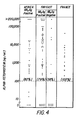
- Figure 4 represents the absolute AFP values in patients with HCC(o) or hepatoblastoma ( _) fro-Africa, the Far East and France.
- the numbers in parentheses represent the percent of individuals with AFP levels greater than 100 ng/ml.
- Figure 5 represents a typical result of serial dilution of serum from a strongly AFP positive patient with HCC. This shows the "hook effect" using the simultaneous sandwich monoclonal immunoassay.
- immunometric assay or "sandwich immunoassay,” it is meant to include simultaneous sandwich, forward sandwich and reverse sandwich immunoassays. These terms are well understood to those skilled in the art.
- a sample is first incubated with a solid phase immunoabsorbent containing multiple different monoclonal antibodies against the antigen. Incubation is continued for a period of time sufficient to allow the antigen in the sample to bind to the immobilized antibodies in the solid phase. After the first incubation, the solid phase immunoabsorbent is separated from the incubation mixture and washed to remove excess antigen and other interfering substances, such as non-specific binding proteins, which also may be present in the sample. Solid phase immunoabsorbent containing antigen bound to the immobilized antibodies is subsequently incubated for a second time with soluble labelled antibody or antibodies.
- the process comprises, in more detail:
- a reverse sandwich assay the sample is initially incubated with labelled antibody(ies), after which the solid phase immunoabsorbent containing multiple immobilized antibodies is added thereto, and a second incubation is carried out.
- the initial washing step of a forward sandwich assay is not required, although a wash is performed after the second incubation.
- Reverse sandwich assays have been described, for example, in United States Patents 4,098,876 and 4,376,110.
- the process comprises, in more detail:
- a simultaneous sandwich assay the sample, the immunoabsorbent having multiple immobilized antibodies thereon and labelled soluble antibody or antibodies are incubated simultaneously in one incubation step.
- the simultaneous assay requires only a single incubation and has a lack of washing steps.
- the use of a simultaneous assay is by far the preferred one. This type of assay brings about ease of handling, homogeneity, reproducibility, linearity of the assays and high precision.
- the sample containing antigen, solid phase immunoabsorbent with immobilized antibodies and labelled soluble antibody or antibodies are incubated under conditions and for a period of time sufficient to allow antigen to bind to the immobilized antibodies and to the soluble antibody(ies).
- Labelled antibody typically binds to antigen more rapidly than immobilized antibodies, since the former is in solution whereas the latter are bound to the solid phase support. Because of this, labelled antibody may be employed in a lower concentration than immobilized antibodies, and it is also preferable to employ a high specific activity for labelled antibody. For example, labelled antibody might be employed at a concentration of about 1-50 ng/per assay, whereas immobilized antibodies might have a concentration of 10-500 ng/per assay per antibody. The labelled antibody might have a specific activity with, for instance, one radioiodine per molecule, or as high as two or more radioiodines per molecule of antibody.
- the specific concentrations of labelled and immobilized antibodies, the temperature and time of incubation as well as other such assay conditions can be varied, depending on various factors including the concentration of antigen in the sample, the nature of the sample, and the like. Those skilled in the art will be able to determine operative and optimal assay conditions for each determination by employing routine experimentation.
- the solid phase immunoabsorbent is removed from the incubation mixture. This can be accomplished by any of the known separation techniques, such as sedimentation and centrifugation. A washing step is not required prior to detection of bound labelled antibody. Detection can be performed by a scintillation counter, for example, if the label is a radioactive gamma-emitter, or by a fluorometer, for example, if the label is a fluorescent material. In the case of an enzyme label, the detection can be done by colorimetric methods employing a substrate for the enzyme.
- the process comprises, in more detail:
- blocking agents In the preferred mode for performing the assays it is important that certain "blockers" be present in the incubation medium (usually added with the labelled soluble antibody).
- the “blockers” are added to assure that non-specific proteins, proteases, or human antibodies to mouse immunoglobulins present in the experimental sample do not cross-link or destroy the monoclonal antibodies on the solid phase support, or the radiolabelled indicator antibody, to yield false positive or false negative results.
- the selection of "blockers” therefore adds substantially to the specificity of the assays described in the present invention. It has been found that a number of non-relevant (i.e. non specific) monoclonal antibodies of the same class or subclass (isotype) as those used in the assays (e.g.
- IgG l , IgG2a, IgM, etc. can be used as "blockers.”
- the concentraticn of the "blockers” is important, in order to maintain the proper sensitivity yet inhibit any unwanted interference by mutually occuring cross reactive proteins in human serum.
- the buffer system containing the "blockers” needs to be optimized.
- Preferred buffers are those based on weak organic acids, such as imidazole, HEPPS, MOPS, TES, ADA, ACES, HEPES, PIPES, TRIS, and the like, at physi- olocical pH ranges.
- Somewhat less preferred buffers are inorganic buffers such as phosphate, borate or carbonate.
- known protease inhibitors should be added (normally at 0.01-10 microgs/ml) to the buffer which contains the "blockers.”
- solid phase immunoabsorbents There are many solid phase immunoabsorbents which have been employed and which can be used in the present invention.
- Well known immunoabsorbents include beads formed from glass, polystyrene, polypropylene, dextran, nylon and other materials; tubes formed from or coated with such materials, and the like.
- the immobilized antibodies can be either covalently or physically bound to the solid phase immunoabsorbent, by techniques such as covalent bonding via an amide or ester linkage, or by absorption. It is important that the multiple immobilized antibodies be bound to the same solid phase since close proximity is important. This can be readily achieved by either simultaneous or sequential binding of each antibody on the same solid phase.
- Those skilled in the art will know many other suitable solid phase immunoabsorbents and methods for immobilizing antibodies thereon, or will be able to ascertain such, using no more than routine experimentation.
- the monoclonal antibody which remains in the soluble state, and is used as the detectably labelled antibody can be a single antibody or a mixture thereof. At least one soluble antibody must be identical to one of the immobilized ones.
- the soluble antibody can be labelled with any detectable label, such as a radiolabel, a fluorescent label, an enzyme label, a free radical label or a bacteriophage label. Most commonly, the label is a radiolabel (radioimmunoassay) or an enzyme label (enzyme immunoassay). The more common radiolabels are 1251, 131 I, 3 H and 14C. Among the.
- common enzyme labels are horseradish peroxidase, alkaline phosphatase, beta-D-galactosidase, glucose oxidase and glucoamylase.
- fluorescent materials are, for example, fluorescein isothiocyanate, and rhodamine.
- Any animal sample containing a detectable yet unknown amount of antigen can be used.
- sample is normally from a human and may be liquid (such as, for example, urine, saliva, blood, serum and the like), or solid or semi-solid (tissues, feces, and the like).
- epitope as used in this invention is meant to include any antigenic determinant of an antigen responsible for specific interaction with antibody molecules elicited by the same or related antigen.
- Antigenic determinants usually consist of chemically active surface groupings of molecules such as amino acids or sugar side chains.
- the epitopes have specific three dimensional structural characteristics as well as specific electronic characteristics.
- the antigens capable of determination using the process of the present invention are so-called "multivalent antigens.”
- a multivalent antigen is meant to include an antigen having at least two different epitopes capable of specific interaction with antibody binding sites, (the antibody binding sites are also called paratopes).
- the antigen determinable by this invention carries a multiplicity of epitopes, with the provisc that at least two of them have different immunodominant points.
- Any multivalent antigen as defined above can be detected by the method of the present invention.
- This includes viral antigens such as hepatitis B surface antigen (HBsAg), Herpes Simplex viruses I and II, Herpes Virus Zoster, zytomegalovirus, Epstein-Barr virus, Papova viruses such as BK or JC virus, measles virus, rubella, influenza or parainfluenza viruses, etc.
- Viral subunits such as a virus capsids, can also be determined, as long as such subunits are multivalent.
- antigens need not be viral in nature to be multivalent, and among these may, for example, be included cells, immune complexes, membrane preparations, bacteria, proteins such as AFP or HCG, and the like.
- Any monoclonal antibodies with medium to high affinity can be used (e.g., >10 M" ), such as IgG, IgE, Ig M , and the like. Preferred among these are IgM and IgG, especially those of high affinity (e.g., >10 8 M -1) .
- the method of the present invention requires selection of at least two different antibodies with affinity towards two different epitopes on the same multivalent antigen, -which are then immobilized. Selection of an antibody combination can normally be carried out by choosing each antibody from a different cell line.
- the invention is based on the discovery that enhanced resolution and decreased cross-reactivity can be obtained when using at least two different immobilized monoclonal antibodies; the method of how to choose them is a relatively straight-forward trial and error one, and can be accomplished by one skilled in the art without undue experimentation, once he/she knows the present discovery.
- each antibody in the immobilized combination should exhibit as high a specificity for the multivalent antigen as possible.
- each antibody should be highly selective towards the antigen, and bind to it selectively in the presence of other, structurally similar antigens.
- each antibody should have as high an affinity towards the antigen as possible.
- the invention is based on the discovery that, once the correct one is determined, enhanced sensitivity is observed. The choice is carried out by trial and error, without undue experimentation.
- the ratio of binding observed in the immunometric assay when using multiple different immobilized antibodies with one of these as the soluble one, to using any one of them singly in the same assay should normally be greater than 2, preferably greater than 5, and most preferably greater than 10.
- any variation of the sandwich assays, as long as it utilizes the combination of antibodies described, can be used in the present invention.
- Any automated technique which utilizes a sandwich immunoassay or variations thereof can of course be applied to the basic technique of the present invention. For example, such a technique is described in Goldie et al. United States Patent 4,251,360.
- kits may comprise a carrier means being compartmentalized to receive in close confinement one or more container means such as vials, test tubes and the like, each of said container means comprising one of the separate elements to be used in the method.
- one of said container means may comprise immunoabsorbent-bound different monoclonal antibodies. These antibodies may be bound to a separate solid phase immunoabsorbent or directly to the inner walls of a container.
- a second container may comprise soluble detectably labelled antibody in lyophilized form or in solution.
- the carrier may also contain, in addition, plurality of containers each of which comprises different, predetermined known amounts of antigen. These latter containers can then be used to prepare a standard curve into which can be interpolated the results obtained from the sample containing the unknown amount of antigen.
- all a user has to do is add, to the first container, a premeasured amount of an animal sample containing the measurable, yet unknown amount of antigen in a buffer and simultaneously add the contents of the labelled antibody present in the second container into the first container.
- all components are added to a separate container. After an appropriate time for incubation, solid phase is separated from the supernatant fluid, and the solid phase or the supernatant fluid are detected, as by radioactive counting or addition of an enzyme substrate, and color development.
- the first one hereinafter AFCl
- the second antibody hereinafter referred to as AF03
- AF03 is obtained from or has the identifying characteristics of an antibody obtained from cell line ATCC No HB 8718.
- two monoclonal antibodies or substantial immunological equivalents thereof are utilized in applying the present assay to HCG.
- the first one, hereinafter DlE8, is an antibody obtained from or having the identifying characteristics of an antibody obtained from cell line Pasteur Inst. 1-298.
- the second antibody hereinafter referred to as FB03, is obtained from or has the identifying characteristics of an antibody obtained from cell line Pasteur Inst. 1-297. All noted cell lines were deposited, on 29 March 1984 at the Collection Nationale de Cultures de Micro-Organisms (CNCM), Institut Pasteur, 25 Rue du Dondel Roux, 75724 Paris. France.
- CNCM Collection Nationale de Cultures de Micro-Organisms
- the identifying numbers of each of the cell lines are either the accession numbers of the CNCM depository or of the ATCC depository.
- the AFP assay uses at least AF01 and A F03 on the solid phase and AF01 (or mixtures of AF01 and AF03) as the soluble labeled antibody.
- the HCG assay uses at least DlE8 and FB03 on the solid phase and FB03 (or mixtures of DlE8 and FB03) as the soluble labeled antibody.
- Monoclonal antibodies AF01 and AF03 were produced by two protocols. The first generated antibody AF01, and involved subcutaneous (s.c.) injection of 15 microg AFP in Freund's complete adjuvant (FCA) as the initial dose, followed by 15 microg intraperitoneal (i.p.) injection in Freund's complete adjuvant (FIA) two months later, followed one month later by 100 microg i.p. and 100 microg intravenously (i.v.) six, five and three days before cell fusion. Monoclonal antibody AF03 was produced from a second immunization where 50 microg was given one year (s.c., FCA), and three days (i.v.) prior to cell fusion.
- Monoclonal anti-AFP antibody class and subclass were determined either by double antibody R I A with 125I-AFP and goat antiserum specific for mouse immunoglobulin M (IgM), IgA, IgG, IgG 2ab (Nordic, Tilburg, Netherlands), or by eluting the IgG bound to a protein A-Sepharose column (Pharmacia Fine Chemicals, Piscataway, New Jersey) at different pH values (as described by Ey et al., Immunochemistry 15:429-436 (1978)). Both were found to be of the IgG 2a isotype.
- IgG 2a was purified (2-4 mg/ml) from mouse ascites fluids by 50% ammonium sulfate precipitation followed by dialysis against 0.2M phosphate buffer pH 8 for 18 hours at 4°C prior to Staph protein A affinity chromatography.
- the affinities of the anti-AFP monoclonal antibodies were determined with a double antibody R I A technique by measuring the binding of 125 I-AFP in the presence of increasing amounts of AFP by Scatchard plot analysis.
- Monoclonal anti-AFP AF01 and AF03 had measured affinity constants of 1.6 x 10 10 and 5.0 x 10 8 liters/mole, respectively.
- Competitive inhibition studies established that each monoclonal antibody recognized a distinct and separate AFP determinant.
- buffer 50% fetal calf serum in PBS pH 7.2
- the results of a conventional polyvalent RIA were compared in selected samples with the M-RIA of the invention for AFP.
- the RIA-GNOST, AFP-TACHISORB (Behring, Marburg) commercial system was used. This assay has a lower limit of sensitivity of 1.5 ng/ml and was performed according to the manufacturer's instructions.
- a sensitive simultaneous sandwich assay was developed when a mixture of AF01 and AF03 were used on the solid phase support and 125 I-labelled AF01 was employed as the indicator antibody.
- the sensitivity of the assay (1 hour incubation at 45°C) was approximately 0.5 ng/ml, as determined by a signal-to-noise ratio (S/N) of greater than 2.5 (defined as cpm mea- surec in the experimental sample divided by the mean cpm of 10 negative controls).
- S/N signal-to-noise ratio
- the standard curves from two different assays are shown in Figure 3.
- the concentration range of AFP standard varied between 1.5 and 200 ng/ml.
- the AFP standard curve is linear in the 1.5 to 40 ng/ml range. Absolute serum AFP concentrations in experimental samples were determined from serial dilutions and by use of the AFP standard curve.
- results may be summarized as follows: (i) All healthy subjects (450) had AFP values below 5 ng/ml. (ii) Oi 564 HBsAg chronic carriers from three different continents, 98.2% had AFP levels below 5 ng/ml and 100% were below 20 ng/ml. (iii) In 536 patients from the United States with nonmalignant disorders of the liver and other diseases (including carcinomas of gastrointestinal tract, breast and lung), 96.4% had an AFP level below 5 ng/ml, 99.6% below 20 ng/ml and 100% below 100 ng/ml.
- AFP levels were found to be below 5 ng/ml in 23 of 24 patients (95.8%) from the Far East with acute or chronic hepatitis; only one had an AFP above 200 ng/ml (326 (ng/ml).
- AFP levels were found to be below 5 ng/ml in 23 of 24 patients (95.8%) from the Far East with acute or chronic hepatitis; only one had an AFP above 200 ng/ml (326 (ng/ml).
- ng/ml ng/ml
- AFP levels from 112 patients with HCC are depicted in Figure 4.
- the absolute values varied widely and ranged from 240 ng/ml to >200,000 ng/ml. It is noteworthy that 82% of HBsAg positive HCC from Africa and 79% from the Far East had AFP levels >200 ng/ml. In contrast, only 6/16 (38%) of HBsAg negative HCC from the Far East were reactive for AFP levels >200 ng/ml (p ⁇ 0.001). Finally, a smaller group of 11 HCC from France, including three children with hepatoblastoma, were reactive for AFP greater than 200 ng/ml.
- This example shows the development of a simultaneous sandwich RIA using a combination of two immobilized high affinity monoclonal antibodies directed against two separate epitopes of human AFP.
- This M-RIA is approximately four to ten times more sensitive than commercially available conventional polyvalent RIAs; it has a lower level of sensitivity of approximately 0.5 ng/ml.
- the assay is technically convenient and rapid, involving the simultaneous addition of all reagents and a one-hour incubation at 45 c C .
- the so-called "hook effect” previously described for "one step” immunoassays (Nomura, et al., J. Immunol., 56:13-17 (1983)) was also observed for high AFP values (i.e., above 3,000 ng/ml). However, this phenomenon did not lead to false negative AFP results but only required additional dilutions to accurately measure the absolute AFP value from the standard curve.
- AFP-producing carcinomas especially HCC
- Serum AFP levels have been reported to be above 20 ng/ml in 67% to 82% of HCC (Ruohslati et al., Br. Med. J., 393:527-529 (1974), Wepsic, H. T., et al., Gastroenterology, 77:787 (1979)).
- AFP elevations greater than 20 ng/ml have been observed in 31% to 40% of patients with acute and chronic hepatitis and 8% to 33% of patients with cirrhosis (Ruohslati et al., op. cit., Wepsic, et al., op. cit., Alpert et al., Gastroenterology, 74:856 (1978)).
- serum AFP levels greater than 100 ng/ml were reported in 19% of patients with acute hepatitis and 5% with cirrhosis (Alpert et al., op. cit.).
- the M-RIA of the invention demonstrates remarkable specificity for AFP-producing tumors and, depending on the cutoff value for AFP positive results, these patients show little overlap with non-malignant liver disorders and other disease controls. Indeed, if one selects a cutoff value of 100 ng/ml only two of 1,185 disease controls (or 0.1%) exceeded that level.
- conventional polyvalent RIAs may yield false positive AFP values because of cross-reactions of polyvalent antisera with "AFP-like" material, including various albumin degradation products, which may occur in patients with inflammatory disorders of the liver.
- the multisite M-RIA of the invention may fail to detect such cross-reactive proteins.
- serum AFP as a screening assay for HCC. Since with the M-RIA of the invention the number of AFP positive sera (above 20 or 100 ng/ml) in chronic HBsAg carriers and in HBsAg positive acute and chronic hepatitis (with and without cirrhosis) was extremely low (99.9% of patients have AFP levels below 100 ng/ml), the M-RIA is useful as a screening test for the early diagnosis of hepatocellular carcinoma in high risk populations.
- HCG human chorionic gonadotropin
Landscapes
- Health & Medical Sciences (AREA)
- Life Sciences & Earth Sciences (AREA)
- Immunology (AREA)
- Engineering & Computer Science (AREA)
- Chemical & Material Sciences (AREA)
- Molecular Biology (AREA)
- Hematology (AREA)
- Biomedical Technology (AREA)
- Urology & Nephrology (AREA)
- Medicinal Chemistry (AREA)
- Pathology (AREA)
- Cell Biology (AREA)
- Biotechnology (AREA)
- Food Science & Technology (AREA)
- Microbiology (AREA)
- Physics & Mathematics (AREA)
- Analytical Chemistry (AREA)
- Biochemistry (AREA)
- General Health & Medical Sciences (AREA)
- General Physics & Mathematics (AREA)
- Chemical Kinetics & Catalysis (AREA)
- Endocrinology (AREA)
- Reproductive Health (AREA)
- Preparation Of Compounds By Using Micro-Organisms (AREA)
- Investigating Or Analysing Biological Materials (AREA)
- Medicines Containing Material From Animals Or Micro-Organisms (AREA)
- Peptides Or Proteins (AREA)
- Medicines Containing Antibodies Or Antigens For Use As Internal Diagnostic Agents (AREA)
- Measuring Or Testing Involving Enzymes Or Micro-Organisms (AREA)
Priority Applications (1)
| Application Number | Priority Date | Filing Date | Title |
|---|---|---|---|
| AT85104365T ATE57018T1 (de) | 1984-04-12 | 1985-04-11 | Multisites immunometrisches testverfahren. |
Applications Claiming Priority (2)
| Application Number | Priority Date | Filing Date | Title |
|---|---|---|---|
| US59956084A | 1984-04-12 | 1984-04-12 | |
| US599560 | 1984-04-12 |
Publications (3)
| Publication Number | Publication Date |
|---|---|
| EP0158973A2 true EP0158973A2 (de) | 1985-10-23 |
| EP0158973A3 EP0158973A3 (en) | 1988-01-07 |
| EP0158973B1 EP0158973B1 (de) | 1990-09-26 |
Family
ID=24400127
Family Applications (1)
| Application Number | Title | Priority Date | Filing Date |
|---|---|---|---|
| EP85104365A Expired - Lifetime EP0158973B1 (de) | 1984-04-12 | 1985-04-11 | Multisites immunometrisches Testverfahren |
Country Status (6)
| Country | Link |
|---|---|
| EP (1) | EP0158973B1 (de) |
| JP (1) | JPS60259963A (de) |
| AT (1) | ATE57018T1 (de) |
| DE (2) | DE158973T1 (de) |
| DK (1) | DK165785A (de) |
| GR (1) | GR850899B (de) |
Cited By (25)
| Publication number | Priority date | Publication date | Assignee | Title |
|---|---|---|---|---|
| US4722889A (en) * | 1985-04-02 | 1988-02-02 | Leeco Diagnostics, Inc. | Immunoassays using multiple monoclonal antibodies and scavenger antibodies |
| EP0254081A3 (de) * | 1986-06-30 | 1988-04-20 | Yuko Yoneda | Verfahren zur Feststellung spezifisches Protein |
| WO1989000696A1 (en) * | 1987-07-09 | 1989-01-26 | 3I Research Exploitation Limited | Antenatal screening for down's syndrome |
| WO1990002759A1 (en) * | 1988-09-14 | 1990-03-22 | Cancer Research Campaign Technology Limited | Improvements relating to peptides |
| EP0329699A4 (de) * | 1986-10-22 | 1990-05-14 | Gen Hospital Corp | Immunotestverfahren zum nachweis von menschlichem choriongonadotropin. |
| WO1990008325A1 (en) * | 1989-01-17 | 1990-07-26 | Macri James N | Down syndrome screening method |
| US5252489A (en) * | 1989-01-17 | 1993-10-12 | Macri James N | Down syndrome screening method utilizing dried blood samples |
| US5324667A (en) * | 1989-01-17 | 1994-06-28 | Macri James N | Method for detecting down sydrown by non-invasive maternal blood screening |
| WO1996003652A1 (de) * | 1994-07-25 | 1996-02-08 | Boehringer Mannheim Gmbh | Bestimmung von spezifischem immunglobulin unter verwendung multipler antigene |
| US5506150A (en) * | 1987-07-09 | 1996-04-09 | 3I Research Exploitation Limited | Prenatal screening for down's syndrome |
| WO1997011372A1 (de) * | 1995-09-21 | 1997-03-27 | Haemopep Pharma Gmbh | Immunoassay mit einem eine detektorsubstanz bildenden detektormolekülgemisch |
| WO2000066787A3 (en) * | 1999-05-05 | 2002-01-31 | Univ Ohio | Growth hormone-regulatable liver genes and proteins, and uses thereof |
| EP1347298A3 (de) * | 2002-03-19 | 2004-01-14 | Matsushita Electric Industrial Co., Ltd. | Immunologisches Verfahren, Teststreifen und Vorrichtung |
| US6858389B1 (en) | 1999-05-05 | 2005-02-22 | Ohio University | Growth hormone-regulatable liver genes and proteins, and uses thereof |
| US7060437B1 (en) | 1999-05-05 | 2006-06-13 | Ohio University | Growth hormone-regulatable brown adipose tissue genes and proteins and uses thereof |
| US7368607B2 (en) | 2003-05-19 | 2008-05-06 | Orion Corporation | Toremifene crystallization method |
| CN104714025A (zh) * | 2014-11-28 | 2015-06-17 | 威海纽普生物技术有限公司 | NT-proBNP检测试剂盒及检测方法 |
| CN104714033A (zh) * | 2014-11-28 | 2015-06-17 | 威海纽普生物技术有限公司 | 降钙素原检测试剂盒及检测方法 |
| CN104714015A (zh) * | 2014-10-28 | 2015-06-17 | 威海纽普生物技术有限公司 | 心型脂肪酸结合蛋白检测试剂盒及检测方法 |
| CN104730245A (zh) * | 2014-11-28 | 2015-06-24 | 威海纽普生物技术有限公司 | D二聚体检测试剂盒及检测方法 |
| CN104730251A (zh) * | 2014-11-28 | 2015-06-24 | 威海纽普生物技术有限公司 | 肌钙蛋白i检测试剂盒及检测方法 |
| CN105572358A (zh) * | 2014-10-09 | 2016-05-11 | 苏州新波生物技术有限公司 | 乙型肝炎病毒e抗原定量检测试剂盒及其制备与检测方法 |
| CN106970226A (zh) * | 2017-03-22 | 2017-07-21 | 童坤 | 一种测定人血清中her‑2 ecd浓度水平的试剂盒 |
| CN110234995A (zh) * | 2017-02-02 | 2019-09-13 | 豪夫迈·罗氏有限公司 | 使用至少两种聚乙二醇化的分析物特异性结合试剂的免疫测定 |
| CN111133001A (zh) * | 2017-09-22 | 2020-05-08 | 豪夫迈·罗氏有限公司 | 用于分析目的的多价单或双特异性重组抗体 |
Families Citing this family (4)
| Publication number | Priority date | Publication date | Assignee | Title |
|---|---|---|---|---|
| JP2515533B2 (ja) * | 1987-02-23 | 1996-07-10 | 和光純薬工業株式会社 | 蛋白の定量方法 |
| JP5138867B2 (ja) * | 2002-08-01 | 2013-02-06 | イミューノメディクス、インコーポレイテッド | α−フェトタンパク質Immu31抗体および融合タンパク質ならびにその使用方法 |
| JP7313659B2 (ja) * | 2019-03-12 | 2023-07-25 | 株式会社シノテスト | 試料中のhmgb1の測定方法及び測定試薬 |
| JP7639420B2 (ja) * | 2021-03-16 | 2025-03-05 | 東ソー株式会社 | パラチロイドホルモンの測定方法 |
Family Cites Families (5)
| Publication number | Priority date | Publication date | Assignee | Title |
|---|---|---|---|---|
| US4376110A (en) * | 1980-08-04 | 1983-03-08 | Hybritech, Incorporated | Immunometric assays using monoclonal antibodies |
| SE8006424L (sv) * | 1980-09-12 | 1982-03-13 | Jolla Cancer Res Found | Sett att bestemma ett antigen i losning |
| JPS57136165A (en) * | 1981-02-18 | 1982-08-23 | Mochida Pharmaceut Co Ltd | Immunological measuring reagent |
| US4514505A (en) * | 1982-05-21 | 1985-04-30 | The Trustees Of Columbia University In The City Of New York | Monoclonal antibody mixtures and use thereof for enhanced sensitivity immunoassays |
| US4595661A (en) * | 1983-11-18 | 1986-06-17 | Beckman Instruments, Inc. | Immunoassays and kits for use therein which include low affinity antibodies for reducing the hook effect |
-
1985
- 1985-04-09 GR GR850899A patent/GR850899B/el unknown
- 1985-04-11 AT AT85104365T patent/ATE57018T1/de not_active IP Right Cessation
- 1985-04-11 EP EP85104365A patent/EP0158973B1/de not_active Expired - Lifetime
- 1985-04-11 DE DE198585104365T patent/DE158973T1/de active Pending
- 1985-04-11 DE DE8585104365T patent/DE3579841D1/de not_active Expired - Lifetime
- 1985-04-12 JP JP60076852A patent/JPS60259963A/ja active Pending
- 1985-04-12 DK DK165785A patent/DK165785A/da not_active Application Discontinuation
Cited By (30)
| Publication number | Priority date | Publication date | Assignee | Title |
|---|---|---|---|---|
| US4722889A (en) * | 1985-04-02 | 1988-02-02 | Leeco Diagnostics, Inc. | Immunoassays using multiple monoclonal antibodies and scavenger antibodies |
| EP0254081A3 (de) * | 1986-06-30 | 1988-04-20 | Yuko Yoneda | Verfahren zur Feststellung spezifisches Protein |
| EP0329699A4 (de) * | 1986-10-22 | 1990-05-14 | Gen Hospital Corp | Immunotestverfahren zum nachweis von menschlichem choriongonadotropin. |
| US5605843A (en) * | 1987-07-09 | 1997-02-25 | 3 I Research Exploitation Ltd. | Kit for prenatal screening for Down's syndrome |
| WO1989000696A1 (en) * | 1987-07-09 | 1989-01-26 | 3I Research Exploitation Limited | Antenatal screening for down's syndrome |
| US5506150A (en) * | 1987-07-09 | 1996-04-09 | 3I Research Exploitation Limited | Prenatal screening for down's syndrome |
| WO1990002759A1 (en) * | 1988-09-14 | 1990-03-22 | Cancer Research Campaign Technology Limited | Improvements relating to peptides |
| WO1990008325A1 (en) * | 1989-01-17 | 1990-07-26 | Macri James N | Down syndrome screening method |
| US5252489A (en) * | 1989-01-17 | 1993-10-12 | Macri James N | Down syndrome screening method utilizing dried blood samples |
| US5324668A (en) * | 1989-01-17 | 1994-06-28 | Macri James N | Method for detecting trisomy 13 and Down syndrome by non-invasive maternal blood screening |
| US5324667A (en) * | 1989-01-17 | 1994-06-28 | Macri James N | Method for detecting down sydrown by non-invasive maternal blood screening |
| US6613530B1 (en) | 1994-07-25 | 2003-09-02 | Roche Diagnostics Gmbh | Determination of a specific immunoglobulin using multiple antigens |
| WO1996003652A1 (de) * | 1994-07-25 | 1996-02-08 | Boehringer Mannheim Gmbh | Bestimmung von spezifischem immunglobulin unter verwendung multipler antigene |
| WO1997011372A1 (de) * | 1995-09-21 | 1997-03-27 | Haemopep Pharma Gmbh | Immunoassay mit einem eine detektorsubstanz bildenden detektormolekülgemisch |
| WO2000066787A3 (en) * | 1999-05-05 | 2002-01-31 | Univ Ohio | Growth hormone-regulatable liver genes and proteins, and uses thereof |
| US6858389B1 (en) | 1999-05-05 | 2005-02-22 | Ohio University | Growth hormone-regulatable liver genes and proteins, and uses thereof |
| US7060437B1 (en) | 1999-05-05 | 2006-06-13 | Ohio University | Growth hormone-regulatable brown adipose tissue genes and proteins and uses thereof |
| US7309572B2 (en) | 1999-05-05 | 2007-12-18 | Ohio University | Growth hormone-regulatable liver genes and proteins, and uses thereof |
| EP1347298A3 (de) * | 2002-03-19 | 2004-01-14 | Matsushita Electric Industrial Co., Ltd. | Immunologisches Verfahren, Teststreifen und Vorrichtung |
| US7368607B2 (en) | 2003-05-19 | 2008-05-06 | Orion Corporation | Toremifene crystallization method |
| CN105572358A (zh) * | 2014-10-09 | 2016-05-11 | 苏州新波生物技术有限公司 | 乙型肝炎病毒e抗原定量检测试剂盒及其制备与检测方法 |
| CN104714015A (zh) * | 2014-10-28 | 2015-06-17 | 威海纽普生物技术有限公司 | 心型脂肪酸结合蛋白检测试剂盒及检测方法 |
| CN104714025A (zh) * | 2014-11-28 | 2015-06-17 | 威海纽普生物技术有限公司 | NT-proBNP检测试剂盒及检测方法 |
| CN104730245A (zh) * | 2014-11-28 | 2015-06-24 | 威海纽普生物技术有限公司 | D二聚体检测试剂盒及检测方法 |
| CN104730251A (zh) * | 2014-11-28 | 2015-06-24 | 威海纽普生物技术有限公司 | 肌钙蛋白i检测试剂盒及检测方法 |
| CN104714033A (zh) * | 2014-11-28 | 2015-06-17 | 威海纽普生物技术有限公司 | 降钙素原检测试剂盒及检测方法 |
| CN110234995A (zh) * | 2017-02-02 | 2019-09-13 | 豪夫迈·罗氏有限公司 | 使用至少两种聚乙二醇化的分析物特异性结合试剂的免疫测定 |
| CN106970226A (zh) * | 2017-03-22 | 2017-07-21 | 童坤 | 一种测定人血清中her‑2 ecd浓度水平的试剂盒 |
| CN111133001A (zh) * | 2017-09-22 | 2020-05-08 | 豪夫迈·罗氏有限公司 | 用于分析目的的多价单或双特异性重组抗体 |
| CN111133001B (zh) * | 2017-09-22 | 2024-02-06 | 豪夫迈·罗氏有限公司 | 用于分析目的的多价单或双特异性重组抗体 |
Also Published As
| Publication number | Publication date |
|---|---|
| DK165785D0 (da) | 1985-04-12 |
| DE158973T1 (de) | 1987-01-15 |
| DE3579841D1 (de) | 1990-10-31 |
| ATE57018T1 (de) | 1990-10-15 |
| EP0158973B1 (de) | 1990-09-26 |
| JPS60259963A (ja) | 1985-12-23 |
| DK165785A (da) | 1985-10-13 |
| GR850899B (de) | 1985-11-25 |
| EP0158973A3 (en) | 1988-01-07 |
Similar Documents
| Publication | Publication Date | Title |
|---|---|---|
| US5011771A (en) | Multiepitopic immunometric assay | |
| EP0158973B1 (de) | Multisites immunometrisches Testverfahren | |
| US4737453A (en) | Sandwich immunoassay utilizing a separation specific binding substance | |
| US4804626A (en) | Immunometric assay for the detection of human chorionic gonadotropin | |
| Bellet et al. | Serum alpha-fetoprotein levels in human disease: perspective from a highly specific monoclonal radioimmunoassay. | |
| AU2016203292B2 (en) | Monoclonal antibody, and immunoassay using same | |
| WO2016080591A1 (ko) | 중동호흡기증후군 코로나바이러스 뉴클레오캡시드를 인식하는 항체 및 그의 용도 | |
| US6146836A (en) | Immunoassays using anti-allotypic monoclonal antibodies | |
| US5288614A (en) | Method for the detection of malignant diseases | |
| US20130224884A1 (en) | Device and method for immunoassays | |
| JP2657388B2 (ja) | Ckmb検定及びそれに使用するモノクローナル抗体 | |
| US4933275A (en) | Method for the detection of a polypeptide subunit in the presence of a quaternary protein containing the subunit | |
| PT87810B (pt) | Processo para a determinacao imunometrica de substancias antigenicas | |
| US5583003A (en) | Agglutination assay | |
| JP5798679B2 (ja) | ヒト肝−カルボキシルエステラーゼ1を特異的に認識するモノクローナル抗体、前記抗体を生産するハイブリドーマ細胞株及びその用途 | |
| US8664007B2 (en) | Immune complex-specific antibodies for increased sensitivity in immunoassay array tests | |
| KR100375564B1 (ko) | N-펩티드의샌드위치면역학적측정법 | |
| AP156A (en) | Agglutination assay. | |
| JP3778979B2 (ja) | N−ペプチドのサンドイッチ免疫学的測定法 | |
| JPH10150999A (ja) | ヒト前立腺特異抗原−α1−アンチキモトリプシン複合体に対するモノクローナル抗体及びそれを用いたヒト前立腺特異抗原−α1−アンチキモトリプシン複合体の免疫学的検出法 | |
| EP0089367A1 (de) | Aufspürsystem für monoklonale antikörper | |
| AU6445090A (en) | Agglutination assay | |
| WO2003080676A1 (fr) | Anticorps contre un complexe immun contenant de la transferine, methode de production de l'anticorps, hybridome et methode de dosage immunologique |
Legal Events
| Date | Code | Title | Description |
|---|---|---|---|
| PUAI | Public reference made under article 153(3) epc to a published international application that has entered the european phase |
Free format text: ORIGINAL CODE: 0009012 |
|
| AK | Designated contracting states |
Designated state(s): AT BE DE FR GB IT LU NL SE |
|
| TCNL | Nl: translation of patent claims filed | ||
| ITCL | It: translation for ep claims filed |
Representative=s name: JACOBACCI CASETTA & PERANI S.P.A. |
|
| TCAT | At: translation of patent claims filed | ||
| EL | Fr: translation of claims filed | ||
| DET | De: translation of patent claims | ||
| PUAL | Search report despatched |
Free format text: ORIGINAL CODE: 0009013 |
|
| AK | Designated contracting states |
Kind code of ref document: A3 Designated state(s): AT BE DE FR GB IT LU NL SE |
|
| 17P | Request for examination filed |
Effective date: 19880614 |
|
| 17Q | First examination report despatched |
Effective date: 19881018 |
|
| GRAA | (expected) grant |
Free format text: ORIGINAL CODE: 0009210 |
|
| AK | Designated contracting states |
Kind code of ref document: B1 Designated state(s): AT BE DE FR GB IT LU NL SE |
|
| PG25 | Lapsed in a contracting state [announced via postgrant information from national office to epo] |
Ref country code: SE Effective date: 19900926 Ref country code: NL Effective date: 19900926 Ref country code: BE Effective date: 19900926 Ref country code: AT Effective date: 19900926 |
|
| REF | Corresponds to: |
Ref document number: 57018 Country of ref document: AT Date of ref document: 19901015 Kind code of ref document: T |
|
| REF | Corresponds to: |
Ref document number: 3579841 Country of ref document: DE Date of ref document: 19901031 |
|
| ITF | It: translation for a ep patent filed | ||
| ET | Fr: translation filed | ||
| NLV1 | Nl: lapsed or annulled due to failure to fulfill the requirements of art. 29p and 29m of the patents act | ||
| PGFP | Annual fee paid to national office [announced via postgrant information from national office to epo] |
Ref country code: GB Payment date: 19910404 Year of fee payment: 7 |
|
| PGFP | Annual fee paid to national office [announced via postgrant information from national office to epo] |
Ref country code: FR Payment date: 19910419 Year of fee payment: 7 |
|
| ITTA | It: last paid annual fee | ||
| PG25 | Lapsed in a contracting state [announced via postgrant information from national office to epo] |
Ref country code: LU Free format text: LAPSE BECAUSE OF NON-PAYMENT OF DUE FEES Effective date: 19910430 |
|
| PGFP | Annual fee paid to national office [announced via postgrant information from national office to epo] |
Ref country code: DE Payment date: 19910627 Year of fee payment: 7 |
|
| PLBE | No opposition filed within time limit |
Free format text: ORIGINAL CODE: 0009261 |
|
| STAA | Information on the status of an ep patent application or granted ep patent |
Free format text: STATUS: NO OPPOSITION FILED WITHIN TIME LIMIT |
|
| 26N | No opposition filed | ||
| PG25 | Lapsed in a contracting state [announced via postgrant information from national office to epo] |
Ref country code: GB Effective date: 19920411 |
|
| GBPC | Gb: european patent ceased through non-payment of renewal fee | ||
| PG25 | Lapsed in a contracting state [announced via postgrant information from national office to epo] |
Ref country code: FR Effective date: 19921230 |
|
| PG25 | Lapsed in a contracting state [announced via postgrant information from national office to epo] |
Ref country code: DE Effective date: 19930101 |
|
| REG | Reference to a national code |
Ref country code: FR Ref legal event code: ST |