EP0159588B1 - Logikanalysator - Google Patents
Logikanalysator Download PDFInfo
- Publication number
- EP0159588B1 EP0159588B1 EP85104000A EP85104000A EP0159588B1 EP 0159588 B1 EP0159588 B1 EP 0159588B1 EP 85104000 A EP85104000 A EP 85104000A EP 85104000 A EP85104000 A EP 85104000A EP 0159588 B1 EP0159588 B1 EP 0159588B1
- Authority
- EP
- European Patent Office
- Prior art keywords
- delay
- data
- store
- address
- counter
- Prior art date
- Legal status (The legal status is an assumption and is not a legal conclusion. Google has not performed a legal analysis and makes no representation as to the accuracy of the status listed.)
- Expired
Links
Images


Classifications
-
- G—PHYSICS
- G06—COMPUTING OR CALCULATING; COUNTING
- G06F—ELECTRIC DIGITAL DATA PROCESSING
- G06F11/00—Error detection; Error correction; Monitoring
- G06F11/22—Detection or location of defective computer hardware by testing during standby operation or during idle time, e.g. start-up testing
- G06F11/25—Testing of logic operation, e.g. by logic analysers
-
- G—PHYSICS
- G01—MEASURING; TESTING
- G01R—MEASURING ELECTRIC VARIABLES; MEASURING MAGNETIC VARIABLES
- G01R31/00—Arrangements for testing electric properties; Arrangements for locating electric faults; Arrangements for electrical testing characterised by what is being tested not provided for elsewhere
- G01R31/28—Testing of electronic circuits, e.g. by signal tracer
- G01R31/317—Testing of digital circuits
- G01R31/3177—Testing of logic operation, e.g. by logic analysers
Definitions
- the present invention relates to a logic analyzer for analyzing logic data from a logic circuit including a microprocessor.
- logic measurement instruments are necessary which make it possible to observe the state of input and output logic data of respective parts and logic data such as a program for operating the apparatus.
- One logic measurement instrument is a logic analyzer.
- the logic analyzer of this kind is disclosed, for instance, in "Hewlett-Packard Journal” (pp. 2-9, Jan. 1974) and United States Patents Nos. 4,425,643 (issued on Jan. 10, 1984) and 4,434,488 (issued on Feb. 28, 1984).
- input logic data is stored in a data memory and the stored data is displayed on a CRT display or the like for effecting program analyses such as a state analysis and a timing analysis of the input logic data.
- the logic analyzer is a very useful and versatile measurement instrument because it can detect a desired word (referred to as a trigger word) from the input digital data and can measure a desired portion of the input digital data on the basis of the desired word.
- Timing boards complement state analyzer in PC add-on includes a multitriggering mode that allows the user to record multiple bursts of data words without interrupting or resetting the equipment after each burst.
- the timing analyzer's storage memory is divided into 15 groups. Composed of 32 memory locations of a fixed size , each group acts like a centertriggered miniature timing analyzer responsive to the same triggerword .
- this document does not disclose the circuit parts enabling the operation of the multitriggering mode.
- Input digital data which consists of a plurality of parallel bits, is applied from a data acquisition probe 10 to a level converter 11, wherein its level is compared with a reference level and converted to a logic level suitable for handling in the logic analyzer.
- the input digital data from the level converter 11 is applied to a temporary memory 12.
- a sampling pulse generator 14 applies sampling pulses 101 to the temporary memory 12 and the input digital data (hereinafter referred to simply as the input data) is input in the temporary memory 12 at the timing of the sampling pulse and held there until the next sampling pulse is applied.
- the sampling pulse 101 for example, in the case of a state analysis, is generated by the sampling pulse generator 14 based on a clock signal which is applied from a logic circuit under test, such as an electronic apparatus, and in the case of a timing analysis, clock signals are used which are generated, by a clock signal generator built in the logic analyzer, at a higher rate than the repetition rate of the input data and at regular intervals.
- the data held in the temporary memory 12 is applied to a data memory 13 and a trigger word detecting part 16.
- the data memory 13 loads thereinto the data from the temporary memory 12 at an address specified by an address signal from an address counter 15.
- the address counter 15 is supplied with the sampling pulses 101 from the sampling pulse generator 14 and advances by one step upon each application of the sampling pulse 101.
- the count output of the address counter 15 is applied as the address signal to the data memory 13.
- the trigger word detecting part 16 is given a predetermined trigger word in advance, and it compares the trigger word with the data from the temporary memory 12 and, in the case of coincidence, applies a coincidence signal 110 to a delay setting part 26 which serves as a delay means. Supplied with the coincidence signal 110, the delay setting part 26 starts to count the sampling clocks 101 and generates a stop signal 103 when it counts a preset number of pulses. That is, the stop signal 103 is generated a certain period of time after the generation of the coincidence signal 110 and the signal 103 is applied to the address counter 15. As a result of this, the step-by-step operation of the address counter 15 stops, bringing the input data loading operation of the data memory 13 to an end. In other words, when a predetermined number of data are loaded into the data memory 13 after appearance of the trigger word in the input data, the loading operation is stopped.
- the data thus loaded into the data memory 13 is provided via an interface bus 32 to the control unit 19, wherein the data is read out over a desired range on the basis of the trigger word, thereafter being displayed on a display 18.
- the address counter 15 is controlled by the control unit 19 to generate an address signal necessary for readout of the data memory 13.
- the data read out of the data memory 13 by the address signal is transferred via the interface bus 32 to the control unit 19, wherein the transferred data is converted into various display formats necessary for a logic analysis and then displayed on the display 18.
- the control unit 19 exerts control over the entire operation of the logic analyzer, that is, it controls the readout of data from the data memory 13 and the display format as mentioned above and, at the start of measurement, controls the application of a trigger word specified through a keyboard 17 to a register in the trigger word detecting part 16 via the bus 32 and the setting in the delay setting part 26 of a number corresponding to a required delay time so as to determine how many times data is to be acquired prior to the generation of the stop signal after the detection of the trigger word from the sampled data.
- Fig. 2 shows a timing chart for explaining the input data acquiring operation and the stored contents of the data memory 13 in the conventional logic analyzer shown in Fig. 1.
- the data memory 13 has, for example, 1024 words and writes therein the data 102 starting at an address 0 until the stop signal is applied thereto from the delay setting part 26.
- the stop signal 103 is not applied after the data is written at an address 1023, the write returns to the address 0. That is, the data 102 is continuously written into the data memory 13 until the stop signal 103 is generated, and the old contents of the data memory 13 are renewed by the up-to-date data.
- the trigger word T is applied to the trigger word detecting part 16 prior to measurement.
- the data 102 is loaded by the sampling pulses 101 into the data memory 13 at respective addresses one after another, and when a word appeared in the data 102 coincides with the word T, the trigger word detecting part 16 detects the coincidence, and yields a coincidence signal 110, and after the lapse of time t the delay setting part 26 generates the stop signal 103.
- the stop signal stops the step-by-step operation of the address counter 15, after which the data memory 13 is not accessed.
- the data continuously loaded into the data memory 13 is provided, under control of the control unit 19, via the interface bus 32 to the control unit 19, wherein a required portion of the data is read out on the basis of the trigger word T, and the read-out data is converted into a display format suitable for a logic analysis, thereafter being displayed on the display 18.
- the prior art logic analyzer specifies one trigger word and performs storage and display of the input data on the basis of the trigger word. Therefore, the utilization efficiency of the data memory 13 is low, and when it is desired to carry out a logic analysis using a plurality of trigger words, it is necessary to set the trigger words one by one and to repeat measurement. Accordingly, the conventional logic analyzer requires much time for the logic analysis and encounters difficulty in conducting a complex logic analysis.
- the data memory in the logic analyzer is divided into a desired number of areas so that desired number of input data can each be loaded into one of the divided storage areas on the basis of one trigger word.
- the number of data (the number of words) that can be stored in each storage area of the divided data memory is preset in a store number setting part.
- Sampling pulses are counted by a store number counter, and when its count value reaches the store number (the number of data) being output from the store number setting part, the store number counter generates a count-up signal and the input data loading operation is continuously performed starting at a first address of the storage area.
- the input data loading operation is carried out starting at the first address of the next storage area.
- An address control circuit is provided for this operation. The address control circuit holds the leading address of the storage area into which the input data is being written.
- the address control circuit When supplied with the stop signal from the delay setting part, the address control circuit adds the output store number of the store number setting part to the leading address held so far so as to prepare the leading address of the storage area into which input data is to be written next.
- the address control circuit holds the newly prepared leading address and presets it in the address counter.
- the store number counter When the store number counter generates the count-up signal, the leading address held in the address control circuit is preset by the count-up signal into the address counter.
- the trigger word corresponding to each of the plurality of divided storage areas is loaded into the trigger word register and one of the trigger words is specified and output. Addresses of the storage area corresponding to the trigger word being output are sequentially specified until the same word as the trigger word is detected in the input data and the stop signal is produced by the delay setting part. Upon generation of the stop signal, addressing shifts to the next storage area to specify its addresses in a sequential order, storing therein input data and detecting coincidence between the input data and the trigger word specified next.
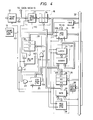
- Fig. 3 illustrates in block form an embodiment of the logic analyzer of the present invention, in which like parts corresponding to those in Fig. 1 are identified by the same reference numerals.
- the number of data or the store number (the number of words) that can be stored in each storage area of the divided data memory 13 is loaded by the control unit 19 into a store-number setting part 24.
- a trigger word corresponding to each storage area is set in the trigger word detecting part 16, and further, delay data indicating the delay time of the delay setting part 26 is set corresponding to each storage area.
- the number of storage areas, the store number (the number of data) in each storage area, the trigger words and the delay data can be set to desired values by entering measurement conditions into the control unit 19 through the keyboard 17.
- the store numbers which are set in the store number setting part 24 and selectively output therefrom are each applied to a store-number counter 25 and an address control circuit 20.
- the sampling pulses 101 are applied to the store-number counter 25 for counting, and when the count value reaches the store number applied from the store-number setting part 24, the store number counter 25 generates a count-up signal 104.
- the store-number counter 25 Upon generation of the count-up signal 104, the store-number counter 25 restarts the counting of the sampling pulses from its initial state, and at the same time, the leading address held in the address control circuit is set, by the count-up signal 104, in the address counter 15.
- the delay setting part 26 When the delay setting part 26 generates a stop signal, the store number of the next storage area of the data memory 13 is provided to the store-number counter 25 from the store-number setting part 24 and the leading address of the next storage area is produced by the address control circuit 20 and set in the address counter 15.
- the address control circuit 20 is formed by a latch circuit 21 and an adder 22 in this example.
- the latch circuit 21 is held the leading address corresponding to the storage area into which data is being written, and the leading address is applied to the address counter 15. Supplied with the leading address, the address counter 15 advances by one step upon each occurrence of the sampling pulse, accessing the data memory 13.
- the leading address held in the latch circuit 21 is fed back to the adder 22, wherein it is added to the store number applied from the setting part 24.
- the added address is latched, as the leading address corresponding to the next storage area, in the latch circuit 21 when the stop signal is applied thereto from the delay counter 31.
- the trigger word detecting part 16 comprises a trigger word detector 27 and a trigger word register 34
- the delay setting part 26 comprises a delay counter 31 and a delay register 35
- the store-number setting part 24 comprises a store-number register 28 and a register address counter 38.
- the store-number register 28, the trigger word register 34 and the delay register 35 are each formed by a read/write memory (RAM).
- the control unit 19 Prior to commencement of the measuring operation, the control unit 19 controls an address select register 36 via the interface bus 32 and, based on the output from the address select register 36, a multiplexer 37 selects the address of the interface bus 32. Accordingly, the registers 28, 34 and 35 can be addressed by the control unit 19 via the interface bus 32. Then, the store numbers or the numbers of data that can be stored in the respective storage areas of the data memory 13, trigger words on the basis of which data are stored in the respective storage areas, and delay data each of which indicates a delay time from the generation of a coincidence signal to the generation of a stop signal in each storage area are respectively stored in the store-number register 28, the trigger word register 34 and the delay register 35 from the control unit 19 via the interface bus 32.
- the multiplexer 37 selects a register address which is applied thereto from the address select register 36 in response to its setting by the control unit 19. Specified by the register address, one store number is read out of the store-number register 28 and applied to the store-number counter 25. One trigger word is read out of the trigger word register 34 and applied to the trigger word detector 27, and one delay data is read out of the delay register 35 and applied to the delay counter 31.
- the multiplexer 37 is set to select the output of the register address counter 38 and an initialization circuit 39 is controlled by the control unit 19 via the interface bus 32 to generate an initializing pulse.
- the initializing pulse is applied to the address counter 15, the latch circuit 21 and the register address counter 38 to reset them to zero. Further, the initializing pulse is provided via an OR circuit 23 to the store-number counter 25 to preset therein the store number output from the store-number register 28 at that time.
- the initializing pulse is further applied via an OR circuit 41 to the trigger word detector 27 to reset it and to the delay counter 31 to preset therein the output delay data from the delay register 35.
- the register address counter 38 is reset and after the store-number register 28 and the delay register 35 are read out by the output address from the register address counter 38, the store-number counter 25 and the delay counter 31 are preset.
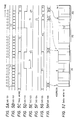
- Fig. 5 shows the case where the data memory 13 is divided into three storage areas which start at addresses 0, k and m, respectively.
- the numbers of data (store numbers) that can be stored in the three storage areas are set to P1, P2 and P3, respectively, as shown.
- the trigger words corresponding to the three storage areas are identified by T1, T2 and T3, respectively.
- the delay times from the detection of the same words in the input data as the trigger words by the trigger word detector 27 to the generation of the stop signal by the delay counter 31 are set to t1, t2 and t3, respectively.
- the delay time until the generation of the stop signal is dependent upon how many words of data are desired to store before, after, or before and after the trigger word in the input data.
- the store numbers P1, P2 and P3, the trigger words T1, T2 and T3 and delay data (also identified by t1, t2 and t3) indicating the delay times t1, t2 and t3 are respectively set by the control unit 19 in the store-number register 28, the trigger word register 34 and the delay register 35 prior to the start of measurement.
- the store number P1, the trigger word T1 and the delay data t1 are being output from the store-number register 28, the trigger word register 34 and the delay register 35, respectively.
- the temporary memory 12 samples and applies the input data 102 to the data memory 13 and the trigger word detector 27.
- the address counter 15 supplies the data memory 13 with an address signal which starts at an address 0 and advances by one upon each occurrence of the sampling pulse 101.
- the store-number counter 25 has preset therein the store number P1 of a first storage area, and it counts down the sampling pulses 101.
- Fig. 5 shows the case where during the operation of writing input data into the storage area which starts at the address 0 the stop signal 103 is generated by the delay counter 31 before the count-up signal 104 is yielded by the store-number counter 25, and the input data writing operation shifts to the next storage area (which starts at the address k).
- the input data 102 from the temporary memory 12 are sequentially loaded into the storage area of the data memory 13 that starts at the address 0 while being compared with the output trigger word T1 from the trigger word register 34 in the trigger word detector 27.
- the coincidence signal 110 is yielded from the trigger word detector 27 and applied to the delay counter 31, starting to count down the sampling pulses 101.
- the delay counter 31 has preset therein the delay data t1 by initialization. Having counted the sampling pulses 101 by t1, the delay counter 31 generates the stop signal 103. Accordingly, when t1 input data are loaded into the data memory 13 after the detection of the trigger word T1, the delay counter 31 produces the stop signal 103.
- the trigger word T1 is stored at an address 6 of the data memory 13 and then the subsequent input data are loaded to the respective addresses up to an address i, after which the stop signal 103 is generated.
- the stop signal 103 is supplied to the trigger word detector 27 to reset it.
- the stop signal 103 is also supplied to the latch circuit 21 to latch therein the result of an addition from the adder 22 obtained by adding the store number P1 from the store-number register 28 and 0 of the latch circuit 21.
- the stop signal 103 is applied via an OR circuit 42 to the address counter 15 to preset therein the value P1 held in the latch circuit 21 immediately after the abovesaid latching. This store number P1 is used as the leading address of the next storage area which starts at the address k.
- the register address counter 38 is advanced by one step by the stop signal 103. Consequently, the store number P2, the trigger word T2 and the delay data t2 are respectively provided from the store-number register 28, the trigger word register 34 and the delay register 35.
- the stop signal 103 is provided via the OR circuit 23 to the store-number counter 25 and via the OR circuit 41 to the delay counter 31 to preset the store number P2 in the former and the delay data t2 in the latter, though no delay circuit for timing adjustment is shown.
- the store-number counter 25 subtracts one from the store number P2 upon each occurrence of the sampling pulse 101.
- the trigger word detector 27 compares the trigger word T2 with the input data.
- the coincidence signal 110 is generated and the delay counter 31 counts down the sampling pulses 101 from its preset value t2.
- counting by the store-number counter 25 happens to reach the store number P2 before the delay counter 31 goes down to zero and generates the stop signal 103, that is, the count value of the store-number counter 25 goes down to zero and the counter 25 provides the count-up signal 104. That is, until a predetermined number of data are loaded (before the time t2 elapses) after detection of the trigger word T2, data loading for all addresses up to (m-1) of the second storage area is completed.
- the store number P2 is preset again in the store-number counter 25 and the count-up signal 104 is applied via the OR circuit 42 to the address counter 15, in which the address k having been latched in the latch circuit 21 is preset again as the leading address.
- the address signal from the address counter 15 advances one by one from the address k, accessing the data memory 13. That is, until the stop signal 103 is generated from the delay counter 31, the addresses of the second storage area at which data have already written are rewritten with new data.
- the register address counter 38 advances by one and the latch circuit 21 in the address control circuit 20 latches the leading address of the third storage area and preset its value in the address counter 15.
- the store number P2 has been applied to the adder 22 from the store-number register 28 and the store number P1 latched in the latch circuit 21 has been fed back to the adder 22.
- the latch circuit 21 When supplied with the stop signal 103, the latch circuit 21 latches the sum m of the store numbers P1 and P2, and in the same manner as described previously, the sum m is preset in the address counter 15 and used as the leading address of the third storage area of the data memory 13.
- the store number P3 of the third storage area from the store-number register 28 is preset in the store-number counter 25 and the delay data t3 from the delay register 35 is preset in the delay counter 31 as in the above.
- the trigger word T3 is applied from the trigger word register 34 to the trigger word detector 27 to cause it to perform the detecting operation for the trigger word T3.
- the input data are sequentially loaded into the third storage area starting at the address m in response to the application of the sampling pulses and when the stop signal 103 is generated by the delay counter 31, the data loading operation is stopped as described above.
- the register address counter 38 When a stop signal 103 is generated during the loading of data into the final storage area of the data memory 13, the register address counter 38 reaches a predetermined value corresponding to the number of the storage areas and produces a high level output, which is supplied to the address counter 15 to disable it, thereby completing the data loading operation of the logic analyzer.
- the single data memory 13 can be separated into a desired number of areas for storing desired numbers of data respectively, and only required amounts of input data can be loaded into the respective storage areas based on predetermined different words. Accordingly, even if unnecessary data exist in large quantities, for example, between the required data loaded on the basis of the trigger word T1 and the required data loaded on the basis of the trigger word T2, these unnecessary data are not loaded into and held in the data memory 13. This raises the utilization efficiency of the data memory 13 and makes it possible to conduct in a short time such a complex logic analysis that includes a plurality of data words for data acquisition.
- different store numbers P1, P2 and P3 and different delay times t1, t2 and t3 are set corresponding to the trigger words, respectively.
- the reason for this is as follows: In general, the number of data necessary for an analysis differs with the trigger word, and there are many cases where the delay time also differs with the trigger word as in the case where it is desired to know data mainly before, after, or before and after the trigger word. In some cases, however, it is also possible to set the store numbers of the storage areas to the same value and hence load the single store number in the store-number register 24. According to the purpose of use, the delay time may also be fixed.
- next trigger word is determined by the use of the register address counter 38
- an arrangement in which, for example, such a sequencer as Microprogram Sequencer Am2911 by Advanced Micro Devices Inc. of the United States is used to determine which trigger word is to be used next and the trigger word is applied from the trigger register 34 to the trigger word detector 27.
- the trigger words can be output in a complex fashion, for example, the same trigger word can be output repeatedly or a plurality of trigger words can be output continuously and repeatedly, by which it is possible to conduct a complex analysis.
- the triggers are selectively output and, as required, the corresponding store number and delay data are also selectively provided.
- the store-number counter 25 and the delay counter 31 need only to detect their counting of the store number and the delay data (time), respectively. Accordingly, for instance, an up counter can be used as the store-number counter 25, and in this case, a value obtained by subtracting the store number from its maximum count value is preset in the store-number counter and an overflow therefrom is employed as the count-up signal 104.
- the count value of the up counter used as the store-number counter 24 is compared with the output store number of the store-number register 28, and when coincidence is detected, the count-up signal 104 is generated. This applies to the delay counter 31 as well.
Landscapes
- Engineering & Computer Science (AREA)
- General Engineering & Computer Science (AREA)
- Physics & Mathematics (AREA)
- General Physics & Mathematics (AREA)
- Theoretical Computer Science (AREA)
- Computer Hardware Design (AREA)
- Quality & Reliability (AREA)
- Test And Diagnosis Of Digital Computers (AREA)
- Tests Of Electronic Circuits (AREA)
Claims (9)
- Logikanalysator, bei dem Eingangsdaten mittels Abtastimpulsen abgetastet und vorübergehend in einem Zwischenspeicher (12) gespeichert werden, ein Adreßzähler (15) bei jedem Auftreten eines Abtastimpulses um eins weiterzählt und ein Adreßsignal erzeugt, die im Zwischenspeicher (12) gespeicherten Daten unter einer durch das Adreßsignal von dem Adreßzähler (15) bezeichneten Adresse in einen Datenspeicher (13) eingeschrieben werden, ein Triggerwort von einem Triggerwortregister (34) und die in dem Zwischenspeicher (12) gespeicherten Daten in einem Triggerwortdetektor (27) verglichen werden und, wenn Koinzidenz zwischen ihnen festgestellt wird, ein Koinzidenzsignal (110) erzeugt wird, das Koinzidenzsignal (110) von einer Verzögerungseinrichtung (26) für eine vorbestimmte Zeitspanne verzögert und als ein Stoppsignal (103) ausgegeben wird, und nach Vollendung des Einschreibens von Daten in den Datenspeicher (13) die Daten sequentiell aus diesem ausgelesen und zur Analyse der digitalen Eingangsdaten durch Beobachtung auf einer Anzeigeeinrichtung (18) angezeigt werden, dadurch gekennzeichnet, daß in dem Triggerwortregister (34) eine Vielzahl von Triggerwörtern gespeichert ist, und daß der Logikanalysator umfaßt:
ein Speicherzahlregister (28) zur Speicherung wenigstens einer Speicherzahl, die die Anzahl von Daten angibt, die in jedem einer Vielzahl von Speicherbereichen, in die der Datenspeicher (13) unterteilt ist, gespeichert werden können,
einen Speicherzahlzähler (25), der mit der vom Speicherzahlregister (28) ausgegebenen Speicherzahl beliefert wird, zum Zählen einer der Speicherzahl entsprechenden Anzahl von Abtastimpulsen und Erzeugen eines Hochzählsignals (104);
einen Führungsadressengenerator (20), dem die vom Speicherzahlregister (28) ausgegebene Speicherzahl geliefert wird, zum Erzeugen, wenn er das Stoppsignal (103) von der Verzögerungseinrichtung (26) erhält, einer Führungsadresse des Speicherbereichs des Datenspeichers (13), auf den als nächstes zuzugreifen ist, sowie zum Halten und Ausgeben der Führungsadresse des momentan im Zugriff befindlichen Speicherbereichs des Datenspeichers (13), bis er das Stoppsignal (103) erhält;
eine Einrichtung (42) zur Voreinstellung, mittels des Hochzählsignals (104) vom Speicherzahlzähler (25), der im Führungsadressengenerator (20) gehaltenen Führungsadresse in den Adreßzähler (15), und zur Voreinstellung, durch das Stoppsignal (103) von der Verzögerungseinrichtung (26), der im Führungsadressengenerator (20) erzeugten nächsten Führungsadresse in den Adreßzähler (15); und
eine Triggerwortwähleinrichtung (38) zur Auswahl eines der Triggerwörter zur Ausgabe von dem Triggerwortregister (34) bei jedem Auftreten des Stoppsignals (103) von der Verzögerungseinrichtung (26). - Logikanalysator nach Anspruch 1, bei dem eine Vielzahl von Speicherzahlen in dem Speicherzahlregister (28) gespeichert ist, und der eine Speicherzahlwähleinrichtung (37) zur Auswahl einer der Speicherzahlen zur Ausgabe bei jedem Auftreten des Stoppsignals (103) von der Verzögerungseinrichtung (26) enthält.
- Logikanalysator nach Anspruch 1, der ferner ein Verzögerungsregister (35) zur Speicherung von Verzögerungsdaten enthält, die jeweils einer Vielzahl von Verzögerungszeiten entsprechen, und eine Verzögerungszeitwähleinrichtung (37) zur Auswahl, bei jedem Auftreten des Stoppsignals (103) von der Verzögerungseinrichtung (26), eines der Verzögerungsdaten zur Ausgabe an den Verzögerungszähler (31), damit dieser die Verzögerung des Koinzidenzsignals (110) für eine vorbestimmte Zeitspanne bewirkt.
- Logikanalysator nach Anspruch 2, bei der die Verzögerungseinrichtung (26) ein Verzögerungsregister (35) zur Speicherung von Verzögerungsdaten, die jeweils einer Vielzahl von Verzögerungszeiten entsprechen, enthält, sowie eine Verzögerungszeitwähleinrichtung (37) zur Auswahl, bei jedem Auftreten des Stoppsignals (103) von der Verzögerungseinrichtung (26), eines der Verzögerungsdaten zur Ausgabe an den Verzögerungszähler (31), damit dieser die Verzögerung des Koinzidenzsignals (110) für eine vorbestimmte Zeitspanne bewirkt.
- Logikanalysator nach Anspruch 4, bei dem die Triggerwortwähleinrichtung (38) bei jeder Auswahl ein anderes Triggerwort auswählt, die Speicherzahlwähleinrichtung (37) bei jeder Auswahl eine andere Speicherzahl auswählt und die Verzögerungszeitwähleinrichtung (37) bei jeder Auswahl ein anderes Verzögerungsdatum auswählt.
- Logikanalysator nach einem der Ansprüche 1 bis 5, bei dem der Speicherzahlzähler (25) ein voreinstellbarer Zähler ist, in dem durch das Stoppsignal (103) von der Verzögerungseinrichtung (26) und das Hochzählsignal (104) vom Speicherzahlzähler (25) der Ausgabewert des Speicherzahlregisters (28) voreingestellt wird.
- Logikanalysator nach einem der Ansprüche 1 bis 5, bei dem der Führungsadressengenerator (20) den Ausgangswert des Speicherzahlregisters (28) und den Ausgangswert einer Latchschaltung (21) mittels eines Addierers (22) addiert, den Ausgangswert des Addierers in der Latchschaltung (21) aufgrund des Stoppsignals (103) von der Verzögerungseinrichtung (26) zwischenspeichert und als die Führungsadresse des Speicherbereichs, auf den als nächsten zuzugreifen ist, ausgibt.
- Logikanalysator nach einem der Ansprüche 1 bis 5, der eine Steuereinheit (19) zum Auslesen des Datenspeichers (13) und Anzeigen der ausgelesenen Daten auf einer Anzeigeeinrichtung (18) enthält.
- Logikanalysator nach Anspruch 8, bei dem die Steuereinheit (19) die ausgelesenen Daten verarbeitet und an die Anzeigeeinrichtung (18) liefert.
Applications Claiming Priority (2)
| Application Number | Priority Date | Filing Date | Title |
|---|---|---|---|
| JP69727/84 | 1984-04-06 | ||
| JP59069727A JPS60213873A (ja) | 1984-04-06 | 1984-04-06 | ロジツクアナライザ |
Publications (3)
| Publication Number | Publication Date |
|---|---|
| EP0159588A2 EP0159588A2 (de) | 1985-10-30 |
| EP0159588A3 EP0159588A3 (en) | 1988-06-29 |
| EP0159588B1 true EP0159588B1 (de) | 1992-03-11 |
Family
ID=13411154
Family Applications (1)
| Application Number | Title | Priority Date | Filing Date |
|---|---|---|---|
| EP85104000A Expired EP0159588B1 (de) | 1984-04-06 | 1985-04-02 | Logikanalysator |
Country Status (4)
| Country | Link |
|---|---|
| US (1) | US4654848A (de) |
| EP (1) | EP0159588B1 (de) |
| JP (1) | JPS60213873A (de) |
| DE (1) | DE3585551D1 (de) |
Families Citing this family (28)
| Publication number | Priority date | Publication date | Assignee | Title |
|---|---|---|---|---|
| JPS61294375A (ja) * | 1985-06-21 | 1986-12-25 | Ando Electric Co Ltd | サンプリングデ−タの発生順序判定方法 |
| DE3611872C1 (de) * | 1986-04-09 | 1987-04-30 | Rohle & Schwarz Gmbh & Co Kg | Logikanalysator |
| US4835736A (en) * | 1986-08-25 | 1989-05-30 | Tektronix, Inc. | Data acquisition system for capturing and storing clustered test data occurring before and after an event of interest |
| JPS63155340A (ja) * | 1986-12-19 | 1988-06-28 | Fujitsu Ltd | 記憶装置の読出し方式 |
| US4907229A (en) * | 1988-06-23 | 1990-03-06 | The United States Of America As Represented By The Secretary Of The Navy | Selective multimode/multiconfigurable data acquisition and reduction processor system |
| US5067130A (en) * | 1989-09-29 | 1991-11-19 | Tektronix, Inc. | Method for acquiring data in a logic analyzer |
| EP0426281A3 (en) * | 1989-10-30 | 1992-02-05 | Tektronix, Inc. | Enhanced counter/timer behavior in a logic analyzer |
| US5282213A (en) * | 1991-01-02 | 1994-01-25 | Compaq Computer Corporation | Computer-based logic analyzer timing and analysis system |
| US5506850A (en) * | 1991-04-08 | 1996-04-09 | Osann, Jr.; Robert | Logic analyzer for high channel count applications |
| US5581482A (en) * | 1994-04-26 | 1996-12-03 | Unisys Corporation | Performance monitor for digital computer system |
| US6977673B1 (en) | 1995-02-23 | 2005-12-20 | Avid Technology, Inc. | Portable moving picture recording device including switching control for multiple data flow configurations |
| US7623754B1 (en) * | 1995-02-23 | 2009-11-24 | Avid Technology, Inc. | Motion picture recording device using digital, computer-readable non-linear media |
| US7532807B2 (en) * | 1995-04-07 | 2009-05-12 | Avid Technology, Inc. | Combined editing system and digital moving picture recording system |
| US6035367A (en) * | 1997-04-04 | 2000-03-07 | Avid Technology, Inc. | Computer file system providing looped file structure for post-occurrence data collection of asynchronous events |
| US6405327B1 (en) | 1998-08-19 | 2002-06-11 | Unisys Corporation | Apparatus for and method of automatic monitoring of computer performance |
| US6396517B1 (en) | 1999-03-01 | 2002-05-28 | Agilent Technologies, Inc. | Integrated trigger function display system and methodology for trigger definition development in a signal measurement system having a graphical user interface |
| US6327544B1 (en) | 1999-03-01 | 2001-12-04 | Agilent Technologies, Inc. | Automatic storage of a trigger definition in a signal measurement system |
| US6542985B1 (en) | 1999-09-23 | 2003-04-01 | Unisys Corporation | Event counter |
| US6647479B1 (en) | 2000-01-03 | 2003-11-11 | Avid Technology, Inc. | Computer file system providing looped file structure for post-occurrence data collection of asynchronous events |
| US7373557B1 (en) | 2003-04-04 | 2008-05-13 | Unisys Corporation | Performance monitor for data processing systems |
| US7409617B2 (en) * | 2004-09-30 | 2008-08-05 | Credence Systems Corporation | System for measuring characteristics of a digital signal |
| US7627790B2 (en) * | 2003-08-21 | 2009-12-01 | Credence Systems Corporation | Apparatus for jitter testing an IC |
| US8793536B2 (en) * | 2012-08-22 | 2014-07-29 | Tektronix, Inc. | Test and measurement instrument with auto-sync for bit-error detection |
| US9063831B1 (en) * | 2012-12-21 | 2015-06-23 | Cadence Design Systems, Inc. | Method and apparatus for optimizing access to control registers in an emulation chip |
| CN105116318B (zh) * | 2015-09-02 | 2018-02-02 | 电子科技大学 | 一种逻辑分析仪中实现毛刺检测的方法 |
| US10916252B2 (en) | 2017-11-10 | 2021-02-09 | Nvidia Corporation | Accelerated data transfer for latency reduction and real-time processing |
| CN118095168B (zh) * | 2024-04-16 | 2024-08-09 | 苏州元脑智能科技有限公司 | 一种逻辑分析仪、系统、方法及计算机可读存储介质 |
| CN118150992B (zh) * | 2024-05-11 | 2024-08-16 | 杭州沃镭智能科技股份有限公司 | 一种分布式的集成逻辑分析仪及方法 |
Family Cites Families (8)
| Publication number | Priority date | Publication date | Assignee | Title |
|---|---|---|---|---|
| US4313200A (en) * | 1978-08-28 | 1982-01-26 | Takeda Riken Kogyo Kabushikikaisha | Logic test system permitting test pattern changes without dummy cycles |
| JPS5585265A (en) * | 1978-12-23 | 1980-06-27 | Toshiba Corp | Function test evaluation device for integrated circuit |
| GB2070300B (en) * | 1980-02-27 | 1984-01-25 | Racal Automation Ltd | Electrical testing apparatus and methods |
| US4434488A (en) * | 1981-06-08 | 1984-02-28 | Tektronix, Inc. | Logic analyzer for a multiplexed digital bus |
| US4425643A (en) * | 1981-06-08 | 1984-01-10 | Tektronix, Inc. | Multi-speed logic analyzer |
| JPS5832178A (ja) * | 1981-08-19 | 1983-02-25 | Advantest Corp | Icテスタ |
| US4481627A (en) * | 1981-10-30 | 1984-11-06 | Honeywell Information Systems Inc. | Embedded memory testing method and apparatus |
| US4551838A (en) * | 1983-06-20 | 1985-11-05 | At&T Bell Laboratories | Self-testing digital circuits |
-
1984
- 1984-04-06 JP JP59069727A patent/JPS60213873A/ja active Pending
-
1985
- 1985-04-02 DE DE8585104000T patent/DE3585551D1/de not_active Expired - Fee Related
- 1985-04-02 US US06/719,154 patent/US4654848A/en not_active Expired - Fee Related
- 1985-04-02 EP EP85104000A patent/EP0159588B1/de not_active Expired
Also Published As
| Publication number | Publication date |
|---|---|
| DE3585551D1 (de) | 1992-04-16 |
| EP0159588A2 (de) | 1985-10-30 |
| US4654848A (en) | 1987-03-31 |
| EP0159588A3 (en) | 1988-06-29 |
| JPS60213873A (ja) | 1985-10-26 |
Similar Documents
| Publication | Publication Date | Title |
|---|---|---|
| EP0159588B1 (de) | Logikanalysator | |
| US4425643A (en) | Multi-speed logic analyzer | |
| US5446650A (en) | Logic signal extraction | |
| US4835736A (en) | Data acquisition system for capturing and storing clustered test data occurring before and after an event of interest | |
| US5282213A (en) | Computer-based logic analyzer timing and analysis system | |
| US5062109A (en) | Memory tester | |
| US4558422A (en) | Digital signal sampling system with two unrelated sampling timebases | |
| JPS60166870A (ja) | 論理動作観測装置 | |
| US4730314A (en) | Logic analyzer | |
| US3816815A (en) | Digital oscilloscope and method of storing and displaying waveforms | |
| US4763117A (en) | Measurement instruments with multiple operation levels | |
| US4293925A (en) | Apparatus and method for indicating a minimum degree of activity of digital signals | |
| CA1138115A (en) | Waveform digitizer | |
| US5706203A (en) | Waveform measuring apparatus for easily providing pretrigger function by using FIFO memory | |
| US4390837A (en) | Test unit for a logic circuit analyzer | |
| US20060294441A1 (en) | Logic analyzer data retrieving circuit and its retrieving method | |
| US6708295B2 (en) | Circuit and method, for storing data prior to and after determining failure | |
| US4495599A (en) | Logic state analyzer with sequential triggering and restart | |
| JPS6057266A (ja) | ロジツク・アナライザ | |
| EP0840329B1 (de) | Verfahren und Vorrichtung zur Prüfung eines Zählers und diesen enthaltender serieller Zugriffspeicher | |
| USRE34843E (en) | Signal controlled waveform recorder | |
| JPS63277975A (ja) | トリガー事象捕促装置 | |
| JP3057384B2 (ja) | 波形記録装置の波形表示方法 | |
| JPS60214266A (ja) | 信号記憶装置 | |
| JPH0991165A (ja) | トレース型論理解析装置のトリガ方式 |
Legal Events
| Date | Code | Title | Description |
|---|---|---|---|
| PUAI | Public reference made under article 153(3) epc to a published international application that has entered the european phase |
Free format text: ORIGINAL CODE: 0009012 |
|
| 17P | Request for examination filed |
Effective date: 19850402 |
|
| AK | Designated contracting states |
Designated state(s): DE GB NL |
|
| PUAL | Search report despatched |
Free format text: ORIGINAL CODE: 0009013 |
|
| AK | Designated contracting states |
Kind code of ref document: A3 Designated state(s): DE GB NL |
|
| 17Q | First examination report despatched |
Effective date: 19910702 |
|
| GRAA | (expected) grant |
Free format text: ORIGINAL CODE: 0009210 |
|
| AK | Designated contracting states |
Kind code of ref document: B1 Designated state(s): DE GB NL |
|
| REF | Corresponds to: |
Ref document number: 3585551 Country of ref document: DE Date of ref document: 19920416 |
|
| PLBE | No opposition filed within time limit |
Free format text: ORIGINAL CODE: 0009261 |
|
| STAA | Information on the status of an ep patent application or granted ep patent |
Free format text: STATUS: NO OPPOSITION FILED WITHIN TIME LIMIT |
|
| 26N | No opposition filed | ||
| PGFP | Annual fee paid to national office [announced via postgrant information from national office to epo] |
Ref country code: GB Payment date: 19930319 Year of fee payment: 9 |
|
| PGFP | Annual fee paid to national office [announced via postgrant information from national office to epo] |
Ref country code: DE Payment date: 19930426 Year of fee payment: 9 |
|
| PGFP | Annual fee paid to national office [announced via postgrant information from national office to epo] |
Ref country code: NL Payment date: 19930430 Year of fee payment: 9 |
|
| PG25 | Lapsed in a contracting state [announced via postgrant information from national office to epo] |
Ref country code: GB Effective date: 19940402 |
|
| PG25 | Lapsed in a contracting state [announced via postgrant information from national office to epo] |
Ref country code: NL Effective date: 19941101 |
|
| GBPC | Gb: european patent ceased through non-payment of renewal fee |
Effective date: 19940402 |
|
| NLV4 | Nl: lapsed or anulled due to non-payment of the annual fee | ||
| PG25 | Lapsed in a contracting state [announced via postgrant information from national office to epo] |
Ref country code: DE Effective date: 19950103 |