EP0160745A2 - Cephemverbindungen und ihre Herstellung - Google Patents
Cephemverbindungen und ihre Herstellung Download PDFInfo
- Publication number
- EP0160745A2 EP0160745A2 EP84115169A EP84115169A EP0160745A2 EP 0160745 A2 EP0160745 A2 EP 0160745A2 EP 84115169 A EP84115169 A EP 84115169A EP 84115169 A EP84115169 A EP 84115169A EP 0160745 A2 EP0160745 A2 EP 0160745A2
- Authority
- EP
- European Patent Office
- Prior art keywords
- compound
- tan
- column
- spectrum
- culture
- Prior art date
- Legal status (The legal status is an assumption and is not a legal conclusion. Google has not performed a legal analysis and makes no representation as to the accuracy of the status listed.)
- Ceased
Links
- 0 CCNCCC(C)(C(C)*)C(C)=O Chemical compound CCNCCC(C)(C(C)*)C(C)=O 0.000 description 1
Images



Classifications
-
- C—CHEMISTRY; METALLURGY
- C12—BIOCHEMISTRY; BEER; SPIRITS; WINE; VINEGAR; MICROBIOLOGY; ENZYMOLOGY; MUTATION OR GENETIC ENGINEERING
- C12P—FERMENTATION OR ENZYME-USING PROCESSES TO SYNTHESISE A DESIRED CHEMICAL COMPOUND OR COMPOSITION OR TO SEPARATE OPTICAL ISOMERS FROM A RACEMIC MIXTURE
- C12P35/00—Preparation of compounds having a 5-thia-1-azabicyclo [4.2.0] octane ring system, e.g. cephalosporin
- C12P35/06—Cephalosporin C; Derivatives thereof
-
- C—CHEMISTRY; METALLURGY
- C12—BIOCHEMISTRY; BEER; SPIRITS; WINE; VINEGAR; MICROBIOLOGY; ENZYMOLOGY; MUTATION OR GENETIC ENGINEERING
- C12N—MICROORGANISMS OR ENZYMES; COMPOSITIONS THEREOF; PROPAGATING, PRESERVING, OR MAINTAINING MICROORGANISMS; MUTATION OR GENETIC ENGINEERING; CULTURE MEDIA
- C12N1/00—Microorganisms; Compositions thereof; Processes of propagating, maintaining or preserving microorganisms or compositions thereof; Processes of preparing or isolating a composition containing a microorganism; Culture media therefor
- C12N1/20—Bacteria; Culture media therefor
- C12N1/205—Bacterial isolates
-
- C—CHEMISTRY; METALLURGY
- C12—BIOCHEMISTRY; BEER; SPIRITS; WINE; VINEGAR; MICROBIOLOGY; ENZYMOLOGY; MUTATION OR GENETIC ENGINEERING
- C12P—FERMENTATION OR ENZYME-USING PROCESSES TO SYNTHESISE A DESIRED CHEMICAL COMPOUND OR COMPOSITION OR TO SEPARATE OPTICAL ISOMERS FROM A RACEMIC MIXTURE
- C12P35/00—Preparation of compounds having a 5-thia-1-azabicyclo [4.2.0] octane ring system, e.g. cephalosporin
- C12P35/08—Preparation of compounds having a 5-thia-1-azabicyclo [4.2.0] octane ring system, e.g. cephalosporin disubstituted in the 7 position
-
- C—CHEMISTRY; METALLURGY
- C12—BIOCHEMISTRY; BEER; SPIRITS; WINE; VINEGAR; MICROBIOLOGY; ENZYMOLOGY; MUTATION OR GENETIC ENGINEERING
- C12R—INDEXING SCHEME ASSOCIATED WITH SUBCLASSES C12C - C12Q, RELATING TO MICROORGANISMS
- C12R2001/00—Microorganisms ; Processes using microorganisms
- C12R2001/01—Bacteria or Actinomycetales ; using bacteria or Actinomycetales
- C12R2001/64—Xanthomonas
Definitions
- the present invention relates to novel cephem compounds which are useful as therapeutic agents against infectious disease caused by bacteria and to their production.
- the compounds being the most widely used as a starting material for cephem antibiotics are penicillin G and cephalosporin C, and both of these are the products of fermentation by fungi.
- the fermentation by fungi generally requires a prolonged period of time of fermentation, and this is responsible for increased costs and lessened energy-saving and presents a problem of vital importance from the standpoint of fermentation production.
- cephem antibiotics are the most valuable antibiotic in terms of selective toxicity, and consequently, the cephem antibiotic stable or resistant to cephalosporinases is regarded as exceptionally important.
- the present inventors with a specific view to the search for novel antibiotics, isolated a large number of microorganisms from soils or plants and performed screenings for identifying the antibiotics which the microorganisms produce.
- a certain microorganism is able to produce novel antibiotic, that said microorganism belongs to a novel species of the genus Xanthomonas, and that cultivation of said microorganism in a suitable culture medium results in accumulation of the antibiotic which exhibit antimicrobial activity against gram-positive and negative bacteria including resistant bacteria in the medium.
- the inventors isolated these antibiotics, ascertained from their physico-chemical and biological properties that said antibiotic are novel cephem antibiotic.
- the present inventors conducted further research based on these findings, and have completed the present invention.
- residue of serine represents and the residue of alanine represents or
- residue of amino acid or peptide As the residue of amino acid or peptide, the serine residue (i.e. it is sometimes represented as Ser-), or alanine residue-serine residue (i.e. it is sometimes represented as Ala-Ser-.) are particularly preferable.
- Antibiotic TAN-592 or the abridged term “TAN-592” will be sometimes used in order to refer to the individual Antibiotic TAN-592A, B, C, D, E or F, or a mixture containing at least two of them
- Antibiotic TAN-591 or the abridged term “TAN-59l” will be sometimes used in order to refer to the individual Antibiotic TAN-591A, B or C, or a mixture containing at least two of them.
- any and all microorganisms may be employable, only if they belong to the genus Xanthomonas and are capable of producing Antibiotic TAN-592.
- Xanthomonas lactamgena a new species of microorganism
- Xanthomonas lactamgena YK-280 (hereinafter sometimes referred to briefly as "Strain YK-280") which was isolated from a plant sample collected at Ayama District, Mie Prefecture, Japan.
- King A culture medium 10 g of glycerol, 20 g of 1.4 g of magnesium chloride, 10 g of ammonium sulfate, 15 g of agar, 1000 ml of distilled water, p H 7 .2.
- King B culture medium 10 g of glycerol, 20 g of peptone, 1.5 g of potassium monohydrogenphosphate, 1.5 g of magnesium sulfate, 15 g of agar, pH 7.2.
- Strain YK-280 was compared with the known species of the genus Xanthomonas as described in the above literature references. As the known species of the genus Xanthomonas, there have been known only five species.
- Strain YK-280 as a strain belonging to a novel species, and named said novel species of microorganism Xanthomonas lactamgena.
- the above Xanthomonas lactamgena YK-280 has been deposited as of March 20, 1984 at the Institute for Fermentation, Osaka (IFO), Japan under the deposit number of IFO 14330.
- This microorganism has also been deposited as ot April 28, 1984 at the Fermentation Research Institute, Agency of Industrial Science and Technology, Ministry of International Trade and Industry (FRI), Japan under the deposit number of FERM P-7602, and the deposit has been converted to a deposit under the Budapest Treaty and has been stored at FRI under the accession number of FERM BP-635.
- any and all microorganisms may be employable, only if they belong to the genus Xanthomonas and are capable of producing Antibiotic TAN-591.
- Their examples include a new species of microorganism, Xanthomonas lactamgena.
- Xanthomonas lactamgena YK-278 (hereinafter sometimes referred to briefly as "Strain YK-278") which was isolated from a plant sample collected at Ayama District, Mie Prefecture, Japan.
- King A culture medium 10 g of glycerol, 20 g of 1.4 g of magnesium chloride, 10 g of ammonium sulfate, 15 g of agar, 1000 ml of distilled water, pH 7.2.
- King B culture medium 10 g of glycerol, 20 g of peptone, 1.5 g of potassium monohydrogenphosphate, 1.5 g of magnesium sulfate, 15 g of agar, pH 7.2
- Strain YK-278 having the above microbiological characteristics with the species described in Bergey's Mannual of Determinative Bacteriology, 8th edition, International Journal of Systematic Bacteriology, 30, 225-420 (1980) and ibid., Validation List demonstrates that Strain YK-278 is a gram-negative bacillus exhibiting motility by means of monotrichous flagellum and containing a yellow carotenoid pigment, it is aerobic, with a high GC content in DNA and it lacks the ability to reduce nitrates but decomposes rapidly starch and Tween 80.
- Strain YK-278 was compared with the known species of the genus Xanthomonas as described in the above literature references. As the known species of the genus Xanthomonas, there have been known only five species.
- Strain YK-278 belongs to said novel species Xanthomonas 'lactamgena, and named said microorganism Xanthomonas lactamgena YK-278.
- Said strain has an ability to produce TAN-592 A, B, C, D, E and F in addition to TAN-591.
- the components of TAN-592 was isolated from the filtrate of the cultured broth of the strain, and the components were proved that they are identical with TAN-592 standard sample in terms of the physico-chemical properties of thinlayer chromatography, high performance liquid chromatography, ultraviolet absorption spectrum, infrared absorption spectrum, circular dichroism spectrum, molecular height (SIMS method), and so forth.
- the microorganism of the genus Xanthomonas which is used in the present invention is generally liable to vary its characteristics, and can be easily caused to undergo mutation by artificial mutation means using for example ultraviolet light, X-rays and chemical agents (e.g., nitrosoguanidine, ethylmethanesulfonic acid, etc.). Any of such mutants can also be used in the present invention insofar as they are capable of producing the compound (I) that the present invention aims at.
- chemical agents e.g., nitrosoguanidine, ethylmethanesulfonic acid, etc.
- the carbon source use is suitably made of carbon sources which are assimilable to the strain, such as glucose;, maltose, lactose, spent molasses, fats and oils (e.g., soybean oil, olive oil, etc.) and organic acids (e.g., citric acid, succinic acid, gluconic acid, etc.).
- carbon sources which are assimilable to the strain
- fats and oils e.g., soybean oil, olive oil, etc.
- organic acids e.g., citric acid, succinic acid, gluconic acid, etc.
- organic nitrogen compounds and inorganic nitrogen compounds such as soybean meal, cottonseed meal, corn steep liquor, dried yeast, yeast extract meat extract, peptone, urea, ammonium sulfate, ammonium nitrate, ammonium chloride and ammonium phosphate, can be utilized.
- inorganic salts which are normally required for the cultivation of microorganisms, such as sodium chloride, potassium chloride, calcium carbonate, magnesium sulfate, monopotassium phosphate and disodium phosphate, are used solely or in suitable combination.
- sulfur compounds which the compound (I) producing strain can assimilate, such as inorganic sulfur compounds exemplified by sulfates (e.g., ammonium sulfate, etc.), thiosulfates (e.g.
- ammonium thio-sulfate, etc. and sulfites e.g., ammonium sulfite, etc.
- organic sulfur compounds exemplified by sulfur-containing amino acids (e.g., cystine, cysteine, L-thiazolidine-4-carboxylic acid, etc.), hypotaurine and sulfur-containing peptides (e.g., glutathion, etc.) or mixtures thereof, are added to the culture medium, the production amount of the objective compound may be sometimes increased.
- heavy metals such as ferrous sulfate and copper sulfate, vitamins such as vitamin B l and biotin, and so forth are added, if desired.
- antifoams such as silicone oil and polyalkylene glycol ether and surface active agents may be added.
- Other organic and inorganic materials which can support the growth of the microorganism and promote the production of the compound (I) may be suitably added.
- the cultivation may be conducted in the same manner as the processes for the production of common antibiotics, and may be by means of the solid or liquid cultural method.
- any of stationary culture, submerged culture, shake culture, aerated culture, etc. may be conducted, though submerged aerobic culture is particularly preferable.
- the temperature of incubation is preferably in the range of about 10°C to 30°C preferably 17 to 24°C, and the cultivation is carried out over the pH range of about 4 to 8 preferably 6 to 7 for 8 to 168 hours, preferably for 24 to 144 hours.
- the conventional isolation means employed in the harvesting of metabolites produced by a microorganism from the microbial culture is suitably utilized. Since the compound (I) is provided with properties of aqueous basic substance (the antibiotic, which contains weakly acid functional groups too, is a basic substance as the whole molecule) and is contained predominantly in the filtrate of the cultured broth, for example, a filter aid is in the first place added to the cultured broth and microbial cells are removed by filtration or centrifugation; the resulting filtrate is contacted with a suitable support to adsorb the active ingredient in the filtrate, and the active ingredient is desorbed with a suitable solvent. Such means of isolation and harvesting is advantageously utilized.
- aqueous basic substance the antibiotic, which contains weakly acid functional groups too, is a basic substance as the whole molecule
- the support or adsorbent for chromatography advantageous use is made of those utilizing the difference in adsorptive power of compounds such as activated carbon, silica gel, powdery cellulose and adsorptive resins, those taking advantage of the difference in functional group of compounds such as cationic exchange resins, cationic exchange cellulose and cationic exchange Sephadex, and those utilizing the difference in molecular weight of compounds such as Sephadex products.
- compounds such as activated carbon, silica gel, powdery cellulose and adsorptive resins
- those taking advantage of the difference in functional group of compounds such as cationic exchange resins, cationic exchange cellulose and cationic exchange Sephadex, and those utilizing the difference in molecular weight of compounds such as Sephadex products.
- aqueous solutions of water soluble organic solvents such as aqueous acetone and aqueous alcohols
- aqueous solutions containing acid, alkali, buffer or inorganic or organic salts are used in suitable combinations, which vary depending upon the type and nature of supports.
- the crude product containing the antibiotic as obtained by these chromatographic procedures is subjected to preparative high-performance liquid chromatography (HPLC) for separation to yield the purified product.
- HPLC high-performance liquid chromatography
- a cationic exchange resin such as Dowex-50W (produced by Dow Chemical Co., U.S.A.), Amberlite IR-120 and 200 (produced by Rohm & Haas Co., U.S.A.) and Diaion SK 116 (produced by Mitsubishi Chemical Industries, Ltd., Japan) is employed as a support
- Dowex-50W produced by Dow Chemical Co., U.S.A.
- Amberlite IR-120 and 200 produced by Rohm & Haas Co., U.S.A.
- Diaion SK 116 produced by Mitsubishi Chemical Industries, Ltd., Japan
- the antibiotic can be adsorbed on such a support as cationic exchange, molecular sieve resin, for example CM-Sephadex (Pharmacia Fine Chemicals, Sweden), and eluted with an aqueous solution containing salts or acids or buffer, etc.
- a support for example CM-Sephadex (Pharmacia Fine Chemicals, Sweden)
- activated carbon for chromatographic use produced by Takeda Chemical Industries, Ltd., Japan
- adsorptive resins such as Diaion H P -20 (produced by Mitsubishi Chemical Industries, Ltd., Japan) and Amberlite XAD-II (produced by Rohm & Haas Co., U.S.A.) are advantageously employed.
- the eluates fractionated are powdered by subjecting to steps such as concentration and lyophilization.
- steps such as concentration and lyophilization.
- preparative HPLC method is advantageously used.
- the support which is useful in the method there may be mentioned, for example, TSK Gel (produced by Toyo Soda Mfg. Co., Japan), YMC Gel (produced by Yamamura Chemical Laboratories, Japan) etc. and as the mobile phase, use is made of mixtures of methanol or acetonitrile, etc. with aqueous solutions containing inorganic salts or buffer, etc.
- the compound (I) is isolated in the form of a mono-, di- or tri-pharmaceutically acceptable salt with mineral acids such as hydrochloric acid, sulfuric acid and phosphoric acid or organic acids such as formic acid, acetic acid and oxalic acid.
- mineral acids such as hydrochloric acid, sulfuric acid and phosphoric acid
- organic acids such as formic acid, acetic acid and oxalic acid.
- the absolute configurations of serine, alanine and a-aminoadipic acid were determined by HPLC method as the L-form, L-form and D-form, respectively.
- TAN-592A, B, C is stable to various kinds of ⁇ -lactamases. Stability to two ⁇ -lactamases employing Escherichia coli PG8 as a test organism is shown in Table 2. ⁇
- the data shows the diameter of growth inhibition zone (mm).
- Culture medium Nutrient agar medium (pH 7.0) containing diaminopimeric acid, PCG: benzylpenicillin, CPC: cephalosporin C, CMC: cephamycin C, Concentration of drug: 100 pg/ml in all the cases.
- Antibiotic TAN-592B hydrochloride When Antibiotic TAN-592B hydrochloride was administered subcutaneously in dose of 1 g/kg to mice, no death was observed, and therefore Antibiotic TAN-592 is considered to be low-toxic.
- Antibiotic TAN-592 has an inhibitory activity to gram positive and gram negative bacteria, and is low toxic to mammals.
- TAN-592A, B and C are stable to various kinds of ⁇ -lactamases.
- TAN-591A, B, C are stable to various ⁇ -lactamases.
- the data shows the diameter of growth inhibition zone (mm).
- Culture medium Nutrient agar medium (pH 7.0) containing diaminopimeric acid, PCG: benzylpenicillin, CPC: cephalosporin C, CMC: cephamycin C. Concentration of drug: 100 ⁇ g/ml in all the cases.
- Antibiotic TAN-591A hydrochloride When Antibiotic TAN-591A hydrochloride was administered subcutaneously in dose of 1 g/kg to mice, no death was observed, and therefore Antibiotic TAN-591 is considered to be low-toxic.
- the compound (I) exhibits antimicrobial activity against gram-positive and gram-negative bacteria, and is an antibiotic with low toxicity to mammals, etc.
- the compound (I) wherein R 1 is formylamino is stable to p-lactamase producing strain. Therefore, the compound (I) can be used in the treatment of infectious diseases caused by bacteria in mammals (e.g., mouse, rat, rabbit, dog, human being, etc.).
- the compound (I) is administered in a dosage form with a pharmaceutically acceptable carrier or excipient, for example as an injection by parenteral route, to the above mammals subcutaneously or intramuscularly in the dose of about 1 to 50 mg/kg/day, preferably about 5 to 20 mg/kg/day.
- a pharmaceutically acceptable carrier or excipient for example as an injection by parenteral route
- the compound (I) is formulated into capsules, which are administered in the dose of about 1 to 100 mg/kg/day as the compound (I), preferably about 5 to 50 mg/kg/day.
- the compound (I) can be used as a bactericide.
- the compound (I), for example, is made into a liquid preparation having the compound (I) in concentration of about 0.01 to 0.1 w/v % dissolved in distilled water, and an ointment containing about 0.2 to 20 mg, preferably about 1 to 10 mg of the compound (I) per gram of the preparation, and they can be applied for sterilization and disinfection of hands, feet, eyes, ears, etc. of the above mammals by coating to these parts.
- the compound (I) is also a highly valualbe compound as an intermediate for the synthesis of new drugs.
- the compound (I) of the present invention is a cephem antibiotic produced by bacteria, and according to the method of the present invention, the objective compound of this invention can be produced by the fermentation process in large amounts for a shortened period of time.
- the compound (I) of the present invention which are stable to cephalosporinases, are promising as a pharmaceutical for clinical uses.
- the compound (I) is also a highly valuable compound as an intermediate for the synthesis of cephem compounds.
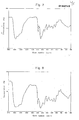
- Figs. 1, 2, 3, 4, 5, 6, 7, 8 and 9 represents infrared absorption spectra of Antibiotic TAN-592A . dihydrochloride, B-hydrochloride, C.dihydrochloride, D.dihydrochloride, E ⁇ dihydrochloride, F-dihydrochloride, Antibiotic TAN-591A ⁇ dihydrochloride, B ⁇ dihydrochloride and C.trihydrochloride, respectively.
- % in the culture medium means a weight/volume %, unless otherwise noted.
- Xanthomonas lactamgena YK-280 (IFO 14330, FERM BP-635)isolated from a plant sample collected at Tsuge, Ayama District, Mie Prefecture, Japan, which was grown on a nutrient agar slant, was used to inoculate a 2-l Sakaguchi flask containing 500 ml of a culture medium comprising an aqueous solution (pH 7.0) having the composition of 2% of glucose,3% of soluble starch, 1% of raw soybean flour, 0.3% of corn steep liquor, 0.5% of Polypepton (produced by Daigo Nutritive Chemicals, Japan) and 0.3% of sodium chloride and 0.5% of precipitating calcium carbonate admixed, and incubated on a reciprocating shaker at 24°C for 48 hours.
- aqueous solution pH 7.0
- the total volume of the culture broth thus obtained was transferred to a tank with a 200 l capacity - containing 120 l, of the above-described culture medium admixed with 0.05% of an antifoam, Actcol (Takeda Chemical Industries, Ltd.,Japan), and incubated at 24°C for 48 hours, with aeration at the rate of 120 l/min and agitation at 120 r.p.m.
- Actcol Takeda Chemical Industries, Ltd.,Japan
- the total volume of the culture broth was transferred to a tank with a 2000 i capacity containing 1200 k of culture medium comprising an aqueous solution (whose pH was not adjusted) having the composition of 3% of dextrin, 3% of raw soybean flour and 0.2%'of Polypepton admixed with 0.5% of precipitating calcium carbonate and 0.05% of Actcol, and incubated at 24°C for 66 hours, with aeration at the rate of 1200 i/min. and agitation at 100 r.p.m.
- the culture (1140 l) obtained by the above procedure was adjusted at pH 6.0 with 2 N hydrochloric acid, admixed with Hyflo-Super Cel(Johns Manville Products, U.S.A.), filtered and washed with water to yield a filtrate (1370 l).
- the filtrate was adjusted to pH 6.3, and passed through a column packed with Dowex-50W (Na type 50 to 100 mesh, 25 l). After the column was washed with water (75l), elution was conducted with 2 M aqueous sodium chloride solution.
- the eluate was passed through a column packed with activated carbon (15 l), and after the column was washed with water (45 l), elution was carried out with 8% isobutanol-N/100 hydrochloric acid (105 l).
- the eluate was adjusted to pH 6.2 and concentrated to 12 l, and the concentrate was adjusted to pH 7.3 and passed through a column packed with Diaion HP-20 (10 l).
- the column was washed with 0.01 M phosphate buffer (pH 7.3, 20 l), and elution was conducted with 0.01 M phosphate buffer (pH 2.5, 100 l).
- the eluate was passed through a column of activated carbon (2.5l) and washed with water (6 l), and elution was carried out with 8% isobutanol-N/200 hydrochloric acid (18 l).
- the eluate was concentrated to 1.6 A, and the concentrate was adjusted to pH 7.3 and passed through a column packed with Diaion HP-20 (50 to 100 mesh, 2 l).
- the column was washed with 0.01 M pohsphate buffer (pH 7.3, 4 l), and elution fractionation was conducted with 0.01 M phosphate buffer (pH 3.0, 20 l).
- Individual fractions were subjected to analysis by liquid chromatography, and separated into two groups of fractions containing TAN-592A, B and C as a principal component and fractions containing TAN-592D, E and F as a principal component.
- the fractions containing TAN-592A, B and C as a principal component as obtained in the above were collected and passed through a column of activated carbon (500 ml), and after the column was washed with water (1.5 1), elution was conducted with 8% isobutanol-N/200 hydrochloric acid (3l). After the eluate was concentrated, the concentrate was passed through a column packed with CM-Sephadex C-25 (Na type, 0.8 l), and elution fractionation was carried out with 0.02M aqueous sodium chloride solution (40 l). Individual fractions were subjected to analysis by liquid chromatography, and the fractions showing a single peak of TAN-592A and B, respectively, and the fractions containing TAN-512C as a principal component were collected.
- the crude powder (0.7 g) of TAN-592C was passed through a column packed with CM-Sephadex C-25 (Na type, 10Q ml), and elution fractionation was carried out with 0.02M aqueous sodium chloride solution (3 l). Individual fractions were subjected to analysis by liquid chromatography, and the fractions containing TAN-592 as a principal component were collected and passed through a column of activated carbon (30 ml). After the column was washed with water (100 ml), elution was conducted with 8% isobutanol-N/200 hydrochloric acid (210 ml), and the eluate was concentrated.
- the concentrate was subjected to HPLC for separation with use of YMC-Pack SH-343 (.20 mm ⁇ x 250 mm, produced by Yamamura Chemical Laboratories, Japan), and elution was carried out with 0.01 M phosphate buffer (pH 3.0).
- Individual fractions were subjected to analysis by liquid chromatography, and the fractions showing a single peak were collected.
- the effective fractions were adjusted to pH 7.3 with 1 N NaOH, readjusted to pH 3.0 with 1 N HC1 and passed through a column packed with activated carbon (20 ml).
- the fractions containing TAN-592D, E and F as a principal component as obtained in the above were collected and passed through a column of activated carbon (200 ml) , and after the column was washed with water (600 ml), elution was carried out with 8% isobutanol-N/200 hydrochloric acid (1.4 l). After the eluate was concentrated, the concentrate was passed through a column packed with CM-Sephadex C-25 (Na type, 300 ml), and elution fractionation was conducted with 0.02M aqueous sodium chloride solution (15 l). Individual fractions were subjected to analysis by liquid chromatography, and the fractions containing TAN-592D, E and F as a principal component, respectively, were collected.
- the crude powder (1236 mg) of TAN-592D was subjected to HPLC for separation with use of YMC-Pack SH-343, and elution fractionation was carried out with 1% methanol-0.01M phosphate buffer (pH 3.0). Individual fractions were subjected to analysis by liquid chromatography, and the fractions showing a single peak were collected. The effective fractions were adjusted to pH 7.3 with 1 N NaOH, readjusted to pH 3.0 with 1 N HC1 and passed through a column packed with activated carbon (50 ml), and after the column was washed with water (200 ml), elution was conducted with 8% aqueous isobutanol (400 ml). The eluate was concentrated, and the concentrate was lyophilized to yield a white powder (332 mg) of TAN-592D dihydrochloride.
- a culture of Xanthomonas lactamgena YK-278 (IFO 14351, FERM BP-636) grown on a nutrient agar slant was used to inoculate 15 Erlenmeyer flasks of a 200-ml capacity each containing 40 ml of a culture medium comprising of an aqueous solution (pH 7.0) having the composition of 2% of glucose, 3% of soluble starch, 1% of raw soybean flour, 0.3% of corn steep liquor, 0.5% of Polypepton and 0.3% of sodium chloride admixed with 0.5% of precipitating calcium carbonate, and incubated on a rotary shaker at 24°C for 24 hours to make the resulting culture broth a seed culture.
- an aqueous solution pH 7.0
- the culture broth (16 t) as obtained in the above manner was adjusted to pH 6.5 with 2 N hydrochloric acid, admixed with water (16 l) and centrifuged to give a filtrate (32 l).
- the filtrate was passed through a column packed with Dowex-50W (Na + type, 50 to 100 mesh, 0.5 l), and after the column was washed with water (1.5 l), elution was carried out with 2M aqueous sodium chloride solution (10 l).
- the eluate was passed through a column of activated carbon (0.3 l) , and after the column was washed with water (1 l), elution was carried out 8% isobutanol-N/200 hydrochloric acid (2.2 l).
- the eluate was adjusted to pH 6.2 and concentrated to 0.5 l, and the concentrate was adjusted to pH 7.3 and passed through a column packed with Diaion HP-20 (0.6 l) .
- the column was washed with 0.01M phosphate buffer (pH 7.3, 1.6 l) , and elution was carried out with 0.01M phosphate buffer (pH 3.0, 6 l).
- the crude substance I (400 mg) was dissolved in water (100 ml), and the solution was passed through a column packed with CM-Sephadex C-25 (Na type, 50 ml), followed by elution fractionation with 0.02M aqueous sodium chloride solution (1.5 l). Individual fractions were subjected to analysis by liquid chromatography, and fractions containing TAN-591A, B and C as a principal component, respectively, were collected.
- the fractions containing TAN-591A, B and C as a principal component, respectively, were passed through columns of activated carbon (10 ml for each column), and after the columns were washed with water (30 ml for each column), elution was effected with 8% aqueous isobutanol solutions (70 ml for each elution).
- the eluates were concentrated, and each concentrate was subjected to HPLC for separation using YMC-Pack SH-343 (20 mm ⁇ x 250 mm), followed by elution fractionation with 0.01M phosphate buffer (pH 4.5). Individual fractions were subjected to analysis by liquid chromatography, and fractions showing a single peak were collected.
- the effective fractions were adjusted to pH 7.3 with 1 N NaOH, readjusted to pH 3.0 with 1 N HC1 and passed through a column packed with activated carbon (5 ml). After the column was washed with water (20 ml), elution was carried out with 8% aqueous isobutanol solution (50 ml), and the eluate was concentrated and lyophilized to give white powders of TAN-591A (3 mg), B (18 mg) and C (22 mg) hydrochlorides.
- a culture broth (100 l) which was obtained by cultivating Xantnomonas lactamgena YK-280 (IFO 14330, FERM BP-635), was subjected to centrifugation to give wet' cells.
- the wet cells were poured into 10 t of 70% aqueous acetone and the mixture was stirred for 30 minutes. The resultant was filtered, and the filtrate was concentrated.
- the concentrate was subjected to column chromatography of activated carbon (100 ml), and the column was eluted with 50% aqueous acetone (500 ml).
- the concentrate of the eluates was subjected to column chromatography of Amberlite IRA-68 (acetate form, 50 ml), and the column was eluted with 0.2M sodium acetate solution (350 ml).
Landscapes
- Chemical & Material Sciences (AREA)
- Organic Chemistry (AREA)
- Engineering & Computer Science (AREA)
- Life Sciences & Earth Sciences (AREA)
- Zoology (AREA)
- Wood Science & Technology (AREA)
- Health & Medical Sciences (AREA)
- Genetics & Genomics (AREA)
- Bioinformatics & Cheminformatics (AREA)
- Biotechnology (AREA)
- General Health & Medical Sciences (AREA)
- Biochemistry (AREA)
- General Engineering & Computer Science (AREA)
- Microbiology (AREA)
- Chemical Kinetics & Catalysis (AREA)
- General Chemical & Material Sciences (AREA)
- Medicinal Chemistry (AREA)
- Tropical Medicine & Parasitology (AREA)
- Virology (AREA)
- Biomedical Technology (AREA)
- Preparation Of Compounds By Using Micro-Organisms (AREA)
- Peptides Or Proteins (AREA)
- Cephalosporin Compounds (AREA)
Applications Claiming Priority (4)
| Application Number | Priority Date | Filing Date | Title |
|---|---|---|---|
| JP91314/84 | 1984-05-07 | ||
| JP59091314A JPS60256387A (ja) | 1984-05-07 | 1984-05-07 | 抗生物質tan−592、その製造法および微生物 |
| JP168691/84 | 1984-08-10 | ||
| JP16869184A JPS6147491A (ja) | 1984-08-10 | 1984-08-10 | 抗生物質,その製造法および微生物 |
Publications (2)
| Publication Number | Publication Date |
|---|---|
| EP0160745A2 true EP0160745A2 (de) | 1985-11-13 |
| EP0160745A3 EP0160745A3 (de) | 1986-11-05 |
Family
ID=26432775
Family Applications (1)
| Application Number | Title | Priority Date | Filing Date |
|---|---|---|---|
| EP84115169A Ceased EP0160745A3 (de) | 1984-05-07 | 1984-12-11 | Cephemverbindungen und ihre Herstellung |
Country Status (3)
| Country | Link |
|---|---|
| US (1) | US4667027A (de) |
| EP (1) | EP0160745A3 (de) |
| CA (1) | CA1247029A (de) |
Families Citing this family (1)
| Publication number | Priority date | Publication date | Assignee | Title |
|---|---|---|---|---|
| EP0150378B1 (de) * | 1984-01-23 | 1990-03-28 | Takeda Chemical Industries, Ltd. | Cephemderivate und ihre Herstellung |
Family Cites Families (4)
| Publication number | Priority date | Publication date | Assignee | Title |
|---|---|---|---|---|
| IL36281A (en) * | 1970-03-13 | 1977-04-29 | Merck & Co Inc | Cephalosporin derivatives antibiotic mixtures containing them and process for their preparation |
| DE3278878D1 (en) * | 1981-07-25 | 1988-09-15 | Beecham Group Plc | Beta-lactam antibacterial agents |
| AU2361184A (en) * | 1983-01-21 | 1984-07-26 | Beecham Group Plc | Disubstituted 6-penicillins and 7-cephalosporins |
| EP0114750A3 (de) * | 1983-01-24 | 1985-07-31 | Beecham Group Plc | Antibakterielle beta-Lactam-Mittel |
-
1984
- 1984-12-11 EP EP84115169A patent/EP0160745A3/de not_active Ceased
- 1984-12-14 US US06/681,783 patent/US4667027A/en not_active Expired - Fee Related
- 1984-12-14 CA CA000470121A patent/CA1247029A/en not_active Expired
Also Published As
| Publication number | Publication date |
|---|---|
| US4667027A (en) | 1987-05-19 |
| CA1247029A (en) | 1988-12-20 |
| EP0160745A3 (de) | 1986-11-05 |
Similar Documents
| Publication | Publication Date | Title |
|---|---|---|
| EP0182315B1 (de) | Antibiotikum NK84-0218, dieses enthaltende Arzneimittel und Verfahren zu seiner Herstellung | |
| EP0231111B1 (de) | Glycopeptide Antibiotika, ihre Herstellung und Verwendung und Mikroorganismen, die diese produzieren | |
| US4971965A (en) | Antibiotics TAN-1057 | |
| CA1225333A (en) | Antiviral agents | |
| US4587333A (en) | Cephalosporins and their production | |
| EP0150378B1 (de) | Cephemderivate und ihre Herstellung | |
| US4667027A (en) | Cephem compounds and their production | |
| GB2042532A (en) | Antibiotics c-19393 s2 and 'i | |
| EP0137365A2 (de) | Cephalosporine und ihre Herstellung | |
| US4656288A (en) | Antibiotics, their production and use | |
| GB2084158A (en) | Peptide and production thereof | |
| CA1238594A (en) | Antibiotics, tan-558, their production and use | |
| US4283389A (en) | Novel antibiotic, BN-183B substance | |
| EP0206068B1 (de) | Antibiotika TAN-749, deren Herstellung und Anwendung | |
| US4950605A (en) | FR-900493 substance, a process for its production and a pharmaceutical composition containing the same | |
| EP0144238B1 (de) | Verbindung FR-900451, deren Herstellung und Anwendung | |
| EP0055929B1 (de) | Antibiotikum C-19393 E5 und Verfahren zu seiner Herstellung | |
| CA1131146A (en) | Amylase inhibitors | |
| US4264736A (en) | Antibiotic 890A10 | |
| JPH0361662B2 (de) | ||
| JPH0699444B2 (ja) | 抗生物質tan―547およびその製造法 | |
| GB2134119A (en) | Luzopeptin E2 | |
| JPS6147491A (ja) | 抗生物質,その製造法および微生物 | |
| JPS6250474B2 (de) | ||
| WO1986005185A1 (fr) | Antibiotique, procede de preparation et microorganisme |
Legal Events
| Date | Code | Title | Description |
|---|---|---|---|
| PUAI | Public reference made under article 153(3) epc to a published international application that has entered the european phase |
Free format text: ORIGINAL CODE: 0009012 |
|
| AK | Designated contracting states |
Designated state(s): AT BE CH DE FR GB IT LI LU NL SE |
|
| PUAL | Search report despatched |
Free format text: ORIGINAL CODE: 0009013 |
|
| AK | Designated contracting states |
Kind code of ref document: A3 Designated state(s): AT BE CH DE FR GB IT LI LU NL SE |
|
| 17P | Request for examination filed |
Effective date: 19870227 |
|
| 17Q | First examination report despatched |
Effective date: 19880324 |
|
| STAA | Information on the status of an ep patent application or granted ep patent |
Free format text: STATUS: THE APPLICATION HAS BEEN REFUSED |
|
| 18R | Application refused |
Effective date: 19890608 |
|
| RIN1 | Information on inventor provided before grant (corrected) |
Inventor name: NOZAKI, YUKIMASA Inventor name: HARADA, SETSUO Inventor name: ONO, HIDEO |