EP0165746A2 - Verfahren der Coproduktion von entweder einem Dialkylcarbonat oder einem Dialkyloxalat und tertiärem Butanol - Google Patents
Verfahren der Coproduktion von entweder einem Dialkylcarbonat oder einem Dialkyloxalat und tertiärem Butanol Download PDFInfo
- Publication number
- EP0165746A2 EP0165746A2 EP85304042A EP85304042A EP0165746A2 EP 0165746 A2 EP0165746 A2 EP 0165746A2 EP 85304042 A EP85304042 A EP 85304042A EP 85304042 A EP85304042 A EP 85304042A EP 0165746 A2 EP0165746 A2 EP 0165746A2
- Authority
- EP
- European Patent Office
- Prior art keywords
- dialkyl
- oxalate
- alcohol
- carbonate
- tertiary butanol
- Prior art date
- Legal status (The legal status is an assumption and is not a legal conclusion. Google has not performed a legal analysis and makes no representation as to the accuracy of the status listed.)
- Withdrawn
Links
Images
Classifications
-
- C—CHEMISTRY; METALLURGY
- C07—ORGANIC CHEMISTRY
- C07C—ACYCLIC OR CARBOCYCLIC COMPOUNDS
- C07C67/00—Preparation of carboxylic acid esters
- C07C67/36—Preparation of carboxylic acid esters by reaction with carbon monoxide or formates
-
- C—CHEMISTRY; METALLURGY
- C07—ORGANIC CHEMISTRY
- C07C—ACYCLIC OR CARBOCYCLIC COMPOUNDS
- C07C29/00—Preparation of compounds having hydroxy or O-metal groups bound to a carbon atom not belonging to a six-membered aromatic ring
- C07C29/48—Preparation of compounds having hydroxy or O-metal groups bound to a carbon atom not belonging to a six-membered aromatic ring by oxidation reactions with formation of hydroxy groups
- C07C29/50—Preparation of compounds having hydroxy or O-metal groups bound to a carbon atom not belonging to a six-membered aromatic ring by oxidation reactions with formation of hydroxy groups with molecular oxygen only
-
- C—CHEMISTRY; METALLURGY
- C07—ORGANIC CHEMISTRY
- C07C—ACYCLIC OR CARBOCYCLIC COMPOUNDS
- C07C68/00—Preparation of esters of carbonic or haloformic acids
-
- Y—GENERAL TAGGING OF NEW TECHNOLOGICAL DEVELOPMENTS; GENERAL TAGGING OF CROSS-SECTIONAL TECHNOLOGIES SPANNING OVER SEVERAL SECTIONS OF THE IPC; TECHNICAL SUBJECTS COVERED BY FORMER USPC CROSS-REFERENCE ART COLLECTIONS [XRACs] AND DIGESTS
- Y02—TECHNOLOGIES OR APPLICATIONS FOR MITIGATION OR ADAPTATION AGAINST CLIMATE CHANGE
- Y02P—CLIMATE CHANGE MITIGATION TECHNOLOGIES IN THE PRODUCTION OR PROCESSING OF GOODS
- Y02P20/00—Technologies relating to chemical industry
- Y02P20/10—Process efficiency
Definitions
- the present invention relates to a continuous process for the coproduction of tertiary butanol and either a dialkyl carbonate or a dialkyl oxalate from butane, oxygen, carbon monoxide and methanol in an integrated series of process steps.
- Dialkyl carbonates of which dimethyl carbonate is an example, are excellent solvents and have been used in the manufacture of cellulose nitrate and lacquers. They are also used as components in greases, lubricating oils and the preparation of polycarbonate resins by transesterification.
- a potentially more important use of dimethyl carbonate is as an additive to liquid hydrocarbon fuels such as gasoline. Recent research has shown that the addition of dimethyl carbonate to gasoline causes an increase in the octane number of the finished gasoline. Dimethyl carbonate may therefore be an alternative to lead compounds as an 'anti-knock' agent. Furthermore since it is burnt during combustion its degradation products are environmentally acceptable.
- Dialkyl oxalates of which dimethyl oxalate is an example, also have industrial uses. These uses include applications in analysis and the dyestuff industry and include the use of oxalates as a bleaching agent for straw. A further potential use for dialkyl oxalates is in the production of ethylene glycol. Thus it is known that dialkyl oxalates can be hydrogenated to the dialkyl ethers of ethylene glycol which themselves can either be used or converted into ethylene glycol.
- the two processes described above only differ in the catalyst used in the carbonylation stage, the same integrated process can be used for preparing either a dialkyl carbonate or a dialkyl oxalate by the correct choice of catalyst.
- the present invention comprises a process for the coproduction of either a dialkyl carbonate or a dialkyl oxalate and tertiary butanol from butane, oxygen, an alcohol and carbon monoxide by an integrated series of steps which process comprises:
- dialkyl carbonate or dialkyl oxalate is meant a carbonate or oxalate ester in which the ester groups are derived from a C 1 -C6 alkyl alcohol.
- the alcohol may be either primary or secondary and can be, for example methanol, ethanol isopropanol, tertiary and the like.
- a preferred alcohol is methanol and preferred dialkyl carbonates or dialkyl oxalates are dimethyl carbonate or dimethyl oxalate.
- a preferred embodiment of the present invention comprises a process for the coproduction of either (i) dimethyl carbonate or dimethyl oxalate and (ii) tertiary butanol from butane, oxygen, methanol and carbon monoxide by an integrated series of steps which process comprises.:
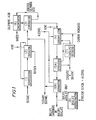
- Unit 1 in which step 1) occurs, is fed with the butane feedstock and causes isomerisation of the feedstock to a product which is mainly isobutane.
- the butane feedstock can be pure normal butane or can be a mixture of normal and isobutane. There can also be present in the feedstock significant amounts, for example up to 10% by weight, of C 1 -C 3 hydrocarbons.
- a preferred butane feedstock is typically one containing approximately 70% by weight normal butane and 30% isobutane as might be obtained commercially.
- the isomerisation step can be carried out by using, for example, the process described in our British Patents Nos 953187 and 953189.
- step 1) which comprises mainly isobutane together with small amounts of n-butane and traces of C 3 hydrocarbons is then fed to Unit 2 in which step 2), the oxidation of isobutane to a mixture of tertiary butanol and tertiary butyl hydroperoxide, is carried out.
- the oxidation of isobutane to a mixture of tertiary butanol and tertiary butyl hydroperoxide has been disclosed in for example US 3,987,115 or US 4,404,406 and is a commercially operated process.
- the products of the oxidation step are a mixture of tertiary butanol and tertiary butyl hydroperoxide, which are fed to Unit 3, and unreacted normal and isobutane which are recycled to the isomerisation stage.
- Oxygen or an oxygen containing gas e.g. air can be used.
- the dehydration stage the mixture of tertiary butanol and tertiary butyl hydroperoxide is dehydrated with concentrated sulphuric acid to form di-tertiary butyl peroxide and water.
- the products of Unit 3, di-tertiary butyl peroxide and water, present as an aqueous solution of sulphuric acid, are immiscible and can conventiently be separated by decantation, the di-tertiary butyl peroxide layer being fed to Unit 4 for carbonylation and the aqueous layer containing.
- sulphuric acid being fed to a concentrator Unit 6 prior to recycling to Unit 3.
- the dehydration step is typically carried out in the temperature range 20-80°C preferably 30-60°C and at a pressure of up to 150 psig. A typical dehydration process using sulphuric acid is described in US 2,862,973.
- the di-tertiary butyl peroxide produced in Unit 3 is next fed to Unit 4 along with the alcohol and carbon monoxide feedstock and the appropriate catalyst where step 4), the catalysed carbonylation of the alcohol to a dialkyl carbonate or a dialkyl oxalate occurs.
- the alcohol, carbon monoxide and catalyst Unit 4 is also fed with a solvent in which the carbonylation reaction occurs.
- the solvent provides a convenient means for adding the catalyst to the reactor and for recovering the catalyst in the separation stage.
- the solvent is thus conveniently one in which the catalyst is soluble. Examples of such solvents are given in European patent applications 0112171 and 0112172 which also gives details of the conditions under which the unit is preferably operated.
- Unit 4 may be a single reactor but, as the carbonylation reaction is highly exothermic, preferably consists of a series of two or more reactors of increasing temperature in order to moderate the reaction and reduce the amount of side products formed.
- the liquid products of Unit 4 that is the alcohol,dialkyl carbonate or dialkyl oxalate and tertiary butanol, together with the catalyst and solvent are separated from any unreacted carbon monoxide and fed to Unit 5.
- the unreacted carbon monoxide is recycled to Unit 4 or may be vented.
- Unit 5 in which step 5), the separation of products occurs, consists of two or more distillation columns.
- the reaction products are separated from the catalyst and its solvent; the catalyst and its solvent being recycled to Unit 4, optionally through a catalyst reactivation/purification unit (Unit 7).
- the other three products may be separated if desired in one or more distillation columns (Unit 5B) and any excess alcohol recycled to Unit 4.
- the dialkyl carbonate or dialkyl oxalate and tertiary butanol can be recovered pure, or alternatively a mixed dialkyl carbonate or dialkyl oxalate and tertiary butanol stream can be produced.
- dialkyl oxalate is produced by the above process this can either be recovered or fed to a hydrogenation unit (Unit 8) where it is hydrogenated to ethylene glycol and the alcohol.
- the dialkyl oxalate can be hydrogenated using for example a copper/silica catalyst at elevated temperature and pressure. Suitable catalysts and conditions are disclosed in European patent 0046983.
- the tertiary butanol co-product may also be partially recycled to the dehydration Unit_3 for reaction with tertiary butyl hydroperoxide. This can be particularly useful when Unit 2 is operated under conditions such that there is produced more tertiary butyl hydroperoxide than tertiary butanol. In such a case, the recycled tertiary butanol allows the feed to Unit 3 to be adjusted to a molar ratio of tertiary butyl hydroperoxide to tertiary butanol of 1:1 thereby satisfying the stoichiometry of the dehydration step.
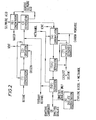
- Figure 2 illustrates the preferred embodiment of the invention. This operation is essentially the same as described previously except that the alcohol fed to unit 4 is methanol and the dialkyl carbonate or dialkyl oxalate produced is dimethyl carbonate or dimethyl oxalate.
- the dimethyl oxalate can be hydrogenated in Unit 8 to produce ethylene glycol and methanol.
- a butane stream typically consisting of 70% normal butane and 30% isobutane, was fed to Unit 1 and converted to a mixture containing greater than 98% isobutane.
- the unreacted isobutane was separated and recycled.
- the first carbonylation reactor of Unit 4 was charged with 109 g of di-tertiary butyl peroxide, 47.8 g of methanol, 3.7 g of cuprous chloride and 21 g of 2,6-dimethyl pyridine. Carbon monoxide was also introduced so as to correspond to a room temperature pressure of 43 bars. The first reactor was held at a temperature of 83°C. The reaction so produced was passed through a series of reactors of increasing temperature at rates which allowed the reaction to be carefully controlled. The last reactor was maintained at 125°C. During the total reaction time 8 1 ⁇ 2hours, carbon monoxide was consumed and it was necessary at certain points to introduce further carbon monoxide to maintain pressure. The product mixture leaving the final reactor contained 69.6 g of dimethyl carbonate.
- the product mixture leaving Unit 4 was fed to Unit 5A.
- the mixture was heated to 60°C under reduced pressure and the volatile components removed.
- the involatile residue consisting of the copper catalyst and 2,6-dimethyl pyridine was removed from the bottom of Unit 5 and recycled to Unit 4.
Landscapes
- Chemical & Material Sciences (AREA)
- Organic Chemistry (AREA)
- Chemical Kinetics & Catalysis (AREA)
- Organic Low-Molecular-Weight Compounds And Preparation Thereof (AREA)
- Low-Molecular Organic Synthesis Reactions Using Catalysts (AREA)
- Transition And Organic Metals Composition Catalysts For Addition Polymerization (AREA)
- Treating Waste Gases (AREA)
- Polyesters Or Polycarbonates (AREA)
Applications Claiming Priority (2)
| Application Number | Priority Date | Filing Date | Title |
|---|---|---|---|
| GB848415150A GB8415150D0 (en) | 1984-06-14 | 1984-06-14 | Coproduction of dialkyl carbonate/dialkyl and tertiary butanol |
| GB8415150 | 1984-06-14 |
Publications (2)
| Publication Number | Publication Date |
|---|---|
| EP0165746A2 true EP0165746A2 (de) | 1985-12-27 |
| EP0165746A3 EP0165746A3 (de) | 1987-01-21 |
Family
ID=10562411
Family Applications (1)
| Application Number | Title | Priority Date | Filing Date |
|---|---|---|---|
| EP85304042A Withdrawn EP0165746A3 (de) | 1984-06-14 | 1985-06-06 | Verfahren der Coproduktion von entweder einem Dialkylcarbonat oder einem Dialkyloxalat und tertiärem Butanol |
Country Status (9)
| Country | Link |
|---|---|
| US (2) | US4644078A (de) |
| EP (1) | EP0165746A3 (de) |
| JP (1) | JPS6130540A (de) |
| AU (1) | AU4347485A (de) |
| CA (1) | CA1244464A (de) |
| GB (1) | GB8415150D0 (de) |
| NO (1) | NO852365L (de) |
| NZ (1) | NZ212353A (de) |
| ZA (1) | ZA854378B (de) |
Cited By (1)
| Publication number | Priority date | Publication date | Assignee | Title |
|---|---|---|---|---|
| EP0628546A3 (de) * | 1993-06-10 | 1995-11-08 | Arco Chem Tech | Integriertes Verfahren zur Herstellung von Ditertiär-butyl-peroxyde. |
Families Citing this family (5)
| Publication number | Priority date | Publication date | Assignee | Title |
|---|---|---|---|---|
| US4740215A (en) * | 1987-01-27 | 1988-04-26 | Union Oil Company Of California | Composition for cetane improvement of diesel fuels |
| US5183920A (en) * | 1992-01-13 | 1993-02-02 | The Dow Chemical Company | Integrated process for the production of dimethyl carbonate |
| US6008399A (en) * | 1999-03-11 | 1999-12-28 | Mobil Oil Corporation | Process for preparing organic carbonates |
| CN102442903A (zh) * | 2010-10-15 | 2012-05-09 | 安徽淮化股份有限公司 | 工业生产乙二醇的废气中草酸二甲酯、碳酸二甲酯的回收方法 |
| CN102391167B (zh) * | 2011-08-26 | 2013-11-27 | 湘潭大学 | 一种异丁烷氧化制备叔丁基过氧化氢和叔丁醇的方法 |
Family Cites Families (9)
| Publication number | Priority date | Publication date | Assignee | Title |
|---|---|---|---|---|
| NL65254C (de) * | 1943-10-04 | |||
| FR929276A (fr) * | 1946-06-18 | 1947-12-22 | Bataafsche Petroleum | Procédé pour l'isomérisation du butane normal en isobutane |
| US2862973A (en) * | 1956-04-27 | 1958-12-02 | Shell Dev | Di-tertiary-alkyl peroxide production |
| US3987115A (en) * | 1971-03-16 | 1976-10-19 | Atlantic Richfield Company | Production of hydroperoxides |
| US4160107A (en) * | 1976-04-12 | 1979-07-03 | Montedison S.P.A. | Process for the preparation of esters of oxalic acid |
| US4138580A (en) * | 1976-10-06 | 1979-02-06 | Ube Industries, Ltd. | Process for preparing diesters of dicarboxylic acids |
| US4404406A (en) * | 1981-10-05 | 1983-09-13 | Shell Oil Company | Oxidation of isobutane under super-critical conditions |
| CA1218670A (en) * | 1982-12-15 | 1987-03-03 | The British Petroleum Company P.L.C. | Process for the production of dihydrocarbyl carbonates, their use as fuels additives and fuel compositions containing them |
| CA1213607A (en) * | 1982-12-15 | 1986-11-04 | George E. Morris | Process for the production of dihydrocarbyl oxalates |
-
1984
- 1984-06-14 GB GB848415150A patent/GB8415150D0/en active Pending
-
1985
- 1985-06-04 US US06/741,250 patent/US4644078A/en not_active Expired - Fee Related
- 1985-06-06 EP EP85304042A patent/EP0165746A3/de not_active Withdrawn
- 1985-06-07 NZ NZ212353A patent/NZ212353A/xx unknown
- 1985-06-10 ZA ZA854378A patent/ZA854378B/xx unknown
- 1985-06-11 AU AU43474/85A patent/AU4347485A/en not_active Abandoned
- 1985-06-11 CA CA000483622A patent/CA1244464A/en not_active Expired
- 1985-06-11 NO NO852365A patent/NO852365L/no unknown
- 1985-06-13 JP JP12907685A patent/JPS6130540A/ja active Pending
-
1986
- 1986-11-17 US US06/931,606 patent/US4689430A/en not_active Expired - Fee Related
Cited By (1)
| Publication number | Priority date | Publication date | Assignee | Title |
|---|---|---|---|---|
| EP0628546A3 (de) * | 1993-06-10 | 1995-11-08 | Arco Chem Tech | Integriertes Verfahren zur Herstellung von Ditertiär-butyl-peroxyde. |
Also Published As
| Publication number | Publication date |
|---|---|
| NZ212353A (en) | 1988-11-29 |
| US4644078A (en) | 1987-02-17 |
| ZA854378B (en) | 1987-02-25 |
| GB8415150D0 (en) | 1984-07-18 |
| JPS6130540A (ja) | 1986-02-12 |
| CA1244464A (en) | 1988-11-08 |
| US4689430A (en) | 1987-08-25 |
| AU4347485A (en) | 1985-12-19 |
| EP0165746A3 (de) | 1987-01-21 |
| NO852365L (no) | 1985-12-16 |
Similar Documents
| Publication | Publication Date | Title |
|---|---|---|
| US4032458A (en) | Production of 1,4-butanediol | |
| EP1125915B1 (de) | Verfahren zur gleichzeitigen Herstellung von Ethylenglykol und Carbonatester | |
| JP3405420B2 (ja) | メチル−tert−ブチルエーテルの製造・回収方法 | |
| EP0031205B1 (de) | Carbonylierung von Äthylen oder Propylen | |
| US4296263A (en) | Tertiary butyl alcohol production | |
| US4744869A (en) | Process for purifying methanol | |
| US4172961A (en) | Production of 1,4-butanediol | |
| US5476971A (en) | Glycerine ditertiary butyl ether preparation | |
| EP0023119B1 (de) | Verfahren zur Herstellung von Isobutylen hoher Reinheit | |
| US4656297A (en) | Coproduction of butanediol and tetrahydrofuran and their subsequent separation from the reaction product mixture | |
| US4644078A (en) | Process for the coproduction of dialkyl carbonate and tertiary butanol | |
| JP2557099B2 (ja) | ジメチルカーボネートの分離方法 | |
| US5312998A (en) | Integrated process for the production of ditertiary butyl peroxide | |
| US20030149319A1 (en) | Process for the preparation or lower olefins | |
| US5395982A (en) | Continuous isobutylene-assisted aqueous extraction of methanol from methyl tertiary butyl ether | |
| EP0714878B1 (de) | Aufeinanderfolgende Reaktion von Tert-Butanol und Isobutylen mit Methanol | |
| US6063966A (en) | Isobutylene-assisted aqueous extraction of methanol from methyl tertiary butyl ether | |
| JPS6327332B2 (de) | ||
| US4303589A (en) | Hydroesterification process | |
| AU635114B2 (en) | Production of ethyl tertiary alkyl ethers | |
| AU558487B2 (en) | Process for the production of dihydrocarbyl oxalates | |
| US4412084A (en) | Process for producing ethylene glycol | |
| US4594462A (en) | Preparation of butane-1,4-diol | |
| EP0757977A1 (de) | Entfernung von Methanol aus Methyltertbutylether | |
| WO2001010811A1 (en) | Process for the preparation of methyl methacrylate |
Legal Events
| Date | Code | Title | Description |
|---|---|---|---|
| PUAI | Public reference made under article 153(3) epc to a published international application that has entered the european phase |
Free format text: ORIGINAL CODE: 0009012 |
|
| AK | Designated contracting states |
Designated state(s): BE DE FR GB IT NL SE |
|
| PUAL | Search report despatched |
Free format text: ORIGINAL CODE: 0009013 |
|
| AK | Designated contracting states |
Kind code of ref document: A3 Designated state(s): BE DE FR GB IT NL SE |
|
| 17P | Request for examination filed |
Effective date: 19870525 |
|
| 17Q | First examination report despatched |
Effective date: 19880129 |
|
| STAA | Information on the status of an ep patent application or granted ep patent |
Free format text: STATUS: THE APPLICATION IS DEEMED TO BE WITHDRAWN |
|
| 18D | Application deemed to be withdrawn |
Effective date: 19890303 |
|
| EUG | Se: european patent has lapsed |
Ref document number: 85304042.6 Effective date: 19890202 |
|
| RIN1 | Information on inventor provided before grant (corrected) |
Inventor name: WAINHOUSE, GILLIAN Inventor name: MORRIS, GEORGE ERNEST |