EP0166400A2 - Verfahren zur Herstellung einer keramischen Aufschlämmung - Google Patents
Verfahren zur Herstellung einer keramischen Aufschlämmung Download PDFInfo
- Publication number
- EP0166400A2 EP0166400A2 EP85107736A EP85107736A EP0166400A2 EP 0166400 A2 EP0166400 A2 EP 0166400A2 EP 85107736 A EP85107736 A EP 85107736A EP 85107736 A EP85107736 A EP 85107736A EP 0166400 A2 EP0166400 A2 EP 0166400A2
- Authority
- EP
- European Patent Office
- Prior art keywords
- mix
- aluminum oxide
- solvent
- milling
- alumina
- Prior art date
- Legal status (The legal status is an assumption and is not a legal conclusion. Google has not performed a legal analysis and makes no representation as to the accuracy of the status listed.)
- Granted
Links
Images

Classifications
-
- C—CHEMISTRY; METALLURGY
- C04—CEMENTS; CONCRETE; ARTIFICIAL STONE; CERAMICS; REFRACTORIES
- C04B—LIME, MAGNESIA; SLAG; CEMENTS; COMPOSITIONS THEREOF, e.g. MORTARS, CONCRETE OR LIKE BUILDING MATERIALS; ARTIFICIAL STONE; CERAMICS; REFRACTORIES; TREATMENT OF NATURAL STONE
- C04B35/00—Shaped ceramic products characterised by their composition; Ceramics compositions; Processing powders of inorganic compounds preparatory to the manufacturing of ceramic products
- C04B35/622—Forming processes; Processing powders of inorganic compounds preparatory to the manufacturing of ceramic products
- C04B35/626—Preparing or treating the powders individually or as batches ; preparing or treating macroscopic reinforcing agents for ceramic products, e.g. fibres; mechanical aspects section B
- C04B35/63—Preparing or treating the powders individually or as batches ; preparing or treating macroscopic reinforcing agents for ceramic products, e.g. fibres; mechanical aspects section B using additives specially adapted for forming the products, e.g.. binder binders
- C04B35/632—Organic additives
- C04B35/634—Polymers
- C04B35/63404—Polymers obtained by reactions only involving carbon-to-carbon unsaturated bonds
- C04B35/63416—Polyvinylalcohols [PVA]; Polyvinylacetates
-
- C—CHEMISTRY; METALLURGY
- C04—CEMENTS; CONCRETE; ARTIFICIAL STONE; CERAMICS; REFRACTORIES
- C04B—LIME, MAGNESIA; SLAG; CEMENTS; COMPOSITIONS THEREOF, e.g. MORTARS, CONCRETE OR LIKE BUILDING MATERIALS; ARTIFICIAL STONE; CERAMICS; REFRACTORIES; TREATMENT OF NATURAL STONE
- C04B35/00—Shaped ceramic products characterised by their composition; Ceramics compositions; Processing powders of inorganic compounds preparatory to the manufacturing of ceramic products
- C04B35/01—Shaped ceramic products characterised by their composition; Ceramics compositions; Processing powders of inorganic compounds preparatory to the manufacturing of ceramic products based on oxide ceramics
- C04B35/10—Shaped ceramic products characterised by their composition; Ceramics compositions; Processing powders of inorganic compounds preparatory to the manufacturing of ceramic products based on oxide ceramics based on aluminium oxide
- C04B35/111—Fine ceramics
-
- C—CHEMISTRY; METALLURGY
- C04—CEMENTS; CONCRETE; ARTIFICIAL STONE; CERAMICS; REFRACTORIES
- C04B—LIME, MAGNESIA; SLAG; CEMENTS; COMPOSITIONS THEREOF, e.g. MORTARS, CONCRETE OR LIKE BUILDING MATERIALS; ARTIFICIAL STONE; CERAMICS; REFRACTORIES; TREATMENT OF NATURAL STONE
- C04B35/00—Shaped ceramic products characterised by their composition; Ceramics compositions; Processing powders of inorganic compounds preparatory to the manufacturing of ceramic products
- C04B35/622—Forming processes; Processing powders of inorganic compounds preparatory to the manufacturing of ceramic products
- C04B35/626—Preparing or treating the powders individually or as batches ; preparing or treating macroscopic reinforcing agents for ceramic products, e.g. fibres; mechanical aspects section B
- C04B35/63—Preparing or treating the powders individually or as batches ; preparing or treating macroscopic reinforcing agents for ceramic products, e.g. fibres; mechanical aspects section B using additives specially adapted for forming the products, e.g.. binder binders
- C04B35/632—Organic additives
- C04B35/634—Polymers
-
- C—CHEMISTRY; METALLURGY
- C04—CEMENTS; CONCRETE; ARTIFICIAL STONE; CERAMICS; REFRACTORIES
- C04B—LIME, MAGNESIA; SLAG; CEMENTS; COMPOSITIONS THEREOF, e.g. MORTARS, CONCRETE OR LIKE BUILDING MATERIALS; ARTIFICIAL STONE; CERAMICS; REFRACTORIES; TREATMENT OF NATURAL STONE
- C04B35/00—Shaped ceramic products characterised by their composition; Ceramics compositions; Processing powders of inorganic compounds preparatory to the manufacturing of ceramic products
- C04B35/622—Forming processes; Processing powders of inorganic compounds preparatory to the manufacturing of ceramic products
- C04B35/626—Preparing or treating the powders individually or as batches ; preparing or treating macroscopic reinforcing agents for ceramic products, e.g. fibres; mechanical aspects section B
- C04B35/63—Preparing or treating the powders individually or as batches ; preparing or treating macroscopic reinforcing agents for ceramic products, e.g. fibres; mechanical aspects section B using additives specially adapted for forming the products, e.g.. binder binders
- C04B35/632—Organic additives
- C04B35/634—Polymers
- C04B35/63404—Polymers obtained by reactions only involving carbon-to-carbon unsaturated bonds
- C04B35/6342—Polyvinylacetals, e.g. polyvinylbutyral [PVB]
-
- C—CHEMISTRY; METALLURGY
- C04—CEMENTS; CONCRETE; ARTIFICIAL STONE; CERAMICS; REFRACTORIES
- C04B—LIME, MAGNESIA; SLAG; CEMENTS; COMPOSITIONS THEREOF, e.g. MORTARS, CONCRETE OR LIKE BUILDING MATERIALS; ARTIFICIAL STONE; CERAMICS; REFRACTORIES; TREATMENT OF NATURAL STONE
- C04B35/00—Shaped ceramic products characterised by their composition; Ceramics compositions; Processing powders of inorganic compounds preparatory to the manufacturing of ceramic products
- C04B35/622—Forming processes; Processing powders of inorganic compounds preparatory to the manufacturing of ceramic products
- C04B35/626—Preparing or treating the powders individually or as batches ; preparing or treating macroscopic reinforcing agents for ceramic products, e.g. fibres; mechanical aspects section B
- C04B35/63—Preparing or treating the powders individually or as batches ; preparing or treating macroscopic reinforcing agents for ceramic products, e.g. fibres; mechanical aspects section B using additives specially adapted for forming the products, e.g.. binder binders
- C04B35/632—Organic additives
- C04B35/634—Polymers
- C04B35/63404—Polymers obtained by reactions only involving carbon-to-carbon unsaturated bonds
- C04B35/63436—Halogen-containing polymers, e.g. PVC
-
- H—ELECTRICITY
- H10—SEMICONDUCTOR DEVICES; ELECTRIC SOLID-STATE DEVICES NOT OTHERWISE PROVIDED FOR
- H10W—GENERIC PACKAGES, INTERCONNECTIONS, CONNECTORS OR OTHER CONSTRUCTIONAL DETAILS OF DEVICES COVERED BY CLASS H10
- H10W99/00—Subject matter not provided for in other groups of this subclass
Definitions
- the invention relates to a method of forming a ceramic slurry (also known as slip or paint) for casting into a ceramic green sheet.
- a ceramic slurry also known as slip or paint
- MLC multilevel ceramic
- the basic building block used in the MLC fabrication is the unfired ceramic green sheet, nominally 0.2 mm or 0.28 mm thick.
- a key factor in achieving acceptable MLC substrate yields is the formulation of a green sheet that exhibits the necessary strength for handling and processing and the necessary density and dimensional stability to ensure accurate plane-to-plane registration when the sheets are stacked and laminated.
- the green sheet must have sufficient compressibility and bond strength.
- the green sheet properties are predominately dictated by the nature and composition of the slurry from which the green sheet is prepared. Specifically, green sheet density and fired shrinkage are controlled by the amount of deagglomeration of the slurry.
- the slurry is normally formulated in accordance with the prior art practice, from a ceramic particulate, a binder resin svstem and a solvent system.
- the function of the binder resin system is to provide adhesive and cohesive forces to hold the ceramic particulate together in its green sheet configuration.
- the solvent system is of volatile composition whose role is to dissolve the binder resin system into solution, to aid in uniformly mixing the binder resin with the ceramic particulate and to provide the necessary viscosity to the resultant ceramic paint for subsequent casting.
- the finely divided, low dielectric ceramic particulate forms the substrate material in the ultimately fired structure.
- the ceramic particulate may be selected from a number of materials, depending on the property desired in the fired ceramic end product.
- Typical ceramic particulates include alumina, steatite, aluminum silicate, zirconium dioxide, titanium dioxide, magnesium silicate, bismuth stannate, barium titanate and their combinations.
- the binder resin system will normally be comprised of a basic solvent soluble thermoplastic organic polymer having film forming properties which is nonvolatile at moderate temperatures but which will volatilize with other constituents of the resin system on firing of the green sheet to the final sintered state.
- Typical binders include polymethyl methacrylate, acrylates, polyvinyl acetate, polyvinyl butyral and nitrocellulose.
- the binder resin system may contain other additives such as plasticizers which are soluble in the solvent mixture and which are volatilized during firing of the green sheet into its sintered state.
- plasticizers which are soluble in the solvent mixture and which are volatilized during firing of the green sheet into its sintered state.
- the use of a plasticizer imparts flexibility to the polymer film and, in turn, to the green sheets to maintain it flexible, moldable and workable prior to firing.
- a wide range of plasticizers may be employed in the binder system and the selection may be made in accordance with techniques well known in the art.
- the solvent system or mixture is a volatile fluid whose function is to completely dissolve the binder resin system into a "binder solution” to effect uniform mixing of the binder system with ceramic particulate, and to provide sufficient fluidity to the ceramic slurry for subsequent casting into a cohesive sheet.
- green sheet density and “particle packing density” are used synonymously herein and refer to the final density of the cast ceramic green sheet.
- the most versatile conventional method of forming a slurry is to thoroughly blend in a ball mill the ceramic particulate, binder resin and solvent system to coat the ceramic particulates with the binder resin and provide a smooth uniformly dispersed slurry.
- the basic materials selected consist of alumina (A1 2 0 3 ) and glass frit representing the ceramic particulate, methylisobutyl ketone and methyl alcohol representing the solvent system, and polymeric polyvinyl butyral in combination with a plasticizer, e.g. dipropylene glycol dibenzoate, representing the binder system.
- the remaining portion of the dry, undissolved polymeric binder material and all of the alumina are added to the new mixture and the milling operation is continued for about 12-22 hours to disperse the alumina in the new mixture and form a slurry having a desired viscosity and a preferred particle packing density which translates into a green sheet density, upon casting of the slurry into green sheets, of about 2 grams/cc.
- This conventional method has several shortcomings. First, since a large portion of the polyvinyl butyral is added in a dry, undissolved state to a fairly viscous medium, during the initial mixing, polyvinyl butyral folds over in such a manner that lumps of polyvinyl butyral having a core of dry polyvinyl butyral powder and an outer shell of dissolved or viscous polyvinyl butyral are formed. Due to the rolling, cascading, churning and grinding operation of the ball mill, these lumps of polyvinyl butyral in the presence of the alumina grinding media transform into large, inert armor coated type balls which fail to dissolve in the slurry even after an extended dispersion milling period.
- Another shortcoming of the prior art method of slurry preparation is that since alumina is dispersed in a rather highly viscous mixture, minor variations in alumina deagglomerates, particle size and impurities, for e.g. due to lot-to- lot variations, cause significant variation in the milling efficiency and thereby cause a variation in the amount of deagglomeration that can be achieved which again translates into variation in the green sheet density and shrinkage upon sintering.
- Another drawback of the prior art process is that it is a rather time consuming process requiring 16-30 hours to prepare the slurry.
- the forming of the pre-mix and the post-mix, the mixing, the dispersing and the ccmbinin g is carried out by milling in a ball mill for predetermined periods of time.
- the alumina is added stepwise, for example, in three predetermined portions, to the ball mill and milled for specific short periods of time to achieve the desired degree of deagglomeration.
- the first portion is milled to achieve complete deagglomeration and provide the maximum particle packing density.
- the second portion is to achieve a high level of deagglomeration, although not complete deagglomeration.
- the third portion is milled to a lower level of deagglomeration than that achieved by the second portion.
- the net effect of this stepwise milling is achieving, on the average, the necessary degree of alumina deagglomeration and thereby the necessary particle packing density in the final slurry.
- the liquid post-mix is added to the ball mill and milled for a short period of time to obtain a final slurry having the desired degree of deagglomeration, improved particle packing density, stability and consistency.
- the invention in its broad aspects is in general applicable for use with all conventional ceramic formulations fabricated by usual techniques in which a ceramic slurry is cast into ceramic layers which are dried into self-supporting flexible green sheets for ultimate application, in final or fired form, as dielectric supports for printed circuits, insulation, capacitor components, other circuit elements (such as conductive paths, resistors, transistors, diodes, etc.) and the like, either as a single layer or multilayer support.
- the ceramic slurry is formulated, in accordance with the invention, by starting from the basic raw materials presently employed in the art, depending on the property desired in the fired ceramic end product.
- the starting materials consist of liquid solvents (e.g. methylisobutyl ketone and methyl alcohol), a polymeric binder material (e.g. dry, powdered polyvinyl butyral) , a resin plasticizer (e.g. dipropylene glycol benzoate) and a ceramic particulate consisting of a large quantity (e. g . about 85 % - 95 %) of aluminum oxide and a small quantity (5 % - 15 %) of glass frit.
- liquid solvents e.g. methylisobutyl ketone and methyl alcohol
- a polymeric binder material e.g. dry, powdered polyvinyl butyral
- a resin plasticizer e.g. dipropylene glycol benzoate
- a ceramic particulate consisting of a
- the glass frit may be of the magnesia-calcia-alumina-silica glass variety consisting of 52 % of SiO 2 , 30 % of Al 2 O 3 , 8.5 % of CaO, 8.5 % of MgO and less than 1 % of impurities by weight.
- the first step of the present process is forming a liquid pre-mix by combining a predetermined portion (e.g. 50 %) of the liquid solvents, all of the plasticizer and a predetermined portion (e. g . 2 % - 25 %) of the total polyvinyl butyral binder material to achieve a low viscosity of about 2-8 Centipoises (cps).
- the lower viscosity limit corresponding to a smaller percent of polyvinyl butyral content.
- a pre-mix viscosity of 2 cps the polyvinyl butyral content will not be sufficient to provide complete steric stabilization of the alumina and frit particles that will be subsequently added to the pre- mix.
- the remaining portions of the solvents and the binder material are combined separately into a post-mix for subsequent use.
- the post mix generally contains a proportionately larger quantity of the dry polyvinyl butyral binder material than the pre-mix in approximately the same quantity of liquid solvents, the viscosity of the post-mix will be relatively higher than that of the premix, in the range of 3,000-30,000 cps.
- the viscosity of the resulting post-mix would be about 15,000 cps.
- the next step in the present process of forming a ceramic slurry is adding all of the glass frit and the pre-mix to a ball mill and grinding to reduce the size of the frit particles.
- the frit particles generally employed have a size, typically, of the order of 10 LLm.
- the frit particles are reduced to a size of about 5 ⁇ m. Further reduction of the frit particle size to a size of about 3-3.5 ⁇ m will take place in subsequent ball milling steps.
- the next sequence of process steps comprises stepwise milling of the alumina by combining it with the pre- mix and glass frit mixture to achieve a desired particle packing density in the resultant intermediate mixture product.
- the density of the alumina in the finely powdered form is about 1.0 gram/cc compared to the theoretical density of solid alumina of about 3.96 grams/cc.
- a significant volume of the alumina in the powdered form is air.
- the air is displaced, in this process, with the liquid solvent contained in the pre-mix and frit mixture.
- the alumina is added to the pre-mix and glass frit mixture in three predetermined portions.
- a predetermined major portion for example, about 50 % of the total alumina is added to the ball mill and milled for about 1.25 hours.
- the alumina particle packing density in the powdered alumina prior to addition to the ball mill which is close to 1 gram/cc, will rise immediately upon addition (Addition A in Fig. 2) to the contents of the mill to approximately 1.5 grams/cc regardless of the degree of deagglomeration of the alumina.
- the packing density will gradually rise with time until a saturation or ultimate packing density of about 2.2 gram/cc is attained after about 5 hours beyond which the density will not rise.
- a second predetermined portion which is smaller than the first predetermined portion, for example, 25 %, of the alumina is added to the ball mill and milled to disperse the alumina in the liquid solvents available in the ball mill by milling for about an hour.
- the liquid solvents left over from the previous step will fill the voids present in the newly added alumina powder and enable a suspension of the second portion of alumina.
- the packing density of the second portion (Addition B) of alumina will rise, with time as illustrated in Fig. 2.
- the packing density of the first portion (Addition A) of the alumina will rise further as also illustrated in Fig. 2.
- a quantity of excess liquid solvents will be available for dispersion therein of the remainder of the alumina.
- the remaining portion i.e. 25 % of the alumina powder is added to the ball mill and milled for about 2 hours.
- the packing density of the third portion (Addition C) of the alumina will rise, as illustrated in Fig. 2, to a value higher than 1.5 grams/cc.
- the density of the second portion (Addition B) of alumina will rise further, due to additional deagglomeration that this portion is subjected t Q .
- the density of the first portion (Addition A) of alumina will reach the ultimate density level since by the end of the present step the first portion (Addition A) has been subjected to dispersion milling in excess of 4 hours which approaches the normal milling time for achieving complete deagglomeration when alumina is added to an all liquid solvent.
- the slopes of the Fig. 2 graphs corresponding to the three portions of alumina are different because of the differences in the viscosity of the mixtures involved. As the viscosity increases, which is precisely what happens as more and more of alumina is added to the ball mill, more energy or a longer time is necessary to disperse the alumina.
- the effect of the above three step milling is as follows: Referring to Fig. 2, the first major portion (Addition A) of the alumina is milled in the pre-mix and frit mixture to complete deagglomeration or to an ultimate density of about 2.2 grams/cc.
- the second portion (Addition B) of the alumina is milled to a high degree of deagglomeration in the range of 50 % - 60 % or to a density of about 1.9 grams/cc.
- the third portion (Addition C) of the alumina is milled to about 30 % - 40 % deagglomeration or a packing density of about 1.7-1.8 grams/cc.
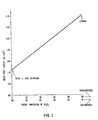
- the net effect of the above three effects is that the alumina is deagglomerated to about 70 % - 80 % level thereby (Fig. 1) providing a particle packing density of close to the desired value of about 2.0 grams/cc.
- the agglomerates left over in the second and third portions bring the density of the completely deagglomerated first portion to a net value of 2.0 grams/cc.
- the post-mix is,added to the contents of the ball mill which are essentially in a liquid state and milled to obtain the final slurry consisting of mostly primary particles and a few agglomerates and having the desired final, particle packing density. Since the alumina particles have been predispersed in liquid solvents, this final step of slurry formation involving mixing of two liquids takes place rather quickly, in less than about 1 hour.
- stepwise milling discloses adding alumina to the pre-mix and glass frit mixture in portions (Portions A, B, C) of 50 %, 25 % and 25 % of the total alumina and milling prior to adding the next portion for 1.25 hour, 1 hour and 2 hours, respectively, followed by post-mix milling for about an hour
- portions A, B, and C may be 60 %, 20% and 20 and the corresponding milling times may be 2.5 hours, 1 hour and 1 hour, respectively, with a post-mix milling period of about 0.75 hour.
- a third example is portions of 40 %, 35 % and 25 % and corresponding milling times, in hours of, 1, 2.5 and 1, respectively, in combination with post-mix milling time of about 0.75 hour.
- the preferred ranges for the three portions in a three-step milling process and their corresponding milling times are as follows:
- the preferred post-mix milling times are in the range of 0.25-3 hours.
- the particular combination of the portions A, B, and C and their corresponding milling times, etc, are selected such that the cumulative effect of each addition and milling of alumina results in a desired particle packing density.
- the present process offers several advantages over the conventional processes.
- the milling of the various ingredients of the ceramic slurry takes place at a high efficiency since all of the milling occurs at a relatively low viscosity.
- the present milling time is about 6-7 hours. In other words, this process reduces the milling cycle period by about 70 %.
- the slurry will be stable (i.e. in a steady state) and consistent since a large portion of the alumina is milled to completion. This process permits excellent control of the particle packing density in the slurry, as illustrated in Fig.
- a uniform, high density ceramic slurry was prepared by ball milling together with the following constituents, in parts by weight:
- the glass frit was milled in the pre-mix for 3 hours to reduce the particle size to about 5 ⁇ m. Then, three additions of alumina in batches of 50 %, 25 % and 25 % were made to the ball and milled for dispersion milling periods of 1.25 hour, 1 hour and 2 hours, respectively. Finally, the post-mix was added and dispersed for 1 hour. The final slurry was smooth (of viscosity 2,000 cps) consisting of essentially discrete particles. The green sheet obtained had a density of 2.00 grams/cc.
Landscapes
- Chemical & Material Sciences (AREA)
- Engineering & Computer Science (AREA)
- Ceramic Engineering (AREA)
- Manufacturing & Machinery (AREA)
- Materials Engineering (AREA)
- Structural Engineering (AREA)
- Organic Chemistry (AREA)
- Inorganic Chemistry (AREA)
- Chemical Kinetics & Catalysis (AREA)
- Compositions Of Oxide Ceramics (AREA)
- Preparation Of Clay, And Manufacture Of Mixtures Containing Clay Or Cement (AREA)
Applications Claiming Priority (2)
| Application Number | Priority Date | Filing Date | Title |
|---|---|---|---|
| US62408484A | 1984-06-25 | 1984-06-25 | |
| US624084 | 1984-06-25 |
Publications (3)
| Publication Number | Publication Date |
|---|---|
| EP0166400A2 true EP0166400A2 (de) | 1986-01-02 |
| EP0166400A3 EP0166400A3 (en) | 1987-06-16 |
| EP0166400B1 EP0166400B1 (de) | 1989-04-05 |
Family
ID=24500588
Family Applications (1)
| Application Number | Title | Priority Date | Filing Date |
|---|---|---|---|
| EP85107736A Expired EP0166400B1 (de) | 1984-06-25 | 1985-06-24 | Verfahren zur Herstellung einer keramischen Aufschlämmung |
Country Status (3)
| Country | Link |
|---|---|
| EP (1) | EP0166400B1 (de) |
| JP (1) | JPS6112306A (de) |
| DE (1) | DE3569230D1 (de) |
Cited By (6)
| Publication number | Priority date | Publication date | Assignee | Title |
|---|---|---|---|---|
| EP0237700A3 (en) * | 1986-02-14 | 1989-02-22 | International Business Machines Corporation | Method of bonding inorganic particulate material, particularly for multilayer ceramic substrates |
| EP0369045A1 (de) * | 1988-11-15 | 1990-05-23 | Hoechst Aktiengesellschaft | Verfahren zur Herstellung von Keramischen Grünfolien |
| EP0471123A1 (de) * | 1986-03-31 | 1992-02-19 | The Dow Chemical Company | Verfahren zur Herstellung von anorganischen Formkörpern |
| DE10100681B4 (de) * | 2001-01-09 | 2005-11-24 | Kuraray Specialities Europe Gmbh | Weichmacherhaltige Polyvinylbutyrale, Verfahren zu deren Herstellung sowie deren Verwendung, insbesondere zur Herstellung von Folien zum Einsatz in Verbundsicherheitsgläsern |
| CN114044684A (zh) * | 2021-12-31 | 2022-02-15 | 西安宏星电子浆料科技股份有限公司 | 一种ltcc生瓷带、用于制备其的浆料及方法 |
| CN114920567A (zh) * | 2022-04-21 | 2022-08-19 | 苏州瑞瓷新材料科技有限公司 | 一种氧化铝浆料的制备方法及制成的氧化铝浆料 |
Family Cites Families (3)
| Publication number | Priority date | Publication date | Assignee | Title |
|---|---|---|---|---|
| JPS5110813A (en) * | 1974-07-16 | 1976-01-28 | Fujitsu Ltd | Seramitsukukibanno seizohoho |
| US4104345A (en) * | 1975-06-23 | 1978-08-01 | International Business Machines Corporation | Ceramic dielectrics |
| DE3248391A1 (de) * | 1982-12-28 | 1984-06-28 | TESLA koncernový podnik, Praha | Verfahren zum erzeugen feinkoerniger keramischer substrate aus aluminiumoxid, insbesondere fuer integrierte schaltungen |
-
1985
- 1985-04-10 JP JP60074543A patent/JPS6112306A/ja active Granted
- 1985-06-24 EP EP85107736A patent/EP0166400B1/de not_active Expired
- 1985-06-24 DE DE8585107736T patent/DE3569230D1/de not_active Expired
Cited By (8)
| Publication number | Priority date | Publication date | Assignee | Title |
|---|---|---|---|---|
| EP0237700A3 (en) * | 1986-02-14 | 1989-02-22 | International Business Machines Corporation | Method of bonding inorganic particulate material, particularly for multilayer ceramic substrates |
| EP0471123A1 (de) * | 1986-03-31 | 1992-02-19 | The Dow Chemical Company | Verfahren zur Herstellung von anorganischen Formkörpern |
| EP0369045A1 (de) * | 1988-11-15 | 1990-05-23 | Hoechst Aktiengesellschaft | Verfahren zur Herstellung von Keramischen Grünfolien |
| DE10100681B4 (de) * | 2001-01-09 | 2005-11-24 | Kuraray Specialities Europe Gmbh | Weichmacherhaltige Polyvinylbutyrale, Verfahren zu deren Herstellung sowie deren Verwendung, insbesondere zur Herstellung von Folien zum Einsatz in Verbundsicherheitsgläsern |
| US6984679B2 (en) | 2001-01-09 | 2006-01-10 | Kurray Specialties Europe Gmbh | Plasticizer-containing polyvinylbutyrals, method for producing the same and the use thereof, especially for producing films for use in laminated safety glasses |
| CN114044684A (zh) * | 2021-12-31 | 2022-02-15 | 西安宏星电子浆料科技股份有限公司 | 一种ltcc生瓷带、用于制备其的浆料及方法 |
| CN114920567A (zh) * | 2022-04-21 | 2022-08-19 | 苏州瑞瓷新材料科技有限公司 | 一种氧化铝浆料的制备方法及制成的氧化铝浆料 |
| CN114920567B (zh) * | 2022-04-21 | 2023-05-26 | 苏州瑞瓷新材料科技有限公司 | 一种氧化铝浆料的制备方法及制成的氧化铝浆料 |
Also Published As
| Publication number | Publication date |
|---|---|
| DE3569230D1 (en) | 1989-05-11 |
| EP0166400A3 (en) | 1987-06-16 |
| JPS6112306A (ja) | 1986-01-20 |
| EP0166400B1 (de) | 1989-04-05 |
| JPH0421623B2 (de) | 1992-04-13 |
Similar Documents
| Publication | Publication Date | Title |
|---|---|---|
| US4613455A (en) | Ceramic heater and a method for its production | |
| EP0169636B1 (de) | Dielektrische keramische Zusammensetzung mit niedriger Sintertemperatur und mit flacher Temperaturcharakteristik | |
| US4598107A (en) | Stepwise/ultimate density milling | |
| US5518969A (en) | Process for producing low shrink ceramic composition | |
| US3899554A (en) | Process for forming a ceramic substrate | |
| EP0166400B1 (de) | Verfahren zur Herstellung einer keramischen Aufschlämmung | |
| US4010133A (en) | Low-fire green ceramic articles and slip compositions for producing same | |
| JP2001114569A (ja) | セラミックスラリー組成物、セラミックグリーンシート及び積層セラミック電子部品の製造方法 | |
| JP3904102B2 (ja) | プラズマディスプレーパネル用誘電体形成材料 | |
| JPWO2005032785A1 (ja) | 積層セラミック電子部品用の誘電体ペーストの製造方法 | |
| KR100869224B1 (ko) | 세라믹 조성물 및 그로부터 제조되는 세라믹 그린 시트 | |
| JP2553250B2 (ja) | 低誘電率セラミックス回路基板の製造方法 | |
| JP3220846B2 (ja) | 半導体磁器及び半導体磁器電子部品の製造方法 | |
| JPS61146753A (ja) | 回路基板用グリ−ンシ−トの製造方法 | |
| KR960011353B1 (ko) | 세라믹스 슬러리 조성물 | |
| JPS58204871A (ja) | セラミツク組成物 | |
| KR100586945B1 (ko) | 저밀도 세라믹 그린시트 제조용 세라믹 슬러리 | |
| JP3012996B2 (ja) | コンパウンドの作製方法 | |
| JP2574314B2 (ja) | セラミックグリ−ンシ−ト用組成物 | |
| JP3042899B2 (ja) | 微小粒状チタン酸バリウムの混合物及びその製造方法 | |
| JPH09235154A (ja) | アルミナセラミックスおよびその製造方法 | |
| JPS6060971A (ja) | セラミツク焼結体の製造方法 | |
| JP3055344B2 (ja) | 誘電体磁器組成物 | |
| JP3000821B2 (ja) | セラミックコンデンサの製造方法 | |
| CN1046704A (zh) | 控制了热膨胀的介电组合物 |
Legal Events
| Date | Code | Title | Description |
|---|---|---|---|
| PUAI | Public reference made under article 153(3) epc to a published international application that has entered the european phase |
Free format text: ORIGINAL CODE: 0009012 |
|
| AK | Designated contracting states |
Designated state(s): DE FR GB |
|
| 17P | Request for examination filed |
Effective date: 19860424 |
|
| PUAL | Search report despatched |
Free format text: ORIGINAL CODE: 0009013 |
|
| AK | Designated contracting states |
Kind code of ref document: A3 Designated state(s): DE FR GB |
|
| 17Q | First examination report despatched |
Effective date: 19880603 |
|
| GRAA | (expected) grant |
Free format text: ORIGINAL CODE: 0009210 |
|
| AK | Designated contracting states |
Kind code of ref document: B1 Designated state(s): DE FR GB |
|
| REF | Corresponds to: |
Ref document number: 3569230 Country of ref document: DE Date of ref document: 19890511 |
|
| ET | Fr: translation filed | ||
| PLBE | No opposition filed within time limit |
Free format text: ORIGINAL CODE: 0009261 |
|
| STAA | Information on the status of an ep patent application or granted ep patent |
Free format text: STATUS: NO OPPOSITION FILED WITHIN TIME LIMIT |
|
| 26N | No opposition filed | ||
| PGFP | Annual fee paid to national office [announced via postgrant information from national office to epo] |
Ref country code: GB Payment date: 19950522 Year of fee payment: 11 |
|
| PGFP | Annual fee paid to national office [announced via postgrant information from national office to epo] |
Ref country code: FR Payment date: 19960607 Year of fee payment: 12 |
|
| PG25 | Lapsed in a contracting state [announced via postgrant information from national office to epo] |
Ref country code: GB Effective date: 19960624 |
|
| PGFP | Annual fee paid to national office [announced via postgrant information from national office to epo] |
Ref country code: DE Payment date: 19960628 Year of fee payment: 12 |
|
| GBPC | Gb: european patent ceased through non-payment of renewal fee |
Effective date: 19960624 |
|
| PG25 | Lapsed in a contracting state [announced via postgrant information from national office to epo] |
Ref country code: FR Free format text: LAPSE BECAUSE OF NON-PAYMENT OF DUE FEES Effective date: 19980227 |
|
| PG25 | Lapsed in a contracting state [announced via postgrant information from national office to epo] |
Ref country code: DE Free format text: LAPSE BECAUSE OF NON-PAYMENT OF DUE FEES Effective date: 19980303 |
|
| REG | Reference to a national code |
Ref country code: FR Ref legal event code: ST |
|
| REG | Reference to a national code |
Ref country code: FR Ref legal event code: ST |