EP0166458A2 - Anticorps monoclonal capable de distinguer spécifiquement les cellules d'hépatocarcinome humain - Google Patents
Anticorps monoclonal capable de distinguer spécifiquement les cellules d'hépatocarcinome humain Download PDFInfo
- Publication number
- EP0166458A2 EP0166458A2 EP85108073A EP85108073A EP0166458A2 EP 0166458 A2 EP0166458 A2 EP 0166458A2 EP 85108073 A EP85108073 A EP 85108073A EP 85108073 A EP85108073 A EP 85108073A EP 0166458 A2 EP0166458 A2 EP 0166458A2
- Authority
- EP
- European Patent Office
- Prior art keywords
- cells
- monoclonal antibody
- hybridoma
- hepato
- carcinoma cells
- Prior art date
- Legal status (The legal status is an assumption and is not a legal conclusion. Google has not performed a legal analysis and makes no representation as to the accuracy of the status listed.)
- Granted
Links
Images



Classifications
-
- C—CHEMISTRY; METALLURGY
- C07—ORGANIC CHEMISTRY
- C07K—PEPTIDES
- C07K16/00—Immunoglobulins [IG], e.g. monoclonal or polyclonal antibodies
- C07K16/18—Immunoglobulins [IG], e.g. monoclonal or polyclonal antibodies against material from animals or humans
- C07K16/28—Immunoglobulins [IG], e.g. monoclonal or polyclonal antibodies against material from animals or humans against receptors, cell surface antigens or cell surface determinants
- C07K16/30—Immunoglobulins [IG], e.g. monoclonal or polyclonal antibodies against material from animals or humans against receptors, cell surface antigens or cell surface determinants from tumour cells
- C07K16/3038—Kidney, bladder
-
- A—HUMAN NECESSITIES
- A61—MEDICAL OR VETERINARY SCIENCE; HYGIENE
- A61P—SPECIFIC THERAPEUTIC ACTIVITY OF CHEMICAL COMPOUNDS OR MEDICINAL PREPARATIONS
- A61P35/00—Antineoplastic agents
-
- A—HUMAN NECESSITIES
- A61—MEDICAL OR VETERINARY SCIENCE; HYGIENE
- A61K—PREPARATIONS FOR MEDICAL, DENTAL OR TOILETRY PURPOSES
- A61K38/00—Medicinal preparations containing peptides
-
- C—CHEMISTRY; METALLURGY
- C07—ORGANIC CHEMISTRY
- C07K—PEPTIDES
- C07K2317/00—Immunoglobulins specific features
- C07K2317/70—Immunoglobulins specific features characterized by effect upon binding to a cell or to an antigen
- C07K2317/73—Inducing cell death, e.g. apoptosis, necrosis or inhibition of cell proliferation
- C07K2317/732—Antibody-dependent cellular cytotoxicity [ADCC]
Definitions
- This invention relates to a monoclonal antibody (hereinafter at times referred to as MoAb) capable of distinguishing human hepato-carcinoma cells, hybridoma producing said monoclonal antibody and a process for preparing the monoclonal antibody by the use of said hybridoma. It also relates to the application of said monoclonal antibody.
- this invention relates to a monoclonal antibody which is capable of specifically distinguishing human hepato-carcinoma cells from normal cells and of damaging only hepato-carcinoma cells in vivo.
- hybridoma was prepared between P3X63-Ag8 (HGPRT-deficient strain), which is a mutant strain of mouse myeloma P3K, and a cell strain which produces anti-sheep red blood cell antibody and that the hybridoma has self-growing ability and anti-sheep red blood cell antibody producing ability as well.
- P3X63-Ag8 HGPRT-deficient strain
- P3K mutant strain of mouse myeloma P3K
- the MoAbs thus obtained do not always distinguish only tumor specific antigens because they showed cross reactivity with normal cells and further that even if some of the MoAbs are found to be tumor specific, they showed that effect only on some limited leukemia while showing no therapeutic effect on solid tumors such as hepatoma and the like when applied to the treatment of tumors in vivo [Cancer Res., 40, 3147 (1980); Blood, 58, 141 (1981)].
- the necessary prerequisits for an antibody applicable to the treatment of tumors is first of all that the antibody is specific to tumor cells and has no reactivity with normal cells and secondly that it is actually cytotoxic to tumor cells in vivo.
- the MoAb prepared by this invention which is useful for the treatment of hepato-carcinoma cells has not been reported at all.
- the object of this invention is to provide a MoAb which is capable of specifically distinguishing and attacking hepato-carcinoma cells in both conditions of in vitro and in vivo, a process for preparing said MoAb and an application of said MoAb as diagnostic and/or therapeutic agents.
- the object of this invention is to provide a MoAb which is specifically cytotoxic to human hepato-carcinoma cells and shows noticeable antitumor activity in vivo.
- the antibody of this invention is a monoclonal antibody which is capable of specifically distinguishing human hepato-carcinoma cells.
- the antibody of this invention is prepared by culturing the hybridoma according to this invention which is obtained by cell fusion between antibody-producing cells taken out of a mammal immunized with human hepato-carcinoma cells and appropriate tumor cells derived from an animal and subsequent cloning of the fused cells which produce the aimed antibody.
- a mammal is first immunized with human hepato-carcinoma cells.
- Commonly used animals such as mouse, rat, rabbit, guinea pig and the like can be used as the mammal.
- a mouse is immunized by intraperitoneally or subcutaneously inoculating human hepato-carcinoma cells as an antigen. Inoculation is carried out at a size of 10 6 - 10 7 cells/mouse at each inoculation and repeated several times with an interval of 1 or 2 weeks therebetween. 1 - 5 days after the last inoculation, the spleen is removed and used as the antibody-producing cells.
- a tumor cell strain such as myeloma which has a suitable selection marker such as hypoxanthine-guanine-phosphoribosyltransferase deficiency ( H GPRT-) or thymidine kinase deficiency (TK-) is provided as a counterpart parent which is allowed to fuse with the antibody-producing cells for obtaining hybridoma.
- H GPRT- hypoxanthine-guanine-phosphoribosyltransferase deficiency
- TK- thymidine kinase deficiency
- the culture medium used in the preparation of hybridoma may be selected from conventional culture medium such as Eagle's MEM, Dulbecco's modified MEM, RPMI1640 or the like which are supplemented with 10% CS (calf serum), 5% FCS (fatal calf serum) + 5% CS or 10% FCS. Either of the aforementioned media is sufficient for usual miantenance of the parent cell, while 10% FCS is preferred for the preparion of hybridoma.
- parent tumor cells such as myeloma or the like
- the spleen cells are provided in a proportion of 1:5.
- a fusing agent there may be mentioned HVJ (Hemagglutinating virus of Japan, which is also named Sendai virus), polyethylene glycol (PEG) or the like.
- PEG polyethylene glycol
- PEG 1,000 prepared in a concentration of 30 - 50% is preferred.
- the method of HAT selection of the fused strain is well known and e.g. it is described in Japanese Patent Application No. 7744/1983 by the present inventor.
- clones of the hybridoma secreting the aimed immunoglobulin are picked up by a well-known method such as the indirect rosette method _(also named SPA-bind-SRBC method; SPA: Staphylococcus aureus protein A, SRBC: Sheep Red Blood Cell, MENEKI JIKKEN SOSAHO VII, p. 2375, 1979, edited by The Japanese Society for Immunology), ELISA (Enzyme linked immunosorbent assay) method (Dynatech method) or the like. Cells of each clone are allowed to gradually increase, and sub-cloning is carried out when the population of clones reaches about 10 5 cells/ml.
- a well-known method such as the indirect rosette method _(also named SPA-bind-SRBC method; SPA: Staphylococcus aureus protein A, SRBC: Sheep Red Blood Cell, MENEKI JIKKEN SOSAHO VII, p. 2375, 1979, edited by The Japanese Society for
- a feeder layer of normal spleen cells is provided over a 96 well microtiter plate at a concentration of about 10 5 cells/well, over which the hybridoma is plated so that the number does not exceed 1 cell/well (0.1 cells as the mean probability per well), and screening is again carried out for those clones which have been grown after about 1 week of cultivation.
- the homogeneous hybridoma according to this invention is obtained.
- tumor cells which may be employed as a parent in the cell fusion are not restricted to mouse myeloma cells, but the human melanoma cell line may also be used for preparing hybridoma as disclosed in Japanese Patent Application No. 7744/83 by the present inventor.
- the hybridoma obtianed above is cultured in a culture vessel (in vitro) or in an animal body (in vivo).
- the medium may be a conventional medium with the addition of CS or FCS as stated.above.
- MoAb is obtained from the supernatant of the culture.
- the hybridoma is intraperitoneally inoculated to a mammal, and ascites is collected after 7 - 14 days, from which MoAb is obtained.
- the in vivo cultivation is preferred, because it can efficiently produce a far larger amount of antibody than the in vitro cultivation.
- the MoAb obtained from the culture supernatant or the ascites can be purified by a combination of the well-known methods such as ammonium sulfate fractionation, use of a protein A Cepharose column and the like, e.g., in the same manner as will be described in Example 2.
- HC C-4 Cultured human hepatoma cells
- BALB/c strain mice were inoculated intraperitoneally to BALB/c strain mice at a concentration of 10 7 cells/mouse with an interval of 1 week over a period of 4 weeks. 3 days after the last inoculation, the spleen was removed and a spleen cell suspension was prepared by pressing the spleen on a stainless mesh, thereby allowing the cells to be filtered in a medium.
- Culture of myeloma P3X63-Ag8.653 derived from BALB/c strain mouse at a concentration of 10 7 were provided as a parent cell for fusion.
- Fusion was carried out in accordance with a well-known method [Nature, 256, 495 (1975)] as follows: The above-obtained mouse spleen cells (5 x 10 7 ) and myeloma cells (1 x 10 7 ) are mixed in a centrifuge tube. After centrifugation, supernatant fluid was discarded, and about 0.5 ml of 40% polyethylene glycol ( PE G 1,000, manufactured by Wako Pure Chemical Industries, Ltd.) in RPMI1640 was added to the packed cells. After the mixture was left standing for 3 minutes, it was centrifuged at 500 rpm for 3 minutes. Then, about 5 ml of the medium was added slowly, and the mixture was again centrifuged. The supernatant was discarded.
- PE G 1,000 polyethylene glycol
- RPMI1640 polyethylene glycol
- T-75 (Falcon No. 3024), to which the medium was added to bring the total volume up to about 40 ml, and the cells were incubated over night. All of the incubated mixture including cells was charged into a centrifuge tube and centrifuged.
- HAT medium RPMI1640 medium supplemented with 10% FCS; 10 -4 mole of hypoxanthine, 4 x 10- 7 mole of aminopterin and 1.6 x 10- 5 mole of thymidine were added at the final concentration
- RPMI1640 medium supplemented with 10% FCS
- 10 -4 mole of hypoxanthine, 4 x 10- 7 mole of aminopterin and 1.6 x 10- 5 mole of thymidine were added at the final concentration
- the cells were sufficiently mixed to provide a suspension that was then added to a 96 well microtiter plate (Coster No. 3596) at a concentration of about 100 ul/well.
- untreated BALB/c strain mouse spleen cells were spread over a 96 well microtiter plate at a concentration of 10 5 cells/well as a feeder layer, over which the cells of the above-obtained colonies were spread such that the cell number was about 0.1 cell/well, and incubation was then carried out for 1 week.
- Pristane (mineral oil) in an amount of 0.5 ml was intraperitoneally administered to a BA L B/ c strain mouse, and the HC-2014 producing hybridoma, 5 x 10 6 cells were intra- peritonearly inoculated after 7 days so as to provide ascites. Two weeks after the administration, the ascites was collected, and MoAb was purified by the following method.
- the purfied MoAb was stored at -80°C in a freezer.
- the reactivities of MoAb prepared in (a) to HC C-4 and other various tumor cells were examined by the ELISA method and the indirect rosette method.
- HC-2014 formed a rosette only with HC C-4 human hepatoma cells as the antigen but reacted with neither of the other tumor cells, as shown in Table 1.
- the monoclonal antibody obtained was mouse IgG, because an inhibition line was formed between wells Nos. 3 and 7.
- the homogeneity of the antibody secreted by the hybridoma was confirmed by the SDS polyacrylamide gel electrophresis method.
- the monoclonal antibody according to this invention is capable of attacking and killing human hepato-carcinoma cells inthe presence of effector cells
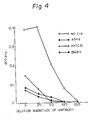
- the cytotoxicity of HC-2014 to the human hepatoma cells (HC C-4) was examined by the ADCC (antibody- dependent cell-mediated cytotoxicity) activity with a monoclonal antibody (YK024) to human gastric carcinama as a reference.
- HC C-4 was spread over 96 well microtiter plates at a rate of 10 5 cells/well and incubated over night.
- spleen cells derived from a BALB/c strain mouse were added as effector cells at a rate of 10 6 cells/well and incubated overnight.
- the plate was washed three times with PBS, and the survival of the HC C-4 in each of the wells was judged.
- Judgement was carried out by counting the viable cells after trypan blue staining.
- HC C-4 cells were intraperitoneally inoculated at a concentration of 2 x 10 7 cells.
- the day of the inoculation was set as the day zero.
- the MoAb HC-2014 prepared in Example 2 was intraperitoneally administered in an amount of 1.5 mg or 3.0 mg, and when the increased life span (ILS%) was calculated from the number of days of survival as compared to a non-administered control group, it was as high as 200% or more. Further, during and just after the administration of HC-2014, decrease of body weight and intoxication were not observed. Increased life span (ILS%) was calculated from the following equation:
- mice were divided into groups including 6 mice in each group, and HC C-4 cells were subcutaneously inoculated at a portion under-the back skin at a concentration of 1 x-10 7 cells (the day zero).
- HC-2014 was intraperitoneally administered on the lst, 3rd and 5th days after inoculation in an amount of 1.5 mg or 3.0 mg.
- the volume of tumor was measured and T/C % was calculated with the non-administered control group as a reference from the following equation:
- T/C % was about 10% or less when one of the mice in the control group died (at 80 days). This indicates that the volume of the solid tumor on the back position was suppressed to 1/10 or less that of the control group by the administration of the monoclonal antibody according to this invention.
- the monoclonal antibody obtained by the present invention is capable of specifically binding only to human hepato-carcinoma cells i.e. the immunogen and shows ADCC activity in vitro and remarkable antitumor activity in vivo, and it can therefore be anticipated that the antibody of the invention will have possibilities of being used as reagents and diagnostic agents in EIA, RIA or the like as well as for therapy of hepato-carcinoma.
Landscapes
- Health & Medical Sciences (AREA)
- Chemical & Material Sciences (AREA)
- Life Sciences & Earth Sciences (AREA)
- Organic Chemistry (AREA)
- Immunology (AREA)
- Medicinal Chemistry (AREA)
- General Health & Medical Sciences (AREA)
- Genetics & Genomics (AREA)
- Proteomics, Peptides & Aminoacids (AREA)
- Molecular Biology (AREA)
- Biophysics (AREA)
- Biochemistry (AREA)
- Cell Biology (AREA)
- Urology & Nephrology (AREA)
- Veterinary Medicine (AREA)
- General Chemical & Material Sciences (AREA)
- Public Health (AREA)
- Nuclear Medicine, Radiotherapy & Molecular Imaging (AREA)
- Chemical Kinetics & Catalysis (AREA)
- Animal Behavior & Ethology (AREA)
- Pharmacology & Pharmacy (AREA)
- Preparation Of Compounds By Using Micro-Organisms (AREA)
- Micro-Organisms Or Cultivation Processes Thereof (AREA)
- Peptides Or Proteins (AREA)
- Medicines Containing Antibodies Or Antigens For Use As Internal Diagnostic Agents (AREA)
Priority Applications (1)
| Application Number | Priority Date | Filing Date | Title |
|---|---|---|---|
| AT85108073T ATE58397T1 (de) | 1984-06-29 | 1985-06-28 | Monoklonaler antikoerper geeignet zur spezifischen unterscheidung von humanen hepatokarzinomzellen. |
Applications Claiming Priority (2)
| Application Number | Priority Date | Filing Date | Title |
|---|---|---|---|
| JP59134556A JPS6115897A (ja) | 1984-06-29 | 1984-06-29 | ヒト肝癌細胞を特異的に認識するモノクロ−ナル抗体 |
| JP134556/84 | 1984-06-29 |
Publications (3)
| Publication Number | Publication Date |
|---|---|
| EP0166458A2 true EP0166458A2 (fr) | 1986-01-02 |
| EP0166458A3 EP0166458A3 (en) | 1988-05-18 |
| EP0166458B1 EP0166458B1 (fr) | 1990-11-14 |
Family
ID=15131083
Family Applications (1)
| Application Number | Title | Priority Date | Filing Date |
|---|---|---|---|
| EP85108073A Expired - Lifetime EP0166458B1 (fr) | 1984-06-29 | 1985-06-28 | Anticorps monoclonal capable de distinguer spécifiquement les cellules d'hépatocarcinome humain |
Country Status (5)
| Country | Link |
|---|---|
| US (1) | US4820641A (fr) |
| EP (1) | EP0166458B1 (fr) |
| JP (1) | JPS6115897A (fr) |
| AT (1) | ATE58397T1 (fr) |
| DE (1) | DE3580524D1 (fr) |
Families Citing this family (6)
| Publication number | Priority date | Publication date | Assignee | Title |
|---|---|---|---|---|
| JPS6357596A (ja) * | 1986-08-29 | 1988-03-12 | Nisshin Flour Milling Co Ltd | モノクロ−ナル抗体、その製法およびそれからなる肝疾患診断剤 |
| JPH0798000B2 (ja) * | 1987-05-23 | 1995-10-25 | 萩原 義秀 | ガン関連抗原特異的ヒト免疫グロブリン |
| JPH0829078B2 (ja) * | 1991-11-25 | 1996-03-27 | 萩原 義秀 | ガン関連抗原特異的ヒト免疫グロブリン生産性ヒト/ヒトハイブリドーマ |
| JPH05268988A (ja) * | 1992-03-05 | 1993-10-19 | Hagiwara Yoshihide | ガン関連抗原特異的ヒト免疫グロブリン |
| US5760000A (en) * | 1994-05-13 | 1998-06-02 | University Technologies International,Inc. | Inhibition of liver cancer by the use of GnRH and GnRH analogs |
| EP1320551A4 (fr) * | 2000-09-01 | 2006-12-20 | Internat Bioimmune Systems Inc | Identification et developpement d'anticorps monoclonaux specifiques d'epithelioma spinocellulaire |
Family Cites Families (1)
| Publication number | Priority date | Publication date | Assignee | Title |
|---|---|---|---|---|
| US4579827A (en) * | 1983-03-11 | 1986-04-01 | Sloan-Kettering Institute For Cancer Research | Monoclonal antibodies to human gastrointestinal cancers and hybridoma method of production of the monoclonal antibodies |
-
1984
- 1984-06-29 JP JP59134556A patent/JPS6115897A/ja active Granted
-
1985
- 1985-06-27 US US06/749,564 patent/US4820641A/en not_active Expired - Fee Related
- 1985-06-28 DE DE8585108073T patent/DE3580524D1/de not_active Expired - Lifetime
- 1985-06-28 AT AT85108073T patent/ATE58397T1/de active
- 1985-06-28 EP EP85108073A patent/EP0166458B1/fr not_active Expired - Lifetime
Non-Patent Citations (2)
| Title |
|---|
| HEPATOLOGY, vol. 2, no. 5, 1982, page 677, abstract 20, Baltimore; L. HE et al.: "Antibodies to a human hepatoma cell line (SK-NEP-I): monoclonal antibodies produce different immunofluorescent patterns" * |
| SAPPORO IGAKU ZASSHI, (THE SAPPORO MEDICAL JOURNAL), vol. 53, no. 3, June 1984, pages 223-241; T. SASANAMI: "Preparation and application of monoclonal antibodies to human liver carcinoma cells: with special reference to the monoclonal antibodies reacting with H glycoprotein" * |
Also Published As
| Publication number | Publication date |
|---|---|
| EP0166458A3 (en) | 1988-05-18 |
| EP0166458B1 (fr) | 1990-11-14 |
| DE3580524D1 (de) | 1990-12-20 |
| JPH0431674B2 (fr) | 1992-05-27 |
| US4820641A (en) | 1989-04-11 |
| JPS6115897A (ja) | 1986-01-23 |
| ATE58397T1 (de) | 1990-11-15 |
Similar Documents
| Publication | Publication Date | Title |
|---|---|---|
| FI91421C (fi) | Menetelmä ihmisen kasvainkuoliotekijän (TNF) kanssa reagoivan monoklonaalisen vasta-aineen valmistamiseksi ja vasta-ainetta tuottava hybridisolulinja | |
| JP2769311B2 (ja) | ヒト乳癌細胞に対するモノクローナル抗体 | |
| DE69033842T2 (de) | Äusserliche domäne von c-erbb-2:gp75 | |
| EP0109441B1 (fr) | Hybridomes humains-humains pour neoplasmes | |
| JPS649999B2 (fr) | ||
| AU612967B2 (en) | Monoclonal antibodies and antigen for human non-small cell lung carcinoma and certain other human carcinomas | |
| JPH0160231B2 (fr) | ||
| JPH0159869B2 (fr) | ||
| JP2002507398A (ja) | ヒト・モノクローナル抗体およびそのための使用の開発 | |
| US5403919A (en) | Method to control leukocyte extravasation | |
| CN1418225B (zh) | 人低密度脂蛋白受体的单克隆抗体及其制备和用途 | |
| EP0166458B1 (fr) | Anticorps monoclonal capable de distinguer spécifiquement les cellules d'hépatocarcinome humain | |
| US4818689A (en) | Late differentiation antigen associated with helper T lymphocyte function | |
| EP0156578A2 (fr) | Procédé de préparation de cellules hybridomes produisant des anticorps monoclonaux spécifiques de tumeurs | |
| JPH05503098A (ja) | セプシスの処理のためのサイトカイン抗体 | |
| US5641860A (en) | Cell surface protein JL-1 expressed on human cortical thymocyte and its use | |
| US5330896A (en) | Monoclonal antibodies to an autocrine growth factor antigen that binds to activated lymphocytes and cancer cells | |
| EP0789716B1 (fr) | Anticorps diriges contre des proteines allogenes et xenogenes, leur utilisation en diagnostic et therapie, ainsi que procedes concernant leur determination | |
| US5523085A (en) | Monoclonal antibody in destruction of small cell lung carcinoma | |
| WO1989009831A1 (fr) | Cellules de cytotoxine tueuses activees par la lymphokine | |
| EP0749981B1 (fr) | Anticorps monoclonal specifique du pd-ecgf / thymidine phosphorylase | |
| US20020197655A1 (en) | Antigen and monoclonal antibody which recognizes the antigen | |
| JPH0430278B2 (fr) | ||
| EP1090107A1 (fr) | Anticorps monoclonaux humains de l'antigene tumoral uk114, et lymphocytes et hybridomes pour leur production | |
| JPH01243986A (ja) | 抗ヒト固形癌ヒトモノクローナル抗体,抗体産生ハイブリドーマおよび抗体の製造法 |
Legal Events
| Date | Code | Title | Description |
|---|---|---|---|
| PUAI | Public reference made under article 153(3) epc to a published international application that has entered the european phase |
Free format text: ORIGINAL CODE: 0009012 |
|
| AK | Designated contracting states |
Designated state(s): AT BE CH DE FR GB IT LI LU NL SE |
|
| PUAL | Search report despatched |
Free format text: ORIGINAL CODE: 0009013 |
|
| AK | Designated contracting states |
Kind code of ref document: A3 Designated state(s): AT BE CH DE FR GB IT LI LU NL SE |
|
| 17P | Request for examination filed |
Effective date: 19880906 |
|
| 17Q | First examination report despatched |
Effective date: 19881213 |
|
| ITF | It: translation for a ep patent filed | ||
| GRAA | (expected) grant |
Free format text: ORIGINAL CODE: 0009210 |
|
| AK | Designated contracting states |
Kind code of ref document: B1 Designated state(s): AT BE CH DE FR GB IT LI LU NL SE |
|
| PG25 | Lapsed in a contracting state [announced via postgrant information from national office to epo] |
Ref country code: NL Effective date: 19901114 Ref country code: BE Effective date: 19901114 Ref country code: AT Effective date: 19901114 |
|
| REF | Corresponds to: |
Ref document number: 58397 Country of ref document: AT Date of ref document: 19901115 Kind code of ref document: T |
|
| REF | Corresponds to: |
Ref document number: 3580524 Country of ref document: DE Date of ref document: 19901220 |
|
| ET | Fr: translation filed | ||
| NLV1 | Nl: lapsed or annulled due to failure to fulfill the requirements of art. 29p and 29m of the patents act | ||
| PG25 | Lapsed in a contracting state [announced via postgrant information from national office to epo] |
Ref country code: LU Free format text: LAPSE BECAUSE OF NON-PAYMENT OF DUE FEES Effective date: 19910630 |
|
| PLBE | No opposition filed within time limit |
Free format text: ORIGINAL CODE: 0009261 |
|
| STAA | Information on the status of an ep patent application or granted ep patent |
Free format text: STATUS: NO OPPOSITION FILED WITHIN TIME LIMIT |
|
| 26N | No opposition filed | ||
| ITTA | It: last paid annual fee | ||
| EAL | Se: european patent in force in sweden |
Ref document number: 85108073.9 |
|
| PGFP | Annual fee paid to national office [announced via postgrant information from national office to epo] |
Ref country code: SE Payment date: 19980420 Year of fee payment: 14 |
|
| PGFP | Annual fee paid to national office [announced via postgrant information from national office to epo] |
Ref country code: CH Payment date: 19980525 Year of fee payment: 14 |
|
| PGFP | Annual fee paid to national office [announced via postgrant information from national office to epo] |
Ref country code: GB Payment date: 19980616 Year of fee payment: 14 |
|
| PGFP | Annual fee paid to national office [announced via postgrant information from national office to epo] |
Ref country code: FR Payment date: 19980629 Year of fee payment: 14 |
|
| PGFP | Annual fee paid to national office [announced via postgrant information from national office to epo] |
Ref country code: DE Payment date: 19980710 Year of fee payment: 14 |
|
| PG25 | Lapsed in a contracting state [announced via postgrant information from national office to epo] |
Ref country code: GB Free format text: LAPSE BECAUSE OF NON-PAYMENT OF DUE FEES Effective date: 19990628 |
|
| PG25 | Lapsed in a contracting state [announced via postgrant information from national office to epo] |
Ref country code: SE Free format text: THE PATENT HAS BEEN ANNULLED BY A DECISION OF A NATIONAL AUTHORITY Effective date: 19990629 |
|
| PG25 | Lapsed in a contracting state [announced via postgrant information from national office to epo] |
Ref country code: LI Free format text: LAPSE BECAUSE OF NON-PAYMENT OF DUE FEES Effective date: 19990630 Ref country code: FR Free format text: THE PATENT HAS BEEN ANNULLED BY A DECISION OF A NATIONAL AUTHORITY Effective date: 19990630 Ref country code: CH Free format text: LAPSE BECAUSE OF NON-PAYMENT OF DUE FEES Effective date: 19990630 |
|
| REG | Reference to a national code |
Ref country code: CH Ref legal event code: PL |
|
| GBPC | Gb: european patent ceased through non-payment of renewal fee |
Effective date: 19990628 |
|
| EUG | Se: european patent has lapsed |
Ref document number: 85108073.9 |
|
| PG25 | Lapsed in a contracting state [announced via postgrant information from national office to epo] |
Ref country code: DE Free format text: LAPSE BECAUSE OF NON-PAYMENT OF DUE FEES Effective date: 20000503 |
|
| REG | Reference to a national code |
Ref country code: FR Ref legal event code: ST |