EP0166574A2 - Instrument zur Fetal-Blutentnahme - Google Patents
Instrument zur Fetal-Blutentnahme Download PDFInfo
- Publication number
- EP0166574A2 EP0166574A2 EP85304411A EP85304411A EP0166574A2 EP 0166574 A2 EP0166574 A2 EP 0166574A2 EP 85304411 A EP85304411 A EP 85304411A EP 85304411 A EP85304411 A EP 85304411A EP 0166574 A2 EP0166574 A2 EP 0166574A2
- Authority
- EP
- European Patent Office
- Prior art keywords
- end portion
- open end
- instrument
- plunger
- set forth
- Prior art date
- Legal status (The legal status is an assumption and is not a legal conclusion. Google has not performed a legal analysis and makes no representation as to the accuracy of the status listed.)
- Withdrawn
Links
Images

Classifications
-
- A—HUMAN NECESSITIES
- A61—MEDICAL OR VETERINARY SCIENCE; HYGIENE
- A61B—DIAGNOSIS; SURGERY; IDENTIFICATION
- A61B5/00—Measuring for diagnostic purposes; Identification of persons
- A61B5/15—Devices for taking samples of blood
- A61B5/150007—Details
- A61B5/150053—Details for enhanced collection of blood or interstitial fluid at the sample site, e.g. by applying compression, heat, vibration, ultrasound, suction or vacuum to tissue; for reduction of pain or discomfort; Skin piercing elements, e.g. blades, needles, lancets or canulas, with adjustable piercing speed
- A61B5/150061—Means for enhancing collection
- A61B5/150099—Means for enhancing collection by negative pressure, other than vacuum extraction into a syringe by pulling on the piston rod or into pre-evacuated tubes
-
- A—HUMAN NECESSITIES
- A61—MEDICAL OR VETERINARY SCIENCE; HYGIENE
- A61B—DIAGNOSIS; SURGERY; IDENTIFICATION
- A61B5/00—Measuring for diagnostic purposes; Identification of persons
- A61B5/15—Devices for taking samples of blood
- A61B5/150007—Details
- A61B5/150015—Source of blood
-
- A—HUMAN NECESSITIES
- A61—MEDICAL OR VETERINARY SCIENCE; HYGIENE
- A61B—DIAGNOSIS; SURGERY; IDENTIFICATION
- A61B5/00—Measuring for diagnostic purposes; Identification of persons
- A61B5/15—Devices for taking samples of blood
- A61B5/150007—Details
- A61B5/150206—Construction or design features not otherwise provided for; manufacturing or production; packages; sterilisation of piercing element, piercing device or sampling device
- A61B5/150213—Venting means
-
- A—HUMAN NECESSITIES
- A61—MEDICAL OR VETERINARY SCIENCE; HYGIENE
- A61B—DIAGNOSIS; SURGERY; IDENTIFICATION
- A61B5/00—Measuring for diagnostic purposes; Identification of persons
- A61B5/15—Devices for taking samples of blood
- A61B5/150007—Details
- A61B5/150206—Construction or design features not otherwise provided for; manufacturing or production; packages; sterilisation of piercing element, piercing device or sampling device
- A61B5/150221—Valves
-
- A—HUMAN NECESSITIES
- A61—MEDICAL OR VETERINARY SCIENCE; HYGIENE
- A61B—DIAGNOSIS; SURGERY; IDENTIFICATION
- A61B5/00—Measuring for diagnostic purposes; Identification of persons
- A61B5/15—Devices for taking samples of blood
- A61B5/150007—Details
- A61B5/150206—Construction or design features not otherwise provided for; manufacturing or production; packages; sterilisation of piercing element, piercing device or sampling device
- A61B5/150236—Pistons, i.e. cylindrical bodies that sit inside the syringe barrel, typically with an air tight seal, and slide in the barrel to create a vacuum or to expel blood
-
- A—HUMAN NECESSITIES
- A61—MEDICAL OR VETERINARY SCIENCE; HYGIENE
- A61B—DIAGNOSIS; SURGERY; IDENTIFICATION
- A61B5/00—Measuring for diagnostic purposes; Identification of persons
- A61B5/15—Devices for taking samples of blood
- A61B5/150007—Details
- A61B5/150206—Construction or design features not otherwise provided for; manufacturing or production; packages; sterilisation of piercing element, piercing device or sampling device
- A61B5/150244—Rods for actuating or driving the piston, i.e. the cylindrical body that sits inside the syringe barrel, typically with an air tight seal, and slides in the barrel to create a vacuum or to expel blood
-
- A—HUMAN NECESSITIES
- A61—MEDICAL OR VETERINARY SCIENCE; HYGIENE
- A61B—DIAGNOSIS; SURGERY; IDENTIFICATION
- A61B5/00—Measuring for diagnostic purposes; Identification of persons
- A61B5/15—Devices for taking samples of blood
- A61B5/150007—Details
- A61B5/150206—Construction or design features not otherwise provided for; manufacturing or production; packages; sterilisation of piercing element, piercing device or sampling device
- A61B5/150259—Improved gripping, e.g. with high friction pattern or projections on the housing surface or an ergonometric shape
-
- A—HUMAN NECESSITIES
- A61—MEDICAL OR VETERINARY SCIENCE; HYGIENE
- A61B—DIAGNOSIS; SURGERY; IDENTIFICATION
- A61B5/00—Measuring for diagnostic purposes; Identification of persons
- A61B5/15—Devices for taking samples of blood
- A61B5/150007—Details
- A61B5/150374—Details of piercing elements or protective means for preventing accidental injuries by such piercing elements
- A61B5/150381—Design of piercing elements
- A61B5/150389—Hollow piercing elements, e.g. canulas, needles, for piercing the skin
-
- A—HUMAN NECESSITIES
- A61—MEDICAL OR VETERINARY SCIENCE; HYGIENE
- A61B—DIAGNOSIS; SURGERY; IDENTIFICATION
- A61B5/00—Measuring for diagnostic purposes; Identification of persons
- A61B5/15—Devices for taking samples of blood
- A61B5/150007—Details
- A61B5/150374—Details of piercing elements or protective means for preventing accidental injuries by such piercing elements
- A61B5/150381—Design of piercing elements
- A61B5/150442—Blade-like piercing elements, e.g. blades, cutters, knives, for cutting the skin
-
- A—HUMAN NECESSITIES
- A61—MEDICAL OR VETERINARY SCIENCE; HYGIENE
- A61B—DIAGNOSIS; SURGERY; IDENTIFICATION
- A61B5/00—Measuring for diagnostic purposes; Identification of persons
- A61B5/15—Devices for taking samples of blood
- A61B5/150007—Details
- A61B5/150374—Details of piercing elements or protective means for preventing accidental injuries by such piercing elements
- A61B5/150381—Design of piercing elements
- A61B5/150503—Single-ended needles
-
- A—HUMAN NECESSITIES
- A61—MEDICAL OR VETERINARY SCIENCE; HYGIENE
- A61B—DIAGNOSIS; SURGERY; IDENTIFICATION
- A61B5/00—Measuring for diagnostic purposes; Identification of persons
- A61B5/15—Devices for taking samples of blood
- A61B5/153—Devices specially adapted for taking samples of venous or arterial blood, e.g. with syringes
Definitions
- the subject invention relates to an instrument for obtaining a trans-vaginal fetal blood sample.
- the instrument is of the type for being inserted vaginally into contract with the presenting fetal skin during labor and for lancing the skin to a predetermined depth and drawing blood from the incision into the instrument to provide a blood sample ready for testing.
- the accepted method of identifying intrauterine fetal asphyxia is by fetal blood sampling to determine the blood pH.
- Present techniques require the direct trans-vaginal visualization of the fetal scalp or other presenting part using a fetal endoscope and an external light source.
- the skin is first cleansed with a swab to remove meconium and amniotic fluid and is then incised with a lancet until a free flow of blood occurs.
- a quick striking motion of the instrument is required to cut the skin.
- a capillary tube is inserted to draw off the blood sample.
- a blood collecting device is disclosed in the United States patent 4,360,016 to Sarrine, issued November 23, 1982.
- the blood collecting device includes a lancet and capillary tube carried together by an elongated member.
- the device positions the capillary tube adjacent the skin when the lancet is advanced by the member to puncture the skin.
- the entire instrument is moved to force the lancet to cut.
- a separate cone is used as a shield. The cone is first inserted and pressed against the fetal scalp. The cone may cut off circulation to the isolated area making sampling difficult. Removal of the cone may return circulation to the lanced area thereby initiating excessive post sampling bleeding.
- the United States patent 1,147,487 to Kells, issued July 20, 1915 discloses a trocar type device including means for providing a suction for drawing bodily fluid from a cavity through the puncturing trocar.
- the Kells patent also discloses no means for shielding the device prior to contact with the skin to be punctured. Nor could this device be applied trans-vaginally onto the fetal presenting part for the acquisition a fetal blood sample.
- an instrument for obtaining a fetal blood sample including an elongated member having an open end portion and membrane means disposed over the end portion for perfecting a seal about the open end portion.
- Lancing means slidably . supported within the elongated member pierces the membrane and makes an incision in the skin of the fetus.
- Suction means creates a suction within the open end portion to draw fetal blood from the incision through the pierced membrane and into the open end portion and retains the instrument over the incision.
- the present invention further provides a method for obtaining a fetal blood sample including the steps of inserting the open end portion of a blood sampling instrument trans-vaginally to contact the presenting skin of the fetus, inserting a lancet intradermally to make an incision in the skin of the fetus, removing the lancet from the incision while simultaneously creating a suction to retain the open end portion over the incision, and drawing blood from the incision by continuing the suction.
- the membrane means provides a shield over the open end portion thereby preventing contamination of the open end portion during insertion and withdrawal of the instrument through the vagina to the fetal presenting part. Suction is created to draw in the fetal blood sample as the device contacts the fetal skin.
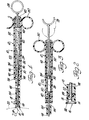
- An instrument for obtaining a fetal blood sample constructed in accordance with the instant invention is generally shown at 10 in the Figures.
- Like numerals are used to designate like structures among the several embodiments.
- the instrument includes an elongated member generally indicated at 12.
- the elongated member 12 has an open end portion 14.
- Membrane means generally indicated at 16 is disposed over the end portion 14 for perfecting a seal about the open end portion 14.
- Lancing means generally indicated at 18 is slidably supported within the elongated member 12 for piercing the membrane means 16 and making an incision in the skin of a fetus 20.
- Suction means creates a suction within the open end portion 14 to draw fetal blood from the incision through the pierced membrane means 16 and into the open end portion 14 for collection of a blood sample.
- the suction retains the open end portion 14 at the incision site and promotes bleeding by physically opening the incision slightly as the skin is slightly pulled into the open end portion by the suction.
- the membrane means 16 may be made from a tissue-like diaphragm. As the elongated member 12 is inserted trans-vaginally, the membrane means 16 prevents the entrance of meconium and amniotic fluid into the open end portion 14. The membrane means 16 is not to be pierced until placed directly adjacent the fetal scalp 20 or other tissue. The lancing means 18 pierces the membrane means 16. While the membrane means 16 is retained against the incision, the suction means draws the blood sample through the pierced membrane means 16 so as to be collected in the open end portion 14. The instrument 10 is then withdrawn, the membrane means preventing the entrance of contaminating fluids into the open end portion 14 during the withdrawl.
- the elongated member 12 includes an inner chamber 22 having an inner wall 24.
- the inner chamber 22 in its entirety includes the open end portion 14.
- a plunger 26 is slidably supported within the inner chamber 22.
- the plunger 26 may have a ring 28 or other type of gripping device mounted on the end thereof.
- the elongated member 12 includes rings 30 as an integral part thereof to be gripped by the fingers of a user.
- the elongated member 12 may have handles 32 as shown in Figure 4.
- the suction means includes sealing means mounted on the plunger 26 and slidably engaging the inner wall 24 to perfect a seal therewith whereby retraction of the plunger 26 moves the sealing means to create suction within the open end portion 14 to draw fetal blood through the pierced membrane means 16 and into the open end portion 14.
- the sealing means includes a pair of gaskets 34 disposed about a piston 36 mounted on the end of the plunger 26.
- a single gasket 38 may be disposed about an end portion of the plunger 26 as shown in Figures 4, 6 and 8. The gaskets 34 and 38 slidably engage the inner wall 24 thereby perfecting a sliding seal therewith.
- the plunger 26 is slidably supported between a depressed position as shown in phantom in Figures 1 and 4 wherein the lancing means 18 extends through the membrane means 16 and a retracted position shown in solid lines in Figures 1 and 4 wherein the lancing means 18 is disposed within the open end portion 14 of the elongated member 12.
- the instrument 10 includes biasing means comprising a spring 40 for biasing the plunger 26 to the retracted position.
- the plunger 26 is slidably mounted for movement to a third position shown in Figure 3 in solid lines from the retracted position shown in Figure 3 in phantom, the third position being beyond the retracted position, to move the sealing means to create a suction within the open end portion 14 thereby drawing fetal blood through the pierced membrane means 16 and into the open end portion 14. Simultaneously, the suction effect retains the instrument 10 at a single spot on the skin surface. Unlike prior art assemblies which could move away from the cut skin, the instant invention is retained there by the suction effect. In other words, the movement of the plunger 26 between the retracted and depressed positions will puncture through the membrane means 16.
- the instrument 10 includes motion limiting means for limiting the motion of the plunger 26 between the retracted and depressed positions.
- the elongated member 12 includes a first sleeve 52 housing the guide tube 42 and the plunger 26.
- a second sleeve 54 has one end 56 detachably connected to the first sleeve 52 by threads as shown or by other suitable means and a second end defining the open end portion 14.
- the membrane means 16 is disposed over the open end portion 14, the capillary tube 48 being disposed within the second sleeve 54.
- the motion limiting means may include a guide tube 42 slidably housed within the sleeve 52.
- the second sleeve 54 includes an end portion defining a shoulder portion 44 when connected to the first tube 52.
- the plunger 26 is housed within the guide tube 42 for movement therewith between the depressed position wherein the guide tube 42 engages the shoulder portion 44 and the retracted position wherein the guide tube 42 is spaced axially from the shoulder portion 44 and engages a lip 60 on sleeve 52.
- the biasing member or spring 40 as shown in Figures 1 and 3 is disposed between the guide tube 44 and the shoulder portion 46 for biasing the guide tube 44 and the plunger 26 housed therein to the retracted position.
- the spring 40 is disposed about a constricted portion 46 of the guide tube 42.
- the embodiment shown in Figures 1 and 3 includes a heparinized capillary tube 48 and capillary tube support means comprising the constricted portion 46 of the guide tube 42 for slidably supporting the capillary tube 48 within the elongated member 10.
- the capillary tube 48 has a sharp end portion defining the lancing means 18.
- the end of the capillary tube 48 is sealed by an 0-ring or gasket 49.
- the capillary tube 48 is operatively connected to the plunger 26 by being fit into the constricted portion 46 of the guide tube 42 and is moveable therewith between the depressed position wherein the sharp end portion of the capillary tube 48 extends through the membrane means 16 a predetermined distance and the retracted position wherein the sharp end portion of the capillary tube 48 is disposed within the open end portion 14 of the second sleeve 54.
- the constricted end portion 46 of the guide tube 42 merges with the remainder of the guide tube 42 at a second shoulder portion 50.
- the plunger 26 is slidably moveable within the guide tube 42 to the third position wherein the sealing means is axially spaced from the second shoulder portion 50 thereby creating a suction within the capillary tube 48 to draw fluid into the capillary tube 48.
- the gasket 49 seals the end of the capillary tube 48 to the second sleeve 54 thereby limiting the potential volume of the end portion 14.
- the instrument 10 Since no external light source is needed for use of the instrument 10, it can be made to a relatively small outside diameter; for example, on the order of about 7 millimeters. Since the diameter of the membrane means 16 is quite small, the initial engagement thereof with the fetal skin will dispense or push away any meconium or amniotic fluid on the skin from the area to be incised.
- the instrument 10 is inserted vaginally until the membrane means 16 is seated against the fetal scalp or other presented part.
- the contacting of the open end portion 14 with the presenting skin creates a seal therebetween thereby preventing the entrance of external matter.
- the plunger 26 is then depressed to propel the sharp end portion of the capillary tube 48 through the membrane means 16 and into the skin to a predetermined depth.
- a gasket 58 may be used to support the membrane means 16. T husly, the gasket 58 would be pressed against the fetal scalp, the gasket 58 creating a seal with the scalp.
- the depth of the incision is preferably about 2 millimeters and is controlled by the engagement of the end of the constricted portion 46 of the guide tube 42 against the shoulder 44 formed by the end portion of the second sleeve 54.
- the spring 40 normally holds the guide tube 42 and the capillary tube 48 in a position such that the sharp end portion of the capillary tube 48 is positioned just inwardly of the membrane means 16, thus a total movement of the plunger 26 of about three millimeters should be provided.
- the spring 40 will retract the capillary tube 48 until the guide tube 42 engages a lip 60 on the first sleeve 52.
- the plunger 26 is then pulled to create a suction within the open end portion 14.
- the suction will be applied at the outer end of the capillary tube 48 and at the incision in the fetal skin to promote the flow of blood into the capillary tube 48.
- the suction additionally aids to hold the instrument 10 firmly against the skin 20 to insure the flow of blood into the instrument 10.
- the membrane means 16 prevents contamination of the instrument 10 by meconium or amniotic fluid as the instrument 10 is being removed or inserted vaginally against the fetal presenting part.
- the guide tube 42 may be provided with markings 62 to indicate the extended movement of the plunger 26 and thus the amount of blood to be drawn.
- the instrument 10 is withdrawn.
- the second sleeve 54 is disconnected from the remainder of the . instrument 10, as shown in Figure 3. This exposes the capillary tube 48 which can then be immediately inserted into a blood analysis device.
- FIG. 4 A second embodiment of the instant invention is shown in Figures 4, 5 and 6.
- the instrument 10 includes an elongated member 12 comprising a single sleeve 63.
- the sleeve 63 may be curved or bent at about a 30 degree angle to fit the pelvic curve.
- the instrument 10 shown in Figures 1 through 3 may also have a similar curvature.
- the open end portion 14 of the sleeve 63 has a gasket 58 and membrane means 16 as previously described.
- the plunger 26 carries a knife blade or lancet 64.
- the spring 40 is mounted between the end of the sleeve 63 and supported within a cylindrical flange 66 and abuts against a collar 68 which supports the ring member 28 on the plunger 26.
- the spring 40 reacts against the sleeve 63 and collar 68 to hold the plunger 26 in its normally retracted position shown with the lancet 64 positioned inwardly of the membrane means 16.
- the open end portion 14 of the sleeve 63 heparinized to prevent clotting of the blood sample.
- the plunger 26 is depressed to move the blade 64 through the membrane means 16 and into the fetal skin 20 to a depth predetermined by the engagement of the collar 68 with the cylindrical flange 66 thereby defining the motion limiting means. Release of the plunger 26 will allow the spring 40 to retract the plunger 26 to its original retracted position. Further movement of the ring 28 to a third position will create suction within the open end portion 14 to improve the flow of blood into the open end portion 14. The initial movement of the plunger 26 to its retracted position by the spring will draw a small blood sample into the instrument 10 by creating some suction at the open end portion 14. If the plunger 26 is pulled further out to the third position, a larger sample will be withdrawn.
- Graduations on the sleeve 63 may be provided to indicate the amount of blood taken.
- a capillary tube (not shown) is used to draw off blood from the open end portion 14 and the capillary tube (not shown) would then be inserted into the testing equipment.
- the instrument 10 may include valve means as shown in Figure 7 for allowing removal of the instrument after sampling without drawing vaginal fluid therein.
- the valve means has an open condition for allowing air to exit from the open end portion 14 as the plunger 26 is moved from the retracted position to the depressed position prior to puncturing the membrane means 16 at 17. This allows a rapid forward motion of the lancet 18 which facilitates and insures incision of the fetal skin.
- the valve means also has a closed condition preventing air flow into the open end portion 14 as the plunger 26 is moved to the retracted position thereby forming a suction within the open end portion 14 to draw the blood sample into the open end portion 14 through the pierced membrane means 16. The valve means releases the vacuum to allow removal of the instrument without any further suction.
- the plunger 26 includes a hollow end portion 70 and a piston 36 mounted thereon.
- the sealing means comprises two gaskets 34 which are disposed about the piston 36 in sliding sealing engagement with the inner wall 24 of the inner chamber 22.
- the piston 36 has openings or passageways 72 extending therethrough for air communication between open end portion 14 and the remainder of the inner chamber 22.
- the valve means includes a plug member 74 mounted on the end 70 of the plunger 26 and a boot 76 mounted on the piston 36 over the openings 72 and having a boot opening 78.
- the plug 74 is slidably retained within the boot opening 78 for engaging the boot 76 to sealingly close the boot opening 78 as the plunger 26 is retracted and for being spaced from the boot opening 78 as the plunger 26 is depressed. Pulling on the plunger 26 closes the valve assembly allowing the formation of a vacuum in the open end portion 14 thereby drawing the blood sample into the open end portion 14 through the slit 17 in the membrane means 16. Pressing the plunger 26 opens the valves means allowing excess air from the open end portion 14 to escape. Releasing tension on the plunger 26 allows air to enter the open end portion 14 eliminating the vacuum which decreases the chance of contamination into the open end portion 14 as the instrument is pulled away from the fetal part.
- the inner wall 24 of the open end portion 14 includes a slot 80 extending therethrough.
- the valve means includes a flexible gasket 82 disposed over the slot 80 whereby the gasket 82 allows one way out flow of air from the open end portion 14 through the slot 80 during movement of the plunger 26 to the depressed position while sealing off the slot 80 preventing inflow of fluid contaminants through the slot 80 as the plunger 26 is moved to the retracted position.
- the membrane means 16 includes a cupped shaped elastic member including a thin tissue-like base portion 84 disposed over the open end portion 14 of the elongated member 12 and thicker annual wall portion defining the gasket 82 and being disposed over the slot 80.
- depressing the plunger 26 causes an increase of pressure in the open end portion 14.
- the slot or notch 80 in the open end portion 14 allows escape of air.
- the gasket 82 over the slot 80 acts as a one-way valve allowing a vacuum to form in the open end portion 14 when the plunger 26 is pulled.
- the instrument described herein possesses many advantages over currently used instruments and the procedures they require, among which are: ability to obtain blood samples at a relatively early stage of labor which may reduce the incidence of brain damage and the incidence of unnecessary caesarean sections; the procedure is simple to perform and requires only one physician; a smaller incision is possible because suction aids bleeding; less discomfort for the patient; and it does not require a fetal endoscope or direct vision of the fetal part, rather, this device is applied onto the fetal part by palpation.
Landscapes
- Health & Medical Sciences (AREA)
- Life Sciences & Earth Sciences (AREA)
- Heart & Thoracic Surgery (AREA)
- Surgery (AREA)
- Biophysics (AREA)
- Pathology (AREA)
- Engineering & Computer Science (AREA)
- Biomedical Technology (AREA)
- Hematology (AREA)
- Medical Informatics (AREA)
- Molecular Biology (AREA)
- Physics & Mathematics (AREA)
- Animal Behavior & Ethology (AREA)
- General Health & Medical Sciences (AREA)
- Public Health (AREA)
- Veterinary Medicine (AREA)
- Dermatology (AREA)
- Pain & Pain Management (AREA)
- Measurement Of The Respiration, Hearing Ability, Form, And Blood Characteristics Of Living Organisms (AREA)
Applications Claiming Priority (4)
| Application Number | Priority Date | Filing Date | Title |
|---|---|---|---|
| US62573884A | 1984-06-28 | 1984-06-28 | |
| US67923384A | 1984-12-07 | 1984-12-07 | |
| US679233 | 1984-12-07 | ||
| US625738 | 1990-11-12 |
Publications (2)
| Publication Number | Publication Date |
|---|---|
| EP0166574A2 true EP0166574A2 (de) | 1986-01-02 |
| EP0166574A3 EP0166574A3 (de) | 1987-06-16 |
Family
ID=27089996
Family Applications (1)
| Application Number | Title | Priority Date | Filing Date |
|---|---|---|---|
| EP85304411A Withdrawn EP0166574A3 (de) | 1984-06-28 | 1985-06-20 | Instrument zur Fetal-Blutentnahme |
Country Status (4)
| Country | Link |
|---|---|
| US (1) | US4660570A (de) |
| EP (1) | EP0166574A3 (de) |
| DK (1) | DK291285A (de) |
| GR (1) | GR851578B (de) |
Cited By (8)
| Publication number | Priority date | Publication date | Assignee | Title |
|---|---|---|---|---|
| WO1990002516A1 (en) * | 1988-09-13 | 1990-03-22 | Safe-Tec Clinical Products, Inc. | Self-sealing fluid conduit and collection device |
| US5027827A (en) * | 1990-03-28 | 1991-07-02 | Cody Michael P | Vacuum biopsy apparatus |
| EP0688532A3 (de) * | 1994-06-24 | 1998-05-27 | Nissho Corporation | Saugvorrichtung zur Blutentnahme |
| EP0622046A3 (de) * | 1993-04-28 | 1998-05-27 | Nissho Corporation | Blutentnahmevorrichtung der Saugbarart |
| US6878120B2 (en) | 1998-04-28 | 2005-04-12 | Roche Diagnostics Operations, Inc. | Methods and apparatus for suctioning and pumping body fluid from an incision |
| US8083688B2 (en) | 2002-12-24 | 2011-12-27 | Roche Diagnostics Operations, Inc. | Sampling devices and methods utilizing biased capillary action |
| US8690798B2 (en) | 1996-05-17 | 2014-04-08 | Roche Diagnostics Operations, Inc. | Methods and apparatus for sampling and analyzing body fluid |
| US8740813B2 (en) | 1996-05-17 | 2014-06-03 | Roche Diagnostics Operations, Inc. | Methods and apparatus for expressing body fluid from an incision |
Families Citing this family (48)
| Publication number | Priority date | Publication date | Assignee | Title |
|---|---|---|---|---|
| US4857057A (en) * | 1985-06-28 | 1989-08-15 | Olympus Optical Co., Ltd. | Endoscope treatment device |
| US4850970A (en) * | 1987-03-26 | 1989-07-25 | American Home Products, Corp. | Two part mastitis cannula cap |
| US5014718A (en) * | 1988-01-22 | 1991-05-14 | Safety Diagnostics, Inc. | Blood collection and testing method |
| US5070886A (en) * | 1988-01-22 | 1991-12-10 | Safety Diagnostice, Inc. | Blood collection and testing means |
| US4850996A (en) * | 1988-02-22 | 1989-07-25 | Cree Ian C | Safety needle |
| US4944728A (en) * | 1988-10-17 | 1990-07-31 | Safe Medical Devices, Inc. | Intravenous catheter placement device |
| US4955868A (en) * | 1988-11-28 | 1990-09-11 | Edward Klein | Disposable safety medical syringe |
| US5020543A (en) * | 1989-11-03 | 1991-06-04 | Rothenberg Robert E | Venous access catheter for removing a culture |
| US5558651A (en) * | 1990-04-20 | 1996-09-24 | Becton Dickinson And Company | Apparatus and method for a needle tip cover |
| USRE38996E1 (en) * | 1990-04-20 | 2006-02-28 | Becton, Dickinson And Company | Needle tip cover |
| US5088984A (en) * | 1990-10-03 | 1992-02-18 | Tri-State Hospital Supply Corporation | Medical connector |
| US5086782A (en) * | 1990-12-05 | 1992-02-11 | Jerry Zucker | Syringe for withdrawal of fluids |
| US5279582A (en) * | 1992-04-01 | 1994-01-18 | Thomas R Davison | Retractable syringe sheath with bottle engagement |
| CA2127206A1 (en) * | 1993-07-23 | 1995-01-24 | Charles W. Daugherty | Self contained needle and shield |
| US5618290A (en) * | 1993-10-19 | 1997-04-08 | W.L. Gore & Associates, Inc. | Endoscopic suture passer and method |
| USD368776S (en) | 1993-10-19 | 1996-04-09 | Toy Frederick K | Surgical instrument for suturing |
| US5779647A (en) | 1995-06-07 | 1998-07-14 | Chau; Sonny | Automated biopsy instruments |
| US6036687A (en) * | 1996-03-05 | 2000-03-14 | Vnus Medical Technologies, Inc. | Method and apparatus for treating venous insufficiency |
| US6015392A (en) * | 1996-05-17 | 2000-01-18 | Mercury Diagnostics, Inc. | Apparatus for sampling body fluid |
| US7828749B2 (en) * | 1996-05-17 | 2010-11-09 | Roche Diagnostics Operations, Inc. | Blood and interstitial fluid sampling device |
| US5879311A (en) * | 1996-05-17 | 1999-03-09 | Mercury Diagnostics, Inc. | Body fluid sampling device and methods of use |
| EP0955909B1 (de) * | 1996-05-17 | 2005-07-27 | Roche Diagnostics Operations, Inc. | Vorrichtung zur körperflüssigkeitsentnahme und -analyse |
| US5857983A (en) * | 1996-05-17 | 1999-01-12 | Mercury Diagnostics, Inc. | Methods and apparatus for sampling body fluid |
| US7235056B2 (en) | 1996-05-17 | 2007-06-26 | Amira Medical | Body fluid sampling device and methods of use |
| US6325435B1 (en) * | 1996-07-26 | 2001-12-04 | Paul C. Dubuc | Solid surface material fabrication station |
| US6706000B2 (en) | 1997-11-21 | 2004-03-16 | Amira Medical | Methods and apparatus for expressing body fluid from an incision |
| US5964718A (en) | 1997-11-21 | 1999-10-12 | Mercury Diagnostics, Inc. | Body fluid sampling device |
| US6183442B1 (en) * | 1998-03-02 | 2001-02-06 | Board Of Regents Of The University Of Texas System | Tissue penetrating device and methods for using same |
| US6423011B1 (en) | 2000-03-02 | 2002-07-23 | Clinical Innovation Associates, Inc. | Apparatus and method for fetal scalp blood sampling |
| DE10010694A1 (de) * | 2000-03-04 | 2001-09-06 | Roche Diagnostics Gmbh | Blutlanzette mit hygienischen Spitzenschutz |
| US20040092843A1 (en) * | 2001-02-22 | 2004-05-13 | Doron Kreiser | Device and method for measuring fetal blood pH |
| US20020188223A1 (en) | 2001-06-08 | 2002-12-12 | Edward Perez | Devices and methods for the expression of bodily fluids from an incision |
| DE10142232B4 (de) | 2001-08-29 | 2021-04-29 | Roche Diabetes Care Gmbh | Verfahren zur Herstellung eines analytischen Hilfsmittels mit Lanzette und Testelement |
| WO2003039369A1 (en) | 2001-09-26 | 2003-05-15 | Roche Diagnostics Gmbh | Method and apparatus for sampling bodily fluid |
| US20080149524A1 (en) * | 2003-03-27 | 2008-06-26 | Rademaker William B | Food containers including dental cleaning devices and other personal care items |
| GB0310297D0 (en) * | 2003-05-03 | 2003-06-11 | Cinimod Ip Ltd | Blood collection devices and methods |
| US8092477B2 (en) * | 2004-05-13 | 2012-01-10 | Umc Utrecht Holding B.V. | Device for making a cut in a tissue |
| GB2440119A (en) * | 2006-07-18 | 2008-01-23 | Owen Mumford Ltd | Skin Pricking Device |
| US20090264911A1 (en) * | 2008-04-16 | 2009-10-22 | Kim Stanley I | Single-use disposable lancing apparatus and methods |
| EP2269509A1 (de) * | 2009-06-29 | 2011-01-05 | Prothia S.A.R.L. | Integrierte Vorrichtung, die einen Katheter mit Kapillarhalter sowie einen Nadelschaft zur leichteren und sicheren Entnahme von Fetalblut umfasst |
| US20110196214A1 (en) * | 2010-02-08 | 2011-08-11 | Edmunds Kathleen | Fetal Scalp Blood Analyzer |
| WO2013112877A1 (en) | 2012-01-25 | 2013-08-01 | Tasso, Inc. | Handheld device for drawing, collecting, and analyzing bodily fluid |
| EP2900141B1 (de) * | 2012-09-27 | 2018-08-22 | Facet Technologies, LLC | Tiefeneinstellmechanismus für eine lanzettenvorrichtung |
| WO2016019388A1 (en) | 2014-08-01 | 2016-02-04 | Tasso, Inc. | Devices, systems and methods for gravity-enhanced microfluidic collection, handling and transferring of fluids |
| CN114209315B (zh) | 2015-12-21 | 2024-10-15 | 塔索公司 | 用于流体收集中的致动和缩回的装置、系统和方法 |
| WO2020056382A1 (en) | 2018-09-14 | 2020-03-19 | Erwin Berthier | Bodily fluid collection devices and related methods |
| CN113302149A (zh) * | 2018-11-13 | 2021-08-24 | 塔索公司 | 包括电子器件的体液收集设备,及相关联的系统和方法 |
| US20240148293A1 (en) * | 2022-11-07 | 2024-05-09 | Human Holding Aps | Sampling and/or injecting device |
Family Cites Families (20)
| Publication number | Priority date | Publication date | Assignee | Title |
|---|---|---|---|---|
| US1147408A (en) * | 1915-02-08 | 1915-07-20 | Charles Edmund Kells | Trocar. |
| GB734384A (en) * | 1953-05-06 | 1955-07-27 | Yervant Hosrof Kurkjian | Surgical injection devices |
| US3162195A (en) * | 1962-01-02 | 1964-12-22 | Dick Peter | Vacuated body fluid collection vial |
| US3401689A (en) * | 1967-05-23 | 1968-09-17 | Eugene C. Greenwood | Intra-uterine contraceptive device and method and apparatus for inserting and retaining the same |
| US3572335A (en) * | 1969-01-10 | 1971-03-23 | Ralph R Robinson | Cervical implant method and device |
| SE377967B (de) * | 1969-06-12 | 1975-08-04 | Johnson & Johnson | |
| GB1323675A (en) * | 1969-07-09 | 1973-07-18 | Nat Res Dev | Endoscopes |
| US3797491A (en) * | 1971-02-11 | 1974-03-19 | Ampoules Inc | Method of performing an intramuscular injection |
| US3960139A (en) * | 1975-01-15 | 1976-06-01 | Bailey Donald L | Syringe device with means for removing contaminates when drawing blood sample |
| US3985122A (en) * | 1975-06-04 | 1976-10-12 | Medical Development Corporation | Multi-piston syringe device |
| JPS6034241Y2 (ja) * | 1977-04-25 | 1985-10-12 | オリンパス光学工業株式会社 | 内視鏡の通路気密装置 |
| US4267846A (en) * | 1979-01-29 | 1981-05-19 | Critikon, Inc. | Controlled volume blood sampling syringe |
| US4299238A (en) * | 1980-06-24 | 1981-11-10 | Baidwan Balinderjeet S | Vented piston and push-rod subassembly for use in a syringe barrel |
| US4360016A (en) * | 1980-07-01 | 1982-11-23 | Transidyne General Corp. | Blood collecting device |
| US4441510A (en) * | 1980-07-25 | 1984-04-10 | Worley Michael W | Method and apparatus for fetal pH scalp studies |
| DE3048922A1 (de) * | 1980-12-22 | 1982-07-01 | Mannesmann AG, 4000 Düsseldorf | Anschluss einer turasnabe an dem fahrgetriebe eines kettenfahrzeuges |
| WO1982004387A1 (en) * | 1981-06-01 | 1982-12-23 | David H Malcolm | Hemoseal blood collection device |
| US4373535A (en) * | 1981-08-17 | 1983-02-15 | Martell Michael D | Venting, self-stopping, aspirating syringe |
| IT1206220B (it) * | 1981-09-30 | 1989-04-14 | Caselgrandi Ivo Palmieri Benia | Siringa particolarmente idonea per biopsie ad ago avente un dispositivo che permette la fase aspirante, generata dalla corsa a ritroso dello stantuffo automaticamente |
| FR2524303A1 (fr) * | 1982-04-06 | 1983-10-07 | Cassou Robert | Gaine de protection pour pistolet d'insemination artificielle, notamment pour bovins |
-
1985
- 1985-06-20 EP EP85304411A patent/EP0166574A3/de not_active Withdrawn
- 1985-06-27 DK DK291285A patent/DK291285A/da not_active Application Discontinuation
- 1985-06-27 GR GR851578A patent/GR851578B/el unknown
-
1986
- 1986-09-08 US US06/906,561 patent/US4660570A/en not_active Expired - Fee Related
Cited By (9)
| Publication number | Priority date | Publication date | Assignee | Title |
|---|---|---|---|---|
| WO1990002516A1 (en) * | 1988-09-13 | 1990-03-22 | Safe-Tec Clinical Products, Inc. | Self-sealing fluid conduit and collection device |
| US5065768A (en) * | 1988-09-13 | 1991-11-19 | Safe-Tec Clinical Products, Inc. | Self-sealing fluid conduit and collection device |
| US5027827A (en) * | 1990-03-28 | 1991-07-02 | Cody Michael P | Vacuum biopsy apparatus |
| EP0622046A3 (de) * | 1993-04-28 | 1998-05-27 | Nissho Corporation | Blutentnahmevorrichtung der Saugbarart |
| EP0688532A3 (de) * | 1994-06-24 | 1998-05-27 | Nissho Corporation | Saugvorrichtung zur Blutentnahme |
| US8690798B2 (en) | 1996-05-17 | 2014-04-08 | Roche Diagnostics Operations, Inc. | Methods and apparatus for sampling and analyzing body fluid |
| US8740813B2 (en) | 1996-05-17 | 2014-06-03 | Roche Diagnostics Operations, Inc. | Methods and apparatus for expressing body fluid from an incision |
| US6878120B2 (en) | 1998-04-28 | 2005-04-12 | Roche Diagnostics Operations, Inc. | Methods and apparatus for suctioning and pumping body fluid from an incision |
| US8083688B2 (en) | 2002-12-24 | 2011-12-27 | Roche Diagnostics Operations, Inc. | Sampling devices and methods utilizing biased capillary action |
Also Published As
| Publication number | Publication date |
|---|---|
| GR851578B (de) | 1985-11-25 |
| DK291285A (da) | 1985-12-29 |
| DK291285D0 (da) | 1985-06-27 |
| US4660570A (en) | 1987-04-28 |
| EP0166574A3 (de) | 1987-06-16 |
Similar Documents
| Publication | Publication Date | Title |
|---|---|---|
| US4660570A (en) | Fetal blood sampling instrument | |
| US4643196A (en) | Biopsy needle set | |
| AU706447B2 (en) | Aspiration needle apparatus incorporating its own vacuum and method and adapter for use therewith | |
| JP2630197B2 (ja) | 血液吸出器具 | |
| US5368029A (en) | Integral catheter and blood tester | |
| US6506165B1 (en) | Sample collection device | |
| US4312362A (en) | Single sample needle with vein entry indicator | |
| US4862899A (en) | Kit for home use detection of cervical and vaginal cancer | |
| US6048352A (en) | Disposable element for use in a body fluid sampling device | |
| US4961430A (en) | Cervical biopsy instrument | |
| US4681123A (en) | Chorion biopsy instrument | |
| WO2004066822A3 (en) | Integrated lancing test strip | |
| EP1344492A1 (de) | Nadelvorrichtung | |
| KR20030079958A (ko) | 모세작용을 갖는 란셋장치 | |
| US6423011B1 (en) | Apparatus and method for fetal scalp blood sampling | |
| US4441510A (en) | Method and apparatus for fetal pH scalp studies | |
| CA1119910A (en) | Integrated blood collection system | |
| JPS6113937A (ja) | 胎児の血液サンプリング器具 | |
| US5746724A (en) | Aspiration needle apparatus incorporating its own vacuum and method and adapter for use therewith | |
| US5653694A (en) | Aspiration needle apparatus incorporating its own vacuum and method and adapter for use therewith | |
| JP3895778B2 (ja) | 体液サンプリングのための切開装置 | |
| CN215914831U (zh) | 一种外科用穿刺设备 | |
| CN116898496B (zh) | 一种收样器和内窥镜 | |
| JPH0232251Y2 (de) | ||
| JP2003088513A (ja) | フラッシュバック血液採取針 |
Legal Events
| Date | Code | Title | Description |
|---|---|---|---|
| PUAI | Public reference made under article 153(3) epc to a published international application that has entered the european phase |
Free format text: ORIGINAL CODE: 0009012 |
|
| AK | Designated contracting states |
Designated state(s): AT BE CH DE FR GB IT LI LU NL SE |
|
| PUAL | Search report despatched |
Free format text: ORIGINAL CODE: 0009013 |
|
| AK | Designated contracting states |
Kind code of ref document: A3 Designated state(s): AT BE CH DE FR GB IT LI LU NL SE |
|
| 17P | Request for examination filed |
Effective date: 19871127 |
|
| 17Q | First examination report despatched |
Effective date: 19890707 |
|
| STAA | Information on the status of an ep patent application or granted ep patent |
Free format text: STATUS: THE APPLICATION IS DEEMED TO BE WITHDRAWN |
|
| 18D | Application deemed to be withdrawn |
Effective date: 19901002 |