EP0168666A2 - Electrode sensible aux ions - Google Patents
Electrode sensible aux ions Download PDFInfo
- Publication number
- EP0168666A2 EP0168666A2 EP85107624A EP85107624A EP0168666A2 EP 0168666 A2 EP0168666 A2 EP 0168666A2 EP 85107624 A EP85107624 A EP 85107624A EP 85107624 A EP85107624 A EP 85107624A EP 0168666 A2 EP0168666 A2 EP 0168666A2
- Authority
- EP
- European Patent Office
- Prior art keywords
- layer
- electrolyte
- ion
- ion selective
- water
- Prior art date
- Legal status (The legal status is an assumption and is not a legal conclusion. Google has not performed a legal analysis and makes no representation as to the accuracy of the status listed.)
- Granted
Links
- 239000003792 electrolyte Substances 0.000 claims abstract description 105
- 150000002500 ions Chemical class 0.000 claims abstract description 104
- 150000003839 salts Chemical class 0.000 claims abstract description 60
- NPYPAHLBTDXSSS-UHFFFAOYSA-N Potassium ion Chemical compound [K+] NPYPAHLBTDXSSS-UHFFFAOYSA-N 0.000 claims abstract description 37
- 229910001414 potassium ion Inorganic materials 0.000 claims abstract description 37
- 150000001450 anions Chemical class 0.000 claims abstract description 21
- 239000011230 binding agent Substances 0.000 claims abstract description 19
- 229910052751 metal Inorganic materials 0.000 claims abstract description 19
- 239000002184 metal Substances 0.000 claims abstract description 19
- 229910021607 Silver chloride Inorganic materials 0.000 claims abstract description 11
- HKZLPVFGJNLROG-UHFFFAOYSA-M silver monochloride Chemical compound [Cl-].[Ag+] HKZLPVFGJNLROG-UHFFFAOYSA-M 0.000 claims abstract description 11
- FKNQFGJONOIPTF-UHFFFAOYSA-N Sodium cation Chemical compound [Na+] FKNQFGJONOIPTF-UHFFFAOYSA-N 0.000 claims abstract description 9
- 229910001415 sodium ion Inorganic materials 0.000 claims abstract description 9
- 150000001768 cations Chemical class 0.000 claims abstract description 7
- 238000000034 method Methods 0.000 claims description 31
- WCUXLLCKKVVCTQ-UHFFFAOYSA-M Potassium chloride Chemical compound [Cl-].[K+] WCUXLLCKKVVCTQ-UHFFFAOYSA-M 0.000 claims description 22
- FAPWRFPIFSIZLT-UHFFFAOYSA-M Sodium chloride Chemical compound [Na+].[Cl-] FAPWRFPIFSIZLT-UHFFFAOYSA-M 0.000 claims description 20
- 230000008569 process Effects 0.000 claims description 18
- 238000002360 preparation method Methods 0.000 claims description 15
- 238000001035 drying Methods 0.000 claims description 13
- XAEFZNCEHLXOMS-UHFFFAOYSA-M potassium benzoate Chemical compound [K+].[O-]C(=O)C1=CC=CC=C1 XAEFZNCEHLXOMS-UHFFFAOYSA-M 0.000 claims description 13
- 239000000203 mixture Substances 0.000 claims description 12
- 239000011248 coating agent Substances 0.000 claims description 11
- 238000000576 coating method Methods 0.000 claims description 11
- 239000003960 organic solvent Substances 0.000 claims description 11
- 239000001103 potassium chloride Substances 0.000 claims description 11
- 235000011164 potassium chloride Nutrition 0.000 claims description 11
- XLYOFNOQVPJJNP-UHFFFAOYSA-N water Substances O XLYOFNOQVPJJNP-UHFFFAOYSA-N 0.000 claims description 11
- 239000011780 sodium chloride Substances 0.000 claims description 10
- 239000007864 aqueous solution Substances 0.000 claims description 6
- 239000000243 solution Substances 0.000 claims description 6
- RTZKZFJDLAIYFH-UHFFFAOYSA-N Diethyl ether Chemical compound CCOCC RTZKZFJDLAIYFH-UHFFFAOYSA-N 0.000 claims description 5
- 125000001931 aliphatic group Chemical group 0.000 claims description 2
- 150000002148 esters Chemical class 0.000 claims description 2
- DNIAPMSPPWPWGF-GSVOUGTGSA-N (R)-(-)-Propylene glycol Chemical compound C[C@@H](O)CO DNIAPMSPPWPWGF-GSVOUGTGSA-N 0.000 claims 2
- 239000002253 acid Substances 0.000 claims 1
- RXKJFZQQPQGTFL-UHFFFAOYSA-N dihydroxyacetone Chemical compound OCC(=O)CO RXKJFZQQPQGTFL-UHFFFAOYSA-N 0.000 claims 1
- 229910052709 silver Inorganic materials 0.000 claims 1
- 239000004332 silver Substances 0.000 claims 1
- BQCADISMDOOEFD-UHFFFAOYSA-N Silver Chemical compound [Ag] BQCADISMDOOEFD-UHFFFAOYSA-N 0.000 abstract description 14
- 239000010410 layer Substances 0.000 description 126
- 239000007788 liquid Substances 0.000 description 27
- 239000000523 sample Substances 0.000 description 22
- 238000005259 measurement Methods 0.000 description 15
- -1 polyethylene terephthalate Polymers 0.000 description 7
- 159000000000 sodium salts Chemical class 0.000 description 7
- 239000013078 crystal Substances 0.000 description 6
- 230000002209 hydrophobic effect Effects 0.000 description 6
- 239000000463 material Substances 0.000 description 6
- 238000007740 vapor deposition Methods 0.000 description 6
- CSCPPACGZOOCGX-UHFFFAOYSA-N Acetone Chemical compound CC(C)=O CSCPPACGZOOCGX-UHFFFAOYSA-N 0.000 description 5
- ZLMJMSJWJFRBEC-UHFFFAOYSA-N Potassium Chemical compound [K] ZLMJMSJWJFRBEC-UHFFFAOYSA-N 0.000 description 5
- 239000008151 electrolyte solution Substances 0.000 description 5
- 229910052700 potassium Inorganic materials 0.000 description 5
- 239000011591 potassium Substances 0.000 description 5
- 239000002904 solvent Substances 0.000 description 5
- LFQSCWFLJHTTHZ-UHFFFAOYSA-N Ethanol Chemical compound CCO LFQSCWFLJHTTHZ-UHFFFAOYSA-N 0.000 description 4
- VEXZGXHMUGYJMC-UHFFFAOYSA-N Hydrochloric acid Chemical compound Cl VEXZGXHMUGYJMC-UHFFFAOYSA-N 0.000 description 4
- 230000015572 biosynthetic process Effects 0.000 description 4
- KMUONIBRACKNSN-UHFFFAOYSA-N potassium dichromate Chemical compound [K+].[K+].[O-][Cr](=O)(=O)O[Cr]([O-])(=O)=O KMUONIBRACKNSN-UHFFFAOYSA-N 0.000 description 4
- 230000004044 response Effects 0.000 description 4
- ZWEHNKRNPOVVGH-UHFFFAOYSA-N 2-Butanone Chemical compound CCC(C)=O ZWEHNKRNPOVVGH-UHFFFAOYSA-N 0.000 description 3
- XEKOWRVHYACXOJ-UHFFFAOYSA-N Ethyl acetate Chemical compound CCOC(C)=O XEKOWRVHYACXOJ-UHFFFAOYSA-N 0.000 description 3
- DGAQECJNVWCQMB-PUAWFVPOSA-M Ilexoside XXIX Chemical compound C[C@@H]1CC[C@@]2(CC[C@@]3(C(=CC[C@H]4[C@]3(CC[C@@H]5[C@@]4(CC[C@@H](C5(C)C)OS(=O)(=O)[O-])C)C)[C@@H]2[C@]1(C)O)C)C(=O)O[C@H]6[C@@H]([C@H]([C@@H]([C@H](O6)CO)O)O)O.[Na+] DGAQECJNVWCQMB-PUAWFVPOSA-M 0.000 description 3
- OKKJLVBELUTLKV-UHFFFAOYSA-N Methanol Chemical compound OC OKKJLVBELUTLKV-UHFFFAOYSA-N 0.000 description 3
- GTKRFUAGOKINCA-UHFFFAOYSA-M chlorosilver;silver Chemical compound [Ag].[Ag]Cl GTKRFUAGOKINCA-UHFFFAOYSA-M 0.000 description 3
- 230000006872 improvement Effects 0.000 description 3
- 229920000139 polyethylene terephthalate Polymers 0.000 description 3
- 239000005020 polyethylene terephthalate Substances 0.000 description 3
- 229910052708 sodium Inorganic materials 0.000 description 3
- 239000011734 sodium Substances 0.000 description 3
- NIQCNGHVCWTJSM-UHFFFAOYSA-N Dimethyl phthalate Chemical compound COC(=O)C1=CC=CC=C1C(=O)OC NIQCNGHVCWTJSM-UHFFFAOYSA-N 0.000 description 2
- KFZMGEQAYNKOFK-UHFFFAOYSA-N Isopropanol Chemical compound CC(C)O KFZMGEQAYNKOFK-UHFFFAOYSA-N 0.000 description 2
- WYURNTSHIVDZCO-UHFFFAOYSA-N Tetrahydrofuran Chemical compound C1CCOC1 WYURNTSHIVDZCO-UHFFFAOYSA-N 0.000 description 2
- 229920002433 Vinyl chloride-vinyl acetate copolymer Polymers 0.000 description 2
- 230000008859 change Effects 0.000 description 2
- 230000000052 comparative effect Effects 0.000 description 2
- 239000002131 composite material Substances 0.000 description 2
- DOIRQSBPFJWKBE-UHFFFAOYSA-N dibutyl phthalate Chemical compound CCCCOC(=O)C1=CC=CC=C1C(=O)OCCCC DOIRQSBPFJWKBE-UHFFFAOYSA-N 0.000 description 2
- 239000006185 dispersion Substances 0.000 description 2
- 230000000694 effects Effects 0.000 description 2
- 230000002708 enhancing effect Effects 0.000 description 2
- 238000011156 evaluation Methods 0.000 description 2
- 238000005342 ion exchange Methods 0.000 description 2
- 238000004519 manufacturing process Methods 0.000 description 2
- FDPIMTJIUBPUKL-UHFFFAOYSA-N pentan-3-one Chemical compound CCC(=O)CC FDPIMTJIUBPUKL-UHFFFAOYSA-N 0.000 description 2
- 239000002985 plastic film Substances 0.000 description 2
- 238000012545 processing Methods 0.000 description 2
- 239000012088 reference solution Substances 0.000 description 2
- 239000000126 substance Substances 0.000 description 2
- GHPYJLCQYMAXGG-WCCKRBBISA-N (2R)-2-amino-3-(2-boronoethylsulfanyl)propanoic acid hydrochloride Chemical compound Cl.N[C@@H](CSCCB(O)O)C(O)=O GHPYJLCQYMAXGG-WCCKRBBISA-N 0.000 description 1
- SGSRWJWKEQYEGG-UHFFFAOYSA-N 1-bromo-3-(3-bromo-2-phenylphenoxy)-2-phenylbenzene Chemical compound C=1C=CC=CC=1C=1C(Br)=CC=CC=1OC1=CC=CC(Br)=C1C1=CC=CC=C1 SGSRWJWKEQYEGG-UHFFFAOYSA-N 0.000 description 1
- CBVXNDCIOLXDFD-UHFFFAOYSA-N 1-methoxy-3-phenoxybenzene Chemical compound COC1=CC=CC(OC=2C=CC=CC=2)=C1 CBVXNDCIOLXDFD-UHFFFAOYSA-N 0.000 description 1
- ZRJGNCLNUWKEFU-UHFFFAOYSA-N 1-methoxy-4-phenoxybenzene Chemical compound C1=CC(OC)=CC=C1OC1=CC=CC=C1 ZRJGNCLNUWKEFU-UHFFFAOYSA-N 0.000 description 1
- 102000007469 Actins Human genes 0.000 description 1
- 108010085238 Actins Proteins 0.000 description 1
- BTBUEUYNUDRHOZ-UHFFFAOYSA-N Borate Chemical compound [O-]B([O-])[O-] BTBUEUYNUDRHOZ-UHFFFAOYSA-N 0.000 description 1
- CPELXLSAUQHCOX-UHFFFAOYSA-M Bromide Chemical compound [Br-] CPELXLSAUQHCOX-UHFFFAOYSA-M 0.000 description 1
- DKPFZGUDAPQIHT-UHFFFAOYSA-N Butyl acetate Natural products CCCCOC(C)=O DKPFZGUDAPQIHT-UHFFFAOYSA-N 0.000 description 1
- VEXZGXHMUGYJMC-UHFFFAOYSA-M Chloride anion Chemical compound [Cl-] VEXZGXHMUGYJMC-UHFFFAOYSA-M 0.000 description 1
- PYGXAGIECVVIOZ-UHFFFAOYSA-N Dibutyl decanedioate Chemical compound CCCCOC(=O)CCCCCCCCC(=O)OCCCC PYGXAGIECVVIOZ-UHFFFAOYSA-N 0.000 description 1
- SMANXXCATUTDDT-UHFFFAOYSA-N Flunarizinum Chemical compound C1=CC(F)=CC=C1C(C=1C=CC(F)=CC=1)N1CCN(CC=CC=2C=CC=CC=2)CC1 SMANXXCATUTDDT-UHFFFAOYSA-N 0.000 description 1
- ITXWIMMWXVBQSL-UHFFFAOYSA-N OP(O)(O)=O.CCCCC(CC)COC(=O)c1ccccc1C(=O)OCC(CC)CCCC Chemical compound OP(O)(O)=O.CCCCC(CC)COC(=O)c1ccccc1C(=O)OCC(CC)CCCC ITXWIMMWXVBQSL-UHFFFAOYSA-N 0.000 description 1
- 229920001328 Polyvinylidene chloride Polymers 0.000 description 1
- YSMRWXYRXBRSND-UHFFFAOYSA-N TOTP Chemical compound CC1=CC=CC=C1OP(=O)(OC=1C(=CC=CC=1)C)OC1=CC=CC=C1C YSMRWXYRXBRSND-UHFFFAOYSA-N 0.000 description 1
- 108010067973 Valinomycin Proteins 0.000 description 1
- WNLRTRBMVRJNCN-UHFFFAOYSA-N adipic acid Chemical class OC(=O)CCCCC(O)=O WNLRTRBMVRJNCN-UHFFFAOYSA-N 0.000 description 1
- 230000002411 adverse Effects 0.000 description 1
- 239000002152 aqueous-organic solution Substances 0.000 description 1
- 125000003118 aryl group Chemical group 0.000 description 1
- ZFMQKOWCDKKBIF-UHFFFAOYSA-N bis(3,5-difluorophenyl)phosphane Chemical compound FC1=CC(F)=CC(PC=2C=C(F)C=C(F)C=2)=C1 ZFMQKOWCDKKBIF-UHFFFAOYSA-N 0.000 description 1
- IISBACLAFKSPIT-UHFFFAOYSA-N bisphenol A Chemical compound C=1C=C(O)C=CC=1C(C)(C)C1=CC=C(O)C=C1 IISBACLAFKSPIT-UHFFFAOYSA-N 0.000 description 1
- 210000004369 blood Anatomy 0.000 description 1
- 239000008280 blood Substances 0.000 description 1
- 210000001124 body fluid Anatomy 0.000 description 1
- 239000010839 body fluid Substances 0.000 description 1
- 229940006460 bromide ion Drugs 0.000 description 1
- 238000011088 calibration curve Methods 0.000 description 1
- 229920002678 cellulose Polymers 0.000 description 1
- 238000005660 chlorination reaction Methods 0.000 description 1
- FCFNRCROJUBPLU-UHFFFAOYSA-N compound M126 Natural products CC(C)C1NC(=O)C(C)OC(=O)C(C(C)C)NC(=O)C(C(C)C)OC(=O)C(C(C)C)NC(=O)C(C)OC(=O)C(C(C)C)NC(=O)C(C(C)C)OC(=O)C(C(C)C)NC(=O)C(C)OC(=O)C(C(C)C)NC(=O)C(C(C)C)OC1=O FCFNRCROJUBPLU-UHFFFAOYSA-N 0.000 description 1
- 238000007796 conventional method Methods 0.000 description 1
- 238000005520 cutting process Methods 0.000 description 1
- 125000004122 cyclic group Chemical group 0.000 description 1
- PUFGCEQWYLJYNJ-UHFFFAOYSA-N didodecyl benzene-1,2-dicarboxylate Chemical compound CCCCCCCCCCCCOC(=O)C1=CC=CC=C1C(=O)OCCCCCCCCCCCC PUFGCEQWYLJYNJ-UHFFFAOYSA-N 0.000 description 1
- FBSAITBEAPNWJG-UHFFFAOYSA-N dimethyl phthalate Natural products CC(=O)OC1=CC=CC=C1OC(C)=O FBSAITBEAPNWJG-UHFFFAOYSA-N 0.000 description 1
- 229960001826 dimethylphthalate Drugs 0.000 description 1
- QHGRPTNUHWYCEN-UHFFFAOYSA-N dioctyl phenyl phosphate Chemical compound CCCCCCCCOP(=O)(OCCCCCCCC)OC1=CC=CC=C1 QHGRPTNUHWYCEN-UHFFFAOYSA-N 0.000 description 1
- 238000009826 distribution Methods 0.000 description 1
- MIZMDSVSLSIMSC-OGLSAIDSSA-N enniatin Chemical compound CC(C)C1OC(=O)[C@H](C(C)C)N(C)C(=O)C(C(C)C)OC(=O)[C@H](C(C)C)N(C)C(=O)C(C(C)C)OC(=O)[C@H](C(C)C)N(C)C1=O MIZMDSVSLSIMSC-OGLSAIDSSA-N 0.000 description 1
- 229930191716 enniatin Natural products 0.000 description 1
- 150000002170 ethers Chemical class 0.000 description 1
- FUZZWVXGSFPDMH-UHFFFAOYSA-N hexanoic acid Chemical compound CCCCCC(O)=O FUZZWVXGSFPDMH-UHFFFAOYSA-N 0.000 description 1
- XMBWDFGMSWQBCA-UHFFFAOYSA-M iodide Chemical compound [I-] XMBWDFGMSWQBCA-UHFFFAOYSA-M 0.000 description 1
- 229940006461 iodide ion Drugs 0.000 description 1
- 239000002346 layers by function Substances 0.000 description 1
- 239000003120 macrolide antibiotic agent Substances 0.000 description 1
- 229920005615 natural polymer Polymers 0.000 description 1
- YAFOVCNAQTZDQB-UHFFFAOYSA-N octyl diphenyl phosphate Chemical compound C=1C=CC=CC=1OP(=O)(OCCCCCCCC)OC1=CC=CC=C1 YAFOVCNAQTZDQB-UHFFFAOYSA-N 0.000 description 1
- 239000002245 particle Substances 0.000 description 1
- 125000005498 phthalate group Chemical class 0.000 description 1
- 229920003023 plastic Polymers 0.000 description 1
- 239000004033 plastic Substances 0.000 description 1
- 229920006255 plastic film Polymers 0.000 description 1
- 229920002239 polyacrylonitrile Polymers 0.000 description 1
- 229920000515 polycarbonate Polymers 0.000 description 1
- 239000004417 polycarbonate Substances 0.000 description 1
- 229920000728 polyester Polymers 0.000 description 1
- 229920000570 polyether Polymers 0.000 description 1
- 229920000642 polymer Polymers 0.000 description 1
- 229920002635 polyurethane Polymers 0.000 description 1
- 239000004814 polyurethane Substances 0.000 description 1
- 239000004800 polyvinyl chloride Substances 0.000 description 1
- 229920000915 polyvinyl chloride Polymers 0.000 description 1
- 239000005033 polyvinylidene chloride Substances 0.000 description 1
- BDERNNFJNOPAEC-UHFFFAOYSA-N propan-1-ol Chemical compound CCCO BDERNNFJNOPAEC-UHFFFAOYSA-N 0.000 description 1
- 230000009467 reduction Effects 0.000 description 1
- 239000013074 reference sample Substances 0.000 description 1
- 238000011160 research Methods 0.000 description 1
- 239000012266 salt solution Substances 0.000 description 1
- CXMXRPHRNRROMY-UHFFFAOYSA-N sebacic acid Chemical class OC(=O)CCCCCCCCC(O)=O CXMXRPHRNRROMY-UHFFFAOYSA-N 0.000 description 1
- 230000035945 sensitivity Effects 0.000 description 1
- 238000000926 separation method Methods 0.000 description 1
- 210000002966 serum Anatomy 0.000 description 1
- RWSOTUBLDIXVET-UHFFFAOYSA-O sulfonium Chemical compound [SH3+] RWSOTUBLDIXVET-UHFFFAOYSA-O 0.000 description 1
- 229920001059 synthetic polymer Polymers 0.000 description 1
- YLQBMQCUIZJEEH-UHFFFAOYSA-N tetrahydrofuran Natural products C=1C=COC=1 YLQBMQCUIZJEEH-UHFFFAOYSA-N 0.000 description 1
- FCFNRCROJUBPLU-DNDCDFAISA-N valinomycin Chemical compound CC(C)[C@@H]1NC(=O)[C@H](C)OC(=O)[C@@H](C(C)C)NC(=O)[C@@H](C(C)C)OC(=O)[C@H](C(C)C)NC(=O)[C@H](C)OC(=O)[C@@H](C(C)C)NC(=O)[C@@H](C(C)C)OC(=O)[C@H](C(C)C)NC(=O)[C@H](C)OC(=O)[C@@H](C(C)C)NC(=O)[C@@H](C(C)C)OC1=O FCFNRCROJUBPLU-DNDCDFAISA-N 0.000 description 1
- 238000009834 vaporization Methods 0.000 description 1
- 230000008016 vaporization Effects 0.000 description 1
Images
Classifications
-
- G—PHYSICS
- G01—MEASURING; TESTING
- G01N—INVESTIGATING OR ANALYSING MATERIALS BY DETERMINING THEIR CHEMICAL OR PHYSICAL PROPERTIES
- G01N27/00—Investigating or analysing materials by the use of electric, electrochemical, or magnetic means
- G01N27/26—Investigating or analysing materials by the use of electric, electrochemical, or magnetic means by investigating electrochemical variables; by using electrolysis or electrophoresis
- G01N27/28—Electrolytic cell components
- G01N27/30—Electrodes, e.g. test electrodes; Half-cells
- G01N27/333—Ion-selective electrodes or membranes
- G01N27/3335—Ion-selective electrodes or membranes the membrane containing at least one organic component
Definitions
- the present invention relates to an ion selective electrode and processes for the preparation of the same. More particularly, the invention relates to an ion selective electrode appropriately employable for the potentiometric determination of a potassium ion, and processes for the preparation of the electrode.
- the ion selective electrode is a device for the potentiometric determination of ion concentration in an aqueous sample, and a body fluid such as blood or serum. Its elemental structure is disclosed, for instance, in Japanese Patent Provisional Publication No. 52(1977)-142584 and U.S.P. 4,053,381.
- the ion selective electrode has an integral structure comprising a support, an electroconductive metal layer (e.g., deposited silver metal layer), a layer of a water-insoluble salt of said metal (e.g., a layer of silver chloride), an electrolyte layer which comprises an electrolyte salt of a cation (e.g., potassium ion or sodium ion) with the same anion as the anion of the water-insoluble salt (for instance, potassium chloride or sodium chloride), and an ion selective layer.
- an electroconductive metal layer e.g., deposited silver metal layer
- a layer of a water-insoluble salt of said metal e.g., a layer of silver chloride
- an electrolyte layer which comprises an electrolyte salt of a cation (e.g., potassium ion or sodium ion) with the same anion as the anion of the water-insoluble salt (for instance, potassium chloride or sodium chloride)
- an ion selective layer
- a couple of ion selective electorodes A & B are connected via a water-retainable bridge.
- a standard liquid (reference liquid) and a liquid sample respectively, and the potential difference between both electroconductive layers of the ion selective electrodes A & B are measured after lapse of a certain period of time. The measured potential difference is then compared against a calibration curve to determine the concentration of the electrolyte.
- a couple of ion selective electrodes insulated from each other by a scratched groove disclosed in Japanese Patent Provisional Publication No. 58(1983)-156848 can be used for the measurement in the same manner.
- the ion selective electrode is composed basically of the above-stated simple structure and can be manufactured in the form of a small sized chip. Accordingly, the ion selective electrode is very advantageously employed for the determinination of an electrolyte in a small amount of a liquid sample such as a body liquid. In most cases, a body liquid is available for the determination in a very limited amount. Moreover, the ion selective electrode is employable as a disposable device, because it can be formed in a simple structure and in a small size.
- the electrolyte layer prepared from an aqueous electrolyte solution containing no binder by a coating-drying procedure comprises a relatively large sized crystalline electrolytes. Therefore, the crystalline elecrolytes are not distributed uniformly in the layer and the resulting electrolyte layer is apt to have a large thickness.
- the non-uniform electrolyte layer and thick electrolyte layer both serve to decrease the accuracy of measurement.
- the present inventors have proposed a improved process for the preparation of the electrode in Japanese Patent Application No. 59-93774 (the content of which is disclosed in the United States Application No. 732,368 and EP 85 105 706.7.
- the above process which comprises forming the electrolyte layer by coating an aqueous solution containing the electrolyte salt but containing substantially no binder on the layer of a water-insoluble salt and drying thus coated layer by bringing it in contact with a stream of gas maintained at a temperature of not lower than 40°C can obviate the occurrence of the potential drift.
- the process can produce a potassium salt of a smaller crystalline size to improve the stability of the ion selective electrode for the analysis of a potassium ion.
- the above potassium salt still tends to have a larger crystalline size than that of a sodium salt which is produced by the same manner. Accordingly, a more improvement is desired.
- the present inventors have studied the ion selective electrode according to the philosophy that the electrolyte layer should be formed by the electrolyte salt of a smaller size in order to obviate the occurrence of the potential drift. They have noted that a mixture made of a potassium salt and a sodium salt used as the electrolyte salt of the electrolyte layer has no adverse influence upon the quality of the ion selective electrolyte such as the analytical accuracy, and at the same time the smaller crystals made of the mixture can be more easily formed than that made of a simple potassium salt. They have also noted that it is possible to much more reduce the occurrence of the potential drift, by utilizing the above phenomenon.
- a primary object of the present invention is to provide an ion selective electrode which is appropriately employable for the analysis of a potassium ion through potentiometric determination and is reduced in the occurrence of phenomena of bringing about measurement errors such as the potential drift.
- Another object of the invention is to provide an ion selective electrode for the determination of a potassium ion which is shortened in the response period at the measurement.
- a further object of the invention is to provide an ion selective electrode appropriately employable for the analysis of a potassium ion in a body liquid.
- a still further object of the invention is to provide a process appropriately employable for the preparation of an ion selective electrode for the analysis of a potassium ion through potentiometric determination and is reduced in the occurrence of phenomena of bringing about measurement errors such as potential drift.
- the present invention resides in an integral ion selective electrode for the analysis of a potassium ion comprising:
- the above-described ion selective electrode can be prepared by a process which comprises forming the electrolyte layer by coating an aqueous solution containing a potassium salt and a sodium salt but containing substantially no binder on the layer of a water-insoluble salt and drying thus coated layer by bringing it in contact with a stream of gas maintained at a temperature of not lower than 40°C.
- the above-described ion selective electrode can be prepared by a process which comprises forming the electrolyte layer by coating a solution containing a potassium salt and a sodium salt but containing substantially no binder in a mixture of water and an organic solvent on the layer of a water-insoluble salt and drying thus coated layer.
- the elemental structure of the ion selective electrode provided by the present invention which comprises a support, an electroconductive metal layer, a layer of a water-insoluble salt of said metal, an electrolyte layer comprising an electrolyte salt of a alkaline metal cation with the same anion as the anion of the water-insoluble salt, said electrolyte layer being substantially free from a binder, and an ion selective layer being as such known.
- ion selective electrode of the invention can be prepared in the same manner as in the conventional arts except that the electrolyte layer is prepared in a different manner.
- the constitution of the ion selective electrode and materials used for the preparation can be determined on the basis of the disclosures in Japanese Patent Provisional Publications No. 52(1977)-142584, No. 57(1982)-17852 and No. 58(1983)-211648.
- the support can be prepared from a film or sheet of a plastic material such as polyethylene terephthalate.
- a representative electroconductive metal layer is a silver metal layer formed on a surface of the support by vapor deposition.
- the layer of a water-insoluble salt can be produced by chemical oxidation-chlorination of the surface portion of the silver metal layer to form a silver chloride layer, or by coating a dispersion containing silver chloride and a binder on the surface of the silver metal layer and drying the coated layer.
- an electrolyte layer On the layer of a water-insoluble salt is formed an electrolyte layer.
- the constitution of the electrolyte layer is a characteristic feature of the invention and shall be described hereinafter in detail.
- the ion selective layer is capable of selecting a specific ion, and shows a high electric resistance and is a substantially electric insulative in a dry state prior to contact with a liquid sample or a reference liquid.
- the capability of selecting a specific ion includes not only a property of selectively allowing permeation of the specific ion or selectively responding to the specific ion but also a property of selecting a specific ion from other ions or substances with a time differential enough for detecting the specific ion.
- certain materials employable for the formation of the ion selective layer are capable of detecting a potential difference on the ion activity change occurring in the course of ion exchange, whereby showing the same property as the property of selecting a specific ion. This property is also included in the capacity of selecting a specific ion.
- the ion selective layer ought to be water-insoluble, because a liquid sample and a reference sample both are aqueous liquids.
- the ion selective layer can be either hydrophilic or hydrophobic, as far as the layer is water-insoluble. However, a hydrophobic ion selective layer is preferred.
- the ion selective layer can be prepared in the known manner. For instance, a solution of an ion carrier and a hydrophobic organic binder in an ion-carrier solvent is coated on the electrolyte layer and dried to give an ion selective layer.
- the ion carrier is coated generally in the amount of 0.05 - 10 g/m 2 , and the thickness of the ion selective layer ranges from approx. 3 ⁇ m to approx. 125 ⁇ m, preferably from approx. 5 ⁇ m to approx. 50 ⁇ m.
- Examples of the potassium ion carrier include vali- nomycin, cyclic polyethers, tetralactones, macrolide actins, enniatin, potassium tetraphenyl borate and their derivatives.
- Examples of the ion carrier solvent include phthalates, sebacates, aromatic or aliphatic ethers and adipates. Concrete examples of the solvent are described in Japanese Patent Publication No. 58(1983)-4981.
- bromophenyl phenyl ether 3-methoxyphenyl phenyl ether, 4-methoxyphenyl phenyl ether, dimethyl phthalate, dibutyl phthalate, didodecyl phthalate, dioctylphenyl phosphate, dicresyl phosphate-bis(2-ethylhexyl) phthalate, octyldiphenyl phosphate, tritolyl phosphate, dioctyl adipate and dibutyl sebacate.
- a great number of utilizable solvents are known.
- the hydrophobic organic binder can be a film-forming natural polymer, its derivative, or a synthetic polymer.
- examples of the hydrophobic organic binder include cellulose ester, polyvinyl chloride, vinyl chloride-vinyl acetate copolymer, polyvinylidene chloride, polyacrylonitrile, polyurethane, and polycarbonate of bisphenol A.
- an ion exchangeable material can be used for the formation of the ion selective layer.
- a response on the potential difference originating from change of ion activity caused by the ion exchange is measured.
- Appropriate ion exchangeable materials and preparation of the ion selective layer using these materials are described in Japanese Patent Publication 52(1977)-47717.
- the ion selective electrode of the present invention is characterized in that the electrolyte layer comprising both a potassium salt and a sodium salt is substantially free from a binder and comprises crystalline electrolytes having mean size of not more than 50 ⁇ m, preferably 0.1 to 40 lim, more preferably 0.2 to 10 um, in which the crystalline electrolyte is preferably distributed densely and uniformly on the layer of a water-insoluble salt of a metal constituting the electroconductive layer (hereinafter referred to as "water-insoluble salt layer).
- water-insoluble salt layer a water-insoluble salt layer
- the crystalline electrolytes are not arranged in piles in the direction vertical to the plane of the ion selective electrode. Accordingly, the mean thickness of the electrolyte layer preferably is almost equal to the mean size of the crystalline electrolytes.
- the electrolyte layer is formed by arranging uniformly potassium and sodium crystalline electrolytes of a small size without using a binder over the surface of the water-insoluble salt layer. Then the crystalline electrolytes are densely arranged, and a relatively thin electrolyte layer can be formed.
- An ion selective electrode having such electrolyte layer shows quick response and is prominently reduced in occurrence of the potential drift. Moreover, the ion selective electrode of the invention is almost free from separation of the functionnal layers at the electrolyte layer which is sometimes observed in the use of an ion selective electrode having a binderless electrolyte layer.
- the reason is thought to reside not only in high density of the electrolyte layer and decrease of the thickness but also in that the small sized electrolyte crystals given in the invention are at least partly engaged physically with the water-insoluble salt layer.
- the water-insoluble salt layer is a porous silver chloride layer
- the engagement between the crystalline electrolyte and the water-insoluble salt layer is prominently observed.
- the electrolyte layer is composed of distributed small-sized crystalline particles
- the electrolyte layer is substantially free from poor contact or adhesion between the electrolyte layer and the ion selective layer, which are sometimes observed in the binder-containing electrolyte layer of the conventional ion selective electrode.
- the potassium salt content of the whole electrolyte salt ranges from 0.08 to 0.75 % by weight.
- the potassium salt content exceeds 0.75 % by weight, the formation of the small-sized crystalline electrolyte tends to be difficult.
- the potassium salt content is less than 0.08 % by weight, the size of the crystals does not further decrease.
- the potassium and sodium electrolyte salt crystals having the small mean size defined in the invention are not formed by the conventional method which comprises procedures of simply coating an aqueous binderless electrolyte solution on the surface of the water-insoluble salt layer and drying under ambient conditions.
- the electrolyte layer of the present invention can be prepared by a process which comprises forming the electrolyte layer by coating an aqueous solution containing both a potassium salt and a sodium salt on the water-insoluble salt layer and drying thus coated layer by bringing it in contact with a stream of gas maintained at a temperature of not lower than 40°C (preferably 80 - 200 0 C), whereby producing a layer of of crystalline electrolyte having mean size of not more than 50 um (preferably 0.1 - 40 ⁇ m) over the water-insoluble salt layer.
- the electrolyte layer of the invention is prepared by a process which comprises forming the electrolyte layer by coating a solution containing a potassium salt and a sodium salt in a mixture of water and an organic solvent on the water-insoluble salt layer and drying thus coated layer.
- the coated layer is preferably dried by a stream of gas at a temperature of not lower than 40°C. More preferably, a temperature of a stream of gas ranges from 50 to 200°C.
- the ion selective electrode is manufactured industrially by initially producing an ion selective electrode in a continuous form on a continuous plastic sheet and then dividing it to give a multiple of ion selective electrodes.
- the use of a mixture of water and an organic solvent (which is miscible with water) is effective not only to shorten the period required for the formation of the electrolyte layer but also to facilitate the preparation of the electrolyte layer comprising crystalline electrolytes densely distributed over the water-insoluble salt layer.
- the mixture of water and an organic solvent is preferably in the range of 2:8 to 8:2.
- organic solvent examples include lower aliphatic alcohols such as methanol, ethanol, propanol and isopropanol, aliphatic ketones such as acetone, methyl ethyl ketone and diethyl ketone, ethers such as diethyl ether and tetrahydrofuran, and esters of lower aliphatic acids with lower aliphatic alcohols such as ethyl acetate and butyl acetate.
- the organic solvent can be employed singly and in combination.
- the concentration of the aqueous electrolyte solution (which may contain an organic solvent) employed for the preparation of the electrolyte layer.
- concentration of the electrolyte in the solution ranges from approx. 0.5 to approx. 20 % by weight, preferably approx. 0.5 to approx. 15 % by weight, more preferably approx. 0.5 to approx. 10 % by weight.
- An electrolyte solution of a higher concentration within the above-defined range is preferably employed for enhancing the efficiency in the industrial manufacturing of the electrode.
- the anion which is a counter ion to the potassium ion and the sodium ion, both consisting in the electrolyte salt of the electrolyte layer of the invention ought to be identical to the anion of the water-insoluble salt. Accordingly, the anion is selected in consideration of the whole constitutional conditions of the ion selective electrode.
- the electroconductive layer is made of a silver metal, and the water-insoluble salt is composed of silver chloride. For this reason, the mixture of potassium chloride and sodium chloride is generally employed as the electrolyte.
- the anion of the water-insolube salt is an anion other than the chloride ion, such as a bromide ion, iodide ion, sulfonium ion or carboxylic ion
- the anion of the electrolyte salt is selected to be consistent with the above- selected anion.
- a silver metal layer of approx. 800 nm thick was formed on a polyethylene terephthalate film (thickness: 188 ⁇ m, 30 mm x 100 mm) by vapor deposition under vacuum.
- the deposited silver metal layer is covered at both sides by means of a liquid resist of the polymer composition described in Japanese Patent Provisional Publication No. 58(1983)-102146.
- the center portion of the deposited silver metal layer was removed by cutting with a bit to form an insulating area of a U shape.
- the exposed portion of the deposited silver metal layer was processed in a processing solution containing hydrochloric acid and potassium dichromate (aqueous solution containing hydrochloric acid 36 mmol./i and potassium dichromate 16 mmol./2) for approx. 60 sec. After the processing was complete, the composite element was washed with water and dried to give a filmy silver-silver chloride electrode (i.e., a composite of the support, electrocondutive silver metal layer, and a silver chloride layer).
- a processing solution containing hydrochloric acid and potassium dichromate aqueous solution containing hydrochloric acid 36 mmol./i and potassium dichromate 16 mmol./2
- the silver-silver chloride electrode film was coated an aqueous organic solution (acetone 2.5 g. + ethanol 20 g. + water 20 g.) containing potassium chloride and sodium chloride set forth in Table 1. Then the coated layer was dried by applying thereto an air stream (1.5 m/sec.) of 80°C for 3 min. The weight of the electrolyte layer was approx. 2.3 g/m 2 upon dryness. Microscopic observation indicated that the dried electrolyte layer was composed of a great number of potassium chloride and sodium chloride fine crystals having a mean size descrived in Tabel 1 which were densely distributed over the silver chloride layer.
- the sample No. 7 is a comparative sample.
- VYNS vinyl chloride-vinyl acetate copolymer available from Union Carbide Corp.
- Ion Selective Electrode I for the analysis of potassium ion was prepared.
- a liquid receiver of a plastic film provided with a couple of liquid receiving openings was fixed onto the surface of the ion selective electrode under adhesion.
- the two liquid receiving openings are connected to each other with a polyester spun thread bridge.
- an electrode device for the analysis of potassium ion was prepared.
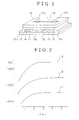
- the electrode device for the potassium ion analytis is schematically illustrated in Fig. 1. In Fig.
- 1, 11 indicates the polyethylene terephthalate film (support)
- each of 12a and 12b indicates the deposited silver metal layer (the deposited silver metal layer is devided by the scratched groove to expose the surface of the support, whereby giving two separated areas)
- each of 13a and 13b indicates the silver chloride layer
- 14 indicates the potassium chloride (electrolyte) layer
- 15 indicates the ion selective layer
- 16 indicates the liquid receiver
- each of 17a and 17b indicates the liquid receiving opening
- 18 indicates the bridge.
- liquid receiving opening 17a was spoteed a potassium ion-containing reference solution (Calibrate 2), and in another liquid receiving opening 17b was spotted a liquid sample (Calibrate 1, 2 or 3 was employed).
- a liquid sample (Calibrate 1, 2 or 3 was employed).
- the within-run precision was measured in the conventional manner. The results are set forth in Table 2.
- the sample No. 7 is a comparative sample.
- the CV value which indicates the dispersion in measurement is desired to be within approx. 4 %, and the slope value is desired to be near 59 mV/decade which is standard value.
- the sample Nos. 2, 3 and 4 showed no value deviating from the expected value (+50 mV) even in fifty times-repeated runs, while the sample Nos. 5, 6 and 7 showed values deviating from the expected value (+50 mV) in a ratio of 1 time (sample Nos. 5 and 6) or 2 times (sample No. 7) per fifty times-repeated runs.
- a filmy silver-silver chloride electrode (reference electrode) and the ion selective electrode for the potassium ion analysis prepared in Example 1 were cut off along the scratched groove and connected to each other by means of a combination of a liquid receiver and a bridge in the same manner as illustrated in Fig. 1.
- Example 3 In the same manner as in Example 3, the reference electrode and the ion selective electrode for the potassium ion analysis (sample No. 2, 3 or 4) were cut off along the scratched groove and connected to each other by means of a combination of a liquid receiver and a bridge in the same manner as illustrared in Fig. 1.
- Example 1 The procedures in Example 1 were repeated except that the electrolyte salt solution was 42.5 g. of water containing 1.11 g. of KCl and 1.39 g. of NaCl to prepare an ion selective electrodes for the analysis of potassium ion.
Landscapes
- Chemical & Material Sciences (AREA)
- Life Sciences & Earth Sciences (AREA)
- Health & Medical Sciences (AREA)
- Physics & Mathematics (AREA)
- Chemical Kinetics & Catalysis (AREA)
- Electrochemistry (AREA)
- Molecular Biology (AREA)
- Analytical Chemistry (AREA)
- Biochemistry (AREA)
- General Health & Medical Sciences (AREA)
- General Physics & Mathematics (AREA)
- Immunology (AREA)
- Pathology (AREA)
- Investigating Or Analysing Biological Materials (AREA)
Applications Claiming Priority (4)
| Application Number | Priority Date | Filing Date | Title |
|---|---|---|---|
| JP128239/84 | 1984-06-20 | ||
| JP59128240A JPS617461A (ja) | 1984-06-20 | 1984-06-20 | イオン選択電極 |
| JP59128239A JPS617460A (ja) | 1984-06-20 | 1984-06-20 | イオン選択電極の製造法 |
| JP128240/84 | 1984-06-20 |
Publications (3)
| Publication Number | Publication Date |
|---|---|
| EP0168666A2 true EP0168666A2 (fr) | 1986-01-22 |
| EP0168666A3 EP0168666A3 (en) | 1989-04-12 |
| EP0168666B1 EP0168666B1 (fr) | 1992-03-11 |
Family
ID=26463965
Family Applications (1)
| Application Number | Title | Priority Date | Filing Date |
|---|---|---|---|
| EP85107624A Expired EP0168666B1 (fr) | 1984-06-20 | 1985-06-20 | Electrode sensible aux ions |
Country Status (3)
| Country | Link |
|---|---|
| US (1) | US4707243A (fr) |
| EP (1) | EP0168666B1 (fr) |
| DE (1) | DE3585570D1 (fr) |
Cited By (2)
| Publication number | Priority date | Publication date | Assignee | Title |
|---|---|---|---|---|
| EP0573101A1 (fr) * | 1992-06-01 | 1993-12-08 | Johnson & Johnson Clinical Diagnostics, Inc. | Electrode sélective aux ions et procédé pour sa fabrication |
| CN108593745A (zh) * | 2018-03-09 | 2018-09-28 | 山东卓越生物技术股份有限公司 | 离子选择电极敏感膜、其制备方法及包括其的离子选择性电极 |
Families Citing this family (4)
| Publication number | Priority date | Publication date | Assignee | Title |
|---|---|---|---|---|
| US5012810A (en) * | 1988-09-22 | 1991-05-07 | Minnesota Mining And Manufacturing Company | Biomedical electrode construction |
| US5078139A (en) * | 1988-09-22 | 1992-01-07 | Minnesota Mining And Manufacturing Company | Biomedical electrode construction |
| US6398931B1 (en) | 2000-01-31 | 2002-06-04 | Phoenix Electrode Company | Combination ion-selective electrode with a replaceable sensing membrane |
| JP2004053401A (ja) * | 2002-07-19 | 2004-02-19 | Fuji Photo Film Co Ltd | pH電極 |
Family Cites Families (2)
| Publication number | Priority date | Publication date | Assignee | Title |
|---|---|---|---|---|
| US4214968A (en) * | 1978-04-05 | 1980-07-29 | Eastman Kodak Company | Ion-selective electrode |
| US4487679A (en) * | 1984-03-15 | 1984-12-11 | Eastman Kodak Company | Potassium ion-selective electrode |
-
1985
- 1985-06-20 EP EP85107624A patent/EP0168666B1/fr not_active Expired
- 1985-06-20 DE DE8585107624T patent/DE3585570D1/de not_active Expired - Lifetime
-
1986
- 1986-04-11 US US06/851,877 patent/US4707243A/en not_active Expired - Lifetime
Cited By (2)
| Publication number | Priority date | Publication date | Assignee | Title |
|---|---|---|---|---|
| EP0573101A1 (fr) * | 1992-06-01 | 1993-12-08 | Johnson & Johnson Clinical Diagnostics, Inc. | Electrode sélective aux ions et procédé pour sa fabrication |
| CN108593745A (zh) * | 2018-03-09 | 2018-09-28 | 山东卓越生物技术股份有限公司 | 离子选择电极敏感膜、其制备方法及包括其的离子选择性电极 |
Also Published As
| Publication number | Publication date |
|---|---|
| EP0168666B1 (fr) | 1992-03-11 |
| DE3585570D1 (de) | 1992-04-16 |
| US4707243A (en) | 1987-11-17 |
| EP0168666A3 (en) | 1989-04-12 |
Similar Documents
| Publication | Publication Date | Title |
|---|---|---|
| EP0160997B1 (fr) | Electrode sensible aux ions | |
| US4214968A (en) | Ion-selective electrode | |
| EP0024191B1 (fr) | Eléments de référence, électrodes sensibles aux ions comprenant lesdits éléments et procédé pour préparer lesdits éléments | |
| GB1584788A (en) | Ion-selective electrode | |
| EP0161690A2 (fr) | Paire d'électrodes sélectives aux ions et procédé pour sa fabrication | |
| US5472590A (en) | Ion sensor | |
| US4578173A (en) | Ion selective electrode and method of making ion selective electrodes | |
| EP0168666B1 (fr) | Electrode sensible aux ions | |
| EP0165607B1 (fr) | Electrode sensible aux ions | |
| EP1174711A2 (fr) | Electrode sélectivement sensible aux ions | |
| CA1155800A (fr) | Electrodes en argent/halogenure d'argent a teneur de chrome ou de nickel | |
| GB2054869A (en) | Oxygen sensor | |
| US4867860A (en) | Method of manufacturing ion-selective electrodes for analyzing selected ions in solution | |
| US3864233A (en) | Uranium-Sensitive Electrode Membrane | |
| EP0215446A2 (fr) | Appareil et méthode pour la mesure de l'activité ionique | |
| EP0288724B1 (fr) | Electrode sélective aux ions pour mesurer la concentration de carbonate | |
| EP0160998B1 (fr) | Electrode sensible aux ions | |
| EP0231476A1 (fr) | Eléctrodes sélectivement perméables aux ions pour analyser certains ions dans des solutions aqueuses | |
| US4399002A (en) | Large organic cation-selective electrodes | |
| EP0230573A1 (fr) | Electrodes sèches sélectivement perméables aux ions pour analyser certains ions dans des solutions aqueuses | |
| CA1116696A (fr) | Electrode a selection ionique | |
| JP2948423B2 (ja) | カリウムイオン分析用イオン選択電極 | |
| JPH0354789B2 (fr) | ||
| JPS617460A (ja) | イオン選択電極の製造法 | |
| SU1436049A1 (ru) | Ионоселективный электрод дл определени бромид-ионов |
Legal Events
| Date | Code | Title | Description |
|---|---|---|---|
| PUAI | Public reference made under article 153(3) epc to a published international application that has entered the european phase |
Free format text: ORIGINAL CODE: 0009012 |
|
| AK | Designated contracting states |
Designated state(s): DE GB |
|
| PUAL | Search report despatched |
Free format text: ORIGINAL CODE: 0009013 |
|
| AK | Designated contracting states |
Kind code of ref document: A3 Designated state(s): DE GB |
|
| 17P | Request for examination filed |
Effective date: 19890719 |
|
| 17Q | First examination report despatched |
Effective date: 19900919 |
|
| GRAA | (expected) grant |
Free format text: ORIGINAL CODE: 0009210 |
|
| AK | Designated contracting states |
Kind code of ref document: B1 Designated state(s): DE GB |
|
| REF | Corresponds to: |
Ref document number: 3585570 Country of ref document: DE Date of ref document: 19920416 |
|
| PLBE | No opposition filed within time limit |
Free format text: ORIGINAL CODE: 0009261 |
|
| STAA | Information on the status of an ep patent application or granted ep patent |
Free format text: STATUS: NO OPPOSITION FILED WITHIN TIME LIMIT |
|
| 26N | No opposition filed | ||
| REG | Reference to a national code |
Ref country code: GB Ref legal event code: IF02 |
|
| PGFP | Annual fee paid to national office [announced via postgrant information from national office to epo] |
Ref country code: DE Payment date: 20020610 Year of fee payment: 18 |
|
| PGFP | Annual fee paid to national office [announced via postgrant information from national office to epo] |
Ref country code: GB Payment date: 20020619 Year of fee payment: 18 |
|
| PG25 | Lapsed in a contracting state [announced via postgrant information from national office to epo] |
Ref country code: GB Free format text: LAPSE BECAUSE OF NON-PAYMENT OF DUE FEES Effective date: 20030620 |
|
| PG25 | Lapsed in a contracting state [announced via postgrant information from national office to epo] |
Ref country code: DE Free format text: LAPSE BECAUSE OF NON-PAYMENT OF DUE FEES Effective date: 20040101 |
|
| GBPC | Gb: european patent ceased through non-payment of renewal fee |
Effective date: 20030620 |