EP0168787A2 - Abrundungseinheit zum Gebrauch bei der arithmetischen Verarbeitung von Gleitkommadaten - Google Patents
Abrundungseinheit zum Gebrauch bei der arithmetischen Verarbeitung von Gleitkommadaten Download PDFInfo
- Publication number
- EP0168787A2 EP0168787A2 EP85108715A EP85108715A EP0168787A2 EP 0168787 A2 EP0168787 A2 EP 0168787A2 EP 85108715 A EP85108715 A EP 85108715A EP 85108715 A EP85108715 A EP 85108715A EP 0168787 A2 EP0168787 A2 EP 0168787A2
- Authority
- EP
- European Patent Office
- Prior art keywords
- data
- mantissa part
- register
- mantissa
- exponent
- Prior art date
- Legal status (The legal status is an assumption and is not a legal conclusion. Google has not performed a legal analysis and makes no representation as to the accuracy of the status listed.)
- Granted
Links
Images



Classifications
-
- G—PHYSICS
- G06—COMPUTING OR CALCULATING; COUNTING
- G06F—ELECTRIC DIGITAL DATA PROCESSING
- G06F7/00—Methods or arrangements for processing data by operating upon the order or content of the data handled
- G06F7/38—Methods or arrangements for performing computations using exclusively denominational number representation, e.g. using binary, ternary, decimal representation
- G06F7/48—Methods or arrangements for performing computations using exclusively denominational number representation, e.g. using binary, ternary, decimal representation using non-contact-making devices, e.g. tube, solid state device; using unspecified devices
- G06F7/483—Computations with numbers represented by a non-linear combination of denominational numbers, e.g. rational numbers, logarithmic number system or floating-point numbers
-
- G—PHYSICS
- G06—COMPUTING OR CALCULATING; COUNTING
- G06F—ELECTRIC DIGITAL DATA PROCESSING
- G06F7/00—Methods or arrangements for processing data by operating upon the order or content of the data handled
- G06F7/38—Methods or arrangements for performing computations using exclusively denominational number representation, e.g. using binary, ternary, decimal representation
- G06F7/48—Methods or arrangements for performing computations using exclusively denominational number representation, e.g. using binary, ternary, decimal representation using non-contact-making devices, e.g. tube, solid state device; using unspecified devices
-
- G—PHYSICS
- G06—COMPUTING OR CALCULATING; COUNTING
- G06F—ELECTRIC DIGITAL DATA PROCESSING
- G06F7/00—Methods or arrangements for processing data by operating upon the order or content of the data handled
- G06F7/38—Methods or arrangements for performing computations using exclusively denominational number representation, e.g. using binary, ternary, decimal representation
- G06F7/48—Methods or arrangements for performing computations using exclusively denominational number representation, e.g. using binary, ternary, decimal representation using non-contact-making devices, e.g. tube, solid state device; using unspecified devices
- G06F7/499—Denomination or exception handling, e.g. rounding or overflow
- G06F7/49942—Significance control
- G06F7/49947—Rounding
Definitions
- the present invention relates to a rounding unit, and more particularly to a rounding unit for use in the arithmetic processing operation of floating point data.
- a floating point data is represented by an. exponent part and a mantissa part. That is, a floating point data A is represented by M x 2E where E represents the exponent part and M indicates the mantissa part.
- E represents the exponent part
- M indicates the mantissa part.
- mantissa part data which have a data length exceeding the predetermined word length for the mantissa part are often treated.
- multiplication is conducted with the mantissa parts and possibly results in a data having a data length twice longet than the word length which is predetermined for the mantissa part.
- an operation for adjusting the data length of the resulted mantissa part data with the predetermined word length is required to complete the processing. Such an operation is called "rounding operation".
- the computer which processes floating point data is usually equipped with a means which can temporarily store the data underflowing the least significant bit of the mantissa part.
- the underflowing data is rounded by, for example, raising or truncating the. same, to complete the arithmetic processing operation.
- the rounding mode includes a rounding to a nearest value, a rounding in the negative direction, a rounding in the positive direction, and a rounding in the direction toward zero.
- the rounding operation includes only two cases, that is to raise one unit to the place of the least significant bit of the mantissa part and to truncate the value underflowing the least significant bit of the mantissa part.
- the rounding operation can be summarized as modifying the result of the arithmetic operation by adding "1" to the least significant bit of the mantissa part or truncating the underflowing value, depending upon the mode of rounding operation and the result of the arithmetic processing.
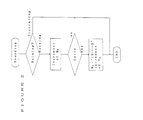
- a mantissa part data in which all of the bits are "1" is obtained as a result of the arithmetic processing, as shown in Fig. 1 (A). If such a mantissa part data is incremented by "1" by the rounding operation, the incremented data overflows the most significant bit of the mantissa part so that all of the bits in the mantissa part become “0” as shown in Fig. 1 (B). Thus an adjustment must be made to the mantissa part and to the exponent part. That is, the mantissa part must be a constant value in which the most significant bit is "1” and the other bits are "0", while the exponent, part is incremented by "1” as shown in Fig. 1 (C).
- both the mantissa part and the exponent part must be adjusted, which causes to further prolong the period of time for the rounding operation.
- a rounding unit for use in arithmetic processing of floating point data, comprising:
- the mantissa part register includes a first mantissa part register for storing the mantissa part of the floating point data before the rounding operation is conducted, a second mantissa part register for storing the mantissa part of the floating point data after the rounding operation is completed, and a constant register for storing the constant data. These registers are coupled to a mantissa part data bus.
- the selection circuit orders to the firat mantissa part register to output the data stored therein to the mantissa part data bus and the second mantissa part register to read the data present in the mantissa part busy when the rounding operation is raising, but the carry signal is absent, the selection circuit orders to the mantissa part incrementer to output the incremented data to the mantissa part data bus and the second mantissa part register to read the data present in the mantissa part data bus; and when the rounding operation is raising and the carry signal is present, the selection circuit orders to the constant register to output the constant data to the mantissa part data bus and the second mantissa part register to read the data present in the mantissa data bus.
- the rounding unit further includes an adjusting means connected to the mantissa part incrementer to receive the carry signal and the incremented data, and for modifying the incremented data by adding the carry signal to the most significant bit of the incremented data.
- the selection circuit orders to the mantissa part register to read the modified data, when the rounding operation is raising.
- the exponent part register includes a first exponent part register for storing the exponent part of the floating point data before the rounding operation is conducted, a second exponent part register for storing the exponent part of the floating point data after the rounding operation is completed.
- the mantissa data when a carry operation, is to be conducted to the exponent part due to the increment of the mantissa part data, the mantissa data must be a constant data of "1 0 ... 0" and the exponent part data must be incremented by "1". When a carry does not occur, the mantissa part data is incremented by "1" and the exponent part data remains unchanged.
- the rounding unit is to execute rounding operation of a floating point data of 32 bit length which consists of a coding part of one bit length, a mantissa part of 24 bit length and an exponent part of 7 bit length.
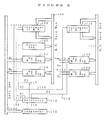
- a rounding unit includes a first mantissa part register 101 to which a data M B representing the mantissa part of a floating point data before the rounding operation is executed is transferred from an arithmetic unit (not shown in the drawing) through a data bus 102.
- the first mantissa part register 101 is coupled to a mantissa part data bus 103.
- the first mantissa part register 101 may store a data representing the mantissa part of 24 bit length of a floating point data before the rounding operation is executed and transfer the same to the mantissa part data bus 103.
- a second mantissa part register 104 is also coupled with the mantissa part data bus 103 from which a data of 24 bit length may be transferred and stored therein.
- the second mantissa part register 104 is for storing a data M A representing the mantissa part of a floating point data after the rounding operation is completed.
- second mantissa part register 104 is of 24 bit length and coupled to the data bus 102 so as to transfer the rounded mantissa part data M A to the arithmetic unit.
- the rounding unit shown in Fig. 3 further includes a mantissa part incrementer 105 coupled to the mantissa part data bus 103 from which a data of 24 bit length may be set therein.
- the mantissa part inorementer 103 increments the data by "1" and, when an overflow occurs in the increment operation, it generates a carry signal 106. The thus incremented data may be transferred to the mantissa part data bus 103,
- the rounding unit further includes a constant register 107 coupled to the mantissa part data bus 103.
- the constant register 103 stores a constant data of 24 bit length in which the most significant bit is "1" and the other bits are "0".
- the rounding unit further includes a first exponent part register 108, a second exponent part register 109 and an exponent part incrementer 110.
- the data representing the exponent part of the floating point data has 7 bit length.
- the first and second exponent part register 108 and 109 can store a data of 7 bit length.
- the first exponent part register 108 receives a data E B representing the exponent part of the result of the arithmetic processing of floating point data before the rounding operation is executed from the arithmetic unit (not shown in the drawings), and it is also coupled to an exponent part data bus 111 so as to output the data Eg to the exponent part data bus 111.
- the second exponent part register 109 is for storing a data E A representing the exponent part of the floating point data after the rounding operation is completed.
- the second exponent part register 109 is coupled to the exponent part data bus 111 to receive therefrom the data.
- the exponent part incrementer 110 is coupled to the exponent part data bus 111 to receive an exponent part data therefrom and to output an incremented exponent part data thereto.
- the exponent part incrementer is an adder of 7 bit length to increment the inputted exponent part data by "1" . That is, "1" is added to the least significant of the exponent part data.
- the rounding unit shown in fig. 3 further includes a judging circuit 112 and a selection circuit 113.
- the judging circuit 112 is coupled to the data bus 102 to receive an information for judging whether the rounding operation is raising or truncating.
- the judging circuit 112 is connected to the selection circuit 113 by a line 114 through which a judging signal is inputted to the selection circuit 112.
- the selection circuit 112 receives a carry signal 106 at a first input and a judging signal 114 at a second input.
- the selection circuit 113 is connected to the mantissa part incrementer 105 via a line 115 for outputting a signal R l , to the constant register 107 and the exponent part incrementer 110 via a line 116 for outputting a signal R 2 , to the first mantissa part register 101 via a line 117 for outputting a signal R 3 and to the first exponent part register 108 via a line 118 for outputting a signal R 4 .
- the selection circuit 113 decides to output either of the signals R 1 , R 2 , R 3 and R 4 .
- the signal R 1 is to order to the mantissa incrementer 105 to output the incremented mantissa part data to the mantissa part data bus 103.
- the signal R 2 is to order to the constant register 107 and the exponent part inorementer 110 respectively to output the constant data to the mantissa part data bus 103 and the incremented exponent part data to the exponent part data bus 111.
- the signal R 3 is to order to the first mantissa part register 101 to output the mantissa part data M B to the mantissa part data bus 103, and the signal R 4 is to order to the first exponent part register 108 to output the exponent part data E B to the exponent part data bus 111.
- The'selection of the signals R l , R 2 , R 3 and R 4 made by the selection circuit 113 is illustrated in Table II.
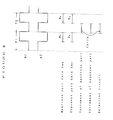
- Fig. 3 shows a timing chart of the operation of the rounding unit.
- T 1 and T 2 indicate two subsequent periodic cycles generated by a clock (not shown in the drawings) to synchronize the operation of the rounding unit.
- Each clock cycle is divided into two periods by pulses ⁇ 1 and ⁇ 2 .
- pulse ⁇ 1 is at the high level during the second half period of each clock cycle while pulse ⁇ 2 is at the high level during the first half period of each clock cycle.
- the mantissa part M B and the exponent part E B of the result of the arithmetic processing of floating point data are respectively inputted to the first mantissa part register 101 and the first exponent part register 108 during the period ⁇ 2 of the cycle T 1 through the data bus 102.
- the first mantissa part register 101 and the first exponent part register 108 transfer the mantissa part data M B and the exponent part data E B respectively to the mantissa part data bus 103 and the exponent part data bus 111.
- the mantissa part incrementer 105 and the exponent part incrementer 110 receive and latch the mantissa part data M B and the exponent part data Eg respectively through the mantissa part data bus 103 and the exponent part data bus 111.
- increment of the mantissa and exponent pacts M B and E B and the selection of the signals by the selection circuit 113 are executed. That is, the mantissa part incrementer 105 increments by "1" the mantissa part data M B on which the rounding operation has not been executed. The mantissa part incrementer 105 outputs a carry signal "1" when the increment of the mantissa part data M B overflows the most significant bit, and it outputs a signal "0" when the carry does not occur. The exponent part incrementer 110 increments by "1" the exponent part data E B on which the rounding operation has not been executed.
- the selection circuit receives a carry signal 106 from the mantissa part incrementer 105 and a judging signal 114 from the judging circuit 112. Based on these input signals, the selection circuit 113 selects either of the signals R 1 , R 2 , R 3 and R 4 , according to the logic illustrated in Table II.
- the selection circuit 113 selects the signals R3 and R 4 .
- the first mantissa part register 101 transfers the data M B to the second mantissa part register 14 through the mantissa part data bus 103 according to the signal R 3
- the first exponent part register 108 transfers the data E B to the second exponent part register 109 through the exponent part data bus 111.
- the selection circuit selects the signals R1 and R 4 .
- the mantissa part incrementer 105 and the first exponent part register 108 are actuated by the signals R 1 and R 4 respectively to transfer the incremented data to the mantissa part data bus 103 and transfer the exponent part data Eg to the exponent part data bus 111.
- the second mantissa part register 104 and the second exponent part register 109 read the data present respectively in the mantissa part data bus 103 and the exponent part data bus 111.
- the selection circuit 113 selects the signal R 2 which orders to the constant regisrer 107 and the exponent part inorementer 110 to output the data to the mantissa part data bus 103 and the exponent part data bus 111, respectively.
- the constant register 107 and the exponent part incrementer are actuated by the signals R 1 and R 2 respectively to transfer the constant data to the mantissa part data bus 103 and transfer the incremented exponent part data to the exponent part data bus 111.
- the second mantissa part register 104 and the second exponent part register 109 read the data present respectively in the mantissa part data bus 103 and the exponent part data bus 111. That is, the rounded mantissa part data M A which is now held in the second mantissa part register 104 is a constant data in which the most significant bit is "1" and the other bits are "0".
- the rounded exponent part data E A which is held in the second exponent part register 109 is a data obtained by incrementing by "1" the exponent part data E B .
- the rounding operation of floating point data can be executed within two clock cycles up to the storing of the rounded data in the registers 104 and 109.
- the rounding operation can be conducted at a very high speed.
- the second mantissa part register 104 and the second exponent part register 109 transfer respectively the data M A and E A to the arithmetic unit through the data bus 102.
- the second example of the rounding unit according to the present invention will be explained with reference to Figs. 5 and 6.
- the rounding unit of the present example is similar to that shown in F ig. 3 except that an adjusting means is employed in lieu of the constant register 107 shown in Fig. 3 and that the logic of the selection circuit 113 is different from that of the selection circuit 113 of the rounding unit shown in Fig. 3.
- same numerical references are used as in F ig. 3 to indicate the same or corresponding elements.
- the rounding unit of the second example includes an adjusting means 120 having an input connected to the output of the mantissa part incrementer 105 and an output coupled to the mantissa part data bus 103.
- the output of the mantissa part incrementer 105 is not coupled with the mantissa part data bus 103.
- the selection circuit 113 receives at an input the carry signal 106 from the mantissa part incrementer 105 and at another input a judging signal 114 from the judging circuit 112. But, the output of the selection circuit 113 is connected to the adjusting means 120 for outputting a signal R 1 , to the exponent part incrementer 110 for outputting a signal R 2 , to the first mantissa part register 101 for outputting a signal R 3 and to the first exponent part register 108 for outputting a signal R 4 .
- the adjusting means 120 is connected at an input thereof to the output of the mantissa part incrementer 105 and receives at another input thereof the carry signal 106 from the mantissa part incrementer 105.
- the adjusting means 120 modifies the incremented data by adding the carry signal 106 to the most significant bit of the incremented mantissa part data. That is, when the carry signal is "1" which means that a carry occurs due to the increment of the mantissa part data, the adjusting means 120 modifies the incremented data to "10 ... 0".
- the mantissa part data thus modified by tha adjusting means 120 becomes a constant data in which the most significant bit is "1" and the other bits are "0".
- the carry signal is "0" which means that a carry does not occur, in fact, the adjusting means does not modify the incremented mantissa part data.
- the selection circuit 113 receives the carry signal 106 and the judging signal 114 and selects the signals from R 1 , R 2 , R 3 and R 4 according to a logic illustrated in Table III.
- the operation of the rounding unit shown in Fig. 5 is similar to that of the rounding unit shown in Fig. 3 except when the judging signal 114 indicates that the rounding operation is raising.
- the selection circuit selects the signals R 1 and R 4 .
- the adjusting means 120 and the first exponent part register 108 are actuated by the signals R 1 and R 4 respectively to transfer the adjusted data to the mantissa part data bus 103 and transfer the exponent part data Eg to the exponent part data bus 111.
- the adjusted mantissa part data remains unchanged.
- the mantissa part data M A stored and held in the second mantissa part register 104 is equal to the mantissa part data M B incremented by "1".
- the selection circuit 113 selects the signals R 1 and R 2 which order to the adjusting means 120 and the exponent part incrementer 110 to output the data to the mantissa part data bus 103 and the exponent part data bus 110, respectively.
- the adjusting means 120 and the exponent part incrementer 110 are actuated by the signals R 1 and R 2 respectively to transfer the adjusted incremented data to the mantissa part data bus 103 and transfer the incremented exponent part data to the exponent part data bus 111.
- the second mantissa part register 104 and the second exponent part register 109 read the data present respectively in the mantissa part data bus 103 and the exponent part data bus 111. That is, the rounded mantissa part data MA which is now held in the second mantissa part register 104 is the adjusted incremented data, which is equal to a constant data in which the most significant bit is "1" and the other bits are "0".
- the rounded exponent part data E A which is held in the second exponent part register 109 is a data obtained by incrementing by "1" the exponent part data Eg.
- the rounding unit according to the present invention can process at a high speed floating point data of any form without checking the presence of a carry by a software. Further, the rounding unit of the present invention can be fabricated by hardware circuits which are simple in construction and thus it is very useful for rounding operation of floating point data of high speed.
Landscapes
- Engineering & Computer Science (AREA)
- Physics & Mathematics (AREA)
- General Physics & Mathematics (AREA)
- Theoretical Computer Science (AREA)
- Computational Mathematics (AREA)
- Computing Systems (AREA)
- Mathematical Analysis (AREA)
- Mathematical Optimization (AREA)
- Pure & Applied Mathematics (AREA)
- General Engineering & Computer Science (AREA)
- Nonlinear Science (AREA)
- Complex Calculations (AREA)
Applications Claiming Priority (2)
| Application Number | Priority Date | Filing Date | Title |
|---|---|---|---|
| JP14469184A JPS6125245A (ja) | 1984-07-12 | 1984-07-12 | 丸め処理回路 |
| JP144691/84 | 1984-07-12 |
Publications (3)
| Publication Number | Publication Date |
|---|---|
| EP0168787A2 true EP0168787A2 (de) | 1986-01-22 |
| EP0168787A3 EP0168787A3 (en) | 1986-06-04 |
| EP0168787B1 EP0168787B1 (de) | 1991-12-04 |
Family
ID=15368019
Family Applications (1)
| Application Number | Title | Priority Date | Filing Date |
|---|---|---|---|
| EP85108715A Expired - Lifetime EP0168787B1 (de) | 1984-07-12 | 1985-07-12 | Abrundungseinheit zum Gebrauch bei der arithmetischen Verarbeitung von Gleitkommadaten |
Country Status (4)
| Country | Link |
|---|---|
| US (1) | US4796217A (de) |
| EP (1) | EP0168787B1 (de) |
| JP (1) | JPS6125245A (de) |
| DE (1) | DE3584797D1 (de) |
Cited By (1)
| Publication number | Priority date | Publication date | Assignee | Title |
|---|---|---|---|---|
| GB2262823A (en) * | 1991-12-23 | 1993-06-30 | Intel Corp | Apparatus and method for rounding operands. |
Families Citing this family (15)
| Publication number | Priority date | Publication date | Assignee | Title |
|---|---|---|---|---|
| EP0312615B1 (de) * | 1987-04-28 | 1996-11-20 | Fujitsu Ten, Ltd. | Vorrichtung und verfahren zur datenübertragung |
| JPH01169627A (ja) * | 1987-12-25 | 1989-07-04 | Toshiba Corp | 高精度加算装置 |
| US4941119A (en) * | 1988-11-30 | 1990-07-10 | Control Data Corporation | Method and apparatus for predicting an overflow in an integer multiply |
| JP3076046B2 (ja) * | 1989-01-31 | 2000-08-14 | 日本電気株式会社 | 例外検出回路 |
| US4994996A (en) * | 1989-02-03 | 1991-02-19 | Digital Equipment Corporation | Pipelined floating point adder for digital computer |
| US4941120A (en) * | 1989-04-17 | 1990-07-10 | International Business Machines Corporation | Floating point normalization and rounding prediction circuit |
| US4926370A (en) * | 1989-04-17 | 1990-05-15 | International Business Machines Corporation | Method and apparatus for processing postnormalization and rounding in parallel |
| US5278552A (en) * | 1989-10-23 | 1994-01-11 | Jeco Company Limited | Indicator control circuit |
| US4977535A (en) * | 1989-12-08 | 1990-12-11 | Motorola, Inc. | Method of computation of normalized numbers |
| CA2045662C (en) * | 1989-12-29 | 1994-04-26 | Clif Liu | Binary floating point arithmetic rounding in conformance with ieee 754-1985 standard |
| US5339266A (en) * | 1993-11-29 | 1994-08-16 | Motorola, Inc. | Parallel method and apparatus for detecting and completing floating point operations involving special operands |
| US5563818A (en) * | 1994-12-12 | 1996-10-08 | International Business Machines Corporation | Method and system for performing floating-point division using selected approximation values |
| US5892697A (en) * | 1995-12-19 | 1999-04-06 | Brakefield; James Charles | Method and apparatus for handling overflow and underflow in processing floating-point numbers |
| CN112988110A (zh) * | 2019-12-17 | 2021-06-18 | 深圳市中兴微电子技术有限公司 | 一种浮点处理装置和数据处理方法 |
| CN114416021A (zh) * | 2022-01-19 | 2022-04-29 | 安徽芯纪元科技有限公司 | 一种用于存算融合式处理器架构的定点数据动态截位方法 |
Family Cites Families (8)
| Publication number | Priority date | Publication date | Assignee | Title |
|---|---|---|---|---|
| FR2455315B1 (fr) * | 1979-04-23 | 1986-10-24 | Anvar | Procede pour fournir un resultat de calcul numerique avec le nombre de chiffres significatifs exacts dans ce resultat et dispositif de calcul numerique mettant en oeuvre ce procede |
| US4295203A (en) * | 1979-11-09 | 1981-10-13 | Honeywell Information Systems Inc. | Automatic rounding of floating point operands |
| US4338675A (en) * | 1980-02-13 | 1982-07-06 | Intel Corporation | Numeric data processor |
| US4484259A (en) * | 1980-02-13 | 1984-11-20 | Intel Corporation | Fraction bus for use in a numeric data processor |
| US4468748A (en) * | 1981-06-11 | 1984-08-28 | Data General Corporation | Floating point computation unit having means for rounding the floating point computation result |
| US4528640A (en) * | 1982-07-13 | 1985-07-09 | Sperry Corporation | Method and a means for checking normalizing operations in a computer device |
| US4589067A (en) * | 1983-05-27 | 1986-05-13 | Analogic Corporation | Full floating point vector processor with dynamically configurable multifunction pipelined ALU |
| US4562553A (en) * | 1984-03-19 | 1985-12-31 | Analogic Corporation | Floating point arithmetic system and method with rounding anticipation |
-
1984
- 1984-07-12 JP JP14469184A patent/JPS6125245A/ja active Granted
-
1985
- 1985-07-12 EP EP85108715A patent/EP0168787B1/de not_active Expired - Lifetime
- 1985-07-12 US US06/754,102 patent/US4796217A/en not_active Expired - Lifetime
- 1985-07-12 DE DE8585108715T patent/DE3584797D1/de not_active Expired - Lifetime
Cited By (2)
| Publication number | Priority date | Publication date | Assignee | Title |
|---|---|---|---|---|
| GB2262823A (en) * | 1991-12-23 | 1993-06-30 | Intel Corp | Apparatus and method for rounding operands. |
| GB2262823B (en) * | 1991-12-23 | 1996-01-10 | Intel Corp | Apparatus and method for rounding operands |
Also Published As
| Publication number | Publication date |
|---|---|
| EP0168787B1 (de) | 1991-12-04 |
| JPS6125245A (ja) | 1986-02-04 |
| JPH0343645B2 (de) | 1991-07-03 |
| EP0168787A3 (en) | 1986-06-04 |
| DE3584797D1 (de) | 1992-01-16 |
| US4796217A (en) | 1989-01-03 |
Similar Documents
| Publication | Publication Date | Title |
|---|---|---|
| US4796217A (en) | Rounding unit for use in arithmetic processing of floating point data | |
| US4591979A (en) | Data-flow-type digital processing apparatus | |
| US4949291A (en) | Apparatus and method for converting floating point data formats in a microprocessor | |
| US4754421A (en) | Multiple precision multiplication device | |
| US4722068A (en) | Double precision multiplier | |
| EP0238090B1 (de) | Mikrorechner mit Zugriffsfähigkeit auf einen internen Speicher mit gewünschter variabler Zugriffszeit | |
| US5457805A (en) | Microcomputer enabling high speed execution of product-sum operation | |
| EP0146984B1 (de) | Prozessor für die Verarbeitung von Wort für Wort empfangbaren Daten | |
| US5038313A (en) | Floating-point processor provided with high-speed detector of overflow and underflow exceptional conditions | |
| EP0164451B1 (de) | Arithmetische Verarbeitungseinheit zum Ausführen einer Gleitkommaoperation | |
| EP0568374B1 (de) | Parallelisierter Grössevergleicher zum Vergleichen einer Binärzahl mit einer bestimmten Zahl | |
| US5402368A (en) | Computing unit and digital signal processor using the same | |
| US5944775A (en) | Sum-of-products arithmetic unit | |
| US4866651A (en) | Method and circuit arrangement for adding floating point numbers | |
| US4761753A (en) | Vector processing apparatus | |
| US4878191A (en) | Multiplication circuit capable of operating at a high speed with a small amount of hardware | |
| EP0180005A2 (de) | Doppelter Inkrementer | |
| US4974198A (en) | Vector processing system utilizing firm ware control to prevent delays during processing operations | |
| US4815019A (en) | Fast ALU equals zero circuit | |
| EP0354590B1 (de) | Befehlspufferspeicher für einen Mikrocomputer | |
| EP0424838A2 (de) | Arithmetische Schaltung zur Berechnung und Akkumulation von Absolutwerten der Differenz zwischen zwei numerischen Werten | |
| US4593377A (en) | High-speed processing method of line segment coordinates | |
| US5065353A (en) | Adder control method and adder control circuit | |
| EP0214836A1 (de) | Addierschaltung mit Auswahl des Übertrags | |
| US5130921A (en) | Digital controller for scanned actual condition signals |
Legal Events
| Date | Code | Title | Description |
|---|---|---|---|
| PUAI | Public reference made under article 153(3) epc to a published international application that has entered the european phase |
Free format text: ORIGINAL CODE: 0009012 |
|
| 17P | Request for examination filed |
Effective date: 19850712 |
|
| AK | Designated contracting states |
Designated state(s): DE FR GB |
|
| PUAL | Search report despatched |
Free format text: ORIGINAL CODE: 0009013 |
|
| AK | Designated contracting states |
Kind code of ref document: A3 Designated state(s): DE FR GB |
|
| 17Q | First examination report despatched |
Effective date: 19880927 |
|
| GRAA | (expected) grant |
Free format text: ORIGINAL CODE: 0009210 |
|
| AK | Designated contracting states |
Kind code of ref document: B1 Designated state(s): DE FR GB |
|
| REF | Corresponds to: |
Ref document number: 3584797 Country of ref document: DE Date of ref document: 19920116 |
|
| ET | Fr: translation filed | ||
| PLBE | No opposition filed within time limit |
Free format text: ORIGINAL CODE: 0009261 |
|
| STAA | Information on the status of an ep patent application or granted ep patent |
Free format text: STATUS: NO OPPOSITION FILED WITHIN TIME LIMIT |
|
| 26N | No opposition filed | ||
| PGFP | Annual fee paid to national office [announced via postgrant information from national office to epo] |
Ref country code: GB Payment date: 19940706 Year of fee payment: 10 |
|
| PGFP | Annual fee paid to national office [announced via postgrant information from national office to epo] |
Ref country code: DE Payment date: 19940923 Year of fee payment: 10 |
|
| PG25 | Lapsed in a contracting state [announced via postgrant information from national office to epo] |
Ref country code: GB Effective date: 19950712 |
|
| GBPC | Gb: european patent ceased through non-payment of renewal fee |
Effective date: 19950712 |
|
| PG25 | Lapsed in a contracting state [announced via postgrant information from national office to epo] |
Ref country code: DE Effective date: 19960402 |
|
| PGFP | Annual fee paid to national office [announced via postgrant information from national office to epo] |
Ref country code: FR Payment date: 20020709 Year of fee payment: 18 |
|
| PG25 | Lapsed in a contracting state [announced via postgrant information from national office to epo] |
Ref country code: FR Free format text: LAPSE BECAUSE OF NON-PAYMENT OF DUE FEES Effective date: 20040331 |
|
| REG | Reference to a national code |
Ref country code: FR Ref legal event code: ST |