EP0170443A2 - Suchverfahren für Assoziationsmatrix - Google Patents
Suchverfahren für Assoziationsmatrix Download PDFInfo
- Publication number
- EP0170443A2 EP0170443A2 EP85304877A EP85304877A EP0170443A2 EP 0170443 A2 EP0170443 A2 EP 0170443A2 EP 85304877 A EP85304877 A EP 85304877A EP 85304877 A EP85304877 A EP 85304877A EP 0170443 A2 EP0170443 A2 EP 0170443A2
- Authority
- EP
- European Patent Office
- Prior art keywords
- matrix
- row
- column
- searching
- objects
- Prior art date
- Legal status (The legal status is an assumption and is not a legal conclusion. Google has not performed a legal analysis and makes no representation as to the accuracy of the status listed.)
- Granted
Links
Images





Classifications
-
- G—PHYSICS
- G06—COMPUTING OR CALCULATING; COUNTING
- G06F—ELECTRIC DIGITAL DATA PROCESSING
- G06F17/00—Digital computing or data processing equipment or methods, specially adapted for specific functions
-
- G—PHYSICS
- G06—COMPUTING OR CALCULATING; COUNTING
- G06F—ELECTRIC DIGITAL DATA PROCESSING
- G06F16/00—Information retrieval; Database structures therefor; File system structures therefor
- G06F16/90—Details of database functions independent of the retrieved data types
- G06F16/903—Querying
- G06F16/90335—Query processing
- G06F16/90339—Query processing by using parallel associative memories or content-addressable memories
-
- G—PHYSICS
- G06—COMPUTING OR CALCULATING; COUNTING
- G06F—ELECTRIC DIGITAL DATA PROCESSING
- G06F16/00—Information retrieval; Database structures therefor; File system structures therefor
- G06F16/90—Details of database functions independent of the retrieved data types
- G06F16/901—Indexing; Data structures therefor; Storage structures
- G06F16/9017—Indexing; Data structures therefor; Storage structures using directory or table look-up
Definitions
- the present invention relates generally to database searching and more particularly to a method for searching an association matrix.
- Most computer applications involve searching a collection of data for items that have a particular characteristic, such as matching a particular key field or having a specific pattern of data values. Examples of this sort of operation include searching a dataase of credit card numbers to find the status of a particular card, searching a digitally encoded image to find picture elements that match a pattern, searching a database of components and connections in an electronic device to find whether there is a circuit between two components, and searching a word-processing document to find a particular text string. Since searching is part of most computer applications, the speed with which it can be done has a major effect on how fast the applications can be performed.
- Association matrices are data structures consisting of nodes and links connecting the nodes together. The links are in one direction, but two nodes may have two links, one in each direction. All links are assumed to have the same cost or weight.
- an association matrix may be used to store relationships between instances or components with the axes of the matrix representing predefined relationships. A specific example of a possible use of such an association matrix would be to represent the connections between components of a digital electronic device. A different association matrix would be used for each type of signal in the system.
- association matrices would be to represent hierarchies of components in which one component is made of several others, object inheritence networks in object oriented computer programming and representations of planar cuts through three dimensional objects in which all parts of the object in the same plane are considered to be linked together.
- all of the links to a given node may be stored as a linked list starting at that node. This gives good performance for finding all of the nodes connected to a given node but at a high cost in storage space if the number of interconnections is relatively large. For example, if each of 1,000 nodes is connected to 100 other nodes and a 32 bit pointer is used for each connection, 3.2 megabits of storage will be needed for the interconnections. Additionally, the task of finding all of the components reachable from a given component in a fixed number of links is very slow, requiring frequent stacking operations.
- the interconnections between components or nodes may be stored in a rectangular matrix of bits, wherein the axes of the matrix represent the components or nodes and a bit set to 1 at a row/column intersection indicates that the two corresponding nodes or components are connected.
- This approach is economical of storage space, but is usually quite slow on conventional processors since extracting or testing single bits out of a word frequently requires several instructions and many such operations are required to search the matrix.
- the present invention seeks to provide a method of searching association matrices with increased speed.
- the present invention may provide a search method for an association matrix wherein the nodes of the matrix are searched in parallel by an associative searching apparatus.
- the method is suitable for use with an associative array processor, hereinafter referred to as AAP which allows for concurrent searching of nodes in a matrix to thereby increase the searching speed.
- the method may employ two types of data structure. Firstly, a data structure for locating a particular instance or component in a matrix. Secondly, an association matrix which represents the relationships of instances or components to one another. use of these data structures in conjunction with the AAP enables one to traverse up and down a "linked" structure to locate any arbitrary node point in the matrix. Extraction of the relationships from the matrix may be performed quickly and easily on the AAP by the manipulation of masks which control the searching mechanism.
- the invention also includes an association matrix arranged to operate in accordance with the method.
- the present invention relates to a method for searching an association matrix using an associative searching technique.
- the method is designed for use with a particular type of processor known as an associative processor.
- the associative-type processor provides the features necessary for achieving the associative searching technique described in this invention.
- An Associative Processor on which the present method may be practiced is described in the U.S. Patent Application, Serial No. 404,242, filed August 2, 1982 which application is assigned to a common assignee along with this application.
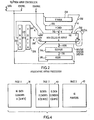
- the associative processor must be foiled of an array which is commonly known as an associative array processor or AAP and example of which is shown schematically in Figure 1.
- the AAP 28 offers a form of sequential processing in which a single sequential control instruction 30 performs the same computation on many elements of data simultaneously.
- the AAP is formed of a rectangular array 32 of separate single bit processor cells 34.
- Each processor cell 34 includes its own arithmetic logic unit (ALU), a set of many single bit registers, and a data memory 36 for storing many bits of information as for example 64K bits.
- ALU arithmetic logic unit
- the corresponding single bit registers for the various cells form registers for the AAP.
- the cells of the array are interconnected in rows and columns so that cells in a row can process multiple bit data elements and data may be transferred vertically between rows.
- a means is provided to identify the boundaries of data elements and this may be done by identifying particular bits in a row as being the most significant bit and the least significant bit.
- the size of the data elements in each row need not be uniform across the array, in particular when the array is to be used for data base applications, the different data elements within a record will need different ranges of values and hence sizes.
- all cells within the array simultaneously obey the same instruction; however, it must be possible to disable or mask both rows and columns of cells so that they will not obey instructions.
- each column provides communication between all cells of the column and an external output register cell.
- the vertical bus is established such that only one cell may transmit at any one time. The selection of this cell is accomplished by means of the mask mechanism described above.
- Addresses for fetching data from the memory bits are generated in a memory address register. It is possible to transfer data from the output register to the address register.
- FIG. 2 A configuration which provides the above features is shown in Figure 2.
- An array of cells is shown as 202 and has associated therewith a memory for each cell as previously illustrated in Figure 1.
- the interconnections between one cell and its neighbouring cells is shown .l d Figure 3.
- the interconnections between cells in a column are shown as 302 and 304 while the interconnection between cells in a row are shown as 321 to 326.
- the functions of the horizontal connections 321 to 326 between cells in a row are fully described in U.S. Patent Application Serial No. 404,242 previously mentioned.
- Each cell has a connection 312 to a vertical mask and a connection 314 to a horizontal mask.
- a vertical bus 316 is also provided for transferring data vertically between cells and the output register 214 and from the input register 206 to the cells in a column while data may be transferred horizontally between cells in a row and the horizontal data/status register 208 using a horizontal bus 318.
- each bit position of the register is connected to the vertical mask connection 312 of each cell of the corresponding column of the array.
- the vertical mask register 204 provides the vertical mask function previously discussed and in addition provides the means for identifying the boundaries of the data elements in a manner as described in U.S. Patent Application Serial No. 404,242.
- a horizontal mask register 210 provides the horizontal mask function and has a plurality of bit positions each connected to line 314 of each cell of the corresponding row of the array 202.
- the horizontal bus 318 transfers the status indicators to the corresponding bit position of a horizontal data register 208 where they may be stored.
- the horizontal data register may also be called the status register.
- Horizontal data register 208 is then connected by connection 212 to the horizontal mask register 210 making the status indicators of the arithmetic instructions available as a horizontal mask.
- the vertical bus 316 connects the corresponding bits of a vertical data input register 206 to all cells in a column and also connects all cells of the column to the corresponding bits of an output data register 214. Data from the output register 214 may be transferred to an address register 216 by means of connection 218.
- the function of the input and output register may be combined in one input/output register.
- each record or row contains data elements A, B, C any or all of which may be used to identify a particular stored data block, and a pointer to the location of the stored data block indexed in the file.
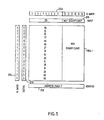
- a suggested format for the index file is shown in Figure 4. Assuming a 16 x 16 array is used, then 3 pages of the array memory will contain 16 records with the format shown.
- Page 1 identified as 38 includes data elements A each having 16 bits for 16 records there being one row for each record and one column for each of the 16 bits of information in data elements A.
- Page 2 identified as 40 contains data elements B and C for each of the 16 records with data elements B comprising 10 bits and data elements C comprising 6 bits.
- Page 3 identified as 42 will contain 16 pointers one for each ui the 16 records, to the stored data blocks.
- the method of the present invention takes advantage of the associative searching features of the AAP described above.
- this method utilises two types of data structures.
- several types of indexing mechanisms could be used.
- a directory which is simply a listing of instances or components which are represented by the rows and columns of the matrix. The order in which these instances or components are stored and the methods by which a particular instance is found or new instances are added are not essential features of this invention. Any method known in the art could be used. No information relating the instances or components to one another is contained in the directory, but the directory entries can contain information such as the identity of the components or instances. As an example, the directory may merely be a list of numbered components. These components may be found in the matrix by lookng for the row and column with the same number.
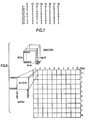
- Figure 7 represented a matrix for a directory having 8 components or instances.
- the association matrix shown in Figure 7 illustrates how relational information can be stored. Two types of association, links or relationships can be stored. One is the column-wise relations and the other is the row-wise relations. These relations are predefined before setting up the matrix.
- the matrix may be established to contain the hierarchical relationship of components wherein a component is composed of other components and is a part of other components.
- the relationships are represented by the axes of the matrix.
- the column-wise relationship may be defined as: all components that "compose or make up" the component identified by the column. If one wished to find all components that form part of component C3 one would search for any bits set to the one level in the third column under C3 and would discover that C3 is composed of components C2 and C7.
- C1 is composed of C3 and C6,
- C5 is composed of C2 and C8,
- C6 is composed of C2, and C8 is composed of C7.
- Components C2, C4 and C7 are considered primitive parts because they are not made up of any other components as illustrated by the fact that columns C2, C4 and C7 all have zeros formed therein.
- the row-wise relationship may be defined to mean: all components that "are part of" higher components.
- a query to establish this relationship can be performed in the row-wise direction.
- a search of the second row shows that C2 is used in components C3, C5 and C6.
- C3 and C6 are used in Cl, while C7 is part of C3 and C8, and C8 is part of C5.
- This iterative searching mechanism can be performed any number of times in either direction and the mechanism is orchestrated by the manipulation of masks for the rows and columns.
- the identification of the column and row values is an exercise that will be discussed subsequently, but the importance should be understood on a much higher level because it plays an important part in the searching of very large databases.
- C20 is found to be on the fifth row of the fifth page in the directory, to find all components that make up C20, a search of column 5 over pages 5, 15, 25, 35, 45, 55, 65, 75, 85 and 95 of the association matrix must be performed. Likewise, to find all components that C20 is a part of, then the search will be performed on the fifth row of pages 51 to 60. If deeper levels of information are required, the traversal of the matrix is performed by further manipulation of masks set by the bits found to be active during the first traversal.
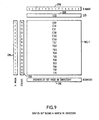
- a linear search method can be used in searching an unordered directory where arbitrary component identification is stored. Given the parameters, the sequence of events for searchng a component C20 in the directory is as follows:
- the contents of the status register 208 are then tested to see if any bits are active i.e. 1. If not, then the address of the next page is generated and the above sequence is repeated.
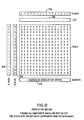
- the register states of the above functions are shown in Figure 9, indicating a match in the status register 208 in row 5.
- the position of the matched instance within the directory is the principle key to manipulating the association matrix which stores the relationships between the components. If for example, the fifth record on the fifth page matched C20, the bit of the status register corrsponding to the fifth row would contain a 1 when the fifth page is searched.
- an alternative is to perform a logical AND operation between a plane of data containing a row of 1's (or a column, depending on the type of search) corresponding to the row (column) enabled by the mask.
- This alternative is that this pattern may be saved in a page of main memory for use in later operations.
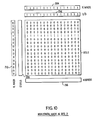
- the horizontal mask may be set up as follows. The contents of the status register 208 are moved to the horizontal mask register 210 enabling only the fifth row to respond to the next instruction. A row or all I's is loaded into the Input register 206 and transferred to one of the registers of the set of registers such as register 2 as shown in Figure 10 so that l's are loaded into the activated row 5. This pattern may be stored for future use.
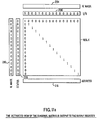
- a plane of data having a diagonal of l's as shown in Figure lla may be loaded into a register of the set of registers such as for example register 4. Only the enabled row will be loaded so that in this instance, the fifth bit will be set and this information is then transferred to the input/output register 206.
- Both of the mask registers 204 and 210 are set to enable all rows and columns and the pattern in the input/output register is transferred to all rows resulting in the pattern shown in Figure llb.
- the traversal of the association matrix is an iterative procedure.
- the depth of the search can end when no additional relationships exist or after a set number of relationships have been found, or when a certain value is determined.
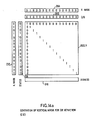
- FIG. 12 An example of the association matrix that could exist for the directory in Figure 9 is shown in Figure 12. A match for C20 was found in position 5 of the directory, and the horizontal and vertical masks were stored in registers 2 and 4 respectively. To find all the parts that C20 is made of, one would look for all enabled bits in the fifth column and this would continue until no other active bits are found. This can be accomplished by the following:
- the results can be outputted by relating these status bits locations to the directory by:
Landscapes
- Engineering & Computer Science (AREA)
- Theoretical Computer Science (AREA)
- Databases & Information Systems (AREA)
- Physics & Mathematics (AREA)
- General Physics & Mathematics (AREA)
- General Engineering & Computer Science (AREA)
- Data Mining & Analysis (AREA)
- Software Systems (AREA)
- Computational Linguistics (AREA)
- Mathematical Physics (AREA)
- Information Retrieval, Db Structures And Fs Structures Therefor (AREA)
- Geophysics And Detection Of Objects (AREA)
- Radar Systems Or Details Thereof (AREA)
Applications Claiming Priority (2)
| Application Number | Priority Date | Filing Date | Title |
|---|---|---|---|
| US63646684A | 1984-07-31 | 1984-07-31 | |
| US636466 | 1984-07-31 |
Publications (3)
| Publication Number | Publication Date |
|---|---|
| EP0170443A2 true EP0170443A2 (de) | 1986-02-05 |
| EP0170443A3 EP0170443A3 (en) | 1989-04-12 |
| EP0170443B1 EP0170443B1 (de) | 1993-10-06 |
Family
ID=24552027
Family Applications (1)
| Application Number | Title | Priority Date | Filing Date |
|---|---|---|---|
| EP85304877A Expired - Lifetime EP0170443B1 (de) | 1984-07-31 | 1985-07-09 | Suchverfahren für Assoziationsmatrix |
Country Status (10)
| Country | Link |
|---|---|
| EP (1) | EP0170443B1 (de) |
| JP (1) | JPH0766391B2 (de) |
| KR (1) | KR920006794B1 (de) |
| AU (1) | AU577396B2 (de) |
| BR (1) | BR8503161A (de) |
| DE (1) | DE3587612T2 (de) |
| ES (1) | ES8703027A1 (de) |
| IN (1) | IN165309B (de) |
| MX (1) | MX170696B (de) |
| ZA (1) | ZA855324B (de) |
Cited By (2)
| Publication number | Priority date | Publication date | Assignee | Title |
|---|---|---|---|---|
| FR2674654A1 (fr) * | 1991-03-27 | 1992-10-02 | Nec Corp | Systeme de commande de registres partages. |
| CN113312348A (zh) * | 2021-04-22 | 2021-08-27 | 山东马斯克智能科技有限公司 | 工业园区电力大数据的分析应用方法及系统 |
Families Citing this family (1)
| Publication number | Priority date | Publication date | Assignee | Title |
|---|---|---|---|---|
| KR100561422B1 (ko) | 2004-04-22 | 2006-03-17 | 삼성전자주식회사 | 감광체 유닛 및 이를 구비한 전자사진방식 화상형성장치 |
Family Cites Families (4)
| Publication number | Priority date | Publication date | Assignee | Title |
|---|---|---|---|---|
| JPS5683891A (en) * | 1979-12-13 | 1981-07-08 | Fujitsu Ltd | Semiconductor storage device |
| EP0035787B1 (de) * | 1980-03-11 | 1984-10-17 | Siemens Aktiengesellschaft | Hybrid-Assoziativspeicher und dessen Anwendungen, insbesondere zum Sortieren von gespeicherten Daten |
| US4376974A (en) * | 1980-03-31 | 1983-03-15 | Ncr Corporation | Associative memory system |
| US4507748A (en) * | 1982-08-02 | 1985-03-26 | International Telephone And Telegraph Corporation | Associative processor with variable length fast multiply capability |
-
1985
- 1985-07-02 BR BR8503161A patent/BR8503161A/pt not_active IP Right Cessation
- 1985-07-09 DE DE85304877T patent/DE3587612T2/de not_active Expired - Fee Related
- 1985-07-09 EP EP85304877A patent/EP0170443B1/de not_active Expired - Lifetime
- 1985-07-15 AU AU45002/85A patent/AU577396B2/en not_active Ceased
- 1985-07-15 ZA ZA855324A patent/ZA855324B/xx unknown
- 1985-07-23 ES ES545475A patent/ES8703027A1/es not_active Expired
- 1985-07-30 MX MX206150A patent/MX170696B/es unknown
- 1985-07-31 JP JP60169641A patent/JPH0766391B2/ja not_active Expired - Lifetime
- 1985-07-31 KR KR1019850005507A patent/KR920006794B1/ko not_active Expired
- 1985-08-29 IN IN676/MAS/85A patent/IN165309B/en unknown
Cited By (3)
| Publication number | Priority date | Publication date | Assignee | Title |
|---|---|---|---|---|
| FR2674654A1 (fr) * | 1991-03-27 | 1992-10-02 | Nec Corp | Systeme de commande de registres partages. |
| US5408671A (en) * | 1991-03-27 | 1995-04-18 | Nec Corporation | System for controlling shared registers |
| CN113312348A (zh) * | 2021-04-22 | 2021-08-27 | 山东马斯克智能科技有限公司 | 工业园区电力大数据的分析应用方法及系统 |
Also Published As
| Publication number | Publication date |
|---|---|
| IN165309B (de) | 1989-09-16 |
| ES545475A0 (es) | 1986-12-01 |
| AU577396B2 (en) | 1988-09-22 |
| KR920006794B1 (ko) | 1992-08-17 |
| AU4500285A (en) | 1986-02-06 |
| BR8503161A (pt) | 1986-03-25 |
| ES8703027A1 (es) | 1986-12-01 |
| JPS6143339A (ja) | 1986-03-01 |
| MX170696B (es) | 1993-09-07 |
| KR860001385A (ko) | 1986-02-26 |
| DE3587612D1 (de) | 1993-11-11 |
| ZA855324B (en) | 1986-03-26 |
| EP0170443B1 (de) | 1993-10-06 |
| JPH0766391B2 (ja) | 1995-07-19 |
| DE3587612T2 (de) | 1994-03-10 |
| EP0170443A3 (en) | 1989-04-12 |
Similar Documents
| Publication | Publication Date | Title |
|---|---|---|
| EP0054588B1 (de) | Interaktives Datenwiederauffindungsgerät | |
| US5212650A (en) | Procedure and data structure for synthesis and transformation of logic circuit designs | |
| Kohonen | Logic Principles of Content-Addressable Memories | |
| EP0294583B1 (de) | System und Verfahren zur verallgemeinerten topologischen Einteilung einer Informationsbasis | |
| US4053871A (en) | Method and system for the iterative and simultaneous comparison of data with a group of reference data items | |
| US4870568A (en) | Method for searching a database system including parallel processors | |
| US4748439A (en) | Memory apparatus and method for retrieving sequences of symbols including variable elements | |
| KR940003700B1 (ko) | 검색방법 및 그 장치 | |
| US7779016B2 (en) | Parallel execution of operations for a partitioned binary radix tree on a parallel computer | |
| US5293616A (en) | Method and apparatus for representing and interrogating an index in a digital memory | |
| JPH0814801B2 (ja) | プログラマブルアクセスメモリ | |
| US4780810A (en) | Data processor with associative memory storing vector elements for vector conversion | |
| Berra | Some problems in associative processor applications to data base management | |
| US4327407A (en) | Data driven processor | |
| EP0170443B1 (de) | Suchverfahren für Assoziationsmatrix | |
| WO1988001411A1 (en) | A content-addressable memory system | |
| EP0232376B1 (de) | Kontextadressierbarer umlaufspeicher | |
| EP0170442A2 (de) | Suchverfahren für undichte Datenbanken mit assoziativer Technik | |
| RU2037215C1 (ru) | Запоминающее устройство | |
| Campi et al. | Content addressable memory system concepts | |
| Resnick et al. | DMAP-A COBOL extension for associative array processors | |
| Natarajan et al. | A multiaccess associative memory | |
| CN1004033B (zh) | 检索关联矩阵的方法 | |
| CN119807326A (zh) | 一种中文布隆过滤器实现方法装置、设备及可读存储介质 | |
| JPS633351A (ja) | バツフア検索制御方式 |
Legal Events
| Date | Code | Title | Description |
|---|---|---|---|
| PUAI | Public reference made under article 153(3) epc to a published international application that has entered the european phase |
Free format text: ORIGINAL CODE: 0009012 |
|
| AK | Designated contracting states |
Designated state(s): DE FR GB SE |
|
| RAP1 | Party data changed (applicant data changed or rights of an application transferred) |
Owner name: ALCATEL N.V. |
|
| RAP3 | Party data changed (applicant data changed or rights of an application transferred) |
Owner name: ALCATEL N.V. |
|
| PUAL | Search report despatched |
Free format text: ORIGINAL CODE: 0009013 |
|
| AK | Designated contracting states |
Kind code of ref document: A3 Designated state(s): DE FR GB SE |
|
| 17P | Request for examination filed |
Effective date: 19891004 |
|
| 17Q | First examination report despatched |
Effective date: 19911028 |
|
| GRAA | (expected) grant |
Free format text: ORIGINAL CODE: 0009210 |
|
| AK | Designated contracting states |
Kind code of ref document: B1 Designated state(s): DE FR GB SE |
|
| REF | Corresponds to: |
Ref document number: 3587612 Country of ref document: DE Date of ref document: 19931111 |
|
| ET | Fr: translation filed | ||
| PGFP | Annual fee paid to national office [announced via postgrant information from national office to epo] |
Ref country code: GB Payment date: 19940629 Year of fee payment: 10 |
|
| PGFP | Annual fee paid to national office [announced via postgrant information from national office to epo] |
Ref country code: SE Payment date: 19940731 Year of fee payment: 10 |
|
| PLBE | No opposition filed within time limit |
Free format text: ORIGINAL CODE: 0009261 |
|
| STAA | Information on the status of an ep patent application or granted ep patent |
Free format text: STATUS: NO OPPOSITION FILED WITHIN TIME LIMIT |
|
| 26N | No opposition filed | ||
| EAL | Se: european patent in force in sweden |
Ref document number: 85304877.5 |
|
| PG25 | Lapsed in a contracting state [announced via postgrant information from national office to epo] |
Ref country code: DE Effective date: 19950401 |
|
| PGFP | Annual fee paid to national office [announced via postgrant information from national office to epo] |
Ref country code: FR Payment date: 19950529 Year of fee payment: 11 |
|
| PG25 | Lapsed in a contracting state [announced via postgrant information from national office to epo] |
Ref country code: GB Effective date: 19950709 |
|
| PG25 | Lapsed in a contracting state [announced via postgrant information from national office to epo] |
Ref country code: SE Effective date: 19950710 |
|
| GBPC | Gb: european patent ceased through non-payment of renewal fee |
Effective date: 19950709 |
|
| EUG | Se: european patent has lapsed |
Ref document number: 85304877.5 |
|
| PG25 | Lapsed in a contracting state [announced via postgrant information from national office to epo] |
Ref country code: FR Effective date: 19970328 |
|
| REG | Reference to a national code |
Ref country code: FR Ref legal event code: ST |