EP0172580A2 - Procédé de séparation chromatographique employant des supports à base de polypeptide - Google Patents
Procédé de séparation chromatographique employant des supports à base de polypeptide Download PDFInfo
- Publication number
- EP0172580A2 EP0172580A2 EP85110573A EP85110573A EP0172580A2 EP 0172580 A2 EP0172580 A2 EP 0172580A2 EP 85110573 A EP85110573 A EP 85110573A EP 85110573 A EP85110573 A EP 85110573A EP 0172580 A2 EP0172580 A2 EP 0172580A2
- Authority
- EP
- European Patent Office
- Prior art keywords
- polypeptide
- modified polypeptide
- modified
- chemical group
- synthetic polymer
- Prior art date
- Legal status (The legal status is an assumption and is not a legal conclusion. Google has not performed a legal analysis and makes no representation as to the accuracy of the status listed.)
- Granted
Links
Images




Classifications
-
- B—PERFORMING OPERATIONS; TRANSPORTING
- B01—PHYSICAL OR CHEMICAL PROCESSES OR APPARATUS IN GENERAL
- B01J—CHEMICAL OR PHYSICAL PROCESSES, e.g. CATALYSIS OR COLLOID CHEMISTRY; THEIR RELEVANT APPARATUS
- B01J39/00—Cation exchange; Use of material as cation exchangers; Treatment of material for improving the cation exchange properties
- B01J39/26—Cation exchangers for chromatographic processes
-
- B—PERFORMING OPERATIONS; TRANSPORTING
- B01—PHYSICAL OR CHEMICAL PROCESSES OR APPARATUS IN GENERAL
- B01J—CHEMICAL OR PHYSICAL PROCESSES, e.g. CATALYSIS OR COLLOID CHEMISTRY; THEIR RELEVANT APPARATUS
- B01J20/00—Solid sorbent compositions or filter aid compositions; Sorbents for chromatography; Processes for preparing, regenerating or reactivating thereof
- B01J20/22—Solid sorbent compositions or filter aid compositions; Sorbents for chromatography; Processes for preparing, regenerating or reactivating thereof comprising organic material
- B01J20/24—Naturally occurring macromolecular compounds, e.g. humic acids or their derivatives
-
- B—PERFORMING OPERATIONS; TRANSPORTING
- B01—PHYSICAL OR CHEMICAL PROCESSES OR APPARATUS IN GENERAL
- B01J—CHEMICAL OR PHYSICAL PROCESSES, e.g. CATALYSIS OR COLLOID CHEMISTRY; THEIR RELEVANT APPARATUS
- B01J20/00—Solid sorbent compositions or filter aid compositions; Sorbents for chromatography; Processes for preparing, regenerating or reactivating thereof
- B01J20/22—Solid sorbent compositions or filter aid compositions; Sorbents for chromatography; Processes for preparing, regenerating or reactivating thereof comprising organic material
- B01J20/26—Synthetic macromolecular compounds
- B01J20/261—Synthetic macromolecular compounds obtained by reactions only involving carbon to carbon unsaturated bonds
-
- B—PERFORMING OPERATIONS; TRANSPORTING
- B01—PHYSICAL OR CHEMICAL PROCESSES OR APPARATUS IN GENERAL
- B01J—CHEMICAL OR PHYSICAL PROCESSES, e.g. CATALYSIS OR COLLOID CHEMISTRY; THEIR RELEVANT APPARATUS
- B01J20/00—Solid sorbent compositions or filter aid compositions; Sorbents for chromatography; Processes for preparing, regenerating or reactivating thereof
- B01J20/22—Solid sorbent compositions or filter aid compositions; Sorbents for chromatography; Processes for preparing, regenerating or reactivating thereof comprising organic material
- B01J20/26—Synthetic macromolecular compounds
- B01J20/264—Synthetic macromolecular compounds derived from different types of monomers, e.g. linear or branched copolymers, block copolymers, graft copolymers
-
- B—PERFORMING OPERATIONS; TRANSPORTING
- B01—PHYSICAL OR CHEMICAL PROCESSES OR APPARATUS IN GENERAL
- B01J—CHEMICAL OR PHYSICAL PROCESSES, e.g. CATALYSIS OR COLLOID CHEMISTRY; THEIR RELEVANT APPARATUS
- B01J20/00—Solid sorbent compositions or filter aid compositions; Sorbents for chromatography; Processes for preparing, regenerating or reactivating thereof
- B01J20/22—Solid sorbent compositions or filter aid compositions; Sorbents for chromatography; Processes for preparing, regenerating or reactivating thereof comprising organic material
- B01J20/26—Synthetic macromolecular compounds
- B01J20/265—Synthetic macromolecular compounds modified or post-treated polymers
- B01J20/267—Cross-linked polymers
-
- B—PERFORMING OPERATIONS; TRANSPORTING
- B01—PHYSICAL OR CHEMICAL PROCESSES OR APPARATUS IN GENERAL
- B01J—CHEMICAL OR PHYSICAL PROCESSES, e.g. CATALYSIS OR COLLOID CHEMISTRY; THEIR RELEVANT APPARATUS
- B01J20/00—Solid sorbent compositions or filter aid compositions; Sorbents for chromatography; Processes for preparing, regenerating or reactivating thereof
- B01J20/28—Solid sorbent compositions or filter aid compositions; Sorbents for chromatography; Processes for preparing, regenerating or reactivating thereof characterised by their form or physical properties
- B01J20/28014—Solid sorbent compositions or filter aid compositions; Sorbents for chromatography; Processes for preparing, regenerating or reactivating thereof characterised by their form or physical properties characterised by their form
- B01J20/28023—Fibres or filaments
-
- B—PERFORMING OPERATIONS; TRANSPORTING
- B01—PHYSICAL OR CHEMICAL PROCESSES OR APPARATUS IN GENERAL
- B01J—CHEMICAL OR PHYSICAL PROCESSES, e.g. CATALYSIS OR COLLOID CHEMISTRY; THEIR RELEVANT APPARATUS
- B01J20/00—Solid sorbent compositions or filter aid compositions; Sorbents for chromatography; Processes for preparing, regenerating or reactivating thereof
- B01J20/28—Solid sorbent compositions or filter aid compositions; Sorbents for chromatography; Processes for preparing, regenerating or reactivating thereof characterised by their form or physical properties
- B01J20/28014—Solid sorbent compositions or filter aid compositions; Sorbents for chromatography; Processes for preparing, regenerating or reactivating thereof characterised by their form or physical properties characterised by their form
- B01J20/28033—Membrane, sheet, cloth, pad, lamellar or mat
-
- B—PERFORMING OPERATIONS; TRANSPORTING
- B01—PHYSICAL OR CHEMICAL PROCESSES OR APPARATUS IN GENERAL
- B01J—CHEMICAL OR PHYSICAL PROCESSES, e.g. CATALYSIS OR COLLOID CHEMISTRY; THEIR RELEVANT APPARATUS
- B01J20/00—Solid sorbent compositions or filter aid compositions; Sorbents for chromatography; Processes for preparing, regenerating or reactivating thereof
- B01J20/28—Solid sorbent compositions or filter aid compositions; Sorbents for chromatography; Processes for preparing, regenerating or reactivating thereof characterised by their form or physical properties
- B01J20/28014—Solid sorbent compositions or filter aid compositions; Sorbents for chromatography; Processes for preparing, regenerating or reactivating thereof characterised by their form or physical properties characterised by their form
- B01J20/28033—Membrane, sheet, cloth, pad, lamellar or mat
- B01J20/28035—Membrane, sheet, cloth, pad, lamellar or mat with more than one layer, e.g. laminates, separated sheets
-
- B—PERFORMING OPERATIONS; TRANSPORTING
- B01—PHYSICAL OR CHEMICAL PROCESSES OR APPARATUS IN GENERAL
- B01J—CHEMICAL OR PHYSICAL PROCESSES, e.g. CATALYSIS OR COLLOID CHEMISTRY; THEIR RELEVANT APPARATUS
- B01J20/00—Solid sorbent compositions or filter aid compositions; Sorbents for chromatography; Processes for preparing, regenerating or reactivating thereof
- B01J20/281—Sorbents specially adapted for preparative, analytical or investigative chromatography
- B01J20/286—Phases chemically bonded to a substrate, e.g. to silica or to polymers
-
- B—PERFORMING OPERATIONS; TRANSPORTING
- B01—PHYSICAL OR CHEMICAL PROCESSES OR APPARATUS IN GENERAL
- B01J—CHEMICAL OR PHYSICAL PROCESSES, e.g. CATALYSIS OR COLLOID CHEMISTRY; THEIR RELEVANT APPARATUS
- B01J20/00—Solid sorbent compositions or filter aid compositions; Sorbents for chromatography; Processes for preparing, regenerating or reactivating thereof
- B01J20/281—Sorbents specially adapted for preparative, analytical or investigative chromatography
- B01J20/286—Phases chemically bonded to a substrate, e.g. to silica or to polymers
- B01J20/287—Non-polar phases; Reversed phases
-
- B—PERFORMING OPERATIONS; TRANSPORTING
- B01—PHYSICAL OR CHEMICAL PROCESSES OR APPARATUS IN GENERAL
- B01J—CHEMICAL OR PHYSICAL PROCESSES, e.g. CATALYSIS OR COLLOID CHEMISTRY; THEIR RELEVANT APPARATUS
- B01J20/00—Solid sorbent compositions or filter aid compositions; Sorbents for chromatography; Processes for preparing, regenerating or reactivating thereof
- B01J20/30—Processes for preparing, regenerating, or reactivating
- B01J20/3092—Packing of a container, e.g. packing a cartridge or column
-
- B—PERFORMING OPERATIONS; TRANSPORTING
- B01—PHYSICAL OR CHEMICAL PROCESSES OR APPARATUS IN GENERAL
- B01J—CHEMICAL OR PHYSICAL PROCESSES, e.g. CATALYSIS OR COLLOID CHEMISTRY; THEIR RELEVANT APPARATUS
- B01J20/00—Solid sorbent compositions or filter aid compositions; Sorbents for chromatography; Processes for preparing, regenerating or reactivating thereof
- B01J20/30—Processes for preparing, regenerating, or reactivating
- B01J20/32—Impregnating or coating ; Solid sorbent compositions obtained from processes involving impregnating or coating
- B01J20/3202—Impregnating or coating ; Solid sorbent compositions obtained from processes involving impregnating or coating characterised by the carrier, support or substrate used for impregnation or coating
- B01J20/3206—Organic carriers, supports or substrates
- B01J20/3208—Polymeric carriers, supports or substrates
- B01J20/3212—Polymeric carriers, supports or substrates consisting of a polymer obtained by reactions otherwise than involving only carbon to carbon unsaturated bonds
-
- B—PERFORMING OPERATIONS; TRANSPORTING
- B01—PHYSICAL OR CHEMICAL PROCESSES OR APPARATUS IN GENERAL
- B01J—CHEMICAL OR PHYSICAL PROCESSES, e.g. CATALYSIS OR COLLOID CHEMISTRY; THEIR RELEVANT APPARATUS
- B01J20/00—Solid sorbent compositions or filter aid compositions; Sorbents for chromatography; Processes for preparing, regenerating or reactivating thereof
- B01J20/30—Processes for preparing, regenerating, or reactivating
- B01J20/32—Impregnating or coating ; Solid sorbent compositions obtained from processes involving impregnating or coating
- B01J20/3214—Impregnating or coating ; Solid sorbent compositions obtained from processes involving impregnating or coating characterised by the method for obtaining this coating or impregnating
- B01J20/3217—Resulting in a chemical bond between the coating or impregnating layer and the carrier, support or substrate, e.g. a covalent bond
-
- B—PERFORMING OPERATIONS; TRANSPORTING
- B01—PHYSICAL OR CHEMICAL PROCESSES OR APPARATUS IN GENERAL
- B01J—CHEMICAL OR PHYSICAL PROCESSES, e.g. CATALYSIS OR COLLOID CHEMISTRY; THEIR RELEVANT APPARATUS
- B01J20/00—Solid sorbent compositions or filter aid compositions; Sorbents for chromatography; Processes for preparing, regenerating or reactivating thereof
- B01J20/30—Processes for preparing, regenerating, or reactivating
- B01J20/32—Impregnating or coating ; Solid sorbent compositions obtained from processes involving impregnating or coating
- B01J20/3231—Impregnating or coating ; Solid sorbent compositions obtained from processes involving impregnating or coating characterised by the coating or impregnating layer
- B01J20/3242—Layers with a functional group, e.g. an affinity material, a ligand, a reactant or a complexing group
- B01J20/3268—Macromolecular compounds
- B01J20/3276—Copolymers
-
- B—PERFORMING OPERATIONS; TRANSPORTING
- B01—PHYSICAL OR CHEMICAL PROCESSES OR APPARATUS IN GENERAL
- B01J—CHEMICAL OR PHYSICAL PROCESSES, e.g. CATALYSIS OR COLLOID CHEMISTRY; THEIR RELEVANT APPARATUS
- B01J20/00—Solid sorbent compositions or filter aid compositions; Sorbents for chromatography; Processes for preparing, regenerating or reactivating thereof
- B01J20/30—Processes for preparing, regenerating, or reactivating
- B01J20/32—Impregnating or coating ; Solid sorbent compositions obtained from processes involving impregnating or coating
- B01J20/3231—Impregnating or coating ; Solid sorbent compositions obtained from processes involving impregnating or coating characterised by the coating or impregnating layer
- B01J20/3242—Layers with a functional group, e.g. an affinity material, a ligand, a reactant or a complexing group
- B01J20/3268—Macromolecular compounds
- B01J20/3278—Polymers being grafted on the carrier
-
- B—PERFORMING OPERATIONS; TRANSPORTING
- B01—PHYSICAL OR CHEMICAL PROCESSES OR APPARATUS IN GENERAL
- B01J—CHEMICAL OR PHYSICAL PROCESSES, e.g. CATALYSIS OR COLLOID CHEMISTRY; THEIR RELEVANT APPARATUS
- B01J20/00—Solid sorbent compositions or filter aid compositions; Sorbents for chromatography; Processes for preparing, regenerating or reactivating thereof
- B01J20/30—Processes for preparing, regenerating, or reactivating
- B01J20/32—Impregnating or coating ; Solid sorbent compositions obtained from processes involving impregnating or coating
- B01J20/3231—Impregnating or coating ; Solid sorbent compositions obtained from processes involving impregnating or coating characterised by the coating or impregnating layer
- B01J20/3242—Layers with a functional group, e.g. an affinity material, a ligand, a reactant or a complexing group
- B01J20/3268—Macromolecular compounds
- B01J20/328—Polymers on the carrier being further modified
- B01J20/3282—Crosslinked polymers
-
- B—PERFORMING OPERATIONS; TRANSPORTING
- B01—PHYSICAL OR CHEMICAL PROCESSES OR APPARATUS IN GENERAL
- B01J—CHEMICAL OR PHYSICAL PROCESSES, e.g. CATALYSIS OR COLLOID CHEMISTRY; THEIR RELEVANT APPARATUS
- B01J2220/00—Aspects relating to sorbent materials
- B01J2220/40—Aspects relating to the composition of sorbent or filter aid materials
- B01J2220/48—Sorbents characterised by the starting material used for their preparation
- B01J2220/4812—Sorbents characterised by the starting material used for their preparation the starting material being of organic character
-
- B—PERFORMING OPERATIONS; TRANSPORTING
- B01—PHYSICAL OR CHEMICAL PROCESSES OR APPARATUS IN GENERAL
- B01J—CHEMICAL OR PHYSICAL PROCESSES, e.g. CATALYSIS OR COLLOID CHEMISTRY; THEIR RELEVANT APPARATUS
- B01J2220/00—Aspects relating to sorbent materials
- B01J2220/50—Aspects relating to the use of sorbent or filter aid materials
- B01J2220/54—Sorbents specially adapted for analytical or investigative chromatography
-
- B—PERFORMING OPERATIONS; TRANSPORTING
- B01—PHYSICAL OR CHEMICAL PROCESSES OR APPARATUS IN GENERAL
- B01J—CHEMICAL OR PHYSICAL PROCESSES, e.g. CATALYSIS OR COLLOID CHEMISTRY; THEIR RELEVANT APPARATUS
- B01J2220/00—Aspects relating to sorbent materials
- B01J2220/50—Aspects relating to the use of sorbent or filter aid materials
- B01J2220/58—Use in a single column
Definitions
- the present invention is directed to carrier supports such as chromatographic supports and methods for their preparation and use. More specifically, this invention relates to the grafting of acrylic polymers and copolymers onto a polypeptide substrate.
- the fundamental framework of these ion exchange resins is an elastic three-dimensional hydrocarbon network comprising ionizable groups, either cationic or anionic, chemically bonded to the backbone of a hydrocarbon framework.
- the network is normally fixed, insoluble in common solvents and is chemically inert.
- the ionizable functional groups attached to the matrix carry active ions which can react with or can be replaced by ions in the solute phase. Therefore, the ions in the solute phase can be easily exchanged for the ions initially bound to the polymeric resins.
- Typical examples of commercially available ion exchange resins are the polystyrenes cross-linked with DVB (divinylbenzene), and the methacrylates copolymerized with DVB.
- DVB divinylbenzene
- a three-dimensional network is formed first, and the functional groups are then introduced into benzene rings through chloromethylation.
- ion exchange resins are elastic three-dimensional polymers, they have no definite pore size; only a steadily increasing resistance of the polymer network limits the uptake of ions and molecules of increasing size.
- the resistance to flow exhibited by these resins is controlled by the degree of cross-linking.
- the hydrocarbon network With a low degree of cross-linking, the hydrocarbon network is more easily stretched, the swelling is large, and the resin exchanges small ions rapidly and even permits relatively large ions to undergo reaction.
- the cross-linking is increased, the hydrocarbon matrix is less resilient, the pores of the resin network are narrowed, the exchange process is slower, and the exchanger increases its tendency to exclude large ions from entering the structure.
- the ion exchange resins made from polymeric resins have been successfully applied for the removal of both organic and inorganic ions from aqueous media but they are normally unsuitable for the separation of biopolymers such as proteins. This is due, among others, to the following reasons:
- anionic exchange celluloses examples include diethylaminoethyl, cellulose (DEAE), and triethylaminoethyl cellulose (TEAE).
- Ion exchange materials based on cellulose as the principal backbone or anchoring polymer have not enjoyed complete success due primarily to an inherent property of cellulose: its affinity for water.
- prior art ion exchange materials based on cellulose while typically having high exchange capacity, are difficult to use as a consequence of their tendency to swell, gelatinize or disperse on contact with an aqueous solution.
- An ideal ion exchange material should minimally interact with the solvent system which carries the ions in solution through its pores; only in this manner is it possible to obtain a rapid, free flowing ion exchange system.
- a third generation of ion exchange materials which were developed to solve some of these problems, were the ion exchange gels.
- There gels comprise large pore gel structures and include the commercially known material Sephadex R , which is a modified dextran.
- the dextran chains are crosslinked to give a three-dimensional polymeric network.
- the functional groups are attached by ether linkages to the glucose units of the dextran chains. Proteins are not denatured by the hydrophilic polymeric network.
- Sephadex R exhibits very low nonspecific absorption, which makes it ideal as a matrix for biological separations.
- the porosity of ion exchange gels is critically dependent on its swelling properties, which in turn is affected by the environmental ionic strength, pH and the nature of the counter-ions.
- Swelling of gels in buffer is caused primarily by the tendency of the functional groups to become hydrated.
- the amount of swelling is directly proportional to the number of hydrophilic functional groups attached to the gel matrix, and is inversely proportional to the degree of crosslinking present in the gel.
- This characteristic swelling is a reversible process, and at equilibrium there is a balance between two forces: (1) the tendency of the gel to undergo further hydration, and hence to increase the osmotic pressure within the gel beads, and (2) the elastic forces of the gel matrix.
- the osmotic pressure is attributed almost entirely to the hydration of the functional groups, and, since different ions have different degrees of hydration, the particular counter ions in an ion exchange gel can be expected to have a considerable influence upon the degree of swelling.
- Ion exchange gels made from synthetic polymers have also been used, and they include cross-linked polyacrylamide (Bio-Gel P R ), microreticular forms of polystyrene (Styragel R ), poly(vinyl acetate) ( M erck-o-Gel OR R ), crosslinked poly(2-hydroxy ethyl- methacrylate)(Spheron R ), and polyacryloylmorpholine ( E nzacryl R ). All of these follow the general trend: it may be possible to obtain dimensional stability with high flow rate or, alternatively, high capacity with swelling. It is, however, not possible to obtain both capacity and high flow rate at the same time.
- Hybrid gels are made by combining a semi-rigid component, for the purpose of conferring mechanical stability, with a second component, a softer network, which is responsible for carrying functional groups.
- Agarose gel which would otherwise be very soft and compressible, can be made stronger through hybridizing with cross- linked polyacrylamide.
- the cross-linked polyacrylamide component is mechanically stronger than the agarose, improves the gel flow properties, and reduces the gel swelling, but it sacrifices molecular fractionation range.
- hybrid gels other than polyacryla- mide/agarose are polyacryloylmorpholine and agarose (Enzacryl R ), and composite polystyrenes with large pore polystyrenes as a framework filled with a second type of lightly cross-linked polymer.
- Yet another composite gel structure is achieved by combining inorganic materials coated with organics, and are the types known as Spherosil R. Porous silica beads are impregnated with DEAE dextran so that the product will have the mechanical properties of silica, with the ion exchange properties of DEAE dextrans. These composites, however, have severe channeling defects arising out of particle packing, and they have capacity limitations on the coated surfaces.
- Totally rigid inorganic supports such as porous silica or porous glass which are not susceptible to degradation have also been used to provide high porosity, and high flow rate systems.
- the major problem is nonspecific adsorption of proteins due to the silanol groups on the silica surface. Since the hydrolysis of silica is directly related to the pH conditions, the nonspecific adsorption by silica is minimal at neutral pH, but increases as the pH changes both to the acidic or alkaline ranges. A monolayer coating by either hydrophilic organic polymers or silanization has been used in an attempt to overcome this problem.
- agarose gels and cross- linked agarose gels have been the most widely used support materials. Their hydrophilicity makes them relatively free of nonspecific binding, but their compressibility make them less attractive as carriers in large scale processing, such as in manufacturing.
- Controlled-pore glass (CPG) beads have also been used in affinity chromatography. Although high throughputs can be obtained with columns packed with CPG, this carrier is even more expensive than agarose gel beads.
- Cellulose particles have also been used by immuno- chemists for synthetic affinity sorbents.
- cellulose particles are formed with more difficulty and therefore, have received less attention in the preparation of affinity sorbents for enzymes.
- Cellulose is perhaps the least expensive of all support matrices.
- Two lesser used support matrices are polyacrylamide gel beads and Sephadex R gel beads made from dextran and epichlorohydrin. Although convenient methods have been developed for using them, the softness of these beads yields poor column packings, and their low molecular porosity yields a sorbent with poor ligand availability to the ligate.
- a carrier for bio-active materials is also disclosed in Nakashima et al., United States Patent 4,352,884.
- the Nakashima carrier comprises a substrate coated with a copolymer.
- the substrate may be one of various materials, including inorganic materials such as glass, silica, alumina, synthetic high polymers such as polystyrene, polyethylene and the like, and naturally occurring high polymers such as cellulose.
- the copolymer is made of a hydrophilic acrylate or methacrylate monomer which is a hydroxy or alkoxy alkyl acrylate or methacrylate, and a copolymerizable unsaturated carboxylic acid or amine.
- the base material or substrate is coated with the copolymer by conventional coating or deposition procedures, such as spraying, dipping, phase separation or the like.
- the copolymer may also contain small amounts of a cross-linking agent such. as glycidyl acrylate or methacrylate.
- the cross-linking agent allows for cross-linking treatment after the coating process, and provides for the prevention of elution (presumably of the bioactive materials) from the coating layer.
- the amounts of cross-linking agent are quite small, and range between 0.5 and 1 percent by weight of the total copolymer weight. Such amounts of cross-linking agent are insufficient to cause substantial covalent bonding or grafting of the copolymer onto the underlying substrate.
- the copolymer in Nakashima is thus essentially only physically coating the underlying substrate. Physical coating, however, is accompanied by a series of problems.
- the carrier would not be expected to have an even distribution of the copolymer, would show a multilayered structure, and may have a possible uneven distribution of functional groups.
- Kraemer U.S. Patent 4,070,308 which shows copolymers of glycidyl-and amino-containing acrylates, useful as carriers for biologically active substances, such as polysaccharides, enzymes, peptides, hormones, etc.
- the structure of the final product in Kraemer is that of an acrylic copolymer chain covalently modified at a multiplicity of sites thereon with substances such as enzymes, other proteins, and the like.
- a fibrous/particulate matrix with addition of cationic polymers to the slurry and crosslinking the polymers to the matrices by oven drying has yielded a filtration matrix with a positive charge coated on the surface thereof.
- Such charged matrices can be used for filtering minute amounts of impurities from large volumes of liquid by adsorption. (See, for example Ostreicher, U.S. Patents 4,007,113 and 4,007,114, as well as U.S. Patents 4,305,782 and 4,309,247, which are all herein incorporated by reference.)
- silanes which are chemically modified.
- Such silanes may carry functional groups such as DEAE, CM or affinity chromatography sites. They are mechanically stable and strong and do not swell. However, they are expensive, and show very high nonspecific adsorption of protein by the silica hydroxy groups.
- Machell U.S. Patent 3,495, ' 930, is directed to a method for modifying textile fibers, the modifying monomers containing both acid and basic materials.
- the acid monomer also contains a sulphonic acid group, the basic monomers including compounds such as N,N-dimethylaminoethyl methacrylate.
- the reference discloses that monomers may be reacted with themselves and the fibers, no mechanism of reaction is explained or hypothesized. Particularly, the reference contains no disclosure of compounds which would contain functional groups reactive with the amino acid linkage of a polypeptide.
- Shepler et al. U.S. Patent 3,651,210, discloses synthetic emulsion graft copolymers further reacted with a protein.
- the synthetic emulsion copolymer includes an ester of alpha, beta-unsaturated carboxylic acid containing an oxirane ring and an alpha, beta-unsaturated mono- or dicarboxylic acid or salt thereof.
- the copolymer contains additionally a water soluble protein and is described as an excellent coating material for leather, a polyprotein.
- the reference contains no suggestion that the synthetic emulsion-protein copolymer is covalently bonded to the leather, a polyprotein.
- Dean et al. U.S. Patent 4,011,377 discloses a reactive matrix comprising a co-enzyme which is chemically attached to a water-insoluble polymeric support material.
- the material is to be used for the separation of mixtures containing a plurality of enzymes. Included among the water-insoluble polymeric support materials are proteins such as wool.
- This patent contains no disclosure directed to a copolymer comprising both a monomer containing a functional group capable of covalently bonding to a polypeptide substrate and a monomer containing a functional group capable of reacting with a biologically active group.
- Copending application Serial No. 576,448, filed 2 February 1984, a continuation-in-part of application Serial No. 466,114, filed 14 February 1983, is directed to the grafting of acrylic polymer onto a polysaccharide support.
- the acrylic polymer a homo-or copolymer, is covalently bonded to the polysaccharide material, the polymer being made from a polymerizable compound which is capable of being covalently coupled directly or indirectly to the polysaccharide, and one or more polymerizable compounds containing a group capable of retaining a bioactive molecule.
- Covalent bonding with the polysaccharide is effected through the hydroxy groups of the polysaccharide.
- Typical hydroxy reactive comonomers described by the above-cited copending application include activated carboxy groups, 0-alkylating comonomers such as acrylic and methacrylic anhydrides, acrylolylmethacrylolyl N-hydroxy succinimides, and omega-iodo-alkyl esters of acrylic or methacrylic acid, as well as compounds having a glycidyl group such as glycidyl acrylate and methacrylate, 4,5-epoxy- pentylacrylate, and the like.
- a further requirement of the synthetic polymer covalently bonded to the polysaccharide substrate is that it contain functional groups capable of retaining bioactive molecules.
- these functional groups include an ionizable chemical group, a chemical group capable of transformation to an ionizable chemical group, a chemical group capable of causing the covalent coupling of said polymerizable compound to an affinity ligand or to a biological reactive molecule, or a hydrophobic chemical group.
- the present invention is directed to other supports useful in industrial scale ion exchange, reverse phase, and affinity chromatography purification processes, which will be noncompressible, controllably swellable, have high exchange capacity, exhibit high flow rates, be versatile and relatively inexpensive to produce, and demonstrate a high degree of flexibility while still retaining their pre-stretched strength.
- This invention comprises a novel molecular support useful for ion exchange chromatography, affinity chromatography or reverse phase chromatography.
- the novel molecular support provides chromatographic support useful for industrial scale chromatographic operations, industrial processes of ion exchange, affinity chromatography, and reverse phase chromatography.
- This invention further comprises processes for the preparation of ion exchange, affinity and reverse phase chromatographic supports.
- the invention comprises a modified polypeptide material, the modified polypeptide comprising an insoluble polypeptide covalently bonded to a synthetic polymer, said synthetic polymer made from a) a polymerizable compound which has a chemical group capable of being covalently coupled directly or indirectly to said polypeptide; and b) one or more polymerizable compounds containing (i) an ionizable chemical group, (ii) a chemical group capable of transformation to an ionizable chemical group, (iii) a chemical group capable of causing the covalent coupling of said polymerizable compound (b) to an affinity . ligand or to a biologically active molecule, or (iv) a hydrophobic chemical group.
- the invention also comprises a process for preparing the modified polypeptide, the process comprising polymerizing the monomers and then grafting the polymerized monomers to the polypeptide.
- Molecular separation materials derived from the aforementioned polypeptide materials are capable of acting as chromatographic supports for ion exchange chromatography, for affinity chromato - graphy, reverse phase chromatography or as reagents for biochemical reactors.
- the support materials are based on a composite of an organic synthetic polymer and an insoluble polypeptide.
- the composite per se is biologically inert.
- the organic synthetic polymer carries chemical groups which are capable of coupling to the polypeptide, and also carries chemical groups which can provide ion exchange capacity, which can be converted to provide ion exchange capacity, which can provide anchoring capacity for affinity ligands or for biologically active molecules in general, or which can provide hydrophobic groups.
- the polymer coupled to the polypeptide may be either a copolymer or a homopolymer.
- the chemical groups capable of coupling to the polypeptide are the same as the chemical groups useful as anchoring units for affinity ligands or biologically active molecules, the polymer, in this particular form would be a homopolymer.
- the polymer is a copolymer containing groups capable of coupling to the polypeptide and also different groups capable of serving as retaining or anchoring groups for molecules.
- the invention also relates to ion exchange materials obtained from the modified polypeptide which are obtained by further reaction with cross-linking agents, and/or by further reactions such as chemical ionization, or unmasking of potentially masked ion exchange groups.
- the invention also relates to materials derived from the modified polypeptide by attaching thereto affinity ligands or biomolecules, to thereby obtain affinity chromatography or bioreactive materials, or attaching thereto hydrophobic substituents for reverse phase chromatography.
- the invention also relates to mixtures of the aforementioned materials with unmodified polypeptides, with modified or unmodified particulate material, or mixtures thereof to give a variety of separation media.
- polypeptide as used in the specification and claims is meant to include compounds made up of many--tens, hundreds or even thousands--of amino acids linked through amide linkages (CONH) with elimination of water.
- a segment of such a chain is as follows: wherein R 1 , R 2 , R 3 and R 4 are typical amino acid residues.
- the sequence of amino acids in the chain is of critical importance in the biological functioning of the polypeptide, and the chains may be relatively straight, or they may be coiled or helical. In the ' case of certain types of polypeptides, such as keratins, they are cross-linked by the disulphide bonds of cysteine.
- the polypeptide may be biologically inert, such as a homopolyamino acid chain.
- Proteins are coiled and folded into very complex special patterns and may be roughly classified into two groups on the basis of the extent of their coiling and folding. Those arranged as long linear molecules are called fibrous proteins. These fibrous proteins are relatively insoluble in water, salt solutions, and other aqueous media and make up important structural elements of the animal body.
- the fibrous proteins include collagen (the principal fibrous protein of skin, tendons, ligaments, cartilage, bone, the cornea of the eye, etc.), myosin (one of the chief proteins in muscle), keratin (the major protein in hair), and fibrin (a protein important in blood clotting).
- Globular proteins Proteins more highly coiled and folded into a nearly spherical configuration are termed globular proteins. Globular proteins are soluble in aqueous media, such as salt solutions, acids, bases or aqueous alcohol.
- the invention to which this application is directed includes essentially all forms of insoluble polypeptides.
- the preferred polypeptides are the fibrous polypeptides.
- fibrous polypeptides keratin is the most perferred polypeptide for the purposes of this invention.
- animal fiber such as wool and other types of epidermal hair are most preferred.
- the term "wool” is applied to the fibers from the fleece of the sheep and as such falls into the category of epidermal hair.
- the fiber structure is made of several layers of different types of keratin cells. There is an outer layer with three subdivisions, the cortex with its cortical cells, and the medulla or core. The outer layer, containing overlapping scales, gives wool its remarkable fibrous surface appearance. This scaly outer layer is composed of keratin, whereas keratin C contains tyrosine and exists mostly in the interior of the fiber.
- the polypeptides comprising wool fiber are long peptide chains which are bridged by cysteine and salt linkage, the chemical structure of wool can generally be presented as follows: where R 5 equals groups linking other chains, R 6 equals alkyl, amino or side chain groups such as found in proline and tyrosine, and R 7 equals short chain linkage groups.
- the final structure of the molecular support of the present invention comprises a polypeptide chain covalently modified at a multiplicity of sites along the chain, these sites modified with a synthetic polymer or polymers.
- the polymer which modifies the polypeptide may be a homopolymer or a copolymer, with copolymers being preferred. However, polymers wherein polymerizable compounds (a) and (b) are the same are within the scope of the present invention.
- the definition of the polymer as a homo- or copolymer depends on whether the polymerizable compound making up the polymer is the same or different. In its most general form, the copolymer may be a random, a block, or an alternating copolymer.
- a particular polymer utilized to modify the polypeptide substrate is a polymer comprising (a) a polymerizable compound which has a chemical group capable of direct or indirect covalent coupling to the polypeptide chain and (b) one or more polymerizable compounds containing (i) an ionizable chemical group, (ii) a chemical group capable of transformation to an ionizable chemical group, (iii) a chemical group capable of causing the covalent coupling of the polymer to an affinity ligand or a biologically active molecule, or (iv) a hydrophobic chemical group.
- the chemical group capable of covalent bonding with the polypeptide chain will be referred to as the “coupling group” while the chemical group of comonomer (b), above, which is capable of retaining or immobilizing bioactive molecules will be referred to "the functional group,”
- Monomer (a), above typically contains vinyl unsaturation to promote polymerization and/or copolymerization with other monomers and, at the same time, contains a group capable of covalently bonding to the polypeptide chain through the amino groups of the polypeptide chain.
- Typical groups for covalently bonding to the polypeptide chain through its amino groups include glycidyl groups, anhydride groups and N -methylol groups.
- the compounds containing a glycidyl group are the ethers or esters formed between a glycidyl alcohol and an unsaturated alcohol or unsaturated carboxylic acid.
- Typical glycidyl alcohols are aliphatic and cyclo-aliphatic alcohols and ether alcohols having from 3 to 18 carbon atoms which are esterified with an alpha, beta-unsaturated carboxylic acid, preferably acrylic or methacrylic acid, or are etherified with olefinically or acetylenically unsaturated alcohol.
- Typical compounds are glycidyl acrylate and methacrylate; 4-5-epoxy-pentyl acrylate; 4-(2,3-epoxy propyl)-N-butyl methacrylate; 9,10-epoxy- stearyl acrylate; 4-(2,3-epoxy propyl)-cyclohexyl methacrylate; ethylene glycol-monoglycidylether acrylate, and allyl glycidyl ether.
- Typical N-methylol group-containing compounds include N-acrylamide and acrylate-containing amino groups.
- Typical anhydride group-containing compounds include maleic anhydrides and derivatives thereof.
- the polymerizable comonomer (b) will vary depending on the ultimate use of the carrier material. If the carrier material's ultimate use is to serve as an ion exchange chromatographic material, the comonomer (b) may contain any of the well known ionizable chemical groups or precursors thereof such as compounds containing a vinyl or vinylidine group and a carboxylic acid, a carboxylate salt, a carboxylate ester (preferably having 1 to 6 carbon atoms), a carboxylic acid amide, a secondary or a tertiary amine, a quaternary ammonium, a sulfonic acid, a sulfonic acid ester, a sulfonamide, a phosphoric or phosphonic acid, or a phosphoramide or phosphonamide group.
- the carrier material's ultimate use is to serve as an ion exchange chromatographic material
- the comonomer (b) may contain any of the well known ionizable chemical groups or
- comonomer (b). When comonomer (b). carries the precursor of a material having ion exchange properties, the ion exchangeable group itself can be obtained by unmasking, such as for example, by selective hydrolysis of an anhydride, ester or amide, or salt formation with an appropriate mono-, di- or trivalent alkaline or alkaline earth metal, as is otherwise well known in the art.
- Preferred ion exchange functionalities for comonomer (b) are aminoethyl, carboxymethyl, carboxyethyl, citrate, dimethylamino, diethylaminoethyl, ecteola (mixed amines), guanido ethyl, phosphonic acid, p-aminobenzyl, polyethylene imine, sulphoethyl, sul- phomethyl, triethylaminoethyl, or chelating groups such as -N(CH 2 CO 2 H) 2 .
- comonomer (b) When the ultimate use of the carrier material is as a support for an affinity ligand, comonomer (b) carries a chemical group capable of causing the covalent coupling of said comonomer (b) to an affinity ligand, i.e. an "anchoring" group. Since most affinity ligands carry nucleophiles such as hydroxy, amino, thiol, carboxylate, and the like, any electrophilic group capable of reacting with such nucleophile can be present in comonomer (b).
- Such electrophilic groups include, but are not limited to, activated carboxy groups used in peptide chemistry for the formation of peptide bonds, such as carbonyl chlorides, carboxylic anhydrides and carboxylic acid azide groups, as well as phenyl esters and aldehydes used for the formation of Schiff (imine) bases.
- R 8 is an alpha, beta-unsaturated, polymerizable radical and Rg and R 10 are identical or different C1 - C6 alkyl or alkanoyl groups.
- R 11 may be ' a direct bond (-) or a C 2 -C 3 alkyl group.
- R 9 and R 10 together with the N atom may also form a heterocyclic ring.
- Typical compounds of this type are:
- Other compounds having activated carboxyl groups include acryloyl- and methacryloyl chloride, acrylic and methacrylic anhydride, maleic anhydride, phenyl acrylate and methacrylate, glycidyl acrylate and methacrylate, 4-iodobutylacrylate and methacrylate, and 2-isopropenyl-4, 4-dimethyloxazolone-5.
- the last mentioned compound is capable of reacting with the terminal amino group of proteins.
- a very useful potentially electrophilic reactive group in comonomer (b) useful for coupling to an affinity ligand is a group capable of being activated to an electrophilic group with a reagent such as a cyanogen halide. It is known in the art that cyanogen halides react with 1,2-diols to yield activated structures of the following type:
- This structure is then capable of reacting with the nucleophile of an affinity ligand.
- 1,2-diols present in comonomer (b) are various saccharides, including monosaccharides such as glucose, mannose and galactose, disaccharides such as lactose and maltose, trisaccharides such as raffinose or, generally, glycosides.
- the 1,2-diol-containing functional group can be attached to the polymerizable comonomer (b) by such reactions as esterification, amide formation, esterification and the like.
- the reaction of glycidyl acrylate or methacrylate with a saccharide to yield an ether-containing comonomer (b).
- any of the anchoring groups mentioned for comonomers (a) or (b) can also be used.
- Other types of activated groups such as those containing aldehydes or amines can also be used.
- the polymerizable comonomer (b) can be substantially of one type or can be a mixture of one or more types. This is particularly applicable when the ultimate use of the material is as an ion exchange carrier. Comonomers (b) can then contain such functional groups as anionic exchange groups and cationic exchange groups in various different ratios, if desired.
- the polymerizable monounsaturated compounds (b) are polymerizable compounds of the formula (4): wherein R 12 is hydrogen or methyl;
- the groups R15. R 16 ; R 15 , R 17 ; or R 16 , R 17 may form a 5-7 membered heterocyclic ring with the nitrogen atom.
- R 15 , R 16 and R 17 are as previously defined.
- A is CO or S0 2
- X is most preferably O-CH 2 -CH(OH)-CH 2 -saccharide, where "-saccharide” is a mono-, di- or polysaccharide having a group which can be activated for reaction with nucleophilic reactive groups on the affinity ligand or the biomolecule by a cyanogen halide.
- the preferred comonomer (a) for anionic exchange materials is glycidyl acrylate or methacrylate.
- the preferred comonomer (b) for anion exchange materials is dimethylaminoethyl acrylate (DMAEA) or methacrylate (DMAEMA).
- the preferred anion exchange material is the polymer formed from the reaction of glycidyl acrylate (GA) and dimethylaminoethyl methacrylate (DMAEMA).
- the preferred comonomer (b) for cationic exchange materials is methacrylic acid, acrylic acid, acrylic acid dimer, or glycidyl methacrylate further oxidized to a sulphonic, phosphonic or carboxylic acid group after copolymerization.
- the preferred polymer for cationic exchange materials is polymerized glycidyl acrylate oxidized with Na 2 g 2 O 3 to carry sulphonyl groups.
- the most preferred comonomer (b) for anchoring materials is the comonomer obtained from reaction of glycidyl acrylate or methacrylate with glucose.
- the average molecular weight of the polypeptide-modifying polymer is dependent on the number of monomers present therein. It is required to have at least a sufficient number of comonomers (a) so as to be able to form covalent attachment throughout the polypeptide surface.
- the number of comonomers (b) cannot be too small, since otherwise the exchange capacity, or the anchoring/interacting capacity is negligible.
- the number of comonomers (b) can neither be too high, since this would cause great difficulty in the reaction between the reactive groups of comonomer (a) and the polypeptide.
- the polypeptide-modifying copolymer carries anywhere between 1 and 500 units (a) plus (b), most preferably between 20 and 100 units. This corresponds to molecular weights of between about 1,000 and 1,000,000, preferably between 5,000 and 20,000.
- neutral comonomers (c) can also be added to the polymer, if desired.
- These comonomers may be polymerizable unsaturated compounds carrying neutral chemical groups such as hydroxy groups, amide groups, alkyl groups, aryl groups and the like.
- Preferred among comonomers (c) are C1-C6 alkyl acrylates or methacrylates, or the corresponding hydroxy alkyl acrylates or alkacrylates.
- the function of comonomers (c) may be to increase the presence of hydrophobic or hydrophilic residues in the polymers, so as to provide a desired balance of hydrophilic and hydrophobic groups, if necessary.
- the upper limit of comonomer (a) in the polymer can be varied up to 99.9% by weight, depending on the desired amount of rigidity, functionality and hydrophilicity. Increasing the amount of comonomer (a) too much above 15 to 20% by weight, however, decreases the porosity. Large molecules then have difficulty in gaining full access to the functional groups in comonomer (b). It is preferred to have a predominance of comonomers (b) over comonomers (a). Comonomers (c) may be present in an amount of up to 20% by weight of the total (a) plus (b) plus (c).
- the weight ratio of polypeptide to the modifying polymer is freely adjustable, and varies from 0.1 to 3 . weight parts of polymer to parts by weight of the polypeptide.
- the preferred weight ratio of polypeptide to modifying polymer is in the range of about .5 to 3, with about 1 to 2.5 most preferred.
- Cross-linking can be provided either by incorporating into the polymerization recipe a small amount of polyunsaturated comonomer having at least two polymerizable alpha, beta-carbon double bonds, such as for example mono- and polyethylene glycol dimethacrylates and diacrylates (with the polyethylene glycol residue containing up to 6 ethylene groups), ethylene dimethacrylate, ethylene diacrylate, tetramethylene dimethacrylate, tetraethylene diacrylate, divinylbenzene, triallyl cyanurate, methylene-bisacrylamide or -bis-methacrylamide, and the like.
- polyunsaturated comonomer having at least two polymerizable alpha, beta-carbon double bonds
- polyunsaturated comonomer having at least two polymerizable alpha, beta-carbon double bonds such as for example mono- and polyethylene glycol dimethacrylates and diacrylates (with the polyethylene glycol residue containing up to 6 ethylene groups), ethylene dime
- cross-linking agent is particularly applicable to copolymers made from an aminoalkyl comonomer (b). Because of the presence of a free pair of electrons on the aminoalkyl nitrogen atoms, cross- linking can be carried out with such bifunctional reagents as would react with nitrogen-free electron pairs.
- diacyl halides such as Hal-CO-(CH2)n-CO-Hal and Hal-CO-phenyl-CO-Hal
- alkyl or aryl dihalides such as Hal-(CH 2 ) n -Hal and Hal-phenyl-Hal, wherein Hal is a halide such as chloride, bromide or iodide, and n may be anywhere between 2 and 12.
- bifunctional reagents capable of reaction with nitrogen atoms which can also be used include where n is 2 to 12.
- the advantage of these bifunctional reagents is that they simultaneously cross-link the copolymer, while also providing a cationic charge at the nitrogen centers, thereby ionizing the material.
- affinity ligand is meant to include any small or high molecular weight molecule which can be immobilized in a stationary phase and used to purify a complementary binding molecule from a solute phase by affinity chromatography.
- a ligand can be an inhibitor, a cofactor, a prosthetic group, or a polymeric substrate, all of these useful to purify enzymes or holoenzymes.
- ligand/ligate pairs are enzyme/polymeric inhibitors; nucleic acid, single strand/nucleic acid, complementary strand; hapten or antigen/antibody; antibody/proteins or polysaccharides; monosaccharides or polysaccharides/ lectins or receptors; lectins/glycoproteins or receptors; small target compounds/binding proteins; and binding protein/small target compounds.
- anti-: gen/antibody pairs are used as the ligand/ligate pair, the technique takes the particular name of "immunoaffinity" chromatography.
- the "biologically active molecule" which can be anchored to the carriers of the invention can include enzymes, enzyme substrates, inhibitors, hormones, antibiotics, antibodies, antigens, peptides, saccharides, nucleic acids, and the like. The only requirement for these molecules is that they have reactive groups thereon which can be covalently coupled to the anchoring chemical groups on comonomer (b).
- enzymes such as hydrolases, isomerases, proteases, amylases, and the like.
- immobilized enzymes can then be used in biochemical reactors, as is otherwise well known in the art.
- comonomer (b)(iv) is usually an acrylate or methacrylate ester of C 6 -C 1s straight or branched chain alcohols, or of aromatic alcohols such as phenol or naphthol.
- the carrier materials of the present invention can be used per se in the same manner as other carrier materials of the prior art.
- the polypeptide material which is preferably in fibrous form after the modification, can be formed into a self-supporting fibrous matrix, such as a fibrous sheet, with ion exchange properties, affinity chromatography properties, bioreactive or reverse phase properties.
- the modified fibrous polypeptide fibrous media can also incorporate unmodified fibers of various different sizes, and, in addition, can also incorporate modified or unmodified particulate material.
- the fibrous media comprises a porous matrix of fiber wherein, because of the nature of the present invention, the fiber is effective for molecular or ionic separations or molecular reactions.
- the matrix is substantially homogeneous with respect to each component. When a particulate is present, it is prefered to modify it so that it is also effective for molecular or ionic separations or reactions. Such a particulate should be contained in the fibrous phase in an amount effective to achieve the desired separations or reactions.
- the overall media is substantially inert and dimensionally stable.
- references which describe particulates effective for molecular separations are Miller, U.S. Patent 3,669,841, Kirkland et al., U.S. Patent 3,722,181, Kirkland et al., U.S. Patent 3,795,313, Regnier, U.S. Patent 3,983,299, Chang, U.S. Patent 4,029,583, Stehl, U.S. Patent 3,664,967, Krekeler, U.S. Patent 4,053,565 and Iler, U.S. Patent 4,105,426. The entire disclosures of all of these references are incorporated by reference.
- the particle size of the particulate is not critical but influences somewhat the flow rate at which the sample to be treated passes through the material. Usually, uniform particle sizes greater than about 5 microns are preferred, with about 10-100 microns constituting a practical operational range.
- the amount of the particulate can vary widely from about 10 wt. % up to 80 wt. % or more of the solid phase. The optimum particulate concentration will vary depending on the molecular separation desired.
- the fibrous media should be capable of immobilizing the particulate contained therein, i.e., capable of preventing significant particulate loss from the stationary phase, yet having a porosity which enables the fluid to pass through the media.
- the modified polypeptides of the present invention are . self-binding and the addition of extra fibers or binders may not be necessary, it is possible to utilize such extra fibers or binders.
- Other fibers usable for the media include polyacrylonitrile fibers, nylon fibers, wool fibers, rayon fibers and polyvinyl chloride fibers, cellulose fibers such as wood pulp and cotton, and cellulose acetate.
- Another embodiment of the invention, which may also be coupled with the aforementioned polypeptides is an unrefined structural fiber which assists in providing sheets of sufficient structural integrity in both the wet "as formed" condition, and in the final dry condition, and also allows handling during processing as well as suitability for the intended end use.
- Such fibers are typically relatively large, with commercially available diameters in the range of 6 to 60 micrometers.
- Wood pulp can also be used and has fiber diameters ranging from 15 to 25 micrometers, and fiber lengths of about 0.85 to about 6.5 mm.
- the unrefined self-bonding structural fibers typically have a Canadian Standard Freeness of +400 to +800 ml. Canadian Standard Freeness is described in full in U.S. Patent No.
- These long self-bonding fibers may constitute greater than 50% of the fibrous media, by weight, preferably 60-100% of the fibrous media, and most preferably 100%.
- a minor portion of cellulose pulp which has been refined to a Canadian Standard Freeness of between +100 and -600 ml may be incorporated with a major portion of the normally dimensioned cellulose pulp (+400 to +800 ml).
- from about 1 to about 20% of the refined pulp and about 50% to about 90% of the unrefined cellulose may be contained in the matrix. Particulate may also be added.
- particulate materials are millimicron-size
- both the polypeptide fiber and the siliceous particulate are modified, and their interaction provides increased anchoring and/or ion exchange capacity.
- the addition of particulate. material tends to increase the rigidity and strength of the fibrous media and renders it readily useful for industrial applications, especially those involving high pressure.
- Polymerization of comonomers can be carried out by radical chain, step-reaction, ionic and coordination polymerization. Particularly useful is radical polymerization.
- the free radical addition polymerization of radical polymerizable comonomers is carried out with free radical initiators using the well known steps of initiation, addition and termination.
- a usual procedure is to utilize a substance or substances which produce radicals capable of reacting with the monomers.
- Probably the simplest of all polymerization initiators are the organic peroxides and azo compounds. These substances decompose spontaneously into free radicals in common organic solvents at a finite rate, at temperatures between 50 and 140°C.
- benzoyl peroxide decomposes into two benzoyloxy radicals at 60°C.
- Another example is afforded by the azo compound azo-bis-isobutyronitrile which similarly decomposes into radicals at easily accessible temperatures.
- the necessary energy may also be provided by irradiating the initiator system with ultraviolet light.
- initiation can be provided by irradiating the initiator system in the presence of photo initiators such as benzophenone and its derivatives, benzoin alkyl ethers or derivatives, or acetophenone, with ultraviolet light. It is then necessary that the initiator molecules absorb in the spectral region supplied. In this way radicals can be generated at a finite rate at considerably lower temperatures than are necessary if purely thermal excitation is used.
- bimolecular reactions may produce radicals capable of initiating polymerization. Particularly important are the redox reactions, which occur in aqueous media, and involve electron transfer processes.
- the systems Fe(II) plus hydrogen peroxide, or Ag(I), plus S 2 O 8 are particularly important in initiating the radical polymerization of monomers.
- the redox initiators or photochemically induced initiators are particularly preferred in the present invention.
- the amount of initiator is that sufficient to initiate the polymerization reaction. Polymerization is carried out until substantially all of the monomers or comonomers have been incorporated into the polymeric chains. This can be readily ascertained by simple analytical tests on the reaction mixture. Preferably, this polymerization is accomplished almost simultaneously with or immediately prior to the covalent coupling of the polymer to the polypeptides. Preferably, the coupling and polymerization are performed in the same aqueous phase.
- the condensation of the comonomer (a) with the polypeptide amino groups is normally carried out by adjusting the temperature of the reaction mixture, or by adding an appropriate acid/base catalyst.
- the preferred method for performing the grafting of the acrylic polymer to the wool substrate involves the use of surfactants, the use of which will produce a wool-acrylic composite structure having enhanced weight gain and adsorption capacity.
- Preferred surfactants include the non-ionic surfactant materials, with cationic types providing less effective results and anionic surfactants being the least desirable surfactants.
- lauryl alcohol ethoxylate with 12 ethoxylate units is a preferred non-ionic surfactant.
- cationic surfactants ethoxylated tertiary amine with 15 moles of ethylene oxide (Ethomeen C/25 R by Armak) and ethoxylated amonimum chloride (Ethoquad R by Armak) are preferred.
- Sodium lauryl sulfate (Sipex UB R by A lcolac) is a typical anionic surfactant.
- the selection is. not critical; any of the conventional surfactants within the scope of this invention may be used.
- the selection of specific suitable surfactants is a function of the particular monomers and substrates and determinable by routine experimentation.
- surfactant is employed in amounts of about 0.1 to 50% by weight, based on the weight of the polypeptide substrate.
- the most preferred method of carrying out the process is in a "one-pot" system, using a hydroxy reactive comonomer (a).
- All desired comonomers and polypeptides are added to an inert solvent system, such as, e.g., water, alcohols, organics, and the like.
- the polypeptide and comonomers are treated under conditions which will initiate polymerization of the comonomers. This can be accomplished, for example, by adding to a well stirred mixture a water solution of an initiator such as ammonium persulfate and sodium thiosulfate, and initiating polymerization from about 15° C to 40°C.
- an initiator such as ammonium persulfate and sodium thiosulfate
- a photolabile initiator can be added and initiation caused by photochemical means.
- the linking of the formed copolymer to the amino groups of polypeptide is caused by increasing the temperature of the reaction mixture to a temperature sufficient to cause this condensation.
- the temperature is normally around 80-100°C.
- Reaction is then allowed to proceed at the second temperature for a time sufficient to either go to completion, or to achieve modification of the polypetide to the desired capacity.
- the product is filtered, washed and dried for further treatment, if necessary.
- Unreacted monomer is preferably washed away with alcohol, unreacted catalyst with aqueous media and polymer with methanol or ethanol.
- Further reaction of the modified polypetide may be by cross-linking, activation of the ion exchange potential, as for example by quaternization of nitrogen functions, saponification of esters, ionization of acids, sulfonation, phosphorylation or oxidation of epoxides, or other similar procedures. Quaternization, saponification, oxidation and salt formation are reactions well known to those skilled in the art, and will not be described in greater detail. Needless to say, the reactions useful for potentiation of the ion exchange potential of the material should not destroy the polypetide/copolymer linkages. Generally, strong acid conditions should be avoided.
- Quaternization of aminoalkyl functions can be carried out simultaneously with cross-linking by reacting the modified polypetide with diacyl halides or alkyl dihalides, at a ratio of 0.1 to 30 parts by weight of the halides per 100 parts of polypetide at appropriate temperature, time and solvent conditions.
- Another further reaction of the modified polypeptide materials would be to anchor the affinity ligands or biologically active molecules to the anchoring groups of comonomer (b).
- This reaction can be readily accomplished by mixing in an appropriate solvent, normally aqueous, the affinity ligand or biomolecule to be anchored and the modified polypeptide, and carrying out anchoring for a time and under conditions sufficient to cause covalent coupling therebetween. It may be necessary to activate polypeptide groups on comonomer (b) with such materials as cyanogen halides, and then to treat further the activated polypeptides with the affinity ligands or biomolecules. In this embodiment, it is preferred to first prepare the polymer linker, covalently bind the polymer linker to the polypeptide and covalently bind the ligand to the modified polypeptide.
- Typical ligands include human serum albumin, lysine, soy bean trypsin inhibitor and protein A.
- any of the known ligands capable of being bound to the functional groups of the modified polypeptides are suitable for this aspect of the invention.
- the reactions between the affinity ligand or biologically active molecule and the anchoring groups on comonomer (b) are normally carried out at temperatures of from 0°C to 50°C, and may involve the addition of catalysts such as acid or base, or metals, or such other materials as DCC.
- catalysts such as acid or base, or metals, or such other materials as DCC.
- Hydrophobic comonomers (b)(iv) are normally added to a copolymerization mixture in the presence of alcoholic solvents and/or surfactants. Washing is then carried out with alcohols.
- An illustrative example of the formation of a product under this invention is a composite of 1) wool and 2) a copolymer of a) glycidyl acrylate (GA) and b) dimethylaminoethyl methacrylate (DMAEMA).
- G glycidyl acrylate
- DMAEMA dimethylaminoethyl methacrylate
- Wool fiber is dispersed in water at 1% solids content - DMAEMA and GA are added, along with surfactant.
- Temperature of slurry is raised to 15°C to 40 o C , purged with nitrogen, followed by addition of catalyst and reaction for 1-2 minutes.
- Temperature of slurry is raised to 60°C to 100°C within 25 minutes.
- Two volumes of solvent typically water or methanol, are used to wash the product in order to remove the homopolymer and unreacted monomer.
- step 5 Where a solvent other than water is used in step 5, four volumes of water are used to wash the product in order to remove the solvent entrapped in the fibers.
- the product from Step 6 is redispersed in water and 1M HC1 is added gradually to pH 4.0-4.5.
- 1,6 dichlorohexane is added to the slurry of step 3 wherein the temperature is reduced to 50°C in the presence of KI as catalyst. The temperature is raised to 95°C and refluxed for 15 hours.
- Water is used to remove the KI salt and the quaternization agent.
- 1M HC1 is used to protonate remaining unquaternized DMAEMA.
- the preferred formation of self-supporting fibrous media from the modified polypeptide materials of the invention can be carried out immediately after polymerization and polypeptide modification.
- unmasking the ion exchange groups or anchoring of affinity ligands or biomolecules may be carried out on the formed sheets themselves.
- the fibrous media is formed after unmasking of the ion exchange groups and/or anchoring of affinity ligands or biomolecules.
- the preferred method is to form the fibrous sheets after polypeptide modification, and carry out further reactions, such as unmasking and anchoring on the sheets.
- a self-supporting fibrous matrix using the modified polypeptide of the invention can preferably be made by vacuum filtering an aqueous slurry of fibers. and, if desired, additional resins and modified or unmodified particulate. This forms a sheet having uniformly high porosity, fine pore-size structure with excellent flow characteristics and is substantially homogeneous with respect to fiber, resins and particulate.
- the vacuum filtration is performed on a foraminous surface, normally a woven wire mesh which, in practice, may vary from 50 mesh to 200 mesh, with mesh openings ranging from 280 micrometers to 70 micrometers, respectively. Finer meshes are unsuitable because of clogging problems and/or structural inadequacy.
- the sequence of adding the overall components to the slurry is relatively unimportant, provided that the slurry is subjected to controlled hydrodynamic shear forces during the mixing process.
- the slurry is normally prepared at, say, about 4% consistency and then diluted with additional water with a proper consistency required for vacuum filtering and sheet formation. This latter consistency will vary depending upon the type of equipment used to form the sheet.
- the slurry is cast onto a foraminous surface, vacuum filtered and dried in the conventional manner.
- the flat, dimensionally stable sheet can be of any desired thickness and is then cut to the appropriate dimensions for each type of application.
- the wet sheet is dried and then cut to proper size in order to form discs.
- These discs are loaded into an appropriately sized cylinder to form a cylindrical column.
- the disc and cylinder should preferably be in interference fit so that the disc can be pushed into the cylinder without distortion, but not fall under gravitational force allowing gaps between 'the discs and the cylinder.
- a pump can be used to pump solvent through the elements stacked in the column.
- the elements swell to form a substantially tight edge seal to the cylinder wall.
- the column is not sensitive to orientation or handling, a problem which is common with other chromatographic media, particularly of any gel type media.
- the media may be formed into a cylindrical configuration similar to that described in U.S. Patents 2,539,767 and 2,539,768 to Anderson, herein incorporated by reference.
- the media may be cut into disc form and used in a manner similar to laboratory filtration.
- the modified polypeptide media of the invention in fibrous form is shaped into a jelly-roll configuration, as disclosed in co-pending U.S. Patent Application Serial No. 505,532 filed 17 June 1983 by Leeke et al., incorporated by reference herein.
- the jelly roll configuration is normally shaped into a cartridge. Utilization of the cartridge has . several advantages. Production scale flow rates of 200-500 ml/min can be utilized with the cartridge, depending on the application. They can be housed in special housings made of materials such as polysulphone or polycarbonate with acetyl end caps, where the cartridge can be autoclaved. The cartridges show long term stability with respect to their binding capacities at room temperature storage.
- the rigidity of the matrix allows the column to be operable in unrestricted diameter for high volume processes.
- the column volume is virtually unaffected by changing pH or ionic strength in the buffer solution.
- Such a system can be equilibrated and regenerated in a short period of time, eliminating cumbersome procedures of column preparation and regeneration.
- the column comprises a housing and at least one solid stationary phase within the housing.
- the stationary phase has chromatographic functionality and is effective for chromatographic separation. Means are provided for radially distributing the sample through the stationary phase and for collecting the sample after the sample has flowed through the stationary phase.
- the stationary phase comprises:
- the solid stationary phase may be fabricated into a cartridge form for placement in the housing.
- a plurality of cartridges may be used either in series or parallel flow configuration in a single housing.
- ion exchange, affinity, reverse phase, or bio- active materials of the invention can be used in any of the well known prior art processes of ion exchange, affinity or reverse-phase chromatography, or as supports for bio-reactors.
- the materials obtained in the present invention have unique properties over materials used heretofore.
- a binary system formed by mixing modified polypeptide with other types of materials, such as microcrystalline cellulose, and forming a fibrous sheet (without the addition of extra particulate material) has the advantage of lacking silica materials, which normally shows nonspecific adsorption of proteins.
- a highly controllable degree of swelling which can be readily controlled by adjusting the multiple variables present in the system, allows the replacement of unmodified microcystalline cellulose by other mechanical strengtheners, has low production cost, and high exchange capacity or anchoring capacity, which can, in any event, be modified by controlling the ratio of comonomers (a) and (b).
- a ternary system formed from modified polypeptide, modified or unmodified particulate, and modified or unmodified fibers other than polypeptide has the advantage of potential maximization of swelling, rigidity and capacity obtainable through varying the multiple variables present in the system. Flow rates can be controlled by varying the ratio of organic to particulate (especially silica) components without significant loss of capacity.
- such a system shows advantages over prior art systems using nonmodified celluloses in that, in many instances, no refined pulp is necessary, since the polymer linked on the polypeptide will function as well as refined pulp in bridging particles to the fiber surfaces.
- the polymeric components in the present system may also function as binder resins; therefore, addition of resins to the slurry can, if desired, be eliminated.
- the prior art has relied upon high surface area substrates to maximize the binding capacity of the ion exchange medium, the maximum number of functional sites limited by the surface area of the substrate.
- the present invention substantially increases the binding capacity by forming a polymer chain containing a multitude of functional sites along the chain, each polymer chain then bound to the substrate at a functional site.
- the effective surface area of the medium is increased with a concomitant increase in binding capacity which far exceeds that obtainable by merely providing a higher surface area substrate or coating a substrate by in situ polymerization, the coating masking the functionality of the underlying substrate.
- the present invention results in an ion exchange medium with excellent swellability while still maintaining the rigidity and structure required for good exchange.
- the flexibility of the ion exchange matrix, and hence the effective pore size of the matrix can be varied to suit individual needs. Where larger molecules are involved, a less highly cross-linked matrix having increased flexibility and resilience is produced. This increased flexibility and resilience permits larger molecules to be entrained in the interior of the matrix, thereby maximizing its utility. Where smaller molecules are involved, a more highly cross-linked matrix having greater rigidity may be produced. Thus, as long as the functional groups along the polymer chain are made accessible for ion exchange or anchoring, the preparation is no longer limited by the surface area of the substrate.
- biocompatible materials such as polypeptides with only limited amounts of organic polymers.
- the materials are swellable and provide for very little denaturation of protein. Nonspecific adsorption of biopolymers is decreased, since both acrylic and polypeptide show very low amounts thereof, and are hydrophilic in nature.
- the chromatographic separation media of the present invention find particular utility in blood filtration techniques, as well as with regard to purification of various blood fractions.
- Another area of design flexibility and design control is in the possible adjustment of the length of the acrylic polymer carrying the various ion exchange or anchoring groups.
- the variability of the polymer . length not only may eliminate steric hindrance due to solute or ligand accessibility, but also minimizes leakage of the ligand from the matrix.
- the polymer "arm” should not be too long to avoid potential internal hydrophilic interaction, such as folding back.
- An "arm” of about 5 to 20 atoms is generally ideal for attaching the bioligands.
- the materials can incorporate all of the synthetic methods developed in prior art commercial materials, such as Sephadex R or Sepharose R .
- the matrix is chemically and physically stable with minimum change of dimensional stability upon contact with salt and eluents.
- Example 1 was repeated with the exception that 1.5 grams of LAE surfactant were employed. The final product yield was 13.7 grams. See Figure 1.
- Example 1 was repeated with the exception that 1.0 gram of LAE surfactant was employed. The final product yield was 10.5 grams of polymer-modified wool. See Figure 1.
- the amount of polymer bound to the substrate varies directly with the amount of surfactant. At two grams of surfactant, the final yield of product triples the weight of the wool substrate. However, the product which is 2/3 polymer and 1/3 wool is less rigid and more gel-like in character. A compromise between structural integrity and binding capacity is required, with optimum properties resulting in a formulation that is 50% polymer and 50% substrate.
- a modified wool substrate prepared according to Examples 1-3 was prepared, the weight ratio of DEAEM A monomer to wool being 0.63.
- the product had a BSA capacity of 1250 mg/g. See Figure 2.
- Example 4 was repeated with the exception that a product having a DEAEMA monomer/wool weight ratio of 1.25 was evaluated.
- the BSA binding capacity was 1462. mg/g. See Figure 2.
- Example 4 was repeated with the exception that a product having a DEAEMA monomer/wool weight ratio of 2.00 was evaluated.
- the BSA binding capacity was 1766 mg/g. See Figure 2.
- Example 4 was repeated with the exception that a product having a DEAEMA monomer/wool weight ratio of 2.5 was evaluated.
- the BSA binding capacity was 2273 mg/g. See Figure 2.
- the effect of DEAEMA is to increase the BSA absorption capacity as the weight ratio increases.
- the limiting factor again is that imposed by the structural requirements of the matrix.
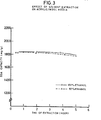
- the stability of the graft-substrate was evaluated with regard to its BSA binding capacity after agitation in 50% ethanol for varying periods of time.
- a wool- copolymer substrate according to Examples 1-4 was prepared, the modified wool initially demonstrating BSA capacity of about 1840 mg/g. After four hours immersion in the 50% ethanol solution, the modified wool still had a BSA capacity of 1800 mg/g. See Figure 3.
- Example 10 The same modified wool as in Example 10 was evaluated in phosphate buffer at pH 6.7-6.8 and found to have a BSA capacity of almost 2000 mg/g. See Figure 4.
- Example 10 The same modified wool as in Example 10 was evaluated in phosphate buffer at pH 7.2-7.3 and found to have a BSA capacity of less than 1700 mg/g. See Figure 4.
- the BSA capacity is about 450 mg/g.
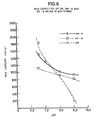
- the BSA binding capacity of a wool modified with a diethylaminoethyl acrylate (DEAEA)-glycidyl acrylate (GA) copolymer is compared with that of the DEAEMA-GMA , copolymer at various pH in phosphate buffer.
- DEAEA diethylaminoethyl acrylate
- GA glycidyl acrylate
- the DEAEMA-GMA modified wool and DEAEA-GA modified wool are evaluated for BSA capacity according to the method of Example 4 over a pH range of 6.0 to 9.0, with the results being shown in Figure 5. As may be seen from Figure 5, the capacity of the DEAEA-GA modified wool at higher p H 's exceeds that of the less hydrophillic DEAEMA-GMA modified wool.
- Wool modified with dimethylaminoethyl methacrylate (DMAEMA)-glycidyl acrylate (GA) copolymer is prepared in a manner similar to Example 1. 5 grams of grade 64S wool having a fiber length of 1.5 inch and a diameter of about 20 microns is fiberized for one hour. The fiberized wool is then dispersed in 250 ml of H 2 0 in a 500 ml three-necked round bottom reactor containing 2.25 grams of Siponic R LAE-612. 12.5 g of DMAEMA and 1.25 g of GA are thoroughly mixed. The temperature of the wool-water-surfactant mixture is increased to 90°C and the monomer mixture added to the reactor.
- DMAEMA dimethylaminoethyl methacrylate
- GA glycidyl acrylate
- the DMAEMA-GA-modified wool of Example 15 is prepared as in Example 15. However, after one hour of agitation at 89-92°C, the reaction mixture is cooled to 60 0 C and an aqueous solution of EtI and KI are added to the reaction mixture. The quaternization proceeds for 15 minutes at 60°C under N 2 atmosphere. The reaction product is cooled to room temperature, washed well with water, and acidified to pH 3.3. The B SA capacity of this product, designated D M -Q, is evaluated at various pH conditions, the results reported at Figure 6.
- a DEAEMA-GMA-modified wool is prepared essentially according to Example 1. Following agitation for one hour at 80°C, the reaction mixture is cooled to 60°C and quaternized by the addition of ethyl iodide- potassium iodide quaternizing reagent. The quaternization proceeds for 15 minutes at 60°C under nitrogen atmosphere. At completion, the reaction is permitted to cool to room temperature, washed with water, and acidified to pH 3.3. The BSA capacity of this product, designated DE-Q, is evaluated at various pH conditions, the results reported at Figure 6.
- the quaternized modified wool media provide better BSA binding capacity at the higher pH ranges, with the quaternized . DMAEMA-GA product providing highest BSA binding.
- Ion exchange media carrying sulfonyl (-SO 3 ) groups are prepared as follows. 5.0 grams of grade 64S wool having a fiber length of 1.5 inch and a diameter of about 20 microns is fiberized for one hour. The fiberized wool and 12.5 ml of GA monomer are added to a reactor containing 0.1 g LAE and 230 ml deionized water. The mixture is stirred vigorously while flushing the system with nitrogen gas until all components disperse completely. 0.5 g of APS dissolved in 10 ml of deionized water is added to the reactor, followed by 0.5 g of STS in 10 ml deionized water. Under agitation, the temperature of the reaction mixture is rapidly increased to 80°C.
- the grafting reaction is allowed to proceed at this temperature for 30 minutes.
- 12.5 ml of 2 M HC1 is added to the reactor with thorough mixing.
- 15 g Na 2 S0 3 are added to the reactor, the reaction mixture temperature increased to 80°C, and the reaction continued at 80°C with full agitation for one hour.
- the reaction mixture is poured into one liter of deionized water, the pH is adjusted to 3.5, and the final product is removed by filtration. This product is washed with one liter of deionized water five times, with the pH of the final wash adjusted to about 5.0.
- the bovine gamma-globulin capacity (mg/g) of this media was evaluated over a range of pH conditions.
- the bovine gamma-globulin capacity is in the range of 500-600; at pH 4.0, the bovine gamma-globulin capacity is in the range of 650-750; at . pH 5.0, the bovine gamma-globulin capacity is in the - range of 1200-1500.
Landscapes
- Chemical & Material Sciences (AREA)
- Analytical Chemistry (AREA)
- Organic Chemistry (AREA)
- Chemical Kinetics & Catalysis (AREA)
- Peptides Or Proteins (AREA)
- Solid-Sorbent Or Filter-Aiding Compositions (AREA)
- Treatment Of Liquids With Adsorbents In General (AREA)
- Graft Or Block Polymers (AREA)
Priority Applications (1)
| Application Number | Priority Date | Filing Date | Title |
|---|---|---|---|
| AT85110573T ATE58306T1 (de) | 1984-08-22 | 1985-08-22 | Chromatographische trennungsprozesse an polypeptidtraegermaterial. |
Applications Claiming Priority (2)
| Application Number | Priority Date | Filing Date | Title |
|---|---|---|---|
| US64321284A | 1984-08-22 | 1984-08-22 | |
| US643212 | 1996-05-03 |
Publications (3)
| Publication Number | Publication Date |
|---|---|
| EP0172580A2 true EP0172580A2 (fr) | 1986-02-26 |
| EP0172580A3 EP0172580A3 (en) | 1986-12-30 |
| EP0172580B1 EP0172580B1 (fr) | 1990-11-14 |
Family
ID=24579840
Family Applications (1)
| Application Number | Title | Priority Date | Filing Date |
|---|---|---|---|
| EP85110573A Expired - Lifetime EP0172580B1 (fr) | 1984-08-22 | 1985-08-22 | Procédé de séparation chromatographique employant des supports à base de polypeptide |
Country Status (4)
| Country | Link |
|---|---|
| EP (1) | EP0172580B1 (fr) |
| JP (1) | JPS61141719A (fr) |
| AT (1) | ATE58306T1 (fr) |
| DE (1) | DE3580542D1 (fr) |
Cited By (7)
| Publication number | Priority date | Publication date | Assignee | Title |
|---|---|---|---|---|
| EP0318240A3 (fr) * | 1987-11-25 | 1990-08-16 | AGENCY OF INDUSTRIAL SCIENCE & TECHNOLOGY MINISTRY OF INTERNATIONAL TRADE & INDUSTRY | Adsorbant de peptide, méthodes pour sa production et son emploi |
| US5132402A (en) * | 1987-11-25 | 1992-07-21 | Agency Of Industrial Science And Technology | Adsorbent, method for production thereof, and method for use thereof |
| WO1993019844A1 (fr) * | 1992-03-30 | 1993-10-14 | Perseptive Biosystems, Inc. | Procede d'imagerie moleculaire |
| US5756717A (en) * | 1995-05-24 | 1998-05-26 | Perseptive Biosystems, Inc | Protein imaging |
| WO2011121279A1 (fr) * | 2010-03-30 | 2011-10-06 | Croda International Plc | Copolymère de protéine-acrylate et produit revitalisant capillaire comprenant ledit polymère |
| CN111683976A (zh) * | 2018-02-05 | 2020-09-18 | 生物辐射实验室股份有限公司 | 具有阴离子交换-疏水混合模式配体的色谱树脂 |
| CN115598231A (zh) * | 2016-08-15 | 2023-01-13 | 豪夫迈·罗氏有限公司(Ch) | 定量包含非离子表面活性剂和多肽的组合物中非离子表面活性剂的层析方法 |
Families Citing this family (3)
| Publication number | Priority date | Publication date | Assignee | Title |
|---|---|---|---|---|
| CN111420708B (zh) * | 2020-04-30 | 2021-08-20 | 林贤贵 | 一种石墨烯共价接枝的氨基苯三联吡啶-铁配合物芬顿催化剂及其制备方法 |
| JP7792650B2 (ja) * | 2021-06-24 | 2025-12-26 | 国立大学法人茨城大学 | 糖鎖固定化ポリマー粒子及びその製造方法 |
| WO2025187798A1 (fr) * | 2024-03-07 | 2025-09-12 | Jnc株式会社 | Support chromatographique utilisant des microfibres et son procédé de production |
Family Cites Families (4)
| Publication number | Priority date | Publication date | Assignee | Title |
|---|---|---|---|---|
| US3262893A (en) * | 1962-10-04 | 1966-07-26 | Swift & Co | Ion exchange resins from keratin and a vinyl carboxylic compound |
| FR1469358A (fr) * | 1966-02-14 | 1967-02-10 | Scott Paper Co | Copolymérisation de monomères non saturés avec des supports |
| DE3130924A1 (de) * | 1981-08-05 | 1983-02-17 | Röhm GmbH, 6100 Darmstadt | Oberflaechenreiche systeme zur fixierung von nucleophile gruppen enthaltenden substraten |
| AU580548B2 (en) * | 1983-02-14 | 1989-01-19 | Cuno Incorporated | Polymer modified polysaccharide |
-
1985
- 1985-08-13 JP JP60178489A patent/JPS61141719A/ja active Pending
- 1985-08-22 EP EP85110573A patent/EP0172580B1/fr not_active Expired - Lifetime
- 1985-08-22 AT AT85110573T patent/ATE58306T1/de not_active IP Right Cessation
- 1985-08-22 DE DE8585110573T patent/DE3580542D1/de not_active Expired - Fee Related
Cited By (14)
| Publication number | Priority date | Publication date | Assignee | Title |
|---|---|---|---|---|
| EP0318240A3 (fr) * | 1987-11-25 | 1990-08-16 | AGENCY OF INDUSTRIAL SCIENCE & TECHNOLOGY MINISTRY OF INTERNATIONAL TRADE & INDUSTRY | Adsorbant de peptide, méthodes pour sa production et son emploi |
| US5132402A (en) * | 1987-11-25 | 1992-07-21 | Agency Of Industrial Science And Technology | Adsorbent, method for production thereof, and method for use thereof |
| US5641539A (en) * | 1992-03-30 | 1997-06-24 | Perseptive Biosystems, Inc. | Molecular imaging |
| US5372719A (en) * | 1992-03-30 | 1994-12-13 | Perseptive Biosystems, Inc. | Molecular imaging |
| US5453199A (en) * | 1992-03-30 | 1995-09-26 | Perseptive Biosystems, Inc. | Molecular imaging |
| AU663184B2 (en) * | 1992-03-30 | 1995-09-28 | Perseptive Biosystems, Inc. | Molecular imaging |
| WO1993019844A1 (fr) * | 1992-03-30 | 1993-10-14 | Perseptive Biosystems, Inc. | Procede d'imagerie moleculaire |
| US5756717A (en) * | 1995-05-24 | 1998-05-26 | Perseptive Biosystems, Inc | Protein imaging |
| WO2011121279A1 (fr) * | 2010-03-30 | 2011-10-06 | Croda International Plc | Copolymère de protéine-acrylate et produit revitalisant capillaire comprenant ledit polymère |
| US9421159B2 (en) | 2010-03-30 | 2016-08-23 | Croda International Plc | Protein-acrylate copolymer and hair conditioning product comprising said polymer |
| CN115598231A (zh) * | 2016-08-15 | 2023-01-13 | 豪夫迈·罗氏有限公司(Ch) | 定量包含非离子表面活性剂和多肽的组合物中非离子表面活性剂的层析方法 |
| CN111683976A (zh) * | 2018-02-05 | 2020-09-18 | 生物辐射实验室股份有限公司 | 具有阴离子交换-疏水混合模式配体的色谱树脂 |
| US11666888B2 (en) | 2018-02-05 | 2023-06-06 | Bio-Rad Laboratories, Inc. | Chromatography resin having an anionic exchange-hydrophobic mixed mode ligand |
| US12194432B2 (en) | 2018-02-05 | 2025-01-14 | Bio-Rad Laboratories, Inc. | Chromatography resin having an anionic exchange-hydrophobic mixed mode ligand |
Also Published As
| Publication number | Publication date |
|---|---|
| JPS61141719A (ja) | 1986-06-28 |
| EP0172580B1 (fr) | 1990-11-14 |
| EP0172580A3 (en) | 1986-12-30 |
| ATE58306T1 (de) | 1990-11-15 |
| DE3580542D1 (de) | 1990-12-20 |
Similar Documents
| Publication | Publication Date | Title |
|---|---|---|
| US4687820A (en) | Modified polypeptide supports | |
| US4663163A (en) | Modified polysaccharide supports | |
| EP0172579B1 (fr) | Supports de silice | |
| AU580548B2 (en) | Polymer modified polysaccharide | |
| US4791063A (en) | Polyionene transformed modified polysaccharide supports | |
| US4336161A (en) | Composite materials comprising deformable xerogel within the pores of particulate rigid supports useful in chromatography | |
| US5045210A (en) | Heavy metal removal process | |
| CA2280004C (fr) | Procede d'adsorption/separation et support pour adsorption/separation | |
| CA2732398C (fr) | Copolymeres greffes pour la chromatographie par echange d'ions | |
| JP3512809B2 (ja) | 保持体に結合したリガンドの密度を調節する方法およびこれによって生成される生成物 | |
| EP0172580B1 (fr) | Procédé de séparation chromatographique employant des supports à base de polypeptide | |
| DE102015011884A1 (de) | Adsorptionsmedium, Verfahren zu dessen Herstellung, sowie Verwendung desselben zur Aufreinigung von Biomolekülen | |
| WO1993006161A1 (fr) | Particules macroporeuses polymeres utilisees comme supports biocompatibles | |
| US9067195B2 (en) | Process for making improved chromatography media and method of use | |
| EP1194228A1 (fr) | Materiau a affinite controlee avec polymere sensible a un stimulus et procede de separation/purification faisant intervenir ce materiau | |
| GB1574414A (en) | Composite materials | |
| JPH08510327A (ja) | ゲル浸透クロマトグラフィのための方法及び担持物 | |
| JPS6392627A (ja) | 親水性多孔粒子 | |
| JP2001518382A (ja) | 電気的中性の親水性外側表面を有する化学的に変性された多孔質材料 | |
| WO1990011825A1 (fr) | Filtres d'elimination de metaux lourds | |
| Lloyd et al. | Polymers and their Application in Liquid Chromatography | |
| JPH0440367A (ja) | 球状分離剤 |
Legal Events
| Date | Code | Title | Description |
|---|---|---|---|
| PUAI | Public reference made under article 153(3) epc to a published international application that has entered the european phase |
Free format text: ORIGINAL CODE: 0009012 |
|
| AK | Designated contracting states |
Designated state(s): AT BE CH DE FR GB IT LI LU NL SE |
|
| PUAL | Search report despatched |
Free format text: ORIGINAL CODE: 0009013 |
|
| AK | Designated contracting states |
Kind code of ref document: A3 Designated state(s): AT BE CH DE FR GB IT LI LU NL SE |
|
| RAP1 | Party data changed (applicant data changed or rights of an application transferred) |
Owner name: CUNO INCORPORATED |
|
| 17P | Request for examination filed |
Effective date: 19870130 |
|
| 17Q | First examination report despatched |
Effective date: 19881025 |
|
| GRAA | (expected) grant |
Free format text: ORIGINAL CODE: 0009210 |
|
| ITF | It: translation for a ep patent filed | ||
| AK | Designated contracting states |
Kind code of ref document: B1 Designated state(s): AT BE CH DE FR GB IT LI LU NL SE |
|
| PG25 | Lapsed in a contracting state [announced via postgrant information from national office to epo] |
Ref country code: SE Effective date: 19901114 Ref country code: NL Effective date: 19901114 Ref country code: LI Effective date: 19901114 Ref country code: CH Effective date: 19901114 Ref country code: BE Effective date: 19901114 Ref country code: AT Effective date: 19901114 |
|
| REF | Corresponds to: |
Ref document number: 58306 Country of ref document: AT Date of ref document: 19901115 Kind code of ref document: T |
|
| REF | Corresponds to: |
Ref document number: 3580542 Country of ref document: DE Date of ref document: 19901220 |
|
| ET | Fr: translation filed | ||
| REG | Reference to a national code |
Ref country code: CH Ref legal event code: PL |
|
| NLV1 | Nl: lapsed or annulled due to failure to fulfill the requirements of art. 29p and 29m of the patents act | ||
| PGFP | Annual fee paid to national office [announced via postgrant information from national office to epo] |
Ref country code: FR Payment date: 19910724 Year of fee payment: 7 |
|
| PGFP | Annual fee paid to national office [announced via postgrant information from national office to epo] |
Ref country code: GB Payment date: 19910801 Year of fee payment: 7 |
|
| PGFP | Annual fee paid to national office [announced via postgrant information from national office to epo] |
Ref country code: DE Payment date: 19910826 Year of fee payment: 7 |
|
| ITTA | It: last paid annual fee | ||
| PG25 | Lapsed in a contracting state [announced via postgrant information from national office to epo] |
Ref country code: LU Free format text: LAPSE BECAUSE OF NON-PAYMENT OF DUE FEES Effective date: 19910831 |
|
| PLBE | No opposition filed within time limit |
Free format text: ORIGINAL CODE: 0009261 |
|
| STAA | Information on the status of an ep patent application or granted ep patent |
Free format text: STATUS: NO OPPOSITION FILED WITHIN TIME LIMIT |
|
| 26N | No opposition filed | ||
| PG25 | Lapsed in a contracting state [announced via postgrant information from national office to epo] |
Ref country code: GB Effective date: 19920822 |
|
| GBPC | Gb: european patent ceased through non-payment of renewal fee |
Effective date: 19920822 |
|
| PG25 | Lapsed in a contracting state [announced via postgrant information from national office to epo] |
Ref country code: FR Effective date: 19930430 |
|
| PG25 | Lapsed in a contracting state [announced via postgrant information from national office to epo] |
Ref country code: DE Effective date: 19930501 |
|
| REG | Reference to a national code |
Ref country code: FR Ref legal event code: ST |