EP0175465A1 - Association ou composition contenant de l'halopéridol et une diphénylalcoyl-adénosine ou une diphénylalcoyl-2-amino-adénosine - Google Patents
Association ou composition contenant de l'halopéridol et une diphénylalcoyl-adénosine ou une diphénylalcoyl-2-amino-adénosine Download PDFInfo
- Publication number
- EP0175465A1 EP0175465A1 EP85305541A EP85305541A EP0175465A1 EP 0175465 A1 EP0175465 A1 EP 0175465A1 EP 85305541 A EP85305541 A EP 85305541A EP 85305541 A EP85305541 A EP 85305541A EP 0175465 A1 EP0175465 A1 EP 0175465A1
- Authority
- EP
- European Patent Office
- Prior art keywords
- adenosine
- haloperidol
- hydrogen
- compound
- diphenylethyl
- Prior art date
- Legal status (The legal status is an assumption and is not a legal conclusion. Google has not performed a legal analysis and makes no representation as to the accuracy of the status listed.)
- Withdrawn
Links
Images
Classifications
-
- A—HUMAN NECESSITIES
- A61—MEDICAL OR VETERINARY SCIENCE; HYGIENE
- A61K—PREPARATIONS FOR MEDICAL, DENTAL OR TOILETRY PURPOSES
- A61K31/00—Medicinal preparations containing organic active ingredients
- A61K31/70—Carbohydrates; Sugars; Derivatives thereof
Definitions
- Haloperidol described in US Patent 3,438,991, is a well-known neuroleptic agent used for treating psychoses, such as schizophrenia.
- Use of haloperidol causes side effects including acute extrapyramidal syndrome (EPS) which is usually seen soon after antipsychotic therapy is begun as well as the more chronic dystonic syndrome known as tardive dyskinesia which sometimes emerges during long-term antipsychotic use.
- EPS extrapyramidal syndrome
- the present invention has for its object a method of treating psychoses, e.g., schizophrenia, and reducing the side effects of such treatment, such as acute extrapyramidal syndrome and tardive dyskinesia by administering a novel adenosine derivative prior to or concomitant with haloperidol therapy.
- psychoses e.g., schizophrenia
- side effects of such treatment such as acute extrapyramidal syndrome and tardive dyskinesia
- Another object of the present invention is a new pharmaceutical composition
- a new pharmaceutical composition comprising effective amounts of haloperidol and a novel adenosine derivative with a carrier to treat schizophrenia with reduced side effects.
- the presence of the novel adenosine compound not only reduces the chance of tardive dyskinesia but increases the efficacy of haloperidol thereby requiring lower doses of haloperidol in the therapy.
- the present invention relates to a pharmaceutical composition for treating schizophrenia without precipitating neurological side effects comprising an effective amount of (a) a compound of the formula wherein Ar and Ar l are each independently phenyl or phenyl substituted by halogen, hydroxy, lower alkoxy or trifluoromethyl; n is 1 or 2; Y is hydrogen or amino, and X is hydrogen, hydroxy or lower alkyl, or a pharmaceutically acceptable acid addition salt thereof, and (b) an effective amount of haloperidol, together with a pharmaceutically acceptable carrier.
- the present invention also relates to a method of treating schizophrenia without precipitating neurological side effects in a subject suffering therefrom comprising administering to said subject (a) a compound of the formula I or a pharmaceutically acceptable acid addition salt thereof prior to or concomitantly with (b) haloperidol in unit dosage form.
- lower alkyl is meant to include a straight or branched alkyl group having from 1 to 6 carbon atoms such as, for example, methyl, ethyl, propyl, isopropyl, butyl, sec-butyl, isobutyl, tertiarybutyl, amyl, isoamyl, neopentyl, hexyl, and the like.
- Halogen includes particularly fluorine, chlorine or bromine.
- Lower alkoxy is 0-alkyl of from 1 to 6 carbon atoms as defined above for "lower alkyl”.
- Lower alkanoyloxy is a straight or branched alkyl group of from 1 to 6 carbon atoms in the alkyl chain as defined above.
- the compounds of formula I are useful both in the free base form and in the form of acid addition salts. Both forms are within the scope of the invention. In practice, use of the salt form amounts to use of the base form.
- Appropriate pharmaceutically acceptable salts within the scope of the invention are those derived from mineral acids such as hydrochloric acid and sulfuric acid; and organic acids such as ethanesulfonic acid, benzenesulfonic acid, p-toluenesulfonic acid, and the like, giving the hydrochloride, sulfamate, ethanesulfonate, benzenesulfonate, p-toluenesulfonate, and the like, respectively.
- the acid addition salts of said basic compounds are prepared either by dissolving the free base in aqueous or aqueous alcohol solution or other suitable solvents containing the appropriate acid and isolating the salt by evaporating the solution, or by reacting the free base and acid in an organic solvent, in which case the salt separates directly or can be obtained by concentration of the solution.
- the compounds of the invention may contain an asymmetric carbon atom at the carbon atom connecting groups A, Ar, Ar l and X when Ar and Ar l are different.
- the invention includes the individual enantiomers, the pure S, the pure R isomer, and mixtures thereof including the racemic modification.
- the individual enantiomers may be prepared or isolated by methods known in the art.
- the compounds of formula I may be conveniently synthesized by reacting a 6-halopurine riboside of formula II with the requisite diaryl alkyl amine of formula III in an inert solvent such as alcohol, or an aprotic solvent such as dimethylformamide between about 25 to about 130°C for from 1-48 hours. It is useful to add a base such as triethylamine, or calcium carbonate to neutralize the hydrogen halide formed as a byproduct of the reaction, but this can also be accomplished by using an extra equivalent of the aryl alkylamine.
- a base such as triethylamine, or calcium carbonate
- B is H, acetyl or benzoyl;
- Hal is halogen, preferably chlorine or bromine, and
- Y, n, Ar, Ar l , and X are as defined for formula I.
- compounds of formula I wherein Y is amino may also be prepared from 2,6-dichloropurine riboside triacetate of formula IV in a stepwise manner, by first reacting a compound of the formula IV with the requisite diphenyl alkyl amine of formula III to give a compound of formula V, followed by replacing the chlorine atom at C 2 with the group Y using nucleophilic displacement conditions, and removing the acetate protecting groups as illustrated below.
- the compounds of formula I have been previously described as having neuroleptic and antihypertensive activity. Particulars relating to pharmacological activity and chemical preparation are reported in EP-A-0139358.
- the present invention relates to the discovery that treatment of schizophrenia with haloperidol may be enhanced with lesser neurological side effects by administering prior to or concomitant with haloperidol an effective amount of a compound of the formula I or a pharmaceutically acceptable acid addition salt thereof.
- Preferred combinations are those containing haloperidol and a compound of the formula I wherein X is hydrogen and Ar, Ar l , n, and Y are as defined above.
- Particularly preferred combinations are those containing haloperidol and N 6- (2,2-diphenylethyl)-adenosine and N 6- (2,2-diphenylethyl)-2-aminoadenosine.
- a combination of a compound of formula I or a pharmaceutically acceptable acid addition salt thereof is administered prior to or concomitantly with haloperidol in an effective amount which comprises a total daily dosage of about 15 to 250 mg, preferably 15 to 150 mg of compound of formula I and about 0.5 to 100 mg , preferably 0.5 to 10 mg of haloperidol to a subject, e.g., a mammalian species, suffering from psychoses, e.g., schizophrenia.
- Such total daily dosages can be used in a single administration of the total amount or in divided doses 2 to 3 times daily. Generally, a b.i.d. or t.i.d. is preferred.
- This preferred dosage is about 7.5 to 75 mg of compound of formula I or a pharmaceutically acceptable acid addition salt thereof and about 0.5 to 5 mg of haloperidol 2 times daily or about 7.5 to 75 mg of compound of formula I and about 0.5 to 5 mg of haloperidol 3 times daily.
- the preferred route of administration is oral.
- the present invention further includes a method. for treating psychoses, e.g., schizophrenia, in mammals suffering therefrom comprising administering to such mammals either orally or parenterally a corresponding pharmaceutical composition containing a compound of the formula I as defined above and haloperidol in appropriate unit dosage form.
- psychoses e.g., schizophrenia
- inert, pharmaceutically acceptable carriers can be either solid or liquid.
- Solid form preparations include powders, tablets, dispersible granules, capsules, cachets, and suppositories.
- a solid carrier can be one or more substances which may also act as diluents, flavoring agents, solubilizers, lubricants, suspending agents, binders or tablet disintegrating agents; it can also be encapsulating material.
- the carrier is a finely divided solid which is in admixture with the finely divided active compound.
- the active compound is mixed with carrier having the necessary binding properties in suitable proportions and compacted in the shape and size desired.
- the powders and tablets preferably contain from 5 or 10 to about 70 percent of active ingredients.
- Suitable solid carriers are magnesium carbonate, magnesium stearate, talc, sugar, lactose, pectin, dextrin, starch, gelatin, tragacanth, methylcellulose, sodium carboxymethylcellulose, a low melting wax, cocoa butter, and the like.
- the term "preparation" is intended to include the formulation of the active compound with encapsulating material as carrier providing a capsule in which the active components (with or without other carriers) are surrounded by carrier, which are thus in association with it.
- cachets are included. Tablets, powders, cachets, and capsules can be used as solid dosage forms suitable .for oral administration.
- a low melting wax such as a mixture of fatty acid glycerides or cocoa butter is first melted, and the active ingredients are dispersed homogeneously therein as by stirring. The molten homogeneous mixture is then poured into convenient sized molds, allowed to cool and thereby to solidify.
- Liquid form preparations include solutions, suspensions, and emulsions. As an example may be mentioned water or water propylene glycol solutions for parenteral injection. Liquid preparations can also be formulated in solution in aqueous polyethylene glycol solution.
- Aqueous solutions suitable for oral use can be prepared by dissolving the active component in water and adding suitable colorants, flavors, stabilizing and thickening agents as desired.
- Aqueous suspensions suitable for oral use can be made by dispersing the finely divided active component in water with viscous material, i.e., natural or synthetic gums, resins, methylcellulose, sodium carboxymethylcellulose, and other well-known suspending agents.
- solid form preparations which are intended to be converted, shortly before use, to liquid form preparations for either oral or parenteral administration.
- liquid forms include solutions, suspensions, and emulsions.
- These particular solid form preparations are most conveniently provided in unit dose form and as such are used to provide a single liquid dosage unit. Alternately, sufficient solid may be provided so that after conversion to liquid form, multiple individual liquid doses may be obtained by measuring predetermined volumes of the liquid form preparation as with a syringe, teaspoon, or other volumetric container. When multiple liquid doses are so prepared, it is preferred to maintain the unused portion of said liquid doses at low temperature (i.e., under refrigeration) in order to retard pos- . sible decomposition.
- the solid form preparations intended to be converted to liquid form may contain, in addition to the active materials, flavorants, colorants, stabilizers, buffers, artificial and natural sweeteners, dispersants, thickeners, solubilizing agents, and the like.
- the liquid utilized for preparing the liquid form preparation may be water, isotonic water, ethanol, glycerine, propylene glycol, and the like as well as mixtures thereof. Naturally, the liquid utilized will be chosen with regard to the route of administration, for example, liquid preparations containing large amounts of ethanol are not suitable for parenteral use.
- the pharmaceutical preparation is in unit dosage form.
- the preparation is subdivided into unit doses containing appropriate quantities of active components.
- the unit dosage form can be a packaged preparation, the package containing discrete quantities of preparation, for example, packeted tablets, capsules, and powders in vials or ampoules.
- the unit dosage form can also be a capsule, cachet, or tablet itself or it can be the appropriate number of any of these in packaged form.
- the quantity of active compounds in a unit dose of preparation may be varied or adjusted from 1 mg to 500 mg preferably to 5 to 100 mg according to the particular application and the potency of the active ingredients.
- the mammalian dosage range for a 70 kg subject is from 0.1 to 5 mg/kg of body weight per day or preferably 1 to 3 mg/kg of body weight per day.
- the dosages may be varied depending upon the requirements of the patient, the severity of the condition being treated, and the compound being employed.
- Determination of the proper dosage for a particular situation is within the skill of the art. Generally, treatment is initiated with smaller dosages which are less than the optimum dose of the compound. Thereafter the dosage is increased by small increments until the optimum effect under the circumstances is reached. For convenience, the total daily dosage may be divided and administered in portions during the day if desired.
- a mixture of 1.25 g of 6-chloro-2-amino-9-(s-D-ribofuranosyl)purine, 0.899 g of 2,2-diphenylethylamine and 0.503 g of triethylamine is heated under reflux in 30 ml of absolute ethanol under a nitrogen atmosphere for 18 hours.
- the solvent is evaporated to dryness and residue is treated with 50 ml of cold water.
- the insoluble organic material is filtered, dried, and purified by medium pressure liquid chromatography on silica gel. The product is eluted with 10% methanol-chloroform. Evaporation of the solvent from the pure fractions affords a colorless solid material.
- the above compounds are dissolved in the water and passed through a 0.22 micron filter. Aliquots of the filtered solution are added to ampoules or vials, sealed, and sterilized.
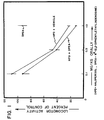
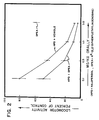
- Sprague-Dawley male rats were used. N 6- (2,2-Diphenylethyl)adenosine was dissolved in Emulphor® and 0.2% Methocel®. Haloperidol (HPD) was dissolved in acetic acid, the pH was adjusted to 5.5 with NaOH, and NaOH, and the volume adjusted with 0.2% Methocel® vehicle. Treatments, dosages, and the number of animals randomly assigned to each treatment combination are shown in Table 1. Haloperidol versus vehicle treatments were included each time the adenosine was tested. Treatments were given orally in volumes of 5 ml/kg one hour before testing was started.
- N 6- (2,2-Diphenylethyl)adenosine enhanced haloperidol induced inhibition of rat locomotor activity.
- the magnitude of response suggests that N 6- (2,2-diphenylethyl)adenosine has an additive effect in combination with haloperidol.
- N 6- (2,2-diphenylethyl)adenosine administered IM is less effective in blocking haloperidol-induced dystonia than when administered by other routes.
- 8 mg/kg IM of N 6- (2,2-diphenylethyl)adenosine did not block dystonia induced by haloperidol (0.5 mg/kg PO) in 3/6 animals tested.
- haloperidol-induced dystonias because of the severity of haloperidol-induced dystonias in sensitized monkeys, the ability of N 6- (2,2-diphenylethyl)adenosine to reverse dystonia when administered by routes other than IM cannot be tested safely.
- N 6- (2,2-Diphenylethyl)adenosine administered together with haloperidol orally by capsule did not appreciably affect the development or severity of dystonias (Table IV).
- Haloperidol 0.5 mg/kg in a capsule
- haloperidol with the adenosine 5 mg/kg in a capsule
- coadministration of 5 mg/kg PO N 6- (2,2-diphenylethyl)adenosine and 0.5 mg/kg haloperidol in a solution by gavage resulted in a marked reduction in the severity of dystonia in 4 of 5 animals tested.
- N 6- (2,2-diphenylethyl)adenosine prevented the dystonia normally produced by haloperidol in sensitized Cebus monkeys.
- the adenosine did not reverse ongoing dystonia induced by haloperidol when administered IM, this may be related to the reduced ability of the adenosine to block haloperidol-induced dystonia after IM administration.
- combination of the adenosine and haloperidol in the same capsule did not prevent dystonia induced by haloperidol, coadministration of a solution of the two agents by gavage resulted in reduced severity of dystonia.
Landscapes
- Health & Medical Sciences (AREA)
- Life Sciences & Earth Sciences (AREA)
- Molecular Biology (AREA)
- Chemical & Material Sciences (AREA)
- Medicinal Chemistry (AREA)
- Pharmacology & Pharmacy (AREA)
- Epidemiology (AREA)
- Animal Behavior & Ethology (AREA)
- General Health & Medical Sciences (AREA)
- Public Health (AREA)
- Veterinary Medicine (AREA)
- Pharmaceuticals Containing Other Organic And Inorganic Compounds (AREA)
- Saccharide Compounds (AREA)
- Medicinal Preparation (AREA)
Applications Claiming Priority (2)
| Application Number | Priority Date | Filing Date | Title |
|---|---|---|---|
| US640905 | 1984-08-15 | ||
| US06/640,905 US4582823A (en) | 1984-08-15 | 1984-08-15 | Method for treating schizophrenia and medicaments therefor |
Publications (1)
| Publication Number | Publication Date |
|---|---|
| EP0175465A1 true EP0175465A1 (fr) | 1986-03-26 |
Family
ID=24570164
Family Applications (1)
| Application Number | Title | Priority Date | Filing Date |
|---|---|---|---|
| EP85305541A Withdrawn EP0175465A1 (fr) | 1984-08-15 | 1985-08-02 | Association ou composition contenant de l'halopéridol et une diphénylalcoyl-adénosine ou une diphénylalcoyl-2-amino-adénosine |
Country Status (6)
| Country | Link |
|---|---|
| US (1) | US4582823A (fr) |
| EP (1) | EP0175465A1 (fr) |
| JP (1) | JPS6156135A (fr) |
| DK (1) | DK369385A (fr) |
| PH (1) | PH21236A (fr) |
| ZA (1) | ZA855496B (fr) |
Cited By (1)
| Publication number | Priority date | Publication date | Assignee | Title |
|---|---|---|---|---|
| US5561134A (en) * | 1990-09-25 | 1996-10-01 | Rhone-Poulenc Rorer Pharmaceuticals Inc. | Compounds having antihypertensive, cardioprotective, anti-ischemic and antilipolytic properties |
Families Citing this family (13)
| Publication number | Priority date | Publication date | Assignee | Title |
|---|---|---|---|---|
| US4732915A (en) * | 1983-11-02 | 1988-03-22 | Alza Corporation | Process for increasing solubility of drug |
| US5055569A (en) * | 1989-10-19 | 1991-10-08 | G. D. Searle & Co. | N-(6)-substituted adenosine compounds |
| DE19802450A1 (de) * | 1998-01-23 | 1999-07-29 | Hoechst Marion Roussel De Gmbh | Ustilipide, Verfahren zu deren Herstellung sowie deren Verwendung |
| US20050192220A1 (en) * | 2001-02-05 | 2005-09-01 | Gevys Pharmaceuticas Ltd. | Composition and method for potentiating drugs |
| UA88792C2 (ru) * | 2004-11-10 | 2009-11-25 | Таргасепт, Інк. | Гидроксибензоатные соли метаникотиновых соединений |
| US7459469B2 (en) | 2004-11-10 | 2008-12-02 | Targacept, Inc. | Hydroxybenzoate salts of metanicotine compounds |
| EP2021325A2 (fr) * | 2006-05-09 | 2009-02-11 | AstraZeneca AB | Formes de sel de (2s)-(4e)-n-méthyl-5-[3-(5-isopropoxypyridin)yl]-4-penten-2-amine |
| TWI389889B (zh) * | 2006-05-09 | 2013-03-21 | Targacept Inc | (2s)-(4e)-n-甲基-5-〔3-(5-異丙氧基吡啶)基〕-4-戊烯-2-胺之新穎多晶型 |
| AR062860A1 (es) * | 2006-09-15 | 2008-12-10 | Astrazeneca Ab | Combinaciones terapeuticas 482 |
| WO2008091588A1 (fr) * | 2007-01-22 | 2008-07-31 | Targacept, Inc. | Administration intranasale, buccale ou sublinguale d'analogues de métanicotine |
| CN103180277A (zh) | 2010-05-20 | 2013-06-26 | 塔格塞普特股份有限公司 | 制备芳基取代的烯属胺的新方法 |
| ES2879378T3 (es) | 2019-02-07 | 2021-11-22 | Ivoclar Vivadent Ag | Materiales dentales a base de sistemas rédox con derivados de hidroperóxido de cumeno de olor reducido |
| ES2918149T3 (es) | 2019-02-07 | 2022-07-14 | Ivoclar Vivadent Ag | Materiales dentales con comportamiento de fraguado mejorado |
Citations (3)
| Publication number | Priority date | Publication date | Assignee | Title |
|---|---|---|---|---|
| US3505451A (en) * | 1967-08-14 | 1970-04-07 | Geigy Chem Corp | Compositions and methods for alleviating schizophrenia employing one of haloperidol,trifluperidol or an acid addition salt thereof and one of desipramine,imipramine and an acid addition salt thereof |
| US4316897A (en) * | 1980-09-10 | 1982-02-23 | Hoffmann-La Roche Inc. | Method of lowering serum prolactin |
| EP0139358A2 (fr) * | 1983-08-01 | 1985-05-02 | Warner-Lambert Company | Adénosines substituées en N6 par un radical diarylakyl, leur méthode de préparation et les compositions pharmaceutiques les contenant |
Family Cites Families (5)
| Publication number | Priority date | Publication date | Assignee | Title |
|---|---|---|---|---|
| GB895309A (en) * | 1959-11-18 | 1962-05-02 | Res Lab Dr C Janssen Nv | Pyrrolidine and piperidine derivatives |
| BE788958A (fr) * | 1971-09-18 | 1973-03-19 | Schering Ag | Derives d'adenosine et leur procede de preparation |
| DE2406587A1 (de) * | 1974-02-12 | 1975-08-21 | Klinge Co Chem Pharm Fab | Hypolipaemisch wirksame adenosinderivate |
| US3978216A (en) * | 1974-06-03 | 1976-08-31 | Nelson Research & Development Company | Method for treating schizophrenia and method and composition for potentiating neuroleptic drugs |
| DE3019322A1 (de) * | 1980-05-21 | 1981-12-03 | Merck Patent Gmbh, 6100 Darmstadt | Psychopharmakon sowie verwendung von adenosinderivaten |
-
1984
- 1984-08-15 US US06/640,905 patent/US4582823A/en not_active Expired - Fee Related
-
1985
- 1985-07-19 ZA ZA855496A patent/ZA855496B/xx unknown
- 1985-08-02 EP EP85305541A patent/EP0175465A1/fr not_active Withdrawn
- 1985-08-14 PH PH32642A patent/PH21236A/en unknown
- 1985-08-14 DK DK369385A patent/DK369385A/da not_active Application Discontinuation
- 1985-08-14 JP JP60177773A patent/JPS6156135A/ja active Pending
Patent Citations (3)
| Publication number | Priority date | Publication date | Assignee | Title |
|---|---|---|---|---|
| US3505451A (en) * | 1967-08-14 | 1970-04-07 | Geigy Chem Corp | Compositions and methods for alleviating schizophrenia employing one of haloperidol,trifluperidol or an acid addition salt thereof and one of desipramine,imipramine and an acid addition salt thereof |
| US4316897A (en) * | 1980-09-10 | 1982-02-23 | Hoffmann-La Roche Inc. | Method of lowering serum prolactin |
| EP0139358A2 (fr) * | 1983-08-01 | 1985-05-02 | Warner-Lambert Company | Adénosines substituées en N6 par un radical diarylakyl, leur méthode de préparation et les compositions pharmaceutiques les contenant |
Non-Patent Citations (1)
| Title |
|---|
| CHEMICAL ABSTRACTS, vol. 92, no. 7, 18th February 1980, page 61, no. 52052n, Columbus, Ohio, US; V.A. FATEEV et al.: "Interaction of adenosine with apomorphine, phenamine, and haloperidol", & FARMAKOL. NEIROTROPNYKH SREDSTV 1978, 64-9 * |
Cited By (1)
| Publication number | Priority date | Publication date | Assignee | Title |
|---|---|---|---|---|
| US5561134A (en) * | 1990-09-25 | 1996-10-01 | Rhone-Poulenc Rorer Pharmaceuticals Inc. | Compounds having antihypertensive, cardioprotective, anti-ischemic and antilipolytic properties |
Also Published As
| Publication number | Publication date |
|---|---|
| ZA855496B (en) | 1987-02-25 |
| US4582823A (en) | 1986-04-15 |
| DK369385A (da) | 1986-02-16 |
| JPS6156135A (ja) | 1986-03-20 |
| DK369385D0 (da) | 1985-08-14 |
| PH21236A (en) | 1987-08-21 |
Similar Documents
| Publication | Publication Date | Title |
|---|---|---|
| US4582823A (en) | Method for treating schizophrenia and medicaments therefor | |
| EP0192263A2 (fr) | Composition pharmaceutique facilement absorbable | |
| US3995039A (en) | Pyrazolo [1,5-a] [1,3,5] triazines | |
| EP0749423B1 (fr) | Piperidines et pyrrolidines | |
| PL160321B1 (pl) | Sposób wytwarzania 5-podstawionych nukleozydów pirymidynowych PL PL | |
| PT95449B (pt) | Processo para a preparacao de n-aminocarbamatos relacionados com a fisostigmina e de composicoes farmaceuticas que os contem | |
| EP0067666B1 (fr) | Sels de composés microbicides de naphtyridine et quinoléine et leur préparation | |
| JPH029895A (ja) | ヌクレオシド類似化合物及び抗腫瘍剤 | |
| JPH0725728B2 (ja) | N‐〔〔(2,6‐ジ置換)フエニル〕‐n′‐ジアリールアルキル〕尿素 | |
| EP0430201B1 (fr) | Aminocarbonylcarbamates apparentés à la physostigmine, leur procédé de préparation et leur utilisation comme médicaments | |
| AU599034B2 (en) | Furosemide salts | |
| DE69021466T2 (de) | Sulfonylhydrazine und deren Verwendung als antineoplastische und als antitrypanosomale Mittel. | |
| EP0213713B1 (fr) | Composés pharmaceutiques de 2-oxopyrrolidine, sels et leur préparation | |
| US5177101A (en) | Memory enhancing and analgesic aminocarbonylcarbamates related to physostigmine | |
| EP0288685B1 (fr) | Emploi de dérivés de pyrrolidone comme agents anti-amnésiques | |
| US3966916A (en) | N(6)-disubstituted adenoisine compounds and therapeutic compositions | |
| US3767815A (en) | Antihypertensive n-(3-chlorobenzenesulfonyl) acetamidines | |
| EP0106335B1 (fr) | Composition pharmaceutique et procédé pour améliorer l'absorption d'un composé pharmaceutiquement actif | |
| US4742163A (en) | Alpha-tocopherol (halo)uridine phosphoric acid diester, salts thereof, and methods for producing the same | |
| US4461891A (en) | 2-β-D-Ribofuranosylthiazole-4-carboxamidine compounds | |
| CA1234121A (fr) | Acide hexahydro-3,5-dioxo-1h-pyrrolizine-2- carboxylique et ses derives, comme activateurs des facultes mentales | |
| JP2531952B2 (ja) | フオスホリラ−ゼ阻害剤 | |
| US5861517A (en) | 2-thioxo-imidazolidin-4-one derivatives | |
| NZ206256A (en) | 1-aroyl-4-oxo-2-pyrrolidinepropionic acid derivatives and pharmaceutical compositions | |
| US5821372A (en) | 2-thioxo-imidazolidin-4-one derivatives |
Legal Events
| Date | Code | Title | Description |
|---|---|---|---|
| PUAI | Public reference made under article 153(3) epc to a published international application that has entered the european phase |
Free format text: ORIGINAL CODE: 0009012 |
|
| AK | Designated contracting states |
Kind code of ref document: A1 Designated state(s): AT BE CH DE FR GB IT LI LU NL SE |
|
| 17P | Request for examination filed |
Effective date: 19860820 |
|
| 17Q | First examination report despatched |
Effective date: 19880330 |
|
| STAA | Information on the status of an ep patent application or granted ep patent |
Free format text: STATUS: THE APPLICATION IS DEEMED TO BE WITHDRAWN |
|
| 18D | Application deemed to be withdrawn |
Effective date: 19880810 |
|
| RIN1 | Information on inventor provided before grant (corrected) |
Inventor name: HEFFNER, THOMAS G. Inventor name: WEISBACH, JERRY A. Inventor name: HARRIGAN, STEPHEN E. |