EP0180899A2 - Autonome Replikationssequenzen für Hefestämme des Genus Pichia - Google Patents
Autonome Replikationssequenzen für Hefestämme des Genus Pichia Download PDFInfo
- Publication number
- EP0180899A2 EP0180899A2 EP85113735A EP85113735A EP0180899A2 EP 0180899 A2 EP0180899 A2 EP 0180899A2 EP 85113735 A EP85113735 A EP 85113735A EP 85113735 A EP85113735 A EP 85113735A EP 0180899 A2 EP0180899 A2 EP 0180899A2
- Authority
- EP
- European Patent Office
- Prior art keywords
- dna
- plasmid
- host
- yeast
- cells
- Prior art date
- Legal status (The legal status is an assumption and is not a legal conclusion. Google has not performed a legal analysis and makes no representation as to the accuracy of the status listed.)
- Granted
Links
- 0 CCCC(C)C1C(C*)CC23*1C2C3 Chemical compound CCCC(C)C1C(C*)CC23*1C2C3 0.000 description 2
Images




Classifications
-
- C—CHEMISTRY; METALLURGY
- C12—BIOCHEMISTRY; BEER; SPIRITS; WINE; VINEGAR; MICROBIOLOGY; ENZYMOLOGY; MUTATION OR GENETIC ENGINEERING
- C12N—MICROORGANISMS OR ENZYMES; COMPOSITIONS THEREOF; PROPAGATING, PRESERVING, OR MAINTAINING MICROORGANISMS; MUTATION OR GENETIC ENGINEERING; CULTURE MEDIA
- C12N15/00—Mutation or genetic engineering; DNA or RNA concerning genetic engineering, vectors, e.g. plasmids, or their isolation, preparation or purification; Use of hosts therefor
- C12N15/09—Recombinant DNA-technology
- C12N15/63—Introduction of foreign genetic material using vectors; Vectors; Use of hosts therefor; Regulation of expression
- C12N15/79—Vectors or expression systems specially adapted for eukaryotic hosts
- C12N15/80—Vectors or expression systems specially adapted for eukaryotic hosts for fungi
- C12N15/81—Vectors or expression systems specially adapted for eukaryotic hosts for fungi for yeasts
- C12N15/815—Vectors or expression systems specially adapted for eukaryotic hosts for fungi for yeasts for yeasts other than Saccharomyces
-
- C—CHEMISTRY; METALLURGY
- C12—BIOCHEMISTRY; BEER; SPIRITS; WINE; VINEGAR; MICROBIOLOGY; ENZYMOLOGY; MUTATION OR GENETIC ENGINEERING
- C12N—MICROORGANISMS OR ENZYMES; COMPOSITIONS THEREOF; PROPAGATING, PRESERVING, OR MAINTAINING MICROORGANISMS; MUTATION OR GENETIC ENGINEERING; CULTURE MEDIA
- C12N15/00—Mutation or genetic engineering; DNA or RNA concerning genetic engineering, vectors, e.g. plasmids, or their isolation, preparation or purification; Use of hosts therefor
- C12N15/09—Recombinant DNA-technology
- C12N15/63—Introduction of foreign genetic material using vectors; Vectors; Use of hosts therefor; Regulation of expression
- C12N15/67—General methods for enhancing the expression
- C12N15/68—Stabilisation of the vector
-
- Y—GENERAL TAGGING OF NEW TECHNOLOGICAL DEVELOPMENTS; GENERAL TAGGING OF CROSS-SECTIONAL TECHNOLOGIES SPANNING OVER SEVERAL SECTIONS OF THE IPC; TECHNICAL SUBJECTS COVERED BY FORMER USPC CROSS-REFERENCE ART COLLECTIONS [XRACs] AND DIGESTS
- Y10—TECHNICAL SUBJECTS COVERED BY FORMER USPC
- Y10S—TECHNICAL SUBJECTS COVERED BY FORMER USPC CROSS-REFERENCE ART COLLECTIONS [XRACs] AND DIGESTS
- Y10S435/00—Chemistry: molecular biology and microbiology
- Y10S435/8215—Microorganisms
- Y10S435/911—Microorganisms using fungi
- Y10S435/938—Pichia
Definitions
- This invention relates to the field of recombinant DNA technology.
- the invention relates to DNA fragments which are maintained as extrachromosomal elements in a host of the genus Pichia.
- the invention relates to expression vectors which incorporate the above-described DNA fragments.
- the invention relates to novel microorganisms transformed with the above-described expression vectors.
- the invention relates to a process for isolating the novel DNA fragments of the invention.
- the basic techniques employed in the field of recombinant DNA technology are known by those of skill in the art.
- the elements desirably present in order for a host microorganism to be useful for the practice of recombinant DNA technology include, but are not limited to:
- a basic element employed in recombinant DNA technology is the plasmid, which is extrachromosomal, double-stranded DNA found in some microorganisms. Where plasmids have been found to naturally occur in microorganisms, they are often found to occur in multiple copies per cell. In addition to naturally occurring plasmids, a variety of man-made plasmids, or hybrid vectors, have been prepared. Included in the information encoded in plasmid DNA is that required to reproduce the plasmid in daughter cells, i.e., an autonomous replication sequence. One or more phenotypic selection characteristics must also be included in the information encoded in the plasmid DNA. The phenotypic selection characteristics permit clones of the host cell containing the plasmid of interest to be recognized and selected by preferential growth of the cells in selective media.
- plasmids The utility of plasmids lies in the fact that they can be specifically cleaved by one or another restriction endonuclease or restriction enzyme, each of which recognizes a specific, unique site on the plasmid DNA. Thereafter, homologous genes, heterologous genes, i.e., genes derived from organisms other than the host, or gene fragments may be inserted into the plasmid by endwise joining of the cleaved plasmid and desired genetic material at the cleavage site or at reconstructed ends adjacent to the cleavage site. The resulting recombined DNA material can be referred to as a hybrid vector.
- DNA recombination is performed outside the host microorganism.
- the resulting hybrid vector can be introduced into the host microorganism by a process known as transformation. By growing the transformed microorganism, large quantities of the hybrid vector can be obtained.
- the resulting hybrid vector can be used to direct the production of the polypeptide sequence for which the inserted gene codes. The production of polypeptide in this fashion is referred to as gene expression.
- E. coli may prove to be unsuitable as a host.
- E. coli contains a number of toxic pyrogenic factors that must be eliminated from any polypeptide useful as a pharmaceutical product.
- the efficiency with which this purification can be achieved will, of course, vary with the particular polypeptide.
- the proteolytic activities of E. coli can seriously limit yields of some useful products.
- Yeast has been employed in large scale fermentations for centuries, as compared to the relatively recent advent of large scale E. coli fermentations. Yeast can generally be grown to higher cell densities than bacteria and are readily adaptable to continuous fermentation processing. In fact, growth of yeast such as Pichia pastoris to ultra-high cell densities, i.e., cell densities in excess of 100 g/L, is disclosed by Wegner in U.S. 4,414,329 (assigned to Phillips Petroleum Co.).
- yeast hosts include the fact that many critical functions of the organism, e.g., oxidative phosphorylation, are located within organelles, and hence not exposed to the possible deleterious effects of the organism's production of polypeptides foreign to the wild-type host cells.
- yeast may prove capable of glycosylating expressed polypeptide products where such glycosylation is important to the bioactivity of the polypeptide product. It is also possible that as a eukaryotic organism, yeast will exhibit the same codon preferences as higher organisms, thus tending toward more efficient production of expression products from mammalian genes or from complementary DNA (cDNA) obtained by reverse transcription from, for example, mammalian mRNA.
- cDNA complementary DNA
- An object of the invention is therefore novel autonomous replication sequences (ARS) which maintain plasmids as extrachromosomal elements in multi-copies per cell in hosts of the genus Pichia.
- ARS autonomous replication sequences
- Another object of the invention is novel vectors capable of maintenance as extrachromosomal elements in hosts of the genus Pichia.
- Yet another object of the invention is novel yeast strains of the genus Pichia.
- restriction sites employed for the manipulation of DNA but which are destroyed upon ligation are indicated by enclosing the abbreviation for the destroyed site in parenthesis. Restriction sites which are predicted by nucleic acid sequence data but have not been verified by actual restriction enzyme treatment are indicated by flagging the designated restriction site with an asterisk.
- novel DNA fragments comprising autonomous replication sequences which maintain plasmids as extrachromosomal elements in hosts of the genus Pichia.
- Host organisms contemplated to be useful for the practice of the present invention include the various species of the genus Pichia.
- One class of useful hosts are auxotrophic mutants, i.e., mutant strains which require supplementation with one or more amino acids, vitamins or other nutrients in order to grow. Transformation of such a mutant can be readily selected by employing, as part of the recombinant DNA material used to transform the mutant host, DNA sequences which code for the production of the missing gene product.
- An especially preferred host yeast strain is the mutant Pichia pastoris GSl15, which is a mutant defective in the ability to produce histidine, and has been identified as having the mutant genotype his4.
- GSl15 was derived by mutagenesis of Pichia pastoris NRRL Y-11430 and has been deposited with the Northern Regional Research Center of the United States Department of Agriculture in Peoria, Illinois, in order to ensure free access of the host to the public upon issuance of this application as a patent.
- Pichia pastoris GS115 has been assigned the accession number NRRL Y-15851, as of August 31, 1984. This particular host is useful because it is an auxotrophic mutant deficient in the histidine pathway.
- Pichia pastoris NRRL Y-15851 has been identified as a mutant defective in the production of histidinol dehydrogenase. This identification was accomplished by measuring the reduction of nicotinamide adenine dinucleotide (NAD) by a protein extract from cells of NRRL Y-15851 in the presence of the histidinol dehydrogenase substrate, histidinol.
- NAD nicotinamide adenine dinucleotide
- the defect in NRRL Y-15851 is referred to as a his4C mutation.
- the HIS4 gene was isolated from the strain P. pastoris NRRL Y-11430 by partial digestion of total chromosomal DNA with Sau3A followed by centrifugation through sucrose gradients. Fragments of 5 to 20 kbp were cloned into the BamHI cleavage site of the S. cerevisiae-E. coli shuttle vector YEpl3 (ATCC 37115; Figure 3) and transformed into E. coli. Approximately 50,000 colonies were selected and combined, then total plasmid DNA extracted. Spheroplasts of S.
- yeast DNA was extracted from 20 of the His+ colonies and transformed back into E. coli. Seventeen of the yeast DNA preparations produced ampicillin resistant colonies.
- HIS4-containing plasmid contains pBR325 sequences, including functional chloramphenicol and ampicillin resistance genes, as well as the Pichia HIS4 gene.
- Pichia pastoris NRRL Y-15851 GS115
- his4 mutant is able to grow on media without histidine supplementation when transformed with plasmids pYJ30 and pYJ32 (see Figures 7 and 8, respectively).
- GSl15 (NRRL Y-15851) can be transformed by enzymatic digestion of the cell walls to give spheroplasts; the spheroplasts are then mixed with the transforming recombinant DNA material and incubated in the presence of calcium ions and polyethylene glycol, then regenerated in selective growth medium deficient in histidine.
- the transforming DNA includes the HIS4 gene in which the host strain is deficient, thus only transformed cells survive on the selective growth medium employed.
- the vectors of the present invention contain Pichia-derived autonomous replication sequences (PARSs), which enhance both the transformation frequency of GSl15 (NRRL Y-15851) and the maintenance of the vectors as stable extrachromosomal elements in yeasts of the genus Pichia.
- PARSs Pichia-derived autonomous replication sequences
- These autonomous replication sequences are useful because known yeast ARS elements isolated from S. cerevisiae do not function in hosts of the genus Pichia.
- Plasmid DNA from Pichia pastoris NRRL Y-15851 was partially digested with TaqI and 5 to 10 kbp fragments were isolated and cloned into the unique ClaI site of pYJ8 ⁇ Cla (See Figure 5). Plasmid DNA was amplified in E. coli, recovered and used to transform Pichia pastoris NRRL Y-15851. Plasmid DNA was then recovered from about 10,000 His+ Pichia colonies and used to retransform E. coli. Plasmids from about 10,000 ampicillin resistant E. coli colonies were isolated and then transformed back into P. pastoris NRRL Y-15851 (GS115; his4).
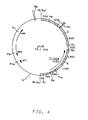
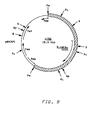
- Plasmid pYJ30 is shown in detail in Figure 7 while plasmid pYJ32 is similarly depicted in Figure 8.
- the plasmids, transformed into an E. coli host have been deposited with the Northern Regional Research Center of the U.S. Department of Agriculture, Peoria, Illinois, to insure free access to the public upon issuance of this application as a patent.
- the deposited strains have been assigned accession numbers as follows: Characterization of Pichia pastoris Autonomous Replication
- the autonomous replication sequences of the invention can conveniently be recovered from pYJ30 and pYJ32, respectively, by treating the plasmids with the restriction enzymes EcoRI and HindIII.
- the desired ARS element is then obtained with about 23 extra base pairs at the 5 1 end (adjacent the R 1 site) and with about 5 extra base pairs at the 3 1 end (adjacent the H 3 site).
- the PARS1 and PARS2 inserts can, of course, also be recovered from pYJ30 and pYJ32 by treatment of the plasmids with a variety of other restriction enzymes, as readily recognized by those of skill in the art upon inspection of the restriction maps provided in Figures 7 and 8.
- the PARS1 and PARS2 inserts have been characterized by restriction enzyme mapping. These two DNA fragments are shown in Figures 1 and 2, respectively.
- the nucleotide sequence for PARS1 has been determined to be:
- the nucleotide sequence for PARS2 has been determined to be:
- An average plasmid copy number per Pichia pastoris cell was derived from the ratio of the amount of the genomic copy of the Pichia HIS4 gene to that of plasmid-borne HIS4 gene.
- the average number of copies of plasmid DNA containing the Pichia HIS4 gene relative to the number of copies of Pichia chromosomal HIS4 gene was about 10-15. It is recognized by those of skill in the art that the values for copy number derived as described herein represent minimum estimates for the number of plasmid copies per cell.
- DNA sequences which have autonomous replication activity in a host of the genus Pichia can be isolated by transforming the Pichia host with a library of DNA fragments constructed in a vector which contains, among other DNA sequences, a marker gene, but does not contain any DNA sequences with ARS activity in Pichia.
- the marker gene employed will confer a selectable phenotype upon the host yeast strain.
- the frequency of transformation of the host strain with the vector will be increased by one or more orders of magnitude when DNA sequences with ARS activity are present in the vector compared to the frequency of transformation with unmodified vector.
- selection and isolation of transformed host will provide organisms carrying plasmids with inserted DNA sequences which have ARS activity. In this fashion, DNA sequences from any source which have ARS activity in Pichia can be readily isolated.
- Centrifugation is carried out for a period of time and at a spin rate sufficient to provide a clear supernatant. Generally, centrifugation of yeast cells is carried out at at least 1500 g for at least 5 minutes.
- Nucleic acid extractions with phenol/chloroform/ isoamyl alcohol involve contacting the nucleic acid containing solution with an equal volume of a 50:48:2 ratio by volume mixture of phenol, chloroform and isoamyl alcohol, respectively. Extractions with chloroform/isoamyl alcohol involve contacting the solution to be treated with an equal volume of 48:2 ratio by volume mixture of chloroform and isoamyl alcohol.
- Ethanol precipitation of nucleic acids involves first adjusting the salt content of the nucleic acid-containing solution, if necessary, then contacting the solution with two volumes of cold ethanol, then collecting the precipitate by centrifugation.
- spheroplast formation Since the preparation of spheroplasts is a critical step in the transformation procedure, one should monitor spheroplast formation as follows: add 100 pL aliquots of cells to 900 pL of 5% SDS and 900 ⁇ L of 1 M Sorbitol before or just after the addition of zymolyase and at various times during the incubation period. Stop the incubation at the point where cells lyse in SDS but not in sorbitol (usually between 30 and 60 minutes of incubation).
- strains employed include:
- pYA2 ( Figure 9) which consists of the S. cerevisiae HIS4 gene on a 9.3 kb PstI fragment inserted at the PstI site of pBR325 was the source of the S. cerevisiae HIS4 gene fragments and has been deposited in an E. coli host and is available to the public as NRRL B-15874.
- IMG a minimal medium, consists of the following:
- E. coli was cultured in either LB medium or 2B medium (0.2% NH 4 PO 4 , 1.2% Na 2 HP0 4 , 0.013% MgSO 4 ⁇ 7H 2 O, 0.074% CaCl 2 ⁇ 2H 2 O, 1 ⁇ g/mL thiamine and 0.4% dextrose) supplemented with 100 ⁇ g/mL tryptophan, and 0.2% Casamino acids.
- Both Pichia pastoris and S. cerevisiae DNA preparations were carried out by growing yeast cells in 100 mL of minimal medium until A 600 equals 1-2 and then harvesting the cells by centrifugation at 2,000 g for 5 minutes. The cells were washed once in H 2 0, once in SED,. once in 1 M sorbitol and then suspended in 5 mL of 0.1 M Tris-HC1 (pH 7.0) which is 1 M in sorbitol. The cells were mixed with 50-100 pL of a 4 mg/mL solution of Zymolase 60,000 (Miles Laboratories) and incubated at 30°C for 1 hour to digest the cell walls.
- the spheroplast preparation was then centrifuged at 1000 g for 5-10 minutes and suspended in Lysis buffer (0.1% SDS, 10 mM Tris-HCl, (pH 7.4), 5 mM EDTA and 50 mM NaCl). Proteinase K (Boehringer Mannheim) -and RNase A (Sigma) were each added to 100 pg/mL and the mixtures incubated at 37°C for 30 minutes. DNA was deproteinized by gently mixing the preparation with an equal volume of chloroform containing isoamyl alcohol and the phases were separated by centrifugation at 12,000 g for 20 minutes.
- Lysis buffer 0.1% SDS, 10 mM Tris-HCl, (pH 7.4), 5 mM EDTA and 50 mM NaCl.
- Proteinase K Boehringer Mannheim
- RNase A RNase A
- the upper (aqueous) phase was drawn off into a fresh tube and extracted with an equal volume of phenol/ chloroform/isoamyl alcohol.
- the phases were separated as before and the top phase placed in a tube containing 2-3 volumes of cold 100% ethanol.
- the sample was gently mixed and DNA was collected by spooling onto a plastic rod.
- the DNA was immediately dissolved in 1 mL of TE buffer and dialyzed overnight at 4°C against 100 volumes TE buffer.
- the samples were mixed with 100 pL of 5 M potassium acetate, held in an ice bath for 15 minutes and centrifuged for 5 minutes.
- the supernatants were decanted into a fresh microfuge tube containing 1 mL of 100% ethanol, mixed and immediately centrifuged for 10 seconds. Finally, the DNA pellets were air dried for 10-15 minutes and dissolved in 50 ⁇ L of TE buffer.
- E. coli cultures for large scale (0.5-1 L) plasmid preparations were grown at 37°C with shaking in 2B medium supplemented as described above and with the appropriate antibiotic.
- cultures were grown to an A 550 of about 0.7 at which time sufficient chloramphenicol was added to give a concentration of 100 pg/mL and cells harvested approximately 15 hours later.
- Strains which contained pBR325 derived plasmids were inoculated into the supplemented 2B medium at a starting A 550 of about 0.01-0.05 and incubated with shaking at 37°C for 20-24 hours before harvesting. Plasmids were isolated by the alkaline lysis method described by Birnboim and Doly (1979).
- Plasmids were isolated by the alkaline lysis method described by Birnboim and Doly (1979).
- Restriction enzymes were obtained from New England Biolabs and Bethesda Research Laboratories and digestions were performed by routine techniques. Restriction mappings were carried out by comparing parallel digestions of plasmids with and without insert DNA. Restriction fragments were purified by electroelution from agarose gels into Whatman 3 MM paper strips backed by dialysis tubing. The fragments were recovered from the paper and tubing by 3-4 washings with 0.1-0.2 mL volumes of a solution which contained 0.1 M NaCl, 50 mM Tris-HC1 (pH 8.0) and 1 mM EDTA. Finally, the fragments were extracted with phenol/chloroform/isoamyl alcohol, precipitated with ethanol and redissolved in a small volume of TE buffer.
- Pichia pastoris DNA-pYJ8 ⁇ Cla library construction 50 ⁇ g of pYJ8 ⁇ Cla was digested to completion with ClaI and treated with calf intestinal alkaline phosphatase to remove the terminal 5' phosphate from the DNA.
- a 100 ⁇ g aliquot of DNA from Pichia pastoris NRRL Y-15851 was partially digested with 20 units of TaqI by incubation for 5 minutes at 65°C in a total volume of 1 mL. Fragments of 5 to 10 kbp were size selected by electroelution from a 0.5% agarose gel (See Example II, Section E).
- One pg of the vector and 2 ⁇ g of the Pichia TaqI fragments were mixed with 20 units of T4 DNA ligase (Bethesda Research Laboratories) in a total volume of 200 ⁇ L and incubated overnight at 4°C.
- the ligated DNAs were transformed into E. coli by adding the entire ligation reaction mix to 2 mL of competent E. coli 848 cells and incubating for 15 minutes at 0°C. The mixture was warmed to 37°C for 5 minutes after which time 40 mL of LB medium was added and the 37°C incubation continued for another 1 hour. Ampicillin was then added to give a total concentration of 100 ⁇ g/mL and the incubation continued for a second hour.
- the cells were centrifuged for 10 minutes at 3,000 g, resuspended in 1 mL of fresh LB medium and spread in equal aliquots on 10 LB agar plates containing 100 pg/mL of ampicillin. The approximately 10,000 colonies which resulted were scraped from the plates and a portion of the cells was inoculated into 500 mL of the supplemented 2B medium at a starting A 550 of about 0.1. The culture was grown and plasmid was extracted as described above.
- Hybridizations were carried out by the method described by Southern (1975). For transfer of large or supercoiled DN A molecules to nitrocellulose, DNA was first partially hydrolyzed by soaking agarose gels in 0.25 M HCl for 10 minutes prior to alkali denaturation. The hybridization of labelled fragments from the S. cerevisiae HIS4 gene to Pichia pastoris DNA was performed in the presence of 50% formamide, 6x SSC, 5x Denhardt's, 0.1% SDS, 1 mM EDTA, and 100 ⁇ g/mL denatured herring sperm DNA at 42°C. Post-hybridization washes were in 2x SSC, 1 mM EDTA, 0.1% SDS and 1.0% sodium pyrophosphate at 55°C.
- DNA sequencing was by the dideoxynucleotide chain termination method of Sanger et al (1980).
- Two plasmids, pYA63, containing PARS1 and pYA90 containing PARS2 were selected for further analysis. Both of these plasmids transformed Pichia pastoris NRRL Y-15851 (GS115) at very high frequency, were maintained as autonomous elements and each contained a novel fragment of P. pastoris DNA.
- Pichia ARS-containing plasmids The ability of Pichia ARS-containing plasmids to be maintained as autonomous elements in Pichia pastoris cells was determined as follows: A transformant colony was picked from the regeneration agar plate and streaked onto an SD medium agar plate and inoculated into liquid IMG medium. The SD plate was incubated at 30°C for 3 days after which time a single colony was picked from this plate, streaked onto a second SD plate and inoculated into a second flask of IMG medium. This process was repeated a third time. The 3 IMG cultures were grown at 30°C with shaking to an A 600 of about 1-2 and then harvested by centrifugation.
- DNA from the yeast cultures was extracted as described above, electrophoresed at 30 Volts and 30 mAmps for 10-15 hours into 0.8% agarose gels, transferred to nitrocellulose and hybridized to 32 P-labelled pBR322 or pBR325 as described above.
- a sample containing 10 ng of plasmid isolated from E. coli and a sample containing 1-2 N g of untransformed Pichia pastoris NRRL Y-15851 (GS115) DNA were electrophoresed in parallel with the experimental samples.
- the labelled probe hybridized in a pattern identical to the plasmid DNA isolated from E. coli.
- the labelled probe was found to hybridize to high molecular weight chromosomal DNA from Pichia pastoris NRRL Y-15851 (GS115) when transformed with pYJ8ACla (an integrative transforming vector which has no ARS activity in Pichia). Probe did not hybridize to DNA from untransformed NRRL Y-15851.
- An average plasmid copy number per P. pastoris cell was derived from the ratio of the amount of the genomic copy of the P. pastoris HIS4 gene to that of a plasmid-borne HIS4 gene. Since the strains examined contained plasmids with the Pichia HIS4 gene, DNAs were extracted, digested with restriction endonucleases, electrophoresed into an agarose gel, transferred to a nitrocellulose filter and hybridized with a 32 P -labelled 2.7 kbp BglII fragment containing the Pichia HIS4 gene.
Landscapes
- Genetics & Genomics (AREA)
- Health & Medical Sciences (AREA)
- Life Sciences & Earth Sciences (AREA)
- Engineering & Computer Science (AREA)
- Zoology (AREA)
- Wood Science & Technology (AREA)
- Organic Chemistry (AREA)
- Biotechnology (AREA)
- General Engineering & Computer Science (AREA)
- Biomedical Technology (AREA)
- Chemical & Material Sciences (AREA)
- Bioinformatics & Cheminformatics (AREA)
- General Health & Medical Sciences (AREA)
- Physics & Mathematics (AREA)
- Plant Pathology (AREA)
- Biochemistry (AREA)
- Molecular Biology (AREA)
- Biophysics (AREA)
- Mycology (AREA)
- Microbiology (AREA)
- Micro-Organisms Or Cultivation Processes Thereof (AREA)
- Preparation Of Compounds By Using Micro-Organisms (AREA)
- Bakery Products And Manufacturing Methods Therefor (AREA)
- Cosmetics (AREA)
- Purification Treatments By Anaerobic Or Anaerobic And Aerobic Bacteria Or Animals (AREA)
- Medicines That Contain Protein Lipid Enzymes And Other Medicines (AREA)
- Medicines Containing Material From Animals Or Micro-Organisms (AREA)
- Medicines Containing Plant Substances (AREA)
- Peptides Or Proteins (AREA)
- Alcoholic Beverages (AREA)
- Saccharide Compounds (AREA)
Priority Applications (1)
| Application Number | Priority Date | Filing Date | Title |
|---|---|---|---|
| AT85113735T ATE71660T1 (de) | 1984-10-30 | 1985-10-29 | Autonome replikationssequenzen fuer hefestaemme des genus pichia. |
Applications Claiming Priority (2)
| Application Number | Priority Date | Filing Date | Title |
|---|---|---|---|
| US666577 | 1984-10-30 | ||
| US06/666,577 US4837148A (en) | 1984-10-30 | 1984-10-30 | Autonomous replication sequences for yeast strains of the genus pichia |
Publications (3)
| Publication Number | Publication Date |
|---|---|
| EP0180899A2 true EP0180899A2 (de) | 1986-05-14 |
| EP0180899A3 EP0180899A3 (en) | 1987-09-23 |
| EP0180899B1 EP0180899B1 (de) | 1992-01-15 |
Family
ID=24674597
Family Applications (1)
| Application Number | Title | Priority Date | Filing Date |
|---|---|---|---|
| EP85113735A Expired - Lifetime EP0180899B1 (de) | 1984-10-30 | 1985-10-29 | Autonome Replikationssequenzen für Hefestämme des Genus Pichia |
Country Status (18)
| Country | Link |
|---|---|
| US (1) | US4837148A (de) |
| EP (1) | EP0180899B1 (de) |
| JP (2) | JPH0795955B2 (de) |
| AT (1) | ATE71660T1 (de) |
| AU (1) | AU563860B2 (de) |
| CA (1) | CA1273882C (de) |
| DE (1) | DE3585206D1 (de) |
| DK (1) | DK496185A (de) |
| ES (1) | ES8609463A1 (de) |
| FI (1) | FI94426C (de) |
| GR (1) | GR852607B (de) |
| IE (1) | IE58216B1 (de) |
| IL (1) | IL76762A (de) |
| MX (1) | MX429A (de) |
| NO (1) | NO177269C (de) |
| PT (1) | PT81400B (de) |
| SG (1) | SG43192G (de) |
| ZA (1) | ZA858183B (de) |
Cited By (8)
| Publication number | Priority date | Publication date | Assignee | Title |
|---|---|---|---|---|
| EP0221455A1 (de) * | 1985-10-25 | 1987-05-13 | Phillips Petroleum Company | Pichia pastoris-Argininosuccinat-Lyase-Gen und seine Verwendungen |
| EP0226752A1 (de) * | 1985-10-25 | 1987-07-01 | Research Corporation Technologies, Inc. | Methode zur erhöten Expression von Polypeptiden in Hefe des Gattung Pichia |
| EP0244598A1 (de) * | 1986-03-14 | 1987-11-11 | Phillips Petroleum Company | Methanol- und glukoseempfindliche Regelregionen in Hefe |
| FR2626584A1 (fr) * | 1988-01-28 | 1989-08-04 | Agronomique Inst Nat Rech | Sequence ars efficace chez yarrowia lipolytica et procede pour sa preparation |
| EP0344459A2 (de) | 1988-04-25 | 1989-12-06 | Research Corporation Technologies, Inc. | Expression von menschlichen Serumalbumin in methylotrophischen Hefen |
| EP0533153A3 (en) * | 1991-09-18 | 1994-10-05 | Res Corp Technologies Inc | Pichia pastoris linear plasmids and dna fragments thereof |
| US6197548B1 (en) | 1990-04-02 | 2001-03-06 | Medeva Pharma Limited | Transformed Pichia expressing the pertactin antigen |
| WO2020135763A1 (zh) * | 2018-12-28 | 2020-07-02 | 丰益(上海)生物技术研发中心有限公司 | 用于表达外源基因的毕赤酵母突变株 |
Families Citing this family (161)
| Publication number | Priority date | Publication date | Assignee | Title |
|---|---|---|---|---|
| US4879231A (en) * | 1984-10-30 | 1989-11-07 | Phillips Petroleum Company | Transformation of yeasts of the genus pichia |
| US4855231A (en) * | 1984-10-30 | 1989-08-08 | Phillips Petroleum Company | Regulatory region for heterologous gene expression in yeast |
| US4885242A (en) * | 1984-10-30 | 1989-12-05 | Phillips Petroleum Company | Genes from pichia histidine pathway and uses thereof |
| US4996144A (en) * | 1985-01-25 | 1991-02-26 | Calgene, Inc. | Microassay for detection of DNA and RNA |
| US4895800A (en) * | 1985-11-26 | 1990-01-23 | Phillips Petroleum Company | Yeast production of hepatitis B surface antigen |
| JP2596466B2 (ja) * | 1990-03-03 | 1997-04-02 | アサヒビール株式会社 | ダニの主要アレルゲンの還伝情報を有するdnaおよび該アレルゲンの製造方法 |
| US6440681B1 (en) | 1990-04-03 | 2002-08-27 | Merck & Co., Inc. | Methods for identifying agonists and antagonists for human neuronal nicotinic acetylcholine receptors |
| US5369028A (en) * | 1990-04-03 | 1994-11-29 | The Salk Institute Biotechnology/Industrial Associates, Inc. | DNA and mRNA encoding human neuronal nicotinic acetylcholine receptor compositions and cells transformed with same |
| US5258302A (en) * | 1990-07-03 | 1993-11-02 | The Salk Institute Biotechnology/Industrial Associates, Inc. | DNA for expression of aprotinin in methylotrophic yeast cells |
| US5612198A (en) * | 1990-09-04 | 1997-03-18 | The Salk Institute | Production of insulin-like growth factor-1 in methylotrophic yeast cells |
| CA2090969C (en) * | 1990-09-04 | 2001-08-21 | Russell Arthur Brierley | Production of insulin-like growth factor-1 in methylotrophic yeast cells |
| EP0785273A1 (de) | 1990-11-26 | 1997-07-23 | Genetics Institute, Inc. | Gepaarte basische Aminosäuren konvertierendes Enzym und dafür kodierende DNA Sequenz |
| WO1992013951A1 (en) * | 1991-02-04 | 1992-08-20 | The Salk Institute Biotechnology/Industrial Associates, Inc. | Production of human serum albumin in methylotrophic yeast cells |
| AU661844B2 (en) * | 1991-04-01 | 1995-08-10 | Merck Sharp & Dohme Corp. | Genes which influence (pichia) proteolytic activity, and uses therefor |
| CA2058820C (en) * | 1991-04-25 | 2003-07-15 | Kotikanyad Sreekrishna | Expression cassettes and vectors for the secretion of human serum albumin in pichia pastoris cells |
| US5330901A (en) * | 1991-04-26 | 1994-07-19 | Research Corporation Technologies, Inc. | Expression of human serum albumin in Pichia pastoris |
| JP3628691B2 (ja) * | 1993-03-08 | 2005-03-16 | メルク エンド カンパニー インコーポレーテッド | ヒト神経細胞性ニコチン性アセチルコリン受容体組成物およびそれらの使用方法 |
| JPH08509607A (ja) | 1993-04-20 | 1996-10-15 | ザ ソールク インスチチュート バイオテクノロジー/インダストリアル アソシエイツ,インコーポレイテッド | ヒトn−メチル−d−アスパラギン酸受容体サブユニット、これをコードする核酸およびその用途 |
| US5521297A (en) | 1993-06-04 | 1996-05-28 | Salk Institute Biotechnology/Industrial Associates | Nucleic acids encoding human metabotropic glutamate receptors |
| US5912122A (en) | 1993-06-04 | 1999-06-15 | Sibia Neurosciences, Inc. | Nucleic acids encoding and method for detecting nucleic acid encoding human metabotropic glutamate receptor subtype mGluR6 |
| US6001581A (en) | 1993-06-04 | 1999-12-14 | Sibia Neurosciences, Inc. | Cation-based bioassay using human metabotropic glutamate receptors |
| US6495343B1 (en) | 1993-06-18 | 2002-12-17 | The Salk Institute For Biological Studies | Cloning and recombinant production of CRF receptor(s) |
| US6638905B2 (en) | 1993-06-18 | 2003-10-28 | The Salk Institute For Biological Studies | Cloning and recombinant production of CFR receptor(s) |
| GB2287941B (en) * | 1993-11-08 | 1998-01-28 | Salk Inst Biotech Ind | Human alpha2 neuronal nicotinic acetylcholine receptor compositions and methods employing same |
| US5629167A (en) | 1994-04-19 | 1997-05-13 | Biocine S.P.A. | Detection of antibodies against Chlamydia trachomatis pgp3 antigen in patient sera by enzyme-linked immunosorbent assay |
| US5712249A (en) * | 1994-09-08 | 1998-01-27 | Ciba-Geigy Corporation | Use of insulin-like growth factors I and II for inhibition of inflammatory response |
| US5945275A (en) * | 1994-10-18 | 1999-08-31 | Corvas International, Inc. | Nematode-extracted anticoagulant protein |
| US6090916A (en) * | 1994-10-18 | 2000-07-18 | Corvas International, Inc. | Nematode-extracted serine protease inhibitors and anticoagulant proteins |
| US5863894A (en) * | 1995-06-05 | 1999-01-26 | Corvas International, Inc. | Nematode-extracted anticoagulant protein |
| US5866542A (en) * | 1994-10-18 | 1999-02-02 | Corvas International, Inc. | Nematode-extracted anticoagulant protein |
| CA2202351A1 (en) * | 1994-10-18 | 1996-04-25 | George Phillip Vlasuk | Nematode-extracted serine protease inhibitors and anticoagulant proteins |
| US5866543A (en) * | 1995-06-05 | 1999-02-02 | Corvas International, Inc. | Nematode-extracted anticoagulant protein |
| US5872098A (en) * | 1995-06-05 | 1999-02-16 | Corvas International, Inc. | Nematode-extracted anticoagulant protein |
| US6485967B1 (en) | 1995-06-07 | 2002-11-26 | Merck & Co., Inc. | Human neuronal nicotinic acetylcholine receptor α6 and β3 nucleic acid |
| MX9605082A (es) | 1996-10-24 | 1998-04-30 | Univ Autonoma De Nuevo Leon | Levaduras metilotroficas modificadas geneticamente para la produccion y secrecion de hormona de crecimiento humano. |
| US6544523B1 (en) * | 1996-11-13 | 2003-04-08 | Chiron Corporation | Mutant forms of Fas ligand and uses thereof |
| DE69840508D1 (de) | 1997-08-27 | 2009-03-12 | Childrens Hosp Medical Center | Molekular-mimetika von meningokokkus b epitopen |
| BR9813930A (pt) | 1997-11-06 | 2006-12-19 | Chiron Spa | antìgeno neisserial |
| ATE446368T1 (de) | 1998-01-14 | 2009-11-15 | Novartis Vaccines & Diagnostic | Antigene aus neisseria meningitidis |
| GB9808932D0 (en) | 1998-04-27 | 1998-06-24 | Chiron Spa | Polyepitope carrier protein |
| MX343752B (es) | 1998-05-01 | 2016-11-22 | Novartis Vaccines & Diagnostics Inc | Antigenos de neisseria meningitidis y composiciones que los contienen. |
| EP1121437B1 (de) | 1998-10-15 | 2008-02-20 | Novartis Vaccines and Diagnostics, Inc. | Gene mit veränderter expression in metastatischen brust- oder dickdarm- krebszellen |
| DK1141331T3 (da) | 1998-12-16 | 2009-01-05 | Novartis Vaccines & Diagnostic | Human cyclinafhængig kinase (hPNQALRE) |
| US6780615B1 (en) | 1998-12-31 | 2004-08-24 | Genway Biotech Inc. | Production of recombinant monellin using methylotrophic yeast expression system |
| NZ571167A (en) | 1999-04-30 | 2010-05-28 | Novartis Vaccines & Diagnostic | Fragments from Neisseria protein ORF 953 and their use in medicaments and diagnostic reagents |
| GB9911683D0 (en) | 1999-05-19 | 1999-07-21 | Chiron Spa | Antigenic peptides |
| US7504253B2 (en) * | 1999-06-11 | 2009-03-17 | The Burnham Institute For Medical Research | Nucleic acid encoding proteins involved in protein degradation, products and methods related thereof |
| GB9916529D0 (en) | 1999-07-14 | 1999-09-15 | Chiron Spa | Antigenic peptides |
| US6440414B1 (en) * | 1999-10-01 | 2002-08-27 | Amgen Inc. | Pharmaceutical compositions of fibrinolytic agent |
| US6261820B1 (en) * | 1999-10-01 | 2001-07-17 | Amgen Inc. | Fibronolytically active polypeptide |
| AU783767B2 (en) | 1999-10-14 | 2005-12-01 | Takara Bio Usa, Inc. | Anthozoa derived chromophores/fluorophores and methods for using the same |
| PT2275551E (pt) | 1999-10-29 | 2015-06-29 | Novartis Vaccines & Diagnostic | Péptidos antigénicos de neisseria |
| US7033776B2 (en) * | 1999-12-17 | 2006-04-25 | Amgen Inc. | Method for treatment of indwelling catheter occlusion using fibrinolytic metalloproteinases |
| EP1985701B1 (de) | 2000-01-10 | 2012-05-30 | Novartis Vaccines and Diagnostics, Inc. | In Brustkrebs differenziell exprimierte Gene |
| ES2588917T3 (es) | 2000-01-17 | 2016-11-07 | Glaxosmithkline Biologicals Sa | Vacuna de VME suplementada contra meningococo |
| US7449308B2 (en) | 2000-06-28 | 2008-11-11 | Glycofi, Inc. | Combinatorial DNA library for producing modified N-glycans in lower eukaryotes |
| US7863020B2 (en) | 2000-06-28 | 2011-01-04 | Glycofi, Inc. | Production of sialylated N-glycans in lower eukaryotes |
| US7029872B2 (en) * | 2000-06-28 | 2006-04-18 | Glycofi, Inc | Methods for producing modified glycoproteins |
| US7598055B2 (en) * | 2000-06-28 | 2009-10-06 | Glycofi, Inc. | N-acetylglucosaminyltransferase III expression in lower eukaryotes |
| US8697394B2 (en) * | 2000-06-28 | 2014-04-15 | Glycofi, Inc. | Production of modified glycoproteins having multiple antennary structures |
| US7625756B2 (en) | 2000-06-28 | 2009-12-01 | GycoFi, Inc. | Expression of class 2 mannosidase and class III mannosidase in lower eukaryotic cells |
| EP2028275A3 (de) | 2000-06-30 | 2009-05-06 | VIB vzw | Modifikation der Proteinglycosylierung in Pichia Pastoris |
| AU2001273435A1 (en) * | 2000-07-14 | 2002-01-30 | Charles Abbas | Transformation systems for flavinogenic yeast |
| US7009045B2 (en) * | 2000-07-14 | 2006-03-07 | Archer-Daniels-Midland Company | Transformation systems for flavinogenic yeast |
| US7939087B2 (en) | 2000-10-27 | 2011-05-10 | Novartis Vaccines And Diagnostics, Inc. | Nucleic acids and proteins from Streptococcus groups A & B |
| WO2002059337A1 (en) * | 2001-01-26 | 2002-08-01 | Georgetown University School Of Medicine | Anti-apoptopic gene scc-s2 and diagnostic and therapeutic uses thereof |
| GB0107658D0 (en) | 2001-03-27 | 2001-05-16 | Chiron Spa | Streptococcus pneumoniae |
| GB0107661D0 (en) | 2001-03-27 | 2001-05-16 | Chiron Spa | Staphylococcus aureus |
| AU2002303261A1 (en) * | 2001-04-06 | 2002-10-21 | Georgetown University | Gene brcc2 and diagnostic and therapeutic uses thereof |
| WO2002081640A2 (en) * | 2001-04-06 | 2002-10-17 | Georgetown University | Gene shinc-1 and diagnostic and therapeutic uses thereof |
| WO2002081641A2 (en) * | 2001-04-06 | 2002-10-17 | Georgetown University | Gene scc-112 and diagnostic and therapeutic uses thereof |
| WO2002081642A2 (en) | 2001-04-06 | 2002-10-17 | Georgetown University | Gene brcc-3 and diagnostic and therapeutic uses thereof |
| ES2386386T3 (es) | 2001-12-12 | 2012-08-20 | Novartis Vaccines And Diagnostics S.R.L. | Inmunización contra Chlamydia trachomatis |
| WO2003054158A2 (en) * | 2001-12-19 | 2003-07-03 | The University Of Chicago | Rapidly maturing fluorescent proteins and methods for using the same |
| US7138512B2 (en) * | 2002-04-10 | 2006-11-21 | Georgetown University | Gene SHINC-2 and diagnostic and therapeutic uses thereof |
| US7244565B2 (en) * | 2002-04-10 | 2007-07-17 | Georgetown University | Gene shinc-3 and diagnostic and therapeutic uses thereof |
| CA2482485A1 (en) * | 2002-04-15 | 2003-10-30 | Merck & Co., Inc. | Matrix analysis of gene expression in cells (magec) |
| US20030228317A1 (en) * | 2002-05-22 | 2003-12-11 | Prafulla Gokhale | Gene BRCC-1 and diagnostic and therapeutic uses thereof |
| WO2003100022A2 (en) * | 2002-05-24 | 2003-12-04 | Restoragen, Inc. | Methods and dna constructs for high yield production of polypeptides |
| AU2003239865A1 (en) * | 2002-05-24 | 2003-12-12 | Restoragen Inc. | Method for universal enzymatic production of bioactive peptides |
| EP1521767B1 (de) | 2002-05-24 | 2009-12-16 | Restoragen Inc. | Verfahren und konstrukte zur expression von clostripain mit hoher ausbeute |
| AU2003243316A1 (en) * | 2002-05-24 | 2003-12-12 | Nps Allelix Corp. | Method for enzymatic production of glp-2(1-33) and glp-2-(1-34) peptides |
| AU2003239863A1 (en) * | 2002-05-24 | 2003-12-12 | Restoragen Inc. | Method for enzymatic production of glp-1 (7-36) amide peptides |
| US7252933B2 (en) | 2002-06-26 | 2007-08-07 | Flanders Interuniversity Institute For Biotechnology | Protein glycosylation modification in methylotrophic yeast |
| CA2506318C (en) | 2002-11-15 | 2011-07-12 | Chiron Srl | Unexpected surface proteins in neisseria meningitidis |
| US7118901B2 (en) * | 2002-12-18 | 2006-10-10 | Roche Diagnostics Operations, Inc. | Recombinant bovine pancreatic desoxyribonuclease I with high specific activity |
| ATE387494T1 (de) * | 2002-12-20 | 2008-03-15 | Hoffmann La Roche | Hitzelabile desoxyribonuklease i-varianten |
| US7332299B2 (en) | 2003-02-20 | 2008-02-19 | Glycofi, Inc. | Endomannosidases in the modification of glycoproteins in eukaryotes |
| EP1460425A1 (de) * | 2003-03-17 | 2004-09-22 | Boehringer Mannheim Gmbh | Entglykosilierte Enzymen für Konjugaten |
| GB0308198D0 (en) | 2003-04-09 | 2003-05-14 | Chiron Srl | ADP-ribosylating bacterial toxin |
| AU2004263900A1 (en) * | 2003-08-08 | 2005-02-17 | Arriva Pharmaceuticals, Inc. | Methods of protein production in yeast |
| WO2005035569A2 (en) * | 2003-10-10 | 2005-04-21 | Five Prime Therapeutics, Inc. | Kiaa0779, splice variants thereof, and methods of their use |
| PT1684719E (pt) * | 2003-11-14 | 2012-02-03 | Baxter Int | Composições de alfa-1-antitripsina e métodos de tratamento utilizando estas composições |
| US7829307B2 (en) * | 2003-11-21 | 2010-11-09 | Nps Pharmaceuticals, Inc. | Production of glucagon-like peptide 2 |
| ES2337684T3 (es) * | 2003-12-05 | 2010-04-28 | F. Hoffmann-La Roche Ag | Carboxipeptidasa b recombinante y su purificacion. |
| BRPI0507169A (pt) * | 2004-02-02 | 2007-06-26 | Ambrx Inc | polipeptìdeos do hormÈnio de crescimento humano modificados e seu usos |
| US7914771B2 (en) * | 2004-03-09 | 2011-03-29 | Arriva Pharmaceuticals, Inc. | Treatment of chronic obstructive pulmonary disease by low dose inhalation of protease inhibitor |
| KR101222281B1 (ko) | 2004-03-29 | 2013-01-28 | 가르파마 컴퍼니 리미티드 | 신규 갈렉틴 9 개변체 단백질 및 그 용도 |
| EP1732944B1 (de) | 2004-04-07 | 2012-09-05 | The University of Chicago | Monomere, rotfluoreszierende proteine |
| EP1771205B1 (de) * | 2004-06-18 | 2016-10-26 | Ambrx, Inc. | Neuartige antigen-bindende polypeptide und ihre verwendungen |
| JP2008507280A (ja) * | 2004-07-21 | 2008-03-13 | アンブレツクス・インコーポレイテツド | 非天然コードアミノ酸を用いた生合成ポリペプチド |
| US20070105768A1 (en) * | 2004-11-10 | 2007-05-10 | Rajiv Nayar | Dry recombinant human alpha 1-antitrypsin formulation |
| CA2594557C (en) | 2004-12-22 | 2016-04-26 | Ambrx, Inc. | Modified human growth hormone |
| JP4990792B2 (ja) * | 2004-12-22 | 2012-08-01 | アンブレツクス・インコーポレイテツド | アミノアシル−tRNAシンテターゼの組成物およびこの使用 |
| BRPI0519170A8 (pt) * | 2004-12-22 | 2018-05-08 | Ambrx Inc | formulações de hormônio de crescimento humano que compreendem um aminoácido não naturalmente codificado |
| NZ555308A (en) | 2004-12-22 | 2010-10-29 | Ambrx Inc | Compositions containing, methods involving, and uses of non-natural amino acids and polypeptides |
| JP2008525032A (ja) | 2004-12-22 | 2008-07-17 | アンブレツクス・インコーポレイテツド | 組換えヒト成長ホルモンを発現及び精製するための方法 |
| PL1865940T3 (pl) | 2005-03-21 | 2013-06-28 | Virobay Inc | Alfa-ketoamidowe związki jako inhibitory proteaz cysteinowych |
| EP3683230A1 (de) | 2005-05-12 | 2020-07-22 | ZymoGenetics, Inc. | Zusammensetzungen und verfahren zur modulation von immunsystemreaktionen |
| KR20080026135A (ko) * | 2005-06-03 | 2008-03-24 | 암브룩스, 인코포레이티드 | 개선된 인간 인터페론 분자 및 이의 용도 |
| WO2007021297A1 (en) * | 2005-08-18 | 2007-02-22 | Ambrx, Inc. | COMPOSITIONS OF tRNA AND USES THEREOF |
| ATE517919T1 (de) * | 2005-09-14 | 2011-08-15 | Sanofi Aventis Deutschland | Spaltung von insulinvorstufen durch eine trypsinvariante |
| WO2007053732A2 (en) | 2005-11-01 | 2007-05-10 | Mayo Foundation For Medical Education And Research | Promoter polymorphisms of the blys gene and use in diagnostic methods |
| HRP20110404T1 (hr) * | 2005-11-08 | 2011-08-31 | Ambrx | Ubrzivači za modifikaciju ne-prirodnih aminokiselina i polipeptida ne-prirodnih aminokiselina |
| EP1951890A4 (de) * | 2005-11-16 | 2009-06-24 | Ambrx Inc | Verfahren und zusammensetzungen mit nichtnatürlichen aminosäuren |
| KR101423898B1 (ko) * | 2005-12-14 | 2014-07-28 | 암브룩스, 인코포레이티드 | 비-천연 아미노산 및 폴리펩티드를 함유하는 조성물, 비-천연 아미노산 및 폴리펩티드를 포함하는 방법, 및 비-천연 아미노산 및 폴리펩티드의 용도 |
| DK2054431T3 (da) | 2006-06-09 | 2012-01-02 | Novartis Ag | Konformere af bakterielle adhæsiner |
| CN101511856B (zh) * | 2006-09-08 | 2016-01-20 | Ambrx公司 | 脊椎动物细胞中抑制因子trna的转录 |
| KR20090060294A (ko) * | 2006-09-08 | 2009-06-11 | 암브룩스, 인코포레이티드 | 변형된 인간 혈장 폴리펩티드 또는 Fc 스캐폴드 및 그의 용도 |
| AU2007292892B9 (en) * | 2006-09-08 | 2013-02-28 | Ambrx, Inc. | Hybrid suppressor tRNA for vertebrate cells |
| US7985783B2 (en) | 2006-09-21 | 2011-07-26 | The Regents Of The University Of California | Aldehyde tags, uses thereof in site-specific protein modification |
| CA2682147C (en) | 2007-03-30 | 2017-08-08 | Ambrx, Inc. | Modified fgf-21 polypeptides and their uses |
| JP5967861B2 (ja) | 2007-04-03 | 2016-08-10 | オキシレイン ユーケー リミテッド | 分子のグリコシル化 |
| CN101675071B (zh) * | 2007-05-02 | 2014-06-18 | Ambrx公司 | 经修饰干扰素β多肽和其用途 |
| US7858759B2 (en) | 2007-10-04 | 2010-12-28 | Zymogenetics, Inc. | Anti-zB7H6 antibody-drug conjugates |
| US8679749B2 (en) * | 2007-11-01 | 2014-03-25 | The University Of Chicago | Red fluorescent proteins with enhanced bacterial expression, increased brightness and reduced aggregation |
| CA2703830A1 (en) | 2007-11-20 | 2009-05-28 | Ambrx, Inc. | Modified insulin polypeptides and their uses |
| US8003325B2 (en) * | 2007-11-30 | 2011-08-23 | Mayo Foundation For Medical Education And Research | Polymorphisms of the BLyS gene and use in diagnostic methods |
| SG188143A1 (en) | 2008-02-08 | 2013-03-28 | Ambrx Inc | Modified leptin polypeptides and their uses |
| BRPI0910286A2 (pt) * | 2008-03-03 | 2015-09-29 | Abbott Lab | métodos para transformação de levedura |
| EP2318029B1 (de) | 2008-07-23 | 2017-11-01 | Ambrx, Inc. | Modifizierte bovine g-csf-polypeptide und ihre verwendung |
| US8278418B2 (en) | 2008-09-26 | 2012-10-02 | Ambrx, Inc. | Modified animal erythropoietin polypeptides and their uses |
| PE20110480A1 (es) | 2008-09-26 | 2011-07-01 | Ambrx Inc | Microorganismos y vacunas dependientes de replicacion de aminoacidos no naturales |
| ITMI20090946A1 (it) | 2009-05-28 | 2010-11-29 | Novartis Ag | Espressione di proteine ricombinanti |
| KR102000383B1 (ko) | 2009-09-29 | 2019-07-15 | 유니버시테이트 젠트 | 만노스-1-포스포-6-만노스 결합의 포스포-6-만노스로의 가수분해 |
| US20130053550A1 (en) | 2009-11-19 | 2013-02-28 | Oxyrane Uk Limited | Yeast strains producing mammalian-like complex n-glycans |
| JP2013515081A (ja) | 2009-12-21 | 2013-05-02 | アンブルックス,インコーポレイテッド | 修飾されているブタのソマトトロピンポリペプチドおよびそれらの使用 |
| EA201290541A1 (ru) | 2009-12-21 | 2013-05-30 | Амбркс, Инк. | Модифицированные бычьи соматотропиновые полипептиды и их применение |
| FR2954349A1 (fr) | 2009-12-22 | 2011-06-24 | Agronomique Inst Nat Rech | Sulfatase modifiant selectivement les glycosaminoglycanes |
| US8617856B2 (en) * | 2010-01-07 | 2013-12-31 | Wisconsin Alumni Research Foundation | Fatty acid-producing hosts |
| US9567386B2 (en) | 2010-08-17 | 2017-02-14 | Ambrx, Inc. | Therapeutic uses of modified relaxin polypeptides |
| PE20140160A1 (es) | 2010-08-17 | 2014-02-08 | Ambrx Inc | Polipeptidos de relaxina modificados y sus usos |
| TWI480288B (zh) | 2010-09-23 | 2015-04-11 | Lilly Co Eli | 牛顆粒細胞群落刺激因子及其變體之調配物 |
| JP6131190B2 (ja) | 2010-09-29 | 2017-05-17 | オキシレイン ユーケー リミテッド | リン酸化n−グリカンの脱マンノシル化 |
| BR112013007616B1 (pt) | 2010-09-29 | 2023-01-24 | Oxyrane Uk Limited | Métodos para retirar o cap ("uncapping") de porções de manose-1- fosfo-6-manose e desmanosilar n-glicanos fosforilados em uma glicoproteína, para direcionar uma glicoproteína para o interior de uma célula de mamífero, e para converter uma glicoproteína de uma primeira forma que não se liga substancialmente a um receptor de manose-6-fosfato em uma segunda forma que se liga substancialmente a um receptor de manose-6-fosfato em uma célula de mamífero |
| CA2867237C (en) | 2012-03-15 | 2024-01-02 | Wouter Vervecken | Methods and materials for treatment of pompe's disease |
| US20140073022A1 (en) | 2012-09-10 | 2014-03-13 | Wisconsin Alumni Research Foundation | Production of polyhydroxyalkanoates with a defined composition from an unrelated carbon source |
| US9670495B2 (en) | 2013-02-25 | 2017-06-06 | University Of Washington Through Its Center For Commercialization | Pan-yeast autonomously replicating sequence |
| US20190040368A1 (en) | 2013-03-05 | 2019-02-07 | Oxyrane Uk Limited | Production of catalytically active type i sulfatase |
| TWI657094B (zh) | 2013-03-21 | 2019-04-21 | 全民科學與工業研究機構 | 三螺旋蛋白質之純化 |
| TWI738631B (zh) | 2013-09-09 | 2021-09-11 | 德商贏創運營有限公司 | 經修飾之細菌類膠原蛋白蛋白質 |
| US9708630B1 (en) | 2013-10-08 | 2017-07-18 | Wisconsin Alumni Research Foundation | Cells and methods for producing fatty alcohols |
| MX2017004947A (es) | 2014-10-24 | 2017-06-29 | Bristol Myers Squibb Co | Polipeptidos del factor de crecimiento de fibroblastos 2 (fgf-21) modificados y usos de los mismos. |
| WO2016186948A1 (en) | 2015-05-15 | 2016-11-24 | Albert Einstein College Of Medicine, Inc. | Gfp-derived fusion tags for protein expression |
| US10301653B2 (en) | 2015-07-06 | 2019-05-28 | Wisconsin Alumni Research Foundation | Microorganisms that co-consume glucose with non-glucose carbohydrates and methods of use |
| US10421951B2 (en) | 2016-06-22 | 2019-09-24 | Wisconsin Alumni Research Foundation | Gene construct encoding mutant thioesterase, mutant thioesterase encoded thereby, transformed host cell containing the gene construct, and method of using them to produce medium-chain fatty acids |
| SG10201912034UA (en) | 2017-02-08 | 2020-02-27 | Bristol Myers Squibb Co | Modified relaxin polypeptides comprising a pharmacokinetic enhancer and uses thereof |
| EP3700930A1 (de) | 2017-10-25 | 2020-09-02 | The Regents of the University of California | Antikörper gegen cdcp1 zur behandlung und zum nachweis von krebs |
| WO2021236919A1 (en) | 2020-05-20 | 2021-11-25 | Wisconsin Alumni Research Foundation | Cells and methods for producing methyl ketones |
| WO2022240359A1 (en) | 2021-05-12 | 2022-11-17 | Circular Industries Holding Pte Ltd. | Recombinant yeasts for producing acetone and/or isopropanol from fatty acid feedstocks |
| WO2024259198A1 (en) | 2023-06-15 | 2024-12-19 | Wisconsin Alumni Research Foundation | Microorganisms and methods for producing reuterin |
Family Cites Families (5)
| Publication number | Priority date | Publication date | Assignee | Title |
|---|---|---|---|---|
| FR2441659A1 (fr) * | 1978-11-14 | 1980-06-13 | Anvar | Nouveaux plasmides hybrides et microorganismes les contenant |
| US4354535A (en) * | 1980-04-21 | 1982-10-19 | Powell Robert Y | Hand-held automatic wire binding tool |
| US4617274A (en) * | 1981-10-29 | 1986-10-14 | Phillips Petroleum Company | Biochemical conversions by yeast fermentation at high cell densities |
| EP0096910B1 (de) * | 1982-05-19 | 1989-04-19 | Unilever N.V. | Hefe des Genus Kluyveromyces, modifiziert zur Expression von Preprothaumatin oder seinen verschiedenen allelischen und modifizierten Formen oder Maturationsformen |
| US4628033A (en) * | 1983-10-06 | 1986-12-09 | Pfizer Inc. | Novel host strain for transformation of Yarrowia lipolytica |
-
1984
- 1984-10-30 US US06/666,577 patent/US4837148A/en not_active Expired - Lifetime
-
1985
- 1985-08-06 CA CA488180A patent/CA1273882C/en not_active Expired
- 1985-10-08 IE IE247285A patent/IE58216B1/en not_active IP Right Cessation
- 1985-10-16 AU AU48757/85A patent/AU563860B2/en not_active Expired
- 1985-10-20 IL IL76762A patent/IL76762A/xx not_active IP Right Cessation
- 1985-10-23 FI FI854143A patent/FI94426C/fi not_active IP Right Cessation
- 1985-10-24 ZA ZA858183A patent/ZA858183B/xx unknown
- 1985-10-29 EP EP85113735A patent/EP0180899B1/de not_active Expired - Lifetime
- 1985-10-29 MX MX42985A patent/MX429A/es unknown
- 1985-10-29 ES ES548304A patent/ES8609463A1/es not_active Expired
- 1985-10-29 DE DE8585113735T patent/DE3585206D1/de not_active Expired - Lifetime
- 1985-10-29 GR GR852607A patent/GR852607B/el unknown
- 1985-10-29 AT AT85113735T patent/ATE71660T1/de not_active IP Right Cessation
- 1985-10-29 DK DK496185A patent/DK496185A/da not_active Application Discontinuation
- 1985-10-30 JP JP60243781A patent/JPH0795955B2/ja not_active Expired - Lifetime
- 1985-10-30 NO NO854332A patent/NO177269C/no not_active IP Right Cessation
- 1985-10-30 PT PT81400A patent/PT81400B/pt not_active IP Right Cessation
-
1992
- 1992-04-21 SG SG43192A patent/SG43192G/en unknown
-
1993
- 1993-06-30 JP JP5162611A patent/JP2552809B2/ja not_active Expired - Lifetime
Cited By (13)
| Publication number | Priority date | Publication date | Assignee | Title |
|---|---|---|---|---|
| EP0221455A1 (de) * | 1985-10-25 | 1987-05-13 | Phillips Petroleum Company | Pichia pastoris-Argininosuccinat-Lyase-Gen und seine Verwendungen |
| EP0226752A1 (de) * | 1985-10-25 | 1987-07-01 | Research Corporation Technologies, Inc. | Methode zur erhöten Expression von Polypeptiden in Hefe des Gattung Pichia |
| EP0244598A1 (de) * | 1986-03-14 | 1987-11-11 | Phillips Petroleum Company | Methanol- und glukoseempfindliche Regelregionen in Hefe |
| FR2626584A1 (fr) * | 1988-01-28 | 1989-08-04 | Agronomique Inst Nat Rech | Sequence ars efficace chez yarrowia lipolytica et procede pour sa preparation |
| EP0329501A1 (de) * | 1988-01-28 | 1989-08-23 | Institut National De La Recherche Agronomique (Inra) | Für Yarrowia lipolytica verwendbare ARS-Sequenz und deren Herstellung |
| US5212087A (en) * | 1988-01-28 | 1993-05-18 | Institut National De La Recherche Agronomique (Inra) | Ars sequence which is efficacious in yarrowia lipolytica |
| EP0344459A3 (de) * | 1988-04-25 | 1989-12-27 | Research Corporation Technologies, Inc. | Expression von menschlichen Serumalbumin in methylotrophischen Hefen |
| EP0344459A2 (de) | 1988-04-25 | 1989-12-06 | Research Corporation Technologies, Inc. | Expression von menschlichen Serumalbumin in methylotrophischen Hefen |
| EP0771871A3 (de) * | 1988-04-25 | 1997-05-28 | Research Corporation Technologies, Inc | Expression von menschlichem Serumalbin in methylotrophischen Hefen |
| US6197548B1 (en) | 1990-04-02 | 2001-03-06 | Medeva Pharma Limited | Transformed Pichia expressing the pertactin antigen |
| EP0533153A3 (en) * | 1991-09-18 | 1994-10-05 | Res Corp Technologies Inc | Pichia pastoris linear plasmids and dna fragments thereof |
| WO2020135763A1 (zh) * | 2018-12-28 | 2020-07-02 | 丰益(上海)生物技术研发中心有限公司 | 用于表达外源基因的毕赤酵母突变株 |
| US12270022B2 (en) | 2018-12-28 | 2025-04-08 | Wilmar (Shanghai) Biotechnology Research & Development Center Co., Ltd. | Pichia pastoris mutant strain for expressing exogenous gene |
Also Published As
| Publication number | Publication date |
|---|---|
| FI94426B (fi) | 1995-05-31 |
| JPH0795955B2 (ja) | 1995-10-18 |
| PT81400B (pt) | 1987-11-11 |
| DK496185A (da) | 1986-05-01 |
| SG43192G (en) | 1992-06-12 |
| GR852607B (de) | 1986-03-04 |
| DK496185D0 (da) | 1985-10-29 |
| JPH0686680A (ja) | 1994-03-29 |
| CA1273882A (en) | 1990-09-11 |
| EP0180899B1 (de) | 1992-01-15 |
| IE58216B1 (en) | 1993-08-11 |
| AU563860B2 (en) | 1987-07-23 |
| JP2552809B2 (ja) | 1996-11-13 |
| MX429A (es) | 1993-11-01 |
| NO854332L (no) | 1986-05-02 |
| JPS61108390A (ja) | 1986-05-27 |
| AU4875785A (en) | 1986-06-12 |
| DE3585206D1 (de) | 1992-02-27 |
| EP0180899A3 (en) | 1987-09-23 |
| ES8609463A1 (es) | 1986-07-16 |
| US4837148A (en) | 1989-06-06 |
| ATE71660T1 (de) | 1992-02-15 |
| IL76762A0 (en) | 1986-02-28 |
| IL76762A (en) | 1991-08-16 |
| FI854143L (fi) | 1986-05-01 |
| ZA858183B (en) | 1987-03-25 |
| IE852472L (en) | 1986-04-30 |
| PT81400A (en) | 1985-11-01 |
| ES548304A0 (es) | 1986-07-16 |
| NO177269C (no) | 1995-08-16 |
| CA1273882C (en) | 1990-09-11 |
| FI854143A0 (fi) | 1985-10-23 |
| NO177269B (no) | 1995-05-08 |
| FI94426C (fi) | 1995-09-11 |
Similar Documents
| Publication | Publication Date | Title |
|---|---|---|
| US4837148A (en) | Autonomous replication sequences for yeast strains of the genus pichia | |
| EP0188677A2 (de) | Gene der Histidin-Reaktionswege aus Pichia und deren Verwendung | |
| EP0221455A1 (de) | Pichia pastoris-Argininosuccinat-Lyase-Gen und seine Verwendungen | |
| EP0560401B1 (de) | DNA Fragment kodierend für eine AOX | |
| EP0183071B1 (de) | Regulatorregion für die Expression von heterologen Genen in Hefe | |
| US4808537A (en) | Methanol inducible genes obtained from pichia and methods of use | |
| EP0495208B1 (de) | Pichia pastoris Säure-Phosphatase-Gen | |
| EP0263311A2 (de) | Herstellung von menschlichem Tumornekrosefaktor durch Hefe | |
| US5135868A (en) | Cultures of yeast of the genus Pichia altered by site selective genomic modification | |
| EP0457852A1 (de) | Candida tropicalis-transformationssystem | |
| KR20010023688A (ko) | 효모에서 폴리펩티드를 생산하는 발현 벡터 | |
| Porter et al. | Genes from the cyanobacterium Agmenellum quadruplicatum isolated by complementation: characterization and production of merodiploids | |
| IE83234B1 (en) | DNA fragment encoding an AOX |
Legal Events
| Date | Code | Title | Description |
|---|---|---|---|
| PUAI | Public reference made under article 153(3) epc to a published international application that has entered the european phase |
Free format text: ORIGINAL CODE: 0009012 |
|
| AK | Designated contracting states |
Kind code of ref document: A2 Designated state(s): AT BE CH DE FR GB IT LI LU NL SE |
|
| PUAL | Search report despatched |
Free format text: ORIGINAL CODE: 0009013 |
|
| AK | Designated contracting states |
Kind code of ref document: A3 Designated state(s): AT BE CH DE FR GB IT LI LU NL SE |
|
| 17P | Request for examination filed |
Effective date: 19880224 |
|
| 17Q | First examination report despatched |
Effective date: 19891020 |
|
| GRAA | (expected) grant |
Free format text: ORIGINAL CODE: 0009210 |
|
| AK | Designated contracting states |
Kind code of ref document: B1 Designated state(s): AT BE CH DE FR GB IT LI LU NL SE |
|
| REF | Corresponds to: |
Ref document number: 71660 Country of ref document: AT Date of ref document: 19920215 Kind code of ref document: T |
|
| ITF | It: translation for a ep patent filed | ||
| REF | Corresponds to: |
Ref document number: 3585206 Country of ref document: DE Date of ref document: 19920227 |
|
| ET | Fr: translation filed | ||
| PLBE | No opposition filed within time limit |
Free format text: ORIGINAL CODE: 0009261 |
|
| STAA | Information on the status of an ep patent application or granted ep patent |
Free format text: STATUS: NO OPPOSITION FILED WITHIN TIME LIMIT |
|
| 26N | No opposition filed | ||
| EPTA | Lu: last paid annual fee | ||
| REG | Reference to a national code |
Ref country code: CH Ref legal event code: PUE Owner name: RESEARCH CORPORATION TECHNOLOGIES, INC. |
|
| ITPR | It: changes in ownership of a european patent |
Owner name: CESSIONE;RESEARCH CORPORATION TECHNOLOGIES, INC. |
|
| REG | Reference to a national code |
Ref country code: GB Ref legal event code: 732E |
|
| NLS | Nl: assignments of ep-patents |
Owner name: RESEARCH CORPORATION TECHNOLOGIES, INC. TE TUCSON, |
|
| REG | Reference to a national code |
Ref country code: FR Ref legal event code: TP |
|
| EAL | Se: european patent in force in sweden |
Ref document number: 85113735.6 |
|
| REG | Reference to a national code |
Ref country code: GB Ref legal event code: IF02 |
|
| PGFP | Annual fee paid to national office [announced via postgrant information from national office to epo] |
Ref country code: AT Payment date: 20040914 Year of fee payment: 20 |
|
| PGFP | Annual fee paid to national office [announced via postgrant information from national office to epo] |
Ref country code: GB Payment date: 20040915 Year of fee payment: 20 |
|
| PGFP | Annual fee paid to national office [announced via postgrant information from national office to epo] |
Ref country code: NL Payment date: 20040921 Year of fee payment: 20 |
|
| PGFP | Annual fee paid to national office [announced via postgrant information from national office to epo] |
Ref country code: LU Payment date: 20041001 Year of fee payment: 20 |
|
| PGFP | Annual fee paid to national office [announced via postgrant information from national office to epo] |
Ref country code: FR Payment date: 20041004 Year of fee payment: 20 |
|
| PGFP | Annual fee paid to national office [announced via postgrant information from national office to epo] |
Ref country code: SE Payment date: 20041005 Year of fee payment: 20 |
|
| PGFP | Annual fee paid to national office [announced via postgrant information from national office to epo] |
Ref country code: DE Payment date: 20041029 Year of fee payment: 20 |
|
| PGFP | Annual fee paid to national office [announced via postgrant information from national office to epo] |
Ref country code: BE Payment date: 20041105 Year of fee payment: 20 |
|
| PGFP | Annual fee paid to national office [announced via postgrant information from national office to epo] |
Ref country code: CH Payment date: 20050107 Year of fee payment: 20 |
|
| PG25 | Lapsed in a contracting state [announced via postgrant information from national office to epo] |
Ref country code: GB Free format text: LAPSE BECAUSE OF EXPIRATION OF PROTECTION Effective date: 20051028 |
|
| PG25 | Lapsed in a contracting state [announced via postgrant information from national office to epo] |
Ref country code: NL Free format text: LAPSE BECAUSE OF EXPIRATION OF PROTECTION Effective date: 20051029 |
|
| BE20 | Be: patent expired |
Owner name: *RESEARCH CORP. TECHNOLOGIES INC.(UNE SOCIETE CONS Effective date: 20051029 |
|
| REG | Reference to a national code |
Ref country code: GB Ref legal event code: PE20 |
|
| EUG | Se: european patent has lapsed | ||
| REG | Reference to a national code |
Ref country code: CH Ref legal event code: PL |
|
| NLV7 | Nl: ceased due to reaching the maximum lifetime of a patent |
Effective date: 20051029 |
|
| BE20 | Be: patent expired |
Owner name: *RESEARCH CORP. TECHNOLOGIES INC.(UNE SOCIETE CONS Effective date: 20051029 |