EP0184169A2 - Procédé de préparation de protéines hétérologues - Google Patents
Procédé de préparation de protéines hétérologues Download PDFInfo
- Publication number
- EP0184169A2 EP0184169A2 EP85115242A EP85115242A EP0184169A2 EP 0184169 A2 EP0184169 A2 EP 0184169A2 EP 85115242 A EP85115242 A EP 85115242A EP 85115242 A EP85115242 A EP 85115242A EP 0184169 A2 EP0184169 A2 EP 0184169A2
- Authority
- EP
- European Patent Office
- Prior art keywords
- gram
- gene
- dna
- bacterial strain
- expression elements
- Prior art date
- Legal status (The legal status is an assumption and is not a legal conclusion. Google has not performed a legal analysis and makes no representation as to the accuracy of the status listed.)
- Withdrawn
Links
Images




Classifications
-
- C—CHEMISTRY; METALLURGY
- C12—BIOCHEMISTRY; BEER; SPIRITS; WINE; VINEGAR; MICROBIOLOGY; ENZYMOLOGY; MUTATION OR GENETIC ENGINEERING
- C12N—MICROORGANISMS OR ENZYMES; COMPOSITIONS THEREOF; PROPAGATING, PRESERVING, OR MAINTAINING MICROORGANISMS; MUTATION OR GENETIC ENGINEERING; CULTURE MEDIA
- C12N9/00—Enzymes; Proenzymes; Compositions thereof; Processes for preparing, activating, inhibiting, separating or purifying enzymes
- C12N9/14—Hydrolases (3)
- C12N9/24—Hydrolases (3) acting on glycosyl compounds (3.2)
- C12N9/2402—Hydrolases (3) acting on glycosyl compounds (3.2) hydrolysing O- and S- glycosyl compounds (3.2.1)
- C12N9/2405—Glucanases
- C12N9/2408—Glucanases acting on alpha -1,4-glucosidic bonds
- C12N9/2411—Amylases
- C12N9/2414—Alpha-amylase (3.2.1.1.)
- C12N9/2417—Alpha-amylase (3.2.1.1.) from microbiological source
-
- C—CHEMISTRY; METALLURGY
- C07—ORGANIC CHEMISTRY
- C07K—PEPTIDES
- C07K14/00—Peptides having more than 20 amino acids; Gastrins; Somatostatins; Melanotropins; Derivatives thereof
- C07K14/435—Peptides having more than 20 amino acids; Gastrins; Somatostatins; Melanotropins; Derivatives thereof from animals; from humans
- C07K14/52—Cytokines; Lymphokines; Interferons
- C07K14/555—Interferons [IFN]
- C07K14/56—IFN-alpha
-
- C—CHEMISTRY; METALLURGY
- C07—ORGANIC CHEMISTRY
- C07K—PEPTIDES
- C07K2319/00—Fusion polypeptide
-
- C—CHEMISTRY; METALLURGY
- C07—ORGANIC CHEMISTRY
- C07K—PEPTIDES
- C07K2319/00—Fusion polypeptide
- C07K2319/01—Fusion polypeptide containing a localisation/targetting motif
- C07K2319/02—Fusion polypeptide containing a localisation/targetting motif containing a signal sequence
-
- C—CHEMISTRY; METALLURGY
- C07—ORGANIC CHEMISTRY
- C07K—PEPTIDES
- C07K2319/00—Fusion polypeptide
- C07K2319/01—Fusion polypeptide containing a localisation/targetting motif
- C07K2319/034—Fusion polypeptide containing a localisation/targetting motif containing a motif for targeting to the periplasmic space of Gram negative bacteria as a soluble protein, i.e. signal sequence should be cleaved
-
- C—CHEMISTRY; METALLURGY
- C07—ORGANIC CHEMISTRY
- C07K—PEPTIDES
- C07K2319/00—Fusion polypeptide
- C07K2319/70—Fusion polypeptide containing domain for protein-protein interaction
- C07K2319/74—Fusion polypeptide containing domain for protein-protein interaction containing a fusion for binding to a cell surface receptor
- C07K2319/75—Fusion polypeptide containing domain for protein-protein interaction containing a fusion for binding to a cell surface receptor containing a fusion for activation of a cell surface receptor, e.g. thrombopoeitin, NPY and other peptide hormones
Definitions
- This invention relates to a method of producing heterologous proteins by a genetic engineering technique.
- Escherichia coli Bacillus subtilis and yeasts, among others, are the hosts which current genetic engineering techniques mainly use. Among them, Escherichia coli may be used most easily as the host because of the most advanced elucidation of the genes in its expression system and so forth. However, the use of Escherichia coli does not always result in efficient recovery of heterologous proteins since they remain in cells after production thereof and are exposed to the decomposing and other actions of intracellular enzymes. On the other hand, the use of Bacillus subtilis as the host might result in more efficient recovery of heterologous proteins produced since they are secrected out of cells. However, the expression system in Bacillus subtilis remains unknown in may respects, so that it is not yet always suitable to use Bacillus subtilis in commercial production of heterologous proteins.
- An object of the invention is to establish a system which is capable of causing secretion of heterologous proteins into the periplasmic space using gram-negative bacteria.
- the invention provides a genetic engineering technique by which heterologous proteins are secreted into the periplasmic space using, as the gene expression elements, expression elements of a gram-positive bacterial strain and, as the host, a gram-negative bacterial strain.
- the gene expression elements to be used in accordance with the invention is of the gram-positive bacterial strain.
- the gram-positive bacterial strain is preferably a strain belonging to the genus Bacillus, such as a strain of Bacillus subtilis or Bacillus natto.
- the term gene expression elements includes within the meaning thereof the promoter, SD sequence, signal sequence coding region and so on which are of the gram-positive bacterial strain origin.
- a preferred example of the gene expression elements is of the ⁇ -amylase gene.
- the a-amylase gene has been isolated by colleagues to the present inventors from Bacillus natto GC161 deposited at the Fermentation Research Institute under the deposit number FERM BP-539 (cf.European Patent Publication No. 135045; U.S. Ser. 633562).
- a partial nucleotide sequence containing the ⁇ -amylase promoter and signal sequence coding region is shown in Table 1.
- a plasmid containing this gene expression elements is provided under the code pGC303 which is a derivative of the plasmid pGC200 derived from a strain of Bacillus natto deposited at the Fermentation Research Institute under the deposit number FERM BP-645(cf. European Patent Publication No. 135045; U.S. Ser. 633562).
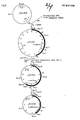
- the restriction enxyme map of pGC303 is shown in Fig. 1.
- step (a) The gene expression elements prepared in step (a) is then inserted into such a plasmid as pBR322 derived from Escherichia coli, a gram-negative bacterial species, to creat a plasmid capable of causing expression of heterologous proteins in gram-negative bacteria by the action of the gram-positive bacterial gene expression elements.
- a heterologous protein gene coding for a physiologically active substance of significant use is ligated with the expression vector in gram-negative bacteria as obtained in step (b), at a site downstream from the promoter, SD sequence and signal sequence of said vector, by the known restriction enzyme and ligase treatment process.
- the ligation product is introduced into an appropriate host.
- Preferred exmples of the physiologically active substance are interferons, urokinase, TPA, IL-2 and HBs antigen.
- the host preferred is a gram-negative bacterial strain, in particular a strain of Escherichia coli.
- the host is transformed by the known method (Cohen, S.N. et al., Proc. Natl. Acad. Sci. USA, 69, 2110 (1972)], for instance.
- the transformant obtained in step (d) is cultivated on a per se known medium suited for growing the host.
- a preferred example of the medium is the medium used by Palva et al. for growing Bacillus subtilis (Gene, 22, 229 (1983)] or a modification thereof.
- the cultivation is generally conducted at 15-43 °C for 3-24 hours, with aeration and/or stirring as necessary.
- periplasmic fraction is recovered by a known method for recovering proteins secreted into the periplasm (e.g. osmotic shock method (Nossal, N.G. and Heppel, L.A..J. Biol. Chem., 241, 3055 (1966)]] or a modification thereof.
- osmotic shock method Nossal, N.G. and Heppel, L.A..J. Biol. Chem., 241, 3055 (1966)
- the protein is recovered from this fraction by a per se known method, for example by affinity chromatography and/or fractionation based on solubility differences.
- the invention has thus enabled production of heterologous proteins in gram-negative bacteria through the use of gene expression elements from gram-positive bacterial strains and has contributed to technology diversification in the field of genetic engineering.
- the signal peptide is cleaved off, whereby the protein is obtained in the form of a mature protein free of methionine at the N terminal.
- the invention can provide an efficient method of producing heterologous proteins using genetic engineering technology.
- a one-liter portion of a overnight culture of Bacillus natto GC161 (deposited at the Fermentation Research Institute under the deposit number PERM BP-539) was centrifuged and the cells obtained were washed. To the cells were added 10 ml of 20 % sucrose-added 50 mM Tris-hydrochloride buffer (pH 8.0) and 100 mg of lysozyme, followed by reaction at 37°C for 15 minutes. Thereafter, 10 ml of 1% Sarkosyl-l% EDTA solution and 1 ml of Pronase E (100 mg/ml) were added.
- the solution was made up to 35 ml with TES solution (30 mM Tris-HCI, 50 mM NaCl, 5 mM EDTA, pH 8). Thereto were added 35 g of cesium chloride and 1 mI of ethidium bromide (10 mg/ml) and the mixture was centrifuged at 60,000 rpm (Beckman 70.1 Ti rotor) for 16 hours. The chromosomal DNA band was collected, dialyzed against TES solution and treated twice with phenol for purification of the chromosomal DNA.
- the chromosomal DNA thus obtained was cleaved with the restriction enzymes PvuII, BglII, Hpal, BamHI, HindIII and so forth. Fragments were extracted from 0.8% agarose gel and ligated with various plasmids, pC194, pE194, pUB110, and pGC200 (deposited at the Fermentation Research Institute under the deposit number FERM BP-645) which is a derivative of pC194, and the ligation products were used for transforming B. subtilis (rec-, amy-). After selection based on drug resistance of each plasmid, the transformants selected were inoculated onto starch-added agar plates (L-agar-1% soluble starch).
- iodine solution (0.1% iodine-1% KI) was added to the agar plates for checking a-amylase activity on the basis of decoloration of iodine.
- HindIII was used for cleaving the chromosomal DNA prepared from Bacillus natto and a fragment of said DNA was inserted into pGC200 at the HindIII site thereof, followed by transformation with the resulting plasmid, there was obtained a strain having ⁇ -amylase activity.
- the chromosomal DNA fragment inserted was a 7 kb fragment.
- the 7 kb DNA containing the ⁇ -amylase gene was excised using the restriction enzymes HindIII and RsaI and inserted into the EcoRV-HindIII fragment of pBR322.
- the plasmid pGC302 thus obtained was then cleaved with SacII, followed by ligation, which gave pGC303 (7.9 kb) (Fi g. 2). Transformation was performed in the conventional manner, selection was made based on the ampicillin resistance and the transformants selected were checked for ⁇ -amylase activity in the same manner as above, whereupon expression of ⁇ -amylase was confirmed. Thus was confirmed the presence of the whole ⁇ -amylase gene series. In this manner, the plasmid pGC303 containing the a-amylase promoter, signal sequence coding region and structural gene for ⁇ -amylase was obtained.
- the DNA sequence of the promoter and signal sequence coding region of a-amylase gene was determined by the Maxam-Gilbert method (Maxam, A. and Gilbert, W., 1979, Methods in Enzymology, 65, 499-560) (Table 1).
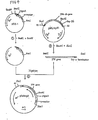
- An expression vector for use in Escherichia coli was constructed from pGC303 and pBR322 in accordance with the procedure shown in Fig. 3.
- Step 1 pGC303 was digested with the restriction enzymes BanIII and BanII to give a relatively large DNA fragment containing the promoter and signal sequence coding region of ⁇ -amylase gene.
- the reaction was carried out using the following reaction mixture composition:
- the reaction was carried out overnight at 37°C. After completion of the reaction, the whole reaction mixture was applied to 1% agarose gel, followed by electrophoresis. A 960 bp fragment was recovered following adsorption on DEAE-paper. Thereto was added 60pg of tRNA as the carrier for ethanol precipitation. The mixture was extracted with phenol, and the DNA was recovered by ethanol precipitation. The DNA precipitate was dissolved in 90 ⁇ l of HzO.
- Step 2 The fragment obtained in step 1 was partially digested with AluI using the following reaction mixture composition:
- the reaction was carried out at 37°C for 5 minutes, and the whole reaction mixture was applied to 5X polyacrylamide gel, followed by electrophoresis. Thereafter, a 621 bp DNA fragment was recovered by electroelution. To the fragment fraction was added 20pg of polyinosic acid was added as the carrier in ethanol precipitation. After extraction with phenol, the fragment was precipitated with ethanol. The DNA precipitate obtained was dissolved in 30 ⁇ l of H z O.
- Step 3 A BamHI linker was ligated with the DNA fragment obtained in step 2 at the AluI end thereof using the following reaction mixture composition:
- the reaction was carried out overnight at 4 °C, followed by extraction with phenol and precipitation with ethanol.
- the DNA precipitate was dissolved in 42 ⁇ l of H z O.
- Step 4 The DNA fragment obtained in step 3 was digested with BamHI using the following reaction mixture composition:
- the reaction was carried out overnight at 37 * C and the whole reaction mixture was applied to 5% polyacrylamide gel for electrophoresis. After electrophoresis, a 533 bp fragment was recovered by electroelution, followed by extraction with phenol and precipitation with ethanol. The DNA precipitate recovered was dissolved in 50 ⁇ l of H z O.
- Step 5 For use as a vector for cloning the DNA fragment (both ends being BamHI ends) obtained in step 4, pBR322 was digested with BamHI overnight at 37 °C using the following reaction mixture composition: and then the phosphoric acid residue at the 5' end was eliminated by using bacterial alkaline phosphatase(BAP).
- BAP bacterial alkaline phosphatase
- DNA was recovered by precipitation with ethanol. The DNA was dissolved in 180 ⁇ l of HzO.
- reaction mixture composition was as follows:
- Step 6 The DNA fragment obtained in step 4 and the vector obtained in step 5 were ligated together by overnight reaction at 4 °C.
- the reaction mixture composition was as follows:
- Step 7 pYI5-1 is inconvenient for inserting heterologous genes such as the IFN- ⁇ 2 gene since it has two BamHI sites. Therefore, for causing one BamHI site (upstream from the ⁇ -amylase promoter) to disappesr, pYI5-1 was first digested with AvaI at 37 °C overnight.
- the reaction mixture composition used was as follows:
- Step 8 The AvaI-digested pYI5-1 obtained in step 7 was cyclized by allowing self ligation to take place at 4 °C overnight.
- the reaction mixture composition used was as follows:
- a 25 ⁇ l portion of the reaction mixture (100 ⁇ l) was used for transformation of E. coli RR1, whereby 18 ampicillin-resistant (Ap r ) colonies were obtained. These colonies were subjected to plasmid extraction by the alkline extraction method and the plasmids extracted were examined for their structure using various restriction enzymes. As a result, 14 colonies were found to have a plasmid having the structure of pYI6-1 given in Fig. 3. One of these strains was used for large-quantity plasmid preparation and the plasmid obtained was named pYI6-1.
- the plasmid pYI6-1 thus obtainqd has, in addition to the BamHI site, one each of EcoRI, ClaI (same as BanIII), HindIII and EcoRV sites. Using these sites, heterologous genes such as the IFN- ⁇ 2 gene can be ligated to said plasmid. Thus, DNA fragments having a BamHI site upstream from the gene coding for a heterologous protein such as IFN- ⁇ 2 and having a flush end site such as an EcoRI, ClaI, Malawi or EcoRV site downstream therefrom can be ligated with said plasmid. (c) Ligation of pYI6-1 and IFN- ⁇ 2 gene
- Step 1 pYI6-1 was digested with BamHI and EcoRV at 37 °C overnight.
- the reaction mixture composition used was as follows:
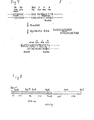
- Step 2 An IFH- ⁇ 2 gene-bearing plasmid (pI ⁇ 2 - trp31) was prepared from pI ⁇ 2 trp1(Japanese Patent Application No. 250988/84) following the process given in Fig. 5.
- the IFN- ⁇ 2 gene with the trp a terminator, was excised by digesting pI ⁇ 2 trp31 with BamHI and Smal at 37°C overnight.
- the reaction mixture composition used was as follows:
- pI ⁇ 2 trpl was prepared by the following method (see Fig 6) :
- Step 3 The vector prepared in step 1 and the IFN- ⁇ 2 gene-containing DNA fragment prepared in step 2 were ligated together by overnight reaction at 12 °C using the following reaction mixture composition:
- the pI ⁇ 2 amy 2 -carrying strain of E. coli HB101 was grown in a 2-liter erlenmeyer flask with shaking at 37'C using 500 ml of a medium (specified below) according to Palva et al. (Gene, 22, 229 (1983)], with checking at timed intervals for bacterial growth in terms of measured A 650 values.
- the culture obtained in (e) was sampled (20 ml) at 3-hour intervals and the samples were each fractionated according to the flowchart given later herein.
- the culture supernatant, cell washings (1) and (2), periplasmic fraction and cell extract were assayed for IFN titer by the RPHA method.
- the IFN- ⁇ potencies thus measured are shown in Table 2.
Landscapes
- Health & Medical Sciences (AREA)
- Chemical & Material Sciences (AREA)
- Life Sciences & Earth Sciences (AREA)
- Organic Chemistry (AREA)
- Zoology (AREA)
- Genetics & Genomics (AREA)
- Engineering & Computer Science (AREA)
- Molecular Biology (AREA)
- Biochemistry (AREA)
- General Health & Medical Sciences (AREA)
- Biotechnology (AREA)
- Wood Science & Technology (AREA)
- Biomedical Technology (AREA)
- Medicinal Chemistry (AREA)
- Bioinformatics & Cheminformatics (AREA)
- General Engineering & Computer Science (AREA)
- Microbiology (AREA)
- Toxicology (AREA)
- Gastroenterology & Hepatology (AREA)
- Biophysics (AREA)
- Proteomics, Peptides & Aminoacids (AREA)
- Preparation Of Compounds By Using Micro-Organisms (AREA)
- Micro-Organisms Or Cultivation Processes Thereof (AREA)
- Medicines That Contain Protein Lipid Enzymes And Other Medicines (AREA)
Applications Claiming Priority (2)
| Application Number | Priority Date | Filing Date | Title |
|---|---|---|---|
| JP257052/84 | 1984-12-04 | ||
| JP59257052A JPS61135599A (ja) | 1984-12-04 | 1984-12-04 | 異種蛋白質の製造法 |
Publications (2)
| Publication Number | Publication Date |
|---|---|
| EP0184169A2 true EP0184169A2 (fr) | 1986-06-11 |
| EP0184169A3 EP0184169A3 (fr) | 1988-01-13 |
Family
ID=17301066
Family Applications (1)
| Application Number | Title | Priority Date | Filing Date |
|---|---|---|---|
| EP85115242A Withdrawn EP0184169A3 (fr) | 1984-12-04 | 1985-11-30 | Procédé de préparation de protéines hétérologues |
Country Status (3)
| Country | Link |
|---|---|
| EP (1) | EP0184169A3 (fr) |
| JP (1) | JPS61135599A (fr) |
| ES (1) | ES8704513A1 (fr) |
Cited By (2)
| Publication number | Priority date | Publication date | Assignee | Title |
|---|---|---|---|---|
| EP0190686A3 (fr) * | 1985-02-02 | 1988-01-07 | Green Cross Corporation | Procédé de préparation de gamma-interféron |
| US4912046A (en) * | 1983-06-27 | 1990-03-27 | Genentech, Inc. | Portable inducible control system |
Family Cites Families (5)
| Publication number | Priority date | Publication date | Assignee | Title |
|---|---|---|---|---|
| SE8204811L (sv) * | 1982-08-23 | 1984-02-24 | Sven Lofdahl | Dna-fragment innefattande en signalsekvens |
| IT1156317B (it) * | 1982-09-08 | 1987-02-04 | Anic Spa | Vettori plasmidici ad espressione in bacillus subtilis e procedimento per la loro preparazione |
| JPS59162874A (ja) * | 1983-03-08 | 1984-09-13 | Rikagaku Kenkyusho | 微生物の培養方法 |
| JPS6027388A (ja) * | 1983-07-22 | 1985-02-12 | Green Cross Corp:The | プラスミツド |
| JPS61177996A (ja) * | 1985-02-02 | 1986-08-09 | Green Cross Corp:The | インタ−フエロン−γの製造法 |
-
1984
- 1984-12-04 JP JP59257052A patent/JPS61135599A/ja active Pending
-
1985
- 1985-11-30 EP EP85115242A patent/EP0184169A3/fr not_active Withdrawn
- 1985-12-03 ES ES549525A patent/ES8704513A1/es not_active Expired
Cited By (2)
| Publication number | Priority date | Publication date | Assignee | Title |
|---|---|---|---|---|
| US4912046A (en) * | 1983-06-27 | 1990-03-27 | Genentech, Inc. | Portable inducible control system |
| EP0190686A3 (fr) * | 1985-02-02 | 1988-01-07 | Green Cross Corporation | Procédé de préparation de gamma-interféron |
Also Published As
| Publication number | Publication date |
|---|---|
| JPS61135599A (ja) | 1986-06-23 |
| ES549525A0 (es) | 1987-04-01 |
| ES8704513A1 (es) | 1987-04-01 |
| EP0184169A3 (fr) | 1988-01-13 |
Similar Documents
| Publication | Publication Date | Title |
|---|---|---|
| KR960016560B1 (ko) | 인체 과립구 콜로니 자극인자 폴리펩타이드 유도체, 이를 코드화하는 dna, dna를 함유하는 재조합 플라스미드, 플라스미드를 함유하는 미생물 및 폴리펩타이드를 제조하는 방법 | |
| EP0299978B1 (fr) | Expression du gene clone de lysostaphine | |
| US4745069A (en) | Cloning vectors for expression of exogenous protein | |
| EP0095361A1 (fr) | Vecteurs de clonage pour l'expression de protéine exogène | |
| EP0353188B1 (fr) | Système d'expression | |
| US5015574A (en) | DNA sequence involved in gene expression and protein secretion, expression-secretion vector including the DNA sequence and the method of producing proteins by using the expression-secretion vector | |
| Feinstein et al. | Expression of human interferon genes using the recA promoter of Escherichia coli | |
| EP0184169A2 (fr) | Procédé de préparation de protéines hétérologues | |
| EP0199018B1 (fr) | Expression dans E-coli de polypeptides hybrides comprenant la séquence du facteur de déclenchement de l'hormone de croissance | |
| EP0190686A2 (fr) | Procédé de préparation de gamma-interféron | |
| EP0245218B1 (fr) | Vecteur de plasmide pour l'expression dans les bacilles utilisé pour cloner le gène pour l'hormone humaine de croissance et un procédé pour préparer l'hormone | |
| US4960704A (en) | Modified antibiotic resistance gene | |
| EP0146903A2 (fr) | Production d'un vecteur qui encode un interféron hybride | |
| EP0135291B1 (fr) | Gène modifié à résistance antibiotique | |
| EP0171000A2 (fr) | Procédé de préparation d'une protéine ou d'un peptide hétérologue et mûr | |
| EP0207165A1 (fr) | Vecteur de secretion de polypeptides, micro-organismes transformes par ledit vecteur, et procede de preparation de polypeptides avec lesdits micro-organismes | |
| WO1984000380A1 (fr) | Vecteur | |
| EP0261534A2 (fr) | Expression de gènes dans la levure | |
| EP0314184B1 (fr) | Plasmides d'expression | |
| KR100218564B1 (ko) | 아르기닌을 이용한 인체 부갑상선 호르몬의 효율적인 생산방법 | |
| KR920007684B1 (ko) | 신규한 발현 벡터와 그의 제조방법 | |
| EP0353516B1 (fr) | Méthode de préparation de la bêta-interleukine-1 humaine recombinante en forme homogène | |
| Fujimura et al. | Secretion of recombinant ribonuclease T1 into the periplasmic space of Escherichia coli with the aid of the signal peptide of alkaline phosphatase | |
| KR940011534B1 (ko) | 억제성 효모 프로모터의 제조방법 | |
| JP2616784B2 (ja) | ヒトインターロイキン1ポリペプチド生産用高度形質発現プラスミド |
Legal Events
| Date | Code | Title | Description |
|---|---|---|---|
| PUAI | Public reference made under article 153(3) epc to a published international application that has entered the european phase |
Free format text: ORIGINAL CODE: 0009012 |
|
| AK | Designated contracting states |
Kind code of ref document: A2 Designated state(s): BE DE FR GB NL SE |
|
| PUAL | Search report despatched |
Free format text: ORIGINAL CODE: 0009013 |
|
| AK | Designated contracting states |
Kind code of ref document: A3 Designated state(s): BE DE FR GB NL SE |
|
| STAA | Information on the status of an ep patent application or granted ep patent |
Free format text: STATUS: THE APPLICATION IS DEEMED TO BE WITHDRAWN |
|
| 18D | Application deemed to be withdrawn |
Effective date: 19880714 |
|
| RIN1 | Information on inventor provided before grant (corrected) |
Inventor name: SUYAMA, TADAKAZU Inventor name: ISHIDA, YUTAKA Inventor name: NAGAI, MASANORI Inventor name: ARIMURA, HIROFUMI |