EP0184375A1 - Lösungsmittelextraktion und Reinigung eines säurelöslichen Öls aus einer Alkylierungsanlage - Google Patents
Lösungsmittelextraktion und Reinigung eines säurelöslichen Öls aus einer Alkylierungsanlage Download PDFInfo
- Publication number
- EP0184375A1 EP0184375A1 EP85308598A EP85308598A EP0184375A1 EP 0184375 A1 EP0184375 A1 EP 0184375A1 EP 85308598 A EP85308598 A EP 85308598A EP 85308598 A EP85308598 A EP 85308598A EP 0184375 A1 EP0184375 A1 EP 0184375A1
- Authority
- EP
- European Patent Office
- Prior art keywords
- acid
- phase
- column
- soluble oil
- stream
- Prior art date
- Legal status (The legal status is an assumption and is not a legal conclusion. Google has not performed a legal analysis and makes no representation as to the accuracy of the status listed.)
- Granted
Links
Images



Classifications
-
- C—CHEMISTRY; METALLURGY
- C07—ORGANIC CHEMISTRY
- C07C—ACYCLIC OR CARBOCYCLIC COMPOUNDS
- C07C2/00—Preparation of hydrocarbons from hydrocarbons containing a smaller number of carbon atoms
- C07C2/54—Preparation of hydrocarbons from hydrocarbons containing a smaller number of carbon atoms by addition of unsaturated hydrocarbons to saturated hydrocarbons or to hydrocarbons containing a six-membered aromatic ring with no unsaturation outside the aromatic ring
- C07C2/56—Addition to acyclic hydrocarbons
- C07C2/58—Catalytic processes
- C07C2/62—Catalytic processes with acids
-
- C—CHEMISTRY; METALLURGY
- C10—PETROLEUM, GAS OR COKE INDUSTRIES; TECHNICAL GASES CONTAINING CARBON MONOXIDE; FUELS; LUBRICANTS; PEAT
- C10G—CRACKING HYDROCARBON OILS; PRODUCTION OF LIQUID HYDROCARBON MIXTURES, e.g. BY DESTRUCTIVE HYDROGENATION, OLIGOMERISATION, POLYMERISATION; RECOVERY OF HYDROCARBON OILS FROM OIL-SHALE, OIL-SAND, OR GASES; REFINING MIXTURES MAINLY CONSISTING OF HYDROCARBONS; REFORMING OF NAPHTHA; MINERAL WAXES
- C10G21/00—Refining of hydrocarbon oils, in the absence of hydrogen, by extraction with selective solvents
-
- C—CHEMISTRY; METALLURGY
- C07—ORGANIC CHEMISTRY
- C07C—ACYCLIC OR CARBOCYCLIC COMPOUNDS
- C07C2527/00—Catalysts comprising the elements or compounds of halogens, sulfur, selenium, tellurium, phosphorus or nitrogen; Catalysts comprising carbon compounds
- C07C2527/06—Halogens; Compounds thereof
- C07C2527/08—Halides
- C07C2527/12—Fluorides
- C07C2527/1206—Hydrogen fluoride
Definitions
- This invention relates to an improvement in an HF alkylation process, and particularly to an improved method of recovering hydrofluoric acid and acid soluble oil from a mixture containing HF acid, used as a catalyst in the process, and acid soluble oil, an undesirable by-product of the process.
- ASO acid soluble oils
- this purification is accomplished by passing a portion of an HF-containing stream from the settler to an HF purification or rerun fractionatiqn column, wherein HF is stripped from the ASO by means of a vaporous hydrocarbon, which is preferably isobutane.
- a vaporous hydrocarbon which is preferably isobutane.
- the HF purification systems employed heretofore have generally been effective to produce an acid stream having the required purity
- the recovered ASO stream from the purification unit usually contains undesirable amounts of HF, resulting in the loss of valuable HF and in ecology problems. This has required subsequent purification steps to remove HF before the ASO can be processed further, such as by recycling to the refinery as fuel, or passed to a disposal unit.
- Typical alkylation processes are shown in U. S. Patent No. 2,574,006 issued to Allen, and U. S. Patent No. 3,726,940 issued to Cannady et al.
- the present invention provides a method of recovering hydrofluoric acid and the acid soluble oil from a mixture containing HF and an acid soluble oil, and controlling the ASO concentration in the reactor, the method comprising stripping the mixture with a vaporous hydrocarbon in a fractionation column; recovering as an overhead product from the column a majority of the HF and the vaporous hydrocarbon fed to the column; removing a bottoms fraction from the column comprising acid soluble oil with a reduced HF concentration, as compared to the HF concentration in the feed mixture; mixing the bottoms fraction with a light hydrocarbon solvent and cooling to a temperature below 60°C and sufficient to induce a phase separation; separating the bottom fraction and light hydrocarbon solvent mixture in a phase separation means into an upper phase and a lower phase, wherein the upper phase is relatively lean in HF concentration and the lower phase is relatively rich in HF concentration; and recovering the upper phase with a relatively lean HF content as a product of the process.
- the product value of the oil containing the upper (relatively lean HF content) phase can be upgraded by sending it to an isostripper, where the oil is recovered with the alkylate product.
- This stream can be added to the reactor effluent (isostripper feed) or fed separately to the isostripper.
- it can be sent to storage or other processing units, such as an FCC or a coker. Corrosion problems in the isostripper or other units is significantly reduced by the use of the HF-lean (upper) phase.
- the oil can be processed in other units without caustic treatment and results in greater flexibility of processing conditions, while reducing corrosion of subsequent units.
- the present invention provides a method of recovering hydrofluoric acid from a circulating acid stream used to provide a source of HF acid in an HF alkylation plant, the circulating acid stream containing a mixture of HF and acid soluble oil, the method comprising charging a portion of the circulating acid stream to a feed point of an HF acid rerun column intermediate between an upper portion and a lower portion; charging to the column below the upper portion of the column a stripping hydrocarbon which strips out at least a portion of the HF acid from the HF acid-soluble oil feed, to the column; recovering as an overhead product from the upper portion a mixture of HF and stripping hydrocarbon; removing from the lower portion a bottoms fraction comprising a majority of the acid soluble oil in the mixture of HF and acid soluble oil charged to the column; mixing the bottoms fraction with a light hydrocarbon solvent and cooling the fraction to a temperature below 60°C and sufficient to induce two liquid phases to form; and charging the cooled, two-phase stream into a separation zone to
- the concentrated ASO is recovered as a bottoms fraction from the column, but this bottoms fraction still contains significant quantities of HF, much of which, if not all, must be removed from the ASO before the ASO can be burned, or sent to other units for further processing within the refinery without causing ecological or ' corrosion problems.
- the light hydrocarbon and hydrogen fluoride issuing from the fractionator are condensed and passed to an accumulator, where the mass separates into an upper light hydrocarbon phase and a lower HF liquid phase.
- Light hydrocarbon from the accumulator may be fed to the fractionator to provide light hydrocarbon reflux.
- the remainder of the light hydrocarbon is fed to a fractionator or stripper provided with reboiling means. Withdrawal of overhead light hydrocarbon and bottoms of recycle HF catalyst liquid is also described by patentee.
- the HF-ASO mixture withdrawn from the bottom of the acid rerun column is mixed with a light solvent, preferably a light hydrocarbon (HC), such as some fraction of the alkylate stream.
- a light solvent preferably a light hydrocarbon (HC), such as some fraction of the alkylate stream.
- HC light hydrocarbon
- Alkylate is the preferred light solvent.
- other light hydrocarbons such as isobutane, as is disclosed in U. S. Patent No. 4,404,418 can be used as the light solvent.
- alkylate is its availability in the process and that it will also be more effective in phase separation than heavier molecular weight HC and easier to handle from processing standpoint than lighter HC. Also, other solvents such as benzene or kerosene would be contaminants in the system.
- the solvent is mixed with the HF-ASO stream from the bottom of the HF column while the HF-ASO stream is relatively hot.
- An unexpected advantage of mixing while hot is that the HF-ASO is a much easier stream to mix with when it is hot and fluid than when it is cold and viscous.
- the mixture of HF-ASO plus solvent should be cooled, eventually to 10°-60°C, preferably about 20°-50°C, and charged to a phase separator.
- Suitable mixing may be effected through the use of a low efficiency centrifugal pump, or passing these streams, in admixture, through one or more partially closed valves.
- stirred mixers, or in-line mixing valves may be used.
- More exotic mixing devices such as fiber film contactors, rotating disc contactors, and the like, may be used, but usually the increase in extraction efficiency will not justify the added cost of these more exotic contacting devices.
- the volume ratio of solvent to HF-ASO stream will usually be in the range of 0.1-10, preferably around 0.5-1, volumes of solvent per volume of HF-ASO.
- the cooling of the solvent/HF-ASO mixture may be accomplished by any conventional means. Indirect heat-exchange will give good results. Where process conditions warrant it, it is possible to cool the HF-ASO mixture withdrawn from the bottom of the HF acid rerun column by direct injection of relatively cool solvent. The cool solvent will mix with and cool the HF-ASO mixture.
- Phase separation may be enhanced by the use of coalescing devices, such as electrostatic precipitators, or simply by using a relatively large vessel. Phase separation is not difficult to achieve in the present process, as compared to the prior art processes, because the acid soluble oil is much easier to work with in a plant when diluted with a solvent.
- the upper HF-lean phase is further processed to upgrade the quality of the product.
- Acid purification section 1 contains HF acid rerun column 2.
- the HF-ASO mixture withdrawn from the HF alkylation unit is charged through heater 4 and line 3 into column 2.
- Stripping hydrocarbon is added to column 2 via lines 10 and 11, as regulated by flow controllers 10' and 11'.
- HF acid and stripping fluid are removed overhead from column 2 via line 9.
- Removed as a bottoms stream from HF acid rerun column 2 is an HF-ASO stream in line 12. Stripping hydrocarbon could also be added to the column at other points intermediate those previously discussed.
- the HF-ASO mixture in line 12 was merely cooled by indirect heat-exchange and charged to phase separtor 14.
- this relatively hot H F-ASO stream in line 12 is mixed with a solvent, either before cooling, in which case solvent is added via line 101, or after cooling, in which case solvent is added via line 102. Additional cooling of the HF-ASO plus solvent mixture may occur using indirect heat-exchanger 103.
- the cooled mixture of solvent/HF-ASO then enters separator 14.
- An HF-lean acid soluble oil phase, and most of the solvent added to the process, are removed from separator 14 via line 17.
- the heavy, HF-rich acid soluble oil phase which collects at the bottom of phase separator 14 is removed via line 26.
- this stream of HF-rich ASO is preferably recycled to the HF acid rerun column for added recovery of the HF contained therein. It may be diluted with additional stripping hydrocarbon, or additional solvent prior to recycle to rerun column 2.
- the stripping hydrocarbon may be added via line 24 and flow controller 34, with mixing of the HF-rich ASO and the stripping hydrocarbon occurring in educator 27, followed by recycle of this mixture to an upper portion of column 2 via lines 35 and 44, or to a lower portion of column 2 via lines 35 and 36.
- Fig. 4 In an alternative embodiment in Fig. 4 is illustrated an HF alkylation process wherein an alkylation unit is illustrated, comprising an alkylation reactor 51 which includes means for regeneration of alkylation catalyst, shown generally at 54, including means 56 for recovery of alkylate product.
- An olefin feed 110 which may also contain some paraffins, is combined with recycle isobutane 111 and isobutane makeup 112, which are then introduced into alkylation reactor 51.
- the hydrocarbon mixes with the catalyst (hydrofluoric acid) from the acid cooler 53.
- the reactor effluent is then sent to acid settler 52, where a major portion of the hydrocarbon 113 is separated from the acid 114.
- the hydrocarbon 113 from the acid settler 52 is sent to the fractionator 56 for recovery of the alkylate product 115.
- the alkylate product 220 can be sent to the motor gasoline pool or to an alkylate splitter to separate the total alkylate into light and heavy alkylate.
- the alkylate product 119 can also be routed for use within the process, i.e., as the solvent used to mix with the bottoms stream 223 from the regeneration 54, which is fed to separator 55.
- Lighter product 116 from the fractionator 56 is sent to other process units, known to those familiar with the state of the art, for recovery and treating of the lighter product. Typical of such units are the accumulator and fractionator of the aforementioned U. S. Patent No. 4,373,110.
- N-butane 117 is sometimes withdrawn from the fractionator 56 to meet product vapor pressure.
- a major portion of the acid l14 from the acid settler 52 is sent to the acid cooler 53.
- a slipstream of spent acid 221 from the acic settler 52 is sent to the acid regenerator 54 to be stripped with isobutane 222, to recover an acid stream 224 with higher purity, to be sent back to the acid cooler 53 or combine with stream ll4 from acid settler 52 before entering the acid cooler 53.
- the bottoms 223 from the acid regenerator is then cooled by means 57 and combined with isobutane 118 and/or alkylate 119 in mixe/settler vessel 55, which will provide for mixing and phase separation as previously described.
- the HF-free hydrocarbon phase 225 from this vessel 55 is combined with the reactor effluent 113 and sent to the fractionator 56.
- the HF-free hydrocarbon stream 226 can also be sent directly to the fractionator 56. This step will recover the hycrocarbon that otherwise will be discarded as ASO and recover acid in the form of organic fluoride. The organic fluoride will easily decompose to HF again in the fractionator 56.
- the bottoms 228 from the mixer/settler vessel 55, essentially free of hydrocarbon, can be:
- the bottoms stream 228 is easier to handle than ASO stream 223, from state-of-the-art acid regenerator 54, because the HF-water phase does not contain much hydrocarbon that can form sludge in the neutralization step.
- the HF-water phase 227 can be sent back to the acid regenerator 54 to recover the acid.
- the much lower corrosive HF-lean (upper) phase removed via line 17 can be fed directly to downstream processing means 56'.
- This downstream processing means 56' can be an isostripper which is fed directly by line 17 or, alternatively, line 17 can be mixed with the reactor effluent (isostripper feed).
- Other downstream processing units 56' could be an FCC, a coker or intermediate storage tanks.
- the stream exiting line 17' can also be sent directly to a product stream, thus increasing yield.
- Ratio of the HF-lean (upper) phase exiting line 17 to HF-rich (lower) phase exiting line 26 is typically 70:30, although this ratio is not critical.
- the effluent of line 17, comprising the HF-lean (upper) phase contains little or no water.
- the downstream processing means 56' will not be subject to highly corrosive activity, as in the prior art, since only the (upper) HF-lean phase is processed.
- the (lower) HF-rich phase may be recycled to the rerun column or processed offsite to separate the water and HF or neutralized with lime and disposed of as solid CaF.
- Temperature controller 31 may adjust the heat added to the recycled HF-rich ASO, as shown in the drawings, or temperature controller could adjust the amount of stripping fluid added via line 20.
- liquid withdrawn from the bottom of column 2 via line 12 could be on flow control, with a level controller in separator 14 used to adjust the amount of HF-lean ASO withdrawn from the plant. If this is done, level controller 15 might adjust flow of hydrocarbon in line 20 to hold a constant liquid level in the bottom of column 2.
- the ratio of the acid concentration in the upper phase in settler 14 to that of the lower phase is not nearly as great as the ratio claimed in the prior art patent, 0.1 wt % HF in the upper phase to 14.6 wt % HF in the lower phase. What is possible is relatively easy separation of these two phases.
- the process of the present invention significantly reduces the capital cost of the phase separator necessary to separate an HF-lean ASO from an HF-rich ASO, since unduly large separators permitting long residence time are not required.
- the practice of the present invention permits removal of significant amounts of acid-soluble oil, with only minimal loss of HF acid from the system.
- the dilution settling of the present invention permits use of a settler with only about 1/50th or less of the cross-sectional area of prior art processes.
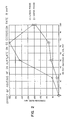
- the corrosion rate on carbon steel of aqueous HF in alkylate is shown for both vapor and liquid phase in attached Fig. 2.
- the corrosion rate on carbon steel of aqueous HF in ASO is shown in attached Fig. 3.
- the present process minimizes ccrrosion without caustic treatment of the HF stream. Utilizing solvent dilution and phase separation subsequent upgrading of an HF containing oil phase can be achieved with reduced corrosion of equipment. Yields and quality of the product are both increased with corrosion of processing equipment reduced and controlled within tolerable limits.
Landscapes
- Chemical & Material Sciences (AREA)
- Organic Chemistry (AREA)
- Chemical Kinetics & Catalysis (AREA)
- Oil, Petroleum & Natural Gas (AREA)
- Engineering & Computer Science (AREA)
- General Chemical & Material Sciences (AREA)
- Production Of Liquid Hydrocarbon Mixture For Refining Petroleum (AREA)
- Organic Low-Molecular-Weight Compounds And Preparation Thereof (AREA)
Applications Claiming Priority (4)
| Application Number | Priority Date | Filing Date | Title |
|---|---|---|---|
| US67549584A | 1984-11-28 | 1984-11-28 | |
| US06/772,577 US4663026A (en) | 1984-11-28 | 1985-09-04 | Solvent extraction and purification of acid soluble oil from an HF alkylation unit |
| US772577 | 1985-09-04 | ||
| US675495 | 2000-09-29 |
Publications (2)
| Publication Number | Publication Date |
|---|---|
| EP0184375A1 true EP0184375A1 (de) | 1986-06-11 |
| EP0184375B1 EP0184375B1 (de) | 1989-05-31 |
Family
ID=27101350
Family Applications (1)
| Application Number | Title | Priority Date | Filing Date |
|---|---|---|---|
| EP85308598A Expired EP0184375B1 (de) | 1984-11-28 | 1985-11-27 | Lösungsmittelextraktion und Reinigung eines säurelöslichen Öls aus einer Alkylierungsanlage |
Country Status (3)
| Country | Link |
|---|---|
| US (1) | US4663026A (de) |
| EP (1) | EP0184375B1 (de) |
| DE (1) | DE3570690D1 (de) |
Cited By (4)
| Publication number | Priority date | Publication date | Assignee | Title |
|---|---|---|---|---|
| EP0584831A1 (de) * | 1992-08-27 | 1994-03-02 | Phillips Petroleum Company | Regenerierung eines Alkylierungskatalysators |
| EP0669301A1 (de) * | 1994-02-24 | 1995-08-30 | Phillips Petroleum Company | Regenerierung eines Fluorwasserstoff-Alkylierungskatalysator |
| EP0703002A1 (de) * | 1994-08-30 | 1996-03-27 | Phillips Petroleum Company | Regenerierung eines Fluorwasserstoff-Alkylierungskatalysator |
| CN1039311C (zh) * | 1992-08-27 | 1998-07-29 | 菲利浦石油公司 | 处理含砜混合物的方法 |
Families Citing this family (14)
| Publication number | Priority date | Publication date | Assignee | Title |
|---|---|---|---|---|
| US5073674A (en) * | 1990-04-20 | 1991-12-17 | Olah George A | Environmentally safe catalytic alkyation using liquid onium poly (hydrogen fluorides) |
| US5276243A (en) * | 1992-02-11 | 1994-01-04 | Mobil Oil Corporation | Sulfolane purification method |
| US5264652A (en) * | 1992-02-11 | 1993-11-23 | Mobil Oil Corporation | Method for separating conjunct polymeric byproducts from mixture containing hydrofluoric acid and a sulfone |
| US5264650A (en) * | 1992-02-11 | 1993-11-23 | Mobil Oil Corporation | Sulfolane purification by hydrocarbon extraction |
| US5262579A (en) * | 1992-02-11 | 1993-11-16 | Mobil Oil Corporation | Separation of sulfolane from conjunct polymeric byproducts |
| US5264651A (en) * | 1992-02-11 | 1993-11-23 | Mobil Oil Corporation | Method for regenerating HF/sulfolane alkylation catalyst |
| US5276245A (en) * | 1992-06-26 | 1994-01-04 | Phillips Petroleum Company | Alkylation catalyst regeneration |
| US5237122A (en) * | 1992-08-24 | 1993-08-17 | Phillips Petroleum Company | Alkylation catalyst regeneration |
| US5264647A (en) * | 1992-09-30 | 1993-11-23 | Phillips Petroleum Company | Alkylation catalyst regeneration |
| US5264649A (en) * | 1992-12-15 | 1993-11-23 | Phillips Petroleum Company | Alkylation catalyst regeneration |
| US5463162A (en) * | 1994-01-21 | 1995-10-31 | Phillips Petroleum Company | Alkylation catalyst regeneration |
| US7481871B2 (en) * | 2004-12-10 | 2009-01-27 | Exxonmobil Chemical Patents Inc. | Vapor/liquid separation apparatus |
| US8212098B2 (en) * | 2007-01-18 | 2012-07-03 | Exxonmobil Research & Engineering Company | HF alkylation process with internal acid regeneration |
| US8246921B2 (en) * | 2008-09-24 | 2012-08-21 | Uop Llc | Alkylation unit |
Citations (6)
| Publication number | Priority date | Publication date | Assignee | Title |
|---|---|---|---|---|
| US2448092A (en) * | 1944-09-05 | 1948-08-31 | Phillips Petroleum Co | Dehydrofluorination process |
| US2910521A (en) * | 1956-10-22 | 1959-10-27 | Phillips Petroleum Co | Recovery of hydrogen fluoride from a hydrocarbon mixture |
| AT274189B (de) * | 1966-03-02 | 1969-09-10 | Universal Oil Prod Co | Verfahren zur Regenerierung eines Fluorwasserstoffsäurekatalysators |
| FR2123414A1 (de) * | 1971-01-25 | 1972-09-08 | Phillips Petroleum Co | |
| US4404418A (en) * | 1982-06-04 | 1983-09-13 | Phillips Petroleum Company | HF Alkylation process |
| US4454369A (en) * | 1982-05-07 | 1984-06-12 | Phillips Petroleum Company | HF Alkylation process |
Family Cites Families (4)
| Publication number | Priority date | Publication date | Assignee | Title |
|---|---|---|---|---|
| US2574006A (en) * | 1947-10-17 | 1951-11-06 | Phillips Petroleum Co | Method of recovering hydrogen fluoride in an alkylation process |
| US3726940A (en) * | 1971-03-26 | 1973-04-10 | Phillips Petroleum Co | Reducing hf-water phase disposal in alkylation |
| US4199409A (en) * | 1977-02-22 | 1980-04-22 | Phillips Petroleum Company | Recovery of HF from an alkylation unit acid stream containing acid soluble oil |
| US4373110A (en) * | 1981-01-21 | 1983-02-08 | Phillips Petroleum Company | HF Alkylation process and apparatus |
-
1985
- 1985-09-04 US US06/772,577 patent/US4663026A/en not_active Expired - Lifetime
- 1985-11-27 DE DE8585308598T patent/DE3570690D1/de not_active Expired
- 1985-11-27 EP EP85308598A patent/EP0184375B1/de not_active Expired
Patent Citations (6)
| Publication number | Priority date | Publication date | Assignee | Title |
|---|---|---|---|---|
| US2448092A (en) * | 1944-09-05 | 1948-08-31 | Phillips Petroleum Co | Dehydrofluorination process |
| US2910521A (en) * | 1956-10-22 | 1959-10-27 | Phillips Petroleum Co | Recovery of hydrogen fluoride from a hydrocarbon mixture |
| AT274189B (de) * | 1966-03-02 | 1969-09-10 | Universal Oil Prod Co | Verfahren zur Regenerierung eines Fluorwasserstoffsäurekatalysators |
| FR2123414A1 (de) * | 1971-01-25 | 1972-09-08 | Phillips Petroleum Co | |
| US4454369A (en) * | 1982-05-07 | 1984-06-12 | Phillips Petroleum Company | HF Alkylation process |
| US4404418A (en) * | 1982-06-04 | 1983-09-13 | Phillips Petroleum Company | HF Alkylation process |
Cited By (7)
| Publication number | Priority date | Publication date | Assignee | Title |
|---|---|---|---|---|
| EP0584831A1 (de) * | 1992-08-27 | 1994-03-02 | Phillips Petroleum Company | Regenerierung eines Alkylierungskatalysators |
| US5306859A (en) * | 1992-08-27 | 1994-04-26 | Phillips Petroleum Company | Alkylation catalyst regeneration utilizing polyvinylpyridine and amine substituted styrene divinylbenzene copolymer contact materials |
| CN1039311C (zh) * | 1992-08-27 | 1998-07-29 | 菲利浦石油公司 | 处理含砜混合物的方法 |
| EP0669301A1 (de) * | 1994-02-24 | 1995-08-30 | Phillips Petroleum Company | Regenerierung eines Fluorwasserstoff-Alkylierungskatalysator |
| US5527980A (en) * | 1994-02-24 | 1996-06-18 | Phillips Petroleum Company | Regeneration of hydrogen fluoride alkylation catalyst |
| US5547909A (en) * | 1994-02-24 | 1996-08-20 | Phillips Petroleum Company | Regeneration of hydrogen fluoride alkylation catalyst |
| EP0703002A1 (de) * | 1994-08-30 | 1996-03-27 | Phillips Petroleum Company | Regenerierung eines Fluorwasserstoff-Alkylierungskatalysator |
Also Published As
| Publication number | Publication date |
|---|---|
| EP0184375B1 (de) | 1989-05-31 |
| US4663026A (en) | 1987-05-05 |
| DE3570690D1 (en) | 1989-07-06 |
Similar Documents
| Publication | Publication Date | Title |
|---|---|---|
| EP0184375B1 (de) | Lösungsmittelextraktion und Reinigung eines säurelöslichen Öls aus einer Alkylierungsanlage | |
| US4199409A (en) | Recovery of HF from an alkylation unit acid stream containing acid soluble oil | |
| US6194625B1 (en) | Alkylation by controlling olefin ratios | |
| US8212098B2 (en) | HF alkylation process with internal acid regeneration | |
| US4783567A (en) | HF alkylation process | |
| US4891466A (en) | HF alkylation process | |
| US4404418A (en) | HF Alkylation process | |
| US3919342A (en) | Propane recovery in HF alkylation utilizing extraction or two-phase condensation for removal of organic fluoride | |
| US3544652A (en) | Alkylation with sulfuric acid | |
| US5262579A (en) | Separation of sulfolane from conjunct polymeric byproducts | |
| US4423277A (en) | Alkylation process utilizing absorption refrigeration | |
| US3867473A (en) | Two stages of isoparaffin-olefin alkylation with recycle of alkylate-containing hydrocarbon | |
| US3919343A (en) | Isobutane-butylene alkylation process | |
| US4220806A (en) | Plural stages of hydrofluoric acid alkylation utilizing separated acid phase as catalyst in the subsequent stage | |
| US4239931A (en) | HF Alkylatior process | |
| US4454369A (en) | HF Alkylation process | |
| US2405995A (en) | Process for dearomatizing and modifying hydrocarbons with hydrogen fluoride and boron trifluoride | |
| US3864423A (en) | Alkylation of hydrocarbons | |
| US3370003A (en) | Method for separating light hydrocarbon components | |
| EP0669301B1 (de) | Regenerierung eines Fluorwasserstoff-Alkylierungskatalysator | |
| US3763267A (en) | Removing dialkyl sulfates from an alkylation reaction effluent | |
| US3793394A (en) | Purification of hf catalyst in alkylation process | |
| US3371032A (en) | Fractionation of alkylation effluent | |
| US3594444A (en) | Process for separating hydrocarbons and hydrogen fluoride catalyst from the effluent of an isoparaffin-olefin alkylation reaction zone | |
| US2408933A (en) | Hydrogen fluoride alkylation process |
Legal Events
| Date | Code | Title | Description |
|---|---|---|---|
| PUAI | Public reference made under article 153(3) epc to a published international application that has entered the european phase |
Free format text: ORIGINAL CODE: 0009012 |
|
| AK | Designated contracting states |
Kind code of ref document: A1 Designated state(s): BE DE FR GB IT NL |
|
| 17P | Request for examination filed |
Effective date: 19861106 |
|
| 17Q | First examination report despatched |
Effective date: 19871005 |
|
| GRAA | (expected) grant |
Free format text: ORIGINAL CODE: 0009210 |
|
| AK | Designated contracting states |
Kind code of ref document: B1 Designated state(s): BE DE FR GB IT NL |
|
| REF | Corresponds to: |
Ref document number: 3570690 Country of ref document: DE Date of ref document: 19890706 |
|
| ET | Fr: translation filed | ||
| ITF | It: translation for a ep patent filed | ||
| PG25 | Lapsed in a contracting state [announced via postgrant information from national office to epo] |
Ref country code: GB Effective date: 19891127 |
|
| PG25 | Lapsed in a contracting state [announced via postgrant information from national office to epo] |
Ref country code: BE Effective date: 19891130 |
|
| PLBE | No opposition filed within time limit |
Free format text: ORIGINAL CODE: 0009261 |
|
| STAA | Information on the status of an ep patent application or granted ep patent |
Free format text: STATUS: NO OPPOSITION FILED WITHIN TIME LIMIT |
|
| BERE | Be: lapsed |
Owner name: MOBIL OIL CORP. Effective date: 19891130 |
|
| PG25 | Lapsed in a contracting state [announced via postgrant information from national office to epo] |
Ref country code: NL Effective date: 19900601 |
|
| 26N | No opposition filed | ||
| NLV4 | Nl: lapsed or anulled due to non-payment of the annual fee | ||
| GBPC | Gb: european patent ceased through non-payment of renewal fee | ||
| PG25 | Lapsed in a contracting state [announced via postgrant information from national office to epo] |
Ref country code: FR Effective date: 19900731 |
|
| PG25 | Lapsed in a contracting state [announced via postgrant information from national office to epo] |
Ref country code: DE Effective date: 19900801 |
|
| REG | Reference to a national code |
Ref country code: FR Ref legal event code: ST |