EP0184981B1 - Pyrrolinones et composés intermédiaires - Google Patents
Pyrrolinones et composés intermédiaires Download PDFInfo
- Publication number
- EP0184981B1 EP0184981B1 EP85810504A EP85810504A EP0184981B1 EP 0184981 B1 EP0184981 B1 EP 0184981B1 EP 85810504 A EP85810504 A EP 85810504A EP 85810504 A EP85810504 A EP 85810504A EP 0184981 B1 EP0184981 B1 EP 0184981B1
- Authority
- EP
- European Patent Office
- Prior art keywords
- alkyl
- formula
- ester
- alkoxy
- aminodicarboxylic
- Prior art date
- Legal status (The legal status is an assumption and is not a legal conclusion. Google has not performed a legal analysis and makes no representation as to the accuracy of the status listed.)
- Expired
Links
- HMXQIFUGFZEJEO-UHFFFAOYSA-N 1,2-dihydropyrrol-3-one Chemical class O=C1CNC=C1 HMXQIFUGFZEJEO-UHFFFAOYSA-N 0.000 title claims description 10
- 239000013067 intermediate product Substances 0.000 title 1
- -1 phenoxy, phenylmercapto, phenoxycarbonyl Chemical group 0.000 claims description 29
- 150000002148 esters Chemical class 0.000 claims description 24
- 239000002585 base Substances 0.000 claims description 18
- LFQSCWFLJHTTHZ-UHFFFAOYSA-N Ethanol Chemical compound CCO LFQSCWFLJHTTHZ-UHFFFAOYSA-N 0.000 claims description 14
- 125000000217 alkyl group Chemical group 0.000 claims description 12
- 238000000034 method Methods 0.000 claims description 11
- 239000002904 solvent Substances 0.000 claims description 10
- 229910052783 alkali metal Inorganic materials 0.000 claims description 8
- 125000003545 alkoxy group Chemical group 0.000 claims description 8
- 125000001997 phenyl group Chemical group [H]C1=C([H])C([H])=C(*)C([H])=C1[H] 0.000 claims description 8
- 125000002496 methyl group Chemical group [H]C([H])([H])* 0.000 claims description 6
- 125000001424 substituent group Chemical group 0.000 claims description 6
- 150000001340 alkali metals Chemical class 0.000 claims description 5
- 239000000460 chlorine Substances 0.000 claims description 5
- 229910052801 chlorine Inorganic materials 0.000 claims description 5
- 125000004435 hydrogen atom Chemical group [H]* 0.000 claims description 5
- 238000002360 preparation method Methods 0.000 claims description 5
- 125000004453 alkoxycarbonyl group Chemical group 0.000 claims description 4
- 150000005690 diesters Chemical class 0.000 claims description 4
- HVZWVEKIQMJYIK-UHFFFAOYSA-N nitryl chloride Chemical group [O-][N+](Cl)=O HVZWVEKIQMJYIK-UHFFFAOYSA-N 0.000 claims description 4
- 239000003960 organic solvent Substances 0.000 claims description 4
- JIAARYAFYJHUJI-UHFFFAOYSA-L zinc dichloride Chemical compound [Cl-].[Cl-].[Zn+2] JIAARYAFYJHUJI-UHFFFAOYSA-L 0.000 claims description 4
- KZBUYRJDOAKODT-UHFFFAOYSA-N Chlorine Chemical compound ClCl KZBUYRJDOAKODT-UHFFFAOYSA-N 0.000 claims description 3
- 125000000956 methoxy group Chemical group [H]C([H])([H])O* 0.000 claims description 3
- 150000002825 nitriles Chemical class 0.000 claims description 3
- WKBOTKDWSSQWDR-UHFFFAOYSA-N Bromine atom Chemical group [Br] WKBOTKDWSSQWDR-UHFFFAOYSA-N 0.000 claims description 2
- 125000005236 alkanoylamino group Chemical group 0.000 claims description 2
- 125000005115 alkyl carbamoyl group Chemical group 0.000 claims description 2
- 125000004414 alkyl thio group Chemical group 0.000 claims description 2
- 125000000043 benzamido group Chemical group [H]N([*])C(=O)C1=C([H])C([H])=C([H])C([H])=C1[H] 0.000 claims description 2
- 125000003917 carbamoyl group Chemical group [H]N([H])C(*)=O 0.000 claims description 2
- 125000001309 chloro group Chemical group Cl* 0.000 claims description 2
- 125000004093 cyano group Chemical group *C#N 0.000 claims description 2
- 125000005843 halogen group Chemical group 0.000 claims description 2
- 125000002023 trifluoromethyl group Chemical group FC(F)(F)* 0.000 claims description 2
- 239000011592 zinc chloride Substances 0.000 claims description 2
- 235000005074 zinc chloride Nutrition 0.000 claims description 2
- 125000004178 (C1-C4) alkyl group Chemical group 0.000 claims 3
- 125000004169 (C1-C6) alkyl group Chemical group 0.000 claims 2
- UFHFLCQGNIYNRP-UHFFFAOYSA-N Hydrogen Chemical compound [H][H] UFHFLCQGNIYNRP-UHFFFAOYSA-N 0.000 claims 2
- 229910052739 hydrogen Inorganic materials 0.000 claims 2
- 239000001257 hydrogen Substances 0.000 claims 2
- OKKJLVBELUTLKV-UHFFFAOYSA-N Methanol Chemical compound OC OKKJLVBELUTLKV-UHFFFAOYSA-N 0.000 description 27
- XEKOWRVHYACXOJ-UHFFFAOYSA-N Ethyl acetate Chemical compound CCOC(C)=O XEKOWRVHYACXOJ-UHFFFAOYSA-N 0.000 description 15
- JFDZBHWFFUWGJE-UHFFFAOYSA-N benzonitrile Chemical compound N#CC1=CC=CC=C1 JFDZBHWFFUWGJE-UHFFFAOYSA-N 0.000 description 15
- WEVYAHXRMPXWCK-UHFFFAOYSA-N Acetonitrile Chemical compound CC#N WEVYAHXRMPXWCK-UHFFFAOYSA-N 0.000 description 12
- VLKZOEOYAKHREP-UHFFFAOYSA-N n-Hexane Chemical compound CCCCCC VLKZOEOYAKHREP-UHFFFAOYSA-N 0.000 description 11
- WYURNTSHIVDZCO-UHFFFAOYSA-N Tetrahydrofuran Chemical compound C1CCOC1 WYURNTSHIVDZCO-UHFFFAOYSA-N 0.000 description 10
- 150000001875 compounds Chemical class 0.000 description 10
- QTBSBXVTEAMEQO-UHFFFAOYSA-N Acetic acid Chemical compound CC(O)=O QTBSBXVTEAMEQO-UHFFFAOYSA-N 0.000 description 9
- 239000000203 mixture Substances 0.000 description 9
- UHOVQNZJYSORNB-UHFFFAOYSA-N Benzene Chemical compound C1=CC=CC=C1 UHOVQNZJYSORNB-UHFFFAOYSA-N 0.000 description 8
- 239000002253 acid Substances 0.000 description 8
- 239000003513 alkali Substances 0.000 description 8
- XLYOFNOQVPJJNP-UHFFFAOYSA-N water Substances O XLYOFNOQVPJJNP-UHFFFAOYSA-N 0.000 description 8
- MSXVEPNJUHWQHW-UHFFFAOYSA-N 2-methylbutan-2-ol Chemical compound CCC(C)(C)O MSXVEPNJUHWQHW-UHFFFAOYSA-N 0.000 description 7
- YMWUJEATGCHHMB-UHFFFAOYSA-N Dichloromethane Chemical compound ClCCl YMWUJEATGCHHMB-UHFFFAOYSA-N 0.000 description 6
- DGAQECJNVWCQMB-PUAWFVPOSA-M Ilexoside XXIX Chemical compound C[C@@H]1CC[C@@]2(CC[C@@]3(C(=CC[C@H]4[C@]3(CC[C@@H]5[C@@]4(CC[C@@H](C5(C)C)OS(=O)(=O)[O-])C)C)[C@@H]2[C@]1(C)O)C)C(=O)O[C@H]6[C@@H]([C@H]([C@@H]([C@H](O6)CO)O)O)O.[Na+] DGAQECJNVWCQMB-PUAWFVPOSA-M 0.000 description 6
- YXFVVABEGXRONW-UHFFFAOYSA-N Toluene Chemical compound CC1=CC=CC=C1 YXFVVABEGXRONW-UHFFFAOYSA-N 0.000 description 6
- 239000011541 reaction mixture Substances 0.000 description 6
- VEXZGXHMUGYJMC-UHFFFAOYSA-N Hydrochloric acid Chemical compound Cl VEXZGXHMUGYJMC-UHFFFAOYSA-N 0.000 description 5
- GOORECODRBZTKF-UHFFFAOYSA-N ditert-butyl butanedioate Chemical compound CC(C)(C)OC(=O)CCC(=O)OC(C)(C)C GOORECODRBZTKF-UHFFFAOYSA-N 0.000 description 5
- 239000000047 product Substances 0.000 description 5
- 238000007363 ring formation reaction Methods 0.000 description 5
- 229910052708 sodium Inorganic materials 0.000 description 5
- 239000011734 sodium Substances 0.000 description 5
- YLQBMQCUIZJEEH-UHFFFAOYSA-N tetrahydrofuran Natural products C=1C=COC=1 YLQBMQCUIZJEEH-UHFFFAOYSA-N 0.000 description 5
- RTZKZFJDLAIYFH-UHFFFAOYSA-N Diethyl ether Chemical compound CCOCC RTZKZFJDLAIYFH-UHFFFAOYSA-N 0.000 description 4
- LYCAIKOWRPUZTN-UHFFFAOYSA-N Ethylene glycol Chemical compound OCCO LYCAIKOWRPUZTN-UHFFFAOYSA-N 0.000 description 4
- KFZMGEQAYNKOFK-UHFFFAOYSA-N Isopropanol Chemical compound CC(C)O KFZMGEQAYNKOFK-UHFFFAOYSA-N 0.000 description 4
- JUJWROOIHBZHMG-UHFFFAOYSA-N Pyridine Chemical compound C1=CC=NC=C1 JUJWROOIHBZHMG-UHFFFAOYSA-N 0.000 description 4
- SMWDFEZZVXVKRB-UHFFFAOYSA-N Quinoline Chemical compound N1=CC=CC2=CC=CC=C21 SMWDFEZZVXVKRB-UHFFFAOYSA-N 0.000 description 4
- WQDUMFSSJAZKTM-UHFFFAOYSA-N Sodium methoxide Chemical compound [Na+].[O-]C WQDUMFSSJAZKTM-UHFFFAOYSA-N 0.000 description 4
- 150000001408 amides Chemical class 0.000 description 4
- RDOXTESZEPMUJZ-UHFFFAOYSA-N anisole Chemical compound COC1=CC=CC=C1 RDOXTESZEPMUJZ-UHFFFAOYSA-N 0.000 description 4
- 125000004432 carbon atom Chemical group C* 0.000 description 4
- 238000006243 chemical reaction Methods 0.000 description 4
- 239000012043 crude product Substances 0.000 description 4
- 239000000049 pigment Substances 0.000 description 4
- GJNGXPDXRVXSEH-UHFFFAOYSA-N 4-chlorobenzonitrile Chemical compound ClC1=CC=C(C#N)C=C1 GJNGXPDXRVXSEH-UHFFFAOYSA-N 0.000 description 3
- CSCPPACGZOOCGX-UHFFFAOYSA-N Acetone Chemical compound CC(C)=O CSCPPACGZOOCGX-UHFFFAOYSA-N 0.000 description 3
- XTHFKEDIFFGKHM-UHFFFAOYSA-N Dimethoxyethane Chemical compound COCCOC XTHFKEDIFFGKHM-UHFFFAOYSA-N 0.000 description 3
- WHXSMMKQMYFTQS-UHFFFAOYSA-N Lithium Chemical compound [Li] WHXSMMKQMYFTQS-UHFFFAOYSA-N 0.000 description 3
- WMFOQBRAJBCJND-UHFFFAOYSA-M Lithium hydroxide Chemical compound [Li+].[OH-] WMFOQBRAJBCJND-UHFFFAOYSA-M 0.000 description 3
- SECXISVLQFMRJM-UHFFFAOYSA-N N-Methylpyrrolidone Chemical compound CN1CCCC1=O SECXISVLQFMRJM-UHFFFAOYSA-N 0.000 description 3
- MUBZPKHOEPUJKR-UHFFFAOYSA-N Oxalic acid Chemical compound OC(=O)C(O)=O MUBZPKHOEPUJKR-UHFFFAOYSA-N 0.000 description 3
- ZLMJMSJWJFRBEC-UHFFFAOYSA-N Potassium Chemical compound [K] ZLMJMSJWJFRBEC-UHFFFAOYSA-N 0.000 description 3
- VYPSYNLAJGMNEJ-UHFFFAOYSA-N Silicium dioxide Chemical compound O=[Si]=O VYPSYNLAJGMNEJ-UHFFFAOYSA-N 0.000 description 3
- PMZURENOXWZQFD-UHFFFAOYSA-L Sodium Sulfate Chemical compound [Na+].[Na+].[O-]S([O-])(=O)=O PMZURENOXWZQFD-UHFFFAOYSA-L 0.000 description 3
- FAPWRFPIFSIZLT-UHFFFAOYSA-M Sodium chloride Chemical compound [Na+].[Cl-] FAPWRFPIFSIZLT-UHFFFAOYSA-M 0.000 description 3
- 229960000583 acetic acid Drugs 0.000 description 3
- 150000007513 acids Chemical class 0.000 description 3
- 238000004587 chromatography analysis Methods 0.000 description 3
- 239000013078 crystal Substances 0.000 description 3
- MTHSVFCYNBDYFN-UHFFFAOYSA-N diethylene glycol Chemical compound OCCOCCO MTHSVFCYNBDYFN-UHFFFAOYSA-N 0.000 description 3
- UAOMVDZJSHZZME-UHFFFAOYSA-N diisopropylamine Chemical compound CC(C)NC(C)C UAOMVDZJSHZZME-UHFFFAOYSA-N 0.000 description 3
- 229910052736 halogen Inorganic materials 0.000 description 3
- 150000002367 halogens Chemical group 0.000 description 3
- 125000001449 isopropyl group Chemical group [H]C([H])([H])C([H])(*)C([H])([H])[H] 0.000 description 3
- 229910052744 lithium Inorganic materials 0.000 description 3
- 239000000741 silica gel Substances 0.000 description 3
- 229910002027 silica gel Inorganic materials 0.000 description 3
- 239000011780 sodium chloride Substances 0.000 description 3
- 229910052938 sodium sulfate Inorganic materials 0.000 description 3
- 235000011152 sodium sulphate Nutrition 0.000 description 3
- 239000000243 solution Substances 0.000 description 3
- 125000000999 tert-butyl group Chemical group [H]C([H])([H])C(*)(C([H])([H])[H])C([H])([H])[H] 0.000 description 3
- RYHBNJHYFVUHQT-UHFFFAOYSA-N 1,4-Dioxane Chemical compound C1COCCO1 RYHBNJHYFVUHQT-UHFFFAOYSA-N 0.000 description 2
- WFRBDWRZVBPBDO-UHFFFAOYSA-N 2-methyl-2-pentanol Chemical compound CCCC(C)(C)O WFRBDWRZVBPBDO-UHFFFAOYSA-N 0.000 description 2
- SDTMFDGELKWGFT-UHFFFAOYSA-N 2-methylpropan-2-olate Chemical compound CC(C)(C)[O-] SDTMFDGELKWGFT-UHFFFAOYSA-N 0.000 description 2
- BSKHPKMHTQYZBB-UHFFFAOYSA-N 2-methylpyridine Chemical compound CC1=CC=CC=N1 BSKHPKMHTQYZBB-UHFFFAOYSA-N 0.000 description 2
- OWISXYQFTOYGRO-UHFFFAOYSA-N 3,4-dimethylbenzonitrile Chemical compound CC1=CC=C(C#N)C=C1C OWISXYQFTOYGRO-UHFFFAOYSA-N 0.000 description 2
- FRDAATYAJDYRNW-UHFFFAOYSA-N 3-methyl-3-pentanol Chemical compound CCC(C)(O)CC FRDAATYAJDYRNW-UHFFFAOYSA-N 0.000 description 2
- USFZMSVCRYTOJT-UHFFFAOYSA-N Ammonium acetate Chemical compound N.CC(O)=O USFZMSVCRYTOJT-UHFFFAOYSA-N 0.000 description 2
- 239000005695 Ammonium acetate Substances 0.000 description 2
- LRHPLDYGYMQRHN-UHFFFAOYSA-N N-Butanol Chemical compound CCCCO LRHPLDYGYMQRHN-UHFFFAOYSA-N 0.000 description 2
- MZRVEZGGRBJDDB-UHFFFAOYSA-N N-Butyllithium Chemical compound [Li]CCCC MZRVEZGGRBJDDB-UHFFFAOYSA-N 0.000 description 2
- AMQJEAYHLZJPGS-UHFFFAOYSA-N N-Pentanol Chemical compound CCCCCO AMQJEAYHLZJPGS-UHFFFAOYSA-N 0.000 description 2
- DKGAVHZHDRPRBM-UHFFFAOYSA-N Tert-Butanol Chemical compound CC(C)(C)O DKGAVHZHDRPRBM-UHFFFAOYSA-N 0.000 description 2
- HCHKCACWOHOZIP-UHFFFAOYSA-N Zinc Chemical compound [Zn] HCHKCACWOHOZIP-UHFFFAOYSA-N 0.000 description 2
- 229910000102 alkali metal hydride Inorganic materials 0.000 description 2
- 150000008046 alkali metal hydrides Chemical class 0.000 description 2
- 229940043376 ammonium acetate Drugs 0.000 description 2
- 235000019257 ammonium acetate Nutrition 0.000 description 2
- 150000004945 aromatic hydrocarbons Chemical class 0.000 description 2
- 125000003118 aryl group Chemical group 0.000 description 2
- WPYMKLBDIGXBTP-UHFFFAOYSA-N benzoic acid Chemical compound OC(=O)C1=CC=CC=C1 WPYMKLBDIGXBTP-UHFFFAOYSA-N 0.000 description 2
- GDTBXPJZTBHREO-UHFFFAOYSA-N bromine Chemical group BrBr GDTBXPJZTBHREO-UHFFFAOYSA-N 0.000 description 2
- BTANRVKWQNVYAZ-UHFFFAOYSA-N butan-2-ol Chemical compound CCC(C)O BTANRVKWQNVYAZ-UHFFFAOYSA-N 0.000 description 2
- WRMFBHHNOHZECA-UHFFFAOYSA-N butan-2-olate Chemical compound CCC(C)[O-] WRMFBHHNOHZECA-UHFFFAOYSA-N 0.000 description 2
- XBDQKXXYIPTUBI-UHFFFAOYSA-N dimethylselenoniopropionate Natural products CCC(O)=O XBDQKXXYIPTUBI-UHFFFAOYSA-N 0.000 description 2
- YPLYFEUBZLLLIY-UHFFFAOYSA-N dipropan-2-yl butanedioate Chemical compound CC(C)OC(=O)CCC(=O)OC(C)C YPLYFEUBZLLLIY-UHFFFAOYSA-N 0.000 description 2
- 239000000975 dye Substances 0.000 description 2
- 150000002170 ethers Chemical class 0.000 description 2
- 125000001495 ethyl group Chemical group [H]C([H])([H])C([H])([H])* 0.000 description 2
- 238000000605 extraction Methods 0.000 description 2
- 239000012362 glacial acetic acid Substances 0.000 description 2
- 230000007062 hydrolysis Effects 0.000 description 2
- 238000006460 hydrolysis reaction Methods 0.000 description 2
- 238000011065 in-situ storage Methods 0.000 description 2
- 239000000543 intermediate Substances 0.000 description 2
- LAQPNDIUHRHNCV-UHFFFAOYSA-N isophthalonitrile Chemical compound N#CC1=CC=CC(C#N)=C1 LAQPNDIUHRHNCV-UHFFFAOYSA-N 0.000 description 2
- 150000002681 magnesium compounds Chemical class 0.000 description 2
- BDAGIHXWWSANSR-UHFFFAOYSA-N methanoic acid Natural products OC=O BDAGIHXWWSANSR-UHFFFAOYSA-N 0.000 description 2
- UZKWTJUDCOPSNM-UHFFFAOYSA-N methoxybenzene Substances CCCCOC=C UZKWTJUDCOPSNM-UHFFFAOYSA-N 0.000 description 2
- LQNUZADURLCDLV-UHFFFAOYSA-N nitrobenzene Chemical compound [O-][N+](=O)C1=CC=CC=C1 LQNUZADURLCDLV-UHFFFAOYSA-N 0.000 description 2
- 239000012299 nitrogen atmosphere Substances 0.000 description 2
- 239000012074 organic phase Substances 0.000 description 2
- 150000004707 phenolate Chemical class 0.000 description 2
- 229910052700 potassium Inorganic materials 0.000 description 2
- 239000011591 potassium Substances 0.000 description 2
- BWHMMNNQKKPAPP-UHFFFAOYSA-L potassium carbonate Chemical compound [K+].[K+].[O-]C([O-])=O BWHMMNNQKKPAPP-UHFFFAOYSA-L 0.000 description 2
- KWYUFKZDYYNOTN-UHFFFAOYSA-M potassium hydroxide Inorganic materials [OH-].[K+] KWYUFKZDYYNOTN-UHFFFAOYSA-M 0.000 description 2
- BDERNNFJNOPAEC-UHFFFAOYSA-N propan-1-ol Chemical compound CCCO BDERNNFJNOPAEC-UHFFFAOYSA-N 0.000 description 2
- UMJSCPRVCHMLSP-UHFFFAOYSA-N pyridine Natural products COC1=CC=CN=C1 UMJSCPRVCHMLSP-UHFFFAOYSA-N 0.000 description 2
- YKPJEYXZEBLYCI-UHFFFAOYSA-N pyrrolo[3,4-c]pyrrole Chemical class C1=NC=C2C=NC=C21 YKPJEYXZEBLYCI-UHFFFAOYSA-N 0.000 description 2
- 239000000376 reactant Substances 0.000 description 2
- 238000010992 reflux Methods 0.000 description 2
- LMHHRCOWPQNFTF-UHFFFAOYSA-N s-propan-2-yl azepane-1-carbothioate Chemical compound CC(C)SC(=O)N1CCCCCC1 LMHHRCOWPQNFTF-UHFFFAOYSA-N 0.000 description 2
- 150000003839 salts Chemical class 0.000 description 2
- 125000002914 sec-butyl group Chemical group [H]C([H])([H])C([H])([H])C([H])(*)C([H])([H])[H] 0.000 description 2
- 150000003333 secondary alcohols Chemical class 0.000 description 2
- HEMHJVSKTPXQMS-UHFFFAOYSA-M sodium hydroxide Inorganic materials [OH-].[Na+] HEMHJVSKTPXQMS-UHFFFAOYSA-M 0.000 description 2
- 229910052725 zinc Inorganic materials 0.000 description 2
- 239000011701 zinc Substances 0.000 description 2
- NAWXUBYGYWOOIX-SFHVURJKSA-N (2s)-2-[[4-[2-(2,4-diaminoquinazolin-6-yl)ethyl]benzoyl]amino]-4-methylidenepentanedioic acid Chemical compound C1=CC2=NC(N)=NC(N)=C2C=C1CCC1=CC=C(C(=O)N[C@@H](CC(=C)C(O)=O)C(O)=O)C=C1 NAWXUBYGYWOOIX-SFHVURJKSA-N 0.000 description 1
- 125000006702 (C1-C18) alkyl group Chemical group 0.000 description 1
- NRRXFGDRMQVZLG-UHFFFAOYSA-N 1,5-difluoro-4-(fluoromethyl)-2,4-dimethylpentan-2-ol Chemical compound FCC(O)(C)CC(C)(CF)CF NRRXFGDRMQVZLG-UHFFFAOYSA-N 0.000 description 1
- SBASXUCJHJRPEV-UHFFFAOYSA-N 2-(2-methoxyethoxy)ethanol Chemical compound COCCOCCO SBASXUCJHJRPEV-UHFFFAOYSA-N 0.000 description 1
- XNWFRZJHXBZDAG-UHFFFAOYSA-N 2-METHOXYETHANOL Chemical compound COCCO XNWFRZJHXBZDAG-UHFFFAOYSA-N 0.000 description 1
- NHWQMJMIYICNBP-UHFFFAOYSA-N 2-chlorobenzonitrile Chemical compound ClC1=CC=CC=C1C#N NHWQMJMIYICNBP-UHFFFAOYSA-N 0.000 description 1
- ZNQVEEAIQZEUHB-UHFFFAOYSA-N 2-ethoxyethanol Chemical compound CCOCCO ZNQVEEAIQZEUHB-UHFFFAOYSA-N 0.000 description 1
- NWPNXBQSRGKSJB-UHFFFAOYSA-N 2-methylbenzonitrile Chemical compound CC1=CC=CC=C1C#N NWPNXBQSRGKSJB-UHFFFAOYSA-N 0.000 description 1
- KRIMXCDMVRMCTC-UHFFFAOYSA-N 2-methylhexan-2-ol Chemical compound CCCCC(C)(C)O KRIMXCDMVRMCTC-UHFFFAOYSA-N 0.000 description 1
- WBUOVKBZJOIOAE-UHFFFAOYSA-N 3-chlorobenzonitrile Chemical compound ClC1=CC=CC(C#N)=C1 WBUOVKBZJOIOAE-UHFFFAOYSA-N 0.000 description 1
- XKIRHOWVQWCYBT-UHFFFAOYSA-N 3-ethylpentan-3-ol Chemical compound CCC(O)(CC)CC XKIRHOWVQWCYBT-UHFFFAOYSA-N 0.000 description 1
- BOHCMQZJWOGWTA-UHFFFAOYSA-N 3-methylbenzonitrile Chemical compound CC1=CC=CC(C#N)=C1 BOHCMQZJWOGWTA-UHFFFAOYSA-N 0.000 description 1
- OSWFIVFLDKOXQC-UHFFFAOYSA-N 4-(3-methoxyphenyl)aniline Chemical compound COC1=CC=CC(C=2C=CC(N)=CC=2)=C1 OSWFIVFLDKOXQC-UHFFFAOYSA-N 0.000 description 1
- CSDQQAQKBAQLLE-UHFFFAOYSA-N 4-(4-chlorophenyl)-4,5,6,7-tetrahydrothieno[3,2-c]pyridine Chemical compound C1=CC(Cl)=CC=C1C1C(C=CS2)=C2CCN1 CSDQQAQKBAQLLE-UHFFFAOYSA-N 0.000 description 1
- HQSCPPCMBMFJJN-UHFFFAOYSA-N 4-bromobenzonitrile Chemical compound BrC1=CC=C(C#N)C=C1 HQSCPPCMBMFJJN-UHFFFAOYSA-N 0.000 description 1
- XDJAAZYHCCRJOK-UHFFFAOYSA-N 4-methoxybenzonitrile Chemical compound COC1=CC=C(C#N)C=C1 XDJAAZYHCCRJOK-UHFFFAOYSA-N 0.000 description 1
- VCZNNAKNUVJVGX-UHFFFAOYSA-N 4-methylbenzonitrile Chemical compound CC1=CC=C(C#N)C=C1 VCZNNAKNUVJVGX-UHFFFAOYSA-N 0.000 description 1
- UYHCIOZMFCLUDP-UHFFFAOYSA-N 4-phenoxybenzonitrile Chemical compound C1=CC(C#N)=CC=C1OC1=CC=CC=C1 UYHCIOZMFCLUDP-UHFFFAOYSA-N 0.000 description 1
- IIZURLNRIMKEDL-UHFFFAOYSA-N 4-tert-butylbenzonitrile Chemical compound CC(C)(C)C1=CC=C(C#N)C=C1 IIZURLNRIMKEDL-UHFFFAOYSA-N 0.000 description 1
- ZCYVEMRRCGMTRW-UHFFFAOYSA-N 7553-56-2 Chemical group [I] ZCYVEMRRCGMTRW-UHFFFAOYSA-N 0.000 description 1
- 239000005711 Benzoic acid Substances 0.000 description 1
- OYPRJOBELJOOCE-UHFFFAOYSA-N Calcium Chemical compound [Ca] OYPRJOBELJOOCE-UHFFFAOYSA-N 0.000 description 1
- CURLTUGMZLYLDI-UHFFFAOYSA-N Carbon dioxide Chemical compound O=C=O CURLTUGMZLYLDI-UHFFFAOYSA-N 0.000 description 1
- ZDQWESQEGGJUCH-UHFFFAOYSA-N Diisopropyl adipate Chemical compound CC(C)OC(=O)CCCCC(=O)OC(C)C ZDQWESQEGGJUCH-UHFFFAOYSA-N 0.000 description 1
- MUXOBHXGJLMRAB-UHFFFAOYSA-N Dimethyl succinate Chemical compound COC(=O)CCC(=O)OC MUXOBHXGJLMRAB-UHFFFAOYSA-N 0.000 description 1
- FXHOOIRPVKKKFG-UHFFFAOYSA-N N,N-Dimethylacetamide Chemical compound CN(C)C(C)=O FXHOOIRPVKKKFG-UHFFFAOYSA-N 0.000 description 1
- CTQNGGLPUBDAKN-UHFFFAOYSA-N O-Xylene Chemical compound CC1=CC=CC=C1C CTQNGGLPUBDAKN-UHFFFAOYSA-N 0.000 description 1
- KEAYESYHFKHZAL-UHFFFAOYSA-N Sodium Chemical compound [Na] KEAYESYHFKHZAL-UHFFFAOYSA-N 0.000 description 1
- KDYFGRWQOYBRFD-UHFFFAOYSA-N Succinic acid Natural products OC(=O)CCC(O)=O KDYFGRWQOYBRFD-UHFFFAOYSA-N 0.000 description 1
- 238000010521 absorption reaction Methods 0.000 description 1
- 235000011054 acetic acid Nutrition 0.000 description 1
- 150000001242 acetic acid derivatives Chemical class 0.000 description 1
- 230000002353 algacidal effect Effects 0.000 description 1
- 125000001931 aliphatic group Chemical group 0.000 description 1
- 150000001338 aliphatic hydrocarbons Chemical class 0.000 description 1
- 150000008044 alkali metal hydroxides Chemical class 0.000 description 1
- 229910000095 alkaline earth hydride Inorganic materials 0.000 description 1
- 229910052784 alkaline earth metal Inorganic materials 0.000 description 1
- 229910001860 alkaline earth metal hydroxide Inorganic materials 0.000 description 1
- 150000001342 alkaline earth metals Chemical class 0.000 description 1
- 150000001412 amines Chemical class 0.000 description 1
- 150000003863 ammonium salts Chemical class 0.000 description 1
- 230000000844 anti-bacterial effect Effects 0.000 description 1
- 239000000010 aprotic solvent Substances 0.000 description 1
- 239000007864 aqueous solution Substances 0.000 description 1
- 125000006615 aromatic heterocyclic group Chemical group 0.000 description 1
- 150000001555 benzenes Chemical group 0.000 description 1
- SRSXLGNVWSONIS-UHFFFAOYSA-N benzenesulfonic acid Chemical compound OS(=O)(=O)C1=CC=CC=C1 SRSXLGNVWSONIS-UHFFFAOYSA-N 0.000 description 1
- 229940092714 benzenesulfonic acid Drugs 0.000 description 1
- 235000010233 benzoic acid Nutrition 0.000 description 1
- 239000004305 biphenyl Substances 0.000 description 1
- 229910052794 bromium Inorganic materials 0.000 description 1
- 239000000920 calcium hydroxide Substances 0.000 description 1
- 229910001861 calcium hydroxide Inorganic materials 0.000 description 1
- 235000011089 carbon dioxide Nutrition 0.000 description 1
- BVKZGUZCCUSVTD-UHFFFAOYSA-N carbonic acid Chemical compound OC(O)=O BVKZGUZCCUSVTD-UHFFFAOYSA-N 0.000 description 1
- 238000009833 condensation Methods 0.000 description 1
- 230000005494 condensation Effects 0.000 description 1
- 239000007859 condensation product Substances 0.000 description 1
- 125000000113 cyclohexyl group Chemical group [H]C1([H])C([H])([H])C([H])([H])C([H])(*)C([H])([H])C1([H])[H] 0.000 description 1
- 125000004663 dialkyl amino group Chemical group 0.000 description 1
- 125000004177 diethyl group Chemical group [H]C([H])([H])C([H])([H])* 0.000 description 1
- XXJWXESWEXIICW-UHFFFAOYSA-N diethylene glycol monoethyl ether Chemical compound CCOCCOCCO XXJWXESWEXIICW-UHFFFAOYSA-N 0.000 description 1
- 229940075557 diethylene glycol monoethyl ether Drugs 0.000 description 1
- SBZXBUIDTXKZTM-UHFFFAOYSA-N diglyme Chemical compound COCCOCCOC SBZXBUIDTXKZTM-UHFFFAOYSA-N 0.000 description 1
- 229940043279 diisopropylamine Drugs 0.000 description 1
- 238000001035 drying Methods 0.000 description 1
- 239000003995 emulsifying agent Substances 0.000 description 1
- 125000001301 ethoxy group Chemical group [H]C([H])([H])C([H])([H])O* 0.000 description 1
- OAMZXMDZZWGPMH-UHFFFAOYSA-N ethyl acetate;toluene Chemical compound CCOC(C)=O.CC1=CC=CC=C1 OAMZXMDZZWGPMH-UHFFFAOYSA-N 0.000 description 1
- 239000012065 filter cake Substances 0.000 description 1
- 239000000706 filtrate Substances 0.000 description 1
- 238000001914 filtration Methods 0.000 description 1
- 229910052731 fluorine Inorganic materials 0.000 description 1
- 239000011737 fluorine Substances 0.000 description 1
- 125000001153 fluoro group Chemical group F* 0.000 description 1
- 235000019253 formic acid Nutrition 0.000 description 1
- 230000000855 fungicidal effect Effects 0.000 description 1
- 150000002334 glycols Chemical class 0.000 description 1
- 229940093915 gynecological organic acid Drugs 0.000 description 1
- 150000004820 halides Chemical class 0.000 description 1
- 150000004678 hydrides Chemical class 0.000 description 1
- 229930195733 hydrocarbon Natural products 0.000 description 1
- IXCSERBJSXMMFS-UHFFFAOYSA-N hydrogen chloride Substances Cl.Cl IXCSERBJSXMMFS-UHFFFAOYSA-N 0.000 description 1
- 229910000041 hydrogen chloride Inorganic materials 0.000 description 1
- WGCNASOHLSPBMP-UHFFFAOYSA-N hydroxyacetaldehyde Natural products OCC=O WGCNASOHLSPBMP-UHFFFAOYSA-N 0.000 description 1
- 229910052500 inorganic mineral Inorganic materials 0.000 description 1
- 229910052740 iodine Chemical group 0.000 description 1
- 125000004491 isohexyl group Chemical group C(CCC(C)C)* 0.000 description 1
- ZCSHNCUQKCANBX-UHFFFAOYSA-N lithium diisopropylamide Chemical group [Li+].CC(C)[N-]C(C)C ZCSHNCUQKCANBX-UHFFFAOYSA-N 0.000 description 1
- 229910000103 lithium hydride Inorganic materials 0.000 description 1
- JILPJDVXYVTZDQ-UHFFFAOYSA-N lithium methoxide Chemical compound [Li+].[O-]C JILPJDVXYVTZDQ-UHFFFAOYSA-N 0.000 description 1
- UPRXAOPZPSAYHF-UHFFFAOYSA-N lithium;cyclohexyl(propan-2-yl)azanide Chemical compound CC(C)N([Li])C1CCCCC1 UPRXAOPZPSAYHF-UHFFFAOYSA-N 0.000 description 1
- AHNJTQYTRPXLLG-UHFFFAOYSA-N lithium;diethylazanide Chemical group [Li+].CC[N-]CC AHNJTQYTRPXLLG-UHFFFAOYSA-N 0.000 description 1
- VTHJTEIRLNZDEV-UHFFFAOYSA-L magnesium dihydroxide Chemical compound [OH-].[OH-].[Mg+2] VTHJTEIRLNZDEV-UHFFFAOYSA-L 0.000 description 1
- 239000000347 magnesium hydroxide Substances 0.000 description 1
- 229910001862 magnesium hydroxide Inorganic materials 0.000 description 1
- 238000004519 manufacturing process Methods 0.000 description 1
- 239000000155 melt Substances 0.000 description 1
- ZGEGCLOFRBLKSE-UHFFFAOYSA-N methylene hexane Natural products CCCCCC=C ZGEGCLOFRBLKSE-UHFFFAOYSA-N 0.000 description 1
- 239000011707 mineral Substances 0.000 description 1
- 235000010755 mineral Nutrition 0.000 description 1
- 150000007522 mineralic acids Chemical class 0.000 description 1
- UYYCVBASZNFFRX-UHFFFAOYSA-N n-propan-2-ylcyclohexanamine Chemical compound CC(C)NC1CCCCC1 UYYCVBASZNFFRX-UHFFFAOYSA-N 0.000 description 1
- 230000007935 neutral effect Effects 0.000 description 1
- YCWSUKQGVSGXJO-NTUHNPAUSA-N nifuroxazide Chemical group C1=CC(O)=CC=C1C(=O)N\N=C\C1=CC=C([N+]([O-])=O)O1 YCWSUKQGVSGXJO-NTUHNPAUSA-N 0.000 description 1
- 125000003261 o-tolyl group Chemical group [H]C1=C([H])C(*)=C(C([H])=C1[H])C([H])([H])[H] 0.000 description 1
- 150000007524 organic acids Chemical class 0.000 description 1
- 235000005985 organic acids Nutrition 0.000 description 1
- 235000006408 oxalic acid Nutrition 0.000 description 1
- 125000003854 p-chlorophenyl group Chemical group [H]C1=C([H])C(*)=C([H])C([H])=C1Cl 0.000 description 1
- 239000000575 pesticide Substances 0.000 description 1
- 235000011007 phosphoric acid Nutrition 0.000 description 1
- 150000003016 phosphoric acids Chemical class 0.000 description 1
- 229960005235 piperonyl butoxide Drugs 0.000 description 1
- 229910000027 potassium carbonate Inorganic materials 0.000 description 1
- BDAWXSQJJCIFIK-UHFFFAOYSA-N potassium methoxide Chemical compound [K+].[O-]C BDAWXSQJJCIFIK-UHFFFAOYSA-N 0.000 description 1
- ONUTZSPPHDDIOF-UHFFFAOYSA-M potassium;2-methylphenolate Chemical compound [K+].CC1=CC=CC=C1[O-] ONUTZSPPHDDIOF-UHFFFAOYSA-M 0.000 description 1
- 239000000843 powder Substances 0.000 description 1
- 239000002244 precipitate Substances 0.000 description 1
- 125000000075 primary alcohol group Chemical group 0.000 description 1
- 150000003138 primary alcohols Chemical class 0.000 description 1
- 235000019260 propionic acid Nutrition 0.000 description 1
- IUVKMZGDUIUOCP-BTNSXGMBSA-N quinbolone Chemical compound O([C@H]1CC[C@H]2[C@H]3[C@@H]([C@]4(C=CC(=O)C=C4CC3)C)CC[C@@]21C)C1=CCCC1 IUVKMZGDUIUOCP-BTNSXGMBSA-N 0.000 description 1
- 238000001953 recrystallisation Methods 0.000 description 1
- DCKVNWZUADLDEH-UHFFFAOYSA-N sec-butyl acetate Chemical compound CCC(C)OC(C)=O DCKVNWZUADLDEH-UHFFFAOYSA-N 0.000 description 1
- 150000003335 secondary amines Chemical class 0.000 description 1
- ODZPKZBBUMBTMG-UHFFFAOYSA-N sodium amide Chemical compound [NH2-].[Na+] ODZPKZBBUMBTMG-UHFFFAOYSA-N 0.000 description 1
- 239000012312 sodium hydride Substances 0.000 description 1
- 229910000104 sodium hydride Inorganic materials 0.000 description 1
- 239000001384 succinic acid Substances 0.000 description 1
- 150000003900 succinic acid esters Chemical class 0.000 description 1
- 150000003460 sulfonic acids Chemical class 0.000 description 1
- 239000000725 suspension Substances 0.000 description 1
- 150000003509 tertiary alcohols Chemical class 0.000 description 1
- LGQXXHMEBUOXRP-UHFFFAOYSA-N tributyl borate Chemical compound CCCCOB(OCCCC)OCCCC LGQXXHMEBUOXRP-UHFFFAOYSA-N 0.000 description 1
- 239000008096 xylene Substances 0.000 description 1
Classifications
-
- C—CHEMISTRY; METALLURGY
- C07—ORGANIC CHEMISTRY
- C07D—HETEROCYCLIC COMPOUNDS
- C07D487/00—Heterocyclic compounds containing nitrogen atoms as the only ring hetero atoms in the condensed system, not provided for by groups C07D451/00 - C07D477/00
- C07D487/02—Heterocyclic compounds containing nitrogen atoms as the only ring hetero atoms in the condensed system, not provided for by groups C07D451/00 - C07D477/00 in which the condensed system contains two hetero rings
- C07D487/04—Ortho-condensed systems
-
- C—CHEMISTRY; METALLURGY
- C07—ORGANIC CHEMISTRY
- C07C—ACYCLIC OR CARBOCYCLIC COMPOUNDS
- C07C255/00—Carboxylic acid nitriles
-
- C—CHEMISTRY; METALLURGY
- C07—ORGANIC CHEMISTRY
- C07D—HETEROCYCLIC COMPOUNDS
- C07D207/00—Heterocyclic compounds containing five-membered rings not condensed with other rings, with one nitrogen atom as the only ring hetero atom
- C07D207/02—Heterocyclic compounds containing five-membered rings not condensed with other rings, with one nitrogen atom as the only ring hetero atom with only hydrogen or carbon atoms directly attached to the ring nitrogen atom
- C07D207/30—Heterocyclic compounds containing five-membered rings not condensed with other rings, with one nitrogen atom as the only ring hetero atom with only hydrogen or carbon atoms directly attached to the ring nitrogen atom having two double bonds between ring members or between ring members and non-ring members
- C07D207/34—Heterocyclic compounds containing five-membered rings not condensed with other rings, with one nitrogen atom as the only ring hetero atom with only hydrogen or carbon atoms directly attached to the ring nitrogen atom having two double bonds between ring members or between ring members and non-ring members with hetero atoms or with carbon atoms having three bonds to hetero atoms with at the most one bond to halogen, e.g. ester or nitrile radicals, directly attached to ring carbon atoms
- C07D207/36—Oxygen or sulfur atoms
- C07D207/38—2-Pyrrolones
Definitions
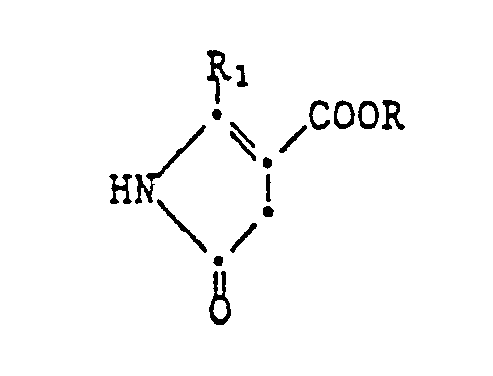
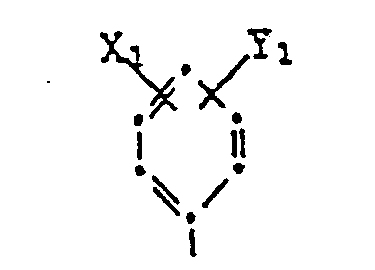
- R 1 is a radical of the formula means, wherein X, Y and Y 'H or halogen atoms, carbamoyl, trifluoromethyl, cyano or C 2 -C 6 alkylcarbamoyl groups, alkyl, alkoxy or alkyl mercapto groups with 1-6 C, alkoxycarbonyl or alkanoylamino or Dialkylamino groups with 2-6 C, optionally substituted by halogen, alkyl or alkoxy with 1-6 C substituted phenoxy, phenylmercapto, phenoxycarbonyl, phenylcarbamoyl or benzoylamino groups and at least one of the substituents X, Y and Y 'is an H atom, and RC 1 -C 18 alkyl, phenyl which is unsubstituted or substituted by nitro, chlorine, C 1 -C 6
- R in formula (1) is a C 1 -C 18 -alkyl group, this can be branched or unbranched with preferably 1-12, and particularly preferably 1-4, carbon atoms. Examples include methyl, ethyl, isopropyl, sec-butyl, tert-butyl, tert-amyl and cyclohexyl.
- R is an unsubstituted or substituted phenyl group, this is in particular unsubstituted, or by nitro, chlorine, C 1 -C 6 alkyl, such as. As methyl, ethyl, isopropyl or tert-butyl, or C 1 -C 6 alkoxy, such as. B. methoxy or ethoxy substituted phenyl.
- R 1 preferably represents a radical of the formula wherein one of the substituents X 1 and Y 1 is an H, chlorine or bromine atom, a methyl, cyano, N, N-dimethylamino or N, N-diethylamino group, an alkoxy group with 1-6 C, an alkoxycarbonyl or Alkylcarbamoyl group with 2-4 C or a phenylcarbamoyl group which is optionally substituted by chlorine, methyl or methoxy and the other is an H atom.
- the substituents X, X 1 ' Y, Y' and Y 1 are in the para, meta or ortho, preferably in the meta and para position to the pyrrolinone group.
- R preferably represents C 1 -C 12 alkyl or phenyl and especially C 1 -C 4 alkyl.
- the pyrrolinones of the formula (1) are obtained, for example, by cyclization of an aminodicarboxylic acid ester of the formula (2) wherein R 1 and R have the meaning given and R 'has the meaning given for R and may be the same or different from R, with a strong base.
- the cyclization is carried out in the presence of a strong base in an organic solvent.
- Suitable strong bases are e.g. B. alkali metal hydroxides, such as sodium, potassium or lithium hydroxide, or alkaline earth metal hydroxides, such as calcium or magnesium hydroxide, or alkali metal amides, such as lithium or lithium diisopropyl, lithium diethyl or lithium isopropyl cyclohexylamide, sodium amide, or alkali metal hydrides, such as lithium hydride or sodium hydride, or Alkaline earth hydrides, such as calcium hydride or alkaline earth metal or alkali metal alcoholates, which are derived in particular from primary, secondary or tertiary aliphatic alcohols having 1 to 10 carbon atoms, such as, for. B.
- alkali metal hydroxides such as sodium, potassium or lithium hydroxide
- alkaline earth metal hydroxides such as calcium or magnesium hydroxide
- alkali metal amides such as lithium or lithium diisopropyl, lithium diethyl or lithium isopropyl
- Alkaline alcoholates are preferably used as strong bases, whereby alkali means in particular sodium or potassium, and the alcoholate is preferably derived from a primary or secondary alcohol.
- Particularly preferred strong bases are therefore e.g. B. sodium or potassium methylate, ethylate, isopropylate, sec-butoxide, tert-butoxide and tert-amylate.
- the alkali metal alcoholates can also be prepared in situ by reacting the corresponding alcohol with the alkali metal, alkali metal hydride or alkali metal amide.
- the strong base is used in an amount of in particular 0.1 to 10 mol, preferably 0.9 to 4.0 mol, based on 1 mol of the reactant of the formula (2).
- Suitable solvents are, for example, primary, secondary or tertiary alcohols having 1 to 10 carbon atoms, such as methanol, ethanol, n-propanol, isopropanol, n-butanol, sec-butanol, tert-butanol, n-pentanol, 2- Methyl-2-butanol, 2-methyl-2-pentanol, 3-methyl-3-pentanol, 2-methyl-2-hexanol, 3-ethyl-3-pentanol, 2,4,4-trifluoromethyl-2-pentanol or Glycols, such as ethylene glycol or diethylene glycol, furthermore ethers, such as tetrahydrofuran or dioxane, or glycol ethers, such as ethylene glycol methyl ether, ethylene glycol ethyl ether, diethylene glycol monomethyl ether or diethylene glycol monoethyl ether, furthermore dipolar-
- the reactions are carried out in particular at a temperature of 20 to 100 ° C., preferably 40 to 80 ° C.
- an alcohol is used as the solvent and an alcoholate is used as the base, it may be advantageous to choose an alcohol and an alcoholate with the same alkyl radicals. It can be equally advantageous if the ester of the formula (2) also contains such alkyl groups.
- the pyrrolinones of the formula (1) are also obtained by known processes by cyclization of a compound of the formula (3) for example with ammonium salts.
- the compounds of formula (3) are known and can, for. B. by condensation of an acylacetic ester of the formula (4) in which R 1 and R have the meaning given, with an ester of the formula XCH 2 COOR ', where X is a fluorine, chlorine, bromine or iodine atom and R' has the meaning given (cf. WH Perkin, J. Chem. Soc. 47, p. 262 or Org. Synth. 42, 75 (1962)).
- Another subject of the invention are the aminodicarboxylic acid esters of the formula (2). You get this for example by reacting a succinic diester of the formula (5) with a nitrile of the formula R 1 CN, where R, R 'and R, have the meaning given, in the presence of a strong base and zinc or magnesium compound analogous to that in Chem. Lett. 1982, p. 687 and Tetrahedron Lett. 1982, p. 1597.
- the succinic diesters of the formula (5) to be used can be dialkyl, diaryl or monoalkylmonoaryl esters, it also being possible for the dialkyl and diaryl succinates to be unsymmetrical. However, preference is given to using symmetric succinic diesters, in particular symmetrical dialkyl succinates.
- Branched alkyl is preferably secondary or tertiary alkyl, such as. B. isopropyl, sec-butyl, tert-butyl or tert-amyl.
- succinic acid diesters of the formula (5) are: dimethyl succinate, diethyl ester, dipropyl ester, dibutyl ester, dipentyl ester, dihexyl ester, diheptyl ester, dioctyl ester, diisopropyl ester, di-sec.butyl ester, di -tert.-butyl ester, -di-tert.-amyl ester, -di- [1,1-dimethyl!
- butyi] ester -di- [1,1,3,3-tetramethylbutyl] ester, -di [ 1,1-dimethylpentyl] ester, -di [1-methyl-1-ethylbutyl] ester, -di [1, 1-diethylpropyl] ester, -diphenyl ester, -di [4-methylpentyl] ester , -di- [2-methylphenyl] ester, -di- [4-chlorophenyl] ester, -monoethyl monophenyl ester.
- Nitriles which may be mentioned are: benzonitrile, o-, m- or p-chlorobenzonitrile, p-bromobenzonitrile, o-, m- or p-methylbenzonitrile, p-tert-butylbenzonitrile, p-methoxybenzonitrile, p-phenoxybenzonitrile, 3,4- Dimethylbenzonitrile, isophtalonitrile or terephthalalonitrile.
- Alkali amides are preferably used as strong bases, alkali in particular meaning lithium and the amide preferably being derived from a secondary amine. Particularly preferred strong bases are therefore e.g. B. lithium diisopropyl, diethyl, or isopropyl cyclohexylamide.
- the alkali amides can also be prepared in situ by reacting the corresponding amine with an alkali alkyl compound, the alkali metal, alkali hydride or alkali amide.
- the strong base is used in an amount of in particular 0.1 to 10 mol, preferably 0.9 to 4.0 mol, based on 1 mol of the reactant of the formula (5).
- the required zinc and magnesium compounds can include as salts of inorganic acids (e.g. as halides), as salts of organic acids (e.g. as acetates), or else as alcoholates.
- the solvents used are also the same as those mentioned in the cyclization of the aminodicarboxylic acid esters of the formula (2).
- solvents which are inert towards strong bases are particularly preferred, namely aromatic hydrocarbons such as benzene, benzenes substituted by alkyl, alkoxy, or halogen, or ethers such as diethyl ether, tetrahydrofuran, dioxane, anisole, ethylene glycol dimethyl ether or diethylene glycol dimethyl ether, and also heterocyclic aromatic hydrocarbons such as pyridine , Picoline or quinoline.
- the reactions are carried out in particular at a temperature of 20 to -100 ° C, preferably from -20 to -80 ° C.
- the compounds of the formulas (1) and (2) are expediently isolated by hydrolysis of the reaction mixture and extraction with an organic solvent and removal of the latter.
- An acid an alcohol having 1 to 4 carbon atoms, such as methanol or ethanol, but preferably water, can be used for the hydrolysis of the condensation product.
- acids come e.g. B. aliphatic or aromatic carboxylic or sulfonic acids, such as formic acid, acetic acid, propionic acid, oxalic acid, benzoic acid or benzenesulfonic acid.
- mineral acids such as hydrogen chloride, its aqueous solution, and carbonic acid, dilute sulfuric and phosphoric acids.
- the compounds of the formulas (1) and (2) are valuable intermediates which are suitable, for example, for the preparation of dyes and pigments, in particular for the preparation of pyrrolo- [3,4-c] pyrroles.
- the reaction mixture is stirred at 100 ° for one hour and poured onto 200 ml of cold water.
- the mixture is stirred for one hour at the reflux temperature and steam is then passed in for one hour to remove the organic solvent.
- the pigment suspension is filtered and the filter cake is dried in vacuo at 80 °. 7.2 g [74%] of pigment of the formula (10) are obtained, which, when incorporated into PVC, gives a red color.
- the oily crude product obtained after the extraction is heated in 1.5% sodium methoxide in methanol for 30 minutes at 60 °. Then allowed to cool to room temperature, taken up in ethyl acetate, neutralized with 1N hydrochloric acid and washed with conc. Saline neutral. After drying with sodium sulfate, filtering and concentrating, the product of the formula is isolated in a yield of 39% based on diisopropyl succinate. A sample, recrystallized from methylene chloride / hexane, melts at 148 - 1500.
Landscapes
- Chemical & Material Sciences (AREA)
- Organic Chemistry (AREA)
- Organic Low-Molecular-Weight Compounds And Preparation Thereof (AREA)
- Nitrogen Condensed Heterocyclic Rings (AREA)
- Plural Heterocyclic Compounds (AREA)
- Pyrrole Compounds (AREA)
- Pyridine Compounds (AREA)
- Low-Molecular Organic Synthesis Reactions Using Catalysts (AREA)
Claims (11)



Applications Claiming Priority (2)
| Application Number | Priority Date | Filing Date | Title |
|---|---|---|---|
| CH535884 | 1984-11-07 | ||
| CH5358/84 | 1984-11-07 |
Publications (2)
| Publication Number | Publication Date |
|---|---|
| EP0184981A1 EP0184981A1 (fr) | 1986-06-18 |
| EP0184981B1 true EP0184981B1 (fr) | 1989-08-23 |
Family
ID=4292225
Family Applications (1)
| Application Number | Title | Priority Date | Filing Date |
|---|---|---|---|
| EP85810504A Expired EP0184981B1 (fr) | 1984-11-07 | 1985-11-01 | Pyrrolinones et composés intermédiaires |
Country Status (5)
| Country | Link |
|---|---|
| US (2) | US4681971A (fr) |
| EP (1) | EP0184981B1 (fr) |
| JP (2) | JPH0753711B2 (fr) |
| CA (2) | CA1260484A (fr) |
| DE (1) | DE3572478D1 (fr) |
Cited By (1)
| Publication number | Priority date | Publication date | Assignee | Title |
|---|---|---|---|---|
| RU2766574C2 (ru) * | 2016-11-02 | 2022-03-15 | Дау Глоубл Текнолоджиз Ллк | Композиция концентрата добавок на основе полукристаллического полиолефина |
Families Citing this family (6)
| Publication number | Priority date | Publication date | Assignee | Title |
|---|---|---|---|---|
| AU3702099A (en) * | 1998-03-30 | 1999-10-18 | Basf Aktiengesellschaft | The use of derivatives of 2-oxopyrrole as crop protection agents and novel 2-oxopyrroles |
| JP6296980B2 (ja) | 2011-09-02 | 2018-03-20 | ビーエーエスエフ ソシエタス・ヨーロピアBasf Se | ジケトピロロピロールオリゴマー、及びジケトピロロピロールオリゴマーを含む組成物 |
| JP6162984B2 (ja) * | 2013-03-14 | 2017-07-12 | 山本化成株式会社 | 感熱発色性組成物及び該組成物を用いてなる感熱記録材料 |
| JP6282640B2 (ja) * | 2013-05-07 | 2018-02-21 | 山本化成株式会社 | 感熱発色性組成物及び該組成物を用いてなる感熱記録材料 |
| CN107282089B (zh) * | 2016-04-12 | 2020-03-31 | 中国石油化工股份有限公司 | 苯与乙烷烷基化的催化剂 |
| JP7156770B2 (ja) | 2018-06-06 | 2022-10-19 | 日本化薬株式会社 | キサンテン化合物、及びこれを含んだ顔料組成物 |
Citations (1)
| Publication number | Priority date | Publication date | Assignee | Title |
|---|---|---|---|---|
| EP0094911A2 (fr) * | 1982-05-17 | 1983-11-23 | Ciba-Geigy Ag | Préparation de pyrrolo-(3,4-c)-pyrroles |
Family Cites Families (5)
| Publication number | Priority date | Publication date | Assignee | Title |
|---|---|---|---|---|
| DE2928305A1 (de) * | 1979-07-13 | 1981-02-05 | Hoechst Ag | 2-dihalogenmethylen-3-halogen-3- carboalkoxy-5-oxopyrrolidine, verfahren zu ihrer herstellung und ihre verwendung als fungizide, bakterizide und algizide schaedlingsbekaempfungsmittel |
| EP0061426B1 (fr) * | 1981-03-20 | 1985-02-13 | Ciba-Geigy Ag | Procédé de coloration des matières organiques à poids moléculaire élevés et des pigments polycycliques |
| DE3369126D1 (en) * | 1982-07-08 | 1987-02-19 | Ciba Geigy Ag | Preparation of beta-amino-alpha,beta-unsaturated carboxylic-acid esters |
| EP0098808B1 (fr) * | 1982-07-08 | 1986-11-26 | Ciba-Geigy Ag | Préparation de 1,4-dicétopyrrolo-(3,4-c)-pyrroles |
| US4585878A (en) * | 1983-06-29 | 1986-04-29 | Ciba-Geigy Corporation | N-substituted 1,4-diketopyrrolo-[3,4-c]-pyrroles |
-
1985
- 1985-11-01 US US06/793,868 patent/US4681971A/en not_active Expired - Lifetime
- 1985-11-01 EP EP85810504A patent/EP0184981B1/fr not_active Expired
- 1985-11-01 DE DE8585810504T patent/DE3572478D1/de not_active Expired
- 1985-11-05 CA CA000494647A patent/CA1260484A/fr not_active Expired
- 1985-11-07 JP JP60248167A patent/JPH0753711B2/ja not_active Expired - Lifetime
-
1987
- 1987-04-06 US US07/034,374 patent/US4749795A/en not_active Expired - Lifetime
-
1989
- 1989-05-04 CA CA000598774A patent/CA1294288C/fr not_active Expired - Lifetime
-
1994
- 1994-12-06 JP JP6302209A patent/JP2524491B2/ja not_active Expired - Lifetime
Patent Citations (1)
| Publication number | Priority date | Publication date | Assignee | Title |
|---|---|---|---|---|
| EP0094911A2 (fr) * | 1982-05-17 | 1983-11-23 | Ciba-Geigy Ag | Préparation de pyrrolo-(3,4-c)-pyrroles |
Cited By (1)
| Publication number | Priority date | Publication date | Assignee | Title |
|---|---|---|---|---|
| RU2766574C2 (ru) * | 2016-11-02 | 2022-03-15 | Дау Глоубл Текнолоджиз Ллк | Композиция концентрата добавок на основе полукристаллического полиолефина |
Also Published As
| Publication number | Publication date |
|---|---|
| JPH0753711B2 (ja) | 1995-06-07 |
| JP2524491B2 (ja) | 1996-08-14 |
| DE3572478D1 (en) | 1989-09-28 |
| EP0184981A1 (fr) | 1986-06-18 |
| JPH07285920A (ja) | 1995-10-31 |
| CA1294288C (fr) | 1992-01-14 |
| US4681971A (en) | 1987-07-21 |
| CA1260484A (fr) | 1989-09-26 |
| JPS61115056A (ja) | 1986-06-02 |
| US4749795A (en) | 1988-06-07 |
Similar Documents
| Publication | Publication Date | Title |
|---|---|---|
| EP0184982B1 (fr) | Pyrrolo-[3,4-c]-pyrroles et procédé de préparation | |
| EP0004279B1 (fr) | Procédé pour la préparation d'acides 4-pyridone-3-carboxyliques, dérivés d'acides 1-cyclopropyl-4-pyridone-3-carboxyliques et médicament les contenant | |
| DE1958919B2 (de) | l-Oxo-5-indanyloxyessigsäuren und solche Verbindungen enthaltende Arzneimittel | |
| AT262274B (de) | Verfahren zur Herstellung neuer Indolderivate | |
| EP0496238A1 (fr) | Benzoxazépines et benzothiazépines substituées, procédé pour leur préparation et leur application comme medicaments | |
| EP0385210B1 (fr) | Amidification de pyridines | |
| DE69803909T2 (de) | Verfahren und Zwischenprodukte, die für die Herstellung von Antifolaten verwendbar sind | |
| EP0380712B1 (fr) | Procédé de préparation de dérivés de l'acide 2,6-dichlorodiphénylaminoacétique | |
| EP0184981A1 (fr) | Pyrrolinones et composés intermédiaires | |
| DE60109829T2 (de) | 3-(1-Hydroxy-pentylidene)-5-nitro-3H-benzofuran-2-on, ein Verfahren zu seiner Herstellung und seine Verwendung | |
| DE3028369A1 (de) | Verfahren zur herstellung von 7-alkoxycarbonyl-6,8-dimethyl-4-hydroxymethyl-1-phthalazon und die dabei auftretenden zwischenprodukte | |
| EP0454623B1 (fr) | Procédé pour la préparation de dicétones-1,3 linéaires | |
| EP0102318B1 (fr) | Préparation d'esters alpha,bêta-insaturés d'acides bêta-amino-carboxyliques | |
| EP0653423B1 (fr) | Procédé de préparation de quinazolines-2,4-diones substituées | |
| EP0267467B1 (fr) | Procédé de préparation de dérivés du thiophène | |
| EP0074121A1 (fr) | Dérivés de 2,3,4,5-tétrahydro-1-benzoxépine-3,5-dione et leur procédé de préparation | |
| DE2903850A1 (de) | 2-amino-8-cyclopropyl-5-oxo-5,8- dihydro-pyrido eckige klammer auf 2,3-d eckige klammer zu -pyrimidin-6-carnonsaeuren, verfahren zu ihrer herstellung sowie ihrer verwendung als antibakterielle mittel | |
| EP0345464B1 (fr) | Procédé pour la préparation d'esters d'acide 3-amino-2-(benzoyl) acrylique substitués ainsi qu'un procédé de préparation d'intermédiaires pour des constituants actifs antibactériens à partir de ces composés | |
| EP0378046B1 (fr) | Procédé de préparation de dérivés de 3-phényl-pyrrole | |
| DE3306996A1 (de) | Acrylsaeuremorpholide, ihre herstellung und verwendung | |
| DE69700122T2 (de) | Verfahren zur Herstellung von Dithiocarbonimidderivate | |
| DE2820575C3 (de) | Verfahren zur Herstellung von Acylcyaniden | |
| DE2652892A1 (de) | Substituierte aminobenzaldehydverbindungen | |
| CH687764A5 (de) | Verfahren zur Herstellung von 7-Acylindolen. | |
| AT258916B (de) | Verfahren zur Herstellung von neuen Alkyl-3-amino-5-chlor-6-X-pyrazinoaten |
Legal Events
| Date | Code | Title | Description |
|---|---|---|---|
| PUAI | Public reference made under article 153(3) epc to a published international application that has entered the european phase |
Free format text: ORIGINAL CODE: 0009012 |
|
| 17P | Request for examination filed |
Effective date: 19851101 |
|
| AK | Designated contracting states |
Kind code of ref document: A1 Designated state(s): CH DE FR GB IT LI |
|
| 17Q | First examination report despatched |
Effective date: 19880420 |
|
| GRAA | (expected) grant |
Free format text: ORIGINAL CODE: 0009210 |
|
| AK | Designated contracting states |
Kind code of ref document: B1 Designated state(s): CH DE FR GB IT LI |
|
| ITF | It: translation for a ep patent filed | ||
| REF | Corresponds to: |
Ref document number: 3572478 Country of ref document: DE Date of ref document: 19890928 |
|
| ET | Fr: translation filed | ||
| GBT | Gb: translation of ep patent filed (gb section 77(6)(a)/1977) | ||
| PLBE | No opposition filed within time limit |
Free format text: ORIGINAL CODE: 0009261 |
|
| STAA | Information on the status of an ep patent application or granted ep patent |
Free format text: STATUS: NO OPPOSITION FILED WITHIN TIME LIMIT |
|
| 26N | No opposition filed | ||
| ITTA | It: last paid annual fee | ||
| REG | Reference to a national code |
Ref country code: CH Ref legal event code: PUE Owner name: CIBA-GEIGY AG TRANSFER- CIBA SC HOLDING AG |
|
| REG | Reference to a national code |
Ref country code: GB Ref legal event code: 732E |
|
| REG | Reference to a national code |
Ref country code: CH Ref legal event code: PFA Free format text: CIBA SC HOLDING AG TRANSFER- CIBA SPECIALTY CHEMICALS HOLDING INC. |
|
| REG | Reference to a national code |
Ref country code: FR Ref legal event code: TP |
|
| REG | Reference to a national code |
Ref country code: GB Ref legal event code: IF02 |
|
| PGFP | Annual fee paid to national office [announced via postgrant information from national office to epo] |
Ref country code: FR Payment date: 20021017 Year of fee payment: 18 |
|
| PGFP | Annual fee paid to national office [announced via postgrant information from national office to epo] |
Ref country code: CH Payment date: 20021018 Year of fee payment: 18 |
|
| PGFP | Annual fee paid to national office [announced via postgrant information from national office to epo] |
Ref country code: GB Payment date: 20021105 Year of fee payment: 18 |
|
| PGFP | Annual fee paid to national office [announced via postgrant information from national office to epo] |
Ref country code: DE Payment date: 20021111 Year of fee payment: 18 |
|
| PG25 | Lapsed in a contracting state [announced via postgrant information from national office to epo] |
Ref country code: GB Free format text: LAPSE BECAUSE OF NON-PAYMENT OF DUE FEES Effective date: 20031101 |
|
| PG25 | Lapsed in a contracting state [announced via postgrant information from national office to epo] |
Ref country code: LI Free format text: LAPSE BECAUSE OF NON-PAYMENT OF DUE FEES Effective date: 20031130 Ref country code: CH Free format text: LAPSE BECAUSE OF NON-PAYMENT OF DUE FEES Effective date: 20031130 |
|
| PG25 | Lapsed in a contracting state [announced via postgrant information from national office to epo] |
Ref country code: DE Free format text: LAPSE BECAUSE OF NON-PAYMENT OF DUE FEES Effective date: 20040602 |
|
| GBPC | Gb: european patent ceased through non-payment of renewal fee |
Effective date: 20031101 |
|
| REG | Reference to a national code |
Ref country code: CH Ref legal event code: PL |
|
| PG25 | Lapsed in a contracting state [announced via postgrant information from national office to epo] |
Ref country code: FR Free format text: LAPSE BECAUSE OF NON-PAYMENT OF DUE FEES Effective date: 20040730 |
|
| REG | Reference to a national code |
Ref country code: FR Ref legal event code: ST |