EP0186350A2 - Ohm'scher Mehrschichtkontakt für P-Typ-Halbleiter und Verfahren zur Herstellung desselben - Google Patents
Ohm'scher Mehrschichtkontakt für P-Typ-Halbleiter und Verfahren zur Herstellung desselben Download PDFInfo
- Publication number
- EP0186350A2 EP0186350A2 EP85308872A EP85308872A EP0186350A2 EP 0186350 A2 EP0186350 A2 EP 0186350A2 EP 85308872 A EP85308872 A EP 85308872A EP 85308872 A EP85308872 A EP 85308872A EP 0186350 A2 EP0186350 A2 EP 0186350A2
- Authority
- EP
- European Patent Office
- Prior art keywords
- layer
- copper
- angstroms
- ohmic contact
- elements
- Prior art date
- Legal status (The legal status is an assumption and is not a legal conclusion. Google has not performed a legal analysis and makes no representation as to the accuracy of the status listed.)
- Granted
Links
Images

Classifications
-
- H—ELECTRICITY
- H10—SEMICONDUCTOR DEVICES; ELECTRIC SOLID-STATE DEVICES NOT OTHERWISE PROVIDED FOR
- H10D—INORGANIC ELECTRIC SEMICONDUCTOR DEVICES
- H10D64/00—Electrodes of devices having potential barriers
- H10D64/01—Manufacture or treatment
- H10D64/011—Manufacture or treatment of electrodes ohmically coupled to a semiconductor
-
- H—ELECTRICITY
- H10—SEMICONDUCTOR DEVICES; ELECTRIC SOLID-STATE DEVICES NOT OTHERWISE PROVIDED FOR
- H10D—INORGANIC ELECTRIC SEMICONDUCTOR DEVICES
- H10D64/00—Electrodes of devices having potential barriers
- H10D64/60—Electrodes characterised by their materials
- H10D64/62—Electrodes ohmically coupled to a semiconductor
-
- H—ELECTRICITY
- H10—SEMICONDUCTOR DEVICES; ELECTRIC SOLID-STATE DEVICES NOT OTHERWISE PROVIDED FOR
- H10P—GENERIC PROCESSES OR APPARATUS FOR THE MANUFACTURE OR TREATMENT OF DEVICES COVERED BY CLASS H10
- H10P14/00—Formation of materials, e.g. in the shape of layers or pillars
- H10P14/40—Formation of materials, e.g. in the shape of layers or pillars of conductive or resistive materials
- H10P14/46—Formation of materials, e.g. in the shape of layers or pillars of conductive or resistive materials using a liquid
- H10P14/47—Electrolytic deposition, i.e. electroplating; Electroless plating
-
- Y—GENERAL TAGGING OF NEW TECHNOLOGICAL DEVELOPMENTS; GENERAL TAGGING OF CROSS-SECTIONAL TECHNOLOGIES SPANNING OVER SEVERAL SECTIONS OF THE IPC; TECHNICAL SUBJECTS COVERED BY FORMER USPC CROSS-REFERENCE ART COLLECTIONS [XRACs] AND DIGESTS
- Y02—TECHNOLOGIES OR APPLICATIONS FOR MITIGATION OR ADAPTATION AGAINST CLIMATE CHANGE
- Y02E—REDUCTION OF GREENHOUSE GAS [GHG] EMISSIONS, RELATED TO ENERGY GENERATION, TRANSMISSION OR DISTRIBUTION
- Y02E10/00—Energy generation through renewable energy sources
- Y02E10/50—Photovoltaic [PV] energy
- Y02E10/543—Solar cells from Group II-VI materials
Definitions
- This invention relates to materials and methods for forming ohmic contacts with a thin film of a p-type semiconductor compound, which film comprises at least one of the metal elements of Class IIB of the Periodic Table of Elements and one of the non-metal elements of Class VIA of the Periodic Table of Elements.
- Such thin films and ohmic contacts find applications in thin film photovoltaic devices.
- polycrystalline semiconducting materials that are preferred for photovoltaic devices are p-type Class IIB-VIA semiconductor compounds that may be provided as thin films.
- Cadmium telluride and mercury cadmium telluride are examples of such compounds.
- it is difficult to establish ohmic contact with such compounds because these compounds do not readily form into layers having very low resistivity, and tunnelling junctions are required for ohmic contacts.
- a low resistance ohmic contact is necessary for efficient energy conversion.
- the p-type Class IIB-VIA semiconductor is etched with an acidic solution, then a suitable metal is deposited on the etched semiconductor surface.
- Acidic solutions commonly used for etching include H 2 SO 4 + K 2 Cr 2 O 7 +H 2 O; HNO 3 + K 2 Cr 2 O 7 +H 2 O; HNO 3 + K 2 Cr 2 O 7 + AgHO 3 + H 2 O; HF + H 2 O 2 + H 2 O; HF + HNO 3 + H 2 0; HN0 3 + H 2 0 and bromine methanol.
- the acidic etch produces a surface rich in Class VIA element, which improves the electrical contact between the metal to be deposited and the p-type Class IIB-VIA semiconductor material.
- Such acidic etchings have been used to improve the ohmic contact between the metal to be deposited and low resistivity, single crystal p-type semiconductors.
- the Class IIB-VIA semiconductor is provided as a polycrystalline thin film, generally having a thickness of less than 10 micrometers, then other factors become significant.
- These thin films possess relatively high resistivities, that is a resistivity greater than about 100 ohm-centimeters as compared to much lower values in a single crystal counterpart material.
- Typical resistivity values for a thin film of cadmium telluride, for example, is about 10 4 ohm-cm. Strong acidic etches used for single crystal materials are too uncontrolled and abrasive for use on thin films, with the exception of very dilute bromine methanol, on the order of approximately 0.1 percent bromine in methanol.
- Applicant has disclosed an improved method of forming ohmic contacts between thin film p-type Class IIB-VIA semiconductor compounds and a conductive metal layer in United States Patent 4,456,630, which disclosure is incorporated herein by reference.
- a thin film of a p-type Class IIB-VIA semiconductor compound is etched with an acidic solution, preferably an oxidizing acidic solution, then treated with a strong basic solution and finally a conductive metal layer is deposited on the etched and treated surface of the semiconductor.
- the invention relates to an ohmically conductive contact for a thin film p-type semiconductor compound formed of at least one of the metal elements of Class IIB of the Periodic Table of Elements and at least one of the non-metal elements of Class VIA of the Periodic Table of Elements comprising a first layer of copper contiguous with the p-type semiconductor compound and having a thickness of from about 5 Angstroms to about 50 Angstroms and a second layer thereon comprising at least a second conductive metal.
- the invention also relates to a method of forming ohmic contacts between a p-type thin film semiconductor compound formed of at least one of the metal elements of Class IIB of the Periodic Table of Elements and one of the non-metal elements of Class VIA of the Periodic Table of Elements and a conductive metal, which method comprises:
- the present invention also includes a method of forming ohmic contacts in accordance with the above process wherein the above method additionally comprises:
- the phrase "thin film" when referring to Class IIB-VIA semiconductor materials refers to a layer of the semiconductor material having a thickness of from about 0.01 micrometer to about 10 micrometers, and preferably from about 0.5 micrometer to about 2 micrometers.
- a thin layer of copper in contact with a p-type Class IIB-VIA semiconductor material is on the order of from about 5 Angstroms to about 50 Angstroms thick.
- Such a film of copper assures a good tunneling junction (ohmic contact) at the semiconductor surface.
- the copper layer may be deposited by any known means such as by vapor deposition or electrodeposition. The thickness of the copper layer is such that not enough copper is present to diffuse into the p-type semiconductor layer, as copper is prone to do, and to also cause shorting. Copper is a known dopant for p-type semiconductor materials and will substitute for the Class IIB metal element in a p-type Class IIB-VIA semiconductor.
- Applicant derives the benefit of a copper ohmic contact by utilizing a layer of copper not exceeding 50 Angstroms in thickness. In this way, an ohmic contact is formed between the Class IIB-VIA thin film, however there is not enough copper to cause shorting across the thin film. Unfortunately, this thin copper layer is not an adequate current collector. This disadvantage is overcome by the subsequent formation of a layer of a second conductive metal, other than copper, onto the copper layer.
- a second metal layer comprising nickel, gold, silver, antimony, molybdenum, chromium, tellurium, platinum, palladium and mixtures and alloys thereof.
- the second metal layer comprises nickel, gold, chromium, and mixtures and alloys thereof.
- the second metal layer comprises nickel.
- the metals chosen for the second layer form intimate, stable contacts with the previously deposited thin copper layer.
- the metals suitable for use as the second metal layer are not suitable for substitution of the copper layer because they do not form as good an ohmic contact with the p-type Class IIB-VIA semiconductor layer and/or they are not as economically feasible as the copper layer.
- the particular combination of copper/nickel possesses excellent electrical and physical contact with a p-type Class IIB-VIA semiconductor compound and is an economically feasible choice for commercial use.
- the thickness of the second metal layer is preferably greater than about 1000 Angstroms. The optimum thickness is dependent on the choice of metal or metals for use as the second layer and the area of the device.
- the second metal layer may be formed by known techniques such as vapor deposition, electrodeposition and the like.
- heat treating subsequent to the formation of the copper and second metal layer further improves the electrical contact at this junction. This is due to diffision of copper into the surface of the p-type Class IIB-VIA semiconductor layers that produces a highly doped surface allowing carrier tunnelling. It is preferred to heat the metal layers at a temperature between about 80°C and about 250°C for a time sufficient to anneal the layers.
- the preferred embodiment of the present invention includes a substrate 10 of insulating transparent material such as glass through which radiant energy, shown by arrows 9, enter the photovoltaic device.
- a substrate 10 of insulating transparent material such as glass through which radiant energy, shown by arrows 9, enter the photovoltaic device.
- substrate 10 On substrate 10 is a layer 11 of a conductive transparent material such as indium tin oxide.
- a layer 12 of n-type semiconductor material which is different from the thin film semiconductor compound 13 described below.
- the combination of layers 11 and 12 comprise an n-type wide band window semiconductor substrate different than the film 13 semiconductor compound.
- a thin film 13 of a p-type semiconductor compound formed of at least one of the metal elements of Class IIB of the Periodic Table of Elements and one of the non-metal elements of Class VIA of the Periodic Table of Elements.
- a layer 14 of copper On the surface of film 13 is deposited a layer 14 of copper.
- Layer 14 possesses a thickness of from about 5 Angstroms to about 50 Angstroms.
- Layer 15, deposited onto layer 14 is a conductive metal other than copper, such as nickel. The purpose of the present invention is to insure that layer 14 forms a stable ohmic contact with film 13 and that layers 14 and 15 form a stable current collector for the so-described photovoltaic device.
- a film of about 0.4 micrometers thick mercury cadmium telluride was then electroplated on the cadmium telluride. These layers were heat treated as described in the above-identified patent to form a p-type cadmium telluride/mercury cadmium telluride film.
- a first segment of such film was etched for about two seconds with a solution of one part by volume 98 percent-by-weight H 2 S0 4 and one part by volume saturated K 2 C r 207 solution and then rinsed with deionized water and dried by blowing with nitrogen gas. The cell was then immersed in hydrazine at about room temperature for about 10 minutes and then rinsed with deionized water and blow-dried with nitrogen.
- Third and fourth segments of p-type films were also etched, treated with a base solution, and dried as described above, then nickel layers, 1000 Angstroms and 1500 Angstroms respectively, were vapor deposited onto the prepared film segments.
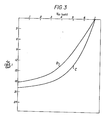
- These photovoltaic devices were measured in the same fashion, and concurrently with, the above-described device made in accordance with the subject invention. The results of testing these devices indicated that the copper/nickel back contacts were superior to nickel-only back contacts.
- the mercury cadmium telluride layer was heat treated as described in the above identified patent application to form a p-type mercury cadmium telluride film.
- the film was etched for about 2 seconds with a solution of 1 part by volume 98 percent-by-weight H 2 S0 4 and 1 part by volume saturated K 2 Cr 2 0 7 solution and then rinsed with deionized water and dried by blowing with nitrogen gas.
- the cell was then immersed in hydrazine at about room temperature for about 10 minutes and then rinsed with deionized water and dried with nitrogen.
- a layer of about 20 Angstroms thick copper was evaporated onto the surface of the film, followed by the vapor deposition of a nickel layer about 1400 Angstroms thick.
- the resulting photovoltaic device was measured before and after a heat treating step, wherein the device was heat treated at about 105°C for about 30 minutes.
Landscapes
- Electrodes Of Semiconductors (AREA)
- Led Devices (AREA)
- Photovoltaic Devices (AREA)
- Physical Deposition Of Substances That Are Components Of Semiconductor Devices (AREA)
Priority Applications (1)
| Application Number | Priority Date | Filing Date | Title |
|---|---|---|---|
| AT85308872T ATE56105T1 (de) | 1984-12-28 | 1985-12-05 | Ohm'scher mehrschichtkontakt fuer p-typ-halbleiter und verfahren zur herstellung desselben. |
Applications Claiming Priority (2)
| Application Number | Priority Date | Filing Date | Title |
|---|---|---|---|
| US06/687,092 US4680611A (en) | 1984-12-28 | 1984-12-28 | Multilayer ohmic contact for p-type semiconductor and method of making same |
| US687092 | 1984-12-28 |
Publications (3)
| Publication Number | Publication Date |
|---|---|
| EP0186350A2 true EP0186350A2 (de) | 1986-07-02 |
| EP0186350A3 EP0186350A3 (en) | 1988-01-20 |
| EP0186350B1 EP0186350B1 (de) | 1990-08-29 |
Family
ID=24759001
Family Applications (1)
| Application Number | Title | Priority Date | Filing Date |
|---|---|---|---|
| EP85308872A Expired - Lifetime EP0186350B1 (de) | 1984-12-28 | 1985-12-05 | Ohm'scher Mehrschichtkontakt für P-Typ-Halbleiter und Verfahren zur Herstellung desselben |
Country Status (9)
| Country | Link |
|---|---|
| US (1) | US4680611A (de) |
| EP (1) | EP0186350B1 (de) |
| JP (1) | JPS61222180A (de) |
| AT (1) | ATE56105T1 (de) |
| AU (2) | AU581946B2 (de) |
| CA (1) | CA1236224A (de) |
| DE (1) | DE3579429D1 (de) |
| ES (1) | ES8800785A1 (de) |
| ZA (1) | ZA859821B (de) |
Cited By (1)
| Publication number | Priority date | Publication date | Assignee | Title |
|---|---|---|---|---|
| EP0274890A1 (de) * | 1987-01-06 | 1988-07-20 | The Standard Oil Company | Dauerhafte ohmische Kontakte für p-leitende, Tellur enthaltende II-VI-Halbleiterschichten |
Families Citing this family (10)
| Publication number | Priority date | Publication date | Assignee | Title |
|---|---|---|---|---|
| JP2659714B2 (ja) * | 1987-07-21 | 1997-09-30 | 株式会社日立製作所 | 半導体集積回路装置 |
| JPH01111380A (ja) * | 1987-10-23 | 1989-04-28 | Sumitomo Metal Ind Ltd | 光起電力素子及びその製造方法 |
| US5393675A (en) * | 1993-05-10 | 1995-02-28 | The University Of Toledo | Process for RF sputtering of cadmium telluride photovoltaic cell |
| US5557146A (en) * | 1993-07-14 | 1996-09-17 | University Of South Florida | Ohmic contact using binder paste with semiconductor material dispersed therein |
| US5909632A (en) * | 1997-09-25 | 1999-06-01 | Midwest Research Institute | Use of separate ZnTe interface layers to form OHMIC contacts to p-CdTe films |
| MY157221A (en) | 2007-09-25 | 2016-05-13 | First Solar Inc | Photovoltaic devices including an interfacial layer |
| CN101960613A (zh) * | 2008-03-07 | 2011-01-26 | 国立大学法人东北大学 | 光电转换元件结构和太阳能电池 |
| US8524524B2 (en) * | 2010-04-22 | 2013-09-03 | General Electric Company | Methods for forming back contact electrodes for cadmium telluride photovoltaic cells |
| US20110272010A1 (en) * | 2010-05-10 | 2011-11-10 | International Business Machines Corporation | High work function metal interfacial films for improving fill factor in solar cells |
| WO2017091269A2 (en) * | 2015-08-31 | 2017-06-01 | The Board Of Regents Of The University Of Oklahoma | Semiconductor devices having matrix-embedded nano-structured materials |
Family Cites Families (15)
| Publication number | Priority date | Publication date | Assignee | Title |
|---|---|---|---|---|
| US3370207A (en) * | 1964-02-24 | 1968-02-20 | Gen Electric | Multilayer contact system for semiconductor devices including gold and copper layers |
| US3268309A (en) * | 1964-03-30 | 1966-08-23 | Gen Electric | Semiconductor contact means |
| US3465428A (en) * | 1966-10-27 | 1969-09-09 | Trw Inc | Method of fabricating semiconductor devices and the like |
| US4065781A (en) * | 1974-06-21 | 1977-12-27 | Westinghouse Electric Corporation | Insulated-gate thin film transistor with low leakage current |
| US4000508A (en) * | 1975-07-17 | 1976-12-28 | Honeywell Inc. | Ohmic contacts to p-type mercury cadmium telluride |
| JPS5237785A (en) * | 1975-09-20 | 1977-03-23 | Agency Of Ind Science & Technol | Process for production of photovoltaic elements |
| JPS5356988A (en) * | 1976-11-04 | 1978-05-23 | Agency Of Ind Science & Technol | Photovoltaic element |
| JPS5454589A (en) * | 1977-10-11 | 1979-04-28 | Agency Of Ind Science & Technol | Photoelectric transducer and production of the same |
| US4319069A (en) * | 1980-07-25 | 1982-03-09 | Eastman Kodak Company | Semiconductor devices having improved low-resistance contacts to p-type CdTe, and method of preparation |
| JPS6033793B2 (ja) * | 1981-01-19 | 1985-08-05 | 株式会社村田製作所 | 銅被膜を有するセラミツク体 |
| JPS57126101A (en) * | 1981-01-29 | 1982-08-05 | Murata Manufacturing Co | Method of forming electrode for barium titanate series semiconductor porcelain |
| US4388483A (en) * | 1981-09-08 | 1983-06-14 | Monosolar, Inc. | Thin film heterojunction photovoltaic cells and methods of making the same |
| JPS5931041A (ja) * | 1982-08-13 | 1984-02-18 | Seiko Epson Corp | 薄膜半導体装置 |
| US4456630A (en) * | 1983-08-18 | 1984-06-26 | Monosolar, Inc. | Method of forming ohmic contacts |
| JPH1151A (ja) * | 1997-06-11 | 1999-01-06 | Takashi Osawa | ゲルマニウムミネラルを含んだ野菜を作る 土壌改良植成剤 |
-
1984
- 1984-12-28 US US06/687,092 patent/US4680611A/en not_active Expired - Lifetime
-
1985
- 1985-12-05 EP EP85308872A patent/EP0186350B1/de not_active Expired - Lifetime
- 1985-12-05 AT AT85308872T patent/ATE56105T1/de not_active IP Right Cessation
- 1985-12-05 DE DE8585308872T patent/DE3579429D1/de not_active Expired - Lifetime
- 1985-12-06 AU AU50851/85A patent/AU581946B2/en not_active Ceased
- 1985-12-17 CA CA000497874A patent/CA1236224A/en not_active Expired
- 1985-12-23 ZA ZA859821A patent/ZA859821B/xx unknown
- 1985-12-25 JP JP60299664A patent/JPS61222180A/ja active Pending
- 1985-12-27 ES ES550464A patent/ES8800785A1/es not_active Expired
-
1989
- 1989-05-04 AU AU34045/89A patent/AU608154B2/en not_active Ceased
Cited By (1)
| Publication number | Priority date | Publication date | Assignee | Title |
|---|---|---|---|---|
| EP0274890A1 (de) * | 1987-01-06 | 1988-07-20 | The Standard Oil Company | Dauerhafte ohmische Kontakte für p-leitende, Tellur enthaltende II-VI-Halbleiterschichten |
Also Published As
| Publication number | Publication date |
|---|---|
| US4680611A (en) | 1987-07-14 |
| EP0186350B1 (de) | 1990-08-29 |
| JPS61222180A (ja) | 1986-10-02 |
| AU5085185A (en) | 1986-07-03 |
| CA1236224A (en) | 1988-05-03 |
| ATE56105T1 (de) | 1990-09-15 |
| ES550464A0 (es) | 1987-11-16 |
| ES8800785A1 (es) | 1987-11-16 |
| EP0186350A3 (en) | 1988-01-20 |
| AU3404589A (en) | 1989-08-31 |
| AU581946B2 (en) | 1989-03-09 |
| ZA859821B (en) | 1986-09-24 |
| AU608154B2 (en) | 1991-03-21 |
| DE3579429D1 (de) | 1990-10-04 |
Similar Documents
| Publication | Publication Date | Title |
|---|---|---|
| US4251286A (en) | Thin film photovoltaic cells having blocking layers | |
| US3290175A (en) | Semiconductor photovoltaic devices | |
| US4666569A (en) | Method of making multilayer ohmic contact to thin film p-type II-VI semiconductor | |
| CA1208372A (en) | Method of forming ohmic contacts | |
| US4200473A (en) | Amorphous silicon Schottky barrier solar cells incorporating a thin insulating layer and a thin doped layer | |
| US4213798A (en) | Tellurium schottky barrier contact for amorphous silicon solar cells | |
| JP2742416B2 (ja) | P型のテルル含有▲ii▼−▲vi▼半導体の薄いフィルムに対する安定オーミック接点 | |
| US4197141A (en) | Method for passivating imperfections in semiconductor materials | |
| EP0186351B1 (de) | Verfahren zur Herstellung eines Stromkollektorgitters und Werkstoffe dafür | |
| US4320154A (en) | Method of forming solar cells by grid contact isolation | |
| JP2002524882A (ja) | 亜鉛スズ酸塩緩衝層を含む光電デバイスおよび製造方法 | |
| EP0186350B1 (de) | Ohm'scher Mehrschichtkontakt für P-Typ-Halbleiter und Verfahren zur Herstellung desselben | |
| JP2011529276A (ja) | 低温精密エッチ・バック及び不動態化プロセスで製造された選択エミッタを有する結晶シリコンpv電池 | |
| US5557146A (en) | Ohmic contact using binder paste with semiconductor material dispersed therein | |
| CN109148614B (zh) | 硅异质结太阳电池及其制备方法 | |
| US4342879A (en) | Thin film photovoltaic device | |
| US4064522A (en) | High efficiency selenium heterojunction solar cells | |
| US4495375A (en) | MIS or SIS Solar cells | |
| JP2000058888A (ja) | 太陽電池及びその製造方法 | |
| EP0010359B1 (de) | Verfahren zur Herstellung einer Dünnschicht-Photodiode und nach diesem Verfahren hergestellte Photodiode | |
| EP0080342A2 (de) | Lichtempfindliches Element, Verfahren zu seiner Herstellung, und photovoltaische Zelle, die dieses Element enthält | |
| US3340599A (en) | Simple method of making photovoltaic junctions | |
| US4706104A (en) | Electrical contacts containing thallium (III) oxide | |
| KR100374020B1 (ko) | ITO/n형 반도체층 계면에서 터널링 접합을 이용한박막 광전지 및 그 제조방법 | |
| JPH09213978A (ja) | カルコパイライト構造半導体およびそれを用いた光起電力装置 |
Legal Events
| Date | Code | Title | Description |
|---|---|---|---|
| PUAI | Public reference made under article 153(3) epc to a published international application that has entered the european phase |
Free format text: ORIGINAL CODE: 0009012 |
|
| AK | Designated contracting states |
Kind code of ref document: A2 Designated state(s): AT BE CH DE FR GB IT LI NL SE |
|
| PUAL | Search report despatched |
Free format text: ORIGINAL CODE: 0009013 |
|
| AK | Designated contracting states |
Kind code of ref document: A3 Designated state(s): AT BE CH DE FR GB IT LI NL SE |
|
| 17P | Request for examination filed |
Effective date: 19880705 |
|
| 17Q | First examination report despatched |
Effective date: 19880909 |
|
| RAP1 | Party data changed (applicant data changed or rights of an application transferred) |
Owner name: BP SOLAR LIMITED . Owner name: STANDARD OIL COMMERCIAL DEVELOPMENT COMPANY |
|
| GRAA | (expected) grant |
Free format text: ORIGINAL CODE: 0009210 |
|
| AK | Designated contracting states |
Kind code of ref document: B1 Designated state(s): AT BE CH DE FR GB IT LI NL SE |
|
| REF | Corresponds to: |
Ref document number: 56105 Country of ref document: AT Date of ref document: 19900915 Kind code of ref document: T |
|
| ITF | It: translation for a ep patent filed | ||
| REF | Corresponds to: |
Ref document number: 3579429 Country of ref document: DE Date of ref document: 19901004 |
|
| ET | Fr: translation filed | ||
| PLBE | No opposition filed within time limit |
Free format text: ORIGINAL CODE: 0009261 |
|
| STAA | Information on the status of an ep patent application or granted ep patent |
Free format text: STATUS: NO OPPOSITION FILED WITHIN TIME LIMIT |
|
| 26N | No opposition filed | ||
| ITTA | It: last paid annual fee | ||
| EAL | Se: european patent in force in sweden |
Ref document number: 85308872.2 |
|
| PGFP | Annual fee paid to national office [announced via postgrant information from national office to epo] |
Ref country code: NL Payment date: 19951004 Year of fee payment: 11 |
|
| PGFP | Annual fee paid to national office [announced via postgrant information from national office to epo] |
Ref country code: FR Payment date: 19951005 Year of fee payment: 11 |
|
| PGFP | Annual fee paid to national office [announced via postgrant information from national office to epo] |
Ref country code: SE Payment date: 19951006 Year of fee payment: 11 Ref country code: DE Payment date: 19951006 Year of fee payment: 11 |
|
| PGFP | Annual fee paid to national office [announced via postgrant information from national office to epo] |
Ref country code: GB Payment date: 19951101 Year of fee payment: 11 |
|
| PGFP | Annual fee paid to national office [announced via postgrant information from national office to epo] |
Ref country code: AT Payment date: 19951123 Year of fee payment: 11 |
|
| PGFP | Annual fee paid to national office [announced via postgrant information from national office to epo] |
Ref country code: CH Payment date: 19951229 Year of fee payment: 11 |
|
| PGFP | Annual fee paid to national office [announced via postgrant information from national office to epo] |
Ref country code: BE Payment date: 19960109 Year of fee payment: 11 |
|
| PG25 | Lapsed in a contracting state [announced via postgrant information from national office to epo] |
Ref country code: GB Effective date: 19961205 Ref country code: AT Effective date: 19961205 |
|
| PG25 | Lapsed in a contracting state [announced via postgrant information from national office to epo] |
Ref country code: SE Effective date: 19961206 |
|
| PG25 | Lapsed in a contracting state [announced via postgrant information from national office to epo] |
Ref country code: LI Effective date: 19961231 Ref country code: CH Effective date: 19961231 Ref country code: BE Effective date: 19961231 |
|
| BERE | Be: lapsed |
Owner name: BP SOLAR LTD Effective date: 19961231 Owner name: STANDARD OIL COMMERCIAL DEVELOPMENT CY Effective date: 19961231 |
|
| PG25 | Lapsed in a contracting state [announced via postgrant information from national office to epo] |
Ref country code: NL Effective date: 19970701 |
|
| GBPC | Gb: european patent ceased through non-payment of renewal fee |
Effective date: 19961205 |
|
| REG | Reference to a national code |
Ref country code: CH Ref legal event code: PL |
|
| PG25 | Lapsed in a contracting state [announced via postgrant information from national office to epo] |
Ref country code: FR Effective date: 19970829 |
|
| NLV4 | Nl: lapsed or anulled due to non-payment of the annual fee |
Effective date: 19970701 |
|
| PG25 | Lapsed in a contracting state [announced via postgrant information from national office to epo] |
Ref country code: DE Effective date: 19970902 |
|
| EUG | Se: european patent has lapsed |
Ref document number: 85308872.2 |
|
| REG | Reference to a national code |
Ref country code: FR Ref legal event code: ST |