EP0188204A2 - Verfahren zur Herstellung von duromeren aliphatischen Polycarbonaten - Google Patents
Verfahren zur Herstellung von duromeren aliphatischen Polycarbonaten Download PDFInfo
- Publication number
- EP0188204A2 EP0188204A2 EP86100098A EP86100098A EP0188204A2 EP 0188204 A2 EP0188204 A2 EP 0188204A2 EP 86100098 A EP86100098 A EP 86100098A EP 86100098 A EP86100098 A EP 86100098A EP 0188204 A2 EP0188204 A2 EP 0188204A2
- Authority
- EP
- European Patent Office
- Prior art keywords
- alkyl
- ring
- und
- formula
- catalyst
- Prior art date
- Legal status (The legal status is an assumption and is not a legal conclusion. Google has not performed a legal analysis and makes no representation as to the accuracy of the status listed.)
- Granted
Links
Classifications
-
- C—CHEMISTRY; METALLURGY
- C08—ORGANIC MACROMOLECULAR COMPOUNDS; THEIR PREPARATION OR CHEMICAL WORKING-UP; COMPOSITIONS BASED THEREON
- C08G—MACROMOLECULAR COMPOUNDS OBTAINED OTHERWISE THAN BY REACTIONS ONLY INVOLVING UNSATURATED CARBON-TO-CARBON BONDS
- C08G64/00—Macromolecular compounds obtained by reactions forming a carbonic ester link in the main chain of the macromolecule
- C08G64/20—General preparatory processes
- C08G64/30—General preparatory processes using carbonates
-
- C—CHEMISTRY; METALLURGY
- C08—ORGANIC MACROMOLECULAR COMPOUNDS; THEIR PREPARATION OR CHEMICAL WORKING-UP; COMPOSITIONS BASED THEREON
- C08G—MACROMOLECULAR COMPOUNDS OBTAINED OTHERWISE THAN BY REACTIONS ONLY INVOLVING UNSATURATED CARBON-TO-CARBON BONDS
- C08G64/00—Macromolecular compounds obtained by reactions forming a carbonic ester link in the main chain of the macromolecule
- C08G64/02—Aliphatic polycarbonates
- C08G64/0208—Aliphatic polycarbonates saturated
Definitions
- the invention relates to a new process for the production of thermoset aliphatic polycarbonates from cyclic aliphatic carbonic acid esters by ring-opening polymerization.
- cyclic carbonates are caused by alkaline compounds, e.g. Potassium carbonate can be polymerized at elevated temperature (130 ° C) (J. Am. Chem. Soc. 52, 314 (1930)).
- thermoset aliphatic polycarbonates by ring-opening copolymerization mono- .and bifunctional, ie. crosslinking ring carbonates
- these catalysts are unsuitable because they lead to the formation of multiphase systems which either trigger no or only an uncontrolled polymerization.
- the result is non-reproducible polymerizations and unevenly polymerized products.
- only bubble-containing products are formed during the polymerization.
- catalysts of the general formula (II) which may be mentioned are: thioacetic acid amide, thiopropionic acid amide, thiobutyric acid amide, thiovaleric acid amide, thiourea, N-methylthiourea, N-ethylthiourea, N, N-dimethylthiourea and thiosemicarbazide acid, particularly preferably thioacetic acid amide, thioacetic acid amide, thioacetic acid amide, thioacetic acid amide, thioacetic acid amide, particularly preferred thioacetic acid amide, thioacetic acid amide, thioacetic acid amide, thioacetic acid amide, thioacetic acid amide, thioacetic acid amide, thioacetic acid amide, thioacetic acid amide, thioacetic acid amide, thioacetic acid amide, thioacetic acid amide, thio
- cocatalysts of the general formula (III) are: aliphatic acid amides such as dimethylacetamide, dimethylpropionic acid amide, cyclic amides such as pyrrolidone, valerolactam, caprolactam and N-methylpyrrolidone, particularly preferably dimethylacetamide, N-methylpyrrolidone and caprolactam; cyclic amines such as piperazine, N, N'-dimethylpiperazine, bis (2-hydroxyethyl) piperazine, 1,4-diazabicyclo (2,2,2) octane, 1,5-diazabicyclo (4,3,0) non -5-ene and 1,5-diazabicyclo- (5,4,0) -undec-7-ene, particularly preferably 1,4-diazabicyclo- (2,2,2) -octane and 1,5-diazabicyclo - (5,4,0) -undec-7-ene; acyclic
- cocatalysts of the general formula (IV) which may be mentioned are: propiolactone, butyrolactone, valerolactan and caprolactone, particularly preferably butyrolactone and caprolactone; cyclic ethers such as dioxane, 1,4,7,10-tetraoxacyclododecane, 1,4,7,10,13-pentaoxacyclopentadecane, 1,4,7,10,13,16-hexaoxacyclooctadecane, particularly preferably 1,4,7,10 , 13-pentaoxacyclopentadecane and 1,4,7,10,13,16-hexaoxacyclooctadecane.
- cyclic ethers such as dioxane, 1,4,7,10-tetraoxacyclododecane, 1,4,7,10,13-pentaoxacyclopentadecane, 1,4,7,10,
- cocatalysts of the general formula (V) include: polyethylene glycol, polypropylene glycol, n-butanol, tert-butanol, iso-octanol, n-dodecanol and n-octadecanol, particularly preferably polyethylene glycol and iso-octanol; Thiols such as 2-mercaptoethanol, thiophenol, p-chlorothipphenol, n-butanethiol, n-dodecanethiol, particularly preferably 2-mercaptoethanol and n-dodecanethiol.
- the catalyst systems which can be used are preferably used as solutions.
- the catalyst systems consist of 50-99.999% by weight (based on the total weight of the catalyst system) of the cocatalyst of the general formulas (III) to (V) and 0.001 to 50% by weight (based on the total weight of the Catalyst system) composed of the catalyst of the general formula (I) and (II); the catalyst systems preferably consist of 70-99.999% by weight of the cocatalyst and 0.001-30% by weight of the catalyst, particularly preferably 80-99.99% by weight of cocatalyst and 0.01-20% by weight. -% from catalyst.
- the catalyst systems are used in amounts of 0.001-5% by weight (based on the weight of the total monomer mixture), preferably 0.01-4% by weight, particularly preferably 0.01-3% by weight.
- the temperatures at which the catalyst systems for the ring-opening copolymerization of monocyclic ring carbonates with bifunctional cyclic carbonic acid esters are used in the process according to the invention are 50 to 200 ° C., preferably 70 to 170 ° C., particularly preferably 80 to 160 ° C.
- the carbonates of the general formula (VI) are preferably used.
- Carbonates of the general formula (X) are preferably used.
- the bifunctional crosslinking ring carbonates are added to the monocyclic ring carbonate in amounts of 2-50% by weight, preferably 5-20% by weight, based on the total amount of carbonates used.
- the cyclic carbonates are polymerized in bulk without the use of solvents by adding the catalyst systems described above in the amounts indicated above at the temperatures indicated above.
- the process according to the invention is carried out under normal pressure or overpressure, preferably under normal pressure.
- thermosets obtained by the process according to the invention are recommended wherever there are high demands on thermoset properties, such as heat resistance and insensitivity to solvents and swelling agents (e.g. fuels and lubricants), and where good mechanical properties, in particular high toughness, are also required are.
- solvents and swelling agents e.g. fuels and lubricants
- mechanical properties in particular high toughness, are also required are.
- automotive parts called in particular those from the rockfall hazard areas, such as spoilers, bumper parts and K oterielausrequisiteen.
- a mixture of 72 parts of neopentyl glycol carbonate, 8 parts of 5.5 '- (carbonylbis- (oxymethylene)) bis (5-ethyl-1,3-dioxan-2-one) (X with R 17 C 2 H 5 ) and 0.8 part of a catalyst system consisting of potassium tert-butoxide (5% by weight) in caprolactam is added to 20 parts of glass fiber at a temperature of 120 ° C. After a short time, a clear glass fiber reinforced polymer is obtained.
- Example 13 (comparison with DE-OS 3 103 135 and 3 204 078, in which thallium compounds are used for the polymerization of cyclic carbonates)
- a mixture of 72 parts of neopentyl glycol carbonate, 8 parts of 5,5 '- (carbonylbis- (oxymethylene)) bis (5-ethyl-2,3-dioxan-2-one) (X with R 17 C 2 H 5 and 0.2 part of thallium (I) acetate is added to 20 parts of glass fiber at 120 ° C. No curing occurs even after reaction times> 2 hours.
- Examples 14 and 15 are intended to show that a cocatalyst is necessary in the catalyst system.
Landscapes
- Chemical & Material Sciences (AREA)
- Health & Medical Sciences (AREA)
- Chemical Kinetics & Catalysis (AREA)
- Medicinal Chemistry (AREA)
- Polymers & Plastics (AREA)
- Organic Chemistry (AREA)
- Polyesters Or Polycarbonates (AREA)
Abstract
Description
- Die Erfindung betrifft ein neues Verfahren zur Herstellung von duromeren aliphatischen Polycarbonaten aus cyclischen aliphatischen Kohlensäureestern durch ringöffnende Polymerisation.
- Es ist bekannt, daß cyclische Carbonate durch alkalisch reagierende Verbindungen, z.B. Kaliumcarbonat bei erhöhter Temperatur (130°C) polymerisiert werden können (J. Am. Chem. Soc. 52, 314 (1930)).
- In DE-OS 1 545 116, 1 545 117 und 1 545 118 werden Alkalimetallverbindungen, Metallalkoholate und -amide als besonders geeignete Katalysatoren für diese Reaktion genannt, die schon bei niedrigeren Temperaturen (ca. 90°C) verwendet werden können.
- Für die Herstellung duromerer aliphatischer Polycarbonate durch ringöffnende Copolymerisation mono- .und bifunktioneller, d.h..vernetzender Ringcarbonate sind diese Katalysatoren ungeeignet, da sie zur Bildung mehrphasiger Systeme führen, die entweder keine oder nur eine unkontrollierte Polymerisation auslösen. Nicht reproduzierbare Polymerisationen und ungleichmäßig durchpolymerisierte Produkte sind das Resultat. In anderen Fällen werden in Folge starker CO2-Abspaltung während der Polymerisation nur.blasen- haltige Produkte gebildet.
- Die DE-OS 3 103 135 und 3 204 078 beschreiben die Verwendung alkalisch reagierender Thallium-Verbindungen zur Polymerisation cyclischer Carbonate. Dieser Katalysator kann zur Herstellung duromerer Produkte nur sehr begrenzt verwendet werden, da die Polymerisation auch hier nicht in allen Fällen redproduzierbar verläuft. Besonders nachteilig ist jedoch, daB in Gegenwart üblicher Füllstoffe und Verstärkermaterialien für Duromere, z.B. Quarzsand und Glasfaser mit dieser Tl-Verbindung keine Polymerisation abläuft.
- Es war daher wünschenswert, ein Verfahren zu entwickeln, das eine reproduzierbare Herstellung, auch verstärkter Duromerer, durch ringöffnende Polymerisation cyclischer Kohlensäureester gestattet.
- Es wurde nun ein Verfahren gefunden, das die Herstellung von duromeren, gegebenenfalls verstärkten aliphatischen Polycarbonaten durch ringöffnende Copolymerisation von monocyclischen Ringcarbonaten und bifunktionellen vernetzend wirkenden Ringcarbonaten gestattet durch Verwendung von Katalysatorsystemen, bestehend aus einem Katalysator der allgemeinen Formel (I)

- X ein Ion der Gruppen IA-IIIA, IIIB oder VA des Periodensystems (Chemiker-Kalender, S.2, 21974, Springer Verlag),
- R1 einen C1-C8-Alkylalkoholat-, C7-C15-Aralkylalkoholat-, C4-C18-Thiolat-, Cyanid-, Cyanat-, Thiocyanat-, aliphatischen (C1-C8)Carboxylatr; aromatischen (gegebenenfalls durch Brom, Chlor, eine C1-C4-Alkyl-, Nitro-, Trifluormethyl-, Alkoxygruppe mit 1 bis 4 C-Atomen oder Carbalkoxygruppe substituierten) Carboxylat-, Carbonat-, C1-C8-Alkylcarbonat-, Oxid-, Halogenid, C1-C4-Alkyl-Rest,
- Y 1, 2, 3 oder 4
- R2 C1-C4-Alkyl, -NH2, -NH-Alkyl(C1=C4), -N(Alkyl(C1-C4))2, -NHNH2
- R 3 für C1-C5-Alkyl,
- R4 und R5 für vasserstoff, C1-C4-Alkyl stehen,
- R 4 die bei Formel IIIa angegebene Bedeutung hat und
- X für eine ganze Zahl von 3 bis 6 steht,
- R6 und R7 für Wasserstoff, -CH3, -C2H4OH oder gemeinsam für eine gesättigte Methylenkette mit 2 bis 4 C-Atomen stehen,
- X,Y für eine ganze Zahl von 2 bis 5 stehen,
- R8 bis R11 Wasserstoff, C1-C4-Alkyl, C6-C10-Aryl bedeuten, wobei gegebenenfalls die Stickstoffatome über zwei Reste R8, R10 bzw. R9, R11 über eine C2 bis C4 Kette miteinander zu einem Ring verknüpft sein können,
- R12 -(CH2)s- mit s = 2-5 für den Fall n = 1 und -(CH2CH2O)tCH2CH2- mit t = 1-6 für den Fall n = 0 und
- n 0 oder 1 bedeuten,
- R13 -CH2CH2OH, -(CH2CH2)v-OH, -(CH-CH2)v OH, C4-C12-Alkyl oder einen Phenylring (gegebenenfalls durch Brom, Chlor, eine C1-C4-Alkyl-, Nitro-, Trifluormethyl-, Alkoxygruppe mit 1 bis 4 C-Atomen oder Carbalkoxygruppe substituiert)
- v 1 - 200,
- Z 0 und S bedeuten,
- Als Katalysatoren der allgemeinen Formel (I) seien beispielsweise erwähnt:
- Die Alkalimetallalkoholate, wie z.B. Li-, Na-, K-ethylat, -butylat, -isobutylat, -tert.-butylat, -octylat, -iso-octylat, dodecylat, bevorzugt die erwähnten Kaliumalkoholate, besonders bevorzugt Kalium-tert.-butylat, -octylat und -iso-octylat; die Alkalimetallaralkylalkoholate, wie z.B. die Li-, Na-, K-Salze von Benzylalkohol, α -Hydroxy-ethyl-p-ethylbenzol, α-Hydroxy-ethyl-O-ethylbenzol,α-Hydroxy-ethyl-o,p-diethylbenzol, α-Hydroxyisopropyl-p-tert.-butylbenzol, α -Hydroxyisopropyl-p-isopropylbenzol, α-Hydroxyisopropyl-p-methylbenzol, α-Hydroxy-isopropyl-o,p-di-tert.-butylbenzol, α-Hydroxy-isopropyl-o,p-diisopropyl- benzol,α -Hydroxy-isobutyl-p-tert.-butylbenzol, bevorzugt die Na- und K-Salze von d-Hydroxy-isopropyl-p-isopropylbenzol, α-Hydroxy-isopropyl-p-tert.-butylbenzol und α-Hydroxy-isopropyl-o,p-di-tert.-butylbenzol; die Alkalimetallthiolate, wie z.B. Na-, K-thiobutanolat, -thiophenolat, -thiododecanolat, -thiostearylat, bevorzugt die erwähnten Kaliumthiolate, besonders bevorzugt Kaliumthiophenolat und -thiododecanolat: die Alkalimetallcyanide, -cyanate und thiocyanate, wie z.B. Li-, Na-, K-cyanid, -cyanat und -thiocyanat, besonders bevorzugt K-cyanid, -cyanat und thiocyanat; die Alkalimetallcarboxylate aliphatischer (C1-C8)Monocarbonsäuren und aromatische Carboxylate, die gegebenenfalls ein oder mehrfach durch Chlor, Brom, eine C1-C4-Alkyl-, Nitro-, Trifluormethyl-, Alkoxygruppe mit 1 bis 4 C-Atomen oder eine Carbalkoxygruppe mit 1 bis 4 C-Atomen substituiert ist, wie z.B. Li-, Na-, K-formiat, -acetat, -caprylat, -Isooctanoat, -benzoat, -naphthenate, bevorzugt Li- und K-acetat, -isooctanoat und -benzoat, besonders bevorzugt K-acetat, K-Isooctanoat und Li- benzoat; die Alkalimetallcarbonate, wie z.B. Li-, Na-, K- und Cs-carbonat, besonders bevorzugt Kalium- und Cs-carbonat; die C1-C8-Monoalkylester-Salze der Kohlensäure, wie z.B. die Alkali- und Erdalkalimetallsalze der Monomethyl-, Monoethyl-, Monobutyl- und Monoisooctylcarbonate, bevorzugt die Li-, K- und Ca-Salze der Monomethyl-, Monoethyl- und Monoisooctylcarbonate, besonders bevorzugt Lithiummonomethylcarbonat und Kaliummonoisooctylcarbonat; die oxide der Erdalkalimetalle, des Cer, Bor, Aluminium, Thallium und Antimon, bevorzugt, die Oxide des Magnesiums, Calciums, Aluminiums, Thalliums (ein und dreiwertig) und Antimons (dreiwertig), besonders bevorzugt Calciumoxid, Aluminiumoxid und Antimon(III)oxid; die Alkalimetallhalogenide, wie z.B. Na- und K-fluorid und -jodid, besonders bevorzugt Kaliumfluorid und Kaliumjodid; die Methyl-, Ethyl-, n-Butyl- und Isobutylverbindungen des Lithiums, Magnesiums und Aluminiums, bevorzugt n-Butyllithium, Dimethylmagnesium, Trimethylaluminium, Triethylaluminium und Triisobutylaluminium, besonders bevorzugt n-Butyllithium, Triethylaluminium und Triisobutylaluminium.
- Als Katalysatoren der allgemeinen Formel (II) seien beispielsweise erwähnt: Thioessigsäureamid, Thiopropionsäureamid, Thiobuttersäureamid, Thiovaleriansäureamid, Thioharnstoff, N-Methylthioharnstoff, N-Ethylthioharnstoff, N,N-Dimethylthioharnstoff und Thiosemicarbazid, besonders bevorzugt Thioessigsäureamid, Thioharnstoff und Thiosemicarbazid.
- Als Cokatalysatoren der allgemeinen Formel (III) seien beispielsweise genannt: aliphatische Säureamide wie Dimethylacetamid, Dimethylpropionsäureamid, cyclische Amide wie Pyrrolidon, Valerolactam, Caprolactam und N-Methylpyrrolidon, besonders bevorzugt Dimethylacetamid, N-Methylpyrrolidon und Caprolactam; cyclische Amine wie Piperazin, N,N'-Dimethylpiperazin, Bis-(2-hydroxyethyl)-piperazin, 1,4-Diazabicyclo(2,2,2)octan, 1,5-Diazabicyclo(4,3,0)-non-5-en und 1,5-Diazabicyclo-(5,4,0)-undec-7-en, besonders bevorzugt 1,4-Diaza- bicyclo-(2,2,2)-octan und 1,5-Diazabicyclo-(5,4,0)-undec-7-en; acyclische und cyclische Harnstoffe wie Harnstoff, N-Methylharnstoff, N-Butylharnstoff, N,N'-Dimethylharnstoff, N,N'-Dibutylharnstoff, N,N'-Di- phenylharnstoff, N,N-Dimethylharnstoff, Tetramethylharnstoff, N,N,N'-Trimethylharnstoff, Ethylenharnstoff, N,N'-Dimethylethylenharnstoff, N-Phenylethylenharnstoff, Propylenharnstoff, N,N'-Dimethylpropylenharnstoff, 1,3-Diazacycloheptanon-2 und 1,3-Dimethyl-1,3-diazacycloheptanon-2, besonders bevorzugt Harnstoff,-N,N'-Dimethylharnstoff, Ethylenharnstoff und N,N'-Dimethyl- ethylenharnstoff.
- Als Cokatalysatoren der allgemeinen Formel (IV) seien beispielsweise genannt: Propiolacton, Butyrolacton, Valerolactan und Caprolacton, besonders bevorzugt Butyrolacton und Caprolacton; cyclische Ether wie Dioxan, 1,4,7,10-Tetraoxacyclododecan, 1,4,7,10,13-Pentaoxacyclopentadecan, 1,4,7,10,13,16-Hexaoxacyclooctadecan, besonders bevorzugt 1,4,7,10,13-Pentaoxacyclopentadecan und 1,4,7,10,13,16-Hexaoxacyclooctadecan.
- Als Cokatalysatoren der allgemeinen Formel (V) seien beispielsweise genannt: Polyethylenglykol, Polypropylenglykol, n-Butanol, tert.-Butanol, iso-Octanol, n-Dodecanol und n-Octadecanol, besonders bevorzugt Polyethylenglykol und iso-Octanol; Thiole wie 2-Mercaptoethanol, Thiophenol, p-Chlorthipphenol, n-Butanthiol, n-Dodecanthiol, besonders bevorzugt 2-Mercaptoethanol und n-Dodecanthiol.
- Im erfindungsgemäßen Verfahren werden die verwendbaren Katalysatorsysteme vorzugsweise als Lösungen eingesetzt.
- Im erfindungsgemäßen Verfahren bestehen die Katalysatorsysteme zu 50-99,999 Gew.-% (bezogen auf das Gesamgewicht des Katalysatorsystems) aus dem Cokatalysator der allgemeinen Formel (III) bis (V) und zu 0,001 bis 50 Gew.-% (bezogen auf das Gesamtgewicht des Katalysatorsystems) aus dem Katalysator der allgemeinen Formel (I) und (II) zusammengesetzt; bevorzugt bestehen die Katalysatorsysteme zu 70-99,999 Gew.-% aus dem Cokatalysator und zu 0,001-30 Gew.-% aus dem Katalysator, besonders bevorzugt zu 80-99,99 Gew.-% aus Cokatalysator und 0,01-20 Gew.-% aus Katalysator.
- Im erfindungsgemäßen Verfahren werden die Katalysatorsysteme in Mengen von 0,001-5 Gew.-% (bezogen auf das Gewicht der Gesamtmonomerenmischung), bevorzugt 0,01-4 Gew.-%, besonders bevorzugt 0,01-3 Gew.-% angewendet.
- Die Temperaturen, bei denen im erfindungsgemäßen Verfahren die Katalysatorsysteme zur ringöffnenden Copolymerisation monocyclischer Ringcarbonate mit bifunktionellen cyclischen Kohlensäureestern eingesetzt werden, betragen 50 bis 200°C, bevorzugt 70 bis 170°C, besonders bevorzugt 80 bis 160°C.
- Als monocyclische Carbonate können in der ringöffnenden Copolymerisation beispielsweise eingesetzt werden:
- Carbonate der allgemeinen Formel (VI)

- R14 (CH2)n mit n = 3-6, -CH2CH=CHCH2-, -CH2CH2CH(CH3)-, -CH2CH2OCH2CH2OCH2CH2-,


- R14 (CH2)n mit n = 3-6, -CH2CH=CHCH2-, -CH2CH2CH(CH3)-, -CH2CH2OCH2CH2OCH2CH2-,
- Carbonate der Allgemeinen. Formel (VII)

- R15 (CH2)n mit n = 4-12, -CH2CH2OCH2CH2-, -CH2CH2-O-CH2CH2-O-CH2CH2-, -CH2CH2NCH2CH2-CH3
und das Carbonat der allgemeinen Formel (VIII)
- B16 -CH2CH2OCH2CR2- bedeutet.
- Bevorzugt werden die Carbonate der allgemeinen Formel (VI) verwendet.
- Als bifunktionelle, vernetzend wirkende Ringcarbonate können in der ringöffnenden Polymerisation beispielsweise eingesetzt werden:
- Carbonate der allgemeinen Formel (IX)

- R17 für einen Alkylrest mit 1 bis 4 C-Atomen steht,
- Carbonate der allgemeinen Formel (X)

- R17 die oben angegebene Bedeutung hat,
- Carbonate der allgemeinen Formel (XI)

- R17 die oben angegebene Bedeutung hat,
- R für einen Alkylidenrest mit 3 bis 18 C-Atomen, für einen Arylrest mit 6 bis 12 C-Atomen oder für einen Aralkylrest mit 7 bis 24 C-Atomen steht und
- n 2, 3 oder 4 bedeutet.
- Bevorzugt werden Carbonate der allgemeinen Formel (X) verwendet.
- Im erfindungsgemäßen Verfahren werden die bifunktionellen vernetzend wirkende Ringcarbonate in Mengen von 2 - 50 Gew.-%, bevorzugt 5 - 20 Gew.-% dem monocyclisehen Ringcarbonat zugesetzt, bezogen auf die Gesamtmenge an eingesetzten Carbonaten.
- Im erfindungsgemäßen Verfahren werden die cyclischen Carbonate in Substanz ohne Verwendung von Lösungsmitteln durch Zusatz der oben beschriebenen Katalysatorsysteme in den oben angegebenen Mengen bei den oben angegebenen Temperaturen polymerisiert.
- Das erfindungsgemäße Verfahren wird bei Normaldruck oder Überdruck, bevorzugt bei Normaldruck durchgeführt.
- Der Einsatz der nach dem erfindungsgemäBen Verfahren erhaltenen Duromeren empfiehlt sich überall dort, wo hohe Anforderungen an duromerentypische Eigenschaften wie Wärmeformbeständigkeit und Unempfindlichkeit gegen lösende und quellende Agentien (z.B. Kraft- und Schmierstoffe) gestellt werden und wo darüber hinaus gute mechanische Eigenschaften, insbesondere hohe Zähigkeit notwendig sind. Als Beispiel seien Automobilteile, insbesondere solche aus dem steinschlaggefährdeten Bereich genannt, wie Spoiler, Stoßstangenteile und Kotflügelauskleidungen.
- Zu einer Mischung aus 90 Teilen 5,5-Dimethyl-1,3-dioxan-2-on (Neopentylglykolcarbonat) und 10 Teilen 5,5'-(Car- bonylbis-(oxy-methylen))-bis-(5-ethyl-1,3-dioxan-2-on) (X mit R17 = C2H5) wird das Katalysatorsystem in unten angegebenen Teilen und Zusammensetzungen bei einer Temperatur der Monomerenschmelze von 120°C hinzugegeben. Nach jeweils kurzer Zeit (5 bis 30 Minuten) erstarren die anfänglich flüssigen Schmelzen zu klaren nicht mehr verformbaren Pblymerisaten von großer Zähigkeit, Elastizität und Festigkeit.
- 1. Katalysatorsystem (1 Teil): Lithiumbenzoat 5 %ig in 1,5-Diazabicyclo(5,4,0)undec-7-en
- 2. Katalysatorsystem (0,5 Teile): Kalium-tert.-butylat 10 %ig in 1,5-Diazabicyclo(5,4,0)undec-7-en
- 3. Katalysatorsystem (1 Teil): Kalium-tert.-butylat .3 %ig in Caprolactam
- 4. Katalysatorsystem (0,5 Teile): Kaliumthiocyanat 10 %ig in Caprolactam
- 5. Katalysatorsystem (1 Teil): Kaliumcyanid 5 %ig in Ethylenglykol
- 6. Katalysatorsystem (0,05 Teile): Kalium-tert.-butylat 10 %ig in Dimethylacetamid
- 7. Katalysatorsystem (0,5 Teile): Triisobutylaluminium 1%ig in Ethylenglykol
- 8. Katalysatorsystem (0,5 Teile): Thioharnstoff 5 %ig in 1,5-Diazabicyclo(5,4,0)undec-7-en
- 9. Katalysatorsystem (0,5 Teile): Thioacetamid 5 %ig in 1,5-Diazabicyclo(5,4,0)undec-7-en
- 10. Katalysatorsystem (1 Teil): Antimon(III)oxid 0,01 %ig in 1,5-Diazabicyclo(5,4,0)undec-7-en
- 11. Katalysatorsystem (1 Teil): Lithiummethylcarbonat 2 %ig in Caprolactam
- Eine Mischung aus 72 Teilen Neopentylglykolcarbonat, 8 Teilen 5,5'-(Carbonylbis-(oxymethylen))-bis-(5-ethyl-1,3-dioxan-2-on) (X mit R17= C2H5) und 0,8 Teilen eines Katalysatorsystems, bestehend aus Kalium- tert.-butylat (5 Gew.-%) in Caprolactam, wird bei einer Temperatur von 120°C zu 20 Teilen Glasfaser gegeben. Nach kurzer Zeit wird ein klares glasfaserverstärktes Polymerisat erhalten.
- Eine Mischung aus 72 Teilen Neopentylglykolcarbonat, 8 Teilen 5,5'-(Carbonylbis-(oxymethylen))-bis-(5-ethyl-2,3-dioxan-2-on) (X mit R17 = C2H5 und 0,2 Teilen Thallium(I)-acetat wird bei 120°C zu 20 Teilen Glasfaser gegeben. Es tritt selbst nach Reaktionszeiten >2 Stunden keine Härtung ein.
- Die Beispiele 14 und 15 sollen zeigen, daß ein Cokatalysator im Katalysatorsystem notwendig ist.
- Zu einer Mischung aus 90 Teilen Neopentylglykolcarbonat und 10 Teilen 5,5'-(Carbonylbis-(oxymethylen))-bis-(5-ethyl-1,3-dioxan-2-on) (X mit R17 =C2H5) werden 0,5 Teile Lithiummethylcarbonat bei 120°C gegeben. Ein großer Teil des Katalysators wird von einem Gel eingekapselt. Die Härtezeit ist im Vergleich zu Beispiel 11 verlängert und das Polymerisat uneinheitlich.
- Zu der Monomerenmischung aus Beispiel 14 werden bei 120°C 0,5 Teile Thioharnstoff gegeben. Es tritt selbst nach Reaktionszeiten >1 Stunde keine Härtung ein.


Claims (1)
- Verfahren zur Herstellung von duromeren, gegebenenfalls verstärkten aliphatischen Polycarbonaten durch ringöffnende Copolymerisation von monocyclischen Ringcarbonaten und bifunktionellen vernetzend wirkenden Ringcarbonaten, dadurch gekennzeichnet, daß Katalysatorsysteme bestehend aus einem Katalysator der Formel (I)
 X ein Ion der Gruppen IA-IIIA, IIIB oder VA des Periodensystems ist,R1 einen C1-C8-Alkylalkoholat-, C7-C15-Aralkylalkoholat-, C4-C18-Thiolat-, Cyanid-, Cyanat-, Thiocyanat-, aliphatischen (C1-C8)Carboxylat-, aromatischen (gegebenenfalls durch Brom, Chlor, eine C1-C4-Alkyl-, Nitro-, Trifluormethyl-, Alkoxygruppe mit 1 bis 4 C-Atomen oder Carbalkoxygruppe substituierten) Carboxylat-, Carbonat-, C1-C8-Alkylcarbonat-, Oxid-, Halogenid, C1-C4-Alkyl-Rest,Y 1, 2, 3 oder 4bedeuten oder einem Katalysator der Formel (II)
 R2 C1-C4-Alkyl, -NH2, -NH-Alkyl(C1-C4), -N(Alkyl(C1-C4))2, -NHNH 2bedeutet, und einem Cokatalysator, ausgewählt aus der Gruppe, welche einer der Formeln IIIa, aliphatischen Säureamiden,
 R 3 für C1-C5-Alkyl,R 4 und R5 für Wasserstoff, C1-C4-Alkyl stehen,.IIIb, cyclischen Amiden
 .R4 die bei Formel IIIa angegebene Bedeutung hat undX für eine ganze Zahl von 3 bis 6 steht,IIIc, cyclischen Aminen,
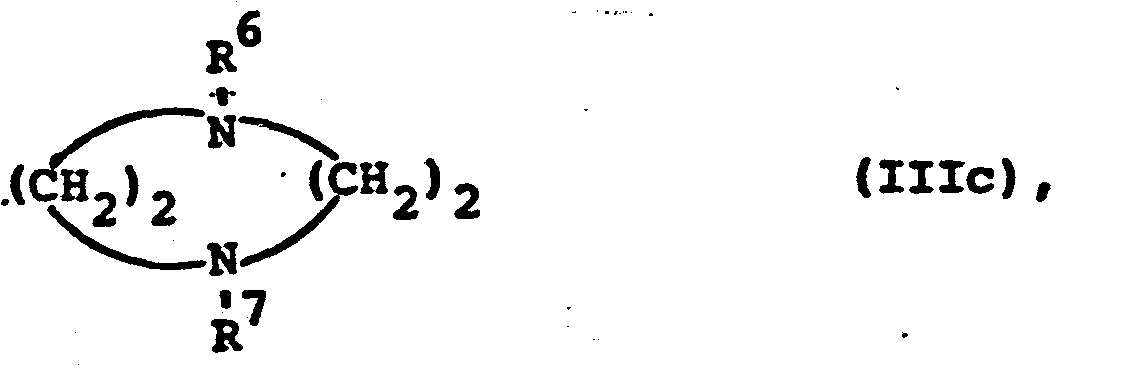 R 6 und R7 für Wasserstoff, -CH3, -C2H4OH oder gemeinsam für eine gesättigte Methylenkette mit 2 bis 4 C-Atomen stehen,IIId, bicyclischen Amidinen,
 X,Y für eine ganze Zahl von 2 bis 5 steht,oder IIIe, acyclischen und cyclischen Harnstoffen
 R8 bis R11 Wasserstoff, C1-C4-Alkyl, C6-C10-Aryl bedeuten, wobei gegebenenfalls die Stickstoffatome über zwei Reste R8, R10 bzw. R9, R11 über eine C2 bis C4 Kette miteinander zu einem Ring verknüpft sein können, entsprechen,oder der allgemeinen Formel (IV)
 R12 -(CH2)s- mit s = 2-5 für den Fall n = 1 und -(CH2CH2O)tCH2CH2- mit t = 1-6 für den Fall n = 0 undn 0 oder 1 bedeuten,oder der Formel (V) R13 - ZH (V), worinR13 -CH2CH2OH, -(CH2CH2)v-OH,
 v 1 - 200,Z 0 und S bedeuten,verwendet werden.
Applications Claiming Priority (2)
| Application Number | Priority Date | Filing Date | Title |
|---|---|---|---|
| DE19853501246 DE3501246A1 (de) | 1985-01-16 | 1985-01-16 | Verfahren zur herstellung von duromeren, aliphatischen polycarbonaten |
| DE3501246 | 1985-01-16 |
Publications (3)
| Publication Number | Publication Date |
|---|---|
| EP0188204A2 true EP0188204A2 (de) | 1986-07-23 |
| EP0188204A3 EP0188204A3 (en) | 1987-09-23 |
| EP0188204B1 EP0188204B1 (de) | 1988-06-15 |
Family
ID=6259969
Family Applications (1)
| Application Number | Title | Priority Date | Filing Date |
|---|---|---|---|
| EP86100098A Expired EP0188204B1 (de) | 1985-01-16 | 1986-01-07 | Verfahren zur Herstellung von duromeren aliphatischen Polycarbonaten |
Country Status (4)
| Country | Link |
|---|---|
| US (1) | US4694065A (de) |
| EP (1) | EP0188204B1 (de) |
| JP (1) | JPS61163931A (de) |
| DE (2) | DE3501246A1 (de) |
Cited By (4)
| Publication number | Priority date | Publication date | Assignee | Title |
|---|---|---|---|---|
| EP0299305A3 (en) * | 1987-07-14 | 1990-03-07 | Bayer Ag | Process for the preparation of aliphatic polycarbonates |
| EP0273143A3 (en) * | 1986-12-15 | 1990-03-14 | General Electric Company | Method for polymerizing cyclic polycarbonate oligomers |
| EP0703230A1 (de) | 1994-09-14 | 1996-03-27 | Bayer Ag | 1,3-Dioxan-2-on-Gruppen enthaltende Oligourethane |
| US5861107A (en) * | 1996-06-25 | 1999-01-19 | Bayer Aktiengesellschaft | Process for the preparation of aliphatic carbonates having a six-membered ring |
Families Citing this family (2)
| Publication number | Priority date | Publication date | Assignee | Title |
|---|---|---|---|---|
| EP0882751A3 (de) * | 1997-06-03 | 1999-02-10 | KABUSHIKI KAISHA KOBE SEIKO SHO also known as Kobe Steel Ltd. | Biodegradierbarer Polyester mit verbesserter Giesscharakteristik und seine Produktion |
| CN116710502B (zh) * | 2021-01-25 | 2026-02-17 | Ube株式会社 | 聚碳酸酯多元醇、其制造方法及其组合物 |
Family Cites Families (3)
| Publication number | Priority date | Publication date | Assignee | Title |
|---|---|---|---|---|
| CH419611A (de) * | 1961-08-02 | 1966-08-31 | Bayer Ag | Verfahren zur Herstellung hochmolekularer linearer Polycarbonate |
| DE3103135A1 (de) * | 1981-01-30 | 1982-08-26 | Bayer Ag, 5090 Leverkusen | Neue cyclische carbonate des di- und triethylenglykols, verfahren zu deren herstellung und deren verwendung |
| US4423205A (en) * | 1982-05-24 | 1983-12-27 | Ethyl Corporation | Cationic polymerization of cyclic carbonates |
-
1985
- 1985-01-16 DE DE19853501246 patent/DE3501246A1/de not_active Withdrawn
-
1986
- 1986-01-02 US US06/815,648 patent/US4694065A/en not_active Expired - Fee Related
- 1986-01-07 EP EP86100098A patent/EP0188204B1/de not_active Expired
- 1986-01-07 DE DE8686100098T patent/DE3660310D1/de not_active Expired
- 1986-01-13 JP JP61003718A patent/JPS61163931A/ja active Pending
Cited By (4)
| Publication number | Priority date | Publication date | Assignee | Title |
|---|---|---|---|---|
| EP0273143A3 (en) * | 1986-12-15 | 1990-03-14 | General Electric Company | Method for polymerizing cyclic polycarbonate oligomers |
| EP0299305A3 (en) * | 1987-07-14 | 1990-03-07 | Bayer Ag | Process for the preparation of aliphatic polycarbonates |
| EP0703230A1 (de) | 1994-09-14 | 1996-03-27 | Bayer Ag | 1,3-Dioxan-2-on-Gruppen enthaltende Oligourethane |
| US5861107A (en) * | 1996-06-25 | 1999-01-19 | Bayer Aktiengesellschaft | Process for the preparation of aliphatic carbonates having a six-membered ring |
Also Published As
| Publication number | Publication date |
|---|---|
| US4694065A (en) | 1987-09-15 |
| DE3660310D1 (en) | 1988-07-21 |
| EP0188204B1 (de) | 1988-06-15 |
| EP0188204A3 (en) | 1987-09-23 |
| DE3501246A1 (de) | 1986-07-17 |
| JPS61163931A (ja) | 1986-07-24 |
Similar Documents
| Publication | Publication Date | Title |
|---|---|---|
| EP0057360B1 (de) | Neue cyclische Kohlensäurederivate, ein Verfahren zu ihrer Herstellung und ihre Verwendung als Copolymerisationskomponenten bei der Herstellung von Polycarbonaten | |
| DE938038C (de) | Verfahren zur Herstellung von Mischpolymerisaten mit niedrigem Molekulargewicht aus Vinylverbindungen und polymerisierbaren Dicarbonsaeureverbindungen | |
| EP0188204B1 (de) | Verfahren zur Herstellung von duromeren aliphatischen Polycarbonaten | |
| DE2362971A1 (de) | Als katalysatoren bei kationischen polymerisationen geeignete organische ammoniumhexafluorantimonate und verfahren zu ihrer herstellung | |
| US3392149A (en) | Process for the production of nitrogenous copolymers of formaldehyde and the resultant products | |
| EP0232701A2 (de) | Einsatz von Antistatika zur Vermeidung von Belagbildung bei der Herstellung von ultrahochmolekularem Polyethylen in Gasphasenreaktoren | |
| EP0209722B1 (de) | Verfahren zur Herstellung von duromeren aliphatischen Polycarbonaten | |
| EP0084227B1 (de) | Acryloyl- und Alkylacryloylpolyalkoxycarbamatzusammensetzungen und ihre Verwendung durch Strahlung härtbarer Überzüge | |
| DE2218692A1 (de) | Verfahren zur Herstellung von Polyme nsationskatalysatoren und deren Verwendung | |
| EP0816354A1 (de) | Verfahren zur Herstellung und Stabilisierung von aliphatischen Sechsringcarbonaten | |
| EP0074073A1 (de) | Härtbare Epoxidharze | |
| DE2529487C2 (de) | Verfahren zur Herstellung hochreiner, mehrwertiger Cyansäureester | |
| US3582521A (en) | Halogen adduct of ethylene sulfide | |
| US3637613A (en) | Polymerization of cyclic sulfides | |
| EP0042701B2 (de) | Isocyanat-Zusammensetzung | |
| Lal | Polymerization of olefin oxides and of olefin sulfides | |
| EP0422523B1 (de) | Verfahren zum Herstellen von cyclischen Kohlensäureestern | |
| DE3040612A1 (de) | Copolymerisate aus cyclischen kohlensaeureestern und lactamen und ihre herstellung | |
| DE1037127B (de) | Katalysatoren zur Polymerisation von Formaldehyd | |
| DE1545025C3 (de) | Verfahren zur Herstellung von Polyepisumden | |
| DE827553C (de) | Verfahren zur Herstellung von Kunststoffen | |
| US3328459A (en) | Polymerization of mercapto-substituted nitriles | |
| DE4109236A1 (de) | Verfahren zur herstellung von cyclischen kohlensaeureestern | |
| DE1520038B1 (de) | Verfahren zur Polymerisation von Epoxyden | |
| AT237301B (de) | Verfahren zur Herstellung von hochmolekularen Polyoxymethylenen |
Legal Events
| Date | Code | Title | Description |
|---|---|---|---|
| PUAI | Public reference made under article 153(3) epc to a published international application that has entered the european phase |
Free format text: ORIGINAL CODE: 0009012 |
|
| 17P | Request for examination filed |
Effective date: 19860107 |
|
| AK | Designated contracting states |
Kind code of ref document: A2 Designated state(s): DE FR GB IT |
|
| PUAL | Search report despatched |
Free format text: ORIGINAL CODE: 0009013 |
|
| AK | Designated contracting states |
Kind code of ref document: A3 Designated state(s): DE FR GB IT |
|
| 17Q | First examination report despatched |
Effective date: 19871130 |
|
| GRAA | (expected) grant |
Free format text: ORIGINAL CODE: 0009210 |
|
| ITF | It: translation for a ep patent filed | ||
| AK | Designated contracting states |
Kind code of ref document: B1 Designated state(s): DE FR GB IT |
|
| GBT | Gb: translation of ep patent filed (gb section 77(6)(a)/1977) | ||
| REF | Corresponds to: |
Ref document number: 3660310 Country of ref document: DE Date of ref document: 19880721 |
|
| ET | Fr: translation filed | ||
| PLBE | No opposition filed within time limit |
Free format text: ORIGINAL CODE: 0009261 |
|
| STAA | Information on the status of an ep patent application or granted ep patent |
Free format text: STATUS: NO OPPOSITION FILED WITHIN TIME LIMIT |
|
| 26N | No opposition filed | ||
| PGFP | Annual fee paid to national office [announced via postgrant information from national office to epo] |
Ref country code: DE Payment date: 19911218 Year of fee payment: 7 |
|
| PGFP | Annual fee paid to national office [announced via postgrant information from national office to epo] |
Ref country code: FR Payment date: 19911230 Year of fee payment: 7 |
|
| PGFP | Annual fee paid to national office [announced via postgrant information from national office to epo] |
Ref country code: GB Payment date: 19920103 Year of fee payment: 7 |
|
| ITTA | It: last paid annual fee | ||
| PG25 | Lapsed in a contracting state [announced via postgrant information from national office to epo] |
Ref country code: GB Effective date: 19930107 |
|
| GBPC | Gb: european patent ceased through non-payment of renewal fee |
Effective date: 19930107 |
|
| PG25 | Lapsed in a contracting state [announced via postgrant information from national office to epo] |
Ref country code: FR Effective date: 19930930 |
|
| PG25 | Lapsed in a contracting state [announced via postgrant information from national office to epo] |
Ref country code: DE Effective date: 19931001 |
|
| REG | Reference to a national code |
Ref country code: FR Ref legal event code: ST |
|
| PG25 | Lapsed in a contracting state [announced via postgrant information from national office to epo] |
Ref country code: IT Free format text: LAPSE BECAUSE OF NON-PAYMENT OF DUE FEES;WARNING: LAPSES OF ITALIAN PATENTS WITH EFFECTIVE DATE BEFORE 2007 MAY HAVE OCCURRED AT ANY TIME BEFORE 2007. THE CORRECT EFFECTIVE DATE MAY BE DIFFERENT FROM THE ONE RECORDED. Effective date: 20050107 |