EP0191643A2 - Integration eines Gens in ein Chromosom und dessen kontrollierter Ausschnitt - Google Patents
Integration eines Gens in ein Chromosom und dessen kontrollierter Ausschnitt Download PDFInfo
- Publication number
- EP0191643A2 EP0191643A2 EP86301000A EP86301000A EP0191643A2 EP 0191643 A2 EP0191643 A2 EP 0191643A2 EP 86301000 A EP86301000 A EP 86301000A EP 86301000 A EP86301000 A EP 86301000A EP 0191643 A2 EP0191643 A2 EP 0191643A2
- Authority
- EP
- European Patent Office
- Prior art keywords
- dna
- gene
- vector
- chromosome
- excision
- Prior art date
- Legal status (The legal status is an assumption and is not a legal conclusion. Google has not performed a legal analysis and makes no representation as to the accuracy of the status listed.)
- Granted
Links
Images


Classifications
-
- C—CHEMISTRY; METALLURGY
- C12—BIOCHEMISTRY; BEER; SPIRITS; WINE; VINEGAR; MICROBIOLOGY; ENZYMOLOGY; MUTATION OR GENETIC ENGINEERING
- C12N—MICROORGANISMS OR ENZYMES; COMPOSITIONS THEREOF; PROPAGATING, PRESERVING, OR MAINTAINING MICROORGANISMS; MUTATION OR GENETIC ENGINEERING; CULTURE MEDIA
- C12N15/00—Mutation or genetic engineering; DNA or RNA concerning genetic engineering, vectors, e.g. plasmids, or their isolation, preparation or purification; Use of hosts therefor
- C12N15/09—Recombinant DNA-technology
- C12N15/63—Introduction of foreign genetic material using vectors; Vectors; Use of hosts therefor; Regulation of expression
- C12N15/67—General methods for enhancing the expression
-
- C—CHEMISTRY; METALLURGY
- C12—BIOCHEMISTRY; BEER; SPIRITS; WINE; VINEGAR; MICROBIOLOGY; ENZYMOLOGY; MUTATION OR GENETIC ENGINEERING
- C12N—MICROORGANISMS OR ENZYMES; COMPOSITIONS THEREOF; PROPAGATING, PRESERVING, OR MAINTAINING MICROORGANISMS; MUTATION OR GENETIC ENGINEERING; CULTURE MEDIA
- C12N15/00—Mutation or genetic engineering; DNA or RNA concerning genetic engineering, vectors, e.g. plasmids, or their isolation, preparation or purification; Use of hosts therefor
- C12N15/09—Recombinant DNA-technology
- C12N15/11—DNA or RNA fragments; Modified forms thereof; Non-coding nucleic acids having a biological activity
- C12N15/52—Genes encoding for enzymes or proenzymes
-
- C—CHEMISTRY; METALLURGY
- C12—BIOCHEMISTRY; BEER; SPIRITS; WINE; VINEGAR; MICROBIOLOGY; ENZYMOLOGY; MUTATION OR GENETIC ENGINEERING
- C12N—MICROORGANISMS OR ENZYMES; COMPOSITIONS THEREOF; PROPAGATING, PRESERVING, OR MAINTAINING MICROORGANISMS; MUTATION OR GENETIC ENGINEERING; CULTURE MEDIA
- C12N15/00—Mutation or genetic engineering; DNA or RNA concerning genetic engineering, vectors, e.g. plasmids, or their isolation, preparation or purification; Use of hosts therefor
- C12N15/09—Recombinant DNA-technology
- C12N15/87—Introduction of foreign genetic material using processes not otherwise provided for, e.g. co-transformation
- C12N15/90—Stable introduction of foreign DNA into chromosome
-
- C—CHEMISTRY; METALLURGY
- C12—BIOCHEMISTRY; BEER; SPIRITS; WINE; VINEGAR; MICROBIOLOGY; ENZYMOLOGY; MUTATION OR GENETIC ENGINEERING
- C12P—FERMENTATION OR ENZYME-USING PROCESSES TO SYNTHESISE A DESIRED CHEMICAL COMPOUND OR COMPOSITION OR TO SEPARATE OPTICAL ISOMERS FROM A RACEMIC MIXTURE
- C12P13/00—Preparation of nitrogen-containing organic compounds
- C12P13/04—Alpha- or beta- amino acids
- C12P13/22—Tryptophan; Tyrosine; Phenylalanine; 3,4-Dihydroxyphenylalanine
-
- Y—GENERAL TAGGING OF NEW TECHNOLOGICAL DEVELOPMENTS; GENERAL TAGGING OF CROSS-SECTIONAL TECHNOLOGIES SPANNING OVER SEVERAL SECTIONS OF THE IPC; TECHNICAL SUBJECTS COVERED BY FORMER USPC CROSS-REFERENCE ART COLLECTIONS [XRACs] AND DIGESTS
- Y10—TECHNICAL SUBJECTS COVERED BY FORMER USPC
- Y10S—TECHNICAL SUBJECTS COVERED BY FORMER USPC CROSS-REFERENCE ART COLLECTIONS [XRACs] AND DIGESTS
- Y10S435/00—Chemistry: molecular biology and microbiology
- Y10S435/8215—Microorganisms
- Y10S435/822—Microorganisms using bacteria or actinomycetales
- Y10S435/848—Escherichia
- Y10S435/849—Escherichia coli
Definitions
- This invention relates to integration of a gene into a chromosome and controllable excision therefrom, useful for example in the controlled cessation of a particular cell function.
- One instance in which controlled cessation of a cell function is useful involves microbial fermentation of a desired product.
- the cells are allowed to undergo exponential ("log") phase of cell growth.
- log exponential
- a suitable cell population density it may be advantageous to halt cell-growth so that cellular resources and metabolic energy are not diverted from the production of the desired compound.
- a mechanism to achieve this goal should be absolute, so that some cells in the population will not circumvent the growth control and overgrow the culture.
- One way to control cell growth is by limiting the availability of one or more nutrients that the cell requires for growth. Once the limited amount of a nutrient is used, cell growth ceases.
- Cells may be mutated or engineered so that they require a nutrient in order to grow. For example, if the nutrient is a particular amino acid such as tyrosine, cells are mutated or engineered to create a defect in the cell's natural pathway for synthesizing that amino acid. The cells then may be provided the amino acid in an amount selected to allow them to achieve a desired cell population; when the cells reach that population, they become starved for the amino acid and cannot grow.
- the nutrient is a particular amino acid such as tyrosine
- the invention features, generally, integrating a gene in a bacterial chromosome and controlling excision of the gene from the chromosome in response to an external stimulus, so that the gene is lost from the cell.
- integration and excision are accomplished using DNA comprising:
- the DNA is used to transform host cells that are to synthesize a desired compound.
- the gene to be integrated and controllably excised codes for a cell-growth function that reduces the yeild of the desired compound either by converting the desired compound into other compounds or by shunting intermediates away from the desired compound's biosynthetic pathway.
- the gene is integrated in the host cells to improve growth, and then it is excised and lost from the cells to improve compound production.
- the gene on the excision vector preferably is one or more of tyrA, tyrR or trpE.
- the gene preferably is tna (tryptophanase), trpR, aroP, tyrA or pheA.
- the gene preferably is one coding for proline oxidase.
- the gene preferably is one coding for an enzyme in the isoleucine biosynthesis pathway.
- the ppc (phosphoenolpyruvate carboxylase) gene is essential for growth in some strains and provides suitable growth control for producing desired compounds generally.
- the host bacterial genome lacks the ability, in the absence of the gene of interest, to produce enough of that gene's product to sustain growth.
- the gene of interest is entirely missing from the host genome, either naturally or by design, and the host genome lacks sufficient homology with any portion of the vector to permit vector integration in the absence of b).
- the DNA of the vector includes elements b) and c) above, and the vector contains DNA encoding an attachment site (att) derived from an attachment site of a naturally occurring bacteriophage, such a phage lambda or a lambdoid phage.
- DNA "derived from a particular DNA segment" such as an att site means DNA segments that are identical to that particular DNA segment or that are natural, synthetic, or engineered variations of the DNA segment which conserve the specified or desired function.
- the DNA encoding integration and excision functions is derived from a naturally occurring bacteriophage.
- the means for controlling excision of the vector is a promoter regulating transcription of an excision enzyme gene, together with a gene that codes for repressor for that promoter, the repressor being subject to external control, such as the lambda cI gene product which loses its repression function at elevated temperatures.
- the DNA'capable of causing vector integration or excision also can be provided by a helper phage, which is itself incapable of integration in the host chromosome.
- the invention is particularly useful where the organism synthsizes the desired compound from a precursor that also appears on a synthetic pathway that is essential for cell growth.
- an enzyme catalyzing a biochemical reaction occurring after one of these common precursors could shunt the precursors toward cell growth and away from .production of the desired compound.
- the cell growth pathway is enabled by allowing expression of the enzyme that shunts the precursor into the growth pathway during the log growth phase.
- the preferred embodiment described below relates to one specific system useful in microbial production of phenylalanine.
- the system enables controlled expression of the tyrA gene, a critical gene in the tyrosine biosynthesis pathway. Since tyrosine is relatively insoluble, it is difficult to prepare stock solutions suitable for supplementing a medium used for growing tyrosine auxotrophs. Therefore, tyrosine prototrophy in cells to be used for compound producton is a desirable trait for fast growth and efficient culture when log phase growth of the culture is required.
- the tyrosine biosynthesis pathway shares many common metabolic precursors and enzymatic steps with the phenylalanine synthesis pathway, and it is useful to use tyrA- organisms to make phenylalanine because such organisms do not siphon away phenylalanine pathway intermediates and thereby reduce the phenylalanine yield and additionally because tyrA- cells quickly become starved for tyrosine and induce the synthesis of tyrosine precursors which then are used for phenylalanine synthesis.
- the excision vector comprises DNA from a lysogenic bacteriophage lambda, such as CI 85 S 7 , which encodes functions for phage integration/excision and lysogenic control. DNA encoding functions for phage replication, virion formation and host lysis has been deleted.
- cI 857 S 7 contains a mutant allele of the cI gene which renders the lysogenic control temperature-sensitive, and that aspect of cI 857 S 7 is included in the vector.
- the vector also includes a structural gene for a protein whose controlled synthesis is desired.
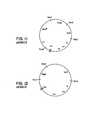
- Virtually any gene of interest can be cloned into the unique restriction site (XhoI in Fig. 11), and integrated in a host chromosome.
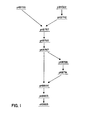
- the vector is constructed by the steps represented in Fig. 1.
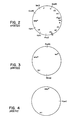
- the appropriate cT 857 S 7 DNA fragment can be obtained by digesting pKB720 (Fig. 2) or eKBlOl (ATCC 39855) [both of which are fully described in U.S.S.N. 655,361, filed September 27, 1984, the disclosure of which application is hereby incorporated by reference] with EcoRI and PvuII.
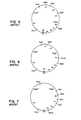
- the ends of the fragment are converted into KpnI sites by using linkers, and cloned into the KpnI site of pKB742 (Fig. 4) yielding pKB757 (Fig. 5).
- pKB742 is derived from pBR322 (Fig. 3) [the entire sequence of which is described in Maniatis et al. "Molecular Cloning - A Laboratory Manual", Cold Harbor Laboratory 1982] by removing the DNA coding for
- pKB757 is treated with BglII to remove the genes cro, 0, and cII, in whole or in part for the reasons described below.
- the cro gene product binds to the same sites as the cI repressor and regulates gene expression. Principally, it inhibits transcription originating at p rm, inhibiting cI transcription.
- the cro gene product can reduce transcription originating at P L and thereby interfere with the expression of genes (Xis and Int) necessary for the excision of the element.
- the O gene product is required for replication of X DNA, and should be removed to prevent autonomous replication of the vector.
- cII acts as an activator of transcription at the promoters of the cI and int genes. Since cII lies between cro and 0, it is removed on the fragment also. Removal of cII is also desirable in order to prevent reintegration of an excised element by cII-dependent expression of int.
- the rex gene product can precipitate the lysis of the host bacterium under certain conditions.
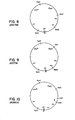
- the rex gene therefore, is removed by replacing the material between the ClaI sites with a XhoI linker, yielding pKB788 (Fig. 8). Further digestion with Xhol and Ba131, and the addition of a XhoT linker yields pKB791 (Fig. 9), in which the Xhol site is located just outside the cI 857 gene.
- the leftward operon containing the genes N, xis, and int is reconstructed on pKB791 by removing the small fragment between the XhoI and BamI sites and replacing it with the XhoI/BamI small fragment of pKB767, yielding pKB800 (Fig. 10).
- pKB800 Into the XhoI site of pKB800 is cloned a DNA fragment containing the E . coli tyrA gene, yielding pKB803 (Fig. 11).
- Digestion of pKB803 with KpnI removes the gene for ampicillin resistance (which can be scored for) and the plasmid replication functions. This yields xKB803.
- Vectors pKB800 and pKB803 have been deposited with the American Type Culture Collection under the ATCC accession numbers 53019, and 53020.
- xKB803 is recircularized and transformed into an E. coli strain which is auxotrophic for tyrosine, preferably due to a deletion of the tyrA gene and most preferably due to a deletion of the pheA-tyrA-aroF region of its genome to ensure no homology with the tyrA gene to be transferred from the excision vector.
- E. coli strain which is auxotrophic for tyrosine, preferably due to a deletion of the tyrA gene and most preferably due to a deletion of the pheA-tyrA-aroF region of its genome to ensure no homology with the tyrA gene to be transferred from the excision vector.
- One skilled in the art will be able to isolate an E. coli mutant that is deleted for the above-described operon by standard techniques. Having done so, the mutant is transformed with xKB803 and vector integrants, defined as KB224::xKB803, are scored on the basis
- Integration of the excision vector can be improved to some extent when the transformed cells are co-infected with an integration-deficient helper phage at a multiplicity of infection of 5-10. This improvement may occur because the excision vector xKB803 cannot express its int gene sufficiently due to its low copy number and its lack of a cII activator gene. The diminished ability of the excision vector to autocatalyze its integration in the host chromosome may actually enhance its rate of loss subsequent to temperature shift; once excised, the vector will not reintegrate.
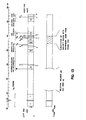
- helper phage is ⁇ imm434b104 shown in Fig. 13.
- Many other helper phages are suitable in that they are not subject to repression by cI encoded on the excision vector and are integration-deficient, but can express the cII and/or int genes sufficiently to improve integration of the excision vector.
- Other integration deficient phages and their preparation are described in the following: Parkinson et al. (1971) J. Molec. Biol. 56:369; Parkinson (1971) J. Molec. Biol. 56:385; and Davis et al. (1971) J. Molec. Biol. 56:403. Suitable heteroimmune derivatives of these phages are easily prepared by one skilled in the art.
- Helper-phage-assisted integrants are selected at 30°C as tyA + bacteria which are immune to lambda infection, sensitive to ⁇ imm434bl04 (showing that they do not harbor helper phage), and sensitive to ampicillin (showing that they have not acquired all of pKB803). Integrants prepared without the use of a helper-phage are similarly recognized, but without reference to the absence of helper-phage.
- E. coli which carry the stably integrated excision vector, preferably KB224::xKB803, prepared as described above, can be grown in culture without supplemental tyrosine; however, the cells in such a culture can be expediently converted to tyrosine auxotrophs when the desired cell population has been achieved and enhanced production of product is desired.
- the temperature-sensitive repressor coded by the cI 857 gene maintains the vector in a lysogenic state, and the cells retain the excision vector containing the tyrA gene.
- the cI 857 repressor is inactivated and derepression of lambda excision functions occurs.
- the int and xis genes carried on the excision vector are expressed, and the element excises from the chromosome, taking with it the tyrA gene. Because the vector has no origin of replication,.it is lost from the cells within a few generations; the cells become tyrA - , and they starve for tyrosine and cease growing. The point at which growth stops is later than, but correlated with, the time at which the temperature shift to 42°C occurs. The cessation of growth can be reversed by the addition of exogenous tyrosine.
- phenylalanine using a vector according to the invention is outlined in the flow chart in Fig. 16.
- Derivatives of E. coli which carry the stably integrated excision vector, preferably KB224::xKB803, prepared as described above, are tyrA + , pheA - , aroF ⁇ .
- the requisite genes for the production of phenylalanine , pheA and aroF, are provided by transforming KB224::xKB803 with a plasmid containing these elements, for example, pKB712, ATCC No. 39856 (Fig. 14) or pKB750, ATCC No. 39857 (Fig.
- the present invention may be embodied in other ways.
- excision vectors containing tyrR and/or trpE could also be used.
- this versatile method of externally controlled change from one genetic complement to another can be applied to other gene systems including multiple gene systems.
- Other cell-growth related genes can be used to control cell growth in a fermentation process.
- hosts that are defective in expressing the gene encoding phosphoenolpyruvate carboxylase (ppc) such as KB260 (ATCC 33927) are described in our European Patent Application No. 84306842.0 (EP 0140606) the disclosure of which is hereby incorporated by reference.
- the present invention can be used to insert an effective ppc gene for growth and then to excise it.
- genes relating to isoleucine biosynthesis are useful for cell growth and hinder product production.
- a gene coding for proline oxidase can be included on the excision vector.
- the above-mentioned genes can be cloned by standard techniques, e.g. from E. coli.
Landscapes
- Genetics & Genomics (AREA)
- Health & Medical Sciences (AREA)
- Life Sciences & Earth Sciences (AREA)
- Engineering & Computer Science (AREA)
- Chemical & Material Sciences (AREA)
- Organic Chemistry (AREA)
- Wood Science & Technology (AREA)
- Zoology (AREA)
- Biomedical Technology (AREA)
- Biotechnology (AREA)
- General Engineering & Computer Science (AREA)
- Bioinformatics & Cheminformatics (AREA)
- Molecular Biology (AREA)
- Microbiology (AREA)
- Biochemistry (AREA)
- General Health & Medical Sciences (AREA)
- Plant Pathology (AREA)
- Biophysics (AREA)
- Physics & Mathematics (AREA)
- Mycology (AREA)
- Chemical Kinetics & Catalysis (AREA)
- General Chemical & Material Sciences (AREA)
- Micro-Organisms Or Cultivation Processes Thereof (AREA)
- Preparation Of Compounds By Using Micro-Organisms (AREA)
- Saccharide Compounds (AREA)
- Medicines That Contain Protein Lipid Enzymes And Other Medicines (AREA)
Priority Applications (1)
| Application Number | Priority Date | Filing Date | Title |
|---|---|---|---|
| AT86301000T ATE76103T1 (de) | 1985-02-13 | 1986-02-13 | Integration eines gens in ein chromosom und dessen kontrollierter ausschnitt. |
Applications Claiming Priority (2)
| Application Number | Priority Date | Filing Date | Title |
|---|---|---|---|
| US06/701,091 US4743546A (en) | 1985-02-13 | 1985-02-13 | Controlled gene excision |
| US701091 | 1996-08-21 |
Publications (3)
| Publication Number | Publication Date |
|---|---|
| EP0191643A2 true EP0191643A2 (de) | 1986-08-20 |
| EP0191643A3 EP0191643A3 (en) | 1988-11-02 |
| EP0191643B1 EP0191643B1 (de) | 1992-05-13 |
Family
ID=24816040
Family Applications (1)
| Application Number | Title | Priority Date | Filing Date |
|---|---|---|---|
| EP86301000A Expired - Lifetime EP0191643B1 (de) | 1985-02-13 | 1986-02-13 | Integration eines Gens in ein Chromosom und dessen kontrollierter Ausschnitt |
Country Status (6)
| Country | Link |
|---|---|
| US (1) | US4743546A (de) |
| EP (1) | EP0191643B1 (de) |
| JP (1) | JPS61247389A (de) |
| AT (1) | ATE76103T1 (de) |
| CA (1) | CA1339799C (de) |
| DE (1) | DE3685233D1 (de) |
Cited By (5)
| Publication number | Priority date | Publication date | Assignee | Title |
|---|---|---|---|---|
| EP0263716A3 (de) * | 1986-10-09 | 1988-12-28 | Kyowa Hakko Kogyo Kabushiki Kaisha | Verfahren zur Herstellung von 5'-guanilsäure und Expressionsvektoren zur Verwendung dazu |
| FR2631634A1 (fr) * | 1988-05-18 | 1989-11-24 | Centre Nat Rech Scient | Vecteurs de clonage et d'expression dans une souche d'actinomycete, procede de transformation de cette souche, souche d'actynomycete obtenue et preparation de proteines |
| WO1990000608A1 (en) * | 1988-07-14 | 1990-01-25 | Richter Gedeon Vegyészeti Gyár R.T. | Positive selection system for stabilisation of expression vectors |
| WO1990000594A3 (en) * | 1988-07-07 | 1990-05-03 | Whitehead Biomedical Inst | Recombinant mycobacterial expression vehicles and uses therefor |
| US5190871A (en) * | 1989-06-12 | 1993-03-02 | Eli Lilly And Company | Use of the site-specific integrating function of phage φC31 |
Families Citing this family (35)
| Publication number | Priority date | Publication date | Assignee | Title |
|---|---|---|---|---|
| US5169768A (en) * | 1983-10-07 | 1992-12-08 | Biotechnica International, Inc. | Method of biosynthesis of phenylalanine |
| TW313589B (de) * | 1991-12-12 | 1997-08-21 | Wacker Chemie Gmbh | |
| US5856148A (en) * | 1991-12-12 | 1999-01-05 | Wacker Chemie Gmbh | Materials and methods for biosynthesis of serine and serine-related products |
| US5834233A (en) * | 1992-04-06 | 1998-11-10 | Gx Biosystems A/S | Method of limiting the survival of genetically engineered microorganisms in their enivronment |
| US6720140B1 (en) * | 1995-06-07 | 2004-04-13 | Invitrogen Corporation | Recombinational cloning using engineered recombination sites |
| EP2322614A1 (de) | 1995-06-07 | 2011-05-18 | Life Technologies Corporation | Rekombinatorische Klonierung unter Verwendung genmanipulierter Rekombinationsorte |
| US6964861B1 (en) | 1998-11-13 | 2005-11-15 | Invitrogen Corporation | Enhanced in vitro recombinational cloning of using ribosomal proteins |
| US6143557A (en) * | 1995-06-07 | 2000-11-07 | Life Technologies, Inc. | Recombination cloning using engineered recombination sites |
| GB2304718B (en) * | 1995-09-05 | 2000-01-19 | Degussa | The production of tryptophan by the bacterium escherichia coli |
| US5851808A (en) | 1997-02-28 | 1998-12-22 | Baylor College Of Medicine | Rapid subcloning using site-specific recombination |
| US20030124555A1 (en) * | 2001-05-21 | 2003-07-03 | Invitrogen Corporation | Compositions and methods for use in isolation of nucleic acid molecules |
| US7351578B2 (en) * | 1999-12-10 | 2008-04-01 | Invitrogen Corp. | Use of multiple recombination sites with unique specificity in recombinational cloning |
| EP1025217B1 (de) * | 1997-10-24 | 2006-10-04 | Invitrogen Corporation | Rekombinatorisches klonieren unter verwendung von nukleinsaüren mit rekombinationsstellen |
| US6531303B1 (en) | 1998-07-06 | 2003-03-11 | Arkion Life Sciences Llc | Method of producing geranylgeraniol |
| JP4579415B2 (ja) | 1998-07-06 | 2010-11-10 | ディーシーブイ・インコーポレイテッド・ドゥーイング・ビジネス・アズ・バイオ−テクニカル・リソーシィズ | ビタミン製造方法 |
| EP1173460B1 (de) * | 1999-03-02 | 2009-09-16 | Life Technologies Corporation | Zubereitungen und methoden zur verwendung in rekombinatorischem klonen von nukleinsäuren |
| NZ539430A (en) | 1999-12-10 | 2006-09-29 | Invitrogen Corp | Use of multiple recombination sites with unique specificity in recombinational cloning |
| CA2405326A1 (en) * | 2000-04-06 | 2001-10-03 | Kyowa Hakko Kogyo Co., Ltd. | Plasmid to be used in chromosome recombination of escherichia coli |
| US7244560B2 (en) * | 2000-05-21 | 2007-07-17 | Invitrogen Corporation | Methods and compositions for synthesis of nucleic acid molecules using multiple recognition sites |
| US7198924B2 (en) * | 2000-12-11 | 2007-04-03 | Invitrogen Corporation | Methods and compositions for synthesis of nucleic acid molecules using multiple recognition sites |
| TWI426126B (zh) | 2001-04-16 | 2014-02-11 | Dsm Ip Assets Bv | 多不飽和脂肪酸(pufa)聚乙醯合成酶系統及其用途(二) |
| JP2004531259A (ja) * | 2001-04-19 | 2004-10-14 | インヴィトロジェン コーポレーション | 核酸分子の組換えクローニングのための組成物および方法 |
| ATE473284T1 (de) | 2002-05-14 | 2010-07-15 | Martek Biosciences Corp | Carotinsynthase-gen und dessen verwendung |
| US20040204953A1 (en) * | 2002-07-17 | 2004-10-14 | Lincoln Muir | Subscription based systems, methods and components for providing genomic and proteomic products and services |
| WO2005028615A2 (en) * | 2003-06-26 | 2005-03-31 | Invitrogen Corporation | Methods and compositions for detecting promoter activity and expressing fusion proteins |
| WO2005054438A2 (en) | 2003-12-01 | 2005-06-16 | Invitrogen Corporation | Nucleic acid molecules containing recombination sites and methods of using the same |
| BRPI0513837B1 (pt) | 2004-07-27 | 2021-10-13 | The Regents Of The University Of California | Célula hospedeira saccharomyces cerevisiae geneticamente modificada; composição compreendendo a mesma e método para aumentar a produção de isoprenoides |
| EP2643456B1 (de) | 2010-11-24 | 2016-05-11 | Novartis International Pharmaceutical Ltd. | Fusionsproteine mit n-acetylglucosaminyltransferase aktivitàt |
| CN103597084A (zh) | 2011-02-07 | 2014-02-19 | 加利福尼亚大学董事会 | 增强的纤维糊精代谢 |
| WO2013155481A1 (en) | 2012-04-13 | 2013-10-17 | The Board Of Trustees Of The University Of Illinois | Improved cellodextrin transport and mixed sugar fermentation |
| EP2852610B1 (de) | 2012-05-23 | 2018-07-11 | Glykos Finland Oy | Herstellung von fucosylierten glykoproteinen |
| WO2015001049A1 (en) | 2013-07-04 | 2015-01-08 | Novartis Ag | O-mannosyltransferase deficient filamentous fungal cells and methods of use thereof |
| CA2916899C (en) | 2013-07-10 | 2020-03-10 | Novartis Ag | Production of glycoproteins having increased n-glycosylation site occupancy |
| CN109477079A (zh) | 2016-05-12 | 2019-03-15 | 帝斯曼知识产权资产管理有限公司 | 增加微藻中ω-3多不饱和脂肪酸产量的方法 |
| CN116200322B (zh) * | 2023-02-21 | 2026-01-02 | 江南大学 | 一种生产l-酪氨酸的重组大肠杆菌及应用 |
Family Cites Families (2)
| Publication number | Priority date | Publication date | Assignee | Title |
|---|---|---|---|---|
| US4436815A (en) * | 1981-11-27 | 1984-03-13 | Eli Lilly And Company | Method for stabilizing and selecting recombinant DNA containing host cells |
| BG49718A3 (bg) * | 1983-07-15 | 1992-01-15 | Bio- Technology General Corp | Метод за получаване на полипептид със супероксиддисмутазна активност |
-
1985
- 1985-02-13 US US06/701,091 patent/US4743546A/en not_active Expired - Lifetime
-
1986
- 1986-02-12 CA CA000501705A patent/CA1339799C/en not_active Expired - Lifetime
- 1986-02-13 EP EP86301000A patent/EP0191643B1/de not_active Expired - Lifetime
- 1986-02-13 DE DE8686301000T patent/DE3685233D1/de not_active Expired - Lifetime
- 1986-02-13 AT AT86301000T patent/ATE76103T1/de not_active IP Right Cessation
- 1986-02-13 JP JP61029857A patent/JPS61247389A/ja active Pending
Cited By (7)
| Publication number | Priority date | Publication date | Assignee | Title |
|---|---|---|---|---|
| EP0263716A3 (de) * | 1986-10-09 | 1988-12-28 | Kyowa Hakko Kogyo Kabushiki Kaisha | Verfahren zur Herstellung von 5'-guanilsäure und Expressionsvektoren zur Verwendung dazu |
| FR2631634A1 (fr) * | 1988-05-18 | 1989-11-24 | Centre Nat Rech Scient | Vecteurs de clonage et d'expression dans une souche d'actinomycete, procede de transformation de cette souche, souche d'actynomycete obtenue et preparation de proteines |
| EP0350341A1 (de) * | 1988-05-18 | 1990-01-10 | Centre National De La Recherche Scientifique | Klonier- und Expressionvektoren in einem Aktinomycetenstamm,Verfahren zur Transformation dises Stammes,erhaltener Stamm und Herstellung von Proteinen |
| US5688689A (en) * | 1988-05-18 | 1997-11-18 | Centre National De La Recherche Scientifique (Cnrs) | Cloning and expression vectors in an actinomycetes strain, process for transformation of this strain, actinomycetes strain obtained and preparation of proteins |
| WO1990000594A3 (en) * | 1988-07-07 | 1990-05-03 | Whitehead Biomedical Inst | Recombinant mycobacterial expression vehicles and uses therefor |
| WO1990000608A1 (en) * | 1988-07-14 | 1990-01-25 | Richter Gedeon Vegyészeti Gyár R.T. | Positive selection system for stabilisation of expression vectors |
| US5190871A (en) * | 1989-06-12 | 1993-03-02 | Eli Lilly And Company | Use of the site-specific integrating function of phage φC31 |
Also Published As
| Publication number | Publication date |
|---|---|
| EP0191643A3 (en) | 1988-11-02 |
| ATE76103T1 (de) | 1992-05-15 |
| US4743546A (en) | 1988-05-10 |
| DE3685233D1 (de) | 1992-06-17 |
| CA1339799C (en) | 1998-04-07 |
| JPS61247389A (ja) | 1986-11-04 |
| EP0191643B1 (de) | 1992-05-13 |
Similar Documents
| Publication | Publication Date | Title |
|---|---|---|
| EP0191643A2 (de) | Integration eines Gens in ein Chromosom und dessen kontrollierter Ausschnitt | |
| US20240200112A1 (en) | Process for the Production of Fucosylated Oligosaccharides | |
| CN1168828C (zh) | 类胡萝卜素发酵生产法 | |
| EP0229161B1 (de) | Kompositplasmide zur synthese von aminosäuren | |
| CA2372556A1 (en) | Directed evolution of microorganisms | |
| US6472177B1 (en) | Expression vector with dual control of replication and transcription | |
| CN1189556C (zh) | 改进的核黄素生产方法 | |
| US4839286A (en) | Method of biosynthesis and cells therefor | |
| KR20230091921A (ko) | 안트라닐산을 생산하는 재조합 숙주 세포 | |
| US6864087B2 (en) | Method for converting single-copy BAC vectors to conditional high-copy pBAC/oriHC vectors | |
| CN110964769B (zh) | 一种提高枯草芽孢杆菌发酵生产核黄素收率的方法 | |
| US20250320511A1 (en) | Chromosomal integrating cassette allowing inducible gene expression for production of compounds via fermentation | |
| CN111349646A (zh) | 一种表达耐高温普鲁兰酶的重组质粒及其构建方法和应用 | |
| CA2072115A1 (en) | Expression of bacterial hemoglobin and enhancement of expression of cloned and native products in streptomyces | |
| EP0498827B1 (de) | Verbesserte plasmidvektoren für zelluläre schleimpilze der gattung dictyostelium | |
| JPS6158595A (ja) | 徴生物によるタンパク質規模生産方法 | |
| HU205626B (en) | Process for producing recombinant exprassive dns-vectors coding isopenicillin-n synthetase enzyme of aspergillus nidulans or for producing dns-molekules | |
| KR20200023450A (ko) | 기능적 dna 서열의 안정화된 카피 수를 갖는 미생물 및 관련 방법 | |
| US5196317A (en) | Overexpression of proteins in recombinant host cells | |
| KR102613937B1 (ko) | 갈락토스 이용에 관여하는 모든 유전자가 결손된 효모 균주 및 이를 이용한 재조합 단백질 생산방법 | |
| RU2775206C1 (ru) | Штамм Escherichia coli с инактивированным геном yjeM - продуцент L-треонина | |
| JPS6269980A (ja) | 遺伝子操作されたl−アミノ酸類生産用微生物 | |
| CN121950654A (zh) | 一种提高枯草芽孢杆菌中膨胀素分泌表达水平的方法 | |
| RU2229517C1 (ru) | РЕКОМБИНАНТНАЯ ПЛАЗМИДНАЯ ДНК PZIFN 2α, КОДИРУЮЩАЯ СИНТЕЗ АЛЬФА-2B-ИНТЕРФЕРОНА ЧЕЛОВЕКА, И ШТАММ ESCHERICHIA COLI - ПРОДУЦЕНТ АЛЬФА-2B-ИНТЕРФЕРОНА ЧЕЛОВЕКА | |
| AU7341596A (en) | New e.coli mutant with suppressed organic acid production |
Legal Events
| Date | Code | Title | Description |
|---|---|---|---|
| PUAI | Public reference made under article 153(3) epc to a published international application that has entered the european phase |
Free format text: ORIGINAL CODE: 0009012 |
|
| AK | Designated contracting states |
Kind code of ref document: A2 Designated state(s): AT BE CH DE FR GB IT LI NL SE |
|
| PUAL | Search report despatched |
Free format text: ORIGINAL CODE: 0009013 |
|
| AK | Designated contracting states |
Kind code of ref document: A3 Designated state(s): AT BE CH DE FR GB IT LI NL SE |
|
| 17P | Request for examination filed |
Effective date: 19890424 |
|
| 17Q | First examination report despatched |
Effective date: 19891117 |
|
| GRAA | (expected) grant |
Free format text: ORIGINAL CODE: 0009210 |
|
| AK | Designated contracting states |
Kind code of ref document: B1 Designated state(s): AT BE CH DE FR GB IT LI NL SE |
|
| PG25 | Lapsed in a contracting state [announced via postgrant information from national office to epo] |
Ref country code: SE Effective date: 19920513 Ref country code: LI Effective date: 19920513 Ref country code: CH Effective date: 19920513 Ref country code: AT Effective date: 19920513 |
|
| REF | Corresponds to: |
Ref document number: 76103 Country of ref document: AT Date of ref document: 19920515 Kind code of ref document: T |
|
| REF | Corresponds to: |
Ref document number: 3685233 Country of ref document: DE Date of ref document: 19920617 |
|
| ITF | It: translation for a ep patent filed | ||
| REG | Reference to a national code |
Ref country code: CH Ref legal event code: PL |
|
| ET | Fr: translation filed | ||
| ITTA | It: last paid annual fee | ||
| PLBE | No opposition filed within time limit |
Free format text: ORIGINAL CODE: 0009261 |
|
| 26N | No opposition filed | ||
| REG | Reference to a national code |
Ref country code: FR Ref legal event code: TP |
|
| NLS | Nl: assignments of ep-patents |
Owner name: WACKER-CHEMIE GMBH TE MUENCHEN, BONDSREPUBLIEK DUI |
|
| ITPR | It: changes in ownership of a european patent |
Owner name: CESSIONE;WACKER - CHEMIE GMBH |
|
| BECA | Be: change of holder's address |
Free format text: 950131 *WACKER-CHEMIE G.M.B.H.;*HEINZ CY:HANNS-SEIDEL PLATZ 4, 81737 MUNCHEN;WORLD HEADQUARTERS 600 GRANT STREET, PITTSBURGH PENNSYLVANIA 15219 (US) |
|
| BECH | Be: change of holder |
Free format text: 950131 *WACKER-CHEMIE G.M.B.H.;*HEINZ CY |
|
| REG | Reference to a national code |
Ref country code: GB Ref legal event code: IF02 |
|
| PGFP | Annual fee paid to national office [announced via postgrant information from national office to epo] |
Ref country code: GB Payment date: 20030205 Year of fee payment: 18 |
|
| PG25 | Lapsed in a contracting state [announced via postgrant information from national office to epo] |
Ref country code: GB Free format text: LAPSE BECAUSE OF NON-PAYMENT OF DUE FEES Effective date: 20040213 |
|
| GBPC | Gb: european patent ceased through non-payment of renewal fee |
Effective date: 20040213 |
|
| PGFP | Annual fee paid to national office [announced via postgrant information from national office to epo] |
Ref country code: NL Payment date: 20050116 Year of fee payment: 20 |
|
| PGFP | Annual fee paid to national office [announced via postgrant information from national office to epo] |
Ref country code: FR Payment date: 20050217 Year of fee payment: 20 |
|
| PGFP | Annual fee paid to national office [announced via postgrant information from national office to epo] |
Ref country code: IT Payment date: 20050226 Year of fee payment: 20 |
|
| PGFP | Annual fee paid to national office [announced via postgrant information from national office to epo] |
Ref country code: DE Payment date: 20050331 Year of fee payment: 20 |
|
| PGFP | Annual fee paid to national office [announced via postgrant information from national office to epo] |
Ref country code: BE Payment date: 20050414 Year of fee payment: 20 |
|
| PG25 | Lapsed in a contracting state [announced via postgrant information from national office to epo] |
Ref country code: NL Free format text: LAPSE BECAUSE OF EXPIRATION OF PROTECTION Effective date: 20060213 |
|
| NLV7 | Nl: ceased due to reaching the maximum lifetime of a patent |
Effective date: 20060213 |
|
| BE20 | Be: patent expired |
Owner name: *HEINZ CY Effective date: 20060213 Owner name: *WACKER-CHEMIE G.M.B.H. Effective date: 20060213 |