EP0194125A2 - Produits de la bioconversion de l'avermectine - Google Patents
Produits de la bioconversion de l'avermectine Download PDFInfo
- Publication number
- EP0194125A2 EP0194125A2 EP86301494A EP86301494A EP0194125A2 EP 0194125 A2 EP0194125 A2 EP 0194125A2 EP 86301494 A EP86301494 A EP 86301494A EP 86301494 A EP86301494 A EP 86301494A EP 0194125 A2 EP0194125 A2 EP 0194125A2
- Authority
- EP
- European Patent Office
- Prior art keywords
- compound
- compounds
- sample
- methanol
- hydroxy
- Prior art date
- Legal status (The legal status is an assumption and is not a legal conclusion. Google has not performed a legal analysis and makes no representation as to the accuracy of the status listed.)
- Granted
Links
Images













Classifications
-
- C—CHEMISTRY; METALLURGY
- C07—ORGANIC CHEMISTRY
- C07H—SUGARS; DERIVATIVES THEREOF; NUCLEOSIDES; NUCLEOTIDES; NUCLEIC ACIDS
- C07H19/00—Compounds containing a hetero ring sharing one ring hetero atom with a saccharide radical; Nucleosides; Mononucleotides; Anhydro-derivatives thereof
- C07H19/01—Compounds containing a hetero ring sharing one ring hetero atom with a saccharide radical; Nucleosides; Mononucleotides; Anhydro-derivatives thereof sharing oxygen
-
- A—HUMAN NECESSITIES
- A01—AGRICULTURE; FORESTRY; ANIMAL HUSBANDRY; HUNTING; TRAPPING; FISHING
- A01N—PRESERVATION OF BODIES OF HUMANS OR ANIMALS OR PLANTS OR PARTS THEREOF; BIOCIDES, e.g. AS DISINFECTANTS, AS PESTICIDES OR AS HERBICIDES; PEST REPELLANTS OR ATTRACTANTS; PLANT GROWTH REGULATORS
- A01N43/00—Biocides, pest repellants or attractants, or plant growth regulators containing heterocyclic compounds
- A01N43/90—Biocides, pest repellants or attractants, or plant growth regulators containing heterocyclic compounds having two or more relevant hetero rings, condensed among themselves or with a common carbocyclic ring system
-
- A—HUMAN NECESSITIES
- A61—MEDICAL OR VETERINARY SCIENCE; HYGIENE
- A61P—SPECIFIC THERAPEUTIC ACTIVITY OF CHEMICAL COMPOUNDS OR MEDICINAL PREPARATIONS
- A61P33/00—Antiparasitic agents
- A61P33/10—Anthelmintics
-
- C—CHEMISTRY; METALLURGY
- C12—BIOCHEMISTRY; BEER; SPIRITS; WINE; VINEGAR; MICROBIOLOGY; ENZYMOLOGY; MUTATION OR GENETIC ENGINEERING
- C12P—FERMENTATION OR ENZYME-USING PROCESSES TO SYNTHESISE A DESIRED CHEMICAL COMPOUND OR COMPOSITION OR TO SEPARATE OPTICAL ISOMERS FROM A RACEMIC MIXTURE
- C12P17/00—Preparation of heterocyclic carbon compounds with only O, N, S, Se or Te as ring hetero atoms
- C12P17/02—Oxygen as only ring hetero atoms
- C12P17/08—Oxygen as only ring hetero atoms containing a hetero ring of at least seven ring members, e.g. zearalenone, macrolide aglycons
-
- C—CHEMISTRY; METALLURGY
- C12—BIOCHEMISTRY; BEER; SPIRITS; WINE; VINEGAR; MICROBIOLOGY; ENZYMOLOGY; MUTATION OR GENETIC ENGINEERING
- C12P—FERMENTATION OR ENZYME-USING PROCESSES TO SYNTHESISE A DESIRED CHEMICAL COMPOUND OR COMPOSITION OR TO SEPARATE OPTICAL ISOMERS FROM A RACEMIC MIXTURE
- C12P19/00—Preparation of compounds containing saccharide radicals
- C12P19/44—Preparation of O-glycosides, e.g. glucosides
- C12P19/445—The saccharide radical is condensed with a heterocyclic radical, e.g. everninomycin, papulacandin
-
- Y—GENERAL TAGGING OF NEW TECHNOLOGICAL DEVELOPMENTS; GENERAL TAGGING OF CROSS-SECTIONAL TECHNOLOGIES SPANNING OVER SEVERAL SECTIONS OF THE IPC; TECHNICAL SUBJECTS COVERED BY FORMER USPC CROSS-REFERENCE ART COLLECTIONS [XRACs] AND DIGESTS
- Y10—TECHNICAL SUBJECTS COVERED BY FORMER USPC
- Y10S—TECHNICAL SUBJECTS COVERED BY FORMER USPC CROSS-REFERENCE ART COLLECTIONS [XRACs] AND DIGESTS
- Y10S435/00—Chemistry: molecular biology and microbiology
- Y10S435/8215—Microorganisms
- Y10S435/822—Microorganisms using bacteria or actinomycetales
Definitions
- Avermectin compounds are known antiparasitic agents of considerable activity.
- the basic material products are described in U.S. Patent US-A-4,310,519.
- the 22,23-dihydro derivatives are disclosed in U.S. Patent US-A-4,199,569.
- the monosaccharide and aglycone derivatives are disclosed in U.S. Patent US-A-4,206,205.
- the 13-deoxy avermectin compounds are disclosed in Re 32034 and Re 32006.
- the invention is concerned with the bioconversion of avermectin compounds into antiparasitic hydroxy adducts.
- novel substances are prepared by growing under controlled conditions a strain of microorganism identified as Cunninghamella blakesleeana and including in the fermentation broth a substrate which is an avermectin compound.
- This microorganism is identified in the Merck Culture Collection as MF-4415 and is publicly available from the American Type Culture Collection at 12301 Parklawn Drive, Rockville, MD 20852 under the accession number ATCC 8688a. The culture is described in The American Type Culture Collection Catalogue of Strains I, 15th Edition (1982) and in Applied Microbiology 3, pp. 14-20 (1955).
- the compounds of the present invention are produced during the aerobic fermentation of suitable aqueous nutrient media under conditions described hereinafter, with a producing strain of Cunninghamella blakesleeana MF-4415, ATCC 8688a.
- Aqueous media such as those used for the production of many antibiotic substances are suitable for use in the process for the production of these macrocyclic compounds.
- Such nutrient media contain sources of carbon and nitrogen assimilable by the microorganism and generally low levels of inorganic salts.
- the fermentation media may contain traces of metals necessary for the growth of the microorganisms, and production of the desired compound. These are usually present in sufficient concentrations in the complex sources of carbon and nitrogen, which may be used as nutrient sources, but can, of course, be added separately to the medium if desired.
- carbohydrates such as sugars, for example dextrose, sucrose, maltose, lactose, dextran and cerelose, corn meal, oat flour and starches are suitable sources of assimilable carbon in the nutrient media.
- the exact quantity of the carbon source utilized in the medium will depend, in part, upon the other ingredients in the medium, but it is usually found that an amount of carbohydrate from 1 to 10 g/1 in the medium is satisfactory.
- These carbon sources can be used individually or several such carbon sources may be combined in the same medium.
- Various nitrogen sources such as yeast hydrolysates, yeast autolysates, yeast cells, tomato paste, corn meal, oat flour, soybean meal, casein hydrolysates, yeast extracts, corn steep liquors, distillers solubles, cottonseed meal and meat extract are readily assimilable by Cunninghamella blakesleeana MF-4415, ATCC 8688a in the production of the compounds of the invention.
- the various sources of nitrogen can be used alone or in combination in amounts ranging from 1 to 5 g/1 in the medium.
- nutrient inorganic salts that can be incorporated in the culture media are the customary salts capable of yielding ions such as sodium, potassium, magnesium, ammonium, calcium, phosphate, sulfate, chloride and carbonate. Also included are trace metals such as cobalt and manganese.
- the fermentation using Cunninghamella blakesleeana MF-4415, ATCC 8688a can be conducted at temperatures ranging from 20°C to 40 °C. For optimum results, it is most convenient to conduct these fermentations at a temperature in the range of from 24°C to 30 °C. Temperatures of 27 -28 °C are preferred.
- the pH of the nutrient medium suitable can vary from 5.0 to 8.5 with a preferred range of from 6.0 to 7.5.
- Small scale fermentations are conveniently carried out by placing suitable quantities of nutrient medium in a flask by known sterile techniques, inoculating the flask with either spores of vegetative cellular growth of Cunninghamella blakesleeana MF-4415, ATCC 8688a, loosely stoppering the flask with cotton and permitting the fermentation to proceed in a constant room temperature of about 28 °C on a rotary shaker at from 95 to 300 rpm for about 2 to 10 days.
- suitable tanks provided with an agitator and a means of aerating the fermentation medium.
- the nutrient medium is made up in the tank and after sterilization is inoculated with a source of vegetative cellular growth of Cunninghamella blakesleeana MF-4415, ATCC 8688a.
- the fermentation is allowed to continue for from 1 to 8 days while agitating and/or aerating the nutrient medium at a temperature in the range 24 0 to 37 °C.
- the degree of aeration is dependent upon several factors including the size of the fermentor and the agitation speed. Generally the larger scale fermentations are agitated at 95 to 300 rpm and 2 to 20 cubic feet per minute (0.94 to 9.4 litres/second) of air.
- the separation from the whole fermentation broth of the novel compounds and their recovery is carried out by solvent extraction and application of chromatographic fractionations with various chromatographic techniques and solvent systems.
- the compounds of the invention are only slightly soluble in water, but are soluble in organic solvents. This property may be conveniently used to recover the compounds from the fermentation broth.
- the whole fermentation broth is combined with an approximately equal volume of an organic solvent.
- a water-immiscible solvent such as ethyl acetate, methylene chloride or chloroform. Generally several extractions are desirable to achieve maximum recovery.
- the solvent removes the desired compound as well as other substances lacking the antiparasitic activity of the compound of the invention. If the solvent is water-immiscible, the layers are separated and the organic solvent is evaporated under reduced pressure. The residue is placed onto a chromatography column preferably containing silica gel.
- the column retains the desired products and some impurities, but lets many of the impurities, particularly the nonpolar impurities, pass through.
- the column is washed with a moderately polar organic solvent such as methylene chloride or chloroform to remove further impurities, and is then washed with a mixture of methylene chloride or chloroform and an organic solvent of which acetone, methanol, and ethanol are preferred.
- the solvent is evaporated and the residue further chromatographed, e.g.
- R 1 , R 2 , R 3 , R 4 , R 5 and R 6 each may be hydrogen or hydroxy such that only one of such groups is hydroxy at any one time, as is shown in the following table.
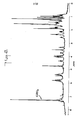
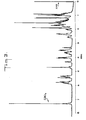
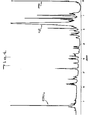
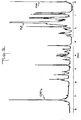
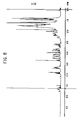
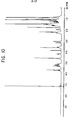
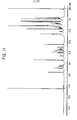
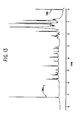
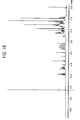
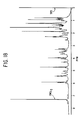
- Figures 7 to 18 represent the nuclear magnetic resonance spectra for Structures 7 to 18 respectively.
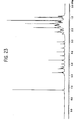
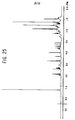
- Figures 19 to 27 represent the nuclear magnetic resonance spectra for Structures 19 to 27 respectively.
- novel compounds of this invention have significant parasiticidal activity as anthelmintics, insecticides and acaricides, in human and animal health and in agriculture.
- helminthiasis The disease or group of diseases described generally as helminthiasis is due to infection of an animal host with parasitic worms known as helminths. Helminthiasis is a prevalent and serious economic problem in domesticated animals such as swine, sheep, horses, cattle, goats, dogs, cats and poultry. Among the helminths, the group of worms described as nematodes causes widespread and often times serious infection in various species of animals.
- the most common genera of nematodes infecting the animals referred to above are Haemonchus, Trichostrongylus, Ostertagia, Nematodirus, Cooperia, Ascaris, Bunostomum, Oesophagostomum, Chabertia, Trichuris, Strongylus, Trichonema, Dictyocaulus, Capillaria, Heterakis, Toxocara, Ascaridia, Oxyuris, Ancylostoma, Uncinaria, Toxascaris and Parascaris.
- the parasitic infections known as helminthiases lead to anemia, malnutrition, weakness, weight loss, severe damage to the walls of the intestinal tract and other tissues and organs and, if left untreated, may result in death of the infected host.
- the compounds of this invention have unexpectedly high activity against these parasites, and in addition are also active against Dirofilaria in dogs, Nematospiroides, Syphacia, Aspiculuris in rodents, arthropod ecto- parasites of animals and birds such as ticks, mites, lice, fleas, blowfly, in sheep Lucilia sp., biting insects and such migrating dipterous larvae as Hypoderma sp. in cattle, Gastrophilus in horses, and Cuterebra sp. in rodents.
- the instant compounds are also useful against parasites which infect humans.
- the most common genera of parasites of the gastro-intestinal tract of parasites of man are Ancylostoma, Necator, Ascaris, Strongyloides, Trichinella, Capillaria, Trichuris, and Enterobius.
- Other medically important genera of parasites which are found in the blood or other tissues and organs outside the gastro- intestinal tract are the filarial worms such as Wuchereria, Brugia, Onchocerca and Loa, Dracunculus and extra intestinal stages of the intestinal worms Strongyloides and Trichinella.
- the compounds are also of value against arthropods parasitizing man, biting insects and other dipterous pests causing annoyance to man.
- the compounds are also active against household pests such as the cockroach, Blatella sp., clothes moth, Tineola sp., carpet beetle, Attagenus sp. and the housefly Musca domestica.
- the compounds are also useful against insect pests of stored grains such as Tribolium sp., Tenebrio sp. and of agricultural plants such as spider mites, (Tetranychus sp.), aphids, (Acyrthio- siphon migratory orthopterans such as locusts and immature stages of insects living on plant tissue.
- the compounds are useful as a nematocide for the control of soil nematodes and plant parasites such as Meloidogyne spp. which may be of importance in agriculture.
- drench is normally a solution, suspension or dispersion of the active ingredient usually in water together with a suspending agent such as bentonite and a wetting agent or like excipient.
- a suspending agent such as bentonite and a wetting agent or like excipient.
- the drenches also contain an antifoaming agent.
- Drench formulations generally contain from about 0.001 to 0.5% by weight of the active compound.
- Preferred drench formulations may contain from 0.01 to 0.1% by weight.
- the capsules and boluses comprise the active ingredient admixed with a carrier vehicle such as starch, talc, magnesium stearate, or dicalcium phosphate.
- capsules, boluses or tablets containing the desired amount of active compound usually are employed.
- These dosage forms are prepared by intimately and uniformly mixing the active ingredient with suitable finely divided diluents, fillers, disintegrating agents and/or- binders such as starch, lactose, talc, magnesium stearate, vegetable gums and the like.
- suitable finely divided diluents, fillers, disintegrating agents and/or- binders such as starch, lactose, talc, magnesium stearate, vegetable gums and the like.
- Such unit dosage formulations may be varied widely with respect to their total weight and constant of the antiparasitic agent depending upon factors such as the type of host animal to be treated, the severity and type of infection and the weight of the host.
- the active compound When the active compound is to be administered via an animal feedstuff, it is intimately dispersed in the feed or used as a top dressing or in the form of pellets which may then be added to the finished feed or optionally fed separately.
- the antiparasitic compounds of our invention may be administered to animals parenterally, for example, by intraruminal, intramuscular, intratracheal, or.subcutaneous injection in which event the active ingredient is dissolved or dispersed in a liquid carrier vehicle.
- the active material is suitably admixed with an acceptable vehicle, preferably of the vegetable oil variety such as peanut oil, cotton seed oil and the like.
- parenteral.vehicles such as organic preparation using solketal, glycerol, formal and aqueous parenteral formulations are also used.
- the active compound or compounds are dissolved or suspended in the parenteral formulation for administration; such formulations generally contain from 0.005 to 5% by weight of the active compound.
- antiparasitic agents of this invention find their primary use in the treatment and/or prevention and treatment of diseases caused by other parasites, for example, arthropod parasites such as ticks, lice, fleas, mites and other biting insects in domesticated animals and poultry. They are also effective in treatment of parasitic diseases that occur in other animals including humans.
- arthropod parasites such as ticks, lice, fleas, mites and other biting insects in domesticated animals and poultry. They are also effective in treatment of parasitic diseases that occur in other animals including humans.
- the optimum amount to be employed for best results will, of course, depend upon the particular compound employed, the species of animal to be treated and the type and severity of parasitic infection or infestation.
- good results are obtained with our novel compounds by the oral administration of from about 0.001 to 10 mg per kg of animal body weight, such total dose being given at one time or in divided doses over a relatively short period of time such as 1-5 days.
- compositions are provided in which the active compound or compounds are intimately dispersed in an inert carrier or diluent.
- inert carrier is meant one that will not react with the antiparasitic agent and one that may be administered safely to animals.
- a carrier for feed administration is one that is, or may be, an ingredient of the animal ration.
- compositions include feed premixes or supplements in which the active ingredient is present in relatively large amounts and which are suitable for direct feeding to the animal or for addition to the feed either directly or after an intermediate dilution or blending step.
- Typical carriers or diluents suitable for such compositions include, for example, distillers' dried grains, corn meal, citrus meal, fermentation residues, ground oyster shells, wheat shorts, molasses solubles, corn cob meal, edible bean mill feed, soya grits, crushed limestone and the like.
- the active compounds are intimately dispersed throughout the carrier by methods such as grinding, stirring, milling or tumbling.
- Compositions containing from about 0.005 to 2.0% by weight of the active compound are particularly suitable as feed premixes.
- Feed supplements, which are fed directly to the animal contain from about 0.0002 to 0.3% by weight of the active compounds.
- Such supplements are added to the animal feed in an amount to give the finished feed the concentration of active compound desired for the treatment and control of parasitic diseases.
- the desired concentration of active compound will vary depending upon the factors previously mentioned as well as upon the particular compound employed, the compounds of this invention are usually fed at concentrations of between 0.00001 to 0.002% in the feed in order to achieve the desired antiparasitic result.
- the individual components may be isolated and purified and used in that form. Alternatively, mixtures more of the individual components may be used. It is not necessary to completely separate the various compounds obtained from the purification of the fermentation broth. Generally, there is obtained a mixture containing two or more of the compounds, but having other unrelated compounds excluded therefrom, and such mixture may be used for the prevention and treatment of parasitic diseases as described herein. Such a mixture generally will contain unequal proportions of the compounds, however, all of the compounds have substantial activity and the antiparasitic activity of the mixture can be accurately determined.
- the compounds are to be added to an animal's feed
- the mycelia contain a preponderance of the activity and since the level of the activity of the mycelia can be determined, it can be added directly to the animal's feed.
- the compounds of this invention are also useful in combatting agricultural pests that inflict damage upon crops while they are growing or while in storage.
- the compounds are applied using known techniques as sprays, dusts, emulsions and the like, to the growing or stored crops to effect protection from such agricultural pests.
- the anthelmintic activity of the instant compounds may be determined by orally administering via the feed, a sample of the individual compound, a mixture of such compounds, a concentrated extract, and the like to a mouse which had been infected 3 days earlier with a gastrointestinal parasite.
- the feces of the mouse are examined for eggs, and one the next day the mouse is sacrificed and the number of worms present in the proximal portion of the small intestine are determined.
- An active compound is observed when there is a significant reduction of egg and worm counts when compared to infected, unmedicated controls.
- a lypophile tube of Cunninghamella blakesleeana MF-4415, ATCC 8688a was aseptically opened and grown in seed medium A (40 ml in a 250 ml 3-baffle Erlenmeyer flask) for 48 hours on a rotary shaker (220 rpm) at 27°C.
- the substrate was added post sterilization and prior to inoculation. Methanol was used to solubilize the substrate for filter sterilization and addition.
- the transformation flasks 40 ml medium C in 250 ml 3-baffle Erlenmeyer flask) were incubated for 7 days with agitation (220 rpm) at 27°C. Following incubation, the whole broths were extracted as follows:
- Example lB the methylene chloride fraction
- Sample 4 of Example lB the methylene chloride fraction
- the effluent stream was monitored at 243 nm using an LDC Spectro-Monitor II with a 1 mm path length cell at a setting of 0.64 AUFS. Twenty- one fractions were collected. Selected fractions were concentrated to dryness.
- the total amount per sample was calculated to be as follows:
- Example lC was taken up in 1 ml of 75/25 methanol/water. The solution was filtered to remove insolubles. The clear filtrate was labeled Sample 1. The insolubles were taken up in 1 ml of methanol and labeled Sample 2. HPLC assay of Sample 2 indicated a loss of approximately six percent of each of the desired compounds.
- Sample 1 was subjected to preparative chromatography on a DuPont Zorbax ODS reverse phase C 18 column 2.1 x 25 cm at room temperature using a solvent system of 75/25 methanol/water at a flow rate of 10 ml/minute.
- the effluent stream was monitored at 243 nm using an LDC Spectro-Monitor II with a 1 mm path length cell at a setting of 1.28 AUFS. Fifty-two fractions were collected. Selected fractions were concentrated to dryness.
- the fractions were quantitated by their ultra-violet absorption at 243 nm using the following method.
- the total amount of compound in the sample was calculated to be 0.415 mg of Compound 1 (12a-hydroxy-22,23-dihydro avermectin Bla aglycone).
- Example 3 Sample 3 of Example 3 was concentrated to dryness and taken up in 200 mcl of 70/30 methanol/ water and subjected to preparative HPLC chromatography on a DuPont Zorbax ODS reverse phase C 18 column 0.94 x 25 cm at room temperature using a solvent system of 70/30 methanol/water at a flow rate of 2 ml/minute.
- the effluent stream was monitored at 243 nm using an LDC Spectro-Monitor II with a 1 mm path length cell at a setting of 0.64 AUFS. Eleven fractions were collected.
- Fraction number 10 was concentrated to dryness. The fraction was quantitated by the ultra-violet absorption specified in Example 3 and contained 0.244 mg of Compound 2 (24-hydroxy-22,23-dihydro avermectin Bla aglycone).
- the cyclohexane extract, Specific Example 5B, sample 9 was concentrated to dryness and the residue taken up in 1 ml of methylene chloride and chromatographed on a dry packed E. Merck silica gel 60 (0.04 to 0.063 mm particle size) column of approximately 1 ml in volume.
- the chromatography was carried out using a stepwise gradient as follows: 1) 3 ml methylene chloride, 2) 5 ml 90/10 v/v methylene chloride/ethyl acetate, 3) 5 ml 50/50 v/v methylene chloride/ethyl acetate, and 4) 5 ml 50/50 v/v methylene chloride/methanol.
- the residue A from Example 6 was taken up in 500 mcl of 75/25 v/v methanol/water and filtered. The filtrate was subjected to preparative HPLC chromatography on a DuPont Zorbax ODS C 18 column 0.94 X 25 cm at room temperature. The chromatography was carried out using the following gradient generated by a DuPont 8800 Gradient Controller, at a flow rate of 4 ml/minute.
- the methylene chloride extract, Specific Example 5B, sample 10 was concentrated to dryness and the residue taken up in 1 ml of 75/25 v/v methanol/water and subjected to preparative HPLC chromatography on a DuPont Zorbax ODS C 18 column 2.1 X 25 cm at room temperature.
- the chromatography was carried out using the following gradient generated by a DuPont 8800 Gradient Controller at a flow rate of 10 ml/minute.
- Sample D from Example 8 was concentrated to dryness. The residue was taken up in 200 mcl of methanol and subjected to preparative HPLC chromatography on a DuPont Zorbax ODS C 18 0.94 X 25 cm column at room temperature. The chromatography was carried out using an isocratic solvent system of 65/35 v/v methanol/water at a flow rate of 2 ml/minute. The effluent stream was monitored at 243 nm 0.64 AUFS using an L.D.C. Spectro-Monitor II with a 1 mm path length cell. Eighteen fractions were collected based on the ultra-violet trace. The following fractions were selected. Fractions 9 and 10 were combined and labeled sample L. Fractions 15 and 16 were combined and labeled M. The total concentrations of samples L and M were calculated as in Example 7.
- Sample E from Example 8 was concentrated to dryness. The residue was taken up in 200 mcl of methanol and subjected to preparative HPLC chromatography on a DuPont Zorbax ODS C 18 column 0.94 X 25 cm at room temperature. The chromatography was carried out using an isocratic solvent system of 75/25 v/v methanol/water at a flow rate of 4 ml/minute. The effluent stream was monitored at 243 nm 0.64 AUFS using an L.D.C. Spectro-Monitor II with a 1 mm path length cell. Fourteen fractions were collected based on the ultra-violet trace. Fraction 6 was selected and labeled N. The total concentration of this sample was calculated as in Example 7.
- Sample F from Example 8 was concentrated to dryness. The residue was taken up in 200 mcl of methanol and subjected to preparative HPLC chromatography on a DuPont Zorbax ODS C 18 column 0.94 X 25 cm at room temperature. The chromatography was carried out using an isocratic solvent system of 75/25 v/v methanol/water at a flow rate of 4 ml/minute. The effluent stream was monitored at 243 nm 0.64 AUFS using an L.D.C. Spectro-Monitor II with a 1 mm path length cell. Eleven fractions were collected based on the ultra-violet trace. Fraction No. 6 was selected and labeled sample 0. The total concentration of this sample was calculated as in Example 7.
- Sample G from Example 3 was concentrated to dryness. The residue was taken up in 200 mcl of methanol and subjected to preparative HPLC chromatography on a DuPont Zorbax ODS C 18 column 0.94 X 25 cm at room temperature. The chromatography was carried out using an isocratic solvent system of 20/45/35 v/v/v acetonitrile/methanol/water at a flow rate of 4 ml/minute. The effluent stream was monitored at 243 nm 0.64 AUFS using an L.D.C. Spectro-Monitor II with a 1 mm path length cell. Fourteen fractions were collected based on the ultra-violet trace. Fraction 7 was labeled sample P. Fractions 9 and 10 were combined and labeled sample Q. The total concentration of sample P was calculated as in Example 7.
- Sample H from Example 8 was concentrated to dryness. The residue was taken up in 100 mcl of methanol and subjected to preparative HPLC on a DuPont Zorbax ODS C 18 column 0.94 X 25 cm at room temperature. The chromatography was carried out using an isocratic solvent system of 20/45/35 v/v/v acetonitrile/methanol/water at a flow rate of 4 ml/minute. The effluent stream was monitored at 243 nm 0.32 AUFS using an L.D.C. Spectro-Monitor II with a 1 mm path length cell. Nine fractions were collected based on the ultra-violet trace. Fraction 9 was combined with sample Q from Example 12 and labeled sample R. Fraction 10 was labeled sample S. The total concentrations of samples R and S were calculated as in Example 7.
- the methylene chloride extract, Specific Example 14B, sample 14 was concentrated to dryness and the residue taken up in 600 mcl of 70/30 v/v methanol/water and filtered. The filtrate was then subjected to preparative HPLC chromatography on a DuPont Zorbax ODS C 18 column 0.94 X 25 cm at room temperature. The chromatography was carried out using the following gradient generated by a DuPont 8800 Gradient Controller, at a flow rate of 4 ml/minute.
- the cyclohexane extract, Specific Example 14B, sample 13 was concentrated to dryness.
- One ml of 70/30 v/v methanol/water was added to the residue and sonicated for 10 minutes, then filtered.
- the filtrate was labeled H.
- the insoluble material was taken up in a 1 ml methylene chloride filter wash and concentrated to dryness.
- One ml of 70/30 v/v methanol/water was added to the residue and sonicated for 10 minutes, then filtered.
- the filtrate was labeled I. Samples H and I were combined, concentrated to dryness.
- the residue was taken up in 600 mcl of 85/15 v/v methanol water and subjected to preparative HPLC chromatography on a DuPont Zorbax ODS C 18 0.94 X 25 cm column at room temperature.
- the chromatography was carried out using the following gradient generated by a DuPont 8800 Gradient controller, at a flow rate of 4 ml/minute.
- the effluent stream was monitored at 243 nm 0.32 AUFS using an L.D.C. Spectro-Monitor II equipped with a 1 mm path length cell. Thirty-eight fractions were collected based on the ultra-violet trace. The sample concentrations were calculated as in Example 15. The following fractions were selected:
Landscapes
- Chemical & Material Sciences (AREA)
- Life Sciences & Earth Sciences (AREA)
- Organic Chemistry (AREA)
- Engineering & Computer Science (AREA)
- Health & Medical Sciences (AREA)
- Wood Science & Technology (AREA)
- Zoology (AREA)
- General Health & Medical Sciences (AREA)
- Biochemistry (AREA)
- Biotechnology (AREA)
- Genetics & Genomics (AREA)
- Chemical Kinetics & Catalysis (AREA)
- General Chemical & Material Sciences (AREA)
- Bioinformatics & Cheminformatics (AREA)
- General Engineering & Computer Science (AREA)
- Microbiology (AREA)
- Molecular Biology (AREA)
- Veterinary Medicine (AREA)
- Pest Control & Pesticides (AREA)
- Plant Pathology (AREA)
- Dentistry (AREA)
- Environmental Sciences (AREA)
- Agronomy & Crop Science (AREA)
- Nuclear Medicine, Radiotherapy & Molecular Imaging (AREA)
- Medicinal Chemistry (AREA)
- Tropical Medicine & Parasitology (AREA)
- Pharmacology & Pharmacy (AREA)
- Animal Behavior & Ethology (AREA)
- Public Health (AREA)
- Heterocyclic Carbon Compounds Containing A Hetero Ring Having Oxygen Or Sulfur (AREA)
- Pharmaceuticals Containing Other Organic And Inorganic Compounds (AREA)
- Fodder In General (AREA)
- Preparation Of Compounds By Using Micro-Organisms (AREA)
- Agricultural Chemicals And Associated Chemicals (AREA)
Applications Claiming Priority (2)
| Application Number | Priority Date | Filing Date | Title |
|---|---|---|---|
| US70819485A | 1985-03-04 | 1985-03-04 | |
| US708194 | 1985-03-04 |
Publications (3)
| Publication Number | Publication Date |
|---|---|
| EP0194125A2 true EP0194125A2 (fr) | 1986-09-10 |
| EP0194125A3 EP0194125A3 (en) | 1986-10-29 |
| EP0194125B1 EP0194125B1 (fr) | 1992-02-12 |
Family
ID=24844765
Family Applications (1)
| Application Number | Title | Priority Date | Filing Date |
|---|---|---|---|
| EP86301494A Expired - Lifetime EP0194125B1 (fr) | 1985-03-04 | 1986-03-03 | Produits de la bioconversion de l'avermectine |
Country Status (7)
| Country | Link |
|---|---|
| US (1) | US4666937A (fr) |
| EP (1) | EP0194125B1 (fr) |
| JP (1) | JPS61233686A (fr) |
| AU (1) | AU582833B2 (fr) |
| DE (1) | DE3683859D1 (fr) |
| NZ (1) | NZ215349A (fr) |
| ZA (1) | ZA861553B (fr) |
Cited By (13)
| Publication number | Priority date | Publication date | Assignee | Title |
|---|---|---|---|---|
| EP0214739A3 (en) * | 1985-07-29 | 1987-07-15 | Merck & Co. Inc. | Antihelmintic avermectin derivative obtainable by fermentation |
| EP0212867A3 (en) * | 1985-07-29 | 1987-07-29 | Merck & Co. Inc. | Antihelmintic avermectin derivatives produced by the fermentation of a microorganism |
| EP0333404A3 (fr) * | 1988-03-14 | 1990-11-07 | American Cyanamid Company | Procédé de préparation de composés macrolides |
| EP0345078A3 (fr) * | 1988-06-03 | 1991-01-23 | American Cyanamid Company | Dérivés du type macrolide |
| EP0341974A3 (fr) * | 1988-05-10 | 1991-01-30 | American Cyanamid Company | Dérivés du type macrolide |
| EP0340932A3 (fr) * | 1988-04-19 | 1991-03-13 | Pfizer Limited | Agents antiparasitaires du type des avermectines |
| EP0334484A3 (fr) * | 1988-02-25 | 1991-05-29 | Pfizer Limited | Antibiotiques du type macrolide, ayant une activité anti-parasitaire |
| US5055596A (en) * | 1987-11-03 | 1991-10-08 | Beecham Group P.L.C. | Derivatives of avermectin and milbemycin |
| EP0390532A3 (fr) * | 1989-03-30 | 1991-10-23 | Merck & Co. Inc. | Produits de bioconversion anthelminthiques |
| EP0480693A3 (en) * | 1990-10-11 | 1992-06-17 | Merck & Co. Inc. | Avermectin degradation products and derivatives |
| US5183749A (en) * | 1987-02-04 | 1993-02-02 | Sankyo Company, Ltd. | Microbial process for the preparation of milbemycin derivatives |
| GB2281911A (en) * | 1993-09-15 | 1995-03-22 | Merck & Co Inc | Bioconversion products of 27-hydroxy avermectin |
| WO2011075592A1 (fr) | 2009-12-17 | 2011-06-23 | Merial Limited | Compositions contenant des composés de lactone macrocyclique et des spiro-dioxépino-indoles |
Families Citing this family (7)
| Publication number | Priority date | Publication date | Assignee | Title |
|---|---|---|---|---|
| US5840704A (en) * | 1986-07-16 | 1998-11-24 | Pfizer Inc. | Antiparasitic agents and process for their preparation |
| US5015662A (en) * | 1988-10-18 | 1991-05-14 | Merck & Co., Inc. | Anthelmintic bioconversion products |
| US5225338A (en) * | 1990-09-24 | 1993-07-06 | Merck & Co., Inc. | Microbial preparation of 13β-13-deoxy-22,23-dihydro avermectin-B1A/B1B aglycone |
| US5250422A (en) * | 1990-10-15 | 1993-10-05 | Merck & Co., Inc. | Biotransformation process for the production of invermectin derivatives |
| EP0637244B1 (fr) * | 1992-03-23 | 2001-01-03 | Merck & Co. Inc. | Souche de streptomyces avermitilis utilisee pour glycosyler des composes d'avermectine |
| DE10135550A1 (de) * | 2001-07-20 | 2003-01-30 | Bayer Cropscience Ag | Verfahren zum Herstellen von neuen Spinosyn-Derivaten |
| CN108018324B (zh) * | 2016-10-28 | 2021-04-09 | 北大方正集团有限公司 | 一种生产多拉菌素的发酵培养基及其制备方法与应用 |
Family Cites Families (13)
| Publication number | Priority date | Publication date | Assignee | Title |
|---|---|---|---|---|
| SE434277B (sv) * | 1976-04-19 | 1984-07-16 | Merck & Co Inc | Sett att framstella nya antihelmintiskt verkande foreningar genom odling av streptomyces avermitilis |
| US4093629A (en) * | 1977-04-11 | 1978-06-06 | Merck & Co., Inc. | Derivatives of antibiotic substance milbemycin and processes therefor |
| PH15982A (en) * | 1977-10-03 | 1983-05-18 | Merck & Co Inc | Selective hydrogenation producta of c-076 compounds and derivatives thereof |
| US4206205A (en) * | 1977-10-03 | 1980-06-03 | Merck & Co., Inc. | Monosaccharide and aglycone derivatives of C-076 |
| US4199569A (en) * | 1977-10-03 | 1980-04-22 | Merck & Co., Inc. | Selective hydrogenation products of C-076 compounds and derivatives thereof |
| IL56149A (en) * | 1977-12-19 | 1989-09-28 | Merck & Co Inc | 13-halo and 13-deoxy derivatives of c-076 compounds,their preparation and method for the treatment of parasitic infections in animals therewith |
| JPS5632481A (en) * | 1979-08-23 | 1981-04-01 | Sankyo Co Ltd | Antibiotic b-41d, its preparation, and acaricide and anthelminthic agent and repellent containing the same as active constituent |
| JPS57120589A (en) * | 1981-01-20 | 1982-07-27 | Sankyo Co Ltd | 5-methoxy and 5-lower alkanoyloxy derivative, its preparation and acaricide and parasiticide |
| NZ201681A (en) * | 1981-09-03 | 1985-11-08 | Merck & Co Inc | Avermectin derivatives and parasiticidal compositions |
| JPS5936682A (ja) * | 1982-08-23 | 1984-02-28 | Sankyo Co Ltd | ミルペマイシンdのヒドロキシ誘導体 |
| US4469682A (en) * | 1983-01-28 | 1984-09-04 | Merck & Co., Inc. | Avermectin and milbemycin phosphate esters, pharmaceutical compositions, and method of use |
| US4530921A (en) * | 1983-10-03 | 1985-07-23 | Merck & Co., Inc. | Avermectin epoxide derivatives and method of use |
| US4582852A (en) * | 1983-11-02 | 1986-04-15 | Ciba-Geigy Corporation | 14- and 15-hydroxy milbemycin derivatives for controlling plant and animal parasites |
-
1986
- 1986-02-20 US US06/830,333 patent/US4666937A/en not_active Expired - Fee Related
- 1986-03-03 NZ NZ215349A patent/NZ215349A/xx unknown
- 1986-03-03 ZA ZA861553A patent/ZA861553B/xx unknown
- 1986-03-03 EP EP86301494A patent/EP0194125B1/fr not_active Expired - Lifetime
- 1986-03-03 DE DE8686301494T patent/DE3683859D1/de not_active Expired - Lifetime
- 1986-03-04 JP JP61045488A patent/JPS61233686A/ja active Pending
- 1986-03-04 AU AU54265/86A patent/AU582833B2/en not_active Ceased
Cited By (15)
| Publication number | Priority date | Publication date | Assignee | Title |
|---|---|---|---|---|
| EP0212867A3 (en) * | 1985-07-29 | 1987-07-29 | Merck & Co. Inc. | Antihelmintic avermectin derivatives produced by the fermentation of a microorganism |
| EP0214739A3 (en) * | 1985-07-29 | 1987-07-15 | Merck & Co. Inc. | Antihelmintic avermectin derivative obtainable by fermentation |
| US5183749A (en) * | 1987-02-04 | 1993-02-02 | Sankyo Company, Ltd. | Microbial process for the preparation of milbemycin derivatives |
| US5055596A (en) * | 1987-11-03 | 1991-10-08 | Beecham Group P.L.C. | Derivatives of avermectin and milbemycin |
| EP0334484A3 (fr) * | 1988-02-25 | 1991-05-29 | Pfizer Limited | Antibiotiques du type macrolide, ayant une activité anti-parasitaire |
| US5510372A (en) * | 1988-02-25 | 1996-04-23 | Pfizer Inc | Antiparasitic macrolide antiobiotics |
| EP0333404A3 (fr) * | 1988-03-14 | 1990-11-07 | American Cyanamid Company | Procédé de préparation de composés macrolides |
| EP0340932A3 (fr) * | 1988-04-19 | 1991-03-13 | Pfizer Limited | Agents antiparasitaires du type des avermectines |
| EP0341974A3 (fr) * | 1988-05-10 | 1991-01-30 | American Cyanamid Company | Dérivés du type macrolide |
| EP0345078A3 (fr) * | 1988-06-03 | 1991-01-23 | American Cyanamid Company | Dérivés du type macrolide |
| EP0390532A3 (fr) * | 1989-03-30 | 1991-10-23 | Merck & Co. Inc. | Produits de bioconversion anthelminthiques |
| EP0480693A3 (en) * | 1990-10-11 | 1992-06-17 | Merck & Co. Inc. | Avermectin degradation products and derivatives |
| GB2281911A (en) * | 1993-09-15 | 1995-03-22 | Merck & Co Inc | Bioconversion products of 27-hydroxy avermectin |
| US5478929A (en) * | 1993-09-15 | 1995-12-26 | Merck & Co., Inc. | Bioconversion products of 27-hydroxy avermectin |
| WO2011075592A1 (fr) | 2009-12-17 | 2011-06-23 | Merial Limited | Compositions contenant des composés de lactone macrocyclique et des spiro-dioxépino-indoles |
Also Published As
| Publication number | Publication date |
|---|---|
| US4666937A (en) | 1987-05-19 |
| NZ215349A (en) | 1988-08-30 |
| AU5426586A (en) | 1986-09-11 |
| JPS61233686A (ja) | 1986-10-17 |
| AU582833B2 (en) | 1989-04-13 |
| ZA861553B (en) | 1986-10-29 |
| EP0194125B1 (fr) | 1992-02-12 |
| DE3683859D1 (de) | 1992-03-26 |
| EP0194125A3 (en) | 1986-10-29 |
Similar Documents
| Publication | Publication Date | Title |
|---|---|---|
| EP0058518B1 (fr) | Composés de la famille C-076, leur manufacture et une culture servant à leur production | |
| US4285963A (en) | Novel derivatives of C-076 compounds | |
| US4666937A (en) | Avermectin bioconversion products | |
| EP0073660B1 (fr) | Dérivés des composés C-076, leur production et emploi, et les compositions les contenant | |
| US5192671A (en) | Process for the glycosylation of avermectin compounds | |
| EP0212867B1 (fr) | Dérivés d'avermectine à activité antihelmintique produits par fermentation d'un micro-organisme | |
| US5070015A (en) | Novel avermectins are produced from known microorganisms | |
| US4668696A (en) | Novel averonectin fermentation product of a microorganism with anthelmintic activity | |
| AU632508B2 (en) | Anthelmintic bioconversion products | |
| EP0205251B1 (fr) | Lactones macrocycliques à activité antihelminthique et leur fabrication par fermentation | |
| AU618136B2 (en) | Anthelmintic bioconversion products | |
| EP0637244B1 (fr) | Souche de streptomyces avermitilis utilisee pour glycosyler des composes d'avermectine | |
| US5140042A (en) | 28-hydroxy ivermectin aglycone | |
| US5124258A (en) | Fermentation process for the preparation of ivermectin aglycone | |
| US4766112A (en) | Anthelmintic fermentation products of a microorganism | |
| AU646749B2 (en) | A process for the glycosylation of avermectin compounds at the 14a-position | |
| US5120646A (en) | Process for the preparation of anthelmintive bioconversion products | |
| US5478929A (en) | Bioconversion products of 27-hydroxy avermectin | |
| EP0463677A2 (fr) | Procédé pour la glycosylation d'aglycones d'avermectine | |
| EP0481672A1 (fr) | 5 Beta- et 13 Beta monoglucopyranosides d'ivermectin | |
| EP0482795A1 (fr) | Préparation de nouveaux composés d'ivermectine | |
| EP0524686A1 (fr) | Procédé de 14a-hydroxylation de composés d'avermectine | |
| EP0490474A2 (fr) | Avermectines produit par des micro-organismes connus |
Legal Events
| Date | Code | Title | Description |
|---|---|---|---|
| PUAI | Public reference made under article 153(3) epc to a published international application that has entered the european phase |
Free format text: ORIGINAL CODE: 0009012 |
|
| PUAL | Search report despatched |
Free format text: ORIGINAL CODE: 0009013 |
|
| AK | Designated contracting states |
Kind code of ref document: A2 Designated state(s): CH DE FR GB IT LI NL |
|
| ITCL | It: translation for ep claims filed |
Representative=s name: SOCIETA' ITALIANA BREVETTI S.P.A. |
|
| AK | Designated contracting states |
Kind code of ref document: A3 Designated state(s): CH DE FR GB IT LI NL |
|
| 17P | Request for examination filed |
Effective date: 19870313 |
|
| 17Q | First examination report despatched |
Effective date: 19880701 |
|
| GRAA | (expected) grant |
Free format text: ORIGINAL CODE: 0009210 |
|
| AK | Designated contracting states |
Kind code of ref document: B1 Designated state(s): CH DE FR GB IT LI NL |
|
| REF | Corresponds to: |
Ref document number: 3683859 Country of ref document: DE Date of ref document: 19920326 |
|
| ET | Fr: translation filed | ||
| ITF | It: translation for a ep patent filed | ||
| PGFP | Annual fee paid to national office [announced via postgrant information from national office to epo] |
Ref country code: CH Payment date: 19921216 Year of fee payment: 8 |
|
| PLBE | No opposition filed within time limit |
Free format text: ORIGINAL CODE: 0009261 |
|
| STAA | Information on the status of an ep patent application or granted ep patent |
Free format text: STATUS: NO OPPOSITION FILED WITHIN TIME LIMIT |
|
| PGFP | Annual fee paid to national office [announced via postgrant information from national office to epo] |
Ref country code: FR Payment date: 19921228 Year of fee payment: 8 |
|
| PGFP | Annual fee paid to national office [announced via postgrant information from national office to epo] |
Ref country code: GB Payment date: 19921231 Year of fee payment: 8 |
|
| 26N | No opposition filed | ||
| PGFP | Annual fee paid to national office [announced via postgrant information from national office to epo] |
Ref country code: DE Payment date: 19930226 Year of fee payment: 8 |
|
| ITTA | It: last paid annual fee | ||
| PGFP | Annual fee paid to national office [announced via postgrant information from national office to epo] |
Ref country code: NL Payment date: 19930331 Year of fee payment: 8 |
|
| PG25 | Lapsed in a contracting state [announced via postgrant information from national office to epo] |
Ref country code: GB Effective date: 19940303 |
|
| PG25 | Lapsed in a contracting state [announced via postgrant information from national office to epo] |
Ref country code: LI Effective date: 19940331 Ref country code: CH Effective date: 19940331 |
|
| PG25 | Lapsed in a contracting state [announced via postgrant information from national office to epo] |
Ref country code: NL Effective date: 19941001 |
|
| GBPC | Gb: european patent ceased through non-payment of renewal fee |
Effective date: 19940303 |
|
| NLV4 | Nl: lapsed or anulled due to non-payment of the annual fee | ||
| PG25 | Lapsed in a contracting state [announced via postgrant information from national office to epo] |
Ref country code: FR Effective date: 19941130 |
|
| REG | Reference to a national code |
Ref country code: CH Ref legal event code: PL |
|
| PG25 | Lapsed in a contracting state [announced via postgrant information from national office to epo] |
Ref country code: DE Effective date: 19941201 |
|
| REG | Reference to a national code |
Ref country code: FR Ref legal event code: ST |
|
| PG25 | Lapsed in a contracting state [announced via postgrant information from national office to epo] |
Ref country code: IT Free format text: LAPSE BECAUSE OF NON-PAYMENT OF DUE FEES Effective date: 20050303 |