EP0194807B1 - Gel adhésif hydraté et méthode de préparation - Google Patents
Gel adhésif hydraté et méthode de préparation Download PDFInfo
- Publication number
- EP0194807B1 EP0194807B1 EP86301575A EP86301575A EP0194807B1 EP 0194807 B1 EP0194807 B1 EP 0194807B1 EP 86301575 A EP86301575 A EP 86301575A EP 86301575 A EP86301575 A EP 86301575A EP 0194807 B1 EP0194807 B1 EP 0194807B1
- Authority
- EP
- European Patent Office
- Prior art keywords
- acid
- adhesion
- adhesive gel
- added
- compound
- Prior art date
- Legal status (The legal status is an assumption and is not a legal conclusion. Google has not performed a legal analysis and makes no representation as to the accuracy of the status listed.)
- Expired - Lifetime
Links
- 0 C*([N+](N1)[O-])[N+]1[O-] Chemical compound C*([N+](N1)[O-])[N+]1[O-] 0.000 description 2
- CTQNGGLPUBDAKN-UHFFFAOYSA-N Cc1c(C)cccc1 Chemical compound Cc1c(C)cccc1 CTQNGGLPUBDAKN-UHFFFAOYSA-N 0.000 description 1
Images


Classifications
-
- A—HUMAN NECESSITIES
- A61—MEDICAL OR VETERINARY SCIENCE; HYGIENE
- A61L—METHODS OR APPARATUS FOR STERILISING MATERIALS OR OBJECTS IN GENERAL; DISINFECTION, STERILISATION OR DEODORISATION OF AIR; CHEMICAL ASPECTS OF BANDAGES, DRESSINGS, ABSORBENT PADS OR SURGICAL ARTICLES; MATERIALS FOR BANDAGES, DRESSINGS, ABSORBENT PADS OR SURGICAL ARTICLES
- A61L15/00—Chemical aspects of, or use of materials for, bandages, dressings or absorbent pads
- A61L15/16—Bandages, dressings or absorbent pads for physiological fluids such as urine or blood, e.g. sanitary towels, tampons
- A61L15/18—Bandages, dressings or absorbent pads for physiological fluids such as urine or blood, e.g. sanitary towels, tampons containing inorganic materials
-
- A—HUMAN NECESSITIES
- A61—MEDICAL OR VETERINARY SCIENCE; HYGIENE
- A61K—PREPARATIONS FOR MEDICAL, DENTAL OR TOILETRY PURPOSES
- A61K8/00—Cosmetics or similar toiletry preparations
- A61K8/02—Cosmetics or similar toiletry preparations characterised by special physical form
- A61K8/04—Dispersions; Emulsions
- A61K8/042—Gels
-
- A—HUMAN NECESSITIES
- A61—MEDICAL OR VETERINARY SCIENCE; HYGIENE
- A61K—PREPARATIONS FOR MEDICAL, DENTAL OR TOILETRY PURPOSES
- A61K47/00—Medicinal preparations characterised by the non-active ingredients used, e.g. carriers or inert additives; Targeting or modifying agents chemically bound to the active ingredient
- A61K47/30—Macromolecular organic or inorganic compounds, e.g. inorganic polyphosphates
- A61K47/42—Proteins; Polypeptides; Degradation products thereof; Derivatives thereof, e.g. albumin, gelatin or zein
-
- A—HUMAN NECESSITIES
- A61—MEDICAL OR VETERINARY SCIENCE; HYGIENE
- A61K—PREPARATIONS FOR MEDICAL, DENTAL OR TOILETRY PURPOSES
- A61K8/00—Cosmetics or similar toiletry preparations
- A61K8/18—Cosmetics or similar toiletry preparations characterised by the composition
- A61K8/30—Cosmetics or similar toiletry preparations characterised by the composition containing organic compounds
- A61K8/64—Proteins; Peptides; Derivatives or degradation products thereof
-
- A—HUMAN NECESSITIES
- A61—MEDICAL OR VETERINARY SCIENCE; HYGIENE
- A61K—PREPARATIONS FOR MEDICAL, DENTAL OR TOILETRY PURPOSES
- A61K8/00—Cosmetics or similar toiletry preparations
- A61K8/18—Cosmetics or similar toiletry preparations characterised by the composition
- A61K8/30—Cosmetics or similar toiletry preparations characterised by the composition containing organic compounds
- A61K8/64—Proteins; Peptides; Derivatives or degradation products thereof
- A61K8/645—Proteins of vegetable origin; Derivatives or degradation products thereof
-
- A—HUMAN NECESSITIES
- A61—MEDICAL OR VETERINARY SCIENCE; HYGIENE
- A61K—PREPARATIONS FOR MEDICAL, DENTAL OR TOILETRY PURPOSES
- A61K8/00—Cosmetics or similar toiletry preparations
- A61K8/18—Cosmetics or similar toiletry preparations characterised by the composition
- A61K8/30—Cosmetics or similar toiletry preparations characterised by the composition containing organic compounds
- A61K8/64—Proteins; Peptides; Derivatives or degradation products thereof
- A61K8/65—Collagen; Gelatin; Keratin; Derivatives or degradation products thereof
-
- A—HUMAN NECESSITIES
- A61—MEDICAL OR VETERINARY SCIENCE; HYGIENE
- A61L—METHODS OR APPARATUS FOR STERILISING MATERIALS OR OBJECTS IN GENERAL; DISINFECTION, STERILISATION OR DEODORISATION OF AIR; CHEMICAL ASPECTS OF BANDAGES, DRESSINGS, ABSORBENT PADS OR SURGICAL ARTICLES; MATERIALS FOR BANDAGES, DRESSINGS, ABSORBENT PADS OR SURGICAL ARTICLES
- A61L15/00—Chemical aspects of, or use of materials for, bandages, dressings or absorbent pads
- A61L15/16—Bandages, dressings or absorbent pads for physiological fluids such as urine or blood, e.g. sanitary towels, tampons
- A61L15/20—Bandages, dressings or absorbent pads for physiological fluids such as urine or blood, e.g. sanitary towels, tampons containing organic materials
-
- A—HUMAN NECESSITIES
- A61—MEDICAL OR VETERINARY SCIENCE; HYGIENE
- A61L—METHODS OR APPARATUS FOR STERILISING MATERIALS OR OBJECTS IN GENERAL; DISINFECTION, STERILISATION OR DEODORISATION OF AIR; CHEMICAL ASPECTS OF BANDAGES, DRESSINGS, ABSORBENT PADS OR SURGICAL ARTICLES; MATERIALS FOR BANDAGES, DRESSINGS, ABSORBENT PADS OR SURGICAL ARTICLES
- A61L15/00—Chemical aspects of, or use of materials for, bandages, dressings or absorbent pads
- A61L15/16—Bandages, dressings or absorbent pads for physiological fluids such as urine or blood, e.g. sanitary towels, tampons
- A61L15/42—Use of materials characterised by their function or physical properties
- A61L15/58—Adhesives
-
- A—HUMAN NECESSITIES
- A61—MEDICAL OR VETERINARY SCIENCE; HYGIENE
- A61L—METHODS OR APPARATUS FOR STERILISING MATERIALS OR OBJECTS IN GENERAL; DISINFECTION, STERILISATION OR DEODORISATION OF AIR; CHEMICAL ASPECTS OF BANDAGES, DRESSINGS, ABSORBENT PADS OR SURGICAL ARTICLES; MATERIALS FOR BANDAGES, DRESSINGS, ABSORBENT PADS OR SURGICAL ARTICLES
- A61L26/00—Chemical aspects of, or use of materials for, wound dressings or bandages in liquid, gel or powder form
- A61L26/0009—Chemical aspects of, or use of materials for, wound dressings or bandages in liquid, gel or powder form containing macromolecular materials
- A61L26/0028—Polypeptides; Proteins; Degradation products thereof
-
- A—HUMAN NECESSITIES
- A61—MEDICAL OR VETERINARY SCIENCE; HYGIENE
- A61L—METHODS OR APPARATUS FOR STERILISING MATERIALS OR OBJECTS IN GENERAL; DISINFECTION, STERILISATION OR DEODORISATION OF AIR; CHEMICAL ASPECTS OF BANDAGES, DRESSINGS, ABSORBENT PADS OR SURGICAL ARTICLES; MATERIALS FOR BANDAGES, DRESSINGS, ABSORBENT PADS OR SURGICAL ARTICLES
- A61L26/00—Chemical aspects of, or use of materials for, wound dressings or bandages in liquid, gel or powder form
- A61L26/0061—Use of materials characterised by their function or physical properties
- A61L26/008—Hydrogels or hydrocolloids
-
- A—HUMAN NECESSITIES
- A61—MEDICAL OR VETERINARY SCIENCE; HYGIENE
- A61Q—SPECIFIC USE OF COSMETICS OR SIMILAR TOILETRY PREPARATIONS
- A61Q19/00—Preparations for care of the skin
-
- C—CHEMISTRY; METALLURGY
- C08—ORGANIC MACROMOLECULAR COMPOUNDS; THEIR PREPARATION OR CHEMICAL WORKING-UP; COMPOSITIONS BASED THEREON
- C08H—DERIVATIVES OF NATURAL MACROMOLECULAR COMPOUNDS
- C08H1/00—Macromolecular products derived from proteins
Definitions
- This invention relates to hydrated adhesive gel, especially hydrated adhesive gels for autohesion cataplasma and pack agents having sheet shape.
- the affected part can be treated by a cold or hot compress.
- the hydrated adhesive gel itself has a sufficient adhesion, and a fixed means such as adhesion sheet is not required in order to protect against slipping of the cataplasma caused by bending and stretching of an applied part of the cataplasma.
- Such an autohesion cataplasma is disclosed, for example, in the Japanese Patent Laid-open No. 58-21,613, and obtained by blending acrylic ester copolymer emulsion with a base containing polyvinyl pyrrolidone which is crosslinked by methylvinyl ether/maleic anhydride copolymer to provide autohesion.
- a compress agent having good adhesibility was obtained by adding dialdehyde starch into an aqueous acid solution of gelatin and polyacrylic acid, and adding a metallic salt or a metallic oxide thereto.
- o/w type emulsion of aqueous high- molecular compound such as polyvinyl alcohol or gelatinous film forming ingredients are commercially available as the pack agents. These agents are able to give an effect of beauty treatment by taking out a necessary amount from a vessel such as a tube, etc. prior to use, applying it to the face skin, etc. to form a film, and peeling off the film or washing the face after drying.
- the said invention of the Japanese Laid-open No. 58-21,613 concerning to the autohesion cataplasma comprises only blending an acrylic ester copolymer emulsion as an adhesive into a base or crosslinked polyvinyl pyrrolidone.
- the strength of the adhesion is limited because there is no chemical bonding between the base and the adhesive, and the adhesion lowers with time.
- the autohesion cataplasma disclosed in the Japanese Patent Laid-open No. 59-13,718 has good early adhesion.
- the adhesion lowers, and especially there are disadvantages that the adhesion is little shown in case of reapplying the agents on the skin once the agents are peeled off.
- the said method uses crosslinking hydrous gel obtained by adding a crosslinking agent into an aqueous solution of polyacrylic acid and/or a polyacrylate.
- a crosslinking agent metal salts such as calcium chloride, magnesium chloride, etc., compounds having at least 2 epoxy groups in a molecular such as polyethylene glycol diglycidyl ether, glycerine diglycidyl ether, etc., are given.
- the reaction between these croslinking agent an aqueous solution of polyacrylic acid and/or a polyacrylate is very slow. Therefore, there are some faults, for example, the reaction needs high temperatures, e.g. 90°C, so that the beauty skin ingredients such as vitamins, etc. which are decomposable require to absorb into the sheet hydrous gel in particular after the formation of the gel.
- reaction products by adding an aqueous solution of an N-hydroxyimidoester compound into an aqueous solution of gelatin which contains a protein having amino groups at the side groups thereof and a gelling retarder such as calcium chloride, urea, etc., and partially bridging the protein, have very strong adhesion in wet stage.
- hydrated adhesive gel such as an ointment or plaster
- a hydrophilic tackifier such as glycerol, ethylene glycol, or polypropylene glycol which is liquid at ordinary temperature
- a hydrated adhesive gel using a product which is obtained by reacting an aqueous solution essentially containing protein selected from gelatin, proteose, pepton, casein, albumin, globulin, prolamin, protamine, histone and glutelin, together with a N-hydroxyimidoester compound represented by the following formula (1).
- X is a residue of a compound having 2 to 6 carbons and 2 to 6 hydroxyl groups
- A is one or more groups selected from oxyethylene, oxypropylene, and oxybutylene groups
- Y is a residue of dibasic acid selected from oxalic acid, malonic acid, succinic acid, glutaric acid, adipic acid, azelaic acid, sebacic acid, decane-dicarboxylic acid, iso succinic acid, methyl succinic acid, malic acid, maleic acid, fumaric acid, tartaric acid, acetondicarboxylic acid, itaconic acid, phthalic acid, isophthalic acid, terephthalic acid, homophthalic acid, hexahydrophthalic acid, tetrahydrophthalic acid, dihydrophthalic acid, p-phenylenediacetic acid, naphthalene-2,3-dicarboxylic acid, diphenic acid, aspartic acid or glutamic acid.
- a hydrated adhesive gel using a product which is obtained by reacting an aqueous solution essentially containing protein selected from gelatin, proteose, pepton, casein, albumin, globulin, prolamin, protamine, histone and glutelin, a gelling retarder, and a hydrophilic tackifier together with a N-hydroxyimidoester compound represented by the following formula (1).
- X is a residue of a compound having 2 to 6 carbons and 2 to 6 hydroxyl groups
- A is one or more groups selected from oxyethylene, oxypropylene, and oxybutylene groups
- Y is a residue of dibasic acid selected from oxalic acid, malonic acid, succinic acid, glutaric acid, adipic acid, azelaic acid, sebacic acid, decane-dicarboxylic acid, iso succinic acid, methyl succinic acid, malic acid, maleic acid, fumaric acid, tartaric acid, acetondicarboxylic acid, itaconic acid, phthalic acid, isophthalic acid, terephthalic acid, homophthalic acid, hexahydrophthalic acid, tetrahydrophthalic acid, dihydrophthalic acid, p-phenylenediacetic acid, naphthalene-2,3-dicarboxylic acid, diphenic acid, aspartic acid or glutamic acid.
- N-hydroxyimidoester compounds represented by the following formula (1) used in this invention are as follows.
- X is an alcohol residue produced from a compound having 2 to 6 carbons and 2 to 6 hydroxyl groups such as ethylene glycol, propylene glycol, glycerol, diglycerol, trimethylolethane, trimethylolpropane, erythritol, pentaerythritol, sorbitol, mannitol, glucose, mannose, xylose, sorbitin, etc.
- n is a value of 2-6 corresponding to the number of hydroxyl groups.
- A is a polymerization unit or a copolymerization unit selected from one kind or any combination of 2 to 3 kinds of hydroxyethylene, hydroxypropylene, and hydroxybutylene groups, m is an average additional mole number thereof.
- the compounds of the general formula of (1) consisting of the said each constitution react specifically with amino groups, and produce addition products of amino groups with the release of imidoxyl groups, so that the compounds act as crosslinking agents to the protein having amino groups at the side chains of gelatin, etc., as described below, and reacted by crosslinking reaction at ordinary temperatures in an aqueous solution to form good gels by transforming the proteins into macromolecular substances.
- X is an alcohol residue produced from diol such as ethylene glycol, propylene glycol, etc.
- n is 2
- the compound of general formula (1) becomes a bifunctional crosslinking agent, and relatively soft gel such as ointment is produced.
- n 4 or 6
- the compound of general formula (1) becomes polyfunctional crosslinking agent.
- rigid gel having high crosslinking density is produced.
- n is greater than 7, obtained gel does not show adhesion. From the said reason, preferable range is 2-3.
- A is an oxyethylene group
- the hydrophilic nature of the compound of general formula (1) is larger than that of an oxypropylene group.
- A is a copolymer of oxyethylene and oxypropylene groups
- the hydrophilic nature is varied by the ratio of both, so that it is able to control the degree of the hydrophilic nature.
- m is able to take a value ranging 1-3000, when m is lesser, the crosslinking density of the compound per unit weight of general formula (1) becomes higher. Therefore, a rigid gel can be obtained easily, and the! hydrophilic nature of the compound of general formula (1) becomes too small.
- m is over 3000, the imidoester part of the compound of general formula (1) becomes too small, the compound is impractical because the function as the crosslinking agent is very small. Accordingly, the preferable range of m is 5-200.
- the dibasic acid in which Y is a residue is optionally selected because the esterification easily occurs between oxyalkylene addition product of alcohol and acid imide.
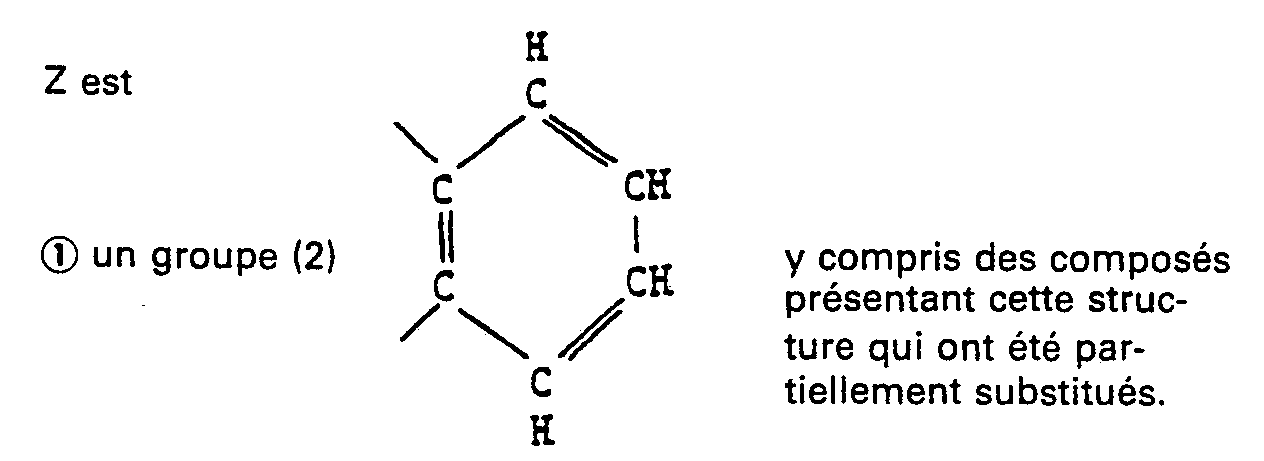
- phthalimide that partial structure of Z is represented by general formula (2) and the partial substituent thereof
- maleimide of general formula (5) and the partial substituent thereof, and succinimide of general formula (6) and the partial substituent thereof are desirable because these compounds are easily produced industrially and cheap.
- the gelling retarder used in this invention is a compound which retard the velocity for gradually varying aqueous solution of protein having amino groups at the side chains, such as gelatin dissolved by heating into the gel together with lowering of temperature, and has an effect which allows to lower the gelling temperature.
- the gelling retarder which is stable as an aqueous solution includes, for example, inorganic compounds containing chlorine such as, potassium chloride, sodium chloride, calcium chloride, magnesium chloride, ammonium magnesium chloride, ammonium chloride, zinc chloride, ammonium zinc chloride, manganese chloride, barium chloride, nickel chloride, lithium chloride, cobalt chloride, aluminum chlorid, antimony pentachloride, stannic chloride, stannous chloride, titanous chloride, titanic chloride, ferric chloride, ferrous chloride, cupric chloride, etc., inorganic compounds containing bromine such as potassium bromide, sodium bromide, calcium bromide, magnesium bromide, ammonium bromide, zinc chloride, manganese bromide, barium bromide, nickel chloride, lithium bromide, aluminum bromide, stannous bromide, ferrous bromide, ferric bromide, cupric bromide etc., inorganic compounds containing a nit
- the compounding weight of the gelling retarder 0.05-5 times of the compounding weight of the protein having amino groups, preferably 0.5-1.5 times.
- hydrophilic tackifier used in this invention is dissolved in water and the water evaporates during the use of the hydrated adhesive gel, such as ointment or plaster, it remains in said hydrated adhesive gel, such as the ointment or plaster and gives the adhesion properties to the gel.
- the hydrophilic tackifier includes glycerol, ethylene glycol, propylene glycol, and polyethylene glycol and polypropylene glycol which are liquid at ordinary temperatures, etc. These tackifiers have a tackifier effect by themselves. However, the effect is also represented by the combined use.
- the blending weight of the hydrophilic tackifier used in the hydrated adhesive gel is 1-80 weight% preferably 3-50 weight%.
- efficacious ingredients such as methyl salicylate, glycol salicylate, menthol, camphol, thymol, borneol, diphenhydramine, indomethacin, ketoprophen, bruphen, nitroglycerol, peppermint oil, hormones, vitamins, etc., humectants such as sorbitol, benzyl alcohol, etc., powder base such as kaolin, bentonite, zinc white, titanium, dioxide, etc., as desired, tackifier such as rosin, ester-gum, polybutene, etc., cationic, anionic and nonionic surface active agents, other water-soluble or hydrophilic synthetic high molecular compounds or natural high molecular compounds, etc. such as polyvinyl alcohol, carboxymethylcellulose, arabic gum, polyvinylpyrrolidone, polyacrylic acid, pectin, etc.
- efficacious ingredients such as methyl salicylate, glycol salicylate, menthol, camphol, th
- the hydrated adhesive gel such as ointment or plaster of this invention
- nutritive agents of the skin such as vitamins, hormones, amino acids, materials extracted or secreted from animal or plant tissues, etc.
- ingredients for beautiful skin used in usual pack agents for example, skin improvement agents, etc., such as bleaching agents, depilatory agents, etc., coloring agents such as titanium dioxide, red 2 for food, as desired, hydrophilic synthetic high molecular compounds or natural high molecular compounds, etc., such as polyacrylic acid polyvinyl pyrrolidone, pectin, etc.
- the hydrated adhesive gel of this invention is an aqueous gel in which the base contains crosslinking 'protein. If once such hydrated adhesive gel is adhered on the skin, the adhesion on the skin is very strong, so that such gel can be reapplied after peeling off, as desired. Its tack reduction is rarely found. Further, the early tackiness does not lower with time, and the tackiness tends to increase with the evaporation of water content. It is possible to raise the water retention rate in said gel, and it is possible to use up to 70 weight% according to compositions. When the hydrated adhesive gel of this invention having such good properties is used as the cataplasma, the said gel has good shape retention, moisture retention, adhesion to the skin, maintenance of cold feeling.
- the agents have good adhesion to the skin. There is no deviation or release of applied parts by bodily exercise. Moreover, when said adhesive gel is reapplied after releasing, the adhesion is good. The lowering of adhesion by sweating is very little. Even if the ointment is used for a long time releasing of the cataplasma is very difficult because the adhesion is not lowered by the evaporation of water content. When the cataplasma is released after using, there is not a pain in comparison with the conventional cataplasma using adhesion sheets. There is no poisoning of the skin compared with using the adhesion sheets.
- the ointment of this invention When the ointment of this invention is used as a sheet pack agent for beauty effects of the skin, especially for the face skin, disadvantages of conventional jellied pack agents, namely, long drying time, impossible reusing of used films, non-uniformed films, etc. are dissolved.
- the ointment of this invention In comparison with the sheet pack agents obtained by crosslinking polyacrylate with crosslinking agents such as calcium chloride, etc., in an aqueous solution, the ointment of this invention has good adhesion and a remarkable effect in the adhesion of the reapplied pack agent.
- glycerol 1 mol of glycerol is addition-polymerized with 1050 mol of propylene oxide, the obtained polypropylene glycol ether of glycerol is reacted with 3 mol of phthalic anhydride to form a half ester, and the ester is reacted with 3 mol of N-hydroxyphthalic imide to prepare a crosslinking agent 2.
- glucose-polyoxyalkylene glycol ether compound 1 mol of glucose is addition-polymerized with 25 mol of ethylene oxide and 25 mol of propylene oxide, the obtained glucose-polyoxyalkylene glycol ether compound is reacted with 5 mol of tartaric anhydride to form a half ester, and the ester is reacted with 5 mol of N-hydroxyglutal imide to prepare a crosslinking agent 5.
- glycerol 1 mol of glycerol is addition-polymerized with a mixture of 24 mol of ethylene oxide and 6 mol of butylene oxide, the obtained glucose-polyoxyalkylene glycol ether compound is reacted with 3 mol of succinic anhydride to form a half ester, and the ester is reacted with 3 mol of N-hydroxysuccinic imide to prepare a crosslinking agent 6.
- a raw material No. 1 is added into 9/10 of a raw material No. 36 and heated to dissolve at 60-70°C. Then, a raw material No. 3 is added to the solution,, stirred and dissolved. Further, materials No. 18 and No. 26 are added and stirred with a dissolver to disperse. To the dispersed solution, materials No. 28, 29, 30 and 33 are added, stirred with the dissolver at 2000 rpm for 5 minutes to disperse and obtained A, liquid. On the other hand, B, liquid is obtained by adding 1/10 of the material No. 36 into a material No. 12, stirring and dissolving.
- Example 1 After A, liquid is added to B, liquid, stirred and mixed, the solution is applied to a piece of non-woven fabric. Then, the cataplasma of Example 1 is obtained by facing with polyethylene film.
- a cataplasma cut 2 cm squares is applied on a flat part of an arm. After a certain time, an acrylic resin plate of 2 cm squares and 1 mm thickness having a reverse U type puller at the center is applied by an adhesive onto the cataplasma. After 10 minutes, the puller is pulled up to a vertical direction with a spring balance of 500 g having a hook and the adhesion is measured.
- the raw material No. 1 is added into 9/10 of the raw material No. 36 and heated to dissolve at 60-700C. Then a raw material No. 4 is added to the solution, stirred and dissolved. Further, materials Nos. 21 and 26 are added and stirred with the dissolver to disperse. To the dispersed solution, materials Nos. 27, 29, 30, 31 and 33 are added, stirred with the dissolver at 2000 rpm for 5 minutes to disperse and obtained A 2 liquid. On the other hand, B 2 liquid is obtained by adding 1/10 of the material No. 36 into a material No. 13, stirring and dissolving.
- Example 2 After A 2 liquid is added to B 2 liquid, stirred and mixed, the solution is applied to a piece of non-woven fabric. Then, the cataplasma of Example 2 is obtained by facing with polyethylene film.
- the raw material No. 1 is added into 1/2 of the raw material No. 36 and heated to dissolve at 70-80°C. Then a raw material No. 5 is added to the solution, stirred and dissolved. Further, materials Nos. 20, 28, 29, 30 and 33 are added, stirred with the dissolver at 1500 rpm for 10 minutes to disperse and obtained A3 liquid. On the other hand, B 3 liquid is obtained by adding 1/2 of the material No. 36 into a material No. 14, stirring and dissolving.
- Example 3 After A3 liquid is added to B 3 liquid, stirred and mixed, the solution is applied to a piece of non-woven fabric. Then, the cataplasma of Example 3 is obtained by facing with polypropylene film.
- the raw material No. 1 is added into 3/4 of the raw material No. 36 and heated to dissolve at 90-100°C. Then, a raw material No. 6 is added to the solution, stirred and dissolved. Further, materials Nos. 10, 22, 24 and 26 are added and stirred with the dissolver to disperse. To the dispersed solution, materials Nos. 27, 29, 30 and 33 are added, stirred with the dissolver at 2500 rpm for 10 minutes to disperse and obtained A4 liquid. On the other hand, B 4 liquid is obtained by adding 1/4 of the material No. 36 into a material No. 15, stirring and dissolving.
- Example 4 After A4 liquid is added to B 4 liquid, stirred and mixed, the solution is applied to a piece of non-woven fabric. Then, the cataplasma of Example 4 is obtained by facing with polypropylene film.
- the raw material No. 1 is added into 9/10 of the raw material No. 36 and heated to dissolve at 90 ⁇ 100°C. Then, a raw material No. 7 is added to the solution, stirred and dissolved. Further, materials Nos. 18, 19, 23 and 25 are added and stirred with a dissolver to disperse. To the dispersed solution, materials Nos. 28, 29, 31 and 33 are added, stirred with the dissolver at 2500 rpm for 10 minutes to disperse and obtained A 5 liquid. On the other hand, B 5 liquid is obtained by adding 1/4 to 1/10 of the material No. 36 into a material No. 16, stirring and dissolving.
- Example 5 After A 5 liquid is added to B s liquid, stirred and mixed, the solution is applied to a piece of non-woven fabric. Then, the cataplasma of Example 5 is obtained by facing with polypropylene film.
- the raw material No. 1 is added into 9/10 of the raw material No. 36 and stirred to dissolve at 25-35°C. Then, raw materials Nos. 18 and 26 are added to the solution, stirred and dissolved. Further, materials Nos. 32 and 33 are added, stirred with the dissolver at 2000 rpm for 15 minutes to disperse and obtained A 6 liquid. On the other hand, B 6 liquid is obtained by adding 1/10 of the material No. 36 into a material No. 17, stirring and dissolving.
- Example 6 After A 6 liquid is added to B 6 liquid, stirred and mixed, the solution is applied to a piece of non-woven fabric. Then, the cataplasma of Example 6 is obtained by facing with polypropylene film.
- the raw material No. 1 is added into 9/10 of the raw material No. 36 and heated to dissolve at 60-70°C. Then, raw material Nos. 18 and 26 are added to the solution, stirred with a dissolver and dispersed. Further, materials Nos. 28, 29, 30 and 33 are added, stirred with the dissolver at 2000 rpm for 5 minutes to disperse and obtained A (1) liquid. On the other hand, B( 1 ) liquid is obtained by adding 1/10 of the material No. 36 into the material No. 12, stirring and dissolving.
- Example 7 After A (1) liquid is added to B (1) liquid, stirred and mixed, the solution is applied to a piece of non-woven fabric. Then, the cataplasma of Example 7 is obtained by facing with polyethylene film.
- the raw material No. 1 is added into 9/10 of the raw material No. 36 and heated to dissolve. Then, raw materials Nos. 8, 10, 18, 23, 27 and 29 are added, stirred with the dissolver at 2500 rpm for 10 minutes to disperse and the obtained ointment or plaster is applied to a piece of non-woven fabric. Then, the cataplasma of Comparative example 1 is obtained by facing with polyethylene film.
- a raw material No. 34 is added into a raw material No. 9, raw materials Nos. 28, 29 and 30 are added and homogeneously stirred, and then a solution of 1/2 of the raw material No. 36 dissolving a material No. 11 is added and homogeneously mixed, then 1/2 of the raw material No. 36 is added, and a raw material No. 35 is added and stirred sufficiently.
- the obtained ointment or plaster is applied to a piece of non-woven fabric.
- the cataplasma of Comparative example 2 is obtained by facing with polythylene film.
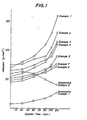
- Examples 1-7 show high early adhesion, the adhesion increasing along with the evaporation of water content with time, and maintenance of remarkably high adhesion.
- Comparative example 1 shows low early adhesion, and the adhesion is not increased along with the evaporation of water content with time. And the value after 120 minutes is not arrived at the value of the early adhesion of Examples 1-7.
- the adhesion is in the range of the adhesion of Examples 1-7 until 60 minutes. However, after the time, the adhesion gradually lowers.
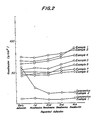
- Examples 1-7 show repeatable adhesion. After the sample of the cataplasma is applied, it is peeled off and reapplied, and then peeled off. The said action is repeated 4 times. As the result, the adhesion does not lower, and the readhesion shows above 45 kg/cm 2 to 45 g/cm 2 . However, in Comparative example 1, the early adhesion is low and shows 8 g/cm 2 , and the readhesion is also 10 g/cm 2 . In Comparative example 2, the early adhesion is 60 g/cm 2 , the value is considerably high. In spite of this, the first readhesion is 26 g/cm 2 and the value is very low. 4th of the readhesion is very low 18 g /c m2
- Examples 1-7 show that the cataplasma are excellent in strike-through, shaping retention, adhesion and maintenance of cool-feeling, especially more superior in adhesion and maintenance of cool-feeling than that of Comparative examples 1 and 2.
- the raw material No. 1 is added into 9/10 of a raw material No. 19 and heated to dissolve at 60-70°C. Then, the raw material No. 5 is added to the solution, stirred and dissolved. Further, materials Nos. 11, 13 and 15 are added, stirred with the dissolver at 1000 rpm for 5 minutes to disperse and obtained As liquid. On the other hand, B B liquid is obtained by adding 1/10 of the material No. 19 into the material No. 7, stirring and dissolving.
- a raw material No. 2 is added into 8/10 of the raw material No. 19 and heated to dissolve at room temperature for 10 minutes. Then, materials Nos. 11, 14 and 17 are added, stirred with the dissolver at 1500 rpm for 10 minutes to disperse and obtained A 9 liquid. On the other hand, B9 liquid is obtained by adding 2/10 of the material No. 19 into the material No. 6, stirring and dissolving.
- a 9 liquid is added to B 9 liquid, stirred and mixed at room temperature for 10 minutes, the solution is poured into a polypropylene vessel of 200 x 250 x 2 mm at the thickness of 0.6 mm warmed at 5 minutes at 40°C, and the thus obtained gel is applied to a piece of non-woven fabric of 200 x 250 x 1 mm by softly pushing. After cooling to the room temperature, the gel is peeled off from the vessel. A polypropylene sheet is adhered to the opposite side of the gel sheet, and the sheet pack of Example 9 is obtained.
- the raw material No. 18 is added into 8/10 of the raw material No. 19. Then, the raw material No. 3 is added, and stirred to dissolve at room temperature for 10 minutes. Then, the raw material No. 6 is added to the solution, stirred and dissolved. Further, materials Nos. 12, 13 and 16 are added, stirred with the dissolver at 1500 rpm for 5 minutes to dissolve and disperse and obtained A 10 liquid. On the other hand, B 10 liquid is obtained by adding 2/10 of the material No. 19 into the material No. 8, stirring and dissolving.
- the raw material No. 18 is added into the raw material No. 4 and heated to dissolve at room temperature for 10 minutes. Then, raw materials Nos. 11 and 13 are added, stirred with the dissolver at 1000 rpm for 5 minutes to dissolve. Then, materials Nos. 5 and 19 are added and stirred homogeneously at room temperature.
- the obtained gel solution is applied to a side surface of non-woven fabric at 0.6 mm thickness. A polyester film is adhered to the opposite side surface of the fabric, put into a closing bag, and heated at 60°C for 5 minutes, and the sheet pack of Comparative example 3 is obtained.
- the raw material No. 18 is added into the raw material No. 4 and heated to dissolve at room temperature for 10 minutes. Then, raw materials Nos. 11 and 15 are added, stirred with the dissolver at 1500 rpm for 5 minutes to dissolve. Then, materials Nos. 10 and 19 are added and stirred homogeneously at room temperature.
- the obtained gel solution is applied to a side surface of non-woven fabric at 0.6 mm thickness. A polyester film is adhered to the opposite side surface of the fabric, put into a closing bag, and heated at 60°C for 5 minutes, and the sheet pack of Comparative example 4 is obtained.
- Examples 8-10 show high early adhesion, the adhesion increasing along with the evaporation of water content with time, and maintenance of remarkably high adhesion.
- the early adhesion is in the range of the value of Examples 8-10, and after that, the adhesion lowers.
- Comparative example 4 the early adhesion is low, and the increase of the adhesion with time is also little.
- the sheet pack adheres strongly to dirt of the skin, old keratin of the skin, etc.
- the sheet is kept for about 5-20 minutes, then peeled off. As the result, the effect that these metabolism inhibitors of the skin are removed is exhibited.
- the adhesion is increased with time.
- the skin is tensioned and incited. It is useful to the beauty effect.
- Comparative example 3 shows a remarkably lowering in the first readhesion, and the readhesion does not recover hereafter.
- the early adhesion is low, and the increase of the adhesion by the readhesion is not also recognized.
- the high readhesion exhibits a characteristic of the sheet pack that, as if a visitor suddenly comes when these sheet packs are applied to the face, the sheet is once peeled off, and reapplied after that, the cleansing effect is not decreased.
- the test time was 1 hour and 24 hours, the skin was observed within 5 minutes after each test time, and the result was evaluated by the following criteria.
Landscapes
- Health & Medical Sciences (AREA)
- Life Sciences & Earth Sciences (AREA)
- Chemical & Material Sciences (AREA)
- Public Health (AREA)
- General Health & Medical Sciences (AREA)
- Animal Behavior & Ethology (AREA)
- Veterinary Medicine (AREA)
- Epidemiology (AREA)
- Engineering & Computer Science (AREA)
- Materials Engineering (AREA)
- Birds (AREA)
- Hematology (AREA)
- Dispersion Chemistry (AREA)
- Medicinal Chemistry (AREA)
- Inorganic Chemistry (AREA)
- Chemical Kinetics & Catalysis (AREA)
- Organic Chemistry (AREA)
- Polymers & Plastics (AREA)
- Dermatology (AREA)
- Proteomics, Peptides & Aminoacids (AREA)
- Biochemistry (AREA)
- Pharmacology & Pharmacy (AREA)
- Medicinal Preparation (AREA)
- Cosmetics (AREA)
- Materials For Medical Uses (AREA)
Claims (5)




Applications Claiming Priority (4)
| Application Number | Priority Date | Filing Date | Title |
|---|---|---|---|
| JP45765/85 | 1985-03-09 | ||
| JP60045765A JPS61205209A (ja) | 1985-03-09 | 1985-03-09 | パツプ剤用膏体 |
| JP60124740A JPS61282314A (ja) | 1985-06-08 | 1985-06-08 | パツプ剤用膏体 |
| JP124740/85 | 1985-06-08 |
Publications (3)
| Publication Number | Publication Date |
|---|---|
| EP0194807A2 EP0194807A2 (fr) | 1986-09-17 |
| EP0194807A3 EP0194807A3 (en) | 1987-09-02 |
| EP0194807B1 true EP0194807B1 (fr) | 1990-10-10 |
Family
ID=26385828
Family Applications (1)
| Application Number | Title | Priority Date | Filing Date |
|---|---|---|---|
| EP86301575A Expired - Lifetime EP0194807B1 (fr) | 1985-03-09 | 1986-03-06 | Gel adhésif hydraté et méthode de préparation |
Country Status (7)
| Country | Link |
|---|---|
| US (1) | US4839345A (fr) |
| EP (1) | EP0194807B1 (fr) |
| KR (1) | KR900004316B1 (fr) |
| CN (1) | CN1022022C (fr) |
| AU (1) | AU576946B2 (fr) |
| CA (1) | CA1262092A (fr) |
| DE (1) | DE3674815D1 (fr) |
Cited By (1)
| Publication number | Priority date | Publication date | Assignee | Title |
|---|---|---|---|---|
| USRE38158E1 (en) | 1994-07-27 | 2003-06-24 | Minnesota Mining And Manufacturing Company | Adhesive sealant composition |
Families Citing this family (65)
| Publication number | Priority date | Publication date | Assignee | Title |
|---|---|---|---|---|
| US5447966A (en) * | 1988-07-19 | 1995-09-05 | United States Surgical Corporation | Treating bioabsorbable surgical articles by coating with glycerine, polalkyleneoxide block copolymer and gelatin |
| US5219895A (en) * | 1991-01-29 | 1993-06-15 | Autogenesis Technologies, Inc. | Collagen-based adhesives and sealants and methods of preparation and use thereof |
| PT705298E (pt) * | 1993-12-01 | 2002-07-31 | Bioartificial Gel Technologies Inc | Hidrogel a base de albumina |
| USRE38827E1 (en) | 1994-07-27 | 2005-10-11 | 3M Innovative Properties Company | Adhesive sealant composition |
| US6833408B2 (en) * | 1995-12-18 | 2004-12-21 | Cohesion Technologies, Inc. | Methods for tissue repair using adhesive materials |
| WO1997022371A1 (fr) * | 1995-12-18 | 1997-06-26 | Collagen Corporation | Composition a base de polymeres reticules et leur procede d'utilisation |
| US7883693B2 (en) * | 1995-12-18 | 2011-02-08 | Angiodevice International Gmbh | Compositions and systems for forming crosslinked biomaterials and methods of preparation of use |
| JP2935343B2 (ja) * | 1996-03-04 | 1999-08-16 | 花王株式会社 | シート状パック |
| US6743248B2 (en) | 1996-12-18 | 2004-06-01 | Neomend, Inc. | Pretreatment method for enhancing tissue adhesion |
| US20030191496A1 (en) * | 1997-03-12 | 2003-10-09 | Neomend, Inc. | Vascular sealing device with microwave antenna |
| US6371975B2 (en) | 1998-11-06 | 2002-04-16 | Neomend, Inc. | Compositions, systems, and methods for creating in situ, chemically cross-linked, mechanical barriers |
| US20040176801A1 (en) * | 1997-03-12 | 2004-09-09 | Neomend, Inc. | Pretreatment method for enhancing tissue adhesion |
| US20020022588A1 (en) * | 1998-06-23 | 2002-02-21 | James Wilkie | Methods and compositions for sealing tissue leaks |
| US6818018B1 (en) | 1998-08-14 | 2004-11-16 | Incept Llc | In situ polymerizable hydrogels |
| US6632457B1 (en) * | 1998-08-14 | 2003-10-14 | Incept Llc | Composite hydrogel drug delivery systems |
| US6994686B2 (en) * | 1998-08-26 | 2006-02-07 | Neomend, Inc. | Systems for applying cross-linked mechanical barriers |
| US6458147B1 (en) | 1998-11-06 | 2002-10-01 | Neomend, Inc. | Compositions, systems, and methods for arresting or controlling bleeding or fluid leakage in body tissue |
| US6899889B1 (en) | 1998-11-06 | 2005-05-31 | Neomend, Inc. | Biocompatible material composition adaptable to diverse therapeutic indications |
| US6949114B2 (en) | 1998-11-06 | 2005-09-27 | Neomend, Inc. | Systems, methods, and compositions for achieving closure of vascular puncture sites |
| US7279001B2 (en) * | 1998-11-06 | 2007-10-09 | Neomend, Inc. | Systems, methods, and compositions for achieving closure of vascular puncture sites |
| US7351249B2 (en) * | 1998-11-06 | 2008-04-01 | Neomend, Inc. | Systems, methods, and compositions for achieving closure of suture sites |
| US6830756B2 (en) * | 1998-11-06 | 2004-12-14 | Neomend, Inc. | Systems, methods, and compositions for achieving closure of vascular puncture sites |
| US7008635B1 (en) | 1999-09-10 | 2006-03-07 | Genzyme Corporation | Hydrogels for orthopedic repair |
| US6183498B1 (en) | 1999-09-20 | 2001-02-06 | Devore Dale P. | Methods and products for sealing a fluid leak in a tissue |
| MXPA02007938A (es) * | 2000-02-17 | 2003-02-10 | 3M Innovative Properties Co | Sistema de suministro, composiciones y metodos, que utilizan un polimero biodegradable preformado. |
| JP4323155B2 (ja) * | 2002-10-31 | 2009-09-02 | マイコール株式会社 | 発熱体 |
| US7432331B2 (en) | 2002-12-31 | 2008-10-07 | Nektar Therapeutics Al, Corporation | Hydrolytically stable maleimide-terminated polymers |
| MXPA05007151A (es) * | 2002-12-31 | 2005-09-21 | Nektar Therapeutics Al Corp | Polimeros terminados en maleimida hidroliticamente estables. |
| US20060200100A1 (en) * | 2003-06-18 | 2006-09-07 | Rosati Coni F | Method and apparatus for supplying gas to an area |
| US7014630B2 (en) | 2003-06-18 | 2006-03-21 | Oxyband Technologies, Inc. | Tissue dressing having gas reservoir |
| KR20060121839A (ko) * | 2003-08-27 | 2006-11-29 | 도아고세이가부시키가이샤 | 활성 에너지선 경화형 피부 플래스터용 조성물 및 피부플래스터 |
| CN104174071A (zh) | 2004-04-28 | 2014-12-03 | 安希奥设备国际有限责任公司 | 用于形成交联生物材料的组合物和系统及关联的制备方法与用途 |
| EP1796602A4 (fr) | 2004-09-17 | 2016-10-19 | Angiotech Pharm Inc | Composes multifonctionels pour la formation de biomateriaux reticules et leurs procedes de preparation et d'utilisation |
| US8092837B2 (en) * | 2007-04-27 | 2012-01-10 | Biomet Manufacturing Corp | Fibrin based glue with functionalized hydrophilic polymer protein binding agent |
| US8034396B2 (en) * | 2008-04-01 | 2011-10-11 | Tyco Healthcare Group Lp | Bioadhesive composition formed using click chemistry |
| JP5890182B2 (ja) * | 2009-02-12 | 2016-03-22 | インセプト エルエルシー | ヒドロゲルプラグによる薬物送達 |
| WO2010095047A2 (fr) | 2009-02-21 | 2010-08-26 | Sofradim Production | Appareil et procédé de réaction de polymères passés au travers d'une matrice résineuse chélatée par ions métalliques pour produire des dispositifs médicaux injectables |
| US8512728B2 (en) | 2009-02-21 | 2013-08-20 | Sofradim Production | Method of forming a medical device on biological tissue |
| CA2753162A1 (fr) | 2009-02-21 | 2010-08-26 | Sofradim Production | Composes amphiphiles et compositions a auto-assemblage obtenues a partir de ceux-ci |
| US8968733B2 (en) * | 2009-02-21 | 2015-03-03 | Sofradim Production | Functionalized surgical adhesives |
| WO2010096654A1 (fr) | 2009-02-21 | 2010-08-26 | Tyco Healthcare Group Lp | Dispositifs médicaux présentant des surfaces activées |
| AU2010215931A1 (en) | 2009-02-21 | 2011-10-13 | Covidien Lp | Medical devices having activated surfaces |
| US8663689B2 (en) * | 2009-02-21 | 2014-03-04 | Sofradim Production | Functionalized adhesive medical gel |
| CA2753171A1 (fr) | 2009-02-21 | 2010-08-26 | Sofradim Production | Fibres reticulees et procede de fabrication associe a l'aide de rayons uv |
| US8969473B2 (en) | 2009-02-21 | 2015-03-03 | Sofradim Production | Compounds and medical devices activated with solvophobic linkers |
| EP2398850B1 (fr) | 2009-02-21 | 2018-08-22 | Sofradim Production | Dispositifs médicaux à revêtement activé |
| AU2010215196B2 (en) | 2009-02-21 | 2015-04-16 | Covidien Lp | Crosslinked fibers and method of making same by extrusion |
| EP2398584A2 (fr) | 2009-02-21 | 2011-12-28 | Sofradim Production | Appareil et procédé d'obtention de polymères par exposition au rayonnement ultraviolet en vue de produire des dispositifs médicaux injectables |
| US8877170B2 (en) * | 2009-02-21 | 2014-11-04 | Sofradim Production | Medical device with inflammatory response-reducing coating |
| US8535477B2 (en) * | 2009-02-21 | 2013-09-17 | Sofradim Production | Medical devices incorporating functional adhesives |
| EP2549899B1 (fr) | 2010-03-25 | 2018-10-10 | Covidien LP | Adhésif fonctionnalisé pour dispositifs médicaux |
| US9272074B2 (en) * | 2010-03-25 | 2016-03-01 | Sofradim Production | Surgical fasteners and methods for sealing wounds |
| US8795331B2 (en) | 2010-03-25 | 2014-08-05 | Covidien Lp | Medical devices incorporating functional adhesives |
| AU2011276443A1 (en) | 2010-06-29 | 2013-01-31 | Covidien Lp | Microwave-powered reactor and method for in situ forming implants |
| WO2012001532A2 (fr) | 2010-07-01 | 2012-01-05 | Sofradim Production | Dispositif médical comportant une intégration cellulaire activée prédéfinie |
| WO2012014080A2 (fr) | 2010-07-27 | 2012-02-02 | Sofradim Production | Fibres polymères ayant des éléments réactifs aux tissus |
| CN102166149A (zh) * | 2010-11-29 | 2011-08-31 | 吴克 | 退热贴及其制备工艺 |
| US10226417B2 (en) | 2011-09-16 | 2019-03-12 | Peter Jarrett | Drug delivery systems and applications |
| JP6199883B2 (ja) | 2011-12-05 | 2017-09-20 | インセプト・リミテッド・ライアビリティ・カンパニーIncept,Llc | 医療用オルガノゲルプロセス及び組成物 |
| US9775928B2 (en) | 2013-06-18 | 2017-10-03 | Covidien Lp | Adhesive barbed filament |
| CN114025706A (zh) | 2019-06-26 | 2022-02-08 | 达沃有限公司 | 包含亲核物质和多官能改性的基于聚乙二醇的交联剂的反应性干粉状止血材料 |
| CA3175344A1 (fr) | 2020-03-20 | 2021-09-23 | Bard Peripheral Vascular, Inc. | Formulations formant un hydrogel reactif et methodes associees |
| US12161777B2 (en) | 2020-07-02 | 2024-12-10 | Davol Inc. | Flowable hemostatic suspension |
| US11739166B2 (en) | 2020-07-02 | 2023-08-29 | Davol Inc. | Reactive polysaccharide-based hemostatic agent |
| JP2024500994A (ja) | 2020-12-28 | 2024-01-10 | デボル,インコーポレイテッド | タンパク質及び多官能化変性ポリエチレングリコール系架橋剤を含む反応性乾燥粉末状止血用材料 |
Family Cites Families (8)
| Publication number | Priority date | Publication date | Assignee | Title |
|---|---|---|---|---|
| US2688610A (en) * | 1954-09-07 | Their preparation | ||
| FR1083842A (fr) * | 1952-09-26 | 1955-01-12 | Kodak Pathe | Nouveaux composés de protéines, procédé pour leur préparation et leurs applications |
| IL47468A (en) * | 1975-06-12 | 1979-05-31 | Rehovot Res Prod | Process for the cross-linking of proteins using water soluble cross-linking agents |
| US4158731A (en) * | 1975-06-18 | 1979-06-19 | Ciba-Geigy Corporation | Crosslinkable polymeric compounds |
| US4356819A (en) * | 1979-03-21 | 1982-11-02 | Advance Tapes (U.K) Limited | Article of manufacture having adhesive properties |
| US4416814A (en) * | 1981-03-23 | 1983-11-22 | Battista Orlando A | Protein polymer hydrogels |
| FR2551660B1 (fr) * | 1983-09-13 | 1986-11-14 | Centre Nat Rech Scient | Hemoglobine modifiee chimiquement, sa preparation, solutions aqueuses en contenant et leur utilisation |
| US4692462A (en) * | 1985-03-18 | 1987-09-08 | Menley & James Laboratories, Ltd. | Compositions and method of controlling transdermal penetration of topical and systemic agents |
-
1986
- 1986-03-04 US US06/836,080 patent/US4839345A/en not_active Expired - Fee Related
- 1986-03-05 AU AU54291/86A patent/AU576946B2/en not_active Ceased
- 1986-03-06 EP EP86301575A patent/EP0194807B1/fr not_active Expired - Lifetime
- 1986-03-06 DE DE8686301575T patent/DE3674815D1/de not_active Expired - Lifetime
- 1986-03-07 CA CA000503559A patent/CA1262092A/fr not_active Expired
- 1986-03-08 CN CN86102388A patent/CN1022022C/zh not_active Expired - Fee Related
- 1986-03-08 KR KR1019860001655A patent/KR900004316B1/ko not_active Expired
Cited By (1)
| Publication number | Priority date | Publication date | Assignee | Title |
|---|---|---|---|---|
| USRE38158E1 (en) | 1994-07-27 | 2003-06-24 | Minnesota Mining And Manufacturing Company | Adhesive sealant composition |
Also Published As
| Publication number | Publication date |
|---|---|
| AU576946B2 (en) | 1988-09-08 |
| CA1262092A (fr) | 1989-10-03 |
| EP0194807A3 (en) | 1987-09-02 |
| US4839345A (en) | 1989-06-13 |
| DE3674815D1 (de) | 1990-11-15 |
| CN1022022C (zh) | 1993-09-08 |
| CN86102388A (zh) | 1986-09-17 |
| EP0194807A2 (fr) | 1986-09-17 |
| AU5429186A (en) | 1986-09-11 |
| KR900004316B1 (ko) | 1990-06-22 |
| KR860006986A (ko) | 1986-10-06 |
Similar Documents
| Publication | Publication Date | Title |
|---|---|---|
| EP0194807B1 (fr) | Gel adhésif hydraté et méthode de préparation | |
| US4920158A (en) | Hydrogel-forming wound dressing or skin coating material | |
| US5013769A (en) | Method of making a hydrogel-forming wound dressing or skin coating material | |
| US6166102A (en) | Denture adhesive | |
| JP3821843B2 (ja) | 改良された義歯粘着組成物 | |
| US4505935A (en) | Protective layer on skin, mucous membrane or other body tissue | |
| JP2608583B2 (ja) | 整形外科用副子固定材 | |
| GB2302651A (en) | Cold sheet | |
| WO2001087244A1 (fr) | Paquets de lingettes | |
| JP2000119128A (ja) | 化粧用ゲルシート及びその製造方法 | |
| US3671280A (en) | Plaster of paris bandages to make casts of improved strength,water-resistance and physiological properties | |
| JP2599130B2 (ja) | シート状パツク材 | |
| JPH0749050B2 (ja) | 含水ゲル組成物 | |
| US20030108489A1 (en) | Denture adhesive compositions with antimicrobial agents | |
| JP2005097217A (ja) | 美白用ゲルシート | |
| JPH013116A (ja) | 貼付剤用膏体 | |
| JPH0222109B2 (fr) | ||
| JPS61205209A (ja) | パツプ剤用膏体 | |
| JPH0780756B2 (ja) | パツプ剤用膏体 | |
| JPS6368510A (ja) | シ−ト状パツク剤用膏体 | |
| JPS61260007A (ja) | シ−ト状パツク剤 | |
| TWI264306B (en) | Wound dressings and their preparation | |
| JPH06179614A (ja) | パック化粧料 | |
| JPS61282314A (ja) | パツプ剤用膏体 | |
| JPS6366120A (ja) | パツプ剤用膏体 |
Legal Events
| Date | Code | Title | Description |
|---|---|---|---|
| PUAI | Public reference made under article 153(3) epc to a published international application that has entered the european phase |
Free format text: ORIGINAL CODE: 0009012 |
|
| AK | Designated contracting states |
Kind code of ref document: A2 Designated state(s): CH DE FR GB LI NL SE |
|
| PUAL | Search report despatched |
Free format text: ORIGINAL CODE: 0009013 |
|
| AK | Designated contracting states |
Kind code of ref document: A3 Designated state(s): CH DE FR GB LI NL SE |
|
| 17P | Request for examination filed |
Effective date: 19871111 |
|
| 17Q | First examination report despatched |
Effective date: 19890417 |
|
| GRAA | (expected) grant |
Free format text: ORIGINAL CODE: 0009210 |
|
| AK | Designated contracting states |
Kind code of ref document: B1 Designated state(s): CH DE FR GB LI NL SE |
|
| REF | Corresponds to: |
Ref document number: 3674815 Country of ref document: DE Date of ref document: 19901115 |
|
| ET | Fr: translation filed | ||
| PLBE | No opposition filed within time limit |
Free format text: ORIGINAL CODE: 0009261 |
|
| STAA | Information on the status of an ep patent application or granted ep patent |
Free format text: STATUS: NO OPPOSITION FILED WITHIN TIME LIMIT |
|
| 26N | No opposition filed | ||
| EAL | Se: european patent in force in sweden |
Ref document number: 86301575.6 |
|
| PGFP | Annual fee paid to national office [announced via postgrant information from national office to epo] |
Ref country code: GB Payment date: 19960226 Year of fee payment: 11 |
|
| PGFP | Annual fee paid to national office [announced via postgrant information from national office to epo] |
Ref country code: DE Payment date: 19960313 Year of fee payment: 11 |
|
| PGFP | Annual fee paid to national office [announced via postgrant information from national office to epo] |
Ref country code: SE Payment date: 19960315 Year of fee payment: 11 Ref country code: FR Payment date: 19960315 Year of fee payment: 11 |
|
| PGFP | Annual fee paid to national office [announced via postgrant information from national office to epo] |
Ref country code: CH Payment date: 19960322 Year of fee payment: 11 |
|
| PGFP | Annual fee paid to national office [announced via postgrant information from national office to epo] |
Ref country code: NL Payment date: 19960328 Year of fee payment: 11 |
|
| PG25 | Lapsed in a contracting state [announced via postgrant information from national office to epo] |
Ref country code: GB Effective date: 19970306 |
|
| PG25 | Lapsed in a contracting state [announced via postgrant information from national office to epo] |
Ref country code: SE Effective date: 19970307 |
|
| PG25 | Lapsed in a contracting state [announced via postgrant information from national office to epo] |
Ref country code: LI Effective date: 19970331 Ref country code: CH Effective date: 19970331 |
|
| PG25 | Lapsed in a contracting state [announced via postgrant information from national office to epo] |
Ref country code: NL Effective date: 19971001 |
|
| GBPC | Gb: european patent ceased through non-payment of renewal fee |
Effective date: 19970306 |
|
| REG | Reference to a national code |
Ref country code: CH Ref legal event code: PL |
|
| PG25 | Lapsed in a contracting state [announced via postgrant information from national office to epo] |
Ref country code: FR Free format text: LAPSE BECAUSE OF NON-PAYMENT OF DUE FEES Effective date: 19971128 |
|
| NLV4 | Nl: lapsed or anulled due to non-payment of the annual fee |
Effective date: 19971001 |
|
| PG25 | Lapsed in a contracting state [announced via postgrant information from national office to epo] |
Ref country code: DE Effective date: 19971202 |
|
| EUG | Se: european patent has lapsed |
Ref document number: 86301575.6 |
|
| REG | Reference to a national code |
Ref country code: FR Ref legal event code: ST |