EP0197702A2 - Plasma-Sintern von Siliziumcarbid - Google Patents
Plasma-Sintern von Siliziumcarbid Download PDFInfo
- Publication number
- EP0197702A2 EP0197702A2 EP86302205A EP86302205A EP0197702A2 EP 0197702 A2 EP0197702 A2 EP 0197702A2 EP 86302205 A EP86302205 A EP 86302205A EP 86302205 A EP86302205 A EP 86302205A EP 0197702 A2 EP0197702 A2 EP 0197702A2
- Authority
- EP
- European Patent Office
- Prior art keywords
- silicon carbide
- sintering
- process according
- plasma
- plasma gas
- Prior art date
- Legal status (The legal status is an assumption and is not a legal conclusion. Google has not performed a legal analysis and makes no representation as to the accuracy of the status listed.)
- Granted
Links
Images
Classifications
-
- C—CHEMISTRY; METALLURGY
- C04—CEMENTS; CONCRETE; ARTIFICIAL STONE; CERAMICS; REFRACTORIES
- C04B—LIME, MAGNESIA; SLAG; CEMENTS; COMPOSITIONS THEREOF, e.g. MORTARS, CONCRETE OR LIKE BUILDING MATERIALS; ARTIFICIAL STONE; CERAMICS; REFRACTORIES; TREATMENT OF NATURAL STONE
- C04B35/00—Shaped ceramic products characterised by their composition; Ceramics compositions; Processing powders of inorganic compounds preparatory to the manufacturing of ceramic products
- C04B35/622—Forming processes; Processing powders of inorganic compounds preparatory to the manufacturing of ceramic products
- C04B35/64—Burning or sintering processes
-
- C—CHEMISTRY; METALLURGY
- C04—CEMENTS; CONCRETE; ARTIFICIAL STONE; CERAMICS; REFRACTORIES
- C04B—LIME, MAGNESIA; SLAG; CEMENTS; COMPOSITIONS THEREOF, e.g. MORTARS, CONCRETE OR LIKE BUILDING MATERIALS; ARTIFICIAL STONE; CERAMICS; REFRACTORIES; TREATMENT OF NATURAL STONE
- C04B35/00—Shaped ceramic products characterised by their composition; Ceramics compositions; Processing powders of inorganic compounds preparatory to the manufacturing of ceramic products
- C04B35/01—Shaped ceramic products characterised by their composition; Ceramics compositions; Processing powders of inorganic compounds preparatory to the manufacturing of ceramic products based on oxide ceramics
- C04B35/03—Shaped ceramic products characterised by their composition; Ceramics compositions; Processing powders of inorganic compounds preparatory to the manufacturing of ceramic products based on oxide ceramics based on magnesium oxide, calcium oxide or oxide mixtures derived from dolomite
- C04B35/04—Shaped ceramic products characterised by their composition; Ceramics compositions; Processing powders of inorganic compounds preparatory to the manufacturing of ceramic products based on oxide ceramics based on magnesium oxide, calcium oxide or oxide mixtures derived from dolomite based on magnesium oxide
-
- C—CHEMISTRY; METALLURGY
- C04—CEMENTS; CONCRETE; ARTIFICIAL STONE; CERAMICS; REFRACTORIES
- C04B—LIME, MAGNESIA; SLAG; CEMENTS; COMPOSITIONS THEREOF, e.g. MORTARS, CONCRETE OR LIKE BUILDING MATERIALS; ARTIFICIAL STONE; CERAMICS; REFRACTORIES; TREATMENT OF NATURAL STONE
- C04B35/00—Shaped ceramic products characterised by their composition; Ceramics compositions; Processing powders of inorganic compounds preparatory to the manufacturing of ceramic products
- C04B35/515—Shaped ceramic products characterised by their composition; Ceramics compositions; Processing powders of inorganic compounds preparatory to the manufacturing of ceramic products based on non-oxide ceramics
- C04B35/56—Shaped ceramic products characterised by their composition; Ceramics compositions; Processing powders of inorganic compounds preparatory to the manufacturing of ceramic products based on non-oxide ceramics based on carbides or oxycarbides
- C04B35/565—Shaped ceramic products characterised by their composition; Ceramics compositions; Processing powders of inorganic compounds preparatory to the manufacturing of ceramic products based on non-oxide ceramics based on carbides or oxycarbides based on silicon carbide
Definitions
- This invention relates to an efficient process for the sintering of silicon carbide articles in a plasma gas atmosphere.
- Silicon carbide has several physical and chemical properties which make it an excellent material for high temperature, structural uses. Mechanically, silicon carbide is a hard, rigid, brittle solid which does not yield to applied stresses even at temperatures approaching its decomposition temperature. Because of its high thermal conductivity, silicon carbide is an excellent material for heat exchangers, muffle type furnaces, crucibles, gas-turbine engines and retorts in the carbothermic production and distillation of zinc. Silicon carbide is also used in electrical resistance elements, ceramic tiles, boilers, around tapping holes, in heat treating, annealing and forging furnaces, in gas producers, and in other places where strength at high temperatures, shock resistance and slag resistance are required. Properties associated with silicon carbide refractory and ceramic materials are superior strength, high elastic modulus, high fracture toughness, corrosion resistance, abrasion resistance, thermal resistance, and low specific gravity.
- Prior art sintering processes for silicon carbide in general, tend to be inefficient and slow. Long furnace retention times are necessary when using conventional sintering processes, which results in poor energy utilisation, excessive furnace gas consumption and high maintenance costs.
- Ceramic or refractory materials are sintered in prior art tunnel or periodic kilns which are fired by energy released from the combustion of fossil fuels with air or oxygen. If the ceramic or refractory material can be exposed to air and/or the products of combustion, then the kiln may be directly fired, in which case, the heating and utilisation of energy may be reasonably efficient.
- sintering of silicon carbide should be performed in the absence of oxygen or oxygen-bearing gases, including water and carbon dioxide, to prevent formation of oxides, which may result in products having undesirable physical and chemical properties. Under such conditions, fossil fuel-fired furnaces may be used but the ceramic or refractory materials must be kept in a controlled environment, such as a retort, isolated from the combustion products of the fuel. Such heating is indirect, inefficient and slow.
- an apparatus such as a tunnel kiln requires about 70-90 hours (including the cooling cycle) to sinter silicon carbide refractory or ceramic materials.
- Prior art electric kilns are more commonly used to sinter alpha silicon carbide ceramic or refractory articles under controlled atmospheres, but again tend to be energy inefficient and slow.
- the voltage can be controlled and the kiln can be heated to fairly high temperatures, yet there are several disadvantages: 1) The heating elements have a limited size, complex shape and must be kept under a strictly controlled atmosphere to maintain a long life; and 2) Furnace size is limited and it is difficult to achieve a uniform temperature in this type of kiln because the heating elements provide only radiant heat. Because of radiant heat transfer, as well as a heat element size limit, the kiln has a poor load density, a limited productivity and a poor energy efficiency.
- a typical sintering cycle time using a prior art electric kiln is about 24 hours (including cooling).
- Plasma arc technology has recently been applied to the production of refractory and ceramic materials to reduce the furnace energy requirements and retention times.
- Plasma sintering of refractory and ceramic articles results in higher density and higher strength products than those made by conventional prior art processes.
- Plasma arc fired gases differ greatly from ordinary furnace heated gases in that they become ionised and contain electrically charged particles capable of transferring electricity and heat; or, as in the case of nitrogen, become dissociated and highly reactive.
- nitrogen plasma gas dissociates into a highly reactive mixture of N 2 -molecules, N-atoms, N -ions and electrons. This dissociation or ionisation greatly increases the reaction rates for sintering ceramic or refractory articles.
- Nitrogen for example, which dissociates at about 5000°C and one atmosphere pressure, would not dissociate under the normal furnace sintering conditions of about 1500°C - 2000°C.
- the use of plasma gases results in a highly reactive environment, which greatly increases the reaction sintering rate.
- Plasma arc technology has generally only been used for the fusion of high temperature materials and not for sintering or reaction sintering. This is because the required sintering temperature for most ceramic or refractory materials is usually less than 2500 C, whereas the average temperature of gases heated with a plasma arc torch is above 4000°C. At such high temperatures, the refractory or ceramic materials may decompose.
- US-P-3,432,296 discloses a process for sintering refractory oxide materials at temperatures of less than 1650 0 C using radio frequency electromagnetic energy to generate the plasma gas.
- a plasma gas can be superheated to effect ionisation or dissociation, while the ceramic or refractory material is then directly heated by this preheated gas to a much lower temperature.
- nitrogen plasma gas heated to about 3000°C will bring silicon carbide refractory articles up to a temperature of 1000 0 C - 1600°C in two to eight hours; and nitrogen plasma gas heated to about 4000°C will bring the articles up to a temperature of 1900°C - 2200°C in the same time period.
- a plasma gas may be heated to a much higher temperature than the sintering temperature required, depending on furnace geometry, plasma input power and load density.
- This invention relates to a process for the sintering of silicon carbide refractory or ceramic articles using plasma arc gases. Use of the process of the invention results in a reduced cycle time and a high furnace productivity.
- shaped silicon carbide green bodies are formed from silicon carbide particles, by methods common to the art. Most preferably, alpha, non-cubic crystalline silicon carbide particles are used in the green body mixture.
- the formed green articles are then placed into a furnace. Oxygen-bearing gases, which may form undesirable oxides with the silicon carbide, should be removed from the furnace prior to sintering. Likewise, an oxygen-free gas should be used for the sintering process. Plasma arc gases heat the silicon carbide articles to a sintering temperature of 2000°C - 2500°C at a heating rate of 300°C/hr - 2000°C/hr.
- the articles are held at the sintering temperature for 0.1 - 2 hours, then are preferably cooled at a cooling rate of 300°C/hr - 2000°C/hr.
- the total cycle time for the process of the invention, including cooling and loading, is about 1.5 - 20 hours.
- the nitrogen plasma gas enthalpy is 2000 BTU/lb - 4000 BTU/lb (4652 kJ/kg - 9304 kJ/kg), with a preferred enthalpy of 3000 BTU/lb (6978 kJ/kg); and the nitrogen plasma gas temperature is 4000°C - 6000 C, with a preferred nitrogen gas temperature of 5000 C.
- the argon plasma gas enthalpy is 700 BTU/lb - 1200 BTU/lb (1628.2 kJ/kg - 2791.9 kJ/kg) and the argon plasma gas temperature is 4000°C - 6000°C.
- the preferred sintering temperature when nitrogen is used as the plasma gas is 2325°C.
- the torch efficiency is substantially lowered, and the sintering temperature is about 100°C lower than when nitrogen is used.
- the preferred sintering temperature when argon is used as the plasma gas is 2200°C.
- the silicon carbide article is heated from a temperature of about 20°C to the sintering temperature of 2325 0 C at a heating rate of 1000°C/hr (17°C/min) for 2.3 hours; held at the sintering temperature of 2325 0 C for 0.75 hours; cooled to 1500°C for one hour; and cooled to 300°C from 1500°C for 2.5 hours.
- Loading time takes approximately 0.5 hours, making the preferred total cycle time about seven hours.
- the preferred heating rate greatly depends on the thickness of the silicon carbide article being sintered; thicker articles require lower heating rates than thinner articles.
- This process is useful for sintering standard refractory or ceramic silicon carbide shapes or for complex shapes such as backplates, rotors, scroll assemblies and nozzles.
- Use of the process of this invention results in a product with a high density, high strength, high corrosion resistance, and dimensional stability.
- a further object of this invention is to provide a process for sintering silicon carbide articles which results in consistent, uniform and superior quality products.
- This invention relates to a process for sintering silicon carbide refractory or ceramic articles using plasma arc gases.
- the process of the invention has a reduced sintering cycle time and results in superior quality products.
- articles are formed from silicon carbide particles and then sintered in a plasma fired furnace.
- the silicon carbide articles are heated by plasma gases at a heating rate of 300°C/hr - 2000°C/hr, to a sintering temperature of 2000°C - 2500°C, held at the sintering temperature for 0.1 - 2 hours, and cooled at a cooling rate of 300 C/hr - 2000°C/hr.
- the plasma gas enthalpy is 2000 BTU/lb - 4000 BTU/lb (4652 kJ/kg - 9304 kJ/kg). If argon is used as the plasma gas, the plasma gas enthalpy is 700 BTU/lb - 1200 BTU/lb (1628.2 kJ/kg - 2791.9 kJ/kg).
- the green silicon carbide articles are formed by any means common to the art.
- the silicon carbide articles are formed from alpha, non-cubic crystalline silicon carbide, although any alpha, beta or amorphous silicon carbide, or mixtures thereof, may be utilised in the green body mixture.
- Small amounts of boron, carbon, or other additives may be included in the green body mixture depending on product requirements. Suitable green body mixtures are disclosed in US-P-4,179,299, entitled "Sintered Alpha Silicon Carbide Ceramic Body Having Equiaxed Microstructure".
- the formed silicon carbide articles are then placed into a furnace for sintering.
- oxygen-bearing gases are removed from the furnace prior to sintering to prevent the formation of oxides which may have undesirable physical and chemical properties. These gases may be removed by evacuating the furnace or by flushing the furnace with an oxygen-free gas, such as nitrogen. It is also preferable to use an oxygen-free gas for the sintering process, so that oxides will not be produced.
- the preferred gases for sintering of silicon carbide are nitrogen, argon, helium, hydrogen and/or neon, however, any plasma gas may be used in accordance with the present invention, depending upon sintering requirements.
- the silicon carbide articles are heated by a plasma gas to a sintering temperature of 2000°C - 2500°C at a heating rate of 300°C/hr - 2000°C/hr, held at the sintering temperature for 0.1 - 2.0 hours, and cooled.
- Other operating parameters which are useful for the process of the invention are a cooling rate of 300°C/hr - 2000°C/hr, a furnace load density of 3 - 30 lbs/ft 3 (48.06 - 480.55 kg/m 3 ), and a total cycle time (including cooling and loading) of about 1.5 - 20 hours.
- the plasma gas enthalpy is 2000 BTU/lb - 4000 BTU/lb (4652 kJ/kg - 9304 kJ/kg), with a preferred enthalpy of 3000 BTU/lb (6978 kJ/kg). This is equivalent to a nitrogen plasma gas temperature of 4000°C - 6000°C, and a preferred nitrogen plasma gas temperature of 5000°C. If argon is used as the plasma gas, the plasma gas enthalpy is 700 BTU/lb - 1200 BTU/lb (1628.2 kJ/kg - 2791.9 kJ/kg), and the plasma gas temperature is 4000°C - 6000°C.
- the torch efficiency is lowered, and the sintering temperature is about 100°C lower than when nitrogen is used.
- the preferred sintering temperature when nitrogen is used as the plasma gas is 2325°C; when argon is used, the preferred sintering temperature is 2200°C. Sintering temperatures and plasma gas enthalpies will vary depending on which plasma gas is utilised in the process of the invention.
- furnace operating conditions for one cycle of the process of the invention including cooling and loading are as follows:
- This preferred process cycle results in a total cycle time of about seven hours.
- the preferred furnace green load density based on article weight is 10 lbs/ft 3 (160.19 kg/m 3 ), but furnace load density varies depending on the shape complexity of the silicon carbide articles.
- the heating and cooling rates are also highly dependent on the shape of the silicon carbide articles; thicker articles require higher heating and cooling rates than thinner articles.
- Total energy requirements are approximately 5 - 9 kwh/lb (2.26 - 4.08 kwh/kg) for the preferred cycle time of seven hours.
- typical prior art electric kiln operating parameters are: greater than 20 hours total cycle time; a heating rate of less than 300°C/hr; an energy requirement of 30 - 40 kwh/lb (13.60 - 18.14 kwh/kg); and a green load density of 3 - 8 lb/ft 3 (48.05 - 128.14 k g /m 3 ).
- USSN 718,376 (co-pending EP Application No. ) entitled PLASMA HEATED SINTERING FURNACE and USSN 718,374 entitled SYSTEM FOR PREVENTING DECOMPOSITION OF SILICON CARBIDE ARTICLES DURING SINTERING.
- USSN 718,376 (EP Application No. ) discloses a plasma heated furnace and a method for sintering refractory or ceramic materials.
- the furnace comprises at least two plasma torch inlets, positioned asymmetrically through the walls of the sintering chamber, with one plasma torch inlet positioned near the top of the sintering chamber, the other plasma torch inlet positioned near the centre of the furnace, and the exhaust outlet positioned near the bottom of the sintering chamber.
- USSN 718,374 discloses a process for the sintering of silicon carbide refractory or ceramic articles in a plasma heated furnace, wherein decomposition of the silicon carbide article is prevented by the use of covered crucibels, strategic placement of the plasma torches and exhaust outlet, and/or the use of a "sacrificial" body of silicon carbide which decomposes before the silicon carbide article being sintered.
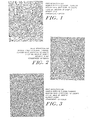
- Figures 1, 2 and 3 of the drawings are reproductions of photographs of the microstructure of sintered silicon carbide, magnified about 500 times.
- Figure 1 shows silicon carbide produced in a prior art Centorr furnace (500x magnification). The silicon carbide was fired in an argon atmosphere, heated to a temperature of 2150 C at a heating rate of 250°C/hr, and held at the sintering temperature of 2150°C for 1.5 hours. The product density was 3.13 g/cm 3 .
- Figure 2 shows silicon carbide produced in accordance with the invention in a plasma furnace (500x magnification).
- the silicon carbide was fired in a nitrogen atmosphere, heated to a temperature of 2325°C at a heating rate of 800°C/hr, and held at the sintering temperature of 2325°C for 1.5 hours.
- the product density was 3.14 g/cm 3 .
- Figure 3 shows silicon carbide produced in accordance with the invention in a plasma furnace (500x magnification).
- the silicon carbide was fired in a nitrogen atmosphere, heated to a temperature of 2325°C at a heating rate of 2000°C/hr, and held at the sintering temperature of 2325°C for 1.5 hours.
- the product density was 3.10 g/cm 3 . Note that in Figure 1 the grains are large and some are elongated.
- Figure 2 shows much smaller grains and no elongation of grains.
- Figure 3 shows even smaller-sized grains which are approximately two to three microns. Fine, equiaxed grains are desirable in a product to give it high strength, high fracture toughness, and high corrosion resistance.
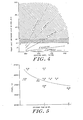
- Figure 4 is an illustration of the effects of various heating rates on the calculated temperature difference between the surface and centre of various diameter articles produced in accordance with the invention.
- the preferred operating range for the present invention is represented by the band between A and A' in Figure 4.
- the area in and underneath the band represents a range in which products will have a high density.
- the area above the band represents a range in which products may have warpage and breakage.
- Figure 4 shows that the fast heating rates of the invention do not cause product warping if the diameter does not exceed about three inches.
- Figure 5 is an illustration of the effects of various sintering temperatures and holding times on the density of a silicon carbide article, produced in accordance with the invention.
- the product density is found to increase with an increase in holding time and/or an increase in sintering temperature.
- the invention is further illustrated by the following examples in which silicon carbide was formed into green shapes, placed into a furnace, and fired in accordance with the present invention.
- Silicon carbide articles were sintered at varying temperatures, heating rates, and holding times to determine the effects on product density. Results are shown in Table 1 and Figure 5.
- Examples 3-9 which were all at the preferred sintering temperature of 2325°C, the product density was found to increase slightly as the sintering holding time and heating rates were increased.
- Examples 1 and 3 show the effects of a low sintering temperature with a long sintering time (Example 1) and a high sintering temperature with a short sintering time (Example 3). All of the densities were acceptable, compared to prior art product densities, regardless of the heating rate. The heating rates utilised in the process of the invention, however, were much higher than prior art process heating rates.
- Silicon carbide articles were sintered at varying sintering temperatures and holding times to determine the effects on product grain size. The results are shown in Table 2.
- a grain size of less than about 5 microns is desirable for silicon carbide articles; this grain size is achieved by the process of the invention at a sintering time of less than one hour.
Landscapes
- Chemical & Material Sciences (AREA)
- Engineering & Computer Science (AREA)
- Ceramic Engineering (AREA)
- Manufacturing & Machinery (AREA)
- Materials Engineering (AREA)
- Structural Engineering (AREA)
- Organic Chemistry (AREA)
- Inorganic Chemistry (AREA)
- Ceramic Products (AREA)
- Carbon And Carbon Compounds (AREA)
- Compositions Of Oxide Ceramics (AREA)
Priority Applications (1)
| Application Number | Priority Date | Filing Date | Title |
|---|---|---|---|
| AT86302205T ATE65238T1 (de) | 1985-04-01 | 1986-03-25 | Plasma-sintern von siliziumcarbid. |
Applications Claiming Priority (2)
| Application Number | Priority Date | Filing Date | Title |
|---|---|---|---|
| US718375 | 1985-04-01 | ||
| US06/718,375 US4676940A (en) | 1985-04-01 | 1985-04-01 | Plasma arc sintering of silicon carbide |
Publications (3)
| Publication Number | Publication Date |
|---|---|
| EP0197702A2 true EP0197702A2 (de) | 1986-10-15 |
| EP0197702A3 EP0197702A3 (en) | 1987-01-28 |
| EP0197702B1 EP0197702B1 (de) | 1991-07-17 |
Family
ID=24885875
Family Applications (1)
| Application Number | Title | Priority Date | Filing Date |
|---|---|---|---|
| EP86302205A Expired - Lifetime EP0197702B1 (de) | 1985-04-01 | 1986-03-25 | Plasma-Sintern von Siliziumcarbid |
Country Status (11)
| Country | Link |
|---|---|
| US (1) | US4676940A (de) |
| EP (1) | EP0197702B1 (de) |
| JP (1) | JPS61266356A (de) |
| KR (1) | KR860008106A (de) |
| AT (1) | ATE65238T1 (de) |
| AU (1) | AU572082B2 (de) |
| BR (1) | BR8601415A (de) |
| CA (1) | CA1277487C (de) |
| DE (1) | DE3680226D1 (de) |
| NO (1) | NO861221L (de) |
| ZA (1) | ZA861877B (de) |
Cited By (2)
| Publication number | Priority date | Publication date | Assignee | Title |
|---|---|---|---|---|
| EP0239304A3 (de) * | 1986-03-25 | 1987-12-16 | The Carborundum Company | Verfahren zur Zersetzungsverhütung von Siliziumcarbidformkörpern beim Sintern |
| EP0275614A1 (de) * | 1987-01-20 | 1988-07-27 | The Carborundum Company | Verfahren zur Zersetzungsverhütung von Siliziumcarbidformkörpern beim Sintern |
Families Citing this family (7)
| Publication number | Priority date | Publication date | Assignee | Title |
|---|---|---|---|---|
| US4666775A (en) * | 1985-04-01 | 1987-05-19 | Kennecott Corporation | Process for sintering extruded powder shapes |
| JPH04226003A (ja) * | 1990-05-09 | 1992-08-14 | Tdk Corp | 複合軟磁性材料および複合軟磁性材料用コート粒子 |
| US5422322A (en) * | 1993-02-10 | 1995-06-06 | The Stackpole Corporation | Dense, self-sintered silicon carbide/carbon-graphite composite and process for producing same |
| US5580834A (en) * | 1993-02-10 | 1996-12-03 | The Morgan Crucible Company Plc | Self-sintered silicon carbide/carbon graphite composite material having interconnected pores which may be impregnated and raw batch and process for producing same |
| US5968653A (en) * | 1996-01-11 | 1999-10-19 | The Morgan Crucible Company, Plc | Carbon-graphite/silicon carbide composite article |
| US7140567B1 (en) * | 2003-03-11 | 2006-11-28 | Primet Precision Materials, Inc. | Multi-carbide material manufacture and use as grinding media |
| WO2007015550A1 (ja) * | 2005-08-03 | 2007-02-08 | Ibiden Co., Ltd. | 炭化珪素質焼成用治具及び多孔質炭化珪素体の製造方法 |
Family Cites Families (16)
| Publication number | Priority date | Publication date | Assignee | Title |
|---|---|---|---|---|
| US30286A (en) * | 1860-10-09 | Bedstead-fastening | ||
| AU432371B2 (en) * | 1967-07-13 | 1973-02-06 | Commonwealth Scientific And Industrial Research Organization | Plasma sintering |
| US3935371A (en) * | 1973-02-16 | 1976-01-27 | Camacho Salvador L | Plasma heated batch-type annealing furnace |
| SE371455B (de) * | 1973-03-26 | 1974-11-18 | Norrbottens Jaernverk Ab | |
| US3977837A (en) * | 1973-11-06 | 1976-08-31 | Chromalloy American Corporation | Titanium carbide tool steel having improved properties |
| CA1236853A (en) * | 1975-12-03 | 1988-05-17 | Frederick G. Stroke | SUBMICRON .beta. SILICON CARBIDE POWDER AND SINTERED ARTICLES OF HIGH DENSITY PREPARED THEREFROM |
| USRE30286E (en) | 1976-11-22 | 1980-05-27 | The Carborundum Company | Method of producing high density silicon carbide product |
| US4141726A (en) * | 1977-04-04 | 1979-02-27 | The Research Institute For Iron, Steel And Other Metals Of The Tohoku University | Method for producing composite materials consisting of continuous silicon carbide fibers and beryllium |
| US4179299A (en) * | 1978-05-01 | 1979-12-18 | The Carborundum Company | Sintered alpha silicon carbide ceramic body having equiaxed microstructure |
| DD147870A1 (de) * | 1979-12-14 | 1981-04-22 | Fred Esser | Metallurgischer plasmaschmelzofen |
| FR2473248A1 (fr) * | 1980-01-07 | 1981-07-10 | Commissariat Energie Atomique | Generateur de gaz ionise a tres haute pression et tres haute temperature |
| DE3040771A1 (de) * | 1980-10-29 | 1982-05-27 | Elektroschmelzwerk Kempten GmbH, 8000 München | Verfahren zur herstellung von praktisch porenfreien, polykristallinen formkoerpern duch isostatisches heisspressen in glashuellen |
| GB2106142B (en) * | 1981-08-10 | 1985-05-22 | Kennecott Corp | Sintering refractory articles using direct-heated gases |
| FR2512536B1 (fr) * | 1981-09-07 | 1989-09-01 | Siderurgie Fse Inst Rech | Procede pour alimenter en energie un four de rechauffage de produits metallurgiques |
| JPS5925902A (ja) * | 1982-07-31 | 1984-02-10 | Sumitomo Electric Ind Ltd | 焼結法 |
| US4559312A (en) * | 1983-09-19 | 1985-12-17 | Kennecott Corporation | Sintering or reaction sintering process for ceramic or refractory materials using plasma arc gases |
-
1985
- 1985-04-01 US US06/718,375 patent/US4676940A/en not_active Expired - Fee Related
-
1986
- 1986-03-13 ZA ZA861877A patent/ZA861877B/xx unknown
- 1986-03-19 AU AU54887/86A patent/AU572082B2/en not_active Ceased
- 1986-03-25 DE DE8686302205T patent/DE3680226D1/de not_active Expired - Lifetime
- 1986-03-25 NO NO861221A patent/NO861221L/no unknown
- 1986-03-25 EP EP86302205A patent/EP0197702B1/de not_active Expired - Lifetime
- 1986-03-25 AT AT86302205T patent/ATE65238T1/de not_active IP Right Cessation
- 1986-03-27 CA CA000505372A patent/CA1277487C/en not_active Expired - Lifetime
- 1986-03-31 BR BR8601415A patent/BR8601415A/pt unknown
- 1986-03-31 JP JP61071399A patent/JPS61266356A/ja active Pending
- 1986-04-01 KR KR1019860002457A patent/KR860008106A/ko not_active Withdrawn
Cited By (2)
| Publication number | Priority date | Publication date | Assignee | Title |
|---|---|---|---|---|
| EP0239304A3 (de) * | 1986-03-25 | 1987-12-16 | The Carborundum Company | Verfahren zur Zersetzungsverhütung von Siliziumcarbidformkörpern beim Sintern |
| EP0275614A1 (de) * | 1987-01-20 | 1988-07-27 | The Carborundum Company | Verfahren zur Zersetzungsverhütung von Siliziumcarbidformkörpern beim Sintern |
Also Published As
| Publication number | Publication date |
|---|---|
| DE3680226D1 (de) | 1991-08-22 |
| JPS61266356A (ja) | 1986-11-26 |
| EP0197702B1 (de) | 1991-07-17 |
| US4676940A (en) | 1987-06-30 |
| KR860008106A (ko) | 1986-11-12 |
| ATE65238T1 (de) | 1991-08-15 |
| EP0197702A3 (en) | 1987-01-28 |
| CA1277487C (en) | 1990-12-11 |
| ZA861877B (en) | 1986-11-26 |
| AU572082B2 (en) | 1988-04-28 |
| NO861221L (no) | 1986-10-02 |
| AU5488786A (en) | 1986-10-09 |
| BR8601415A (pt) | 1986-12-09 |
Similar Documents
| Publication | Publication Date | Title |
|---|---|---|
| KR100404809B1 (ko) | 탄소재료의열처리방법 | |
| EP0197702B1 (de) | Plasma-Sintern von Siliziumcarbid | |
| US3166380A (en) | Process for the production of submicron silicon carbide | |
| CA1195096A (en) | Sintering process for refractory articles using direct-heated gases | |
| US4649002A (en) | System for preventing decomposition of silicon carbide articles during sintering | |
| EP0177894A2 (de) | Verfahren zur Herstellung von metallischem Silicium, besonders für die photovoltaische Industrie | |
| CA1266378A (en) | Plasma heated sintering furnace | |
| CN120841961B (zh) | 一种半导体重结晶碳化硅制品及其制备方法 | |
| JPH01107089A (ja) | 電気低炉用高純度内部ライニング | |
| JP2023538851A (ja) | 粉末のパイロ処理方法 | |
| US4559312A (en) | Sintering or reaction sintering process for ceramic or refractory materials using plasma arc gases | |
| CN115654926B (zh) | 一种梭式窑灼烧氧化镧铈降低天然气消耗的方法 | |
| EP0275614A1 (de) | Verfahren zur Zersetzungsverhütung von Siliziumcarbidformkörpern beim Sintern | |
| US4698481A (en) | Method for preventing decomposition of silicon carbide articles during high temperature plasma furnace sintering | |
| WO2020046229A2 (en) | Production of boron carbide, metal carbide and/or metal boride at high temperature and in continuous production line | |
| US7217403B2 (en) | Method for synthesizing aluminum nitride | |
| RU2071935C1 (ru) | Способ очистки углеродного материала | |
| RU2845655C1 (ru) | Способ получения прекурсора для изготовления керамических изделий на основе карбида бора | |
| Vorob’eV | Carborundum-bearing carbon reducing agents in silicon and silicon-ferroalloy production | |
| JPS63195168A (ja) | 焼結中に炭化珪素製品が分解するのを防止する方法 | |
| CN115894043A (zh) | 一种高熵MAlB陶瓷材料及其制备方法 | |
| WO2024262684A1 (ko) | Ⅳ족 전이금속 산화물로부터 저산소 전이금속 분말을 제조하기 위한 열환원 반응 혼합물과 이를 이용한 저산소 전이금속 분말 제조방법 | |
| SU1315507A1 (ru) | Углеродиста смесь дл выплавки ферросилици | |
| Terpstra | Structural elements, materials and some special features of equipment | |
| NO870242L (no) | Fremgangsmaate for aa forhindre spaltning av silisiumkarbidartikler under sintring. |
Legal Events
| Date | Code | Title | Description |
|---|---|---|---|
| PUAI | Public reference made under article 153(3) epc to a published international application that has entered the european phase |
Free format text: ORIGINAL CODE: 0009012 |
|
| AK | Designated contracting states |
Kind code of ref document: A2 Designated state(s): AT BE CH DE FR GB IT LI LU NL SE |
|
| PUAL | Search report despatched |
Free format text: ORIGINAL CODE: 0009013 |
|
| AK | Designated contracting states |
Kind code of ref document: A3 Designated state(s): AT BE CH DE FR GB IT LI LU NL SE |
|
| 17P | Request for examination filed |
Effective date: 19870421 |
|
| 17Q | First examination report despatched |
Effective date: 19880315 |
|
| RAP1 | Party data changed (applicant data changed or rights of an application transferred) |
Owner name: STEMCOR CORPORATION |
|
| 17Q | First examination report despatched |
Effective date: 19900917 |
|
| RAP1 | Party data changed (applicant data changed or rights of an application transferred) |
Owner name: THE CARBORUNDUM COMPANY |
|
| GRAA | (expected) grant |
Free format text: ORIGINAL CODE: 0009210 |
|
| AK | Designated contracting states |
Kind code of ref document: B1 Designated state(s): AT BE CH DE FR GB IT LI LU NL SE |
|
| PG25 | Lapsed in a contracting state [announced via postgrant information from national office to epo] |
Ref country code: IT Free format text: LAPSE BECAUSE OF FAILURE TO SUBMIT A TRANSLATION OF THE DESCRIPTION OR TO PAY THE FEE WITHIN THE PRE;WARNING: LAPSES OF ITALIAN PATENTS WITH EFFECTIVE DATE BEFORE 2007 MAY HAVE OCCURRED AT ANY TIME BEFORE 2007. THE CORRECT EFFECTIVE DATE MAY BE DIFFERENT FROM THE ONE RECORDED.SCRIBED TIME-LIMIT Effective date: 19910717 Ref country code: NL Effective date: 19910717 Ref country code: BE Effective date: 19910717 Ref country code: AT Effective date: 19910717 Ref country code: SE Effective date: 19910717 |
|
| REF | Corresponds to: |
Ref document number: 65238 Country of ref document: AT Date of ref document: 19910815 Kind code of ref document: T |
|
| REF | Corresponds to: |
Ref document number: 3680226 Country of ref document: DE Date of ref document: 19910822 |
|
| EN | Fr: translation not filed | ||
| PG25 | Lapsed in a contracting state [announced via postgrant information from national office to epo] |
Ref country code: FR Effective date: 19911206 |
|
| NLV1 | Nl: lapsed or annulled due to failure to fulfill the requirements of art. 29p and 29m of the patents act | ||
| PG25 | Lapsed in a contracting state [announced via postgrant information from national office to epo] |
Ref country code: GB Effective date: 19920325 |
|
| PG25 | Lapsed in a contracting state [announced via postgrant information from national office to epo] |
Ref country code: LU Free format text: LAPSE BECAUSE OF NON-PAYMENT OF DUE FEES Effective date: 19920331 Ref country code: LI Effective date: 19920331 Ref country code: CH Effective date: 19920331 |
|
| PLBE | No opposition filed within time limit |
Free format text: ORIGINAL CODE: 0009261 |
|
| STAA | Information on the status of an ep patent application or granted ep patent |
Free format text: STATUS: NO OPPOSITION FILED WITHIN TIME LIMIT |
|
| 26N | No opposition filed | ||
| GBPC | Gb: european patent ceased through non-payment of renewal fee | ||
| REG | Reference to a national code |
Ref country code: CH Ref legal event code: PL |
|
| PG25 | Lapsed in a contracting state [announced via postgrant information from national office to epo] |
Ref country code: DE Effective date: 19921201 |
|
| REG | Reference to a national code |
Ref country code: FR Ref legal event code: ST |
|
| EUG | Se: european patent has lapsed |
Ref document number: 86302205.9 Effective date: 19910920 |