EP0198151A2 - Composant de catalyseur, un catalyseur et un procédé de polymérisation d'oléfines - Google Patents
Composant de catalyseur, un catalyseur et un procédé de polymérisation d'oléfines Download PDFInfo
- Publication number
- EP0198151A2 EP0198151A2 EP86100617A EP86100617A EP0198151A2 EP 0198151 A2 EP0198151 A2 EP 0198151A2 EP 86100617 A EP86100617 A EP 86100617A EP 86100617 A EP86100617 A EP 86100617A EP 0198151 A2 EP0198151 A2 EP 0198151A2
- Authority
- EP
- European Patent Office
- Prior art keywords
- catalyst component
- olefins
- catalyst
- electron donor
- polymerization
- Prior art date
- Legal status (The legal status is an assumption and is not a legal conclusion. Google has not performed a legal analysis and makes no representation as to the accuracy of the status listed.)
- Granted
Links
Images


Classifications
-
- C—CHEMISTRY; METALLURGY
- C08—ORGANIC MACROMOLECULAR COMPOUNDS; THEIR PREPARATION OR CHEMICAL WORKING-UP; COMPOSITIONS BASED THEREON
- C08F—MACROMOLECULAR COMPOUNDS OBTAINED BY REACTIONS ONLY INVOLVING CARBON-TO-CARBON UNSATURATED BONDS
- C08F10/00—Homopolymers and copolymers of unsaturated aliphatic hydrocarbons having only one carbon-to-carbon double bond
-
- Y—GENERAL TAGGING OF NEW TECHNOLOGICAL DEVELOPMENTS; GENERAL TAGGING OF CROSS-SECTIONAL TECHNOLOGIES SPANNING OVER SEVERAL SECTIONS OF THE IPC; TECHNICAL SUBJECTS COVERED BY FORMER USPC CROSS-REFERENCE ART COLLECTIONS [XRACs] AND DIGESTS
- Y10—TECHNICAL SUBJECTS COVERED BY FORMER USPC
- Y10S—TECHNICAL SUBJECTS COVERED BY FORMER USPC CROSS-REFERENCE ART COLLECTIONS [XRACs] AND DIGESTS
- Y10S526/00—Synthetic resins or natural rubbers -- part of the class 520 series
- Y10S526/904—Monomer polymerized in presence of transition metal containing catalyst at least part of which is supported on a polymer, e.g. prepolymerized catalysts
Definitions
- This invention concerns a new catalyst component, a catalyst containing this commponent and a process for polymerization of olefins by using this catalyst for obtaining stereospecific rlefin polymers and copolymers with high degree of crystallinity and high molecular weight.
- the morphological properties of the solid catalyst component have a great effect on the activity and other properties of the final catalyst.
- the morphological properties depend essentially of the starting materials used, the reagents, the reaction conditions and the order of the treatments. By changing only the order of the treatments it may be possible to obtain better or worse catalytic properties.
- Most patent publications contain lists of materials which can be used in the manufacture of catalyst components, but very few of them give information about what materials actually have to be used, in what order or sequence and under which reaction conditions. Moreover most examples presented in the patent literature describe only the use of magnesium dichloride as the starting material of the catalyst carrier component.
- the invention concerns a solid non-layer catalyst component for use in catalysts for the polymerization of olefins, which catalyst component is obtained by chlorinating at least one organic magnesium compound of the formula MgR'R" wherein R' and R'' are the same or different and each is an alkyl radical of 1 to 20 carbon atoms, with at least one chlorinating agent to form a carrier compound and optionally treating said carrier compound with an aliphatic or aromatic alcohol; treating the carrier compound thus obtained with liquid titanium tetrachloride in the presence of an electron donor selected from inorganic and organic esters, amines, ethers, alcoholates, silane compounds, ketones, and phosphor amides at -25 to 180°C; and recovering said solid non-layer catalyst component.
- an electron donor selected from inorganic and organic esters, amines, ethers, alcoholates, silane compounds, ketones, and phosphor amides at -25 to 180°C
- the catalyst component according to the invention is characterized in that chlorine gas or a mixture of chlorine gas and alkyl chloride has been used as said chlorinating agent and that the treatment with titanium tetrachloride has been carried out by treating said carrier compound first with titanium tetrachloride, then with said electron donor compound and after that at least once with titanium tetrachloride in the absence of said electron donor compound.
- the invention also concerns new solid catalysts for homopolymerizing or copolymerizing olefins having 2 to 5 carbons to become polymers with high degree of crystallinity and high molecular weight.
- the catalyst, according to the invention, for homopolymerizing or copolymerizing olefins of 2 to 5 carbon atoms is characterized in that it consi-sts of the following components:
- the aluminum compound with the formula Al x Cl 3-x is used as a cocatalyst.
- an aluminumtrialkyl or dialkylaluminum chloride can be used, e.g. triethylaluminum, diethylaluminum chloride, tri-isobutylaluminum.
- esters For an internal electron donor, or Lewis base, one may use for instance esters, amines, ethers, alcoholates, silane compounds, ketones, phosphoramides, etc.
- esters one may use both inorganic and organic esters. Particularly appropriate are di-isobutylphthalate and esters of aromatic carboxylic acids, such as the alkyl esters of benzoic, p-methoxybenzoic or p-toluic acid (e.g. ethyl benzoate, ethyl p-methoxybenzoate, methyl or ethyl p-toluate, or ethyl p-butoxybenzoate).
- Other usable esters are diethyl carbonate, ethyl pivalate, ethyl acetate, dimethyl maleate and alkyl- arylsilanes or alkoxysilanes.
- the solid non-layer catalyst component according to the invention is obtained by allowing an organic magnesium compound, chlorinating compounds, a Ti halide and an electron donor or Lewis base to react with each others.
- the Mg alkyl compounds employed have the form MgR 2 or MgR'R'', wherein R,R' and R'' are either the same or different, and contain alkyls from C 1 to C 20 , preferably C 2 to C 12 .
- the Mg alkyl compound may for instance consist of diethylmagnesium, ethylbutylmagnesium, ethylhexylmagnesium, ethyloctylmagnesium, dibutylmagnesium, butylhexylmagnesium, butyloctylmagnesium, dicyclohexylmagnesium, etc.
- the use of butyloctylmagnesium is to be most recommended.
- the chlorinating agent is chlorine gas or chlorine gas and an alkyl chloride such as butyl or pentyl chloride, preferably butyl chloride.
- the chlorination may be carried out at 0-100°C, preferably at 20-60°C, particularly at 20-40°C.
- an electron donor compound which may be selected from the following compounds: amines, esters or silane compounds or mixtures thereof.
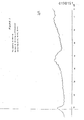
- the XRD of the chemically activated carrier after chlorination shows almost no crystalline structure at all.
- both the carrier and the catalyst component are not stoichiometric with Mg and Cl.
- the molar ratio of M g to Cl can be as low as 1:0.5.
- About half of the carrier consists of a Mg compound and the rest of it are organic compounds, like hydrocarbons and chlorinated hydrocarbons. The presence of these organic compounds may affect the crystal structure of the product. The formation of a normal crystal lattice is prohibited and a new non-layer species with very low crystallite dimensions are formed.
- This new structure consists of much more active corners than the original activated MgCl z crystal lattice. This, together with the proper surface area and the pore volume, may at least partly explain the high activity for 1-butene for our catalytic system.
- the carrier is thereafter treated with alcohol, however, the catalyst can show considerable activity even without this treatment.
- the alcohol may be aliphatic or aromatic, containing one or several hydroxyl groups, such as e.g. methanol, ethanol, propanol, butanol, 2-ethylhexanol, cyclohexanol, methylcyclohexanol, benzyl alcohol, methylbenzyl alcohol or glycol.
- the solid carrier is treated with liquid titanium tetrachloride to form the catalyst component.
- the carrier is treated first with titanium tetrachloride, then with an electron donor compound and after that at least once again with liquid titanium tetrachloride in the absence of said electron donor. If the treatment with electron donor is carried out before the treatment with titanium tetrachloride according to prior art or if said treatment with electron donor is carried out during or after any further treatments with titanium tetrachloride, much-worse catalyst components for polymerization of alpha olefins are achieved, which will be evident from examples presented later.
- the first treatment with liquid titanium tetrachloride is carried out in cold titanium tetrachloride.
- the temperature is below 0°C, preferably below -20°C.
- the second treatment with titanium tetrachloride is carried out at a higher temperature. During this treatment the titanation is completed during a prolonged period, preferably at least one hour.
- the solid reaction product is then separated from the liquid phase and washed with a hydrocarbon solvent for removing impurities and derivatives.
- the catalyst component may be dried in a slight vacuum or in nitrogen at room temperature, or at a slightly higher temperature, and homogenized by grinding in a ball mill.
- Lewis bases or electron donor compounds which are able to form complexes with Al alkyls are useful with a view to improving the properties of the catalysts.
- Lewis bases (complexed with an Al alkyl) improve the stereoselectivity of the catalysts.
- amines for external electron donor compound one may use amines, ethers, esters (preferably alkyl and aryl esters of aromatic carboxylic acids), or silane compounds (alkyl/aryl silanes).
- esters preferably alkyl and aryl esters of aromatic carboxylic acids
- silane compounds alkyl/aryl silanes.
- a few particular examples are the methyl and ethyl esters of benzoic, toluic and phthalic acid, isobutyl esters of phthalic acid, triethoxysilane, etc.
- the sequence in which the donor is added seems to be very important for the catalyst component according to the invention.
- the donor has always been added to the carrier before the titanation and such catalyst components giver very poor results in polymerizing 1-butene, producing very poor and bad looking poly-I-butene, which can be seen from the comparative examples.
- the presence of the external electron donor during the first titanation step affects highly the properties of the polymer and also the reactivities of different comonomers.
- the distribution of block and random 1-butene-propylene copolymers differs in a very significant way from catalyst components of prior art. With this new non-layer from the block:random ratio was 0,9:1 when with known catalysts the ratio was 7,5:1.
- Lewis bases and electron donors which are particularly appropriate to be used in the manufacturing of heterogeneous catalysts. These compounds are able to complex Mg and Ti derivatives, and they may be either the same or different compounds as used together with Al alkyl. It is possible in the manufacturing of the catalyst components of the invention to use any electron donor compound which is able to form a complex with an Mg or Ti derivative.
- the catalyst component manufactured by the procedure of the invention may then be used to form a catalyst for olefin polymerization by allowing it to come into contact with an aluminum compound and an external electron donor, which have been mixed at least a couple of minutes in advance, the molar proportion between the electron donor and the aluminum compound being less than 1, and the Al/Ti molar proportion being 10-300, depending on the polymerization system used.
- the polymerization can be carried out either in a slurry, in a bulk or in a gas phase..
- This new catalytic system is particularly suitable for polymerization of 1-butene, but also for many other polymerization processes of olefins, e.g. ethylene, propylene, isoprene, 4-methyl-I-pentene, butadiene,/as well for copolymers of the said monomers and copolymers of 1-butene with isobutene.
- olefins e.g. ethylene, propylene, isoprene, 4-methyl-I-pentene, butadiene,/as well for copolymers of the said monomers and copolymers of 1-butene with isobutene.
- Alpha-olefin are preferred .
- Catalysts mentioned in the prior literature produce stereoregular polypropylene at a high yield, but when these catalysts are used for polymerization of 1-butene in a suspension process in an aliphatic hydrocarbon, the polymer that is produced tends to swell by effect of the fluid medium used, whereby the handling of the end product is hampered by its gel character.
- the transformation of the crystal form of polybutene is usually influenced by copolymerizing 1-butene with another alpha olefin, usually with propylene.
- the polymerizations were carried out with both monomers simultaneously present in a given contant proportion, as is disclosed for instance in the GB publication No. 1,084,953. According to this publication, only such mixed polymers undergo rapid transformation of crystal structure in which the propylene is uniformly distributed.
- the combination of the selected catalyst, the hydrocarbon used for reaction fluid and the polymerizing phases produces a polymer having both a high degree of isotacticity and fast rate of crystal transformation, which has not been possible in any procedure of prior art.
- the transformation of the crystal form of polybutene to the stable hexagonal crystal form is very rapid and takes only a few minutes, while normally in prior art processes it may take hours.
- the hydrocarbon used for polymerizing medium in the procedure of the invention has a great significance. Usually in polymerizing, hexane or heptane have been employed. The polymer obtained as product is then gel-like, which impedes the handling of the product. Theoretically the swelling and dissolving of a polymer can be reduced by lowering the polymerization temperature, by increasing the molecular weight of the polymer or by choosing a proper polymerizing medium.
- a suitable polymerizing medium can be chosen by using the difference in the solubility parameters of the polymer and the monomer-polymerizing medium. The bigger this difference is, the less will the polymer swell or dissolve. Use of propane or also isobutane as fluid medium will result in minimal gelification.
- the new non-layer form of catalyst component according to the invention is particularly suited for a catalyst for poly-1-butene polymerization.
- a third critical factor in the procedure of the- invention is the way in which the polymerization is carried out. It is essential in the present procedure that in the first phase a small quantity of an olefinic monomer containing 2, 3, 4, 5 or 6 carbon atoms, preferably propylene, is introduced in the polymerizing reactor as monomer, whereupon the temperature to be used may rise as high as 70°C.
- the polymerizing time in this first phase is 1-20 min. and the monomer quantity to be supplied into the reactor is then not more than 30% and not less than 1% of the quantity of the end product.
- the pqlymerizing temperature is now substantially lower than in the first phase.
- the temperature is kept below 30°C, preferably below 20°C.
- a mixed polymer is produced in the reactor, in which at first the propylene contribution is dominant but falls rapidly as the propylene is used up. Homopolymerization of 1-butene will then continue, and the temperature may be somewhat raised, yet not higher than 45°C.
- the polymer produced at higher temperatures tends to cake; on.the other hand, the catalyst components used in the procedure of the invention have such high activity that satisfactory yields are obtained even at lower temperatures.
- the polymerizing time in the second phase may vary between 30 minutes and several hours.
- the residence time is usually minimized in order to achieve maximum production rate.
- the most suitable residence time in the reactor is 4-5 hours as the catalyst activity half-life is 2.2 hours assuming first order deactivation behavior.
- the molar mass of the polybutene polymer may be regulated, as is well known in the art, by introducing small amounts of hydrogen.
- Catalyst components were prepared by placing magnesiumalkyl (20% solution in heptane) in a five-necked flask provided with a mechanical stirrer, reflux-condenser, gas supply valve and thermometer. The suspension wasd bubbled with nitrogen and kept under an inert atmosphere. Alkyl chloride was added from a dropping funnel at the ambient temperature. Thereafter the chlorination was accomplished with chlorine gas at the speed of 5 ml per minute.
- Silicon oil was added and thereafter the alcohol was added drop by drop to the mixture at 25-35°C.
- the alcohol was ethanol except that in Example D 2-ethylhexanol was used, in Example K ethylene glycol was used and in Example N butanol was used. While adding the alcohol, the chlorinated precipitate became thicker. The mixture was stirred at 40°C for 1 hour. Then the temperature was increased to 75-80°C and the suspension was kept there over the night.
- the hot suspension was transferred to excess of cold TiCl 4 (-25°C) slowly by siphoning, allowing the reaction intermediate to precipitate in the cold TiCl 4 . Then the mixture was allowed to warm up to the room temperature. Di-isobutylphthalate was introduced as the electron donor except Example O where ethyl benzoate was used. The temperature was increased to 100-110°C and the mixture was kept there for 1 hour. After sedimentation of the precipitate the solution was transferred by siphoning. Another portion of TiC1 4 in excess was added and the mixture was stirred at 110°C for 1 hour. After sedimentation of the precipitate and siphoning of the solution, the completed catalyst component was washed with heptane several times (5-6 times at 80°C) and dried in a slight vacuum.
- Catalyst components were prepared by mixing 300 ml butyloctylmagnesium (20% solution in heptane) and 200 ml heptane in a five-necked flask provided with mechanical stirrer, reflux condenser, gas supply valve and thermometer. Chlorine-gas (about 6 liter) was added for 30 min. The temperature was kept below 30°C. The gas supply was controlled by rotameter. The unreacted chlorine gas was removed by bubbling N z through the system for 30 min. The mixture was heated to 90°C and 36 ml EtOH was introduced to the warm chlorinated mixture of the carrier. The mixture was heated under agitation for 10 min. The product was washed 2-4 times with heptane. The heptane was removed by siphoning.
- the solid was again left to precipitate and the solution was removed by siphoning. After this treatment the brown powder obtained was washed thoroughly with warm heptane.
- the catalyst component was introduced by a siphon into a 3-necked flask and dried in N z stream 1 hr with shaking.
- a comparative catalyst component was prepared in the same way as catalyst components A-L except that instead of chlorine gas hydrogen chloride was used as second chlorination agent.
- a comparative catalyst component was prepared in the same way as catalyst components A-L except that electron donor was added after the second titanation step.
- a comparative catalyst component was prepared by using hydrogen chloride as chlorinating agent, electron donor treatment before titanation and the titanation was carried out in one step.
- 70 cm 3 of dry n-heptane was placed into a three-necked flask.
- To the flask was then added 18 cm 3 of a solution of dibutylmagnesium in n-heptane.
- the contents of the flask were stirred and 100 cm 3 of dry hydrogen chloride was adder as a chlorinating agent.
- the chlorination was repeated three further times.
- the reaction mixture was stirred at ambient temperature (about 20°C) for one hour.
- the product was allowed to settle and was then washed four times.with 100 cm 3 of n-heptane.
- the solid material was suspended in 100 cm 3 of n-heptane.
- the solid residue obtained was mixed with 100 cm 3 of titanium tetrachloride and the mixture was heated at 80°C for 2 hours. The solid product was then filtered and was washed four times at 80°C with 100 cm 3 of n-heptane. The product obtained was slurried in 50 cm 3 of n-heptane.
- a comparative catalyst component was prepared by using SiCl4 as chlorinating agent, electron donor treatment before titanation and the titanation was carried out in one step. 17 g Mg (n-C 4 H 9 ) 2 in 240 ml n-heptane was introduced to 20 ml of solution containing 22 g SiCl4 and 4 g ethylbenzoate at room temperature with stirring for 10 min. The temperature was raised to 95°C, and kept there for 2 hours. 22 g SiC1 4 was added and heated for 2 hours. The white precipitate formed by cooling was washed with n-heptane.
- a comparative catalyst component was prepared by using tert-butyl chloride as chlorinating agent.
- the titanation was carried out in one step.
- 70 ml dibutylmagnesium and 40 ml diisoamylether were introduced into a reactor at ambient temperature.
- the reactor was heated to 50°C and 90 ml tert- butylchloride were added drop by drop during 2 hours. After the addition the mixture was kept at 50°C for 2 hours and then the precipitation was washed at the same temperature with n-hexane.
- 1 ml ethylbenzoate was introduced at 50°C.
- the mixture as agitated for 1 hour at 50°C, after which the temperature was increased to 80°C to remove hexane with nitrogen.
- 120 ml titanium tetrachloride was added and the mixture was agitated for 2 hours at 80°C.
- the solid catalyst component was washed with n-hexane at 50°C.
- the silicon oil is used in an amount of above 40 weight-% in relation to the starting materials excluding solvents.
- the catalyst which was prepared by mixing the aluminum alkyl compound, for instance triethylaluminum .and, a Lewis alkali, for instance diphenyldimethoxysilane, in the Al:donor molar ratio of 20 in 50 ml heptane, into which after 5 minutes was added the catalyst component prepared as above so that the Al:Ti molar ratio will be 200.
- the polymerization was accomplished under the following conditions: propylene partial pressure 9.0 bar, hydrogen partial pressure 0.3 bar, temperature 70°C and polymerization time 3 hours.
- the activity of the catalyst was determined as quantity of solid polymer based on one kilogram of the polymer per one gram of titanium catalyst.
- Example 16 there was used a catalyst prepared from catalyst component M, which was obtained by using hydrogen chloride as the second chlorination agent instead of chlorine gas. The catalyst had poor activity compared to catalysts according to the invention.
- Example 17 shows that by adding electron donor after the second titanation a catalyst component is obtained which also gives a catalyst with very low activity in the polymerization of propylene.
- Examples 18-20 show clearly that polymerization by using catalysts obtained from comparative catalyst components X, Y and Z give polymers which have poor isotacticity properties compared to polymers prepared according to the invention. These catalysts have also very poor activity.
- the samples were mixed for 10 min. in a Brabender Plasticorder at 190°C under 200 bar pressure for 5 min., whereafter the sample was rapidly cooled to room temperature.
- the degree of isotacticity was determined by measuring the part insoluble in diethylether by extracting 4-5 g of the polymer sample in 200 ml boiling diethylether for 6-7 hours.
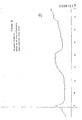
- the proportion of propylene in the polymer was determined by 13 C-NMR analysis (Fig. 3) according to (J.Polym. Sci.Polym.Phys.Ed., Vol. 21, 573-581 (1983), Anal.Chem., Vol. 49, No. 9 (1977)).
- the intensity of propylene (P) goes down in the peaks due to the homo (and block) form: PPPP > PPPB > BPPB.
- the polymerizing runs were made in reactors of approximately 4 liters capacity and comprising a catalyst introduction system, a supply system for liquid and gaseous monomer, a hydrogen addition system, and a system for introducing dry nitrogen.
- the catalyst was prepared by mixing the aluminum alkyl compound, for instance triisobutylaluminum and, a Lewis base, for instance diphenyldimethoxysilane, in the Al:Lewis base molar ratio of 20 in 50 ml liquid, into which after 5 minutes is added the catalyst component prepared according to the invention so that the Al:Ti molar ratio-will be 200.
- the product was removed by means of a bottom tap on the reactor.
- conventional technology was applied.
- the pressure in the polymerizing reactor was 3-4 bar during the initial phase and 5-6 bar in the end phase, depending on the temperatures used.
- the desired reaction temperature of the second phase was regulated, hydrogen and 1-butene were added.
- the reaction time was 2 hours.
- the polymers were usually left overnight in the reactor, whereafter the bottom valve was opened and the contents of the reactor were discharged to atmospheric pressure.
- the polymer was dried and analyzed as described above. The conditions in these tests are given in Table 4.
- Polymerization was carried out as in Examples 21-33 except that there was no intervening evaporation of hydrogen and propylene after phase 1.
- a mixed polymer is produced in which the content of propylene decreases as it passes from the monomer mixture until it is used up. This phase takes 20-30 min. as followed by the pressure gauge.
- phase 3 after all propylene has been used, pure polybutene is produced. After the reaction, the bottom valve is opened and the product is dried and processed as described above.
- the monomer I-butene
- Hydrogen was added.
- the catalyst component, cocatalyst and Lewis base were introduced by aid of nitrogen pressure in the reactor: the reaction time was 4 hours, whereafter the bottom valve was opened and the contents of the reactor were discharged.
- the polymer was dried and analyzed as described above.
- Example 40 The polymerizations were carried out as in Example 40, except that isobutane was used as polymerizing medium. Hydrogen pressure was 0.1 bar. These reaction conditions are presented in Table 8. ;
- the product obtained will also be easy to handle, a free flowing powder.
- the reaction temperature was set to 20°C, and 400 g 1-butene were introduced and hydrogen (0.1 bar) was added.
- the polymerization was left overnight, whereafter the reactor was discharged, and the polymer was dried and analyzed as described above.
- the activity was 0.8 kg PB/g catalyst with isotactic index 95.7%.
- a comparative catalyst component was prepared according to prior art by using magnesium dichloride as starting material for the solid Ti-containing catalyst compound.
- the dispersion was collected in a stirred 5 liter flask containing 2,5 liters of anhydrous heptane cooled to -40°C.
- the solid product was separated by decanting and filtering and washed with heptane and dried.
- the product was suspended in 80 ml of anhydrous n-heptane and 200 ml of triethyl aluminum in heptane. The mixture was heated to 80°C for 2 hours. Thereafter the mixture was filtered and then washed five times with 100 ml of n-heptane at 80°C. The product was suspended in 100 ml of n-heptane and into this suspension was added 8 ml of a heptane solution containing 1 g of ethyl benzoate and heated to 80°C for 2 hours. The mixture was then filtered and washed 5 times with 100 ml of heptane at 80°C. The mixture was then filtered and dried under vacuum at 45°C.
- Another comparative catalyst component according to prior art was prepared by using magnesium dichloride as starting material for the solid Ti-containing catalyst compound.
- the MgCl 2 adduct with ethanol was thus formed.
- the hot mixture was
- Example 57 The MgC1 2 .3EtOH microspheres obtained after filtering were dried under vacuum. The adduct was activated as in Example 57.
Landscapes
- Chemical & Material Sciences (AREA)
- Health & Medical Sciences (AREA)
- Chemical Kinetics & Catalysis (AREA)
- Medicinal Chemistry (AREA)
- Polymers & Plastics (AREA)
- Organic Chemistry (AREA)
- Transition And Organic Metals Composition Catalysts For Addition Polymerization (AREA)
- Organic Low-Molecular-Weight Compounds And Preparation Thereof (AREA)
- Organic Insulating Materials (AREA)
- Polymers With Sulfur, Phosphorus Or Metals In The Main Chain (AREA)
- Addition Polymer Or Copolymer, Post-Treatments, Or Chemical Modifications (AREA)
Priority Applications (1)
| Application Number | Priority Date | Filing Date | Title |
|---|---|---|---|
| AT86100617T ATE61593T1 (de) | 1985-01-22 | 1986-01-18 | Katalysatorbestandteil, ein katalysator und ein olefinpolymerisationsverfahren. |
Applications Claiming Priority (2)
| Application Number | Priority Date | Filing Date | Title |
|---|---|---|---|
| DE19853501858 DE3501858A1 (de) | 1985-01-22 | 1985-01-22 | Katalysator-komponenten, katalysator und verfahren fuer die polymerisation von olefinen |
| DE3501858 | 1985-01-22 |
Publications (3)
| Publication Number | Publication Date |
|---|---|
| EP0198151A2 true EP0198151A2 (fr) | 1986-10-22 |
| EP0198151A3 EP0198151A3 (en) | 1988-08-31 |
| EP0198151B1 EP0198151B1 (fr) | 1991-03-13 |
Family
ID=6260349
Family Applications (1)
| Application Number | Title | Priority Date | Filing Date |
|---|---|---|---|
| EP86100617A Expired - Lifetime EP0198151B1 (fr) | 1985-01-22 | 1986-01-18 | Composant de catalyseur, un catalyseur et un procédé de polymérisation d'oléfines |
Country Status (10)
| Country | Link |
|---|---|
| US (2) | US4673661A (fr) |
| EP (1) | EP0198151B1 (fr) |
| JP (1) | JPS61168604A (fr) |
| CN (1) | CN1008907B (fr) |
| AT (1) | ATE61593T1 (fr) |
| CA (1) | CA1263858A (fr) |
| DE (2) | DE3501858A1 (fr) |
| DK (1) | DK161649C (fr) |
| FI (1) | FI850322A7 (fr) |
| NO (1) | NO169294C (fr) |
Cited By (3)
| Publication number | Priority date | Publication date | Assignee | Title |
|---|---|---|---|---|
| EP0284005A3 (en) * | 1987-03-23 | 1989-11-23 | Idemitsu Petrochemical Co. Ltd. | Method of production of polyolefins |
| EP0575840A1 (fr) * | 1992-06-24 | 1993-12-29 | Hoechst Aktiengesellschaft | Procédé de préparation d'un système catalytique pour la (co)polymèrisation d'éthylène en polymères d'éthylène à poids moléculaire élevé |
| US6114271A (en) * | 1998-01-22 | 2000-09-05 | Ticona Gmbh | Process for the preparation of a polymerization and copolymerization of ethylene to give ultrahigh molecular-weight ethylene polymers |
Families Citing this family (26)
| Publication number | Priority date | Publication date | Assignee | Title |
|---|---|---|---|---|
| US5241024A (en) * | 1986-08-21 | 1993-08-31 | Idemitsu Petrochemical Co | Method for producing butene-1 polymer |
| FI76100C (fi) * | 1986-09-29 | 1988-09-09 | Neste Oy | Katalytkomponenter foer polymerisationskatalyt foer -olefiner och foerfarande foer framstaellning av dessa. |
| FI76099C (fi) * | 1986-09-29 | 1988-09-09 | Neste Oy | Katalytkomponenter foer polymerisationskatalyter foer -olefiner och foerfarande foer framstaellning av dessa. |
| US6121393A (en) * | 1987-02-17 | 2000-09-19 | Mitsui Chemicals | Process for polymerizing alpha-olefins |
| FR2629461B1 (fr) * | 1988-03-31 | 1993-05-07 | Bp Chimie Sa | Catalyseur de (co)polymerisation du propylene, supporte sur des particules spheriques de chlorure de magnesium et enrobe par du polypropylene, et procedes de preparation |
| US5556820A (en) * | 1989-12-28 | 1996-09-17 | Idemitsu Petrochemical Co., Ltd. | Catalyst component for olefin polymerization and process for producing polyolefins |
| IT1262933B (it) * | 1992-01-31 | 1996-07-22 | Montecatini Tecnologie Srl | Processo per la polimerizzazione in fase gas di alfa-olefine |
| US5817591A (en) * | 1995-06-07 | 1998-10-06 | Fina Technology, Inc. | Polyolefin catalyst from metal alkoxides or dialkyls, production and use |
| ES2126973T3 (es) * | 1995-10-02 | 1999-04-01 | Borealis Ag | Catalizador soportado para la polimerizacion de olefinas. |
| ATE173743T1 (de) * | 1995-11-08 | 1998-12-15 | Borealis Ag | Trägerkatalysator für die olefinpolymerisation |
| ES2125081T3 (es) | 1995-11-08 | 1999-02-16 | Borealis Ag | Catalizador soportado para la polimerizacion de olefinas. |
| ATE181340T1 (de) * | 1995-12-01 | 1999-07-15 | Borealis Ag | Trägerkatalysator für die olefinpolymerisation |
| EP0776912B1 (fr) | 1995-12-01 | 1999-06-16 | Borealis AG | Catalyseur sur support pour la polymérisation d'oléfines |
| US6015779A (en) | 1996-03-19 | 2000-01-18 | Energy & Environmental International, L.C. | Methods for forming amorphous ultra-high molecular weight polyalphaolefin drag reducing agents |
| US5849655A (en) * | 1996-12-20 | 1998-12-15 | Fina Technology, Inc. | Polyolefin catalyst for polymerization of propylene and a method of making and using thereof |
| CZ34998A3 (cs) * | 1997-02-17 | 1999-08-11 | Pcd Polymere Gesellschaft M. B. H. | Způsob přípravy pevného nosiče pro katalyzátory polymerace olefinů |
| AU744327B2 (en) * | 1998-03-05 | 2002-02-21 | Montell Technology Company B.V. | Polybutene-1 (co)polymers and process for their preparation |
| US6815011B2 (en) | 2000-11-27 | 2004-11-09 | Energy & Environmental International, L.C. | Alpha olefin monomer partitioning agents for drag reducing agents and methods of forming drag reducing agents using alpha olefin monomer partitioning agents |
| CN1310960C (zh) | 2001-01-16 | 2007-04-18 | 能源及环境国际有限公司 | 用作减阻剂的无定形超高分子量聚烯烃的形成方法 |
| US7012046B2 (en) * | 2001-06-08 | 2006-03-14 | Eaton Gerald B | Drag reducing agent slurries having alfol alcohols and processes for forming drag reducing agent slurries having alfol alcohols |
| US20030069372A1 (en) * | 2001-10-09 | 2003-04-10 | Formosa Plastics Corporation, U.S.A. | Olefin polymerization catalyst and process for preparing polyolefins with said catalyst |
| WO2005023881A1 (fr) * | 2003-08-29 | 2005-03-17 | Dow Global Technologies Inc. | Procede de fabrication d'un procatalyseur de polymerisation d'olefines partiellement deshydrate facile a disperser |
| EP3653631A1 (fr) * | 2012-09-24 | 2020-05-20 | INDIAN OIL CORPORATION Ltd. | Procédés de préparation d'un catalyseur de polymérisation d'oléfines à base de traitement de composés organomagnésiques solides avec des moitiés de titane |
| RU2615153C2 (ru) * | 2012-09-24 | 2017-04-04 | Индийская Нефтяная Корпорация Лимитэд | Катализатор для полимеризации олефинов и способ его получения |
| JP6026661B2 (ja) * | 2012-09-24 | 2016-11-16 | インディアン オイル コーポレーション リミテッド | 触媒用前駆体を調製するプロセス、触媒組成物を調製するプロセス、触媒系を調製するプロセス、及び、オレフィンを重合するおよび共重合するうちの少なくとも一方である方法 |
| CN104672356B (zh) * | 2015-03-09 | 2016-08-24 | 陈伟 | 烯烃聚合用催化剂组分、该组分的制备方法及催化剂 |
Family Cites Families (8)
| Publication number | Priority date | Publication date | Assignee | Title |
|---|---|---|---|---|
| US3135809A (en) * | 1960-07-21 | 1964-06-02 | Southern Res Inst | Isomerization process |
| CA1104298A (fr) * | 1978-02-23 | 1981-06-30 | Akinobu Shiga | Catalyseurs de polymerisation des olefines |
| IT1098272B (it) * | 1978-08-22 | 1985-09-07 | Montedison Spa | Componenti,di catalizzatori e catalizzatori per la polimerizzazione delle alfa-olefine |
| US4252670A (en) * | 1979-01-10 | 1981-02-24 | Imperial Chemical Industries Limited | Olefine polymerization catalyst |
| JPS5846202B2 (ja) * | 1979-01-31 | 1983-10-14 | 住友化学工業株式会社 | オレフィン重合体の製造法 |
| CA1141093A (fr) * | 1979-05-17 | 1983-02-08 | Brian L. Goodall | Compositions catalytiques pour la polymerisation d'olefines, et methode de polymerisation d'olefines utilisant ces compositions |
| GB2059973B (en) * | 1979-09-25 | 1984-05-31 | Asahi Chemical Ind | Process and catalyst for polymerizing an -olefin |
| JPS57205407A (en) * | 1981-06-11 | 1982-12-16 | Toyo Sutoufuaa Chem:Kk | Catalytic component for alpha-olefin polymerization and homopolymerization or copolymerization of alpha-olefin |
-
1985
- 1985-01-22 DE DE19853501858 patent/DE3501858A1/de not_active Ceased
- 1985-01-24 FI FI850322A patent/FI850322A7/fi not_active Application Discontinuation
-
1986
- 1986-01-18 DE DE8686100617T patent/DE3678019D1/de not_active Expired - Fee Related
- 1986-01-18 EP EP86100617A patent/EP0198151B1/fr not_active Expired - Lifetime
- 1986-01-18 AT AT86100617T patent/ATE61593T1/de active
- 1986-01-21 CA CA000500021A patent/CA1263858A/fr not_active Expired
- 1986-01-21 NO NO860201A patent/NO169294C/no unknown
- 1986-01-21 DK DK030986A patent/DK161649C/da not_active IP Right Cessation
- 1986-01-21 US US06/821,070 patent/US4673661A/en not_active Expired - Fee Related
- 1986-01-22 CN CN86100355A patent/CN1008907B/zh not_active Expired
- 1986-01-22 JP JP61012966A patent/JPS61168604A/ja active Pending
- 1986-12-22 US US06/945,309 patent/US4724255A/en not_active Expired - Fee Related
Cited By (4)
| Publication number | Priority date | Publication date | Assignee | Title |
|---|---|---|---|---|
| EP0284005A3 (en) * | 1987-03-23 | 1989-11-23 | Idemitsu Petrochemical Co. Ltd. | Method of production of polyolefins |
| US4981930A (en) * | 1987-03-23 | 1991-01-01 | Idemitsu Petrochemical Company Limited | Method of production of polyolefins |
| EP0575840A1 (fr) * | 1992-06-24 | 1993-12-29 | Hoechst Aktiengesellschaft | Procédé de préparation d'un système catalytique pour la (co)polymèrisation d'éthylène en polymères d'éthylène à poids moléculaire élevé |
| US6114271A (en) * | 1998-01-22 | 2000-09-05 | Ticona Gmbh | Process for the preparation of a polymerization and copolymerization of ethylene to give ultrahigh molecular-weight ethylene polymers |
Also Published As
| Publication number | Publication date |
|---|---|
| CN1008907B (zh) | 1990-07-25 |
| NO169294C (no) | 1992-06-03 |
| ATE61593T1 (de) | 1991-03-15 |
| JPS61168604A (ja) | 1986-07-30 |
| DK161649C (da) | 1992-01-06 |
| DE3678019D1 (de) | 1991-04-18 |
| DE3501858A1 (de) | 1986-07-24 |
| FI850322L (fi) | 1986-07-23 |
| CA1263858A (fr) | 1989-12-12 |
| DK30986D0 (da) | 1986-01-21 |
| EP0198151B1 (fr) | 1991-03-13 |
| NO860201L (no) | 1986-07-23 |
| DK30986A (da) | 1986-07-23 |
| DK161649B (da) | 1991-07-29 |
| US4724255A (en) | 1988-02-09 |
| US4673661A (en) | 1987-06-16 |
| FI850322A0 (fi) | 1985-01-24 |
| EP0198151A3 (en) | 1988-08-31 |
| FI850322A7 (fi) | 1986-07-23 |
| NO169294B (no) | 1992-02-24 |
| CN86100355A (zh) | 1986-08-13 |
Similar Documents
| Publication | Publication Date | Title |
|---|---|---|
| EP0198151B1 (fr) | Composant de catalyseur, un catalyseur et un procédé de polymérisation d'oléfines | |
| US4829038A (en) | Alpha-olefin polymerization catalyst system including an advantageous modifier component | |
| EP1751195B1 (fr) | Procédé pour la préparation d'un catalyseur de polymérisation d'une oléfine | |
| US5081090A (en) | Dry olefin polymerization catalyst | |
| CA1263370A (fr) | CATALYSEUR ET METHODE POUR L'OBTENTION DE POLYMERES .alpha.-OLEFINIQUES | |
| US4393182A (en) | Olefin polymerization process with novel supported titanium catalyst compositions | |
| EP0856013B1 (fr) | Catalyseur de polymerisation d'olefines a morphologie controlee forme a partir d'une emulsion | |
| EP0250229B2 (fr) | Procédé de polymérisation d'alpha-oléfine | |
| EP0291958A2 (fr) | Procédé de préparation de polymères stéréoréguliers à distribution de poids moléculaire étroite | |
| RU2114864C1 (ru) | Каталитическая система для полимеризации олефинов | |
| HU209480B (en) | Process for producing of more metal containing catalyst component and catalyst for alfa-olefin polymerization and polymerization process thereof | |
| JP3168341B2 (ja) | オレフィン重合触媒及び方法 | |
| EP0951488B1 (fr) | Polymere de propylene a indice de fluage eleve produit par polymerisation de phase gazeuse | |
| US4563436A (en) | Catalyst component for α-olefin polymerization and method of producing the same | |
| US6248685B1 (en) | Catalyst | |
| CN100465198C (zh) | 制备多孔乙烯聚合物的方法及由此获得的多孔聚合物 | |
| EP0449302A2 (fr) | Polymères de propylène hyperpure | |
| KR100330059B1 (ko) | 탄성에틸렌-프로필렌공중합체제조촉매 | |
| KR940000014B1 (ko) | Hdpe 및 lldpe 중합용 고활성 찌이글러-나타 촉매의 합성 | |
| HK219896A (en) | Solid catalyst for use in stereospecific x-olefin polymerization, process of preparation and polymerization process using the same | |
| JPH08337610A (ja) | オレフィン重合用触媒成分、その製造方法及びその触媒成分存在下でのオレフィンの重合方法 | |
| JPH0859731A (ja) | オレフィン重合触媒の製造方法 | |
| EP0111902A2 (fr) | Catalyseurs et procédé de préparation de polymères d'oléfines au moyen de ce catalyseur | |
| KR20020037355A (ko) | 올레핀의 중합 촉매 | |
| WO2000023481A1 (fr) | Technique de polymerisation d'olefines au moyen de systemes catalytiques de ziegler-natta supportes |
Legal Events
| Date | Code | Title | Description |
|---|---|---|---|
| PUAI | Public reference made under article 153(3) epc to a published international application that has entered the european phase |
Free format text: ORIGINAL CODE: 0009012 |
|
| AK | Designated contracting states |
Kind code of ref document: A2 Designated state(s): AT BE CH DE FR GB IT LI LU NL SE |
|
| PUAL | Search report despatched |
Free format text: ORIGINAL CODE: 0009013 |
|
| AK | Designated contracting states |
Kind code of ref document: A3 Designated state(s): AT BE CH DE FR GB IT LI LU NL SE |
|
| 17P | Request for examination filed |
Effective date: 19890125 |
|
| 17Q | First examination report despatched |
Effective date: 19900607 |
|
| GRAA | (expected) grant |
Free format text: ORIGINAL CODE: 0009210 |
|
| AK | Designated contracting states |
Kind code of ref document: B1 Designated state(s): AT BE CH DE FR GB IT LI LU NL SE |
|
| REF | Corresponds to: |
Ref document number: 61593 Country of ref document: AT Date of ref document: 19910315 Kind code of ref document: T |
|
| ITF | It: translation for a ep patent filed | ||
| REF | Corresponds to: |
Ref document number: 3678019 Country of ref document: DE Date of ref document: 19910418 |
|
| ET | Fr: translation filed | ||
| PGFP | Annual fee paid to national office [announced via postgrant information from national office to epo] |
Ref country code: LU Payment date: 19911218 Year of fee payment: 7 |
|
| PLBE | No opposition filed within time limit |
Free format text: ORIGINAL CODE: 0009261 |
|
| STAA | Information on the status of an ep patent application or granted ep patent |
Free format text: STATUS: NO OPPOSITION FILED WITHIN TIME LIMIT |
|
| 26N | No opposition filed | ||
| EPTA | Lu: last paid annual fee | ||
| PG25 | Lapsed in a contracting state [announced via postgrant information from national office to epo] |
Ref country code: LU Free format text: LAPSE BECAUSE OF NON-PAYMENT OF DUE FEES Effective date: 19930118 |
|
| PGFP | Annual fee paid to national office [announced via postgrant information from national office to epo] |
Ref country code: FR Payment date: 19931126 Year of fee payment: 9 |
|
| PGFP | Annual fee paid to national office [announced via postgrant information from national office to epo] |
Ref country code: BE Payment date: 19931201 Year of fee payment: 9 |
|
| PGFP | Annual fee paid to national office [announced via postgrant information from national office to epo] |
Ref country code: DE Payment date: 19931231 Year of fee payment: 9 |
|
| PGFP | Annual fee paid to national office [announced via postgrant information from national office to epo] |
Ref country code: GB Payment date: 19940110 Year of fee payment: 9 |
|
| PGFP | Annual fee paid to national office [announced via postgrant information from national office to epo] |
Ref country code: AT Payment date: 19940111 Year of fee payment: 9 |
|
| PGFP | Annual fee paid to national office [announced via postgrant information from national office to epo] |
Ref country code: SE Payment date: 19940118 Year of fee payment: 9 |
|
| PGFP | Annual fee paid to national office [announced via postgrant information from national office to epo] |
Ref country code: CH Payment date: 19940120 Year of fee payment: 9 |
|
| PGFP | Annual fee paid to national office [announced via postgrant information from national office to epo] |
Ref country code: NL Payment date: 19940131 Year of fee payment: 9 |
|
| PG25 | Lapsed in a contracting state [announced via postgrant information from national office to epo] |
Ref country code: GB Effective date: 19950118 Ref country code: AT Effective date: 19950118 |
|
| PG25 | Lapsed in a contracting state [announced via postgrant information from national office to epo] |
Ref country code: SE Effective date: 19950119 |
|
| EAL | Se: european patent in force in sweden |
Ref document number: 86100617.9 |
|
| PG25 | Lapsed in a contracting state [announced via postgrant information from national office to epo] |
Ref country code: LI Effective date: 19950131 Ref country code: CH Effective date: 19950131 Ref country code: BE Effective date: 19950131 |
|
| BERE | Be: lapsed |
Owner name: NESTE OY Effective date: 19950131 |
|
| PG25 | Lapsed in a contracting state [announced via postgrant information from national office to epo] |
Ref country code: NL Effective date: 19950801 |
|
| GBPC | Gb: european patent ceased through non-payment of renewal fee |
Effective date: 19950118 |
|
| PG25 | Lapsed in a contracting state [announced via postgrant information from national office to epo] |
Ref country code: FR Effective date: 19950929 |
|
| REG | Reference to a national code |
Ref country code: CH Ref legal event code: PL |
|
| NLV4 | Nl: lapsed or anulled due to non-payment of the annual fee |
Effective date: 19950801 |
|
| PG25 | Lapsed in a contracting state [announced via postgrant information from national office to epo] |
Ref country code: DE Effective date: 19951003 |
|
| EUG | Se: european patent has lapsed |
Ref document number: 86100617.9 |
|
| REG | Reference to a national code |
Ref country code: FR Ref legal event code: ST |
|
| PG25 | Lapsed in a contracting state [announced via postgrant information from national office to epo] |
Ref country code: IT Free format text: LAPSE BECAUSE OF NON-PAYMENT OF DUE FEES;WARNING: LAPSES OF ITALIAN PATENTS WITH EFFECTIVE DATE BEFORE 2007 MAY HAVE OCCURRED AT ANY TIME BEFORE 2007. THE CORRECT EFFECTIVE DATE MAY BE DIFFERENT FROM THE ONE RECORDED. Effective date: 20050118 |