EP0199568B1 - Procédé de purification d'interféron et composition ainsi produite - Google Patents
Procédé de purification d'interféron et composition ainsi produite Download PDFInfo
- Publication number
- EP0199568B1 EP0199568B1 EP86302960A EP86302960A EP0199568B1 EP 0199568 B1 EP0199568 B1 EP 0199568B1 EP 86302960 A EP86302960 A EP 86302960A EP 86302960 A EP86302960 A EP 86302960A EP 0199568 B1 EP0199568 B1 EP 0199568B1
- Authority
- EP
- European Patent Office
- Prior art keywords
- peak
- interferon
- ifn
- ammonium acetate
- purified
- Prior art date
- Legal status (The legal status is an assumption and is not a legal conclusion. Google has not performed a legal analysis and makes no representation as to the accuracy of the status listed.)
- Revoked
Links
- 108010050904 Interferons Proteins 0.000 title claims abstract description 41
- 102000014150 Interferons Human genes 0.000 title claims abstract description 41
- 229940079322 interferon Drugs 0.000 title claims abstract description 36
- 238000000034 method Methods 0.000 title claims abstract description 25
- 239000000203 mixture Substances 0.000 title abstract description 10
- 238000001228 spectrum Methods 0.000 claims abstract description 47
- 239000000243 solution Substances 0.000 claims abstract description 20
- 101000599940 Homo sapiens Interferon gamma Proteins 0.000 claims abstract description 14
- 238000010790 dilution Methods 0.000 claims abstract description 11
- 239000012895 dilution Substances 0.000 claims abstract description 11
- 239000003398 denaturant Substances 0.000 claims abstract description 7
- 230000007935 neutral effect Effects 0.000 claims abstract description 6
- 239000007864 aqueous solution Substances 0.000 claims abstract description 4
- 239000012507 Sephadex™ Substances 0.000 claims description 10
- 238000004062 sedimentation Methods 0.000 claims description 6
- 230000007423 decrease Effects 0.000 claims description 4
- 238000007865 diluting Methods 0.000 claims description 4
- 238000011026 diafiltration Methods 0.000 claims description 3
- USFZMSVCRYTOJT-UHFFFAOYSA-N Ammonium acetate Chemical compound N.CC(O)=O USFZMSVCRYTOJT-UHFFFAOYSA-N 0.000 abstract description 50
- 239000005695 Ammonium acetate Substances 0.000 abstract description 50
- 229940043376 ammonium acetate Drugs 0.000 abstract description 50
- 235000019257 ammonium acetate Nutrition 0.000 abstract description 50
- XSQUKJJJFZCRTK-UHFFFAOYSA-N Urea Chemical compound NC(N)=O XSQUKJJJFZCRTK-UHFFFAOYSA-N 0.000 abstract description 30
- 239000004202 carbamide Substances 0.000 abstract description 30
- 230000000694 effects Effects 0.000 abstract description 24
- 238000000502 dialysis Methods 0.000 abstract description 8
- 239000012264 purified product Substances 0.000 abstract 1
- 108090000623 proteins and genes Proteins 0.000 description 49
- 102000004169 proteins and genes Human genes 0.000 description 47
- 108010043430 interferon gamma-4A Proteins 0.000 description 43
- 230000015572 biosynthetic process Effects 0.000 description 33
- 239000002253 acid Substances 0.000 description 22
- 239000002904 solvent Substances 0.000 description 22
- 108010074328 Interferon-gamma Proteins 0.000 description 19
- 102100037850 Interferon gamma Human genes 0.000 description 18
- 238000002523 gelfiltration Methods 0.000 description 17
- 238000001556 precipitation Methods 0.000 description 17
- 238000010306 acid treatment Methods 0.000 description 15
- 239000000872 buffer Substances 0.000 description 14
- 229910019142 PO4 Inorganic materials 0.000 description 12
- NBIIXXVUZAFLBC-UHFFFAOYSA-K phosphate Chemical compound [O-]P([O-])([O-])=O NBIIXXVUZAFLBC-UHFFFAOYSA-K 0.000 description 12
- 239000010452 phosphate Substances 0.000 description 12
- FAPWRFPIFSIZLT-UHFFFAOYSA-M Sodium chloride Chemical compound [Na+].[Cl-] FAPWRFPIFSIZLT-UHFFFAOYSA-M 0.000 description 10
- 239000000463 material Substances 0.000 description 10
- 238000002360 preparation method Methods 0.000 description 10
- 239000008363 phosphate buffer Substances 0.000 description 9
- 239000000178 monomer Substances 0.000 description 8
- 239000007858 starting material Substances 0.000 description 8
- 238000004458 analytical method Methods 0.000 description 7
- 238000002474 experimental method Methods 0.000 description 7
- QKNYBSVHEMOAJP-UHFFFAOYSA-N 2-amino-2-(hydroxymethyl)propane-1,3-diol;hydron;chloride Chemical compound Cl.OCC(N)(CO)CO QKNYBSVHEMOAJP-UHFFFAOYSA-N 0.000 description 6
- LFQSCWFLJHTTHZ-UHFFFAOYSA-N Ethanol Chemical compound CCO LFQSCWFLJHTTHZ-UHFFFAOYSA-N 0.000 description 6
- 230000000840 anti-viral effect Effects 0.000 description 6
- 239000011347 resin Substances 0.000 description 6
- 229920005989 resin Polymers 0.000 description 6
- 241000588724 Escherichia coli Species 0.000 description 5
- 210000004027 cell Anatomy 0.000 description 5
- 229940047124 interferons Drugs 0.000 description 5
- 210000004698 lymphocyte Anatomy 0.000 description 5
- 239000011780 sodium chloride Substances 0.000 description 5
- 239000006228 supernatant Substances 0.000 description 5
- 239000007832 Na2SO4 Substances 0.000 description 4
- 229920005654 Sephadex Polymers 0.000 description 4
- PMZURENOXWZQFD-UHFFFAOYSA-L Sodium Sulfate Chemical compound [Na+].[Na+].[O-]S([O-])(=O)=O PMZURENOXWZQFD-UHFFFAOYSA-L 0.000 description 4
- 238000002835 absorbance Methods 0.000 description 4
- 238000000862 absorption spectrum Methods 0.000 description 4
- 230000002776 aggregation Effects 0.000 description 4
- 238000004220 aggregation Methods 0.000 description 4
- 150000001450 anions Chemical class 0.000 description 4
- 238000006243 chemical reaction Methods 0.000 description 4
- 238000002955 isolation Methods 0.000 description 4
- 238000000746 purification Methods 0.000 description 4
- 229910052938 sodium sulfate Inorganic materials 0.000 description 4
- 235000011152 sodium sulphate Nutrition 0.000 description 4
- 101000931108 Mus musculus DNA (cytosine-5)-methyltransferase 1 Proteins 0.000 description 3
- 238000000149 argon plasma sintering Methods 0.000 description 3
- 230000008859 change Effects 0.000 description 3
- 238000010828 elution Methods 0.000 description 3
- 239000000499 gel Substances 0.000 description 3
- PJJJBBJSCAKJQF-UHFFFAOYSA-N guanidinium chloride Chemical compound [Cl-].NC(N)=[NH2+] PJJJBBJSCAKJQF-UHFFFAOYSA-N 0.000 description 3
- 239000000047 product Substances 0.000 description 3
- 239000000725 suspension Substances 0.000 description 3
- BVKZGUZCCUSVTD-UHFFFAOYSA-L Carbonate Chemical compound [O-]C([O-])=O BVKZGUZCCUSVTD-UHFFFAOYSA-L 0.000 description 2
- JIZRUFJGHPIYPS-SRVKXCTJSA-N Cys-Tyr-Cys Chemical compound C1=CC(=CC=C1C[C@@H](C(=O)N[C@@H](CS)C(=O)O)NC(=O)[C@H](CS)N)O JIZRUFJGHPIYPS-SRVKXCTJSA-N 0.000 description 2
- 229920002873 Polyethylenimine Polymers 0.000 description 2
- 108010008281 Recombinant Fusion Proteins Proteins 0.000 description 2
- 102000007056 Recombinant Fusion Proteins Human genes 0.000 description 2
- 239000012506 Sephacryl® Substances 0.000 description 2
- VYPSYNLAJGMNEJ-UHFFFAOYSA-N Silicium dioxide Chemical compound O=[Si]=O VYPSYNLAJGMNEJ-UHFFFAOYSA-N 0.000 description 2
- 238000001042 affinity chromatography Methods 0.000 description 2
- 125000003275 alpha amino acid group Chemical group 0.000 description 2
- 125000003118 aryl group Chemical group 0.000 description 2
- 238000003556 assay Methods 0.000 description 2
- 238000012512 characterization method Methods 0.000 description 2
- 238000005516 engineering process Methods 0.000 description 2
- 238000000605 extraction Methods 0.000 description 2
- 229960000789 guanidine hydrochloride Drugs 0.000 description 2
- 210000000265 leukocyte Anatomy 0.000 description 2
- 239000008188 pellet Substances 0.000 description 2
- 125000002924 primary amino group Chemical group [H]N([H])* 0.000 description 2
- 238000012545 processing Methods 0.000 description 2
- 239000002002 slurry Substances 0.000 description 2
- 239000007787 solid Substances 0.000 description 2
- 230000003595 spectral effect Effects 0.000 description 2
- QFVHZQCOUORWEI-UHFFFAOYSA-N 4-[(4-anilino-5-sulfonaphthalen-1-yl)diazenyl]-5-hydroxynaphthalene-2,7-disulfonic acid Chemical compound C=12C(O)=CC(S(O)(=O)=O)=CC2=CC(S(O)(=O)=O)=CC=1N=NC(C1=CC=CC(=C11)S(O)(=O)=O)=CC=C1NC1=CC=CC=C1 QFVHZQCOUORWEI-UHFFFAOYSA-N 0.000 description 1
- NLHHRLWOUZZQLW-UHFFFAOYSA-N Acrylonitrile Chemical compound C=CC#N NLHHRLWOUZZQLW-UHFFFAOYSA-N 0.000 description 1
- 208000002109 Argyria Diseases 0.000 description 1
- BTBUEUYNUDRHOZ-UHFFFAOYSA-N Borate Chemical compound [O-]B([O-])[O-] BTBUEUYNUDRHOZ-UHFFFAOYSA-N 0.000 description 1
- 108091003079 Bovine Serum Albumin Proteins 0.000 description 1
- 125000001433 C-terminal amino-acid group Chemical group 0.000 description 1
- UXVMQQNJUSDDNG-UHFFFAOYSA-L Calcium chloride Chemical compound [Cl-].[Cl-].[Ca+2] UXVMQQNJUSDDNG-UHFFFAOYSA-L 0.000 description 1
- 108010062580 Concanavalin A Proteins 0.000 description 1
- 239000004971 Cross linker Substances 0.000 description 1
- 108090000790 Enzymes Proteins 0.000 description 1
- 102000004190 Enzymes Human genes 0.000 description 1
- 102000005744 Glycoside Hydrolases Human genes 0.000 description 1
- 108010031186 Glycoside Hydrolases Proteins 0.000 description 1
- 206010020751 Hypersensitivity Diseases 0.000 description 1
- 108060003951 Immunoglobulin Proteins 0.000 description 1
- 102000008070 Interferon-gamma Human genes 0.000 description 1
- 102000036675 Myoglobin Human genes 0.000 description 1
- 108010062374 Myoglobin Proteins 0.000 description 1
- 102000035195 Peptidases Human genes 0.000 description 1
- 108091005804 Peptidases Proteins 0.000 description 1
- 206010037660 Pyrexia Diseases 0.000 description 1
- 108700005078 Synthetic Genes Proteins 0.000 description 1
- 241000700605 Viruses Species 0.000 description 1
- HCHKCACWOHOZIP-UHFFFAOYSA-N Zinc Chemical compound [Zn] HCHKCACWOHOZIP-UHFFFAOYSA-N 0.000 description 1
- 230000004931 aggregating effect Effects 0.000 description 1
- 239000012670 alkaline solution Substances 0.000 description 1
- 230000004075 alteration Effects 0.000 description 1
- XAGFODPZIPBFFR-UHFFFAOYSA-N aluminium Chemical compound [Al] XAGFODPZIPBFFR-UHFFFAOYSA-N 0.000 description 1
- 229910052782 aluminium Inorganic materials 0.000 description 1
- 230000001064 anti-interferon Effects 0.000 description 1
- 238000013459 approach Methods 0.000 description 1
- 230000001580 bacterial effect Effects 0.000 description 1
- 230000004071 biological effect Effects 0.000 description 1
- 230000008033 biological extinction Effects 0.000 description 1
- 229920001222 biopolymer Polymers 0.000 description 1
- 229940098773 bovine serum albumin Drugs 0.000 description 1
- 210000004899 c-terminal region Anatomy 0.000 description 1
- 239000001110 calcium chloride Substances 0.000 description 1
- 229910001628 calcium chloride Inorganic materials 0.000 description 1
- 235000011148 calcium chloride Nutrition 0.000 description 1
- 125000000837 carbohydrate group Chemical group 0.000 description 1
- 150000001768 cations Chemical class 0.000 description 1
- 239000006285 cell suspension Substances 0.000 description 1
- 239000003638 chemical reducing agent Substances 0.000 description 1
- 238000004587 chromatography analysis Methods 0.000 description 1
- 239000002299 complementary DNA Substances 0.000 description 1
- 239000000356 contaminant Substances 0.000 description 1
- 239000005289 controlled pore glass Substances 0.000 description 1
- 238000001816 cooling Methods 0.000 description 1
- 238000004132 cross linking Methods 0.000 description 1
- 230000000120 cytopathologic effect Effects 0.000 description 1
- 230000003247 decreasing effect Effects 0.000 description 1
- 238000004925 denaturation Methods 0.000 description 1
- 230000036425 denaturation Effects 0.000 description 1
- 238000001514 detection method Methods 0.000 description 1
- 239000000539 dimer Substances 0.000 description 1
- 201000010099 disease Diseases 0.000 description 1
- 208000037265 diseases, disorders, signs and symptoms Diseases 0.000 description 1
- VHJLVAABSRFDPM-QWWZWVQMSA-N dithiothreitol Chemical compound SC[C@@H](O)[C@H](O)CS VHJLVAABSRFDPM-QWWZWVQMSA-N 0.000 description 1
- 239000012149 elution buffer Substances 0.000 description 1
- 229940088598 enzyme Drugs 0.000 description 1
- 210000002919 epithelial cell Anatomy 0.000 description 1
- 230000007717 exclusion Effects 0.000 description 1
- 210000002950 fibroblast Anatomy 0.000 description 1
- 238000001914 filtration Methods 0.000 description 1
- 229940044627 gamma-interferon Drugs 0.000 description 1
- 238000001502 gel electrophoresis Methods 0.000 description 1
- 238000001641 gel filtration chromatography Methods 0.000 description 1
- 230000013595 glycosylation Effects 0.000 description 1
- 238000006206 glycosylation reaction Methods 0.000 description 1
- 229960004198 guanidine Drugs 0.000 description 1
- 239000013542 high molecular weight contaminant Substances 0.000 description 1
- 239000013029 homogenous suspension Substances 0.000 description 1
- 102000018358 immunoglobulin Human genes 0.000 description 1
- 230000004957 immunoregulator effect Effects 0.000 description 1
- 239000012535 impurity Substances 0.000 description 1
- 150000002500 ions Chemical class 0.000 description 1
- 230000002427 irreversible effect Effects 0.000 description 1
- 210000002540 macrophage Anatomy 0.000 description 1
- 230000007246 mechanism Effects 0.000 description 1
- 239000012528 membrane Substances 0.000 description 1
- 125000001360 methionine group Chemical group N[C@@H](CCSC)C(=O)* 0.000 description 1
- 230000004048 modification Effects 0.000 description 1
- 238000012986 modification Methods 0.000 description 1
- 239000013600 plasmid vector Substances 0.000 description 1
- 229920002401 polyacrylamide Polymers 0.000 description 1
- 238000002264 polyacrylamide gel electrophoresis Methods 0.000 description 1
- 229920000642 polymer Polymers 0.000 description 1
- 239000002244 precipitate Substances 0.000 description 1
- 230000004845 protein aggregation Effects 0.000 description 1
- 230000006920 protein precipitation Effects 0.000 description 1
- 239000012460 protein solution Substances 0.000 description 1
- 229940024999 proteolytic enzymes for treatment of wounds and ulcers Drugs 0.000 description 1
- 239000010453 quartz Substances 0.000 description 1
- 238000011084 recovery Methods 0.000 description 1
- 238000004153 renaturation Methods 0.000 description 1
- 230000002441 reversible effect Effects 0.000 description 1
- 239000000741 silica gel Substances 0.000 description 1
- 229910002027 silica gel Inorganic materials 0.000 description 1
- 239000011537 solubilization buffer Substances 0.000 description 1
- 241000894007 species Species 0.000 description 1
- 238000010183 spectrum analysis Methods 0.000 description 1
- 239000000126 substance Substances 0.000 description 1
- 238000000108 ultra-filtration Methods 0.000 description 1
- 239000011800 void material Substances 0.000 description 1
- 239000011701 zinc Substances 0.000 description 1
- 229910052725 zinc Inorganic materials 0.000 description 1
Images

Classifications
-
- C—CHEMISTRY; METALLURGY
- C07—ORGANIC CHEMISTRY
- C07K—PEPTIDES
- C07K1/00—General methods for the preparation of peptides, i.e. processes for the organic chemical preparation of peptides or proteins of any length
- C07K1/107—General methods for the preparation of peptides, i.e. processes for the organic chemical preparation of peptides or proteins of any length by chemical modification of precursor peptides
- C07K1/113—General methods for the preparation of peptides, i.e. processes for the organic chemical preparation of peptides or proteins of any length by chemical modification of precursor peptides without change of the primary structure
- C07K1/1136—General methods for the preparation of peptides, i.e. processes for the organic chemical preparation of peptides or proteins of any length by chemical modification of precursor peptides without change of the primary structure by reversible modification of the secondary, tertiary or quarternary structure, e.g. using denaturating or stabilising agents
-
- C—CHEMISTRY; METALLURGY
- C07—ORGANIC CHEMISTRY
- C07K—PEPTIDES
- C07K14/00—Peptides having more than 20 amino acids; Gastrins; Somatostatins; Melanotropins; Derivatives thereof
- C07K14/435—Peptides having more than 20 amino acids; Gastrins; Somatostatins; Melanotropins; Derivatives thereof from animals; from humans
- C07K14/52—Cytokines; Lymphokines; Interferons
- C07K14/555—Interferons [IFN]
- C07K14/57—IFN-gamma
-
- Y—GENERAL TAGGING OF NEW TECHNOLOGICAL DEVELOPMENTS; GENERAL TAGGING OF CROSS-SECTIONAL TECHNOLOGIES SPANNING OVER SEVERAL SECTIONS OF THE IPC; TECHNICAL SUBJECTS COVERED BY FORMER USPC CROSS-REFERENCE ART COLLECTIONS [XRACs] AND DIGESTS
- Y10—TECHNICAL SUBJECTS COVERED BY FORMER USPC
- Y10S—TECHNICAL SUBJECTS COVERED BY FORMER USPC CROSS-REFERENCE ART COLLECTIONS [XRACs] AND DIGESTS
- Y10S930/00—Peptide or protein sequence
- Y10S930/01—Peptide or protein sequence
- Y10S930/14—Lymphokine; related peptides
- Y10S930/142—Interferon
Definitions
- the present invention pertains in general to methods for purifying interferon produced by recombinant technology and to the products of the purification, and in particular to methods for purifying human immune interferon and a purified human immune interferon 4A.
- the interferons form a family of antiviral and immunoregulatory proteins which are known to be naturally produced by fibroblasts, epithelial cells, and types of white blood cells called macrophages and lymphocytes.
- the three identified types of interferon are referred to as alpha (leukocyte), beta (fibro-epithelial), and gamma (immune).
- interferon All three types of interferon are being investigated for use in the treatment of human diseases. As a result, it is important to highly purify interferon in order to remove contaminants which might lead to side effects such as fever and allergic reactions. Despite the fact that all of the types of interferon presumably have common structural and chemical properties, no single method has been found to be effective in purifying all interferons.
- interferons include affinity chromatography (controlled pore glass, CPG; zinc chelates; concanavalin A; anti-interferon antibodies; and acrylonitrile high polymers [Nobuhara, et al., U.S. Patent No. 4,465,622]); and affinity chromatography plus gel filtration chromatography [Yip, et al., Proc.Natl.Acad.Sci.USA , 78 : 1601-1605 (1981)]. These techniques have been used to obtain lymphocyte-produced human immune interferon having a specific activity estimated to be about 107 units per milligram of protein. Yip, et al., supra . However, lymphocytes are difficult to culture and the amount of interferon economically producible from cultures of lymphocytes is far less than that producible by means of recombinant technology.
- rIFN- ⁇ human immune interferon
- rIFN- ⁇ recombinant human immune interferons
- "Mature” rIFN- ⁇ has an amino acid sequence of 146 residues, the amino terminal of which begins Cys-Tyr-Cys, based upon determination of the sequence of the gene encoding human immune interferon.
- Various analogs of mature rIFN- ⁇ are described in Alton, et al., published PCT Patent Application No.
- rIFN- ⁇ differs from the natural IFN- ⁇ produced by lymphocytes in having an N-terminal methionine residue and in not being glycosylated.
- mature rIFN- ⁇ is directly expressed as [Met ⁇ 1] IFN- ⁇ and the recombinant-produced analog [des-Cys1-Tyr2-Cys3] IFN- ⁇ (hereinafter referred to as "recombinant human immune interferon 4A" or "IFN- ⁇ 4A”) is expressed as [Met ⁇ 1, des-Cys1-Tyr2-Cys3] IFN- ⁇ .
- IFN- ⁇ The native form of IFN- ⁇ is reported to be a 40,000 to 60,000 molecular weight oligomer, which is presumably a dimer of two reported monomeric forms having molecular weights of 20,000 and 25,000. Removal of the carbohydrate moieties of the monomers by glycosidase treatment produces monomers of 16,000 and 18,500 molecular weight, respectively.
- a monomeric form of rIFN- ⁇ has been calculated to have a molecular weight of 17,140.
- IFN- ⁇ Any procedure for the isolation of IFN- ⁇ must take into account the potential instability of IFN- ⁇ upon acid treatment. For example, Yip, et al., supra , observe that natural IFN- ⁇ exhibits an almost ten-fold drop in antiviral activity upon dialysis against a pH 2 solution followed by a neutral phosphate buffer. This suggests that IFN- ⁇ is denatured in acid and does not refold into the native structure.
- IFN- ⁇ may be harvested from the medium surrounding cultured lymphocytes
- E.coli rIFN- ⁇ is harvested by breaking open bacterial cells with a consequent release of proteolytic enzymes which may degrade the interferon produced.
- Denaturants such as urea and guanidine-HCl, inhibit enzyme activity without irreversible loss in the activity of interferon during extraction. Kung, U.S. Patent No. 4,476,049.
- EP-A-0110044 discloses a method of producing recombinant human interferon. Both EP-A-0110044 and EP-A-0140127 show recombinant human gamma interferon dimes upon analysis by polyacrylamide-gel electrophoresis in the presence of the denaturant SDS.
- a purified and isolated peak II recombinant human immune interferon having a near-UV circular dichroic spectrum in aqueous solution at neutral pH with positive bands at about 259 nm, 266nm, 280 nm, and 287 nm.
- a method for purifying peak II interferon comprising the steps of: unfolding, in a solution containing a denaturant, molecules of purified interferon in an aggregated form which lacks intermolecular covalent bonds and which is excludable from a SephadexTM G-75 column; diluting the solution to achieve a concentration of 0.18 mg or less of interferon per ml; and concentrating the diluted solution by diafiltration.
- compositions of matter consisting of and, preferably, consisting essentially of recombinant human immune interferon isolates of high activity having a near UV- circular dichroic (CD) spectrum in aqueous solution at neutral pH with positive bands at about 259 nm, 266nm, 280 nm, and 287 nm, and with shoulders at about 270 nm and 292 nm.
- Most preferable compositions of the invention are IFN- ⁇ 4A compositions which display characteristics as above in 0.1 molar ammonium acetate.
- two predominant chromatographic interferon fractions one spectrally characterized as above, and a second spectrally characterized as lacking any strong CD signals in the near-UV.
- the latter fraction may optionally be combined with the former (e.g., in weight ratios of 95:5, 90:10, 80:20, 70:30 and 60:40) to provide useful biologically active compositions or further processed to yield materials having the spectral characteristics of the former.
- a method for purifying recombinent human interferon which comprises the steps of purifying interferon in an aggregated form lacking intermolecular covalent bonds which is excluded from a SephadexTM G-75 column and unfolding the fraction in a solution containing a denaturant.
- the method further comprises the steps of diluting this solution to achieve a concentration of less than about 0.18 mg of interferon per milliliter and concentrating the diluted solution by diafiltration.
- recombinant human immune interferons are purified using a technique of SephadexTM G-75 gel filtration in 1 M urea and 0.1 M ammonium acetate as a last step of the purification procedure.
- the amino acid sequence, and the base sequence of the synthetic gene from which it is derived, are given in Table I.
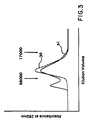
- IFN- ⁇ 4A elutes as two peaks, one of which represents an associated state and the other of which may represent a monomer (peak II) state.
- the protein solution in urea and ammonium acetate cannot ordinarily be enriched above about 1 mg/ml by ultrafiltration without resultant precipitation of product and the IFN- ⁇ 4A activity is found to be on the order of 0.5 x 10⁷ to 2 x 10⁷ units/mg.
- IFN- ⁇ 4A may be separated in each state and the putative monomer (peak II) protein may be concentrated to greater than 5 mg/ml with as great an activity as 6 x 10⁷ to 10 x 107 units/mg.
- the separated fraction of the associated proteins or the associated fraction alone may be virtually entirely converted to the monomer (peak II) state by 7 M urea treatment followed by gel filtration.
- the converted protein appears to be as soluble and as active as the isolated monomer (peak II) protein. Conversion is desirable inasmuch as the activity of the associated state is only one-fourth to one-eighth as treat as the activity associated with the monomer (peak II) state.
- peak I peak II
- peak II monomer
- Example 1 describes isolation of IFN- ⁇ 4A from E.coli and the peak I and peak II material obtained thereby.
- Example 2 sets forth the characterization of peak I and peak II by means of circular dichroic spectra.
- Example 3 discusses the gel filtration analysis of IFN- ⁇ 4A.
- Example 4 examines the dependence of the outcome of refolding upon protein concentration.
- Example 5 describes the effect of the solvent used upon refolding.
- Example 6 examines the effect of various solvents upon the solubility of peak I and peak II.
- Example 7 discloses the determination of the sedimentation velocities of peak I and peak II.
- Example 8 describes the determination of the specific activities of peaks I and II.
- Example 9 illustrates the conversion of peak I material to peak II material.
- Pelleted E.coli cells containing IFN- ⁇ 4A were dispersed with a suitable mixture, for example, a PolytronTM mixer, for about five minutes at room temperature.
- a suitable mixture for example, a PolytronTM mixer
- the resulting cell suspension was passed through a homogenizer four times at 7,000 psi (4.825x10⁷Pa), with cooling to about 11°C between passes.
- the homogenate was centrifuged at 4200 rpm for about 45 minutes at 4°C to produce a pellet.
- the pellet was suspended in 2.6 l solubilization buffer per kg of starting cell paste (200 mM Tris-HCl, 7 M urea, pH 9.0) at 5°C and dispersed with a mixer for 15 minutes in an ice bath until a homogenous suspension was obtained. An amount of 10% polyethyleneimine (PEI) was added to 0.001 times the volume of the suspension, and the solution was stirred for 15 minutes at 5°C. The suspension was then centrifuged at 4200 rpm for 40 minutes at 5°C.
- PKI polyethyleneimine
- the supernatant was decanted and the pH of the supernatant was adjusted to 8.1 at 5°C using 2 N HCl.
- the solution was diluted with 8 M urea until the conductivity was less than or equal to 700 ⁇ S/cm.
- SE-53 buffer 40 mM Tris-HCl, 6 M urea, pH 8.1 hereinafter referred to as SE-53 buffer
- Elution of the IFN- ⁇ 4A was obtained using a linear gradient of 0 M to 0.4 M NaCl in SE-53 buffer (40 mM Tris-HCl, 6 M urea, pH 8.1).
- a column containing SE-53 (Trade Mark) resin which had been equilibrated with buffer (40 mM Tris-HCl, 6 M urea, pH 9) was prepared and fractions containing greater than 70% IFN- ⁇ 4A from the previous step were loaded onto the column.
- the column was washed with 600 ml of buffer C (40 mM Tris-HCl, 6 M urea, 30 mM NaCl, pH 9.0), and eluted with a linear gradient of from 30 mM to 330 mM NaCl. The flow rate was adjusted to 6-12 ml per minute.
- the pool resulting from the previous step was concentrated to approximately 2 mg/ml using a PelliconTM cassette with a 10,000 molecular weight cut-off membrane and equilibrated with G-75 buffer (0.1 M ammonium acetate, 1 M urea). The pool was then loaded onto a SephadexTM G-75 column and eluted with G-75 buffer at a flow rate of 10-16 ml per minute. Forty-five fractions of 200 ml each were collected.
- the IFN- ⁇ 4A obtained by the above procedures was better than 95% pure, based on SDS polyacrylamide gel electrophoretic analysis (coomassie blue and silver staining).
- Peak I and peak II Upon dialysis, two structurally different forms, peak I and peak II, were obtained. Peak 2 was observed to be stable over a long period and was not observed to convert to the peak I form. On the other hand, an extremely slow conversion of peak I to peak II was observed in 0.1 M ammonium acetate and this conversion may be accelerated in the presence of 1 M urea or at lower ionic strength.
- Circular dichroic spectra were determined at room temperature on a Jasco J-500C spectropolarimeter as available from Jasco, Tokyo, Japan. Spectral band width was set at 1 nm and cuvettes used were 0.1 and 1 cm in light pass length for 190-260 nm and 240-340 nm, respectively. For each sample, the solvent spectrum was obtained and subtracted from the protein spectrum. The mean residue ellipticity, [ ⁇ ], was calculated from the mean residue weight (117) for IFN- ⁇ 4A.
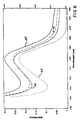
- Fig. 1 shows the far-UV circular dichroic spectrum of peak II in 0.1 M ammonium acetate as line 10.
- the spectrum is characterized by two minima, at 209 and 220 nm, indicating the presence of ordered structures.
- 1 mg/ml of peak II in 0.1 M ammonium acetate was dialyzed against a pH 2 buffer and the circular dichroic spectrum is shown in Fig. 1 as curve 11.
- This spectrum shows a minimum at 209 nm and a shoulder around 216 nm, displaying a substantial decrease in ellipticity over the wave length examined relative to the values in curve 10.
- the acid-unfolded sample was dialyzed against 0.1 M ammonium acetate to renature the protein.
- the far-UV circular dichroic spectrum of the product is shown in Fig. 1 as curve 13.
- Curve 13 indicates that IFN- ⁇ 4A, partially unfolded in acid, was refolded into a structure similar to the initial peak II material, although small differences exist before and after acid treatment in the magnitude of ellipticity and peak positions.
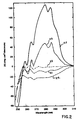
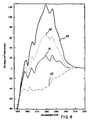
- Near-UV circular dichroic spectra are respectively shown in curves 20, 21, 22, and 23 of Fig. 2.
- the native peak II in 0.1 M ammonium acetate is characterized by several positive peaks and shoulders in curve 20. This suggests that aromatic residues are incorporated into a rigid tertiary structure in peak II which provides asymmetric environments for those residues to give rise to aromatic circular dichroic signals.
- the spectrum of IFN- ⁇ 4A in acid, as shown by curve 21, is entirely different from the native spectrum and exhibits little distinct circular dichroic signals in the near-UV region, similar to the spectrum of IFN- ⁇ 4A unfolded in 7 M urea of curve 22.
- peak II dialyzed against acid, it appears to lose its rigid tertiary structure, although the secondary structure is apparently only partially unfolded.
- the near-UV circular dichroic spectrum of peak II in 0.1 M ammonium acetate after acid treatment, curve 23, is intermediate between the native peak II (curve 20) and acid-unfolded (curve 21) structures. This result is in contrast to the far-UV circular dichroic result for the same sample, which suggests almost complete recovery to the native spectrum. Therefore, it is suggested that the acid-unfolded IFN- ⁇ 4A may refold into a secondary structure similar to peak II but that the tertiary structure may be only partially restored. Alternatively, it is possible that the refolding results in formation of both peak I and peak II and that the observed near-UV circular dichroic spectrum is the average of the spectra of the two forms. An indication in support of this latter hypothesis is given in curve 24 of Fig. 2, which shows that peak I gives small negative circular dichroic signals.
- Analytical gel filtration was performed on a SephadexTM G-75 column (1 X 120 cm) in 0.1 M ammonium acetate containing 1 M urea at pH 7 and at 4°C.
- peak I is 4- to 8-fold less active than peak II.
- generation of peak I from peak II should yield a drop in the specific activity of IFN- ⁇ 4A.
- the 4 mg/ml sample showed extensive precipitation after dialysis back to 0.1 M ammonium acetate, although the solution was clear at pH 2. This indicates that the aggregation resulting in precipitation occurs when the protein was refolded from acid. This sample was centrifuged and a protein concentration determination of the supernatant indicated that all of the protein had precipitated.
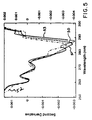
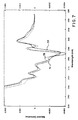
- the second derivative spectra of UV absorbance for these samples were measured after adjusting the protein concentrations to about 0.5 mg/ml and are, respectively, shown in Fig. 5 as curves 50, 51, 52, and 53.
- the second derivative spectrum has been shown to be sensitive to alterations in protein structure. Ishikawa, et al., Biochim.Biophys.Acta , 580 : 120-128 (1979).
- the native peak II spectrum, curve 53 is characterized by a positive peak at 292 nm and negative peaks at 282 and 287.5 nm in a range from 270-300 nm.
- the spectrum after acid treatment at 2 mg/ml showed marked differences from the native spectrum: a positive peak at 290 nm, a negative peak at 285 nm, and a negative shoulder at around 275 nm. These characteristics are typical for peak I.
- the acid-treated samples at 0.5 and 1 mg/ml showed an intermediate pattern between the native peak II and the 2 mg/ml sample.
- Table II summarizes results of analytical gel filtration for the acid-treated and native peak II samples.
- the results for the native peak II show that no proteins were detected within the limits of detection at the elution position for peak I.
- the acid-treated samples showed presence of both peak I and peak II forms. Higher protein concentration promoted greater formation of peak I.
- formation of peak I is due to aggregation of the protein, the complete precipitation which occurred at 4 mg/ml may be due to extremely enhanced formation of peak I aggregates large enough to precipitate.
- Peak II when peak II at 0.5 to 2 mg/ml was treated in the same way, it showed no precipitation in any of the solvent systems (not shown). Peak II maintained its size and structure for all cases, as determined by analytical gel filtration and second derivative spectrum analysis (not shown).
- Sedimentation velocity experiments were carried out using a Spinco Model E ultracentrifuge equipped with Schlieren optics and a temperature control unit. An aluminum-filled epon double-sector centerpiece with quartz windows was employed. All runs were performed at 25°C.
- a fast sedimenting peak possibly corresponding to peak I, gave a sedimentation constant of approximately 20 S in 0.1 M ammonium acetate at 2 to 5 mg/ml.
- IFN- ⁇ 4A preparations were examined with a standard cytopathic effect assay.
- HeLa cells were treated with the above-purified IFN- ⁇ 4A preparations or a standard and then challenged with Encephalomyocardis virus.
- the standard was a natural IFN- ⁇ preparation, as available from Interferon Sciences, Inc., calibrated against the NIH standard (Gg-23-902-530). For comparison purposes, peak I and peak II materials were always assayed at the same time.
- the purified IFN- ⁇ 4A preparations were stored in 0.1 M ammonium acetate, pH 6.9, at 4°C.
- peak II had two- to three-fold higher titers than peak I; i.e., peak II appears to be 4- to 8-fold more active, taking the protein concentration into account. This magnitude of difference between peak I and peak II was consistently observed for different preparations.
- Peak II shows no scattering in acid, while peak I still has large light scattering. This suggests that although acid can unfold peak I to the same extent as peak II, it cannot disaggregate peak I. Thus, the peak I form present in the starting sample maintained its aggregation state in acid and reformed the same structure upon removal of acid and the peak II form in the starting sample (which is approximately 0.12 mg/ml) was unfolded in acid and refolded into peak II. Thus, no change in the peak II to peak I ratio could occur by acid treatment.
- experiment 5 for a dilution of interferon corresponding to about 0.18 mg/ml
- experiment 6 showed almost 100% formation of peak II at five- or ten-fold dilution when 10 mM ammonium acetate was used, these dilution factors being much smaller than those used for 0.1 M ammonium acetate. It is therefore concluded that decreasing the ionic strength of the exchanging solvent favors the peak II formation.
- the mechanism of acid instability or natural IFN- ⁇ may be inferred from the results obtained with recombinant IFN- ⁇ 4A. If one assumes that the natural protein behaves in the same way as the recombinant protein, then the natural protein may yield both peak I-like and peak II-like forms after acid treatment, even though the starting sample may have contained only a peak II-like form.
- the presence of high molecular weight impurities may enhance the formation of a peak I-like form, for example, due to the excluded volume effect which would enhance protein aggregation. Minton, Biopolymers , 20 : 2093-2120 (1981); Lee, et al., Biochemistry , 18 : 5518-5526 (1979).
- peak II is four to eight times more active than peak I in a standard CPE assay. Therefore, formation of peak I should lead to a decrease in the antiviral activity.
- phosphate buffer was used as a refolding solvent, the decrease in the activity would be greater, since phosphate buffer was shown to precipitate peak I and such precipitation should lead to a complete loss of biological activity for peak I.
- the natural IFN- ⁇ behaves differently from the recombinant protein due to such factors as glycosylation, different isoelectric points, and C-terminal processing.
- a reducing agent such as dithiothreitol
- a reducing agent such as dithiothreitol
- compositions may be provided through admixture or co-collection of peak II and peak I fractions in weight ratios of, for example, about 95:5, 90:10, 80:20, 70:30, or 60:40.
Landscapes
- Chemical & Material Sciences (AREA)
- Health & Medical Sciences (AREA)
- Organic Chemistry (AREA)
- Life Sciences & Earth Sciences (AREA)
- Genetics & Genomics (AREA)
- Proteomics, Peptides & Aminoacids (AREA)
- Molecular Biology (AREA)
- Biochemistry (AREA)
- Biophysics (AREA)
- General Health & Medical Sciences (AREA)
- Medicinal Chemistry (AREA)
- Chemical Kinetics & Catalysis (AREA)
- General Chemical & Material Sciences (AREA)
- Analytical Chemistry (AREA)
- Crystallography & Structural Chemistry (AREA)
- Toxicology (AREA)
- Zoology (AREA)
- Gastroenterology & Hepatology (AREA)
- Peptides Or Proteins (AREA)
- Medicines That Contain Protein Lipid Enzymes And Other Medicines (AREA)
- Preparation Of Compounds By Using Micro-Organisms (AREA)
Claims (8)
- Interféron immun humain de recombinaison de pic II isolé et purifie, ayant un spectre dichroïque circulaire dans l'ultraviolet proche, en solution aqueuse à pH neutre, avec des bandes positives à environ 259 nm, 266 nm, 280 nm, et 287 nm, et des épaulements à environ 270 nm et 292 nm.
- Interféron purifié selon la revendication 1, comprenant de l'interféron 4A immun humain de recombinaison de pic II.
- Interféron purifié selon la revendication 2, ayant un poids moléculaire dans la plage de 30 000 à 40 000.
- Interféron purifié selon la revendication 3, dans lequel ledit interféron 4A immun humain présente une constante de sédimentation d'environ 2,8 S.
- Interféron purifié selon la revendication 4, dans lequel ledit interféron 4A immun humain présente un second spectre dérivé avec des pics négatifs à 282 nm et 288 nm.
- Interféron purifié selon la revendication 5, dans lequel ledit interféron 4A immun humain présente un spectre dichroïque circulaire dans l'ultraviolet lointain avec des minima à environ 209 nm et à environ 220 nm.
- Procédé pour obtenir de l'interféron de pic II purifié, comprenant les étapes consistant à :- déplier, dans une solution contenant un dénaturant, des molécules d'interféron purifié sous une forme agrégée qui manque de liaisons covalentes intermoléculaires et qui peut être exclue d'une colonne de Sephadex (marque déposée) G-75 ;- diluer la solution pour obtenir une concentration de 0,18 mg ou moins d'interféron par ml ; et- concentrer la solution diluée par diafiltration.
- Procédé selon la revendication 7, dans lequel la dilution de la solution diminue la force ionique de la solution contenant le dénaturant.
Priority Applications (1)
| Application Number | Priority Date | Filing Date | Title |
|---|---|---|---|
| AT86302960T ATE86868T1 (de) | 1985-04-25 | 1986-04-18 | Verfahren zur reinigung von interferon und so hergestellte zusammensetzung. |
Applications Claiming Priority (2)
| Application Number | Priority Date | Filing Date | Title |
|---|---|---|---|
| US727147 | 1985-04-25 | ||
| US06/727,147 US4873312A (en) | 1985-04-25 | 1985-04-25 | Method for purifying interferon and composition of matter produced thereby |
Publications (3)
| Publication Number | Publication Date |
|---|---|
| EP0199568A2 EP0199568A2 (fr) | 1986-10-29 |
| EP0199568A3 EP0199568A3 (en) | 1988-09-21 |
| EP0199568B1 true EP0199568B1 (fr) | 1993-03-17 |
Family
ID=24921509
Family Applications (1)
| Application Number | Title | Priority Date | Filing Date |
|---|---|---|---|
| EP86302960A Revoked EP0199568B1 (fr) | 1985-04-25 | 1986-04-18 | Procédé de purification d'interféron et composition ainsi produite |
Country Status (8)
| Country | Link |
|---|---|
| US (1) | US4873312A (fr) |
| EP (1) | EP0199568B1 (fr) |
| JP (1) | JPH0733397B2 (fr) |
| AT (1) | ATE86868T1 (fr) |
| CA (1) | CA1263842A (fr) |
| DE (1) | DE3687995T2 (fr) |
| IL (1) | IL78455A (fr) |
| WO (1) | WO1986006385A1 (fr) |
Families Citing this family (9)
| Publication number | Priority date | Publication date | Assignee | Title |
|---|---|---|---|---|
| CA1339757C (fr) * | 1987-04-16 | 1998-03-17 | Robert F. Halenbeck | Methode de production bacteriologique de csf-1 humain recombinant biologiquement actif pur |
| US4929700A (en) * | 1987-04-16 | 1990-05-29 | Cetus Corporation | Production of purified, biologically active, bacterially produced recombinant human CSF-1 |
| US4931543A (en) * | 1987-05-11 | 1990-06-05 | Cetus Corporation | Process for recovering microbially produced interleukin-2 |
| US5599690A (en) * | 1988-02-01 | 1997-02-04 | Amgen Inc. | Control of norleucine incorporation into recombinant proteins |
| US5391713A (en) * | 1989-06-20 | 1995-02-21 | Bionative Ab | Interferon purification process |
| DE3926103A1 (de) * | 1989-08-08 | 1991-02-14 | Hoechst Ag | Verfahren zur biokatalytischen korrekten kettenfaltung denaturierter rekombinanter fusionsproteine |
| DK580789D0 (da) * | 1989-11-20 | 1989-11-20 | Novo Nordisk As | Fremgangsmaade til oprensning af polypeptider |
| US5986070A (en) * | 1990-04-06 | 1999-11-16 | Amgen Inc. | Production of biologically active NGF proteins |
| IT1246296B (it) * | 1990-07-25 | 1994-11-17 | Sclavo Spa | Procedimento di estrzione e purificazione del gamma interferone umano ricombinante |
Family Cites Families (9)
| Publication number | Priority date | Publication date | Assignee | Title |
|---|---|---|---|---|
| JPS5821691A (ja) * | 1981-07-29 | 1983-02-08 | Mochida Pharmaceut Co Ltd | α−及びβ−インタ−フェロンの精製方法 |
| AU561343B2 (en) * | 1981-10-19 | 1987-05-07 | Genentech Inc. | Human immune interferon by recombinant dna |
| US6936694B1 (en) * | 1982-05-06 | 2005-08-30 | Intermune, Inc. | Manufacture and expression of large structural genes |
| WO1984002129A1 (fr) * | 1982-11-22 | 1984-06-07 | Takeda Chemical Industries Ltd | Proteine de l'interferon immun humain et son procede de preparation |
| US4518526A (en) * | 1982-12-22 | 1985-05-21 | Genentech, Inc. | Purification and activity assurance of precipitated heterologous proteins |
| DE122080T1 (de) * | 1983-03-25 | 1985-05-23 | Celltech Ltd., Slough, Berkshire | Verfahren zur herstellung eines proteins. |
| US4476049A (en) * | 1983-09-20 | 1984-10-09 | Hoffmann-La Roche Inc. | Method for the extraction of immune interferon |
| JPS6079000A (ja) * | 1983-10-04 | 1985-05-04 | Takeda Chem Ind Ltd | ヒトγ型インタ−フエロン単量体の製造法 |
| US4855238A (en) * | 1983-12-16 | 1989-08-08 | Genentech, Inc. | Recombinant gamma interferons having enhanced stability and methods therefor |
-
1985
- 1985-04-25 US US06/727,147 patent/US4873312A/en not_active Expired - Fee Related
-
1986
- 1986-04-04 CA CA000505897A patent/CA1263842A/fr not_active Expired
- 1986-04-09 IL IL78455A patent/IL78455A/xx not_active IP Right Cessation
- 1986-04-09 WO PCT/US1986/000723 patent/WO1986006385A1/fr not_active Ceased
- 1986-04-09 JP JP61502079A patent/JPH0733397B2/ja not_active Expired - Lifetime
- 1986-04-18 DE DE8686302960T patent/DE3687995T2/de not_active Revoked
- 1986-04-18 AT AT86302960T patent/ATE86868T1/de not_active IP Right Cessation
- 1986-04-18 EP EP86302960A patent/EP0199568B1/fr not_active Revoked
Also Published As
| Publication number | Publication date |
|---|---|
| DE3687995T2 (de) | 1993-06-24 |
| IL78455A0 (en) | 1986-08-31 |
| JPS62502540A (ja) | 1987-10-01 |
| JPH0733397B2 (ja) | 1995-04-12 |
| WO1986006385A1 (fr) | 1986-11-06 |
| CA1263842A (fr) | 1989-12-12 |
| EP0199568A3 (en) | 1988-09-21 |
| EP0199568A2 (fr) | 1986-10-29 |
| DE3687995D1 (de) | 1993-04-22 |
| ATE86868T1 (de) | 1993-04-15 |
| IL78455A (en) | 1991-11-21 |
| US4873312A (en) | 1989-10-10 |
Similar Documents
| Publication | Publication Date | Title |
|---|---|---|
| US4432895A (en) | Monomeric interferons | |
| Furuto et al. | Isolation of a unique collagenous fraction from limited pepsin digests of human placental tissue. Characterization of one of the constituent polypeptide chains. | |
| Rubinstein et al. | Human leukocyte interferon: production, purification to homogeneity, and initial characterization. | |
| Papkoff et al. | Preparation of ovine interstitial cell-stimulating hormone in high yield | |
| JP2562192B2 (ja) | 血清アルブミンの純化方法 | |
| Wingfield et al. | Purification and characterization of human interleukin‐1β expressed in recombinant Escherichia coli | |
| Goodwin et al. | The isolation and purification of the high mobility group (HMG) nonhistone chromosomal proteins | |
| Jackson et al. | A comparison of the major apolipoprotein from pig and human high density lipoproteins | |
| Peumans et al. | Isolation and partial characterization of wheat-germ-agglutinin-like lectins from rye (Secale cereale) and barley (Hordeum vulgare) embryos | |
| AU619185B2 (en) | Improved process for recovering microbially produced il-2 | |
| Tsuda | Purification and characterization of a lectin from rice bran | |
| JP3894570B2 (ja) | Igf−iの精製方法 | |
| Edmundson et al. | Isolation and characterization of concanavalin A polypeptide chains | |
| Hsu et al. | Structural studies on acid unfolding and refolding of recombinant human interferon. gamma. | |
| Oshiro et al. | Physical and chemical studies on glycoproteins: III. The microheterogeneity of fetuin, a fetal calf serum glycoprotein | |
| CA1269799A (fr) | Methode d'extraction des proteines au moyen d'un acide organique | |
| US4765903A (en) | Purification of monomeric interferon | |
| US4873312A (en) | Method for purifying interferon and composition of matter produced thereby | |
| US5702699A (en) | Process for the recovery of lipophilic proteins | |
| US4534906A (en) | Removal of impurities from human leukocyte interferon preparations | |
| US4751078A (en) | Process for the purification of gamma interferon | |
| NO830697L (no) | Homogent menneske-immun-interferon og fremstilling derav | |
| Périn et al. | The lysozyme from Nephthys hombergi (annelid) | |
| Zaitlin et al. | Amino acid composition of a nonfunctional tobacco mosaic virus protein | |
| Assoian | [14] Purification of type-β transforming growth factor from human platelet |
Legal Events
| Date | Code | Title | Description |
|---|---|---|---|
| PUAI | Public reference made under article 153(3) epc to a published international application that has entered the european phase |
Free format text: ORIGINAL CODE: 0009012 |
|
| AK | Designated contracting states |
Kind code of ref document: A2 Designated state(s): AT BE CH DE FR GB IT LI LU NL SE |
|
| PUAL | Search report despatched |
Free format text: ORIGINAL CODE: 0009013 |
|
| AK | Designated contracting states |
Kind code of ref document: A3 Designated state(s): AT BE CH DE FR GB IT LI LU NL SE |
|
| 17P | Request for examination filed |
Effective date: 19890206 |
|
| 17Q | First examination report despatched |
Effective date: 19900410 |
|
| RAP1 | Party data changed (applicant data changed or rights of an application transferred) |
Owner name: AMGEN INC. |
|
| GRAA | (expected) grant |
Free format text: ORIGINAL CODE: 0009210 |
|
| AK | Designated contracting states |
Kind code of ref document: B1 Designated state(s): AT BE CH DE FR GB IT LI LU NL SE |
|
| REF | Corresponds to: |
Ref document number: 86868 Country of ref document: AT Date of ref document: 19930415 Kind code of ref document: T |
|
| ET | Fr: translation filed | ||
| ITF | It: translation for a ep patent filed | ||
| REF | Corresponds to: |
Ref document number: 3687995 Country of ref document: DE Date of ref document: 19930422 |
|
| PLBI | Opposition filed |
Free format text: ORIGINAL CODE: 0009260 |
|
| 26 | Opposition filed |
Opponent name: BOEHRINGER INGELHEIM GMBH Effective date: 19931211 |
|
| NLR1 | Nl: opposition has been filed with the epo |
Opponent name: BOEHRINGER INGELHEIM GMBH |
|
| EPTA | Lu: last paid annual fee | ||
| EAL | Se: european patent in force in sweden |
Ref document number: 86302960.9 |
|
| PGFP | Annual fee paid to national office [announced via postgrant information from national office to epo] |
Ref country code: AT Payment date: 19950328 Year of fee payment: 10 |
|
| PGFP | Annual fee paid to national office [announced via postgrant information from national office to epo] |
Ref country code: FR Payment date: 19960322 Year of fee payment: 11 |
|
| PGFP | Annual fee paid to national office [announced via postgrant information from national office to epo] |
Ref country code: LU Payment date: 19960401 Year of fee payment: 11 |
|
| PGFP | Annual fee paid to national office [announced via postgrant information from national office to epo] |
Ref country code: SE Payment date: 19960403 Year of fee payment: 11 |
|
| PGFP | Annual fee paid to national office [announced via postgrant information from national office to epo] |
Ref country code: GB Payment date: 19960409 Year of fee payment: 11 |
|
| PGFP | Annual fee paid to national office [announced via postgrant information from national office to epo] |
Ref country code: CH Payment date: 19960411 Year of fee payment: 11 |
|
| PGFP | Annual fee paid to national office [announced via postgrant information from national office to epo] |
Ref country code: NL Payment date: 19960417 Year of fee payment: 11 Ref country code: DE Payment date: 19960417 Year of fee payment: 11 |
|
| PGFP | Annual fee paid to national office [announced via postgrant information from national office to epo] |
Ref country code: BE Payment date: 19960510 Year of fee payment: 11 |
|
| RDAG | Patent revoked |
Free format text: ORIGINAL CODE: 0009271 |
|
| STAA | Information on the status of an ep patent application or granted ep patent |
Free format text: STATUS: PATENT REVOKED |
|
| 27W | Patent revoked |
Effective date: 19960229 |
|
| GBPR | Gb: patent revoked under art. 102 of the ep convention designating the uk as contracting state |
Free format text: 960229 |
|
| NLR2 | Nl: decision of opposition |