EP0201134A2 - Formulation désodorisante avec un effet régulateur sur la transpiration - Google Patents
Formulation désodorisante avec un effet régulateur sur la transpiration Download PDFInfo
- Publication number
- EP0201134A2 EP0201134A2 EP86200767A EP86200767A EP0201134A2 EP 0201134 A2 EP0201134 A2 EP 0201134A2 EP 86200767 A EP86200767 A EP 86200767A EP 86200767 A EP86200767 A EP 86200767A EP 0201134 A2 EP0201134 A2 EP 0201134A2
- Authority
- EP
- European Patent Office
- Prior art keywords
- perfume
- fact
- tannic acid
- microcapsules
- formulation according
- Prior art date
- Legal status (The legal status is an assumption and is not a legal conclusion. Google has not performed a legal analysis and makes no representation as to the accuracy of the status listed.)
- Withdrawn
Links
Images

Classifications
-
- A—HUMAN NECESSITIES
- A61—MEDICAL OR VETERINARY SCIENCE; HYGIENE
- A61Q—SPECIFIC USE OF COSMETICS OR SIMILAR TOILETRY PREPARATIONS
- A61Q17/00—Barrier preparations; Preparations brought into direct contact with the skin for affording protection against external influences, e.g. sunlight, X-rays or other harmful rays, corrosive materials, bacteria or insect stings
- A61Q17/005—Antimicrobial preparations
-
- A—HUMAN NECESSITIES
- A61—MEDICAL OR VETERINARY SCIENCE; HYGIENE
- A61K—PREPARATIONS FOR MEDICAL, DENTAL OR TOILETRY PURPOSES
- A61K8/00—Cosmetics or similar toiletry preparations
- A61K8/02—Cosmetics or similar toiletry preparations characterised by special physical form
- A61K8/04—Dispersions; Emulsions
- A61K8/046—Aerosols; Foams
-
- A—HUMAN NECESSITIES
- A61—MEDICAL OR VETERINARY SCIENCE; HYGIENE
- A61K—PREPARATIONS FOR MEDICAL, DENTAL OR TOILETRY PURPOSES
- A61K8/00—Cosmetics or similar toiletry preparations
- A61K8/02—Cosmetics or similar toiletry preparations characterised by special physical form
- A61K8/11—Encapsulated compositions
-
- A—HUMAN NECESSITIES
- A61—MEDICAL OR VETERINARY SCIENCE; HYGIENE
- A61K—PREPARATIONS FOR MEDICAL, DENTAL OR TOILETRY PURPOSES
- A61K8/00—Cosmetics or similar toiletry preparations
- A61K8/18—Cosmetics or similar toiletry preparations characterised by the composition
- A61K8/30—Cosmetics or similar toiletry preparations characterised by the composition containing organic compounds
- A61K8/33—Cosmetics or similar toiletry preparations characterised by the composition containing organic compounds containing oxygen
- A61K8/34—Alcohols
- A61K8/347—Phenols
-
- A—HUMAN NECESSITIES
- A61—MEDICAL OR VETERINARY SCIENCE; HYGIENE
- A61K—PREPARATIONS FOR MEDICAL, DENTAL OR TOILETRY PURPOSES
- A61K8/00—Cosmetics or similar toiletry preparations
- A61K8/18—Cosmetics or similar toiletry preparations characterised by the composition
- A61K8/30—Cosmetics or similar toiletry preparations characterised by the composition containing organic compounds
- A61K8/40—Cosmetics or similar toiletry preparations characterised by the composition containing organic compounds containing nitrogen
- A61K8/41—Amines
- A61K8/411—Aromatic amines, i.e. where the amino group is directly linked to the aromatic nucleus
-
- A—HUMAN NECESSITIES
- A61—MEDICAL OR VETERINARY SCIENCE; HYGIENE
- A61K—PREPARATIONS FOR MEDICAL, DENTAL OR TOILETRY PURPOSES
- A61K8/00—Cosmetics or similar toiletry preparations
- A61K8/18—Cosmetics or similar toiletry preparations characterised by the composition
- A61K8/30—Cosmetics or similar toiletry preparations characterised by the composition containing organic compounds
- A61K8/40—Cosmetics or similar toiletry preparations characterised by the composition containing organic compounds containing nitrogen
- A61K8/41—Amines
- A61K8/416—Quaternary ammonium compounds
-
- A—HUMAN NECESSITIES
- A61—MEDICAL OR VETERINARY SCIENCE; HYGIENE
- A61K—PREPARATIONS FOR MEDICAL, DENTAL OR TOILETRY PURPOSES
- A61K8/00—Cosmetics or similar toiletry preparations
- A61K8/18—Cosmetics or similar toiletry preparations characterised by the composition
- A61K8/30—Cosmetics or similar toiletry preparations characterised by the composition containing organic compounds
- A61K8/60—Sugars; Derivatives thereof
- A61K8/602—Glycosides, e.g. rutin
-
- A—HUMAN NECESSITIES
- A61—MEDICAL OR VETERINARY SCIENCE; HYGIENE
- A61Q—SPECIFIC USE OF COSMETICS OR SIMILAR TOILETRY PREPARATIONS
- A61Q13/00—Formulations or additives for perfume preparations
-
- A—HUMAN NECESSITIES
- A61—MEDICAL OR VETERINARY SCIENCE; HYGIENE
- A61Q—SPECIFIC USE OF COSMETICS OR SIMILAR TOILETRY PREPARATIONS
- A61Q15/00—Anti-perspirants or body deodorants
-
- A—HUMAN NECESSITIES
- A61—MEDICAL OR VETERINARY SCIENCE; HYGIENE
- A61K—PREPARATIONS FOR MEDICAL, DENTAL OR TOILETRY PURPOSES
- A61K2800/00—Properties of cosmetic compositions or active ingredients thereof or formulation aids used therein and process related aspects
- A61K2800/40—Chemical, physico-chemical or functional or structural properties of particular ingredients
- A61K2800/41—Particular ingredients further characterized by their size
- A61K2800/412—Microsized, i.e. having sizes between 0.1 and 100 microns
Definitions
- the present invention relates to the use of tannic acid microcapsules and/or microcapsules of a perfume for the embodiment of an anti-perspirant deodorant of a new type, wherein the accumulation of the sustained effect of the microcapsules themselves and the modulation of the anti-perspirant activity function in relation to the extent of perspiration is achieved.
- bad body-odour is correlated with sweat secreted by the apocrine glands which are essentially confined to the arm-pit, pectoral, anal and genital zones. In fact, it is the sweat secreted by these glands which is composed, in high percentage, of substances such as proteins, lipoproteins and lipids, the degradation of which, due to the micro-organisms normally present on the skin and in the sebaceous glands, is the cause of unpleasant odours.
- Tannic acid was used as astringent agent. It is a natural substance which is found in fruits and in the bark of several plants, but most of all in chestnut and quebracho wood and in the acorns of oaks, wherefrom it is extracted.
- tannic acid has a deodorant effect in that it inhibits the bacterial activity through the denaturation of the protreinic substances. Its intrinsic acidity also plays an important role: as can be seen in Table 1, the pH values of tannic acid solutions varies between 3.47 and 2.87 in the interval between 1 and 30%.
- aluminium salts solutions commonly used as anti-perspirants such as aluminium sulphate, aluminium chloride and aluminium chlorohydroxy complex (Chlorohydrol).
- Table 1 Comparison of the pH values, at various concentrations, of tannic acid, aluminium sulphate, aluminium chloride and aluminium chlorohydroxy complex solutions.
- tannic acid must be microencapsuled, for example, with an ethylcellulose membrane.
- the microencapsulation consists of covering a substance with a polymeric film.
- the polymer may be soluble in water or in aqueous based liquids such as sweat.
- the polymer may also be water insoluble, but permeable, therefore the microencapsulated substance is released for diffusion: namely, water or acqueous vehicles, such as sweat, in our case, penetrate through the membrane, dissolve the active principle, and the solution diffuses on the exterior in times more or less long, which, for a given substance, depends on the percentage of the membrane and the quantity of liquid. In this case, therefore, the membrane exercizes a multiple action:
- microencapsulation techniques which may be used are various and known to a man skilled in the art.
- microcapsules are used in a spray-can, it is necressary for them to have particularly small dimensions and, namely, inferior to 300 u and preferably inferior to 150 u.
- the percentage of the applied membrane may vary between 2 and 50%, and preferably between 4 and 20%, consequently the tannic acid contents varies between 50 and 98% and preferably between 80 and 96%.
- tannic acid shows a deodorant effect due to its anti-bacterial properties, however in the formulations which are the object of the present invention, it is considered suitable to also add a bactericide in percentages which vary according to the bactericide used, but which are in any case very low and rarely exceeding 1%.
- microencapsulated tannic acid with sustained effect
- it has been considered suitable to also make use of a microencapsulated perfume, with the purpose of stabilizing the quality of the product and prolonging its effect.
- the perfume may be microencapsulated with various methods.
- the formulation also contains a part of the perfume not microencapsulated, with the aim of obtaining the desired perception immediately upon use.
- the formulation is constituted of other components common to deodorant formulations such as, in the case of sprays, softening substances and propellant gases which are accurately chosen so as to guarantee the physical stability of the product and the absence of releasing phenomena of the active principles during storing.
- the percentage of tannic acid microcapsules which can be used in the formulations for spraying may vary between 0.1-5% and preferably between 0.2 - 2%.
- the present invention is now illustrated with a few non-limiting examples, which relate to the formulations for spraying, but it is understood that the present invention also relates to less common anti-perspirant formulations, such as sticks, powders, roll-ons, correctly formulated with the aim of avoiding the extraction of the astringent agent and the perfume protected by the microcapsules, before use.
- the coacervation was effected, namely, the deposition of a gelatine film around the droplets of perfume.
- microcapsules were separated for filtering. After having dried them in an oven with forced air circulation or in a fluidized bed, they were sieved by means of a sieve having a mesh opening of 210 microns.
- microcapsules were separated for filtering and dried in a fluidized bed drier, until elimination of the solvent.
- a marketed product of aluminium salts was used to effect an experiment in practical use on 26 volunteers, being 14 females and 12 males.
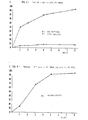
- the following analytic experiment was set up to verify the effectiveness of the microencapsulation in retarding the dissolution of tannic acid: -about 1 g. of tannic acid and tannic acid microcapsules, prepared according to description in Example 1, were placed in two distinct 40 ml beakers. 10 ml of a solution of KCI 0.3 M were added to each at 37°C. The beakers were rotated for 60 seconds in a suitable apparatus (Diffutest). The aqueous phase was separated from the undissolved product for filtering and the quantity of tannic acid passed in solution was spectrophotometrically determined. The operation was repeated 8 times.
- the experimental conditions differ decidedly from the real situation, namely, humidity present in the arm-pit in comparison to the 10 ml of aqueous solution used in the experiment in vitro, but permit clear emphasis of the retardant effect of the film applied around tannic acid.
- the dissolution of the tannic acid was continuously followed, by means of a computerized spectrophotometer, at 274 nm.
Landscapes
- Health & Medical Sciences (AREA)
- Life Sciences & Earth Sciences (AREA)
- Veterinary Medicine (AREA)
- Animal Behavior & Ethology (AREA)
- General Health & Medical Sciences (AREA)
- Public Health (AREA)
- Birds (AREA)
- Epidemiology (AREA)
- Dermatology (AREA)
- Chemical & Material Sciences (AREA)
- Dispersion Chemistry (AREA)
- Emergency Medicine (AREA)
- Cosmetics (AREA)
- Manufacturing Of Micro-Capsules (AREA)
- Disinfection, Sterilisation Or Deodorisation Of Air (AREA)
Applications Claiming Priority (2)
| Application Number | Priority Date | Filing Date | Title |
|---|---|---|---|
| IT20618/85A IT1183575B (it) | 1985-05-08 | 1985-05-08 | Formulazione deodorando ad effetto modulante sulla trfaspirazione |
| IT2061885 | 1985-05-08 |
Publications (2)
| Publication Number | Publication Date |
|---|---|
| EP0201134A2 true EP0201134A2 (fr) | 1986-11-12 |
| EP0201134A3 EP0201134A3 (fr) | 1987-05-27 |
Family
ID=11169632
Family Applications (1)
| Application Number | Title | Priority Date | Filing Date |
|---|---|---|---|
| EP86200767A Withdrawn EP0201134A3 (fr) | 1985-05-08 | 1986-05-02 | Formulation désodorisante avec un effet régulateur sur la transpiration |
Country Status (2)
| Country | Link |
|---|---|
| EP (1) | EP0201134A3 (fr) |
| IT (1) | IT1183575B (fr) |
Cited By (9)
| Publication number | Priority date | Publication date | Assignee | Title |
|---|---|---|---|---|
| WO1988003765A3 (fr) * | 1986-11-26 | 1988-06-16 | Gerold Tebbe | Piece anti-transpiration |
| EP0480520A1 (fr) * | 1990-10-11 | 1992-04-15 | Quest International B.V. | Produits hygieniques parfumés à appliquer sous les bras |
| CN1035267C (zh) * | 1987-10-05 | 1997-06-25 | 普罗格特-甘布尔公司 | 洗涤织物和提供磺基苯甲酰基封端的酯的低聚物去污处理的方法 |
| FR2873292A1 (fr) * | 2004-07-23 | 2006-01-27 | Jean Noel Colombani | Composes et methodes pour controler la prise d'alcool |
| EP2181692A1 (fr) * | 2008-10-27 | 2010-05-05 | Unilever PLC | Compositions anti-transpirantes |
| WO2012129630A1 (fr) * | 2011-03-31 | 2012-10-04 | Kyolab Laboratório Ltda. | Composition désodorisante et antitranspirante, procédé de production d'une composition désodorisante et antitranspirante et procédé de prévention et/ou de réduction des odeurs de transpiration |
| WO2013024043A2 (fr) | 2011-08-12 | 2013-02-21 | Probiodrug Ag | Modèles de criblage in vivo pour le traitement de troubles associés à qc |
| EP2581449A2 (fr) | 2006-09-21 | 2013-04-17 | Probiodrug AG | Nouveaux genes lies a glutaminyl cyclase |
| US8518425B2 (en) | 2008-10-27 | 2013-08-27 | Conopco Inc. | Antiperspirant compositions |
Family Cites Families (8)
| Publication number | Priority date | Publication date | Assignee | Title |
|---|---|---|---|---|
| US2660563A (en) * | 1949-07-28 | 1953-11-24 | Standard Oil Dev Co | Mineral oil containing substituted polyolefins |
| GB1275969A (en) * | 1969-01-10 | 1972-06-01 | Mennen Co | Perspiration-responsive aerosol deodorant |
| LU57907A1 (fr) * | 1969-02-04 | 1970-08-04 | ||
| GB1456200A (en) * | 1972-11-22 | 1976-11-17 | Beecham Group Ltd | Deodorant composition |
| US3971852A (en) * | 1973-06-12 | 1976-07-27 | Polak's Frutal Works, Inc. | Process of encapsulating an oil and product produced thereby |
| DE2826757A1 (de) * | 1978-06-19 | 1979-12-20 | Henkel Kgaa | Verwendung einer kombination von adstringierenden sauren aluminiumsalzen mit estern der citronensaeure, acetylcitronensaeure, ein- und zweibasischer aliphatischer hydroxycarbonsaeuren und antioxidantien als deodorantien |
| FR2524310A2 (fr) * | 1982-04-01 | 1983-10-07 | Olivier Georges | Compositions permettant de combattre les mefaits et les inconvenients de la transpiration |
| SE8203953D0 (sv) * | 1982-06-24 | 1982-06-24 | Astra Laekemedel Ab | Pharmaceutical mixture |
-
1985
- 1985-05-08 IT IT20618/85A patent/IT1183575B/it active
-
1986
- 1986-05-02 EP EP86200767A patent/EP0201134A3/fr not_active Withdrawn
Cited By (15)
| Publication number | Priority date | Publication date | Assignee | Title |
|---|---|---|---|---|
| WO1988003765A3 (fr) * | 1986-11-26 | 1988-06-16 | Gerold Tebbe | Piece anti-transpiration |
| CN1035267C (zh) * | 1987-10-05 | 1997-06-25 | 普罗格特-甘布尔公司 | 洗涤织物和提供磺基苯甲酰基封端的酯的低聚物去污处理的方法 |
| EP0480520A1 (fr) * | 1990-10-11 | 1992-04-15 | Quest International B.V. | Produits hygieniques parfumés à appliquer sous les bras |
| US5711941A (en) * | 1990-10-11 | 1998-01-27 | Unilever Patent Holdings, B.V. | Perfumed underarm hygiene products |
| EP2258354A1 (fr) * | 2004-07-23 | 2010-12-08 | JNC Innovations | Composés et méthodes pour contrôler la prise d'alcool. |
| FR2873292A1 (fr) * | 2004-07-23 | 2006-01-27 | Jean Noel Colombani | Composes et methodes pour controler la prise d'alcool |
| WO2006018521A3 (fr) * | 2004-07-23 | 2006-04-13 | Jean-Noel Colombani | Composes et methodes pour controler la prise d'alcool. |
| EP2581449A2 (fr) | 2006-09-21 | 2013-04-17 | Probiodrug AG | Nouveaux genes lies a glutaminyl cyclase |
| EP2181692A1 (fr) * | 2008-10-27 | 2010-05-05 | Unilever PLC | Compositions anti-transpirantes |
| WO2010049236A1 (fr) * | 2008-10-27 | 2010-05-06 | Unilever Plc | Compositions antitranspirantes |
| US8518425B2 (en) | 2008-10-27 | 2013-08-27 | Conopco Inc. | Antiperspirant compositions |
| US9095531B2 (en) | 2008-10-27 | 2015-08-04 | Conopco, Inc. | Antiperspirant compositions |
| EA021971B1 (ru) * | 2008-10-27 | 2015-10-30 | Унилевер Н.В. | Антиперспирантная композиция |
| WO2012129630A1 (fr) * | 2011-03-31 | 2012-10-04 | Kyolab Laboratório Ltda. | Composition désodorisante et antitranspirante, procédé de production d'une composition désodorisante et antitranspirante et procédé de prévention et/ou de réduction des odeurs de transpiration |
| WO2013024043A2 (fr) | 2011-08-12 | 2013-02-21 | Probiodrug Ag | Modèles de criblage in vivo pour le traitement de troubles associés à qc |
Also Published As
| Publication number | Publication date |
|---|---|
| EP0201134A3 (fr) | 1987-05-27 |
| IT1183575B (it) | 1987-10-22 |
| IT8520618A0 (it) | 1985-05-08 |
Similar Documents
| Publication | Publication Date | Title |
|---|---|---|
| DE3871544T2 (de) | Parfuemierendes praeparat mit desodorierender oder schweisshemmender wirkung. | |
| JP2764143B2 (ja) | アジェバントを発汗抑制薬で被包した組成物およびその被包方法 | |
| US5194262A (en) | Encapsulated antiperspirant salts and deodorant/antiperspirants | |
| DE3877084T2 (de) | Hautbehandlungsmittel. | |
| US5071706A (en) | Oily, free-flowing, microcapsules | |
| US5043161A (en) | Small, oily, free-flowing, silky-smooth, talc-like, dry microcapsules and aqueous formulations containing them | |
| EP0419563B1 (fr) | Proteine a liberation etalee dans le temps | |
| JPH0112A (ja) | デオドラント又は発汗抑制作用を有する芳香づけ組成物、及びデオドラント又は発汗抑制製品 | |
| JPH0798739B2 (ja) | 化粧品又は局所用製剤に使用するための脱臭用及び抗菌用組成物 | |
| EP0201134A2 (fr) | Formulation désodorisante avec un effet régulateur sur la transpiration | |
| KR19980021511A (ko) | 화장료용 이중캡슐 및 이를 함유하는 화장료 조성물 | |
| JPH06271441A (ja) | 非水性芳香組成物、及び防臭又は発汗抑制製品 | |
| JP2899885B2 (ja) | 消臭剤 | |
| JP2001114619A (ja) | アロマセラピー用エッセンシャルオイルおよびその使用方法 | |
| JP3683012B2 (ja) | エアゾール組成物及びその製造方法、並びにそれを用いたエアゾール製品 | |
| JPS62212316A (ja) | 粉末消臭剤 | |
| JPS59199602A (ja) | 害虫忌避剤 | |
| JP3879843B2 (ja) | 体臭抑制用組成物 | |
| JP2005126423A (ja) | デオドラント組成物 | |
| CA1112182A (fr) | Extrait du houblon (humulus lupulus) comme desodorisant | |
| US20260108444A1 (en) | Encapsulation compositions and methods for encapsulating active agents | |
| DE2050712A1 (de) | Antitranspirant - Sprühpräparat | |
| JPS63174920A (ja) | 防臭剤 | |
| JPH0331203A (ja) | 猫忌避剤 | |
| JP4145986B2 (ja) | 害虫忌避組成物 |
Legal Events
| Date | Code | Title | Description |
|---|---|---|---|
| PUAI | Public reference made under article 153(3) epc to a published international application that has entered the european phase |
Free format text: ORIGINAL CODE: 0009012 |
|
| AK | Designated contracting states |
Kind code of ref document: A2 Designated state(s): AT BE CH DE FR GB IT LI LU NL SE |
|
| PUAL | Search report despatched |
Free format text: ORIGINAL CODE: 0009013 |
|
| AK | Designated contracting states |
Kind code of ref document: A3 Designated state(s): AT BE CH DE FR GB IT LI LU NL SE |
|
| 17P | Request for examination filed |
Effective date: 19871113 |
|
| 17Q | First examination report despatched |
Effective date: 19890417 |
|
| STAA | Information on the status of an ep patent application or granted ep patent |
Free format text: STATUS: THE APPLICATION IS DEEMED TO BE WITHDRAWN |
|
| 18D | Application deemed to be withdrawn |
Effective date: 19900210 |
|
| RIN1 | Information on inventor provided before grant (corrected) |
Inventor name: GENTILINI, LEONARDO |