EP0201628B1 - Programmierbares Tastaturgerät - Google Patents
Programmierbares Tastaturgerät Download PDFInfo
- Publication number
- EP0201628B1 EP0201628B1 EP85112787A EP85112787A EP0201628B1 EP 0201628 B1 EP0201628 B1 EP 0201628B1 EP 85112787 A EP85112787 A EP 85112787A EP 85112787 A EP85112787 A EP 85112787A EP 0201628 B1 EP0201628 B1 EP 0201628B1
- Authority
- EP
- European Patent Office
- Prior art keywords
- computer
- data
- key
- keyboard
- software
- Prior art date
- Legal status (The legal status is an assumption and is not a legal conclusion. Google has not performed a legal analysis and makes no representation as to the accuracy of the status listed.)
- Expired - Lifetime
Links
Images

Classifications
-
- G—PHYSICS
- G06—COMPUTING OR CALCULATING; COUNTING
- G06F—ELECTRIC DIGITAL DATA PROCESSING
- G06F3/00—Input arrangements for transferring data to be processed into a form capable of being handled by the computer; Output arrangements for transferring data from processing unit to output unit, e.g. interface arrangements
- G06F3/01—Input arrangements or combined input and output arrangements for interaction between user and computer
- G06F3/02—Input arrangements using manually operated switches, e.g. using keyboards or dials
-
- G—PHYSICS
- G06—COMPUTING OR CALCULATING; COUNTING
- G06F—ELECTRIC DIGITAL DATA PROCESSING
- G06F21/00—Security arrangements for protecting computers, components thereof, programs or data against unauthorised activity
- G06F21/10—Protecting distributed programs or content, e.g. vending or licensing of copyrighted material ; Digital rights management [DRM]
- G06F21/12—Protecting executable software
- G06F21/121—Restricting unauthorised execution of programs
- G06F21/123—Restricting unauthorised execution of programs by using dedicated hardware, e.g. dongles, smart cards, cryptographic processors, global positioning systems [GPS] devices
Definitions
- the present invention relates to a key data input apparatus for use in a computer system, as described in the preamble of attached claim 1.
- a key data input apparatus for use in a computer system, as described in the preamble of attached claim 1.
- Such a device is known from EP-A-135 422.
- EP-A-135 422 it is known to use an apparatus for protecting software which is connected to an output of a computer. Periodically, the computer emits a question code, whereupon the protecting apparatus emits a response code. If the computer does not receive the correct response code, the running of the program executed by the computer is automatically stopped.
- the present invention is made to solve the foregoing problem, and it is an object of the invention to provide a key data input apparatus having a copy preventing function for a program which is executed in a computer system.
- the invention as described in the characterizing part of claim 1, attention is paid to the fact that the user executes a computer program through a key data input apparatus (for example, a keyboard) as one of the peripheral apparatus of a computer system.
- a key data input apparatus for example, a keyboard
- Conventional copy preventing methods consider mainly the recording medium.
- the invention has a feature such that a computer software is protected by a combination of a computer program and a key data input apparatus.
- a software maker either supplies a software program to a user, together with a read only memory (hereinafter, simply referred to as a "ROM") in which the particular information (for example, codes) relative to this program are written, or else supplies, together with the programme the dedicated keyboard in which the foregoing ROM has been installed.
- ROM read only memory
- the user can only execute the program through the keyboard either by inserting this ROM into a proper location in the keyboard which is designated by the program, or by using the dedicated keyboard supplied.
- the computer main body checks via the program to see whether or not the ROM corresponding to the program is inserted into the keyboard.
- the computer main body determines that the suitable ROM is not inserted into the keyboard, the computer main body rejects the communication with the keyboard; that is, the number of keyboards which can be used for the program is limited to the number of ROMs (ordinarily, one ROM) which are added to the program and are supplied. Therefore, even if the user could illegally copy the program, this copied program cannot be executed by an ordinary keyboard.
- the present invention is constituted such that a plurality of copy preventing ROMs, which differ depending on the kinds of the programs, can be inserted into the keyboard. In this way, even in the case where the user having the keyboard according to the invention can execute a certain program, he cannot execute the other kinds of programs copied illegally.
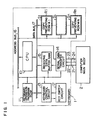
- Fig. 1 is a schematic arrangement diagram of a keyboard of one embodiment of the invention.
- a keyboard 1 there are provided: a central processing unit (hereinafter, referred to as a "CPU") 10 to control the operation of the keyboard 1; a ROM 11 to store the keyboard operation program showing the procedure of the operation of the CPU 10; a key switch circuit 12 to generate an output indicative of the position of the key pressed by the program user who operates the keyboard; a keyboard control circuit 13 to decode the key scan control and key position output of the key switch circuit 12 into the key input data; a serial data transfer circuit 14 which converts the serial data from a computer main body 2 in the computer system into parallel data and converts the parallel data from the keyboard 1 into serial data and then transmits to the computer main body 2, thereby performing a communication between the computer main body 2 and the keyboard 1; a reception data buffer RAM 15 to temporarily store the data which is transmitted from the computer main body 2 through the transfer circuit 14 and to transmit the data to the CPU 10 in timed relation to the data read from the
- ROMs are the characteristic components in the invention and predetermined codes which differ in dependence on the programs which are executed by the computer system are stored in the ROMs R l to R n , respectively.
- a reference numeral 16 denotes an address bus to transfer an address signal from the CPU 10. By properly decoding the address signal on this address bus, each component element in the keyboard is selected or an address in the memory is designated. Although not shown, various kinds of control lines are also supplied from the CPU 10 to respective component elements.
- a data bus 17 serves to transfer data which is outputted from the CPU 10 to each component element, and vice versa.
- serial data transfer circuit 14 and the computer main body 2 are connected by a communication cable 21.
- the transmission and reception of data between the transfer circuit 14 and the computer main body 2 are performed by way of an asynchronous data communication system in which the data length is eight bits and no parity bit is used and the stop bit is 1 (hereinafter, this system is referred to as a "serial transfer system").
- the CPU 10 When the computer system is activated, accordingly, when a power supply of the keyboard 1 is turned on, the CPU 10 initializes the keyboard 1 in accordance with the program in the ROM 11. In this embodiment, the CPU 10 sets the transfer circuit 14 in such a manner that although the transfer circuit 14 can receive data from the computer main body 2, it cannot transmit data from the keyboard 1 to the computer main body 2.
- the CPU 10 of the keyboard 1 sets the transfer circuit 14 into either one of the following three states (a), (b) and (c) of the keyboard 1.
- a predetermined state instruction data (hereinafter, this data is referred to as a "first code") is transmitted from the computer main body 2 through a transmission data line 22 to the keyboard 1, the CPU 10 sets the transfer circuit 14 into the state (a).
- the computer main body 2 can read out the content of the copy preventing ROM in the keyboard 1 through a reception data line 23.
- the key input data from the keyboard 1 is not read out yet.
- this data is referred to as a "second code"
- the CPU 10 transmits the contents of the ROMs inserted in the ROM inserting sockets S l to S n to the computer main body 2.
- the contents of all of the ROMs inserted into the sockets S l to S n may be transmitted or the content of only the ROM (for example, only the ROM R n ) corresponding to the program which is executed by the computer main body 2 may be transmitted.
- This selection in transmission of the content of the ROM can be changed in dependence on the specifications of the program.
- the content of the ROM transmitted from the keyboard 1 is checked. If the content coincides with the expected one, the computer main body 2 determines that the ROM corresponding to the program to be executed is inserted in the keyboard 1. Thus, the computer main body 2 transmits another state instruction data.
- the keyboard 1 is set into the state (b) in response to this another state instruction data. Due to this, the key input data from the keyboard 1 is accurately transmitted to the computer main body 2. Subsequently, the program of the computer main body 2 is continued while performing the data transfer with the keyboard 1.
- the computer main body 2 transmits still another state instruction data to the keyboard 1. In response to this data, the keyboard 1 is forced into the state (c). Thereafter, the program in the computer main body 2 cannot be executed.
- the computer main body 2 can reject the execution of the program. Even if the keyboard 1 shown in Fig. 1 is connected, the computer main body 2 can obviously reject the execution of the program so long as the ROM corresponding to the program to be executed is not inserted; therefore, the software can be more securely protected.
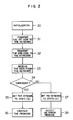
- Fig. 2 shows a schematic flowchart showing an example of the above-mentioned checking operation which is executed by the computer main body 2.
- the system is initialized in STEP 30.
- the computer main body 2 sends the first code to the keyboard 1 and sets the keyboard 1 into the state (a).
- a special code representing that the keyboard was set into the state (a) may be transmitted from the keyboard. The transmission of this special code makes it possible to discriminate whether the keyboard is of the designated type or not at the state of STEP 31.
- STEP 32 the computer main body 2 sends the second code, thereby allowing the data from the keyboard 1 to be read in STEP 33.
- the data from the keyboard 1 is compared with the data preliminarily stored in the program in STEP 34. If they are coincident, STEP 35 follows and the state instruction data to set the keyboard 1 into the state (b) is transmitted to the keyboard 1. Thereafter, in STEP 36, the program is continued. Unless those data coincide in STEP 34, STEP 37 follows and the state instruction data to set the keyboard 1 into the state (c) is transmitted. If necessary, a message indicating that the program cannot be executed is outputted in STEP 38 and the subsequent execution of the program is stopped.
- Fig. 3 shows an example of a computer system to which is applied the keyboard of the present invention, having such a software protecting function as described above.
- a reference numeral 2 denotes the computer main body.
- a disk not shown
- the program is started.
- the process is performed in accordance with the key input from a keyboard 3 of the typewriter key type and the result of the process is outputted to a display 4 or a printer (not shown).
- the keyboard 1 is connected to the computer main body 2.
- the keyboard 1 in Fig. 3 has a special shape in correspondence to the program to be executed, it may obviously have an ordinary shape such as the keyboard 3.
- the program is started by inserting the disk, on which the program to designate the use of the keyboard 1 was stored, into the disk drive 2a.
- the computer main body 2 performs the check in the steps as shown in Fig. 2 and executes the program if the keyboard 1 is the correct one. Otherwise, the computer main body rejects the execution of the program.
- a control line 24 may be supplied from the computer main body 2 through the communication cable 21 to the transfer circuit 14, and the inhibition and permission of the communicating operation of the transfer circuit 14 may then be controlled by the computer main body 2.
- the copying of a program is prevented due to a combination of the computer program and the key data input apparatus which is operated by the user, so that there is an effect such that the software can be more securely protected.
Landscapes
- Engineering & Computer Science (AREA)
- Theoretical Computer Science (AREA)
- Software Systems (AREA)
- General Engineering & Computer Science (AREA)
- Computer Security & Cryptography (AREA)
- Physics & Mathematics (AREA)
- General Physics & Mathematics (AREA)
- Multimedia (AREA)
- Technology Law (AREA)
- Computer Hardware Design (AREA)
- Remote Sensing (AREA)
- Radar, Positioning & Navigation (AREA)
- Human Computer Interaction (AREA)
- Input From Keyboards Or The Like (AREA)
- Storage Device Security (AREA)
Claims (7)
- Tasten-Dateneingabevorrichtung zur Verwendung in einem Computersystem, bei dem ein Software-Kopierschutz erforderlich ist, mit
einer Tasten-Eingabeeinrichtung (12, 13) zum Erzeugen eines Ausgangscodes, der der Position einer durch einen Bediener gedrückten Taste entspricht; und mit
einer Verbindungseinrichtung (14, 15) zum Herstellen einer Verbindung mit einem Computer (2) des Computersystems, das eine vorgegebene Software ausführt;
gekennzeichnet durch
eine Anschlußeinrichtung (Sl, ... Sn) zum Anschließen wenigstens einer Speichervorrichtung, in der vorgegebene Daten entsprechend der genannten Software gespeichert sind; und durch
eine Steuereinrichtung (10, 11), die in der Tasten-Dateneingabevorrichtung untergebracht ist und die mit der Tasten-Eingabeeinrichtung, der Verbindungseinrichtung und der Anschlußeinrichtung verbunden ist, um die Verbindung zwischen der Tasten-Eingabeeinrichtung und dem Computer über die Verbindungseinrichtung freizugeben und zu unterdrücken;
wobei auf die Initialisierung hin die Steuereinrichtung (10, 11) die Verbindungseinrichtung veranlaßt, das Absenden von Daten an den Computer insgesamt zu unterbinden;
wobei der Computer (2) dann die Steuereinrichtung (10, 11) veranlaßt, die Verbindungseinrichtung (14, 15) in einen ersten Zustand (a) zu versetzen, in dem vom Computer Daten empfangen werden können und die genannten vorgegebenen Daten in der Speichervorrichtung zu dem Computer übertragen werden können, während von der Tasten-Eingabeeinrichtung (12, 13) keine Daten zu dem Computer übertragen werden können;
wobei entweder die Steuereinrichtung (10, 11) es der Tasten-Eingabeeinrichtung (12, 13) ermöglicht, die genannten Ausgangscodes nur dann zu dem Computer (2) zu übertragen, wenn die vorgegebenen Daten, die in der an die Anschlußeinrichtung angeschlossenen Speichervorrichtung gespeichert sind, genau einer von dem Computer durch die Software gestellten Frage entsprechen (Zustand (b)),
oder die Steuereinrichtung (10, 11) die Übertragung der Ausgangscodes von der Tasten-Eingabeeinrichtung (12, 13) unterdrückt, wenn entweder die vorgegebenen Daten nicht oder nicht richtig der Frage entsprechen (Zustand (c));
wodurch ein Kopierschutz für die Software durch das Paar Software und Tasten-Dateneingabevorrichtung erhalten werden kann. - Tasten-Dateneingabevorrichtung nach Anspruch 1, wobei die Steuereinrichtung (10, 11) die in der an die Anschlußeinrichtung (Sl, ... Sn) angeschlossenen Speichervorrichtung gespeicherten Daten in Reaktion auf einen ersten vorgegebenen Code überträgt, der vom Computer ausgegeben wird.
- Tasten-Dateneingabevorrichtung nach Anspruch 2, wobei in Reaktion auf einen zweiten vorgegebenen Code, der erzeugt wird, wenn der Computer durch Auslesen der Daten in der Speichervorrichtung feststellt, daß die an die Anschlußeinrichtung (Sl, ... Sn) angeschlossene Speichervorrichtung der auszuführenden Software entspricht, es die Steuereinrichtung (10, 11) der Verbindungseinrichtung (14, 15) erlaubt, den Ausgangscode von der Tasten-Eingabeeinrichtung (12, 13) zu dem Computer zu übertragen.
- Tasten-Dateneingabevorrichtung nach Anspruch 2, wobei in Reaktion auf einen dritten vorgegebenen Code, der erzeugt wird, wenn der Computer durch Auslesen der Daten in der Speichervorrichtung feststellt, daß die an die Anschlußeinrichtung (Sl, ... Sn) angeschlossene Speichervorrichtung nicht der auszuführenden Software entspricht, die Steuereinrichtung (10, 11) die Verbindungseinrichtung (14, 15) in einen solchen Zustand versetzt, daß die Daten von der Tasten-Eingabeeinrichtung (12, 13) nicht zu dem Computer übertragen werden können.
- Tasten-Dateneingabevorrichtung nach einem der Ansprüche 1 bis 4, wobei die Speichervorrichtung ein ROM (Rl, ... Rn) und die Anschlußeinrichtung wenigstens eine ROM-Fassung (Sl, ... Sn) ist.
- Tasten-Dateneingabevorrichtung nach einem der Ansprüche 1 bis 5, wobei die Steuereinrichtung eine CPU (10) enthält.
- Tasten-Dateneingabevorrichtung nach einem der Ansprüche 1 bis 6, wobei die Verbindungseinrichtung (14, 15) die Verbindung zu dem Computer mittels eines seriellen Übertragungssystems herstellt.
Applications Claiming Priority (2)
| Application Number | Priority Date | Filing Date | Title |
|---|---|---|---|
| JP100585/85 | 1985-05-14 | ||
| JP60100585A JP2553495B2 (ja) | 1985-05-14 | 1985-05-14 | プログラム鍵盤機構 |
Publications (2)
| Publication Number | Publication Date |
|---|---|
| EP0201628A1 EP0201628A1 (de) | 1986-11-20 |
| EP0201628B1 true EP0201628B1 (de) | 1991-06-19 |
Family
ID=14277959
Family Applications (1)
| Application Number | Title | Priority Date | Filing Date |
|---|---|---|---|
| EP85112787A Expired - Lifetime EP0201628B1 (de) | 1985-05-14 | 1985-10-09 | Programmierbares Tastaturgerät |
Country Status (9)
| Country | Link |
|---|---|
| EP (1) | EP0201628B1 (de) |
| JP (1) | JP2553495B2 (de) |
| KR (1) | KR900002349B1 (de) |
| CN (1) | CN85105985B (de) |
| AU (2) | AU556098B1 (de) |
| CA (1) | CA1246240A (de) |
| DE (2) | DE201628T1 (de) |
| GB (1) | GB2175422B (de) |
| HK (1) | HK3290A (de) |
Families Citing this family (10)
| Publication number | Priority date | Publication date | Assignee | Title |
|---|---|---|---|---|
| JP2544101B2 (ja) * | 1985-05-23 | 1996-10-16 | 株式会社 メルコ | コンピユ−タプログラムの盗用防止装置 |
| FR2608290A1 (fr) * | 1986-12-11 | 1988-06-17 | Mors | Dispositif de protection de poste informatique a clavier |
| FR2622319A1 (fr) * | 1987-10-27 | 1989-04-28 | Guerri Jean | Support de logiciel a protection contre la copie et dispositif de mise en oeuvre d'un logiciel a protection contre la copie |
| GB2222281A (en) * | 1988-08-27 | 1990-02-28 | Simon Keith Watson | Preventing unauthorised use of copies of computer software |
| FR2656440A1 (fr) * | 1989-12-22 | 1991-06-28 | Neagu Mircea | Systeme pour appairer de maniere specifique un peripherique de controle de pointeur ou d'entree, et un poste informatique muni d'un ecran. |
| FR2662280B1 (fr) * | 1990-05-16 | 1992-08-07 | Telemecanique | Procede de gestion des droits d'utilisation de plusieurs logiciels sur un poste de travail informatique et systeme pour sa mise en óoeuvre. |
| JPH0635566A (ja) * | 1992-07-15 | 1994-02-10 | Mitsubishi Electric Corp | 電子機器 |
| US5500810A (en) * | 1993-04-28 | 1996-03-19 | Yozan Inc. | Filter device with memory test circuit |
| CN1095112C (zh) * | 1999-10-14 | 2002-11-27 | 盖内蒂克瓦尔有限公司 | 具安全密码认证的键盘装置及其方法 |
| US7602655B2 (en) * | 2006-01-12 | 2009-10-13 | Mediatek Inc. | Embedded system |
Citations (2)
| Publication number | Priority date | Publication date | Assignee | Title |
|---|---|---|---|---|
| EP0116327A1 (de) * | 1983-02-01 | 1984-08-22 | Minibit AG | Programmtaxiervorrichtung für Rechenanlagen |
| EP0135422A1 (de) * | 1983-08-11 | 1985-03-27 | Societe Civile "A.B.C.D." | Programmschutzvorrichtung bei einem, mit wenigstens einem peripheren Terminal verbundenen Rechner |
Family Cites Families (15)
| Publication number | Priority date | Publication date | Assignee | Title |
|---|---|---|---|---|
| JPS5759248A (en) * | 1980-09-27 | 1982-04-09 | Sofuia Syst:Kk | Prevention device for surreptitious use of program |
| JPS57137957A (en) * | 1981-02-20 | 1982-08-25 | Hitachi Ltd | Terminal connection system |
| JPS5872225A (ja) * | 1981-10-27 | 1983-04-30 | Fujitsu Ltd | モ−ドロツク機能を有するデ−タ処理装置 |
| CA1183276A (en) * | 1981-11-25 | 1985-02-26 | Charles B. Heffron | Method for identifying a system-allied physically separable program memory and a data processing system utilizing said method |
| EP0084441A3 (de) * | 1982-01-19 | 1984-08-22 | Tabs Limited | Verfahren und Einrichtung zur Sicherung von Computer-Software-Eigentum |
| FR2523745B1 (fr) * | 1982-03-18 | 1987-06-26 | Bull Sa | Procede et dispositif de protection d'un logiciel livre par un fournisseur a un utilisateur |
| JPS58195975A (ja) * | 1982-05-12 | 1983-11-15 | Canon Inc | 電子機器の使用者認識パツク |
| US4462076A (en) * | 1982-06-04 | 1984-07-24 | Smith Engineering | Video game cartridge recognition and security system |
| FR2528196B1 (fr) * | 1982-06-07 | 1988-05-27 | Fortune Systems Corp | Appareil de protection de programmes d'ordinateur |
| GB8302096D0 (en) * | 1983-01-26 | 1983-03-02 | Int Computers Ltd | Software protection in computer systems |
| SE8303021A0 (sv) * | 1983-05-30 | 1984-12-01 | Dialogue Switching Technologies Ltd | Anordning vid en dataterminal ansluten till ett kommunikationsnät |
| JPS6024640A (ja) * | 1983-07-20 | 1985-02-07 | Toshiba Corp | 機密保護装置 |
| GB8323283D0 (en) * | 1983-08-31 | 1983-10-05 | Univ Strathclyde | Copyright protection device |
| JPS60116537U (ja) * | 1984-01-18 | 1985-08-07 | 竹林 春海 | 電子計算機プログラム盗用防止器 |
| US4791565A (en) * | 1984-06-20 | 1988-12-13 | Effective Security Systems, Inc. | Apparatus for controlling the use of computer software |
-
1985
- 1985-05-14 JP JP60100585A patent/JP2553495B2/ja not_active Expired - Lifetime
- 1985-05-14 AU AU48351/85A patent/AU556098B1/en not_active Ceased
- 1985-05-14 AU AU48351/85D patent/AU4835185A/en active Granted
- 1985-08-08 CN CN85105985A patent/CN85105985B/zh not_active Expired
- 1985-08-08 GB GB08519944A patent/GB2175422B/en not_active Expired
- 1985-10-09 CA CA000492609A patent/CA1246240A/en not_active Expired
- 1985-10-09 EP EP85112787A patent/EP0201628B1/de not_active Expired - Lifetime
- 1985-10-09 DE DE198585112787T patent/DE201628T1/de active Pending
- 1985-10-09 DE DE8585112787T patent/DE3583294D1/de not_active Expired - Fee Related
- 1985-10-11 KR KR1019850007470A patent/KR900002349B1/ko not_active Expired
-
1990
- 1990-01-18 HK HK32/90A patent/HK3290A/xx not_active IP Right Cessation
Patent Citations (2)
| Publication number | Priority date | Publication date | Assignee | Title |
|---|---|---|---|---|
| EP0116327A1 (de) * | 1983-02-01 | 1984-08-22 | Minibit AG | Programmtaxiervorrichtung für Rechenanlagen |
| EP0135422A1 (de) * | 1983-08-11 | 1985-03-27 | Societe Civile "A.B.C.D." | Programmschutzvorrichtung bei einem, mit wenigstens einem peripheren Terminal verbundenen Rechner |
Also Published As
| Publication number | Publication date |
|---|---|
| DE201628T1 (de) | 1987-04-30 |
| JPS61259338A (ja) | 1986-11-17 |
| CN85105985A (zh) | 1987-02-18 |
| JP2553495B2 (ja) | 1996-11-13 |
| KR900002349B1 (ko) | 1990-04-12 |
| GB2175422B (en) | 1988-11-23 |
| GB2175422A (en) | 1986-11-26 |
| CA1246240A (en) | 1988-12-06 |
| HK3290A (en) | 1990-01-25 |
| KR860009336A (ko) | 1986-12-22 |
| GB8519944D0 (en) | 1985-09-18 |
| AU556098B1 (en) | 1986-10-23 |
| EP0201628A1 (de) | 1986-11-20 |
| AU4835185A (en) | 1985-10-07 |
| DE3583294D1 (de) | 1991-07-25 |
| CN85105985B (zh) | 1987-02-18 |
Similar Documents
| Publication | Publication Date | Title |
|---|---|---|
| US4864494A (en) | Software usage authorization system with key for decrypting/re-encrypting/re-transmitting moving target security codes from protected software | |
| US5442645A (en) | Method for checking the integrity of a program or data, and apparatus for implementing this method | |
| US4573119A (en) | Computer software protection system | |
| EP0537738B1 (de) | Verfahren zum Schutz von Programmen durch Verwendung verschiedener Schlüssel gegen unberechtigte Durchführung | |
| US5836010A (en) | Personal computer using chip-in card to prevent unauthorized use | |
| CA1180130A (en) | Rom security circuit | |
| EP0201628B1 (de) | Programmierbares Tastaturgerät | |
| EP0733987B1 (de) | Übertragungsverfahren mit Protokolländerung und Datenverarbeitungsgerät dafür | |
| US7363507B2 (en) | Device and method of preventing pirated copies of computer programs | |
| JPS59139200A (ja) | 固定記憶装置用保護装置 | |
| EP1109129B1 (de) | IC-Karte mit Selbstdiagnosefunktion | |
| US5297200A (en) | Computer security system | |
| US20060242697A1 (en) | Software authentication device and image forming device | |
| WO1995014338A1 (en) | System for reading encrypted information and unit for use in such a system | |
| GB2231421A (en) | Memory protection | |
| EP0802486B1 (de) | Verfahren zur Installierung des Gerätetreibers einer Rechnerperipherie-Einrichtung | |
| US5057999A (en) | Microprocessor having a protection circuit to insure proper instruction fetching | |
| EP0171456A1 (de) | Anordnung zur Sicherung von Computer-Software | |
| US5564110A (en) | Printer interface apparatus with plug-in unit authorized for reception of data upon type verification | |
| US6633931B2 (en) | Card identification system and method for an input/output interface | |
| US20040128478A1 (en) | Method for identifying a correct command entry address when using command words of different length | |
| AU648023B2 (en) | Computer security system | |
| JP2989705B2 (ja) | ダウンロードプログラムの保護方式 | |
| US4676674A (en) | Data input/output unit | |
| JPH0224184A (ja) | プリンタ装置 |
Legal Events
| Date | Code | Title | Description |
|---|---|---|---|
| PUAI | Public reference made under article 153(3) epc to a published international application that has entered the european phase |
Free format text: ORIGINAL CODE: 0009012 |
|
| AK | Designated contracting states |
Kind code of ref document: A1 Designated state(s): DE FR IT NL SE |
|
| ITCL | It: translation for ep claims filed |
Representative=s name: JACOBACCI CASETTA & PERANI S.P.A. |
|
| 17P | Request for examination filed |
Effective date: 19861219 |
|
| EL | Fr: translation of claims filed | ||
| TCNL | Nl: translation of patent claims filed | ||
| DET | De: translation of patent claims | ||
| 17Q | First examination report despatched |
Effective date: 19890118 |
|
| RAP3 | Party data changed (applicant data changed or rights of an application transferred) |
Owner name: CADAM SYSTEMS COMPANY, INC |
|
| GRAA | (expected) grant |
Free format text: ORIGINAL CODE: 0009210 |
|
| AK | Designated contracting states |
Kind code of ref document: B1 Designated state(s): DE FR IT NL SE |
|
| REF | Corresponds to: |
Ref document number: 3583294 Country of ref document: DE Date of ref document: 19910725 |
|
| ET | Fr: translation filed | ||
| ITF | It: translation for a ep patent filed | ||
| PLBE | No opposition filed within time limit |
Free format text: ORIGINAL CODE: 0009261 |
|
| STAA | Information on the status of an ep patent application or granted ep patent |
Free format text: STATUS: NO OPPOSITION FILED WITHIN TIME LIMIT |
|
| 26N | No opposition filed | ||
| EAL | Se: european patent in force in sweden |
Ref document number: 85112787.8 |
|
| PGFP | Annual fee paid to national office [announced via postgrant information from national office to epo] |
Ref country code: SE Payment date: 20011017 Year of fee payment: 17 |
|
| PGFP | Annual fee paid to national office [announced via postgrant information from national office to epo] |
Ref country code: FR Payment date: 20011030 Year of fee payment: 17 |
|
| PGFP | Annual fee paid to national office [announced via postgrant information from national office to epo] |
Ref country code: NL Payment date: 20011031 Year of fee payment: 17 |
|
| PGFP | Annual fee paid to national office [announced via postgrant information from national office to epo] |
Ref country code: DE Payment date: 20011213 Year of fee payment: 17 |
|
| PG25 | Lapsed in a contracting state [announced via postgrant information from national office to epo] |
Ref country code: SE Free format text: LAPSE BECAUSE OF NON-PAYMENT OF DUE FEES Effective date: 20021010 |
|
| PG25 | Lapsed in a contracting state [announced via postgrant information from national office to epo] |
Ref country code: NL Free format text: LAPSE BECAUSE OF NON-PAYMENT OF DUE FEES Effective date: 20030501 Ref country code: DE Free format text: LAPSE BECAUSE OF NON-PAYMENT OF DUE FEES Effective date: 20030501 |
|
| EUG | Se: european patent has lapsed | ||
| PG25 | Lapsed in a contracting state [announced via postgrant information from national office to epo] |
Ref country code: FR Free format text: LAPSE BECAUSE OF NON-PAYMENT OF DUE FEES Effective date: 20030630 |
|
| NLV4 | Nl: lapsed or anulled due to non-payment of the annual fee |
Effective date: 20030501 |
|
| REG | Reference to a national code |
Ref country code: FR Ref legal event code: ST |