EP0202671A2 - Méthode d'enregistrement et de recherche de données d'image - Google Patents
Méthode d'enregistrement et de recherche de données d'image Download PDFInfo
- Publication number
- EP0202671A2 EP0202671A2 EP86106907A EP86106907A EP0202671A2 EP 0202671 A2 EP0202671 A2 EP 0202671A2 EP 86106907 A EP86106907 A EP 86106907A EP 86106907 A EP86106907 A EP 86106907A EP 0202671 A2 EP0202671 A2 EP 0202671A2
- Authority
- EP
- European Patent Office
- Prior art keywords
- image
- data
- document
- memo
- secondary data
- Prior art date
- Legal status (The legal status is an assumption and is not a legal conclusion. Google has not performed a legal analysis and makes no representation as to the accuracy of the status listed.)
- Granted
Links
Images




Classifications
-
- H—ELECTRICITY
- H04—ELECTRIC COMMUNICATION TECHNIQUE
- H04N—PICTORIAL COMMUNICATION, e.g. TELEVISION
- H04N1/00—Scanning, transmission or reproduction of documents or the like, e.g. facsimile transmission; Details thereof
- H04N1/32—Circuits or arrangements for control or supervision between transmitter and receiver or between image input and image output device, e.g. between a still-image camera and its memory or between a still-image camera and a printer device
- H04N1/32101—Display, printing, storage or transmission of additional information, e.g. ID code, date and time or title
- H04N1/32106—Display, printing, storage or transmission of additional information, e.g. ID code, date and time or title separate from the image data, e.g. in a different computer file
- H04N1/32112—Display, printing, storage or transmission of additional information, e.g. ID code, date and time or title separate from the image data, e.g. in a different computer file in a separate computer file, document page or paper sheet, e.g. a fax cover sheet
-
- G—PHYSICS
- G06—COMPUTING OR CALCULATING; COUNTING
- G06F—ELECTRIC DIGITAL DATA PROCESSING
- G06F16/00—Information retrieval; Database structures therefor; File system structures therefor
- G06F16/40—Information retrieval; Database structures therefor; File system structures therefor of multimedia data, e.g. slideshows comprising image and additional audio data
-
- G—PHYSICS
- G06—COMPUTING OR CALCULATING; COUNTING
- G06F—ELECTRIC DIGITAL DATA PROCESSING
- G06F16/00—Information retrieval; Database structures therefor; File system structures therefor
- G06F16/40—Information retrieval; Database structures therefor; File system structures therefor of multimedia data, e.g. slideshows comprising image and additional audio data
- G06F16/48—Retrieval characterised by using metadata, e.g. metadata not derived from the content or metadata generated manually
-
- G—PHYSICS
- G06—COMPUTING OR CALCULATING; COUNTING
- G06F—ELECTRIC DIGITAL DATA PROCESSING
- G06F16/00—Information retrieval; Database structures therefor; File system structures therefor
- G06F16/50—Information retrieval; Database structures therefor; File system structures therefor of still image data
- G06F16/58—Retrieval characterised by using metadata, e.g. metadata not derived from the content or metadata generated manually
-
- G—PHYSICS
- G06—COMPUTING OR CALCULATING; COUNTING
- G06V—IMAGE OR VIDEO RECOGNITION OR UNDERSTANDING
- G06V30/00—Character recognition; Recognising digital ink; Document-oriented image-based pattern recognition
- G06V30/40—Document-oriented image-based pattern recognition
- G06V30/41—Analysis of document content
- G06V30/413—Classification of content, e.g. text, photographs or tables
-
- H—ELECTRICITY
- H04—ELECTRIC COMMUNICATION TECHNIQUE
- H04N—PICTORIAL COMMUNICATION, e.g. TELEVISION
- H04N2201/00—Indexing scheme relating to scanning, transmission or reproduction of documents or the like, and to details thereof
- H04N2201/32—Circuits or arrangements for control or supervision between transmitter and receiver or between image input and image output device, e.g. between a still-image camera and its memory or between a still-image camera and a printer device
- H04N2201/3201—Display, printing, storage or transmission of additional information, e.g. ID code, date and time or title
- H04N2201/3225—Display, printing, storage or transmission of additional information, e.g. ID code, date and time or title of data relating to an image, a page or a document
- H04N2201/3245—Display, printing, storage or transmission of additional information, e.g. ID code, date and time or title of data relating to an image, a page or a document of image modifying data, e.g. handwritten addenda, highlights or augmented reality information
-
- H—ELECTRICITY
- H04—ELECTRIC COMMUNICATION TECHNIQUE
- H04N—PICTORIAL COMMUNICATION, e.g. TELEVISION
- H04N2201/00—Indexing scheme relating to scanning, transmission or reproduction of documents or the like, and to details thereof
- H04N2201/32—Circuits or arrangements for control or supervision between transmitter and receiver or between image input and image output device, e.g. between a still-image camera and its memory or between a still-image camera and a printer device
- H04N2201/3201—Display, printing, storage or transmission of additional information, e.g. ID code, date and time or title
- H04N2201/3274—Storage or retrieval of prestored additional information
- H04N2201/3277—The additional information being stored in the same storage device as the image data
Definitions
- the present invention relates to a method of storing and retrieving image data. More specifically, the invention relates to a method of storing secondary data such as memos added to document image as index data of document image and to a method of retrieving document image by utilizing the secondary data.
- secondary data such as memos added to document image as index data of document image
- index data such as names of the documents, classification codes, keywords and the like are registered through the keys to being correspond to the document images.
- a user designates these index data so that the contents of the corresponding document are produced on the display device.
- a system of this type has been disclosed, for example, in a journal "NIKKEI COMPUTER" published by Nikkei McGrowhill Co., December 26, 1985, pp. 62-64. Since items common to each of the documents have been selected, the above-mentioned retrieval data are not helpful to directly retrieve a document that is being sought if the user does not remember the name of the literature or the keyword or if he remembers them vaguely. In this case, the document images are displayed successively to retrieve the correct one by his eyes.
- the applicant of the present invention has proposed a method of retrieving image in Japanese Patent Application No. 55073/1983 (Japanese Patent Laid-Open No. 183458/1984, U.S. Serial No. 594690) according to which secondary reference data such as memos specific to the image data are registered, and the image data is specified with reference to the thus registered data at the time of retrieval.
- the object of the present invention is to provide a method of storing secondary data such as memos which the user has added to the document, and a method of retrieving the image data by utilizing the secondary data.
- Another object of the present invention is to provide a method of storing image data which is capable of storing a given region of the document image as an index for retrieving the document image, and a method of retrieving the document image by utilizing the index.
- the method of storing document image data in a filing system of the present invention comprises:
- the secondary data may include memos written by the user on the document, and/or marks such as underlines and boxes or surrounding marks attached to particular words and description in the document.
- the data that represents the local region includes position coordinates of the local region,'document image in the local region, and character codes obtained by discriminating the characters contained in the local region.
- the data that represent the local regions are rearranged for every classification section of the secondary data, and are stored in the second memory region.
- the user designates a classification section of the secondary data, so that the contents of local region in the document image or the contents of memo data corresponding to the underlined portion are displayed in the form of a look-up table or list on the display device, and the user then selects one of the secondary data that are displayed. Through the select operation, a document image corresponding to the selected secondary data is read from the first memory region and is displayed.
- the user inputs the processed document to easily prepare a secondary data file that corresponds to the document which has been registered in the filing system.
- the image in most portion of the processed document has been stored in the file of the original document. Therefore, in the secondary data file needs be stored the information added by the user or the image of a portion of the original document related thereto. Therefore, the secondary data file may be made up of a personal file such as a floppy disc having a small memory capacity.
- a plurality of users are allowed to have their own secondary data files without changing the contents of the common file in which are stored images of the original documents, and are hence allowed to quickly take out desired document images from the common image file with reference to their own memo data stored in the secondary data file.
- Fig. 1 shows a system for retrieving document image data to which the present invention is adapted, wherein reference numeral 1 denotes a microprocessor (CPU), 2 denotes a main memory (MM), 3 denotes a keyboard (KB), 4 denotes an image scanner (IS), 5 and 5' denote filing devices (FD), 6 denotes a bit map memory (BM), 7 denotes an image processor (IP), 8 denotes a display controller (DC), 9 denotes a CRT display, and 10 denotes a printer (PR).
- CPU microprocessor
- MM main memory
- KB keyboard
- IS image scanner
- FD file devices
- FD file devices
- FD denotes a bit map memory
- IP image processor
- DC display controller
- CTR display printer
- PR printer
- FIG. 2 is a diagram which schematically illustrates the process for extracting the secondary data.
- an original document 11 is taken from the image scanner 4 into the bit map memory 6 to obtain an original image 12.
- the original image 12 is stored in the file 5 which consists, for example, of an optical disc.
- the image processor 7 writes a rectangular frame FR at a predetermined position on the original image 12 depending upon the instruction from the CPU 1 to thereby prepare an image 13 with frame which will be produced by the printer 10 as an original paper 14 for processing the document.
- a memo (e.g., underline) is added onto the original paper 14 to prepare a processed document 15 with memo.
- the processed document 15 is read by the image scanner 4 and is input as an image with memo 16 to a region different from the region where the image 13 with frame has been stored on the bit map memory 6.
- the printer 10 and the image scanner 4 usually have different picture element densities.
- the normalization is effected by using, for example, the rectangular frame FR to obtain a normalized image 17.
- the image 13 with frame and the normalized image 17 are matched with each other, to obtain a differential image 18 in which are left non-coincident portions only.
- the differential image contains, in addition to memo data, deterioration data of the original image caused by passing the image 13 with frame through the processor 10 and the image scanner 4. Finally, the deterioration data is removed from the differential image 18 to obtain a memo image 19 which contains memo data only.
- the above-mentioned processing is wholly controlled by the CPU I, and the individual image processings are performed by the image processor 7 according to the instruction from the CPU 1. The image processings by the image processor 7 will now be described in detail.
- the rectangular frame FR that serves as an indication of reference position is described at a position maintaining a predetermined distance "a" from the edge of the original image 12.
- the rectangular frmae FR may be replaced by other mark that indicates the position.
- the element patterns of the lines should be written successively in the up and down direction and in the right and left direction.
- black picture elements of the regions outside the frame FR on the original image 12 are all converted into white picture elements so that the normalization processing can be carried out conveniently as will be described later.
- a step is carried out to find the skew of the image 16 with memo by detecting four straight lines that constitute the rectangular frame FR, and a step is further carried out to convert the coordinates of the whole image in order to correct the skew of the image 16 with memo and to correct, depending upon the cases, the size thereof, such that the rectangular frame of the image 16 with memo and the rectangular frame of the image 13 with frame are brought into agreement with each other.
- Straight lines constituting the rectangular frame FR can be detected by a variety of known methods. As one of such methods, sue is made here of a known algorithm of Hough conversion.
- Fig. 3 is a program flow chart for detecting a vertical line located on the left side among the four straight lines of the rectangular frame FR
- Fig. 4 is a diagram to explain the detection of the line.
- ⁇ x sin ⁇ + y cos ⁇ is an equation of the straight line that is to be found, wherein ⁇ denotes a distance from the origin 0, and ⁇ denotes a skew of the straight line.
- the feature of Hough conversion is that the straight lines can be detected irrespective of partial noise data in the image.
- the outline of this algorithm is as described below. That is, in the flow chart of Fig. 3, a candidate of a point such as a black picture element P 1 is found on a straight line in the steps 23 to 25.
- Left upper, right upper, left lower and right lower corner points of the rectangular frame FR are found from the intersecting points of these four straight lines, and are denoted as (0, 0), (M 1 , N 1 ), (M 2 , N 2 ), (M 1 + M 2 , N 1 + N 2 ) to form a new coordinate system with the left upper corner point as the origin. Described below is a step for converting the whole image 16 with memo by utilizing the rectangular frame FR.
- the conversion from the image 16 into the image 17 can be expressed as, where (x, y) represents the coordinate of a picture element of the image 16 with memo, and (X, Y). represents the coordinate of a picture element that corresponds to (x, y) in the normalized image 17.
- a coordinate (x, y) corresponding to a lattice point (X, Y) is found according to an equation
- the coordinate (x, y) does not serve as a lattice point on which a picture element exists. Therefore, fraction over 1/2 is counted as one and the rest is disregarded to find an integer in order to use a value of lattice point which is closest thereto, or the logical sum of concentrations of the surrounding lattice points is interpolated to find a concentration that is to be used as the concentration at (x, y).
- fraction over 1/2 is counted as one and the rest is disregarded to find an integer in order to use a value of lattice point which is closest thereto, or the logical sum of concentrations of the surrounding lattice points is interpolated to find a concentration that is to be used as the concentration at (x, y).
- the differential image can be easily prepared by comparing the image 13 having frame with the normalized image 17 with a picture element as a unit, and rendering the non- coincident portions to be black and the coincident portions to be white. To distinguish the memo data over the noise, however, the procedure should be carried out as described below.
- reference numeral 13 denotes an image with frame having a pattern Sl
- 17 denotes a normalized image having a pattern Sl that is deformed by noise and having a pattern S2 added as memo data
- 13' denotes an image 13' with frame which is processed to expand the pattern Sl
- 18 denotes a differential image obtained from the images 13' and 17
- l8' denotes a differential image obtained from the images 13 and 17.
- the concentrations of given picture elements (x, y) of the image 13 with frame and of the normalized image 17 are denoted by f(x, y) and g(x, y), the image being supposed to be binary image, the concentration of the black picture element being denoted by "1” and the concentration of the white picture element being denoted by "0”, then the image 13' is obtained by performing the operation, for all x and y.
- the expansion processing makes it possible to make the differential image free from noise region S3 added to the initial pattern Sl or the portions missing from the initial pattern, that are caused as the image is passed through the printer 10 and the image scanner 4.
- the expansion processing was performed based upon the logical sum of the neighboring four picture elements. It is, however, allowable to expand the logical sum to include the neighboring nine picture elements, the neighboring 16 picture elements, and so on. Depending upon the kind of memo to be treated, furthermore, the expansion processing can be eliminated.
- a process for preparing a memo image 19 from the differential image 18 will now be described. This process is to remove noise from the memo data that has noise which could not be removed by the above-mentioned process.
- the noise has a line width smaller than that of the memo data, and the noise is removed by the contraction conversion, and the line width of the memo data is restored by the expansion conversion.
- the differential image 18 is denoted by h(x, y).
- the black region of the differential image 18 is contracted. The contraction is realized by effecting the operation.
- h'(x,y) h(x,y) ⁇ h(x+1,y) ⁇ h(x,y+1) ⁇ h(x+1,y+1) for all x and y.
- the black region of the contraction image h'(x, y) is expanded in the same manner as the aforementioned f'(x, y).
- the expansion may be effected to include the neighboring nine picture elements, the neighboring 16 picture elements, and so on, instead of the logical sum or the logical product of the neighboring four picture elements.
- the memo data is cut off due to the process for expanding the image 13 with frame. This defect, however, can be interpolated by effecting the expansion conversion and then the contraction conversion prior to effecting the above-mentioned process of contraction and expansion.
- Described below is a process which discriminates the kind of memo data to prepare a secondary data file depending upon the kind of memo data.
- Fig. 7 shows a relationship among a processed image 16 to.which memo data is added, wherein X represents-arbitrary characters, a memo image 19, and a divided-region image 20 in which a circumscribing rectangle is found for each region of continuous black picture elements in the memo image 19.
- the memo data includes three types of data, i.e., underline Ml, box or surrounding mark M2, and notes M3.
- the memo image 19 contains noise N that was not removed from the differential image by the conversion into memo image 19.
- the noise component N is discriminated and removed by the step of classifying the memo data that will be described later.
- the image is divided into units of regions of continuous black picture elements.
- Memo number is attached to each of the regions.
- a variety of algorithms have heretofore been proposed to cut out the continuous region.
- the continuous region can be cut out, for example, by the labelling algorithm disclosed in a paper entitled "Pattern Data Processing" by Makoto Nagao, the Japanese Association of Electronic Communications, 1983, p. 84.
- Labels 1 to 6 attached to the individual regions are corresponded as memo numbers to a clolumn 40 of region table TBI as shown in Fig. 8.
- the heights of the regions are calculated from the coordinates of the uppermost and lowermost portions of the regions, and are written onto a column 41 of the table.
- the widths are also calculated from the coordinates of the leftmost and rightmost portions, and are written onto a column 42.
- the region table TBI is prepared in a work area in the main memory 2.
- the memory data are classified by calculating a variety of parameters based upon the data of circumscribing rectangles found by dividing the region, and comparing them with predetermined classification standards.
- predetermined classification standards there are three classification parameters that are stored in the columns 43 to 45 of the table TBl.
- a first parameter stored in the column 43 is defined by the width/height of the region and represents a ratio of the height to the width of the region.
- a second parameter stored in the column 44 is defined by the width.plus height, and represents the size of the region.
- a third parameter stored in the column 45 represents a ratio of black picture elements that occupy the area of the region in the original image 12 at a position that corresponds to the region. The box or surrounding mark contains the original image that exists in the corresponding region.
- the third parameter has a large value; i.e., the value is small in the case of other memo data.
- the box or surrounding mark can be discriminated from other memo data.
- Fig. 9 is a flow chart of a program for classifying the memos using the above-mentioned parameters, wherein Q 43 to Q 45 denote threshold values of the first to third parameters.
- Q 43 to Q 45 denote threshold values of the first to third parameters.
- the secondary data file for retrieving the document image is then prepared based upon the memo data that are classified as described above.
- the underline Ml is presumed to be a sign that is drawn under the keywords in a sentence, and a train of characters above the underline in the document image is cut out so as to be used as a retrieval data.
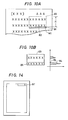
- a rectangular region 83 having, as a base, the base 82 of a circumscribing rectangle 81 of the underline Ml and having a predetermined height H, is set in a processing region on the original image 12 or on the image 13 with frame as shown in Fig. 10A.
- the image in the rectangular region is then projected in the lateral direction as shown in Fig. 10B in order to find a distribution 84 of black picture elements. From this distribution, a boundary 85 of character train 86 of the lowermost line in the rectangular region 83 can be found, thereby to obtain the position and size of the local region where the character train 86 exists.
- the box or surrounding mark M2 can be treated as a sign that represents the number of an important drawing quoted in the document.
- characters in a local region in the original image specified by the circumscribing rectangle of the box or surrounding mark are recognized.
- the recognition can be performed by adapting a variety of algorithms that have heretofore been used with the existing OCR apparatus, or can simply be performed by the method of pattern matching disclosed in the aforementioned literature compiled by the Japanese Association of Electronic Communications, p. 98.
- the recognized result is used as a retrieval data together with a pointer of from the sentence to the drawing number, as has been disclosed, for example, in Japanese Patent Application No. 273460/1984 entitled a system for retrieving document image data filed by the same applicant as the present application.
- the note M3 is extracted as a circumscribing rectangle on the divided-region table TBI with a character as a unit.
- the neighboring rectangular regions are collected together. This process is realized by expanding the individual circumscribing rectangles at a predetermined ratio, and collecting the regions that are overlapped into one.
- Fig. 11 shows a data format of the thus extracted secondary data file 90, wherein reference numeral 91 denotes a code data such as image number that serves as a pointer to the original image, and reference numerals 92, 93, and 94 denotes columns for storing the secondary data that correspond to the note M3, underline Ml, and box or surrounding mark M2.
- a coordinate (x 0 , y 0 ) represents a position at the left upper corner of a circumscribing rectangle of the memo data, a coordinate (x l , y 1 ) represents a position at the right lower corner of the same rectangle, and P denotes a pointer to the note image.
- the note image does not exist in the file of the original image but is obtained from the processed image, and is stored in a separate memory region in the filing apparatus 5 in which the original image has been stored, or is stored in a separate memory region in the filing apparatus 5'which forms the secondary data file 90.
- a coordinate (x 2 , Y2 ) represents a position at the left upper corner of a character train rectangle 86
- a coordinate (x 3 , Y3 represents a position at the right lower corner of the same rectangle
- a character code 95 is obtained by recognizing a character in the character train specified by the box or surrounding mark M2
- a column 96 is an area for storing pointers that indicate the correspondence to the drawing images designated by the box or surrounding mark M2.
- the column 96 of pointers remains blank. Namely, the image data that have been stored are searched successively, and the image number is stored as a pointer in this column 96 at a moment when the image of the corresponding drawing is found.
- the data in the secondary data file 90 consist chiefly of coordinates that specify the local region in the original image.
- the local region is extracted from the document image based upon the coordinate data to display the contents thereof.
- the secondary data file 90 may be comprised of a magnetic memory device having a relatively small memory capacity, i.e., may be comprised of a filing device 5' such as a floppy disc, that is separate from the filing device 5 of a large capacity such as an optical disc which stores document images.
- the secondary data may be stored in the file 5' consisting of an optical disc, as a matter of course.
- the local region designated by the underline Ml is stored by way of position coordinates, and the contents of the local region are extracted from the file of original images.
- a keyword contained in each of the local regions is stored as a character code in the column 93 of the secondary data file, and is used for attaining the matching with respect to a designated keyword at the time of retrieving the image.
- the underline was cut out mark, and the box or surrounding mark was recognition mark. It is, however, also allowable to define the underline as a recognition mark and the box or surrounding mark as a cut out mark. Further, in the foregoing was described to recognize the drawing number.
- Described below is a method of retrieving the document image according to the present invention by utilizing the contents of the above-mentioned secondary data file.
- Fig. 12 shows'a retrieval screen displayed on the CRT 9 in retrieving the document image, wherein reference numeral 50 denotes an ordinary retrieval screen which depicts the results of when a classification code is designated.
- reference numeral 50 denotes an ordinary retrieval screen which depicts the results of when a classification code is designated. If the user requests the display of underlined portion under the condition where the data such as the name of document or its number has not been clearly stored, the underlined portion only is displayed with a document as a unit as designated at 51 in Fig. 12. Further, if the user requests to display the drawings or the notes, the contents are displayed as designated at 52 or 53 in Fig. 12. The drawing numbers have been recognized and corresponded to the description. Therefore, the retrieval system of the aforementioned application that has been filed already can be utilized to compare the description with the drawings after the retrieval to display them. It is allowable to display, at the time of retrieval, a plurality kinds of memos in the form of a list as a matter of course.
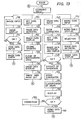
- Fig. 13 shows a whole procedure for storing and retrieving the document image data executed by the document image processing system of Fig. 1.
- the image processing can be roughly divided into four processes that are executed depending upon the command inputs (step 100) sent from the keyboard 3.
- a first process is to store a document image through steps 110 to 118.
- the image of the original document is input from the image scanner 4 to a predetermined area in the bit map memory 6, and the input image is displayed on the CRT 9 (step 112). If the input image is not perfect, and the operator instructs to input the image again, the process returns to the step 110.
- the operator who has confirmed the image quality then inputs the document number corresponding to the document, classification code and keyword (step 116) using the keyboard 3.
- the input document image is therefore stored in the filing device 5 together with these codes.
- a second process is to print out the original paper for a processed documant through steps 120 to 132.
- a corresponding document image is retrieved (step 122) out of the documents stored in the filing device 5, read into the bit map memory 6 and is displayed on the CRT 9 (step 124).
- a rectangular frame FR step 126) to indicate the reference position mentioned earlier.
- the region surrounding the rectangular frame is cleared (step 128), and the document image is sent as an image with frame to the CRT 9 and the printer.10 (steps 130 to 132).
- a third process is to store the secondary data through steps 140 to 162.
- a processed document consisting of the document with frame produced previously onto which is writen memo data, is input from the image scanner 4 (step 140), and whereby the skew is corrected and, as required, the size is corrected (step 142).
- the operator inputs the document number or the keyword of the document, the corresponding original image is retrieved from the filing device 5 and is displayed (steps 144 to 146). If the memo data and the original correspond to each other, the memo -data are extracted and classified through steps 150 to 156, and the results are displayed. If the operator who has confirmed the displayed contents inputs an OK sign, the memo data are stored in the aforementioned secondary data file 5' (step 162). If the displayed contents are not correct, the error is corrected at a step 160, and the corrected result is stored in the secondary data file.
- a fourth process is to retrieve the document image through steps 170 to 176.
- the document data file 5 is accessed in accordance with the data of a corresponding classification section in the secondary data file 5'. For example, the image of a local region in the document corresponding to the underline is displayed in the form of a list (step 172).
- the image of note characters are read out from a separate region of the secondary data file 5', and is displayed in the form of a list. If the operator selects any one of the memory data (step 174) with reference to the contents of the list that is displayed, the document image of a corresponding image number is retrieved from the file 5, and is displayed on the CRT (steps 176 and 178).
- the operator inputs the image number of the original image in storing the secondary data.
- This may be eliminated by automatically outputting the image number 91' to the processed document in the second process as shown in Fig. 14, and by automatically recognizing the image number 91' at the step 144.
- the secondary data were displayed depending upon the kinds. However, the system may be so designed that two or more kinds of secondary data are displayed simultaneously.
- the user stores the notes written onto the document, as well as principal words and sentences in the document specified by a mark such ss an underline, in the form of secondary data and memo data that are to be retrieved. Therefore, even when the user does not remember the correct name of the document or the keyword or even when he remembers them vaguely, the desired document can be efficiently retrieved with reference to the secondary data file.
- the secondary data By utilizing the secondary data, a plurality of documents can be displayed at one time in a compact form, making it possible to greatly reduce the time for retrieval compared with the method by which the contents of the whole documents are successively displayed and retrieved one by one from the file of the original documents.
- each user is allowed to possess the secondary data file as his own file and is, hence, permitted to store and utilize his own memo data irrespective of other users.
- the document file 5 is made up at user side through the first process, an existing document file supplied by a publishing firm may be available to produce the original paper 14.
Landscapes
- Engineering & Computer Science (AREA)
- Theoretical Computer Science (AREA)
- General Engineering & Computer Science (AREA)
- Multimedia (AREA)
- Physics & Mathematics (AREA)
- General Physics & Mathematics (AREA)
- Databases & Information Systems (AREA)
- Data Mining & Analysis (AREA)
- Computer Vision & Pattern Recognition (AREA)
- Library & Information Science (AREA)
- Artificial Intelligence (AREA)
- Signal Processing (AREA)
- Information Retrieval, Db Structures And Fs Structures Therefor (AREA)
- Processing Or Creating Images (AREA)
Applications Claiming Priority (2)
| Application Number | Priority Date | Filing Date | Title |
|---|---|---|---|
| JP108122/85 | 1985-05-22 | ||
| JP60108122A JPH0750483B2 (ja) | 1985-05-22 | 1985-05-22 | 文書画像追加情報の蓄積方法 |
Publications (3)
| Publication Number | Publication Date |
|---|---|
| EP0202671A2 true EP0202671A2 (fr) | 1986-11-26 |
| EP0202671A3 EP0202671A3 (en) | 1989-10-11 |
| EP0202671B1 EP0202671B1 (fr) | 1996-08-14 |
Family
ID=14476482
Family Applications (1)
| Application Number | Title | Priority Date | Filing Date |
|---|---|---|---|
| EP86106907A Expired - Lifetime EP0202671B1 (fr) | 1985-05-22 | 1986-05-21 | Méthode d'enregistrement et de recherche de données d'image |
Country Status (4)
| Country | Link |
|---|---|
| US (1) | US4748678A (fr) |
| EP (1) | EP0202671B1 (fr) |
| JP (1) | JPH0750483B2 (fr) |
| DE (1) | DE3650554T2 (fr) |
Cited By (12)
| Publication number | Priority date | Publication date | Assignee | Title |
|---|---|---|---|---|
| FR2648657A1 (fr) * | 1989-06-16 | 1990-12-21 | Ricoh Kk | Appareil de communication d'information d'image pour telecopieur |
| EP0336548A3 (fr) * | 1988-04-08 | 1991-05-29 | International Business Machines Corporation | Prise en charge de longs champs de fiches de base de données restaurables dans un système à calculateur |
| EP0411231A3 (en) * | 1989-08-04 | 1991-07-31 | International Business Machines Corporation | Method for compressing and decompressing forms by means of very large symbol matching |
| WO1991013393A3 (fr) * | 1990-02-20 | 1991-10-31 | Eden I P Ltd | Dispositif d'enregistrement de donnees ecrites a la main et reseau de courrier electronique |
| GB2245090A (en) * | 1990-05-15 | 1991-12-18 | Ricoh Kk | Image filing system and method |
| GB2248703A (en) * | 1990-07-12 | 1992-04-15 | Asahi Optical Co Ltd | Still image reproducing device |
| EP0326162A3 (fr) * | 1988-01-29 | 1992-08-12 | Hitachi, Ltd. | Système de base de données comprenant des notes facsimilées et méthode de gestion de notes facsimilées et méthode de gestion de notes facsimilées |
| EP0424803A3 (en) * | 1989-10-24 | 1993-01-07 | Horst Froessl | Method for at least partially transforming image data into text with provision for subsequent storage or further processing |
| EP0465818A3 (en) * | 1990-06-12 | 1993-01-07 | Horst Froesel | Mass document storage and retrieval system |
| GB2362056A (en) * | 2001-02-09 | 2001-11-07 | Hewlett Packard Co | Detecting and saving annotations in a scanned document |
| EP1229485A3 (fr) * | 2001-01-31 | 2004-05-26 | Matsushita Electric Industrial Co., Ltd. | Détection et utilisation d' information complémentaire appartenant à une image de document balayée |
| US7042594B1 (en) | 2000-03-07 | 2006-05-09 | Hewlett-Packard Development Company, L.P. | System and method for saving handwriting as an annotation in a scanned document |
Families Citing this family (86)
| Publication number | Priority date | Publication date | Assignee | Title |
|---|---|---|---|---|
| CA2047821A1 (fr) * | 1990-09-17 | 1992-03-18 | Wayne A. Buchar | Systeme d'archivage electronique reconnaissant les originaux mis en evidence pour la classification et l'extraction |
| US5265242A (en) * | 1985-08-23 | 1993-11-23 | Hiromichi Fujisawa | Document retrieval system for displaying document image data with inputted bibliographic items and character string selected from multiple character candidates |
| US5172245A (en) * | 1986-10-17 | 1992-12-15 | Sharp Kabushiki Kaisha | Electronic information retrieval apparatus for image information using primary and secondary menus |
| US4907283A (en) * | 1987-03-13 | 1990-03-06 | Canon Kabushiki Kaisha | Image processing apparatus |
| US4803643A (en) * | 1987-08-10 | 1989-02-07 | Oclc Online Computer Library Center Incorporated | System and method for creating memory-retained, formatted pages of text, tabulation, and graphic data |
| US4985930A (en) * | 1987-09-24 | 1991-01-15 | Hitachi, Ltd. | Image data filing system and image data correcting method |
| JPS6482286A (en) * | 1987-09-25 | 1989-03-28 | Toshiba Corp | Image inclination detector |
| US4901365A (en) * | 1988-12-19 | 1990-02-13 | Ncr Corporation | Method of searching binary images to find search regions in which straight lines may be found |
| US5140650A (en) * | 1989-02-02 | 1992-08-18 | International Business Machines Corporation | Computer-implemented method for automatic extraction of data from printed forms |
| DE69028643T2 (de) * | 1989-02-09 | 1997-02-20 | Canon Kk | Elektronisches Dateispeicherungssystem und Methode zum Auslesen von Bilddateninformation |
| US5280574A (en) * | 1989-05-26 | 1994-01-18 | Hitachi, Ltd. | Text document management method adapted for generating plural text documents derived from the same original text document |
| US5093911A (en) * | 1989-09-14 | 1992-03-03 | International Business Machines Corporation | Storage and retrieval system |
| US5191525A (en) * | 1990-01-16 | 1993-03-02 | Digital Image Systems, Corporation | System and method for extraction of data from documents for subsequent processing |
| US5146552A (en) * | 1990-02-28 | 1992-09-08 | International Business Machines Corporation | Method for associating annotation with electronically published material |
| US5444840A (en) * | 1990-06-12 | 1995-08-22 | Froessl; Horst | Multiple image font processing |
| US5396588A (en) * | 1990-07-03 | 1995-03-07 | Froessl; Horst | Data processing using digitized images |
| US5546572A (en) * | 1991-08-28 | 1996-08-13 | Hitachi, Ltd. | Method for retrieving database of image information |
| US5926565A (en) * | 1991-10-28 | 1999-07-20 | Froessl; Horst | Computer method for processing records with images and multiple fonts |
| CA2078423C (fr) * | 1991-11-19 | 1997-01-14 | Per-Kristian Halvorsen | Methode et dispositif d'extraction de portions de l'information contenue dans une image sans decodage de cette derniere |
| US5568566A (en) * | 1991-11-25 | 1996-10-22 | Kabushiki Kaisha Toshiba | Drawing processing apparatus |
| US8352400B2 (en) | 1991-12-23 | 2013-01-08 | Hoffberg Steven M | Adaptive pattern recognition based controller apparatus and method and human-factored interface therefore |
| US5251273A (en) * | 1992-04-15 | 1993-10-05 | International Business Machines Corporation | Data processing system and method for sequentially repairing character recognition errors for scanned images of document forms |
| US5305396A (en) * | 1992-04-17 | 1994-04-19 | International Business Machines Corporation | Data processing system and method for selecting customized character recognition processes and coded data repair processes for scanned images of document forms |
| JPH064642A (ja) * | 1992-04-20 | 1994-01-14 | Hitachi Ltd | イメージデータ管理システム |
| US5235654A (en) * | 1992-04-30 | 1993-08-10 | International Business Machines Corporation | Advanced data capture architecture data processing system and method for scanned images of document forms |
| US5555388A (en) * | 1992-08-20 | 1996-09-10 | Borland International, Inc. | Multi-user system and methods providing improved file management by reading |
| JP3093493B2 (ja) * | 1992-11-16 | 2000-10-03 | キヤノン株式会社 | 画像記憶検索装置 |
| JP3055126B2 (ja) * | 1993-03-25 | 2000-06-26 | キヤノン株式会社 | 画像情報処理装置の制御方法 |
| EP0625757B1 (fr) * | 1993-05-07 | 2000-08-23 | Canon Kabushiki Kaisha | Méthode et système sélectifs de recouvrement de documents. |
| US5526520A (en) * | 1993-09-21 | 1996-06-11 | Krause; Gary M. | Method to organize and manipulate blueprint documents using hypermedia links from a primary document to recall related secondary documents |
| US5428694A (en) * | 1993-10-14 | 1995-06-27 | International Business Machines Corporation | Data processing system and method for forms definition, recognition and verification of scanned images of document forms |
| US5555325A (en) * | 1993-10-22 | 1996-09-10 | Lockheed Martin Federal Systems, Inc. | Data capture variable priority method and system for managing varying processing capacities |
| US5394487A (en) * | 1993-10-27 | 1995-02-28 | International Business Machines Corporation | Forms recognition management system and method |
| US5521991A (en) * | 1993-10-29 | 1996-05-28 | International Business Machines Corporation | Method and system for fast forms recognition of document form images |
| EP0677818B1 (fr) * | 1994-04-15 | 2000-05-10 | Canon Kabushiki Kaisha | Préprocesseur d'image pour système de reconnaissance de caractères |
| US5664183A (en) * | 1994-04-19 | 1997-09-02 | International Business Machines Corporation | Application of groupware to ISO 9000 registration via facilitated work sessions |
| US5502637A (en) * | 1994-06-15 | 1996-03-26 | Thomson Shared Services, Inc. | Investment research delivery system |
| JPH09270902A (ja) * | 1996-01-31 | 1997-10-14 | Ricoh Co Ltd | 画像ファイリング方法および画像ファイリング装置 |
| US5832474A (en) * | 1996-02-26 | 1998-11-03 | Matsushita Electric Industrial Co., Ltd. | Document search and retrieval system with partial match searching of user-drawn annotations |
| US6910184B1 (en) * | 1997-07-25 | 2005-06-21 | Ricoh Company, Ltd. | Document information management system |
| US5905991A (en) * | 1997-08-21 | 1999-05-18 | Reynolds; Mark L | System and method providing navigation between documents by creating associations based on bridges between combinations of document elements and software |
| EP0977129A1 (fr) * | 1998-07-30 | 2000-02-02 | Infopoint Systems Research & Development Ltd. | Développement de systèmes multimedia |
| US7966078B2 (en) | 1999-02-01 | 2011-06-21 | Steven Hoffberg | Network media appliance system and method |
| JP3708768B2 (ja) | 1999-11-22 | 2005-10-19 | シャープ株式会社 | 読取り装置及びデータ処理システム |
| DE10105951B4 (de) * | 2000-03-07 | 2006-04-06 | Hewlett-Packard Development Co., L.P., Houston | System und Verfahren zum Speichern einer Handschrift als eine Anmerkung in einem gescanten Dokument |
| EP1182503A1 (fr) * | 2000-08-17 | 2002-02-27 | Eastman Kodak Company | KIt pour l'organisation d'images |
| JP2002278984A (ja) * | 2001-03-22 | 2002-09-27 | Fujitsu Ltd | 文書管理装置 |
| JP2003115039A (ja) * | 2001-07-11 | 2003-04-18 | Ricoh Co Ltd | 文書ファイリング装置、文書ファイリング方法、プログラムおよび記憶媒体 |
| JP4154156B2 (ja) * | 2002-02-08 | 2008-09-24 | ソニーマニュファクチュアリングシステムズ株式会社 | 欠陥分類検査装置 |
| US20030193582A1 (en) * | 2002-03-29 | 2003-10-16 | Fuji Photo Film Co., Ltd. | Method for storing an image, method and system for retrieving a registered image and method for performing image processing on a registered image |
| JP4251629B2 (ja) * | 2003-01-31 | 2009-04-08 | キヤノン株式会社 | 画像処理システム及び情報処理装置、並びに制御方法及びコンピュータプログラム及びコンピュータ可読記憶媒体 |
| US7391917B2 (en) * | 2003-02-13 | 2008-06-24 | Canon Kabushiki Kaisha | Image processing method |
| US7707039B2 (en) * | 2004-02-15 | 2010-04-27 | Exbiblio B.V. | Automatic modification of web pages |
| US8442331B2 (en) | 2004-02-15 | 2013-05-14 | Google Inc. | Capturing text from rendered documents using supplemental information |
| US10635723B2 (en) | 2004-02-15 | 2020-04-28 | Google Llc | Search engines and systems with handheld document data capture devices |
| US7812860B2 (en) | 2004-04-01 | 2010-10-12 | Exbiblio B.V. | Handheld device for capturing text from both a document printed on paper and a document displayed on a dynamic display device |
| US20060136629A1 (en) * | 2004-08-18 | 2006-06-22 | King Martin T | Scanner having connected and unconnected operational behaviors |
| US7894670B2 (en) | 2004-04-01 | 2011-02-22 | Exbiblio B.V. | Triggering actions in response to optically or acoustically capturing keywords from a rendered document |
| US8146156B2 (en) | 2004-04-01 | 2012-03-27 | Google Inc. | Archive of text captures from rendered documents |
| US9143638B2 (en) | 2004-04-01 | 2015-09-22 | Google Inc. | Data capture from rendered documents using handheld device |
| US7990556B2 (en) | 2004-12-03 | 2011-08-02 | Google Inc. | Association of a portable scanner with input/output and storage devices |
| US20060098900A1 (en) | 2004-09-27 | 2006-05-11 | King Martin T | Secure data gathering from rendered documents |
| US20060081714A1 (en) | 2004-08-23 | 2006-04-20 | King Martin T | Portable scanning device |
| US9008447B2 (en) | 2004-04-01 | 2015-04-14 | Google Inc. | Method and system for character recognition |
| US9116890B2 (en) | 2004-04-01 | 2015-08-25 | Google Inc. | Triggering actions in response to optically or acoustically capturing keywords from a rendered document |
| US8081849B2 (en) | 2004-12-03 | 2011-12-20 | Google Inc. | Portable scanning and memory device |
| US8713418B2 (en) | 2004-04-12 | 2014-04-29 | Google Inc. | Adding value to a rendered document |
| US8874504B2 (en) | 2004-12-03 | 2014-10-28 | Google Inc. | Processing techniques for visual capture data from a rendered document |
| US8489624B2 (en) | 2004-05-17 | 2013-07-16 | Google, Inc. | Processing techniques for text capture from a rendered document |
| US8620083B2 (en) | 2004-12-03 | 2013-12-31 | Google Inc. | Method and system for character recognition |
| US7668404B2 (en) * | 2004-06-30 | 2010-02-23 | Lexmark International, Inc. | Method and system of deskewing an image using monochrome conversion to separate foreground from background |
| US8346620B2 (en) | 2004-07-19 | 2013-01-01 | Google Inc. | Automatic modification of web pages |
| JP4784299B2 (ja) * | 2005-12-22 | 2011-10-05 | 富士ゼロックス株式会社 | 画像処理装置、および画像処理方法、並びにコンピュータ・プログラム |
| EP2067119A2 (fr) * | 2006-09-08 | 2009-06-10 | Exbiblio B.V. | Scanners optiques, tels que des scanners optiques portables |
| US8396331B2 (en) * | 2007-02-26 | 2013-03-12 | Microsoft Corporation | Generating a multi-use vocabulary based on image data |
| WO2010096191A2 (fr) | 2009-02-18 | 2010-08-26 | Exbiblio B.V. | Informations de capture automatique telles que des informations de capture utilisant un dispositif prenant en charge des documents |
| US8447066B2 (en) | 2009-03-12 | 2013-05-21 | Google Inc. | Performing actions based on capturing information from rendered documents, such as documents under copyright |
| EP2406767A4 (fr) | 2009-03-12 | 2016-03-16 | Google Inc | Fourniture automatique de contenu associé à des informations capturées, de type informations capturées en temps réel |
| US9081799B2 (en) | 2009-12-04 | 2015-07-14 | Google Inc. | Using gestalt information to identify locations in printed information |
| US9323784B2 (en) | 2009-12-09 | 2016-04-26 | Google Inc. | Image search using text-based elements within the contents of images |
| JP5035443B2 (ja) * | 2011-04-06 | 2012-09-26 | 富士ゼロックス株式会社 | 画像処理装置、および画像処理方法、並びにコンピュータ・プログラム |
| US8996350B1 (en) | 2011-11-02 | 2015-03-31 | Dub Software Group, Inc. | System and method for automatic document management |
| US8687886B2 (en) | 2011-12-29 | 2014-04-01 | Konica Minolta Laboratory U.S.A., Inc. | Method and apparatus for document image indexing and retrieval using multi-level document image structure and local features |
| JP6578858B2 (ja) * | 2015-09-30 | 2019-09-25 | 富士ゼロックス株式会社 | 情報処理装置及びプログラム |
| JP6868186B2 (ja) * | 2017-03-24 | 2021-05-12 | 富士フイルムビジネスイノベーション株式会社 | 検索情報生成装置、画像処理装置、検索情報生成プログラム |
| TWI681661B (zh) * | 2018-03-26 | 2020-01-01 | 虹光精密工業股份有限公司 | 影像輸出裝置、多功能事務機、影像處理模組以及相關的影像輸出方法 |
Family Cites Families (11)
| Publication number | Priority date | Publication date | Assignee | Title |
|---|---|---|---|---|
| US4300123A (en) * | 1979-01-02 | 1981-11-10 | Westinghouse Electric Corp. | Optical reading system |
| US4408181A (en) * | 1979-04-10 | 1983-10-04 | Tokyo Shibaura Denki Kabushiki Kaisha | Document data filing/retrieval system |
| DE3067771D1 (en) * | 1979-10-23 | 1984-06-14 | Scantron Gmbh | Method and device for the identification of objects |
| EP0051226B1 (fr) * | 1980-10-31 | 1987-03-04 | Kabushiki Kaisha Toshiba | Système de recherche documentaire utilisant une seule unité de présentation |
| US4538182A (en) * | 1981-05-11 | 1985-08-27 | Canon Kabushiki Kaisha | Image processing apparatus |
| JPS59128661A (ja) * | 1983-01-14 | 1984-07-24 | Fuji Xerox Co Ltd | 画像フアイル装置 |
| JPS59135576A (ja) * | 1983-01-21 | 1984-08-03 | Nippon Telegr & Teleph Corp <Ntt> | ドキユメント情報登録検索装置 |
| JPS59183458A (ja) * | 1983-04-01 | 1984-10-18 | Hitachi Ltd | 画像検索方式 |
| US4553261A (en) * | 1983-05-31 | 1985-11-12 | Horst Froessl | Document and data handling and retrieval system |
| JPS603056A (ja) * | 1983-06-21 | 1985-01-09 | Toshiba Corp | 情報整理装置 |
| JPS6077271A (ja) * | 1983-10-03 | 1985-05-01 | Fuji Xerox Co Ltd | 画像フアイル装置 |
-
1985
- 1985-05-22 JP JP60108122A patent/JPH0750483B2/ja not_active Expired - Lifetime
-
1986
- 1986-05-14 US US06/863,242 patent/US4748678A/en not_active Expired - Lifetime
- 1986-05-21 EP EP86106907A patent/EP0202671B1/fr not_active Expired - Lifetime
- 1986-05-21 DE DE3650554T patent/DE3650554T2/de not_active Expired - Fee Related
Cited By (17)
| Publication number | Priority date | Publication date | Assignee | Title |
|---|---|---|---|---|
| EP0326162A3 (fr) * | 1988-01-29 | 1992-08-12 | Hitachi, Ltd. | Système de base de données comprenant des notes facsimilées et méthode de gestion de notes facsimilées et méthode de gestion de notes facsimilées |
| EP0336548A3 (fr) * | 1988-04-08 | 1991-05-29 | International Business Machines Corporation | Prise en charge de longs champs de fiches de base de données restaurables dans un système à calculateur |
| FR2648657A1 (fr) * | 1989-06-16 | 1990-12-21 | Ricoh Kk | Appareil de communication d'information d'image pour telecopieur |
| US5182656A (en) * | 1989-08-04 | 1993-01-26 | International Business Machines Corporation | Method for compressing and decompressing forms by means of very large symbol matching |
| EP0411231A3 (en) * | 1989-08-04 | 1991-07-31 | International Business Machines Corporation | Method for compressing and decompressing forms by means of very large symbol matching |
| EP0424803A3 (en) * | 1989-10-24 | 1993-01-07 | Horst Froessl | Method for at least partially transforming image data into text with provision for subsequent storage or further processing |
| WO1991013393A3 (fr) * | 1990-02-20 | 1991-10-31 | Eden I P Ltd | Dispositif d'enregistrement de donnees ecrites a la main et reseau de courrier electronique |
| GB2245090A (en) * | 1990-05-15 | 1991-12-18 | Ricoh Kk | Image filing system and method |
| GB2245090B (en) * | 1990-05-15 | 1994-02-23 | Ricoh Kk | Image filing system and method |
| EP0465818A3 (en) * | 1990-06-12 | 1993-01-07 | Horst Froesel | Mass document storage and retrieval system |
| GB2248703A (en) * | 1990-07-12 | 1992-04-15 | Asahi Optical Co Ltd | Still image reproducing device |
| GB2248703B (en) * | 1990-07-12 | 1994-05-18 | Asahi Optical Co Ltd | Image data transferring system |
| US5359427A (en) * | 1990-07-12 | 1994-10-25 | Asahi Kogaku Kogyo Kabushiki Kaisha | Device for reproducing a recorded still image with a general-purpose computer |
| US7042594B1 (en) | 2000-03-07 | 2006-05-09 | Hewlett-Packard Development Company, L.P. | System and method for saving handwriting as an annotation in a scanned document |
| EP1229485A3 (fr) * | 2001-01-31 | 2004-05-26 | Matsushita Electric Industrial Co., Ltd. | Détection et utilisation d' information complémentaire appartenant à une image de document balayée |
| GB2362056A (en) * | 2001-02-09 | 2001-11-07 | Hewlett Packard Co | Detecting and saving annotations in a scanned document |
| GB2362056B (en) * | 2001-02-09 | 2004-05-26 | Hewlett Packard Co | System and method for saving handwriting as an annotation in a scanned document |
Also Published As
| Publication number | Publication date |
|---|---|
| DE3650554D1 (de) | 1996-09-19 |
| EP0202671B1 (fr) | 1996-08-14 |
| DE3650554T2 (de) | 1997-02-20 |
| EP0202671A3 (en) | 1989-10-11 |
| JPH0750483B2 (ja) | 1995-05-31 |
| JPS61267177A (ja) | 1986-11-26 |
| US4748678A (en) | 1988-05-31 |
Similar Documents
| Publication | Publication Date | Title |
|---|---|---|
| US4748678A (en) | Method of storing and retrieving image data | |
| CN114299528B (zh) | 一种针对扫描文档的信息提取和结构化方法 | |
| CA2116600C (fr) | Methodes et appareil pour determiner l'orientation des lignes d'un texte | |
| KR100311633B1 (ko) | 문서화상으로부터의타이틀추출장치및방법 | |
| EP0543598B1 (fr) | Méthode et appareil de traitement d'images de documents | |
| CA2077274C (fr) | Methode et appareil pour resumer un document d'imagerie sans le decoder | |
| EP0629078B1 (fr) | Appareil pour le traítement et la reproduction d'information d'images | |
| EP0738987B1 (fr) | Traitement des formulaires compréhensibles par une machine | |
| JP3302147B2 (ja) | 文書画像処理方法 | |
| KR101985612B1 (ko) | 종이문서의 디지털화 방법 | |
| US7548916B2 (en) | Calculating image similarity using extracted data | |
| JPH02231692A (ja) | 文字データ抽出方法 | |
| JPH07200732A (ja) | ワードオブジェクト抽出方法及びラスタ化イメージ内のノイズ除去方法 | |
| JPH05233873A (ja) | 領域分割方法 | |
| JPH08212298A (ja) | 文書方向自動判別装置、及び文書方向自動補正装置 | |
| JP3787377B2 (ja) | 文書方向判定方法及び装置及び文字認識方法及び装置 | |
| JPH08180068A (ja) | 電子ファイリング装置 | |
| JP2008108114A (ja) | 文書処理装置および文書処理方法 | |
| JP2023046687A (ja) | 情報処理装置、情報処理方法、およびプログラム | |
| JP4221960B2 (ja) | 帳票識別装置及びその識別方法 | |
| JPH0327471A (ja) | 画像登録方式 | |
| JPH0757040A (ja) | Ocr付きファイリング装置 | |
| JPH0652358A (ja) | 文字認識方法 | |
| JPH0689330A (ja) | 画像ファイリングシステム | |
| JPH04241074A (ja) | 自動文書清書装置 |
Legal Events
| Date | Code | Title | Description |
|---|---|---|---|
| PUAI | Public reference made under article 153(3) epc to a published international application that has entered the european phase |
Free format text: ORIGINAL CODE: 0009012 |
|
| AK | Designated contracting states |
Kind code of ref document: A2 Designated state(s): DE FR GB |
|
| PUAL | Search report despatched |
Free format text: ORIGINAL CODE: 0009013 |
|
| AK | Designated contracting states |
Kind code of ref document: A3 Designated state(s): DE FR GB |
|
| 17P | Request for examination filed |
Effective date: 19900327 |
|
| 17Q | First examination report despatched |
Effective date: 19910902 |
|
| GRAH | Despatch of communication of intention to grant a patent |
Free format text: ORIGINAL CODE: EPIDOS IGRA |
|
| GRAH | Despatch of communication of intention to grant a patent |
Free format text: ORIGINAL CODE: EPIDOS IGRA |
|
| GRAA | (expected) grant |
Free format text: ORIGINAL CODE: 0009210 |
|
| AK | Designated contracting states |
Kind code of ref document: B1 Designated state(s): DE FR GB |
|
| REF | Corresponds to: |
Ref document number: 3650554 Country of ref document: DE Date of ref document: 19960919 |
|
| ET | Fr: translation filed |
Free format text: CORRECTIONS |
|
| PLBE | No opposition filed within time limit |
Free format text: ORIGINAL CODE: 0009261 |
|
| STAA | Information on the status of an ep patent application or granted ep patent |
Free format text: STATUS: NO OPPOSITION FILED WITHIN TIME LIMIT |
|
| 26N | No opposition filed | ||
| REG | Reference to a national code |
Ref country code: GB Ref legal event code: IF02 |
|
| PGFP | Annual fee paid to national office [announced via postgrant information from national office to epo] |
Ref country code: FR Payment date: 20020423 Year of fee payment: 17 |
|
| PGFP | Annual fee paid to national office [announced via postgrant information from national office to epo] |
Ref country code: GB Payment date: 20020426 Year of fee payment: 17 |
|
| PGFP | Annual fee paid to national office [announced via postgrant information from national office to epo] |
Ref country code: DE Payment date: 20020628 Year of fee payment: 17 |
|
| PG25 | Lapsed in a contracting state [announced via postgrant information from national office to epo] |
Ref country code: GB Free format text: LAPSE BECAUSE OF NON-PAYMENT OF DUE FEES Effective date: 20030521 |
|
| PG25 | Lapsed in a contracting state [announced via postgrant information from national office to epo] |
Ref country code: DE Free format text: LAPSE BECAUSE OF NON-PAYMENT OF DUE FEES Effective date: 20031202 |
|
| GBPC | Gb: european patent ceased through non-payment of renewal fee |
Effective date: 20030521 |
|
| PG25 | Lapsed in a contracting state [announced via postgrant information from national office to epo] |
Ref country code: FR Free format text: LAPSE BECAUSE OF NON-PAYMENT OF DUE FEES Effective date: 20040130 |
|
| REG | Reference to a national code |
Ref country code: FR Ref legal event code: ST |