EP0207355B1 - Amides d'acides hydroxy-thiophène-carboxyliques substitués par des groupes alcoxycarbonyliques - Google Patents
Amides d'acides hydroxy-thiophène-carboxyliques substitués par des groupes alcoxycarbonyliques Download PDFInfo
- Publication number
- EP0207355B1 EP0207355B1 EP86108229A EP86108229A EP0207355B1 EP 0207355 B1 EP0207355 B1 EP 0207355B1 EP 86108229 A EP86108229 A EP 86108229A EP 86108229 A EP86108229 A EP 86108229A EP 0207355 B1 EP0207355 B1 EP 0207355B1
- Authority
- EP
- European Patent Office
- Prior art keywords
- carbon atoms
- alkyl
- formula
- substituted
- methyl
- Prior art date
- Legal status (The legal status is an assumption and is not a legal conclusion. Google has not performed a legal analysis and makes no representation as to the accuracy of the status listed.)
- Expired
Links
- RVURYQBOSVZXOT-UHFFFAOYSA-N 3-hydroxythiophene-2-carboxamide Chemical class NC(=O)C=1SC=CC=1O RVURYQBOSVZXOT-UHFFFAOYSA-N 0.000 title claims 10
- -1 2-ethoxyethyl Chemical group 0.000 claims description 87
- 125000000217 alkyl group Chemical group 0.000 claims description 57
- 125000004432 carbon atom Chemical group C* 0.000 claims description 48
- 125000003342 alkenyl group Chemical group 0.000 claims description 27
- 125000004183 alkoxy alkyl group Chemical group 0.000 claims description 27
- 125000006350 alkyl thio alkyl group Chemical group 0.000 claims description 27
- 125000000753 cycloalkyl group Chemical group 0.000 claims description 27
- 125000002496 methyl group Chemical group [H]C([H])([H])* 0.000 claims description 23
- 125000001495 ethyl group Chemical group [H]C([H])([H])C([H])([H])* 0.000 claims description 19
- 125000001449 isopropyl group Chemical group [H]C([H])([H])C([H])(*)C([H])([H])[H] 0.000 claims description 19
- 125000006193 alkinyl group Chemical group 0.000 claims description 18
- 125000004966 cyanoalkyl group Chemical group 0.000 claims description 18
- 125000003709 fluoroalkyl group Chemical group 0.000 claims description 18
- YNAVUWVOSKDBBP-UHFFFAOYSA-N Morpholine Chemical compound C1COCCN1 YNAVUWVOSKDBBP-UHFFFAOYSA-N 0.000 claims description 16
- 125000001997 phenyl group Chemical group [H]C1=C([H])C([H])=C(*)C([H])=C1[H] 0.000 claims description 15
- RWRDLPDLKQPQOW-UHFFFAOYSA-N Pyrrolidine Chemical compound C1CCNC1 RWRDLPDLKQPQOW-UHFFFAOYSA-N 0.000 claims description 14
- NQRYJNQNLNOLGT-UHFFFAOYSA-N Piperidine Chemical compound C1CCNCC1 NQRYJNQNLNOLGT-UHFFFAOYSA-N 0.000 claims description 12
- 125000003545 alkoxy group Chemical group 0.000 claims description 12
- 125000000113 cyclohexyl group Chemical group [H]C1([H])C([H])([H])C([H])([H])C([H])(*)C([H])([H])C1([H])[H] 0.000 claims description 12
- 125000001511 cyclopentyl group Chemical group [H]C1([H])C([H])([H])C([H])([H])C([H])(*)C1([H])[H] 0.000 claims description 12
- 125000004123 n-propyl group Chemical group [H]C([H])([H])C([H])([H])C([H])([H])* 0.000 claims description 12
- 239000001257 hydrogen Substances 0.000 claims description 10
- 229910052739 hydrogen Inorganic materials 0.000 claims description 10
- 125000005394 methallyl group Chemical group 0.000 claims description 10
- 125000001971 neopentyl group Chemical group [H]C([*])([H])C(C([H])([H])[H])(C([H])([H])[H])C([H])([H])[H] 0.000 claims description 10
- 229910052757 nitrogen Inorganic materials 0.000 claims description 10
- 125000004433 nitrogen atom Chemical group N* 0.000 claims description 10
- 239000002904 solvent Substances 0.000 claims description 10
- 125000004200 2-methoxyethyl group Chemical group [H]C([H])([H])OC([H])([H])C([H])([H])* 0.000 claims description 9
- 125000003903 2-propenyl group Chemical group [H]C([*])([H])C([H])=C([H])[H] 0.000 claims description 9
- 238000000034 method Methods 0.000 claims description 8
- 238000002360 preparation method Methods 0.000 claims description 7
- 125000004206 2,2,2-trifluoroethyl group Chemical group [H]C([H])(*)C(F)(F)F 0.000 claims description 6
- PXGOKWXKJXAPGV-UHFFFAOYSA-N Fluorine Chemical compound FF PXGOKWXKJXAPGV-UHFFFAOYSA-N 0.000 claims description 6
- 241000534944 Thia Species 0.000 claims description 6
- 125000001995 cyclobutyl group Chemical group [H]C1([H])C([H])([H])C([H])(*)C1([H])[H] 0.000 claims description 6
- 125000001559 cyclopropyl group Chemical group [H]C1([H])C([H])([H])C1([H])* 0.000 claims description 6
- 239000000417 fungicide Substances 0.000 claims description 5
- 229910052736 halogen Inorganic materials 0.000 claims description 5
- 150000002367 halogens Chemical class 0.000 claims description 5
- HNVIQLPOGUDBSU-UHFFFAOYSA-N 2,6-dimethylmorpholine Chemical compound CC1CNCC(C)O1 HNVIQLPOGUDBSU-UHFFFAOYSA-N 0.000 claims description 4
- 125000001731 2-cyanoethyl group Chemical group [H]C([H])(*)C([H])([H])C#N 0.000 claims description 4
- UZOFELREXGAFOI-UHFFFAOYSA-N 4-methylpiperidine Chemical compound CC1CCNCC1 UZOFELREXGAFOI-UHFFFAOYSA-N 0.000 claims description 4
- 239000004606 Fillers/Extenders Substances 0.000 claims description 4
- 241000233866 Fungi Species 0.000 claims description 4
- 125000004453 alkoxycarbonyl group Chemical group 0.000 claims description 4
- 125000002947 alkylene group Chemical group 0.000 claims description 4
- 150000001412 amines Chemical class 0.000 claims description 4
- ZSIQJIWKELUFRJ-UHFFFAOYSA-N azepane Chemical compound C1CCCNCC1 ZSIQJIWKELUFRJ-UHFFFAOYSA-N 0.000 claims description 4
- 229910052731 fluorine Inorganic materials 0.000 claims description 4
- 239000011737 fluorine Substances 0.000 claims description 4
- 125000001153 fluoro group Chemical group F* 0.000 claims description 4
- 125000001424 substituent group Chemical group 0.000 claims description 4
- OGYGFUAIIOPWQD-UHFFFAOYSA-N 1,3-thiazolidine Chemical compound C1CSCN1 OGYGFUAIIOPWQD-UHFFFAOYSA-N 0.000 claims description 3
- NNWUEBIEOFQMSS-UHFFFAOYSA-N 2-Methylpiperidine Chemical compound CC1CCCCN1 NNWUEBIEOFQMSS-UHFFFAOYSA-N 0.000 claims description 3
- JEGMWWXJUXDNJN-UHFFFAOYSA-N 3-methylpiperidine Chemical compound CC1CCCNC1 JEGMWWXJUXDNJN-UHFFFAOYSA-N 0.000 claims description 3
- 125000004414 alkyl thio group Chemical group 0.000 claims description 3
- 125000000484 butyl group Chemical group [H]C([*])([H])C([H])([H])C([H])([H])C([H])([H])[H] 0.000 claims description 3
- 239000003085 diluting agent Substances 0.000 claims description 3
- 125000004438 haloalkoxy group Chemical group 0.000 claims description 3
- 125000001188 haloalkyl group Chemical group 0.000 claims description 3
- 125000000959 isobutyl group Chemical group [H]C([H])([H])C([H])(C([H])([H])[H])C([H])([H])* 0.000 claims description 3
- 125000004108 n-butyl group Chemical group [H]C([H])([H])C([H])([H])C([H])([H])C([H])([H])* 0.000 claims description 3
- 125000003935 n-pentoxy group Chemical group [H]C([H])([H])C([H])([H])C([H])([H])C([H])([H])C([H])([H])O* 0.000 claims description 3
- 125000000449 nitro group Chemical group [O-][N+](*)=O 0.000 claims description 3
- PVOAHINGSUIXLS-UHFFFAOYSA-N 1-Methylpiperazine Chemical compound CN1CCNCC1 PVOAHINGSUIXLS-UHFFFAOYSA-N 0.000 claims description 2
- QLEIDMAURCRVCX-UHFFFAOYSA-N 1-propylpiperazine Chemical compound CCCN1CCNCC1 QLEIDMAURCRVCX-UHFFFAOYSA-N 0.000 claims description 2
- 150000001732 carboxylic acid derivatives Chemical class 0.000 claims description 2
- 125000005843 halogen group Chemical group 0.000 claims description 2
- 150000007530 organic bases Chemical group 0.000 claims description 2
- 125000004435 hydrogen atom Chemical group [H]* 0.000 claims 5
- 150000001875 compounds Chemical class 0.000 description 23
- 241000196324 Embryophyta Species 0.000 description 9
- 125000000304 alkynyl group Chemical group 0.000 description 9
- 239000000203 mixture Substances 0.000 description 9
- 238000006243 chemical reaction Methods 0.000 description 7
- 238000009472 formulation Methods 0.000 description 7
- CSCPPACGZOOCGX-UHFFFAOYSA-N Acetone Chemical compound CC(C)=O CSCPPACGZOOCGX-UHFFFAOYSA-N 0.000 description 6
- YMWUJEATGCHHMB-UHFFFAOYSA-N Dichloromethane Chemical compound ClCCl YMWUJEATGCHHMB-UHFFFAOYSA-N 0.000 description 6
- UFHFLCQGNIYNRP-UHFFFAOYSA-N Hydrogen Chemical compound [H][H] UFHFLCQGNIYNRP-UHFFFAOYSA-N 0.000 description 6
- ZMXDDKWLCZADIW-UHFFFAOYSA-N N,N-Dimethylformamide Chemical compound CN(C)C=O ZMXDDKWLCZADIW-UHFFFAOYSA-N 0.000 description 6
- 239000004480 active ingredient Substances 0.000 description 6
- JFDZBHWFFUWGJE-UHFFFAOYSA-N benzonitrile Chemical compound N#CC1=CC=CC=C1 JFDZBHWFFUWGJE-UHFFFAOYSA-N 0.000 description 6
- 239000008187 granular material Substances 0.000 description 6
- 239000000843 powder Substances 0.000 description 6
- LOUPRKONTZGTKE-LHHVKLHASA-N quinidine Chemical compound C([C@H]([C@H](C1)C=C)C2)C[N@@]1[C@H]2[C@@H](O)C1=CC=NC2=CC=C(OC)C=C21 LOUPRKONTZGTKE-LHHVKLHASA-N 0.000 description 6
- XLYOFNOQVPJJNP-UHFFFAOYSA-N water Substances O XLYOFNOQVPJJNP-UHFFFAOYSA-N 0.000 description 6
- IAZDPXIOMUYVGZ-UHFFFAOYSA-N Dimethylsulphoxide Chemical compound CS(C)=O IAZDPXIOMUYVGZ-UHFFFAOYSA-N 0.000 description 5
- 241000228453 Pyrenophora Species 0.000 description 5
- 239000003995 emulsifying agent Substances 0.000 description 5
- 241000371644 Curvularia ravenelii Species 0.000 description 4
- RTZKZFJDLAIYFH-UHFFFAOYSA-N Diethyl ether Chemical compound CCOCC RTZKZFJDLAIYFH-UHFFFAOYSA-N 0.000 description 4
- BAVYZALUXZFZLV-UHFFFAOYSA-N Methylamine Chemical compound NC BAVYZALUXZFZLV-UHFFFAOYSA-N 0.000 description 4
- 241000736122 Parastagonospora nodorum Species 0.000 description 4
- QAOWNCQODCNURD-UHFFFAOYSA-N Sulfuric acid Chemical compound OS(O)(=O)=O QAOWNCQODCNURD-UHFFFAOYSA-N 0.000 description 4
- 239000000969 carrier Substances 0.000 description 4
- 230000000855 fungicidal effect Effects 0.000 description 4
- 150000002431 hydrogen Chemical class 0.000 description 4
- VYPSYNLAJGMNEJ-UHFFFAOYSA-N silicon dioxide Inorganic materials O=[Si]=O VYPSYNLAJGMNEJ-UHFFFAOYSA-N 0.000 description 4
- 239000007858 starting material Substances 0.000 description 4
- ZWEHNKRNPOVVGH-UHFFFAOYSA-N 2-Butanone Chemical compound CCC(C)=O ZWEHNKRNPOVVGH-UHFFFAOYSA-N 0.000 description 3
- 125000001494 2-propynyl group Chemical group [H]C#CC([H])([H])* 0.000 description 3
- WEVYAHXRMPXWCK-UHFFFAOYSA-N Acetonitrile Chemical compound CC#N WEVYAHXRMPXWCK-UHFFFAOYSA-N 0.000 description 3
- ZAMOUSCENKQFHK-UHFFFAOYSA-N Chlorine atom Chemical compound [Cl] ZAMOUSCENKQFHK-UHFFFAOYSA-N 0.000 description 3
- XEKOWRVHYACXOJ-UHFFFAOYSA-N Ethyl acetate Chemical compound CCOC(C)=O XEKOWRVHYACXOJ-UHFFFAOYSA-N 0.000 description 3
- 241001330975 Magnaporthe oryzae Species 0.000 description 3
- OKKJLVBELUTLKV-UHFFFAOYSA-N Methanol Chemical compound OC OKKJLVBELUTLKV-UHFFFAOYSA-N 0.000 description 3
- 241001281802 Pseudoperonospora Species 0.000 description 3
- YXFVVABEGXRONW-UHFFFAOYSA-N Toluene Chemical compound CC1=CC=CC=C1 YXFVVABEGXRONW-UHFFFAOYSA-N 0.000 description 3
- ZMANZCXQSJIPKH-UHFFFAOYSA-N Triethylamine Chemical compound CCN(CC)CC ZMANZCXQSJIPKH-UHFFFAOYSA-N 0.000 description 3
- 239000002253 acid Substances 0.000 description 3
- LOUPRKONTZGTKE-UHFFFAOYSA-N cinchonine Natural products C1C(C(C2)C=C)CCN2C1C(O)C1=CC=NC2=CC=C(OC)C=C21 LOUPRKONTZGTKE-UHFFFAOYSA-N 0.000 description 3
- 238000001704 evaporation Methods 0.000 description 3
- 230000008020 evaporation Effects 0.000 description 3
- 239000000543 intermediate Substances 0.000 description 3
- 239000007788 liquid Substances 0.000 description 3
- 238000004519 manufacturing process Methods 0.000 description 3
- 239000003960 organic solvent Substances 0.000 description 3
- 239000002798 polar solvent Substances 0.000 description 3
- 229960001404 quinidine Drugs 0.000 description 3
- 239000011435 rock Substances 0.000 description 3
- 239000002689 soil Substances 0.000 description 3
- 239000007787 solid Substances 0.000 description 3
- 239000000725 suspension Substances 0.000 description 3
- KDSNLYIMUZNERS-UHFFFAOYSA-N 2-methylpropanamine Chemical compound CC(C)CN KDSNLYIMUZNERS-UHFFFAOYSA-N 0.000 description 2
- VVJKKWFAADXIJK-UHFFFAOYSA-N Allylamine Chemical compound NCC=C VVJKKWFAADXIJK-UHFFFAOYSA-N 0.000 description 2
- 241001149961 Alternaria brassicae Species 0.000 description 2
- 241000190150 Bipolaris sorokiniana Species 0.000 description 2
- 241001480061 Blumeria graminis Species 0.000 description 2
- 241000123650 Botrytis cinerea Species 0.000 description 2
- CURLTUGMZLYLDI-UHFFFAOYSA-N Carbon dioxide Chemical compound O=C=O CURLTUGMZLYLDI-UHFFFAOYSA-N 0.000 description 2
- 0 Cc1c(*O*)[s]c(**2CCOCC2)c1O Chemical compound Cc1c(*O*)[s]c(**2CCOCC2)c1O 0.000 description 2
- 241000906476 Cercospora canescens Species 0.000 description 2
- XDTMQSROBMDMFD-UHFFFAOYSA-N Cyclohexane Chemical compound C1CCCCC1 XDTMQSROBMDMFD-UHFFFAOYSA-N 0.000 description 2
- ROSDSFDQCJNGOL-UHFFFAOYSA-N Dimethylamine Chemical compound CNC ROSDSFDQCJNGOL-UHFFFAOYSA-N 0.000 description 2
- QUSNBJAOOMFDIB-UHFFFAOYSA-N Ethylamine Chemical compound CCN QUSNBJAOOMFDIB-UHFFFAOYSA-N 0.000 description 2
- LYCAIKOWRPUZTN-UHFFFAOYSA-N Ethylene glycol Chemical compound OCCO LYCAIKOWRPUZTN-UHFFFAOYSA-N 0.000 description 2
- 241000223194 Fusarium culmorum Species 0.000 description 2
- XEEYBQQBJWHFJM-UHFFFAOYSA-N Iron Chemical class [Fe] XEEYBQQBJWHFJM-UHFFFAOYSA-N 0.000 description 2
- UQSXHKLRYXJYBZ-UHFFFAOYSA-N Iron oxide Chemical compound [Fe]=O UQSXHKLRYXJYBZ-UHFFFAOYSA-N 0.000 description 2
- 241000228457 Leptosphaeria maculans Species 0.000 description 2
- LRHPLDYGYMQRHN-UHFFFAOYSA-N N-Butanol Chemical compound CCCCO LRHPLDYGYMQRHN-UHFFFAOYSA-N 0.000 description 2
- 241001668536 Oculimacula yallundae Species 0.000 description 2
- 240000007594 Oryza sativa Species 0.000 description 2
- 241000201565 Peronospora viciae f. sp. pisi Species 0.000 description 2
- 241000233622 Phytophthora infestans Species 0.000 description 2
- 241001281803 Plasmopara viticola Species 0.000 description 2
- 241000317981 Podosphaera fuliginea Species 0.000 description 2
- 241001337928 Podosphaera leucotricha Species 0.000 description 2
- 229920003171 Poly (ethylene oxide) Polymers 0.000 description 2
- ATUOYWHBWRKTHZ-UHFFFAOYSA-N Propane Chemical compound CCC ATUOYWHBWRKTHZ-UHFFFAOYSA-N 0.000 description 2
- 241000342307 Pseudoperonospora humuli Species 0.000 description 2
- 241001123569 Puccinia recondita Species 0.000 description 2
- 241000228454 Pyrenophora graminea Species 0.000 description 2
- 241000520648 Pyrenophora teres Species 0.000 description 2
- 241000231139 Pyricularia Species 0.000 description 2
- JUJWROOIHBZHMG-UHFFFAOYSA-N Pyridine Chemical compound C1=CC=NC=C1 JUJWROOIHBZHMG-UHFFFAOYSA-N 0.000 description 2
- 241000918584 Pythium ultimum Species 0.000 description 2
- PMZURENOXWZQFD-UHFFFAOYSA-L Sodium Sulfate Chemical compound [Na+].[Na+].[O-]S([O-])(=O)=O PMZURENOXWZQFD-UHFFFAOYSA-L 0.000 description 2
- 241001617088 Thanatephorus sasakii Species 0.000 description 2
- 241000722093 Tilletia caries Species 0.000 description 2
- 241000221577 Uromyces appendiculatus Species 0.000 description 2
- 241000514371 Ustilago avenae Species 0.000 description 2
- 241000007070 Ustilago nuda Species 0.000 description 2
- 241000228452 Venturia inaequalis Species 0.000 description 2
- 150000001338 aliphatic hydrocarbons Chemical class 0.000 description 2
- 125000002877 alkyl aryl group Chemical group 0.000 description 2
- 239000003795 chemical substances by application Substances 0.000 description 2
- 239000000460 chlorine Substances 0.000 description 2
- 229910052801 chlorine Inorganic materials 0.000 description 2
- MVPPADPHJFYWMZ-UHFFFAOYSA-N chlorobenzene Chemical compound ClC1=CC=CC=C1 MVPPADPHJFYWMZ-UHFFFAOYSA-N 0.000 description 2
- JHIVVAPYMSGYDF-UHFFFAOYSA-N cyclohexanone Chemical compound O=C1CCCCC1 JHIVVAPYMSGYDF-UHFFFAOYSA-N 0.000 description 2
- PAFZNILMFXTMIY-UHFFFAOYSA-N cyclohexylamine Chemical compound NC1CCCCC1 PAFZNILMFXTMIY-UHFFFAOYSA-N 0.000 description 2
- JQVDAXLFBXTEQA-UHFFFAOYSA-N dibutylamine Chemical compound CCCCNCCCC JQVDAXLFBXTEQA-UHFFFAOYSA-N 0.000 description 2
- DNGWQUBPZZDJEF-UHFFFAOYSA-N dipropan-2-yl 3-methyl-4-(3-methylbenzoyl)oxythiophene-2,5-dicarboxylate Chemical compound CC1=C(C(=O)OC(C)C)SC(C(=O)OC(C)C)=C1OC(=O)C1=CC=CC(C)=C1 DNGWQUBPZZDJEF-UHFFFAOYSA-N 0.000 description 2
- 201000010099 disease Diseases 0.000 description 2
- 208000037265 diseases, disorders, signs and symptoms Diseases 0.000 description 2
- 239000002270 dispersing agent Substances 0.000 description 2
- 239000000975 dye Substances 0.000 description 2
- 239000000839 emulsion Substances 0.000 description 2
- 150000002148 esters Chemical class 0.000 description 2
- 239000006260 foam Substances 0.000 description 2
- 238000002844 melting Methods 0.000 description 2
- 230000008018 melting Effects 0.000 description 2
- 229920000151 polyglycol Polymers 0.000 description 2
- 239000010695 polyglycol Substances 0.000 description 2
- 239000000047 product Substances 0.000 description 2
- WGYKZJWCGVVSQN-UHFFFAOYSA-N propylamine Chemical compound CCCN WGYKZJWCGVVSQN-UHFFFAOYSA-N 0.000 description 2
- 230000001681 protective effect Effects 0.000 description 2
- 125000002914 sec-butyl group Chemical group [H]C([H])([H])C([H])([H])C([H])(*)C([H])([H])[H] 0.000 description 2
- 229910052938 sodium sulfate Inorganic materials 0.000 description 2
- 235000011152 sodium sulphate Nutrition 0.000 description 2
- 239000000243 solution Substances 0.000 description 2
- 238000005507 spraying Methods 0.000 description 2
- 125000000999 tert-butyl group Chemical group [H]C([H])([H])C(*)(C([H])([H])[H])C([H])([H])[H] 0.000 description 2
- VZGDMQKNWNREIO-UHFFFAOYSA-N tetrachloromethane Chemical compound ClC(Cl)(Cl)Cl VZGDMQKNWNREIO-UHFFFAOYSA-N 0.000 description 2
- SNMLKBMPULDPTA-UHFFFAOYSA-N 1,1,1-trifluoropropan-2-amine Chemical compound CC(N)C(F)(F)F SNMLKBMPULDPTA-UHFFFAOYSA-N 0.000 description 1
- RYHBNJHYFVUHQT-UHFFFAOYSA-N 1,4-Dioxane Chemical compound C1COCCO1 RYHBNJHYFVUHQT-UHFFFAOYSA-N 0.000 description 1
- DURPTKYDGMDSBL-UHFFFAOYSA-N 1-butoxybutane Chemical compound CCCCOCCCC DURPTKYDGMDSBL-UHFFFAOYSA-N 0.000 description 1
- KIPSRYDSZQRPEA-UHFFFAOYSA-N 2,2,2-trifluoroethanamine Chemical compound NCC(F)(F)F KIPSRYDSZQRPEA-UHFFFAOYSA-N 0.000 description 1
- KJBNCUZOVDNACP-UHFFFAOYSA-N 2,2-difluorobutan-1-amine;4,4,4-trifluorobutan-1-amine Chemical compound CCC(F)(F)CN.NCCCC(F)(F)F KJBNCUZOVDNACP-UHFFFAOYSA-N 0.000 description 1
- OVRWUZYZECPJOB-UHFFFAOYSA-N 2,2-difluoroethanamine Chemical compound NCC(F)F OVRWUZYZECPJOB-UHFFFAOYSA-N 0.000 description 1
- JQULXIOYDDCNGR-UHFFFAOYSA-N 2-amino-2-methylpropanenitrile Chemical compound CC(C)(N)C#N JQULXIOYDDCNGR-UHFFFAOYSA-N 0.000 description 1
- PQKHJKIUTWBNGR-UHFFFAOYSA-N 2-butylsulfanylethanamine Chemical compound CCCCSCCN PQKHJKIUTWBNGR-UHFFFAOYSA-N 0.000 description 1
- BPGIOCZAQDIBPI-UHFFFAOYSA-N 2-ethoxyethanamine Chemical compound CCOCCN BPGIOCZAQDIBPI-UHFFFAOYSA-N 0.000 description 1
- QBBKKFZGCDJDQK-UHFFFAOYSA-N 2-ethylpiperidine Chemical compound CCC1CCCCN1 QBBKKFZGCDJDQK-UHFFFAOYSA-N 0.000 description 1
- KOHBEDRJXKOYHL-UHFFFAOYSA-N 2-methoxy-n-methylethanamine Chemical compound CNCCOC KOHBEDRJXKOYHL-UHFFFAOYSA-N 0.000 description 1
- ASUDFOJKTJLAIK-UHFFFAOYSA-N 2-methoxyethanamine Chemical compound COCCN ASUDFOJKTJLAIK-UHFFFAOYSA-N 0.000 description 1
- VXDHQYLFEYUMFY-UHFFFAOYSA-N 2-methylprop-2-en-1-amine Chemical compound CC(=C)CN VXDHQYLFEYUMFY-UHFFFAOYSA-N 0.000 description 1
- CYWGSFFHHMQKET-UHFFFAOYSA-N 2-methylsulfanylethanamine Chemical compound CSCCN CYWGSFFHHMQKET-UHFFFAOYSA-N 0.000 description 1
- NGZVNONVXYLYQW-UHFFFAOYSA-N 3,3,3-trifluoropropan-1-amine Chemical compound NCCC(F)(F)F NGZVNONVXYLYQW-UHFFFAOYSA-N 0.000 description 1
- LPUBRQWGZPPVBS-UHFFFAOYSA-N 3-butoxypropan-1-amine Chemical compound CCCCOCCCN LPUBRQWGZPPVBS-UHFFFAOYSA-N 0.000 description 1
- FAXDZWQIWUSWJH-UHFFFAOYSA-N 3-methoxypropan-1-amine Chemical compound COCCCN FAXDZWQIWUSWJH-UHFFFAOYSA-N 0.000 description 1
- 125000002373 5 membered heterocyclic group Chemical group 0.000 description 1
- 125000004070 6 membered heterocyclic group Chemical group 0.000 description 1
- 125000003341 7 membered heterocyclic group Chemical group 0.000 description 1
- 244000215068 Acacia senegal Species 0.000 description 1
- RGCKGOZRHPZPFP-UHFFFAOYSA-N Alizarin Natural products C1=CC=C2C(=O)C3=C(O)C(O)=CC=C3C(=O)C2=C1 RGCKGOZRHPZPFP-UHFFFAOYSA-N 0.000 description 1
- 241000223600 Alternaria Species 0.000 description 1
- 241000235349 Ascomycota Species 0.000 description 1
- IJGRMHOSHXDMSA-UHFFFAOYSA-N Atomic nitrogen Chemical compound N#N IJGRMHOSHXDMSA-UHFFFAOYSA-N 0.000 description 1
- 241000221198 Basidiomycota Species 0.000 description 1
- ZOXJGFHDIHLPTG-UHFFFAOYSA-N Boron Chemical compound [B] ZOXJGFHDIHLPTG-UHFFFAOYSA-N 0.000 description 1
- 241001465180 Botrytis Species 0.000 description 1
- WKBOTKDWSSQWDR-UHFFFAOYSA-N Bromine atom Chemical compound [Br] WKBOTKDWSSQWDR-UHFFFAOYSA-N 0.000 description 1
- 229910021532 Calcite Inorganic materials 0.000 description 1
- 229920002134 Carboxymethyl cellulose Polymers 0.000 description 1
- VBPCJNHSMKRHOF-UHFFFAOYSA-N Cc1c(C)[s]c(C)c1O Chemical compound Cc1c(C)[s]c(C)c1O VBPCJNHSMKRHOF-UHFFFAOYSA-N 0.000 description 1
- 241001157813 Cercospora Species 0.000 description 1
- 241000760356 Chytridiomycetes Species 0.000 description 1
- 241000228437 Cochliobolus Species 0.000 description 1
- 244000060011 Cocos nucifera Species 0.000 description 1
- 235000013162 Cocos nucifera Nutrition 0.000 description 1
- 229940126062 Compound A Drugs 0.000 description 1
- RYGMFSIKBFXOCR-UHFFFAOYSA-N Copper Chemical compound [Cu] RYGMFSIKBFXOCR-UHFFFAOYSA-N 0.000 description 1
- HTJDQJBWANPRPF-UHFFFAOYSA-N Cyclopropylamine Chemical compound NC1CC1 HTJDQJBWANPRPF-UHFFFAOYSA-N 0.000 description 1
- ZAFNJMIOTHYJRJ-UHFFFAOYSA-N Diisopropyl ether Chemical compound CC(C)OC(C)C ZAFNJMIOTHYJRJ-UHFFFAOYSA-N 0.000 description 1
- 241000221787 Erysiphe Species 0.000 description 1
- 241000223218 Fusarium Species 0.000 description 1
- 229920000084 Gum arabic Polymers 0.000 description 1
- NLDMNSXOCDLTTB-UHFFFAOYSA-N Heterophylliin A Natural products O1C2COC(=O)C3=CC(O)=C(O)C(O)=C3C3=C(O)C(O)=C(O)C=C3C(=O)OC2C(OC(=O)C=2C=C(O)C(O)=C(O)C=2)C(O)C1OC(=O)C1=CC(O)=C(O)C(O)=C1 NLDMNSXOCDLTTB-UHFFFAOYSA-N 0.000 description 1
- 206010061217 Infestation Diseases 0.000 description 1
- 239000005909 Kieselgur Substances 0.000 description 1
- 241000228456 Leptosphaeria Species 0.000 description 1
- NTIZESTWPVYFNL-UHFFFAOYSA-N Methyl isobutyl ketone Chemical compound CC(C)CC(C)=O NTIZESTWPVYFNL-UHFFFAOYSA-N 0.000 description 1
- UIHCLUNTQKBZGK-UHFFFAOYSA-N Methyl isobutyl ketone Natural products CCC(C)C(C)=O UIHCLUNTQKBZGK-UHFFFAOYSA-N 0.000 description 1
- ZOKXTWBITQBERF-UHFFFAOYSA-N Molybdenum Chemical compound [Mo] ZOKXTWBITQBERF-UHFFFAOYSA-N 0.000 description 1
- 208000031888 Mycoses Diseases 0.000 description 1
- JGFZNNIVVJXRND-UHFFFAOYSA-N N,N-Diisopropylethylamine (DIPEA) Chemical compound CCN(C(C)C)C(C)C JGFZNNIVVJXRND-UHFFFAOYSA-N 0.000 description 1
- FXHOOIRPVKKKFG-UHFFFAOYSA-N N,N-Dimethylacetamide Chemical compound CN(C)C(C)=O FXHOOIRPVKKKFG-UHFFFAOYSA-N 0.000 description 1
- SVYKKECYCPFKGB-UHFFFAOYSA-N N,N-dimethylcyclohexylamine Chemical compound CN(C)C1CCCCC1 SVYKKECYCPFKGB-UHFFFAOYSA-N 0.000 description 1
- SECXISVLQFMRJM-UHFFFAOYSA-N N-Methylpyrrolidone Chemical compound CN1CCCC1=O SECXISVLQFMRJM-UHFFFAOYSA-N 0.000 description 1
- XTUVJUMINZSXGF-UHFFFAOYSA-N N-methylcyclohexylamine Chemical compound CNC1CCCCC1 XTUVJUMINZSXGF-UHFFFAOYSA-N 0.000 description 1
- PAMIQIKDUOTOBW-UHFFFAOYSA-N N-methylcyclohexylamine Natural products CN1CCCCC1 PAMIQIKDUOTOBW-UHFFFAOYSA-N 0.000 description 1
- 244000061176 Nicotiana tabacum Species 0.000 description 1
- 235000002637 Nicotiana tabacum Nutrition 0.000 description 1
- CTQNGGLPUBDAKN-UHFFFAOYSA-N O-Xylene Chemical compound CC1=CC=CC=C1C CTQNGGLPUBDAKN-UHFFFAOYSA-N 0.000 description 1
- 241000233654 Oomycetes Species 0.000 description 1
- 235000007164 Oryza sativa Nutrition 0.000 description 1
- 241001223281 Peronospora Species 0.000 description 1
- 241000233614 Phytophthora Species 0.000 description 1
- 241001503460 Plasmodiophorida Species 0.000 description 1
- 241000233626 Plasmopara Species 0.000 description 1
- 241000896242 Podosphaera Species 0.000 description 1
- 239000004372 Polyvinyl alcohol Substances 0.000 description 1
- 241000682843 Pseudocercosporella Species 0.000 description 1
- 241000221300 Puccinia Species 0.000 description 1
- 241000233639 Pythium Species 0.000 description 1
- 239000004113 Sepiolite Substances 0.000 description 1
- 241001533598 Septoria Species 0.000 description 1
- 241000579741 Sphaerotheca <fungi> Species 0.000 description 1
- LSNNMFCWUKXFEE-UHFFFAOYSA-N Sulfurous acid Chemical compound OS(O)=O LSNNMFCWUKXFEE-UHFFFAOYSA-N 0.000 description 1
- 241000722133 Tilletia Species 0.000 description 1
- GWEVSGVZZGPLCZ-UHFFFAOYSA-N Titan oxide Chemical compound O=[Ti]=O GWEVSGVZZGPLCZ-UHFFFAOYSA-N 0.000 description 1
- 241000221576 Uromyces Species 0.000 description 1
- 241000221566 Ustilago Species 0.000 description 1
- 241000317942 Venturia <ichneumonid wasp> Species 0.000 description 1
- BZHJMEDXRYGGRV-UHFFFAOYSA-N Vinyl chloride Chemical class ClC=C BZHJMEDXRYGGRV-UHFFFAOYSA-N 0.000 description 1
- 240000008042 Zea mays Species 0.000 description 1
- 235000005824 Zea mays ssp. parviglumis Nutrition 0.000 description 1
- 235000002017 Zea mays subsp mays Nutrition 0.000 description 1
- HCHKCACWOHOZIP-UHFFFAOYSA-N Zinc Chemical compound [Zn] HCHKCACWOHOZIP-UHFFFAOYSA-N 0.000 description 1
- 239000000205 acacia gum Substances 0.000 description 1
- 235000010489 acacia gum Nutrition 0.000 description 1
- 230000000895 acaricidal effect Effects 0.000 description 1
- 239000000642 acaricide Substances 0.000 description 1
- 239000013543 active substance Substances 0.000 description 1
- 125000004423 acyloxy group Chemical group 0.000 description 1
- 239000000654 additive Substances 0.000 description 1
- 239000000853 adhesive Substances 0.000 description 1
- 230000001070 adhesive effect Effects 0.000 description 1
- 239000000443 aerosol Substances 0.000 description 1
- 150000001298 alcohols Chemical class 0.000 description 1
- HFVAFDPGUJEFBQ-UHFFFAOYSA-M alizarin red S Chemical compound [Na+].O=C1C2=CC=CC=C2C(=O)C2=C1C=C(S([O-])(=O)=O)C(O)=C2O HFVAFDPGUJEFBQ-UHFFFAOYSA-M 0.000 description 1
- 150000008055 alkyl aryl sulfonates Chemical class 0.000 description 1
- 150000008051 alkyl sulfates Chemical class 0.000 description 1
- 229940045714 alkyl sulfonate alkylating agent Drugs 0.000 description 1
- 150000008052 alkyl sulfonates Chemical class 0.000 description 1
- 235000012211 aluminium silicate Nutrition 0.000 description 1
- 125000000129 anionic group Chemical group 0.000 description 1
- 229960000892 attapulgite Drugs 0.000 description 1
- AGSPXMVUFBBBMO-UHFFFAOYSA-N beta-aminopropionitrile Chemical compound NCCC#N AGSPXMVUFBBBMO-UHFFFAOYSA-N 0.000 description 1
- 230000015572 biosynthetic process Effects 0.000 description 1
- 238000009835 boiling Methods 0.000 description 1
- 229910052796 boron Inorganic materials 0.000 description 1
- GDTBXPJZTBHREO-UHFFFAOYSA-N bromine Substances BrBr GDTBXPJZTBHREO-UHFFFAOYSA-N 0.000 description 1
- CODNYICXDISAEA-UHFFFAOYSA-N bromine monochloride Chemical compound BrCl CODNYICXDISAEA-UHFFFAOYSA-N 0.000 description 1
- 229910052794 bromium Inorganic materials 0.000 description 1
- 230000001680 brushing effect Effects 0.000 description 1
- HQABUPZFAYXKJW-UHFFFAOYSA-N butan-1-amine Chemical compound CCCCN HQABUPZFAYXKJW-UHFFFAOYSA-N 0.000 description 1
- 239000001273 butane Substances 0.000 description 1
- 229910002092 carbon dioxide Inorganic materials 0.000 description 1
- 239000001569 carbon dioxide Substances 0.000 description 1
- 239000001768 carboxy methyl cellulose Substances 0.000 description 1
- 235000010948 carboxy methyl cellulose Nutrition 0.000 description 1
- 239000008112 carboxymethyl-cellulose Substances 0.000 description 1
- 150000008422 chlorobenzenes Chemical class 0.000 description 1
- 239000008199 coating composition Substances 0.000 description 1
- 239000010941 cobalt Substances 0.000 description 1
- 229910017052 cobalt Inorganic materials 0.000 description 1
- GUTLYIVDDKVIGB-UHFFFAOYSA-N cobalt atom Chemical compound [Co] GUTLYIVDDKVIGB-UHFFFAOYSA-N 0.000 description 1
- 239000012141 concentrate Substances 0.000 description 1
- 238000009833 condensation Methods 0.000 description 1
- 230000005494 condensation Effects 0.000 description 1
- 229910052802 copper Inorganic materials 0.000 description 1
- 239000010949 copper Substances 0.000 description 1
- 235000005822 corn Nutrition 0.000 description 1
- KZZKOVLJUKWSKX-UHFFFAOYSA-N cyclobutanamine Chemical compound NC1CCC1 KZZKOVLJUKWSKX-UHFFFAOYSA-N 0.000 description 1
- NISGSNTVMOOSJQ-UHFFFAOYSA-N cyclopentanamine Chemical compound NC1CCCC1 NISGSNTVMOOSJQ-UHFFFAOYSA-N 0.000 description 1
- 238000000354 decomposition reaction Methods 0.000 description 1
- GUJOJGAPFQRJSV-UHFFFAOYSA-N dialuminum;dioxosilane;oxygen(2-);hydrate Chemical compound O.[O-2].[O-2].[O-2].[Al+3].[Al+3].O=[Si]=O.O=[Si]=O.O=[Si]=O.O=[Si]=O GUJOJGAPFQRJSV-UHFFFAOYSA-N 0.000 description 1
- LRXFRGJEPPQKGG-UHFFFAOYSA-N dicyclopentyl 3-hydroxy-4-methylthiophene-2,5-dicarboxylate Chemical compound CC=1C(O)=C(C(=O)OC2CCCC2)SC=1C(=O)OC1CCCC1 LRXFRGJEPPQKGG-UHFFFAOYSA-N 0.000 description 1
- 235000014113 dietary fatty acids Nutrition 0.000 description 1
- HPNMFZURTQLUMO-UHFFFAOYSA-N diethylamine Chemical compound CCNCC HPNMFZURTQLUMO-UHFFFAOYSA-N 0.000 description 1
- ZECAXKCRGXMQMG-UHFFFAOYSA-N dimethyl 3-hydroxy-4-methylthiophene-2,5-dicarboxylate Chemical compound COC(=O)C=1SC(C(=O)OC)=C(O)C=1C ZECAXKCRGXMQMG-UHFFFAOYSA-N 0.000 description 1
- XXBDWLFCJWSEKW-UHFFFAOYSA-N dimethylbenzylamine Chemical compound CN(C)CC1=CC=CC=C1 XXBDWLFCJWSEKW-UHFFFAOYSA-N 0.000 description 1
- ZILCBLMHYWGAKQ-UHFFFAOYSA-N dipropan-2-yl 3-hydroxy-4-methylthiophene-2,5-dicarboxylate Chemical compound CC(C)OC(=O)C=1SC(C(=O)OC(C)C)=C(O)C=1C ZILCBLMHYWGAKQ-UHFFFAOYSA-N 0.000 description 1
- WEHWNAOGRSTTBQ-UHFFFAOYSA-N dipropylamine Chemical compound CCCNCCC WEHWNAOGRSTTBQ-UHFFFAOYSA-N 0.000 description 1
- 239000010459 dolomite Substances 0.000 description 1
- 229910000514 dolomite Inorganic materials 0.000 description 1
- 238000010410 dusting Methods 0.000 description 1
- 239000004495 emulsifiable concentrate Substances 0.000 description 1
- 230000001804 emulsifying effect Effects 0.000 description 1
- 238000005538 encapsulation Methods 0.000 description 1
- 150000002170 ethers Chemical class 0.000 description 1
- 238000011156 evaluation Methods 0.000 description 1
- 239000000194 fatty acid Substances 0.000 description 1
- 229930195729 fatty acid Natural products 0.000 description 1
- 239000003337 fertilizer Substances 0.000 description 1
- 235000013312 flour Nutrition 0.000 description 1
- 238000005187 foaming Methods 0.000 description 1
- 239000007789 gas Substances 0.000 description 1
- 239000003630 growth substance Substances 0.000 description 1
- 125000004995 haloalkylthio group Chemical group 0.000 description 1
- 150000008282 halocarbons Chemical class 0.000 description 1
- 125000005059 halophenyl group Chemical group 0.000 description 1
- 239000004009 herbicide Substances 0.000 description 1
- WGCNASOHLSPBMP-UHFFFAOYSA-N hydroxyacetaldehyde Natural products OCC=O WGCNASOHLSPBMP-UHFFFAOYSA-N 0.000 description 1
- 238000011081 inoculation Methods 0.000 description 1
- 229910052500 inorganic mineral Inorganic materials 0.000 description 1
- 239000001023 inorganic pigment Substances 0.000 description 1
- 239000002917 insecticide Substances 0.000 description 1
- PNDPGZBMCMUPRI-UHFFFAOYSA-N iodine Chemical compound II PNDPGZBMCMUPRI-UHFFFAOYSA-N 0.000 description 1
- 229910052742 iron Inorganic materials 0.000 description 1
- JJWLVOIRVHMVIS-UHFFFAOYSA-N isopropylamine Chemical compound CC(C)N JJWLVOIRVHMVIS-UHFFFAOYSA-N 0.000 description 1
- 150000002576 ketones Chemical class 0.000 description 1
- 229920000126 latex Polymers 0.000 description 1
- 239000000787 lecithin Substances 0.000 description 1
- 235000010445 lecithin Nutrition 0.000 description 1
- 229920005610 lignin Polymers 0.000 description 1
- WPBNNNQJVZRUHP-UHFFFAOYSA-L manganese(2+);methyl n-[[2-(methoxycarbonylcarbamothioylamino)phenyl]carbamothioyl]carbamate;n-[2-(sulfidocarbothioylamino)ethyl]carbamodithioate Chemical class [Mn+2].[S-]C(=S)NCCNC([S-])=S.COC(=O)NC(=S)NC1=CC=CC=C1NC(=S)NC(=O)OC WPBNNNQJVZRUHP-UHFFFAOYSA-L 0.000 description 1
- 239000004579 marble Substances 0.000 description 1
- 229910052751 metal Inorganic materials 0.000 description 1
- 239000002184 metal Substances 0.000 description 1
- JIPDMMRTDWSYPS-UHFFFAOYSA-N methyl 4-hydroxy-3-methyl-5-(methylcarbamoyl)thiophene-2-carboxylate Chemical compound CNC(=O)C=1SC(C(=O)OC)=C(C)C=1O JIPDMMRTDWSYPS-UHFFFAOYSA-N 0.000 description 1
- 229920000609 methyl cellulose Polymers 0.000 description 1
- 239000001923 methylcellulose Substances 0.000 description 1
- 235000010981 methylcellulose Nutrition 0.000 description 1
- 239000002480 mineral oil Substances 0.000 description 1
- 238000002156 mixing Methods 0.000 description 1
- 229910052750 molybdenum Inorganic materials 0.000 description 1
- 239000011733 molybdenum Substances 0.000 description 1
- 229910052901 montmorillonite Inorganic materials 0.000 description 1
- IJDNQMDRQITEOD-UHFFFAOYSA-N n-butane Chemical compound CCCC IJDNQMDRQITEOD-UHFFFAOYSA-N 0.000 description 1
- XRKQMIFKHDXFNQ-UHFFFAOYSA-N n-cyclohexyl-n-ethylcyclohexanamine Chemical compound C1CCCCC1N(CC)C1CCCCC1 XRKQMIFKHDXFNQ-UHFFFAOYSA-N 0.000 description 1
- UOIWOHLIGKIYFE-UHFFFAOYSA-N n-methylpentan-1-amine Chemical compound CCCCCNC UOIWOHLIGKIYFE-UHFFFAOYSA-N 0.000 description 1
- HQFYIDOMCULPIW-UHFFFAOYSA-N n-methylprop-2-yn-1-amine Chemical compound CNCC#C HQFYIDOMCULPIW-UHFFFAOYSA-N 0.000 description 1
- OFBQJSOFQDEBGM-UHFFFAOYSA-N n-pentane Natural products CCCCC OFBQJSOFQDEBGM-UHFFFAOYSA-N 0.000 description 1
- DYUWTXWIYMHBQS-UHFFFAOYSA-N n-prop-2-enylprop-2-en-1-amine Chemical compound C=CCNCC=C DYUWTXWIYMHBQS-UHFFFAOYSA-N 0.000 description 1
- 229940042880 natural phospholipid Drugs 0.000 description 1
- 229920005615 natural polymer Polymers 0.000 description 1
- JCXJVPUVTGWSNB-UHFFFAOYSA-N nitrogen dioxide Inorganic materials O=[N]=O JCXJVPUVTGWSNB-UHFFFAOYSA-N 0.000 description 1
- 235000015097 nutrients Nutrition 0.000 description 1
- WCVVIGQKJZLJDB-UHFFFAOYSA-N o-butylhydroxylamine Chemical compound CCCCON WCVVIGQKJZLJDB-UHFFFAOYSA-N 0.000 description 1
- 239000011368 organic material Substances 0.000 description 1
- TWNQGVIAIRXVLR-UHFFFAOYSA-N oxo(oxoalumanyloxy)alumane Chemical compound O=[Al]O[Al]=O TWNQGVIAIRXVLR-UHFFFAOYSA-N 0.000 description 1
- 229910052625 palygorskite Inorganic materials 0.000 description 1
- 239000006072 paste Substances 0.000 description 1
- 244000052769 pathogen Species 0.000 description 1
- DPBLXKKOBLCELK-UHFFFAOYSA-N pentan-1-amine Chemical compound CCCCCN DPBLXKKOBLCELK-UHFFFAOYSA-N 0.000 description 1
- 239000000575 pesticide Substances 0.000 description 1
- 239000003208 petroleum Substances 0.000 description 1
- 150000003904 phospholipids Chemical class 0.000 description 1
- 239000001007 phthalocyanine dye Substances 0.000 description 1
- 239000011118 polyvinyl acetate Substances 0.000 description 1
- 229920002689 polyvinyl acetate Polymers 0.000 description 1
- 229920002451 polyvinyl alcohol Polymers 0.000 description 1
- LPNYRYFBWFDTMA-UHFFFAOYSA-N potassium tert-butoxide Chemical compound [K+].CC(C)(C)[O-] LPNYRYFBWFDTMA-UHFFFAOYSA-N 0.000 description 1
- 239000002244 precipitate Substances 0.000 description 1
- 150000003141 primary amines Chemical class 0.000 description 1
- JKANAVGODYYCQF-UHFFFAOYSA-N prop-2-yn-1-amine Chemical compound NCC#C JKANAVGODYYCQF-UHFFFAOYSA-N 0.000 description 1
- DPUTTZSGFHJSJN-UHFFFAOYSA-N propan-2-yl 4-hydroxy-3-methyl-5-(morpholine-4-carbonyl)thiophene-2-carboxylate Chemical compound CC1=C(C(=O)OC(C)C)SC(C(=O)N2CCOCC2)=C1O DPUTTZSGFHJSJN-UHFFFAOYSA-N 0.000 description 1
- 239000001294 propane Substances 0.000 description 1
- 239000003380 propellant Substances 0.000 description 1
- 239000003531 protein hydrolysate Substances 0.000 description 1
- 239000008262 pumice Substances 0.000 description 1
- UMJSCPRVCHMLSP-UHFFFAOYSA-N pyridine Natural products COC1=CC=CN=C1 UMJSCPRVCHMLSP-UHFFFAOYSA-N 0.000 description 1
- 239000010453 quartz Substances 0.000 description 1
- 239000000376 reactant Substances 0.000 description 1
- 230000035484 reaction time Effects 0.000 description 1
- 239000013558 reference substance Substances 0.000 description 1
- 235000009566 rice Nutrition 0.000 description 1
- 150000003839 salts Chemical class 0.000 description 1
- BHRZNVHARXXAHW-UHFFFAOYSA-N sec-butylamine Chemical compound CCC(C)N BHRZNVHARXXAHW-UHFFFAOYSA-N 0.000 description 1
- 150000003335 secondary amines Chemical class 0.000 description 1
- 229910052624 sepiolite Inorganic materials 0.000 description 1
- 235000019355 sepiolite Nutrition 0.000 description 1
- 150000004760 silicates Chemical class 0.000 description 1
- 239000000377 silicon dioxide Substances 0.000 description 1
- 241000894007 species Species 0.000 description 1
- 239000000126 substance Substances 0.000 description 1
- 239000004094 surface-active agent Substances 0.000 description 1
- 238000003786 synthesis reaction Methods 0.000 description 1
- 229920001059 synthetic polymer Polymers 0.000 description 1
- 239000000454 talc Substances 0.000 description 1
- 229910052623 talc Inorganic materials 0.000 description 1
- UVZICZIVKIMRNE-UHFFFAOYSA-N thiodiacetic acid Chemical class OC(=O)CSCC(O)=O UVZICZIVKIMRNE-UHFFFAOYSA-N 0.000 description 1
- HERSKCAGZCXYMC-UHFFFAOYSA-N thiophen-3-ol Chemical class OC=1C=CSC=1 HERSKCAGZCXYMC-UHFFFAOYSA-N 0.000 description 1
- 229930192474 thiophene Natural products 0.000 description 1
- 150000003577 thiophenes Chemical class 0.000 description 1
- DZLNHFMRPBPULJ-UHFFFAOYSA-N thioproline Chemical compound OC(=O)C1CSCN1 DZLNHFMRPBPULJ-UHFFFAOYSA-N 0.000 description 1
- OGIDPMRJRNCKJF-UHFFFAOYSA-N titanium oxide Inorganic materials [Ti]=O OGIDPMRJRNCKJF-UHFFFAOYSA-N 0.000 description 1
- IMFACGCPASFAPR-UHFFFAOYSA-N tributylamine Chemical compound CCCCN(CCCC)CCCC IMFACGCPASFAPR-UHFFFAOYSA-N 0.000 description 1
- 235000015112 vegetable and seed oil Nutrition 0.000 description 1
- 239000008158 vegetable oil Substances 0.000 description 1
- 238000005406 washing Methods 0.000 description 1
- 239000008096 xylene Substances 0.000 description 1
- 239000011701 zinc Substances 0.000 description 1
- 229910052725 zinc Inorganic materials 0.000 description 1
Classifications
-
- A—HUMAN NECESSITIES
- A01—AGRICULTURE; FORESTRY; ANIMAL HUSBANDRY; HUNTING; TRAPPING; FISHING
- A01N—PRESERVATION OF BODIES OF HUMANS OR ANIMALS OR PLANTS OR PARTS THEREOF; BIOCIDES, e.g. AS DISINFECTANTS, AS PESTICIDES OR AS HERBICIDES; PEST REPELLANTS OR ATTRACTANTS; PLANT GROWTH REGULATORS
- A01N43/00—Biocides, pest repellants or attractants, or plant growth regulators containing heterocyclic compounds
- A01N43/02—Biocides, pest repellants or attractants, or plant growth regulators containing heterocyclic compounds having rings with one or more oxygen or sulfur atoms as the only ring hetero atoms
- A01N43/04—Biocides, pest repellants or attractants, or plant growth regulators containing heterocyclic compounds having rings with one or more oxygen or sulfur atoms as the only ring hetero atoms with one hetero atom
- A01N43/06—Biocides, pest repellants or attractants, or plant growth regulators containing heterocyclic compounds having rings with one or more oxygen or sulfur atoms as the only ring hetero atoms with one hetero atom five-membered rings
- A01N43/10—Biocides, pest repellants or attractants, or plant growth regulators containing heterocyclic compounds having rings with one or more oxygen or sulfur atoms as the only ring hetero atoms with one hetero atom five-membered rings with sulfur as the ring hetero atom
-
- C—CHEMISTRY; METALLURGY
- C07—ORGANIC CHEMISTRY
- C07D—HETEROCYCLIC COMPOUNDS
- C07D333/00—Heterocyclic compounds containing five-membered rings having one sulfur atom as the only ring hetero atom
- C07D333/02—Heterocyclic compounds containing five-membered rings having one sulfur atom as the only ring hetero atom not condensed with other rings
- C07D333/04—Heterocyclic compounds containing five-membered rings having one sulfur atom as the only ring hetero atom not condensed with other rings not substituted on the ring sulphur atom
- C07D333/26—Heterocyclic compounds containing five-membered rings having one sulfur atom as the only ring hetero atom not condensed with other rings not substituted on the ring sulphur atom with hetero atoms or with carbon atoms having three bonds to hetero atoms with at the most one bond to halogen, e.g. ester or nitrile radicals, directly attached to ring carbon atoms
- C07D333/38—Carbon atoms having three bonds to hetero atoms with at the most one bond to halogen, e.g. ester or nitrile radicals
Definitions
- the present invention relates to new alkoxycarbonyl-substituted hydroxythiophene-carbonamides, a process for their preparation and their use as fungicides and as intermediates.
- the alkoxycarbonyl-substituted hydroxythiophene carbonamides of the formula (I) have a better fungicidal activity than the 2,5-bis (isopropoxycarbonyl) -3-methyl-4- (3-methylbenzoyloxy) thiophene known from the prior art .
- 4-hydroxythiophene derivatives which are generally defined by the formula (II), are required as starting materials for the reactions to give the compounds according to the invention.
- Some of the starting compounds of the formula (II) are known, but they can all be prepared by generally known processes, for example B. from thiodiacetic acid esters and 2-oxocarboxylic acid esters under alkaline conditions, for. B. under the action of potassium tert-butoxide, whereupon the condensation is treated with an acid (cf. EP 93 384 and DAS 020641).
- the reaction can be illustrated by the following scheme:
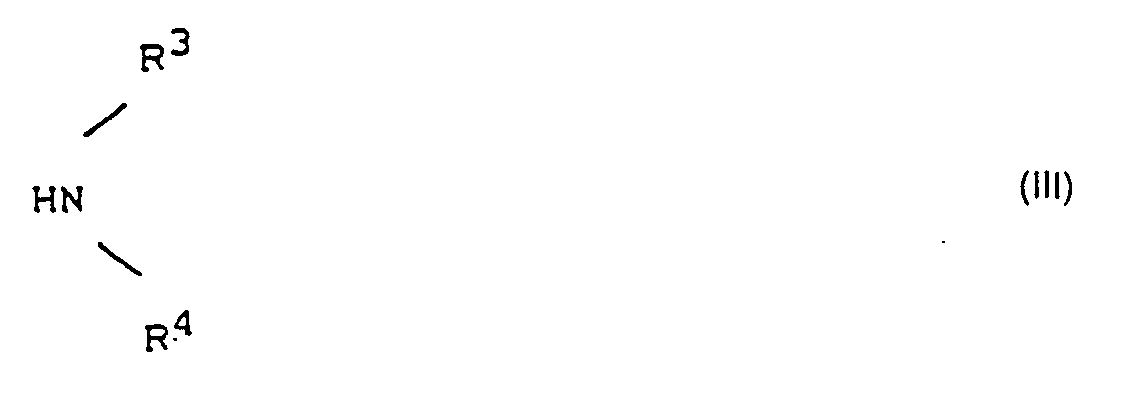
- primary or secondary amines of the formula (III) which are known from the literature, for example methylamine, dimethylamine, ethylamine, diethylamine, n-propylamine, di-n-propylamine, iso-propylamine, sec-butylamine, are also required , iso-butylamine, n-butylamine, di-n-butylamine, amylamine, N-methylamylamine, 2-methoxyethylamine, 2-ethoxyethylamine, N-methyl-2-methoxyethylamine, 3-methoxypropylamine, 3-butoxypropylamine, 2-methylthioethylamine, 2 -Butylthioethylamine, NaMethyl-3-butylthiopropylamine, 2-cyanoethylamine, 1-cyano-1-methylethylamine, ⁇ -cyanopentylamine, 2,2-di
- Suitable diluents for the process are all organic solvents which are inert to the reactants; polar solvents are preferably used. Examples include: acetonitrile, dimethylacetamide, dimethylformamide, dimethyl sulfoxide, N-methylpyrrolidone, dioxane, chlorobenzene, benzonitrile, ethyldiisopropylamine, triethylamine, tributylamine, dimethylcyclohexylamine, ethyldicyclohexylamine, dimethylbenzylamine and quinidine, quinidine, quinidine, pyridine III) as a solvent.
- reaction temperatures and the reaction time are determined by the altivity of the starting products. In general, about 20 to 180 ° C, preferably between 40 and 150 ° C.
- the compounds according to the invention precipitate out in crystalline form or remain dissolved in the organic solvent and, after distilling off excess amine, which is to be recovered as completely as possible for economic reasons, and after washing with water and dilute acid, can be isolated, if appropriate by adding few polar solvents, such as cyclohexane, dibutyl ether or carbon tetrachloride, are separated from their solutions.
- polar solvents such as cyclohexane, dibutyl ether or carbon tetrachloride
- the active compounds according to the invention have a strong fungicidal action and can be used practically to combat unwanted fungi.
- the active ingredients are suitable for use as pesticides.
- Fungicidal agents in crop protection are used to control Plasmodiophoromycetes, Oomycetes, Chytridiomycetes, Zygomycetes, Ascomycetes, Basidiomycetes, Deuteromycetes.
- the active compounds can be converted into the customary formulations, such as solutions, emulsions, suspensions, powders, foams, pastes, granules, aerosols, very fine encapsulations in polymeric substances and in coating compositions for seeds, and ULV formulations.
- formulations are prepared in a known manner, e.g. B. by mixing the active ingredients with extenders, that is liquid solvents, pressurized liquefied gases and / or solid carriers, if appropriate using surface-active agents, ie emulsifiers and / or dispersants and / or foam-generating agents.
- extenders that is liquid solvents, pressurized liquefied gases and / or solid carriers, if appropriate using surface-active agents, ie emulsifiers and / or dispersants and / or foam-generating agents.
- organic solvents can also be used as auxiliary solvents.
- aromatics such as xylene, toluene or alkylnaphthalenes
- chlorinated aromatics or chlorinated aliphatic hydrocarbons such as chlorobenzenes, chlorethylenes or methylene chloride
- aliphatic hydrocarbons such as cyclohexane or paraffins
- B. petroleum fractions alcohols such as butanol or glycol and their ethers and esters
- ketones such as acetone, methyl ethyl ketone, methyl isobutyl ketone or cyclohexanone
- strongly polar solvents such as dimethylformamide and dimethyl sulfoxide, and water.
- Liquefied gaseous extenders or carriers mean those liquids which are gaseous at normal temperature and pressure, e.g. B. aerosol propellants, such as halogenated hydrocarbons and butane, propane, nitrogen and carbon dioxide.
- Possible solid carriers are: B. natural rock powders such as kaolins, clays, talc, chalk, quartz, attapulgite, montmorillonite or diatomaceous earth and synthetic rock powders such as highly disperse silica, aluminum oxide and silicates.
- Possible solid carriers for granules are: B.
- B. nonionic and anionic emulsifiers such as polyoxyethylene fatty acid esters, polyoxyethylene fatty alcohol ethers, e.g. B. alkylaryl polyglycol ether, alkyl sulfonates, alkyl sulfates, aryl sulfonates and protein hydrolyzates.
- Possible dispersants are: B. lignin sulfite and methyl cellulose.
- Adhesives such as carboxymethyl cellulose, natural and synthetic polymers in the form of powders, granules or latices, such as gum arabic, polyvinyl alcohol, polyvinyl acetate, and also natural phospholipids, such as cephalins and lecithins, and synthetic phospholipids can be used in the formulations.
- Other additives can be mineral and vegetable oils.
- Dyes such as inorganic pigments, e.g. B. iron oxide, titanium oxide, ferrocyan blue and organic dyes such as alizarin, azo and metal phthalocyanine dyes and trace nutrients such as salts of iron, manganese, boron, copper, cobalt, molybdenum and zinc can be used.
- inorganic pigments e.g. B. iron oxide, titanium oxide, ferrocyan blue and organic dyes such as alizarin, azo and metal phthalocyanine dyes and trace nutrients such as salts of iron, manganese, boron, copper, cobalt, molybdenum and zinc can be used.
- the formulations generally contain between 0.1 and 95 percent by weight of active compound, preferably between 0.5 and 90%.
- the active compounds according to the invention can be present in the formulations in a mixture with other known active compounds, such as fungicides, insecticides, acaricides and herbicides, and also in mixtures with fertilizers and growth regulators.
- the active compounds can be used as such, in the form of their formulations or the use forms prepared therefrom, such as ready-to-use solutions, emulsifiable concentrates, emulsions, foams, suspensions, wettable powders, pastes, soluble powders, dusts and granules.
- the application happens in the usual way, e.g. B. by pouring, spraying, atomizing, scattering, dusting, foaming, brushing, etc. It is also possible to apply the active ingredients by the ultra-low-volume method or to inject the active ingredient preparation or the active ingredient itself into the soil.
- the seeds of the plants can also be treated.
- the active compound concentrations in the use forms can be varied within a substantial range. They are generally between 1 and 0.0001% by weight, preferably between 0.5 and 0.001%.
- amounts of active ingredient of 0.001 to 50 g per kilogram of seed, preferably 0.01 to 10 g, are generally required.
- active substance concentrations are from 0.00001 to 0.1% by weight; preferably from 0.0001 to 0.02%, required at the site of action.
- the compounds according to the invention can be used as intermediates for the production of active secondary products.
- the solvent is removed in vacuo.
- the residue is diluted with ethyl acetate, washed twice with 5% ice-cold sulfuric acid and twice with water. It is dried over sodium sulfate, evaporated in vacuo and the evaporation residue is crystallized from 20 ml of methanol.
- active compound 1 part by weight of active compound is mixed with the stated amount of solvent and the concentrate is diluted to the desired concentration with water and the stated amount of emulsifier.
- the disease infestation is evaluated 4 days after the inoculation.
Landscapes
- Chemical & Material Sciences (AREA)
- Organic Chemistry (AREA)
- Life Sciences & Earth Sciences (AREA)
- Dentistry (AREA)
- Wood Science & Technology (AREA)
- Plant Pathology (AREA)
- Health & Medical Sciences (AREA)
- Engineering & Computer Science (AREA)
- Agronomy & Crop Science (AREA)
- General Health & Medical Sciences (AREA)
- Pest Control & Pesticides (AREA)
- Zoology (AREA)
- Environmental Sciences (AREA)
- Agricultural Chemicals And Associated Chemicals (AREA)
- Plural Heterocyclic Compounds (AREA)
- Pharmaceuticals Containing Other Organic And Inorganic Compounds (AREA)
- Organic Low-Molecular-Weight Compounds And Preparation Thereof (AREA)
Claims (9)

ou bien


Applications Claiming Priority (4)
| Application Number | Priority Date | Filing Date | Title |
|---|---|---|---|
| DE3523313 | 1985-06-29 | ||
| DE3523313 | 1985-06-29 | ||
| DE19863602889 DE3602889A1 (de) | 1985-06-29 | 1986-01-31 | Alkoxycarbonyl-substituierte hydroxythiophen-carbonamide |
| DE3602889 | 1986-01-31 |
Publications (2)
| Publication Number | Publication Date |
|---|---|
| EP0207355A1 EP0207355A1 (fr) | 1987-01-07 |
| EP0207355B1 true EP0207355B1 (fr) | 1988-10-19 |
Family
ID=25833566
Family Applications (1)
| Application Number | Title | Priority Date | Filing Date |
|---|---|---|---|
| EP86108229A Expired EP0207355B1 (fr) | 1985-06-29 | 1986-06-16 | Amides d'acides hydroxy-thiophène-carboxyliques substitués par des groupes alcoxycarbonyliques |
Country Status (3)
| Country | Link |
|---|---|
| US (1) | US4752607A (fr) |
| EP (1) | EP0207355B1 (fr) |
| DE (2) | DE3602889A1 (fr) |
Families Citing this family (6)
| Publication number | Priority date | Publication date | Assignee | Title |
|---|---|---|---|---|
| DE3610711A1 (de) * | 1986-03-29 | 1987-10-15 | Bayer Ag | Acyloxythiophen-carbonamide |
| GB8823042D0 (en) * | 1988-09-30 | 1988-11-09 | Lilly Sa | Organic compounds & their use as pharmaceuticals |
| GB8823040D0 (en) * | 1988-09-30 | 1988-11-09 | Lilly Sa | Organic compounds & their use as pharmaceuticals |
| DE3901074A1 (de) * | 1989-01-16 | 1990-07-19 | Basf Ag | Thiophen-2-carbonsaeurederivate, verfahren zu ihrer herstellung und ihre verwendung zur bekaempfung unerwuenschten pflanzenwuchses |
| JPH0710862B2 (ja) * | 1989-08-08 | 1995-02-08 | 宇部興産株式会社 | アゾリジン誘導体、その製法及び農園芸用殺菌剤 |
| EP1486489B1 (fr) * | 1999-08-20 | 2016-04-27 | Dow AgroSciences LLC | Amides aromatiques hétérocycliques fongicides, leurs compositions, méthode d'utilisation et préparation |
Family Cites Families (4)
| Publication number | Priority date | Publication date | Assignee | Title |
|---|---|---|---|---|
| US2453102A (en) * | 1944-02-25 | 1948-11-02 | Du Pont | 3,4-dihydroxythiophene-2, 5-dicarboxylic acid production |
| DE1020641B (de) * | 1955-10-15 | 1957-12-12 | Basf Ag | Verfahren zur Herstellung von Derivaten der 3-Oxythiophen-2-carbonsaeure |
| DE3163118D1 (en) * | 1980-01-19 | 1984-05-24 | Clayton Aniline Co Ltd | Production of hydrazobenzene-3,3'-disulphonic acid |
| US4454131A (en) * | 1982-04-30 | 1984-06-12 | Ube Industries, Ltd. | Thiophene derivatives |
-
1986
- 1986-01-31 DE DE19863602889 patent/DE3602889A1/de not_active Withdrawn
- 1986-06-16 EP EP86108229A patent/EP0207355B1/fr not_active Expired
- 1986-06-16 DE DE8686108229T patent/DE3660960D1/de not_active Expired
- 1986-06-17 US US06/875,427 patent/US4752607A/en not_active Expired - Fee Related
Non-Patent Citations (1)
| Title |
|---|
| CHEMICAL ABSTRACTS, Band 101, Nr. 25, 17. Dezember 1984, Columbus, Ohio, USA, L. HUYBRECHTS et al. "The synthesis of 5-carboxamido-4-hydroxy-3-(beta-D-ribofuranosyl) thiophene derivatives analogs of pyrazofurin", p. 807, Zusammenfassung Nr. 230 921j * |
Also Published As
| Publication number | Publication date |
|---|---|
| US4752607A (en) | 1988-06-21 |
| DE3602889A1 (de) | 1987-01-08 |
| DE3660960D1 (en) | 1988-11-24 |
| EP0207355A1 (fr) | 1987-01-07 |
Similar Documents
| Publication | Publication Date | Title |
|---|---|---|
| EP0334135A2 (fr) | 1,3,5-Triazine-2,4,6-triones trisubstituées | |
| EP0177740B1 (fr) | Dérivés acylés de saccharine | |
| EP0281731A2 (fr) | 1-Aminométhyl-3-aryl-4-cyanopyrroles | |
| EP0334134A1 (fr) | Benzothiazolones 3,7-disubstituées | |
| EP0402716A1 (fr) | Dérivés de 2-acylamino-4-halogéno-5-nitrothiazole, procédé pour leur préparation, leur utilisation comme pesticides, et intermédiaires | |
| EP0554729B1 (fr) | Amides substitués d'aminoacides | |
| EP0207355A1 (fr) | Amides d'acides hydroxy-thiophène-carboxyliques substitués par des groupes alcoxycarbonyliques | |
| EP0277537B1 (fr) | 1-Aminométhyl-3-aryl-4-cyano-pyrrole | |
| EP0608739B1 (fr) | Anilides d'acides cycloalkylcarboxyliques | |
| EP0205076B1 (fr) | Dérivés de carbamates de la benzaldoxime | |
| EP0122553B1 (fr) | N-sulphényl-phénéthylsulfonamide | |
| DE3613792A1 (de) | Carbamoyloxythiophen-derivate | |
| EP0158957B1 (fr) | Dérivés d'allophanate | |
| EP0339422B1 (fr) | Dérivés du 3-cyano-4-phényl-pyrrole | |
| WO1992017066A1 (fr) | Salicylamides substitues, agent phytosanitaires | |
| EP0304758A1 (fr) | N,N'-diacylaminales | |
| DE3539995A1 (de) | Substituierte pyrazolin-5-one | |
| DE3708320A1 (de) | Benzaldoxim-derivate | |
| EP0422461A2 (fr) | 1,3,5-Triazine-2,4,6-triones trisubstitués | |
| EP0269929A1 (fr) | Chloro-1,2,4-oxadiazoles | |
| EP0224140A1 (fr) | Dérivés d'une thiénylurée | |
| DE3911226A1 (de) | Fungizide mittel auf basis von nitrosubstituierten benzthiazolonen, neue nitrosubstituierte benzthiazolone und verfahren zu deren herstellung | |
| EP0610651A1 (fr) | Lactames alpha-fluoroalkyliques N-substitués | |
| EP0374559A2 (fr) | Phényl-2-difluoro-2,2-éthylthiocarbonates substitués, procédé de préparation et application comme herbicides | |
| EP0272430A1 (fr) | Sels de saccharine d'amines substituées |
Legal Events
| Date | Code | Title | Description |
|---|---|---|---|
| PUAI | Public reference made under article 153(3) epc to a published international application that has entered the european phase |
Free format text: ORIGINAL CODE: 0009012 |
|
| 17P | Request for examination filed |
Effective date: 19860616 |
|
| AK | Designated contracting states |
Kind code of ref document: A1 Designated state(s): CH DE FR GB IT LI |
|
| 17Q | First examination report despatched |
Effective date: 19871222 |
|
| GRAA | (expected) grant |
Free format text: ORIGINAL CODE: 0009210 |
|
| AK | Designated contracting states |
Kind code of ref document: B1 Designated state(s): CH DE FR GB IT LI |
|
| ITF | It: translation for a ep patent filed | ||
| REF | Corresponds to: |
Ref document number: 3660960 Country of ref document: DE Date of ref document: 19881124 |
|
| GBT | Gb: translation of ep patent filed (gb section 77(6)(a)/1977) | ||
| ET | Fr: translation filed | ||
| PGFP | Annual fee paid to national office [announced via postgrant information from national office to epo] |
Ref country code: DE Payment date: 19890520 Year of fee payment: 4 |
|
| PG25 | Lapsed in a contracting state [announced via postgrant information from national office to epo] |
Ref country code: LI Effective date: 19890630 Ref country code: CH Effective date: 19890630 |
|
| PLBE | No opposition filed within time limit |
Free format text: ORIGINAL CODE: 0009261 |
|
| STAA | Information on the status of an ep patent application or granted ep patent |
Free format text: STATUS: NO OPPOSITION FILED WITHIN TIME LIMIT |
|
| 26N | No opposition filed | ||
| PG25 | Lapsed in a contracting state [announced via postgrant information from national office to epo] |
Ref country code: FR Free format text: LAPSE BECAUSE OF NON-PAYMENT OF DUE FEES Effective date: 19900228 |
|
| REG | Reference to a national code |
Ref country code: CH Ref legal event code: PL |
|
| REG | Reference to a national code |
Ref country code: FR Ref legal event code: ST |
|
| PG25 | Lapsed in a contracting state [announced via postgrant information from national office to epo] |
Ref country code: GB Effective date: 19900616 |
|
| GBPC | Gb: european patent ceased through non-payment of renewal fee | ||
| PG25 | Lapsed in a contracting state [announced via postgrant information from national office to epo] |
Ref country code: DE Effective date: 19910301 |
|
| PG25 | Lapsed in a contracting state [announced via postgrant information from national office to epo] |
Ref country code: IT Free format text: LAPSE BECAUSE OF NON-PAYMENT OF DUE FEES;WARNING: LAPSES OF ITALIAN PATENTS WITH EFFECTIVE DATE BEFORE 2007 MAY HAVE OCCURRED AT ANY TIME BEFORE 2007. THE CORRECT EFFECTIVE DATE MAY BE DIFFERENT FROM THE ONE RECORDED. Effective date: 20050616 |