EP0212856A2 - Acier de décolletage resulfuré à basse teneur en carbone et fabriqué par coulée continue - Google Patents
Acier de décolletage resulfuré à basse teneur en carbone et fabriqué par coulée continue Download PDFInfo
- Publication number
- EP0212856A2 EP0212856A2 EP86305632A EP86305632A EP0212856A2 EP 0212856 A2 EP0212856 A2 EP 0212856A2 EP 86305632 A EP86305632 A EP 86305632A EP 86305632 A EP86305632 A EP 86305632A EP 0212856 A2 EP0212856 A2 EP 0212856A2
- Authority
- EP
- European Patent Office
- Prior art keywords
- manganese sulfide
- base
- steel
- continuous
- inclusion
- Prior art date
- Legal status (The legal status is an assumption and is not a legal conclusion. Google has not performed a legal analysis and makes no representation as to the accuracy of the status listed.)
- Granted
Links
Images

Classifications
-
- C—CHEMISTRY; METALLURGY
- C22—METALLURGY; FERROUS OR NON-FERROUS ALLOYS; TREATMENT OF ALLOYS OR NON-FERROUS METALS
- C22C—ALLOYS
- C22C38/00—Ferrous alloys, e.g. steel alloys
-
- C—CHEMISTRY; METALLURGY
- C22—METALLURGY; FERROUS OR NON-FERROUS ALLOYS; TREATMENT OF ALLOYS OR NON-FERROUS METALS
- C22C—ALLOYS
- C22C38/00—Ferrous alloys, e.g. steel alloys
- C22C38/60—Ferrous alloys, e.g. steel alloys containing lead, selenium, tellurium, or antimony, or more than 0.04% by weight of sulfur
Definitions
- the present invention relates to a continuous-cast low-carbon resulfurized free-cutting steel, particularly to a continuous-cast low-carbon resulfurized free-cutting steel containing comparatively finely distributed manganese sulfide-base inclusions having a high plastic-deformability and thereby giving an excellent machined surface roughness.
- Japanese Unexamined Patent Publication No. 59-205453 describes an effective method of improving tool life whereby manganese sulfide is spheroidized so as to have a length-to-width ratio of 5 or less and the content of A1 2 0 3 -base inclusion, which has a significant abrasive effect, is reduced.
- the publication proposes the addition of Te, Pb, and Bi for spheroidizing the manganese sulfide, and a content of Al in the steel of not more than 0.002%, to reduce the amount of AI203.
- Tetsu-To-Hagane Journal of The Iron and Steel Institute of Japan
- vol. 71, 1985, No. 5, P. 242 for example, reports that, as the width of manganese sulfide increases, the tool wear is reduced, which coincides with the disclosures of the above-mentioned patent publications.
- the evaluations of the machined surface roughness do not correspond to each other regarding the practical use of and the results obtained by the established test methods, such as the JIS-method, etc., which have significantly obstructed the development of the continuous-cast free-cutting steel.
- the present inventors and others as reported in Tetsu-To-Hagane, vol. 71, 1985, No. 5, s530 (English translation published in Transactions of ISIJ, vol. 25, 1985, No. 9, B227), have already thrown light on the cause of the incompatibility between the evaluations and have developed a testing method which can simulate a cutting condition having a practical use.
- this method adopts a repetition of a short time cutting and a pause, for example, 2 to 4 sec, according to the most usual machining condition such as in plunge cutting by an automatic screw machine of the free-cutting steel, which is distinct from the methods heretofore used, such as the JIS-method, etc., where a long time cutting duration of, for example, 450 sec, is adopted.
- a difference between the duration of the times of cutting in these testing methods causes a discrepancy in the temperature reached by the tool edge (cutting part) during cutting, and therefore gives rise to the inconsistency which has been found between the performance in practical use and the results obtained by the conventionally established testing methods, such as the JIS-method, etc.
- an object of the present invention is to provide a continuous-cast low-carbon resulfurized free-cutting steel fully satisfying the condition for stably forming an effective layer of manganese sulfide-base inclusion on the tool edge and thereby producing an excellent machined surface roughness which will be industrially profitable.
- the object is achieved by a continuous-cast low-carbon resulfurized free-cutting steel which consists in weight percentage of
- the manganese sulfide-base inclusion is not particularly specified provided it contains manganese sulfide as a main component.
- the manganese sulfide-base inclusion preferably comprises manganese sulfide alone and manganese sulfide in the form of a complex with one or more of Pb, Bi, and manganese telludide.
- Any one of Pb, Bi, and Te may be contained in the steel as an accompanying element for improving machinability at a content in the above-specified respective content range.
- the mean sectional area of the manganese sulfide-base inclusion present in a sectional area of 1 mm2 in the rolling direction of the steel is 100 um 2 or more.
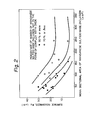
- Figures 1(1) to 1(3) are metallurgical microphotographs showing the various morphologies of manganese sulfide-base inclusions present in steel; and Fig. 2 is a diagram showing the relationship of the machined surface roughness to the mean sectional area of the manganese sulfide-base inclusion and the percentage of the number of manganese sulfide-base inclusions not in the form of a complex with oxide.
- the present inventors studied the various factors expected to essentially influence the formation of the formerly reported manganese sulfide-base inclusion layer on the tool edge (Tetsu-To-Hagane, vol. 71, 1985, No. 5, s531 and s532) by using the formerly developed testing method (Tetsu-To-Hagane, vol. 71, 1985, No. 5, s530), and found that, when manganese sulfide-base inclusion is formed as a complex inclusion with oxide, the machined surface roughness increases.
- the oxide itself does not deform, with the result that the plastic-deformability of the manganese sulfide-base inclusion is reduced.
- the manganese sulfide-base inclusion In order to fully satisfy the condition for forming the manganese sulfide-base inclusion layer on the tool edge, the manganese sulfide-base inclusion must be plastically deformed and spread in the form of film at a temperature prevailing at and under a stress on the tool edge during cutting. Therefore, it is necessary to distribute in steel as much as possible of the manganese sulfide-base inclusion not in the form of a complex with oxide, i.e., discrete from oxide.
- FIG. 1(1) shows an example of a manganese sulfide-base inclusion consisting essentially of manganese sulfide alone (denoted as MnS);
- Fig. 1(2) shows an example of a manganese sulfide-base inclusion in the form of a complex, the largest inclusion in this figure, composed of manganese sulfide and oxide mainly consisting of silicon oxide (denoted as Si0 2 ), where the oxide particles are present at the tail portions of the manganese sulfide body; and Fig.
- 1(3) shows an example of a manganese sulfide-base inclusion in the form of a complex composed of manganese sulfide, oxide mainly consisting of aluminum oxide (denoted as A1 2 0 3 ), and another compound mainly consisting of manganese sulfide oxide (denoted as Mn (0, S)) and silicon oxide (denoted as Si0 2 ), where the component compounds are present in a mixed state.
- Figure 2 shows the effect of the rate of the number of manganese sulfide-base inclusions not in the form of a complex with oxide, i.e., discrete from oxide, and the effect of the mean sectional area of the manganese sulfide-base inclusion on the machined surface roughness in terms of Rz value according to JIS B0601.
- the solid circles correspond to the samples having a rate of the number in percentage of 80% or more
- the blank circles correspond to the samples having a rate of the number in percentage of 70% or less. It is seen that, in the group of samples with the higher rate of the number, an identical surface roughness (Rz value) is achieved at a smaller mean sectional area in comparison with the group of samples with the lower rate of the number.
- the increase in the rate of the number of manganese sulfide-base inclusions not in the form of a complex with oxide is extremely effective for improving the machined surface roughness of the free-cutting steel having a relatively fine manganese sulfide-base inclusion distribution.
- the Mn content must be not less than 0.5%, to form the necessary amount of manganese sulfide-base inclusion and prevent FeS from precipitating at the grain boundary of the steel, so as to avoid cracking during hot rolling.
- the Mn content must not exceed 1.5%, because the hardness of the steel becomes higher, resulting in a loss in the machinability of the steel when this value is exceeded.
- the P content must be not less than 0.05%, to improve the machined surface roughness. To ensure the mechanical property and cold-workability of steel, the P content must not exceed 0.10%.
- the S content must be not less than 0.15%, to form a manganese sulfide-base inclusion in the steel which restrains the growth of the built-up edge and thus improves the machined surface roughness. To ensure the cold-workability of steel, however, the S content must not exceed 0.40%.
- the 0 content must be not less than 0.010%, to prevent the manganese sulfide-base inclusion from elongation in the form of a string during rolling, which lowers the machinability of the steel.
- the O content must not exceed 0.020%.
- Pb, Bi, and Te reduces the curling radius of chip, so that the chip disposability is improved. Moreover, these elements have an effect in that they increase the area of the manganese sulfide-base inclusion layer and thereby improve the machined surface roughness. These elements have a difference in the morphology when present in steel. Namely, Pb and Bi are present in steel as metallic inclusions, Pb and Bi, and Te is present as a non-metallic inclusion, manganese telluride. Also, when they are in the form of a complex with manganese sulfide-base inclusion, Pb and Bi are present as Pb and Bi, and Te is present as manganese telluride.
- the contents are set to be different, i.e, the lower limits of the Pb, Bi, and Te contents are 0.05%, 0.05%, and 0.003% and the upper limits are 0.4%, 0.4%, and 0.1%, respectively.
- the hot-workability is significantly lowered.
- Si forms Sio 2 which is apt to form a complex with the manganese sulfide-base inclusion.
- the plastic-deformability of such a complex inclusion is so poor that it restrains the formation of manganese sulfide-base inclusion layer on the tool edge, with the result that the built-up edge grows and impairs the machined surface. Therefore, the content of Si must be controlled to be as low as possible. Consequently, the content of Si must be limited to not higher than 0.003%.
- A1 forms A1 2 0 3 which is also apt to form a complex with the manganese sulfide-base inclusion.
- the plastic-deformability of such a complex inclusion is again so small that it restrains the formation of the manganese sulfide-base inclusion layer on the tool edge, with the result that the built-up edge grows and impairs the machined surface. Therefore, the content of Al must be limited to not higher than 0.0009%. When the Al content is more than 0.0009%, the ratio of the area of the tool edge surface covered by the manganese sulfide-base inclusion layer is abruptly reduced and heavily impairs the machined surface roughness.
- the manganese sulfide-base inclusion in steel must have a mean sectional area of not less than 30 um 2 , in order that it is separated from steel to be transferred to the tool rake face.
- the mean sectional area is 100 um 2 or more upon the transfer of the manganese sulfide-base inclusion separated from the steel, the ratio of the area of the tool rake face covered by the layer is larger and gives a further lubrication effect to a corresponding extent.
- the optimum mean sectional area is 100 ⁇ m 2 or more.
- the manganese sulfide-base inclusion cannot grow as large in the continuous casting as in the ingot mold casting. At present, a maximum mean sectional area of about 150 um 2 is achieved through continuous casting. Because of this, the size of the manganese sulfide-base inclusion is preferably made as large as possible, and an upper limit thereto need not be set.
- the manganese sulfide-base inclusion is in the form of a complex with one or more of Al 2 O 3 , S i 02 , MnO, and other oxides, i.e., the manganese sulfide-base inclusion is not discrete from the oxides, such a complex inclusion has a low plastic-deformability that will not allow plastic deformation of the manganese sulfide-base inclusion at a temperature prevailing at and under a stress on the tool edge during cutting.
- such oxides are not only ineffective for the formation of manganese sulfide-base inclusion layer on the tool edge, but they also act to exfoliate the manganese sulfide-base inclusion layer once formed from the tool edge surface by an abrasion effect due to their high hardness. Consequently, the amount of manganese sulfide-base inclusion layer formed is abruptly decreased when the rate of the number of manganese sulfide-base inclusions in the form of a complex with oxide exceeds 20%. Therefore, the rate of the number of manganese sulfide-base inclusions not in the form of complex with oxide must be not less than 80%.
- the manufacturing process is preferably controlled as follows:
- the cooling water rate upon continuous casting is reduced as far as possible so that an optimum slow cooling is achieved. That is, the cooling water rate for the strand is controlled so that the solidification rate at the middle point between the surface and core of the strand is 3.4 mm/min or less.
- steels shown in Table 1 were tested by lathe turning in the direction perpendicular to the rotating axis, using a high speed steel tool.
- steels No. 1 to 9 are the steels according to the present invention
- steels No. 10 to 17 are comparative steels.
- Continuous casting was performed under the condition that the size of a strand was 350 mm x 560 mm and the cooling water rate was controlled to 0.45 l/kg-steel, resulting in a solidification rate of 3.2 mm/min at the middle point between the surface and core of the strand.
- the thus continuous-cast steel was heated at 1200 0 C for 90 min and then hot-rolled. Finish-rolling was performed at a temperature of 1000°C to obtain a round bar steel product 80 mm in diameter, from which the samples to be tested were prepared.
- the mean sectional area of the manganese sulfide-base inclusion was determined by measuring the manganese sulfide-base inclusions present in the sectional area of 1 mm2 in the rolling direction of the steel by means of an optical microscope with a magnification of 200. Upon measuring, fine manganese sulfide-base inclusions of less than 10 um 2 were excluded. The rate of the number of manganese sulfide-base inclusions was determined by observing the manganese sulfide-base inclusions present in the sectional area of 1 mm 2 by using an optical microscope with a magnification of 200. As seen from Table 1, the steels according to the present invention had a superior machined surface roughness in comparison with the comparative steels, since the machined surface roughness of the steel according to the present invention is about 30% that of the comparative steel.
- the present invention provides a continuous-cast low-carbon resulfurized free-cutting steel having a superior machined surface roughness, and therefore, contributes greatly to the advancement of the industry.
Landscapes
- Chemical & Material Sciences (AREA)
- Engineering & Computer Science (AREA)
- Materials Engineering (AREA)
- Mechanical Engineering (AREA)
- Metallurgy (AREA)
- Organic Chemistry (AREA)
- Treatment Of Steel In Its Molten State (AREA)
- Heat Treatment Of Steel (AREA)
Applications Claiming Priority (2)
| Application Number | Priority Date | Filing Date | Title |
|---|---|---|---|
| JP162047/85 | 1985-07-24 | ||
| JP60162047A JPS6223970A (ja) | 1985-07-24 | 1985-07-24 | 連続鋳造による低炭素硫黄−鉛快削鋼 |
Publications (3)
| Publication Number | Publication Date |
|---|---|
| EP0212856A2 true EP0212856A2 (fr) | 1987-03-04 |
| EP0212856A3 EP0212856A3 (en) | 1988-08-31 |
| EP0212856B1 EP0212856B1 (fr) | 1990-10-17 |
Family
ID=15747081
Family Applications (1)
| Application Number | Title | Priority Date | Filing Date |
|---|---|---|---|
| EP86305632A Expired - Lifetime EP0212856B1 (fr) | 1985-07-24 | 1986-07-22 | Acier de décolletage resulfuré à basse teneur en carbone et fabriqué par coulée continue |
Country Status (12)
| Country | Link |
|---|---|
| US (1) | US4719079A (fr) |
| EP (1) | EP0212856B1 (fr) |
| JP (1) | JPS6223970A (fr) |
| KR (1) | KR910002870B1 (fr) |
| AU (1) | AU560509B2 (fr) |
| BR (1) | BR8603467A (fr) |
| CA (1) | CA1289777C (fr) |
| DE (1) | DE3674968D1 (fr) |
| ES (1) | ES2000731A6 (fr) |
| IN (1) | IN166966B (fr) |
| MX (1) | MX3225A (fr) |
| ZA (1) | ZA865485B (fr) |
Cited By (5)
| Publication number | Priority date | Publication date | Assignee | Title |
|---|---|---|---|---|
| EP0283130A3 (en) * | 1987-03-06 | 1988-11-23 | Nippon Steel Corporation | Continuous casting of lead bearing steel |
| EP0533212A1 (fr) * | 1987-04-03 | 1993-03-24 | Inland Steel Company | Produit solide et déformé en acier de décolletage |
| EP0838534A1 (fr) * | 1996-10-25 | 1998-04-29 | Lucchini Centro Ricerche E Sviluppo S.r.l. | Acier résulfuré à grain fin austénitique et procédé pour sa fabrication |
| EP0919636A1 (fr) * | 1997-12-01 | 1999-06-02 | Lucchini Centro Ricerche E Sviluppo S.r.l. | Acier pour décolletage à usinabilité améliorée |
| WO2012128397A1 (fr) * | 2011-03-22 | 2012-09-27 | O Sungbong | Procédé d'alliage au soufre utilisant une chambre de réaction, et acier coulé à teneur élevée en soufre fabriqué par ce procédé |
Families Citing this family (19)
| Publication number | Priority date | Publication date | Assignee | Title |
|---|---|---|---|---|
| US4806304A (en) * | 1983-05-09 | 1989-02-21 | Daido Tokushuko Kabushiki Kaisha | Free cutting steel |
| US4746361A (en) * | 1987-04-03 | 1988-05-24 | Inland Steel Company | Controlling dissolved oxygen content in molten steel |
| US4881990A (en) * | 1987-04-03 | 1989-11-21 | Inland Steel Company | Steel product with globular manganese sulfide inclusions |
| USRE34336E (en) * | 1988-02-23 | 1993-08-10 | Ford Motor Company | Uncooled oilless internal combustion engine having uniform gas squeeze film lubrication |
| US6200395B1 (en) | 1997-11-17 | 2001-03-13 | University Of Pittsburgh - Of The Commonwealth System Of Higher Education | Free-machining steels containing tin antimony and/or arsenic |
| US5961747A (en) * | 1997-11-17 | 1999-10-05 | University Of Pittsburgh | Tin-bearing free-machining steel |
| US6206983B1 (en) | 1999-05-26 | 2001-03-27 | University Of Pittsburgh - Of The Commonwealth System Of Higher Education | Medium carbon steels and low alloy steels with enhanced machinability |
| KR100386210B1 (ko) * | 1999-11-16 | 2003-06-02 | 가부시키가이샤 고베 세이코쇼 | 와이어롯드강 |
| KR100420304B1 (ko) | 2000-08-30 | 2004-03-04 | 가부시키가이샤 고베 세이코쇼 | 절설(切屑)처리성 및 기계적 특성이 우수한 기계구조용강 |
| JP3524479B2 (ja) | 2000-08-31 | 2004-05-10 | 株式会社神戸製鋼所 | 機械的特性に優れた機械構造用快削鋼 |
| CN1169992C (zh) * | 2001-11-15 | 2004-10-06 | 住友金属工业株式会社 | 机械结构用钢 |
| JP4264247B2 (ja) * | 2002-11-15 | 2009-05-13 | 新日本製鐵株式会社 | 被削性に優れる鋼およびその製造方法 |
| TWI249579B (en) * | 2002-11-15 | 2006-02-21 | Nippon Steel Corp | A steel having an excellent cuttability and a method for producing the same |
| US9708679B2 (en) | 2011-09-30 | 2017-07-18 | Nippon Steel & Sumitomo Metal Corporation | High-strength hot-dip galvanized steel sheet and high-strength alloyed hot-dip galvanized steel sheet excellent in mechanical cutting property, and manufacturing method thereof |
| KR101360581B1 (ko) * | 2012-04-06 | 2014-02-11 | 주식회사 포스코 | 절삭성이 우수한 비자성강 및 그 제조방법 |
| JP5954484B2 (ja) * | 2013-02-18 | 2016-07-20 | 新日鐵住金株式会社 | 鉛快削鋼 |
| CN104995324B (zh) * | 2013-02-18 | 2016-08-24 | 新日铁住金株式会社 | 含铅易切削钢 |
| JP2015040335A (ja) | 2013-08-22 | 2015-03-02 | 株式会社神戸製鋼所 | 被削性に優れた機械構造用鋼 |
| CN114908216B (zh) * | 2022-04-26 | 2023-09-01 | 东风商用车有限公司 | 易切削钢的铋碲添加方法、易切削渗碳钢及其应用 |
Family Cites Families (8)
| Publication number | Priority date | Publication date | Assignee | Title |
|---|---|---|---|---|
| US4181524A (en) * | 1978-06-12 | 1980-01-01 | Jones & Laughlin Steel Corporation | Free machining high sulfur strand cast steel |
| US4238230A (en) * | 1978-09-28 | 1980-12-09 | Jones & Laughlin Steel Corporation | Process for producing free-machining steel |
| US4236939A (en) * | 1979-01-24 | 1980-12-02 | Inland Steel Company | Semi-finished steel article and method for producing same |
| US4247326A (en) * | 1979-08-29 | 1981-01-27 | Inland Steel Company | Free machining steel with bismuth |
| US4255188A (en) * | 1979-08-29 | 1981-03-10 | Inland Steel Company | Free machining steel with bismuth and manganese sulfide |
| JPS5919182A (ja) * | 1982-07-22 | 1984-01-31 | Seiko Epson Corp | シリアルプリンタの印刷位置調整方法 |
| JPS59205453A (ja) * | 1983-05-09 | 1984-11-21 | Daido Steel Co Ltd | 快削鋼とその製造方法 |
| JPS61110754A (ja) * | 1984-11-06 | 1986-05-29 | Nippon Steel Corp | 低炭素硫黄−鉛快削鋼 |
-
1985
- 1985-07-24 JP JP60162047A patent/JPS6223970A/ja active Granted
-
1986
- 1986-07-16 IN IN634/DEL/86A patent/IN166966B/en unknown
- 1986-07-22 DE DE8686305632T patent/DE3674968D1/de not_active Expired - Lifetime
- 1986-07-22 EP EP86305632A patent/EP0212856B1/fr not_active Expired - Lifetime
- 1986-07-23 MX MX322586A patent/MX3225A/es unknown
- 1986-07-23 AU AU60448/86A patent/AU560509B2/en not_active Ceased
- 1986-07-23 ES ES8600519A patent/ES2000731A6/es not_active Expired
- 1986-07-23 US US06/888,977 patent/US4719079A/en not_active Expired - Lifetime
- 1986-07-23 ZA ZA865485A patent/ZA865485B/xx unknown
- 1986-07-23 BR BR8603467A patent/BR8603467A/pt not_active IP Right Cessation
- 1986-07-24 CA CA000514600A patent/CA1289777C/fr not_active Expired - Lifetime
- 1986-07-24 KR KR1019860006023A patent/KR910002870B1/ko not_active Expired
Cited By (7)
| Publication number | Priority date | Publication date | Assignee | Title |
|---|---|---|---|---|
| EP0283130A3 (en) * | 1987-03-06 | 1988-11-23 | Nippon Steel Corporation | Continuous casting of lead bearing steel |
| US4830090A (en) * | 1987-03-06 | 1989-05-16 | Nippon Steel Corporation | Method of continuously casting lead-bearing steel |
| AU601918B2 (en) * | 1987-03-06 | 1990-09-20 | Inland Steel Company | Method of continuously casting lead-bearing steel |
| EP0533212A1 (fr) * | 1987-04-03 | 1993-03-24 | Inland Steel Company | Produit solide et déformé en acier de décolletage |
| EP0838534A1 (fr) * | 1996-10-25 | 1998-04-29 | Lucchini Centro Ricerche E Sviluppo S.r.l. | Acier résulfuré à grain fin austénitique et procédé pour sa fabrication |
| EP0919636A1 (fr) * | 1997-12-01 | 1999-06-02 | Lucchini Centro Ricerche E Sviluppo S.r.l. | Acier pour décolletage à usinabilité améliorée |
| WO2012128397A1 (fr) * | 2011-03-22 | 2012-09-27 | O Sungbong | Procédé d'alliage au soufre utilisant une chambre de réaction, et acier coulé à teneur élevée en soufre fabriqué par ce procédé |
Also Published As
| Publication number | Publication date |
|---|---|
| AU560509B2 (en) | 1987-04-09 |
| ES2000731A6 (es) | 1988-03-16 |
| AU6044886A (en) | 1987-01-29 |
| JPS6223970A (ja) | 1987-01-31 |
| EP0212856B1 (fr) | 1990-10-17 |
| JPS634903B2 (fr) | 1988-02-01 |
| EP0212856A3 (en) | 1988-08-31 |
| MX3225A (es) | 1993-12-01 |
| KR870001319A (ko) | 1987-03-13 |
| US4719079A (en) | 1988-01-12 |
| BR8603467A (pt) | 1987-03-04 |
| IN166966B (fr) | 1990-08-11 |
| ZA865485B (en) | 1988-10-26 |
| DE3674968D1 (de) | 1990-11-22 |
| CA1289777C (fr) | 1991-10-01 |
| KR910002870B1 (ko) | 1991-05-06 |
Similar Documents
| Publication | Publication Date | Title |
|---|---|---|
| US4719079A (en) | Continuous-cast low-carbon resulfurized free-cutting steel | |
| CA1121187A (fr) | Acier au bismuth | |
| US4247326A (en) | Free machining steel with bismuth | |
| Luiz et al. | Development trends and review of free-machining steels | |
| EP1484422B1 (fr) | Acier de decolletage contenant du soufre | |
| CN111876689B (zh) | 一种仪器仪表用低碳含硒的易切削钢及其制造方法 | |
| US4265660A (en) | High-strength free-cutting steel able to support dynamic stresses | |
| CN101688274B (zh) | 低碳硫快削钢 | |
| EP1040208B1 (fr) | Acier de decolletage contenant de l'etain | |
| US6200395B1 (en) | Free-machining steels containing tin antimony and/or arsenic | |
| JPH11293391A (ja) | 切屑処理性に優れた低炭素快削鋼およびその製造方法 | |
| TWI747777B (zh) | 易切削鋼及其製造方法 | |
| JPH07173573A (ja) | 超硬工具による被削性と内部品質にすぐれる快削鋼 | |
| JPS62103340A (ja) | 機械構造用Ca快削鋼 | |
| JP4264175B2 (ja) | 被削性に優れた快削用棒鋼およびその製法 | |
| JP4264174B2 (ja) | 切屑分断性に優れた機械構造用棒鋼およびその製法 | |
| EP0250595B1 (fr) | Outil de coupe de finissage et procede de coupe de finissage pour l'acier | |
| CN121295026B (zh) | 一种高洁净易切削非调质钢及其制造方法 | |
| JP2682945B2 (ja) | 工具寿命と仕上げ面粗さの優れた黒鉛快削鋼 | |
| JPH09157791A (ja) | 熱間加工性に優れた快削鋼 | |
| JPH0564229B2 (fr) | ||
| KR100285520B1 (ko) | 비스므스(Bi)-황(S)계 쾌삭강 선재 표면의 미세한 균열 억제 방법 | |
| JPS61153264A (ja) | 高炭素快削鋼 | |
| JPS61110754A (ja) | 低炭素硫黄−鉛快削鋼 | |
| JPH0791582B2 (ja) | スチ−ルウ−ル用鋼線の製造法 |
Legal Events
| Date | Code | Title | Description |
|---|---|---|---|
| PUAI | Public reference made under article 153(3) epc to a published international application that has entered the european phase |
Free format text: ORIGINAL CODE: 0009012 |
|
| AK | Designated contracting states |
Kind code of ref document: A2 Designated state(s): BE CH DE FR GB IT LI NL SE |
|
| PUAL | Search report despatched |
Free format text: ORIGINAL CODE: 0009013 |
|
| AK | Designated contracting states |
Kind code of ref document: A3 Designated state(s): BE CH DE FR GB IT LI NL SE |
|
| 17P | Request for examination filed |
Effective date: 19881222 |
|
| 17Q | First examination report despatched |
Effective date: 19900207 |
|
| GRAA | (expected) grant |
Free format text: ORIGINAL CODE: 0009210 |
|
| AK | Designated contracting states |
Kind code of ref document: B1 Designated state(s): BE CH DE FR GB IT LI NL SE |
|
| ITF | It: translation for a ep patent filed | ||
| ET | Fr: translation filed | ||
| REF | Corresponds to: |
Ref document number: 3674968 Country of ref document: DE Date of ref document: 19901122 |
|
| PLBI | Opposition filed |
Free format text: ORIGINAL CODE: 0009260 |
|
| PLBI | Opposition filed |
Free format text: ORIGINAL CODE: 0009260 |
|
| PLBI | Opposition filed |
Free format text: ORIGINAL CODE: 0009260 |
|
| ITTA | It: last paid annual fee | ||
| 26 | Opposition filed |
Opponent name: THYSSEN STAHL AG Effective date: 19910608 |
|
| 26 | Opposition filed |
Opponent name: SAARSTAHL AG Effective date: 19910715 Opponent name: THYSSEN STAHL AG Effective date: 19910608 |
|
| 26 | Opposition filed |
Opponent name: UNIMETAL S.A. Effective date: 19910715 Opponent name: SAARSTAHL AG Effective date: 19910715 Opponent name: THYSSEN STAHL AG Effective date: 19910608 |
|
| NLR1 | Nl: opposition has been filed with the epo |
Opponent name: THYSSEN STAHL AG |
|
| NLR1 | Nl: opposition has been filed with the epo |
Opponent name: SAARSTAHL AG |
|
| NLR1 | Nl: opposition has been filed with the epo |
Opponent name: UNIMETAL S.A. |
|
| EAL | Se: european patent in force in sweden |
Ref document number: 86305632.1 |
|
| PGFP | Annual fee paid to national office [announced via postgrant information from national office to epo] |
Ref country code: FR Payment date: 19960709 Year of fee payment: 11 |
|
| PGFP | Annual fee paid to national office [announced via postgrant information from national office to epo] |
Ref country code: DE Payment date: 19960726 Year of fee payment: 11 |
|
| PLBQ | Unpublished change to opponent data |
Free format text: ORIGINAL CODE: EPIDOS OPPO |
|
| PLAB | Opposition data, opponent's data or that of the opponent's representative modified |
Free format text: ORIGINAL CODE: 0009299OPPO |
|
| R26 | Opposition filed (corrected) |
Opponent name: THYSSEN STAHL AG * 910715 SAARSTAHL AG * 910715 U Effective date: 19910608 |
|
| NLR1 | Nl: opposition has been filed with the epo |
Opponent name: UNIMETAL S.A. Opponent name: SAARSTAHL AG Opponent name: THYSSEN STAHL AG |
|
| PGFP | Annual fee paid to national office [announced via postgrant information from national office to epo] |
Ref country code: GB Payment date: 19970117 Year of fee payment: 11 |
|
| PGFP | Annual fee paid to national office [announced via postgrant information from national office to epo] |
Ref country code: SE Payment date: 19970121 Year of fee payment: 11 |
|
| PGFP | Annual fee paid to national office [announced via postgrant information from national office to epo] |
Ref country code: NL Payment date: 19970124 Year of fee payment: 11 Ref country code: CH Payment date: 19970124 Year of fee payment: 11 |
|
| PGFP | Annual fee paid to national office [announced via postgrant information from national office to epo] |
Ref country code: BE Payment date: 19970211 Year of fee payment: 11 |
|
| APAC | Appeal dossier modified |
Free format text: ORIGINAL CODE: EPIDOS NOAPO |
|
| RDAG | Patent revoked |
Free format text: ORIGINAL CODE: 0009271 |
|
| STAA | Information on the status of an ep patent application or granted ep patent |
Free format text: STATUS: PATENT REVOKED |
|
| REG | Reference to a national code |
Ref country code: CH Ref legal event code: PL |
|
| GBPR | Gb: patent revoked under art. 102 of the ep convention designating the uk as contracting state |
Free format text: 930717 |
|
| 27W | Patent revoked |
Effective date: 19930717 |
|
| NLR2 | Nl: decision of opposition | ||
| APAH | Appeal reference modified |
Free format text: ORIGINAL CODE: EPIDOSCREFNO |