EP0214340A2 - Verfahren zum Nachweis von bestimmten beweglichen Organismen - Google Patents
Verfahren zum Nachweis von bestimmten beweglichen Organismen Download PDFInfo
- Publication number
- EP0214340A2 EP0214340A2 EP85113868A EP85113868A EP0214340A2 EP 0214340 A2 EP0214340 A2 EP 0214340A2 EP 85113868 A EP85113868 A EP 85113868A EP 85113868 A EP85113868 A EP 85113868A EP 0214340 A2 EP0214340 A2 EP 0214340A2
- Authority
- EP
- European Patent Office
- Prior art keywords
- motile
- motility
- medium
- organism
- attractant
- Prior art date
- Legal status (The legal status is an assumption and is not a legal conclusion. Google has not performed a legal analysis and makes no representation as to the accuracy of the status listed.)
- Granted
Links
Images
Classifications
-
- C—CHEMISTRY; METALLURGY
- C12—BIOCHEMISTRY; BEER; SPIRITS; WINE; VINEGAR; MICROBIOLOGY; ENZYMOLOGY; MUTATION OR GENETIC ENGINEERING
- C12Q—MEASURING OR TESTING PROCESSES INVOLVING ENZYMES, NUCLEIC ACIDS OR MICROORGANISMS; COMPOSITIONS OR TEST PAPERS THEREFOR; PROCESSES OF PREPARING SUCH COMPOSITIONS; CONDITION-RESPONSIVE CONTROL IN MICROBIOLOGICAL OR ENZYMOLOGICAL PROCESSES
- C12Q1/00—Measuring or testing processes involving enzymes, nucleic acids or microorganisms; Compositions therefor; Processes of preparing such compositions
- C12Q1/02—Measuring or testing processes involving enzymes, nucleic acids or microorganisms; Compositions therefor; Processes of preparing such compositions involving viable microorganisms
- C12Q1/04—Determining presence or kind of microorganism; Use of selective media for testing antibiotics or bacteriocides; Compositions containing a chemical indicator therefor
- C12Q1/10—Enterobacteria
-
- C—CHEMISTRY; METALLURGY
- C12—BIOCHEMISTRY; BEER; SPIRITS; WINE; VINEGAR; MICROBIOLOGY; ENZYMOLOGY; MUTATION OR GENETIC ENGINEERING
- C12M—APPARATUS FOR ENZYMOLOGY OR MICROBIOLOGY; APPARATUS FOR CULTURING MICROORGANISMS FOR PRODUCING BIOMASS, FOR GROWING CELLS OR FOR OBTAINING FERMENTATION OR METABOLIC PRODUCTS, i.e. BIOREACTORS OR FERMENTERS
- C12M41/00—Means for regulation, monitoring, measurement or control, e.g. flow regulation
- C12M41/30—Means for regulation, monitoring, measurement or control, e.g. flow regulation of concentration
- C12M41/36—Means for regulation, monitoring, measurement or control, e.g. flow regulation of concentration of biomass, e.g. colony counters or by turbidity measurements
-
- C—CHEMISTRY; METALLURGY
- C12—BIOCHEMISTRY; BEER; SPIRITS; WINE; VINEGAR; MICROBIOLOGY; ENZYMOLOGY; MUTATION OR GENETIC ENGINEERING
- C12Q—MEASURING OR TESTING PROCESSES INVOLVING ENZYMES, NUCLEIC ACIDS OR MICROORGANISMS; COMPOSITIONS OR TEST PAPERS THEREFOR; PROCESSES OF PREPARING SUCH COMPOSITIONS; CONDITION-RESPONSIVE CONTROL IN MICROBIOLOGICAL OR ENZYMOLOGICAL PROCESSES
- C12Q1/00—Measuring or testing processes involving enzymes, nucleic acids or microorganisms; Compositions therefor; Processes of preparing such compositions
- C12Q1/02—Measuring or testing processes involving enzymes, nucleic acids or microorganisms; Compositions therefor; Processes of preparing such compositions involving viable microorganisms
-
- G—PHYSICS
- G01—MEASURING; TESTING
- G01N—INVESTIGATING OR ANALYSING MATERIALS BY DETERMINING THEIR CHEMICAL OR PHYSICAL PROPERTIES
- G01N33/00—Investigating or analysing materials by specific methods not covered by groups G01N1/00 - G01N31/00
- G01N33/02—Food
-
- G—PHYSICS
- G01—MEASURING; TESTING
- G01N—INVESTIGATING OR ANALYSING MATERIALS BY DETERMINING THEIR CHEMICAL OR PHYSICAL PROPERTIES
- G01N33/00—Investigating or analysing materials by specific methods not covered by groups G01N1/00 - G01N31/00
- G01N33/48—Biological material, e.g. blood, urine; Haemocytometers
- G01N33/50—Chemical analysis of biological material, e.g. blood, urine; Testing involving biospecific ligand binding methods; Immunological testing
- G01N33/53—Immunoassay; Biospecific binding assay; Materials therefor
- G01N33/569—Immunoassay; Biospecific binding assay; Materials therefor for microorganisms, e.g. protozoa, bacteria, viruses
-
- G—PHYSICS
- G01—MEASURING; TESTING
- G01N—INVESTIGATING OR ANALYSING MATERIALS BY DETERMINING THEIR CHEMICAL OR PHYSICAL PROPERTIES
- G01N33/00—Investigating or analysing materials by specific methods not covered by groups G01N1/00 - G01N31/00
- G01N33/48—Biological material, e.g. blood, urine; Haemocytometers
- G01N33/50—Chemical analysis of biological material, e.g. blood, urine; Testing involving biospecific ligand binding methods; Immunological testing
- G01N33/53—Immunoassay; Biospecific binding assay; Materials therefor
- G01N33/569—Immunoassay; Biospecific binding assay; Materials therefor for microorganisms, e.g. protozoa, bacteria, viruses
- G01N33/56911—Bacteria
- G01N33/56916—Enterobacteria, e.g. shigella, salmonella, klebsiella, serratia
-
- G—PHYSICS
- G01—MEASURING; TESTING
- G01N—INVESTIGATING OR ANALYSING MATERIALS BY DETERMINING THEIR CHEMICAL OR PHYSICAL PROPERTIES
- G01N2333/00—Assays involving biological materials from specific organisms or of a specific nature
- G01N2333/195—Assays involving biological materials from specific organisms or of a specific nature from bacteria
- G01N2333/24—Assays involving biological materials from specific organisms or of a specific nature from bacteria from Enterobacteriaceae (F), e.g. Citrobacter, Serratia, Proteus, Providencia, Morganella, Yersinia
- G01N2333/255—Salmonella (G)
-
- G—PHYSICS
- G01—MEASURING; TESTING
- G01N—INVESTIGATING OR ANALYSING MATERIALS BY DETERMINING THEIR CHEMICAL OR PHYSICAL PROPERTIES
- G01N33/00—Investigating or analysing materials by specific methods not covered by groups G01N1/00 - G01N31/00
- G01N33/02—Food
- G01N33/12—Meat; Fish
-
- Y—GENERAL TAGGING OF NEW TECHNOLOGICAL DEVELOPMENTS; GENERAL TAGGING OF CROSS-SECTIONAL TECHNOLOGIES SPANNING OVER SEVERAL SECTIONS OF THE IPC; TECHNICAL SUBJECTS COVERED BY FORMER USPC CROSS-REFERENCE ART COLLECTIONS [XRACs] AND DIGESTS
- Y10—TECHNICAL SUBJECTS COVERED BY FORMER USPC
- Y10S—TECHNICAL SUBJECTS COVERED BY FORMER USPC CROSS-REFERENCE ART COLLECTIONS [XRACs] AND DIGESTS
- Y10S435/00—Chemistry: molecular biology and microbiology
- Y10S435/8215—Microorganisms
- Y10S435/822—Microorganisms using bacteria or actinomycetales
- Y10S435/879—Salmonella
Definitions
- the present invention relates to the detection of organisms within samples in general, and more specifically, to a method for the detection of a particular motile organism in a sample, for example, flagellate bacteria such as Salmonella.
- Salmonella is a genus of a facultative aerobic gram-negative flagellate bacteria which may be found in a variety of foodstuffs, dairy products, feed, water and wastewater, and which are a cause of various pathological conditions in man. Salmonellosis, a food-associated disease, is a major problem in the United States because of its incidence, economic significance, and hazardous nature. Salmonellosis is usually not a fatal disease, although some fatalities have been reported in infants and the aged.
- the present invention discloses methods and associated devices for detecting the presence of a particular motile organism within a sample, such as a sample derived from dry milk, raw meat, poultry, or a clinical specimen.
- the method comprises inoculating a selective enrichment medium containing at least one chemotactic attractant with a sample containing the motile organism to be detected and one or more motile competitors.
- the chemotactic attractant causes motility inhibition of the motile organism to be detected and the motile competitors, while the enrichment medium is selective for the growth of the motile organism to be detected relative to the growth of the motile competitors.
- the selective medium containing the motile organism is contacted with a nonselective motility medium, the motility medium containing a chemotactic attractant in a concentration which is less than the attractant concentration in the selective enrichment medium.
- the sample/ selective enrichment medium is then incubated under conditions which permit the motile organism to metabolize the chemotactic attractant to a level which is less than the attractant concentration in the motility medium, thereby relieving the motile organism from its motility inhibition, and allowing the motile organism to move into the motility medium.
- the motility medium further contains antibodies specific for the motile organism, the antibodies being restricted to essentially unidirectional movement within the motility medium from a position distal to the position of the motile organism.
- the antibodies are present in sufficient quantity to produce a persistent immobilization band upon interaction of the motile organism with the antibodies. Upon this interaction, one may observe the formation of the immobilization band, thereby signifying the presence of the particular motile organism. Depending upon the characteristics of the particular organism to be detected and the condition of the sample, it may be useful to enrich the sample in an enrichment medium, either nonselective or selective, prior to the inoculation step.
- a related aspect of the present invention discloses a method substantially the same as that noted above, with the exception that the antibodies within the motility medium which are specific for the motile organism substantially surround the motile organism and are present in sufficient quantity to produce a persistent immobilization ring upon the interaction of the motile organism with the antibodies.
- An additional aspect of the present invention discloses a motility vessel for use within a motility-immunoimmobilization assay, comprising a housing having two spaced end openings, each of the end openings having a removable cap thereon, the housing further defining a motility chamber and an enrichment chamber communicating with one another through a conduit.
- the enrichment chamber contains a selective enrichment medium and at least one chemotactic attractant.
- the motility chamber contains a nonselective motility medium and a chemotactic attractant in a concentration less than the attractant concentration in the enrichment chamber, the motility chamber further containing a quantity of antibodies positioned distal from the conduit.
- a particular organism present in a sample can be detected by a "motility-immunoimmobilization assay.”
- motility-immunoimmobilization assay Depending upon the number and physiological condition of the particular motile organisms and the number of the competitor microorganisms in the sample, different approaches may be taken. For example:
- the sample is added to a selective enrichment medium which contains a suitable chemotactic attractant.
- the selective enrichment medium should comprise a conventional selective enrichment broth, such as tetrathionate broth, tetrathionate broth with 0.001% brilliant green, selenite-cystine broth or SBG-S broth.
- a preferred chemotactic attractant for Salmonella is L-serine.
- the concentration of L-serine in the selective enrichment medium should be greater than that which exists in the motility medium used in the motility vessel. This concentration is usually greater than 0.001 M, and preferably should be in the range of 0.001 M to 0.1 M.
- the particular motile organisms and their motile competitor bacteria present in the sample are substantially "paralyzed" for a period of time and are unable to undergo chemotactic-directed movement from the selective enrichment medium into the motility medium.
- the particular motile organisms and their competitors are unable to move from the selective enrichment medium into the nonselective enrichment medium until the concentration of the chemotactic attractant in the selective enrichment medium is reduced by metabolism by the particular motile bacteria and their competitors to a level such that a higher concentration of chemotactic attractant exists in the motility medium.
- a temporal concentration gradient is established such that the particular motile organisms and motile competitor bacteria can recognize a higher concentration of the chemotactic attractant in the motility medium and these organisms can undergo chemotactic-directed movement.
- the chemotactic attractant serves, then, to keep the motile oganisms in the presence of the selective agents, where the particular motile organisms to be detected have a growth advantage for an appreciable period of time.
- the preferred concentration of the chemotactic attractant is one that is high enough to inhibit chemotactic-directed movement of motile organisms from the selective enrichment environment to the motility medium for approximately four hours.
- the motile organisms When a sufficient amount of the chemotactic attractant has been metabolized, thereby relieving the motility inhibition, the motile organisms are free to move into the nonselective motility medium.
- the particular motile oganisms In those samples in which the particular motile oganisms are present, the particular motile organisms will generally grow at a higher rate than their competitor organisms in the selective enrichment medium and can rapidly metabolize the chemotactic attractant. In these cases, the motility inhibition is quickly relieved and the particular motile organism and its motile competitors can rapidly move into the nonselective motility medium. In those samples in which the particular motile organisms are not present, the competitor organisms grow at a rate which is substantially depressed in the presence of selective agents in the enrichment medium.
- This motility inhibition is particularly beneficial in those cases where the motile competitor bacteria may cross-react with the antisera to the particular bacteria and provide a false positive result.
- the motility medium into which the motile organisms to be detected migrate is preferably nonselective. In other words, it contains no selective chemical agents to inhibit the growth of the competitive motile organisms relative to the growth of the particular motile organism to be detected. This is particularly important for Salmonella, as the use of a selective motility medium would greatly reduce or completely inhibit the motility of certain strains of Salmonella.
- the motility medium contain a gelling agent, such as agarose.
- the gelling agent should be employed at a concentration which is low enough to allow rapid motility of the motile organisms, but high enough to form a gel. For example, a concentration in the range of 0.1-0.4 grams/100 mls is normally suitable.
- the motility medium is also provided with a chemotactic agent or agents, to which the particular motile organisms to be detected and their competitors are attracted, along with nutrients such as amino acids and vitamins for the growth of the organisms.
- the motile organism to be detected is Salmonella
- the attractant could be glucose, or if glucose is not present, could be serine.
- L-serine has been identified as a chemotactic attractant of Salmonella and other motile nonsalmo- nellae competitors.
- the motility-immunoimmobilization assay is performed in a completely enclosed vessel, the preferred motility medium should be free of nutrients, most notably carbohydrates, such as glucose. The presence of carbohydrates such as glucose cause the motile organisms to generate gas, which could result in disruption of the gel.
- Also added to the motility medium are diffusible monoclonal or polyclonal antibodies specific to the flagella of the particular motile organisms to be detected.
- the antibodies should be added to the motility medium in a quantity which is sufficient to produce a permanent immobilization band upon interaction with the particular motile organisms.
- the particular motile organism to be detected is Salmonella
- Salmonella may be immobilized by the MOPC 467 monoclonal antibody (Smith & Potter, J. Immunol. 144: 1847, 1975; Smith et al., J. Immunol. 123: 1715, 1979) or the 6H4 monoclonal antibody (Mattingly et al., Food Technology 39: 90-94, 1985).
- MOPC 467 monoclonal antibody Smith & Potter, J. Immunol. 144: 1847, 1975; Smith et al., J. Immunol. 123: 1715, 1979
- 6H4 monoclonal antibody Mettingly et al., Food Technology 39: 90-94, 1985.
- the concentration of the chemotactic attractant in the motility medium be carefully controlled.
- the rate of motility is slow because there is a significant amount of attractant to metabolize.
- the number of motile organisms responding to the chemotactic attractant is increased. Therefore, more of the particular motile organisms to be detected interact with the antibody, and the intensity of the band, as visually observed, is increased.
- the motility rate is very rapid, but the number of cells interacting with the antibody is proportionately decreased and the intensity of the band is diminished.
- the assay is completed in approximately 24 hours or less, it is usually completed before the motile competitors of the particular motile organisms, whose growth has been substantially inhibited by the selective agents in the selective enrichment medium, can move into the motility medium. This is advantageous because it reduces the potential for a false positive interpretation caused by certain motile competitors which may cross-react with the flagellar antibodies.
- motility vessels Preferred vessels for use in conjunction with the method described above, hereinafter referred to as "motility vessels,” should have a transparent body, and may be, for example, in the form of a single-use, disposable unit made of transparent or optically clear plastic. Although it is preferable to use a plastic which is completely distortion-free (optically clear), use of a transparent plastic is more than adequate for purposes of the present invention. It is also preferable for that portion of the motility vessel into which the antibody is introduced to be designed such that the antibody will be substantially confined and the diffusion of the antibody into the motility medium is restricted and essentially unidirectional. By confining the antibody in this manner, an immobilization band, which forms by the interaction of the particular motile organisms to be detected and the antibodies, is substantially permanent rather than transient. As a safety consideration, it is preferable to completely seal the motility vessel after the addition of inoculum and antiserum.
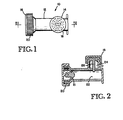
- the motility vessel 10 comprises a housing 12 having a first end 14 and a second end 16, each of the ends being provided with end caps 18 and 20, respectively.
- the housing 12 defines a central motility chamber 22 and an enrichment chamber 24, connected by a conduit 26.
- motility medium is added to the motility chamber 22 upon removal of the end cap 20 from the end 16.
- the motility medium should be sterilized for use, preferably by heating at 121°C for 15 minutes.
- the molten medium, cooled to 45°C, is then added to the motility vessel.
- Enough medium should be added to substantially fill the central motility chamber. The cap 20 is then screwed onto the end 16.
- the cap 20 with a gel displacer 21, in order to facilitate the expulsion of any gas bubbles from the motility chamber which might disrupt the gel.
- the gel displacer may be a part of or separate from the cap 20, and when designed in this manner, its use will result in the exclusion of gas bubbles as well as a small amount of motility medium from the chamber 22 upon securing the cap 20.
- the molten motility medium solidifies to a consistency which resembles a viscous fluid.
- the enrichment chamber 24 it is preferable, when inoculating the enrichment chamber 24 with the sample and selective enrichment medium containing the chemotactic attractant, to place the motility vessel in a horizontal position upon removal of the cap 18. Approximately 0.1 ml of the sample is generally added to the selective enrichment medium within the chamber 24, following which the cap 18 is replaced.
- the motility vessel in a substantially vertical position while the cap 20 is again removed.
- Antisera is then layered onto the exposed surface of the solidified motility medium within the chamber 22.
- An amount of antisera in the range of 20-100 microliters is preferable.
- the cap 20 is then replaced and the motility vessel incubated at a temperature between 32-43°C, preferably 35-37°C, while maintaining the vessel in a substantially vertical position.
- the particular motile organisms to be detected after metabolizing the chemotactic attractant added to the selective enrichment medium, move into the motility medium through the conduit 26 toward the end 16.
- the antisera which was added to the surface of the motility medium diffuses into the medium, where it immobilizes the motile organisms to be detected. This immobilization causes the formation of one or more sharp, dense, macroscopically visible bands approximately 1-2 mm below the edge of the end 16 where the antisera was added.
- Tetrathionate broth with brilliant green was prepared according to the manufacturer's specifications.
- a 25 gram (g) sample of raw chicken liver was added to 225 ml of tetrathionate broth (Difco) with 0.001% brilliant green and the combination put into a blender and blended for 2 minutes.
- the blended sample/broth was then incubated at 35°C for 24 hours (note: incubation may generally be carried out at 35-43°C for 8-48 hours).
- a motility vessel as described above was sterilized, and the central motility chamber filled with sterile, molten, nonselective motility medium comprised of 1.5% (w/v) polypeptone (BBL, Cockeysville, MD) and 0.2-0.3% (w/v) agar.
- the medium was cooled to 45-48°C prior to filling the chamber.
- the motility medium within the chamber was then allowed to substantially solidify. (Note: the filled units may be stored up to 9 months before use if tightly capped to avoid dehydration.)
- the motility vessel was then tipped approximately 90°, and the cap and gel displacer of the enrichment chamber removed. 0.9 ml of tetrathionate broth supplemented with 0.1 M L-serine was then added to the enrichment chamber. This enrichment medium was prepared according to the manufacturer's instructions. This medium contacts the nonselective motility medium within the motility chamber. Approximately 0.1 ml of selectively enriched sample was then inoculated into the serine-supplemented broth, and the cap replaced.
- the cap and gel displacer of the motility chamber were removed. Approximately 0.1 ml of 1:5 dilution of polyvalent H antibodies (Difco) was added to the surface of the exposed motility medium, and the cap replaced.
- the motility vessel was then incubated for 8-24 hours and a thin opaque band(s) of cells approximately 1-22 mm below the motility medium surface which received the antibodies was observed.
Landscapes
- Health & Medical Sciences (AREA)
- Life Sciences & Earth Sciences (AREA)
- Chemical & Material Sciences (AREA)
- Engineering & Computer Science (AREA)
- Immunology (AREA)
- Organic Chemistry (AREA)
- Biochemistry (AREA)
- Analytical Chemistry (AREA)
- Molecular Biology (AREA)
- General Health & Medical Sciences (AREA)
- Wood Science & Technology (AREA)
- Zoology (AREA)
- Biomedical Technology (AREA)
- Biotechnology (AREA)
- Physics & Mathematics (AREA)
- Microbiology (AREA)
- Hematology (AREA)
- Urology & Nephrology (AREA)
- Proteomics, Peptides & Aminoacids (AREA)
- Bioinformatics & Cheminformatics (AREA)
- Food Science & Technology (AREA)
- Genetics & Genomics (AREA)
- General Engineering & Computer Science (AREA)
- Pathology (AREA)
- Medicinal Chemistry (AREA)
- General Physics & Mathematics (AREA)
- Tropical Medicine & Parasitology (AREA)
- Biophysics (AREA)
- Virology (AREA)
- Cell Biology (AREA)
- Toxicology (AREA)
- Sustainable Development (AREA)
- Measuring Or Testing Involving Enzymes Or Micro-Organisms (AREA)
- Micro-Organisms Or Cultivation Processes Thereof (AREA)
- Agricultural Chemicals And Associated Chemicals (AREA)
- Apparatus Associated With Microorganisms And Enzymes (AREA)
- Catching Or Destruction (AREA)
Priority Applications (1)
| Application Number | Priority Date | Filing Date | Title |
|---|---|---|---|
| AT85113868T ATE73857T1 (de) | 1985-09-09 | 1985-10-31 | Verfahren zum nachweis von bestimmten beweglichen organismen. |
Applications Claiming Priority (2)
| Application Number | Priority Date | Filing Date | Title |
|---|---|---|---|
| US773201 | 1985-09-09 | ||
| US07/773,201 US4920063A (en) | 1984-06-15 | 1985-09-09 | Process for detection of selected motile organisms |
Publications (3)
| Publication Number | Publication Date |
|---|---|
| EP0214340A2 true EP0214340A2 (de) | 1987-03-18 |
| EP0214340A3 EP0214340A3 (en) | 1987-12-16 |
| EP0214340B1 EP0214340B1 (de) | 1992-03-18 |
Family
ID=25097513
Family Applications (1)
| Application Number | Title | Priority Date | Filing Date |
|---|---|---|---|
| EP85113868A Expired - Lifetime EP0214340B1 (de) | 1985-09-09 | 1985-10-31 | Verfahren zum Nachweis von bestimmten beweglichen Organismen |
Country Status (6)
| Country | Link |
|---|---|
| US (1) | US4920063A (de) |
| EP (1) | EP0214340B1 (de) |
| JP (1) | JPH062076B2 (de) |
| AT (1) | ATE73857T1 (de) |
| CA (1) | CA1271707A (de) |
| DE (1) | DE3585689D1 (de) |
Cited By (11)
| Publication number | Priority date | Publication date | Assignee | Title |
|---|---|---|---|---|
| WO1990013033A1 (en) * | 1989-04-14 | 1990-11-01 | Biocontrol Systems, Incorporated | Process and device for detecting a particular motile organism |
| WO1991019003A1 (en) * | 1990-06-08 | 1991-12-12 | Biotech Australia Pty. Limited | Detection process |
| FR2671100A1 (fr) * | 1990-12-28 | 1992-07-03 | Bio Merieux | Procede d'analyse bacteriologique, et milieu de detection des bacteries genre salmonella. |
| WO1994008042A1 (en) * | 1992-09-25 | 1994-04-14 | The Australian National University | Detection of motile organisms in a sample |
| WO1994028163A1 (en) * | 1993-06-02 | 1994-12-08 | Foss Electric A/S | Method for the determination of salmonella |
| WO1995032303A1 (en) * | 1994-05-20 | 1995-11-30 | The Minister Of Agriculture Fisheries And Food In Her Britannic Majesty's Government Of The United Kingdom Of Great Britain And Northern Ireland | Microorganism detection apparatus and method |
| WO1996025998A1 (en) * | 1995-02-21 | 1996-08-29 | The Minister Of Agriculture Fisheries And Food In Her Britannic Majesty's Government Of The United Kingdom Of Great Britain And Northern Ireland | Dielectrophoresis |
| EP0956505A4 (de) * | 1996-12-16 | 2002-02-06 | Springfield College | Analysator und methode zum nachweis von pathogenen mit bewegungskanal |
| US6368817B1 (en) | 1997-06-04 | 2002-04-09 | Newcastle Upon Tyne Hospitals National Health Service Trust | Identification of salmonella |
| WO2004074463A1 (ja) * | 2003-02-19 | 2004-09-02 | Waseda University | 細胞分離用ハイドロゲルおよび細胞の分離方法 |
| WO2005103691A1 (en) * | 2004-04-21 | 2005-11-03 | Pamgene B.V. | Device for sensing of motile living organisms and uses thereof |
Families Citing this family (8)
| Publication number | Priority date | Publication date | Assignee | Title |
|---|---|---|---|---|
| ES2053550T3 (es) * | 1986-08-28 | 1994-08-01 | Unilever Nv | Aparato y metodos para el cultivo y ensayo de microorganismos. |
| US5071766A (en) * | 1987-09-30 | 1991-12-10 | Syntex (U.S.A.) Inc. | Cell culture vial |
| HU9401958D0 (en) * | 1994-06-30 | 1994-10-28 | Vamos | Process and apparatus for rapid propagation and isolation of salmonella species |
| US5601997A (en) | 1995-02-03 | 1997-02-11 | Tchao; Ruy | Chemotaxis assay procedure |
| US6610528B1 (en) * | 1997-08-26 | 2003-08-26 | Diversa Corporation | Microbial enrichment using a container having a plurality of solid support particles |
| JP2002191352A (ja) * | 2000-12-27 | 2002-07-09 | Iatron Lab Inc | 運動性微生物検出用管状容器及び運動性微生物前培養容器、並びにそれらを用いる運動性微生物の検出方法 |
| EP1476535A4 (de) * | 2002-02-05 | 2007-02-28 | Dennis A Guritza | Stenoprophilurische erzeugung und isolierung chemischer produkte |
| DE102010019869B4 (de) * | 2010-05-07 | 2012-04-05 | Bruker Daltonik Gmbh | Massenspektrometrischer Schnellnachweis von Salmonellen |
Family Cites Families (4)
| Publication number | Priority date | Publication date | Assignee | Title |
|---|---|---|---|---|
| FR2168179A1 (en) * | 1972-01-19 | 1973-08-31 | Diagnostic Research | Diagnostic media - for discriminating intestinal bacteria |
| US4053362A (en) * | 1976-04-02 | 1977-10-11 | Anthony Sforza | Bacterial isolation method and device |
| SU739102A1 (ru) * | 1978-10-31 | 1980-06-05 | Ивановский государственный медицинский институт | Способ идентификации энтерококков |
| US4563418A (en) * | 1982-04-09 | 1986-01-07 | Bio-Controls Systems, Inc. | Process for detection of selected motile organisms |
-
1985
- 1985-09-09 US US07/773,201 patent/US4920063A/en not_active Expired - Lifetime
- 1985-10-24 CA CA000493781A patent/CA1271707A/en not_active Expired - Lifetime
- 1985-10-31 AT AT85113868T patent/ATE73857T1/de not_active IP Right Cessation
- 1985-10-31 DE DE8585113868T patent/DE3585689D1/de not_active Expired - Lifetime
- 1985-10-31 EP EP85113868A patent/EP0214340B1/de not_active Expired - Lifetime
- 1985-11-14 JP JP60255815A patent/JPH062076B2/ja not_active Expired - Lifetime
Cited By (15)
| Publication number | Priority date | Publication date | Assignee | Title |
|---|---|---|---|---|
| WO1990013033A1 (en) * | 1989-04-14 | 1990-11-01 | Biocontrol Systems, Incorporated | Process and device for detecting a particular motile organism |
| WO1991019003A1 (en) * | 1990-06-08 | 1991-12-12 | Biotech Australia Pty. Limited | Detection process |
| US5434056A (en) * | 1990-12-28 | 1995-07-18 | Bio Merieux | Method of bacteriological analysis, and medium for the detection of bacteria of the Salmonella genus |
| WO1992012259A1 (fr) * | 1990-12-28 | 1992-07-23 | Bio Merieux | Procede et milieu de detection des salmonella |
| FR2671100A1 (fr) * | 1990-12-28 | 1992-07-03 | Bio Merieux | Procede d'analyse bacteriologique, et milieu de detection des bacteries genre salmonella. |
| WO1994008042A1 (en) * | 1992-09-25 | 1994-04-14 | The Australian National University | Detection of motile organisms in a sample |
| US5817472A (en) * | 1992-09-25 | 1998-10-06 | The Australian National University | Detection of motile fungal zoospores in a sample |
| WO1994028163A1 (en) * | 1993-06-02 | 1994-12-08 | Foss Electric A/S | Method for the determination of salmonella |
| WO1995032303A1 (en) * | 1994-05-20 | 1995-11-30 | The Minister Of Agriculture Fisheries And Food In Her Britannic Majesty's Government Of The United Kingdom Of Great Britain And Northern Ireland | Microorganism detection apparatus and method |
| WO1996025998A1 (en) * | 1995-02-21 | 1996-08-29 | The Minister Of Agriculture Fisheries And Food In Her Britannic Majesty's Government Of The United Kingdom Of Great Britain And Northern Ireland | Dielectrophoresis |
| GB2314035A (en) * | 1995-02-21 | 1997-12-17 | Mini Agriculture & Fisheries | Dielectrophoresis |
| EP0956505A4 (de) * | 1996-12-16 | 2002-02-06 | Springfield College | Analysator und methode zum nachweis von pathogenen mit bewegungskanal |
| US6368817B1 (en) | 1997-06-04 | 2002-04-09 | Newcastle Upon Tyne Hospitals National Health Service Trust | Identification of salmonella |
| WO2004074463A1 (ja) * | 2003-02-19 | 2004-09-02 | Waseda University | 細胞分離用ハイドロゲルおよび細胞の分離方法 |
| WO2005103691A1 (en) * | 2004-04-21 | 2005-11-03 | Pamgene B.V. | Device for sensing of motile living organisms and uses thereof |
Also Published As
| Publication number | Publication date |
|---|---|
| ATE73857T1 (de) | 1992-04-15 |
| EP0214340B1 (de) | 1992-03-18 |
| DE3585689D1 (de) | 1992-04-23 |
| JPS6261598A (ja) | 1987-03-18 |
| EP0214340A3 (en) | 1987-12-16 |
| JPH062076B2 (ja) | 1994-01-12 |
| CA1271707A (en) | 1990-07-17 |
| US4920063A (en) | 1990-04-24 |
Similar Documents
| Publication | Publication Date | Title |
|---|---|---|
| EP0214340B1 (de) | Verfahren zum Nachweis von bestimmten beweglichen Organismen | |
| US4677055A (en) | Immunological detection of bacterial pathogens with antibody-containing magnetic gel | |
| Castaneda | Laboratory diagnosis of brucellosis in man | |
| US4563418A (en) | Process for detection of selected motile organisms | |
| Kraybill et al. | A selective medium and color test for Mycoplasma pneumoniae | |
| Hugo et al. | A quantitative and qualitative study of the lipolytic activity of single strains of seven bacterial species | |
| Brown | The cultural differentiation of beta hemolytic streptococci of human and bovine origin | |
| Heidt et al. | O and H serotyping of Pseudomonas cepacia | |
| US5132229A (en) | Device for the detection of selected motile organisms | |
| Zarzour et al. | Evaluation of three test procedures for identification of Staphylococcus aureus from clinical sources | |
| Hampil | The influence of temperature on the life processes and death of bacteria | |
| Ludwig et al. | A serological study of selected species of actinomycetes | |
| Burrows et al. | Laboratory diagnosis of cholera | |
| FR2556741B1 (fr) | Procede et dispositif de detection de l'activite d'une substance sur un micro-organisme ou sur un melange de micro-organismes | |
| Ellis et al. | Production of capsules, streptokinase, and streptodornase by Streptococcus group E | |
| Smola et al. | Haemolytic and phospholipase C (PLC) activities of Rhodococcus equi | |
| Fairbrother | A text-book of medical bacteriology | |
| SU595996A1 (ru) | Способ обнаружени и идентификации холерных вибрионов | |
| McCarty et al. | Studies on the chemical nature of the substance inducing transformation of pneumococcal types | |
| Kerr et al. | ACP Broadsheet 129: August 1991. Isolation and identification of Listeria monocytogenes | |
| Almaden | The mucoid phase in dissociation of the gonococcus | |
| SU1400075A1 (ru) | Штамм бактерий VIвRIо сноLеRае сноLеRае OGaWa, используемый дл получени холерного токсина | |
| Swart et al. | The origin of antigenic substances in Entamoeba histolytica Schaudinn, 1903, and serologic manifestations of their antibody-inducing properties | |
| SU1373729A1 (ru) | Штамм VIвRIо сноLеRае еLтоR, используемый дл получени спонтанного фага 123 | |
| SU1125160A1 (ru) | Штамм @ @ ТЭПВ-4 дл идентификации энтеропатогенных НАГ-вибрионов 4-го фаготипа |
Legal Events
| Date | Code | Title | Description |
|---|---|---|---|
| PUAI | Public reference made under article 153(3) epc to a published international application that has entered the european phase |
Free format text: ORIGINAL CODE: 0009012 |
|
| AK | Designated contracting states |
Kind code of ref document: A2 Designated state(s): AT BE CH DE FR GB IT LI LU NL SE |
|
| PUAL | Search report despatched |
Free format text: ORIGINAL CODE: 0009013 |
|
| AK | Designated contracting states |
Kind code of ref document: A3 Designated state(s): AT BE CH DE FR GB IT LI LU NL SE |
|
| 17P | Request for examination filed |
Effective date: 19880107 |
|
| 17Q | First examination report despatched |
Effective date: 19891114 |
|
| RAP1 | Party data changed (applicant data changed or rights of an application transferred) |
Owner name: BIOCONTROL SYSTEMS, INCORPORATED |
|
| RAP1 | Party data changed (applicant data changed or rights of an application transferred) |
Owner name: BIOCONTROL SYSTEMS, INC. |
|
| GRAA | (expected) grant |
Free format text: ORIGINAL CODE: 0009210 |
|
| AK | Designated contracting states |
Kind code of ref document: B1 Designated state(s): AT BE CH DE FR GB IT LI LU NL SE |
|
| PG25 | Lapsed in a contracting state [announced via postgrant information from national office to epo] |
Ref country code: SE Effective date: 19920318 Ref country code: NL Effective date: 19920318 Ref country code: BE Effective date: 19920318 Ref country code: AT Effective date: 19920318 |
|
| REF | Corresponds to: |
Ref document number: 73857 Country of ref document: AT Date of ref document: 19920415 Kind code of ref document: T |
|
| ITF | It: translation for a ep patent filed | ||
| REF | Corresponds to: |
Ref document number: 3585689 Country of ref document: DE Date of ref document: 19920423 |
|
| ET | Fr: translation filed | ||
| NLV1 | Nl: lapsed or annulled due to failure to fulfill the requirements of art. 29p and 29m of the patents act | ||
| ITTA | It: last paid annual fee | ||
| PLBE | No opposition filed within time limit |
Free format text: ORIGINAL CODE: 0009261 |
|
| STAA | Information on the status of an ep patent application or granted ep patent |
Free format text: STATUS: NO OPPOSITION FILED WITHIN TIME LIMIT |
|
| 26N | No opposition filed | ||
| EPTA | Lu: last paid annual fee | ||
| REG | Reference to a national code |
Ref country code: GB Ref legal event code: IF02 |
|
| PGFP | Annual fee paid to national office [announced via postgrant information from national office to epo] |
Ref country code: FR Payment date: 20041020 Year of fee payment: 20 |
|
| PGFP | Annual fee paid to national office [announced via postgrant information from national office to epo] |
Ref country code: LU Payment date: 20041027 Year of fee payment: 20 Ref country code: GB Payment date: 20041027 Year of fee payment: 20 |
|
| PGFP | Annual fee paid to national office [announced via postgrant information from national office to epo] |
Ref country code: CH Payment date: 20041029 Year of fee payment: 20 |
|
| PGFP | Annual fee paid to national office [announced via postgrant information from national office to epo] |
Ref country code: DE Payment date: 20041130 Year of fee payment: 20 |
|
| PG25 | Lapsed in a contracting state [announced via postgrant information from national office to epo] |
Ref country code: GB Free format text: LAPSE BECAUSE OF EXPIRATION OF PROTECTION Effective date: 20051030 |
|
| REG | Reference to a national code |
Ref country code: GB Ref legal event code: PE20 |
|
| REG | Reference to a national code |
Ref country code: CH Ref legal event code: PL |