EP0214371A2 - Templatverbindungen, ihre Herstellung und Verwendung - Google Patents
Templatverbindungen, ihre Herstellung und Verwendung Download PDFInfo
- Publication number
- EP0214371A2 EP0214371A2 EP86107160A EP86107160A EP0214371A2 EP 0214371 A2 EP0214371 A2 EP 0214371A2 EP 86107160 A EP86107160 A EP 86107160A EP 86107160 A EP86107160 A EP 86107160A EP 0214371 A2 EP0214371 A2 EP 0214371A2
- Authority
- EP
- European Patent Office
- Prior art keywords
- zeolite
- water
- zeolites
- product
- triethanolamine
- Prior art date
- Legal status (The legal status is an assumption and is not a legal conclusion. Google has not performed a legal analysis and makes no representation as to the accuracy of the status listed.)
- Withdrawn
Links
Classifications
-
- C—CHEMISTRY; METALLURGY
- C01—INORGANIC CHEMISTRY
- C01B—NON-METALLIC ELEMENTS; COMPOUNDS THEREOF; METALLOIDS OR COMPOUNDS THEREOF NOT COVERED BY SUBCLASS C01C
- C01B39/00—Compounds having molecular sieve and base-exchange properties, e.g. crystalline zeolites; Their preparation; After-treatment, e.g. ion-exchange or dealumination
- C01B39/02—Crystalline aluminosilicate zeolites; Isomorphous compounds thereof; Direct preparation thereof; Preparation thereof starting from a reaction mixture containing a crystalline zeolite of another type, or from preformed reactants; After-treatment thereof
- C01B39/36—Pentasil type, e.g. types ZSM-5, ZSM-8 or ZSM-11
-
- C—CHEMISTRY; METALLURGY
- C07—ORGANIC CHEMISTRY
- C07C—ACYCLIC OR CARBOCYCLIC COMPOUNDS
- C07C1/00—Preparation of hydrocarbons from one or more compounds, none of them being a hydrocarbon
- C07C1/20—Preparation of hydrocarbons from one or more compounds, none of them being a hydrocarbon starting from organic compounds containing only oxygen atoms as heteroatoms
-
- C—CHEMISTRY; METALLURGY
- C07—ORGANIC CHEMISTRY
- C07C—ACYCLIC OR CARBOCYCLIC COMPOUNDS
- C07C2529/00—Catalysts comprising molecular sieves
- C07C2529/04—Catalysts comprising molecular sieves having base-exchange properties, e.g. crystalline zeolites, pillared clays
- C07C2529/06—Crystalline aluminosilicate zeolites; Isomorphous compounds thereof
- C07C2529/40—Crystalline aluminosilicate zeolites; Isomorphous compounds thereof of the pentasil type, e.g. types ZSM-5, ZSM-8 or ZSM-11
-
- Y—GENERAL TAGGING OF NEW TECHNOLOGICAL DEVELOPMENTS; GENERAL TAGGING OF CROSS-SECTIONAL TECHNOLOGIES SPANNING OVER SEVERAL SECTIONS OF THE IPC; TECHNICAL SUBJECTS COVERED BY FORMER USPC CROSS-REFERENCE ART COLLECTIONS [XRACs] AND DIGESTS
- Y10—TECHNICAL SUBJECTS COVERED BY FORMER USPC
- Y10S—TECHNICAL SUBJECTS COVERED BY FORMER USPC CROSS-REFERENCE ART COLLECTIONS [XRACs] AND DIGESTS
- Y10S423/00—Chemistry of inorganic compounds
- Y10S423/22—MFI, e.g. ZSM-5. silicalite, LZ-241
-
- Y—GENERAL TAGGING OF NEW TECHNOLOGICAL DEVELOPMENTS; GENERAL TAGGING OF CROSS-SECTIONAL TECHNOLOGIES SPANNING OVER SEVERAL SECTIONS OF THE IPC; TECHNICAL SUBJECTS COVERED BY FORMER USPC CROSS-REFERENCE ART COLLECTIONS [XRACs] AND DIGESTS
- Y10—TECHNICAL SUBJECTS COVERED BY FORMER USPC
- Y10S—TECHNICAL SUBJECTS COVERED BY FORMER USPC CROSS-REFERENCE ART COLLECTIONS [XRACs] AND DIGESTS
- Y10S423/00—Chemistry of inorganic compounds
- Y10S423/34—Pentasils other than MFI and MEL, e.g. AZ-1, TZ-01, TZ-02, TRS, ZBM-10
Definitions
- the invention relates to template compounds of the formula the process for their preparation, their use in the production of pentasil-type zeolites, the production of pentasil-type zeolites, the pentasil-type zeolites and their use in the conversion of methanol to hydrocarbons.
- Zeolites of the pentasil type are known. They are described by Doelle et al in Journal of Catalysies 71, 27-40 (1981).
- n 3 to 12 and R 1 to R 6 may be the same or different, may be alkyl or hydroxyalkyl groups containing 1 to 8 carbon atoms and up to five of the groups R 1 to R 6 may be hydrogen.
- Zeolite EU-1 is not a pentasil type zeolite.
- connections are from FR-PS 1 355 982 and known.
- This connection is also referred to below as a template connection.
- both the triethanolamine and the ⁇ , ⁇ -dibromoalkane compound can be dissolved together in a solvent and reacted at the boiling point of the solvent.
- the reaction can then be carried out under reflux.
- Aliphatic alcohols such as e.g. Ethanol, methanol, propanol and / or their isomers can be used.
- An essential prerequisite for use as a solvent is that the solvents dissolve the reactants and are sufficiently polar for the reaction to proceed.
- the reaction of the triethanolamine with the ⁇ , ⁇ -dibromoalkane can be carried out in the absence of a solvent by introducing the triethanolamine and the ⁇ , ⁇ -dibromoalkane, preferably in a stoichiometric amount, at the reaction temperature, preferably at 100 up to 115 ° C, but not above 120 ° C.
- the pentasil-type zeolite of the invention can be used as a catalyst in the conversion of methanol to hydrocarbons.
- a suspension of 100 g of precipitated silica in 700 ml of water is added to a solution of 5 g of sodium aluminate and 10 g of NaOH in 75 ml of water.
- 60 g of the aqueous solution obtained according to Example 2 are added.
- This reaction mixture which has the composition 2.3 template compound according to Example 2: 6.4 Na 2 O: 1 Al 2 O 3 : 60 SiO 2 : 1800 H 2 0, is stirred in an autoclave at 160 ° C. under autogenous pressure for 5 days . After cooling, the product is filtered off, dried and calcined at 550 ° C. for 5 h.
- the X-ray diffraction spectrum shows the characteristic features of the zeolite of the Pentasil type.
- the zeolite has the following stoichiometric composition: 0.45 Na 2 O / 0.48 Q 2 O / Al 2 O 3 / 45.2 Si0 2 / 5H 2 0, wherein Q is a cation to balance the charge to A1 2 0 3 .
- a suspension of 300 g of precipitated silica in 2 l of water is added to a solution of 30 g of sodium aluminate and 45 g of NaOH in 300 ml of water. 198 g of the aqueous solution obtained according to Example 3 are added.
- This reaction mixture which has the composition 1.3 template compound according to Example 3: 5.1 Na 2 O: 1 Al 2 O 3 : 31 SiO 2 : 920 H 2 0, is stirred in an autoclave at 160 ° C. under autogenous pressure for 5 days. After cooling, the product is filtered off, dried and calcined at 550 ° C. for 5 h.
- the X-ray diffraction spectrum shows the characteristic features of the zeolite of the Pentasil type.
- a suspension of 300 g of precipitated silica in 2 l of water is added to a solution of 107 g of sodium aluminate and 35 g of NaOH in 300 ml of water.
- 182 g of the aqueous solution obtained in accordance with Example 1 are added.
- This reaction mixture which has the composition 3.2 template compound according to Example 1: 9.5 Na 2 O: 1 Al 2 O 3 : 85 SiO 2 : 2550 H 2 0, is stirred in an autoclave at 160 ° C. under egg pressure for 15 days. After cooling, the product is filtered off, dried and calcined at 550 ° C. for 5 h.
- the X-ray diffraction spectrum shows the characteristic features of the zeolite of the Pentasil type.
- This reaction mixture which has the composition 2.3 template compound according to Example 1: 6.4 Na 2 O: 1 Al 2 O 3 : 60 SiO 2 : 1800 H 2 0, is stirred in an autoclave at 140 ° C. under autogenous pressure for 8 days. After cooling, the product is filtered off, dried and calcined at 550 ° C. for 5 h.
- the X-ray diffraction spectrum shows the characteristic features of the zeolite of the Pentasil type.
- a suspension of 100 g of precipitated silica in 750 ml of water is added to a solution of 5 g of sodium aluminate and 10 g of NaOH in 25 l of water.
- This reaction mixture which has the composition 2.3 template compound 6.4 Na 2 0. 1 Al 2 O 3 .60 Si0 2 . 1800 H 2 0 is stirred in an autoclave at 160 ° C under autogenous pressure for 5 days. After cooling, the product is filtered off, dried and calcined at 550 ° C. for 5 h.
- the X-ray diffraction spectrum shows no lines (amorphous product).
- the zeolite of the pentasil type which is prepared according to Example 8, is converted into the catalytically active, acidic form by stirring the sodium form for 2 hours at 80 ° C. in aqueous 2N H 2 SO 4 solution, filtering off and dries at 120 ° C.
- the zeolite obtained in this way is deformed by adding silica sol (LUDOX HS 40) to the zeolite powder (0.7 ml silica sol per gram of zeolite), pressing the mass through a sieve (mesh size 1 mm), calcining at 400 ° C. for 4 h and calculating the Sieve fraction 0.5 to 1.5 mm selects for the implementation of the methanol.
- silica sol LUDOX HS 40
- the deformed zeolite according to Example 11 is used to convert methanol to hydrocarbons.
- the following process parameters are observed:
- the product has the following composition by weight percent:
Landscapes
- Chemical & Material Sciences (AREA)
- Organic Chemistry (AREA)
- Life Sciences & Earth Sciences (AREA)
- General Life Sciences & Earth Sciences (AREA)
- Geology (AREA)
- Engineering & Computer Science (AREA)
- Chemical Kinetics & Catalysis (AREA)
- Materials Engineering (AREA)
- Inorganic Chemistry (AREA)
- Silicates, Zeolites, And Molecular Sieves (AREA)
- Solid-Sorbent Or Filter-Aiding Compositions (AREA)
Abstract


Description
- Templatverbindungen, ihre Herstellung und Verwendung
- Die Erfindung betrifft Templatverbindunqen der Formel

- Zeolithe vom Typ des Pentasils sind bekannt. Sie werden beschrieben von Doelle et al in Journal of Catalysies 71, 27-40 (1981).
- Aus der EP-PS 42 226 sind Verbindungen der allgemeinen Formel

- Mit dieser Verbindung wird der Zeolith EU-1 hergestellt.
- Der Zeolith EU-1 ist kein Zeolith des Pentasiltyps.
- Aus der FR-PS 1 355 982 sind die Verbindungen


- Nachteiligerweise kann mit diesen bekannten Verbindungen ebenfalls kein Zeolith des Pentasiltyps hergestellt werden.
- Gegenstand der Erfindung sind die Verbindungen der Formel

- Diese Verbindung wird im folgenden auch als Templatverbindung bezeichnet.
- Ein weiterer Gegenstand der Erfindung ist ein Verfahren zur Herstellung der Verbindungen der Formel

- In einer bevorzugten Ausführungsform kann man sowohl das Triäthanolamin als auch die α,ω-Dibromalkanverbindung gemeinsam in einem Lösungsmittels lösen und bei der Siedetemperatur des Lösungsmittel zur Umsetzung bringen. Insbesondere kann die Reaktion dann im Rückfluß durchgeführt werden.
- Als Lösungsmittel können aliphatische Alkohole wie z.B. Ethanol, Methanol, Propanol und/oder deren Isomere, eingesetzt werden.
- Wesentliche Voraussetzung für die Verwendung als Lösungsmittel ist, daß die Lösungsmittel die Reaktionspartner lösen und für den Ablauf der Reaktion ausreichend polar sind.
- In einer anderen Ausführungsform der Erfindung kann man die Reaktion des Triäthanolamins mit dem α,ω-Dibromalkan in Abwesenheit eines Lösungsmittels durchführen, in dem man das Triäthanolamin vorlegt und das α,ω-Dibromalkan, vorzugsweise in stöchiometrischer Menge, bei Reaktionstemperatur,vorzugsweise bei 100 bis 115°C, jedoch nicht über 120°C, zutropfen läßt.
- Ein weiterer Gegenstand der Erfindung ist die Verwendung der Verbindungen der Formel

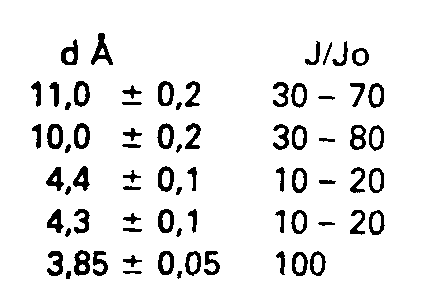
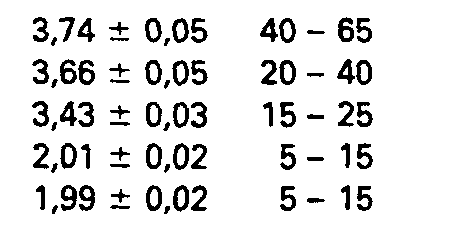
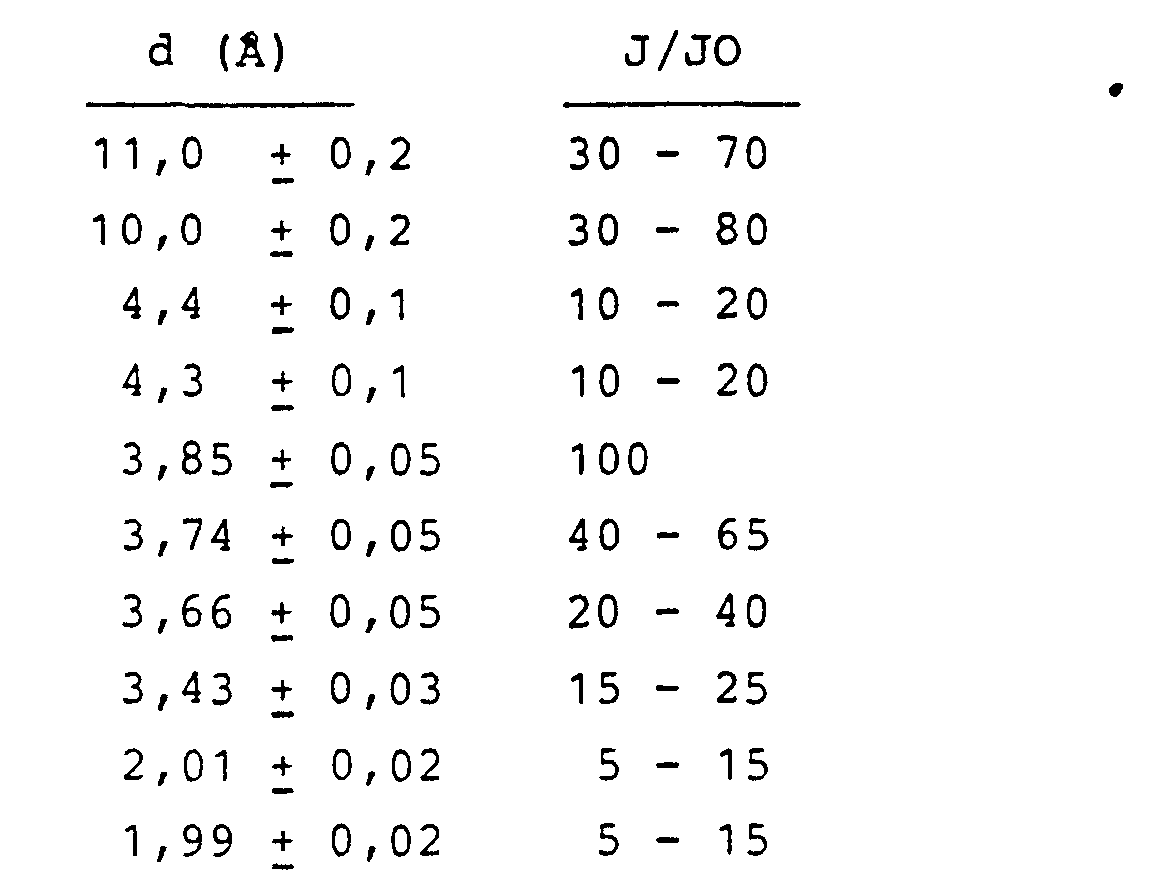
- Der erfindungsgemäße Zeolith des Pentasiltyps ist gekennzeichnet durch
- a) Summenformel (0,4-0,7)Na2O/(0,3-0,6)Q2O/Al2O3/(30-80)SiO2/(4-10)H2O
- b) Röntgenbeugungsdiagramm

- Der erfindungsgemäße Zeolith des Pentasiltyps wird gemäß einem weiteren Gegenstand der Erfindung hergestellt, indem man ge-fällte Kieselsäure in Wasser suspendiert und zu einer Lösung von Natriumaluminat und NaOH in Wasser hinzugibt, eine Lösung von (HO-C2H4)3


- Der erfindungsgemäße Zeolith des Pentasiltyps kann als Katalysator bei der Umwandlung von Methanol zu Kohlenwasserstoffen eingesetzt werden.
- Zu 800 g Triethanolamin werden 615 g 1.5-Dibrompentan bei 110°C derart zugetropft, daß die Temperatur 120°C nicht übersteigt. Danach wird 8 Stunden bei einer Temperatur von 110°C nachgerührt. Anschliessend werden 1,5 1 Wasser hinzugegeben. Das hochviskose Produkt ist vollständig wasserlöslich. Die wässrige Lösung kann direkt zur Herstellung von Zeolith verwendet werden. Die Analyse ergibt einen 100%igen Umsatz.
- Zu 800 g Triethanolamin werden 577 g 1,4-Dibrombutan bei 110°C derart zugetropft, daß die Temperatur 120°C nicht übersteigt. Danach wird 8 Stunden bei einer Temperatur von 110°C nachgerührt. Anschliessend werden 1,5 1 Wasser hinzugegeben. Das hochviskose Produkt ist vollständig wasserlöslich. Die wässrige Lösung kann direkt zur Herstellung von Zeolith verwendet werden. Die Analyse ergibt einen 100%igen Umsatz.
- Zu 800 g Triethanolamin werden 540 g 1.3-Dibrompropan bei 110°C derart zugetropft, daß die Temperatur 120°C nicht übersteigt. Danach wird 8 Stunden bei einer Temperatur von 110°C nachgerührt. Anschliessend werden 1,5 1 Wasser hinzugegeben. Das hochviskose Produkt ist vollständig wasserlöslich. Die wässrige Lösung kann direkt zur Herstellung von Zeolith verwendet werden. Die Analyse ergibt einen 100%igen Umsatz.
- Zu 800 g Triethanolamin werden 652 g 1.6-Dibromhexan bei 110°C derart zugetropft, daß die Temperatur 120°C nicht übersteigt. Danach wird 8 Stunden bei einer Temperatur von 110°C nachgerührt. Anschliessend werden 1,5 1 Wasser hinzugegeben. Das hochviskose Produkt ist vollständig wasserlöslich. Die wässrige Lösung kann direkt zur Herstellung von Zeolith verwendet werden. Die Analyse ergibt einen 100%igen Umsatz.
- 200 g Triethanolamin und 150 g 1,5-Dibrompentan werden in 1 1 Ethanol gelöst und 48 h unter Rückfluß erhitzt. Der abgeschiedene Niederschlag wird abfiltriert und mit Ethanol gewaschen. Es werden 250 g Produkt (= 72,5 %) erhalten.
- Eine Suspension von 100 g gefällter Kieselsäure in 700 ml Wasser wird zu einer Lösung von 5 g Natriumaluminat und 10 g NaOH in 75 ml Wasser gegeben. Dazu werden 60 g der wässrigen Lösung, die gemäß Beispiel 2 erhalten wurde, hinzugegeben. Diese Reaktionsmischung, die die Zusammensetzung 2,3 Templatverbindung nach Beispiel 2 :6,4 Na2O : 1 Al2O3 : 60 SiO2: 1800 H20 aufweist, wird in einem Autoklaven bei 160°C unter Eigendruck 5 Tage gerührt. Nach dem Abkühlen wird das Produkt abfiltriert, getrocknet und 5 h bei 550°C calciniert. Das Röntgenbeugungsspektrum zeigt die charakteristischen Merkmale des Zeolithen vom Pentasil-Typ.
- Die Analyse des isolierten, uncalcinierten Produktes (mit eingeschlossenem Kation) ist wie folgt:

- Der Zeolith hat die folgende stöchiometrische Zusammensetzung: 0,45 Na2O/0,48 Q2O/Al2O3/45,2 Si02/ 5 H20, wobei Q ein Kation zum Ladungsausgleich zu A1203 ist.
- Röntgenbeugungsdiagramm

- Analyse (calciniertes Produkt)

- Eine Suspension von 300 g gefällter Kieselsäure in 2 1 Wasser wird zu einer Lösung von 30 g Natriumaluminat und 45 g NaOH in 300 ml Wasser gegeben. Dazu werden 198 g der wässrigen Lösung, die gemäß Beispiel 3 erhalten wurde, hinzugegeben. Diese Reaktionsmischung, die die Zusammensetzung 1,3 Templatverbindung gemäß Beispiel 3:5,1 Na2O : 1 Al2O3 : 31 SiO2: 920 H20 aufweist wird in einem Autoklaven bei 160°C unter Eigendruck 5 Tage gerührt. Nach dem Abkühlen wird das Produkt abfiltriert, getrocknet und 5 h bei 550°C calciniert. Das Röntgenbeugungsspektrum zeigt die charakteristischen Merkmale des Zeolithen vom Pentasil-Typ.
-

- 0,62 Na2O/0,32 Q2O/Al2O3/30,0 SiO2/4,5 H2O, wobei Q ein Kation zum Ladungsausgleich von Al2O3 ist.
- Röntgenbeugungsdiagramm

- Eine Suspension von 300 g gefällter Kieselsäure in 2 1 Wasser wird zu einer Lösung von 107g Natriumaluminat und 35 g NaOH in 300 ml Wasser gegeben. Dazu werden 182 g der wässrigen Lösung, die gemäß Beispiel 1 erhalten wurde, hinzugegeben. Diese Reaktionsmischung, die die Zusammensetzung 3,2 Templatverbindung gemäß Beispiel 1 :9,5 Na2O : 1 Al2O3 : 85 SiO2 : 2550 H20 aufweist wird in einem Autoklaven bei 160°C unter Eiqendruck 15 Tage gerührt. Nach dem Abkühlen wird das PrOdukt abfiltriert, getrocknet und 5 h bei 550°C calciniert. Das Röntgenbeugungsspektrum zeigt die charakteristischen Merkmale des Zeolithen vom Pentasil-Typ.
-

- 0,51 Na2O/0,58 Q2O/Al2O3/78,3 SiO2/7,3 H20, wobei Q ein Kation zum Ladungsausgleich von Al2O3 ist.
-

- Eine Suspension von 200 g gefällter Kieselsäure in 1,5 1 Wasser wird zu einer Lösung von 10 g Natriumaluminat und 20 g NaOH in 50 ml Wasser gegeben. Dazu werden 124 g der wässrigen Lösung, die gemäß Beispiel 1 erhalten wurde, hinzugegeben. Diese Reaktionsmischung, die die Zusammensetzung 2,3 Templatverbindung gemäß Beispiel 1 :6,4 Na2O : 1 Al2O3 : 60 SiO2 : 1800 H20 aufweist wird in einem Autoklaven bei 140°C unter Eigendruck 8 Tage gerührt. Nach dem Abkühlen wird das Produkt abfiltriert, getrocknet und 5 h bei 550°C calciniert. Das Röntgenbeugungsspektrum zeigt die charakteristischen Merkmale des Zeolithen vom Pentasil-Typ.
-

- 0,52 Na2O/0,39 Q2O/Al2O3/49,7 Si02/8,6 H2O, wobei Q ein Kation zum Ladungsaugleich von Al2O3 ist.
-


- Eine Suspension von 100 g gefällter Kieselsäure in 750 ml Wasser wird zu einer Lösung von 5g Natriumaluminat und 10 g NaOH in 25 1 Wasser gegeben. Dazu werden 90 g einer 50 %igen Lösung von (HO-C2H4)3


- Der Zeolith des Pentasil-Typs, der nach Beispiel 8 hergestellt wird, wird in die katalytisch, aktive, saure Form überführt, indem man die Natrium-Form 2 h bei 80°C in wässriger 2N H2SO4-Lösung rührt, abfiltriert und bei 120°C trocknet.
- Zeolith in der aktiven H-Form Analyse

- Der so erhaltene Zeolith wird verformt, indem man das Zeolithpulver mit Kieselsol (LUDOX HS 40) versetzt (0,7 ml Kieselsol pro Gramm Zeolith), die Masse durch ein Sieb (Maschenweite 1mm) drückt, 4 h bei 400°C calciniert und die Siebfraktion 0,5 bis 1,5 mm zur Umsetzung des Methanols auswählt.
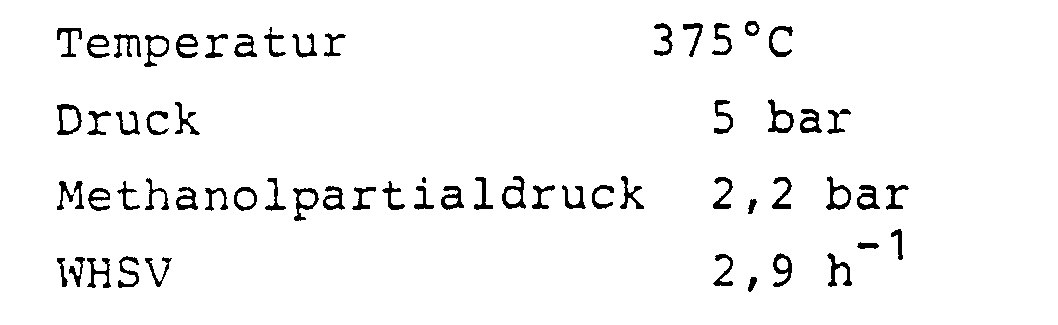
- Der verformte Zeolith gemäß Beispiel 11 wird zur Umwandlung von Methanol in Kohlenwasserstoffe eingesetzt. Dabei werden die folgenden Verfahrensparameter eingehalten:
- Das Produkt weist die folgende Zusammensetzung nach Gewichtsprozent auf:

-
- Degussa Aktiengesellschaft
- 6000 Frankfurt am Main 1
- Templatverbindungen, ihre Herstellung und Verwendung
Claims (6)
Applications Claiming Priority (2)
| Application Number | Priority Date | Filing Date | Title |
|---|---|---|---|
| DE3532748 | 1985-09-13 | ||
| DE19853532748 DE3532748A1 (de) | 1985-09-13 | 1985-09-13 | Templatverbindungen, ihre herstellung und verwendung |
Publications (2)
| Publication Number | Publication Date |
|---|---|
| EP0214371A2 true EP0214371A2 (de) | 1987-03-18 |
| EP0214371A3 EP0214371A3 (de) | 1988-03-02 |
Family
ID=6280909
Family Applications (1)
| Application Number | Title | Priority Date | Filing Date |
|---|---|---|---|
| EP86107160A Withdrawn EP0214371A3 (de) | 1985-09-13 | 1986-05-27 | Templatverbindungen, ihre Herstellung und Verwendung |
Country Status (3)
| Country | Link |
|---|---|
| US (1) | US4721609A (de) |
| EP (1) | EP0214371A3 (de) |
| DE (1) | DE3532748A1 (de) |
Cited By (1)
| Publication number | Priority date | Publication date | Assignee | Title |
|---|---|---|---|---|
| FR2798923A1 (fr) * | 1999-09-29 | 2001-03-30 | Inst Francais Du Petrole | Procede de preparation d'une zeolithe de type structural mtt utilisant des precurseurs specifiques du structurant |
Families Citing this family (11)
| Publication number | Priority date | Publication date | Assignee | Title |
|---|---|---|---|---|
| US5332566A (en) * | 1993-07-16 | 1994-07-26 | Mobil Oil Corp. | Synthesis of crystalline ZSM-23 |
| EP0685455B1 (de) * | 1993-12-20 | 2000-09-27 | Nippon Shokubai Co., Ltd. | Verfahren zur Herstellung von Arylestern |
| CN1041399C (zh) * | 1994-12-30 | 1998-12-30 | 中国石油化工总公司 | 一种含稀土的结晶硅酸铝沸石 |
| DE69908886T2 (de) * | 1998-11-02 | 2003-12-04 | Institut Francais Du Petrole, Rueil-Malmaison | Verfahren zur Herstellung eines Zeoliths des EUO-Typs mittels Vorläufern des Strukturbildners und dessen Verwendung als Isomerisierungskatalysator von Aromaten mit acht Kohlenstoffatomen |
| CA2839399C (en) | 2011-06-15 | 2021-03-23 | Ut-Battelle, Llc | Zeolitic catalytic conversion of alcohols to hydrocarbons |
| US9434658B2 (en) | 2013-03-06 | 2016-09-06 | Ut-Battelle, Llc | Catalytic conversion of alcohols to hydrocarbons with low benzene content |
| WO2015002922A1 (en) | 2013-07-02 | 2015-01-08 | Ut-Battelle, Llc | Catalytic conversion of alcohols having at least three carbon atoms to hydrocarbon blendstock |
| KR102009245B1 (ko) * | 2017-05-31 | 2019-08-09 | 부경대학교 산학협력단 | 신규 저분자 전해질을 포함하는 음극 버퍼층을 가지는 고분자 태양전지 |
| WO2019173716A1 (en) | 2018-03-08 | 2019-09-12 | Ut-Battelle, Llc | Lithium extraction composite for recovery of lithium from brines, and process of using said composition |
| WO2022164840A1 (en) | 2021-01-27 | 2022-08-04 | Ut-Battelle, Llc | Direct catalytic conversion of alcohols to olefins of higher carbon number with reduced ethylene production |
| US11780787B2 (en) | 2022-02-02 | 2023-10-10 | Ut-Battelle, Llc | Method for conversion of diols to olefin products |
Family Cites Families (10)
| Publication number | Priority date | Publication date | Assignee | Title |
|---|---|---|---|---|
| US2248729A (en) * | 1934-09-26 | 1941-07-08 | Gen Aniline & Film Corp | Quaternary allsylol poly-ammonium compounds and process for producing them |
| DE3165380D1 (en) * | 1980-06-12 | 1984-09-13 | Ici Plc | Zeolite eu-1 |
| DE3268503D1 (en) * | 1981-05-20 | 1986-02-27 | Ici Plc | Zeolites |
| DE3211433C2 (de) * | 1982-03-27 | 1984-12-13 | Degussa Ag, 6000 Frankfurt | Kristallines Alumosilikat PZ 1 und Verfahren zu seiner Herstellung |
| US4568654A (en) * | 1982-11-03 | 1986-02-04 | Mobil Oil Corporation | Zeolite ZSM-51 composition |
| US4481177A (en) * | 1982-12-09 | 1984-11-06 | Mobil Oil Corporation | Synthesis of zeolite ZSM-22 with a heterocyclic organic compound |
| US4557919A (en) * | 1983-04-12 | 1985-12-10 | Teijin Petrochemical Industries Ltd. | Production of crystalline zeolites |
| US4531012A (en) * | 1983-04-29 | 1985-07-23 | Mobil Oil Corporation | Organic template for synthesis of ZSM-23 zeolite |
| US4585639A (en) * | 1984-04-16 | 1986-04-29 | Mobil Oil Corporation | Preparation of crystalline silicate ZSM-12 |
| US4585638A (en) * | 1984-07-16 | 1986-04-29 | Mobil Oil Corporation | Synthesis of crystalline silicate ZSM-5 |
-
1985
- 1985-09-13 DE DE19853532748 patent/DE3532748A1/de not_active Withdrawn
-
1986
- 1986-05-27 EP EP86107160A patent/EP0214371A3/de not_active Withdrawn
- 1986-09-02 US US06/903,625 patent/US4721609A/en not_active Expired - Fee Related
Cited By (3)
| Publication number | Priority date | Publication date | Assignee | Title |
|---|---|---|---|---|
| FR2798923A1 (fr) * | 1999-09-29 | 2001-03-30 | Inst Francais Du Petrole | Procede de preparation d'une zeolithe de type structural mtt utilisant des precurseurs specifiques du structurant |
| EP1088791A1 (de) * | 1999-09-29 | 2001-04-04 | Institut Francais Du Petrole | Verfahren zur Herstellung von Zeolith des MTT-Typs mittels spezifischen Vorläufern des Strukturbildners |
| US6548040B1 (en) | 1999-09-29 | 2003-04-15 | Institut Francais Du Petrole | Process for preparing a zeolite with structure type MTT using specific template precursors |
Also Published As
| Publication number | Publication date |
|---|---|
| EP0214371A3 (de) | 1988-03-02 |
| US4721609A (en) | 1988-01-26 |
| DE3532748A1 (de) | 1987-03-19 |
Similar Documents
| Publication | Publication Date | Title |
|---|---|---|
| DE2442240A1 (de) | Verfahren zur herstellung eines kristallinen aluminosilicatzeolithen | |
| EP0217089B1 (de) | Verfahren zur Herstellung ungesättigter Ether durch katalytische Dealkoxylierung von geminalen Di-alkoxy-verbindungen | |
| EP0077522B1 (de) | Titanhaltige Zeolithe und Verfahren zu ihrer Herstellung sowie ihre Verwendung | |
| EP0214371A2 (de) | Templatverbindungen, ihre Herstellung und Verwendung | |
| EP0010572A1 (de) | Kristalline Eisensilikate mit Zeolithstruktur sowie Verfahren zu ihrer Herstellung | |
| DE3211433A1 (de) | Kristallines alumosilikat, verfahren zu seiner herstellung und verwendung | |
| EP0051741B1 (de) | Verfahren zur Herstellung eines kristallinen Aluminiumsilikates (Zeoliths) und dessen Verwendung als Katalysator | |
| EP0111808A2 (de) | Neuer Katalysator, ein Verfahren zu seiner Herstellung und ein Isomerisierungsverfahren in Gegenwart dieses Katalysators | |
| EP0266687B1 (de) | Verfahren zur Herstellung von Cyclopentanon | |
| CH493426A (de) | Verfahren zur Verbesserung der physikalischen Eigenschaften von Alumino-Silikat-Zeolithen und deren Verwendung | |
| DE3228269C2 (de) | ||
| DE1542194B2 (de) | Verfahren zur Herstellung eines nicht-kristallinen Kieselsäure Tonerde-Crackkatalysators | |
| DE3490097T1 (de) | Bindemittelfreie Zeolithkatalysatoren, Verfahren zu ihrer Herstellung und katalytische Reaktion mit ihnen | |
| EP0249976B1 (de) | Verfahren zur Herstellung von Carbonsäuren | |
| DE3217322A1 (de) | Kristalline aluminosilicat-zeolithe, verfahren zu ihrer herstellung sowie ihre verwendung | |
| DE2453805C2 (de) | Katalysator und dessen Verwendung | |
| EP0325141B1 (de) | Verfahren zur Herstellung von Phenylethanolen | |
| EP0162387B1 (de) | Verfahren zur Herstellung von Ketonen durch Isomerisierung von Aldehyden | |
| EP0111700B1 (de) | Titan-, zirkon- und/oder hafniumhaltige Zeolithe und Verfahren zu ihrer Herstellung sowie ihre Verwendung | |
| EP0167021B1 (de) | Verfahren zur Herstellung von 2-Methyl-2-alkenalen | |
| DE1542621A1 (de) | Verfahren zur Herstellung synthetischer Zeolithe | |
| DE3532087A1 (de) | Verfahren zur herstellung eines kristallinen aluminosilikats | |
| AT399107B (de) | Verfahren zur herstellung eines aluminium-bor-silikat-katalysators | |
| DE4118494C2 (de) | Verwendung von Katalysatoren aus einer Ton-Einlagerungsverbindung zur Herstellung von Dialkylnaphthalin | |
| EP0168761B1 (de) | Verfahren zur Herstellung von 2-Methyl-2-alkenalen aus Dihydropyranen |
Legal Events
| Date | Code | Title | Description |
|---|---|---|---|
| PUAI | Public reference made under article 153(3) epc to a published international application that has entered the european phase |
Free format text: ORIGINAL CODE: 0009012 |
|
| 17P | Request for examination filed |
Effective date: 19860527 |
|
| AK | Designated contracting states |
Kind code of ref document: A2 Designated state(s): BE DE FR GB SE |
|
| PUAL | Search report despatched |
Free format text: ORIGINAL CODE: 0009013 |
|
| AK | Designated contracting states |
Kind code of ref document: A3 Designated state(s): BE DE FR GB SE |
|
| 17Q | First examination report despatched |
Effective date: 19901108 |
|
| STAA | Information on the status of an ep patent application or granted ep patent |
Free format text: STATUS: THE APPLICATION HAS BEEN WITHDRAWN |
|
| 18W | Application withdrawn |
Withdrawal date: 19910111 |
|
| R18W | Application withdrawn (corrected) |
Effective date: 19910111 |
|
| RIN1 | Information on inventor provided before grant (corrected) |
Inventor name: KLEINSCHMIT, PETER, DR. Inventor name: BAACKE, MICHAEL, DR. |