EP0216306A2 - Catalyseurs pour l'hydrogénation d'huiles lourdes et résiduelles ainsi que des substances carbonées solides, préparation et procédé d'utilisation de ces catalyseurs - Google Patents
Catalyseurs pour l'hydrogénation d'huiles lourdes et résiduelles ainsi que des substances carbonées solides, préparation et procédé d'utilisation de ces catalyseurs Download PDFInfo
- Publication number
- EP0216306A2 EP0216306A2 EP86112856A EP86112856A EP0216306A2 EP 0216306 A2 EP0216306 A2 EP 0216306A2 EP 86112856 A EP86112856 A EP 86112856A EP 86112856 A EP86112856 A EP 86112856A EP 0216306 A2 EP0216306 A2 EP 0216306A2
- Authority
- EP
- European Patent Office
- Prior art keywords
- vanadium
- nickel
- dust
- heavy
- compounds
- Prior art date
- Legal status (The legal status is an assumption and is not a legal conclusion. Google has not performed a legal analysis and makes no representation as to the accuracy of the status listed.)
- Withdrawn
Links
Images





Classifications
-
- C—CHEMISTRY; METALLURGY
- C10—PETROLEUM, GAS OR COKE INDUSTRIES; TECHNICAL GASES CONTAINING CARBON MONOXIDE; FUELS; LUBRICANTS; PEAT
- C10G—CRACKING HYDROCARBON OILS; PRODUCTION OF LIQUID HYDROCARBON MIXTURES, e.g. BY DESTRUCTIVE HYDROGENATION, OLIGOMERISATION, POLYMERISATION; RECOVERY OF HYDROCARBON OILS FROM OIL-SHALE, OIL-SAND, OR GASES; REFINING MIXTURES MAINLY CONSISTING OF HYDROCARBONS; REFORMING OF NAPHTHA; MINERAL WAXES
- C10G49/00—Treatment of hydrocarbon oils, in the presence of hydrogen or hydrogen-generating compounds, not provided for in a single one of groups C10G45/02, C10G45/32, C10G45/44, C10G45/58 or C10G47/00
- C10G49/02—Treatment of hydrocarbon oils, in the presence of hydrogen or hydrogen-generating compounds, not provided for in a single one of groups C10G45/02, C10G45/32, C10G45/44, C10G45/58 or C10G47/00 characterised by the catalyst used
-
- B—PERFORMING OPERATIONS; TRANSPORTING
- B01—PHYSICAL OR CHEMICAL PROCESSES OR APPARATUS IN GENERAL
- B01J—CHEMICAL OR PHYSICAL PROCESSES, e.g. CATALYSIS OR COLLOID CHEMISTRY; THEIR RELEVANT APPARATUS
- B01J21/00—Catalysts comprising the elements, oxides, or hydroxides of magnesium, boron, aluminium, carbon, silicon, titanium, zirconium, or hafnium
- B01J21/18—Carbon
-
- B—PERFORMING OPERATIONS; TRANSPORTING
- B01—PHYSICAL OR CHEMICAL PROCESSES OR APPARATUS IN GENERAL
- B01J—CHEMICAL OR PHYSICAL PROCESSES, e.g. CATALYSIS OR COLLOID CHEMISTRY; THEIR RELEVANT APPARATUS
- B01J23/00—Catalysts comprising metals or metal oxides or hydroxides, not provided for in group B01J21/00
- B01J23/16—Catalysts comprising metals or metal oxides or hydroxides, not provided for in group B01J21/00 of arsenic, antimony, bismuth, vanadium, niobium, tantalum, polonium, chromium, molybdenum, tungsten, manganese, technetium or rhenium
- B01J23/20—Vanadium, niobium or tantalum
- B01J23/22—Vanadium
-
- B—PERFORMING OPERATIONS; TRANSPORTING
- B01—PHYSICAL OR CHEMICAL PROCESSES OR APPARATUS IN GENERAL
- B01J—CHEMICAL OR PHYSICAL PROCESSES, e.g. CATALYSIS OR COLLOID CHEMISTRY; THEIR RELEVANT APPARATUS
- B01J23/00—Catalysts comprising metals or metal oxides or hydroxides, not provided for in group B01J21/00
- B01J23/70—Catalysts comprising metals or metal oxides or hydroxides, not provided for in group B01J21/00 of the iron group metals or copper
- B01J23/74—Iron group metals
- B01J23/755—Nickel
-
- B—PERFORMING OPERATIONS; TRANSPORTING
- B01—PHYSICAL OR CHEMICAL PROCESSES OR APPARATUS IN GENERAL
- B01J—CHEMICAL OR PHYSICAL PROCESSES, e.g. CATALYSIS OR COLLOID CHEMISTRY; THEIR RELEVANT APPARATUS
- B01J23/00—Catalysts comprising metals or metal oxides or hydroxides, not provided for in group B01J21/00
- B01J23/70—Catalysts comprising metals or metal oxides or hydroxides, not provided for in group B01J21/00 of the iron group metals or copper
- B01J23/76—Catalysts comprising metals or metal oxides or hydroxides, not provided for in group B01J21/00 of the iron group metals or copper combined with metals, oxides or hydroxides provided for in groups B01J23/02 - B01J23/36
- B01J23/84—Catalysts comprising metals or metal oxides or hydroxides, not provided for in group B01J21/00 of the iron group metals or copper combined with metals, oxides or hydroxides provided for in groups B01J23/02 - B01J23/36 with arsenic, antimony, bismuth, vanadium, niobium, tantalum, polonium, chromium, molybdenum, tungsten, manganese, technetium or rhenium
- B01J23/847—Vanadium, niobium or tantalum or polonium
-
- B—PERFORMING OPERATIONS; TRANSPORTING
- B01—PHYSICAL OR CHEMICAL PROCESSES OR APPARATUS IN GENERAL
- B01J—CHEMICAL OR PHYSICAL PROCESSES, e.g. CATALYSIS OR COLLOID CHEMISTRY; THEIR RELEVANT APPARATUS
- B01J23/00—Catalysts comprising metals or metal oxides or hydroxides, not provided for in group B01J21/00
- B01J23/70—Catalysts comprising metals or metal oxides or hydroxides, not provided for in group B01J21/00 of the iron group metals or copper
- B01J23/76—Catalysts comprising metals or metal oxides or hydroxides, not provided for in group B01J21/00 of the iron group metals or copper combined with metals, oxides or hydroxides provided for in groups B01J23/02 - B01J23/36
- B01J23/84—Catalysts comprising metals or metal oxides or hydroxides, not provided for in group B01J21/00 of the iron group metals or copper combined with metals, oxides or hydroxides provided for in groups B01J23/02 - B01J23/36 with arsenic, antimony, bismuth, vanadium, niobium, tantalum, polonium, chromium, molybdenum, tungsten, manganese, technetium or rhenium
- B01J23/847—Vanadium, niobium or tantalum or polonium
- B01J23/8472—Vanadium
Definitions
- the invention relates to vanadium and / or nickel-containing catalysts for the hydrogenating treatment of heavy and residual oils, as well as solid carbon-containing substances, their production and processes for the hydrogenating treatment of heavy and residual oils with these catalysts.
- hearth furnace coke and HTW H OCH T emperature W nomer dust with and without metal doping in the DE-OS 32 32 694 for example, are described as suitable catalysts.
- HTW H OCH T emperature W nomer
- HKV H ydrierende K ohle ergasung V
- lignite grudge e.g.
- the invention therefore relates to catalysts for treating heavy and residual oils based on stove coke, HTW dust (high-temperature Winkler), HKV dust (hydrogenating coal gasification), top gas dust, converter dust, activated carbon or mixtures thereof, these doping of metals and / or metal compounds, with hydrogen and / or hydrogen-containing gases, which are characterized in that the catalyst on the surface and / or in pores on the surface of vanadium and / or nickel in elemental form and / or in the form of compounds contain.
- the invention relates to a method for producing the catalyst, which is characterized in that the hydrogenation of heavy and residual oils which have no or only a low content of vanadium and / or nickel and / or their compounds have, at least occasionally in a mixture with heavy and residual oils with a higher content of vanadium and nickel and / or their compounds is carried out.
- the invention relates to a method for treating heavy and residual oils with hydrogen and / or gases containing hydrogen in the presence of catalysts and / or catalyst supports or mixtures thereof, which may have doping of metals and / or metal compounds, which is characterized in that that the hydrogenation is carried out in the presence of hearth coke, HTW dust, HKV dust, top gas dust, converter dust, activated carbon or mixtures thereof, which contain vanadium and / or nickel and / or their compounds on the surface and / or in pores on the surface is, the vanadium and / or nickel-containing catalysts can be formed in situ by the hydrogenating treatment is carried out at least temporarily in the presence of vanadium and / or nickel and / or their products containing feeds.
- a preferred catalyst is hearth furnace coke, which contains nickel and / or vanadium on the surface or in the pores of the surface.
- the hydrogenating treatment of heavy and residual oils can be carried out in the presence of the catalysts according to the invention, for example in a fixed bed, fluidized bed, fluidized bed or in the bottom phase.
- a preferred embodiment is the bottom phase, wherein at least some of the hot separator sump or the heavy intermediate or end product of the further processing of the hot separator sump can be recycled into the hydrogenating treatment of the heavy and residual oils, e.g. B. a worked up in a vacuum distillation hot separator sump.
- the hydrogenating treatment of heavy and residual oils is carried out at a temperature of 420 ° to 520 ° C., preferably at 455 ° to 485 ° C., and at a pressure of 100 to 400 bar, preferably at 200-325 bar.
- Insert oils can be mineral heavy oils, e.g. B. shale oils, tar sand oils and residual oils from petroleum processing but also, for example, coals, such as lignite and hard coal as well as coal-derived oils.
- feedstocks in which the carbonization is less advanced such as B. peat-like materials can also be implemented according to the invention, such as cellulose-containing materials such as wood and straw.
- Suitable mineral residue oils are, for example, vacuum residue oils of different origins. B. from Arabia Heavy, Iran Heavy, Forcados, Forties, Tia Juana Pesado, Maya / Istmus, Ba Citro and others. Visbreaker residue oils, asphaltenes or other heavy oils used in refinery technology and subsequent chemistry can also be used.
- the reactor load is 0.1-50 kg / 1 ⁇ h, preferably 0.5-2.5 kg / 1 ⁇ h.
- both vanadium alone and nickel alone can or their connections are used.
- a mixture of vanadium and nickel or their compounds is preferred.
- finely divided deposits of metallic vanadium and / nickel generally occur.
- connections such as. B. sulfides lead to the results of the invention.
- the materials specified above can also already have doping of metals or their compounds, in particular iron, molybdenum, tungsten, cobalt and others, or their mixtures of at least two of these constituents. Iron, molybdenum or tungsten and / or their compounds are preferred.
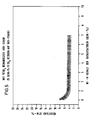
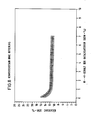
- FIGS. 1 to 9 serve to further explain the present invention.
- the total amount of nickel and vanadium in% by weight is plotted on the ordinate, and the residue which remains after the hydrogenating treatment and boils above 500 ° C. is plotted on the abscissa.
- the results are obtained with various of the feed oils mentioned, both undoped and predoped catalysts being used, and both catalysts having been applied to which nickel and vanadium had already been applied by conventional methods before use in the hydrogenating treatment, and also catalysts which were by Vanadium and nickel were applied in situ.
- oils were used in the hydrogenating treatment which contained vanadium and nickel, which at least partially precipitated on the surface of the catalyst or support or in the pores on the surface thereof during the treatment.
- the different variants led to analog results.
- the hot separator residue or its secondary products can at least partially be recycled into the hydrogenation.
- Residual oils used in accordance with the process according to the invention may be mentioned as examples:
- Fig. 1 shows that when using stove coke without prior doping and without Ni / V doping, the amount of residue (boiling point> 500 ° C) is 8 - 9 wt .-%. With increasing doping, a residue reduction to approx. 3-4 weight% is already obtained in the range of 3-4 wt.% Ni / V, the residue increasing to 2.5-3.5 wt.% With increasing doping. continues to decrease.
- oven coke which is doped with iron sulfate (5% by weight FeSO4, based on oven coke)
- a residue of approx. 6% by weight is obtained without doping with Ni / V after working up the hydrogenated product.
- % Boiling point> 500 ° C. Even with 1-2% by weight of Ni / V doping, the amount of residue decreases to approximately 3% by weight and decreases with increasing Ni / V doping to approximately 2% by weight.
- HTW dust is used with 5% by weight FeSO4 as doping, the residue is reduced to about 3% by weight at 0.5-1% by weight Ni / V.
- HKV dust which is doped with 5 wt .-% FeSO4, leads according to FIG. 5 also to a reduction of the residue to about 4 wt .-%.
- FIG. 6 shows the decrease in the residue when using oven coke doped with ammonium molybdate. Already at approx. 0.5% by weight Ni / V doping, the amount of residue drops to approx. 3% by weight.
Landscapes
- Chemical & Material Sciences (AREA)
- Engineering & Computer Science (AREA)
- Chemical Kinetics & Catalysis (AREA)
- Organic Chemistry (AREA)
- Materials Engineering (AREA)
- Oil, Petroleum & Natural Gas (AREA)
- General Chemical & Material Sciences (AREA)
- Catalysts (AREA)
- Production Of Liquid Hydrocarbon Mixture For Refining Petroleum (AREA)
Applications Claiming Priority (2)
| Application Number | Priority Date | Filing Date | Title |
|---|---|---|---|
| DE19853534552 DE3534552A1 (de) | 1985-09-27 | 1985-09-27 | Verbesserte katalysatoren zur hydrierung von schwer- und rueckstandsoelen, ihre herstellung und verfahren unter verwendung derselben |
| DE3534552 | 1985-09-27 |
Publications (2)
| Publication Number | Publication Date |
|---|---|
| EP0216306A2 true EP0216306A2 (fr) | 1987-04-01 |
| EP0216306A3 EP0216306A3 (fr) | 1987-08-05 |
Family
ID=6282153
Family Applications (1)
| Application Number | Title | Priority Date | Filing Date |
|---|---|---|---|
| EP86112856A Withdrawn EP0216306A3 (fr) | 1985-09-27 | 1986-09-17 | Catalyseurs pour l'hydrogénation d'huiles lourdes et résiduelles ainsi que des substances carbonées solides, préparation et procédé d'utilisation de ces catalyseurs |
Country Status (4)
| Country | Link |
|---|---|
| EP (1) | EP0216306A3 (fr) |
| AU (1) | AU6319086A (fr) |
| DE (1) | DE3534552A1 (fr) |
| ZA (1) | ZA867173B (fr) |
Families Citing this family (1)
| Publication number | Priority date | Publication date | Assignee | Title |
|---|---|---|---|---|
| DD266110A1 (de) * | 1987-08-25 | 1989-03-22 | Grotewohl Boehlen Veb | Verfahren zur sumpfphasehydrierung von hochsiedenden kohlenwasserstoffmaterialien |
Family Cites Families (3)
| Publication number | Priority date | Publication date | Assignee | Title |
|---|---|---|---|---|
| FR2511389A1 (fr) * | 1981-08-11 | 1983-02-18 | Inst Francais Du Petrole | Procede d'hydroconversion catalytique d'hydrocarbures lourds en phase liquide et en presence d'un catalyseur disperse et de particules charbonneuses |
| DE3221411A1 (de) * | 1982-06-05 | 1983-12-08 | Veba Oel Entwicklungsgesellschaft mbH, 4660 Gelsenkirchen-Buer | Verfahren zur hydrierung von schweroel, bitumen und dergl. |
| DE3238689A1 (de) * | 1982-10-19 | 1984-04-26 | Rheinische Braunkohlenwerke AG, 5000 Köln | Verfahren zum hydrieren von schwer- und rueckstandsoelen und dafuer verwendete katalysatoren |
-
1985
- 1985-09-27 DE DE19853534552 patent/DE3534552A1/de not_active Withdrawn
-
1986
- 1986-09-17 EP EP86112856A patent/EP0216306A3/fr not_active Withdrawn
- 1986-09-22 ZA ZA867173A patent/ZA867173B/xx unknown
- 1986-09-26 AU AU63190/86A patent/AU6319086A/en not_active Abandoned
Also Published As
| Publication number | Publication date |
|---|---|
| AU6319086A (en) | 1987-04-02 |
| ZA867173B (en) | 1987-05-27 |
| EP0216306A3 (fr) | 1987-08-05 |
| DE3534552A1 (de) | 1987-04-02 |
Similar Documents
| Publication | Publication Date | Title |
|---|---|---|
| DE68902095T2 (de) | Katalytische zusammensetzung, die ein metallsulfid in form einer suspension mit einer asphalt enthaltenden fluessigkeit enthaelt und verfahren zur hydroviskoreduktion von kohlenwasserstoffen. | |
| DE3725764C2 (fr) | ||
| DE3229898C2 (fr) | ||
| DE3029266C2 (de) | Katalysator für die einstufige Hydrierung von Heteroatomverbindungen und Aromaten enthaltenden Kohlenwasserstoffgemischen | |
| DE3347352A1 (de) | Verfahren zur herstellung von nadelkoks | |
| DE3237037A1 (de) | Verfahren zum hydroprocessing eines schweren kohlenwasserstoffhaltigen oelausgangsmaterials | |
| EP0216306A2 (fr) | Catalyseurs pour l'hydrogénation d'huiles lourdes et résiduelles ainsi que des substances carbonées solides, préparation et procédé d'utilisation de ces catalyseurs | |
| DE3313760A1 (de) | Verfahren zur kohleveredelung | |
| DE3736241C2 (fr) | ||
| DE69520616T2 (de) | Verfahren zur Verwandlung von Rückstand Kohlenwasserstofföls | |
| EP0232491B1 (fr) | Procédé pour l'hydrogénation de mélanges charbon/huiles minérales | |
| DE69804026T2 (de) | Verfahren zur reduzierung der gesamtanzahl von säuren in rohöl | |
| DE1645817B2 (de) | Verfahren zur entschwefelung eines asphalthaltigen roherdoeles in gegenwart eines katalysators | |
| DE69705707T2 (de) | Verfahren zur herstellung eines weitporigen wasserstofbehandlungskatalysators | |
| DE1545416C3 (de) | Verfahren zum Hydrofinieren von Roherdölen und anderen schseren Kohlenwasserstofffraktionen | |
| DE2730698C2 (fr) | ||
| DE871299C (de) | Verfahren zur Herstellung klopffester Treibstoffe durch Druckhydrierung hochsiedender Kohlenwasserstoffoele | |
| DE2021087A1 (de) | Verfahren zum Stabilisieren von diolefinhaltigen Kohlenwasserstoffgemischen | |
| DE2362252C2 (de) | Verkokungsverfahren zur Herstellung von Grünkoks | |
| AT209461B (de) | Verfahren zur Behandlung, wie Hydrierung oder Krackung von asphalthältigen Erdölen, Teeren oder Kohlenwasserstoffgemischen | |
| AT216126B (de) | Verfahren zur katalytischen Hydrierung eines Gasolins, das harzbildende ungesättigte Kohlenwasserstoffe enthält | |
| DE624844C (de) | Verfahren zur Gewinnung von mit Wasserstoff nicht abgesaettigten niedrigsiedenden Kohenwasserstoffen | |
| DE1259496B (de) | Verfahren zur Erzeugung von Industriegasen | |
| DE2332834A1 (de) | Hydrodesulfurierung von rueckstandsoelen | |
| DE3721245A1 (de) | Verfahren zur herstellung von hochwertigem nadelkoks |
Legal Events
| Date | Code | Title | Description |
|---|---|---|---|
| PUAI | Public reference made under article 153(3) epc to a published international application that has entered the european phase |
Free format text: ORIGINAL CODE: 0009012 |
|
| AK | Designated contracting states |
Kind code of ref document: A2 Designated state(s): BE DE FR GB NL |
|
| PUAL | Search report despatched |
Free format text: ORIGINAL CODE: 0009013 |
|
| AK | Designated contracting states |
Kind code of ref document: A3 Designated state(s): BE DE FR GB NL |
|
| 17P | Request for examination filed |
Effective date: 19870817 |
|
| 17Q | First examination report despatched |
Effective date: 19890119 |
|
| STAA | Information on the status of an ep patent application or granted ep patent |
Free format text: STATUS: THE APPLICATION HAS BEEN WITHDRAWN |
|
| 18R | Application refused |
Effective date: 19900317 |
|
| 18W | Application withdrawn |
Withdrawal date: 19900920 |
|
| APAF | Appeal reference modified |
Free format text: ORIGINAL CODE: EPIDOSCREFNE |
|
| RIN1 | Information on inventor provided before grant (corrected) |
Inventor name: HAMMER, HARTMUT, DR. DIPL.-CHEM. Inventor name: WAWRZINEK, JOACHIM Inventor name: GIEHR, AXEL, DR. DIPL.-CHEM. Inventor name: LENZ, UWE, DR. RER. NAT. DIPL.-CHEM. |