EP0219057A2 - Utilisation d'agents tensioactifs non-ioniques comme réactifs pour la flottation de minerais non sulfurés - Google Patents
Utilisation d'agents tensioactifs non-ioniques comme réactifs pour la flottation de minerais non sulfurés Download PDFInfo
- Publication number
- EP0219057A2 EP0219057A2 EP86113956A EP86113956A EP0219057A2 EP 0219057 A2 EP0219057 A2 EP 0219057A2 EP 86113956 A EP86113956 A EP 86113956A EP 86113956 A EP86113956 A EP 86113956A EP 0219057 A2 EP0219057 A2 EP 0219057A2
- Authority
- EP
- European Patent Office
- Prior art keywords
- alkyl
- collector
- flotation
- alkenyl
- use according
- Prior art date
- Legal status (The legal status is an assumption and is not a legal conclusion. Google has not performed a legal analysis and makes no representation as to the accuracy of the status listed.)
- Granted
Links
Images
Classifications
-
- B—PERFORMING OPERATIONS; TRANSPORTING
- B03—SEPARATION OF SOLID MATERIALS USING LIQUIDS OR USING PNEUMATIC TABLES OR JIGS; MAGNETIC OR ELECTROSTATIC SEPARATION OF SOLID MATERIALS FROM SOLID MATERIALS OR FLUIDS; SEPARATION BY HIGH-VOLTAGE ELECTRIC FIELDS
- B03D—FLOTATION; DIFFERENTIAL SEDIMENTATION
- B03D1/00—Flotation
- B03D1/001—Flotation agents
- B03D1/004—Organic compounds
- B03D1/012—Organic compounds containing sulfur
-
- B—PERFORMING OPERATIONS; TRANSPORTING
- B03—SEPARATION OF SOLID MATERIALS USING LIQUIDS OR USING PNEUMATIC TABLES OR JIGS; MAGNETIC OR ELECTROSTATIC SEPARATION OF SOLID MATERIALS FROM SOLID MATERIALS OR FLUIDS; SEPARATION BY HIGH-VOLTAGE ELECTRIC FIELDS
- B03D—FLOTATION; DIFFERENTIAL SEDIMENTATION
- B03D1/00—Flotation
- B03D1/001—Flotation agents
- B03D1/004—Organic compounds
- B03D1/008—Organic compounds containing oxygen
-
- B—PERFORMING OPERATIONS; TRANSPORTING
- B03—SEPARATION OF SOLID MATERIALS USING LIQUIDS OR USING PNEUMATIC TABLES OR JIGS; MAGNETIC OR ELECTROSTATIC SEPARATION OF SOLID MATERIALS FROM SOLID MATERIALS OR FLUIDS; SEPARATION BY HIGH-VOLTAGE ELECTRIC FIELDS
- B03D—FLOTATION; DIFFERENTIAL SEDIMENTATION
- B03D1/00—Flotation
- B03D1/001—Flotation agents
- B03D1/004—Organic compounds
- B03D1/01—Organic compounds containing nitrogen
-
- B—PERFORMING OPERATIONS; TRANSPORTING
- B03—SEPARATION OF SOLID MATERIALS USING LIQUIDS OR USING PNEUMATIC TABLES OR JIGS; MAGNETIC OR ELECTROSTATIC SEPARATION OF SOLID MATERIALS FROM SOLID MATERIALS OR FLUIDS; SEPARATION BY HIGH-VOLTAGE ELECTRIC FIELDS
- B03D—FLOTATION; DIFFERENTIAL SEDIMENTATION
- B03D1/00—Flotation
- B03D1/001—Flotation agents
- B03D1/004—Organic compounds
- B03D1/014—Organic compounds containing phosphorus
-
- B—PERFORMING OPERATIONS; TRANSPORTING
- B03—SEPARATION OF SOLID MATERIALS USING LIQUIDS OR USING PNEUMATIC TABLES OR JIGS; MAGNETIC OR ELECTROSTATIC SEPARATION OF SOLID MATERIALS FROM SOLID MATERIALS OR FLUIDS; SEPARATION BY HIGH-VOLTAGE ELECTRIC FIELDS
- B03D—FLOTATION; DIFFERENTIAL SEDIMENTATION
- B03D2201/00—Specified effects produced by the flotation agents
- B03D2201/02—Collectors
-
- B—PERFORMING OPERATIONS; TRANSPORTING
- B03—SEPARATION OF SOLID MATERIALS USING LIQUIDS OR USING PNEUMATIC TABLES OR JIGS; MAGNETIC OR ELECTROSTATIC SEPARATION OF SOLID MATERIALS FROM SOLID MATERIALS OR FLUIDS; SEPARATION BY HIGH-VOLTAGE ELECTRIC FIELDS
- B03D—FLOTATION; DIFFERENTIAL SEDIMENTATION
- B03D2203/00—Specified materials treated by the flotation agents; Specified applications
- B03D2203/02—Ores
- B03D2203/04—Non-sulfide ores
Definitions
- the invention relates to the use of alkyl glycosides alone or of mixtures of alkyl glycosides and anionic, cationic or ampholytic non-thio-surfactants known per se as collectors for flotation processes as auxiliaries for the flotation of non-sulfidic ores.
- non-thio-surfactants in connection with the adjectives "anionic”, “cationic” and ampholytic "is used here and below in the same sense in which the term” non-thio ionizable surfactants "in Jan Leja: Surface Chemistry of Froth Flotation, Plenum Press, New York and London, 1982, pages 205 to 212.
- non-thio-surfactants excludes surfactants which do not contain sulfur atoms which are not bound to oxygen the term “non-thio collector” is used.
- Flotation is a generally used sorting process for the processing of mineral raw materials, in which the valuable minerals are separated from the worthless ones.
- Non-sulfidic minerals are, for example, apatite, fluorite, scheelite and other salt-like minerals, cassiterite and other metal oxides, for example oxides of titanium and zirconium, as well as certain silicates and aluminosilicates.
- the ore is pre-shredded and dry, but preferably wet ground, and suspended in the water.
- the non-sulfidic ores normally become collectors, often in connection with foaming agents and possibly other auxiliary reagents zien such as regulators, pushers (deactivators) and / or stimulants (activators) added to support the separation of the valuable minerals from the undesirable gangue components of the ore in the subsequent flotation.
- auxiliary reagents zien such as regulators, pushers (deactivators) and / or stimulants (activators) added to support the separation of the valuable minerals from the undesirable gangue components of the ore in the subsequent flotation.
- These reagents are usually allowed to act on the finely ground ore for a certain time (conditioning) before air is blown into the suspension (floatation) in order to produce a foam on its surface.
- the collector ensures that the surface of the minerals is rendered hydrophobic, so that these minerals adhere to the gas bubbles formed during the aeration.
- the mineral components are made hydrophobic selectively in such a way that the components of the ore which are undesirable do not adhere to the gas bubbles.
- the mineral-containing foam is stripped off and processed.
- the aim of flotation is to extract the mineral of value from the ores in the highest possible yield, while at the same time maintaining the best possible enrichment.
- anionic and cationic non-thio-surfactants are used as collectors.
- Known anionic non-thio collectors are, for example, saturated and unsaturated fatty acids, in particular tall oil fatty acids and oleic acid, alkyl sulfates, in particular alkyl sulfates, alkylarylsulfonates, alkylsulfosuccinates, alkylsulfosuccinamates and acyllactylates derived from fatty alcohols or fatty alcohol mixtures.
- cationic non-thio collectors are, for example, primary aliphatic amines, in particular the fatty amines derived from the fatty acids of vegetable and animal fats and oils, as well as certain alkyl-substituted and hydroxyalkyl-substituted alkylenediamines and the water-soluble acid addition salts of these amines.
- nonionic surfactants are hardly used as collectors in flotation.
- combinations of ionic and nonionic surfactants are also occasionally described as collectors.
- the cationic, anionic and ampholytic non-thio collectors used for the flotation of non-sulfidic ores in many cases do not lead to a satisfactory application of the valuable minerals with economically justifiable collector quantities.
- the object of the present invention was therefore to find improved collectors in the sense of a more economical design of the flotation processes, with which greater yields of valuable minerals can be achieved either with constant collector quantities or constant value mineral yields with reduced collector quantities.
- the present invention was also based on the object of improving non-thio collectors (primary collectors) known for the flotation of non-sulfidic ores by suitable additives (co-collectors) in such a way that, while the selectivity of the collectors remained practically constant, the output of valuable minerals in the flotation process was significant is increased, this effect also being able to be used in such a way that (in comparison with the collector quantities of the prior art) reduced quantities of collector and co-collector yields of constant minerals are obtained.
- alkyl and / or alkenyl glycosides are very effective collectors for the flotation of non-sulfidic ores. Furthermore, it has been found that alkyl and / or alkenyl glycosides can be used very successfully as additives for anionic, cationic or ampholytic non-thio-surfactants, which are known as collectors for the flotation of non-sulfidic ores, in the sense of co-collectors .
- the invention therefore relates to the use of alkyl and / or alkenyl glycosides as collectors in the flotation of non-sulfidic ores.
- alkyl or alkenyl radicals of the glycosides to be used according to the invention can be straight-chain or branched, have 2 to 18 carbon atoms and optionally have a hydroxyl group and / or an ether bridge instead of a -CH2 group.
- Alkyl and / or alkenyl mo are suitable for the use according to the invention noglycosides and / or polyglycosides with 2 to 4 glycoside residues are considered, alkyl and alkenyl glycosides with 1 to 3 glycoside residues being preferred.
- alkyl and alkenyl glycosides to be used according to the invention represent a known class of substances; they can be produced using common methods of organic synthesis.
- the alkyl and alkenyl glycosides are expediently prepared by reacting glucose or oligosaccharides with corresponding alcohols having 2 to 18 carbon atoms.
- Suitable alcohols for the production of the glycosides to be used according to the invention are, for example, ethanol, n-propanol, i-propanol, n-butanol, i-butanol, sec-butanol, ethylene glycol, 1,2-propylene glycol and 1,3-propylene glycol.
- glycosides of the fatty alcohols with 6 to 18 carbon atoms in the essentially unbranched carbon chain such as n-hexanol, n-octanol, n-decanol, n-dodecanol, n-tetradecanol, n-hexadecanol and n-octadecanol, and unsaturated fatty alcohols which up to can have three double bonds in the molecule, for example n-octadecenol (oleyl alcohol). These alcohols can be used to prepare the glycosides to be used according to the invention used individually or in a mixture.
- Alcohol mixtures are used in particular in the production of alkyl and alkenyl glycosides from fatty alcohols which are obtained via the catalytic hydrogenation of methyl esters of naturally occurring fatty acids.
- Alkyl glycosides in which the alkyl radical contain an ether bridge instead of a -CH2 group can be obtained, for example, by terminating a hydroxyalkyl glycoside under known conditions with an alkylene oxide having 2 to 18 carbon atoms, for example with ethylene oxide, propylene oxide or a dodecane epoxide - or internal epoxy groups.
- alkylene oxide having 2 to 18 carbon atoms for example with ethylene oxide, propylene oxide or a dodecane epoxide - or internal epoxy groups.
- ether glycols such as, for example, ethylene glycol monododecyl ether or propylene glycol monodecyl ether.
- both alkyl and / or alkenyl monoglycosides in which a cyclic sugar residue is attached to the alcohol are suitable, as well as corresponding oligomers with 2 to 8 glycosidically attached glucose or maltose residues.
- Alkyl and alkenyl glycosides with 1 to 3 glycoside residues are preferably used.
- the number of sugar residues is a statistical mean, which is the basis for the distribution that usually occurs with these products.
- Alkyl and / or alkenyl glycosides based on C12 to C14 fatty alcohols and 1 to 2 glycoside residues can be particularly suitable.
- alkyl and / or alkenyl glycosides are used as component a) in a mixture with other surfactants, anionic, cationic and ampholytic non-thio-surfactants are known as component b), which are known per se as collectors for the flotation of non-sulfidic ores are.
- anionic non-thio-surfactants are selected in particular from those consisting of fatty acids, alkyl sulfates, alkyl sulfosuccinates, alkyl sulfosuccinamates, alkyl benzene sulfonates, alkyl sulfonates, petroleum sulfonates and acyl lactylates, organic phosphonates, alkyl phosphates, alkyl ether phosphates and hydroxamates.
- Suitable fatty acids are in particular the straight-chain fatty acids with 12 to 18 carbon atoms, in particular those with 16 to 18 carbon atoms, obtained from vegetable or animal fats and oils, for example by fat splitting and optionally fractionation and / or separation by the crosslinking process. Oleic acid and tall oil fatty acid are of particular importance here.
- Suitable alkyl sulfates are the sulfuric acid semi-esters of fatty alcohols with 8 to 22 carbon atoms, preferably of fatty alcohols with 12 to 18 carbon atoms, which can be straight-chain or branched.
- the fatty alcohol component of the sulfuric acid half-esters can consist of straight-chain and branched, saturated and unsaturated compounds of this category with 8 to 22 carbon atoms, for example n-octa nol, n-decanol, n-dodecanol, n-tetradecanol, n-hexadecanol, n-octadecanol, n-eicosanol, n-docosanol, n-hexadecanol, isotridecanol, isooctadecanol and n-octadecenol.
- the fatty alcohols mentioned can individually form the basis of the sulfuric acid semiesters.
- products based on fatty alcohol mixtures are used as component b), these fatty alcohol mixtures being derived from the fatty acid component of fats and oils of animal or vegetable origin.
- such fatty alcohol mixtures can be obtained from the native fats and oils, inter alia via the transesterification of the triglycerides with methanol and subsequent catalytic hydrogenation of the fatty acid methyl esters.
- Both the fatty alcohol mixtures obtained in the production process and suitable fractions with a limited chain length spectrum can serve as the basis for the production of the sulfuric acid semiesters.
- synthetically obtained fatty alcohol mixtures for example the well-known Ziegler and oxo fatty alcohols, are also suitable as starting materials for the production of the sulfuric acid semiesters.
- Suitable alkyl sulfosuccinates are sulfosuccinic acid semiesters of fatty alcohols having 8 to 22 carbon atoms, preferably fatty alcohols having 12 to 18 carbon atoms. These alkyl sulfosuccinates can be obtained, for example, by reacting appropriate fatty alcohols or fatty alcohol mixtures with maleic anhydride and subsequent addition of alkali metal sulfite or alkali metal bisulfite.
- the information on the fatty alcohol component of the sulfuric acid semiesters applies analogously.
- the alkyl sulfosuccinamates considered as possible component b) correspond to the formula I.
- R is an alkyl or alkenyl radical having 8 to 22 carbon atoms, preferably having 12 to 18 carbon atoms
- R ' is hydrogen or an alkyl radical having 1 to 3 carbon atoms
- M+ is a hydrogen ion, an alkali metal cation, or an ammonium ion, preferably a sodium or Represent ammonium ion.
- the alkylsulfosuccinamates of the formula I are known substances which are obtained, for example, by reacting corresponding primary or secondary amines with maleic anhydride, followed by addition of alkali metal sulfite or alkali metal bisulfite.
- Primary amines suitable for the preparation of the alkylsulfosuccinamates are, for example, n-octylamine, n-decylamine, n-dodecylamine, n-tetradecylamine, n-hexadecylamine, n-octadecylamine, n-eicosylamine, n-docosylamine, n-hexadecenylamine and n-octadecenylamine.
- the amines mentioned can individually form the basis of the alkylsulfosuccinamates.
- amine mixtures are used to prepare the alkylsulfosuccinamates, the alkyl radicals of which are derived from the fatty acid component of fats and oils of animal or vegetable origin.
- such amine mixtures can be obtained from the fatty acids of the native fats and oils obtained by fat cleavage via the associated nitriles by reduction with sodium hydroxide and alcohols or by catalytic hydrogenation.
- Particularly suitable secondary amines for the preparation of the alkylsulfosuccinamates of the formula I are the N-methyl and N-ethyl derivatives of the above-mentioned primary amines.
- Alkylbenzenesulfonates suitable for use as component b) correspond to formula II, R - C6H4 - SO3M (II) in which R is a straight-chain or branched alkyl radical having 4 to 16, preferably 8 to 12 carbon atoms and M is an alkali metal cation or an ammonium ion, preferably a sodium ion.
- Alkyl sulfonates which are suitable for use as component b) correspond to the formula III, R - SO3M (III) in which R represents a straight-chain or branched alkyl radical, in particular having 8 to 22 carbon atoms, preferably 12 to 18 carbon atoms, and M represents an alkali metal cation or an ammonium ion, preferably a sodium ion.
- the petroleum sulfonates suitable for use as component b) were obtained from lubricating oil fractions, generally by sulfonation with sulfur trioxide or oleum.
- Compounds in which the hydrocarbon radicals predominantly have chain lengths in the range from 8 to 22 carbon atoms are particularly suitable here.
- the acyl lactylates also considered as possible component b) correspond to the formula IV, R - - O - - COOX (IV) in which R is an aliphatic, cycloaliphatic or alicyclic radical having 7 to 23 carbon atoms and X is a salt-forming cation.
- R is preferably an aliphatic, linear or branched hydrocarbon radical which can be saturated, mono- or polyunsaturated and optionally substituted by hydroxyl groups.
- the use of the acyl lactylates of the formula III as collectors in the flotation of non-sulfidic ores is described in German patent application P 32 38 060.7 (DE-OS 32 38 060).
- Suitable organic phosphonates are water-soluble salts of organic phosphonic acids, for example salts of styrene phosphonic acid.
- the alkyl phosphates and alkyl ether phosphates considered as possible component b) correspond to the formulas V and VI, in which R represents an alkyl or alkenyl radical having 8 to 22 carbon atoms and M represents a hydrogen ion, an alkali metal cation or an ammonium ion, preferably a sodium or ammonium ion.
- R represents an alkyl or alkenyl radical having 8 to 22 carbon atoms
- M represents a hydrogen ion, an alkali metal cation or an ammonium ion, preferably a sodium or ammonium ion.
- the indices m, n and o are zero in the case of alkyl phosphates, and in the case of alkyl ether phosphates they are integers from 2 to 15.
- the compounds of the formulas V and VI are known substances which can be obtained by customary methods of organic synthesis.
- Suitable starting materials for the preparation of the alkyl phosphates are the straight-chain or branched alcohols having 8 to 22 carbon atoms described above in connection with the alkyl sulfates or sulfuric acid semiesters.
- Alkyl phosphates in which the radical R has 10 to 16 carbon atoms are particularly preferred.
- Addition products of 2 to 15 moles of ethylene oxide arrive as the starting material for the production of the alkyl ether phosphates the above-mentioned alcohols with 8 to 22 carbon atoms, which in turn can be obtained by known methods of organic synthesis.
- the mono- and dialkyl phosphates defined above can each be used individually as component b) in the sense of the invention. However, preference is given to using mixtures of mono- and dialkylphosphates which are obtained in the industrial production of such compounds. The same applies analogously to the alkyl ether phosphates defined by the formulas V and VI.
- the hydroxamates which are furthermore possible as component b) correspond to the formula VII, R - - NH - OM (VII) in which R is an alkyl radical having 3 to 17 carbon atoms and M is an alkali metal cation, preferably a potassium ion.
- the compounds of formula VII belong to a known class of substances; they can be prepared by known methods of organic synthesis, for example by reacting hydroxylamine with fatty acid methyl esters. A suitable production process is described in "Reagents in the minerals industry", published by The Institution of Mining and Metallurgy, London, 1984, pages 161-168. This article by DW Fuerstenau and Pradip also contains an overview of the known use of hydroxamates as collectors.
- cationic non-thio-surfactants are to be used as component b), primary aliphatic amines and alkylene diamines substituted with ⁇ -branched alkyl radicals or hydroxyalkyl-substituted alkylene diamines and water-soluble acid addition salts of these amines are particularly suitable.
- Particularly suitable primary aliphatic amines are the fatty amines with 8 to 22 carbon atoms derived from the fatty acids of the native fats and oils, which have already been described above in connection with the alkylsulfosuccinamates which are also suitable as component b).
- mixtures of fatty amines are generally used, for example tallow amines or hydrotalgamines, as are obtainable from the tallow fatty acids or the hydrogenated tallow fatty acids via the corresponding nitriles and their hydrogenation.
- the preparation of these compounds and their use in flotation is described in the DDR-PS 64 275.
- the preparation of the compounds of formula V and their use in flotation is described in DE-OS 25 47 987.
- the aforementioned amine compounds can be used as such or in the form of their water-soluble salts. If appropriate, the salts are obtained by neutralization, which can be carried out both with equimolar amounts and with an excess or an excess of acid. Suitable acids are, for example, sulfuric acid, phosphoric acid, hydrochloric acid, acetic acid and formic acid.
- ampholytic non-thio-surfactants used according to the invention as component b) are compounds which contain at least one anion-active and one cation-active group in the molecule, the anion-active groups preferably consisting of sulfonic acid or carboxyl groups and the cation-active groups Groups of amino groups, preferably secondary or tertiary amino groups.
- Particularly suitable ampholytic surfactants are sarcosides, taurides, N-substituted aminopropionic acid and N- (1,2-dicarboxyethyl) -N-alkylsulfosuccinamates.
- the sarcosides suitable for use as component b) correspond to the formula X, in which R is an alkyl radical having 7 to 21 carbon atoms, preferably 11 to 17 carbon atoms.
- R is an alkyl radical having 7 to 21 carbon atoms, preferably 11 to 17 carbon atoms.
- These sarcosides are known compounds which can be prepared by known processes. With regard to their use in flotation, reference is made to H. Schubert, Processing Solid Mineral Raw Materials. 2. Aufl., Leipzig 1977, pp. 310-311, and the literature references cited therein.
- the taurides suitable for use as component b) correspond to the formula XI, in which R is an alkyl radical having 7 to 21 carbon atoms, preferably 11 to 17 carbon atoms. These taurides are known compounds that can be obtained by known methods. The use of taurids in flotation is known, see H. Schubert, loc. cit.
- N-substituted aminopropionic acids which are suitable for use as component b) correspond to the formula XII, R - (NH - CH2 - CH2) n - H2 - CH2CH2 - COO ⁇ (XII) in which n can be zero or a number from 1 to 4, while R denotes an alkyl or acyl radical having 8 to 22 carbon atoms, preferably 12 to 18 carbon atoms.
- the N-substituted aminopropionic acids mentioned are likewise known compounds which can be prepared in a known manner. With regard to their use as collectors in flotation, reference is made to H. Schubart, loc. cit. and on int. J. Min. Proc. 9 (1982), pp. 353-384, in particular p. 380.
- N- (1,2-dicarboxyethyl) -N-alkylsulfosuccinamates suitable for use as component b) in the collector mixtures according to the invention correspond to the formula XIII, in which R is an alkyl radical having 8 to 22 carbon atoms, preferably 12 to 18 carbon atoms, and M is a hydrogen ion, an alkali metal cation or an ammonium ion, preferably a sodium ion.
- the N- (1,2-dicarboxyethyl) -N-alkylsulfosucinamates mentioned are known compounds which can be prepared by known methods. The use of these compounds as collectors in flotation is also known, see H. Schubert, loc. cit.
- the weight ratio of components a): b) is in the range from 1:19 to 3: 1, preferably in the range from 1: 4 to 1: 1.
- collectors and collector mixtures to be used according to the invention depend in each case on the type of ores to be floated and on their content of valuable minerals. As a result, the amounts required can vary within wide limits.
- the collectors and collector mixtures according to the invention are used in amounts of 20 to 2000 g per ton of raw ore.
- the effectiveness of the collectors of the tendides and surfactant mixtures to be used according to the invention is practically not adversely affected by the hardness formers of the water used to produce the sludge.
- Alkyl and / or alkenyl glycosides and their mixtures with known anionic, cationic and / or ampholytic non-thio collectors are used in the known flotation processes for non-sulfidic ores instead of the known collectors.
- the customary reagents such as foaming agents, regulators, activators, deactivators, etc. are also added to the aqueous slurries of the ground ores.
- the flotation is carried out under the conditions of the methods of the prior art.
- the collectors and collector mixtures to be used according to the invention can be used, for example, in the flotation of apatite-schelite and tungsten ores, in the separation of fluorite from quartz, in the separation of quartz or alkali silicates from hematite, magnetite and chromite by inverse flotation, in the separation of cassiterite from quartz and silicates, in the separation of oxides of iron and titanium from quartz for cleaning glass sands.
- the flotation task had the following grain size distribution: 30% ⁇ 25 ⁇ m 45% 25-100 ⁇ m 24% 100-200 ⁇ m
- Hexadecyl monoglucoside referred to as collector B in the table below
- - Monoglucoside based on technical lauryl alcohol (0-3% C10; 48-58% C12; 19-24% C14; 9-12% C16; 10-13% C18; acid number 0; hydroxyl number 265-275; saponification number 1.2 ; Iodine number 0.5) (collector C) used.
- the flotation experiments were carried out in a modified Hallimond tube (microflotation cell) according to B. Dobias, Colloid & Polymer Sci. 259 (1981), pp. 775-776, at 23 ° C. The individual tests were carried out with 2 g ore each. Distilled water was used to prepare the slurry. So much collector mixture was added to the sludge that there was a total collector quantity of 500 g / t. The conditioning time was 15 minutes each. During the flotation, a flow of air was passed through the slurry at a flow rate of 4 ml / min. The flotation time was 2 minutes in all experiments.
- the flotation task had the following grain size distribution: 25% ⁇ 25 ⁇ m 43% 25-100 ⁇ m 29% 100-200 ⁇ m
- collector D All of the collector mixtures used contained, as component b) to be used according to the invention, technical oleic acid (saturated: (1% C12; 3% C14; 0.5% C15; 5% C16; double unsaturated: 10% C18; triple unsaturated: 0.5% C12; acid number 199-204; saponification number 200-205; iodine number 86-96.
- technical oleic acid saturated: (1% C12; 3% C14; 0.5% C15; 5% C16; double unsaturated: 10% C18; triple unsaturated: 0.5% C12; acid number 199-204; saponification number 200-205; iodine number 86-96.
- this component is referred to as collector D.
- component a) to be used according to the invention - Hexadecyl monoglucoside (collector D; see examples 2-4) and - Monoglucoside based on technical lauryl alcohol (collector C; see examples 5 and 6) used.
- the flotation experiments are carried out in a modified Hallimond tube (microflotation cell) in the manner described for Examples 1 to 6.
- the ore to be floated consisted of a South African apatite, which contains the following minerals as the main component: 39% magnetite 11% carbonates 9% olivine 14% phlogopite 18% apatite
- the P2O5 content of the task is 6.4%.
- the flotation task had the following grain size distribution: 18% ⁇ 25 ⁇ m 34% 25-100 ⁇ m 43% 100-200 ⁇ m 5%> 200 ⁇ m
- the flotation experiments were carried out in a 1 l laboratory flotation cell at room temperature.
- the float was with a turbidity of 500 g ore / l, with tap water with a hardness of 16 ° dH.
- Magnetite was magnetically removed before the apatite flotation.
- a pH of 10 and with the addition of water glass in an amount of 1000 g / t as a pusher flotation is carried out in one step for four minutes.
- Column 2 of the table below shows the collector used and the dosage.
- Column 3 shows the amount used as a pusher Water glass recorded in column 4 the P2O5 application and in column 5 the P2O5 content.
- the flotation task consisted of a kaolinite ore with a clay content of 55% and feldspar as gait and had the following grain size distribution: 64% ⁇ 25 ⁇ m 22% 25-40 ⁇ m 14%> 40 ⁇ m
- the flotation experiments were carried out in a 1 l laboratory flotation cell at room temperature. Floating was carried out with a turbidity of 250 g / l tap water with a hardness of 16 dH. Aluminum sulfate with a dosage of 500 g / t was used as an activator. The pH of the slurry was adjusted to 3 with sulfuric acid. The conditioning time was 10 minutes. The float was 15 minutes at a speed of 1200 revolutions per minute. The collector was added to the slurry in four portions.
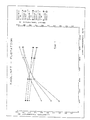
- the partial replacement of the conventional amine collector H by the glucosides to be used according to the invention with alkyl chains in the range C12-C16 accelerates the flotation, in particular in the first flotation stage, without significant loss of selectivity.
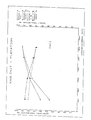
- Figure 2 shows that glucosides to be used according to the invention with alkyl chains in the range C10 in combination with conventional amine collectors improve both the application to clay substance and the enrichment, in particular in the first flotation stage.
- a low-value cassiterite ore was floated, which essentially contains granite, tourmaline and magnetite as gait.
- the SiO2 content of the task is approximately 1.0%.
- the flotation task had the following grain size distribution: 49.5% ⁇ 25 ⁇ m 43.8% 25-63 ⁇ m 6.7%> 63 ⁇ m
- the flotation experiments were carried out in a 1 l laboratory flotation cell at room temperature. Water glass with a dosage of 2000 g / t was used as the pusher, the pH of the slurry was adjusted to pH 5 with sulfuric acid before the addition. Was floated with a cloud density of 500 g ore per liter of tap water with a hardness of 16 dH. The flotation time of the pre-flotation was 4 minutes at a stirring speed of 1200 rpm.
Landscapes
- Emulsifying, Dispersing, Foam-Producing Or Wetting Agents (AREA)
- Processing Of Solid Wastes (AREA)
- Manufacture And Refinement Of Metals (AREA)
- Non-Silver Salt Photosensitive Materials And Non-Silver Salt Photography (AREA)
- Separation Of Suspended Particles By Flocculating Agents (AREA)
- Mechanical Treatment Of Semiconductor (AREA)
- Manufacture Of Macromolecular Shaped Articles (AREA)
- Developing Agents For Electrophotography (AREA)
- Inks, Pencil-Leads, Or Crayons (AREA)
- Paper (AREA)
- Saccharide Compounds (AREA)
- Steroid Compounds (AREA)
Priority Applications (1)
| Application Number | Priority Date | Filing Date | Title |
|---|---|---|---|
| AT86113956T ATE72774T1 (de) | 1985-10-17 | 1986-10-08 | Verwendung von gemischen enthaltend nichtionische tenside als hilfsmittel fuer die flotation von nichtsulfidischen erzen. |
Applications Claiming Priority (2)
| Application Number | Priority Date | Filing Date | Title |
|---|---|---|---|
| DE3536975 | 1985-10-17 | ||
| DE19853536975 DE3536975A1 (de) | 1985-10-17 | 1985-10-17 | Verwendung von nichtionischen tensiden als hilfsmittel fuer die flotation von nichtsulfidischen erzen |
Publications (3)
| Publication Number | Publication Date |
|---|---|
| EP0219057A2 true EP0219057A2 (fr) | 1987-04-22 |
| EP0219057A3 EP0219057A3 (en) | 1990-03-21 |
| EP0219057B1 EP0219057B1 (fr) | 1992-02-26 |
Family
ID=6283782
Family Applications (1)
| Application Number | Title | Priority Date | Filing Date |
|---|---|---|---|
| EP86113956A Expired - Lifetime EP0219057B1 (fr) | 1985-10-17 | 1986-10-08 | Utilisation d'agents tensioactifs non-ioniques comme réactifs pour la flottation de minerais non sulfurés |
Country Status (13)
| Country | Link |
|---|---|
| US (1) | US5108585A (fr) |
| EP (1) | EP0219057B1 (fr) |
| AT (1) | ATE72774T1 (fr) |
| AU (1) | AU582021B2 (fr) |
| BR (1) | BR8605066A (fr) |
| CA (1) | CA1321846C (fr) |
| DD (1) | DD254144A5 (fr) |
| DE (2) | DE3536975A1 (fr) |
| ES (1) | ES2002423A6 (fr) |
| FI (1) | FI85227C (fr) |
| IN (1) | IN167321B (fr) |
| TR (1) | TR23700A (fr) |
| ZA (1) | ZA867857B (fr) |
Cited By (5)
| Publication number | Priority date | Publication date | Assignee | Title |
|---|---|---|---|---|
| WO1991015298A1 (fr) * | 1990-03-30 | 1991-10-17 | Henkel Kommanditgesellschaft Auf Aktien | Procede pour obtenir des mineraux a partir de minerais non sulfures par flottation |
| WO1991018674A1 (fr) * | 1990-05-25 | 1991-12-12 | Henkel Kommanditgesellschaft Auf Aktien | Procede de recuperation de mineraux contenus dans des minerais non sulfures par flottation |
| WO1993006935A1 (fr) * | 1991-10-04 | 1993-04-15 | Henkel Kommanditgesellschaft Auf Aktien | Procede d'obtention de concentres de minerais de fer par flottation |
| WO1994026857A1 (fr) * | 1993-05-12 | 1994-11-24 | Henkel Kommanditgesellschaft Auf Aktien | Melanges detergents aqueux |
| WO1996010622A1 (fr) * | 1994-10-04 | 1996-04-11 | Henkel Kommanditgesellschaft Auf Aktien | Concentres de tensioactifs aqueux pompables |
Families Citing this family (12)
| Publication number | Priority date | Publication date | Assignee | Title |
|---|---|---|---|---|
| DE3818482A1 (de) * | 1988-05-31 | 1989-12-07 | Henkel Kgaa | Tensidmischungen als sammler fuer die flotation nichtsulfidischer erze |
| US5522986A (en) * | 1995-03-03 | 1996-06-04 | Thiele Kaolin Company | Process for removing impurities from kaolin clays |
| US6994786B2 (en) * | 2004-06-07 | 2006-02-07 | Arr-Maz Products, L.P. | Phosphate beneficiation process using methyl or ethyl esters as float oils |
| JP4022595B2 (ja) * | 2004-10-26 | 2007-12-19 | コニカミノルタオプト株式会社 | 撮影装置 |
| AP2447A (en) * | 2005-02-04 | 2012-08-31 | Mineral And Coal Technologies Inc | Improving the seperation of diamond from gangue minerals |
| US8246717B1 (en) * | 2010-08-23 | 2012-08-21 | Toxco, Inc. | Process for the recovery of metals from used nickel/metal hydride batteries |
| US8696788B1 (en) | 2010-08-23 | 2014-04-15 | Retriev Technologies Incorporated | Process for the Recovery of AB5 Alloy from Used Nickel/Metal Hydride Batteries |
| FI123224B (fi) | 2010-11-05 | 2012-12-31 | Nordkalk Oy Ab | Kuitutuote ja menetelmä sen valmistamiseksi |
| EP4026620A1 (fr) | 2021-01-12 | 2022-07-13 | Basf Se | Procédé de flottation d'un minerai de fer contenant du silicate |
| CN115286748B (zh) * | 2022-08-15 | 2023-06-20 | 上海百奥恒新材料有限公司 | 矿物解离剂及其制备方法和应用 |
| JP2026506559A (ja) | 2023-02-08 | 2026-02-25 | コーニンクレッカ フィリップス エヌ ヴェ | 無線ネットワークにおける拡張測距および測位サービス |
| CN121338930B (zh) * | 2025-12-17 | 2026-03-24 | 中南大学 | 一种浮选分离石英和钾长石的高效捕收剂及其制备方法与应用 |
Family Cites Families (19)
| Publication number | Priority date | Publication date | Assignee | Title |
|---|---|---|---|---|
| US3598865A (en) * | 1968-02-07 | 1971-08-10 | Atlas Chem Ind | Polyglycosides and process of preparing mono and polyglycosides |
| US3640862A (en) * | 1968-08-08 | 1972-02-08 | American Cyanamid Co | Liquid cationic flotation composition |
| US3547828A (en) * | 1968-09-03 | 1970-12-15 | Rohm & Haas | Alkyl oligosaccharides and their mixtures with alkyl glucosides and alkanols |
| US3707535A (en) * | 1969-07-24 | 1972-12-26 | Atlas Chem Ind | Process for preparing mono- and polyglycosides |
| US3772269A (en) * | 1969-07-24 | 1973-11-13 | Ici America Inc | Glycoside compositions and process for the preparation thereof |
| US3737426A (en) * | 1970-09-25 | 1973-06-05 | Us Agriculture | Biodegradeable surfactants from starch-derived glycosides |
| US3839318A (en) * | 1970-09-27 | 1974-10-01 | Rohm & Haas | Process for preparation of alkyl glucosides and alkyl oligosaccharides |
| US4000080A (en) * | 1974-10-11 | 1976-12-28 | The Procter & Gamble Company | Low phosphate content detergent composition |
| US4089945A (en) * | 1975-06-30 | 1978-05-16 | The Procter & Gamble Company | Antidandruff shampoos containing metallic cation complex to reduce in-use sulfide odor |
| DE2547987C2 (de) * | 1975-10-27 | 1983-05-26 | Henkel KGaA, 4000 Düsseldorf | Flotationssammler für Sylvin |
| US4138350A (en) * | 1977-12-21 | 1979-02-06 | American Cyanamid Company | Collector combination for non-sulfide ores comprising a fatty acid and a sulfosuccinic acid monoester or salt thereof |
| US4139481A (en) * | 1977-12-21 | 1979-02-13 | American Cyanamid Company | Combinations of alkylamidoalkyl monoesters of sulfosuccinic acid and fatty acids as collectors for non-sulfide ores |
| DE3001064A1 (de) * | 1980-01-12 | 1981-07-16 | Basf Ag, 6700 Ludwigshafen | Verfahren zur reinigung von alkylglycosiden durch destillative abtennung nicht umgesetzter alkohole |
| AU556758B2 (en) * | 1981-07-13 | 1986-11-20 | Procter & Gamble Company, The | Foaming compositions based on alkylpolysaccharide |
| ATE15498T1 (de) * | 1981-10-08 | 1985-09-15 | Rohm & Haas France | Verfahren zur herstellung von oberflaechenaktiven glykosiden und ihre verwendung in kosmetischen, pharmazeutischen und haushaltsprodukten. |
| US4663069A (en) * | 1982-04-26 | 1987-05-05 | The Procter & Gamble Company | Light-duty liquid detergent and shampoo compositions |
| US4565647B1 (en) * | 1982-04-26 | 1994-04-05 | Procter & Gamble | Foaming surfactant compositions |
| FR2534492A1 (fr) * | 1982-10-13 | 1984-04-20 | Elf Aquitaine | Perfectionnement a la flottation de minerais |
| DE3238060A1 (de) * | 1982-10-14 | 1984-04-19 | Henkel KGaA, 4000 Düsseldorf | Flotationsmittel und verfahren zur flotation nichtsulfidischer minerale |
-
1985
- 1985-10-17 DE DE19853536975 patent/DE3536975A1/de not_active Withdrawn
-
1986
- 1986-05-20 IN IN389/MAS/86A patent/IN167321B/en unknown
- 1986-10-08 DE DE8686113956T patent/DE3683981D1/de not_active Expired - Fee Related
- 1986-10-08 AT AT86113956T patent/ATE72774T1/de active
- 1986-10-08 EP EP86113956A patent/EP0219057B1/fr not_active Expired - Lifetime
- 1986-10-15 DD DD86295291A patent/DD254144A5/de not_active IP Right Cessation
- 1986-10-15 TR TR86/0567A patent/TR23700A/xx unknown
- 1986-10-16 BR BR8605066A patent/BR8605066A/pt unknown
- 1986-10-16 CA CA000520635A patent/CA1321846C/fr not_active Expired - Fee Related
- 1986-10-16 AU AU63994/86A patent/AU582021B2/en not_active Ceased
- 1986-10-16 ZA ZA867857A patent/ZA867857B/xx unknown
- 1986-10-16 FI FI864181A patent/FI85227C/fi not_active IP Right Cessation
- 1986-10-17 ES ES8602647A patent/ES2002423A6/es not_active Expired
-
1990
- 1990-02-20 US US07/481,808 patent/US5108585A/en not_active Expired - Fee Related
Cited By (7)
| Publication number | Priority date | Publication date | Assignee | Title |
|---|---|---|---|---|
| WO1991015298A1 (fr) * | 1990-03-30 | 1991-10-17 | Henkel Kommanditgesellschaft Auf Aktien | Procede pour obtenir des mineraux a partir de minerais non sulfures par flottation |
| WO1991018674A1 (fr) * | 1990-05-25 | 1991-12-12 | Henkel Kommanditgesellschaft Auf Aktien | Procede de recuperation de mineraux contenus dans des minerais non sulfures par flottation |
| WO1993006935A1 (fr) * | 1991-10-04 | 1993-04-15 | Henkel Kommanditgesellschaft Auf Aktien | Procede d'obtention de concentres de minerais de fer par flottation |
| US5540336A (en) * | 1991-10-04 | 1996-07-30 | Henkel Kommanditgesellschaft Auf Aktien | Method of producing iron ore concentrates by froth flotation |
| WO1994026857A1 (fr) * | 1993-05-12 | 1994-11-24 | Henkel Kommanditgesellschaft Auf Aktien | Melanges detergents aqueux |
| WO1996010622A1 (fr) * | 1994-10-04 | 1996-04-11 | Henkel Kommanditgesellschaft Auf Aktien | Concentres de tensioactifs aqueux pompables |
| US5883068A (en) * | 1994-10-04 | 1999-03-16 | Henkel Kommanditgesellschaft Auf Aktien | Pumpable water-containing surfactant concentrates |
Also Published As
| Publication number | Publication date |
|---|---|
| BR8605066A (pt) | 1987-07-21 |
| ES2002423A6 (es) | 1988-08-01 |
| TR23700A (tr) | 1990-06-29 |
| EP0219057B1 (fr) | 1992-02-26 |
| ZA867857B (en) | 1987-05-27 |
| AU582021B2 (en) | 1989-03-09 |
| FI85227B (fi) | 1991-12-13 |
| DD254144A5 (de) | 1988-02-17 |
| US5108585A (en) | 1992-04-28 |
| FI864181L (fi) | 1987-04-18 |
| CA1321846C (fr) | 1993-08-31 |
| AU6399486A (en) | 1987-04-30 |
| EP0219057A3 (en) | 1990-03-21 |
| DE3683981D1 (de) | 1992-04-02 |
| IN167321B (fr) | 1990-10-06 |
| FI864181A0 (fi) | 1986-10-16 |
| FI85227C (fi) | 1992-03-25 |
| DE3536975A1 (de) | 1987-04-23 |
| ATE72774T1 (de) | 1992-03-15 |
Similar Documents
| Publication | Publication Date | Title |
|---|---|---|
| EP0201815B1 (fr) | Utilisation de mélanges de tensio-actifs comme agents pour la flottation de minerais non sulfurés | |
| EP0270933B1 (fr) | Mélanges d'agents tensio-actifs comme collecteurs pour la flottation de minerais non sulfurés | |
| EP0219057A2 (fr) | Utilisation d'agents tensioactifs non-ioniques comme réactifs pour la flottation de minerais non sulfurés | |
| EP0609257B1 (fr) | Procede d'obtention de concentres de minerais de fer par flottation | |
| EP0270018B1 (fr) | Utilisation d'Acides N-alkyle et N-alkényle aspartiques comme co-collecteurs pour la flottation de minerais non sulfurés | |
| WO1992021443A1 (fr) | Procede d'obtention de mineraux a partir de minerais non sulfures par flottation | |
| EP0270986B1 (fr) | Alkylsulfosuccinates à base d'alcools gras propoxylés ainsi que d'alcools gras propoxylés et éthoxylés comme collecteurs pour la flottation de minerais non sulfurés | |
| EP0344553B1 (fr) | Mélanges d'agents tensio-actifs comme collecteurs pour la flottation de minerais non sulfurés | |
| EP0378128A2 (fr) | Procédé de flottation sélective de minerais de phosphate | |
| EP0368061B1 (fr) | Dérivés tensio-actifs d'acides gras et/ou d'esters d'acides gras comme collecteurs pour la flottation de minerais non sulfurés | |
| DE4325017A1 (de) | Verfahren zur Flotation von Kupfer- und Kobalterzen | |
| WO1991015298A1 (fr) | Procede pour obtenir des mineraux a partir de minerais non sulfures par flottation | |
| DE4016792A1 (de) | Verfahren zur gewinnung von mineralien aus nichtsulfidischen erzen durch flotation | |
| DE3636530A1 (de) | Verwendung von sammlergemischen als hilfsmittel fuer die flotation von nichtsulfidischen erzen, insbesondere cassiterit | |
| EP0544185A1 (fr) | Procédé pour l'obtention de minéraux de minérais non-sulfurés par flottation | |
| WO1992004981A1 (fr) | Procede d'extraction par flottation de mineraux contenus dans des minerais non sulfures |
Legal Events
| Date | Code | Title | Description |
|---|---|---|---|
| PUAI | Public reference made under article 153(3) epc to a published international application that has entered the european phase |
Free format text: ORIGINAL CODE: 0009012 |
|
| AK | Designated contracting states |
Kind code of ref document: A2 Designated state(s): AT DE FR GB SE |
|
| PUAL | Search report despatched |
Free format text: ORIGINAL CODE: 0009013 |
|
| AK | Designated contracting states |
Kind code of ref document: A3 Designated state(s): AT DE FR GB SE |
|
| 17P | Request for examination filed |
Effective date: 19900410 |
|
| 17Q | First examination report despatched |
Effective date: 19901022 |
|
| GRAA | (expected) grant |
Free format text: ORIGINAL CODE: 0009210 |
|
| AK | Designated contracting states |
Kind code of ref document: B1 Designated state(s): AT DE FR GB SE |
|
| REF | Corresponds to: |
Ref document number: 72774 Country of ref document: AT Date of ref document: 19920315 Kind code of ref document: T |
|
| GBT | Gb: translation of ep patent filed (gb section 77(6)(a)/1977) | ||
| ET | Fr: translation filed | ||
| REF | Corresponds to: |
Ref document number: 3683981 Country of ref document: DE Date of ref document: 19920402 |
|
| PG25 | Lapsed in a contracting state [announced via postgrant information from national office to epo] |
Ref country code: GB Effective date: 19921008 Ref country code: AT Effective date: 19921008 |
|
| PG25 | Lapsed in a contracting state [announced via postgrant information from national office to epo] |
Ref country code: SE Effective date: 19921009 |
|
| PLBE | No opposition filed within time limit |
Free format text: ORIGINAL CODE: 0009261 |
|
| STAA | Information on the status of an ep patent application or granted ep patent |
Free format text: STATUS: NO OPPOSITION FILED WITHIN TIME LIMIT |
|
| 26N | No opposition filed | ||
| GBPC | Gb: european patent ceased through non-payment of renewal fee |
Effective date: 19921008 |
|
| PG25 | Lapsed in a contracting state [announced via postgrant information from national office to epo] |
Ref country code: FR Effective date: 19930630 |
|
| PG25 | Lapsed in a contracting state [announced via postgrant information from national office to epo] |
Ref country code: DE Effective date: 19930701 |
|
| REG | Reference to a national code |
Ref country code: FR Ref legal event code: ST |
|
| EUG | Se: european patent has lapsed |
Ref document number: 86113956.6 Effective date: 19930510 |