EP0219457A2 - Verfahren zur Herstellung von Metallsalzgemischen von ringsubstituierten Salicylsäureverbindungen - Google Patents
Verfahren zur Herstellung von Metallsalzgemischen von ringsubstituierten Salicylsäureverbindungen Download PDFInfo
- Publication number
- EP0219457A2 EP0219457A2 EP86810424A EP86810424A EP0219457A2 EP 0219457 A2 EP0219457 A2 EP 0219457A2 EP 86810424 A EP86810424 A EP 86810424A EP 86810424 A EP86810424 A EP 86810424A EP 0219457 A2 EP0219457 A2 EP 0219457A2
- Authority
- EP
- European Patent Office
- Prior art keywords
- formulas
- salicylic acid
- acid
- salt
- formula
- Prior art date
- Legal status (The legal status is an assumption and is not a legal conclusion. Google has not performed a legal analysis and makes no representation as to the accuracy of the status listed.)
- Granted
Links
Classifications
-
- C—CHEMISTRY; METALLURGY
- C07—ORGANIC CHEMISTRY
- C07C—ACYCLIC OR CARBOCYCLIC COMPOUNDS
- C07C51/00—Preparation of carboxylic acids or their salts, halides or anhydrides
- C07C51/347—Preparation of carboxylic acids or their salts, halides or anhydrides by reactions not involving formation of carboxyl groups
-
- B—PERFORMING OPERATIONS; TRANSPORTING
- B41—PRINTING; LINING MACHINES; TYPEWRITERS; STAMPS
- B41M—PRINTING, DUPLICATING, MARKING, OR COPYING PROCESSES; COLOUR PRINTING
- B41M5/00—Duplicating or marking methods; Sheet materials for use therein
- B41M5/124—Duplicating or marking methods; Sheet materials for use therein using pressure to make a masked colour visible, e.g. to make a coloured support visible, to create an opaque or transparent pattern, or to form colour by uniting colour-forming components
- B41M5/132—Chemical colour-forming components; Additives or binders therefor
- B41M5/155—Colour-developing components, e.g. acidic compounds; Additives or binders therefor; Layers containing such colour-developing components, additives or binders
-
- C—CHEMISTRY; METALLURGY
- C07—ORGANIC CHEMISTRY
- C07C—ACYCLIC OR CARBOCYCLIC COMPOUNDS
- C07C51/00—Preparation of carboxylic acids or their salts, halides or anhydrides
- C07C51/347—Preparation of carboxylic acids or their salts, halides or anhydrides by reactions not involving formation of carboxyl groups
- C07C51/353—Preparation of carboxylic acids or their salts, halides or anhydrides by reactions not involving formation of carboxyl groups by isomerisation; by change of size of the carbon skeleton
-
- B—PERFORMING OPERATIONS; TRANSPORTING
- B41—PRINTING; LINING MACHINES; TYPEWRITERS; STAMPS
- B41M—PRINTING, DUPLICATING, MARKING, OR COPYING PROCESSES; COLOUR PRINTING
- B41M5/00—Duplicating or marking methods; Sheet materials for use therein
- B41M5/26—Thermography ; Marking by high energetic means, e.g. laser otherwise than by burning, and characterised by the material used
- B41M5/30—Thermography ; Marking by high energetic means, e.g. laser otherwise than by burning, and characterised by the material used using chemical colour formers
- B41M5/333—Colour developing components therefor, e.g. acidic compounds
- B41M5/3333—Non-macromolecular compounds
- B41M5/3335—Compounds containing phenolic or carboxylic acid groups or metal salts thereof
Definitions
- the present application relates to a process for the preparation of metal salt mixtures of ring-substituted salicylic acid compounds, which metal salts can be used as color developers for color formers in pressure-sensitive or heat-sensitive recording materials.
- dye acceptors or color developers for dye precursors which are salts of a polyvalent metal and a salicylic acid compound, the salicylic acid compound being disubstituted in the 3- and 5-position.
- substituents for salicylic acid are ⁇ -methylbenzyl, ⁇ , ⁇ -dimethylbenzyl or cyclohexyl.
- ring-substituted salicylic acid compounds are prepared with the aid of substituted phenols and gaseous carbon dioxide, the substituted phenols being converted by reacting phenols e.g. can be obtained with styrene, ⁇ -methylstyrene or cyclohexyl chloride.
- the present invention therefore relates to a process for the preparation of a mixture of a metal salt of the formula where in formulas (1) and (2) Me an n-valent metal ion and n is 2, 3 or 4 and the rings A and B, independently of one another, are unsubstituted or substituted by halogen, lower alkyl, lower alkoxy or an ⁇ -methylbenzyl radical.
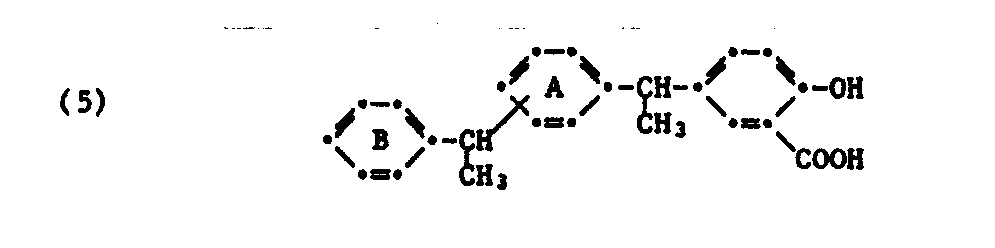
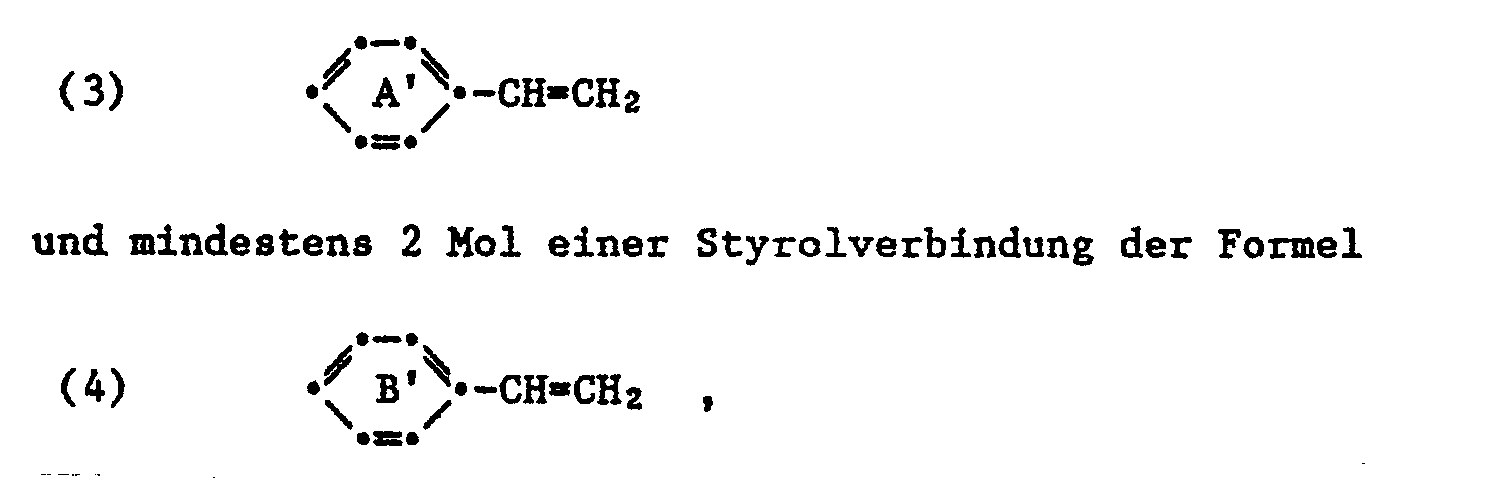
- the process is characterized in that 2 moles of salicylic acid with at least 2 moles of a styrene compound of the formula wherein the benzene rings A 'and B' are unsubstituted or substituted by halogen, lower alkyl or lower alkoxy, reacted in the presence of an aromatic sulfonic acid and 2n mol of the mixture obtained from the salicylic acid compound of the formula wherein in formulas (5) and (6) A and B have the meanings given for formulas (1) and (2), with 2 moles of the salt of a n-valent metal, an inorganic acid or a lower aliphatic carboxylic acid, where n has the meaning given.
- the metal salt mixtures produced according to the invention can be present in a weight ratio of 9: 1 to 1: 9.
- the salicylate constituents which occur two to four times in the metal salts of the formulas (1) and (2) can be identical or different. They are preferably identical in each case.
- Lower alkyl and lower alkoxy generally represent groups which have 1 to 5, in particular 1 to 3, carbon atoms, such as e.g. Methyl, ethyl, isopropyl, sec-butyl, tert-butyl, amyl or isoamyl or methoxy, ethoxy, isopropoxy, n-butoxy or tert-butoxy.
- Halogen means for example fluorine, iodine, bromine or preferably chlorine.
- the metal salts produced according to the invention advantageously derive from 2, 3 or 4-valent metals with an atomic weight of 24 to 210, preferably 26 to 120.
- metals are aluminum, barium, lead, cadmium, calcium, chromium, iron, gallium, cobalt, copper, magnesium, manganese, molybdenum, Nickel, mercury, silver, strontium, tantalum, titanium, vanadium, tungsten, zinc, tin and zirconium.
- Aluminum, zirconium, vanadium, tin and in particular zinc are preferred.
- the of the compounds of the formulas (1) and (5) is advantageously in the p-position to the ethylidene group.
- Rings A and B are preferably not further substituted. If the rings A and B have substituents, they are primarily further substituted by halogen, methyl, methoxy or ⁇ -methylbenzyl. 1 or 2 substituents can advantageously be present per benzene ring A or B.
- the ⁇ -methylbenzyl radical is usually present in the benzene ring B.
- Practically important metal salt mixtures which are produced according to the invention and are advantageously used as color developers are aluminum salts or, more preferably, zinc salts of the substituted salicylic acid compounds of the formulas (5) and (6) in which the corresponding ring B is unsubstituted.
- the mixture of the free salicylic acid compounds of the formulas (5) and (6) is advantageously prepared at a temperature between 20 ° C. and the reflux temperature, preferably at 80 ° C. to 150 ° C.
- the reaction time generally depends on the temperature of the reaction medium and is advantageously between 1/2 and 5 hours, preferably 1 to 3 hours.
- the styrene components of the formulas (3) and (4) are preferably identical.
- styrene components examples include styrene, p-chlorostyrene, p-methylstyrene, 2,4-dimethylstyrene.
- Aromatic sulfonic acids which serve as catalysts are, for example, benzenesulfonic acid, chlorobenzenesulfonic acid, toluenesulfonic acid, chlorotoluenesulfonic acid or xylenesulfonic acid. p-Toluenesulfonic acid is preferred.
- the aromatic sulfonic acid in particular the toluenesulfonic acid, can be prepared in situ.
- the toluenesulfonic acid is produced in situ e.g. as described in Chemical Abstract, Vol. 79 (1969), 106228r.
- the reaction of the salicylic acid with the styrene compounds of the formulas (3) and (4) is advantageously carried out in an organic solvent which does not take part in the condensation.
- Suitable organic solvents which form the reaction medium are cycloaliphatic or preferably aromatic hydrocarbons, such as e.g. Cyclohexane, benzene, toluene or xylene; Chlorinated hydrocarbons, e.g. Ethylene chloride, tetrachlorethylene or chlorobenzenes, e.g. Chlorobenzene, chlorotoluene or dichlorobenzene; cyclic ethers, e.g. Dioxane or tetrahydrofuran; Dimethyl sulfoxide or nitriles of aliphatic monocarboxylic acids, e.g. Acetonitrile, propionitrile or butyronitrile. Mixtures of the solvents mentioned can also be used.
- Preferred solvents are chlorobenzene, chlorotoluene and especially toluene.
- the solvent is not required.
- the mixture of the free salicylic acid compounds obtained can be used directly for the preparation of the metal salts of the formulas (1) and (2).
- the acidic solution of the reaction product is first neutralized with an aqueous sodium hydroxide solution and then the neutral solution is acidified with a lower carboxylic acid or an inorganic acid, whereupon the product precipitates in the form of an oil and is separated off and then the individual acids can be separated from one another by chromatography.
- the metallization of the salicylic acid mixture is advantageously carried out in an alkaline solution of the salicylic acid compounds used and preferably in the presence of an alkali compound, e.g. Alkali metal hydroxides, carbonates or bicarbonates or ammonium hydroxide, ammonium carbonate or ammonium hydrogen carbonate.
- an alkali compound e.g. Alkali metal hydroxides, carbonates or bicarbonates or ammonium hydroxide, ammonium carbonate or ammonium hydrogen carbonate.
- the metallization can be carried out at a temperature of 10 to 25 ° C. In certain cases and especially when using organic aluminum salts it is necessary to work at higher temperatures, preferably 70 to 200 ° C.
- Suitable lubricants are e.g. Salts of lower fatty acids, e.g. Sodium acetate, amides of lower fatty acids, e.g. Acetamide, also urea or thiourea or their N-substitution products.
- the metal salts of mineral acids or carboxylic acids having 1 to 6 carbon atoms in particular sulfates, halides (chlorides), nitrates, formates, acetates, propionates, oxalates or citrates, are expediently used as metal-donating agents.
- inorganic metal salts examples include the zinc salts zinc chloride, zinc sulfate or zinc nitrate and also aluminum sulfate, tin dichloride, zirconium oxychloride.
- Organic metal salts are e.g. Zinc diacetate, zinc oxalate, aluminum triisopropylate or aluminum sec.butylate.
- zinc oxide or zinc carbonate can also be used, in which case the reaction with the salicylic acid mixture is carried out, preferably in the presence of ammonium formate.
- a particularly expedient embodiment for the preparation of the metal compounds of the formulas (1) and (2), in which Me is the zinc ion, consists in adding a reaction medium consisting of about 1 mol, preferably 1.0 to 1.2 mol Salicylic acid and p-toluenesulfonic acid at a temperature of 100 to 170 ° C, preferably 120-160 ° C, portions of styrene and condensed for 1 to 3 hours. Then aqueous sodium hydroxide solution is added and the alkaline solution is treated with an inorganic zinc salt, preferably zinc chloride, whereupon the mixture obtained is isolated from the zinc salts of the corresponding salicylic acid compounds.
- a reaction medium consisting of about 1 mol, preferably 1.0 to 1.2 mol Salicylic acid and p-toluenesulfonic acid at a temperature of 100 to 170 ° C, preferably 120-160 ° C, portions of styrene and condensed for 1 to 3 hours.
- the metal salt mixtures produced according to the invention are practically colorless and odorless and are particularly suitable as color developers for color formers. They are very reactive with the usual color formers, so that spontaneous, permanent and non-fading recordings or copies can be obtained.
- the metal salt mixtures produced according to the invention are preferably used as color developers for recording materials, which can be both copying and registration materials.
- the recording material can be pressure sensitive or heat sensitive.
- the color formers that can be used in the recording material are known colorless or slightly colored substances which, if they come into contact with the mixture of the metal salts of the formulas (1) and (2), become colored or change color.
- Color formers or mixtures thereof can be used, for example the classes of phthalides, azaphthalides, fluorans, spiropyrans, spirodipyrans, Azomethines, quinazolines, leucoauramines, triarylmethane-leuco dyes, carbazolylmethanes, rhodamine lactams, chromenopyrazoles, phenoxazines, phenothiazines, as well as the chromene or chroman color former.
- color formers are crystal violet lactone, 3,3- (bisaminophenyl) phthalide, 3,3- (bis-substituted indolyl) phthalide, 3- (aminophenyl) -3-indolyl phthalide, 3- (aminophenyl) -3 -indolylazaphthalide, 6-dialkylamino-2-n-octylamino-fluorane, 6-dialkylamino-2-arylamino-fluorane, e.g.
- Example 1 414 g of salicylic acid and 36 g of p-toluenesulfonic acid ⁇ 1H2O are heated to 130 ° C. with stirring, a partial melt being formed. Then 90 g of styrene are added dropwise in the course of 15 minutes, the temperature rising to 137 ° C. and a brown, clear solution being formed. A further 535 g of styrene are added dropwise in the course of 45 minutes, the reaction temperature rising to 157 ° C. within 10 minutes and being kept at 150-157 ° C. by regulating the rate of dropwise addition. After the dropwise addition has ended, the reaction mixture is still left React for 1 hour at 155-157 ° C and then cool to 90 ° C.
- the mixture melts at 104-118 ° C.
- Example 2 The procedure is analogous to Example 1, but the p-toluenesulfonic acid is replaced by 36 g of benzenesulfonic acid. 1074 g of a powdery product are obtained, which is a mixture of 30% of the zinc salt of the formula (11) and 70% of the zinc salt of the formula (12). (NMR spectrum). The mixture melts at 90-150 ° C.
- Example 3 The procedure is analogous to Example 1, but the p-toluenesulfonic acid is replaced by 36 g of 2,5-dimethylbenzenesulfonic acid-2H2O. 1077 g of a powdery product are obtained, which is a mixture of 40% of the zinc salt of the formula (11) and 60% of the zinc salt of the formula (12). (NMR spectrum). The mixture melts at 60-110 ° C.
- a) 69 g of salicylic acid and 6 g of p-toluenesulfonic acid-1H2O are heated to 130 ° C. with stirring, a partial melt being formed.
- 15 g of styrene are then added dropwise in the course of 10 minutes, the temperature rising to 135 ° C. and a brown, clear solution being formed.
- a further 89.2 g of styrene are added dropwise in the course of 35 minutes, the reaction temperature rising to 155 ° C. within 10 minutes and being kept at 150-155 ° C. by regulating the rate of dropwise addition.
- reaction mixture is left to react for a further hour at 155 ° C., and the mixture is then cooled to 90 ° C. 265 ml of 2N aqueous sodium hydroxide solution are then added and the mixture is cooled to 25 ° C.
- the product is the zirconium salt of a 1: 1 mixture of the compounds of the formulas (13) and (14).
- Example 5 111.5 g of the sodium salt solution prepared according to Example 4a) are evaporated to dryness in vacuo at 60 ° C.
- the dehydrated salt is dissolved in 100 ml of methanol at 20 ° C.
- This solution is added dropwise at 20 ° C. to a solution of 10.65 g of tin dichloride in 100 ml of methanol with stirring. There is practically no precipitation and the methanol is therefore removed at 60 ° C. in vacuo.
- the residue is dissolved in 100 ml of toluene at 20 ° C. and insoluble constituents are filtered off. After removing the toluene at 95 ° C.
- the product is the tin salt of an approx. 1: 1 mixture of the compounds of the formulas (13) and (14).
- the product is the aluminum salt of a 1: 1 mixture of the salicylic acid compounds of the formulas (13) and (14).
- Example 1 (pressure sensitive recording system)
- a finely ground aqueous dispersion (2-4 ⁇ m) consisting of a 38% solids content 1 part of the zinc salt mixture according to preparation example 1, 7.4 parts china clay, 0.8 parts of a condensation product of naphthalenesulfonic acid and formaldehyde and 0.9 parts of a styrene / butadiene copolymer (100%) is applied to a coating base paper with a basis weight of 48 g / m2 with a doctor blade. Dry application weight: 6-7 g / m2.
- the recipient layer produced in this way is placed on top of one another with the donor layer of commercially available carbonless paper (e.g. zander).
- the donor layer contains the color former, dissolved in microcapsules, e.g. Crystal violet lactone. After copying by hand or typewriter, an intense blue copy is created.
- Example 2 A finely ground aqueous dispersion (2-4 ⁇ m) consisting of a 38% solids content 1 part of the zinc salt mixture according to preparation example 2, 10 parts china clay and 0.6 parts polyvinyl alcohol is applied to a coating base paper with a basis weight of 48 g / m2 with a doctor blade. Dry application weight: 5-6 g / m2.
- the recipient layer produced in this way is placed on top of one another with the donor layer of commercially available carbonless paper (e.g. zander).
- the donor layer contains the color former, dissolved in microcapsules, e.g. Crystal violet lactone. After copying by hand or typewriter, an intense blue copy is created.
- Example 3 A finely ground aqueous dispersion (2-4 ⁇ m) consisting of a 38% solids content 1 part of the zirconium salt mixture according to preparation example 4, 10 parts china clay and 0.6 parts polyvinyl alcohol is applied to a coating base paper with a basis weight of 48 g / m2 with a doctor blade. Dry application weight: 5-6 g / m2.
- the recipient layer produced in this way is placed on top of one another with the donor layer of commercially available carbonless paper (e.g. zander).
- the donor layer contains the color former, dissolved in microcapsules, e.g. Crystal violet lactone. After copying by hand or typewriter, an intense blue copy is created.
- Example 4 A finely ground aqueous dispersion (2-4 ⁇ m) consisting of a 38% solids content 1 part of the aluminum salt mixture according to preparation example 6, 10 parts china clay and 0.6 parts polyvinyl alcohol is applied to a coating base paper with a basis weight of 48 g / m2 with a doctor blade. Dry application weight: 5-6 g / m2.
- the recipient layer produced in this way is placed on top of one another with the donor layer of commercially available carbonless paper (e.g. zander).
- the donor layer contains the color former, dissolved in microcapsules, e.g. Crystal violet lactone. After copying by hand or typewriter, an intense blue copy is created.
- Example 5 0.6 part of the tin salt mixture according to Preparation Example 5 is dissolved in 8 parts of toluene and applied to a base paper of 1 m2 in area (weight: 48 g / m2). Dry application weight: approx. 0.6 g / m2.
- the recipient layer produced in this way is placed on top of one another with the donor layer of commercially available carbonless paper (e.g. zander).
- the donor layer contains the color former, dissolved in microcapsules, e.g. Crystal violet lactone. After copying by hand or typewriter, an intense blue copy is created.
Landscapes
- Chemical & Material Sciences (AREA)
- Organic Chemistry (AREA)
- Chemical Kinetics & Catalysis (AREA)
- Engineering & Computer Science (AREA)
- Oil, Petroleum & Natural Gas (AREA)
- General Chemical & Material Sciences (AREA)
- Organic Low-Molecular-Weight Compounds And Preparation Thereof (AREA)
- Color Printing (AREA)
- Heat Sensitive Colour Forming Recording (AREA)
- Polyoxymethylene Polymers And Polymers With Carbon-To-Carbon Bonds (AREA)
- Low-Molecular Organic Synthesis Reactions Using Catalysts (AREA)
Abstract

Me ein n-wertiges Metallion und
n 2, 3 oder 4 bedeuten und
die Ringe A und B, unabhängig voneinander, unsubstituiert oder durch Halogen, Niederalkyl, Niederalkoxy oder einen α-Methylbenzylrest substituiert sind, werden hergestellt, indem man 2 Mol Salicylsäure mit mindestens 2 Mol einer Styrolverbindung der Formel


Description
- Die vorliegende Anmeldung betrifft ein Verfahren zur Herstellung von Metallsalzgemischen von ringsubstituierten Salicylsäureverbindungen, welche Metallsalze als Farbentwickler für Farbbildner in druckempfindlichen oder wärmeempfindlichen Aufzeichnungsmaterialien Verwendung finden können.
- Aus der DE-PS 2 242 250 sind Farbstoffakzeptoren oder Farbentwickler für Farbstoffvorläufer bekannt, die Salze eines mehrwertigen Metalles und einer Salicylsäureverbindung sind, wobei die Salicylsäureverbindung in 3- und 5-Stellung disubstituiert ist. Als derartige Substituenten der Salicylsäure werden beispielsweise α-Methylbenzyl, α,α-Dimethylbenzyl oder Cyclohexyl genannt. Gemäss der DE-PS 2 242 250 werden solche ringsubstituierten Salicylsäureverbindungen mit Hilfe substituierter Phenole und gasförmigem Kohlendioxid hergestellt, wobei die substituierten Phenole durch Umsetzung von Phenolen z.B. mit Styrol, α-Methylstyrol oder Cyclohexylchlorid erhalten werden.
- Es wurde nun gefunden, dass man wirtschaftlich günstige Metallsalzgemische von ringsubstiuierten Salicylsäureverbindungen erhalten kann, wenn man die Herstellung der Salicylsäureverbindungen durch Umsetzen von Salicylsäure mit einer Styrolverbindung im molaren Verhältnis von 1:2 in Gegenwart einer aromatischen Sulfonsäure durchführt.
- Gegenstand vorliegender Erfindung ist daher ein Verfahren zur Herstellung eines Gemisches aus einem Metallsalz der Formel

Me ein n-wertiges Metallion und
n 2, 3 oder 4 bedeuten und
die Ringe A und B, unabhängig voneinander, unsubstituiert oder durch Halogen, Niederalkyl, Niederalkoxy oder einen α-Methylbenzylrest substituiert sind. - Das Verfahren ist dadurch gekennzeichnet, dass man 2 Mol Salicylsäure mit mindestens 2 Mol einer Styrolverbindung der Formel

- Die erfindungsgemäss hergestellten Metallsalzgemische können in einem Gewichtsverhältnis von 9:1 bis 1:9 vorliegen.
- Die bei den Metallsalzen der Formeln (1) und (2) zweifach bis vierfach vorkommenden Salicylatbestandteile können gleich oder verschieden sein. Vorzugsweise sind sie jeweils identisch.
- Niederalkyl und Niederalkoxy stellen in der Regel Gruppen dar, die 1 bis 5, insbesondere 1 bis 3 Kohlenstoffatome aufweisen, wie z.B. Methyl, Ethyl, Isopropyl, sek.-Butyl, tert.-Butyl, Amyl oder Isoamyl bzw. Methoxy, Ethoxy, Isopropoxy, n-Butoxy oder tert.-Butoxy.
- Halogen bedeutet beispielsweise Fluor, Jod, Brom oder vorzugsweise Chlor.
- Die erfindungsgemäss hergestellten Metallsalze sich vorteilhafterweise von 2-, 3- oder 4-wertigen Metallen mit einem Atomgewicht von 24 bis 210, vorzugsweise 26 bis 120 ab. Beispiele derartiger Metalle sind Aluminium, Barium, Blei, Cadmium, Calcium, Chrom, Eisen, Gallium, Kobalt, Kupfer, Magnesium, Mangan, Molybdän, Nickel, Quecksilber, Silber, Strontium, Tantal, Titan, Vanadium, Wolfram, Zink, Zinn und Zirkonium. Dabei sind Aluminium, Zirkonium, Vanadium, Zinn und insbesondere Zink bevorzugt. Die

- Die Ringe A und B sind vorzugsweise nicht weiter substituiert. Falls die Ringe A und B Substituenten aufweisen, sind sie in erster Linie durch Halogen, Methyl, Methoxy oder α-Methylbenzyl weiter substituiert. Pro Benzolring A oder B können vorteilhafterweise 1 oder 2 Substituenten vorhanden sein. Der α-Methylbenzylrest ist in der Regel im Benzolring B vorhanden.
- Praktisch wichtige Metallsalzgemische, die erfindungsgemäss hergestellt und vorteilhaft als Farbentwickler verwendet werden, sind Aluminiumsalze oder noch bevorzugter Zinksalze der substituierten Salicylsäureverbindungen der Formeln (5) und (6), in denen der entsprechende Ring B unsubstituiert ist.
- Im Vordergrund des Interesses steht als Farbentwickler das Gemisch aus dem Zinksalz der 5-[α-Methyl-4'-(α-methylbenzyl)-benzyl-]salicylsäure und dem Zinksalz der 3,5-Bis-[α-methylbenzyl-]salicylsäure.
- Die Herstellung des Gemisches aus den freien Salicylsäureverbindungen der Formeln (5) und (6) erfolgt vorteilhafterweise bei einer Temperatur zwischen 20°C und der Rückflusstemperatur, vorzugsweise bei 80°C bis 150°C.
- Die Reaktionsdauer hängt in der Regel von der Temperatur des Reaktionsmediums ab und liegt zweckmässigerweise zwischen 1/2 und 5 Stunden, vorzugsweise 1 bis 3 Stunden.
- Vorzugsweise sind die Styrolkomponenten der Formeln (3) und (4) identisch.
- Als Beispiele für geeignete Styrolkomponenten seien genannt: Styrol, p-Chlorstyrol, p-Methylstyrol, 2,4-Dimethylstyrol.
- Als aromatische Sulfonsäuren, die als Katalysatoren dienen, kommen beispielsweise Benzolsulfonsäure, Chlorbenzolsulfonsäure, Toluolsulfonsäure, Chlortoluolsulfonsäure oder Xylolsulfonsäure in Betracht. p-Toluolsulfonsäure ist bevorzugt.
- Die aromatische Sulfonsäure insbesondere die Toluolsulfonsäure kann in situ hergestellt werden. Die Herstellung der Toluolsulfonsäure in situ erfolgt z.B. wie in Chemical Abstract, Vol. 79 (1969), 106228r beschrieben.
- Bei Verwendung von in situ hergestellter aromatischer Sulfonsäure wird die Umsetzung der Salicylsäure mit den Styrolverbindungen der Formeln (3) und (4) vorteilhafterweise in einem nicht an der Kondensation teilnehmenden organischen Lösungsmittel durchgeführt.
- Geeignete organische Lösungsmittel, die das Reaktionsmedium bilden, sind cycloaliphatische oder vorzugsweise aromatische Kohlenwasserstoffe, wie z.B. Cyclohexan, Benzol, Toluol oder Xylol; Chlorkohlenwasserstoffe, wie z.B. Ethylenchlorid, Tetrachlorethylen oder Chlorbenzole, wie z.B. Chlorbenzol, Chlortoluol oder Dichlorbenzol; cyclische Ether, wie z.B. Dioxan oder Tetrahydrofuran; Dimethylsulfoxid oder Nitrile aliphatischer Monocarbonsäuren, wie z.B. Acetonitril, Propionitril oder Butyronitril. Auch Mischungen der genannten Lösungsmittel können verwendet werden. Bevorzugte Lösungsmittel sind Chlorbenzol, Chlortoluol und besonders Toluol.
- Bei Verwendung einer bereits vorbereiteten aromatischen Sulfonsäure ist das Lösungsmittel nicht erforderlich.
- Das erhaltene Gemisch von den freien Salicylsäureverbindungen kann direkt zur Herstellung der Metallsalze der Formeln (1) und (2) weiterverwendet werden.
- Falls eine Isolierung der substituierten Salicylsäureverbindungen der Formeln (5) und (6) erwünscht ist, wird z.B. die saure Lösung des Umsetzungsproduktes zuerst mit einer wässerigen Natriumhydroxydlösung neutralisiert und dann die neutrale Lösung mit einer niederen Carbonsäure oder einer anorganischen Säure angesäuert, worauf das Produkt in Form eines Oels ausfällt und abgetrennt wird und dann die einzelnen Säuren chromatographisch voneinander getrennt werden können.
- Die Metallisierung des Salicylsäuregemisches erfolgt vorteilhafterweise in einer alkalischen Lösung der verwendeten Salicylsäureverbindungen und vorzugsweise in Gegenwart einer Alkaliverbindung, wie z.B. Alkalimetallhydroxide, -carbonate oder -bicarbonate oder Ammoniumhydroxid, Ammoniumcarbonat oder Ammoniumhydrogencarbonat.
- Die Metallisierung kann schon bei einer Temperatur von 10 bis 25°C vorgenommen werden. In gewissen Fällen und besonders bei Verwendung von organischen Aluminiumsalzen ist es nötig bei höheren Temperaturen, vorzugsweise 70 bis 200°C zu arbeiten.
- Mann kann die Reaktionspartner aber auch in einer Schmelze umsetzen. Als Schmelzmittel eignen sich z.B. Salze niederer Fettsäuren, wie z.B. Natriumacetat, Amide niederer Fettsäuren, wie z.B. Acetamid, ferner Harnstoff oder Thioharnstoff oder deren N-Substitutionsprodukte.
- Als Metallabgebende Mittel verwendet man zweckmässig die Metallsalze von Mineralsäuren oder Carbonsäuren mit 1 bis 6 Kohlenstoffatomen, insbesondere Sulfate, Halogenide (Chloride), Nitrate, Formiate, Acetate, Propionate, Oxalate oder Citrate.
- Als Beispiele für anorganische Metallsalze seien die Zinksalze Zinkchlorid, Zinksulfat oder Zinknitrat sowie auch Aluminiumsulfat, Zinndichlorid, Zirkonoxychlorid genannt.
- Organische Metallsalze sind z.B. Zinkdiacetat, Zinkoxalat, Aluminiumtriisopropylat oder Aluminium-sek.butylat.
- Anstelle der genannten Zinksalze können auch Zinkoxid oder Zinkcarbonat verwendet werden, wobei in diesem Falle die Umsetzung mit dem Salicylsäuregemisch, vorzugsweise in Gegenwart von Ammoniumformiat durchgeführt wird.
- Eine besonders zweckmässige Ausführungsform zur Herstellung der Metall-Verbindungen der Formeln (1) und (2), in denen Me das Zinkion ist, besteht darin, dass man zu einem Reaktionsmedium bestehend aus etwa 1 Mol, vorzugsweise 1,0 bis 1,2 Mol Salicylsäure und p-Toluolsulfonsäure bei einer Temperatur von 100 bis 170°C vorzugsweise 120-160°C portionsweise Styrol zugibt und während 1 bis 3 Stunden kondensiert. Darauf wird wässerige Natriumhydroxidlösung zugegeben und die alkalische Lösung mit einem anorganischen Zinksalz, vorzugsweise Zinkchlorid behandelt, worauf das erhaltene Gemisch aus den Zinksalzen der entsprechenden Salicylsäureverbindungen isoliert wird.
- Die erfindungsgemäss hergestellten Metallsalzgemische sind praktisch farb- und geruchlos und eignen sich vor allem als Farbentwickler für Farbbildner. Sie sind mit den üblichen Farbbildnern sehr reaktiv, sodass damit spontane, beständige und nicht verblassende Aufzeichnungen oder Kopien erhalten werden können. Die erfindungsgemäss hergestellten Metallsalzgemische werden vorzugsweise als Farbentwickler für Aufzeichnungsmaterialien verwendet, die sowohl Kopier- als auch Registriermaterialien sein können. Das Aufzeichnungsmaterial kann druckempfindlich oder wärmeempfindlich sein.
- Die im Aufzeichnungsmaterial in Betracht kommenden Farbbildner sind bekannte farblose oder schwach gefärbte Stoffe, die, sofern sie mit dem Gemisch aus den Metallsalzen der Formeln (1) und (2) in Kontakt kommen, farbig werden oder die Farbe ändern. Farbbildner oder deren Mischungen können verwendet werden, die z.B. den Klassen der Phthalide, Azaphthalide, Fluorane, Spiropyrane, Spirodipyrane, Azomethine, Chinazoline, Leukoauramine, Triarylmethan-leukofarbstoffe, Carbazolylmethane, Rhodaminlaktame, Chromenopyrazole, Phenoxazine, Phenothiazine, sowie der Chromeno- oder Chromanfarbbildner angehören. Als Beispiele solcher geeigneten Farbbildner seien genannt Kristallviolettlacton, 3.3-(Bisaminophenyl)-phthalide, 3,3-(Bis-substituierte-indolyl)-phthalide, 3-(Aminophenyl)-3-indolyl-phthalide, 3-(Aminophenyl)-3-indolylazaphthalide, 6-Dialkylamino-2-n-octyl-amino-fluorane, 6-Dialkylamino-2-arylamino-fluorane, z.B. 6-Diethylamino-2-(2'-chlorphenylamino)-fluoran, 6-Dibutylamino-2-(2'-chlorphenylamino)-fluoran, 6-Dialkylamino-3-methyl-2-arylamino-fluorane, z.B. 2-Anilino-3-methyl-6-diethylaminofluoran oder 2-(2',4'-Dimethylanilino)-3-methyl-6-diethylaminofluoran, 6-Dialkylamino-2- oder -3-niederalkyl-fluorane, 6-Dialkylamino-2-dibenzylamino-fluorane, 6-Pyrrolidino-2-dibenzylaminofluoran, 6-N-Cyclohexyl-N-niederalkylamino-3-methyl-2-arylamino-fluorane, 6-Pyrrolidino-2-arylamino-fluorane, Bis-(aminophenyl)-furyl- oder -phenyl-oder -carbazolyl-methane, 3'-Phenyl-7-dialkylamino-2,2'-spirodibenzopyrane, Bisdialkylamino-benzhydrol-alkyl- oder -aryl-sulfinate, Benzoyldialkylamino-phenothiazine oder -phenoxazine.
- In den folgenden Herstellungs- und Anwendungsbeispielen beziehen sich die angegebenen Prozentsätze, wenn nichts anderes angegeben ist, auf das Gewicht und Teile sind Gewichtsteile.
- Beispiel 1: 414 g Salicylsäure und 36 g p-Toluolsulfonsäure·1H₂O werden unter Rühren auf 130°C aufgeheizt, wobei sich eine partielle Schmelze bildet. Alsdann lässt man im Verlaufe von 15 Minuten 90 g Styrol zutropfen, wobei sich die Temperatur auf 137°C erhöht und eine braune klare Lösung entsteht. Man lässt im Verlaufe von 45 Minuten weitere 535 g Styrol zutropfen, wobei die Reaktionstemperatur innerhalb 10 Minuten auf 157°C ansteigt und durch Regulierung der Zutropfgeschwindigkeit bei 150-157°C gehalten wird. Nach beendigtem Zutropfen lässt man das Reaktionsgemisch noch 1 Stunde bei 155-157°C nachreagieren und anschliessend wird auf 90°C abgekühlt. Hierauf werden 1595 ml 2n-wässrige Natriumhydroxidlösung zugegeben, worauf die nach 2 Stunden abgeschiedene ölige Phase des unreagierten Styrols abgetrennt wird. Die wässrige Phase lässt man unter Rühren zu einer Lösung von 260 g Zinkchlorid in 5 Liter Wasser bei einer Temperatur von 10-15°C in dünnem Strahl zufliessen. Das ausgeschiedene Zinksalz wird abfiltriert, abgepresst, in 5 Liter aufgenomen, wieder abfiltiert, abgepresst und bei 50-70°C im Vakuum getrocknet. Man erhält 1031 g eines pulverförmigen Produktes, das ein Gemisch aus dem Zinksalz der Formel

- Das Gemisch schmilzt bei 104-118°C.
- Beispiel 2: Man arbeitet analog Beispiel 1, jedoch wird die p-Toluolsulfonsäure durch 36 g Benzolsulfonsäure ersetzt. Man erhält 1074 g eines pulverförmigen Produktes, welches ein Gemisch aus 30 % des Zinksalzes der Formel (11) und 70 % des Zinksalzes der Formel (12) darstellt. (NMR Spektrum). Das Gemisch schmilzt bei 90-150°C.
- Beispiel 3: Man arbeitet analog Beispiel 1, jedoch wird die p-Toluolsulfonsäure durch 36 g 2,5-Dimethylbenzolsulfonsäure-2H₂O ersetzt. Man erhält 1077 g eines pulverförmigen Produktes, welches ein Gemisch aus 40 % des Zinksalzes der Formel (11) und 60 % des Zinksalzes der Formel (12) darstellt. (NMR Spektrum). Das Gemisch schmilzt bei 60-110°C.
- a) 69 g Salicylsäure und 6 g p-Toluolsulfonsäure-1H₂O werden unter Rühren auf 130°C aufgeheizt, wobei sich eine partielle Schmelze bildet. Alsdann lässt man im Verlaufe von 10 Minuten 15 g Styrol zutropfen, wobei sich die Temperatur auf 135°C erhöht und eine braune klare Lösung entsteht. Man lässt im Verlaufe von 35 Minuten weitere 89,2 g Styrol zutropfen, wobei die Reaktionstemperatur innerhalb 10 Minuten auf 155°C aufsteigt und durch Regulierung der Zutropfgeschwindigkeit bei 150-155°C gehalten wird. Nach beendigtem Zutropfen lässt man das Reaktionsgemisch noch 1 Stunde bei 155°C nachreagieren und anschliessend wird auf 90°C abgekühlt. Hierauf werden 265 ml 2n-wässrige Natriumhydroxidlösung zugegeben und auf 25°C abgekühlt.
- Man erhält 520 g einer braunen, klaren Lösung, welche einen Gehalt von 33 Gew.-% eines 1:1 Gemisches des Natriumsalzes der Salicyclsäureverbindungen der Formeln (13) und (14) enthält.

- b) Zu einer Lösung von 15,7 g Zirkonoxychlorid (ZrOCl₂·6H₂O) in 150 g Wasser lässt man bei 20°C unter Rühren 111,5 g der gemäss a) hergestellten Na-Salzlösung zutropfen. Man erhält zunächst nur eine mässige Fällung des Zr-Salzes, welche jedoch durch weiteres Zutropfen von 250 g Wasser praktisch komplett wird. Das ausgefällte Zirkonsalz wird abfiltriert, nochmals in 250 g Wasser aufgeschlämmt, wieder abfiltriert und in feuchtem Zustand in 100 ml Toluol suspendiert. Durch azeotrope Entwässerung unter Vakuum bei 95°C erhält man das Zr-Salz mit einem H₂O Gehalt von 0,9 % Ausbeute: 38 g (ca: 95 % d.Th.) graues Pulver; Fp. ∼100-140°C.
Analyse: Ber. Zr = 11,43 %, Gef. Zr = 10,7 %. - Das Produkt ist das Zirkonsalz eines 1:1 Gemisches der Verbindungen der Formeln (13) und (14).
- Beispiel 5: 111,5 g der gemäss Beispiel 4a) hergestellten Na-Salzlösung werden im Vakuum bei 60°C zur Trockene eingedampft. Das entwässerte Salz wird bei 20°C in 100 ml Methanol gelöst. Diese Lösung lässt man bei 20°C zu einer Lösung von 10,65 g Zinndichlorid in 100 ml Methanol unter Rühren zutropfen. Man erhält praktisch keine Ausfällung und entfernt deshalb das Methanol bei 60°C im Vakuum. Der Rückstand wird in 100 ml Toluol bei 20°C gelöst und von unlöslichen Anteilen abfiltriert. Nach dem Entfernen des Toluols bei 95°C unter Vakuum erhält man 32,8 g (81 % d.Th.) Zinnsalz, welches bei 0°C ein beigefarbiges Pulver ist, und >30°C in einem halbfesten Zustand vorliegt (Fp. ca. 30-50°C).
Analyse: Ber. Sn = 14,66 %, Gef. Sn = 15,4 %. - Das Produkt ist das Zinnsalz eines ca. 1:1 Gemisches der Verbindungen der Formeln (13) und (14).
- Beispiel 6: Zu einer Lösung von, 13,3 g Aluminiumsulfat Al₂ (SO₄)₃·18H₂O in 100 g Wasser lässt man bei 20°C unter Rühren 111,5 g der gemäss Beispiel 4a) hergestellten Na-Salzlösung zutropfen. Man erhält eine deutliche Fällung des Al-Salzes, welches abfiltriert, nochmals in 150 g Wasser aufgeschlämmt und wieder abfiltriert wird. Das feuchte Produkt wird in 250 ml Toluol gelöst. Durch azeotrope Entwässerung unter Vakuum bei 95°C erhält man das Al-Salz mit einem H₂O-Gehalt von 2,9 %.
Ausbeute: 33,6 g (ca. 92 % d.Th. ber. auf wasserfreies Produkt) beigefarbiges Pulver; Fp ∼60-85°C;
Analyse: Ber. Al = 2,54 %, Gef. Al = 2,13 %. - Das Produkt ist das Aluminiumsalz eines 1:1 Gemisches der Salicylsäure-Verbindungen der Formeln (13) und (14).
- Beispiel 1: (Druckempfindliches Aufzeichnungssystem)
- Eine feingemahlene wässrige Dispersion (2-4 µm), die einen 38 %igen Feststoffgehalt bestehend aus
1 Teil des Zinksalzgemisches gemäss Herstellungsbeispiel 1,
7,4 Teilen China Clay,
0,8 Teilen eines Kondensationsproduktes aus Naphthalinsulfonsäure und Formaldehyd und
0,9 Teilen eines Styrol/Butadiencopolymerisates (100 %)
aufweist, wird auf ein Streichrohpapier mit einem Flächengewicht von 48 g/m² mit einem Rakel aufgetragen. Auftragsgewicht trocken: 6-7 g/m². - Die so hergestellte Nehmerschicht wird mit der Geberschicht eines handelsüblichen Durchschreibepapiers (z.B. Zanders) benachbart aufeinandergelegt. Die Geberschicht enthält in Mikrokapseln gelöst den Farbbildner, z.B. Kristallviolettlakton. Nach Durchschrift mit der Hand oder Schreibmaschine entsteht eine intensiv blaue Kopie.
- Beispiel 2: Eine feingemahlene wässrige Dispersion (2-4 µm), die einen 38 %-igen Feststoffgehalt bestehend aus
1 Teil des Zinksalzgemisches gemäss Herstellungsbeispiel 2,
10 Teilen China Clay und
0,6 Teilen Polyvinylalkohol
aufweist, wird auf ein Streichrohpapier mit einem Flächengewicht von 48 g/m² mit einem Rakel aufgetragen. Auftragsgewicht trocken: 5-6 g/m². - Die so hergestellte Nehmerschicht wird mit der Geberschicht eines handelsüblichen Durchschreibepapiers (z.B. Zanders) benachbart aufeinandergelegt. Die Geberschicht enthält in Mikrokapseln gelöst den Farbbildner, z.B. Kristallviolettlakton. Nach Durchschrift mit der Hand oder Schreibmaschine entsteht eine intensiv blaue Kopie.
- Beispiel 3: Eine feingemahlene wässrige Dispersion (2-4 µm), die einen 38 %-igen Feststoffgehalt bestehend aus
1 Teil des Zirkonsalzgemisches gemäss Herstellungsbeispiel 4,
10 Teilen China Clay und
0,6 Teilen Polyvinylalkohol
aufweist, wird auf ein Streichrohpapier mit einem Flächengewicht von 48 g/m² mit einem Rakel aufgetragen. Auftragsgewicht trocken: 5-6 g/m². - Die so hergestellte Nehmerschicht wird mit der Geberschicht eines handelsüblichen Durchschreibepapiers (z.B. Zanders) benachbart aufeinandergelegt. Die Geberschicht enthält in Mikrokapseln gelöst den Farbbildner, z.B. Kristallviolettlakton. Nach Durchschrift mit der Hand oder Schreibmaschine entsteht eine intensiv blaue Kopie.
- Beispiel 4: Eine feingemahlene wässrige Dispersion (2-4 µm), die einen 38 %-igen Feststoffgehalt bestehend aus
1 Teil des Aluminiumsalzgemisches gemäss Herstellungsbeispiel 6,
10 Teilen China Clay und
0,6 Teilen Polyvinylalkohol
aufweist, wird auf ein Streichrohpapier mit einem Flächengewicht von 48 g/m² mit einem Rakel aufgetragen. Auftragsgewicht trocken: 5-6 g/m². - Die so hergestellte Nehmerschicht wird mit der Geberschicht eines handelsüblichen Durchschreibepapiers (z.B. Zanders) benachbart aufeinandergelegt. Die Geberschicht enthält in Mikrokapseln gelöst den Farbbildner, z.B. Kristallviolettlakton. Nach Durchschrift mit der Hand oder Schreibmaschine entsteht eine intensiv blaue Kopie.
- Beispiel 5: 0,6 Teile des Zinnsalzgemisches gemäss Herstellungsbeispiel 5 werden in 8 Teilen Toluol gelöst und auf einem Streichrohpapier von 1 m² Fläche (Gewicht: 48 g/m²) aufgetragen. Auftragsgewicht trocken: ca. 0,6 g/m².
- Die so hergestellte Nehmerschicht wird mit der Geberschicht eines handelsüblichen Durchschreibepapiers (z.B. Zanders) benachbart aufeinandergelegt. Die Geberschicht enthält in Mikrokapseln gelöst den Farbbildner, z.B. Kristallviolettlakton. Nach Durchschrift mit der Hand oder Schreibmaschine entsteht eine intensiv blaue Kopie.
Claims (8)

Me ein n-wertiges Metallion und
n 2, 3 oder 4 bedeuten und
die Ringe A und B, unabhängig voneinander, unsubstituiert oder durch Halogen, Niederalkyl, Niederalkoxy oder einen α-Methylbenzylrest substituiert sind, dadurch gekennzeichnet, dass man 2 Mol Salicylsäure mit mindestens 2 Mol einer Styrolverbindung der Formel


Applications Claiming Priority (2)
| Application Number | Priority Date | Filing Date | Title |
|---|---|---|---|
| CH4286/85 | 1985-10-03 | ||
| CH428685 | 1985-10-03 |
Publications (3)
| Publication Number | Publication Date |
|---|---|
| EP0219457A2 true EP0219457A2 (de) | 1987-04-22 |
| EP0219457A3 EP0219457A3 (en) | 1987-10-21 |
| EP0219457B1 EP0219457B1 (de) | 1989-01-11 |
Family
ID=4273273
Family Applications (1)
| Application Number | Title | Priority Date | Filing Date |
|---|---|---|---|
| EP86810424A Expired EP0219457B1 (de) | 1985-10-03 | 1986-09-29 | Verfahren zur Herstellung von Metallsalzgemischen von ringsubstituierten Salicylsäureverbindungen |
Country Status (4)
| Country | Link |
|---|---|
| US (1) | US4748259A (de) |
| EP (1) | EP0219457B1 (de) |
| JP (1) | JPS6284045A (de) |
| DE (1) | DE3661733D1 (de) |
Cited By (4)
| Publication number | Priority date | Publication date | Assignee | Title |
|---|---|---|---|---|
| EP0303443A3 (en) * | 1987-08-14 | 1989-04-26 | Mitsui Toatsu Chemicals, Incorporated | Multivalent metal-modified salicylic acid resins, and color-developing agents and copying paper using the resins |
| AU590984B2 (en) * | 1986-10-17 | 1989-11-23 | Bayer Aktiengesellschaft | Hydroxycarboxylic acid derivatives, process for their preparation and their use in pressure- or heat-sensitive recording materials |
| EP0470516A3 (en) * | 1990-08-06 | 1993-02-24 | Mitsui Toatsu Chemicals, Incorporated | Process for producing 3,5-di(alpha-methylbenzyl)salicylic acid derivative, and use of polyvalent-metal-modified product thereof as color developer |
| US5326739A (en) * | 1990-08-06 | 1994-07-05 | Mitsui Toatsu Chemicals, Incorporated | Process for producing 3,5-di(α-methylbenzyl)salicylic acid derivative, and use of polyvalent-metal-modified product thereof as color developer |
Families Citing this family (15)
| Publication number | Priority date | Publication date | Assignee | Title |
|---|---|---|---|---|
| EP0283924B1 (de) * | 1987-03-24 | 1992-01-29 | MITSUI TOATSU CHEMICALS, Inc. | Wässerige Suspension und Verfahren zu deren Herstellung |
| EP0294931B1 (de) * | 1987-05-06 | 1992-09-02 | MITSUI TOATSU CHEMICALS, Inc. | Selbstschmierende wärmehärtbare Harzzubereitung |
| JP2558486B2 (ja) * | 1988-01-27 | 1996-11-27 | 富士写真フイルム株式会社 | 記録材料 |
| DE3826950A1 (de) * | 1988-08-09 | 1990-02-22 | Basf Ag | Polyamid-formmassen |
| EP0361040B1 (de) * | 1988-08-15 | 1994-12-07 | MITSUI TOATSU CHEMICALS, Inc. | Geruchlose von polyvalenten Metallen modifizierte Salizylsäurecopolymere, deren Herstellungsverfahren und ihre Verwendung als Farbentwicklungsmittel für druckempfindliche Aufzeichnungspapierschichten |
| JPH04129789A (ja) * | 1990-09-20 | 1992-04-30 | Sanyo Chem Ind Ltd | 顕色剤と顕色シート |
| AU1866692A (en) * | 1991-07-03 | 1993-01-21 | Mitsui Toatsu Chemicals Inc. | Color-developing composition, aqueous suspension of the composition, and color-developing sheet produced using the suspension and suitable for use in pressure-sensitive copying paper |
| AU1965192A (en) * | 1991-07-18 | 1993-01-21 | Mitsui Toatsu Chemicals Inc. | Color-developing compositions and their use |
| JPH06104786B2 (ja) * | 1991-12-18 | 1994-12-21 | 三洋化成工業株式会社 | 顕色剤、その分散体および顕色シ−ト |
| US5382560A (en) * | 1991-12-18 | 1995-01-17 | Sanyo Chemical Industries, Ltd. | Color developers and sheets thereof |
| US5525686A (en) * | 1993-12-21 | 1996-06-11 | Mitsui Toatsu Chemicals, Inc. | Polyvalent metal salt of salicyclic acid resin and process for preparing it |
| KR100963602B1 (ko) * | 2002-07-23 | 2010-06-15 | 켐트라 캐나다 코./시 | 스티렌화된 살리실산계 금속-함유 중성 및 과염기화된 살리실산염 |
| US7803875B2 (en) * | 2007-06-27 | 2010-09-28 | Exxonmobil Chemical Patents Inc. | Curing of rubbers and thermoplastic vulcanizates in the absence of halogen donors |
| CN105777537B (zh) * | 2014-12-23 | 2018-04-03 | 中国石油天然气股份有限公司 | 一种水杨酸的烷基化方法 |
| CN105237392B (zh) * | 2015-11-24 | 2017-12-12 | 辽宁渤大化工有限公司 | 芳烷基水杨酸及其衍生物的制备方法 |
Family Cites Families (12)
| Publication number | Priority date | Publication date | Assignee | Title |
|---|---|---|---|---|
| US3035091A (en) * | 1959-12-07 | 1962-05-15 | Monsanto Chemicals | Carboxylated bisphenol compounds |
| US3215727A (en) * | 1961-04-24 | 1965-11-02 | Phillips Petroleum Co | Esters and acids useful as additives and method of preparation |
| DE1198831B (de) * | 1962-03-21 | 1965-08-19 | Boehringer & Soehne Gmbh | Verfahren zur Herstellung von 3-Aralkylsalicylsaeuren |
| US3488207A (en) * | 1965-10-22 | 1970-01-06 | Us Plywood Champ Papers Inc | Process of preparing a colored substance and transfer copy set |
| US3934070A (en) * | 1970-10-23 | 1976-01-20 | Fuji Photo Film Co., Ltd. | Recording sheet and color developer therefor |
| CA1009841A (en) * | 1971-06-16 | 1977-05-10 | Shinichi Oda | Sensitized record sheet material and process for making the same |
| BE795268A (fr) * | 1971-08-27 | 1973-05-29 | Sanko Chemical Co Ltd | Feuilles a usage graphique sensibles a la pression |
| JPS5318921B2 (de) * | 1972-07-28 | 1978-06-17 | ||
| US4046941A (en) * | 1972-09-27 | 1977-09-06 | Sanko Chemical Company Ltd. | Support sheet with sensitized coating of organic acid substance and organic high molecular compound particulate mixture |
| JPS551195B2 (de) * | 1972-09-27 | 1980-01-12 | ||
| JPS6043317B2 (ja) * | 1978-05-12 | 1985-09-27 | 富士写真フイルム株式会社 | 記録材料 |
| US4687869A (en) * | 1984-10-22 | 1987-08-18 | Ciba-Geigy Corporation | Metal salicylates, process for their preparation and use thereof as color developers in pressure-sensitive or heat-sensitive recording materials |
-
1986
- 1986-09-26 US US06/912,895 patent/US4748259A/en not_active Expired - Fee Related
- 1986-09-29 EP EP86810424A patent/EP0219457B1/de not_active Expired
- 1986-09-29 DE DE8686810424T patent/DE3661733D1/de not_active Expired
- 1986-10-03 JP JP61234718A patent/JPS6284045A/ja active Granted
Cited By (5)
| Publication number | Priority date | Publication date | Assignee | Title |
|---|---|---|---|---|
| AU590984B2 (en) * | 1986-10-17 | 1989-11-23 | Bayer Aktiengesellschaft | Hydroxycarboxylic acid derivatives, process for their preparation and their use in pressure- or heat-sensitive recording materials |
| EP0303443A3 (en) * | 1987-08-14 | 1989-04-26 | Mitsui Toatsu Chemicals, Incorporated | Multivalent metal-modified salicylic acid resins, and color-developing agents and copying paper using the resins |
| EP0470516A3 (en) * | 1990-08-06 | 1993-02-24 | Mitsui Toatsu Chemicals, Incorporated | Process for producing 3,5-di(alpha-methylbenzyl)salicylic acid derivative, and use of polyvalent-metal-modified product thereof as color developer |
| US5274150A (en) * | 1990-08-06 | 1993-12-28 | Mitsui Toatsu Chemicals, Incorporated | Process for producing 3,5-di(α-methylbenzyl)salicyclic acid derivative, and use of polyvalent-metal-modified product thereof as color developer |
| US5326739A (en) * | 1990-08-06 | 1994-07-05 | Mitsui Toatsu Chemicals, Incorporated | Process for producing 3,5-di(α-methylbenzyl)salicylic acid derivative, and use of polyvalent-metal-modified product thereof as color developer |
Also Published As
| Publication number | Publication date |
|---|---|
| JPH0575736B2 (de) | 1993-10-21 |
| US4748259A (en) | 1988-05-31 |
| EP0219457B1 (de) | 1989-01-11 |
| EP0219457A3 (en) | 1987-10-21 |
| JPS6284045A (ja) | 1987-04-17 |
| DE3661733D1 (en) | 1989-02-16 |
Similar Documents
| Publication | Publication Date | Title |
|---|---|---|
| EP0219457B1 (de) | Verfahren zur Herstellung von Metallsalzgemischen von ringsubstituierten Salicylsäureverbindungen | |
| EP0181283B1 (de) | Isomerengemische von Metallsalicylaten, ihre Herstellung und Verwendung | |
| EP0218553B1 (de) | Verfahren zur Herstellung von Metallsalzgemischen von ringsubstituierten Salicylsäureverbindungen | |
| DE3317559C2 (de) | Druckempfindliches oder wärmeempfindliches Aufzeichnungsmaterial | |
| EP0033716A1 (de) | Chromogene Chinazolinverbindungen, Verfahren zu ihrer Herstellung und ihre Verwendung als Farbbildner in druckempfindlichen oder wärmeempfindlichen Aufzeichnungsmaterialien | |
| EP0561738B1 (de) | Fluoran Farbbildner | |
| DE2422899A1 (de) | Diamino-substituierte fluoranverbindungen, verfahren zu ihrer herstellung und ihre verwendung als farbbildner in einem druckempfindlichen oder thermoreaktiven aufzeichnungsmaterial | |
| DE3438083C2 (de) | ||
| DE69214608T2 (de) | Kristallmodifikation von 2-(3-Methylanilino)-3-Methyl-6-Diethylaminofluoran, Verfahren zur dessen Herstellung und Aufzeichnungsmaterial, welches diese Kristallmodifikation enthält | |
| DE3504482C2 (de) | ||
| EP0112291B1 (de) | Wärmeempfindliches Aufzeichnungsmaterial | |
| CH657367A5 (de) | 4-azaphthalide, verfahren zu deren herstellung, sowie aufzeichnungsmaterial enthaltend dieses farbenerzeugende material. | |
| DE69306933T2 (de) | Phenethylalkohol derivate und diese enthaltende aufzeichnungsmaterialien | |
| DE2824693C2 (de) | Druck- oder wärmeempfindliches Aufzeichnungsmaterial | |
| CH618639A5 (de) | ||
| EP0089752A2 (de) | Fluoran-Derivate, Verfahren zu ihrer Herstellung und ihre Verwendung in Aufzeichnungssystemen | |
| EP0010740B1 (de) | Spirodipyrane und ihre Verwendung als Farbbildner für Kopierverfahren | |
| EP0001248B1 (de) | Benzopyranothiazole, ihre Herstellung und ihre Verwendung in druck- oder wärmeempfindlichem Aufzeichnungsmaterial | |
| CH656138A5 (de) | Chromogenes lacton. | |
| EP0333649B1 (de) | 3-Basisch substituierte 2-Methylfluorane | |
| EP0373104B1 (de) | Veretherte Fluoresceinverbindungen | |
| EP0091402B1 (de) | Chromenoazaidolizine, Verfahren zu ihrer Herstellung und ihre Verwendung in druck- oder wärmeempfindlichen Aufzeichnungsmaterialien | |
| EP0266310A1 (de) | Chromogene Phthalide und Azaphthalide | |
| EP0027913A2 (de) | Druckempfindliches oder wärmeempfindliches Aufzeichnungsmaterial | |
| DE3319978C2 (de) | Verfahren zur Herstellung von 4-Azaphthalidverbindungen |
Legal Events
| Date | Code | Title | Description |
|---|---|---|---|
| PUAI | Public reference made under article 153(3) epc to a published international application that has entered the european phase |
Free format text: ORIGINAL CODE: 0009012 |
|
| 17P | Request for examination filed |
Effective date: 19861001 |
|
| AK | Designated contracting states |
Kind code of ref document: A2 Designated state(s): CH DE FR GB LI |
|
| PUAL | Search report despatched |
Free format text: ORIGINAL CODE: 0009013 |
|
| AK | Designated contracting states |
Kind code of ref document: A3 Designated state(s): CH DE FR GB LI |
|
| 17Q | First examination report despatched |
Effective date: 19880609 |
|
| GRAA | (expected) grant |
Free format text: ORIGINAL CODE: 0009210 |
|
| AK | Designated contracting states |
Kind code of ref document: B1 Designated state(s): CH DE FR GB LI |
|
| REF | Corresponds to: |
Ref document number: 3661733 Country of ref document: DE Date of ref document: 19890216 |
|
| ET | Fr: translation filed | ||
| GBT | Gb: translation of ep patent filed (gb section 77(6)(a)/1977) | ||
| PLBE | No opposition filed within time limit |
Free format text: ORIGINAL CODE: 0009261 |
|
| STAA | Information on the status of an ep patent application or granted ep patent |
Free format text: STATUS: NO OPPOSITION FILED WITHIN TIME LIMIT |
|
| 26N | No opposition filed | ||
| REG | Reference to a national code |
Ref country code: CH Ref legal event code: PUE Owner name: CIBA-GEIGY AG TRANSFER- CIBA SC HOLDING AG |
|
| REG | Reference to a national code |
Ref country code: FR Ref legal event code: TP |
|
| REG | Reference to a national code |
Ref country code: GB Ref legal event code: 732E |
|
| REG | Reference to a national code |
Ref country code: CH Ref legal event code: PFA Free format text: CIBA SC HOLDING AG TRANSFER- CIBA SPECIALTY CHEMICALS HOLDING INC. |
|
| REG | Reference to a national code |
Ref country code: FR Ref legal event code: CD |
|
| PGFP | Annual fee paid to national office [announced via postgrant information from national office to epo] |
Ref country code: FR Payment date: 20010727 Year of fee payment: 16 Ref country code: CH Payment date: 20010727 Year of fee payment: 16 |
|
| PGFP | Annual fee paid to national office [announced via postgrant information from national office to epo] |
Ref country code: DE Payment date: 20010810 Year of fee payment: 16 |
|
| PGFP | Annual fee paid to national office [announced via postgrant information from national office to epo] |
Ref country code: GB Payment date: 20010823 Year of fee payment: 16 |
|
| REG | Reference to a national code |
Ref country code: GB Ref legal event code: IF02 |
|
| PG25 | Lapsed in a contracting state [announced via postgrant information from national office to epo] |
Ref country code: GB Free format text: LAPSE BECAUSE OF NON-PAYMENT OF DUE FEES Effective date: 20020929 |
|
| PG25 | Lapsed in a contracting state [announced via postgrant information from national office to epo] |
Ref country code: LI Free format text: LAPSE BECAUSE OF NON-PAYMENT OF DUE FEES Effective date: 20020930 Ref country code: CH Free format text: LAPSE BECAUSE OF NON-PAYMENT OF DUE FEES Effective date: 20020930 |
|
| PG25 | Lapsed in a contracting state [announced via postgrant information from national office to epo] |
Ref country code: DE Free format text: LAPSE BECAUSE OF NON-PAYMENT OF DUE FEES Effective date: 20030401 |
|
| REG | Reference to a national code |
Ref country code: CH Ref legal event code: PL |
|
| GBPC | Gb: european patent ceased through non-payment of renewal fee |
Effective date: 20020929 |
|
| PG25 | Lapsed in a contracting state [announced via postgrant information from national office to epo] |
Ref country code: FR Free format text: LAPSE BECAUSE OF NON-PAYMENT OF DUE FEES Effective date: 20030603 |
|
| REG | Reference to a national code |
Ref country code: FR Ref legal event code: ST |