EP0220202B1 - Gewinnung gemischter säuren aus gemischtem salz - Google Patents
Gewinnung gemischter säuren aus gemischtem salz Download PDFInfo
- Publication number
- EP0220202B1 EP0220202B1 EP86901637A EP86901637A EP0220202B1 EP 0220202 B1 EP0220202 B1 EP 0220202B1 EP 86901637 A EP86901637 A EP 86901637A EP 86901637 A EP86901637 A EP 86901637A EP 0220202 B1 EP0220202 B1 EP 0220202B1
- Authority
- EP
- European Patent Office
- Prior art keywords
- compartment
- spent
- process according
- mixed
- anions
- Prior art date
- Legal status (The legal status is an assumption and is not a legal conclusion. Google has not performed a legal analysis and makes no representation as to the accuracy of the status listed.)
- Expired - Lifetime
Links
- 150000003839 salts Chemical class 0.000 title claims abstract description 55
- 239000002253 acid Substances 0.000 title claims abstract description 54
- 150000007513 acids Chemical class 0.000 title claims abstract description 17
- 238000011084 recovery Methods 0.000 title description 2
- XLYOFNOQVPJJNP-UHFFFAOYSA-N water Substances O XLYOFNOQVPJJNP-UHFFFAOYSA-N 0.000 claims abstract description 67
- 238000000034 method Methods 0.000 claims abstract description 56
- 150000001450 anions Chemical class 0.000 claims abstract description 35
- KRHYYFGTRYWZRS-UHFFFAOYSA-M Fluoride anion Chemical compound [F-] KRHYYFGTRYWZRS-UHFFFAOYSA-M 0.000 claims abstract description 13
- 239000007788 liquid Substances 0.000 claims abstract description 11
- 239000007864 aqueous solution Substances 0.000 claims abstract description 10
- 229910001220 stainless steel Inorganic materials 0.000 claims abstract description 6
- 239000010935 stainless steel Substances 0.000 claims abstract description 6
- 239000012528 membrane Substances 0.000 claims description 40
- 239000000243 solution Substances 0.000 claims description 29
- -1 nitrate ions Chemical class 0.000 claims description 19
- KWYUFKZDYYNOTN-UHFFFAOYSA-M Potassium hydroxide Chemical compound [OH-].[K+] KWYUFKZDYYNOTN-UHFFFAOYSA-M 0.000 claims description 13
- 238000005554 pickling Methods 0.000 claims description 12
- 239000000047 product Substances 0.000 claims description 12
- 239000000463 material Substances 0.000 claims description 11
- KRHYYFGTRYWZRS-UHFFFAOYSA-N Fluorane Chemical compound F KRHYYFGTRYWZRS-UHFFFAOYSA-N 0.000 claims description 8
- 229910002651 NO3 Inorganic materials 0.000 claims description 6
- 150000002500 ions Chemical class 0.000 claims description 5
- 239000002244 precipitate Substances 0.000 claims description 5
- NHNBFGGVMKEFGY-UHFFFAOYSA-N Nitrate Chemical compound [O-][N+]([O-])=O NHNBFGGVMKEFGY-UHFFFAOYSA-N 0.000 claims description 4
- 229910001385 heavy metal Inorganic materials 0.000 claims description 4
- 150000004673 fluoride salts Chemical class 0.000 claims description 3
- 229910019142 PO4 Inorganic materials 0.000 claims description 2
- VEXZGXHMUGYJMC-UHFFFAOYSA-M Chloride anion Chemical compound [Cl-] VEXZGXHMUGYJMC-UHFFFAOYSA-M 0.000 claims 1
- QAOWNCQODCNURD-UHFFFAOYSA-L Sulfate Chemical compound [O-]S([O-])(=O)=O QAOWNCQODCNURD-UHFFFAOYSA-L 0.000 claims 1
- 229910001515 alkali metal fluoride Inorganic materials 0.000 claims 1
- 229910001963 alkali metal nitrate Inorganic materials 0.000 claims 1
- NBIIXXVUZAFLBC-UHFFFAOYSA-K phosphate Chemical compound [O-]P([O-])([O-])=O NBIIXXVUZAFLBC-UHFFFAOYSA-K 0.000 claims 1
- 239000010452 phosphate Substances 0.000 claims 1
- 238000004519 manufacturing process Methods 0.000 abstract description 16
- GRYLNZFGIOXLOG-UHFFFAOYSA-N Nitric acid Chemical compound O[N+]([O-])=O GRYLNZFGIOXLOG-UHFFFAOYSA-N 0.000 abstract description 12
- 229910017604 nitric acid Inorganic materials 0.000 abstract description 12
- 230000001172 regenerating effect Effects 0.000 abstract description 6
- 239000000203 mixture Substances 0.000 abstract description 5
- 239000002585 base Substances 0.000 description 21
- 150000001768 cations Chemical class 0.000 description 16
- 238000012360 testing method Methods 0.000 description 14
- 239000012266 salt solution Substances 0.000 description 9
- FGIUAXJPYTZDNR-UHFFFAOYSA-N potassium nitrate Inorganic materials [K+].[O-][N+]([O-])=O FGIUAXJPYTZDNR-UHFFFAOYSA-N 0.000 description 8
- 239000001257 hydrogen Substances 0.000 description 7
- 229910052739 hydrogen Inorganic materials 0.000 description 7
- 238000001556 precipitation Methods 0.000 description 5
- 229920000557 Nafion® Polymers 0.000 description 4
- QAOWNCQODCNURD-UHFFFAOYSA-N Sulfuric acid Chemical compound OS(O)(=O)=O QAOWNCQODCNURD-UHFFFAOYSA-N 0.000 description 4
- 230000002378 acidificating effect Effects 0.000 description 4
- 238000004458 analytical method Methods 0.000 description 4
- 239000000706 filtrate Substances 0.000 description 4
- 238000001914 filtration Methods 0.000 description 4
- BASFCYQUMIYNBI-UHFFFAOYSA-N platinum Chemical compound [Pt] BASFCYQUMIYNBI-UHFFFAOYSA-N 0.000 description 4
- HEMHJVSKTPXQMS-UHFFFAOYSA-M Sodium hydroxide Chemical compound [OH-].[Na+] HEMHJVSKTPXQMS-UHFFFAOYSA-M 0.000 description 3
- 238000006243 chemical reaction Methods 0.000 description 3
- 238000010276 construction Methods 0.000 description 3
- 238000000909 electrodialysis Methods 0.000 description 3
- 238000012545 processing Methods 0.000 description 3
- 238000005201 scrubbing Methods 0.000 description 3
- 238000012546 transfer Methods 0.000 description 3
- VEXZGXHMUGYJMC-UHFFFAOYSA-N Hydrochloric acid Chemical compound Cl VEXZGXHMUGYJMC-UHFFFAOYSA-N 0.000 description 2
- UFHFLCQGNIYNRP-UHFFFAOYSA-N Hydrogen Chemical compound [H][H] UFHFLCQGNIYNRP-UHFFFAOYSA-N 0.000 description 2
- NBIIXXVUZAFLBC-UHFFFAOYSA-N Phosphoric acid Chemical compound OP(O)(O)=O NBIIXXVUZAFLBC-UHFFFAOYSA-N 0.000 description 2
- 239000000567 combustion gas Substances 0.000 description 2
- 238000013461 design Methods 0.000 description 2
- 238000002474 experimental method Methods 0.000 description 2
- GPRLSGONYQIRFK-UHFFFAOYSA-N hydron Chemical compound [H+] GPRLSGONYQIRFK-UHFFFAOYSA-N 0.000 description 2
- 230000007246 mechanism Effects 0.000 description 2
- 229910052697 platinum Inorganic materials 0.000 description 2
- 230000001376 precipitating effect Effects 0.000 description 2
- 229910017974 NH40H Inorganic materials 0.000 description 1
- 229920000297 Rayon Polymers 0.000 description 1
- 150000008044 alkali metal hydroxides Chemical class 0.000 description 1
- 230000004075 alteration Effects 0.000 description 1
- 229910000147 aluminium phosphate Inorganic materials 0.000 description 1
- 239000011260 aqueous acid Substances 0.000 description 1
- 239000003637 basic solution Substances 0.000 description 1
- 229910052804 chromium Inorganic materials 0.000 description 1
- 230000000052 comparative effect Effects 0.000 description 1
- 230000003247 decreasing effect Effects 0.000 description 1
- 230000007613 environmental effect Effects 0.000 description 1
- 239000003546 flue gas Substances 0.000 description 1
- NBVXSUQYWXRMNV-UHFFFAOYSA-N fluoromethane Chemical compound FC NBVXSUQYWXRMNV-UHFFFAOYSA-N 0.000 description 1
- 239000013505 freshwater Substances 0.000 description 1
- 150000004679 hydroxides Chemical class 0.000 description 1
- 239000012535 impurity Substances 0.000 description 1
- 238000004255 ion exchange chromatography Methods 0.000 description 1
- 229910052742 iron Inorganic materials 0.000 description 1
- 229910052748 manganese Inorganic materials 0.000 description 1
- 229910052751 metal Inorganic materials 0.000 description 1
- 239000002184 metal Substances 0.000 description 1
- 150000007522 mineralic acids Chemical class 0.000 description 1
- 238000012986 modification Methods 0.000 description 1
- 230000004048 modification Effects 0.000 description 1
- 229910052759 nickel Inorganic materials 0.000 description 1
- 150000002823 nitrates Chemical class 0.000 description 1
- 230000020477 pH reduction Effects 0.000 description 1
- 235000021317 phosphate Nutrition 0.000 description 1
- 150000003013 phosphoric acid derivatives Chemical class 0.000 description 1
- 239000002964 rayon Substances 0.000 description 1
- 238000001223 reverse osmosis Methods 0.000 description 1
- 239000007787 solid Substances 0.000 description 1
- 239000000126 substance Substances 0.000 description 1
- 150000003467 sulfuric acid derivatives Chemical class 0.000 description 1
- 239000000725 suspension Substances 0.000 description 1
- 230000001988 toxicity Effects 0.000 description 1
- 231100000419 toxicity Toxicity 0.000 description 1
- 238000005406 washing Methods 0.000 description 1
Images


Classifications
-
- B—PERFORMING OPERATIONS; TRANSPORTING
- B01—PHYSICAL OR CHEMICAL PROCESSES OR APPARATUS IN GENERAL
- B01D—SEPARATION
- B01D61/00—Processes of separation using semi-permeable membranes, e.g. dialysis, osmosis or ultrafiltration; Apparatus, accessories or auxiliary operations specially adapted therefor
- B01D61/42—Electrodialysis; Electro-osmosis ; Electro-ultrafiltration; Membrane capacitive deionization
- B01D61/44—Ion-selective electrodialysis
-
- C—CHEMISTRY; METALLURGY
- C01—INORGANIC CHEMISTRY
- C01B—NON-METALLIC ELEMENTS; COMPOUNDS THEREOF; METALLOIDS OR COMPOUNDS THEREOF NOT COVERED BY SUBCLASS C01C
- C01B21/00—Nitrogen; Compounds thereof
- C01B21/20—Nitrogen oxides; Oxyacids of nitrogen; Salts thereof
- C01B21/38—Nitric acid
- C01B21/42—Preparation from nitrates
-
- B—PERFORMING OPERATIONS; TRANSPORTING
- B01—PHYSICAL OR CHEMICAL PROCESSES OR APPARATUS IN GENERAL
- B01D—SEPARATION
- B01D61/00—Processes of separation using semi-permeable membranes, e.g. dialysis, osmosis or ultrafiltration; Apparatus, accessories or auxiliary operations specially adapted therefor
- B01D61/42—Electrodialysis; Electro-osmosis ; Electro-ultrafiltration; Membrane capacitive deionization
- B01D61/44—Ion-selective electrodialysis
- B01D61/445—Ion-selective electrodialysis with bipolar membranes; Water splitting
-
- C—CHEMISTRY; METALLURGY
- C23—COATING METALLIC MATERIAL; COATING MATERIAL WITH METALLIC MATERIAL; CHEMICAL SURFACE TREATMENT; DIFFUSION TREATMENT OF METALLIC MATERIAL; COATING BY VACUUM EVAPORATION, BY SPUTTERING, BY ION IMPLANTATION OR BY CHEMICAL VAPOUR DEPOSITION, IN GENERAL; INHIBITING CORROSION OF METALLIC MATERIAL OR INCRUSTATION IN GENERAL
- C23G—CLEANING OR DE-GREASING OF METALLIC MATERIAL BY CHEMICAL METHODS OTHER THAN ELECTROLYSIS
- C23G1/00—Cleaning or pickling metallic material with solutions or molten salts
- C23G1/36—Regeneration of waste pickling liquors
Definitions
- This invention relates to an electrodialytic process for recovering mixed acids from mixed salts. More particularly, the invention is directed to the recovery of mixed acids comprising HF and, for example, HN0 3 from spent process materials such as pickling liquors by a process which employs a three-compartment electrodialytic water splitter.
- Pickling baths are employed to remove scale, oxides, and other impurities from metal surfaces such as stainless steel. These baths comprise inorganic acids such as hydrochloric acid, sulfuric acid, phosphoric acid, nitric acid, and hydrofluoric acid, and commonly are mixtures thereof. Eventually, the acids in these baths are exhausted due to the reactions of the acids with the oxides, scale, etc. Consequently, the pickling acids are converted to a spent solution comprising acidified mixed salts. This spent solution must then be disposed of and the acids lost must be replaced. The acids, particularly hydrofluoric and nitric, are costly to replace. Moreover, the toxicity of the spent materials, especially hydrofluoric acid, can create significant environmental damage if improperly disposed of, and the large volumes of the exhausted baths add a very substantial cost to pickling processes due to the cost of disposing of these materials.
- inorganic acids such as hydrochloric acid, sulfuric acid, phosphoric acid, nitric acid, and hydrofluoric acid, and
- US-A-3477815 and US-A-3485581 disclose processes for removing S0 2 from combustion gases employing a scrubbing solution which can be thermally regenerated
- US ⁇ A ⁇ 3475112 discloses a process for removing SO 2 from combustion gases using a scrubbing solution which can be electrolytically regenerated.
- electrodialytic methods have been disclosed for regenerating process solutions.
- US ⁇ A ⁇ 4082835 and -4107015 processes are disclosed for regenerating scrubbing solutions used in stripping SO x from flue gases by feeding the spent solutions through an electrodialytic water splitter.
- Our process is particularly useful in the production of concentrated HN0 3 at unexpectedly high current efficiencies, and has particular utility in the area of regenerating stainless steel pickling acid mixtures comprising HF and HN0 3 .
- a three-compartment electrodialytic water splitter comprises at least one unit cell, each unit cell comprising cation, water-splitting, and anion membranes arranged in alternating fashion to define base, acid, and salt compartments.
- a typical unit cell is schematically illustrated as unit cell 13 in Figure 1.
- each unit cell employed in each unit cell are means for splitting water into hydrogen ions and hydroxyl ions (water-splitting membrane).
- the means for splitting water into hydrogen and hydroxyl ions is a bipolar membrane.
- bipolar membranes which are particularly useful include those described in US-A-2829095 to Oda et al. (which has reference to water splitting generally), in US-A-4024043 (which describes a single film bipolar membrane), and in US ⁇ A ⁇ 4116889 (which describes a cast bipolar membrane).
- any means capable of splitting water into hydrogen and hydroxyl ions may be used; for example, spaced apart anion and cation membranes having water disposed therebetween.
- the cation membranes employed in the electrodialytic water splitter may be moderately acidic (e.g., phosphonic group-containing) or strongly acidic (e.g., sulfonic group-containing) cation permselective membranes having a low resistance at the pH at which they are employed.
- Particularly useful cation membranes are Dupont's Nafion O acidic fluorocarbon membranes, especially Nafion O 110, 901 and 324 cation membranes.
- the anion membranes used in the electrodialytic water splitter are strongly, mildly, or weakly basic anion permselective membranes.
- Usable membranes are, for exmaple, commercially available from lonics, Inc., Watertown, Mass. (sold as ionics 204-UZL-386 anion membrane), or from Asahi Glass Co. (sold under the trade name Selemion ® AMV or ASV anion permselective membranes).
- FIG 1 schematically illustrates a typical design of a three-compartment water splitter 10 comprising two unit cells.
- the water splitter comprises, in series, an anode (e.g., a platinum anode), an anolyte compartment, alternating base B, acid A, and salt S compartments, a catholyte compartment, and a cathode 12 (e.g., a platinum cathode).
- anode e.g., a platinum anode
- an anolyte compartment alternating base B, acid A, and salt S compartments
- a catholyte compartment e.g., a platinum cathode
- the unit cells 13 and 13' are defined by serially arranged membranes as follows: bipolar membrane 13b, anion permselective membrane 13c, and cation permselective membrane 13a', and bipolar membrane 13b', anion permselective membrane 13c', and cation permselective membrane 13a", respectively.
- the anolyte and catholyte compartments would contain a salt, base or acid solution (e.g., KOH in the arrangement illustrated in Figure 1)
- the base B and acid A compartments would initially contain a liquid comprising water
- the salts compartment would initially contain a mixed salt solution comprising a fluoride salt MF and a salt MX of a different (second) anion (e.g., KF and KN0 3 ).
- Splitting of the mixed salts into acid and base commences by applying a direct current through the water splitter 10 from the anode 11 to the cathode 12.
- H + hydrogen ions
- anions designated F- and X- in the drawings
- the reaction of the hydrogen ions with the anions yields a mixed acid product comprising HF and HX.
- X- refers not only to monovalent anions other than F- but also to divalent anions, such as sulfates, and trivalent anions, such as phosphates.
- the efficiency of HX acid production in the acid compartment would be limited by the leakage of H + ions back into the salt compartment.
- cations migrate through cation membrane 13a from the anolyte compartment and similarly pass from the base compartment through the cation membrane 13a'" to the catholyte compartment. Therefore, the anolyte and catholyte solutions are typically continuously recirculated from the anolyte compartment to the catholyte compartment and back (or the reverse) to maintain a substantially constant concentration of base (salt or acid) in each compartment.
- the electrodialytic water splitter can be operated in a batch mode, a continuous mode, or variations thereof. It should also be readily apparent that product solutions or portions thereof (e.g., when using a feed and bleed apportionment operation) can be recycled for further concentration. Moreover, it should be apparent that mechanisms for serial feed through the compartments (e.g., B to B') may be employed. These and other modifications, changes and alterations to the design of the water splitter will not affect the scope of the invention and will be obvious to those of ordinary skill.
- the system normally operates at a temperature of between 10°C and 80°C with a temperature range of between 30°C and 55°C being preferred.
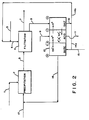
- Spent process material comprising fluoride anions and anions of another kind, for example spent pickling bath liquor comprising acidified fluoride and nitrate salts
- a precipitation chamber 2 To the precipitation chamber 2, is supplied a basified solution (e.g., KOH, NaOH, NH 4 0H, or mixtures thereof, preferably an alkali metal hydroxide, and most preferably KOH) through line 17 for contact with the spent process material.
- the basified solution will react to form hydroxides thereof which will precipitate out.
- the resulting product (for example a suspension) is then fed through line 3 to a filtration unit (e.g., a plate and frame filter press).
- a filtration unit e.g., a plate and frame filter press
- the precipitate is filtered from the resulting product and may be washed with, for example, water supplied from line 5 via line 6, and/or with an aqueous depleted salt solution from line 6.
- the remaining solid is then withdrawn via line 7.
- the aqueous filtrate of soluble mixed salts comprising a fluoride salt is then fed via line 8 to each salt compartment of the three-compartment electrodialytic water splitter 10.
- a liquid comprising water is fed to the acid compartment via line 9, and a liquid comprising water such as aqueous depleted salt solution supplied via line 14a is fed to the base compartment via line 15.
- a three-compartment electrodialytic water splitter is as described with respect to Figure 1, with mixed acid product being withdrawn via line 11, depleted salt being withdrawn via line 12, and basified solution being withdrawn via line 16.
- the mixed acid product from line 11 can be directly recycled to the manufacturing process (e.g., to a pickling bath), stored for subsequent use or sale, or recycled through the electrodialytic water splitter for further concentration or some combination thereof.
- the depleted salt solution from line 12 can be split into two streams via lines 14a and 14b. A portion of the aqueous depleted salt can be recycled (via line 6) through the filtration unit 4 and back to the salt compartment while another portion can be supplied to the base compartment lines 4a and 15 for basification.
- the depleted salt may be used to dilute the process liquor or may be concentrated by, for example, reverse osmosis or electrodialysis to yield a relatively concentrated salt solution (which may be reintroduced into the water splitter) and a relatively pure water stream (which may be used for washing the precipitate or as make-up water in the electrodialysis process).
- the basified solution (either as a relatively pure base or as a basified salt solution when depleted salt is supplied) is recycled from the electrodialytic water splitter via line 16 and 17 to the precipitation unit 2.
- the process of the present invention is capable of operating with an aqueous mixed salt-containing solution having varied concentration.
- the concentration of the mixed salts should be at least 0.4 molal, and preferably is at least 1 molal. More importantly, however, the concentration of fluoride anion in the mixed salts should be at least 0.1 M, preferably at least 0.2 M, and most preferably at least 0.4 M.
- the fluoride concentration is between 0.1 M and 3.0 M, preferably between 0.2 M and 2.0 M and most preferably between 0.4 M and 1.0 M.
- the liquid supplied to the acid compartment comprises water and is generally selected from the group consisting of water, aqueous acid solutions or dilute salt solutions.
- the liquid supplied to the base compartment also comprises water and is generally selected from the group consisting of water, aqueous basic solutions, and depleted salt solutions (e.g., from the salt compartment). Feedstreams to both the acid and base compartments can be supplied either by independent supply systems, through a recycle of all or part of the liquid removed from a particular compartment, or some combination thereof.
- the process is capable of producing HF at a concentration of up to 15% by weight and the additional acid or acids at a total wt% of up to 12% at unexpectedly high efficiencies.
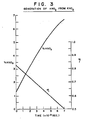
- Figure 3 graphically illustrates the efficiency for the production of HN0 3 from KN0 3 as a function of HN0 3 concentration in the acid compartment of a three-compartment electrodialytic water splitter.
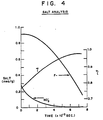
- Figures 4 and 5 graphically illustrate the unexpectedly improved efficiency for the production of nitric acid from nitrate when fluoride is also present in the salt compartment.
- the graphs were generated from test data gathered from using an electrodialytic water splitter having unit cells comprising an Asahi ASV anion membranes, cast bipolar membranes of the type disclosed in US ⁇ A ⁇ 4116889, and Dupont Nafion ® 324 cation membranes to produce 5% by weight nitric acid.
- the efficiency of nitric acid production dropped steadily from about 0.8 at 1% HN0 3 to about 0.6 at 5% HN0 3 , with continuously decreasing efficiency at higher concentrations.
- Figure 4 illustrates the highly efficient transfer of fluoride and nitrate ions from the salt compartment to the acid compartment and similarly, Figure 5 illustrates the highly efficient production of mixed acids in the acid compartment, in particular concentrated nitric acid.
- the efficiency of producing 5% by weight nitric acid remains at about 0.8, with an efficiency of about 0.7 for a 7% by weight acid solution (as compared to an efficiency of about 0.5 for a 7% nitric acid solution in the absence of fluoride).
- Figures 4 and 5 illustrate a principal mechanism of the process of the invention; namely, the preferential transfer of nitrate ions as compared to fluoride ions and the corresponding increased rate of production of nitric acid as compared to the rate of production of hydrofluoric acid.
- Spent processing liquor having the following chemical composition was subjected to pretreatment steps prior to being subjected to electrodialytic splitting in accordance with applicants' invention:
- the density of the liquor was about 1.25 g/mL, and the acidity of the liquor was approximately 6.0 meq'OH/mL to pH 7.
- electrodialytic water splitter For each test reported hereinbelow a three unit cell, three-compartment electrodialytic water splitter was employed.
- the electrodialytic water splitter was constructed principally with ASV anion membranes, Nafion ® 324 cation membranes, and Allied bipolar membranes made in accordance with the procedure disclosed in U.S. Patent 4,116,889. Exposed membrane area for each membrane is about 17 cm 2 .
- Tests were conducted in batch fashion with solutions being recirculated through the respective compartments of the electrodialytic water splitter. In most cases, estimates of current efficiency were made by measuring concentration and volume changes.
- the electrodialytic water splitter described was operated under the following conditions:
- the salt compartment was initially charged with 1 M KN0 3 .
- Water was initially supplied to the acid base compartments.
- 431 ml of 1.001 M HN0 3 was metered to the base compartment to keep the pH ⁇ 7.
- Concentration of HN0 3 in the acid and salt compartments were determined periodically, as well as the volumes in calibrated reservoirs. Relevant concentrations and volumes are reported in Table 2 below:
- mixed salts of KF and KNO 3 were supplied to the three-compartment electrodialytic water splitter described above.
- the three-compartment electrodialytic water splitter was operated under the following conditions:
- the three-compartment electrodialytic water splitter was operated under the following conditions:
- the final acid from Batch No. 3 was 1.49% HF/8.52% HN0 3 at a current efficiency of about 0.7.
- a three-compartment electrodialytic water splitter of generally the same construction described above was charged with the following solutions:
- the three-compartment electrodialytic water splitter was operated under the same conditions as in Test 3. The process was again operated in a batch mode, with the replacement of salt solution occurring at the end of Production Batch No. 1. The results of the two batch test are reported in Table 5 below:
- the salt was 0.41 M KF/0.01 KN0 3 after Batch No. 1 and 0.53 M KF/0.03 M KN0 3 after Batch No. 2.
- the acid after Batch No. 1 was about 0.63 M HF/1.07 M HNO 3
- after Batch 2 was about 0.81 M HF/1.53 M HN0 3 . Note again the high currency efficiency for each batch.
- the electrodialytic water splitter employed was of the same construction as the electrodialytic water splitter used in Test 4 of Example 1.
- the electrode rinse flow in Batches 1 and 2 was K2S04 and in Batches 3 and 4 was 0.5 M KOH.
- the results of the batch runs are summarised in Table 6 below:
Landscapes
- Chemical & Material Sciences (AREA)
- Engineering & Computer Science (AREA)
- Water Supply & Treatment (AREA)
- Organic Chemistry (AREA)
- Chemical Kinetics & Catalysis (AREA)
- Materials Engineering (AREA)
- General Chemical & Material Sciences (AREA)
- Mechanical Engineering (AREA)
- Metallurgy (AREA)
- Health & Medical Sciences (AREA)
- Urology & Nephrology (AREA)
- Inorganic Chemistry (AREA)
- Separation Using Semi-Permeable Membranes (AREA)
- Water Treatment By Electricity Or Magnetism (AREA)
- Cleaning And De-Greasing Of Metallic Materials By Chemical Methods (AREA)
Claims (12)
Applications Claiming Priority (2)
| Application Number | Priority Date | Filing Date | Title |
|---|---|---|---|
| US72984885A | 1985-05-03 | 1985-05-03 | |
| US729848 | 1985-05-03 |
Publications (3)
| Publication Number | Publication Date |
|---|---|
| EP0220202A1 EP0220202A1 (de) | 1987-05-06 |
| EP0220202A4 EP0220202A4 (de) | 1987-06-19 |
| EP0220202B1 true EP0220202B1 (de) | 1990-04-11 |
Family
ID=24932881
Family Applications (1)
| Application Number | Title | Priority Date | Filing Date |
|---|---|---|---|
| EP86901637A Expired - Lifetime EP0220202B1 (de) | 1985-05-03 | 1986-02-14 | Gewinnung gemischter säuren aus gemischtem salz |
Country Status (6)
| Country | Link |
|---|---|
| EP (1) | EP0220202B1 (de) |
| JP (1) | JP2726657B2 (de) |
| KR (1) | KR900000772B1 (de) |
| CA (1) | CA1284309C (de) |
| DE (1) | DE3670215D1 (de) |
| WO (1) | WO1986006646A1 (de) |
Families Citing this family (11)
| Publication number | Priority date | Publication date | Assignee | Title |
|---|---|---|---|---|
| US4740281A (en) * | 1986-10-14 | 1988-04-26 | Allied Corporation | Recovery of acids from materials comprising acid and salt |
| JPS63291608A (ja) * | 1987-05-22 | 1988-11-29 | Tokuyama Soda Co Ltd | 酸廃液の再生方法 |
| JPH07112558B2 (ja) * | 1987-11-18 | 1995-12-06 | 神鋼パンテック株式会社 | 硝フッ酸廃液の再生回収処理方法 |
| DE3881376T2 (de) * | 1988-04-28 | 1993-09-02 | Tokuyama Soda Kk | Doppeltzerlegungsmethode eines neutralen salzes. |
| DE3825857A1 (de) * | 1988-07-29 | 1990-02-01 | Kernforschungsanlage Juelich | Beizsaeure fuer edelstahl und verfahren zur aufarbeitung von verbrauchter beizsaeure |
| US5162076A (en) * | 1988-11-30 | 1992-11-10 | Allied-Signal Inc. | Method for purification of acids from materials comprising acid and salt |
| US4995956A (en) * | 1989-04-06 | 1991-02-26 | Allied-Signal Inc. | Method and apparatus to control a salt stream to be treated in an electrodialytic water splitter |
| JPH07110764B2 (ja) * | 1990-05-30 | 1995-11-29 | 燐化学工業株式会社 | アルカリ金属次亜リン酸塩の製造方法 |
| CZ2013234A3 (cs) * | 2013-03-28 | 2014-06-04 | Membrain S.R.O. | Způsob výroby dusičnanu draselného metodou elektrodialýzy a zařízení k provádění tohoto způsobu |
| CN112023699A (zh) * | 2020-08-03 | 2020-12-04 | 上海漫关越水处理有限公司 | 采用致密交联离子膜制备12个9以上超纯氢氟酸的方法 |
| CN117003334B (zh) * | 2023-08-09 | 2026-03-17 | 中建环能科技股份有限公司 | 氢氟酸法提纯石墨生产废水处理工艺 |
Family Cites Families (8)
| Publication number | Priority date | Publication date | Assignee | Title |
|---|---|---|---|---|
| US3562139A (en) * | 1968-08-05 | 1971-02-09 | Ionics | Cationic-anionic ion-exchange membrane |
| US3787304A (en) * | 1972-01-31 | 1974-01-22 | Allied Chem | Production of hf from fluorine by-products |
| US3788959A (en) * | 1972-05-05 | 1974-01-29 | Sybron Corp | Electrodialytic recovery of acid and insoluble products from spent liquors |
| US3933605A (en) * | 1973-11-12 | 1976-01-20 | United States Steel Corporation | Non-polluting pickling method |
| US3926759A (en) * | 1975-02-06 | 1975-12-16 | Pitt Metals And Chemicals Inc | Process for recovering tin salts from the waste rinse water of a halogen tin plating process |
| US4024043A (en) * | 1975-12-31 | 1977-05-17 | Allied Chemical Corporation | Single film, high performance bipolar membrane |
| US4149946A (en) * | 1978-03-21 | 1979-04-17 | Davis Walker Corporation | Recovery of spent pickle liquor and iron metal |
| US4219396A (en) * | 1979-08-03 | 1980-08-26 | Allied Chemical Corporation | Electrodialytic process |
-
1986
- 1986-02-14 EP EP86901637A patent/EP0220202B1/de not_active Expired - Lifetime
- 1986-02-14 WO PCT/US1986/000324 patent/WO1986006646A1/en not_active Ceased
- 1986-02-14 DE DE8686901637T patent/DE3670215D1/de not_active Expired - Lifetime
- 1986-02-14 KR KR1019860700922A patent/KR900000772B1/ko not_active Expired
- 1986-02-14 JP JP61501332A patent/JP2726657B2/ja not_active Expired - Lifetime
- 1986-03-14 CA CA000504205A patent/CA1284309C/en not_active Expired - Lifetime
Also Published As
| Publication number | Publication date |
|---|---|
| WO1986006646A1 (en) | 1986-11-20 |
| JP2726657B2 (ja) | 1998-03-11 |
| EP0220202A1 (de) | 1987-05-06 |
| KR870700211A (ko) | 1987-05-30 |
| JPS62502695A (ja) | 1987-10-15 |
| DE3670215D1 (de) | 1990-05-17 |
| EP0220202A4 (de) | 1987-06-19 |
| CA1284309C (en) | 1991-05-21 |
| KR900000772B1 (ko) | 1990-02-16 |
Similar Documents
| Publication | Publication Date | Title |
|---|---|---|
| EP0269234B1 (de) | Rückgewinnung von Säuren oder säure- und salzhaltigen Lösungen | |
| US4999095A (en) | Recovery of mixed acids from mixed salts | |
| AU633075B2 (en) | Electrodialytic water splitter | |
| US5162076A (en) | Method for purification of acids from materials comprising acid and salt | |
| EP0247713B1 (de) | Zinksulphatelektrolytreinigungsverfahren | |
| WO1992010278A1 (en) | Apparatus and method for electrodialytic treatment of salts to produce acid and/or base of improved purity | |
| CA1284309C (en) | Electrodialytic recovery of mixed acids from mixed salts including fluoride anion | |
| WO1993002227A1 (en) | Process and apparatus for treating fluoride containing acid solutions | |
| US5135626A (en) | Method for purification of bases from materials comprising base and salt | |
| US3766049A (en) | Recovery of metal from rinse solutions | |
| US4976838A (en) | Method for purification of bases from materials comprising base and salt | |
| US5139632A (en) | Recovery of mixed acids from mixed salts | |
| US5228962A (en) | Separation/recovery of ammonium salts via electrodialytic water splitting | |
| EP0572389B1 (de) | Trennung/Rückgewinnung von Ammoniumsalzen mittels elektrodialytischer Wasserspaltung | |
| EP0192426A2 (de) | Entfernung von Natriumionen aus wässerigen alkalischen Lösungen durch ein elektrolytisches Membranverfahren | |
| JPH047250B2 (de) | ||
| AU7318991A (en) | Separation/recovery of ammonium salts via electrodialytic water splitting |
Legal Events
| Date | Code | Title | Description |
|---|---|---|---|
| PUAI | Public reference made under article 153(3) epc to a published international application that has entered the european phase |
Free format text: ORIGINAL CODE: 0009012 |
|
| AK | Designated contracting states |
Kind code of ref document: A1 Designated state(s): CH DE FR GB IT LI SE |
|
| 17P | Request for examination filed |
Effective date: 19870507 |
|
| A4 | Supplementary search report drawn up and despatched |
Effective date: 19870619 |
|
| 17Q | First examination report despatched |
Effective date: 19880708 |
|
| RAP1 | Party data changed (applicant data changed or rights of an application transferred) |
Owner name: ALLIED-SIGNAL INC. (A DELAWARE CORPORATION) |
|
| ITF | It: translation for a ep patent filed | ||
| GRAA | (expected) grant |
Free format text: ORIGINAL CODE: 0009210 |
|
| AK | Designated contracting states |
Kind code of ref document: B1 Designated state(s): CH DE FR GB IT LI SE |
|
| REF | Corresponds to: |
Ref document number: 3670215 Country of ref document: DE Date of ref document: 19900517 |
|
| ET | Fr: translation filed | ||
| PLBE | No opposition filed within time limit |
Free format text: ORIGINAL CODE: 0009261 |
|
| STAA | Information on the status of an ep patent application or granted ep patent |
Free format text: STATUS: NO OPPOSITION FILED WITHIN TIME LIMIT |
|
| PGFP | Annual fee paid to national office [announced via postgrant information from national office to epo] |
Ref country code: CH Payment date: 19910227 Year of fee payment: 6 |
|
| ITTA | It: last paid annual fee | ||
| 26N | No opposition filed | ||
| PG25 | Lapsed in a contracting state [announced via postgrant information from national office to epo] |
Ref country code: LI Effective date: 19920229 Ref country code: CH Effective date: 19920229 |
|
| REG | Reference to a national code |
Ref country code: CH Ref legal event code: PL |
|
| EAL | Se: european patent in force in sweden |
Ref document number: 86901637.8 |
|
| REG | Reference to a national code |
Ref country code: FR Ref legal event code: TP |
|
| REG | Reference to a national code |
Ref country code: GB Ref legal event code: 732E |
|
| PGFP | Annual fee paid to national office [announced via postgrant information from national office to epo] |
Ref country code: FR Payment date: 19990119 Year of fee payment: 14 |
|
| PGFP | Annual fee paid to national office [announced via postgrant information from national office to epo] |
Ref country code: SE Payment date: 19990121 Year of fee payment: 14 Ref country code: GB Payment date: 19990121 Year of fee payment: 14 |
|
| PGFP | Annual fee paid to national office [announced via postgrant information from national office to epo] |
Ref country code: DE Payment date: 19990122 Year of fee payment: 14 |
|
| PG25 | Lapsed in a contracting state [announced via postgrant information from national office to epo] |
Ref country code: GB Free format text: LAPSE BECAUSE OF NON-PAYMENT OF DUE FEES Effective date: 20000214 |
|
| PG25 | Lapsed in a contracting state [announced via postgrant information from national office to epo] |
Ref country code: SE Free format text: LAPSE BECAUSE OF NON-PAYMENT OF DUE FEES Effective date: 20000215 |
|
| GBPC | Gb: european patent ceased through non-payment of renewal fee |
Effective date: 20000214 |
|
| EUG | Se: european patent has lapsed |
Ref document number: 86901637.8 |
|
| PG25 | Lapsed in a contracting state [announced via postgrant information from national office to epo] |
Ref country code: FR Free format text: LAPSE BECAUSE OF NON-PAYMENT OF DUE FEES Effective date: 20001031 |
|
| PG25 | Lapsed in a contracting state [announced via postgrant information from national office to epo] |
Ref country code: DE Free format text: LAPSE BECAUSE OF NON-PAYMENT OF DUE FEES Effective date: 20001201 |
|
| REG | Reference to a national code |
Ref country code: FR Ref legal event code: ST |
|
| PG25 | Lapsed in a contracting state [announced via postgrant information from national office to epo] |
Ref country code: IT Free format text: LAPSE BECAUSE OF NON-PAYMENT OF DUE FEES;WARNING: LAPSES OF ITALIAN PATENTS WITH EFFECTIVE DATE BEFORE 2007 MAY HAVE OCCURRED AT ANY TIME BEFORE 2007. THE CORRECT EFFECTIVE DATE MAY BE DIFFERENT FROM THE ONE RECORDED. Effective date: 20050214 |