EP0223056B1 - Mischungen aromatischer Polycarbonate und aromatischer Polyestercarbonate und ihre Verwendung zur Herstellung von Formkörpern, Folien, Fasern, Filamenten und Beschichtungen - Google Patents
Mischungen aromatischer Polycarbonate und aromatischer Polyestercarbonate und ihre Verwendung zur Herstellung von Formkörpern, Folien, Fasern, Filamenten und Beschichtungen Download PDFInfo
- Publication number
- EP0223056B1 EP0223056B1 EP86114127A EP86114127A EP0223056B1 EP 0223056 B1 EP0223056 B1 EP 0223056B1 EP 86114127 A EP86114127 A EP 86114127A EP 86114127 A EP86114127 A EP 86114127A EP 0223056 B1 EP0223056 B1 EP 0223056B1
- Authority
- EP
- European Patent Office
- Prior art keywords
- bis
- mixtures
- mol
- hydroxyphenyl
- weight
- Prior art date
- Legal status (The legal status is an assumption and is not a legal conclusion. Google has not performed a legal analysis and makes no representation as to the accuracy of the status listed.)
- Expired
Links
- 229920000728 polyester Polymers 0.000 title claims description 31
- 239000000203 mixture Substances 0.000 title claims description 29
- 229920000515 polycarbonate Polymers 0.000 title claims description 22
- 239000004417 polycarbonate Substances 0.000 title claims description 19
- 125000003118 aryl group Chemical group 0.000 title claims description 16
- 238000004519 manufacturing process Methods 0.000 title claims description 6
- 238000000576 coating method Methods 0.000 title claims description 4
- 150000004649 carbonic acid derivatives Chemical class 0.000 title description 17
- BVKZGUZCCUSVTD-UHFFFAOYSA-L Carbonate Chemical compound [O-]C([O-])=O BVKZGUZCCUSVTD-UHFFFAOYSA-L 0.000 claims description 15
- IISBACLAFKSPIT-UHFFFAOYSA-N bisphenol A Chemical group C=1C=C(O)C=CC=1C(C)(C)C1=CC=C(O)C=C1 IISBACLAFKSPIT-UHFFFAOYSA-N 0.000 claims description 11
- 125000004185 ester group Chemical group 0.000 claims description 9
- XKZQKPRCPNGNFR-UHFFFAOYSA-N 2-(3-hydroxyphenyl)phenol Chemical group OC1=CC=CC(C=2C(=CC=CC=2)O)=C1 XKZQKPRCPNGNFR-UHFFFAOYSA-N 0.000 claims description 6
- 150000002148 esters Chemical class 0.000 claims description 6
- 125000005587 carbonate group Chemical group 0.000 claims description 4
- 238000000465 moulding Methods 0.000 claims description 3
- 125000004435 hydrogen atom Chemical group [H]* 0.000 claims description 2
- 238000009833 condensation Methods 0.000 claims 1
- 230000005494 condensation Effects 0.000 claims 1
- 238000005809 transesterification reaction Methods 0.000 description 7
- 125000004432 carbon atom Chemical group C* 0.000 description 6
- QQVIHTHCMHWDBS-UHFFFAOYSA-N isophthalic acid Chemical compound OC(=O)C1=CC=CC(C(O)=O)=C1 QQVIHTHCMHWDBS-UHFFFAOYSA-N 0.000 description 6
- -1 aromatic dicarboxylic acids Chemical class 0.000 description 5
- 238000005336 cracking Methods 0.000 description 4
- KJFMBFZCATUALV-UHFFFAOYSA-N phenolphthalein Chemical compound C1=CC(O)=CC=C1C1(C=2C=CC(O)=CC=2)C2=CC=CC=C2C(=O)O1 KJFMBFZCATUALV-UHFFFAOYSA-N 0.000 description 4
- KKEYFWRCBNTPAC-UHFFFAOYSA-N terephthalic acid group Chemical group C(C1=CC=C(C(=O)O)C=C1)(=O)O KKEYFWRCBNTPAC-UHFFFAOYSA-N 0.000 description 4
- YMWUJEATGCHHMB-UHFFFAOYSA-N Dichloromethane Chemical compound ClCCl YMWUJEATGCHHMB-UHFFFAOYSA-N 0.000 description 3
- QIGBRXMKCJKVMJ-UHFFFAOYSA-N Hydroquinone Chemical compound OC1=CC=C(O)C=C1 QIGBRXMKCJKVMJ-UHFFFAOYSA-N 0.000 description 3
- PXKLMJQFEQBVLD-UHFFFAOYSA-N bisphenol F Chemical compound C1=CC(O)=CC=C1CC1=CC=C(O)C=C1 PXKLMJQFEQBVLD-UHFFFAOYSA-N 0.000 description 3
- 150000001875 compounds Chemical class 0.000 description 3
- 238000000034 method Methods 0.000 description 3
- 125000001997 phenyl group Chemical group [H]C1=C([H])C([H])=C(*)C([H])=C1[H] 0.000 description 3
- GHMLBKRAJCXXBS-UHFFFAOYSA-N resorcinol Chemical compound OC1=CC=CC(O)=C1 GHMLBKRAJCXXBS-UHFFFAOYSA-N 0.000 description 3
- YIYBRXKMQFDHSM-UHFFFAOYSA-N 2,2'-Dihydroxybenzophenone Chemical compound OC1=CC=CC=C1C(=O)C1=CC=CC=C1O YIYBRXKMQFDHSM-UHFFFAOYSA-N 0.000 description 2
- LMOSYFZLPBHEOW-UHFFFAOYSA-N 2,5-dichloroterephthalic acid Chemical compound OC(=O)C1=CC(Cl)=C(C(O)=O)C=C1Cl LMOSYFZLPBHEOW-UHFFFAOYSA-N 0.000 description 2
- VXHYVVAUHMGCEX-UHFFFAOYSA-N 2-(2-hydroxyphenoxy)phenol Chemical compound OC1=CC=CC=C1OC1=CC=CC=C1O VXHYVVAUHMGCEX-UHFFFAOYSA-N 0.000 description 2
- BLDLRWQLBOJPEB-UHFFFAOYSA-N 2-(2-hydroxyphenyl)sulfanylphenol Chemical compound OC1=CC=CC=C1SC1=CC=CC=C1O BLDLRWQLBOJPEB-UHFFFAOYSA-N 0.000 description 2
- XSVZEASGNTZBRQ-UHFFFAOYSA-N 2-(2-hydroxyphenyl)sulfinylphenol Chemical compound OC1=CC=CC=C1S(=O)C1=CC=CC=C1O XSVZEASGNTZBRQ-UHFFFAOYSA-N 0.000 description 2
- QUWAJPZDCZDTJS-UHFFFAOYSA-N 2-(2-hydroxyphenyl)sulfonylphenol Chemical compound OC1=CC=CC=C1S(=O)(=O)C1=CC=CC=C1O QUWAJPZDCZDTJS-UHFFFAOYSA-N 0.000 description 2
- ZPXGNBIFHQKREO-UHFFFAOYSA-N 2-chloroterephthalic acid Chemical compound OC(=O)C1=CC=C(C(O)=O)C(Cl)=C1 ZPXGNBIFHQKREO-UHFFFAOYSA-N 0.000 description 2
- VEORPZCZECFIRK-UHFFFAOYSA-N 3,3',5,5'-tetrabromobisphenol A Chemical compound C=1C(Br)=C(O)C(Br)=CC=1C(C)(C)C1=CC(Br)=C(O)C(Br)=C1 VEORPZCZECFIRK-UHFFFAOYSA-N 0.000 description 2
- YMTYZTXUZLQUSF-UHFFFAOYSA-N 3,3'-Dimethylbisphenol A Chemical compound C1=C(O)C(C)=CC(C(C)(C)C=2C=C(C)C(O)=CC=2)=C1 YMTYZTXUZLQUSF-UHFFFAOYSA-N 0.000 description 2
- VPWNQTHUCYMVMZ-UHFFFAOYSA-N 4,4'-sulfonyldiphenol Chemical compound C1=CC(O)=CC=C1S(=O)(=O)C1=CC=C(O)C=C1 VPWNQTHUCYMVMZ-UHFFFAOYSA-N 0.000 description 2
- VWGKEVWFBOUAND-UHFFFAOYSA-N 4,4'-thiodiphenol Chemical compound C1=CC(O)=CC=C1SC1=CC=C(O)C=C1 VWGKEVWFBOUAND-UHFFFAOYSA-N 0.000 description 2
- ODJUOZPKKHIEOZ-UHFFFAOYSA-N 4-[2-(4-hydroxy-3,5-dimethylphenyl)propan-2-yl]-2,6-dimethylphenol Chemical compound CC1=C(O)C(C)=CC(C(C)(C)C=2C=C(C)C(O)=C(C)C=2)=C1 ODJUOZPKKHIEOZ-UHFFFAOYSA-N 0.000 description 2
- 125000004203 4-hydroxyphenyl group Chemical group [H]OC1=C([H])C([H])=C(*)C([H])=C1[H] 0.000 description 2
- BJLUCDZIWWSFIB-UHFFFAOYSA-N 5-tert-butylbenzene-1,3-dicarboxylic acid Chemical compound CC(C)(C)C1=CC(C(O)=O)=CC(C(O)=O)=C1 BJLUCDZIWWSFIB-UHFFFAOYSA-N 0.000 description 2
- SDDLEVPIDBLVHC-UHFFFAOYSA-N Bisphenol Z Chemical compound C1=CC(O)=CC=C1C1(C=2C=CC(O)=CC=2)CCCCC1 SDDLEVPIDBLVHC-UHFFFAOYSA-N 0.000 description 2
- YGYAWVDWMABLBF-UHFFFAOYSA-N Phosgene Chemical compound ClC(Cl)=O YGYAWVDWMABLBF-UHFFFAOYSA-N 0.000 description 2
- JUJWROOIHBZHMG-UHFFFAOYSA-N Pyridine Chemical compound C1=CC=NC=C1 JUJWROOIHBZHMG-UHFFFAOYSA-N 0.000 description 2
- KYPYTERUKNKOLP-UHFFFAOYSA-N Tetrachlorobisphenol A Chemical compound C=1C(Cl)=C(O)C(Cl)=CC=1C(C)(C)C1=CC(Cl)=C(O)C(Cl)=C1 KYPYTERUKNKOLP-UHFFFAOYSA-N 0.000 description 2
- 239000000654 additive Substances 0.000 description 2
- 229920000402 bisphenol A polycarbonate polymer Polymers 0.000 description 2
- 239000003054 catalyst Substances 0.000 description 2
- 239000000835 fiber Substances 0.000 description 2
- 125000004464 hydroxyphenyl group Chemical group 0.000 description 2
- 239000002184 metal Substances 0.000 description 2
- XNGIFLGASWRNHJ-UHFFFAOYSA-N phthalic acid Chemical compound OC(=O)C1=CC=CC=C1C(O)=O XNGIFLGASWRNHJ-UHFFFAOYSA-N 0.000 description 2
- 229960001755 resorcinol Drugs 0.000 description 2
- RNFJDJUURJAICM-UHFFFAOYSA-N 2,2,4,4,6,6-hexaphenoxy-1,3,5-triaza-2$l^{5},4$l^{5},6$l^{5}-triphosphacyclohexa-1,3,5-triene Chemical compound N=1P(OC=2C=CC=CC=2)(OC=2C=CC=CC=2)=NP(OC=2C=CC=CC=2)(OC=2C=CC=CC=2)=NP=1(OC=1C=CC=CC=1)OC1=CC=CC=C1 RNFJDJUURJAICM-UHFFFAOYSA-N 0.000 description 1
- WVDRSXGPQWNUBN-UHFFFAOYSA-N 4-(4-carboxyphenoxy)benzoic acid Chemical compound C1=CC(C(=O)O)=CC=C1OC1=CC=C(C(O)=O)C=C1 WVDRSXGPQWNUBN-UHFFFAOYSA-N 0.000 description 1
- VTDMBRAUHKUOON-UHFFFAOYSA-N 4-[(4-carboxyphenyl)methyl]benzoic acid Chemical compound C1=CC(C(=O)O)=CC=C1CC1=CC=C(C(O)=O)C=C1 VTDMBRAUHKUOON-UHFFFAOYSA-N 0.000 description 1
- RIBPTGQSXYJRBQ-UHFFFAOYSA-N 4-[2,5-di(propan-2-yl)phenyl]phenol Chemical compound CC(C)C1=CC=C(C(C)C)C(C=2C=CC(O)=CC=2)=C1 RIBPTGQSXYJRBQ-UHFFFAOYSA-N 0.000 description 1
- 239000012963 UV stabilizer Substances 0.000 description 1
- 150000001335 aliphatic alkanes Chemical class 0.000 description 1
- 125000002947 alkylene group Chemical group 0.000 description 1
- FDQSRULYDNDXQB-UHFFFAOYSA-N benzene-1,3-dicarbonyl chloride Chemical compound ClC(=O)C1=CC=CC(C(Cl)=O)=C1 FDQSRULYDNDXQB-UHFFFAOYSA-N 0.000 description 1
- 239000006085 branching agent Substances 0.000 description 1
- 239000001273 butane Substances 0.000 description 1
- 239000006229 carbon black Substances 0.000 description 1
- 150000001924 cycloalkanes Chemical class 0.000 description 1
- 125000002993 cycloalkylene group Chemical group 0.000 description 1
- 125000001142 dicarboxylic acid group Chemical group 0.000 description 1
- 238000004455 differential thermal analysis Methods 0.000 description 1
- 239000000975 dye Substances 0.000 description 1
- 238000001125 extrusion Methods 0.000 description 1
- 230000002349 favourable effect Effects 0.000 description 1
- 239000000945 filler Substances 0.000 description 1
- 239000003063 flame retardant Substances 0.000 description 1
- 239000003365 glass fiber Substances 0.000 description 1
- 230000009477 glass transition Effects 0.000 description 1
- 239000012456 homogeneous solution Substances 0.000 description 1
- 125000002887 hydroxy group Chemical group [H]O* 0.000 description 1
- 229910052500 inorganic mineral Inorganic materials 0.000 description 1
- 239000000314 lubricant Substances 0.000 description 1
- 239000000155 melt Substances 0.000 description 1
- 238000002844 melting Methods 0.000 description 1
- 230000008018 melting Effects 0.000 description 1
- 229910044991 metal oxide Inorganic materials 0.000 description 1
- 150000004706 metal oxides Chemical class 0.000 description 1
- 239000011707 mineral Substances 0.000 description 1
- 238000002156 mixing Methods 0.000 description 1
- 239000006082 mold release agent Substances 0.000 description 1
- ABMFBCRYHDZLRD-UHFFFAOYSA-N naphthalene-1,4-dicarboxylic acid Chemical compound C1=CC=C2C(C(=O)O)=CC=C(C(O)=O)C2=C1 ABMFBCRYHDZLRD-UHFFFAOYSA-N 0.000 description 1
- HRRDCWDFRIJIQZ-UHFFFAOYSA-N naphthalene-1,8-dicarboxylic acid Chemical compound C1=CC(C(O)=O)=C2C(C(=O)O)=CC=CC2=C1 HRRDCWDFRIJIQZ-UHFFFAOYSA-N 0.000 description 1
- 150000002896 organic halogen compounds Chemical class 0.000 description 1
- 230000003647 oxidation Effects 0.000 description 1
- 238000007254 oxidation reaction Methods 0.000 description 1
- 239000000049 pigment Substances 0.000 description 1
- 239000004014 plasticizer Substances 0.000 description 1
- 238000002360 preparation method Methods 0.000 description 1
- UMJSCPRVCHMLSP-UHFFFAOYSA-N pyridine Natural products COC1=CC=CN=C1 UMJSCPRVCHMLSP-UHFFFAOYSA-N 0.000 description 1
- 239000012779 reinforcing material Substances 0.000 description 1
- 150000003839 salts Chemical class 0.000 description 1
- 239000007858 starting material Substances 0.000 description 1
- 125000001424 substituent group Chemical group 0.000 description 1
- LXEJRKJRKIFVNY-UHFFFAOYSA-N terephthaloyl chloride Chemical compound ClC(=O)C1=CC=C(C(Cl)=O)C=C1 LXEJRKJRKIFVNY-UHFFFAOYSA-N 0.000 description 1
- 229920001169 thermoplastic Polymers 0.000 description 1
- 239000004416 thermosoftening plastic Substances 0.000 description 1
- 210000001170 unmyelinated nerve fiber Anatomy 0.000 description 1
Classifications
-
- C—CHEMISTRY; METALLURGY
- C08—ORGANIC MACROMOLECULAR COMPOUNDS; THEIR PREPARATION OR CHEMICAL WORKING-UP; COMPOSITIONS BASED THEREON
- C08L—COMPOSITIONS OF MACROMOLECULAR COMPOUNDS
- C08L69/00—Compositions of polycarbonates; Compositions of derivatives of polycarbonates
-
- C—CHEMISTRY; METALLURGY
- C08—ORGANIC MACROMOLECULAR COMPOUNDS; THEIR PREPARATION OR CHEMICAL WORKING-UP; COMPOSITIONS BASED THEREON
- C08L—COMPOSITIONS OF MACROMOLECULAR COMPOUNDS
- C08L69/00—Compositions of polycarbonates; Compositions of derivatives of polycarbonates
- C08L69/005—Polyester-carbonates
Definitions
- the invention relates to thermoplastic processable mixtures of aromatic polycarbonates and aromatic polyester carbonates with a lower tendency to stress cracking and their use for the production of moldings, films, fibers, filaments and coatings.
- Aromatic polycarbonates have found widespread use for the production of moldings, films and coatings owing to their good impact and notched impact strength and their good flowability in the melt.
- Aromatic polyester carbonates have a combination of these properties and the high heat resistance of purely aromatic polyesters.
- Preferred diphenols for the preparation of the polycarbonates I and the polyester carbonates II are compounds of the formula in which Z is a divalent mono- or polynuclear aromatic radical having 6-30 C atoms, Z being constructed in such a way that the two OH groups are each bonded directly to one C atom of an aromatic system.
- the polycarbonates I and / or the polyestercarbonates II independently of one another contain at least 70, preferably at least 90, in particular 100 mol%, based on the condensed diphenol units, bisphenol A residues.
- the proportion of terephthalic acid residues in the iso- and terephthalic acid residues of polyester carbonates II is 0 to 100, preferably 2 to 15, 30 to 70 and 80 to 97 and in particular 5 to 10, 40 to 60 and 85 to 94%:
- the polycarbonates I or polyester carbonates II of the mixtures according to the invention contain 0.5 to 20, preferably 1.0 to 15, in particular 2 to 10, mol% of the end groups I, based on the sum of those in the polycarbonates I and in the polyester carbonates II condensed diphenol residues.
- Preferred end groups I are those in which at least 80%, in particular 100%, of the substituent R are in the p-position.
- the polycarbonates I and the polyester carbonates II generally have relative viscosities from 1.15 to 2.0, preferably from 1.2 to 1.5 (measured in 0.5% by weight solution in dichloromethane at 25 ° C.) .
- Polycarbonate I and polyester carbonate II with end groups I are known (DE-A-2 842 005, 3 007 934). They can be made by various known methods, e.g. B. by melt transesterification, by the so-called pyridine process in homogeneous solution and by the two-phase interface process.
- the polyester carbonates II can contain the carbonate or ester groups in blocks or randomly, depending on the production process.
- Components I and II can be mixed, for example, by melting the components. Conditions will be avoided which favor transesterification of components I and II to a polyester carbonate, i. H. for example, the lowest possible temperatures and the shortest possible residence times will be chosen for an extrusion. The absence of transesterification catalysts is preferred. If transesterification catalysts are present (e.g. in products made by melt transesterification), these will reasonably be deactivated. Transesterification can then be largely avoided. Under favorable conditions, transesterification does not take place to more than 50, preferably not more than 30, in particular not more than 10% by weight; in other words: there is at least 50, preferably at least 70, in particular at least 90% by weight of unchanged starting material.
- the mixtures according to the invention can be distinguished from polyester carbonates of the same gross composition by differential thermal analysis.
- the mixture according to the invention can with fillers and reinforcing materials, such as. B. minerals, carbon black, glass fibers, C fibers, metal fibers, with dyes, pigments, thermal, oxidation and UV stabilizers, plasticizers, lubricants, mold release agents, flame retardant additives, such as. B. halogenated organic compounds, metal oxides, metal salts and other additives.
- fillers and reinforcing materials such as. B. minerals, carbon black, glass fibers, C fibers, metal fibers, with dyes, pigments, thermal, oxidation and UV stabilizers, plasticizers, lubricants, mold release agents, flame retardant additives, such as. B. halogenated organic compounds, metal oxides, metal salts and other additives.
- the mixtures according to the invention can, for. B. for the production of lenses, lamp reflectors, car headlight reflectors, lamp covers, lamp bases, lamp housings, high-voltage switches, power strips, meter housings and microwave dishes.
Landscapes
- Chemical & Material Sciences (AREA)
- Health & Medical Sciences (AREA)
- Chemical Kinetics & Catalysis (AREA)
- Medicinal Chemistry (AREA)
- Polymers & Plastics (AREA)
- Organic Chemistry (AREA)
- Compositions Of Macromolecular Compounds (AREA)
- Polyesters Or Polycarbonates (AREA)
Description
- Die Erfindung betrifft thermoplastische verarbeitbare Mischungen aromatischer Polycarbonate und aromatischer Polyestercarbonate mit geringerer Spannungsrißneigung und ihre Verwendung zur Herstellung von Formkörpern, Folien, Fasern, Filamenten und Beschichtungen.
- Aromatische Polycarbonate haben aufgrund ihrer guten Schlag- und Kerbschlagzähigkeit und ihrer guten Fließfähigkeit in der Schmelze breite Verwendung zur Herstellung von Formkörpern, Folien und Beschichtungen gefunden. Aromatische Polyestercarbonate weisen eine Kombination dieser Eigenschaften und der hohen Wärmeformbeständigkeit rein aromatischer Polyester auf.
- Durch Mischen aromatischer Polycarbonate und aromatischer Polyestercarbonate lassen sich viele wünschenswerte Eigenschaftskombinationen einstellen (JP-A 55/058 248, 55/131 048, 55/133 445).
- Diese Mischungen weisen zwar eine Reihe interessanter Eigenschaften auf, z. B. hohe Glasübergangstemperatur, gute Hitzebeständigkeit, Schlagzähigkeit und Verarbeitbarkeit, können aber bezüglich ihres Spannungsrißverhaltens nicht ganz befriedigen.
- Überraschenderweise wurde nun gefunden, daß Mischungen (Estergruppen-freier) aromatischer Polycarbonate und aromatischer Polyestercarbonate mit bestimmtem Polycarbonat/Polyestercarbonat-Verhältnis und mit definiertem Esteranteil des Polyestercarbonats, wobei mindestens eines der Polykondensate C8-C9-alkylierte Phenyl-Endgruppen enthält, eine verminderte Spannungsrißneigung besitzen.
- Gegenstand der Erfindung sind Mischungen aus
- I. aromatischem Polycarbonat und
- II. aromatischem Polyestercarbonat, wobei
- a) die Mischung
- 5 bis 70, vorzugsweise 10 bis 65, insbesondere 15 bis 60, Gew.-% I und
- 95 bis 30, vorzugsweise 90 bis 35, insbesondere 85 bis 40, Gew.-% II enthält, wobei sich die Prozentangaben zu I und II auf die Summe I + II beziehen,
- b) der Estergruppengehalt des Polyestercarbonats II 60 bis 95, vorzugsweise 60 bis 85, insbesondere 70 bis 80, Mol-%, bezogen auf die Summe von Ester- und Carbonatgruppen in II, beträgt und
- c) wenigstens eine der Komponenten I und II 0,5-20 Mol%, bez. auf die Summe der in 1 und II einkondensierten Diphenolreste, Endgruppen der Formel

- ―X― für -0- oder -CO- steht und
- R einen verzweigten Alkylrest mit 8 bis 9 C-Atomen darstellt mit der Maßgabe, daß im Alkylrest R der Anteil von Methyl-Wasserstoffatomen, bezogen auf sämtliche Wasserstoffatome des Alkylrestes, 47 bis 89% beträgt und daß R in o- und/oder p-Position steht.
- a) die Mischung
- Bevorzugte Diphenole für die Herstellung der Polycarbonate I bzw. der Polyestercarbonate II sind Verbindungen der Formel

- Besonders bevorzugte Diphenole sind Verbindungen der Formel

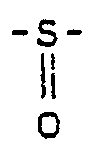

- Hydrochinon,
- Resorcin,
- Dihydroxydiphenyle,
- Bis-(hydroxyphenyl)-alkane,
- Bis-(hydroxyphenyl)-cycloalkane,
- Bis-(hydroxyphenyl)-sulfide,
- Bis-(hydroxyphenyl)-ether,
- Bis-( hydroxyphenyl)-ketone,
- Bis-(hydroxyphenyl)-sulfoxide,
- Bis-(hydroxyphenyl)-sulfone,
- αα--Bis-(hydroxyphenyl)-diisopropylbenzole und
- Phthaleine
- Die wichtigsten Diphenole seien nachfolgend namentlich aufgezählt :
- Bisphenol A,
- Bis-(4-hydroxyphenyl)-methan,
- Bis-(4-hydroxyphenyl)-2-butan,
- Bis-(4-hydroxyphenyl),
- 1,1-Bis-(4-hydroxyphenyl)-cyclohexan,
- 2,2-Bis-(3-methyl-4-hydroxyphenyl)-propan,
- 2,2-Bis-(3,5-dimethyl-4-hydroxyphenyl)-propan,
- 2,2-Bis-(3,5-dichlor-4-hydroxyphenyl)-propan,
- 2,2-Bis-(3,5-dibrom-4-hydroxyphenyl)-propan,
- Bis-(4-hydroxyphenyl)-sulfid,
- Bis-(4-hydroxyphenyl)-sulfon,
- α'α' -Bis-(4-hydroxyphenyl)-p-diisopropylbenzol,
- Phenolphthalein.
- Nach einer bevorzugten Ausführungsform enthalten unabhängig voneinander die Polycarbonate I und/oder die Polyestercarbonate II mindestens 70, vorzugsweise mindestens 90, insbesondere 100 Mol- %, bezogen auf einkondensierte Diphenoleinheiten, Bisphenol-A-Reste.
- Die Polyestercarbonate II sind Polykondensate auf Basis von Diphenolen (s. oben), aromatischen Dicarbonsäuren, Kohlensäurederivaten und gegebenenfalls Verzweigungsmitteln. Nach einer bevorzugten Ausführungsform enthalten die Polyestercarbonate II mindestens 70, vorzugsweise mindestens 90, insbesondere 100, Mol-%, bezogen auf einkondensierte Dicarbonsäureeinheiten, Iso- und/oder Terephthalsäurereste. Neben Iso- bzw. Terephthalsäureresten können die bevorzugten Polyestercarbonate II bis zu 30, vorzugsweise bis zu 10, Mol-% einkondensierte Reste anderer aromatischer Dicarbonsäuren mit 8 bis 18 C-Atomen enthalten, wie z. B. Reste der
- o-Phthalsäure,
- 5-tert-Butylisophthalsäure,
- Monochlorterephthalsäure,
- 2,5-Dichlorterephthalsäure,
- Diphenylether-4,4'-dicarbonsäure,
- 1,2-Diphenoxyethan-4,4'-dicarbonsäure,
- Diphenylmethan-4,4'-dicarbonsäure,
- Diphenyl-4,4'-dicarbonsäure,
- Naphthalin-1,4-dicarbonsäure,
- Naphthalin-1,8-dicarbonsäure oder
- deren Mischungen.
- Der Anteil der Terephthalsäurereste an den Iso- und Terephthalsäureresten der Polyestercarbonate II beträgt 0 bis 100, vorzugsweise 2 bis 15, 30 bis 70 und 80 bis 97 und insbesondere 5 bis 10, 40 bis 60 und 85 bis 94 %:
- Die Polycarbonate I bzw. Polyestercarbonate II der erfindungsgemäßen Mischungen enthalten 0,5 bis 20, vorzugsweise 1,0 bis 15, insbesondere 2 bis 10, Moi-% der Endgruppen I, bezogen auf die Summe der in den Polycarbonaten I und in den Polyestercarbonaten II einkondensierten Diphenolreste.
- Bevorzugt werden Mischungen von Polycarbonat I und Polyestercarbonat II, in denen der gewichtsmäßig überwiegende Partner Endgruppen der Formel I enthält. Besonders bevorzugt werden jedoch Mischungen, in denen sowohl das Polycarbonat I als auch das Polyestercarbonat II Endgruppen der Formel I enthalten.
- Bevorzugte Endgruppen I sind solche, in denen mindestens 80%, insbesondere 100% des Substituenten R in p-Position stehen.
- Erfindungsgemäß bevorzugte Endgruppen der Formel I sind beispielsweise


- Die Polycarbonate I und die Polyestercarbonate II besitzen in der Regel relative Viskositäten von 1,15 bis 2,0, vorzugsweise von 1,2 bis 1,5 (gemessen in 0,5 gew.-%iger Lösung in Dichlormethan bei 25 °C).
- Polycarbonat I und Polyestercarbonat II mit Endgruppen I sind bekannt (DE-A-2 842 005, 3 007 934). Sie können nach verschiedenen bekannten Verfahren hergestellt werden, z. B. durch Schmelzumesterung, nach dem sogenannten Pyridin-Verfahren in homogener Lösung und nach dem Zweiphasengrenzflächenverfahren.
- Die Polyestercarbonate II können die Carbonat- bzw. Estergruppen blockartig oder statistisch verteilt enthalten, je nach Herstellungsverfahren.
- Das Mischen der Komponenten I und II kann beispielsweise über die Schmelze der Komponenten erfolgen. Man wird dabei Bedingungen vermeiden, die eine Umesterung der Komponenten I und II zu einem Polyestercarbonat begünstigen, d. h. man wird beispielsweise bei einer Extrusion möglichst niedrige Temperaturen und möglichst kurze Verweilzeiten wählen. Die Abwesenheit von Umesterungskatalysatoren ist bevorzugt. Sind Umesterungskataiysatoren anwesend (z. B. in Produkten, die durch Schmelzumesterung hergestellt worden sind), wird man diese vernünftigerweise desaktivieren. Eine Umesterung kann dann weitgehend vermieden werden. Unter günstigen Bedingungen findet Umesterung zu nicht mehr als 50, vorzugsweise nicht mehr als 30, insbesondere nicht mehr als 10 Gew.-% statt ; mit anderen Worten : Es liegen mindestens 50, vorzugsweise mindestens 70, insbesondere mindestens 90 Gew.-% unverändertes Ausgangsmaterial vor.
- Von Polyestercarbonaten gleicher Bruttozusammensetzung lassen sich die erfindungsgemäßen Mischungen durch Differentialthermoanalyse unterschieden.
- Die erfindungsgemäßen Mischung können mit Füll- und Verstärkungsstoffen, wie z. B. Mineralien, Ruß, Glasfasern, C-Fasern, Metallfasern, mit Farbstoffen, Pigmenten, Thermo-, Oxydations- und UV-Stabilisatoren, Weichmachern, Gleitmitteln, Entformungshilfsmitteln, flammfest machenden Zusätzen, wie z. B. halogenierten organischen Verbindungen, Metalloxiden, Metallsalzen und weiteren Zusatzstoffen, versetzt werden.
- Die erfindungsgemäßen Mischungen können z. B. für die Herstellung von Linsen, Lampenreflektoren, Autoscheinwerferreflektoren, Leuchtenabdeckungen, Lampensockel, Lampengehäuse, Hochspannungsschalter, Steckerleisten, Zählergehäuse und Mikrowellengeschirr verwendet werden.
- Verwendete Polycarbonate und Polyestercarbonate :
- 1. Bisphenol-A-Polycarbonat mit 3,3 Mol-% Isooctylphenyl-Endgruppen ; ηrel = 1,283 (PC-J)
- 2. Bisphenol-A-Polycarbonat mit 3,3 Mol-% Phenyl-Endgruppen ; ηrel = 1,280 (PC-P)
- 3. Polyestercarbonat aus Bisphenol A, gleichen Teilen Iso- und Terephthalsäuredichlorid, Phosgen mit 3,7 Mol-% Isooctylphenyl-Endgruppen, 74 Mol-% Ester- und 26 Mol-% Carbonatgruppen (bezogen auf die Summe von Ester- und Carbonatgruppen) ; ηrel = 1,288 (PEC-J 80)
- 4. Polyestercarbonat wie 3), jedoch 3,7 Mol-% Phenyl-Endgruppen ; ηrel = 1,289 (PEC-P 80).
- Die Komponenten 1 und 3 einerseits und 2 und 4 andererseits wurden über einen Doppelwellenextruder im Gewichtsverhältnis 20:80 und 50:50 verschmolzen. Die resultierenden Mischungen hatten demnach folgende Bruttozusammensetzungen :
- a) 64 Gew.-% Estergruppen (M-PEC-J 64 ; ηrel = 1,278)
- b) 40 Gew.-% Estergruppen (M-PEC-J 40 ; ηrel = 1,275)
- c) 64 Gew.-% Estergruppen (M-PEC-P 64 ; ηrel = 1,277)
- d) 40 Gew.-% Estergruppen (M-PEC-P 40 ; ηrel = 1,278).
- Aus den Mischungen a) bis d) wurden bei 330 °C Normkleinstäbe gespritzt, die an Luft bei 25 °C gelagert wurden. Von jeder Mischung wurden 20 Normkleinstäbe gelagert und nach bestimmten Zeiten, wie aus der Tabelle hevorgeht, auf Spannungsrisse hin untersucht. Es zeigte sich, daß die erfindungsgemäßen Polyestercarbonatmischungen die höchste Spannungsrißbeständigkeit aufwiesen.

sowie deren kernalkylierte und kernhalogenierte Verbindungen. Diese und weitere geeignete Diphenole sind z. B. in den US-A-3 028 365, 3 275 601, 3 148 172, 3 062 781, 2 991 273, 3 271 367, 2 999 835, 2970 131, und 2 999 846, in den DE-A-1 570 704, 2 064 050, 2 063 052, 2 211 956, 2 211 957, der FR-A-1 561 518 und in der Monographie « H. Schnell, Chemistry and Physics of Polycarbonates, Interscience Publishers, New York, 1964 beschrieben.
Claims (9)
wobei sich die Prozentangaben zu I und II auf die Summe I + II beziehen,


Applications Claiming Priority (2)
| Application Number | Priority Date | Filing Date | Title |
|---|---|---|---|
| DE3537622 | 1985-10-23 | ||
| DE19853537622 DE3537622A1 (de) | 1985-10-23 | 1985-10-23 | Mischungen aromatischer polycarbonate und aromatischer polyestercarbonate und ihre verwendung zur herstellung von formkoerpern, folien, fasern, filamenten und beschichtungen |
Publications (2)
| Publication Number | Publication Date |
|---|---|
| EP0223056A1 EP0223056A1 (de) | 1987-05-27 |
| EP0223056B1 true EP0223056B1 (de) | 1989-02-22 |
Family
ID=6284213
Family Applications (1)
| Application Number | Title | Priority Date | Filing Date |
|---|---|---|---|
| EP86114127A Expired EP0223056B1 (de) | 1985-10-23 | 1986-10-13 | Mischungen aromatischer Polycarbonate und aromatischer Polyestercarbonate und ihre Verwendung zur Herstellung von Formkörpern, Folien, Fasern, Filamenten und Beschichtungen |
Country Status (4)
| Country | Link |
|---|---|
| US (1) | US4746711A (de) |
| EP (1) | EP0223056B1 (de) |
| JP (1) | JPS62100552A (de) |
| DE (2) | DE3537622A1 (de) |
Families Citing this family (11)
| Publication number | Priority date | Publication date | Assignee | Title |
|---|---|---|---|---|
| EP0319572A4 (en) * | 1987-06-24 | 1990-11-28 | The Dow Chemical Company | Aromatic ester carbonate polymer optical waveguides |
| US5229208A (en) * | 1987-10-09 | 1993-07-20 | Fujitsu Limited | Resin molded body for optical parts |
| CA1340146C (en) * | 1987-10-09 | 1998-11-24 | Akira Tanaka | Resin molded body for optical parts |
| DE3823306A1 (de) * | 1988-07-09 | 1990-01-18 | Bayer Ag | Verwendung von homopolycarbonaten aus 3,3'-dihydroxydiphenylether zur modifizierung von folien aus thermoplasten |
| US4918149A (en) * | 1988-11-04 | 1990-04-17 | General Electric Company | Polyphthalatecarbonate/polycarbonate resin blends |
| US20030125504A1 (en) * | 2000-06-19 | 2003-07-03 | Takanori Miyoshi | Product from melt of wholly aromatic polyester and aromatic polycarbonate and process for producing the same |
| US6944115B2 (en) * | 2000-09-29 | 2005-09-13 | General Electric Company | Colored data storage media |
| US6475589B1 (en) | 2001-12-17 | 2002-11-05 | General Electric Company | Colored optical discs and methods for making the same |
| US7700696B2 (en) * | 2006-06-28 | 2010-04-20 | Sabic Innovative Plastics Ip B.V. | Polycarbonate composition having improved scratch resistance, and articles formed therefrom |
| US7691304B2 (en) * | 2006-11-22 | 2010-04-06 | Sabic Innovative Plastics Ip B.V. | Thermoplastic composition, method of manufacture thereof, and articles derived therefrom |
| US7686997B2 (en) * | 2006-11-22 | 2010-03-30 | Sabic Innovative Plastics Ip B.V. | Thermoplastic composition, method of manufacture thereof, and articles derived therefrom |
Family Cites Families (6)
| Publication number | Priority date | Publication date | Assignee | Title |
|---|---|---|---|---|
| DE2842005A1 (de) * | 1978-09-27 | 1980-04-10 | Bayer Ag | Polycarbonate mit alkylphenyl-endgruppen, ihre herstellung und ihre verwendung |
| JPS55131048A (en) * | 1979-04-02 | 1980-10-11 | Sumitomo Chem Co Ltd | Thermoplastic resin composition |
| DE3007934A1 (de) * | 1980-03-01 | 1981-09-17 | Bayer Ag, 5090 Leverkusen | Aromatische polyestercarbonate, verfahren zu ihrer herstellung und ihre verwendung zur herstellung von spritzgussartikeln, folien und ueberzuegen |
| US4469850A (en) * | 1982-11-05 | 1984-09-04 | General Electric Company | Compositions |
| US4436879A (en) * | 1982-12-27 | 1984-03-13 | General Electric Company | Copolyester-carbonate blends |
| US4465820A (en) * | 1983-06-03 | 1984-08-14 | General Electric Company | Copolyestercarbonates |
-
1985
- 1985-10-23 DE DE19853537622 patent/DE3537622A1/de not_active Withdrawn
-
1986
- 1986-10-13 EP EP86114127A patent/EP0223056B1/de not_active Expired
- 1986-10-13 DE DE8686114127T patent/DE3662152D1/de not_active Expired
- 1986-10-14 US US06/918,787 patent/US4746711A/en not_active Expired - Fee Related
- 1986-10-16 JP JP61244288A patent/JPS62100552A/ja active Pending
Also Published As
| Publication number | Publication date |
|---|---|
| DE3537622A1 (de) | 1987-04-23 |
| JPS62100552A (ja) | 1987-05-11 |
| US4746711A (en) | 1988-05-24 |
| DE3662152D1 (en) | 1989-03-30 |
| EP0223056A1 (de) | 1987-05-27 |
Similar Documents
| Publication | Publication Date | Title |
|---|---|---|
| EP0026868B1 (de) | Aromatische Polyester, Verfahren zu ihrer Herstellung und ihre Verwendung zur Herstellung von Spritzgussartikeln, Folien und Überzügen | |
| EP0036080B1 (de) | Aromatische Polyestercarbonate, Verfahren zu ihrer Herstellung und ihre Verwendung zur Herstellung von Spritzgussartikeln, Folien und Überzügen | |
| DE69633807T2 (de) | Doppelbrechungsarme Polycarbonatformmassen | |
| EP0146827B1 (de) | Thermoplastische Polysiloxan-Polyester(carbonat)-Block-copolymere, ihre Herstellung und Verwendung | |
| EP0223056B1 (de) | Mischungen aromatischer Polycarbonate und aromatischer Polyestercarbonate und ihre Verwendung zur Herstellung von Formkörpern, Folien, Fasern, Filamenten und Beschichtungen | |
| EP0151750B1 (de) | Verfahren zur Herstellung von farblosen aromatischen Polyestercarbonaten | |
| DE3312157A1 (de) | Polycarbonatharzgemisch | |
| EP0106027B1 (de) | Schlagzähe thermoplastische Formmassen mit hoher Wärmeformbeständigkeit | |
| DE2046963B2 (de) | Thermoplastische polymergemische | |
| EP0127842B1 (de) | Diphenolmonoester von Carbonsäuren, ein Verfahren zu ihrer Herstellung, ihre Verwendung zur Herstellung von Polyestercarbonaten, die erfindungsgemäss erhältlichen Polyestercarbonate sowie flammwidrige Formmassen enthaltend diese Polyestercarbonate | |
| EP0146887A2 (de) | Verfahren zur Herstellung von aromatischen Polyestercarbonaten | |
| EP0103231A2 (de) | Flammwidrige Polymermischungen | |
| EP0097861B1 (de) | Aromatische Polyestercarbonate mit hoher Kerbschlagzähigkeit und Verfahren zu ihrer Herstellung | |
| EP0220585B1 (de) | Verfahren zur Herstellung aromatischer Polyestercarbonate mit verbesserter Kerbschlagzähigkeit, danach hergestellte Polyestercarbonate und ihre Verwendung zur Herstellung von formkörpern, Folien und Beschichtungen | |
| EP0201830B1 (de) | Verfahren zur Herstellung von Copolyphosphonaten mit hoher Kerbschlagzähigkeit | |
| EP0114290A1 (de) | Formmassen aus Copolyester-Carbonaten | |
| DE69510163T2 (de) | Thermisch stabile, gammastrahlenbeständige Polycarbonat-Polyester-Mischung | |
| EP0065728B1 (de) | Neue Copolyestercarbonate und deren Abmischung mit bekannten Polycarbonaten zu thermoplastischen Formmassen | |
| DE69517926T2 (de) | Gammastrahlungsstabiler Blend von Polycarbonat mit Polyester | |
| DE3309766A1 (de) | Aromatische polyester und polyestercarbonate mit verbesserter verarbeitbarkeit,verfahren zu ihrer herstellung und ihre verwendung als formmassen | |
| EP0014412B1 (de) | Thermoplastische Massen und Verfahren zu ihrer Herstellung | |
| EP0414066A2 (de) | Polyester und Polyestercarbonate | |
| EP0150497A2 (de) | Stabilisierte aromatische Polyester und Polyestercarbonate | |
| DE2719429C2 (de) | Verwendung lichtdichter Polyalkylenterephthalatmassen mit hohem Reflexionsvermögen zur Herstellung von LED-Elementen, Lichtbausteinen und Reflektoren | |
| DE3247927A1 (de) | Verfahren zur herstellung aromatischer polyestercarbonate |
Legal Events
| Date | Code | Title | Description |
|---|---|---|---|
| PUAI | Public reference made under article 153(3) epc to a published international application that has entered the european phase |
Free format text: ORIGINAL CODE: 0009012 |
|
| 17P | Request for examination filed |
Effective date: 19861013 |
|
| AK | Designated contracting states |
Kind code of ref document: A1 Designated state(s): DE FR GB IT NL |
|
| 17Q | First examination report despatched |
Effective date: 19880805 |
|
| GRAA | (expected) grant |
Free format text: ORIGINAL CODE: 0009210 |
|
| AK | Designated contracting states |
Kind code of ref document: B1 Designated state(s): DE FR GB IT NL |
|
| ITF | It: translation for a ep patent filed | ||
| REF | Corresponds to: |
Ref document number: 3662152 Country of ref document: DE Date of ref document: 19890330 |
|
| ET | Fr: translation filed | ||
| GBT | Gb: translation of ep patent filed (gb section 77(6)(a)/1977) | ||
| PLBE | No opposition filed within time limit |
Free format text: ORIGINAL CODE: 0009261 |
|
| STAA | Information on the status of an ep patent application or granted ep patent |
Free format text: STATUS: NO OPPOSITION FILED WITHIN TIME LIMIT |
|
| 26N | No opposition filed | ||
| ITTA | It: last paid annual fee | ||
| PGFP | Annual fee paid to national office [announced via postgrant information from national office to epo] |
Ref country code: DE Payment date: 19920914 Year of fee payment: 7 |
|
| PGFP | Annual fee paid to national office [announced via postgrant information from national office to epo] |
Ref country code: FR Payment date: 19920929 Year of fee payment: 7 |
|
| PGFP | Annual fee paid to national office [announced via postgrant information from national office to epo] |
Ref country code: GB Payment date: 19921002 Year of fee payment: 7 |
|
| PGFP | Annual fee paid to national office [announced via postgrant information from national office to epo] |
Ref country code: NL Payment date: 19921031 Year of fee payment: 7 |
|
| PG25 | Lapsed in a contracting state [announced via postgrant information from national office to epo] |
Ref country code: GB Effective date: 19931013 |
|
| PG25 | Lapsed in a contracting state [announced via postgrant information from national office to epo] |
Ref country code: NL Effective date: 19940501 |
|
| GBPC | Gb: european patent ceased through non-payment of renewal fee |
Effective date: 19931013 |
|
| NLV4 | Nl: lapsed or anulled due to non-payment of the annual fee | ||
| PG25 | Lapsed in a contracting state [announced via postgrant information from national office to epo] |
Ref country code: FR Effective date: 19940630 |
|
| PG25 | Lapsed in a contracting state [announced via postgrant information from national office to epo] |
Ref country code: DE Effective date: 19940701 |
|
| REG | Reference to a national code |
Ref country code: FR Ref legal event code: ST |
|
| PG25 | Lapsed in a contracting state [announced via postgrant information from national office to epo] |
Ref country code: IT Free format text: LAPSE BECAUSE OF NON-PAYMENT OF DUE FEES;WARNING: LAPSES OF ITALIAN PATENTS WITH EFFECTIVE DATE BEFORE 2007 MAY HAVE OCCURRED AT ANY TIME BEFORE 2007. THE CORRECT EFFECTIVE DATE MAY BE DIFFERENT FROM THE ONE RECORDED. Effective date: 20051013 |