EP0223537B1 - Verfahren zur Entgasung von verschmolzenem Polymethylenoxid - Google Patents
Verfahren zur Entgasung von verschmolzenem Polymethylenoxid Download PDFInfo
- Publication number
- EP0223537B1 EP0223537B1 EP86308761A EP86308761A EP0223537B1 EP 0223537 B1 EP0223537 B1 EP 0223537B1 EP 86308761 A EP86308761 A EP 86308761A EP 86308761 A EP86308761 A EP 86308761A EP 0223537 B1 EP0223537 B1 EP 0223537B1
- Authority
- EP
- European Patent Office
- Prior art keywords
- stage
- polymer
- molten
- maintained
- temperature
- Prior art date
- Legal status (The legal status is an assumption and is not a legal conclusion. Google has not performed a legal analysis and makes no representation as to the accuracy of the status listed.)
- Expired - Lifetime
Links
- 229920000642 polymer Polymers 0.000 title claims abstract description 146
- 238000000034 method Methods 0.000 title claims abstract description 39
- 125000005704 oxymethylene group Chemical group [H]C([H])([*:2])O[*:1] 0.000 title claims abstract description 26
- 230000006641 stabilisation Effects 0.000 claims abstract description 23
- 238000011105 stabilization Methods 0.000 claims abstract description 23
- 239000000463 material Substances 0.000 claims abstract description 8
- 229910052799 carbon Inorganic materials 0.000 claims abstract description 7
- 238000002844 melting Methods 0.000 claims abstract description 3
- 230000008018 melting Effects 0.000 claims abstract description 3
- 238000005086 pumping Methods 0.000 claims description 5
- WSFSSNUMVMOOMR-UHFFFAOYSA-N Formaldehyde Chemical compound O=C WSFSSNUMVMOOMR-UHFFFAOYSA-N 0.000 description 105
- 229920001577 copolymer Polymers 0.000 description 22
- 239000000155 melt Substances 0.000 description 17
- 239000012467 final product Substances 0.000 description 16
- 239000003381 stabilizer Substances 0.000 description 14
- ZMANZCXQSJIPKH-UHFFFAOYSA-N Triethylamine Chemical compound CCN(CC)CC ZMANZCXQSJIPKH-UHFFFAOYSA-N 0.000 description 12
- XLYOFNOQVPJJNP-UHFFFAOYSA-N water Substances O XLYOFNOQVPJJNP-UHFFFAOYSA-N 0.000 description 12
- 230000015572 biosynthetic process Effects 0.000 description 8
- 239000008188 pellet Substances 0.000 description 8
- BGJSXRVXTHVRSN-UHFFFAOYSA-N 1,3,5-trioxane Chemical compound C1OCOCO1 BGJSXRVXTHVRSN-UHFFFAOYSA-N 0.000 description 5
- 125000004432 carbon atom Chemical group C* 0.000 description 5
- 230000007062 hydrolysis Effects 0.000 description 5
- 238000006460 hydrolysis reaction Methods 0.000 description 5
- 239000003039 volatile agent Substances 0.000 description 5
- 238000010504 bond cleavage reaction Methods 0.000 description 4
- 238000006243 chemical reaction Methods 0.000 description 4
- 150000004292 cyclic ethers Chemical class 0.000 description 4
- 230000007017 scission Effects 0.000 description 4
- 229930040373 Paraformaldehyde Natural products 0.000 description 3
- ISWSIDIOOBJBQZ-UHFFFAOYSA-N Phenol Chemical compound OC1=CC=CC=C1 ISWSIDIOOBJBQZ-UHFFFAOYSA-N 0.000 description 3
- 239000003963 antioxidant agent Substances 0.000 description 3
- 230000003078 antioxidant effect Effects 0.000 description 3
- 230000015556 catabolic process Effects 0.000 description 3
- 239000003795 chemical substances by application Substances 0.000 description 3
- 239000002826 coolant Substances 0.000 description 3
- 238000006731 degradation reaction Methods 0.000 description 3
- WSFSSNUMVMOOMR-NJFSPNSNSA-N methanone Chemical compound O=[14CH2] WSFSSNUMVMOOMR-NJFSPNSNSA-N 0.000 description 3
- 238000006116 polymerization reaction Methods 0.000 description 3
- 229920006324 polyoxymethylene Polymers 0.000 description 3
- 125000001424 substituent group Chemical group 0.000 description 3
- -1 that is Chemical group 0.000 description 3
- IAYPIBMASNFSPL-UHFFFAOYSA-N Ethylene oxide Chemical compound C1CO1 IAYPIBMASNFSPL-UHFFFAOYSA-N 0.000 description 2
- XEEYBQQBJWHFJM-UHFFFAOYSA-N Iron Chemical compound [Fe] XEEYBQQBJWHFJM-UHFFFAOYSA-N 0.000 description 2
- WYURNTSHIVDZCO-UHFFFAOYSA-N Tetrahydrofuran Chemical compound C1CCOC1 WYURNTSHIVDZCO-UHFFFAOYSA-N 0.000 description 2
- 239000002253 acid Substances 0.000 description 2
- QVGXLLKOCUKJST-UHFFFAOYSA-N atomic oxygen Chemical compound [O] QVGXLLKOCUKJST-UHFFFAOYSA-N 0.000 description 2
- 125000000524 functional group Chemical group 0.000 description 2
- 239000013529 heat transfer fluid Substances 0.000 description 2
- 239000003112 inhibitor Substances 0.000 description 2
- 230000002452 interceptive effect Effects 0.000 description 2
- BDAGIHXWWSANSR-UHFFFAOYSA-N methanoic acid Natural products OC=O BDAGIHXWWSANSR-UHFFFAOYSA-N 0.000 description 2
- 238000007254 oxidation reaction Methods 0.000 description 2
- 229910052760 oxygen Inorganic materials 0.000 description 2
- 239000001301 oxygen Substances 0.000 description 2
- 239000000047 product Substances 0.000 description 2
- 229920005989 resin Polymers 0.000 description 2
- 239000011347 resin Substances 0.000 description 2
- GRWFGVWFFZKLTI-UHFFFAOYSA-N α-pinene Chemical compound CC1=CCC2C(C)(C)C1C2 GRWFGVWFFZKLTI-UHFFFAOYSA-N 0.000 description 2
- RBACIKXCRWGCBB-UHFFFAOYSA-N 1,2-Epoxybutane Chemical compound CCC1CO1 RBACIKXCRWGCBB-UHFFFAOYSA-N 0.000 description 1
- ULAGGPJVDRGWTI-UHFFFAOYSA-N 1,3,5-trioxepane Chemical compound C1COCOCO1 ULAGGPJVDRGWTI-UHFFFAOYSA-N 0.000 description 1
- VDFVNEFVBPFDSB-UHFFFAOYSA-N 1,3-dioxane Chemical compound C1COCOC1 VDFVNEFVBPFDSB-UHFFFAOYSA-N 0.000 description 1
- WNXJIVFYUVYPPR-UHFFFAOYSA-N 1,3-dioxolane Chemical compound C1COCO1 WNXJIVFYUVYPPR-UHFFFAOYSA-N 0.000 description 1
- GRWFGVWFFZKLTI-IUCAKERBSA-N 1S,5S-(-)-alpha-Pinene Natural products CC1=CC[C@@H]2C(C)(C)[C@H]1C2 GRWFGVWFFZKLTI-IUCAKERBSA-N 0.000 description 1
- BGCSUUSPRCDKBQ-UHFFFAOYSA-N 2,4,8,10-tetraoxaspiro[5.5]undecane Chemical compound C1OCOCC21COCOC2 BGCSUUSPRCDKBQ-UHFFFAOYSA-N 0.000 description 1
- OSWFIVFLDKOXQC-UHFFFAOYSA-N 4-(3-methoxyphenyl)aniline Chemical compound COC1=CC=CC(C=2C=CC(N)=CC=2)=C1 OSWFIVFLDKOXQC-UHFFFAOYSA-N 0.000 description 1
- WXNZTHHGJRFXKQ-UHFFFAOYSA-N 4-chlorophenol Chemical compound OC1=CC=C(Cl)C=C1 WXNZTHHGJRFXKQ-UHFFFAOYSA-N 0.000 description 1
- GZVHEAJQGPRDLQ-UHFFFAOYSA-N 6-phenyl-1,3,5-triazine-2,4-diamine Chemical compound NC1=NC(N)=NC(C=2C=CC=CC=2)=N1 GZVHEAJQGPRDLQ-UHFFFAOYSA-N 0.000 description 1
- 229920000877 Melamine resin Polymers 0.000 description 1
- 239000004677 Nylon Substances 0.000 description 1
- GOOHAUXETOMSMM-UHFFFAOYSA-N Propylene oxide Chemical compound CC1CO1 GOOHAUXETOMSMM-UHFFFAOYSA-N 0.000 description 1
- DHXVGJBLRPWPCS-UHFFFAOYSA-N Tetrahydropyran Chemical compound C1CCOCC1 DHXVGJBLRPWPCS-UHFFFAOYSA-N 0.000 description 1
- DHKHKXVYLBGOIT-UHFFFAOYSA-N acetaldehyde Diethyl Acetal Natural products CCOC(C)OCC DHKHKXVYLBGOIT-UHFFFAOYSA-N 0.000 description 1
- 239000000654 additive Substances 0.000 description 1
- 238000005882 aldol condensation reaction Methods 0.000 description 1
- 125000002947 alkylene group Chemical group 0.000 description 1
- MVNCAPSFBDBCGF-UHFFFAOYSA-N alpha-pinene Natural products CC1=CCC23C1CC2C3(C)C MVNCAPSFBDBCGF-UHFFFAOYSA-N 0.000 description 1
- 150000001409 amidines Chemical class 0.000 description 1
- 239000003054 catalyst Substances 0.000 description 1
- 150000001768 cations Chemical class 0.000 description 1
- 238000013329 compounding Methods 0.000 description 1
- 125000004122 cyclic group Chemical group 0.000 description 1
- 230000018044 dehydration Effects 0.000 description 1
- 238000006297 dehydration reaction Methods 0.000 description 1
- QGBSISYHAICWAH-UHFFFAOYSA-N dicyandiamide Chemical compound NC(N)=NC#N QGBSISYHAICWAH-UHFFFAOYSA-N 0.000 description 1
- 238000001125 extrusion Methods 0.000 description 1
- 239000006260 foam Substances 0.000 description 1
- 235000019253 formic acid Nutrition 0.000 description 1
- 238000009499 grossing Methods 0.000 description 1
- 229910052742 iron Inorganic materials 0.000 description 1
- 239000007791 liquid phase Substances 0.000 description 1
- 239000000314 lubricant Substances 0.000 description 1
- 238000004519 manufacturing process Methods 0.000 description 1
- 230000007246 mechanism Effects 0.000 description 1
- JDSHMPZPIAZGSV-UHFFFAOYSA-N melamine Chemical compound NC1=NC(N)=NC(N)=N1 JDSHMPZPIAZGSV-UHFFFAOYSA-N 0.000 description 1
- 238000010128 melt processing Methods 0.000 description 1
- 238000010327 methods by industry Methods 0.000 description 1
- 239000000203 mixture Substances 0.000 description 1
- UCAOGXRUJFKQAP-UHFFFAOYSA-N n,n-dimethyl-5-nitropyridin-2-amine Chemical compound CN(C)C1=CC=C([N+]([O-])=O)C=N1 UCAOGXRUJFKQAP-UHFFFAOYSA-N 0.000 description 1
- SLCVBVWXLSEKPL-UHFFFAOYSA-N neopentyl glycol Chemical compound OCC(C)(C)CO SLCVBVWXLSEKPL-UHFFFAOYSA-N 0.000 description 1
- 229910017464 nitrogen compound Inorganic materials 0.000 description 1
- 150000002830 nitrogen compounds Chemical class 0.000 description 1
- 239000002667 nucleating agent Substances 0.000 description 1
- 229920001778 nylon Polymers 0.000 description 1
- 238000013386 optimize process Methods 0.000 description 1
- AHHWIHXENZJRFG-UHFFFAOYSA-N oxetane Chemical compound C1COC1 AHHWIHXENZJRFG-UHFFFAOYSA-N 0.000 description 1
- 230000003647 oxidation Effects 0.000 description 1
- 125000005702 oxyalkylene group Chemical group 0.000 description 1
- 229920002866 paraformaldehyde Polymers 0.000 description 1
- SQYNKIJPMDEDEG-UHFFFAOYSA-N paraldehyde Chemical compound CC1OC(C)OC(C)O1 SQYNKIJPMDEDEG-UHFFFAOYSA-N 0.000 description 1
- 229960003868 paraldehyde Drugs 0.000 description 1
- 229920000728 polyester Polymers 0.000 description 1
- 238000002360 preparation method Methods 0.000 description 1
- 238000009751 slip forming Methods 0.000 description 1
- 239000002002 slurry Substances 0.000 description 1
- 230000000087 stabilizing effect Effects 0.000 description 1
- 125000005156 substituted alkylene group Chemical group 0.000 description 1
- 229920001897 terpolymer Polymers 0.000 description 1
- YLQBMQCUIZJEEH-UHFFFAOYSA-N tetrahydrofuran Natural products C=1C=COC=1 YLQBMQCUIZJEEH-UHFFFAOYSA-N 0.000 description 1
- 239000003017 thermal stabilizer Substances 0.000 description 1
- 229920001169 thermoplastic Polymers 0.000 description 1
- 239000004416 thermosoftening plastic Substances 0.000 description 1
- 239000013638 trimer Substances 0.000 description 1
- 238000004383 yellowing Methods 0.000 description 1
Images

Classifications
-
- B—PERFORMING OPERATIONS; TRANSPORTING
- B29—WORKING OF PLASTICS; WORKING OF SUBSTANCES IN A PLASTIC STATE IN GENERAL
- B29B—PREPARATION OR PRETREATMENT OF THE MATERIAL TO BE SHAPED; MAKING GRANULES OR PREFORMS; RECOVERY OF PLASTICS OR OTHER CONSTITUENTS OF WASTE MATERIAL CONTAINING PLASTICS
- B29B7/00—Mixing; Kneading
- B29B7/80—Component parts, details or accessories; Auxiliary operations
- B29B7/82—Heating or cooling
-
- B—PERFORMING OPERATIONS; TRANSPORTING
- B01—PHYSICAL OR CHEMICAL PROCESSES OR APPARATUS IN GENERAL
- B01D—SEPARATION
- B01D19/00—Degasification of liquids
- B01D19/0042—Degasification of liquids modifying the liquid flow
- B01D19/0052—Degasification of liquids modifying the liquid flow in rotating vessels, vessels containing movable parts or in which centrifugal movement is caused
-
- C—CHEMISTRY; METALLURGY
- C08—ORGANIC MACROMOLECULAR COMPOUNDS; THEIR PREPARATION OR CHEMICAL WORKING-UP; COMPOSITIONS BASED THEREON
- C08G—MACROMOLECULAR COMPOUNDS OBTAINED OTHERWISE THAN BY REACTIONS ONLY INVOLVING UNSATURATED CARBON-TO-CARBON BONDS
- C08G2/00—Addition polymers of aldehydes or cyclic oligomers thereof or of ketones; Addition copolymers thereof with less than 50 molar percent of other substances
- C08G2/28—Post-polymerisation treatments
-
- Y—GENERAL TAGGING OF NEW TECHNOLOGICAL DEVELOPMENTS; GENERAL TAGGING OF CROSS-SECTIONAL TECHNOLOGIES SPANNING OVER SEVERAL SECTIONS OF THE IPC; TECHNICAL SUBJECTS COVERED BY FORMER USPC CROSS-REFERENCE ART COLLECTIONS [XRACs] AND DIGESTS
- Y10—TECHNICAL SUBJECTS COVERED BY FORMER USPC
- Y10S—TECHNICAL SUBJECTS COVERED BY FORMER USPC CROSS-REFERENCE ART COLLECTIONS [XRACs] AND DIGESTS
- Y10S264/00—Plastic and nonmetallic article shaping or treating: processes
- Y10S264/78—Processes of molding using vacuum
-
- Y—GENERAL TAGGING OF NEW TECHNOLOGICAL DEVELOPMENTS; GENERAL TAGGING OF CROSS-SECTIONAL TECHNOLOGIES SPANNING OVER SEVERAL SECTIONS OF THE IPC; TECHNICAL SUBJECTS COVERED BY FORMER USPC CROSS-REFERENCE ART COLLECTIONS [XRACs] AND DIGESTS
- Y10—TECHNICAL SUBJECTS COVERED BY FORMER USPC
- Y10S—TECHNICAL SUBJECTS COVERED BY FORMER USPC CROSS-REFERENCE ART COLLECTIONS [XRACs] AND DIGESTS
- Y10S525/00—Synthetic resins or natural rubbers -- part of the class 520 series
- Y10S525/927—Polyamide admixed with oxyalkylene-containing polymer
Definitions
- This invention relates to a method of devolatilizing and stabilizing molten oxymethylene polymers. More particularly, this invention relates to a method of removing formaldehyde and other volatile materials, such as triethylamine and water from molten, extrudable and moldable oxymethylene polymers.
- Oxymethylene polymers as that term is used herein and further defined below, means those polymers having recurring -OCH2- units directly attached to each other. Such polymers have been known for many years. They may be prepared by the polymerization of anhydrous formaldehyde or by the polymerization of trioxane, which is a cyclic trimer of formaldehyde.
- Oxymethylene copolymers have at least one chain containing recurring oxymethylene units interspersed with -OR- groups in the main polymer chain, where R is a divalent radical containing at least two carbon atoms directly linked to each other and positioned in the polymer chain between the two valences, with any substituents on the R radical being inert, that is those which are free of interfering functional groups and will not induce undesirable reactions.
- Particularly preferred are copolymers which contain from 60 to 99.9 mol percent of recurring oxymethylene groups.
- the R may be, for example, an alkylene or substituted alkylene group containing at least two carbon atoms.
- copolymers which may be utilized are those having a structure comprising recurring units having the formula: wherein n is an integer from zero to 5 and wherein n is zero in from 60 to 99.9 percent of the recurring units.
- R1 and R2 are inert substituents, that is, substituents which are free of interfering functional groups and will not induce undesirable reactions.
- Particularly preferred oxymethylene copolymers are those having incorporated therein oxyalkylene units having adjacent carbon atoms which are derived from cyclic ethers having adjacent carbon atoms. These copolymers may be prepared by copolymerizing trioxane with a cyclic ether having the structure: wherein n is an integer from zero to 2.
- Examples of preferred polymers include copolymers of trioxane and cyclic ethers containing at least two adjacent carbon atoms such as the copolymers disclosed in U.S. Patent No. 3,027,352.
- specific cyclic ethers which may be used are ethylene oxide; 1,3-dioxolane; 1,3,5-trioxepane; 1,3-dioxane; trimethylene oxide; pentamethylene oxide; 1,2-propylene oxide; 1,2-butylene oxide; neopentyl glycol formal; pentaerythritol diformal; paraldehyde; tetrahydrofuran and butadiene monoxide.
- the term "copolymer” means polymers having two or more monomeric groups, including terpolymers and higher polymers.
- oxymethylene polymers such as those comprising trioxane-ethylene oxide copolymer chains, contain unstable polyformaldehyde ends, which must be removed in order to improve the thermal stability and other properties of the acetal copolymer.
- a hydrolysis process such as that disclosed in U.S. Patent 3,219,623 may be used. More specifically, a melt hydrolysis process, such as that disclosed in U.S. Patents 3,318,848 and 3,418,280 is preferably utilized.
- Color in oxymethylene polymers may also be induced by oxidation, which can result from exposure to air or from high formaldehyde content. This would indicate that oxidation reactions either produce chromophors (radicals which can lead to color formation) or that the reactions produce formaldehyde, which can generate chromophors.
- oxidation reactions either produce chromophors (radicals which can lead to color formation) or that the reactions produce formaldehyde, which can generate chromophors.
- color is induced by high process temperatures as well as by high formaldehyde content. Because the presence of heat and formaldehyde provides a product which has a high potential for the formation of color, removing formaldehyde and minimizing the heat history of the polymer will minimize color formation in oxymethylene polymers.
- a process for removing formaldehyde and other volatile materials from a molten oxymethylene polymer is provided according to which molten polymer is passed through a rotating disk polymer processor having at least three stages -- a first devolatilization stage (first stage), then a first stabilization stage (second stage) and then a last devolatilization stage (third or last stage).
- a rotating disk polymer processor having at least three stages -- a first devolatilization stage (first stage), then a first stabilization stage (second stage) and then a last devolatilization stage (third or last stage).
- an oxymethylene copolymer is employed in the present process, it is preferably hydrolyzed before it is subjected to devolatilization.
- the polymer in the first devolatilization stage is maintained at a temperature above its melting point, in the range of from 160°C to 220°C and at a vapor space pressure of from 13.3 to 40000 Pa (.1 to 300 Torr).
- the polymer in the stabilization stage is maintained in the molten state at a temperature of from 160°C to 220°C.
- the vapor space pressure in the stabilization stage is not critical, since it is a holding stage during which stabilizers and other additives may be added to the molten polymer.
- the flow of stabilizer may be utilized, usually not too far from atmospheric pressure, i.e., 66.6 to 267 kPa (500 to 2000 Torr), preferably 80.0 to 133 kPa (600 to 1000 Torr).
- the polymer in the last devolatilization stage is maintained in the molten state at a temperature of from 160°C to 190°C and at a vapor space pressure of from 13.3 to 13300 Pa (0.1 to 100 Torr).
- the maximum total residence time in the polymer processor is desirably from 10 to 120 seconds, preferably from 10 to 90 seconds and most preferably from 10 to 45 seconds. It will be recognized that as the number of stages in the claimed process increases, the residence time will normally increase.
- the process is capable of producing a molten oxymethylene polymer having an extractable formaldehyde level of less than 250 parts per million and in an optimized process, less than 150 parts per million, based on the weight of the molten oxymethylene polymer, and a natural color, as measured by Hunter "b" value, of less than 5, preferably less than 3.
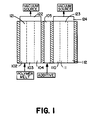
- Fig. I is a schematic longitudinal cut-a-way view of a three stage rotary disk polymer processor.
- Fig. II is a schematic longitudinal cut-a-way view of a six stage rotary disk polymer processor.
- the process of the present invention removes formaldehyde and other volatile materials, such as triethylamine and water from molten, extrudable and moldable oxymethylene polymers.
- the process comprises passing molten oxymethylene polymer through a rotary disk polymer processor having at least three stages.
- the process requires a disk polymer processor having at least three stages, with each stage performing a separate function as follows:
- the vapor space pressure in the first devolatilization stage may range from 13.3 to 40000 Pa (0.1 to 300 Torr), preferably from 133 to 13300 Pa (1 to 100 Torr) and most preferably from 666 to 6660 Pa (5 to 50 Torr).
- the vapor space pressure is maintained at about atmospheric or slightly above atmospheric pressure, preferably from 66.6 to 267 kPa (500 to 2000 Torr), most preferably from 80.0 to 133 kPa (600 to 1000 Torr).
- the last devolatilization stage is maintained at a vapor space pressure of from 13.3 to 13300 Pa (0.1 to 100 Torr), preferably from 13.3 to 6660 Pa (0.1 to 50 Torr) and for optimum devolatilization efficiency, from 13.3 to 2670 Pa (0.1 to 20 Torr).
- the polymer is maintained in the molton state at a temperature within the range of 160°C to 220°C.
- the molten polymer should be maintained within the range of from 160°C to 190°C, preferably from 160°C to 175°C, to minimize thermal degradation.
- a rotary disk polymer processor may be utilized which has hollow disks within which coolant may be circulated to maximize its temperature control and heat removal capabilities.
- Each disk preferably contains a circulating heat transfer fluid in its hollow core, to control the temperature of the molten oxymethylene polymer.
- the circulating heat transfer fluid and disk surface area must provide temperature control capability sufficient to adjust the temperature of the molten polymer feed to the optimum devolatilization temperature.
- the heat transfer capacity must also be sufficient to remove heat generated by mechanical shear imparted to the polymer during the course of melt processing.
- a preferred process utilizes a rotary disk polymer processor having at least six stages. These include: (1) a feed stage for smoothing out flow variations to provide smoother processor operation, (2) a first devolatilization stage, (3) a stabilization stage, (4) a second devolatilization stage, (5) a holding stage to minimize surging and (6) a pumping stage for pressuring polymer through the extrusion die. A third devolatilization stage and a second stabilization stage may also be added to provide an eight stage process.
- the molten oxymethylene polymer is maintained at a temperature of from 160°C to 220°C.
- the vapor space pressure is maintained in the range from 13.3 to 13300 Pa (0.1 to 100 Torr), preferably from 13.3 to 6660 Pa (0.1 to 50 Torr), most preferably from 13.3 to 2670 Pa (0.1 to 20 Torr).
- the vapor space pressure in the second stabilization stage is not critical and the stabilization stages are normally maintained at about the same vapor space pressure, i.e., at or slightly above atmospheric pressure, preferably from 66.6 to 267 kPa (500 to 2000 Torr), most preferably from 80.0 to 133 kPa (600 to 1000 Torr).
- the vapor space pressures in the feed stage, holding stage and pumping stage are not critical.
- the feed stage and holding stage polymer vapor space pressures are normally maintained in the range from 66.6 to 267 kPa (500 to 2000 Torr), preferably at about atmospheric pressure.
- the pumping stage is maintained at a positive vapor space pressure to facilitate pumping the molten polymer through the die.
- Rotary disk polymer processors particularly suitable for use in practicing the process of the present invention are described in U.S. Pat. Nos. 4,142,805, 4,194,841 and 4,529,320.
- other equivalent polymer processors known to those skilled in the art or subsequently developed may be used in the process of the present invention and are included within the scope of the present invention.
- Figure I is a schematic longitudinal cutaway view of a three stage rotary disk polymer processor.
- Polymer flows through the 7 channels of the devolatilizer in series beginning with channel 102, which is equipped for the introduction of a polymer feed.
- Channels 102, 103 and 104 form the first devolatilization zone 121, which is connected to a vacuum zone 122.
- Channels 110, 111 and 112 form the second devolatilization zone 123, which is connected to a vacuum zone 124.
- the polymer is conveyed from channel 112 for further processing.
- Figure II is a schematic longitudinal cutaway view of a six-stage rotary disk polymer processor.
- Polymer flows through the 14 channels of the devolatilizer in series beginning with either channel 1 or 5 (first and second stabilization zones), all of which are equipped for the introduction of polymer feed and/or stabilizer.
- Channels 2, 3 and 4 form the first devolatilization zone 21, which is connected to a vacuum zone 22;
- channels 6, 7 and 8 form the second devolatilization zone 23 , which is connected to a vacuum zone 24, and
- channels 10, 11 and 12 form the third devolatilization zone 25, which is connected to a vacuum zone 26.
- the polymer is conveyed around to channel 14 (the holding or homogenizing channel), which serves to maintain a constant flow to the pump channel 13.
- the die 15 is attached to the outlet end 16 of the pump channel 13.
- the number of revolutions per minute (RPM) of the disks of the rotating disk polymer processor utilized in the present process is not critical. However, if the RPM is too low, the flow of polymer will be so slow that the machine will flood. If the RPM is too high, it will be extremely difficult to maintain proper control of the polymer temperature.
- the oxymethylene copolymer possessed a crystallinity of approximately 60 percent, a number average molecular weight (m n ) of approximately 25,000, an inherent viscosity (I.V.) of approximately 1.0 (measured at 60°C in a 0.1 weight percent solution in p-chlorophenol containing 2 weight percent of alphapinene), softening temperature of about 160°C, and a Melt Index ranging from about 7.6 g./10 min. to 9.3 g./10 min. when tested in accordance with ASTM method D1238-82.
- the oxymethylene copolymer also contained, as a stabilizer, about 0.2 weight percent of a conventional hindered phenol type antioxidant.
- the molten polymer was fed to the polymer processor at a temperature of about 209°C.
- the disk processor utilized had an internal diameter of 200 mm. and contained six stages, as described above.
- the molten polymer entered the feed stage at a feed rate of about 82 kilograms per hour and the disks of the rotary disk processor were rotating at about 30 revolutions per minute.
- additional stabilizer was added (0.3% of a conventional hindered phenol type antioxidant, 0.1% of a conventional thermal stabilizer, 0.2% of a conventional lubricant and 0.5% of a nucleating agent.
- the total polymer residence time through the disk processor was about 40 seconds.
- the temperature of the oil circulated within the outer shell of the polymer processor (barrel oil temperature) was about 182°C.
- the oil temperature in the rotating disks (rotor oil temperature) was about 165°C.
- Table 1 The temperature and pressure conditions for each of the six stages are shown below in Table 1: Table 1 Stage 1 2 3 4 5 6 Temp. °C 209 192 187 187 198 183 Vapor Space Press. in kPa (Torr) 101.3 (760) 4.80 (36) 133 (1000) 2.53 (19) 101.3 (760) 101.3 (760)
- the devolatilized molten oxymethylene polymer was pumped from stage 6 through a die maintained at a temperature of about 205°C and having a die pressure of about 5024 kPa (714 psig).
- the strands were passed through a water bath maintained at a temperature of about 45°C to solidify the molten polymer.
- the solidified strands were then passed through an air knife to a pelletizer operating at about 59 RPM to produce the final product in pellet form.
- the extractable formaldehyde level of the final product was about 220 parts per million (PPM), the final Hunter b color was 1.5 and the final Melt Index was about 9.4.
- Molten oxymethylene copolymer having a Melt Index of about 8.7, an initial Hunter b color of 1.6 and an extractable formaldehyde level of about 750 PPM, prepared as described above was fed to the feed stage of a six stage disk polymer processor.
- the molten polymer was fed to the polymer processor at a temperature of about 213°C.
- the molten polymer entered the first stage at a feed rate of about 91 kilograms per hour and the disks of the rotary disk processor were rotating at about 50 revolutions per minute.
- stabilizer was added as in Example 1.
- the total polymer residence time through the disk processor was about 35 seconds.
- the barrel oil temperature was about 143°C and the rotor oil temperature was about 144°C.
- the devolatilized molten polymer was pumped from stage 6 through a die maintained at about 205°C and having a die pressure of about 5941 kPa (847 psig).
- the strands were passed through a water bath maintained at a temperature of about 45°C to solidify the molten polymer.
- the solidified strands were then passed through an air knife and a pelletizer operating at about 59 RPM to produce the final product in pellet form.
- the extractable formaldehyde level of the final product was about 160 PPM, the final Hunter b color was 1.7 and the Melt Index was about 8.8.
- the molten polymer was fed to the polymer processor at a temperature of about 209°C.
- the molten polymer entered the first stage at a feed rate of about 118 kilograms per hour and the disks of the rotary disk processor were rotating at about 50 revolutions per minute.
- stabilizer was added as in Example 1.
- the total polymer residence time through the disk processor was about 25 seconds.
- the barrel oil temperature was about 127°C and the rotor oil temperature was about 128°C.
- the devolatilized molten polymer was pumped from stage 6 through a die maintained at about 207°C and having a die pressure of about 6658 kPa (951 psig).
- the strands were passed through a water bath maintained at a temperature of about 45°C to solidify the molten polymer.
- the solidified strands were then passed through an air knife and a pelletizer operating at about 59 RPM to produce the final product in pellet form.
- the extractable formaldehyde level of the final product was about 160 PPM, the final Hunter b color was 2.1 and the Melt Index was about 9.1.
- Molten oxymethylene copolymer prepared as described above and having a Melt Index of about 7.6, an initial Hunter b color of 1.4 and an extractable formaldehyde level of about 690 PPM was fed to the feed stage of a six stage disk polymer processor.
- the molten polymer was fed to the polymer processor at a temperature of about 214°C.
- the molten polymer entered the first stage at a feed rate of about 59 kilograms per hour and the disks of the rotary disk processor were rotating at about 30 revolutions per minute.
- stabilizer was added as in Example 1.
- the total polymer residence time through the disk processor was about 45 seconds.
- the barrel oil temperature was about 166°C and the rotor oil temperature was about 149°C.
- the devolatilized molten polymer was pumped from stage 6 through a die maintained at about 191°C and having a die pressure of about 5217 kPa (742 psig).
- the strands were passed through a water bath maintained at a temperature of about 45°C to solidify the molten polymer.
- the solidified strands were then passed through an air knife and a pelletizer operating at about 59 RPM to produce the final product in pellet form.
- the extractable formaldehyde level of the final product was about 140 PPM, the final Hunter b color was 1.8 and the Melt Index was about 9.1.
- the molten polymer was fed to the polymer processor at a temperature of about 215°C.
- the molten polymer entered the first stage at a feed rate of about 59 kilograms per hour and the disks of the rotary disk processor were rotating at about 30 revolutions per minute.
- stabilizer was added as in Example 1.
- the total polymer residence time through the disk processor was about 45 seconds.
- the barrel oil temperature was about 182°C and the rotor oil temperature was about 165°C.
- the devolatilized molten polymer was pumped from stage 6 through a die maintained at about 203°C and having a die pressure of about 5417 kPa (771 psig).
- the strands were passed through a water bath maintained at a temperature of about 45°C to solidify the molten polymer.
- the solidified strands were then passed through an air knife and a pelletizer operating at about 59 RPM to produce the final product in pellet form.
- the extractable formaldehyde level of the final product was about 200 PPM, the final Hunter b color was 2.4 and the Melt Index was about 7.2.
- the molten polymer was fed to the polymer processor at a temperature of about 208°C.
- the molten polymer entered the first stage at a feed rate of about 82 kilograms per hour and the disks of the rotary disk processor were rotating at about 30 revolutions per minute.
- stabilizer was added as in Example 1.
- the total polymer residence time through the disk processor was about 40 seconds.
- the barrel oil temperature was about 166°C and the rotor oil temperature was about 149°C.
- the devolatilized molten polymer was pumped from stage 6 through a die maintained at about 188°C and having a die pressure of about 7272 kPa (1040 psig).
- the strands were passed through a water bath maintained at a temperature of about 45°C to solidify the molten polymer.
- the solidified strands were then passed through an air knife and a pelletizer operating at about 59 RPM to produce the final product in pellet form.
- the extractable formaldehyde level of the final product was about 140 PPM, the final Hunter b color was 2.0 and the Melt Index was about 9.2.
- a portion of the molten oxymethylene copolymer prepared as described above, having a Melt Index of about 8.9, an initial Hunter b color of 2.2 and an extractable formaldehyde level of about 730 PPM was fed to the feed stage of a six stage disk polymer processor.
- the molten polymer was fed to the polymer processor at a temperature of about 212°C.
- the molten polymer entered the first stage at a feed rate of about 91 kilograms per hour and the disks of the rotary disk processor were rotating at about 50 revolutions per minute.
- stabilizer was added as in Example 1.
- the total polymer residence time through the disk processor was about 35 seconds.
- the barrel oil temperature was about 127°C and the rotor oil temperature was about 128°C.
- Table 7 Stage 1 2 3 4 5 6 Temp.°C 212 188 168 173 182 159 Vapor Space Press. in kPa (Torr) 101.3 (760) 3.60 (27) 133 (1000) 2.40 (18) 101.3 (760) 101.3 (760)
- the devolatilized molten polymer was pumped from stage 6 through a die maintained at about 205°C and having a die pressure of about 6452 kPa (921 psig).
- the strands were passed through a water bath maintained at a temperature of about 45°C to solidify the molten polymer.
- the solidified strands were then passed through an air knife and a pelletizer operating at about 59 RPM to produce the final product in pellet form.
- the extractable formaldehyde level of the final product was about 130 PPM, the final Hunter b color was 1.7 and the Melt Index was about 8.7.
- a portion of the molten oxymethylene copolymer prepared as described above, having a Melt Index of about 9.3, an initial Hunter b color of 1.8 and an extractable formaldehyde level of about 790 PPM was fed to the feed stage of a six stage disk polymer processor.
- the molten polymer was fed to the polymer processor at a temperature of about 211°C.
- the molten polymer entered the first stage at a feed rate of about 127 kilograms per hour and the disks of the rotary disk processor were rotating at about 50 revolutions per minute.
- stabilizer was added as in Example 1.
- the total polymer residence time through the disk processor was about 25 seconds.
- the barrel oil temperature was about 143°C and the rotor oil temperature was about 144°C.
- the devolatilized molten polymer was pumped from stage 6 through a die maintained at about 206°C and having a die pressure of about 8375 kPa (1200 psig).
- the strands were passed through a water bath maintained at a temperature of about 45°C to solidify the molten polymer.
- the solidified strands were then passed through an air knife and a pelletizer operating at about 59 RPM to produce the final product in pellet form.
- the extractable formaldehyde level of the final product was about 210 PPM, the final Hunter b color was 3.6 and the Melt Index was about 9.9.
Landscapes
- Chemical & Material Sciences (AREA)
- Chemical Kinetics & Catalysis (AREA)
- Health & Medical Sciences (AREA)
- Medicinal Chemistry (AREA)
- Polymers & Plastics (AREA)
- Organic Chemistry (AREA)
- Engineering & Computer Science (AREA)
- Mechanical Engineering (AREA)
- Polyoxymethylene Polymers And Polymers With Carbon-To-Carbon Bonds (AREA)
- Treatment Of Steel In Its Molten State (AREA)
- Polyethers (AREA)
- Addition Polymer Or Copolymer, Post-Treatments, Or Chemical Modifications (AREA)
- Developing Agents For Electrophotography (AREA)
- Compositions Of Macromolecular Compounds (AREA)
- Processing And Handling Of Plastics And Other Materials For Molding In General (AREA)
Claims (11)
- Verfahren zur Entfernung flüchtiger Stoffe aus einem geschmolzenen Polymer, umfassend das Hindurchführen des geschmolzenen Polymers durch ein Polymer-Verarbeitungsgerät mit rotierenden Scheiben, das wenigstens drei Stufen aufweist, wobei die drei Stufen, der Reihe nach, eine erste Entgasungs-Stufe, eine Stabilisierungs-Stufe und eine letzte Entgasungs-Stufe umfassen,
dadurch gekennzeichnet, daß das Polymer ein Oxymethylen-Polymer ist und das geschmolzene Polymer in der ersten Entgasungs-Stufe bei einer Temperatur oberhalb seines Schmelzpunktes im Temperatur-Bereich von 160 °C bis 220 °C und unter einem Dampfraum-Druck von 13,3 bis 40 000 Pa (0,1 bis 300 Torr) gehalten wird, das Polymer in der Stabilisierungs-Stufe im geschmolzenen Zustand bei einer Temperatur von 160 °C bis 220 °C gehalten wird und das Polymer in der letzten Entgasungs-Stufe im geschmolzenen Zustand bei einer Temperatur von 160 °C bis 190 °C und unter einem Dampfraum-Druck von 13,3 bis 13 300 Pa (0,1 bis 100 Torr) gehalten wird. - Verfahren nach Anspruch 1, weiterhin umfassend das Hindurchführen des geschmolzenen Oxymethylen-Polymers durch eine Einspeisungs-Stufe vor der ersten EntgasungsStufe und nach der letzten Entgasungs-Stufe das Hindurchführen des geschmolzenen Polymers durch eine Verweil-Stufe und eine Stufe des Pumpens.
- Verfahren nach Anspruch 2, weiterhin umfassend das Hindurchführen des geschmolzenen Oxymethylen-Polymers durch eine zweite Entgasungs-Stufe und dann eine zweite Stabilisierungs-Stufe vor der letzten Entgasungs-Stufe und der Verweil-Stufe.
- Verfahren nach Anspruch 3, worin das geschmolzene Polymer in der zweiten Entgasungs-Stufe bei einer Temperatur von 160 °C bis 220 °C und unter einem Dampfraum-Druck von 13,3 bis 13 300 Pa (0,1 bis 100 Torr) gehalten wird.
- Verfahren nach Anspruch 4, worin der Dampfraum-Druck in der zweiten Entgasungs-Stufe im Bereich von 13,3 bis 6 660 Pa (0,1 bis 50 Torr) gehalten wird.
- Verfahren nach Anspruch 4, worin der Dampfraum-Druck in der zweiten Entgasungs-Stufe im Bereich von 13,3 bis 2 670 Pa (0,1 bis 20 Torr) gehalten wird.
- Verfahren nach Anspruch 1, worin der Dampfraum-Druck in der ersten Entgasungs-Stufe bei 133 bis 13 300 Pa (1 bis 100 Torr) gehalten wird.
- Verfahren nach Anspruch 1, worin der Dampfraum-Druck in der Stabilisierungs-Stufe im Bereich von 66,6 bis 267 kPa (500 bis 2000 Torr) gehalten wird.
- Verfahren nach Anspruch 1, worin der Dampfraum-Druck in der letzten Entgasungs-Stufe im Bereich von 13,3 bis 6 660 Pa (0,1 bis 50 Torr) gehalten wird.
- Verfahren nach Anspruch 1, worin der Dampfraum-Druck in der letzten Entgasungs-Stufe im Bereich von 13,3 bis 2 670 Pa (0,1 bis 20 Torr) gehalten wird.
- Verfahren nach Anspruch 1, worin die Temperatur in der letzten Entgasungs-Stufe im Bereich von 160 °C bis 175 °C gehalten wird.
Priority Applications (1)
| Application Number | Priority Date | Filing Date | Title |
|---|---|---|---|
| AT86308761T ATE82992T1 (de) | 1985-11-12 | 1986-11-11 | Verfahren zur entgasung von verschmolzenem polymethylenoxid. |
Applications Claiming Priority (2)
| Application Number | Priority Date | Filing Date | Title |
|---|---|---|---|
| US06/797,054 US4692290A (en) | 1985-11-12 | 1985-11-12 | Process for devolatilizing molten oxymethylene polymer |
| US797054 | 1985-11-12 |
Publications (3)
| Publication Number | Publication Date |
|---|---|
| EP0223537A2 EP0223537A2 (de) | 1987-05-27 |
| EP0223537A3 EP0223537A3 (en) | 1988-07-27 |
| EP0223537B1 true EP0223537B1 (de) | 1992-12-02 |
Family
ID=25169772
Family Applications (1)
| Application Number | Title | Priority Date | Filing Date |
|---|---|---|---|
| EP86308761A Expired - Lifetime EP0223537B1 (de) | 1985-11-12 | 1986-11-11 | Verfahren zur Entgasung von verschmolzenem Polymethylenoxid |
Country Status (10)
| Country | Link |
|---|---|
| US (2) | US4692290A (de) |
| EP (1) | EP0223537B1 (de) |
| JP (1) | JPH0643477B2 (de) |
| KR (1) | KR950007989B1 (de) |
| CN (1) | CN1009649B (de) |
| AT (1) | ATE82992T1 (de) |
| BR (1) | BR8605580A (de) |
| CA (1) | CA1264391A (de) |
| DE (1) | DE3687216T2 (de) |
| ES (1) | ES2053446T3 (de) |
Families Citing this family (16)
| Publication number | Priority date | Publication date | Assignee | Title |
|---|---|---|---|---|
| DE3778111D1 (de) * | 1986-10-24 | 1992-05-14 | Boehringer Ingelheim Kg | Verfahren zur herstellung und reinigung thermolabiler verbindungen. |
| US5206308A (en) * | 1989-05-12 | 1993-04-27 | Hoechst Celanese Corporation | Grafting of amine functional polymers onto functionalized oxymethylene polymers and the resulting graft polymers thereof |
| US5236645A (en) * | 1990-09-21 | 1993-08-17 | Basf Corporation | Addition of additives to polymeric materials |
| CN1035510C (zh) * | 1990-09-29 | 1997-07-30 | 化学工业部晨光化工研究院一分院 | 一步法聚甲醛熔融后处理工艺 |
| US5372765A (en) * | 1993-06-01 | 1994-12-13 | Chi Mei Corporation | Continuous process for extrusion of thermoplastic resin |
| CN1045612C (zh) * | 1994-04-07 | 1999-10-13 | 旭化成工业株式会社 | 制备稳定化氧亚甲基共聚物的方法 |
| US5976141A (en) * | 1995-02-23 | 1999-11-02 | Synthes (U.S.A.) | Threaded insert for bone plate screw hole |
| JP3789555B2 (ja) * | 1996-06-19 | 2006-06-28 | ポリプラスチックス株式会社 | ポリアセタール樹脂組成物 |
| JP3210872B2 (ja) * | 1996-12-13 | 2001-09-25 | ポリプラスチックス株式会社 | 安定化オキシメチレン共重合体の製造方法 |
| ES2268644T3 (es) * | 2003-03-20 | 2007-03-16 | Stryker Trauma S.A. | Dispositivo de conexion de hueso. |
| JP2005264101A (ja) * | 2004-03-22 | 2005-09-29 | Asahi Kasei Chemicals Corp | ポリアセタール樹脂 |
| KR100574165B1 (ko) * | 2004-10-08 | 2006-04-27 | 한국엔지니어링플라스틱 주식회사 | 열안정성이 우수한 폴리옥시메틸렌 수지 조성물 |
| US9101426B2 (en) | 2012-10-11 | 2015-08-11 | Stryker Trauma Sa | Cable plug |
| JP5814414B2 (ja) | 2014-03-31 | 2015-11-17 | ポリプラスチックス株式会社 | ポリアセタール共重合体の製造方法 |
| US10499968B2 (en) | 2014-08-08 | 2019-12-10 | Stryker European Holdings I, Llc | Cable plugs for bone plates |
| CN111497057A (zh) * | 2020-04-28 | 2020-08-07 | 陕西洪贝为商贸有限公司 | 一种高分子材料预热烘箱 |
Family Cites Families (17)
| Publication number | Priority date | Publication date | Assignee | Title |
|---|---|---|---|---|
| US2735840A (en) * | 1956-02-21 | Vacuum pump | ||
| US3027352A (en) * | 1958-02-28 | 1962-03-27 | Celanese Corp | Copolymers |
| US3219623A (en) * | 1960-04-21 | 1965-11-23 | Celanese Corp | Stabilization of oxymethylene copolymers with an hydroxy containing reactant |
| US3318848A (en) * | 1963-06-20 | 1967-05-09 | Celanese Corp | Melt hydrolysis of oxymethylene copolymers |
| US3418280A (en) * | 1964-12-31 | 1968-12-24 | Celanese Corp | Stabilization of oxymethylene copolymers by alkaline hydrolysis |
| US3336262A (en) * | 1965-11-05 | 1967-08-15 | Tenneco Chem | Branched chain polyoxymethylene polycarboxylates |
| US3433861A (en) * | 1966-01-12 | 1969-03-18 | Celanese Corp | Production of dyed,shaped oxymethylene polymers |
| US3545041A (en) * | 1968-01-10 | 1970-12-08 | Bryce Maxwell | Apparatus for mixing devolatizing and extruding |
| US4194841A (en) * | 1976-02-02 | 1980-03-25 | Zehev Tadmor | Method and apparatus for processing polymeric materials |
| JPS5417993A (en) * | 1977-07-11 | 1979-02-09 | Mitsubishi Chem Ind Ltd | Method of stabilizing polyoxymethylene |
| US4213709A (en) * | 1978-12-01 | 1980-07-22 | Usm Corporation | Rotary processor |
| JPS5811450B2 (ja) * | 1980-11-20 | 1983-03-03 | 三菱瓦斯化学株式会社 | オキシメチレン共重合体の熱安定化方法 |
| US4362852A (en) * | 1981-09-16 | 1982-12-07 | Allied Corporation | Devolatilizing molten polymer with a rotary disk processor |
| US4389119A (en) * | 1982-01-04 | 1983-06-21 | Usm Corporation | Rotary processors |
| US4411532A (en) * | 1982-01-04 | 1983-10-25 | Usm Corporation | Rotary processor |
| US4529320A (en) * | 1983-09-14 | 1985-07-16 | Usm Corporation | Rotary processors and method for devolatilizing materials |
| US4486099A (en) * | 1983-09-14 | 1984-12-04 | Usm Corporation | Rotary processors and devolatilizing methods for particulate materials |
-
1985
- 1985-11-12 US US06/797,054 patent/US4692290A/en not_active Expired - Fee Related
-
1986
- 1986-02-28 US US06/834,981 patent/US4744934A/en not_active Expired - Fee Related
- 1986-11-10 CA CA000522527A patent/CA1264391A/en not_active Expired - Fee Related
- 1986-11-11 BR BR8605580A patent/BR8605580A/pt not_active IP Right Cessation
- 1986-11-11 AT AT86308761T patent/ATE82992T1/de active
- 1986-11-11 JP JP61268464A patent/JPH0643477B2/ja not_active Expired - Fee Related
- 1986-11-11 EP EP86308761A patent/EP0223537B1/de not_active Expired - Lifetime
- 1986-11-11 KR KR1019860009501A patent/KR950007989B1/ko not_active Expired - Lifetime
- 1986-11-11 DE DE8686308761T patent/DE3687216T2/de not_active Expired - Fee Related
- 1986-11-11 ES ES86308761T patent/ES2053446T3/es not_active Expired - Lifetime
- 1986-11-12 CN CN86107755A patent/CN1009649B/zh not_active Expired
Also Published As
| Publication number | Publication date |
|---|---|
| CA1264391A (en) | 1990-01-09 |
| DE3687216T2 (de) | 1993-04-22 |
| KR870005024A (ko) | 1987-06-04 |
| US4692290A (en) | 1987-09-08 |
| KR950007989B1 (ko) | 1995-07-24 |
| EP0223537A2 (de) | 1987-05-27 |
| ATE82992T1 (de) | 1992-12-15 |
| CN86107755A (zh) | 1987-07-08 |
| JPS62119219A (ja) | 1987-05-30 |
| ES2053446T3 (es) | 1994-08-01 |
| BR8605580A (pt) | 1987-08-18 |
| DE3687216D1 (de) | 1993-01-14 |
| EP0223537A3 (en) | 1988-07-27 |
| US4744934A (en) | 1988-05-17 |
| JPH0643477B2 (ja) | 1994-06-08 |
| CN1009649B (zh) | 1990-09-19 |
Similar Documents
| Publication | Publication Date | Title |
|---|---|---|
| US4692290A (en) | Process for devolatilizing molten oxymethylene polymer | |
| US5144005A (en) | Continuous process for removing unstable components from crude oxymethylene copolymer | |
| JP6024749B2 (ja) | オキシメチレン共重合体の製造方法 | |
| EP0999224B1 (de) | Verfahren zur Herstellung von Polyacetalcopolymeren | |
| US4458064A (en) | Process and apparatus for continual melt hydrolysis of acetal copolymers | |
| US4814424A (en) | Method of stabilizing polyoxymethylene copolymer | |
| EP0559496B1 (de) | Verfahren zur Herstellung von Polyoxymethylen-Copolymeren | |
| US4225703A (en) | Process for the production of oxymethylene copolymer molding compositions with a low content of residual formaldehyde | |
| JP3309641B2 (ja) | オキシメチレン共重合体の製造方法 | |
| KR880000658B1 (ko) | 개선된 내열성과 성형성을 갖는 폴리아세탈 중합체의 제조방법 | |
| US4366305A (en) | Process for heat stabilizing oxymethylene copolymers | |
| US4130604A (en) | Production of an improved polyoxymethylene molding composition which forms reduced mold deposits upon molding | |
| EP1158010B1 (de) | Verfahren zur Herstellung von Oxymethylencopolymeren | |
| EP3006476A1 (de) | Verfahren zur herstellung von oxymethylencopolymer | |
| US4082729A (en) | Process for the preparation of oxymethylene polymers | |
| JPS62129311A (ja) | オキシメチレン共重合体の製造方法 | |
| CA1096088A (en) | Production of an improved polyoxymethylene molding composition which forms reduced mold deposists upon molding | |
| CN101155846B (zh) | 制备聚甲醛均聚物和共聚物的方法和适用于该目的的设备 | |
| JPH06128343A (ja) | 溶融オキシメチレン重合体から揮発分を除去する方法 | |
| JPH10130350A (ja) | ポリオキシメチレン共重合体成形材料 | |
| JPS61209216A (ja) | オキシメチレン共重合体の製造方法 | |
| HK1118070B (en) | Method for producing homopolymers and copolymers of polyoxymethylene and corresponding device | |
| KR960000946A (ko) | 옥시메틸렌 공중합체의 제조방법 | |
| JPH107881A (ja) | オキシメチレン共重合体の安定化方法 | |
| JPS5838714A (ja) | オキシメチレンコポリマ−の安定化方法 |
Legal Events
| Date | Code | Title | Description |
|---|---|---|---|
| PUAI | Public reference made under article 153(3) epc to a published international application that has entered the european phase |
Free format text: ORIGINAL CODE: 0009012 |
|
| AK | Designated contracting states |
Kind code of ref document: A2 Designated state(s): AT BE CH DE ES FR GB GR IT LI LU NL SE |
|
| PUAL | Search report despatched |
Free format text: ORIGINAL CODE: 0009013 |
|
| AK | Designated contracting states |
Kind code of ref document: A3 Designated state(s): AT BE CH DE ES FR GB GR IT LI LU NL SE |
|
| 17P | Request for examination filed |
Effective date: 19890106 |
|
| 17Q | First examination report despatched |
Effective date: 19900927 |
|
| GRAA | (expected) grant |
Free format text: ORIGINAL CODE: 0009210 |
|
| AK | Designated contracting states |
Kind code of ref document: B1 Designated state(s): AT BE CH DE ES FR GB GR IT LI LU NL SE |
|
| PG25 | Lapsed in a contracting state [announced via postgrant information from national office to epo] |
Ref country code: SE Effective date: 19921202 Ref country code: LI Effective date: 19921202 Ref country code: GR Free format text: LAPSE BECAUSE OF FAILURE TO SUBMIT A TRANSLATION OF THE DESCRIPTION OR TO PAY THE FEE WITHIN THE PRESCRIBED TIME-LIMIT Effective date: 19921202 Ref country code: CH Effective date: 19921202 Ref country code: AT Effective date: 19921202 |
|
| REF | Corresponds to: |
Ref document number: 82992 Country of ref document: AT Date of ref document: 19921215 Kind code of ref document: T |
|
| REF | Corresponds to: |
Ref document number: 3687216 Country of ref document: DE Date of ref document: 19930114 |
|
| ET | Fr: translation filed | ||
| ITF | It: translation for a ep patent filed | ||
| REG | Reference to a national code |
Ref country code: CH Ref legal event code: PL |
|
| PLBE | No opposition filed within time limit |
Free format text: ORIGINAL CODE: 0009261 |
|
| STAA | Information on the status of an ep patent application or granted ep patent |
Free format text: STATUS: NO OPPOSITION FILED WITHIN TIME LIMIT |
|
| 26N | No opposition filed | ||
| PG25 | Lapsed in a contracting state [announced via postgrant information from national office to epo] |
Ref country code: LU Free format text: LAPSE BECAUSE OF NON-PAYMENT OF DUE FEES Effective date: 19931130 |
|
| REG | Reference to a national code |
Ref country code: ES Ref legal event code: FG2A Ref document number: 2053446 Country of ref document: ES Kind code of ref document: T3 |
|
| PGFP | Annual fee paid to national office [announced via postgrant information from national office to epo] |
Ref country code: ES Payment date: 19951106 Year of fee payment: 10 |
|
| PGFP | Annual fee paid to national office [announced via postgrant information from national office to epo] |
Ref country code: DE Payment date: 19951229 Year of fee payment: 10 |
|
| PGFP | Annual fee paid to national office [announced via postgrant information from national office to epo] |
Ref country code: FR Payment date: 19960918 Year of fee payment: 11 |
|
| PGFP | Annual fee paid to national office [announced via postgrant information from national office to epo] |
Ref country code: GB Payment date: 19960924 Year of fee payment: 11 |
|
| PGFP | Annual fee paid to national office [announced via postgrant information from national office to epo] |
Ref country code: NL Payment date: 19960926 Year of fee payment: 11 |
|
| PGFP | Annual fee paid to national office [announced via postgrant information from national office to epo] |
Ref country code: BE Payment date: 19961011 Year of fee payment: 11 |
|
| PG25 | Lapsed in a contracting state [announced via postgrant information from national office to epo] |
Ref country code: ES Free format text: LAPSE BECAUSE OF NON-PAYMENT OF DUE FEES Effective date: 19961112 |
|
| PG25 | Lapsed in a contracting state [announced via postgrant information from national office to epo] |
Ref country code: DE Effective date: 19970801 |
|
| PG25 | Lapsed in a contracting state [announced via postgrant information from national office to epo] |
Ref country code: GB Free format text: LAPSE BECAUSE OF NON-PAYMENT OF DUE FEES Effective date: 19971111 |
|
| PG25 | Lapsed in a contracting state [announced via postgrant information from national office to epo] |
Ref country code: FR Free format text: THE PATENT HAS BEEN ANNULLED BY A DECISION OF A NATIONAL AUTHORITY Effective date: 19971130 Ref country code: BE Free format text: LAPSE BECAUSE OF NON-PAYMENT OF DUE FEES Effective date: 19971130 |
|
| BERE | Be: lapsed |
Owner name: CELANESE CORP. Effective date: 19971130 |
|
| PG25 | Lapsed in a contracting state [announced via postgrant information from national office to epo] |
Ref country code: NL Free format text: LAPSE BECAUSE OF NON-PAYMENT OF DUE FEES Effective date: 19980601 |
|
| GBPC | Gb: european patent ceased through non-payment of renewal fee |
Effective date: 19971111 |
|
| NLV4 | Nl: lapsed or anulled due to non-payment of the annual fee |
Effective date: 19980601 |
|
| REG | Reference to a national code |
Ref country code: FR Ref legal event code: ST |
|
| REG | Reference to a national code |
Ref country code: ES Ref legal event code: FD2A Effective date: 19971213 |
|
| PG25 | Lapsed in a contracting state [announced via postgrant information from national office to epo] |
Ref country code: IT Free format text: LAPSE BECAUSE OF NON-PAYMENT OF DUE FEES;WARNING: LAPSES OF ITALIAN PATENTS WITH EFFECTIVE DATE BEFORE 2007 MAY HAVE OCCURRED AT ANY TIME BEFORE 2007. THE CORRECT EFFECTIVE DATE MAY BE DIFFERENT FROM THE ONE RECORDED. Effective date: 20051111 |