EP0224663A2 - Niveauregeleinrichtung für Fahrzeuge mit Luftfedern - Google Patents
Niveauregeleinrichtung für Fahrzeuge mit Luftfedern Download PDFInfo
- Publication number
- EP0224663A2 EP0224663A2 EP86112423A EP86112423A EP0224663A2 EP 0224663 A2 EP0224663 A2 EP 0224663A2 EP 86112423 A EP86112423 A EP 86112423A EP 86112423 A EP86112423 A EP 86112423A EP 0224663 A2 EP0224663 A2 EP 0224663A2
- Authority
- EP
- European Patent Office
- Prior art keywords
- pressure
- air spring
- valve
- control device
- directional
- Prior art date
- Legal status (The legal status is an assumption and is not a legal conclusion. Google has not performed a legal analysis and makes no representation as to the accuracy of the status listed.)
- Withdrawn
Links
- 230000008929 regeneration Effects 0.000 claims description 4
- 238000011069 regeneration method Methods 0.000 claims description 4
- 238000001035 drying Methods 0.000 claims description 3
- 230000002950 deficient Effects 0.000 abstract description 2
- 238000006073 displacement reaction Methods 0.000 description 9
- 230000000903 blocking effect Effects 0.000 description 5
- 239000000725 suspension Substances 0.000 description 4
- 238000011156 evaluation Methods 0.000 description 3
- 238000013022 venting Methods 0.000 description 3
- 230000007547 defect Effects 0.000 description 1
- 230000001419 dependent effect Effects 0.000 description 1
- 238000011161 development Methods 0.000 description 1
- 230000018109 developmental process Effects 0.000 description 1
- 238000005429 filling process Methods 0.000 description 1
- 238000000034 method Methods 0.000 description 1
- 230000001105 regulatory effect Effects 0.000 description 1
- 230000001960 triggered effect Effects 0.000 description 1
- 238000011144 upstream manufacturing Methods 0.000 description 1
Images


Classifications
-
- B—PERFORMING OPERATIONS; TRANSPORTING
- B60—VEHICLES IN GENERAL
- B60G—VEHICLE SUSPENSION ARRANGEMENTS
- B60G17/00—Resilient suspensions having means for adjusting the spring or vibration-damper characteristics, for regulating the distance between a supporting surface and a sprung part of vehicle or for locking suspension during use to meet varying vehicular or surface conditions, e.g. due to speed or load
- B60G17/015—Resilient suspensions having means for adjusting the spring or vibration-damper characteristics, for regulating the distance between a supporting surface and a sprung part of vehicle or for locking suspension during use to meet varying vehicular or surface conditions, e.g. due to speed or load the regulating means comprising electric or electronic elements
- B60G17/0152—Resilient suspensions having means for adjusting the spring or vibration-damper characteristics, for regulating the distance between a supporting surface and a sprung part of vehicle or for locking suspension during use to meet varying vehicular or surface conditions, e.g. due to speed or load the regulating means comprising electric or electronic elements characterised by the action on a particular type of suspension unit
- B60G17/0155—Resilient suspensions having means for adjusting the spring or vibration-damper characteristics, for regulating the distance between a supporting surface and a sprung part of vehicle or for locking suspension during use to meet varying vehicular or surface conditions, e.g. due to speed or load the regulating means comprising electric or electronic elements characterised by the action on a particular type of suspension unit pneumatic unit
-
- B—PERFORMING OPERATIONS; TRANSPORTING
- B60—VEHICLES IN GENERAL
- B60G—VEHICLE SUSPENSION ARRANGEMENTS
- B60G17/00—Resilient suspensions having means for adjusting the spring or vibration-damper characteristics, for regulating the distance between a supporting surface and a sprung part of vehicle or for locking suspension during use to meet varying vehicular or surface conditions, e.g. due to speed or load
- B60G17/02—Spring characteristics, e.g. mechanical springs and mechanical adjusting means
- B60G17/04—Spring characteristics, e.g. mechanical springs and mechanical adjusting means fluid spring characteristics
- B60G17/052—Pneumatic spring characteristics
- B60G17/0523—Regulating distributors or valves for pneumatic springs
Definitions
- the invention relates to a level control device for vehicles with air springs according to the preamble of claim 1.
- Load-dependent level control is mainly used for air-sprung vehicles.
- the amount of air in the bellows of the air suspension is regulated depending on the vehicle load so that a predetermined distance of the vehicle cell from the vehicle axle is always the same.
- DE-OS 30 31 453 A device of the type mentioned is known from DE-OS 30 31 453. This known device essentially consists of the following parts:
- a distance measuring device measures the distance between the vehicle cell and the vehicle axis, which changes as a result of loading or unloading the vehicle.
- the measured data are compared with a target value (normal level) by means of an electronic evaluation circuit. If there is a deviation, the normal level is restored by ventilating or venting the air springs.
- the electronics switch an air spring valve between the pressure medium source and the air springs to passage and cause the pressure medium source to convey air into the air springs until the electronics recognize the normal level reported by the position measuring device.
- the air supply is then switched off and the air spring valve is closed.
- the air springs are emptied in such a way that the electronics switch the air spring valve and a second vent valve that opens to the atmosphere to passage.
- the air springs are then emptied into the atmosphere until the electronics shut off both valves when the normal level is recognized.
- the known device has the disadvantage that even when the vehicle cell is lowered as a result of an unauthorized overloading and thus overloading of the vehicle, the pressure medium source is caused by the displacement measuring device and the electronics to restore the normal level, ie to convey air into the bellows of the air springs , although these already have a correspondingly high air pressure due to the overloading of the vehicle.
- the air springs which are filled up with overpressure in this way, are additionally activated during driving dynamic pressure peaks loaded, so that it can damage the air suspension bellows. Switching errors, z. B. by a defective displacement measuring device and / or electronics, such that the pressure medium source is not switched off, can lead to an uncontrolled increase in pressure in the air bellows and thus to the damage mentioned.
- the invention is therefore based on the object of improving the device of the type mentioned in such a way that a predetermined maximum pressure in the bellows of the air springs cannot be exceeded in any load condition of the vehicle and in the event of switching errors in the level control system.
- the invention has the advantage that when the vehicle is overloaded, the vehicle cell can come to rest on a fixed stop of the chassis and in this state does not exceed the predetermined maximum pressure in the bellows of the air suspension with a "low level" recognized by the displacement measuring device and consequently switched on pressure medium source becomes.
- a further advantage results if the level control device is equipped with an air dryer which is operated in the regeneration phase when the air springs are being filled up in the drying phase and when the air springs are emptied, ie when the vehicle cell is lowered.
- the air flowing out of the air springs even when the vehicle is overloaded can then also be passed through the air dryer to regenerate the air dryer. This results in a maximum utilization of the air flowing out of the air springs when the vehicle cell is lowered or when the vehicle is overloaded for the regeneration of the air dryer.
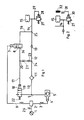
- an air spring 15 which is shown symbolically and includes all the other air springs of the vehicle, for filling with a pressure medium source 5 and for emptying with a first pneumatically controllable and in the atmosphere venting directional valve 19 connectable.
- the first directional valve 19 has a pneumatic control input 18, which can be acted upon by a second controllable directional valve 8 serving as an air spring valve with a control pressure determining the pressure in the air spring 15 against a restoring force 22 acting on the pneumatic control input 18.
- An air dryer 11 can be connected on the one hand via a first check valve 13 opening towards the air spring 15 and on the other hand via a second check valve 23 opening towards the air dryer 11 and via the directional control valve 8 with the air spring 15.
- a throttle 21 is connected upstream of the second check valve 23, via which the second check valve 23 is connected to a pressure medium outlet 34 of the second directional valve 8.
- the pneumatic control input 18 of the first directional control valve 19 is connected to the line connecting the throttle 21 and to a line connecting the pressure medium output 34 of the second directional control valve 8.
- a distance measuring device 1 which measures the distance (the level) of the vehicle cell from the vehicle axis, is connected to an electronic control unit 2 via an electrical line 26.
- An evaluation circuit with a setpoint value which corresponds to a predetermined normal level is integrated in the electronic control unit 2.
- the level measured by the displacement measuring device 1 is compared with the normal level which is stored in the evaluation circuit and which can be changed, if necessary. According to the level comparison, the electronic control unit 2 transmits electrical control signals either via an electrical line 3 to an electrical control connection 4 of the pressure medium source 5 or via a given electrical line 6 to an electrical control connection 7 of the directional valve 8.
- the pressure medium source 5 is switched on by the electronic control unit 2. Air is supplied to the air spring 15 via a pressure line 9, 10, via the air dryer 11, a pressure line 12, the check valve 13 and a pressure line 14 until the normal level is reached and the electronic control unit 2 switches off the pressure medium source 5 again.
- the air spring 15 is emptied into the atmosphere with the pressure medium source 5 switched off until the normal level is reached.
- the electronic control unit 2 switches the air spring valve 8 from the blocking position into the open position.
- the pressure medium flowing out of the air spring 15 passes via the pressure lines 14, 16, 17 to the pneumatic control input 18 of the directional control valve 19, which then switches over to the atmosphere.
- the air spring 15 is then connected to the atmosphere via the pressure line 10, 9 and the first directional valve 19 until the path measuring device 1 signals that the predetermined normal level has been reached and the electronic control unit 2 does so Directional control valve 8 switches back into the blocking position.
- the pressure line 9 is shut off during the emptying of the air spring 15 with respect to the switched off pressure medium source 5.
- the effective pressure at the control input 18 of the directional control valve 19 is then so far to the atmospheric pressure via the connection 17, 20, 11, 10, 9 and the directional control valve 19 adjusted until the restoring force 22 moves the directional valve 19 into the closed position.
- the check valve 23 arranged in the line 20 between the throttle 21 and the air dryer 11 blocks the connection to the control connection 18 of the directional control valve 19 during the filling process.
- the directional control valve 19 is thereby prevented from being switched to the position in the pressure line during the filling phase 9 is connected to the atmosphere.
- a line connection 24 which connects the pressure line 12 to the pressure line 20.
- the pressure lines 12, 14, 16 are connected to one another by a line connection 25.
- the check valve 13 arranged in the line 12 between the line connections 24, 25 blocks the connection of the air spring 15 to the air dryer 11 during the emptying process.
- the air dryer 11 is operated when filling the air spring 15 in the drying mode and when the air spring 15 is emptied in the regeneration mode.
- a suitable air dryer is described in DE-PS 19 47 550.
- the throttle 21 arranged in the pressure line 20 ensures during the emptying phase that, on the one hand, relaxed air is supplied to the air dryer 11 and, on the other hand, an unthrottled control pressure can act at the control input 18.
- the valve device for emptying the air spring 15 into the atmosphere advantageously has a third one, which acts as a safety valve against excess pressure in the air suspension Directional control valve 27, which can be controlled with a pressure corresponding to the pressure in the air spring 15.
- the air spring 15 is emptied via the third directional valve 27 as soon as the pressure in the air spring 15 has reached a pressure level which is above a predetermined maximum operating pressure.
- This pressure level which is above the maximum operating pressure, arises when the vehicle is overloaded and thus overloaded.
- the overload like the normal payload within the specified permissible load limit, causes the vehicle cell to lower.
- the path measuring device 1 registers this change in the level position, but does not recognize that this level change is due to an overload of the vehicle.
- the displacement measuring device 1 consequently causes the pressure medium source 5 to convey air into the air spring 15 via the electronics 2 in order to restore the normal level of the vehicle cell. As a result, the increased air pressure in the air springs 15 due to overloading the vehicle is further increased.
- a critical pressure level could be reached in the air spring 15, which can lead to damage to the bellows of the air spring 15.
- This critical pressure level can be achieved in particular when driving, if the pressure which rises in the air spring 15 above the maximum operating pressure is suddenly increased by dynamic pressure peaks.
- a pressure level in the air spring 15 which exceeds the predetermined maximum operating pressure can also be achieved by switching errors in the level control system if, for. B. by a defect in the measuring device 1 and / or Electronics 2 the pressure medium source 5 is not switched off.
- the directional control valve 27 connected to the air spring 15 has a switching point which is below the critical pressure in the air spring 15, so that a reduction in the pressure in the air spring 15 is triggered before the air spring 15 can be damaged by the circumstances described.
- the directional control valve 27 is connected to the air spring 15 via the line 14.
- the directional control valve 27 has a pneumatic control input 28 which can be acted upon by the pressure prevailing in the air spring 15 via a pressure line 29.
- the directional control valve 27 has an electrical control input 30 which is connected to a pressure sensor 32 via an electrical line 31.
- the pressure sensor 32 measures the pressure present in the air spring 15 and causes the directional control valve 27 to connect the air spring 15 to the atmosphere at a predetermined pressure in the air spring 15.
- a device (not shown), which converts the signal of the pressure sensor 32 into a switching current for the control input 30, is active between the pressure sensor 32 and the electrical control input 30.
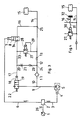
- the directional control valve 27 is connected to the air spring 15 via the line 14 as described in FIG. 1, but the air spring 15 is connected via the directional valve 27 and a pressure line 33 to the one from the pressure outlet 34 of the second directional valve 8 to the control input 18 of the first directional valve 19 leading pressure line connectable.
- the directional control valve 27 is arranged as described in FIG. 3.
- an electrical control input 30 is provided according to the exemplary embodiment according to FIG. 2, which is connected via the electrical line 31 to the pressure sensor 32 measuring the pressure in the air spring 15.
- the third directional control valve 27 and the second directional control valve 8 of the arrangement according to FIG. 1 are combined to form a directional control valve 35 with an electrical control input 7 and a pneumatic control input 28.
- the air spring 15 can be connected via the directional control valve 35 to the pneumatic control input 18 of the first directional control valve 19 and via the air dryer 11 to the outlet to the atmosphere of the first directional control valve 19.
- the electrical control input 7 is controlled in a level control in the sense of lowering the vehicle cell by the displacement measuring device 1 and the electronics 2.
- the pneumatic control input 28 is controlled via a pressure line 29 by a pressure corresponding to the pressure in the air spring 15 in the sense of the overload control mentioned.
- the directional control valve 35 is switched from the blocking position into the through position, whereby a connection from the air spring 15 to the control input 18 and thus to the outlet of the air dryer 11 is produced with the directional valve 19 connecting the atmosphere.
- the electrical control input 7 of the second directional valve 8 is connected on the one hand via the electrical line 6 to the electronics 2 which can be controlled by the displacement measuring device 1 and on the other hand via an electrical line 36 to the pressure sensor 32.
- the control input 7 is only shown in principle by the electronics 2 or by the pressure sensor 32, the directional control valve 8 is switched from the blocking position into the through position, whereby the air spring 15 is emptied as described above with reference to FIG. 5.
- the embodiment according to FIG. 6 has the advantage of less effort compared to the embodiments according to FIGS. 1 to 5, because the second directional valve 8 has only one electrical control input 7 which can be controlled both by the displacement measuring device 1 and by the pressure sensor 32.
- the pressure medium source 5 is not switched off when the vehicle is overloaded, because in such a case the displacement measuring device 1 indicates a low level that would have to be compensated for by filling the air spring 15. Nevertheless, the pressure medium source 5 is protected against delivery, against an undesirable excess pressure in the system, because the pressure medium source 5 and the air spring 15 are connected to the connection to the atmosphere caused by the excess pressure in the air spring 15 via the first directional valve 19.
- the pressure sensor 32 is connected to the electronics 2 via an electrical line 37.
- a setpoint value comparison circuit of the electronics 2 the pressure in the air spring 15 signaled by the pressure sensor 32 is compared with a predetermined setpoint value.
- This setpoint corresponds to a maximum pressure in the air spring 15 achieved by overloading the vehicle, at which the electrical control input 7 of the second directional valve 8 is caused by the electronics 2 via the electrical line 6 to switch the second directional valve 8 from the blocking position into the open position.
- an OR gate of the electronics 2 causes an electrical control input 4 of the pressure medium source 5 via an electrical line 3 to switch off the pressure medium source 5.
- the signal given by the path measuring device 1 to the electronics 2 which corresponds to a low level caused by overloading the vehicle, is suppressed in the electronics 2.
- the described device for protection against exceeding a predetermined maximum pressure in the air spring 15 can also be used in level control devices that are not equipped with an air dryer.
- the air flowing out of the air spring 15 is then, as shown in FIGS. 1 and 2, directed directly into the atmosphere.
- a pressure limiting valve of a conventional type arranged in the pressure line between the pressure medium source 5 and the air spring 15 is used (not shown).
- Such a pressure relief valve would shut off the pressure medium source 5 from the air spring 15 at a predetermined pressure on its secondary side, which would correspond to the pressure in the air spring 15.
- the pressure medium source 5 would then be connected to the atmosphere for the duration of the overload of the air spring 15.
- the pressure in the air spring 15 would increase proportionally to the overloading of the vehicle until the vehicle cell comes to rest on a fixed stop of the chassis, but a further pressure increase in the air spring 15 would not be possible because the pressure medium source 5 in the described switching position of the pressure relief valve is connected to the atmosphere.
Landscapes
- Engineering & Computer Science (AREA)
- Mechanical Engineering (AREA)
- Vehicle Body Suspensions (AREA)
- Fluid-Damping Devices (AREA)
Abstract
Description
- Die Erfindung betrifft eine Niveauregeleinrichtung für Fahrzeuge mit Luftfedern gemäß dem Oberbegriff des Patentanspruchs 1.
- Bei luftgefederten Fahrzeugen wird vorwiegend eine lastabhängige Niveauregelung verwendet. Dabei wird die Luftmenge in den Federbälgen der Luftfederung in Abhängigkeit von der Fahrzeugbelastung so geregelt, daß ein vorgegebener Abstand der Fahrzeugzelle von der Fahrzeugachse immer gleich ist.
- Eine Einrichtung der eingangs genannten Art ist durch die DE-OS 30 31 453 vorbekannt. Diese bekannte Einrichtung besteht im wesentlichen aus folgenden Teilen:
- Eine Wegmeßeinrichtung mißt den durch Be- oder Entlasten des Fahrzeuges sich verändernden Abstand der Fahrzeugzelle von der Fahrzeugachse. Die Meßdaten werden mittels einer elektronischen Auswerteschaltung mit einem Sollwert (Normalniveau) verglichen. Bei Abweichung wird das Normalniveau durch Be- oder Entlüften der Luftfedern wieder hergestellt. Zum Auffüllen der Luftfedern schaltet die Elektronik ein Luftfederventil zwischen der Druckmittelquelle und den Luftfedern auf Durchgang und veranlaßt die Druckmittelquelle Luft in die Luftfedern zu fördern, bis die Elektronik das von der Wegmeßeinrichtung gemeldete Normalniveau erkennt. Die Luftförderung wird daraufhin abgestellt und das Luftfederventil geschlossen. Das Entleeren der Luftfedern geschieht in der Weise, daß die Elektronik das Luftfederventil und ein zweites, zur Atmosphäre hin öffnendes Entlüftungsventil auf Durchgang schaltet. Die Luftfedern werden dann so lange in die Atmosphäre entleert, bis die Ekektronik bei Erkennen des Normalniveaus beide Ventile absperrt.
- Die vorbekannte Einrichtung hat den Nachteil, daß auch bei einem Absenken der Fahrzeugzelle infolge einer an sich unerlaubten Überladung und damit Überlastung des Fahrzeugs die Druckmittelquelle von der Wegmeßeinrichtung und der Elektronik veranlaßt wird, das Normalniveau wieder herzustellen, d. h. Luft in die Bälge der Luftfedern zu fördern, obgleich diese durch die Überladung des Fahrzeugs bereits einen entsprechend hohen Luftdruck aufweisen. Die solchermaßen mit einem Überdruck aufgefüllten Luftfedern werden im Fahrbetrieb zusätzlich durch dynamische Druckspitzen belastet, so daß es hierdurch zu Schäden an den Luftfederbälgen kommen kann. Auch Schaltfehler, hervorgerufen z. B. durch eine defekte Wegmeßeinrichtung und/oder Elektronik, derart, daß die Druckmittelquelle nicht abgeschaltet wird, können zu einem unkontrolliertem Druckanstieg in den Luftfederbälgen und damit zu den erwähnten Schäden führen.
- Der Erfindung liegt daher die Aufgabe zugrunde, die Einrichtung der eingangs genannten Art so zu verbessern, daß bei jedem Belastungszustand des Fahrzeuges und bei Schaltfehlern in der Niveauregelanlage ein vorgegebener Maximaldruck in den Bälgen der Luftfedern nicht überschritten werden kann.
- Diese Aufgabe wird durch die im Patentanspruch 1 angegebene Erfindung gelöst. Weiterbildungen und vorteilhafte Ausführungsbeispiele der Erfindung sind in den Unteransprüchen angegeben.
- Die Erfindung hat den Vorteil, daß bei Überlastung des Fahrzeugs die Fahrzeugzelle auf einen festen Anschlag des Fahrgestells zur Auflage kommen kann und in diesem Zustand bei einem von der Wegmeßeinrichtung erkannten "Niedrigniveau" und demzufolge eingeschalteter Druckmittelquelle der vorgegebene Maximaldruck in den Bälgen der Luftfederung nicht überschritten wird.
- Ein weiterer Vorteil ergibt sich, wenn die Niveauregeleinrichtung mit einem Lufttrockner ausgerüstet ist, der beim Auffüllen der Luftfedern in der Trocknungsphase und beim Entleeren der Luftfedern, d. h. beim Absenken der Fahrzeugzelle, in der Regenerierungsphase betrieben wird.
- Die von den Luftfedern auch bei einer Überladung des Fahrzeuges abströmende Luft kann dann ebenfalls zur Regenerierung des Lufttrockners durch den Lufttrockner hindurch geleitet werden. Hierdurch ergibt sich eine maximale Nutzung der beim Absenken der Fahrzeugzelle oder bei einer Überladung des Fahrzeugs von den Luftfedern abströmenden Luft für die Regenerierung des Lufttrockners.
- Die Erfindung wird anhand eines Ausführungsbeispiels, das in der Zeichnung dargestellt ist, näher erläutert.
- Es zeigen:
- Fig. 1 und Fig. 2 eine Nieveauregeleinrichtung mit einem in die Atmosphäre entlüftenden Überlastventil,
- Fig. 3 und Fig. 4 eine Niveauregeleinrichtung nach Fig. 1 mit einem in den Druckmittelkreis integrierten Überlastventil,
- Fig. 5 und Fig. 6 eine Niveauregeleinrichtung nach Fig. 1 mit einem als Überlastventil wirkenden Luftfederventil,
- Fig. 7 eine Niveauregeleinrichtung nach Fig. 1 mit einer von der Elektronik der Niveauregeleinrichtung gesteuerten Überlasteinrichtung.
- Gemäß Fig. 1 ist eine Luftfeder 15, die symbolisch dargestellt ist und alle übrigen Luftfedern des Fahrzeugs einschließt, zum Auffüllen mit einer Druckmittelquelle 5 und zum Entleeren mit einem ersten pneumatisch steuerbaren und in die Atmosphäre entlüftenden Wegeventil 19 verbindbar. Das erste Wegeventil 19 hat einen pneumatischen Steuereingang 18, der über ein zweites steuerbares als Luftfederventil dienendes Wegeventil 8 mit einem dem Druck in der Luftfeder 15 bestimmenden Steuerdruck gegen eine auf den pneumatischen Steuereingang 18 wirkende Rückstellkraft 22 beaufschlagbar ist.
- Ein Lufttrockner 11 ist einerseits über ein zur Luftfeder 15 hin öffnendes erstes Rückschlagventil 13 und andererseits über ein zum Lufttrockner 11 hin öffnendes zweites Rückschlagventil 23 und über das Wegeventil 8 mit der Luftfeder 15 verbindbar. Dem zweiten Rückschlagventil 23 ist eine Drossel 21 vorgeschaltet, über die das zweite Rückschalgventil 23 mit einem Druckmittelausgang 34 des zweiten Wegeventils 8 verbunden ist.
- Der pneumatische Steuereingang 18 des ersten Wegeventils 19 ist an die die Drossel 21 und an eine den Druckmittelausgang 34 des zweiten Wegeventils 8 verbindende Leitung angeschlossen.
- Eine Wegmeßeinrichtung 1, die den Abstand (das Niveau) der Fahrzeugzelle von der Fahrzeugachse mißt, ist über eine elektrische Leitung 26 mit einer elektronischen Steuereinheit 2 verbunden. In die elektronische Steuereinheit 2 ist eine Auswerteschaltung mit einem Sollwert, der einem vorgegebenen Normalniveau entspricht, integriert. Das von der Wegmeßeinrichtung 1 gemessene Niveau wird mit dem in der Auswerteschaltung gespeicherten und gegebenenfalls veränderbaren Normalniveau verglichen. Von der elektronischen Steuereinheit 2 werden entsprechend dem Niveauvergleich elektrische Steuersignale entweder über eine elektrische Leitung 3 auf einen elektrischen Steueranschluß 4 der Druckmittelquelle 5 oder über eine elektrische Leitung 6 auf einen elektrischen Steueranschluß 7 des Wegeventils 8 gegeben.
- Liegt der Meßwert unterhalb des Normalniveaus, dann wird von der elektronischen Steuereinheit 2 die Druckmittelquelle 5 eingeschaltet. Der Luftfeder 15 wird über eine Druckleitung 9, 10, über den Lufttrockner 11, eine Druckleitung 12, das Rückschlagventil 13 und eine Druckleitung 14 Luft zugeführt, bis das Normalniveau erreicht ist und die elektronische Steuereinheit 2 die Druckmittelquelle 5 wieder ausschaltet.
- Bei einem Meßwert oberhalb des Normalniveaus wird die Luftfeder 15 bei abgeschalteter Druckmittelquelle 5 in die Atmosphäre entleert bis das Normalniveau erreicht ist. Von der elektronischen Steuereinheit 2 wird dazu das Luftfederventil 8 aus der Sperrstellung in die Durchgangsstellung geschaltet. Das dadurch von der Luftfeder 15 abströmende Druckmittel gelangt über die Druckleitungen 14, 16, 17 auf den pneumatischen Steuereingang 18 des Wegeventils 19, das daraufhin auf Durchgang zur Atmosphäre umschaltet.
- über die den Lufttrockner 11 und das zweite Wegeventil 8 verbindende Druckleitung 20 ist die Luftfeder 15 dann über die Druckleitung 10, 9 und das erste Wegeventil 19 mit der Atmosphäre verbunden, bis die Wegmeßeinrichtung 1 das Erreichen des vorgegebenen Normalniveaus signalisiert und die elektronische Steuereinheit 2 das Wegeventil 8 in die Sperrstellung zurückschaltet.
- Die Druckleitung 9 ist während des Entleerens der luftfeder 15 gegenüber der abgeschalteten Druckmittelquelle 5 abgesperrt. Der am Steuereingang 18 des Wegeventils 19 wirksame Druck wird dann über die Verbindung 17, 20, 11, 10, 9 und das Wegeventil 19 soweit an den Atmosphärendruck angeglichen, bis die Rückstellkraft 22 das Wegeventil 19 in die Schließstellung bewegt.
- Das in der Leitung 20 zwischen der Drossel 21 und dem Lufttrockner 11 angeordnete Rückschlagventil 23 sperrt während des Auffüllvorganges die Verbindung zum Steueranschluß 18 des Wegeventils 19. Das Wegeventil 19 wird dadurch gehindert, während der Auffüllphase in diejenige Stellung geschaltet zu werden, in der die Druckleitung 9 mit der Atmosphäre verbunden ist.
- In der Druckleitung 12 befindet sich eine Leitungsverbindung 24 die die Druckleitung 12 mit der Druckleitung 20 verbindet. Die Druckleitungen 12, 14, 16 sind durch eine Leitungsverbindung 25 miteinander verbunden.
- Das in der Leitung 12 zwischen den Leitungsverbindungen 24, 25 angeordnete Rückschlagventil 13 sperrt während des Entleerungsvorganges die Verbindung der Luftfeder 15 zum Lufttrockner 11.
- Der Lufttrockner 11 wird beim Auffüllen der Luftfeder 15 im Trocknungsbetrieb und beim Entleeren der Luftfeder 15 im Regenerationsbetrieb betrieben. Ein hierzu geeigneter Lufttrockner ist in der DE-PS 19 47 550 beschrieben.
- Die in der Druckleitung 20 angeordnete Drossel 21 sorgt während der Entleerungsphase dafür, daß einerseits dem Lufttrockner 11 entspannte Luft zugeführt wird und andererseits am Steuereingang 18 ein ungedrosselter Steuerdruck wirken kann.
- Die Ventileinrichtung zum Entleeren der Luftfeder 15 in die Atmosphäre weist vorteilhaft ein drittes, als Sicherheitsventil gegen Überdruck in der Luftfederung wirkendes Wegeventil 27 auf, das mit einem dem Druck in der Luftfeder 15 entsprechenden Druck steuerbar ist. Die Entleerung der Luftfeder 15 über das dritte Wegeventil 27 erfolgt, sobald der Druck in der Luftfeder 15 eine Druckhöhe erreicht hat, die über einem vorgegebenen maximalen Betriebsdruck liegt.
- Diese über dem maximalen Betriebsdruck liegende Druckhöhe stellt sich ein, wenn das Fahrzeug überladen und damit überlastet wird. Die Überlastung verursacht, wie auch die normale Zuladung innerhalb der verbestimmten zulässigen Lastgrenze, ein Absenken der Fahrzeugzelle. Die Wegmeßeinrichtung 1 registriert diese Veränderung der Niveaulage, erkennt jedoch nicht, daß diese Niveauänderung auf eine Überlastung des Fahrzeuges zurückzuführen ist. Die Wegmeßeinrichtung 1 veranlaßt demzufolge über die Elektronik 2 die Druckmittelquelle 5 Luft in die Luftfeder 15 zu fördern um das Normalniveau der Fahrzeugzelle wieder herzustellen. Hierdurch wird der in den Luftfedern 15 durch Überlastung des Fahrzeuges gestiegene Luftdruck weiter erhöht.
- Dem Grad der Überlastung entsprechend, könnte in der Luftfeder 15 eine kritische Druckhöhe erreicht werden, die zu einem Schaden am Balg der Luftfeder 15 führen kann. Diese kritische Druckhöhe kann insbesondere im Fahrbetrieb erreicht werden, wenn infolge Überlastung der in der Luftfeder 15 über den maximalen Betriebsdruck angestiegene Druck durch dynamische Druckspitzen schlagartig erhöht wird.
- Eine den vorgegebenen maximalen Betriebsdruck übersteigende Druckhöhe in der Luftfeder 15 kann auch durch Schaltfehler in der Niveauregelanlage erreicht werden, wenn z. B. durch einen Defekt an der Wegmeßeinrichtung 1 und/oder der Elektronik 2 die Druckmittelquelle 5 nicht abgeschaltet wird.
- Das mit der Luftfeder 15 verbundene Wegeventil 27 hat einen Schaltpunkt der unterhalb des kritischen Druckes in der Luftfeder 15 liegt, so daß eine Reduzierung des Druckes in der Luftfeder 15 ausgelöst wird, bevor eine durch die beschriebenen Umstände mögliche Beschädigung der Luftfeder 15 erfolgen kann.
- Gemäß Fig. 1 ist das Wegeventil 27 über die Leitung 14 mit der Luftfeder 15 verbunden. Das Wegeventil 27 hat einen pneumatischen Steuereingang 28 der mit dem in der Luftfeder 15 herrschenden Druck über eine Druckleitung 29 beaufschlagbar ist.
- Gemäß einem in Fig. 2 dargestellten weiteren Ausführungsbeispiel hat das Wegeventil 27 einen elektrischen Steuereingang 30 der über eine elektrische Leitung 31 mit einem Drucksensor 32 verbunden ist. Der Drucksensor 32 mißt den in der Luftfeder 15 vorhandenen Druck und veranlaßt das Wegeventil 27 bei einem vorgegebenen Druck in der Luftfeder 15 eine Verbindung der Luftfeder 15 mit der Atmosphäre herzustellen. Dabei wird zwischen dem Drucksensor 32 und dem elektrischen Steuereingang 30 eine nicht dargestellte Einrichtung wirksam, die das Signal des Drucksensors 32 in einen Schaltstrom für den Steuereingang 30 verwandelt.
- Gemäß Fig. 3 ist das Wegeventil 27 zwar wie unter Fig. 1 beschrieben, über die Leitung 14 mit der Luftfeder 15 verbunden, jedoch ist die Luftfeder 15 über das Wegeventil 27 und eine Druckleitung 33 mit der vom Druckausgang 34 des zweiten Wegeventils 8 zum Steuereingang 18 des ersten Wegeventils 19 führenden Druckleitung verbindbar.
- Dies hat den Vorteil, daß die Luftfeder 15 über das erste Wegeventil 19, wie bei einem Meßwert der Wegmeßeinrichtung 1 oberhalb des Normalniveaus beschrieben, mit der Atmosphäre verbindbar ist. Hierdurch wird auch die über das Wegeventil 27 von der Luftfeder 15 abströmende Luft zur Regenerierung des Lufttrockners 11 verwendet.
- Gemäß Fig. 4 ist das Wegeventil 27 wie auch unter Fig. 3 beschrieben angeordnet. Anstelle des pneumatischen Steuereingangs 28 ist jedoch entsprechend dem Ausführungsbeispiel gemäß Fig. 2 ein elektrischer Steuereingang 30 vorgesehen, der über die elektrische Leitung 31 mit dem den Druck in der Luftfeder 15 messenden Drucksensor 32 verbunden ist.
- In dem Ausführungsbeispiel gemäß Fig. 5 sind das dritte Wegeventil 27 und das zweite Wegeventil 8 der Anordnung gemäß Fig. 1 zu einem Wegeventil 35 mit einem elektrischen Steuereingang 7 und einem pneumatischen Steuereingang 28 zusammengefaßt. Die Luftfeder 15 ist über das Wegeventil 35 mit dem pneumatischen Steuereingang 18 des ersten Wegeventils 19 und über den Lufttrockner 11 mit dem Auslaß zur Atmosphäre des ersten Wegeventils 19 verbindbar. Der elektrische Steuereingang 7 wird bei einer Niveauregelung im Sinne des Absenkens der Fahrzeugzelle durch die Wegmeßeinrichtung 1 und die Elektronik 2 angesteuert. Der pneumatische Steuereingang 28 wird über eine Druckleitung 29 von einem dem Druck in der Luftfeder 15 entsprechenden Druck im Sinne der erwähnten Überlastregelung angesteuert. Bei beiden, unabhängig voneinander folgenden Regelungsarten wird das Wegeventil 35 von der Sperrstellung in die Durchgangsstellung geschaltet, wodurch eine Verbindung von der Luftfeder 15 zum Steuereingang 18 und damit zum Auslaß des den Lufttrockner 11 mit der Atmosphäre verbindenden Wegeventils 19 hergestellt wird.
- Gemäß Fig. 6 ist der elektrische Steuereingang 7 des zweiten Wegeventils 8 einerseits über die elektrische Leitung 6 mit der von der Wegmeßeinrichtung 1 ansteuerbaren Elektronik 2 und andererseits über eine elektrische Leitung 36 mit dem Drucksensor 32 verbunden. Bei einer nur prinzipiell dargestellten Ansteuerung des Steuereingangs 7 durch die Elektronik 2 oder durch den Drucksensor 32 wird das Wegeventil 8 von der Sperrstellung in die Durchgangsstellung geschaltet, wodurch jeweils die oben anhand der Fig. 5 beschriebene Entleerung der Luftfeder 15 erfolgt.
- Das Ausführungsbeispiel nach Fig. 6 hat gegenüber den Ausführungsbeispielen nach Fig. 1 bis 5 den Vorteil des geringeren Aufwands, weil das zweite Wegeventil 8 nur einen elektrischen Steuereingang 7 aufweist der sowohl von der Wegmeßeinrichtung 1 als auch von dem Drucksensor 32 ansteuerbar ist.
- Gemäß den Ausführungsbeispielen nach den Fig. 1 bis 6 ist die Druckmittelquelle 5 bei einer Überlastung des Fahrzeuges nicht abgeschaltet, weil die Wegmeßeinrichtung 1 in einem solchen Fall ein Niedrigniveau anzeigt, das durch Auffüllen der Luftfeder 15 auszugleichen wäre. Trotzdem ist die Druckmittelquelle 5 gegen eine Förderung, gegen einen unerwünschten Überdruck im System abgesichert, weil die Druckmittelquelle 5 wie auch die Luftfeder 15 an der durch den Überdruck in der Luftfeder 15 bewirkten Verbindung zur Atmosphäre über das erste Wegeventil 19 angeschlossen sind.
- In dem Ausführungsbeispiel gemäß Fig. 7 ist der Drucksensor 32 über eine elektrische Leitung 37 mit der Elektronik 2 verbunden. In einer Soll- Instwert-Vergleichsschaltung der Elektronik 2 wird der von dem Drucksensor 32 signalisierte Druck in der Luftfeder 15 mit einem vorgegebenen Sollwert verglichen. Dieser Sollwert entspricht einem durch Überlasung des Fahrzeugs erreichten maximalen Druck in der Luftfeder 15 bei der der elektrische Steuereingang 7 des zweiten Wegeventils 8 über die elektrische Leitung 6 von der Elektronik 2 veranlaßt wird, das zweite Wegeventil 8 von der sperrstellung in die Durchgangsstellung zu schalten. Durch ein Oder-Glied der Elektronik 2 wird bei erreichen dieses Sollwertes ein elektrischer Steuereingang 4 der Druckmittelquelle 5 über eine elektrische Leitung 3 veranlaßt, die Druckmittelquelle 5 abzuschalten. Hierbei wird das von der Wegmeßeinrichtung 1 an die Elektronik 2 gegebene Signal, daß einem durch Überlastung des Fahrzeuges eintstandenen Niedrigniveau entspricht, in der Elektronik 2 unterdrückt.
- Die Einrichtung gemäß Fig. 7 hat den Vorteil, daß durch Ausschalten der Druckmittelquelle 5 während der Überlastregelphase Energie eingespart wird.
- Die beschriebene Einrichtung zum Schutz gegen Überschreitung eines vorgegebenen Maximaldruckes in der Luftfeder 15 kann auch in Niveauregeleinrichtungen verwendet werden, die nicht mit einem Lufttrockner ausgerüstet sind. Die aus der Luftfeder 15 abströmende Luft wird dann, wie in den Fig. 1 und 2 dargestellt, direkt in die Atmosphäre geleitet.
- Die Sicherung der Luftfeder 15 gegen einen unerwünschten hohen Druckanstieg kann auch erreicht werden, wenn anstelle des in den Fig. 1 und 2 dargestellten Wegeventils 27 ein in der Druckleitung zwischen der Druckmittelquelle 5 und der Luftfeder 15 angeordnetes Druckbegrenzungsventil herkömmlicher Art verwendet wird (nicht dargestellt). Ein solches Druckbegrenzungsventil würde bei einem vorgegebenen Druck auf seiner Sekundärseite, der dem Druck in der Luftfeder 15 entsprechen würde, die Druckmittelquelle 5 gegenüber der LUftfeder 15 absperren. Die Druckmittelquelle 5 würde dann für die Dauer der Überlastung der Luftfeder 15 mit der Atmosphäre verbunden sein. Zwar würde bei einer solchen Einrichtung der Druck in der Luftfeder 15 proportional der Überladung des Fahrzeuges ansteigen, bis die Fahrzeugzelle auf einen festen Anschlag des Fahrgestells zur Auflage kommt, jedoch wäre ein weiterer Druckanstieg in der Luftfeder 15 nicht möglich, weil dann die Druckmittelquelle 5 in der beschriebenen Schaltstellung des Druckbegrenzungsventils mit der Atmosphäre verbunden ist.
Claims (13)
Applications Claiming Priority (2)
| Application Number | Priority Date | Filing Date | Title |
|---|---|---|---|
| DE3542974 | 1985-12-05 | ||
| DE19853542974 DE3542974A1 (de) | 1985-12-05 | 1985-12-05 | Niveauregeleinrichtung fuer fahrzeuge mit luftfedern |
Publications (2)
| Publication Number | Publication Date |
|---|---|
| EP0224663A2 true EP0224663A2 (de) | 1987-06-10 |
| EP0224663A3 EP0224663A3 (de) | 1987-11-04 |
Family
ID=6287679
Family Applications (1)
| Application Number | Title | Priority Date | Filing Date |
|---|---|---|---|
| EP86112423A Withdrawn EP0224663A3 (de) | 1985-12-05 | 1986-09-08 | Niveauregeleinrichtung für Fahrzeuge mit Luftfedern |
Country Status (4)
| Country | Link |
|---|---|
| US (1) | US4756548A (de) |
| EP (1) | EP0224663A3 (de) |
| JP (1) | JPS62134311A (de) |
| DE (1) | DE3542974A1 (de) |
Cited By (4)
| Publication number | Priority date | Publication date | Assignee | Title |
|---|---|---|---|---|
| DE3813873A1 (de) * | 1988-04-25 | 1989-11-02 | Freudenberg Carl Fa | Gasdruckfeder |
| EP0884203A1 (de) * | 1997-06-12 | 1998-12-16 | Continental Aktiengesellschaft | Niveauregeleinrichtung für Fahrzeuge mit Luftfedern |
| EP0908335A1 (de) * | 1997-10-13 | 1999-04-14 | Continental Aktiengesellschaft | Niveauregeleinrichtung für Fahrzeuge mit Luftfedern |
| WO2001056820A1 (de) * | 2000-02-04 | 2001-08-09 | Bayerische Motoren Werke Aktiengesellschaft | Luftfedersystem für ein kraftfahrzeug |
Families Citing this family (47)
| Publication number | Priority date | Publication date | Assignee | Title |
|---|---|---|---|---|
| US4902903A (en) * | 1988-10-27 | 1990-02-20 | Segerson Eugene E | Apparatus employing reflective optical means |
| DE3841476A1 (de) * | 1988-12-09 | 1990-06-13 | Bosch Gmbh Robert | Verfahren zur regelung einer druckluftgestuetzten fahrzeugfederung |
| DE3917458A1 (de) * | 1989-05-30 | 1990-12-06 | Wabco Westinghouse Fahrzeug | Niveauregeleinrichtung fuer fahrzeuge |
| US4993729A (en) * | 1989-09-14 | 1991-02-19 | Volvo Gm Heavy Truck Corporation | Vehicle suspension |
| GB9119544D0 (en) * | 1991-09-13 | 1991-10-23 | Dunlop Ltd | Valve means |
| US5267466A (en) * | 1991-09-26 | 1993-12-07 | Ford Motor Co. | Apparatus and method for calibrating a suspension control module |
| DE10007382A1 (de) * | 2000-02-18 | 2001-08-23 | Bayerische Motoren Werke Ag | Luftfedersystem für ein zweiachsiges Kraftfahrzeug |
| DE19539887B4 (de) * | 1995-10-26 | 2008-07-10 | Knorr-Bremse Systeme für Nutzfahrzeuge GmbH | Vorrichtung zur Regelung eines Fahrzeugaufbauniveaus |
| DE19603593C1 (de) * | 1996-02-01 | 1997-04-30 | Daimler Benz Ag | Pneumatisches bzw. hydropneumatisches Federungssystem |
| US5725239A (en) * | 1996-03-26 | 1998-03-10 | Monroe Auto Equipment | Adaptive load dependent suspension system |
| DE19647998A1 (de) * | 1996-11-20 | 1998-05-28 | Duewag Ag | Luftfeder für Schienenfahrzeuge |
| BR9909537A (pt) | 1998-04-07 | 2000-12-12 | P Dennis Mcneely | Suporte ajustável para suportar uma carga dinâmica em relação a uma fundação e processo para suportar uma carga dinâmica que pode se deslocar em relação a uma fundação |
| DE19835491C2 (de) * | 1998-08-06 | 2000-05-25 | Continental Ag | Niveauregeleinrichtung für Fahrzeuge mit Luftfedern |
| DE19848217B4 (de) * | 1998-10-20 | 2013-06-27 | Wabco Gmbh | Gasverdichter |
| DE19902049C2 (de) * | 1999-01-20 | 2000-11-09 | Continental Ag | Niveauregelsystem für ein Kraftfahrzeug |
| US6224069B1 (en) | 1999-02-08 | 2001-05-01 | General Motors Corporation | Body leveling system for motor vehicle |
| DE19918157C1 (de) * | 1999-04-22 | 2000-10-26 | Continental Ag | Niveauregeleinrichtung für Fahrzeuge mit Luftfedern |
| CN100475581C (zh) | 1999-08-24 | 2009-04-08 | 哈尔德克斯制动器公司 | 高度控制阀 |
| AU2002305698B2 (en) * | 2001-05-25 | 2007-06-07 | Haldex Brake Corporation | Trailing arm suspension and height control system with motorized valve therefor |
| US7204478B2 (en) * | 2002-08-07 | 2007-04-17 | Haldex Brake Corporation | Height control valve with universal mounting for a suspension system |
| USD499173S1 (en) | 2002-08-07 | 2004-11-30 | Haldex Brake Corporation | Valve with three mounting holes |
| JP4673079B2 (ja) * | 2005-02-09 | 2011-04-20 | 株式会社日立製作所 | 過荷重検知装置を備えた鉄道車両 |
| US20080252025A1 (en) * | 2007-04-12 | 2008-10-16 | Plath Victor A | Electronic height control system for a vehicle with multiple input signals |
| US10836232B2 (en) | 2007-04-12 | 2020-11-17 | Haldex Brake Products Corporation | Electronic height control system for a vehicle with multiple input signals |
| DE102010052570B4 (de) | 2010-11-25 | 2019-11-28 | Wabco Gmbh | Magnetventil, Druckluftaufbereitungseinrichtung, Verfahren zum Betrieb einer Druckluftaufbereitungseinrichtung, sowie Fahrzeug |
| DE102010054699A1 (de) | 2010-12-16 | 2012-06-21 | Wabco Gmbh | Druckluftversorgungsanlage und pneumatisches System |
| DE102010054712B4 (de) | 2010-12-16 | 2023-06-07 | Zf Cv Systems Hannover Gmbh | Druckluftversorgungsanlage und pneumatisches System |
| DE102010054702A1 (de) | 2010-12-16 | 2012-06-21 | Wabco Gmbh | Pneumatischer Lufttrockner |
| DE102010054705A1 (de) | 2010-12-16 | 2012-06-21 | Wabco Gmbh | Luftfederanlage, Druckluftversorgungsanlage und pneumatisches System |
| DE102010054704A1 (de) | 2010-12-16 | 2012-06-21 | Wabco Gmbh | Druckluftversorgungsanlage und pneumatisches System |
| DE102010054713A1 (de) | 2010-12-16 | 2012-06-21 | Wabco Gmbh | Druckluftversorgungsanlage, pneumatisches System und Verfahren |
| DE102010054709A1 (de) | 2010-12-16 | 2012-06-21 | Wabco Gmbh | Lufttrockner-System, Druckluftversorgungsanlage, pneumatisches System und Verfahren zum Betreiben einer Pneumatikanlage |
| DE102011109500A1 (de) * | 2010-12-16 | 2012-06-21 | Wabco Gmbh | Druckluftversorgungsanlage, pneumatisches System und Verfahren zum Betreiben einer Pneumatikanlage |
| DE102012005345B4 (de) | 2011-12-23 | 2024-02-08 | Zf Cv Systems Hannover Gmbh | Druckluftversorgungsanlage, Druckluftversorgungssystem, Fahrzeug und Verwendung der Druckluftversorgungsanlage |
| WO2014014460A1 (en) * | 2012-07-19 | 2014-01-23 | Continental Teves Ag & Co. Ohg | Pneumatic spring system incorporating overload detection |
| DE102012024757A1 (de) | 2012-12-19 | 2014-06-26 | Wabco Gmbh | Ringförmiges Dichtungselement, Ventil, Druckluftversorgungsanlage, Druckluftversorgungssystem und Fahrzeug |
| US20160281906A1 (en) * | 2013-09-25 | 2016-09-29 | Bühler AG | Device for treating and/or processing bulk material |
| CN103707902B (zh) * | 2013-11-29 | 2016-04-20 | 北京市地铁运营有限公司地铁运营技术研发中心 | 一种城市轨道交通车辆乘客载荷检测系统及方法 |
| DE102014207509A1 (de) * | 2014-04-17 | 2015-10-22 | Continental Teves Ag & Co. Ohg | Integrierte Luftversorgungseinheit |
| DE102014009419B4 (de) | 2014-06-25 | 2023-06-07 | Zf Cv Systems Hannover Gmbh | Druckluftversorgungsanlage, pneumatisches System und Verfahren zum Steuern einer Druckluftversorgungssanlage |
| DE102014012609B4 (de) | 2014-08-22 | 2023-03-23 | Zf Cv Systems Hannover Gmbh | Druckluftversorgungsanlage, pneumatisches System und Verfahren zum Betreiben einer Pneumatikanlage |
| DE102014012645A1 (de) | 2014-08-22 | 2016-02-25 | Wabco Gmbh | Druckluftversorgungsanlage, pneumatisches System und Verfahren zum Betreiben einer Pneumatikanlage |
| DE102014012608B4 (de) | 2014-08-22 | 2023-03-30 | Zf Cv Systems Hannover Gmbh | Druckluftversorgungsanlage, pneumatisches System und Verfahren zum Betreiben einer Pneumatikanlage |
| DE102014012680B4 (de) | 2014-08-22 | 2023-03-16 | Zf Cv Systems Hannover Gmbh | Pneumatikschaltung für PKW-Luftfederungssystem |
| US10343479B2 (en) | 2014-08-22 | 2019-07-09 | Wabco Gmbh | Pneumatic circuit for passenger car pneumatic suspension system |
| JP6426042B2 (ja) * | 2015-03-27 | 2018-11-21 | 住友重機械工業株式会社 | 空気バネ用空気圧調整ユニット |
| EP4265494B1 (de) | 2022-04-21 | 2025-07-02 | ZF CV Systems Global GmbH | Luftbehandlungseinheit, luftverwaltungssystem, pneumatisches system und fahrzeug |
Family Cites Families (15)
| Publication number | Priority date | Publication date | Assignee | Title |
|---|---|---|---|---|
| DE1430557A1 (de) * | 1963-09-06 | 1969-04-30 | Bosch Gmbh Robert | Ventilvorrichtung |
| US3401948A (en) * | 1966-01-21 | 1968-09-17 | Midland Ross Corp | Vehicle leveling system and control valve |
| US3592563A (en) * | 1968-12-30 | 1971-07-13 | Westinghouse Air Brake Co | Filter purging apparatus |
| DE2012203A1 (de) * | 1970-03-14 | 1971-09-30 | Robert Bosch Gmbh, 7000 Stuttgart | Luftfederungseinrichtung |
| GB1358920A (en) * | 1970-11-18 | 1974-07-03 | Daimler Benz Ag | Pneumatic suspension arrangements in motor vehicles |
| DE2116058C3 (de) * | 1971-04-02 | 1978-09-07 | Robert Bosch Gmbh, 7000 Stuttgart | Elektrisch gesteuerte Niveauregeleinrichtung für Luftfederungen von Fahrzeugen |
| JPS55109196U (de) * | 1979-01-25 | 1980-07-31 | ||
| JPS5913137Y2 (ja) * | 1979-08-20 | 1984-04-19 | トキコ株式会社 | 車高調整装置 |
| DE3028472C2 (de) * | 1980-07-26 | 1982-08-26 | Daimler-Benz Ag, 7000 Stuttgart | Steuereinrichtung für eine luftgefederte, anhebbare und absenkbare Nachlaufachse eines Nutzkraftfahrzeugs |
| JPS58105814A (ja) * | 1981-12-17 | 1983-06-23 | Aisin Seiki Co Ltd | 車高調整装置 |
| JPS58156783A (ja) * | 1982-03-11 | 1983-09-17 | Honda Motor Co Ltd | 逆止弁 |
| US4568093A (en) * | 1982-12-23 | 1986-02-04 | Honda Giken Kogyo Kabushiki Kaisha | Method of operating vehicle height adjusting apparatus |
| US4558886A (en) * | 1983-09-22 | 1985-12-17 | Straub Gerald J | Fluid circuit means for elevating the rear end of an air ride truck trailer |
| US4570972A (en) * | 1984-05-02 | 1986-02-18 | General Motors Corporation | Pressure control valving for pneumatic leveling systems |
| US4607861A (en) * | 1984-12-17 | 1986-08-26 | General Motors Corporation | Hydraulic stabilizing system for vehicle suspension |
-
1985
- 1985-12-05 DE DE19853542974 patent/DE3542974A1/de not_active Withdrawn
-
1986
- 1986-09-08 EP EP86112423A patent/EP0224663A3/de not_active Withdrawn
- 1986-10-10 US US06/917,571 patent/US4756548A/en not_active Expired - Lifetime
- 1986-12-04 JP JP61287884A patent/JPS62134311A/ja active Pending
Cited By (7)
| Publication number | Priority date | Publication date | Assignee | Title |
|---|---|---|---|---|
| DE3813873A1 (de) * | 1988-04-25 | 1989-11-02 | Freudenberg Carl Fa | Gasdruckfeder |
| EP0884203A1 (de) * | 1997-06-12 | 1998-12-16 | Continental Aktiengesellschaft | Niveauregeleinrichtung für Fahrzeuge mit Luftfedern |
| US6098967A (en) * | 1997-06-12 | 2000-08-08 | Continental Aktiengesellschaft | Level control arrangement for vehicles having air springs |
| EP0908335A1 (de) * | 1997-10-13 | 1999-04-14 | Continental Aktiengesellschaft | Niveauregeleinrichtung für Fahrzeuge mit Luftfedern |
| US6116586A (en) * | 1997-10-13 | 2000-09-12 | Continental Aktiengesellschaft | Level control arrangement for vehicles having air springs |
| WO2001056820A1 (de) * | 2000-02-04 | 2001-08-09 | Bayerische Motoren Werke Aktiengesellschaft | Luftfedersystem für ein kraftfahrzeug |
| US6726224B2 (en) | 2000-02-04 | 2004-04-27 | Bayerische Motoren Werke Aktiengesellschaft | Pneumatic suspension system for a motor vehicle |
Also Published As
| Publication number | Publication date |
|---|---|
| US4756548A (en) | 1988-07-12 |
| EP0224663A3 (de) | 1987-11-04 |
| DE3542974A1 (de) | 1987-06-11 |
| JPS62134311A (ja) | 1987-06-17 |
Similar Documents
| Publication | Publication Date | Title |
|---|---|---|
| EP0224663A2 (de) | Niveauregeleinrichtung für Fahrzeuge mit Luftfedern | |
| EP0170794B1 (de) | Luftfedereinrichtung für Fahrzeuge | |
| DE3542975C2 (de) | ||
| DE19724747C1 (de) | Niveauregeleinrichtung für Fahrzeuge mit Luftfedern | |
| DE19745195C2 (de) | Niveauregeleinrichtung für Fahrzeuge mit Luftfedern | |
| EP2059428A1 (de) | Pneumatische fahrzeugbremsanlage sowie verfahren zum steuern einer derartigen bremsanlage | |
| EP0400301A2 (de) | Niveauregeleinrichtung für Fahrzeuge | |
| EP0447750A1 (de) | Bremsanlage mit wenigstens einem Bremskreis | |
| EP0199895A2 (de) | Druckmittel-Bremsanlage für den Anhänger eines Fahrzeuges | |
| DE4027688C2 (de) | Aktives Aufhängungssystem für Kraftfahrzeuge | |
| EP0301225A1 (de) | Verfahren zur Regelung einer druckluftgestützten Fahrzeugfederung | |
| DE3919438A1 (de) | Druckluftbetaetigbare einrichtung mit einem zwischen einer druckmittelquelle und verbrauchern befindlichem lufttrockner | |
| DE2735470C2 (de) | Bremsanlage zum Abbremsen der Räder eines Flugzeuges | |
| DE19544622C1 (de) | Steueranlage für ein luftgefedertes Fahrzeug mit Niveauregelung | |
| DE2460309A1 (de) | Blockierschutzregelsystem fuer druckmittelbetaetigte fahrzeugbremsen | |
| DE2524427A1 (de) | Blockierschutzregelsystem | |
| EP0152958A2 (de) | Führerbremsventil | |
| EP1697193A1 (de) | Verfahren zur überwachung einer bremsmomentänderung eines retarders | |
| EP0345203A2 (de) | Elektronisch geregelte Druckmittel-Bremseinrichtung | |
| DE4004502C2 (de) | ||
| EP0238891B1 (de) | Entlastung der Nachlaufachse bei einem Doppelachsenfahrzeug | |
| DE3101731C2 (de) | ||
| EP1741578B1 (de) | Steuervorrichtung für eine Luftfederungsanlage eines Kraftfahrzeuges | |
| DE19514185C1 (de) | Bremsanlage mit lastabhängiger Regelung des Vorderachs-Bremsdruckes von Fahrzeugen, insbesondere von Nutzfahrzeugen | |
| EP0779166A2 (de) | Niveauregeleinrichtung |
Legal Events
| Date | Code | Title | Description |
|---|---|---|---|
| PUAI | Public reference made under article 153(3) epc to a published international application that has entered the european phase |
Free format text: ORIGINAL CODE: 0009012 |
|
| AK | Designated contracting states |
Kind code of ref document: A2 Designated state(s): DE IT SE |
|
| PUAL | Search report despatched |
Free format text: ORIGINAL CODE: 0009013 |
|
| AK | Designated contracting states |
Kind code of ref document: A3 Designated state(s): DE IT SE |
|
| 17P | Request for examination filed |
Effective date: 19871016 |
|
| 17Q | First examination report despatched |
Effective date: 19880219 |
|
| STAA | Information on the status of an ep patent application or granted ep patent |
Free format text: STATUS: THE APPLICATION IS DEEMED TO BE WITHDRAWN |
|
| 18D | Application deemed to be withdrawn |
Effective date: 19880630 |
|
| RIN1 | Information on inventor provided before grant (corrected) |
Inventor name: SCHOENFELD, KARL-HEINRICH, DR. ING. Inventor name: KALTENTHALER,WOLFGANG,DIPL.-ING. |