EP0227046A2 - Pyridin-Derivate, Verfahren zu ihrer Herstellung, sie enthaltene Mittel und ihre Verwendung als Schädlingsbekämpfungsmittel - Google Patents
Pyridin-Derivate, Verfahren zu ihrer Herstellung, sie enthaltene Mittel und ihre Verwendung als Schädlingsbekämpfungsmittel Download PDFInfo
- Publication number
- EP0227046A2 EP0227046A2 EP86117656A EP86117656A EP0227046A2 EP 0227046 A2 EP0227046 A2 EP 0227046A2 EP 86117656 A EP86117656 A EP 86117656A EP 86117656 A EP86117656 A EP 86117656A EP 0227046 A2 EP0227046 A2 EP 0227046A2
- Authority
- EP
- European Patent Office
- Prior art keywords
- formula
- compound
- alkyl
- halogen
- halogenated
- Prior art date
- Legal status (The legal status is an assumption and is not a legal conclusion. Google has not performed a legal analysis and makes no representation as to the accuracy of the status listed.)
- Withdrawn
Links
- 0 CC(*)(*(N*)O)N*(C)=C Chemical compound CC(*)(*(N*)O)N*(C)=C 0.000 description 6
- DFLHKDXAJZPKKN-UHFFFAOYSA-N C[O]1(CN)CC1 Chemical compound C[O]1(CN)CC1 DFLHKDXAJZPKKN-UHFFFAOYSA-N 0.000 description 1
Classifications
-
- C—CHEMISTRY; METALLURGY
- C07—ORGANIC CHEMISTRY
- C07D—HETEROCYCLIC COMPOUNDS
- C07D213/00—Heterocyclic compounds containing six-membered rings, not condensed with other rings, with one nitrogen atom as the only ring hetero atom and three or more double bonds between ring members or between ring members and non-ring members
- C07D213/02—Heterocyclic compounds containing six-membered rings, not condensed with other rings, with one nitrogen atom as the only ring hetero atom and three or more double bonds between ring members or between ring members and non-ring members having three double bonds between ring members or between ring members and non-ring members
- C07D213/04—Heterocyclic compounds containing six-membered rings, not condensed with other rings, with one nitrogen atom as the only ring hetero atom and three or more double bonds between ring members or between ring members and non-ring members having three double bonds between ring members or between ring members and non-ring members having no bond between the ring nitrogen atom and a non-ring member or having only hydrogen or carbon atoms directly attached to the ring nitrogen atom
- C07D213/60—Heterocyclic compounds containing six-membered rings, not condensed with other rings, with one nitrogen atom as the only ring hetero atom and three or more double bonds between ring members or between ring members and non-ring members having three double bonds between ring members or between ring members and non-ring members having no bond between the ring nitrogen atom and a non-ring member or having only hydrogen or carbon atoms directly attached to the ring nitrogen atom with hetero atoms or with carbon atoms having three bonds to hetero atoms with at the most one bond to halogen, e.g. ester or nitrile radicals, directly attached to ring carbon atoms
- C07D213/62—Oxygen or sulfur atoms
- C07D213/69—Two or more oxygen atoms
-
- A—HUMAN NECESSITIES
- A01—AGRICULTURE; FORESTRY; ANIMAL HUSBANDRY; HUNTING; TRAPPING; FISHING
- A01N—PRESERVATION OF BODIES OF HUMANS OR ANIMALS OR PLANTS OR PARTS THEREOF; BIOCIDES, e.g. AS DISINFECTANTS, AS PESTICIDES OR AS HERBICIDES; PEST REPELLANTS OR ATTRACTANTS; PLANT GROWTH REGULATORS
- A01N43/00—Biocides, pest repellants or attractants, or plant growth regulators containing heterocyclic compounds
- A01N43/72—Biocides, pest repellants or attractants, or plant growth regulators containing heterocyclic compounds having rings with nitrogen atoms and oxygen or sulfur atoms as ring hetero atoms
- A01N43/88—Biocides, pest repellants or attractants, or plant growth regulators containing heterocyclic compounds having rings with nitrogen atoms and oxygen or sulfur atoms as ring hetero atoms six-membered rings with three ring hetero atoms
-
- A—HUMAN NECESSITIES
- A01—AGRICULTURE; FORESTRY; ANIMAL HUSBANDRY; HUNTING; TRAPPING; FISHING
- A01N—PRESERVATION OF BODIES OF HUMANS OR ANIMALS OR PLANTS OR PARTS THEREOF; BIOCIDES, e.g. AS DISINFECTANTS, AS PESTICIDES OR AS HERBICIDES; PEST REPELLANTS OR ATTRACTANTS; PLANT GROWTH REGULATORS
- A01N47/00—Biocides, pest repellants or attractants, or plant growth regulators containing organic compounds containing a carbon atom not being member of a ring and having no bond to a carbon or hydrogen atom, e.g. derivatives of carbonic acid
- A01N47/08—Biocides, pest repellants or attractants, or plant growth regulators containing organic compounds containing a carbon atom not being member of a ring and having no bond to a carbon or hydrogen atom, e.g. derivatives of carbonic acid the carbon atom having one or more single bonds to nitrogen atoms
- A01N47/28—Ureas or thioureas containing the groups >N—CO—N< or >N—CS—N<
- A01N47/34—Ureas or thioureas containing the groups >N—CO—N< or >N—CS—N< containing the groups, e.g. biuret; Thio analogues thereof; Urea-aldehyde condensation products
-
- C—CHEMISTRY; METALLURGY
- C07—ORGANIC CHEMISTRY
- C07D—HETEROCYCLIC COMPOUNDS
- C07D413/00—Heterocyclic compounds containing two or more hetero rings, at least one ring having nitrogen and oxygen atoms as the only ring hetero atoms
- C07D413/02—Heterocyclic compounds containing two or more hetero rings, at least one ring having nitrogen and oxygen atoms as the only ring hetero atoms containing two hetero rings
- C07D413/12—Heterocyclic compounds containing two or more hetero rings, at least one ring having nitrogen and oxygen atoms as the only ring hetero atoms containing two hetero rings linked by a chain containing hetero atoms as chain links
Definitions
- Pyridine-containing imidates, benzoylureas and oxdiazinediones for controlling animal pests in crop protection are known from EP-A 109 211, DE-A 2810830 and EP-A 138756. New pyridine derivatives with beneficial effects against plant pests have been found.
- Particularly suitable salts are alkali metal, alkaline earth metal salts, ammonium salts or ammonium salts which are mono- to tetrasubstituted by organic radicals such as alkyl, hydroxyalkyl.
- the phenoxy radical or R is preferably oriented adjacent to the ring atom A.
- the invention also encompasses all stereoisomers and their mixtures of the compounds of the formula I, such as the E and Z isomers in unsaturated structures or optical isomers if chiral centers occur.
- the compounds of the formula I can furthermore be present in tautomeric forms, which are likewise encompassed by the invention.
- the active compounds are suitable for controlling animal pests, in particular insects, arachnids, nematodes and molluscs, very particularly preferably for controlling insects which are used in agriculture, in forests, in the protection of stored products and materials and in the hygiene sector occurrence. They are effective against normally sensitive and resistant species as well as against all or individual stages of development.
- the pests mentioned above include:
- the invention also relates to compositions which contain the compounds of the formal I in addition to suitable formulation auxiliaries.
- the agents according to the invention contain the active ingredients of the formula I, in general 1-95% by weight. They can be used as wettable powders, emulsifiable concentrates, sprayable solutions, dusts or granules in the usual preparations.
- Spray powders are preparations which are uniformly dispersible in water and which, in addition to the active substance, contain a wetting agent, e.g. polyoxethylated alkylphenols, polyoxethylated fatty alcohols, alkyl or alkylphenol sulfonates and dispersants, e.g. sodium lignosulfonate, 2,2'-dinaphthyimethane-6,6'-disulfonic acid sodium, sodium dibutylnaphthalenesulfonic acid or sodium oleylmethyl taurine.
- a wetting agent e.g. polyoxethylated alkylphenols, polyoxethylated fatty alcohols, alkyl or alkylphenol sulfonates and dispersants, e.g. sodium lignosulfonate, 2,2'-dinaphthyimethane-6,6'-disulfonic acid sodium, sodium dibutylnaphthal
- Emulsifiable concentrates are made by dissolving the active ingredient in an organic solvent, e.g. Butanol, cyclohexanone, dimethylformaffiide, xylene or even higher-boiling aromatics or hydrocarbons with the addition of one or more emulsifiers.
- organic solvent e.g. Butanol, cyclohexanone, dimethylformaffiide, xylene or even higher-boiling aromatics or hydrocarbons.
- emulsifiers may be used, for example: calcium alkylarylsulfonates such as Ca dodecylbenzenesulfonate, or nonionic emulsifiers such as fatty acid polyglycol esters, alkylaryl polyglycol ethers, Fettalkoholpolyglykol ether, propylene oxide-ethylene oxide condensation products, alkyl polyethers, sorbitan fatty acid esters, polyoxyethylene sorbitan fatty acid ester or Polyoxethylensorbitester.
- calcium alkylarylsulfonates such as Ca dodecylbenzenesulfonate
- nonionic emulsifiers such as fatty acid polyglycol esters, alkylaryl polyglycol ethers, Fettalkoholpolyglykol ether, propylene oxide-ethylene oxide condensation products, alkyl polyethers, sorbitan fatty acid esters, polyoxyethylene sorbitan fatty acid ester
- Dusts are obtained by grinding the active ingredient with finely divided solid substances, e.g. Talc, natural clays such as kaolin, bentonite, poryphillite or diatomaceous earth.
- Granules can either be produced by spraying the active ingredient onto adsorbable, granulated inert material or by applying active ingredient concentrates by means of adhesives, e.g. Polyvinyl alcohol, sodium polyacrylic acid or mineral oils on the surface of carriers such as sand, kaolinite, or granulated inert material.
- Suitable active ingredients can also be produced in the manner customary for the production of fertilizer granules, if desired in a mixture with fertilizers.
- active compounds according to the invention in particular those of the examples listed, can be present in their commercially available formulations and in the use forms prepared from these formulations, in a mixture with other active compounds, such as insecticides, attractants, sterilants, acaricides, nematicides, fungicides, growth-regulating substances or herbicides.
- Insecticides include, for example, phosphoric acid esters, carbamates, carboxylic acid esters, formamidines, tin compounds, substances produced by microorganisms, etc.
- the active substance content of the use forms prepared from the commercially available formulations can vary within wide ranges.
- the active substance concentration of the use forms can be from 0.0000001 to 100% by weight of active substance, preferably between 0.00001 and 1% by weight.
- the application takes place in a customary manner adapted to the application forms.
- the active compounds according to the invention are also suitable for combating ectoparasites and endoparasites, for example of helminths or ectoparasitic insects, in the veterinary field or in the field of animal husbandry.
- the active compounds according to the invention are used here in a known manner, such as by oral use in the form of, for example, tablets, capsules, drinkers, granules, by dermal use in the form of, for example, dipping (dipping), spraying (spraying), pouring-on and spoton) and powdering and by parenteral use in the form of, for example, injection.
- novel compounds of the formula I according to the invention can accordingly also be used particularly advantageously in livestock farming (e.g. cattle, sheep, pigs and poultry such as chickens, geese, etc.).
- livestock farming e.g. cattle, sheep, pigs and poultry such as chickens, geese, etc.
- the animals are given the new compounds, if appropriate in suitable formulations (see above) and if appropriate with the drinking water or feed orally. Since excretion in the feces is effective, it is very easy to prevent the development of insects in the feces of the animals.
- the appropriate dosages and formulations depend in particular on the type and stage of development of the livestock and also on the insect infestation pressure and can be easily determined and determined using the customary methods.
- the new compounds can e.g. in doses of 0.01 to 1 mg / kg body weight.
- the kill of the caterpillars or the hatching of the moths was determined in%. 100% means that all caterpillars have been killed or that no butterfly has hatched from the caterpillars.
- the killing of the larvae or the hatching of the flies was determined in%. 100% means that all larvae have been killed or that no fly has hatched from the pupa.
- aqueous active substance preparations of the desired concentration were poured into Erlenmeyer flasks and then 24-hour-old yellow fever mosquito larvae (Aedes egypti) were placed in the flasks.
- the killing of the larvae or the hatching of the mosquitoes was determined in%. 100% means that all larvae have been killed or no mosquitos hatched.
- Cotton bug larvae (Oncopeltus fasciatus L 111) were placed in a plastic cup together with a dental roller which had previously been treated with an active ingredient preparation of the desired concentration.
- the death of the larvae or the hatching of the Imago was determined in%. 100% means that all larvae have been killed or that no imago hatched from the last larval stage.
- the kill of the caterpillars was determined in%. 100% means that all caterpillars have been killed.
- the compounds according to Examples 1, 2, 82, 83, 90, 104 and 105 achieved 100% activity.
Landscapes
- Chemical & Material Sciences (AREA)
- Organic Chemistry (AREA)
- Life Sciences & Earth Sciences (AREA)
- Agronomy & Crop Science (AREA)
- Pest Control & Pesticides (AREA)
- Plant Pathology (AREA)
- Health & Medical Sciences (AREA)
- Engineering & Computer Science (AREA)
- Dentistry (AREA)
- General Health & Medical Sciences (AREA)
- Wood Science & Technology (AREA)
- Zoology (AREA)
- Environmental Sciences (AREA)
- Agricultural Chemicals And Associated Chemicals (AREA)
- Plural Heterocyclic Compounds (AREA)
- Pyridine Compounds (AREA)
- Pharmaceuticals Containing Other Organic And Inorganic Compounds (AREA)
Abstract


Description
- Pyridin-haltige Imidate, Benzoylharnstoffe und Oxdiazindione zur Bekämpfung von tierischen Schädlingen im Pflanzenschutz sind aus EP-A 109 211, DE-A 2810830 und EP-A 138756 bekannt. Es wurden neue Pyridin-Derivate mit vorteilhaften Wirkungen gegen Pflanzenschädlinge gefunden.
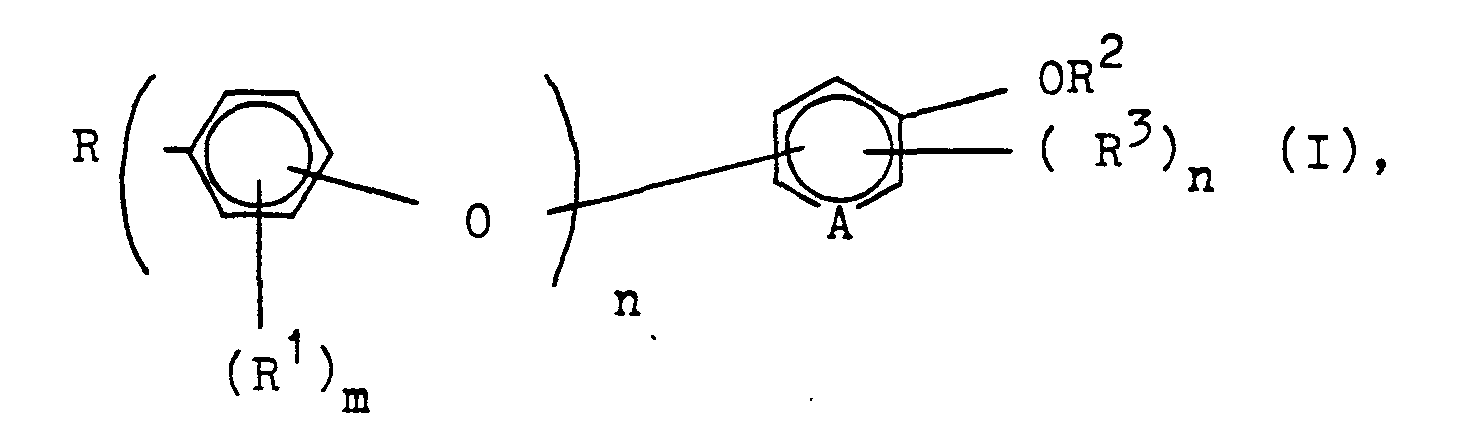
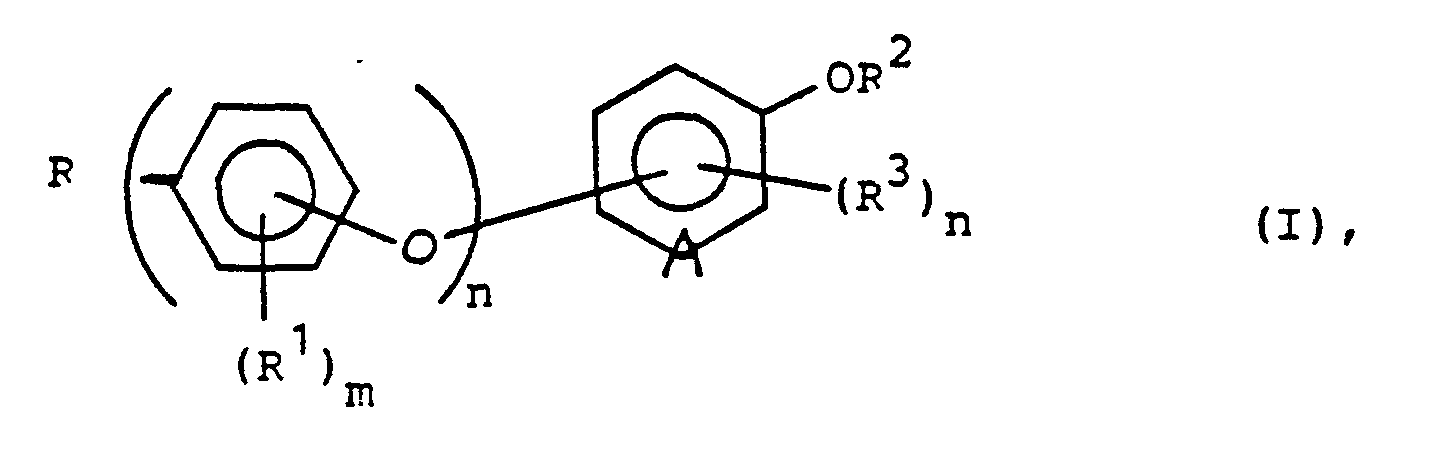
- Gegenstand der vorliegenden Erfindung sind daher die Verbindungen der allgemeinen Formel (I)

- A = N oder N → 0,
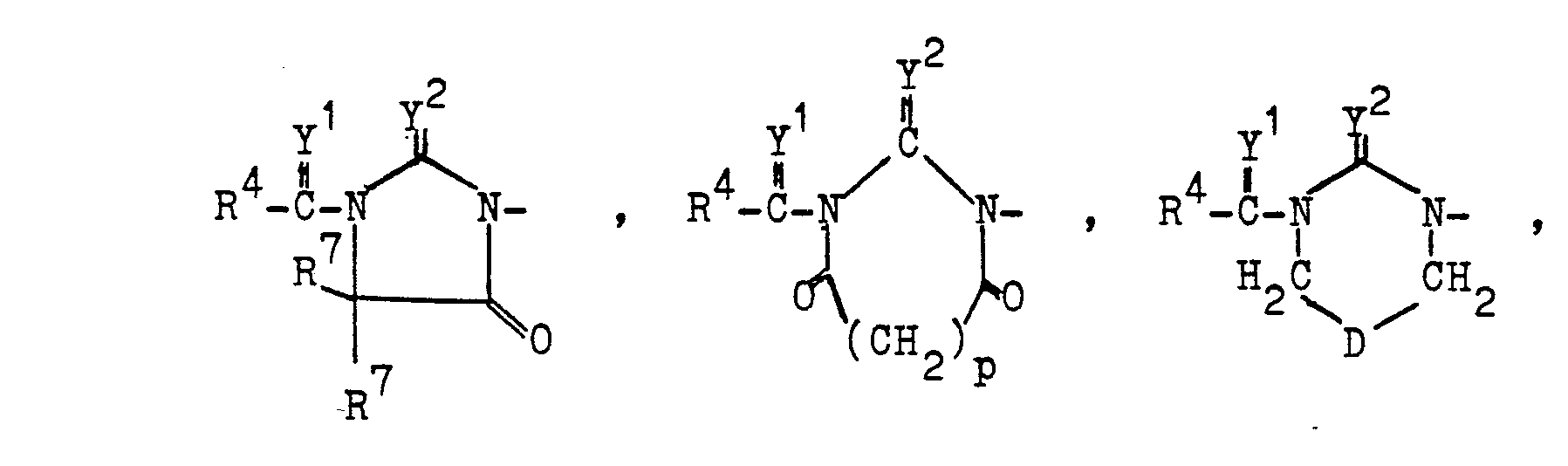
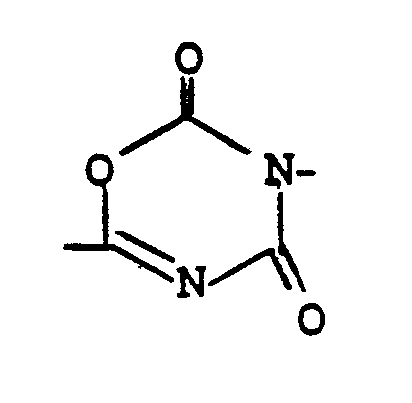
- R = einen Rest der Formeln


- R' jeweils unabhängig voneinander Halogen, (C1-C6)-Alkyl, (C2-C6)-Alkenyl, (C2-C6)-Alkinyl, (C1-C6)-Alkoxy, (C1-C6)-Alkoxy-carbonyl, (C1-C6-Alkyl)-carbonyl, wobei die Reste ein-oder mehrfach durch Halogen substituiert sein können, Nitro, Cyano oder Carboxy,
- R2 jeweils unabhängig voneinander halogeniertes (C1-C6)-Alkyl, halogeniertes (C2-C6)-Alkenyl oder halogeniertes (C2-C6)-Alkinyl,
- R' unabhängig voneinander Halogen,
- R4 Phenyl, das durch Halogen, (C1-C3)-Alkyl, (C1-C3)-Alkoxy, Halo(C,-C,)-alkyl oder Halo(C1-C3)-alkoxy substituiert sein kann,
- R5 Wasserstoff, (C1-C6)-Alkoxy, (C1-C6)Alkylthio, Benzyl, halogeniertes (C,-C6)-Alkoxy, halogeniertes (C,-C6)-Alkylthio oder halogeniertes Benzyl,
- R6 H, (C1-C6)-Alkyl, (C 1- C6)Alkylthior, (C1-C6)-Alkylsulfonyl, die alle halogeniert sein können, Phenylthio oder Phenylsulfonyl, das durch (C1-C6)-Alkyl, (C,-C.)-Alkoxy, (C1-C6)-Alkoxycarbonyl, halogeniertes (C1-C6)-Alkyl, halogeniertes (C1-C6)-Alkoxy, halogeniertes (C1-C4)-Alkoxycarbonyl, Halogen, Nitro oder Cyano substituiert ist, Phosphoryl, Thiophosphoryl, die beide durch zwei Reste der Gruppe (C1-C6)-Alkoxy, (C1-C6)-Alkylthio, Amino, (C1-C6)-Alkylamino oder Di-(C1-C6-Alkyl)-amino substituiert sind,
- R' unabhängig voneinander H, Halogen oder (C1-C3)-Alkyl,
- R8 (C1-C8)-Alkyl, (C2-C8)-Alkenyl, (C2-C8)-Alkinyl, Phenyl oder Benzyl, die alle halogeniert sein können,
- R9 einen Rest der Formeln -XR8, -S-S-R'°, Benzimidazolyl, Benztriazolyl, Pyrazolyl, wobei diese drei Reste durch (C1-C3)-Alkyl oder Halogen substituiert sein können, Triazolyl oder Imidazolyl, die beide durch (C1-C3)-Alkyl substituiert sein können,
- R10 (C1-C18)-Alkyl, (C3-C8)-Cycloalkyl, Phenyl-(C1-C4)-alkyl oder Phenyl, die alle durch Halogen, Nitro oder (C1-C8)-Alkyl substituiert sein können,
- D gegebenenfalls verzweigtes C1-C2-Alkylen, O oder S,
- X, Y, Y', Y2 unabhängig voneinander 0 oder S,
- n unabhängig voneinander 0, 1 oder 2,
- m 0, 1, 2 oder 3 und
- p 0 oder 1 bedeuten, sowie deren für die Landwirtschaft einsetzbaren Salze.
- Die Salzbildung kann beispielsweise im Falle R' = Carboxy oder R5 = H erfolgen. Als Salze kommen insbesondere Alkali-, Erdalkalimetallsalze, Ammonium-oder durch organische Reste wie Alkyl, Hydroxyalkyl ein-bis vierfach substituierte Ammonium-Salze infrage.
- Wenn n = 1 (für den Phenoxy-rest) ist, ist R bevorzugt paraständig zum Phenoxysauerstoff orientiert. Wenn n = 0 ist, ist der Rest R direkt an den Heterocyclus der Formel I gebunden. Der Phenoxyrest bzw. R ist bevorzugt in Nachbarstellung zum Ringatom A orientiert.
- Bevorzugt sind die Verbindungen der Formel I, worin
- A = N,
- R = einen Rest der Formeln


- R' jeweils unabhängig voneinander Halogen, (C1-C6)-Alkyl oder (C1-C6)Alkoxy-carbonyl, wobei die Reste ein-oder mehrfach durch Halogen substituiert sein können,
- R2 jeweils unabhängig voneinander halogeniertes (C1-C6)-Alkyl, halogeniertes (C2-C6)-Alkenyl oder halogeniertes (C2-C6)-Alkinyl,
- R3 unabhängig voneinander Halogen,
- R4 Phenyl, das durch Halogen, (C,-C,)-Alkyl, (C,-C,)-Alkoxy, Halo(C1-C3)-alkyl oder Halo(C1-C3)-alkoxy substituiert sein kann,
- R8 (C,-C.)Alkyl, das halogeniert sein kann,
- X unabhängig voneinander 0 oder S,
- n im Falle des Phenoxyrestes 0 oder 1 und im Falle des Restes R3 0, 1 oder 2 und
- m 0, 1, 2 oder 3 bedeuten.
- Besonders bevorzugt sind die Verbindungen der Formel I,
- worin
- A N,
- R' Halogen in den Positionen 2, 3 oder 5 des Phenoxyringes relativ zur Stellung von R, Halo(C1-C6)alkyl oder (C1-C3)Alkoxycarbonyl jeweils in den Positionen 3 oder 5 des Phenoxyringes,
- R' (C1-C3)-Haloalkoxy,
- R3 F, Cl oder Br und
- R4 Phenyl bedeutet, das durch Halogen, insbesondere in den Positionen 2 oder 6 substituiert ist.
- Die Erfindung umfaßt auch alle Stereoisomeren und deren Gemische der Verbindungen der Formel I, wie die E-und Z-Isomere bei ungesättigten Strukturen oder optische Isomere, falls Chiralitätszentren auftreten. Ferner können die Verbindungen der Formel I je nach Substitution in tautomeren Formen vorliegen, die ebenfalls von der Erfindung umfaßt werden.
- Gegenstand der vorliegenden Erfindung sind auch Verfahren zur Herstellung der Verbindungen der Formel I, dadurch gekennzeichnet, daß man
- a) fürR = R4-CY1-NR5-CY2-NR6-
- a1) eine Verbindung der Formel (II) mit


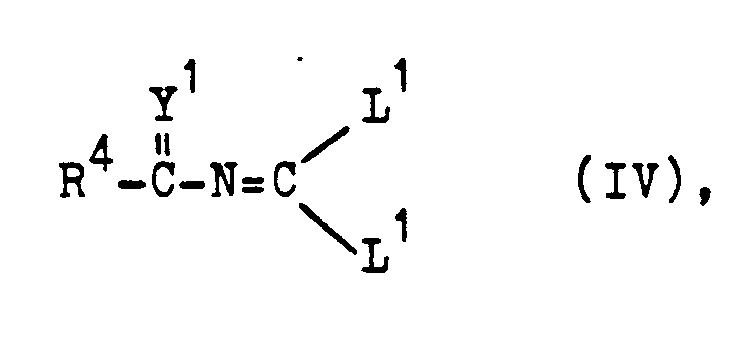
- a2) eine Verbindung der Formel IV

mit einer Verbindung der Formel III und anschließend mit einer Verbindung der Formel H2Y umsetzt, oder - a3) eine Verbindung der Formel V

- Y2 = C = N-E (VIa), oder
- a4) eine Verbindung der Formel V mit einer Verbindung der Formel Vlb

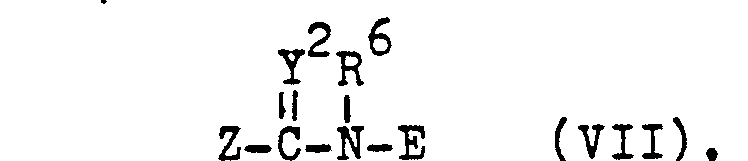
und anschließend mit einer Verbindung der Formel H2Y umsetzt, oder - a5) eine Verbindung der Formel V mit einer Verbindung der Formel VII


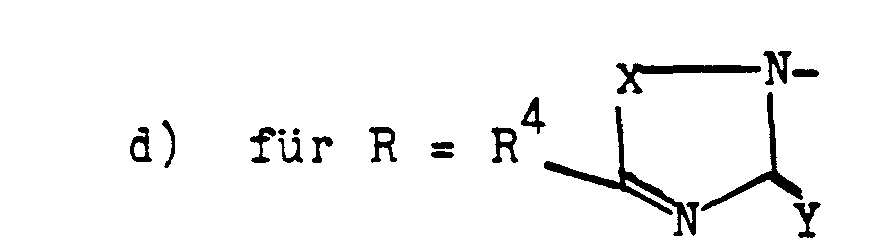
- d2) für X = S eine gemäß a) erhaltene Verbindung der Formel I mit Y' = S und R5, R6 = H cyclisiert, oder

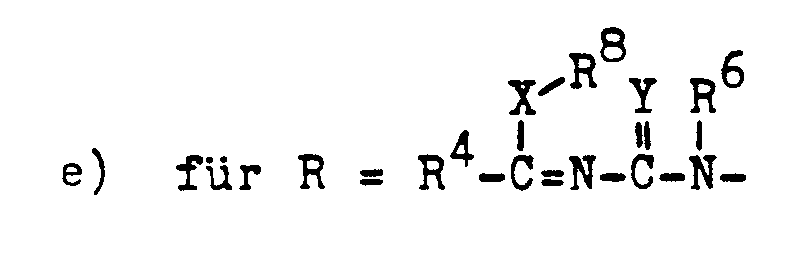
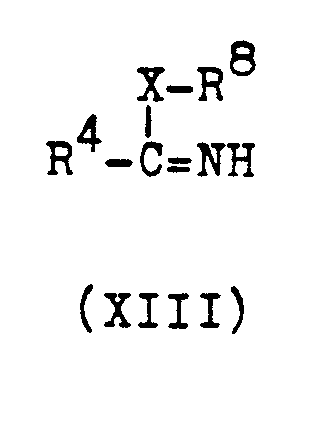
- e1) eine Verbindung der Formel XIII


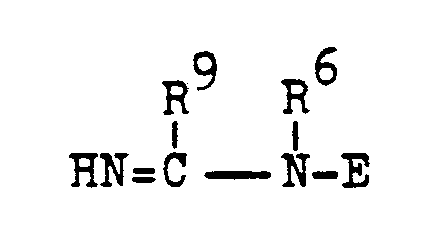
- e2) eine Verbindung der Formel XIV


- g1) eine Verbindung der Formel XV Y R4- -L3 (XV)

mit einer Verbindung der Formel XVI
- g2) eine Verbindung der Formel XVII

- g3) für R9 = ein obengenannter Rest außer -X-R8 eine unter a) erhaltene Verbindung der Formel (I) mit Y2 = S und R5, R6 = H mit einer Verbindung der Formel R9'-SO-R9, wobei R9' die Bedeutung von R9 außer - XR8 und -S-S-R10 besitzt, oder mit einer Verbindung der Formel L5-S-S-R10, wobei L5 = Halogen, N-Succinyl oder ein analoger Rest bedeutet, umsetzt, oder


- Die oben unter a) bis h) genannten Verfahrensschritte beruhen auf dem Fachmann bekannten Synthesen. zu Verfahren a1),a 3) und c) vgl.: DE-OS 2123236
- zu Verfahren a2) vgl. : DE-OS 2123236 und E. Kühle et al., Angew. Chem. 79, 671 ff (1967)
- zu Verfahren a4) vgl.: Houben-Weyl1) Band E 4, S. 1341 ff
- zu Verfahren a5) vgl.: Houben-Weyl, Band E 4, S 24 ff
- zu Verfahren b) vgl.: EP-A 116103
- zu Verfahren d1), d2) vgl.: EP-A 145 095
- zu Verfahren e1), e2) vgl.: EP-A 135 894
- 1) "Houben-Weyl" bedeutet hier wie im folgenden: Houben Weyl, Methoden der organischen Chemie, Georg-Thieme Verlag, Stuttgart.
- zu Verfahren f) vgl.: US-PS 4150158
- zu Verfahren g1), h) vgl.: Houben-Weyl, Band E 4, S. 593 ff
- zu Verfahren g2) vgl.: Houben-Weyl, Band E 4, S. 1018 ff
- zu Verfahren g3) vgl.: EP-A 127 245
- Die Herstellung der hierzu benötigten Ausgangsverbindungen ist ebenfalls prinzipiell bekannt:
- für (II) s. Houben-Weyl, Band E 4, S. 803 ff
- für (III) s. Houben-Weyl, Band 11/1, S. 9 ff
- für (IV) s. Houben-Weyl, Band E 4, S. 534 ff
- für (V) s. Houben-Weyl, Band E 5/1, S. 934 ff, S. 1141 ff
- für (VIa), (Vlb) s. Deutsche Patentanmeldung P 35 45 570.5 "Neue Pyridin-Derivate und deren N-Oxide, Verfahren zu ihrer Herstellung und ihre Verwendung als Zwischenprodukte (HOE 85/F 295)"
- für (VII) s. Houben-Weyl, Band E 4, S. 142 ff
- Die Verbindungen (VIII) lassen sich aus den Aminöcarbonsäuren der Formel XIX

- Zur Herstellung von (IX) u. (XV) s. Houben-Weyl, E 5/2, 587 ff
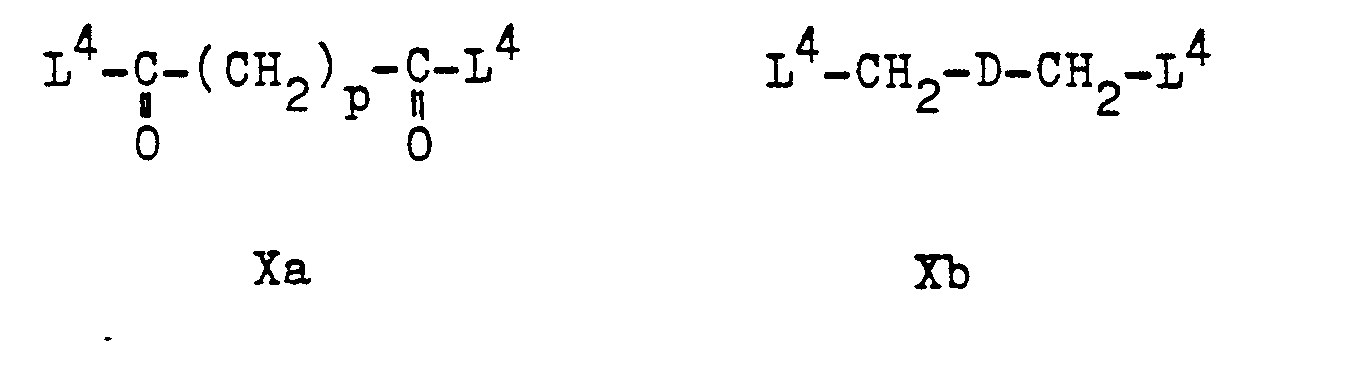
- Zur Herstellung von (Xa) s. Houben-Weyl, Band 8, S. 365 ff, 463 ff
- Zur Herstellung von (Xb) s. Houben-Weyl, Band 5/3 u. 5/4
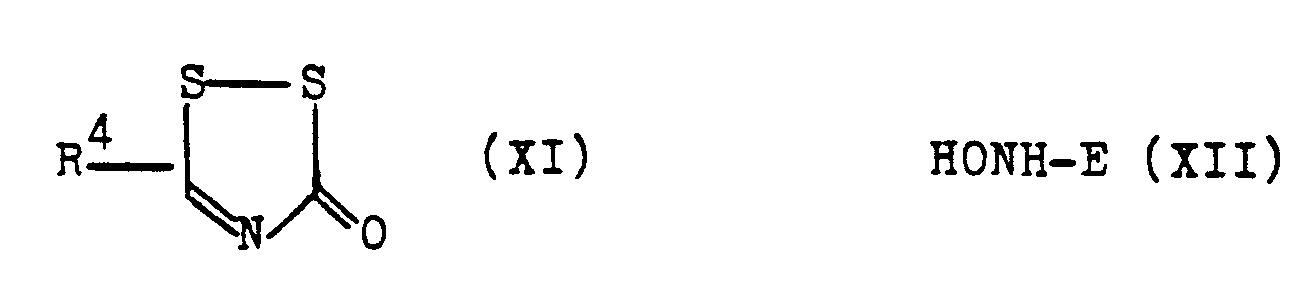
- Zur Herstellung von (XI) s. Goerdeler, Chem. Ber. 99, S. 782 ff (1966), Chem. Ber. 106, S. 1496 (1973), Heterocycles 5,189 (1976)
- Zur Herstellung von (XII) s. Deutsche Patentanmeldung P 35 45 570.5
- Zur Herstellung von (XIII) s. DE-A 3514450
- Zur Herstellung von (XIV) s. EP-A 135 894
- Die Verbindungen der Formel XVII oder XVIII lassen sich aus den Verbindungen der Formeln XX bzw. XXI durch 0-bzw.

- S-Alkylierung herstellen, vgl.
- (XX) und XXI werden aus den Verbindungen XXII

- Die Verbindungen der Formel XVII werden analog den bekannten Verfahren hergestellt, s. Houben-Weyl E 4, S. 534 ff.
- Die Wirkstoffe eignen sich bei guter Pflanzenverträglichkeit und günstiger Warmblütertoxizität zur Bekämpfung von tierischen Schädlingen, insbesondere Insekten, Spinnentieren, Nematoden und Mollusken, ganz besonders bevorzugt zu Bedämpfung von Insekten, die in der Landwirtschaft, in Forsten, im Vorrats-und Materialschutz sowie auf dem Hygienesektor vorkommen. Sie sind gegen normal sensible und resistente Arten sowie gegen alle oder einzelne Entwicklungsstadien wirksam. Zu den ober erwähnten Schädlingen gehören:
- Aus der Ordnung der Isopoda z.B. Oniscus asellus, Armadillidium vulgare, Porcellio scaber.
- Aus der Ordnung der Diplopoda z.B. Blaniulus guttulatus.
- Aus der Ordnung der Chilopoda z.B'. Geophilus carpophagus, Scutigera spec.
- Aus der Ordnung der Symphyla z.B. Scutigerella immaculata.
- Aus der Ordnung der Thysanura z.B. Lepisma saccharina.
- Aus der Ordnung der Collembola z.B. Onychiurus armatus.
- Aus der Ordnung der Orthoptera z.B. Blatta orientalis, Periplaneta americana, Leucophaea maderae, Blatella germanica, Acheta domesticus, Gryllotalpa spp., Locusta migratoria migratorioides, Melanoplus differentialis, Schistocerca gregaria.
- Aus der Ordnung der Dermaptera z.B. Forficula auricularia.
- Aus der Ordnung der Isoptera z.B. Reticulitermes spp.,
- Aus der Ordnung der Anoplura z.B. Phylloera vastatrix, Pemphigus, spp., Pediculus humanus corporis, Haematopinus spp., Linognathus spp.
- Aus der Ordnung der Mallophaga z.B. Trichodectes spp., Damalinea spp.
- Aus der Ordnung der Thysanoptera z.B. Hercinothrips femoralis, Thrips tabaci.
- Aus der Ordnung der Heteroptera z.B. Eurygaster spp., Dysdercus intermedius, Piesma quadrata, Cimex lectularius, Rhodnius prolixus, Triatoma spp.
- Aus der Ordnung der Homoptera z.B. Aleurodes brassicae, Bemisia tabaci, Trialeurodes vaporariorum, Aphis gossypii, Bravicornyne brassicae, Cryptomyzus ribis, Doralis fabae, Doralis pomi, Eriosoma lanigerum, Hyalopterus arundinis, Macrosiphium avenae, Myzus spp., Phorodon humuli, Rhopalosiphum padi, Empoasca spp., Euscelus bilobatus, Nephotettix cincticeps, Lecanium corni, Saissetia oleae, Laodelphax striatellus, Nilaparvata lugens, Aonidiella auroantii, Aspidiotus hederae, Pseudococcus spp., Psylla spp. Aus der Ordnung der Lepidoptera z.B. Pectinophora gossypiella, Bupalus piniarius, Cheimatobia brumata, Lithocolletis blancardella, Hyponomeuta padella, Plutella maculipennis, Malacosoma neustria, Euproctis chrysorrhoea, Lymantria spp., Buceulatrix thurberiella, Phyllocnistis citrella, Agrotis spp, Euxoa spp., Feltia spp., Earias insulana, Heliothis spp., Laphygma exigua, Mamestra brassicae, Panolis flammea, Prodenia litura, Spodop tera spp., Trichoplusia ni, Carpocapsa pomonella, Pieris spp., Chilo spp., Pyrausta nubilalis, Ephestia kuehniella, Galleria mellonella, Cacoecia podana, Capua reticulana, Choristoneura fumiferana, Clysia ambiguella, Homona magnanima, Tortrix viridana.
- Aus der Ordnung der Coleoptera z.B. Anobium punctatum, Rhizopertha dominica, Bruchidius obtectus, Acanthoscelides obtectus, Hylotrupes bajulus, Agelastica alni, Leptinotarsa decemlineata, Phaedon cochlearieae, Diabrotica spp., Psylliodes chrysocephala, Epilachna varivestis, Atomaria spp., Oryzaephilus surinamensis, Anthonomus spp., Sitophilus spp., Otiorrhynchus sulcatus, Cosmopolites sordidus, Ceuthorrhynchus assimilis, Hypera postica, Dermestes spp., Trogoderma spp., Anthrenus spp., Attagenus spp., Lyctus spp., Meligethes aeneus, Ptinus spp., Niptus hololeucus, Gibbium psylloides Tribolium spp., Tenebrio molitor, Agriotes spp., Conoderus spp., Melolontha melolontha, Amphimallon solstitialis, Costelytra zealandica.
- Aus der Ordnung der Hymenoptera z.B. Diprion spp., Hoplocampa spp., Lasius spp., Monomorium pharaonis, Vespa spp.
- Aus der Ordnung der Diptera z.B. Aedes spp., Anopheles spp., Culex spp., Drosphila melanogaster, Musca spp., Fannia spp., Calliphora erythrocephala, Lucilia spp., Chrysomyia spp., Cuterebra spp., Gastrophilus spp., Hyppobosca spp., Stomoxys spp., Oestrus spp., Hypoderma spp., Tabanus spp., Tannia spp., Bibio hortulanus, Oscinella frit, Phorbia spp., Pegomyia hyoscyami, Ceratitis capitata, Dacus oleae, Tipula paludosa.
- Aus der Ordnung der Siphonaptera z.B. Xenopsylla cheopis, Ceratophyllus spp.
- Aus der Ordnung der Arachnida z.B. Scorpio maurus, Latrodectus mactans.
- Aus der Klasse der Gastropoda z. B. Deroceras spp., Arion spp., Lymnaea spp., Galba spp., Succinea spp., Biophalaria spp., Bulinus spp., Oncomelania spp.,
Aus der Klasse der Bivalva z. B. Dreissena spp., - Gegenstand der Erfindung sind auch Mittel, die die Verbindungen der Formal I neben geeigneten Formulierungshilfsmitteln enthalten.
- Die erfindungsgemäßen Mittel enthalten die Wirkstoffe der Formel I, im allgemeinen zu 1 -95 Gew.-%. Sie können als Spritzpulver, emulgierbare Konzentrate, versprühbare Lösungen, Stäubemittel oder Granulate in den üblichen Zubereitungen angewendet werden.
- Spritzpulver sind in Wasser gleichmäßig dispergierbare Präparate, die neben dem Wirkstoff außer einem Verdünnungs-oder Inertstoff noch Netzmittel, z.B. polyoxethylierte Alkylphenole, polyoxethylierte Fettalkohole, Alkyl-oder Alkylphenol-sulfonate und Dispergiermittel, z.B. ligninsulfonsaures Natrium, 2,2'- dinaphthyimethan-6,6'-disulfonsaures Natrium, dibutylnaphthalinsulfonsaures Natrium oder auch oleylmethyltaurinsaures Natrium enthalten.
- Emulgierbare Konzentrate werden durch Auflösen des Wirkstoffes in einem organischen Lösungsmittel, z.B. Butanol, Cyclohexanon, Dimethylformaffiid, Xylol oder auch höhersiedenden' Aromaten oder Kohlenwasserstoffen unter Zusatz von einem oder mehreren Emulgatoren hergestellt. Als Emulgatoren können beispielsweise verwandt werden: Alkylarylsulfonsaure Calzium-Salze wie Ca-dodecylbenzolsulfonat oder nichtionische Emulgatoren wie Fettsäurepolyglykolester, Alkylarylpolyglykolether, Fettalkoholpolyglykol ether, Propylenoxid-Ethylenoxid-Kondensationsprodukte, Alkylpolyether, Sorbitanfettsäureester, Polyoxyethylensorbitan-Fettsäureester oder Polyoxethylensorbitester.
- Stäubemittel erhält man durch Vermahlen des Wirkstoffes mit fein verteilten festen Stoffen, z.B. Talkum, natürlichen Tonen wie Kaolin, Bentonit, Poryphillit oder Diatomeenerde. Granulate können entweder durch Verdüsen des Wirkstoffes auf adsorptionsfähiges, granuliertes Inertmaterial hergestellt werden oder durch Aufbringen von Wirkstoffkonzentraten mittels Klebemitteln, z.B. Polyvinylalkohol, polyacrylsaurem Natrium oder auch Mineralölen auf die Oberfläche von Trägerstoffen wie Sand, Kaolinite, oder von granuliertem Inertmaterial. Auch können geeignete Wirkstoffe in der für die Herstellung von Düngemittelgranulaten üblichen Weise -gewünschtenfalls in Mischung mit Düngemitteln -hergestellt werden.
- Die erfindungsgemäßen Wirkstoffe insbesondere die der aufgeführten Beispiele können in ihren handelsüblichen Formulierungen sowie in den aus diesen Formu lierungen bereiteten Anwendungsformen in Mischung mit anderen Wirkstoffen, wie Insektiziden, Lockstoffen, Sterilantien, Akariziden, Nematiziden, Fungiziden, wachstumsregulierenden Stoffen oder Herbiziden vorliegen. Zu den Insektiziden zählen beispielsweise Phosphorsäureester, Carbamate, Carbonsäureester, Formamidine, Zinnverbindungen, durch Mikroorganismen hergestellte Stoffe u.a.
-
- 1. aus der Gruppe der Phosphorverbindungen
Acephate, Azamethiphos, Azinphos-ethyl, Azinphosmethyl, Bromophos, Bromophos-ethyl, Chlorfenvinphos, Chlormephos, 1-(4-Clorphenyl-4-(0-ethyl,S-propyl)-phosphoryloxypyrazoi (TIA 230), Chlorpyrifos, Chlorpyriphos-methyl, Demeton, Demeton-S-methyl, Demeton-S-methyl sulphone, Dialifos, Diazinon, Dichlorvos, Dicrotophos, Dimethoate, Disulfoton, EPN, Ethion, Ethoprophos, Etrimfos, Famphur, Fenamiphos, Fenitrothion, Fensulfothion, Fenthion, Fonofos, Formothion, Heptenophos, Isazophos, Isofenphos, Isothioate, Isoxathion, Malathion, Mephosfolan, Methacrifos, Methamidophos, Methidathion, Salithion, Mevinphos, Monocrotophos, Naled, Omethoate, Oxydemeton-methyl, Parathion, Parathion-methyl, Phenthoate Phorate, Phosalone, Phosfolan, Phosmet, Phosphamidon, Phoxim, Pirimiphos-ethyl, Pirimiphos-methyl, Profenofos, Propaphos, Propetamphos, Prothiofos, Pyridapenthion, Quinalphos, Sulprofos, Temephos, Terbufos, Tetraclorvinphos, Thiometon, Triazophos, Trichlorphon, Vamidothion; - 2. aus der Gruppe der Carbamate
Aldicarb, 2-sec-Butylphenylmethylcarbamate (BPMC), Carbaryl, Carbofuran, Carbosulfan, Cloethocarb, 2,3-Dihydro-2,2-dimethyl-7-benzofuranyl-N-(isopropyl)-N-(carboethoxyethyl)amino)thiomethylcarbamat (OK-174), Ethiofencarb, Furathiocarb, Isoprocarb, Methomyl, 5-Methyl-m-cumenylbutyryl(methyl)carbamate, Oxamyl, Piromicarb, Propoxur, Thiocarb, Thifanox, Ethyl 4,6,9-triaza-4-benzyl-6,10-dimethyl-8-oxa-7-oxo-5,11-dithia-9-dodecenoate (OK 135), 1-Methylthio-(ethylideneamino) N-methyl-N-(morpholinothio)carbamate (UC 51717); - 3. aus der Gruppe der Carbonsäureester
Allethrin, Alphametrin, 5-Benzyl-3-furylmethyl(E)-(1 R)-cis-2,2-dimethyl-3-(2-oxothiolan-3-ylidenemethyl)-cyclopropane-carboxylate, Bioallethrin, Bioallethrin((S)-cyclopentylisomer), Bioresmethrin, Biphenate (FMC 54800), a-Cyano-3'-phenoxy-benzyl-2-)4-ethoxyphenyl)-2,2-dichlorocyclopyranecarboxylate (NK 8116, GH 414), (RS)-1-Cyano-1-(6-phenoxy-2-pyridyl)methyl(1 RS)-trans-3-(4-tert.butylphenyl)-2,2-dimethylcyclopropa- necarboxylate (NCI 85193), Cyfluthrin, Cyhalothrin, Cypermethrin, Deltamethrin, Empenthrin, Esfenvalerate, 5-(4-(4-(4-Ethoxyphenyl)-4-methylpentyl)-2-fluoro-1,3-diphenylether (MTI 800), 3-(2-(4-Ethoxyphenyl-2-methyl-propoxymethyl)-1,3-diphenylether (MTI 500), Fenfluthrin, Fenpropathrin, Fenvaterate,Flucythrinate, Flumethrin, Fluralinate (Disomers), Permethrin, Phenothrin ((R)-isomers), Pyrethrins (natural products), Resmethrin, Tetramethrin, Tralomethrin; - 4. aus der Gruppe der Amidine
Amitraz, Chlordimeform; - 5. aus der Gruppe der Zinnverbindungen
Cyhexatin, Fenbutatin oxide; - 6. Sonstige
Abamectin, Bacillus thuringensis, Bensultap, Binapacryl, Bromopropylate, Buprofezin, Camphechlor, Cartap, Chlorbenzialate, Chlorfluazuron, 2-(4-Chlorphenyl)-4,5-diphenylthiophen (UBI-T 930), Clofentezine, Cyclopropancarbonsäure(2-naphthylmethyl)ester (Ro 12-0470), Cyromazin, DDT, Dicofol, N-(3,5-Dichloro-2,4-difluorphenyl)amino)carbonyl)-2,6-difluorbenzamid (CME 134), N-(3,5-Dichlor-4-(1,1,2,2-tetrafluoroethoxy)phenyl)-amino)carbonyl)-2,6-difluorbenzamide (XRD 473), Diflubenzuron, N-(2,3-Dihydro-3-methyl-1,3-thiazol-2-yli- dene)2,4-xylidine, Dinobuton, Dinocap, Endosulfan, Fenoxycarb, Fenthiocarb, Flubenzimine, Gamma-HCH, Hexythiazox, Ivermectin, 2-Nitromethyl-4,5-dihydro-6H-thiazin (SD 52618), 2-Nitromethyl-3,4-dihydrothiazol - (SD 35651 Propargite, Tetradifon, Tetrahydro-5,5-dimethyl-2(1 H)-pyrimidinone(3-(4-trifluormethyl)-phenyl)-1-(2-(4-trifluormethyl)phenyl)ethenyl-2-propylidene)hydrazone (AC 217300), Tetrasul, Thiocyclam, Triflumuron, Kernpolyeder-und Granuloseviren. - Der Wirkstoffgehalt der aus den handelsüblichen Formulierungen bereiteten Anwendungsformen kann in weiten Bereichen variieren. Die Wirkstoffkonzentration der Anwendungsformen kann von 0,0000001 bis zu 100 Gew.-% Wirkstoff, vorzugsweise zwischen 0,00001 und 1 Gew.-% liegen.
- Die Anwendung geschieht in einer den Anwendungsformen angepaßten üblichen Weise.
- Die erfindungsgemäßen Wirkstoffe eignen sich auch zur Bekämpfung von Ekto-und Endoparasiten beispielsweise von Helminthen oder ektoparasitierenden Insekten auf dem veterinärmedizinischen Gebiet bzw. auf dem Gebiet der Tierhaltung.
- Die Anwendung der erfindungsgemäßen Wirkstoffe geschieht hier in bekannter Weise, wie durch orale Anwendung in Form von beispielsweise Tabletten, Kapseln, Tränken, Granulaten, durch dermale Anwendung in Form beispielsweise des Tauchens (Dippen), Sprühens (Sprayen), Auf gießens (pour-on and spoton) und des Einpuderns sowie durch parenterale Anwendung in Form beispielsweise der Injektion.
- Die erfindungsgemäßen neuen Verbindungen der Formel I können demgemäß auch besonders vorteilhaft in der Viehhaltung (z.B. Rinder, Schafe, Schweine und Geflügel wie Hühner, Gänse usw.) eingesetzt werden. In einer bevorzugten Ausführungsform der Erfindung werden den Tieren die neuen Verbindungen, gegebenenfalls in geeigneten Formulierungen (vgl. oben) und gegebenenfalls mit dem Trinkwasser oder Futter oral verabreicht. Da eine Ausscheidung im Kot in wirksamer Weise erfolgt, läßt sich auf diese Weise sehr einfach die Entwicklung von Insekten im Kot der Tiere verhindern. Die jeweils geeigneten Dosierungen und Formulierungen sind insbesondere von der Art und dem Entwicklungsstadium der Nutztiere und auch vom Befallsdruck der Insekten abhängig und lassen sich nach den üblichen Methoden leicht ermitteln und festlegen. Die neuen Verbindungen können bei Rindern z.B. in Dosiermengen von 0,01 bis 1 mg/kg Körpergewicht eingesetzt werden.
- Nachfolgende Beispiele dienen zur Erläuterung der Erfindung.
-
- a) Ein Stäubemittel wird erhalten, indem man 10 Gew.-Teile Wirkstoff und 90 Gew.-Teile Talkum als Inertstoff mischt und in einer Schlagmühle zerkleinert.
- b) Ein in Wasser leicht dispergierbares, benetzbares Pulver wird erhalten, indem man 25 Gew.-Teile Wirkstoff, 65 Gew.-Teile kaolinhaltigen Quarz als Inertstoff, 10 Gew.-Teile ligninsulfonsaures Kalium und 1 Gew.-Teil oleoylmethyltaurinsaures Natrium als Netz-und Dispergiermittel mischt und in einer Stiftmühle mahlt.
- c) Ein in Wasser leicht dispergierbares Dispersionskonzentrat stellt man her, indem man 20 Gew.-Teile Wirkstoff mit 6 Gew.-Teilen Alkylphenolpolyglykolether (Triton X 207), 3 Gew.-Teilen Isotridecanolpolyglykolether (8 AeO) und 71 Gew.-Teilen paraffinischem Mineralöl (Siedebereich z.B. ca. 255 bis über 377°C) mischt und in einer Reibkugelmühle auf eine Feinheit von unter 5 Mikron vermahlt.
- d) Ein emulgierbares Konzentrat läßt sich herstellen aus 15 Gew.-Teilen Wirkstoff, 75 Gew.-Teilen Cyclohexanon als Lösungsmittel und 10 Gew.-Teilen oxethyliertes Nonylphenol (10 AeO) als Emulgator.
- e) Ein Granulat läßt herstellen aus 2 bis 15 Gew.-Teilen Wirkstoff und einem inerten Granulatträgermaterial wie Attapulgit, Bimsgranulat und/oder Quarzsand.
- 1,27 g (3 mmol) 4-(3-Chlor-5-difluormethoxy-2-pyridyloxy)-3,5-dichloranilin und 0,56 g (3 mmol) frisch destilliertes 2,6-Difluorbenzoylisocyanat wurden unter Feuchtigkeitsausschuß 5 h bei Raumtemperatur gerührt, der gebildete Feststoff mit 10 ml absolutem n-Heptan ausgerührt, abgesaugt und aus Toluol umkristallisiert.
Ausbeute 1,67 g (92 %)
Fp. 200 -201 °C - Diese Verbindung wurde analog der in Beispiel 1 beschriebenen Verfahrensweise hergestellt. Fp. 190 -192-C
- 0,8 g (2,2 mmol) 4-(3-Chlor-5-difluormethoxy-2-pyridyloxy)-3,5-dichlorphenylisocyanat und 0,4 g (2,2 mmol) 2,6-Difluorbenzcarboximidsäureethylester wurden 2 h bei Raumtemperatur unter Feuchtigkeitsausschluß gerührt, der gebildete Fststoff mit 5 ml absolutem n-Heptan ausgerührt, abgesaugt und aus n-Heptan umkristallisiert.
Ausbeute 1,0 g (83 %)
Fp. 135 -137 °C - 0,8 g (2,2 mmol) 4-(3-Chlor-5-difluormethoxy-2-pyridyloxy)-3,5-dichlorphenylisocyanat und 0,4g(2,2 mmol) 2,6-Di fluorbenzoylisocyanat wurden 16 h bei 70 °C unter Feuchtigkeitsausschluß gerührt, nach dem Abkühlen der gebildete Feststoff mit 5 ml absolutem n-Hepten ausgerührt, abgesaugt und aus Cyclohexen/Toluol umkristallisiert; Fp 154-6 °C, Ausbeute: 86 %.
- Die Verbindungen der nachfolgenden Tabellen lassen sich, wie in Beispielen 1-4 beschrieben, herstellen.


- Larven des afrikanischen Baumwollwurms (Spodoptera littoralis L III) und Petrischalen, in die eine Diät auf Agar-Basis eingefüllt wird, wurden in einer Spritzapparatur mit einer Wirkstoffzubereitung der gewünschten Konzentration behandelt. Die Larven wurden nach Antrocknen des Spritzbelages auf die Agar-Diät gesetzt.
- Nach der gewünschten Zeit (L 111 bis Falterschlupf) wurde die Abtötung der Raupen bzw. der Schlupf der Falter in % bestimmt. Dabei bedeutet 100 %, daß alle Raupen abgetötet wurden bzw. kein Falter aus den Raupen schlüpfte.
- Bei diesem Test zeigten bei 100 ppm Wirkstoff in der Spritzbrühe 100 % Wirksamkeit die Verbindungen der Beispiele 1, 2, 82, 83, 90, 104, 105, 145 und 147.
- 24 Stunden alte Hausfliegenlarven (Musca domestica) wurden in eine Fliegendiät, die vorher mit einer Wirkstoffzubereitung der gewünschten Konzentration behandelt wurde, eingebracht.
- Nach der gewünschten Zeit (L I bis Fliegenschlupf) wurde die Abtötung der Larven bzw. der Schlupf der Fliegen in % bestimmt. Dabei bedeutet 100 %, daß alle Larven abgetötet wurden bzw. keine Fliege aus den Puppen schlüpfte.
- Bei 100 ppm Wirkstoff erreichten 100 % Wirksamkeit die Verbindungen der Beispiele 1, 2, 82, 83, 90, 104 und 105.
- Man füllte die wäßrigen Wirkstoffzubereitungen der gewünschten Konzentration in Erlenmeyerkolben und setzte anschließend 24 Stunden alte Gelbfiebermückenlarven (Aedes ägypti) in die Kolben.
- Nach der gewünschten Zeit (bis zum Mückenschlupf) wurde die Abtötung der Larven bzw. der Schlupf der Mücken in % bestimmt. Dabei bedeutet 100 %, daß alle Larven abgetötet wurden bzw. keine Mücke - schlüpfte.
- Bei 100 ppm Wirkstoff erreichten 100 % Wirksamkeit die Verbindungen der Beispiele 1, 2, 82 und 104.
- Larven einer Baumwollwanze (Oncopeltus fasciatus L 111) wurden zusammen mit einem Dentalröllchen, das vorher mit einer Wirkstoffzubereitung der gewünschten Konzentration behandelt wurde, in einen Plastikbecher gegeben.
- Nach der gewünschten Zeit (L III bis Imago) wurde die Abtötung der Larven bzw. der Schlupf der Imago in % bestimmt. Dabei bedeutet 100 %, daß alle Larven abgetötet wurden bzw. keine Imago aus dem letzten Larvenstadium schlüpfte.
- Bei 100 ppm Wirkstoff erreichten 100 % Wirksamkeit die Verbindungen gemäß Beispiel 1, 2, 82, 90 und 104.
- Larven der amerikanischen Tabakeule (Heliothis virescens, L 111) und Petrischalen, in die eine Diät auf Agar-Basis eingefüllt wird, wurden in einer Spritzapparatur mit einer Wirkstoffzubereitung der gewünschten Konzentration behandelt. Die Larven wurden nach Antrocknen des Spritzbelages auf die Agar-Dät gesetzt.
- Nach der gewünschten Zeit (7 Tage, Häutung L III nach L IV) wurde die Abtötung der Raupen in % bestimmt. Dabei bedeutet 100 %, daß alle Raupen abgetötet wurden.
- Bei 100 ppm Wirkstoff erreichten 100 % Wirksamkeit die Verbindungen gemäß Beispiel 1, 2, 82, 83, 90, 104 und 105.
- Mit weißer Fliege (Trialeurodes Vaporariorum, Eier) stark besetzte Bohnenpflanzen (Phaseolus vulgaris) wurden mit Wirkstoff der gewünschten Konzentration in der Spritzbrühe bis zum beginnenden Abtropfen gespritzt. Nach Aufstellung der Pflanzen im Gewächshaus bei 20-25°C und 40-50 % relative Feuchte erfolgte nach 14 Tagen die mikroskopische Kontrolle.
- Bei 20 ppm Wirkstoff erreichten 100 % Wirksamkeit die Verbindungen der Beispiele 1, 2, 82, 83, 90 und 105.
Claims (7)





Y2 = C = N-E (VIa),
oder

wobei L2 die Bedeutung von L' besitzt und zusätzlich für Mercapto steht,
und anschließend mit einer Verbindung der Formel H2Y umsetzt, oder



umsetzt, oder


mit einer Verbindung der Formel XVI


Applications Claiming Priority (2)
| Application Number | Priority Date | Filing Date | Title |
|---|---|---|---|
| DE19853545569 DE3545569A1 (de) | 1985-12-21 | 1985-12-21 | Neue pyridin-derivate, verfahren zu ihrer herstellung, sie enthaltene mittel und ihre verwendung als schaedlingsbekaempfungsmittel |
| DE3545569 | 1985-12-21 |
Publications (2)
| Publication Number | Publication Date |
|---|---|
| EP0227046A2 true EP0227046A2 (de) | 1987-07-01 |
| EP0227046A3 EP0227046A3 (de) | 1988-09-21 |
Family
ID=6289243
Family Applications (1)
| Application Number | Title | Priority Date | Filing Date |
|---|---|---|---|
| EP86117656A Withdrawn EP0227046A3 (de) | 1985-12-21 | 1986-12-18 | Pyridin-Derivate, Verfahren zu ihrer Herstellung, sie enthaltene Mittel und ihre Verwendung als Schädlingsbekämpfungsmittel |
Country Status (14)
| Country | Link |
|---|---|
| US (1) | US4855309A (de) |
| EP (1) | EP0227046A3 (de) |
| JP (1) | JPS62164666A (de) |
| CN (1) | CN86108620A (de) |
| AU (1) | AU588409B2 (de) |
| BR (1) | BR8606340A (de) |
| DD (1) | DD256638A5 (de) |
| DE (1) | DE3545569A1 (de) |
| DK (1) | DK618986A (de) |
| HU (1) | HUT43924A (de) |
| IL (1) | IL81044A0 (de) |
| OA (1) | OA08449A (de) |
| PT (1) | PT83994B (de) |
| ZA (1) | ZA869559B (de) |
Families Citing this family (5)
| Publication number | Priority date | Publication date | Assignee | Title |
|---|---|---|---|---|
| DE3545571A1 (de) * | 1985-12-21 | 1987-06-25 | Hoechst Ag | Heterocyclische phenylaether, verfahren zu deren herstellung und diese enthaltende herbizide mittel |
| ZA903739B (en) * | 1989-05-27 | 1991-03-27 | Sumitomo Chemical Co | A poison bait for control of noxious insects |
| AU6901696A (en) * | 1995-09-14 | 1997-04-01 | Valent U.S.A. Corporation | Phosphoroamidothioate coated sand and method |
| US6806367B2 (en) * | 2001-10-26 | 2004-10-19 | Ishihara Sangyo Kaisha, Ltd. | Process for producing carbonyl hydrazones |
| DK3013813T3 (da) | 2013-06-27 | 2019-06-03 | Pfizer | Heteroaromatiske forbindelser og anvendelse deraf som dopamin-d1-ligander |
Family Cites Families (12)
| Publication number | Priority date | Publication date | Assignee | Title |
|---|---|---|---|---|
| US3931201A (en) * | 1974-01-22 | 1976-01-06 | The Dow Chemical Company | Substituted pyridinyloxy(thio)phenyl -acetamides, -ureas and urea derivatives |
| JPS5823871B2 (ja) * | 1978-02-06 | 1983-05-18 | 石原産業株式会社 | N↓−ピリジルオキシフエニルウレア系化合物及びそれらを含有する殺虫剤 |
| AU532156B2 (en) * | 1979-09-07 | 1983-09-22 | Ishihara Sangyo Kaisha Ltd. | N-benzoyl-n'-pyridyloxy phenyl urea |
| DE3240975A1 (de) * | 1981-11-09 | 1983-05-19 | CIBA-GEIGY AG, 4002 Basel | Phenylbenzoylharnstoffe und -thioharnstoffe |
| EP0079311B1 (de) * | 1981-11-10 | 1987-03-18 | Ciba-Geigy Ag | Phenylbenzoylharnstoffe zur Bekämpfung von Schädlingen |
| EP0101662A3 (de) * | 1982-06-25 | 1985-12-04 | Ciba-Geigy Ag | Benzoylparabansäuren |
| EP0109211A1 (de) * | 1982-11-05 | 1984-05-23 | Imperial Chemical Industries Plc | Pyridin-Derivate |
| CA1233822A (en) * | 1982-12-30 | 1988-03-08 | David T. Chou | Pesticidal benzoyl ureas and process for preparation |
| US4550108A (en) * | 1983-08-17 | 1985-10-29 | Ciba Geigy Corporation | 1,3,5-Oxadiazine-2,4-diones and pesticidal use |
| US4723015A (en) * | 1983-10-17 | 1988-02-02 | Ciba-Geigy Corporation | Certain insecticidal N-2-pyridyloxyphenylbenzimidates |
| ATE40111T1 (de) * | 1984-07-05 | 1989-02-15 | Duphar Int Res | Benzoylharnstoffverbindungen sowie solche enthaltende insektizide und akarizide zusammensetzungen. |
| IE860511L (en) * | 1985-03-01 | 1986-09-01 | Alfa Farmaceutici Spa | "Benzoyl urea derivatives having anti-tumor activity" |
-
1985
- 1985-12-21 DE DE19853545569 patent/DE3545569A1/de not_active Withdrawn
-
1986
- 1986-12-18 EP EP86117656A patent/EP0227046A3/de not_active Withdrawn
- 1986-12-18 DD DD86297904A patent/DD256638A5/de not_active IP Right Cessation
- 1986-12-18 OA OA59020A patent/OA08449A/xx unknown
- 1986-12-19 IL IL81044A patent/IL81044A0/xx unknown
- 1986-12-19 DK DK618986A patent/DK618986A/da not_active Application Discontinuation
- 1986-12-19 HU HU865353A patent/HUT43924A/hu unknown
- 1986-12-19 US US06/944,323 patent/US4855309A/en not_active Expired - Fee Related
- 1986-12-19 ZA ZA869559A patent/ZA869559B/xx unknown
- 1986-12-19 AU AU66757/86A patent/AU588409B2/en not_active Ceased
- 1986-12-19 BR BR8606340A patent/BR8606340A/pt unknown
- 1986-12-20 CN CN198686108620A patent/CN86108620A/zh active Pending
- 1986-12-20 JP JP61302887A patent/JPS62164666A/ja active Pending
- 1986-12-22 PT PT83994A patent/PT83994B/pt not_active IP Right Cessation
Also Published As
| Publication number | Publication date |
|---|---|
| US4855309A (en) | 1989-08-08 |
| HUT43924A (en) | 1988-01-28 |
| BR8606340A (pt) | 1987-10-13 |
| ZA869559B (en) | 1987-10-28 |
| DK618986A (da) | 1987-06-22 |
| PT83994A (de) | 1987-01-01 |
| DD256638A5 (de) | 1988-05-18 |
| DE3545569A1 (de) | 1987-06-25 |
| EP0227046A3 (de) | 1988-09-21 |
| CN86108620A (zh) | 1987-08-05 |
| OA08449A (fr) | 1988-06-30 |
| JPS62164666A (ja) | 1987-07-21 |
| AU588409B2 (en) | 1989-09-14 |
| PT83994B (pt) | 1989-07-31 |
| AU6675786A (en) | 1987-06-25 |
| DK618986D0 (da) | 1986-12-19 |
| IL81044A0 (en) | 1987-03-31 |
Similar Documents
| Publication | Publication Date | Title |
|---|---|---|
| EP0631575B1 (de) | Substituierte pyrimidine und ihre verwendung als schädlingsbekämpfungsmittel | |
| DE4131924A1 (de) | Substituierte 4-alkoxypyrimidine, verfahren zu ihrer herstellung und ihre verwendung als schaedlingsbekaempfungsmittel | |
| EP0132680B1 (de) | Substituierte Furazane | |
| EP0093976A1 (de) | 2,4-Dihalogenbenzoyl-(thio)harnstoffe, Verfahren zu ihrer Herstellung und ihre Verwendung als Schädlingsbekämpfungsmittel | |
| DE19858191A1 (de) | 4-Haloalkyl-3-heterocyclylpyridine und 4-Haloalkyl-5-heterocyclyl-pyrimidine und ihre Verwendung als Repellentien | |
| DE19518054A1 (de) | N-Arylpyrazolketone und deren Derivate, Verfahren zu ihrer Herstellung, sie enthaltende Mittel und ihre Verwendung als Schädlingsbekämpfungsmittel | |
| DE19858192A1 (de) | 4-Trifluormethyl-3-oxazolylpyridine, Verfahren zu ihrer Herstellung, sie enthaltende Mittel und ihre Verwendung als Schädlingsbekämpfungsmittel | |
| DE19858193A1 (de) | 4-Trifluormethyl-3-oxadiazolylpyridine, Verfahren zu ihrer Herstellung, sie enthaltende Mittel und ihre Verwendung als Schädlingsbekämpfungsmittel | |
| EP0638069A1 (de) | Akarizide, insektizide und nematizide substituierte (hetero)-aryl-alkyl-ketonoxim-o-ether, verfahren zu ihrer herstellung, sie enthaltende mittel und ihre verwendung als schädlingsbekämpfungsmittel | |
| EP0135894B1 (de) | Neue N-Carbamoylarylcarboximidsäureester, Verfahren zu ihrer Herstellung, sie enthaltende Mittel und ihre Verwendung als Schädlingsbekämpfungsmittel | |
| EP0759909A1 (de) | Heterocyclylamino- und heterocyclyloxy-cycloalkyl-derivate, ihre herstellung und ihre verwendung als schädlingsbekämpfungsmittel und fungizide | |
| DE3613062A1 (de) | N-benzoyl-n'-phenyl(thio)harnstoffe, verfahren zu ihrer herstellung und ihre verwendung als schaedlingsbekaempfungsmittel | |
| EP0248348A1 (de) | Schädlingsbekämpfungsmittel auf der Basis von Aminopyrimidin-Derivaten sowie neue Amino-pyrimidin-Verbindungen | |
| US4855309A (en) | Pyridine derivatives, agents containing same, and the use thereof as pesticides | |
| EP0318882B1 (de) | (Thio)benzoylharnstoffe und deren funktionelle Derivate, Verfahren zu ihrer Herstellung, sie enthaltende Mittel und ihre Verwendung als Schädlingsbekämpfungsmittel | |
| EP0325983A2 (de) | N-Phenylbenzamide und N-Phenylbenzamidoxime, Verfahren zu ihrer Herstellung, sie enthaltende Mittel und ihre Verwendung als Schädlingsbekämpfungsmittel | |
| EP0373425A2 (de) | Substituierte Pyridazinone, Verfahren zu ihrer Herstellung und ihre Verwendung als Schädlingsbekämpfungsmittel | |
| EP0279259A1 (de) | Thionophosphonsäureester | |
| DE3810379A1 (de) | Azaneophyl- und silazaneophylsulfide, verfahren zu ihrer herstellung, sie enthaltende mittel und ihre verwendung als schaedlingsbekaempfungsmittel | |
| DE3903404A1 (de) | Pyrimidintrionderivate, verfahren zu ihrer herstellung, sie enthaltende mittel und ihre verwendung als schaedlingsbekaempfungsmittel | |
| EP0386715B1 (de) | Heteroaryl-aryl-buten- und -butanderivate, Verfahren zu ihrer Herstellung, sie enthaltende Mittel und ihre Verwendung als Schädlingsbekämpfungsmittel | |
| DE3643957A1 (de) | Substituierte n-methylisoxazolidine | |
| EP0453837A2 (de) | Substituierte Pyridazinone, Verfahren zu ihrer Herstellung und ihre Verwendung als Schädlingsbekämpfungsmittel | |
| EP0199945A2 (de) | Neue Carbamoylarylcarboximidsäureester, Verfahren zu ihrer Herstellung, sie enthaltende Mittel und ihre Verwendung als Schädlingsbekämpfungsmittel | |
| EP0311962A2 (de) | Pyridylphosphate, Verfahren zu ihrer Herstellung, sie enthaltende Mittel und ihre Verwendung als Schädlingsbekämpfungsmittel |
Legal Events
| Date | Code | Title | Description |
|---|---|---|---|
| PUAI | Public reference made under article 153(3) epc to a published international application that has entered the european phase |
Free format text: ORIGINAL CODE: 0009012 |
|
| AK | Designated contracting states |
Kind code of ref document: A2 Designated state(s): AT BE CH DE ES FR GB GR IT LI NL |
|
| PUAL | Search report despatched |
Free format text: ORIGINAL CODE: 0009013 |
|
| AK | Designated contracting states |
Kind code of ref document: A3 Designated state(s): AT BE CH DE ES FR GB GR IT LI NL |
|
| 17P | Request for examination filed |
Effective date: 19890302 |
|
| STAA | Information on the status of an ep patent application or granted ep patent |
Free format text: STATUS: THE APPLICATION HAS BEEN WITHDRAWN |
|
| 17Q | First examination report despatched |
Effective date: 19910208 |
|
| 18W | Application withdrawn |
Withdrawal date: 19910307 |
|
| R18W | Application withdrawn (corrected) |
Effective date: 19910307 |
|
| RIN1 | Information on inventor provided before grant (corrected) |
Inventor name: WALTERSDORFER, ANNA, DR. Inventor name: BONIN, WERNER, DR. Inventor name: KNAUF, WERNER, DR. Inventor name: KOCH, VOLKER, DR. Inventor name: FUSS, ANDREAS, DR. |