EP0228663A2 - Substratenansatz von Mischungen in einem 2-Amino-2-methyl-1-propanil enthaltenden Puffer für Alkalin-Phosphatase-Probe - Google Patents
Substratenansatz von Mischungen in einem 2-Amino-2-methyl-1-propanil enthaltenden Puffer für Alkalin-Phosphatase-Probe Download PDFInfo
- Publication number
- EP0228663A2 EP0228663A2 EP86117629A EP86117629A EP0228663A2 EP 0228663 A2 EP0228663 A2 EP 0228663A2 EP 86117629 A EP86117629 A EP 86117629A EP 86117629 A EP86117629 A EP 86117629A EP 0228663 A2 EP0228663 A2 EP 0228663A2
- Authority
- EP
- European Patent Office
- Prior art keywords
- substrate
- concentration
- nbt
- bcip
- alkaline phosphatase
- Prior art date
- Legal status (The legal status is an assumption and is not a legal conclusion. Google has not performed a legal analysis and makes no representation as to the accuracy of the status listed.)
- Granted
Links
Images


Classifications
-
- C—CHEMISTRY; METALLURGY
- C12—BIOCHEMISTRY; BEER; SPIRITS; WINE; VINEGAR; MICROBIOLOGY; ENZYMOLOGY; MUTATION OR GENETIC ENGINEERING
- C12Q—MEASURING OR TESTING PROCESSES INVOLVING ENZYMES, NUCLEIC ACIDS OR MICROORGANISMS; COMPOSITIONS OR TEST PAPERS THEREFOR; PROCESSES OF PREPARING SUCH COMPOSITIONS; CONDITION-RESPONSIVE CONTROL IN MICROBIOLOGICAL OR ENZYMOLOGICAL PROCESSES
- C12Q1/00—Measuring or testing processes involving enzymes, nucleic acids or microorganisms; Compositions therefor; Processes of preparing such compositions
- C12Q1/34—Measuring or testing processes involving enzymes, nucleic acids or microorganisms; Compositions therefor; Processes of preparing such compositions involving hydrolase
- C12Q1/42—Measuring or testing processes involving enzymes, nucleic acids or microorganisms; Compositions therefor; Processes of preparing such compositions involving hydrolase involving phosphatase
-
- C—CHEMISTRY; METALLURGY
- C12—BIOCHEMISTRY; BEER; SPIRITS; WINE; VINEGAR; MICROBIOLOGY; ENZYMOLOGY; MUTATION OR GENETIC ENGINEERING
- C12Q—MEASURING OR TESTING PROCESSES INVOLVING ENZYMES, NUCLEIC ACIDS OR MICROORGANISMS; COMPOSITIONS OR TEST PAPERS THEREFOR; PROCESSES OF PREPARING SUCH COMPOSITIONS; CONDITION-RESPONSIVE CONTROL IN MICROBIOLOGICAL OR ENZYMOLOGICAL PROCESSES
- C12Q2326/00—Chromogens for determinations of oxidoreductase enzymes
- C12Q2326/90—Developer
- C12Q2326/92—Nitro blue tetrazolium chloride, i.e. NBT
-
- C—CHEMISTRY; METALLURGY
- C12—BIOCHEMISTRY; BEER; SPIRITS; WINE; VINEGAR; MICROBIOLOGY; ENZYMOLOGY; MUTATION OR GENETIC ENGINEERING
- C12Q—MEASURING OR TESTING PROCESSES INVOLVING ENZYMES, NUCLEIC ACIDS OR MICROORGANISMS; COMPOSITIONS OR TEST PAPERS THEREFOR; PROCESSES OF PREPARING SUCH COMPOSITIONS; CONDITION-RESPONSIVE CONTROL IN MICROBIOLOGICAL OR ENZYMOLOGICAL PROCESSES
- C12Q2334/00—O-linked chromogens for determinations of hydrolase enzymes, e.g. glycosidases, phosphatases, esterases
- C12Q2334/50—Indoles
- C12Q2334/52—5-Bromo-4-chloro-3-indolyl, i.e. BCI
-
- Y—GENERAL TAGGING OF NEW TECHNOLOGICAL DEVELOPMENTS; GENERAL TAGGING OF CROSS-SECTIONAL TECHNOLOGIES SPANNING OVER SEVERAL SECTIONS OF THE IPC; TECHNICAL SUBJECTS COVERED BY FORMER USPC CROSS-REFERENCE ART COLLECTIONS [XRACs] AND DIGESTS
- Y10—TECHNICAL SUBJECTS COVERED BY FORMER USPC
- Y10S—TECHNICAL SUBJECTS COVERED BY FORMER USPC CROSS-REFERENCE ART COLLECTIONS [XRACs] AND DIGESTS
- Y10S435/00—Chemistry: molecular biology and microbiology
- Y10S435/967—Standards, controls, materials, e.g. validation studies, buffer systems
-
- Y—GENERAL TAGGING OF NEW TECHNOLOGICAL DEVELOPMENTS; GENERAL TAGGING OF CROSS-SECTIONAL TECHNOLOGIES SPANNING OVER SEVERAL SECTIONS OF THE IPC; TECHNICAL SUBJECTS COVERED BY FORMER USPC CROSS-REFERENCE ART COLLECTIONS [XRACs] AND DIGESTS
- Y10—TECHNICAL SUBJECTS COVERED BY FORMER USPC
- Y10S—TECHNICAL SUBJECTS COVERED BY FORMER USPC CROSS-REFERENCE ART COLLECTIONS [XRACs] AND DIGESTS
- Y10S436/00—Chemistry: analytical and immunological testing
- Y10S436/805—Optical property
Definitions
- the present invention pertains in general to substrate formulations for enzyme assays, and, in particular, to substrate formulations for alkaline phosphatase assays which include a phosphated indigo cogener and a tetrazolium salt.
- Assays for the detection of substances present in small amounts rely upon the use of indicators.
- one type of indicator involves the use of an enzyme attached to a probe which preferentially binds to a target substance to be detected. Once bound to the target, the enzyme may function as a reporter group by catalyzing a reaction with a substrate to produce a product which is readily detectable by unaided vision or by a machine.
- alkaline phosphatase One example of an enzyme which is capable of serving as a reporter group is alkaline phosphatase.
- alkaline phosphatase generally refers to a group of non-specific enzymes which hydrolyze monophosphoric esters over a pH range of approximately 8.5 to 10.5.
- alkaline phosphatase enzyme preferably a 3-indolyl phophate salt such as 5-bromo-4-chloro-3-indolyl phosphate (BCIP)
- BCIP 5-bromo-4-chloro-3-indolyl phosphate
- Alkaline phosphatase degrades BCIP into an organic moiety and a phosphate.
- the organic moieties dimerize to form a blue-colored product.
- a transphosphorylating buffer removes the phosphate transferred from the indigo cogener by the enzyme, thus avoiding accumulation of phosphate by the enzyme and consequent enzyme inhibition.
- Transphosphorylating buffers useful in such reactions include 2-amino-2-methyl-l-propanol (2A2MlP), diethanolamine, ethane amino ethanol, and 2-amino-2-methyl-l,3-propandiol. See Starkweather, U. S. Patent No. 4,030,995; and U. K. Patent No. 1,263,202.
- Enhancement of the alkaline phosphatase reaction with BCIP may be achieved by the addition of nitro blue tetrazolium (NBT).
- NBT nitro blue tetrazolium
- the products of the reaction of alkaline phosphatase with BCIP reduce NBT to insoluble blue diformazan, which may produce a stronger signal than is produced by the BCIP reaction products alone.
- a precipitate forms in an aqueous substrate formulation containing BCIP and NBT with about 24 hours of preparation. Formation of this precipitate is associated with a loss of activity, necessitating the separate packaging of NBT, BCIP and buffer in kits for the preparation of alkaline phosphatase subtrate formulations.
- the present invention provides a stable substrate formulation for an alkaline phosphatase assay.
- This formulation is sufficiently stable so that NBT, BCIP and buffer may be premixed and packaged as a unit.
- the formulation includes a phosphated indole cogener, a tetrazolium salt at a concentration effective to produce a detectable signal upon reaction with the phcsphated indole cogener, and 2-amino-2-methyl-l-prcpanol at a concentration effective to buffer a reaction between the phosphated indole cogener and the tetrazolium salt in aqueous solution within a range of pH which allows the reaction to proceed.
- the substrate formulation according to the present invention include 5-bromo-4-chloro-3-indolyl phosphate at a concentration between about 1.0 mM and about 10 mM., nitro blue tetrazolium at a concentration between about 0.05 mM and about 0.5 mM, and 2-amino-2-methyl-l-propanol at a concentration between about 0.1M and about 1.0 M.
- the substrate formulation may also include MgCl 2 at a concentration of about 1.0 mM.
- the substrate formulation according to the present invention include 5-bromo-4-chloro-3-indolyl phosphate at a concentration of 1.2 mM, nitro blue tetrazolium at a concentration of 0.17 mM, 2-amino-2-methyl-l-propanol at a concentration of 100 mM, MgCl 2 at a concentration of 1 mM and sodium azide at a concentration of 0.02%.
- 2A2M1P is useful for alkaline phosphatase assays performed in the absence of NBT (Starkweather, supra) and is useful for the storage of alkaline phosphatase itself [McComb, et al, in Alkaline Phosphatase, Plenum Press, New York, at 7.5.7.3 (1979)], prior to the present invention it is believed that no special benefit was known to derive from the use of 2A2MlP in alkaline phosphatase substrate formulations containing NBT.
- a 2-amino-2(hydroxymethyl)-1,3-propanediol (Tris) buffer is generally employed as a buffer in such formulations despite the consequent inconvenience, expense and potential inaccuracy resulting the need to separately package components of the substrate formulation in order to avoid formation of a precipitate.
- Example 1 substrate formulations are tested to locate the cause of the formation of the precipitate.
- Example 2 modified forms of Tris buffer are examined for precipitate formation.
- organic solvents are added to Tris-buffered substrate formulations in an attempt to inhibit the formation of the precipitate.
- Example 4 a number of buffers are unsuccessfully considered as alternatives to Tris, and 2A2M1P is identified as a buffer uniquely suited for stabilizing substrate formulations in alkaline phosphatase assays.
- color formation in the BCIP/NBT assay is compared for a 2A2MlP-buffered formulation and for a Tris-buffered formulation.
- concentrations of BCIP and NBT are considered for their effect on signal strength and stability in 2A2MlP.
- Example 7 various substrate preparations are examined for long-term stability in 2A2M1P.
- Example 8 optimum conditions of use for the 2A2M1P buffer are explored.
- Example 9 the stability of a preferred substrate solution of Example 8 is tested.
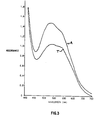
- Example 10 a spectrophotometric comparison of the product of the 2A2MlP-buffered substrate with the product of the Tris-buffered substrate is made.
- Example 11 the present invention is examined for use in a solid phase assay.
- Example 12 the present invention is examined for use in an enzyme-linked immunosorbent assay (ELISA).
- ELISA enzyme-linked immunosorbent assay
- Example 13 The present invention is examined for use in a Western Blot assay.
- solutions were prepared in 0.1 M diethanolamine (pH 9.8) which contained: 1.4 mM BCIP without NBT; 0.24 mN NBT without BCIP; or 1.4 mM BCIP and 0.24 mM NBT. These solutions were observed for the formation of precipitate at room temperature.
- Assays of substrate formulations were performed by mixing enzyme conjugate and substrate in a test tube in order to isolate the substrate formulation from variables which may be introduced by other components of standard assays.
- Tris-buffered substrate included: 1.4 mM BCIP; 0.24 mM NBT; 100 mM Tris base (pH 9.6); and 50 mM MgCl 2 .
- Various concentrations of Tris in solutions at several pH values were compared. The results are presented in Table 1 in which a 100 mM Tris buffer solution contained 50 mM MgCl 2 , 1.4 mM BCIP and 0.24 mM NBT, and in which a 1.0 M Tris buffer solution contained 1.4 mM BCIP and 0.24 mM NBT.
- a plurality of substantially spherical solid particles having an average diameter of from about 0.1 to about 5 microns, were immobilized on a porous matrix of fibrous material.
- the fibrous material may be formed from glass, polystyrene-coated glass, cellulose, nylon or other fibrous materials known to interact with particles and to immobilize them.
- the particles may be composed of polystyrene, polymethacrylate, polypropylene, latex, polyacrylonitrile, polycarbonate or similar materials which have a surface capable of holding a substance to be analyzed.
- microparticles were prepared by adding 100 ul of carboxylate-modified polystyrene microparticles (commerically available from Seragen, Indianapolis, Indiana) to 1.0 ml of 5 mM methyl ethyl sulfonate (MES) buffer (pH 4.75) and 75 ul of anti-HCG antibody solution (2 mg/ml). The solution was stirred before adding 100 ml of l-ethyl-3(3-dimethylaminopropyl) carbodimide HC1 (EDAC) at a concentration of 0.5 mg/ml H 2 0.
- MES methyl ethyl sulfonate
- the solution was stirred overnight at 2-8°C, after which the microparticles were isolated by centrifugation, washed twice with 0.1% Tween-20 solution, and resuspended in phosphate buffered saline (0.01 M KH 2 P0 4 and 0.15 M NaCl at pH 7.2) to yield a 0.125% solution. After resuspension in phosphate buffered saline (PBS), the particles were stored at 2-8° for subsequent use.
- PBS phosphate buffered saline
- Antibody-enzyme conjugates were prepared according to the procedure of Kearney et al., Immunology, 123, 1548 (1979) from mouse anti-HCG monoclonal antibodies. Alkaline phosphatase was obtained from Boehringer Mannheim GmbH, Indianapolis, Indiana.
- the glass filter material, containing antibody-coated microparticles was cut into substantially circular "disks" 12 mm in diameter, and the disks were placed in contact with a blotter material in order to absorb excess fluid. Thereafter, five drops (about 280 ⁇ l) of standard samples of human urine (commercially available from Scripps Institute, San Diego, California) containing zero, or 50 or 100 mIU/ml levels of HCG were added to matrix through a prefilter situated above each matrix. Three drops of the antibody-enzyme conjugate were then added to each matrix through the prefilter, and each matrix was incubated at room temperature for about two minutes.
- the prefilter was next removed, and 1.0 ml of a detergent wash solution (including citrate, phosphate and and Tween 20) was added to each matrix to remove any excess antibody-enzyme conjugate.
- a detergent wash solution including citrate, phosphate and and Tween 20
- the matrix was again placed on a blotter and 5 drops (about 250 ⁇ l) of substrate buffer to be tested were added to each matrix. After two minutes, 1 ml of the wash solution was added and each matrix checked visually for color development. Color development was observed for the test samples which contained HCG, and the absorbance corresponding to the color development was determined instrumentally using a conventional spectrophotometer. The results are presented in Table 2 in which the number of days of incubation at 45°C and the reason for rejection are indicated.
- each of these buffers proved to be unsatisfactory, either by inhibiting the enzyme or by enhancing precipitation of the chromogen.
- NBT was insoluble even prior to incubation (i.e., at "0" days).
- Tris buffer solutions at pH 9.6 and at 0.1M and 1.0 M were compared with 1.0 M diethanolamine (pH 9.3) and 0.1 M 2A2M1P (pH 9.8) in a 11.4 mM BCIP and 0.24 mM NBT substrate formulation.
- the results are presented in Table 3.
- the rate of color formation in substrates prepared in 2A2M1P was compared to the rate of color formulation of the same substrates in Tris.
- 20 ⁇ l of conjugate (as in Example 2) were mixed with 1.0 ml of substrate formulation and color development was monitored spectrophotometrically.
- the solutions were: 0.1 M 2A2M1P (pH 9.8), 1.4 mM BCIP, 0.24 mM NBT and 1.0 mM MgCl 2 ; and 0.1 M Tris (9.6), 1.4 mM BCIP, 0.24 mM NBT and 50 mM MgCl 2 .
- a matrix of nine substrates was prepared in 0.1 M 2A2M1P (pH 9.8) containing 1.0 mM MgCl 2 .
- BCIP concentrations were 2.3 mM, 1.4 mM, or 1.0 mM.
- NBT concentrations were 0.24 mM, 0.10 mM, or 0.05 mM.
- a reference substrate buffer formulation (containing 0.1 M Tris (9.6), 50 mM MgCl 2 , 1.4 mM BCI P and 0.24 mM NBT) exhibited an ⁇ A 575 /min of 0.174.
- Substrate preparations were incubated at 45°C to provide a short-term indication of long-term stability at room temperature.
- Table 6 shows the day that a visible precipitate appeared in the substrates from the BCIP/NBT matrix after storage at 45°C.
- an optimum pH was determined for substrate prepared in 2A2MlP.
- Substrates were assayed in a tube assay (curve A), according to Example 2, and in a Rubella virus assay with high positive serum containing a high level of antibody to Rubella (curve B) and negative (curve C) samples.
- Substrate prepared in 0.1 M Tris pH 9.6 was included as a control for D in a tube assay, for E in a Rubella high positive assay as in B; and for F in an assay negative for Rubella negative.
- Each formulation contained 1.4 mM BCIP, 0.24 mM NBT, and 1.0 mM MgCl 2 in 100 mM 2A2MlP.
- the pH of each solution was adjusted using concentrated HCl.
- Microparticles were coated with Rubella virus, followed by exposure to human serum containing antibodies against Rubella virus and then alkaline phosphatase-conjugated rabbit anti-human antibodies.
- Curve A is an indication of the rate of color formation in a test tube assay of substrate buffered in 2A2M1P at differing pH.
- point D is an indication of the rate of color formation of substrate buffered in Tris (0.1 M pH 9.6 containing 50 mM MgCl 2 ).
- each of the substrate preparations were analyzed using the Rubella assay. Serum with high levels of antibody to Rubella (high positive) or negative for antibody to Rubella were passed through the matrix. This was followed by anti-human, alkaline phosphatase conjugated antibody as in Example 4. After suitable washing, substrate was added and color developed for 2 minutes. Color development was stopped by washing to remove excess substrate and color intensity measured on a reflectance reader. Curve B shows the signal generated by a high positive sample and curve C shows the signal generated by a negative sample. Points E and F indicate the reflectance of spots formed using substrates buffered in 0.1 M Tris, 50 mM MgCl 2 pH 9.6 (1.4 mM BCIP, 0.24 mM NBT).
- the pH optimum for substrate buffered with 2A2M1P was 9.8 in a 0.1 M solution both in the test tube assay and in the Rubella assay. No additional signal was observed when the 2A2M1P concentration was increased to 1.0 M.
- the components of the substrate formulation according to the present invention have been tested in a test tube assay according to Example 2 (1.0 ml substrate/20 u l of conjugate) at different concentrations of BCIP and NBT.
- Table 7 includes results for various concentrations of BCIP in 0.1 M 2A2M1P (pH 9.8), 1.0 mM MgCl 2 and 0.24 mM NBT.
- Table 8 presents results for several concentrations of NBT in 0.1 M 2A2M1P (pH 9.8), 1.0 mM MgCl 2 , and 2.3 mM BCIP.
- 2A2MlP substrate formulations according to the present invention are preferably adjusted to within a pH range from 9.7 to 9.9.
- magnesium salts have very low solubilities at high pH, approximately 1.4 mM at pH 10.3.
- trace amounts of magnesium (10 to 1000 uM) had no effect on the signal generated by these substrates.
- 1 mM MgCl 2 suppresses chromogen precipitation when the substrate is stressed at 45°C.
- a preferred alkaline phosphatase substrate formulation according to the present invention includes: 100 mM 2A2MlP (pH 9.8); 1.2 mM BCIP; 0.17 mM NBT; 1.0 mM MgCl 2 ; and 0.02% sodium azide.
- 100 mM 2A2MlP pH 9.8
- 1.2 mM BCIP 0.17 mM NBT
- 1.0 mM MgCl 2 0.02% sodium azide.
- 140 mg NBT is mixed with approximately 475 ml of distilled water and stirred in the dark for 30 min to prepare a Solution A.
- 10 ml of 2A2M1P is added to 450 ml of distilled H 2 0 while stirring and the solution is mixed for at least 5 min.
- To Solution B 520 mg of BCIP are added and stirring is continued under reduced light for at least 20 min.
- Solution B The pH of Solution B is adjusted to 9.8 (range 9.7 to 9.9) with 6.0 N HC1.
- Solutions A and B are mixed slowly while stirring.
- One ml of an aqueous solution of 1.0 M MgCl 2 is added to the mixture, followed by addition of 200 mg of sodium azide.
- the solution is stirred until all solids are dissolved.
- the volume is made up to 1.0 liter with H 2 0.
- the solution is then filtered through 0.2 micrometer Nalgene filter and stored at 2-8°C in the dark.
- the NBT should be dissolved in distilled water prior to the addition of 2A2M1P to avoid problems with insolubility in 0.1 M 2A2M1P.
- Example 8 The stability of the reformulated alkaline phosphatase substrate solution of Example 8 was tested.
- the substrate solution was stored at ambient temperature, at 2-8°C, at 37°C, and at 45°C. After the number of days of storage indicated in Table 10, samples were assayed in the HCG assay of Example 4.
- FIG. 3 the absorption spectra of products formed by the reaction of substrates with alkaline phosphatase are presented.
- Line A represents results for a substrate prepared in 0.1 M aqueous solution of 2A2M1P (pH 9.6) and 1.0 mM MgCl 2 containing 1.2 mM BCIP and 0.17 mM NBT.
- Line T represents results for a substrate prepared in 0.1 M Tris (pH 9.6) and 50 mM mgcl 2 containing 1.4 mM BCIP and 0.24 mM NBT.
- the present invention may be employed in a solid phase assay.
- An example of a solid phase assay is an assay for HCG of the sort described in Example 4 but with an unknown in place of a standard urine sample.
- particles are coated with antibody specific for HCG and are trapped in a glass fiber matrix.
- a urine sample from a patient is passed through the matrix. If HCG is present in the urine, HCG binds to the HCG-specific antibody.
- a second antibody specific for HCG is conjugated to alkaline phosphatase. By passing a solution of the second antibody through the matrix, the second antibody binds to any HCG therein.
- any reaction is stopped by washing excess substrate from the matrix.
- alkaline phosphatase-conjugated antibody bound to the HCG reacts with the substrate formulation to produce a dark, blue-black spot. In the absence of HCG, the conjugated antibody is washed away and no spot is formed.
- the substrate formulation according to the present invention may be employed in an enzyme-linked immunosorbent assay for the purpose of determining the presence of an antibody in a blood sample.
- a specific antigen is spotted on nitrocellulose.
- the nitrocellulose is incubated with a patient sample followed by incubation with an alkaline phosphate-conjugated antibody against human antibody. Subsequent incubation of the nitrocellulose with the substrate formulation according to the present invention results in the formation of a blue-black colored spot if an antibody specific for the spotted antigen is present in the sample. If no such antibody is present, no spot forms.
- the substrate formulation according to the present invention may be employed in a Western Blot assay.
- proteins are transferred from electrophoretic gels to nitrocellulose.
- the nitrocellulose may be probed for a specific protein by incubation with an alkaline phosphatase-conjugated antibody against the specific protein, followed by incubation with the substrate formulation according to the present invention. If the protein is present, the conjugated antibody binds to it and reaction products of the alkaline phosphatase and the substrates are deposited at thet location of the protein.
- the buffered phosphatase substrate according to the present invention achieves two goals: first, to provide additional stability and second, to enhance the signal or signal-to-noise ratio.
- An enhancement of signal-to-noise ratio for 2A2M1P over Tris is demonstrated by a higher signal in the test tube assay of Example 5 and in the stronger color in the Rubella assay of Example 8.
Landscapes
- Chemical & Material Sciences (AREA)
- Organic Chemistry (AREA)
- Life Sciences & Earth Sciences (AREA)
- Zoology (AREA)
- Wood Science & Technology (AREA)
- Proteomics, Peptides & Aminoacids (AREA)
- Health & Medical Sciences (AREA)
- Engineering & Computer Science (AREA)
- Microbiology (AREA)
- Biochemistry (AREA)
- Physics & Mathematics (AREA)
- Molecular Biology (AREA)
- Biotechnology (AREA)
- Biophysics (AREA)
- Analytical Chemistry (AREA)
- Immunology (AREA)
- Bioinformatics & Cheminformatics (AREA)
- General Engineering & Computer Science (AREA)
- General Health & Medical Sciences (AREA)
- Genetics & Genomics (AREA)
- Measuring Or Testing Involving Enzymes Or Micro-Organisms (AREA)
- Enzymes And Modification Thereof (AREA)
Priority Applications (1)
| Application Number | Priority Date | Filing Date | Title |
|---|---|---|---|
| AT86117629T ATE79411T1 (de) | 1986-01-08 | 1986-12-18 | Substratenansatz von mischungen in einem 2-amino- 2-methyl-1-propanil enthaltenden puffer fuer alkalin-phosphatase-probe. |
Applications Claiming Priority (2)
| Application Number | Priority Date | Filing Date | Title |
|---|---|---|---|
| US06/817,090 US4748115A (en) | 1986-01-08 | 1986-01-08 | Substrate formulation in 2-amino-2-methyl-1-propanol buffer for alkaline phosphatase assays |
| US817090 | 1986-01-08 |
Publications (3)
| Publication Number | Publication Date |
|---|---|
| EP0228663A2 true EP0228663A2 (de) | 1987-07-15 |
| EP0228663A3 EP0228663A3 (en) | 1988-06-01 |
| EP0228663B1 EP0228663B1 (de) | 1992-08-12 |
Family
ID=25222331
Family Applications (1)
| Application Number | Title | Priority Date | Filing Date |
|---|---|---|---|
| EP86117629A Expired EP0228663B1 (de) | 1986-01-08 | 1986-12-18 | Substratenansatz von Mischungen in einem 2-Amino-2-methyl-1-propanil enthaltenden Puffer für Alkalin-Phosphatase-Probe |
Country Status (8)
| Country | Link |
|---|---|
| US (1) | US4748115A (de) |
| EP (1) | EP0228663B1 (de) |
| JP (1) | JPH0695958B2 (de) |
| AT (1) | ATE79411T1 (de) |
| AU (1) | AU595570B2 (de) |
| CA (1) | CA1293677C (de) |
| DE (1) | DE3686409T2 (de) |
| ES (1) | ES2005545A6 (de) |
Cited By (6)
| Publication number | Priority date | Publication date | Assignee | Title |
|---|---|---|---|---|
| US4946776A (en) * | 1988-01-03 | 1990-08-07 | Orgenics Ltd. | Stable chromogenic substrate mixture of indoxyl phosphate and tetrazolium salt, method of making and using same in biological and diagnostic assays |
| EP0369362A3 (de) * | 1988-11-18 | 1991-03-13 | Becton, Dickinson and Company | Substrat-Zusammensetzung für Alkali-Phosphatase sowie ihre Verwendung bei Testverfahren |
| FR2656928A1 (fr) * | 1990-01-10 | 1991-07-12 | Princeton Biomeditech Corp | Dispositif ameliore d'immunotest du type plaquette a plonger, et trousse contenant ce dispositif. |
| EP0420170A3 (en) * | 1989-09-28 | 1991-09-25 | Becton Dickinson And Company | Stabilizing reagent for membrane immunoassay |
| DE19639538A1 (de) * | 1996-09-26 | 1998-04-09 | Boehringer Mannheim Gmbh | Enzymatisches Verfahren zum Nachweis der Erhitzungsbehandlung von Milch |
| ES2143934A1 (es) * | 1998-01-23 | 2000-05-16 | Univ Oviedo | Cuantificacion amperometrica y voltamperometrica de azul de indigo para la determinacion de hidrolasas y desarrollo de biosensores. |
Families Citing this family (13)
| Publication number | Priority date | Publication date | Assignee | Title |
|---|---|---|---|---|
| US5443958A (en) * | 1987-08-14 | 1995-08-22 | Director-General, National Institute Of Animal Industry | 2-acrylamine-2-methyl-1-propanesulfonic acid enhancement of alkaline phosphatase label detection |
| US4956302A (en) * | 1987-09-11 | 1990-09-11 | Abbott Laboratories | Lateral flow chromatographic binding assay device |
| US4892817A (en) * | 1987-09-21 | 1990-01-09 | Biogenex Laboratories | Stable phosphatase substrate composition |
| US5374524A (en) * | 1988-05-10 | 1994-12-20 | E. I. Du Pont De Nemours And Company | Solution sandwich hybridization, capture and detection of amplified nucleic acids |
| US5137804A (en) * | 1988-05-10 | 1992-08-11 | E. I. Du Pont De Nemours And Company | Assay device and immunoassay |
| US5208143A (en) * | 1988-11-17 | 1993-05-04 | Becton, Dickinson And Company | Immunoassay on a preblocked solid surface |
| WO1994001578A1 (en) * | 1992-07-02 | 1994-01-20 | Boehringer Mannheim Corporation | Stabilizing tetrazolium salts in a reagent |
| ES2145054T3 (es) * | 1992-07-02 | 2000-07-01 | Roche Diagnostics Corp | Un reactivo estabilizado por sales de metal bivalente. |
| DE19830478A1 (de) * | 1998-07-08 | 2000-01-13 | Friedrich Schiller Uni Jena Bu | Verfahren zum Nachweis von alkalischer Phosphatase und Phosphatasekonjugaten |
| US6099892A (en) * | 1998-10-01 | 2000-08-08 | Pumpkin Ltd. | Protective coating for decorative vegetable material |
| EP1464643B1 (de) | 2001-09-28 | 2008-01-23 | Arkray, Inc. | Verfahren zur lagerung von tetrazoliumverbindungen, dafür bestimmter stabilisator und nach dem verfahren aufbewahrte tetrazoliumverbindungsreagenz lösung |
| JP3910174B2 (ja) | 2001-10-11 | 2007-04-25 | アークレイ株式会社 | アジ化ナトリウムを用いた測定方法 |
| MX2020006728A (es) * | 2018-01-09 | 2020-08-24 | Idexx Lab Inc | Metodos para medir analito y/o proteina en muestras biologicas. |
Family Cites Families (2)
| Publication number | Priority date | Publication date | Assignee | Title |
|---|---|---|---|---|
| US4030995A (en) * | 1976-07-13 | 1977-06-21 | Sigma Chemical Company | Alkaline phosphatase isoenzyme determination |
| US4563417A (en) * | 1984-08-31 | 1986-01-07 | Miles Laboratories, Inc. | Nucleic acid hybridization assay employing antibodies to intercalation complexes |
-
1986
- 1986-01-08 US US06/817,090 patent/US4748115A/en not_active Expired - Lifetime
- 1986-12-18 AT AT86117629T patent/ATE79411T1/de not_active IP Right Cessation
- 1986-12-18 EP EP86117629A patent/EP0228663B1/de not_active Expired
- 1986-12-18 DE DE8686117629T patent/DE3686409T2/de not_active Expired - Fee Related
- 1986-12-24 JP JP61306696A patent/JPH0695958B2/ja not_active Expired - Lifetime
-
1987
- 1987-01-05 ES ES8700017A patent/ES2005545A6/es not_active Expired
- 1987-01-05 AU AU67133/87A patent/AU595570B2/en not_active Ceased
- 1987-01-07 CA CA000526888A patent/CA1293677C/en not_active Expired - Fee Related
Cited By (8)
| Publication number | Priority date | Publication date | Assignee | Title |
|---|---|---|---|---|
| US4946776A (en) * | 1988-01-03 | 1990-08-07 | Orgenics Ltd. | Stable chromogenic substrate mixture of indoxyl phosphate and tetrazolium salt, method of making and using same in biological and diagnostic assays |
| EP0369362A3 (de) * | 1988-11-18 | 1991-03-13 | Becton, Dickinson and Company | Substrat-Zusammensetzung für Alkali-Phosphatase sowie ihre Verwendung bei Testverfahren |
| US5135847A (en) * | 1988-11-18 | 1992-08-04 | Becton, Dickinson And Company | Substrate composition for alkaline phosphatase and method for assay using same |
| EP0420170A3 (en) * | 1989-09-28 | 1991-09-25 | Becton Dickinson And Company | Stabilizing reagent for membrane immunoassay |
| FR2656928A1 (fr) * | 1990-01-10 | 1991-07-12 | Princeton Biomeditech Corp | Dispositif ameliore d'immunotest du type plaquette a plonger, et trousse contenant ce dispositif. |
| DE19639538A1 (de) * | 1996-09-26 | 1998-04-09 | Boehringer Mannheim Gmbh | Enzymatisches Verfahren zum Nachweis der Erhitzungsbehandlung von Milch |
| EP0832985A3 (de) * | 1996-09-26 | 1998-07-15 | Roche Diagnostics GmbH | Enzymatisches Verfahren zum Nachweis der Erhitzungsbehandlung von Milch und Milchprodukten |
| ES2143934A1 (es) * | 1998-01-23 | 2000-05-16 | Univ Oviedo | Cuantificacion amperometrica y voltamperometrica de azul de indigo para la determinacion de hidrolasas y desarrollo de biosensores. |
Also Published As
| Publication number | Publication date |
|---|---|
| DE3686409D1 (de) | 1992-09-17 |
| EP0228663A3 (en) | 1988-06-01 |
| DE3686409T2 (de) | 1993-02-18 |
| JPS62166899A (ja) | 1987-07-23 |
| CA1293677C (en) | 1991-12-31 |
| EP0228663B1 (de) | 1992-08-12 |
| AU6713387A (en) | 1987-07-09 |
| AU595570B2 (en) | 1990-04-05 |
| ES2005545A6 (es) | 1989-03-16 |
| JPH0695958B2 (ja) | 1994-11-30 |
| US4748115A (en) | 1988-05-31 |
| ATE79411T1 (de) | 1992-08-15 |
Similar Documents
| Publication | Publication Date | Title |
|---|---|---|
| EP0228663B1 (de) | Substratenansatz von Mischungen in einem 2-Amino-2-methyl-1-propanil enthaltenden Puffer für Alkalin-Phosphatase-Probe | |
| US4503143A (en) | Enzyme immunoassay with two-part solution of tetramethylbenzidine as chromogen | |
| EP0094603B1 (de) | Enzym/fluoro-immuntest für Autoantikörper | |
| EP0470192B1 (de) | Verbessertes immunotestverfahren enthaltend eine mischung von lyophilisierten reagenzien | |
| EP0444302B1 (de) | Immunoassay-Verfahren einschliesslich Deaktivierung von endogener alkalischer Phosphatase | |
| CA1190461A (en) | Homogeneous specific binding assay element and lyophilization production method | |
| US4870007A (en) | Immobilized biotinylated receptor in test device, kit and method for determining a ligand | |
| US5599715A (en) | Lower alcohol sulfate wash solution | |
| EP0369362B1 (de) | Substrat-Zusammensetzung für Alkali-Phosphatase sowie ihre Verwendung bei Testverfahren | |
| CA1212045A (en) | Receptor-based histamine assay | |
| JP2603422B2 (ja) | 分析物の測定方法および測定手段 | |
| US5096812A (en) | Assay method for gamma glutamyltransferase (GGT) in liquid blood and dried blood | |
| CA1122119A (en) | Process for the determination of the thyroxine- binding index in serum | |
| AU721183B2 (en) | Method for localization and quantitation of a substance in a biological sample | |
| JP2001511820A (ja) | サイクロスポリン誘導体およびその使用 | |
| EP0420170A2 (de) | Stabilisierendes Reagens für Membranimmunoteste | |
| US5360717A (en) | Agent, for immunochemical assays, containing amine oxides | |
| AU601674B2 (en) | A method for determining a ligand | |
| JP2577431B2 (ja) | 前立腺酸性ホスフアターゼの測定方法 | |
| Tsalta et al. | A solid-phase enzyme-linked assay for vitamin B12 | |
| EP0537826B1 (de) | Diagnosetestsatz und spezifischer Bindungstest unter Verwendung eines Peroxidase Markierungsmittels und eines Signalmodulators | |
| CA2016704C (en) | Apparatus and assay method for gamma glutamyltransferase (ggt) in liquid and dried whole blood | |
| JPS61249399A (ja) | ミクロペルオキシダーゼを用いる尿酸診断アッセイ | |
| JPS6290539A (ja) | 分析素子 | |
| CA2005511A1 (en) | Enzyme-labeled receptor composition, diagnostic kit and use in method to determine a ligand |
Legal Events
| Date | Code | Title | Description |
|---|---|---|---|
| PUAI | Public reference made under article 153(3) epc to a published international application that has entered the european phase |
Free format text: ORIGINAL CODE: 0009012 |
|
| AK | Designated contracting states |
Kind code of ref document: A2 Designated state(s): AT BE CH DE FR GB IT LI NL |
|
| PUAL | Search report despatched |
Free format text: ORIGINAL CODE: 0009013 |
|
| AK | Designated contracting states |
Kind code of ref document: A3 Designated state(s): AT BE CH DE FR GB IT LI NL |
|
| 17P | Request for examination filed |
Effective date: 19881121 |
|
| 17Q | First examination report despatched |
Effective date: 19900927 |
|
| ITTA | It: last paid annual fee | ||
| GRAA | (expected) grant |
Free format text: ORIGINAL CODE: 0009210 |
|
| AK | Designated contracting states |
Kind code of ref document: B1 Designated state(s): AT BE CH DE FR GB IT LI NL |
|
| REF | Corresponds to: |
Ref document number: 79411 Country of ref document: AT Date of ref document: 19920815 Kind code of ref document: T |
|
| REF | Corresponds to: |
Ref document number: 3686409 Country of ref document: DE Date of ref document: 19920917 |
|
| ET | Fr: translation filed | ||
| ITF | It: translation for a ep patent filed | ||
| PLBE | No opposition filed within time limit |
Free format text: ORIGINAL CODE: 0009261 |
|
| STAA | Information on the status of an ep patent application or granted ep patent |
Free format text: STATUS: NO OPPOSITION FILED WITHIN TIME LIMIT |
|
| 26N | No opposition filed | ||
| PGFP | Annual fee paid to national office [announced via postgrant information from national office to epo] |
Ref country code: AT Payment date: 19931117 Year of fee payment: 8 |
|
| PGFP | Annual fee paid to national office [announced via postgrant information from national office to epo] |
Ref country code: CH Payment date: 19931217 Year of fee payment: 8 |
|
| PGFP | Annual fee paid to national office [announced via postgrant information from national office to epo] |
Ref country code: NL Payment date: 19931231 Year of fee payment: 8 |
|
| PGFP | Annual fee paid to national office [announced via postgrant information from national office to epo] |
Ref country code: BE Payment date: 19940106 Year of fee payment: 8 |
|
| PG25 | Lapsed in a contracting state [announced via postgrant information from national office to epo] |
Ref country code: AT Effective date: 19941218 |
|
| PG25 | Lapsed in a contracting state [announced via postgrant information from national office to epo] |
Ref country code: LI Effective date: 19941231 Ref country code: CH Effective date: 19941231 Ref country code: BE Effective date: 19941231 |
|
| BERE | Be: lapsed |
Owner name: ABBOTT LABORATORIES Effective date: 19941231 |
|
| PG25 | Lapsed in a contracting state [announced via postgrant information from national office to epo] |
Ref country code: NL Effective date: 19950701 |
|
| REG | Reference to a national code |
Ref country code: CH Ref legal event code: PL |
|
| NLV4 | Nl: lapsed or anulled due to non-payment of the annual fee |
Effective date: 19950701 |
|
| PGFP | Annual fee paid to national office [announced via postgrant information from national office to epo] |
Ref country code: GB Payment date: 19961108 Year of fee payment: 11 |
|
| PGFP | Annual fee paid to national office [announced via postgrant information from national office to epo] |
Ref country code: FR Payment date: 19961211 Year of fee payment: 11 |
|
| PGFP | Annual fee paid to national office [announced via postgrant information from national office to epo] |
Ref country code: DE Payment date: 19961227 Year of fee payment: 11 |
|
| PG25 | Lapsed in a contracting state [announced via postgrant information from national office to epo] |
Ref country code: GB Free format text: LAPSE BECAUSE OF NON-PAYMENT OF DUE FEES Effective date: 19971218 |
|
| PG25 | Lapsed in a contracting state [announced via postgrant information from national office to epo] |
Ref country code: FR Free format text: THE PATENT HAS BEEN ANNULLED BY A DECISION OF A NATIONAL AUTHORITY Effective date: 19971231 |
|
| GBPC | Gb: european patent ceased through non-payment of renewal fee |
Effective date: 19971218 |
|
| PG25 | Lapsed in a contracting state [announced via postgrant information from national office to epo] |
Ref country code: DE Free format text: LAPSE BECAUSE OF NON-PAYMENT OF DUE FEES Effective date: 19980901 |
|
| REG | Reference to a national code |
Ref country code: FR Ref legal event code: ST |
|
| PG25 | Lapsed in a contracting state [announced via postgrant information from national office to epo] |
Ref country code: IT Free format text: LAPSE BECAUSE OF NON-PAYMENT OF DUE FEES Effective date: 20051218 |